Healthy Eating @ College & In the
              Dorm
            Tara J. Oliva
            Dietetic Intern
         Benedictine University
              Fall 2011
10 Nutrition Rules to Live By
1.   COME BACK TO EARTH!
2.   Eat BREAKFAST everyday.
3.   Eat smaller portions more often, spread evenly
     throughout the day.
4.   Stay HYDRATED!
5.   Include a LEAN protein source with every meal.
6.    Choose foods, especially carbohydrates rich in FIBER
      (25-35g).
7.    Add a MVI and an omega 3 into your daily routine
8.    Eat Fruits & Veggies w/each meal. Green!
9.    Drink a mixture of carb & protein before/after workout.
10.    Get some REST. The body recovers and repairs while
      it is sleeping.
Source: www.rd411.com
Top Sources of Calories
     Among Americans 2 Years and Older
1. Grain-based desserts
      Cake, cookies, pie, cobbler, sweet rolls, pastries, and
       donuts
2. Yeast breads
      White bread and rolls, mixed-grain bread, flavored
       bread, whole-wheat bread, and bagels
3. Chicken and chicken mixed dishes
      Fried and baked chicken parts, chicken
       strips/patties, stir-
       fries, casseroles, sandwiches, salads, and other
       chicken mixed dishes
4. Soda/energy/sports drinks
      Sodas, energy drinks, sports drinks, and sweetened
       bottled water including vitamin water
5. Pizza
NHANES 2005-2006, http://riskfactor.cancer.gov/diet/foodsources/ ]
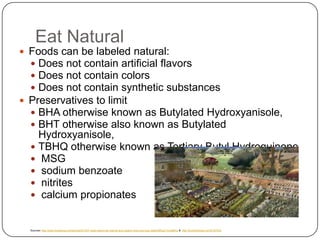
Eat Natural
 Foods can be labeled natural:
   Does not contain artificial flavors
   Does not contain colors
   Does not contain synthetic substances
 Preservatives to limit
   BHA otherwise known as Butylated Hydroxyanisole,
   BHT otherwise also known as Butylated
    Hydroxyanisole,
   TBHQ otherwise known as Tertiary Butyl Hydroquinone
   MSG
   sodium benzoate
   nitrites
   calcium propionates


  Sources: http://www.livestrong.com/article/521237-does-eating-all-natural-and-organic-help-you-lose-weight/#ixzz1Vxyt99Cp & http://EzineArticles.com/2187034
Nutrient-dense foods and
      beverages:
Nutrient-dense foods and beverages:
 Provide vitamins, minerals, and other beneficial
  substances and relatively few calories without
     Solid fats in the food or added to it
     Added sugars
     Added refined starches
     Added sodium
     Retain naturally occurring components, such as dietary
      fiber
 All vegetables, fruits, whole
 grains, seafood, eggs, beans and peas, unsalted
 nuts and seeds, fat-free and low-fat dairy, and lean
 meats and poultry are nutrient dense when prepared
 without solid fats or sugars
“Strength is the
capacity to break a
chocolate bar into
four pieces with your
bare hands ― and
then eat just one of
the pieces.”
   ~Judith Viorst
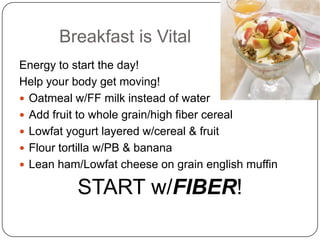
Breakfast is Vital
Energy to start the day!
Help your body get moving!
 Oatmeal w/FF milk instead of water
 Add fruit to whole grain/high fiber cereal
 Lowfat yogurt layered w/cereal & fruit
 Flour tortilla w/PB & banana
 Lean ham/Lowfat cheese on grain english muffin

          START w/FIBER!
Smart Snacking

 Boost energy & supply essential vitamins
 Think of snacks as mini-meals that contribute nutrient-rich
  foods.
 You can fit snack calories into your personal healthy
  eating plan without over-spending your day’s calorie
  budget.
 Snack only when you’re hungry. Skip nibbling
 Plan ahead
Snack Ideas
 Choose wisely: < 200 kcals
   1 Tbsp. peanut butter on medium apple
   1 cup tomato soup w/ 5 whole grain crackers
   3 cups air popped corn w/ 3 Tbsp grated parmesan
   Tricolor veggie snack ( 6 baby carrots, 10 sugar snap
    peas, 6 cherry tomatoes & 2 Tbsp reduced fat
    dressing)
   Top baked potato w/ salsa
   Smoothie (1 cup ff milk, ½ banana & ½ cup berries)
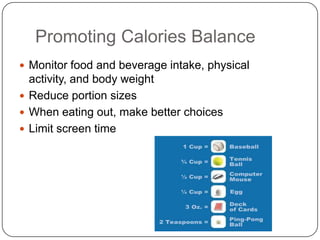
Promoting Calories Balance
 Monitor food and beverage intake, physical
  activity, and body weight
 Reduce portion sizes
 When eating out, make better choices
 Limit screen time
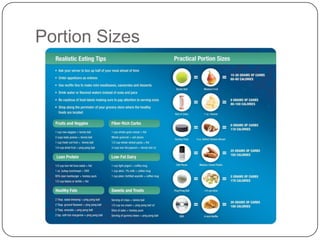
Portion Sizes
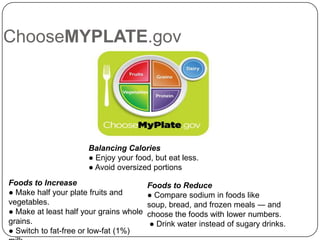
ChooseMYPLATE.gov


                      Balancing Calories
                      ● Enjoy your food, but eat less.
                      ● Avoid oversized portions
Foods to Increase                        Foods to Reduce
● Make half your plate fruits and        ● Compare sodium in foods like
vegetables.                              soup, bread, and frozen meals ― and
● Make at least half your grains whole   choose the foods with lower numbers.
grains.                                   ● Drink water instead of sugary drinks.
● Switch to fat-free or low-fat (1%)
Stay Hydrated
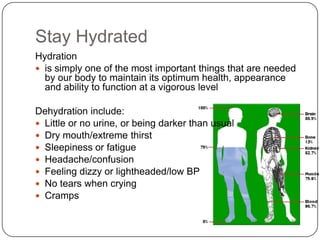
Hydration
 is simply one of the most important things that are needed
  by our body to maintain its optimum health, appearance
  and ability to function at a vigorous level

Dehydration include:
 Little or no urine, or being darker than usual
 Dry mouth/extreme thirst
 Sleepiness or fatigue
 Headache/confusion
 Feeling dizzy or lightheaded/low BP
 No tears when crying
 Cramps
Calories in Alcohol
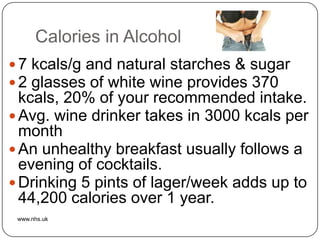
 7 kcals/g and natural starches & sugar
 2 glasses of white wine provides 370
  kcals, 20% of your recommended intake.
 Avg. wine drinker takes in 3000 kcals per
  month
 An unhealthy breakfast usually follows a
  evening of cocktails.
 Drinking 5 pints of lager/week adds up to
  44,200 calories over 1 year.
 www.nhs.uk
ETOH-Tips to Avoid Weight Gain
  Recommend: Men ≤ 2 drinks/day, Women ≤ 1
   drink/day
  Alternate alcoholic drink with water-this will also help
   with dehydration
  Eat a healthy dinner before drinking;Do not drink on
   empty stomach
  Drink at your own pace
  Potent appetizer = eat more
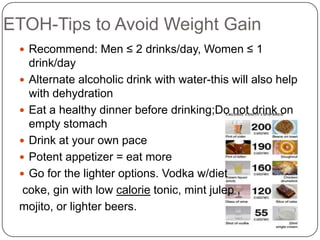
  Go for the lighter options. Vodka w/diet
  coke, gin with low calorie tonic, mint julep ,
 mojito, or lighter beers.
Lean Protein
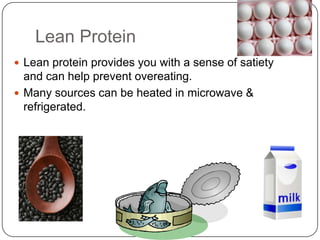
 Lean protein provides you with a sense of satiety
  and can help prevent overeating.
 Many sources can be heated in microwave &
  refrigerated.
FIBER
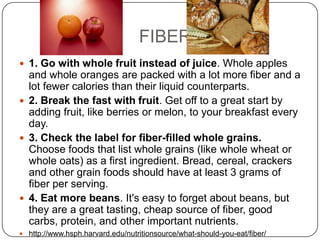
 1. Go with whole fruit instead of juice. Whole apples
  and whole oranges are packed with a lot more fiber and a
  lot fewer calories than their liquid counterparts.
 2. Break the fast with fruit. Get off to a great start by
  adding fruit, like berries or melon, to your breakfast every
  day.
 3. Check the label for fiber-filled whole grains.
  Choose foods that list whole grains (like whole wheat or
  whole oats) as a first ingredient. Bread, cereal, crackers
  and other grain foods should have at least 3 grams of
  fiber per serving.
 4. Eat more beans. It's easy to forget about beans, but
  they are a great tasting, cheap source of fiber, good
  carbs, protein, and other important nutrients.
 http://www.hsph.harvard.edu/nutritionsource/what-should-you-eat/fiber/
FRUIT & VEGGIES
Go for color and variety—dark green, yellow, orange, and red.
Choose 9 servings daily
Benefits include:
  Lower blood pressure
  reduced risk of heart disease, stroke, and probably some cancers
   lower risk of eye and digestive problems
  A mellowing effect on blood sugar that can help keep appetite in check.
Convenience:
  Keep a bowl of fruit within easy reach on the kitchen counter or your desk at work
  so that you can grab a piece of fruit when you're hungry.
  Buy packaged, ready-to-eat fresh vegetables and fruits. These cut down on
  preparation time.
  Keep dried fruit on hand for a snack that is easy to take with you when you're
  away from home and add to salads
  Use the microwave to quickly cook vegetables.
  Freeze grapes

http://www.hsph.harvard.edu/nutritionsource/what-should-you-eat/vegetables-and-fruits/index.html
Color your Plate w/ Salad
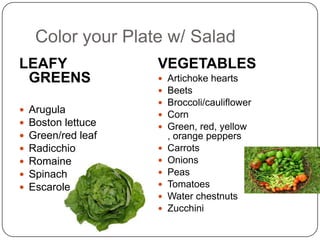
LEAFY                VEGETABLES
 GREENS                 Artichoke hearts
                        Beets
                        Broccoli/cauliflower
   Arugula             Corn
   Boston lettuce      Green, red, yellow
   Green/red leaf       , orange peppers
   Radicchio           Carrots
   Romaine             Onions
   Spinach             Peas
   Escarole            Tomatoes
                        Water chestnuts
                        Zucchini
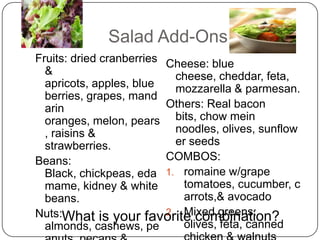
Salad Add-Ons
Fruits: dried cranberries Cheese: blue
  &                         cheese, cheddar, feta,
  apricots, apples, blue    mozzarella & parmesan.
  berries, grapes, mand
  arin                    Others: Real bacon
  oranges, melon, pears bits, chow mein
  , raisins &               noodles, olives, sunflow
  strawberries.             er seeds
Beans:                    COMBOS:
  Black, chickpeas, eda 1. romaine w/grape
  mame, kidney & white        tomatoes, cucumber, c
  beans.                      arrots,& avocado
                          2. Mixed greens:
Nuts:What is your favorite combination?
  almonds, cashews, pe        olives, feta, canned
Avoid Extra Weight Gain

 All Freshman gain 15lbs in their first year of
 school ?

 One type of liquid beverage often causes
 excessive weight gain for college students?

 Many high school athletes gain weight in
 college?

 Freshman women are more prone to gain weight
 than men?
Instead of this try……………..
INSTEAD OF:               TRY:
Fried foods               Grilled or baked foods
Refined grains(white      Whole grain
  pastas, bread & rice)     (breads, pasta, & rice)
Whole milk                Fat free dairy
French Fries              Baked/sweet potato
Sweetened drinks          Water ,seltzer or gatorade
Sweetened desserts        Fruit
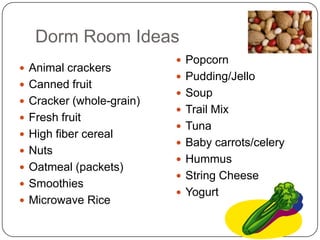
Dorm Room Ideas
                           Popcorn
 Animal crackers
                           Pudding/Jello
 Canned fruit
                           Soup
 Cracker (whole-grain)
                           Trail Mix
 Fresh fruit
                           Tuna
 High fiber cereal
                           Baby carrots/celery
 Nuts
                           Hummus
 Oatmeal (packets)
                           String Cheese
 Smoothies
                           Yogurt
 Microwave Rice
Dietary Guidelines 2010
      What you need to know
 Balance Calories:
   Order small-sized options
   Eat off smaller plates
   Choose low calorie options

 Foods to Increase
   Make ½ your grains whole
   Gradually switch to fat free milk

 Foods to Reduce
   Sodium (1500 mg)
   Sugary Beverages
   http://food.unl.edu/c/document_library/get_file?uuid=729c5682-b74d-4849-bd4e-e253f8d1e582&groupId=4089458&.pdf
Healthy Tips
 Find a healthy budget and stay on it.
 Don’t eat out of boredom or studying
 Drink water instead of unhealthy snacking
 Pack almonds in backpack so you don’t binge later
 Be prepared-Stock fridge w/ healthy foods
 Schedule meals
 Sleep and exercise
 No food in the library – keep studying & eating
  separate
 Only one new food at each meal!

 http://www.eatright.org/Public/content.aspx?id=206
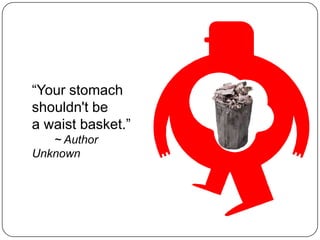
“Your stomach
shouldn't be
a waist basket.”
   ~ Author
Unknown
Thank you for your
      time!
 Questions????

Healthy Eating in the Dorm

  • 1.
    Healthy Eating @College & In the Dorm Tara J. Oliva Dietetic Intern Benedictine University Fall 2011
  • 2.
    10 Nutrition Rulesto Live By 1. COME BACK TO EARTH! 2. Eat BREAKFAST everyday. 3. Eat smaller portions more often, spread evenly throughout the day. 4. Stay HYDRATED! 5. Include a LEAN protein source with every meal.
  • 3.
    6. Choose foods, especially carbohydrates rich in FIBER (25-35g). 7. Add a MVI and an omega 3 into your daily routine 8. Eat Fruits & Veggies w/each meal. Green! 9. Drink a mixture of carb & protein before/after workout. 10. Get some REST. The body recovers and repairs while it is sleeping. Source: www.rd411.com
  • 4.
    Top Sources ofCalories Among Americans 2 Years and Older 1. Grain-based desserts  Cake, cookies, pie, cobbler, sweet rolls, pastries, and donuts 2. Yeast breads  White bread and rolls, mixed-grain bread, flavored bread, whole-wheat bread, and bagels 3. Chicken and chicken mixed dishes  Fried and baked chicken parts, chicken strips/patties, stir- fries, casseroles, sandwiches, salads, and other chicken mixed dishes 4. Soda/energy/sports drinks  Sodas, energy drinks, sports drinks, and sweetened bottled water including vitamin water 5. Pizza NHANES 2005-2006, http://riskfactor.cancer.gov/diet/foodsources/ ]
  • 5.
    Eat Natural  Foodscan be labeled natural:  Does not contain artificial flavors  Does not contain colors  Does not contain synthetic substances  Preservatives to limit  BHA otherwise known as Butylated Hydroxyanisole,  BHT otherwise also known as Butylated Hydroxyanisole,  TBHQ otherwise known as Tertiary Butyl Hydroquinone  MSG  sodium benzoate  nitrites  calcium propionates Sources: http://www.livestrong.com/article/521237-does-eating-all-natural-and-organic-help-you-lose-weight/#ixzz1Vxyt99Cp & http://EzineArticles.com/2187034
  • 6.
    Nutrient-dense foods and beverages: Nutrient-dense foods and beverages:  Provide vitamins, minerals, and other beneficial substances and relatively few calories without  Solid fats in the food or added to it  Added sugars  Added refined starches  Added sodium  Retain naturally occurring components, such as dietary fiber  All vegetables, fruits, whole grains, seafood, eggs, beans and peas, unsalted nuts and seeds, fat-free and low-fat dairy, and lean meats and poultry are nutrient dense when prepared without solid fats or sugars
  • 7.
    “Strength is the capacityto break a chocolate bar into four pieces with your bare hands ― and then eat just one of the pieces.” ~Judith Viorst
  • 8.
    Breakfast is Vital Energyto start the day! Help your body get moving!  Oatmeal w/FF milk instead of water  Add fruit to whole grain/high fiber cereal  Lowfat yogurt layered w/cereal & fruit  Flour tortilla w/PB & banana  Lean ham/Lowfat cheese on grain english muffin START w/FIBER!
  • 9.
    Smart Snacking  Boostenergy & supply essential vitamins  Think of snacks as mini-meals that contribute nutrient-rich foods.  You can fit snack calories into your personal healthy eating plan without over-spending your day’s calorie budget.  Snack only when you’re hungry. Skip nibbling  Plan ahead
  • 10.
    Snack Ideas  Choosewisely: < 200 kcals  1 Tbsp. peanut butter on medium apple  1 cup tomato soup w/ 5 whole grain crackers  3 cups air popped corn w/ 3 Tbsp grated parmesan  Tricolor veggie snack ( 6 baby carrots, 10 sugar snap peas, 6 cherry tomatoes & 2 Tbsp reduced fat dressing)  Top baked potato w/ salsa  Smoothie (1 cup ff milk, ½ banana & ½ cup berries)
  • 11.
    Promoting Calories Balance Monitor food and beverage intake, physical activity, and body weight  Reduce portion sizes  When eating out, make better choices  Limit screen time
  • 12.
  • 13.
    ChooseMYPLATE.gov Balancing Calories ● Enjoy your food, but eat less. ● Avoid oversized portions Foods to Increase Foods to Reduce ● Make half your plate fruits and ● Compare sodium in foods like vegetables. soup, bread, and frozen meals ― and ● Make at least half your grains whole choose the foods with lower numbers. grains. ● Drink water instead of sugary drinks. ● Switch to fat-free or low-fat (1%)
  • 14.
    Stay Hydrated Hydration  issimply one of the most important things that are needed by our body to maintain its optimum health, appearance and ability to function at a vigorous level Dehydration include:  Little or no urine, or being darker than usual  Dry mouth/extreme thirst  Sleepiness or fatigue  Headache/confusion  Feeling dizzy or lightheaded/low BP  No tears when crying  Cramps
  • 15.
    Calories in Alcohol 7 kcals/g and natural starches & sugar  2 glasses of white wine provides 370 kcals, 20% of your recommended intake.  Avg. wine drinker takes in 3000 kcals per month  An unhealthy breakfast usually follows a evening of cocktails.  Drinking 5 pints of lager/week adds up to 44,200 calories over 1 year. www.nhs.uk
  • 16.
    ETOH-Tips to AvoidWeight Gain  Recommend: Men ≤ 2 drinks/day, Women ≤ 1 drink/day  Alternate alcoholic drink with water-this will also help with dehydration  Eat a healthy dinner before drinking;Do not drink on empty stomach  Drink at your own pace  Potent appetizer = eat more  Go for the lighter options. Vodka w/diet coke, gin with low calorie tonic, mint julep , mojito, or lighter beers.
  • 17.
    Lean Protein  Leanprotein provides you with a sense of satiety and can help prevent overeating.  Many sources can be heated in microwave & refrigerated.
  • 18.
    FIBER  1. Gowith whole fruit instead of juice. Whole apples and whole oranges are packed with a lot more fiber and a lot fewer calories than their liquid counterparts.  2. Break the fast with fruit. Get off to a great start by adding fruit, like berries or melon, to your breakfast every day.  3. Check the label for fiber-filled whole grains. Choose foods that list whole grains (like whole wheat or whole oats) as a first ingredient. Bread, cereal, crackers and other grain foods should have at least 3 grams of fiber per serving.  4. Eat more beans. It's easy to forget about beans, but they are a great tasting, cheap source of fiber, good carbs, protein, and other important nutrients.  http://www.hsph.harvard.edu/nutritionsource/what-should-you-eat/fiber/
  • 19.
    FRUIT & VEGGIES Gofor color and variety—dark green, yellow, orange, and red. Choose 9 servings daily Benefits include: Lower blood pressure reduced risk of heart disease, stroke, and probably some cancers lower risk of eye and digestive problems A mellowing effect on blood sugar that can help keep appetite in check. Convenience: Keep a bowl of fruit within easy reach on the kitchen counter or your desk at work so that you can grab a piece of fruit when you're hungry. Buy packaged, ready-to-eat fresh vegetables and fruits. These cut down on preparation time. Keep dried fruit on hand for a snack that is easy to take with you when you're away from home and add to salads Use the microwave to quickly cook vegetables. Freeze grapes http://www.hsph.harvard.edu/nutritionsource/what-should-you-eat/vegetables-and-fruits/index.html
  • 20.
    Color your Platew/ Salad LEAFY VEGETABLES GREENS  Artichoke hearts  Beets  Broccoli/cauliflower  Arugula  Corn  Boston lettuce  Green, red, yellow  Green/red leaf , orange peppers  Radicchio  Carrots  Romaine  Onions  Spinach  Peas  Escarole  Tomatoes  Water chestnuts  Zucchini
  • 21.
    Salad Add-Ons Fruits: driedcranberries Cheese: blue & cheese, cheddar, feta, apricots, apples, blue mozzarella & parmesan. berries, grapes, mand arin Others: Real bacon oranges, melon, pears bits, chow mein , raisins & noodles, olives, sunflow strawberries. er seeds Beans: COMBOS: Black, chickpeas, eda 1. romaine w/grape mame, kidney & white tomatoes, cucumber, c beans. arrots,& avocado 2. Mixed greens: Nuts:What is your favorite combination? almonds, cashews, pe olives, feta, canned
  • 22.
    Avoid Extra WeightGain  All Freshman gain 15lbs in their first year of school ?  One type of liquid beverage often causes excessive weight gain for college students?  Many high school athletes gain weight in college?  Freshman women are more prone to gain weight than men?
  • 23.
    Instead of thistry…………….. INSTEAD OF: TRY: Fried foods Grilled or baked foods Refined grains(white Whole grain pastas, bread & rice) (breads, pasta, & rice) Whole milk Fat free dairy French Fries Baked/sweet potato Sweetened drinks Water ,seltzer or gatorade Sweetened desserts Fruit
  • 24.
    Dorm Room Ideas  Popcorn  Animal crackers  Pudding/Jello  Canned fruit  Soup  Cracker (whole-grain)  Trail Mix  Fresh fruit  Tuna  High fiber cereal  Baby carrots/celery  Nuts  Hummus  Oatmeal (packets)  String Cheese  Smoothies  Yogurt  Microwave Rice
  • 25.
    Dietary Guidelines 2010 What you need to know  Balance Calories:  Order small-sized options  Eat off smaller plates  Choose low calorie options  Foods to Increase  Make ½ your grains whole  Gradually switch to fat free milk  Foods to Reduce  Sodium (1500 mg)  Sugary Beverages  http://food.unl.edu/c/document_library/get_file?uuid=729c5682-b74d-4849-bd4e-e253f8d1e582&groupId=4089458&.pdf
  • 26.
    Healthy Tips  Finda healthy budget and stay on it.  Don’t eat out of boredom or studying  Drink water instead of unhealthy snacking  Pack almonds in backpack so you don’t binge later  Be prepared-Stock fridge w/ healthy foods  Schedule meals  Sleep and exercise  No food in the library – keep studying & eating separate  Only one new food at each meal!  http://www.eatright.org/Public/content.aspx?id=206
  • 27.
    “Your stomach shouldn't be awaist basket.” ~ Author Unknown
  • 28.
    Thank you foryour time! Questions????

Editor's Notes

  • #3 Try to choose the least processed forms of food such as fruits, veggies and whole grains. No excuses, eat 5-8 meals/day
  • #5 The top sources of calories have been estimated using data from the National Health and Nutrition Examination Survey, 2005-06. For this analysis and others like it found in the policy document in pie charts, foods and beverages reported in the survey were grouped into 97 categories. Here the categories were ranked according to calorie contribution to the diet. The number one calorie contributor in the diets of Americans ages 2 years is grain-based desserts, followed by yeast breads, chicken and chicken mixed dishes, soda and energy and sports drinks, and pizza. Although some of these are important sources of nutrients, others provide calories with few nutrients. Many of the foods and beverages most often consumed within these categories are high in solid fats and/or added sugars, thereby contributing excess calories to the diet. For example, grain-based dessertsare typically high in added sugars and solid fats; and chicken is often breaded and fried, and that adds a substantial number of calories to the chicken. [Additional information:Total mean intake = 2,157 kcal/dCalories from each of the top 5 sources:Grain-based desserts (138 kcal/d)Yeast breads (129 kcal/d)Chicken and chicken mixed dishes (121 kcal/d)Soda/energy/sports drinks (114 kcal/d)Pizza (98 kcal/d)Source: NHANES 2005-2006, Available at http://riskfactor.cancer.gov/diet/foodsources/ ]The top sources of calories have been estimated using data from the National Health and Nutrition Examination Survey, 2005-06. For this analysis and others like it found in the policy document in pie charts, foods and beverages reported in the survey were grouped into 97 categories. Here the categories were ranked according to calorie contribution to the diet. The number one calorie contributor in the diets of Americans ages 2 years is grain-based desserts, followed by yeast breads, chicken and chicken mixed dishes, soda and energy and sports drinks, and pizza. Although some of these are important sources of nutrients, others provide calories with few nutrients. Many of the foods and beverages most often consumed within these categories are high in solid fats and/or added sugars, thereby contributing excess calories to the diet. For example, grain-based dessertsare typically high in added sugars and solid fats; and chicken is often breaded and fried, and that adds a substantial number of calories to the chicken. [Additional information:Total mean intake = 2,157 kcal/dCalories from each of the top 5 sources:Grain-based desserts (138 kcal/d)Yeast breads (129 kcal/d)Chicken and chicken mixed dishes (121 kcal/d)Soda/energy/sports drinks (114 kcal/d)Pizza (98 kcal/d)Source: NHANES 2005-2006, Available at http://riskfactor.cancer.gov/diet/foodsources/ ]The top sources of calories have been estimated using data from the National Health and Nutrition Examination Survey, 2005-06. For this analysis and others like it found in the policy document in pie charts, foods and beverages reported in the survey were grouped into 97 categories. Here the categories were ranked according to calorie contribution to the diet. The number one calorie contributor in the diets of Americans ages 2 years is grain-based desserts, followed by yeast breads, chicken and chicken mixed dishes, soda and energy and sports drinks, and pizza. Although some of these are important sources of nutrients, others provide calories with few nutrients. Many of the foods and beverages most often consumed within these categories are high in solid fats and/or added sugars, thereby contributing excess calories to the diet. For example, grain-based dessertsare typically high in added sugars and solid fats; and chicken is often breaded and fried, and that adds a substantial number of calories to the chicken. [Additional information:Total mean intake = 2,157 kcal/dCalories from each of the top 5 sources:Grain-based desserts (138 kcal/d)Yeast breads (129 kcal/d)Chicken and chicken mixed dishes (121 kcal/d)Soda/energy/sports drinks (114 kcal/d)Pizza (98 kcal/d)Source: NHANES 2005-2006, Available at http://riskfactor.cancer.gov/diet/foodsources/ ]
  • #6 These preservatives can cause many health issues such as allergies &amp; headaches.
  • #15 Drinks like fruit and vegetable juices, milk and herbal teas can contribute to the amount of water you should get each day. Even caffeinated drinks, such as coffee, tea and soda, count toward your daily water intake – up to a point. But it’s best to limit these since caffeine may cause some people to urinate more frequently, or feel anxious or jittery. A moderate amount of caffeine, 200 to 300 milligrams (about the amount in 2 to 4 8-ounce cups of coffee), is not harmful for most people.Water can also be found in fruits and vegetables, such as watermelon, tomatoes and lettuce, and in soup broths.
  • #17 The reason that alcohol has such a bad reputation when it comes to weight loss has a lot to do with the fact that it acts as a potent appetizer.In other words, you&apos;ll eat more food if a meal is served with an alcoholic drink than you would if that same meal was served with a soft drink [5, 8].
  • #18 Tuna, chicken canned, beans (microwave), low fat dairy, &amp; eggs
  • #21 Keep basics on hand
  • #23 False, not always but 4-6 pounds is the average.True, alcohol is high in calories especially if consumed in excess.True, many not in college sports and still eat like an athleteTrue, studies show that during freshman year, females are more vulnerable to weight gain than females.
  • #27 Mindless eating