Cooking on a Dime
Cristin Stokes, RDN, LN
MUS Wellness
Cooking on a Dime
For the average American, food is one of the top 3 household
expenses, behind only housing & transportation. In this
workshop, we'll talk about effective ways to reduce your
grocery bill while keeping meals tasty & healthy.
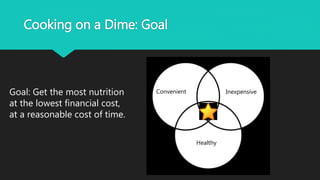
Cooking on a Dime: Goal
Convenient
Healthy
Goal: Get the most nutrition
at the lowest financial cost,
at a reasonable cost of time.
Inexpensive
Cooking on a Dime: Basic Principles
Meal Plan
Shop Smart
Reduce Waste
Meal Planning
 Commit to making a plan (weekly, bi-monthly, monthly)
 Base on refrigerator inventory
 Cook once, serve twice
 i.e. Roasted chicken  Chicken Enchiladas
 Stir-fries, fried rice, pasta, soups
 Overlap ingredients
 Batch Cooking
Meal Planning
Choose economical ingredients
Meat:
Chuck, round, flank, shank, plate cuts typically less expensive
Connective tissue – tough, but flavorful
Use moist cooking methods (braising, pressure cooker), slow cooker, marinade
Slice against the grain
Stretch meat with veggies, lentils, potatoes
Use smaller amounts
Meal Planning
 Choose economical ingredients
 Poultry
Whole chicken, chicken thighs, ground turkey
 Fish
Canned tuna, salmon
Tilapia
 Other proteins
Eggs!
Beans, lentils, tofu/soy
Meal Planning
Choose economical ingredients
Fruits & vegetables:
Longer lasting: Apples, beets, cabbage, carrots, potatoes, winter
squash, celery, oranges
Buy in bulk (if adequate storage)
Meal Planning
Choose economical ingredients
Fruits & vegetables:
Other less expensive options: Romaine, leaf lettuce, cauliflower,
zucchini, cucumber, corn, bananas, melon, seasonal specials
Frozen – without seasonings or sauces
Canned – rinse & drain
Meal Planning
Choose economical ingredients
Fruits & vegetables:
Organic vs Conventional
Environmental Working Group
Dirty Dozen
Clean 15
Meal Plan
Keep a well-stocked kitchen
Stock up on non-perishables when the price is right (loss-leader items)
See handout
Meal Plan
Does your menu?
Include leftovers
Rely on economical foods
Use pantry staples
Use sale items
Especially proteins
Include a variety of foods
Shop Smart
Make a list…and stick to it!
Coupons
Only for the things you would normally buy
Bring a calculator & cash if you really need to stick to a budget
Shop Smart
Don’t be too loyal to a single store
Bulk stores
Sometimes the best choice, sometimes not
Repackage into smaller bags or containers
Discount stores for personal care & cleaning items
Consider fuel/time costs
Shop Smart
Time vs Convenience
Pre-chopped, pre-cooked = $$$
Junk foods
High price, low nutritional value
Shop Smart
Comparison shop
Unit pricing
Recalculate for sale prices
Don’t assume that bigger is always cheaper
Consider waste
Store brands
No national advertising
Bulk bins
Shop Smart
Eat a snack beforehand or go after a meal
Shop alone if possible (not with kids)
Q: For every minute in a supermarket, you spend $
A: $2.17 (according to the Food Marketing Institute)
Shop Smart
Stick to the perimeter
Whole foods cost less
Look high & low for bargains – usually not placed at eye level
Be wary of end of aisle & checkout counter displays
Reduce Food Waste
University of Arizona study (2004): Four person household
throws out an average of $590 of food each year (14% of food
purchased)
Study accounted for fruits, vegetables, meats, and grain products
15% never even opened
Reduce Food Waste
Use the freezer
Keep list of freezer inventory
Incorporate regularly into meal plan
Suggestion: 1-2 times per year – eat down your freezer
And pantry/refrigerator (exception of staples)
Reduce Food Waste
First In, First Out (FIFO)
“Planned-over”
Cook once, serve twice
Make your own convenience mixes, sauces, salad dressings
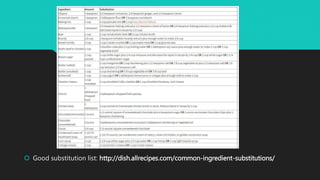
Cooking/baking substitutions
 Good substitution list: http://dish.allrecipes.com/common-ingredient-substitutions/
Keys to Cooking on a Dime
 Meal Plan
 Make a plan using economical ingredients
 Shop Smart
 Comparison shop, be aware of marketing strategies
 Reduce Food Waste
 Stick to your meal plan, utilize leftovers
 Goal: Balance of cost, convenience, and good nutrition
MUS Wellness Resources
 www.muswell.limeade.com Incentive Program
 www.montanamovesandmeals.com Blog
 wellness@montana.edu Email
 @montanameals Twitter
Resources
 University of Missouri Extension: http://extension.Missouri.edu/p/MP905
 University of Maine Extension: http://extension.umaine.edu/publications/4330e/
 Budget Bytes by Beth Moncel
 Good & Cheap by Leanne Brown
 Alabama Cooperative Extension System: www.aces.edu

Cooking on a Dime

  • 1.
    Cooking on aDime Cristin Stokes, RDN, LN MUS Wellness
  • 2.
    Cooking on aDime For the average American, food is one of the top 3 household expenses, behind only housing & transportation. In this workshop, we'll talk about effective ways to reduce your grocery bill while keeping meals tasty & healthy.
  • 3.
    Cooking on aDime: Goal Convenient Healthy Goal: Get the most nutrition at the lowest financial cost, at a reasonable cost of time. Inexpensive
  • 4.
    Cooking on aDime: Basic Principles Meal Plan Shop Smart Reduce Waste
  • 5.
    Meal Planning  Committo making a plan (weekly, bi-monthly, monthly)  Base on refrigerator inventory  Cook once, serve twice  i.e. Roasted chicken  Chicken Enchiladas  Stir-fries, fried rice, pasta, soups  Overlap ingredients  Batch Cooking
  • 6.
    Meal Planning Choose economicalingredients Meat: Chuck, round, flank, shank, plate cuts typically less expensive Connective tissue – tough, but flavorful Use moist cooking methods (braising, pressure cooker), slow cooker, marinade Slice against the grain Stretch meat with veggies, lentils, potatoes Use smaller amounts
  • 7.
    Meal Planning  Chooseeconomical ingredients  Poultry Whole chicken, chicken thighs, ground turkey  Fish Canned tuna, salmon Tilapia  Other proteins Eggs! Beans, lentils, tofu/soy
  • 8.
    Meal Planning Choose economicalingredients Fruits & vegetables: Longer lasting: Apples, beets, cabbage, carrots, potatoes, winter squash, celery, oranges Buy in bulk (if adequate storage)
  • 9.
    Meal Planning Choose economicalingredients Fruits & vegetables: Other less expensive options: Romaine, leaf lettuce, cauliflower, zucchini, cucumber, corn, bananas, melon, seasonal specials Frozen – without seasonings or sauces Canned – rinse & drain
  • 10.
    Meal Planning Choose economicalingredients Fruits & vegetables: Organic vs Conventional Environmental Working Group Dirty Dozen Clean 15
  • 11.
    Meal Plan Keep awell-stocked kitchen Stock up on non-perishables when the price is right (loss-leader items) See handout
  • 12.
    Meal Plan Does yourmenu? Include leftovers Rely on economical foods Use pantry staples Use sale items Especially proteins Include a variety of foods
  • 13.
    Shop Smart Make alist…and stick to it! Coupons Only for the things you would normally buy Bring a calculator & cash if you really need to stick to a budget
  • 14.
    Shop Smart Don’t betoo loyal to a single store Bulk stores Sometimes the best choice, sometimes not Repackage into smaller bags or containers Discount stores for personal care & cleaning items Consider fuel/time costs
  • 15.
    Shop Smart Time vsConvenience Pre-chopped, pre-cooked = $$$ Junk foods High price, low nutritional value
  • 16.
    Shop Smart Comparison shop Unitpricing Recalculate for sale prices Don’t assume that bigger is always cheaper Consider waste Store brands No national advertising Bulk bins
  • 17.
    Shop Smart Eat asnack beforehand or go after a meal Shop alone if possible (not with kids) Q: For every minute in a supermarket, you spend $ A: $2.17 (according to the Food Marketing Institute)
  • 18.
    Shop Smart Stick tothe perimeter Whole foods cost less Look high & low for bargains – usually not placed at eye level Be wary of end of aisle & checkout counter displays
  • 19.
    Reduce Food Waste Universityof Arizona study (2004): Four person household throws out an average of $590 of food each year (14% of food purchased) Study accounted for fruits, vegetables, meats, and grain products 15% never even opened
  • 20.
    Reduce Food Waste Usethe freezer Keep list of freezer inventory Incorporate regularly into meal plan Suggestion: 1-2 times per year – eat down your freezer And pantry/refrigerator (exception of staples)
  • 21.
    Reduce Food Waste FirstIn, First Out (FIFO) “Planned-over” Cook once, serve twice Make your own convenience mixes, sauces, salad dressings Cooking/baking substitutions
  • 22.
     Good substitutionlist: http://dish.allrecipes.com/common-ingredient-substitutions/
  • 23.
    Keys to Cookingon a Dime  Meal Plan  Make a plan using economical ingredients  Shop Smart  Comparison shop, be aware of marketing strategies  Reduce Food Waste  Stick to your meal plan, utilize leftovers  Goal: Balance of cost, convenience, and good nutrition
  • 24.
    MUS Wellness Resources www.muswell.limeade.com Incentive Program  www.montanamovesandmeals.com Blog  wellness@montana.edu Email  @montanameals Twitter
  • 25.
    Resources  University ofMissouri Extension: http://extension.Missouri.edu/p/MP905  University of Maine Extension: http://extension.umaine.edu/publications/4330e/  Budget Bytes by Beth Moncel  Good & Cheap by Leanne Brown  Alabama Cooperative Extension System: www.aces.edu