General Introduction
Network Security
Scanning

10/23/13

1
Outline
1: Introduction to Network Security
2: basics of network
4: Network Structure
5: Data packets
6: Virtual Private Networks
7: Defending against Virus Attacks
8 Defending against Trojan Horses and Spyware
9: Computer-based Espionage and Terrorism

10/23/13

2
Introduction
The growth of the Internet has brought many
ways in which networks can be
compromised and data stolen.
Legislators are working to prevent identity
theft and ways to reduce the effects of
viruses and worms and others.

10/23/13

3
The Basics of a Network
• You need to understand the following:
– Basic network structure
– Data packets
– What does this mean for security?

10/23/13

4
10/23/13

5
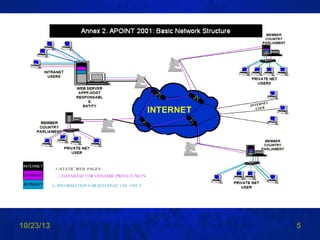
Basic Network Structure
• The fundamental purpose of networks is
for communication
• Part of the network structure includes:
– NICs (network information card), hubs,
switches, routers, and firewalls

• Network architecture comprises the format
in which these devices are connected

10/23/13

6
Data Packets
• When a workstation wishes to send data, it
uses the client network software to enclose
the data in a 'packet' containing a 'header'
and a 'trailer'.
• The header and trailer contain information for
the destination computer. For example, the
header contains the address of the
destination computer.
• The exact form the packets take is determined
by the protocol the network uses.
10/23/13

7
Data Packets
• This is the package that holds the data
and transmission information
• Ultimately formatted in binary
• Information included in packets:
– Source and destination (IP Address)
information
– Packet size (in bytes) and type (e.g. Ethernet)
– Data and other header information
10/23/13

8
• When a data packet is put onto the network by a
workstation, each computer on the network
examines the packet to see who it is intended
for. The packet quickly dissipates if it is not
recognized, allowing other packets to be sent.
The rate at which packets can be sent is called
the 'bandwidth' (this has a somewhat different
meaning to how bandwidth is normally used).
As an example, a bandwidth of 10 Megabits per
second means that ten million individual 1s and
0s can pass through the network in one second.
10/23/13

9
What Does This Mean for Security?
• There are two points of attack:
– The data packet itself
– The devices that connect the network

• These are also the points of security
– Protect the data (encryption)
– Secure the network devices

10/23/13

10
Port scanning
• A port scanner is a handy tool that scans a
computer looking for active ports. With this utility,
a potential “hacker” can figure out what services
are available on a targeted computer from the
responses the port scanner receives.
• These tools scan large IP spaces and report on
the systems they encounter, the ports available,
and other information, such as OS types.
• The most popular port scanner is Network
Mapper (Nmap).
10/23/13

11
Nmap
Nmap (“Network Mapper”) is an open source
utility for network exploration or security
auditing. It was designed to rapidly scan large
networks, although it works fine against single
hosts. Nmap uses raw IP packets to determine
what hosts are available on the network, what
services (ports) they are offering, what operating
system (and OS version) they are running, what
type of packet filters/firewalls are in use, and
dozens of other characteristics. Nmap runs
10/23/13

12
Vulnerability Scanners
Tools available for scanning vulnerable systems.
Vulnerability scanners look for a specific
vulnerability or scan a system for all potential
vulnerabilities. Vulnerability tools are freely
available. The most popular and best-maintained
vulnerability scanner available, Nessus.

10/23/13

13
•

I have often heard that the best approach to
computer security is to use a layered approach.
Can you describe this approach and how an IDS
fits in?
The security model that will protect your organization
should be built upon the following layers:
1. Security policy of your organization
2. Host system security
3. Auditing
4. Router security
5. Firewalls
6. Intrusion detection systems
7. Incident response plan
10/23/13

14
Threats to Network Security
• Insecure Architectures
A misconfigured network is a primary entry point for
unauthorized users. Leaving a trust-based, open local
network vulnerable to the highly-insecure Internet
– Centralized Servers
– Broadcast Networks

10/23/13

15
Threats to Server Security

•Unused Services and Open Ports
•Unpatched Services

10/23/13

16
• Technical Controls
– Encryption
– Smart cards
– Network authentication
– Access control lists (ACLs)
– File integrity auditing software

10/23/13

17
Summary
• Approaches to securing your network:
– Proactive vs. reactive
– Perimeter: focus is on perimeter devices,
internal devices are still vulnerable
– Layered: focus includes both perimeter and
individual computers within the network
– Hybrid: combination of multiple security
paradigms
10/23/13

18
Thank you

10/23/13

19

Securitych1

  • 1.
  • 2.
    Outline 1: Introduction toNetwork Security 2: basics of network 4: Network Structure 5: Data packets 6: Virtual Private Networks 7: Defending against Virus Attacks 8 Defending against Trojan Horses and Spyware 9: Computer-based Espionage and Terrorism 10/23/13 2
  • 3.
    Introduction The growth ofthe Internet has brought many ways in which networks can be compromised and data stolen. Legislators are working to prevent identity theft and ways to reduce the effects of viruses and worms and others. 10/23/13 3
  • 4.
    The Basics ofa Network • You need to understand the following: – Basic network structure – Data packets – What does this mean for security? 10/23/13 4
  • 5.
  • 6.
    Basic Network Structure •The fundamental purpose of networks is for communication • Part of the network structure includes: – NICs (network information card), hubs, switches, routers, and firewalls • Network architecture comprises the format in which these devices are connected 10/23/13 6
  • 7.
    Data Packets • Whena workstation wishes to send data, it uses the client network software to enclose the data in a 'packet' containing a 'header' and a 'trailer'. • The header and trailer contain information for the destination computer. For example, the header contains the address of the destination computer. • The exact form the packets take is determined by the protocol the network uses. 10/23/13 7
  • 8.
    Data Packets • Thisis the package that holds the data and transmission information • Ultimately formatted in binary • Information included in packets: – Source and destination (IP Address) information – Packet size (in bytes) and type (e.g. Ethernet) – Data and other header information 10/23/13 8
  • 9.
    • When adata packet is put onto the network by a workstation, each computer on the network examines the packet to see who it is intended for. The packet quickly dissipates if it is not recognized, allowing other packets to be sent. The rate at which packets can be sent is called the 'bandwidth' (this has a somewhat different meaning to how bandwidth is normally used). As an example, a bandwidth of 10 Megabits per second means that ten million individual 1s and 0s can pass through the network in one second. 10/23/13 9
  • 10.
    What Does ThisMean for Security? • There are two points of attack: – The data packet itself – The devices that connect the network • These are also the points of security – Protect the data (encryption) – Secure the network devices 10/23/13 10
  • 11.
    Port scanning • Aport scanner is a handy tool that scans a computer looking for active ports. With this utility, a potential “hacker” can figure out what services are available on a targeted computer from the responses the port scanner receives. • These tools scan large IP spaces and report on the systems they encounter, the ports available, and other information, such as OS types. • The most popular port scanner is Network Mapper (Nmap). 10/23/13 11
  • 12.
    Nmap Nmap (“Network Mapper”)is an open source utility for network exploration or security auditing. It was designed to rapidly scan large networks, although it works fine against single hosts. Nmap uses raw IP packets to determine what hosts are available on the network, what services (ports) they are offering, what operating system (and OS version) they are running, what type of packet filters/firewalls are in use, and dozens of other characteristics. Nmap runs 10/23/13 12
  • 13.
    Vulnerability Scanners Tools availablefor scanning vulnerable systems. Vulnerability scanners look for a specific vulnerability or scan a system for all potential vulnerabilities. Vulnerability tools are freely available. The most popular and best-maintained vulnerability scanner available, Nessus. 10/23/13 13
  • 14.
    • I have oftenheard that the best approach to computer security is to use a layered approach. Can you describe this approach and how an IDS fits in? The security model that will protect your organization should be built upon the following layers: 1. Security policy of your organization 2. Host system security 3. Auditing 4. Router security 5. Firewalls 6. Intrusion detection systems 7. Incident response plan 10/23/13 14
  • 15.
    Threats to NetworkSecurity • Insecure Architectures A misconfigured network is a primary entry point for unauthorized users. Leaving a trust-based, open local network vulnerable to the highly-insecure Internet – Centralized Servers – Broadcast Networks 10/23/13 15
  • 16.
    Threats to ServerSecurity •Unused Services and Open Ports •Unpatched Services 10/23/13 16
  • 17.
    • Technical Controls –Encryption – Smart cards – Network authentication – Access control lists (ACLs) – File integrity auditing software 10/23/13 17
  • 18.
    Summary • Approaches tosecuring your network: – Proactive vs. reactive – Perimeter: focus is on perimeter devices, internal devices are still vulnerable – Layered: focus includes both perimeter and individual computers within the network – Hybrid: combination of multiple security paradigms 10/23/13 18
  • 19.

Editor's Notes

  • #11 Securing the data and the network devices are covered in later chapters. This is the basic purpose of this book, to secure the data and the network devices that allow communication between and among organizations.