




15 MINUTES
TECHNOLOGY CATCH-UP
Amr Salah
Middleware & Cloud Expert
AMR SALAH
MIDDLEWARE & CLOUD EXPERT
• Computer Science, Mansoura University 2009 (CS)
• 8+ years of experience in Middleware technologies
• Middleware & Cloud Expert
• Worked for (EG: Sumerge, Asset, Giza Systems, Egabi, SG: Pactera, NZ: Deloitte)
• My Clients: Govt (SFD – Saudi, TEData – EG, CIB – EG, MOH – SG, etc.)
• Certificates
• Oracle SOA/ADF/BPM
• AWS Solution Architect
• Professional Scrum Master
• Mulesoft Developer
• More of experience in Security, Full stack development & CI/CD
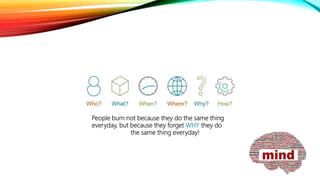
People burn not because they do the same thing
everyday, but because they forget WHY they do
the same thing everyday!
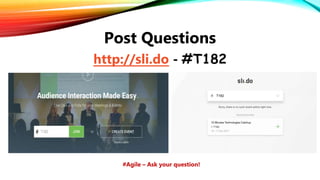
SOFTWARE ENGINEERING PROCESSPost Questions
http://sli.do - #T182
#Agile – Ask your question!
WE ALL ARE
SOFTWARE
ENGINEERS
SOFTWARE ENGINEERING PROCESS
Software Engineering
is the application of engineering to
the development of software in a
systematic method!
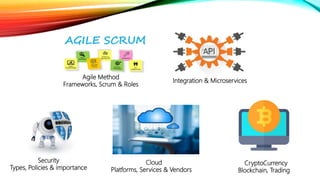
Integration & Microservices
Agile Method
Frameworks, Scrum & Roles
Cloud
Platforms, Services & Vendors
Security
Types, Policies & importance
CryptoCurrency
Blockchain, Trading
Security
Hardware, Software, Data
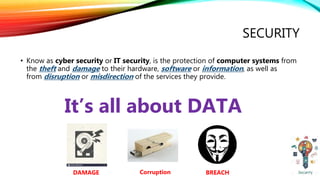
SECURITY
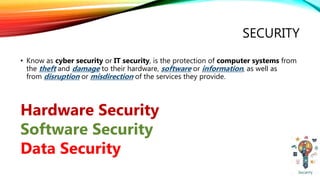
• Know as cyber security or IT security, is the protection of computer systems from
the theft and damage to their hardware, software or information, as well as
from disruption or misdirection of the services they provide.
It’s all about DATA
DAMAGE BREACHCorruption
SECURITY
• Know as cyber security or IT security, is the protection of computer systems from
the theft and damage to their hardware, software or information, as well as
from disruption or misdirection of the services they provide.
Hardware Security
Software Security
Data Security
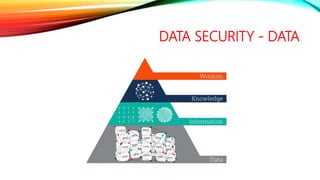
DATA SECURITY - DATA
• Data is distinct pieces of information, usually formatted in a special way. All
software is divided into two general categories: data and programs. Programs are
collections of instructions for manipulating data.
• Data can exist in a variety of forms
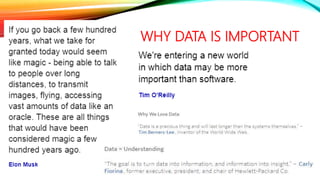
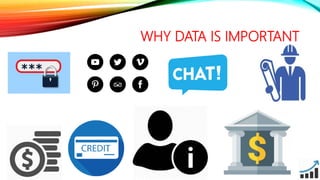
WHY DATA IS IMPORTANT
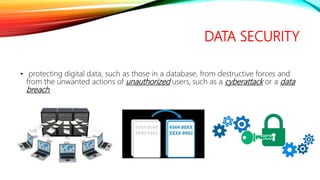
DATA SECURITY
• protecting digital data, such as those in a database, from destructive forces and
from the unwanted actions of unauthorized users, such as a cyberattack or a data
breach.
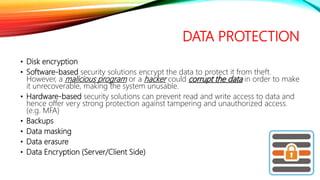
DATA PROTECTION
• Disk encryption
• Software-based security solutions encrypt the data to protect it from theft.
However, a malicious program or a hacker could corrupt the data in order to make
it unrecoverable, making the system unusable.
• Hardware-based security solutions can prevent read and write access to data and
hence offer very strong protection against tampering and unauthorized access.
(e.g. MFA)
• Backups
• Data masking
• Data erasure
• Data Encryption (Server/Client Side)
DATA PROTECTION
DISK ENCRYPTION
• Disk encryption: is a technology which protects information by converting it into
unreadable code that cannot be deciphered easily by unauthorized people. Disk
encryption uses disk encryption software or hardware to encrypt every bit of data that
goes on a disk or disk volume. It is used to prevent unauthorized access to data
storage.
DATA PROTECTION
BACKUPS
• Backup: the process of backing up, refers to the copying and archiving of
computer data so it may be used to restore the original after a data loss event. The verb
form is to back up in two words, whereas the noun is backup.
DATA PROTECTION
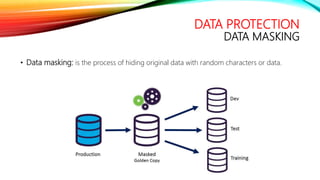
DATA MASKING
• Data masking: is the process of hiding original data with random characters or data.
DATA PROTECTION
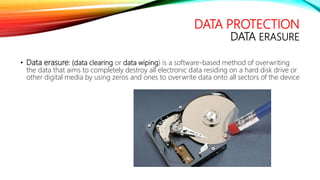
DATA ERASURE
• Data erasure: (data clearing or data wiping) is a software-based method of overwriting
the data that aims to completely destroy all electronic data residing on a hard disk drive or
other digital media by using zeros and ones to overwrite data onto all sectors of the device
DATA PROTECTION
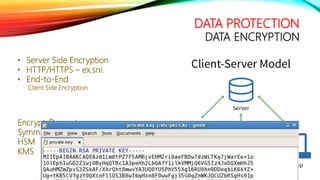
DATA ENCRYPTION
• Server Side Encryption
• HTTP/HTTPS – ex.sni.
• End-to-End
Client Side Encryption
Encrypt-Decrypt
Symmetric Private key
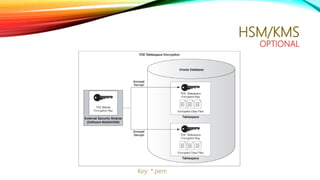
HSM
KMS
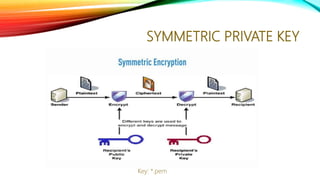
SYMMETRIC PRIVATE KEY
Key: *.pem
HSM/KMS
OPTIONAL
Key: *.pem
DATA SECURITY
QUESTIONS?
http://sli.do - #T182
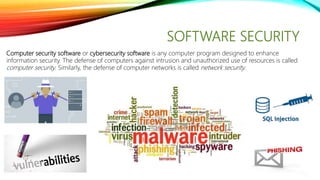
SOFTWARE SECURITY
Computer security software or cybersecurity software is any computer program designed to enhance
information security. The defense of computers against intrusion and unauthorized use of resources is called
computer security. Similarly, the defense of computer networks is called network security.
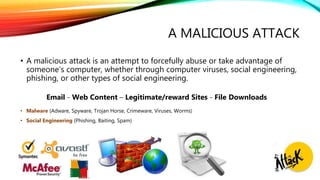
A MALICIOUS ATTACK
• A malicious attack is an attempt to forcefully abuse or take advantage of
someone's computer, whether through computer viruses, social engineering,
phishing, or other types of social engineering.
Email - Web Content – Legitimate/reward Sites - File Downloads
• Malware (Adware, Spyware, Trojan Horse, Crimeware, Viruses, Worms)
• Social Engineering (Phishing, Baiting, Spam)
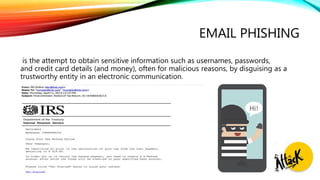
EMAIL PHISHING
is the attempt to obtain sensitive information such as usernames, passwords,
and credit card details (and money), often for malicious reasons, by disguising as a
trustworthy entity in an electronic communication.
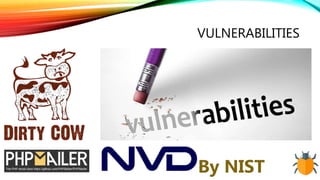
VULNERABILITIES
By NIST
SOFTWARE SECURITY
QUESTIONS?
http://sli.do - #T182
HARDWARE SECURITY
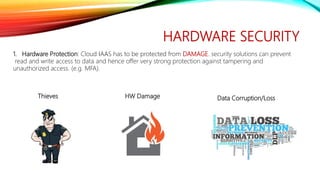
Thieves HW Damage
1. Hardware Protection: Cloud IAAS has to be protected from DAMAGE. security solutions can prevent
read and write access to data and hence offer very strong protection against tampering and
unauthorized access. (e.g. MFA).
Data Corruption/Loss
HARDWARE SECURITY
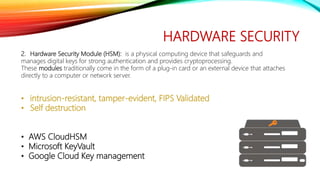
2. Hardware Security Module (HSM): is a physical computing device that safeguards and
manages digital keys for strong authentication and provides cryptoprocessing.
These modules traditionally come in the form of a plug-in card or an external device that attaches
directly to a computer or network server.
• intrusion-resistant, tamper-evident, FIPS Validated
• Self destruction
• AWS CloudHSM
• Microsoft KeyVault
• Google Cloud Key management
SECURITY POLICIES
COMPLIANCES
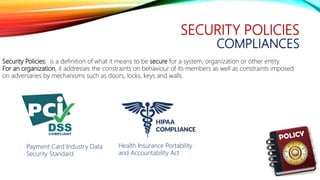
Security Policies: is a definition of what it means to be secure for a system, organization or other entity.
For an organization, it addresses the constraints on behaviour of its members as well as constraints imposed
on adversaries by mechanisms such as doors, locks, keys and walls.
Health Insurance Portability
and Accountability Act
Payment Card Industry Data
Security Standard
SECURITY POLICIES
COMPLIANCES
PCI DSS (Payment Card Industry Data Security Standard)
• Firewall at each internet Connection
• Components protected from security vulnerabilities
• Review Logs & Security Events
• Protect Card Holder Data
• Retain Audit history for at least 1 Year
• Security Group, NACL
• etc.
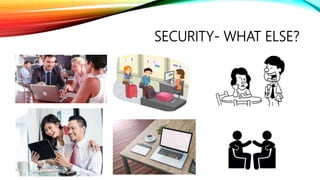
SECURITY- WHAT ELSE?
SECURITY
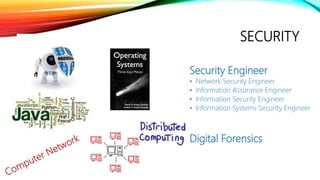
Security Engineer
• Network Security Engineer
• Information Assurance Engineer
• Information Security Engineer
• Information Systems Security Engineer
Digital Forensics
SECURITY
QUESTIONS?
http://sli.do - #T182
KEEP IN TOUCHKeep in touch
Join slack.com & subscribe to our channel (#fciteam)
https://dirtyhandsws.slack.com/
Send your email to Amr.salah.2010@gmail.com
to add you to the list with the following pattern:
Subject: #fciteam-Please Add Me

Introduction to Security (Hardware, Software, Data & Policies)

  • 1.
    15 MINUTES TECHNOLOGY CATCH-UP AmrSalah Middleware & Cloud Expert
  • 2.
    AMR SALAH MIDDLEWARE &CLOUD EXPERT • Computer Science, Mansoura University 2009 (CS) • 8+ years of experience in Middleware technologies • Middleware & Cloud Expert • Worked for (EG: Sumerge, Asset, Giza Systems, Egabi, SG: Pactera, NZ: Deloitte) • My Clients: Govt (SFD – Saudi, TEData – EG, CIB – EG, MOH – SG, etc.) • Certificates • Oracle SOA/ADF/BPM • AWS Solution Architect • Professional Scrum Master • Mulesoft Developer • More of experience in Security, Full stack development & CI/CD
  • 3.
    People burn notbecause they do the same thing everyday, but because they forget WHY they do the same thing everyday!
  • 4.
    SOFTWARE ENGINEERING PROCESSPostQuestions http://sli.do - #T182 #Agile – Ask your question!
  • 6.
  • 7.
    SOFTWARE ENGINEERING PROCESS SoftwareEngineering is the application of engineering to the development of software in a systematic method!
  • 8.
    Integration & Microservices AgileMethod Frameworks, Scrum & Roles Cloud Platforms, Services & Vendors Security Types, Policies & importance CryptoCurrency Blockchain, Trading
  • 9.
  • 10.
    SECURITY • Know ascyber security or IT security, is the protection of computer systems from the theft and damage to their hardware, software or information, as well as from disruption or misdirection of the services they provide. It’s all about DATA DAMAGE BREACHCorruption
  • 11.
    SECURITY • Know ascyber security or IT security, is the protection of computer systems from the theft and damage to their hardware, software or information, as well as from disruption or misdirection of the services they provide. Hardware Security Software Security Data Security
  • 12.
  • 13.
    DATA SECURITY -DATA • Data is distinct pieces of information, usually formatted in a special way. All software is divided into two general categories: data and programs. Programs are collections of instructions for manipulating data. • Data can exist in a variety of forms
  • 14.
    WHY DATA ISIMPORTANT
  • 15.
    WHY DATA ISIMPORTANT
  • 16.
    DATA SECURITY • protectingdigital data, such as those in a database, from destructive forces and from the unwanted actions of unauthorized users, such as a cyberattack or a data breach.
  • 17.
    DATA PROTECTION • Diskencryption • Software-based security solutions encrypt the data to protect it from theft. However, a malicious program or a hacker could corrupt the data in order to make it unrecoverable, making the system unusable. • Hardware-based security solutions can prevent read and write access to data and hence offer very strong protection against tampering and unauthorized access. (e.g. MFA) • Backups • Data masking • Data erasure • Data Encryption (Server/Client Side)
  • 18.
    DATA PROTECTION DISK ENCRYPTION •Disk encryption: is a technology which protects information by converting it into unreadable code that cannot be deciphered easily by unauthorized people. Disk encryption uses disk encryption software or hardware to encrypt every bit of data that goes on a disk or disk volume. It is used to prevent unauthorized access to data storage.
  • 19.
    DATA PROTECTION BACKUPS • Backup:the process of backing up, refers to the copying and archiving of computer data so it may be used to restore the original after a data loss event. The verb form is to back up in two words, whereas the noun is backup.
  • 20.
    DATA PROTECTION DATA MASKING •Data masking: is the process of hiding original data with random characters or data.
  • 21.
    DATA PROTECTION DATA ERASURE •Data erasure: (data clearing or data wiping) is a software-based method of overwriting the data that aims to completely destroy all electronic data residing on a hard disk drive or other digital media by using zeros and ones to overwrite data onto all sectors of the device
  • 22.
    DATA PROTECTION DATA ENCRYPTION •Server Side Encryption • HTTP/HTTPS – ex.sni. • End-to-End Client Side Encryption Encrypt-Decrypt Symmetric Private key HSM KMS
  • 23.
  • 24.
  • 25.
  • 26.
    SOFTWARE SECURITY Computer securitysoftware or cybersecurity software is any computer program designed to enhance information security. The defense of computers against intrusion and unauthorized use of resources is called computer security. Similarly, the defense of computer networks is called network security.
  • 27.
    A MALICIOUS ATTACK •A malicious attack is an attempt to forcefully abuse or take advantage of someone's computer, whether through computer viruses, social engineering, phishing, or other types of social engineering. Email - Web Content – Legitimate/reward Sites - File Downloads • Malware (Adware, Spyware, Trojan Horse, Crimeware, Viruses, Worms) • Social Engineering (Phishing, Baiting, Spam)
  • 28.
    EMAIL PHISHING is theattempt to obtain sensitive information such as usernames, passwords, and credit card details (and money), often for malicious reasons, by disguising as a trustworthy entity in an electronic communication.
  • 29.
  • 30.
  • 31.
    HARDWARE SECURITY Thieves HWDamage 1. Hardware Protection: Cloud IAAS has to be protected from DAMAGE. security solutions can prevent read and write access to data and hence offer very strong protection against tampering and unauthorized access. (e.g. MFA). Data Corruption/Loss
  • 32.
    HARDWARE SECURITY 2. HardwareSecurity Module (HSM): is a physical computing device that safeguards and manages digital keys for strong authentication and provides cryptoprocessing. These modules traditionally come in the form of a plug-in card or an external device that attaches directly to a computer or network server. • intrusion-resistant, tamper-evident, FIPS Validated • Self destruction • AWS CloudHSM • Microsoft KeyVault • Google Cloud Key management
  • 33.
    SECURITY POLICIES COMPLIANCES Security Policies:is a definition of what it means to be secure for a system, organization or other entity. For an organization, it addresses the constraints on behaviour of its members as well as constraints imposed on adversaries by mechanisms such as doors, locks, keys and walls. Health Insurance Portability and Accountability Act Payment Card Industry Data Security Standard
  • 34.
    SECURITY POLICIES COMPLIANCES PCI DSS(Payment Card Industry Data Security Standard) • Firewall at each internet Connection • Components protected from security vulnerabilities • Review Logs & Security Events • Protect Card Holder Data • Retain Audit history for at least 1 Year • Security Group, NACL • etc.
  • 35.
  • 36.
    SECURITY Security Engineer • NetworkSecurity Engineer • Information Assurance Engineer • Information Security Engineer • Information Systems Security Engineer Digital Forensics
  • 37.
  • 38.
    KEEP IN TOUCHKeepin touch Join slack.com & subscribe to our channel (#fciteam) https://dirtyhandsws.slack.com/ Send your email to Amr.salah.2010@gmail.com to add you to the list with the following pattern: Subject: #fciteam-Please Add Me

Editor's Notes

  • #13 What is important is data storage and data sensitivity
  • #14 What is important is data storage and data sensitivity
  • #27 security solutions encrypt the data to protect it from theft. However, a malicious program or a hacker could corrupt the data in order to make it unrecoverable, making the system unusable.