Introduction
“To be able to prepare a good test, one has
to have a mastery of the subject matter,
knowledge of the pupils to be tested, and
the use of the different test format”
Evaluating Educational Outcomes
(Oriondo & Antonio)
General Rules in Writing Test
Questions
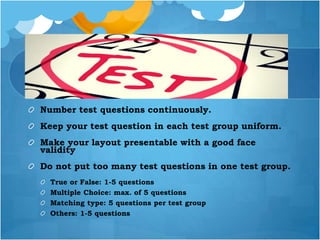
Number test questions continuously.
Keep your test question in each test group uniform.
Make your layout presentable with a good face
validity
Do not put too many test questions in one test group.
True or False: 1-5 questions
Multiple Choice: max. of 5 questions
Matching type: 5 questions per test group
Others: 1-5 questions
1. Avoid humorous items. Classroom testing is very
important and humorous items may cause students
to either not take the exam seriously or become
confused or even anxious.
2. Write items to measure what students know, not
what they do not know. (Cohen & Wallack)
Multiple Choice Test
When checking the stems for correctness:
• Ensure that the stem asks a clear question.
• Reading level is appropriate to the students.
• The stem is grammatically correct.
• Negatively stated stems are discouraged.
1. Use negatively stated stems sparingly and
when using negatives such as NOT,
underline or bold the print.
2. Use none of the above and all of the above
sparingly, and when you do use them,
don't always make them the right
answer.
3. Only one option should be correct or
clearly best.
4. All options should be homogenous and nearly
equal in length.
5. The stem (question) should contain only one
main idea.
6. Keep all options either singular or plural.
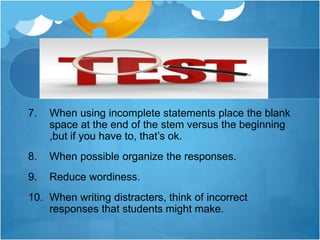
7. When using incomplete statements place the blank
space at the end of the stem versus the beginning
,but if you have to, that’s ok.
8. When possible organize the responses.
9. Reduce wordiness.
10. When writing distracters, think of incorrect
responses that students might make.
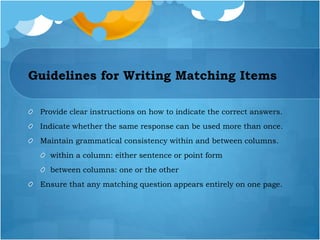
Guidelines for Writing Matching Items
Provide clear instructions on how to indicate the correct answers.
Indicate whether the same response can be used more than once.
Maintain grammatical consistency within and between columns.
within a column: either sentence or point form
between columns: one or the other
Ensure that any matching question appears entirely on one page.
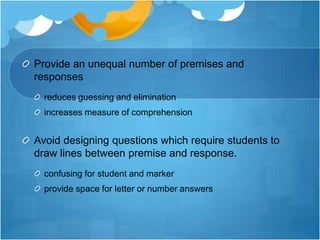
Provide an unequal number of premises and
responses
reduces guessing and elimination
increases measure of comprehension
Avoid designing questions which require students to
draw lines between premise and response.
confusing for student and marker
provide space for letter or number answers
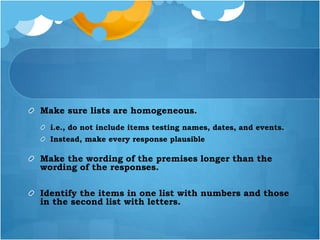
Make sure lists are homogeneous.
i.e., do not include items testing names, dates, and events.
Instead, make every response plausible
Make the wording of the premises longer than the
wording of the responses.
Identify the items in one list with numbers and those
in the second list with letters.
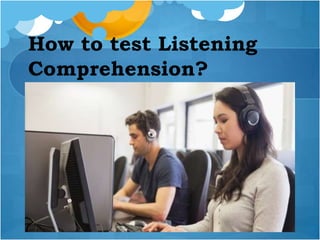
How to test Listening
Comprehension?
How to give listening test
First, ask the students to read the questions
(in Persian)
Tell them you are going to play the audio twice
Ask them to listen first and then take note
Give them time to answer the questions
Have a variety of questions
( both multiple choice and blank) NOT true or false
In multiple choice questions the responses could be
three instead of four
keep the language of the options simple
The audio should be in a right level.
The questions should be both general and detail
Make sure the player works well and everybody can
hear the audio.
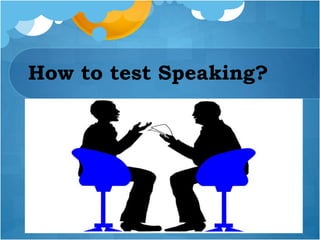
How to test Speaking?
Criteria:
Fluency
Vocabulary
Grammar
Pronunciation
First, ask the students general questions e.g. their
names, hometown, free time, etc
Then ask them some questions related to the theme of
the lesson(s) and grammar of the lesson(s)
Communicate with them. DON’T just interview them
You can make an inegrative test by combining listening
and speaking.
The test should be conducted individually NOT in class.
Or role-play which must be done by two.
Tell the students that you expect them to talk in their
level ( probably Elementary)
How to test vocabulary?
Cover most vocabularies of both the course
book and the workbook
Have a variety of questions
There is only one clear answer and the stem
is clear too.
Try to give more context than just a
sentence
Vocabulary test is NOT a grammar test. The test should
not have a lot of syntactic load.
Spelling mistake does NOT count here. Take it easy
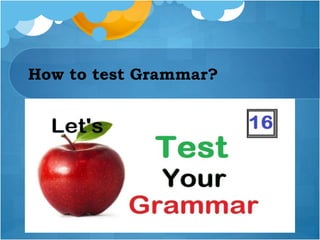
How to test Grammar?
Have a variety of questions
There is only one clear answer
Cover all grammatical points IN the book
If there is a spelling section to test the spelling of the
words, DO NOT count the other spelling mistakes
in other sections
How to test Reading
Comprehension?
Choose a text in an appropriate level
Time should be enough. One minute for each question
Modify the questions if needed
Having two texts having two questions each is much
better than having one text with four questions.
The passages are neither short nor long.
Some tips on item writing
Do not write items for which the correct response can be
found without understanding the text.
Do not write items that some candidates are likely to
answer from general knowledge without reading the text.
Make the items independent of each other; do not make
the correct response on one item depend on another item
being responded to correctly.
How to test Cloze
passages?
Choose a text in an appropriate level
Ensure that the first sentence does NOT have a blank
Distractors are really WRONG
Cloze test is NOT just a vocabulary test
As teachers you can modify the distractors
Second language assessment

Second language assessment

  • 3.
    Introduction “To be ableto prepare a good test, one has to have a mastery of the subject matter, knowledge of the pupils to be tested, and the use of the different test format” Evaluating Educational Outcomes (Oriondo & Antonio)
  • 6.
    General Rules inWriting Test Questions
  • 7.
    Number test questionscontinuously. Keep your test question in each test group uniform. Make your layout presentable with a good face validity Do not put too many test questions in one test group. True or False: 1-5 questions Multiple Choice: max. of 5 questions Matching type: 5 questions per test group Others: 1-5 questions
  • 8.
    1. Avoid humorousitems. Classroom testing is very important and humorous items may cause students to either not take the exam seriously or become confused or even anxious. 2. Write items to measure what students know, not what they do not know. (Cohen & Wallack)
  • 10.
    Multiple Choice Test Whenchecking the stems for correctness: • Ensure that the stem asks a clear question. • Reading level is appropriate to the students. • The stem is grammatically correct. • Negatively stated stems are discouraged.
  • 11.
    1. Use negativelystated stems sparingly and when using negatives such as NOT, underline or bold the print. 2. Use none of the above and all of the above sparingly, and when you do use them, don't always make them the right answer. 3. Only one option should be correct or clearly best.
  • 12.
    4. All optionsshould be homogenous and nearly equal in length. 5. The stem (question) should contain only one main idea. 6. Keep all options either singular or plural.
  • 13.
    7. When usingincomplete statements place the blank space at the end of the stem versus the beginning ,but if you have to, that’s ok. 8. When possible organize the responses. 9. Reduce wordiness. 10. When writing distracters, think of incorrect responses that students might make.
  • 14.
    Guidelines for WritingMatching Items Provide clear instructions on how to indicate the correct answers. Indicate whether the same response can be used more than once. Maintain grammatical consistency within and between columns. within a column: either sentence or point form between columns: one or the other Ensure that any matching question appears entirely on one page.
  • 15.
    Provide an unequalnumber of premises and responses reduces guessing and elimination increases measure of comprehension Avoid designing questions which require students to draw lines between premise and response. confusing for student and marker provide space for letter or number answers
  • 16.
    Make sure listsare homogeneous. i.e., do not include items testing names, dates, and events. Instead, make every response plausible Make the wording of the premises longer than the wording of the responses. Identify the items in one list with numbers and those in the second list with letters.
  • 17.
    How to testListening Comprehension?
  • 18.
    How to givelistening test First, ask the students to read the questions (in Persian) Tell them you are going to play the audio twice Ask them to listen first and then take note Give them time to answer the questions Have a variety of questions ( both multiple choice and blank) NOT true or false
  • 19.
    In multiple choicequestions the responses could be three instead of four keep the language of the options simple The audio should be in a right level. The questions should be both general and detail Make sure the player works well and everybody can hear the audio.
  • 20.
    How to testSpeaking?
  • 21.
  • 22.
    First, ask thestudents general questions e.g. their names, hometown, free time, etc Then ask them some questions related to the theme of the lesson(s) and grammar of the lesson(s) Communicate with them. DON’T just interview them
  • 23.
    You can makean inegrative test by combining listening and speaking. The test should be conducted individually NOT in class. Or role-play which must be done by two. Tell the students that you expect them to talk in their level ( probably Elementary)
  • 24.
    How to testvocabulary?
  • 25.
    Cover most vocabulariesof both the course book and the workbook Have a variety of questions There is only one clear answer and the stem is clear too. Try to give more context than just a sentence
  • 26.
    Vocabulary test isNOT a grammar test. The test should not have a lot of syntactic load. Spelling mistake does NOT count here. Take it easy
  • 27.
    How to testGrammar?
  • 28.
    Have a varietyof questions There is only one clear answer Cover all grammatical points IN the book If there is a spelling section to test the spelling of the words, DO NOT count the other spelling mistakes in other sections
  • 29.
    How to testReading Comprehension?
  • 30.
    Choose a textin an appropriate level Time should be enough. One minute for each question Modify the questions if needed Having two texts having two questions each is much better than having one text with four questions. The passages are neither short nor long.
  • 31.
    Some tips onitem writing Do not write items for which the correct response can be found without understanding the text. Do not write items that some candidates are likely to answer from general knowledge without reading the text. Make the items independent of each other; do not make the correct response on one item depend on another item being responded to correctly.
  • 32.
    How to testCloze passages?
  • 33.
    Choose a textin an appropriate level Ensure that the first sentence does NOT have a blank Distractors are really WRONG Cloze test is NOT just a vocabulary test As teachers you can modify the distractors