Search Engine Optimization
Prepared by
Shreyas Anand
1
Points
 What is Search Engine?
 What Is Search Engine Optimization ?
 How Do Search Engine Works ?
 Search Engine Ranking Factor
 Phases of Search Engine Optimization
 SEO Key Benefits
 Organic Search Engine Optimization
 How Different Parameters Affect SEO?
 Conclusion
2
 What is Search Engine?
 On the back end, Search engine is a piece of
software that uses applications to collect
information about web pages.
 On the front end, the software has a user
interface where users enter a search term a word
or phrase in an attempt to find specific
information. When the user clicks a search
button, an algorithm then examines the
information stored in the back-end database and
retrieves links to web pages that appear to
match the search term the user entered.
3
 Anatomy of Search Engine
 Query Interface
 Crawler, Spider And Robots
 Database
 Search Algorithms
 List Search
 Tree Search
 Sql Search
 Informed Search
 Retrieval And Ranking
4
 Retrieval & Ranking
 Retrieval of data is a combination
activity of the crawler/spider/robot, the
database & the search algorithm.
 The ranking of a site in a search engine
determines how often people visit that
site, which affects everything from
revenue to the advertising budget.
5
 What Is Search Engine
Optimization ? Search engine optimization (SEO) is the process of
improving the volume and quality of traffic to a web site
from search engines via "natural" ("organic" or
"algorithmic") search results.
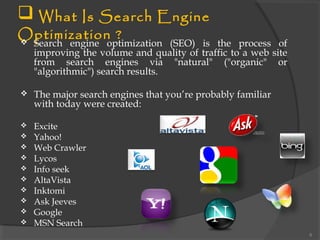
 The major search engines that you’re probably familiar
with today were created:
 Excite
 Yahoo!
 Web Crawler
 Lycos
 Info seek
 AltaVista
 Inktomi
 Ask Jeeves
 Google
 MSN Search
6
 How Do Search Engine
Works ?
 There are basically two types of search
engines.
 Crawler based search engines
 Human-powered search engines
7
 Search Engine Ranking
Factor :
 The factors that affect search engine
rankings into the following general
categories:
 Visible on-page factors
 Invisible on-page factors
 Time-based factors
 External factors
8
 Visible On-Page Factors :
 Page title
 Page headings
 Page copy
 Outbound links
 Keywords in URLs and domain name
 Internal link structure and anchors
 Overall site topicality
9
 Invisible On-Page Factors :
 Meta description
 Meta keywords
 Alt and title attributes
 Page structure considerations
10
 Time-Based Factors
The time-based factors that are used as
ranking factors are the site and page
age, and the age of the links referring to
it. The registration length of a domain
name may also influence rankings.
 Site and Page Age
 Link Age
 Domain Registration Length
11
 External Factors :
 Quantity, quality, and relevance of
inbound links
 Link acquisition rate
 Link anchor text and surrounding copy
 Reciprocal links
 Number of links on a page
 TLD of domain name for a link
 Link location
12
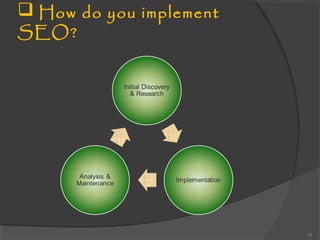
 How do you implement
SEO?
13
 Phases of Search Engine
Optimization
 Phase I: Initial Discovery & Research
 Phase II: Implementation
 Phase III: Analysis
14
 Initial Discovery & Research :
 Discovery & Strategy Development
 Target Term Research
 Initial Position Report
 Link Popularity and Page Saturation
Assessment
 Search Engine Friendliness Assessment
 Review of Site Statistics
15
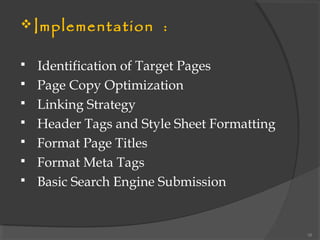
Implementation :
 Identification of Target Pages
 Page Copy Optimization
 Linking Strategy
 Header Tags and Style Sheet Formatting
 Format Page Titles
 Format Meta Tags
 Basic Search Engine Submission
16
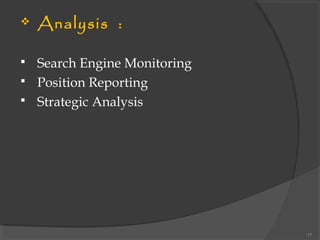
 Analysis :
 Search Engine Monitoring
 Position Reporting
 Strategic Analysis
17
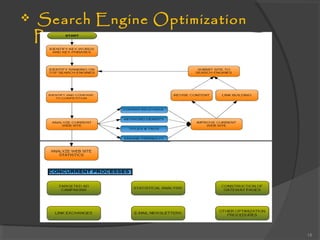
 Search Engine Optimization
Process:
18
 SEO Key Benefits
 Increased visibility among target
audiences
 Connect with motivated prospects
 Increased brand recognition & identity
 Goal-driven
 Flexibility
 Measurable results
19
 Organic Search Engine
Optimization
 What is Organic Search Engine
Optimization?
 How does Organic SEO work?
20
What is Organic Search Engine
Optimization?
Organic is referred to as "natural" meaning
that the search engine listings that appear in
the non-paid areas of the search results are
completely dependent on the algorithms of the
various search engine websites and not
impacted by paid search services.
21
 How does Organic SEO work?
 Essentially it is a page by page optimization
process.
 The best approach to generate strong rankings
on the search engine results pages (SERPs) for
valuable and relevant key terms is to limit key
terms on a page by page basis.
22
 How Different Parameter s
Affect SEO?
 Links
 Pay-Per-Click (PPC)
 Web-Site Content
23
 How Links Affect SEO ?
 A web page without links is like a desert
island.
 Links provide a method by which traffic
to your site is increased.
24
 How Pay-Per-Click Affect
SEO ?
 PPC programs damage organic rankings
because the act of paying for a listing
automatically reduces the rank of your
organic keyword efforts.
 PPC is a search marketing strategy.
25
 How Web-Site Content Affect
SEO ?
 Content is the one element that can keep
customers coming back to your site time and
again.
 There are several different types of content,
and each type has its own implications:
 Licensed Content :
 Original Content :
 Dynamic Content :
26
Conclusion
Search Engine Optimization (SEO) is a
specialized research-driven process of
analyzing and editing your web site in order to
increase the rankings of your site pages for
specific search terms in search engines.
27
28

Search engine optimization

  • 1.
  • 2.
    Points  What isSearch Engine?  What Is Search Engine Optimization ?  How Do Search Engine Works ?  Search Engine Ranking Factor  Phases of Search Engine Optimization  SEO Key Benefits  Organic Search Engine Optimization  How Different Parameters Affect SEO?  Conclusion 2
  • 3.
     What isSearch Engine?  On the back end, Search engine is a piece of software that uses applications to collect information about web pages.  On the front end, the software has a user interface where users enter a search term a word or phrase in an attempt to find specific information. When the user clicks a search button, an algorithm then examines the information stored in the back-end database and retrieves links to web pages that appear to match the search term the user entered. 3
  • 4.
     Anatomy ofSearch Engine  Query Interface  Crawler, Spider And Robots  Database  Search Algorithms  List Search  Tree Search  Sql Search  Informed Search  Retrieval And Ranking 4
  • 5.
     Retrieval &Ranking  Retrieval of data is a combination activity of the crawler/spider/robot, the database & the search algorithm.  The ranking of a site in a search engine determines how often people visit that site, which affects everything from revenue to the advertising budget. 5
  • 6.
     What IsSearch Engine Optimization ? Search engine optimization (SEO) is the process of improving the volume and quality of traffic to a web site from search engines via "natural" ("organic" or "algorithmic") search results.  The major search engines that you’re probably familiar with today were created:  Excite  Yahoo!  Web Crawler  Lycos  Info seek  AltaVista  Inktomi  Ask Jeeves  Google  MSN Search 6
  • 7.
     How DoSearch Engine Works ?  There are basically two types of search engines.  Crawler based search engines  Human-powered search engines 7
  • 8.
     Search EngineRanking Factor :  The factors that affect search engine rankings into the following general categories:  Visible on-page factors  Invisible on-page factors  Time-based factors  External factors 8
  • 9.
     Visible On-PageFactors :  Page title  Page headings  Page copy  Outbound links  Keywords in URLs and domain name  Internal link structure and anchors  Overall site topicality 9
  • 10.
     Invisible On-PageFactors :  Meta description  Meta keywords  Alt and title attributes  Page structure considerations 10
  • 11.
     Time-Based Factors Thetime-based factors that are used as ranking factors are the site and page age, and the age of the links referring to it. The registration length of a domain name may also influence rankings.  Site and Page Age  Link Age  Domain Registration Length 11
  • 12.
     External Factors:  Quantity, quality, and relevance of inbound links  Link acquisition rate  Link anchor text and surrounding copy  Reciprocal links  Number of links on a page  TLD of domain name for a link  Link location 12
  • 13.
     How doyou implement SEO? 13
  • 14.
     Phases ofSearch Engine Optimization  Phase I: Initial Discovery & Research  Phase II: Implementation  Phase III: Analysis 14
  • 15.
     Initial Discovery& Research :  Discovery & Strategy Development  Target Term Research  Initial Position Report  Link Popularity and Page Saturation Assessment  Search Engine Friendliness Assessment  Review of Site Statistics 15
  • 16.
    Implementation :  Identificationof Target Pages  Page Copy Optimization  Linking Strategy  Header Tags and Style Sheet Formatting  Format Page Titles  Format Meta Tags  Basic Search Engine Submission 16
  • 17.
     Analysis : Search Engine Monitoring  Position Reporting  Strategic Analysis 17
  • 18.
     Search EngineOptimization Process: 18
  • 19.
     SEO KeyBenefits  Increased visibility among target audiences  Connect with motivated prospects  Increased brand recognition & identity  Goal-driven  Flexibility  Measurable results 19
  • 20.
     Organic SearchEngine Optimization  What is Organic Search Engine Optimization?  How does Organic SEO work? 20
  • 21.
    What is OrganicSearch Engine Optimization? Organic is referred to as "natural" meaning that the search engine listings that appear in the non-paid areas of the search results are completely dependent on the algorithms of the various search engine websites and not impacted by paid search services. 21
  • 22.
     How doesOrganic SEO work?  Essentially it is a page by page optimization process.  The best approach to generate strong rankings on the search engine results pages (SERPs) for valuable and relevant key terms is to limit key terms on a page by page basis. 22
  • 23.
     How DifferentParameter s Affect SEO?  Links  Pay-Per-Click (PPC)  Web-Site Content 23
  • 24.
     How LinksAffect SEO ?  A web page without links is like a desert island.  Links provide a method by which traffic to your site is increased. 24
  • 25.
     How Pay-Per-ClickAffect SEO ?  PPC programs damage organic rankings because the act of paying for a listing automatically reduces the rank of your organic keyword efforts.  PPC is a search marketing strategy. 25
  • 26.
     How Web-SiteContent Affect SEO ?  Content is the one element that can keep customers coming back to your site time and again.  There are several different types of content, and each type has its own implications:  Licensed Content :  Original Content :  Dynamic Content : 26
  • 27.
    Conclusion Search Engine Optimization(SEO) is a specialized research-driven process of analyzing and editing your web site in order to increase the rankings of your site pages for specific search terms in search engines. 27
  • 28.