Agenda
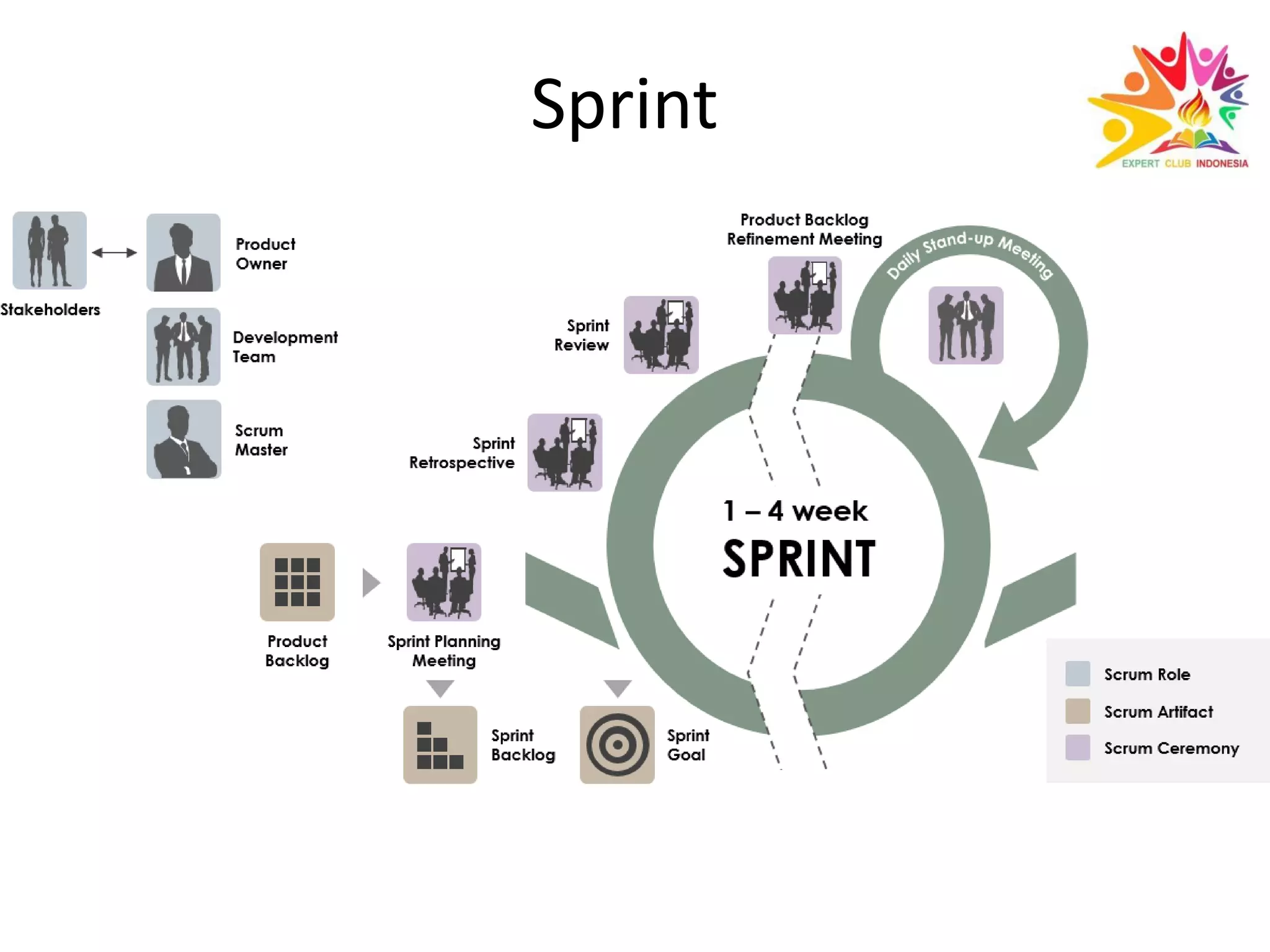
Sprint
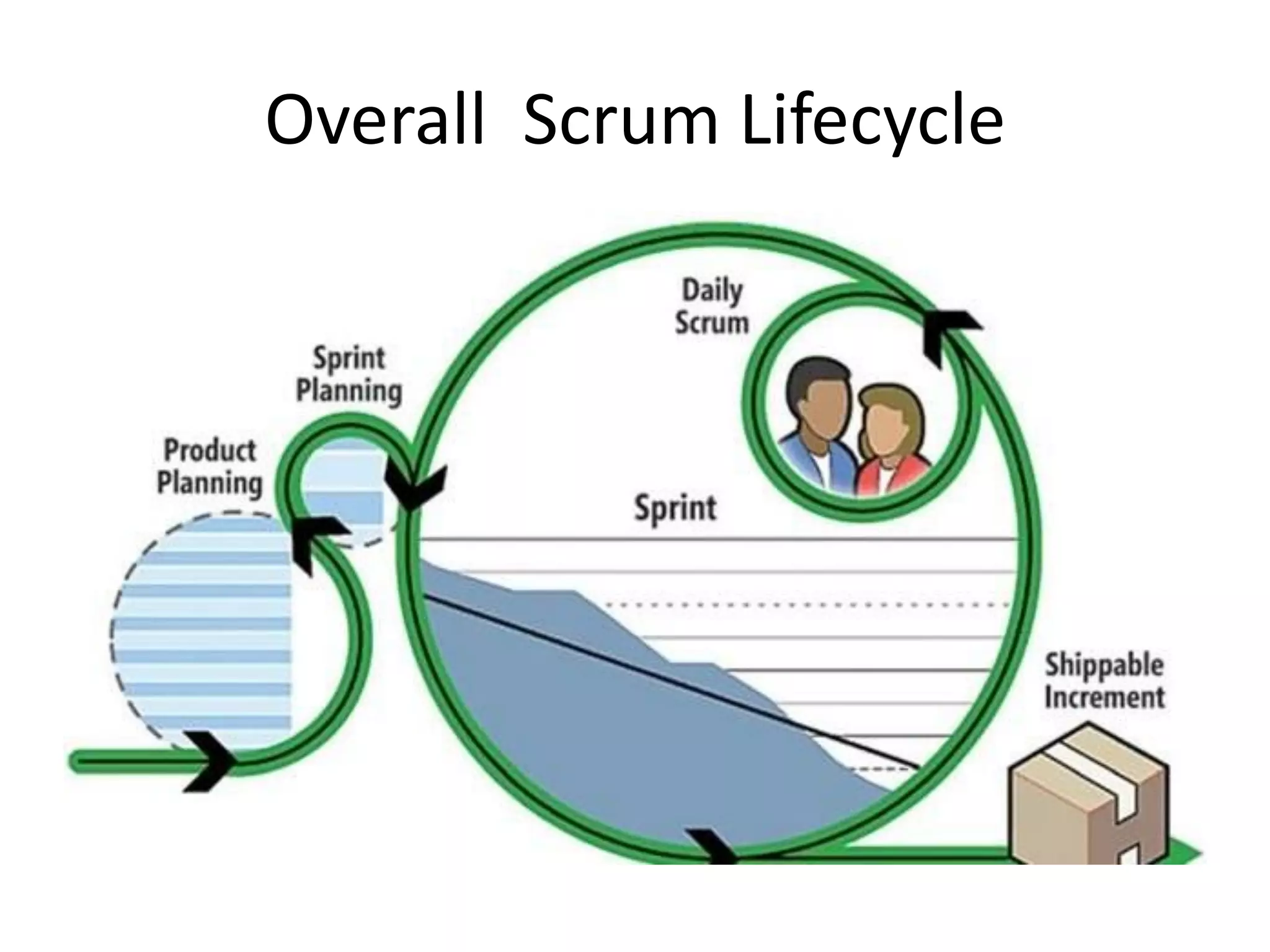
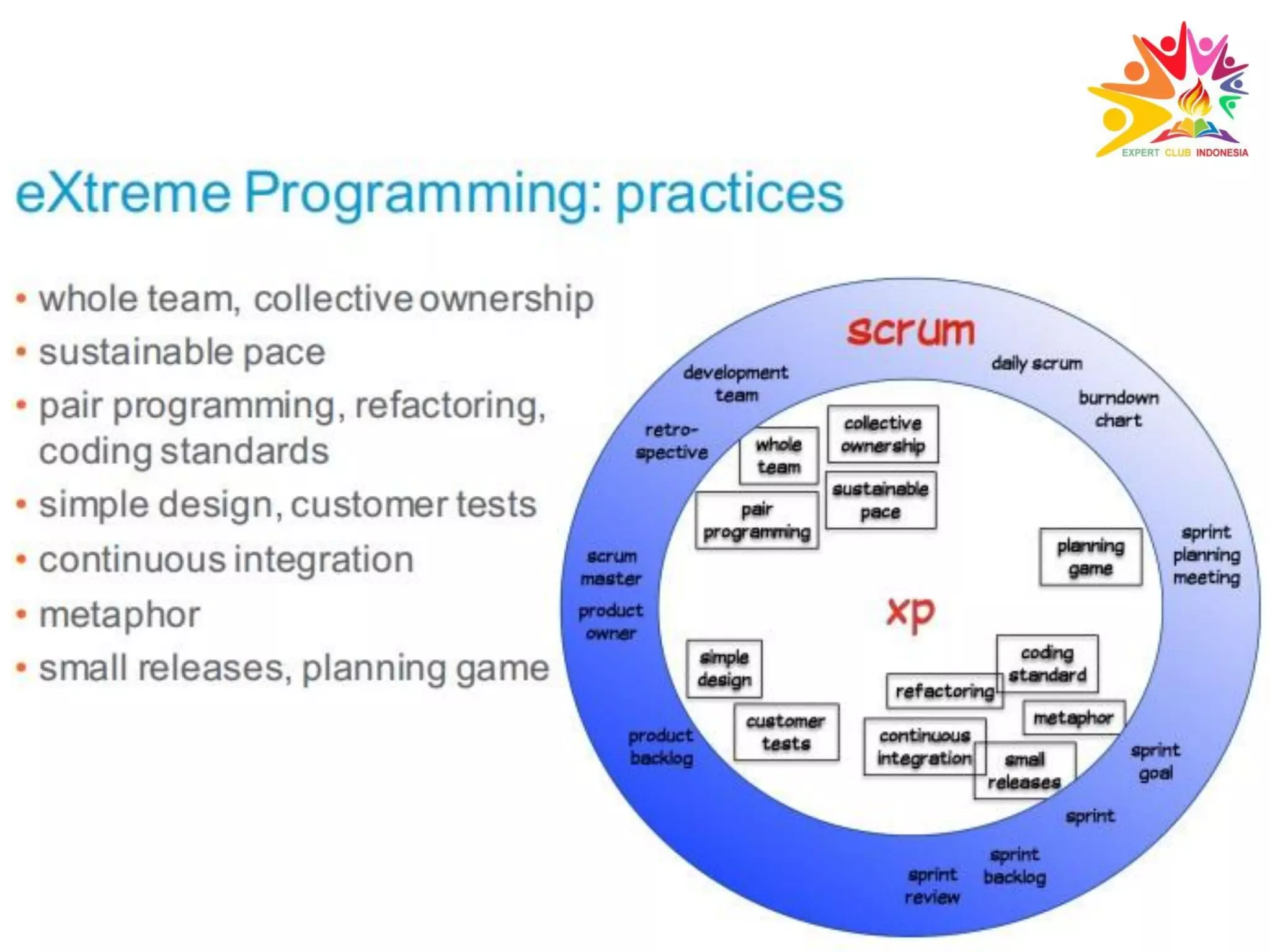
Overall Scrum Lifecycle
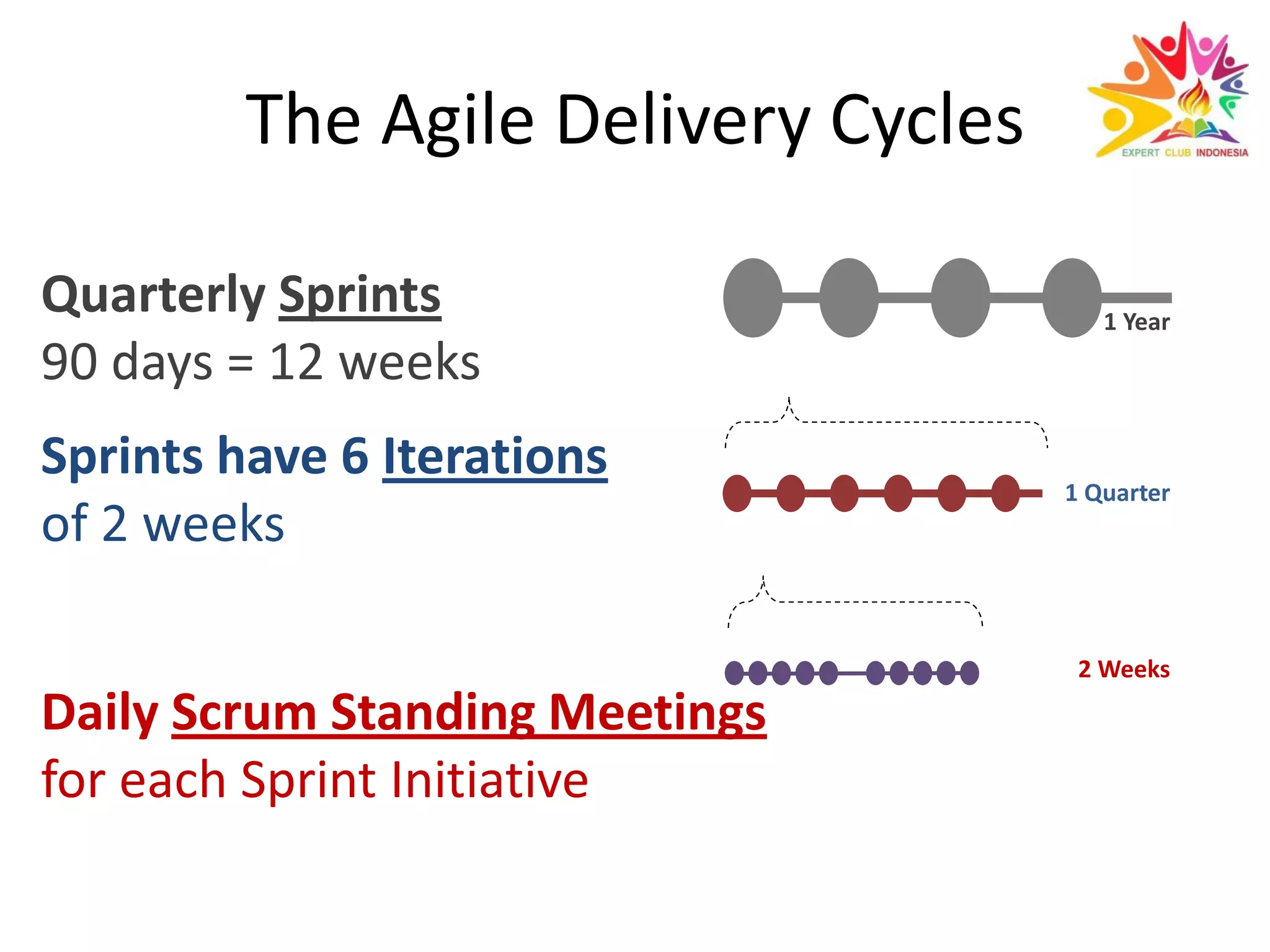
The Agile Delivery Cycles
Quarterly Sprints
90 days = 12 weeks
Daily Scrum Standing Meetings
for each Sprint Initiative
1 Year
1 Quarter
2 Weeks
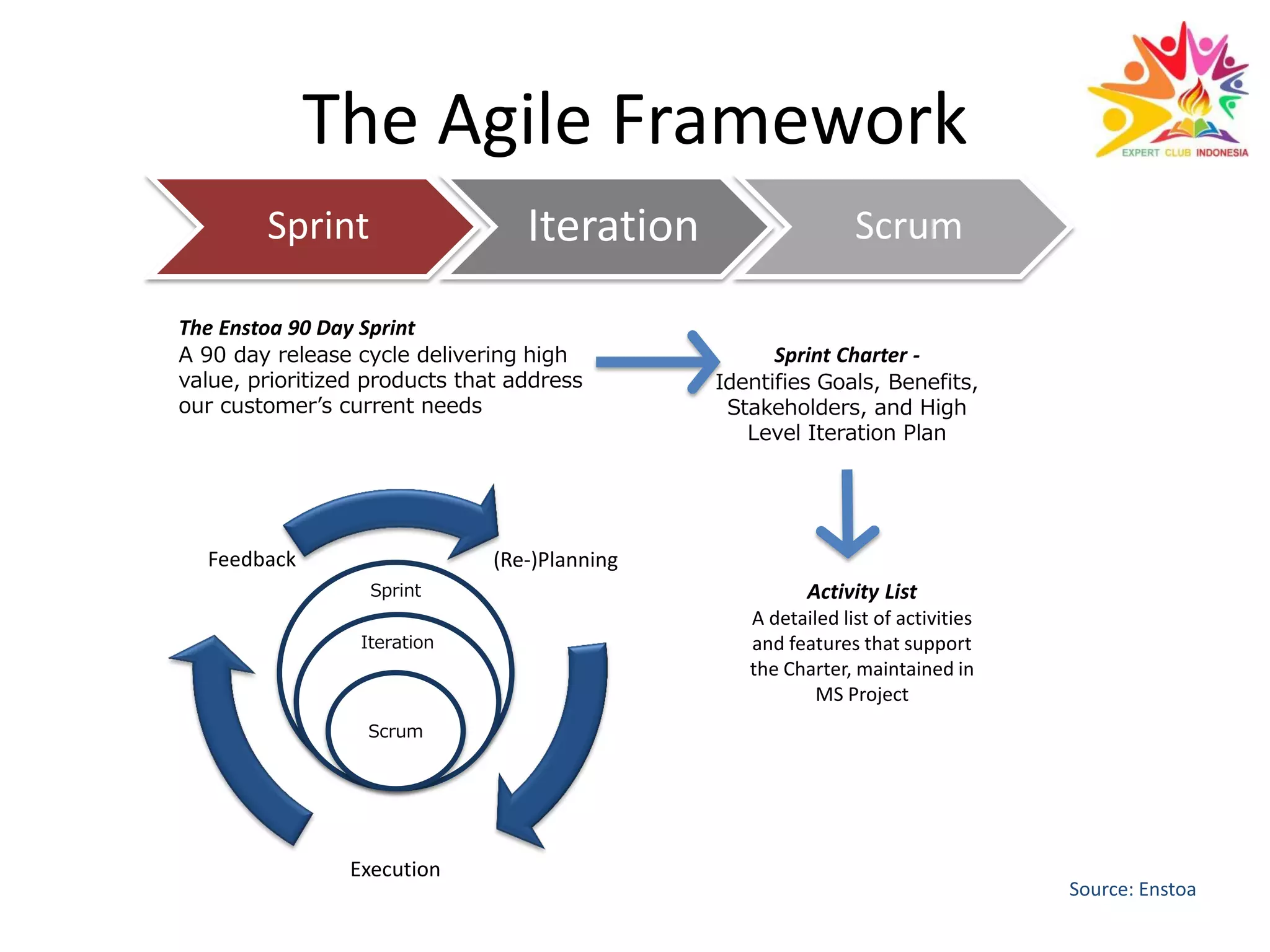
The Enstoa 90 Day Sprint
A 90 day release cycle delivering high
value, prioritized products that address
our customer’s current needs
Activity List
A detailed list of activities
and features that support
the Charter, maintained in
MS Project
Sprint Charter -
Identifies Goals, Benefits,
Stakeholders, and High
Level Iteration Plan
Sprint
Iteration
Scrum
Feedback (Re-)Planning
Execution
Sprint Iteration Scrum
The Agile Framework
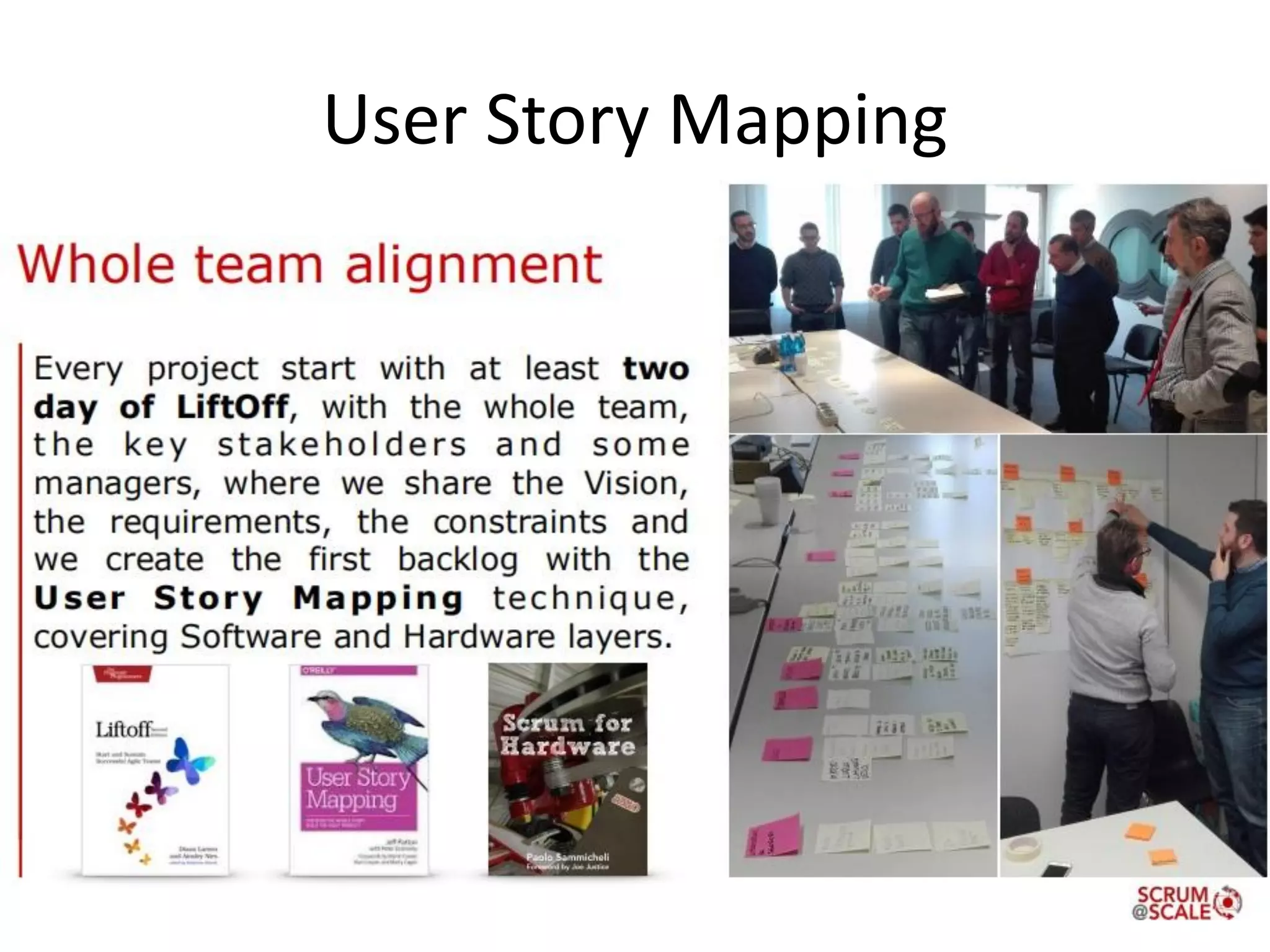
User Story Mapping
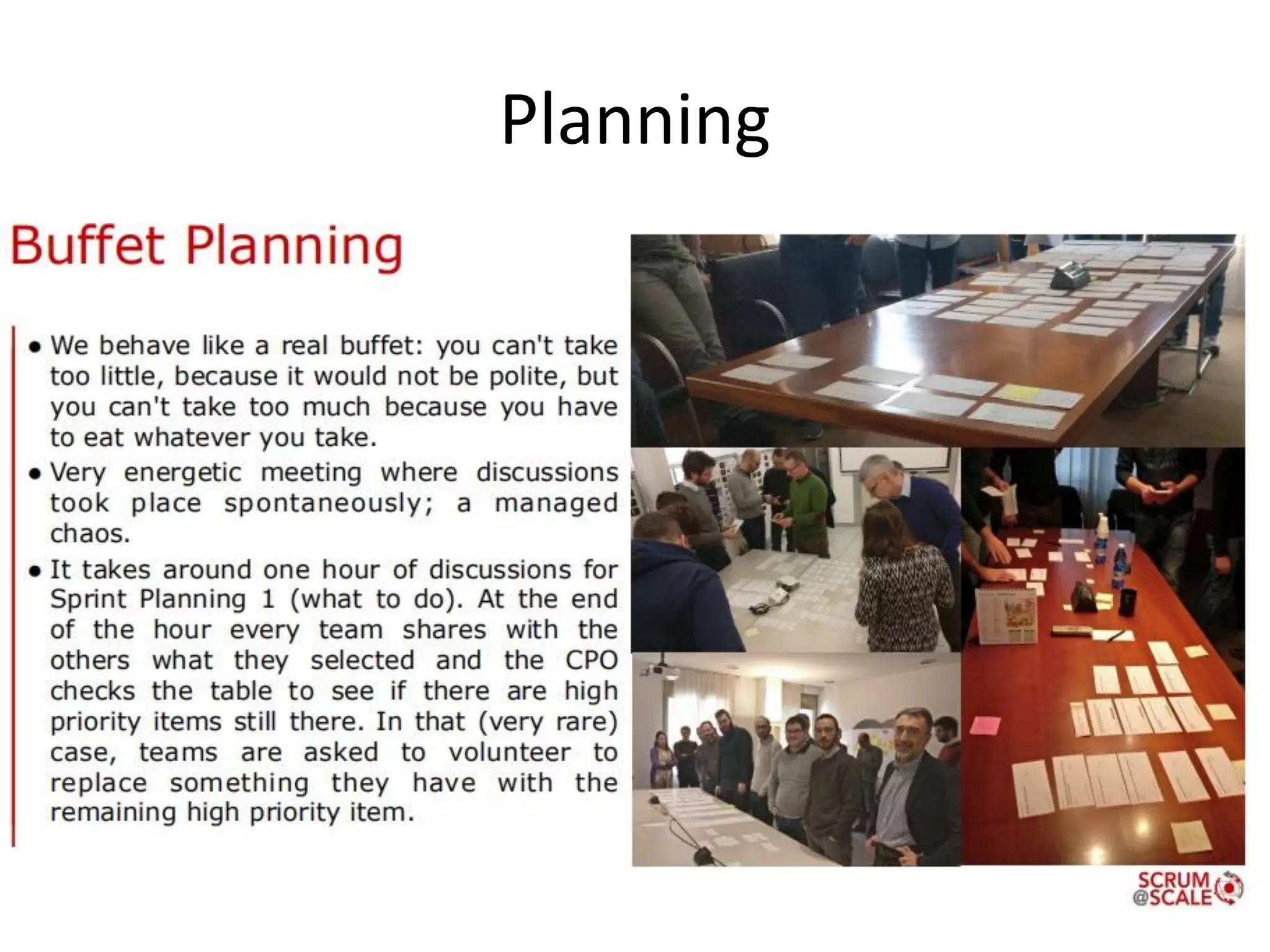
Planning
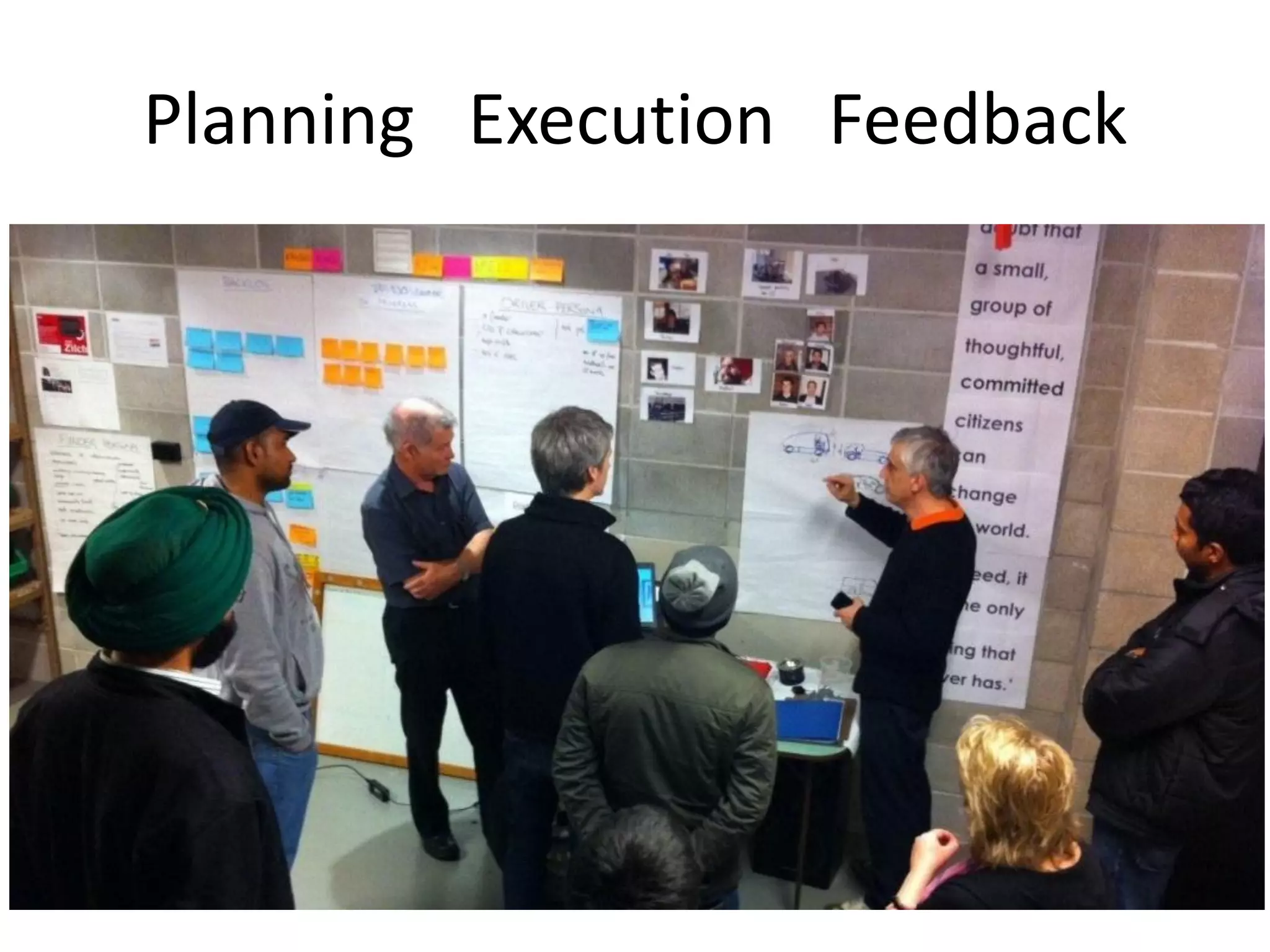
Planning Execution Feedback
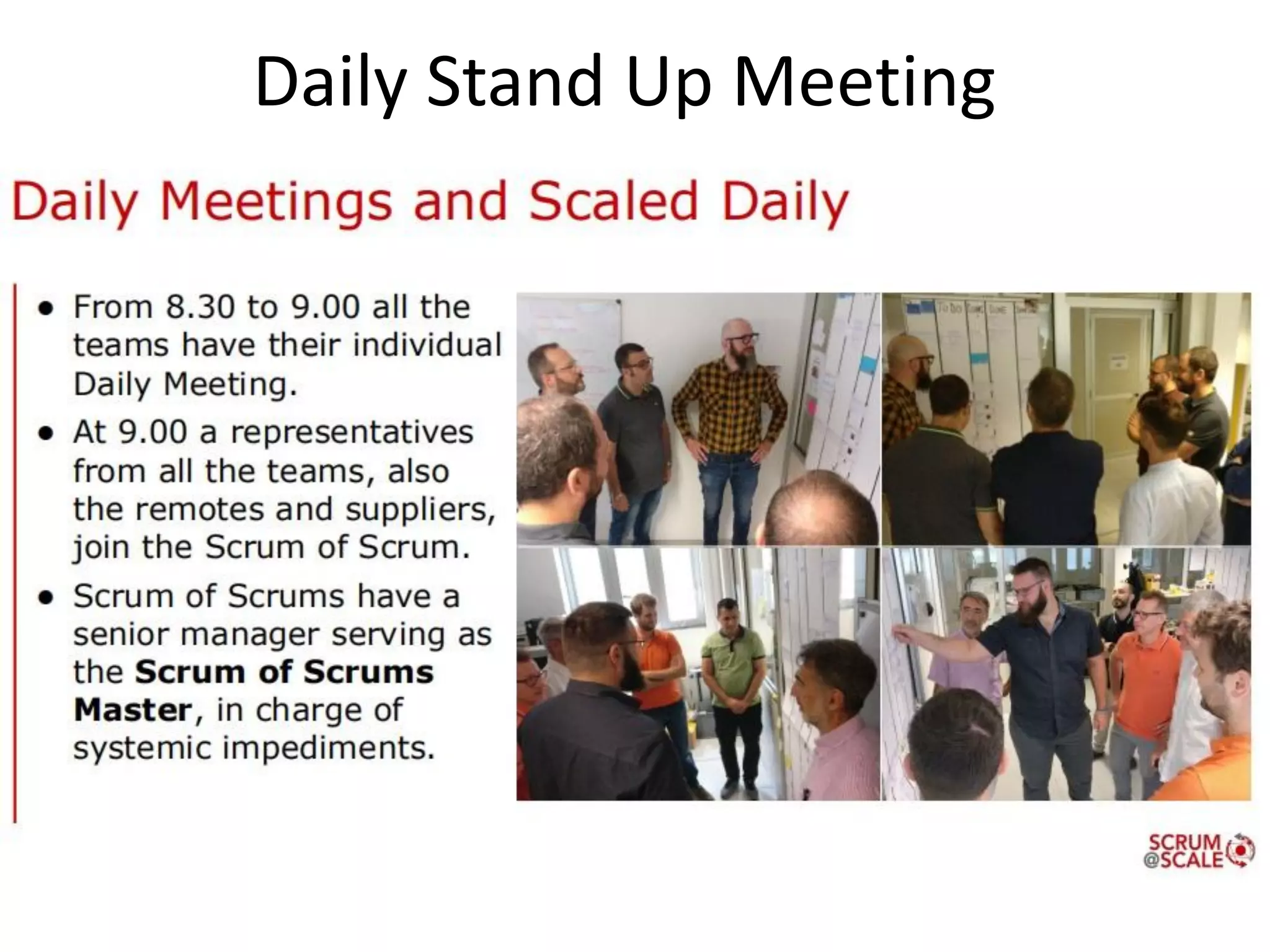
Daily Stand Up Meeting
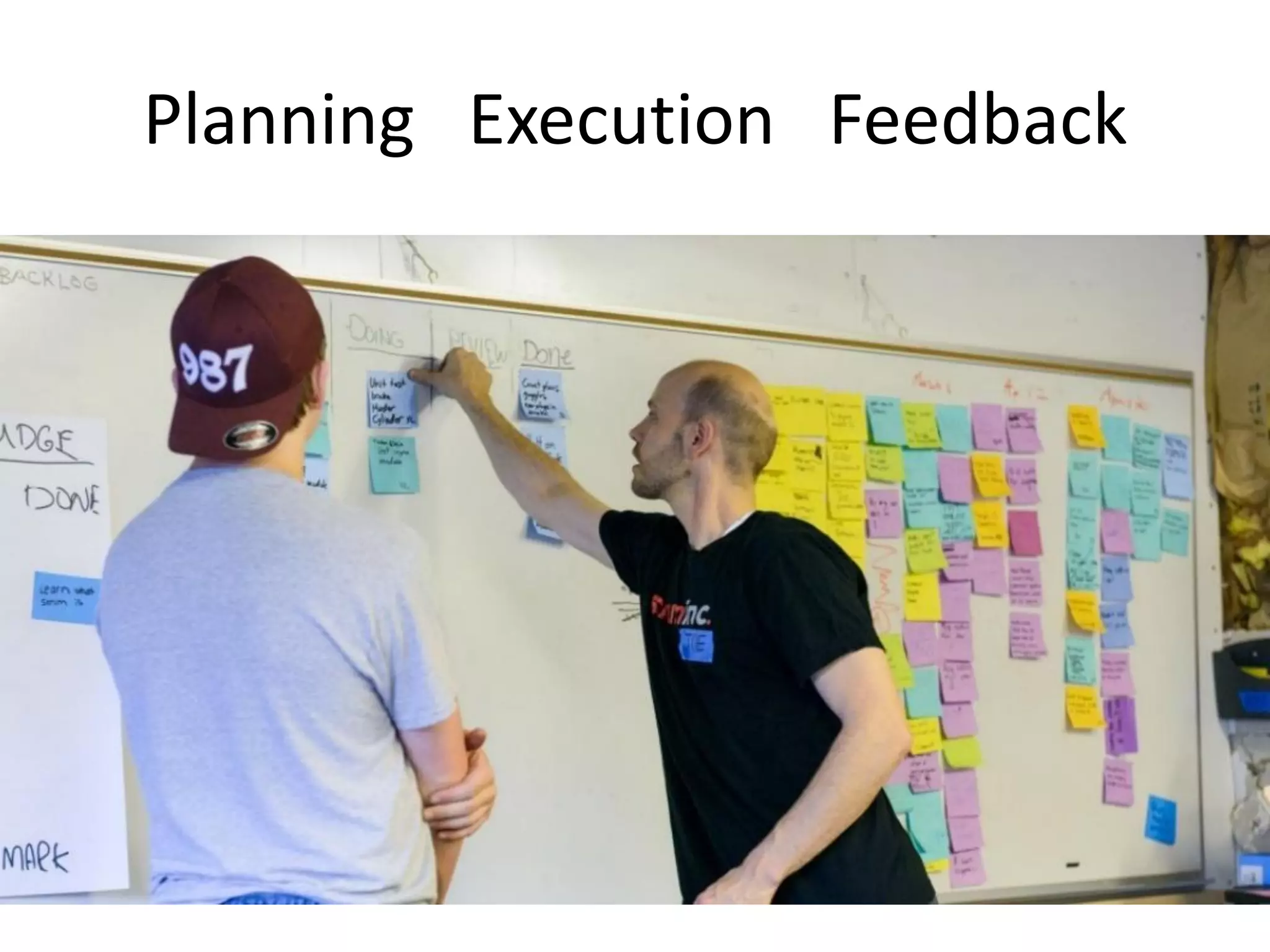
Planning Execution Feedback
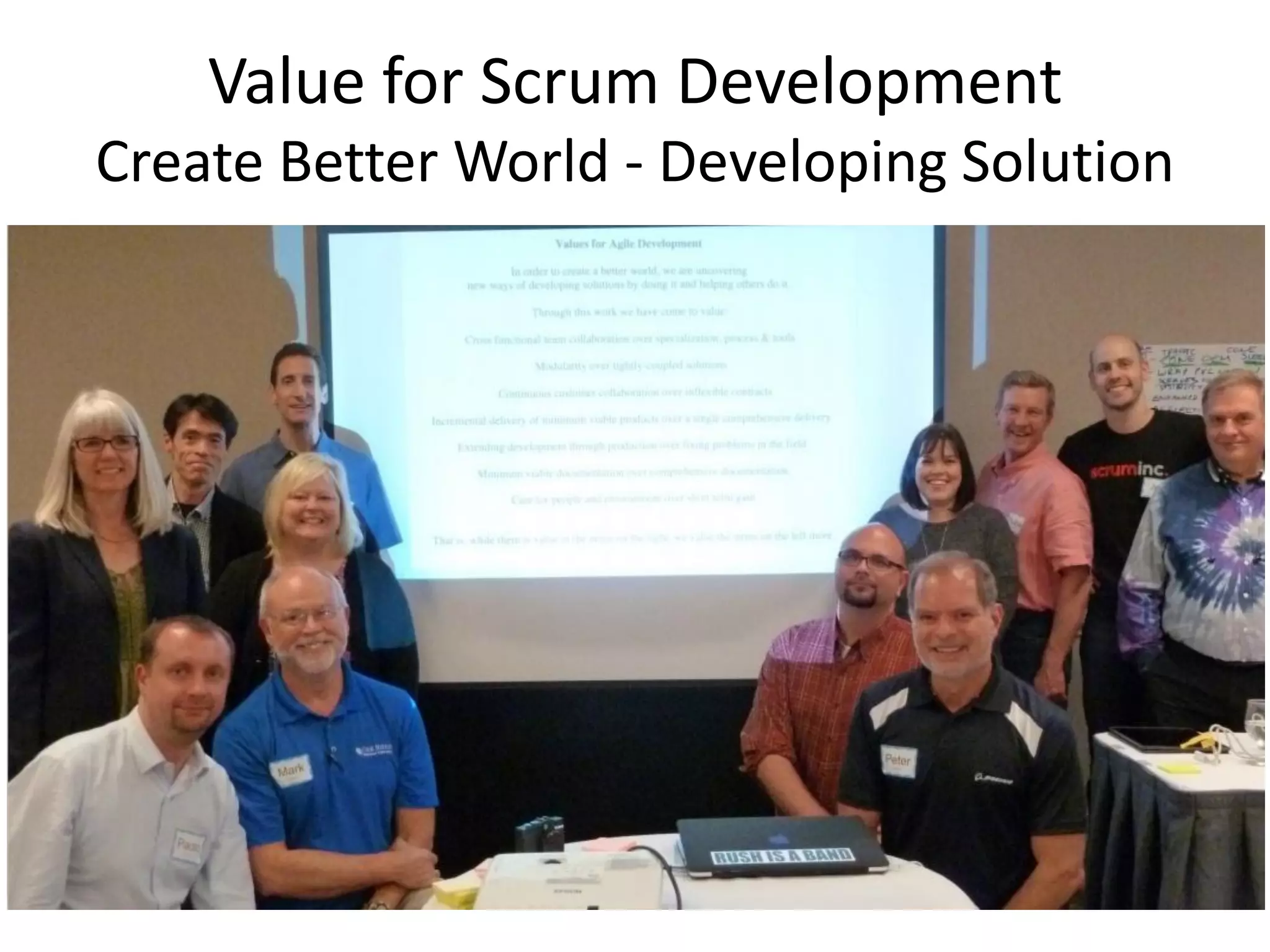
Value for Scrum Development
Create Better World - Developing Solution
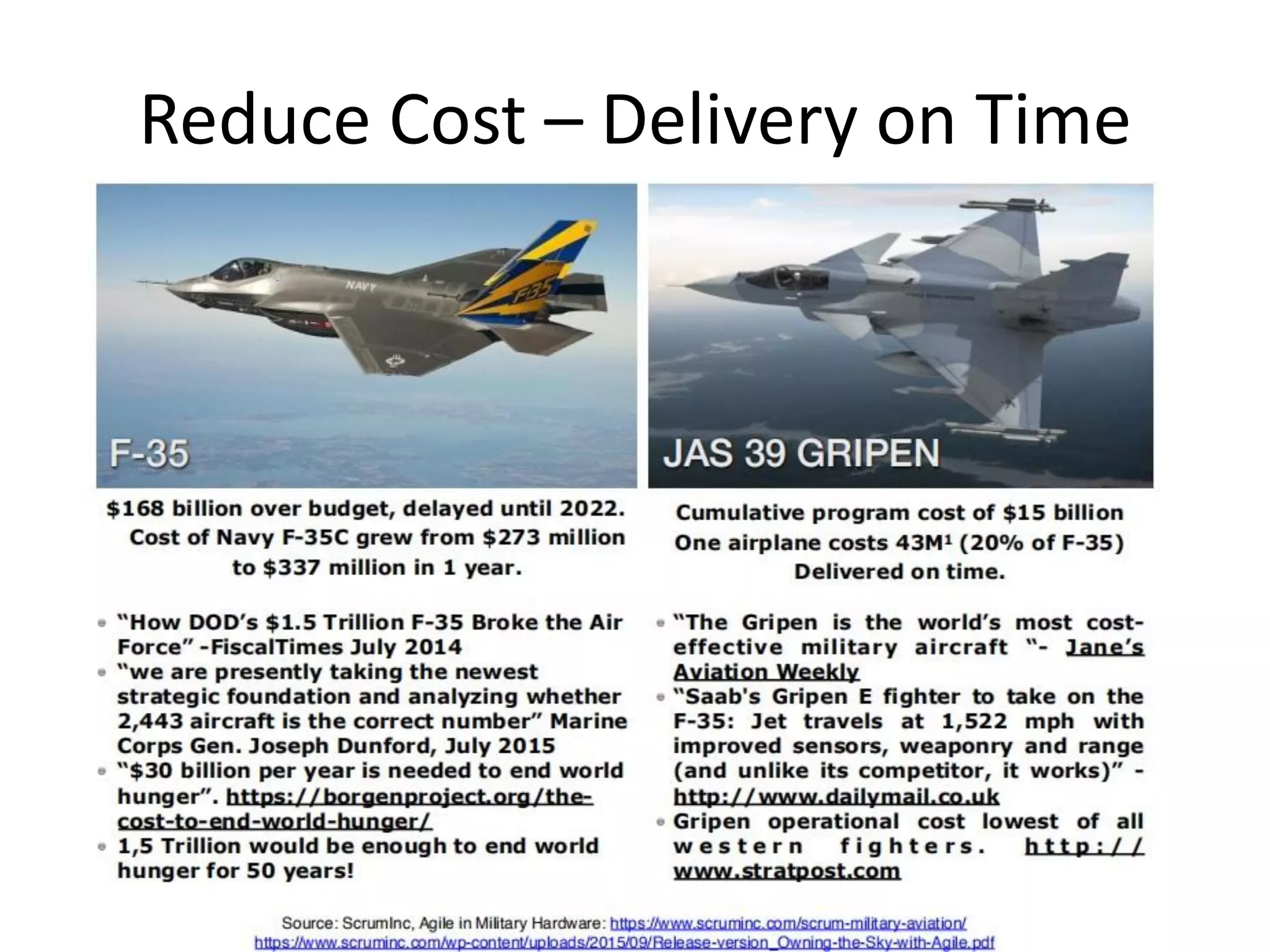
Reduce Cost – Delivery on Time
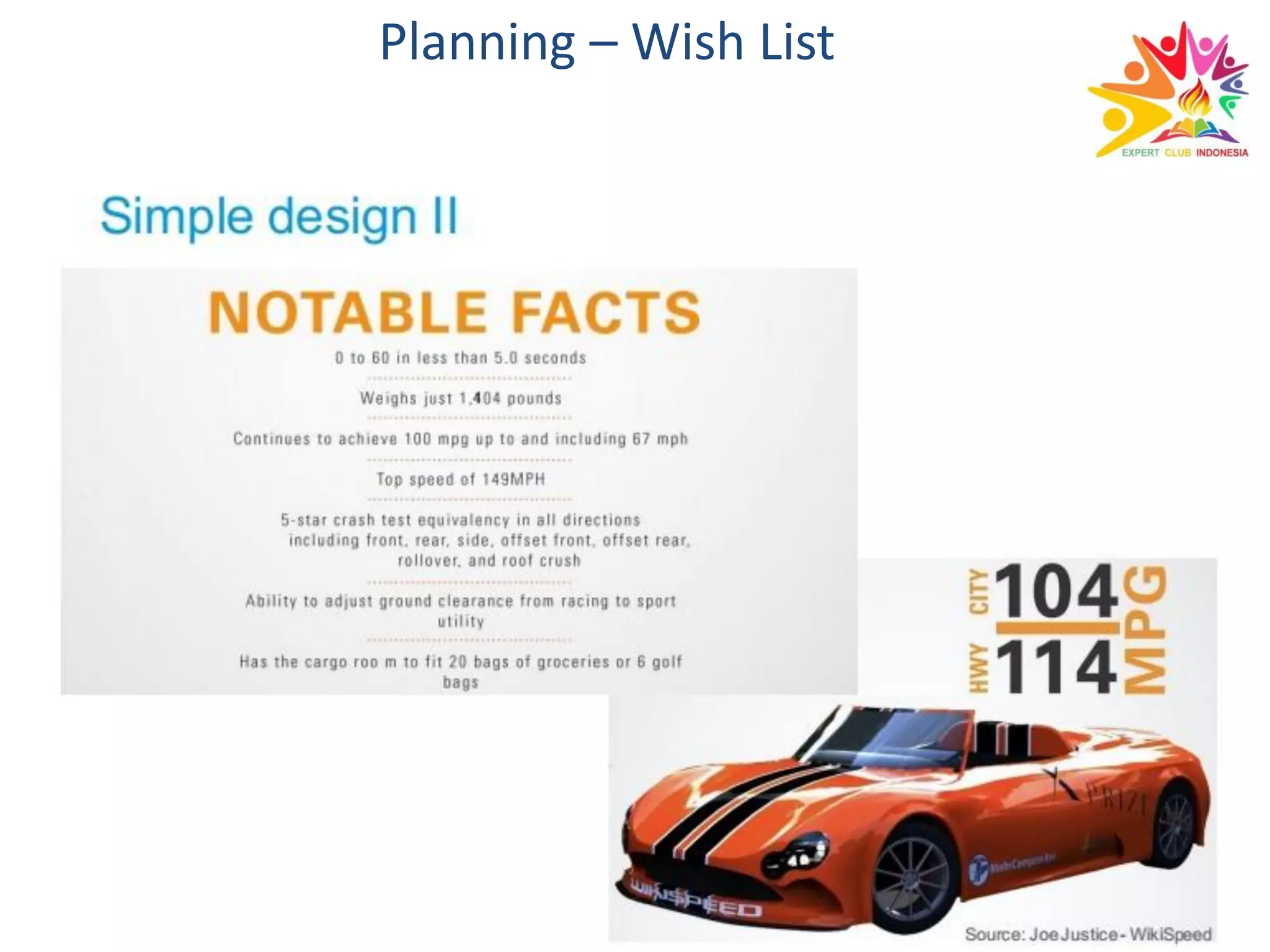
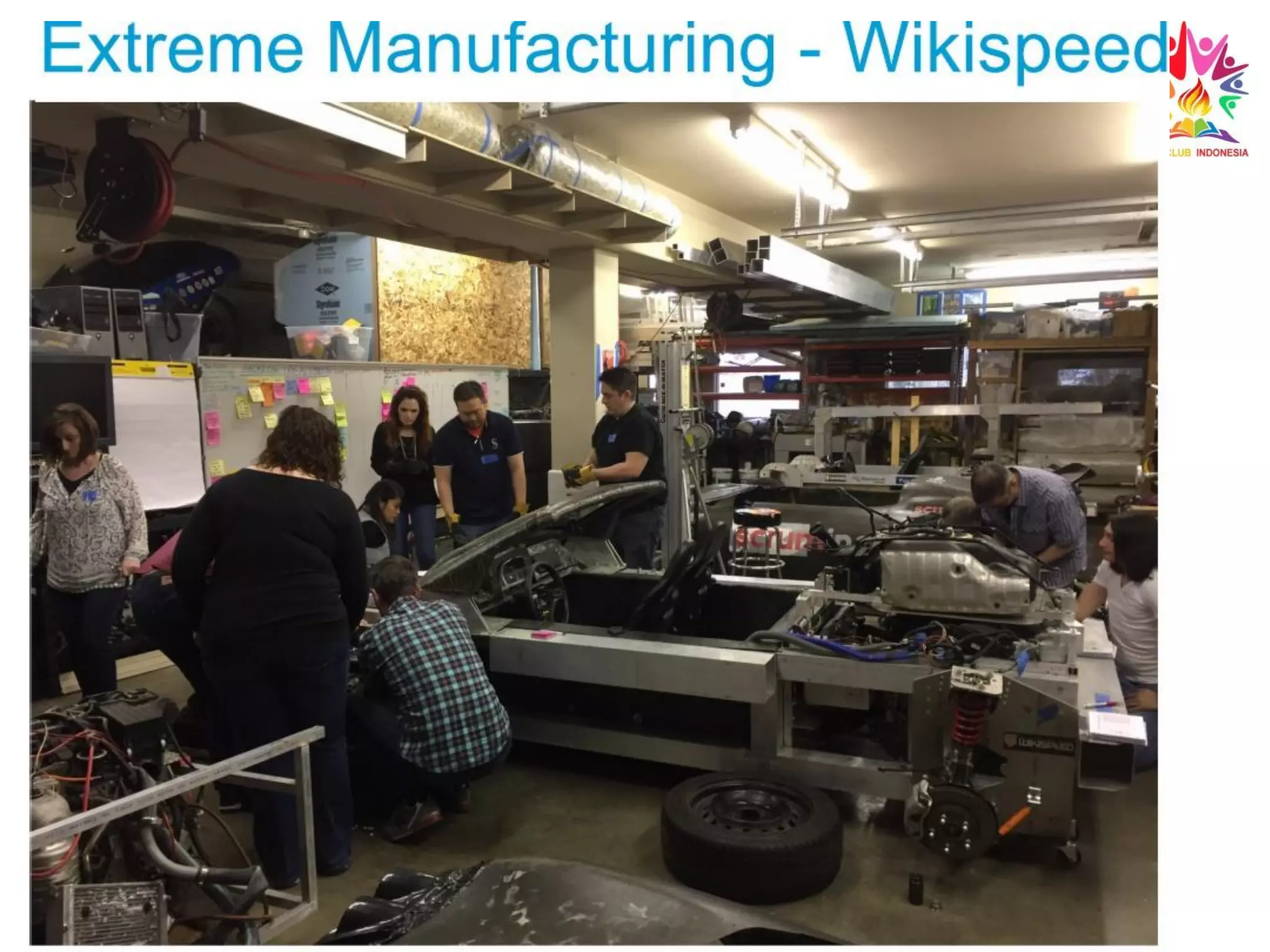
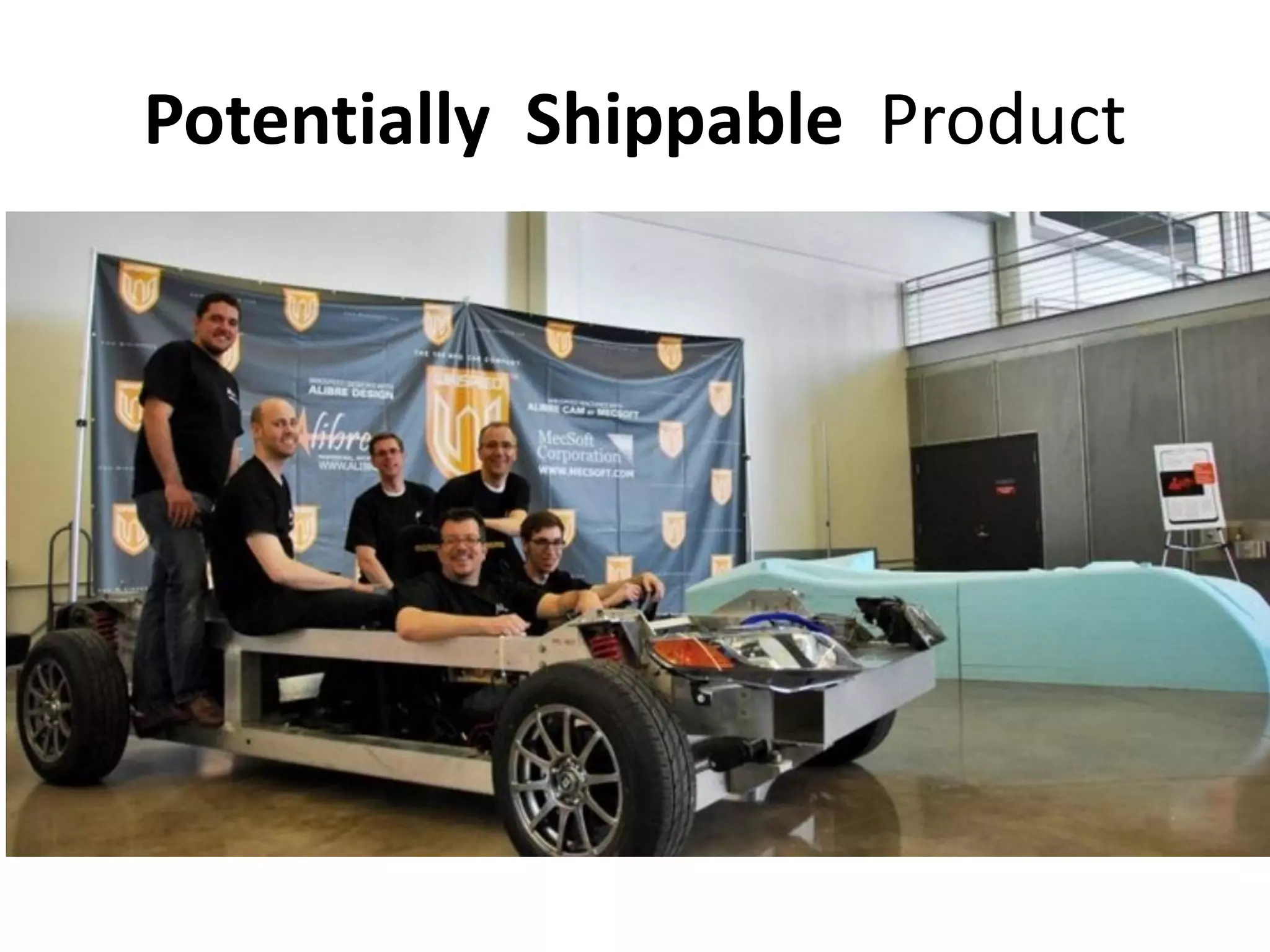
Build a Car
Using Scrum
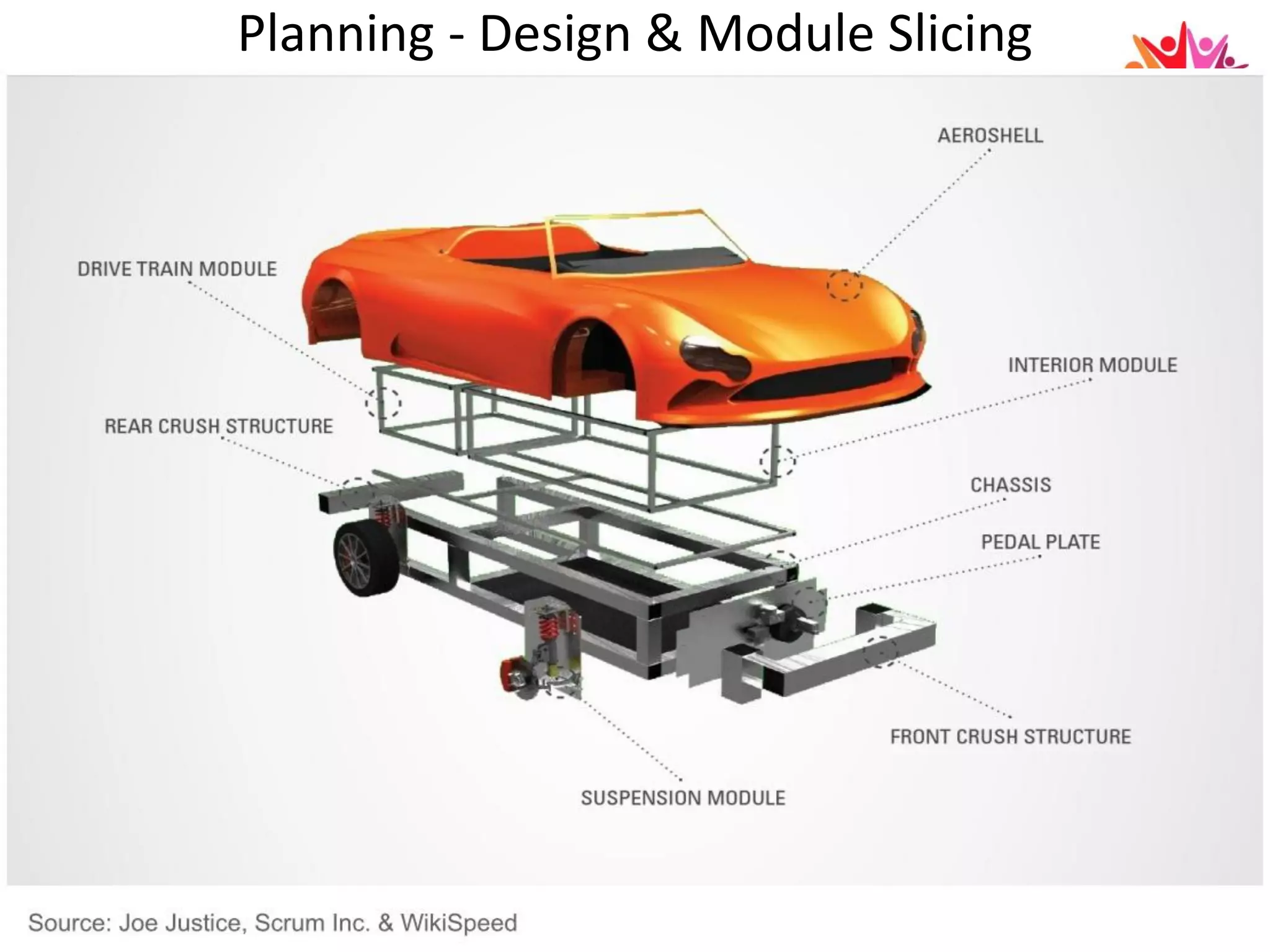
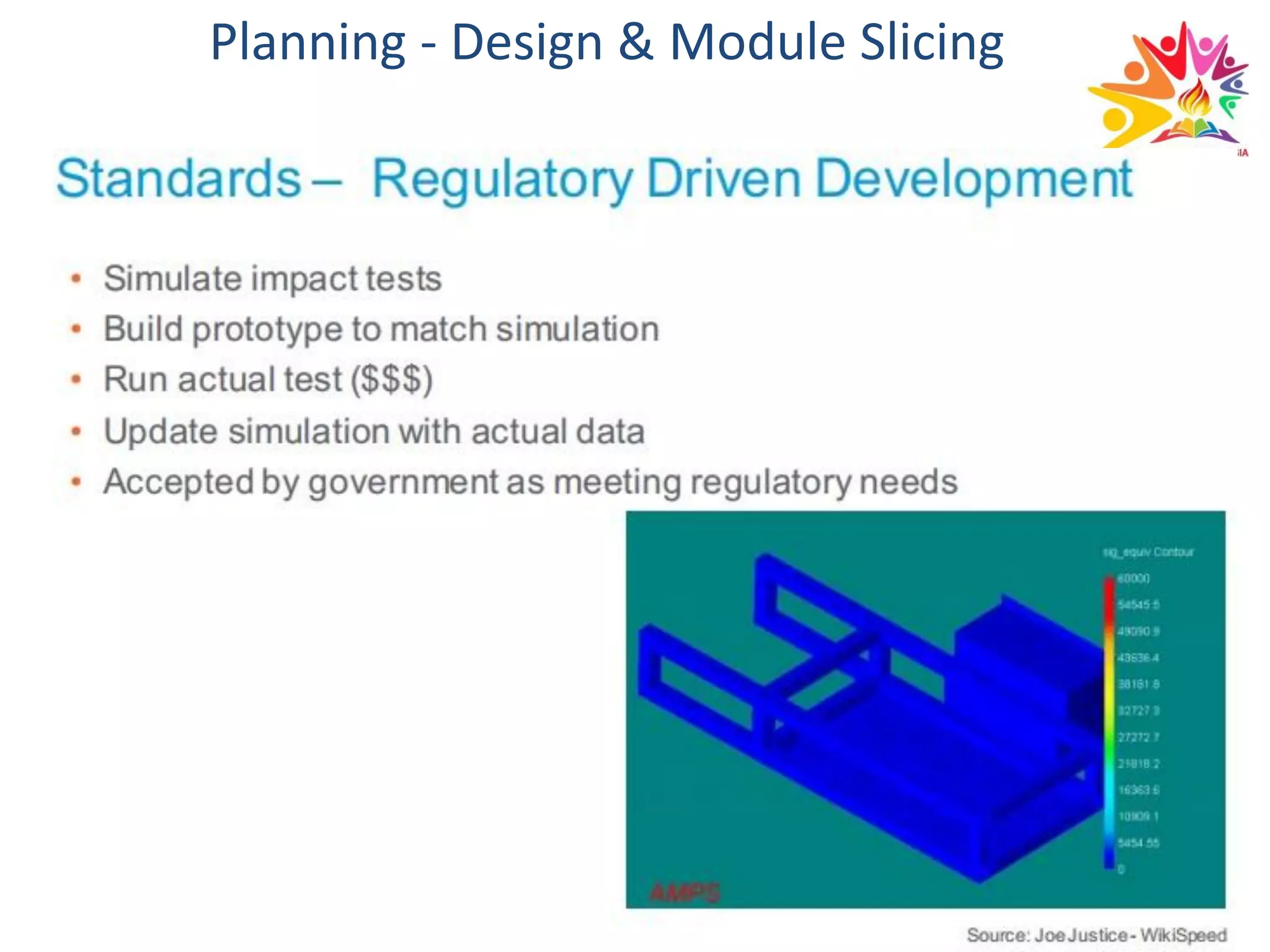
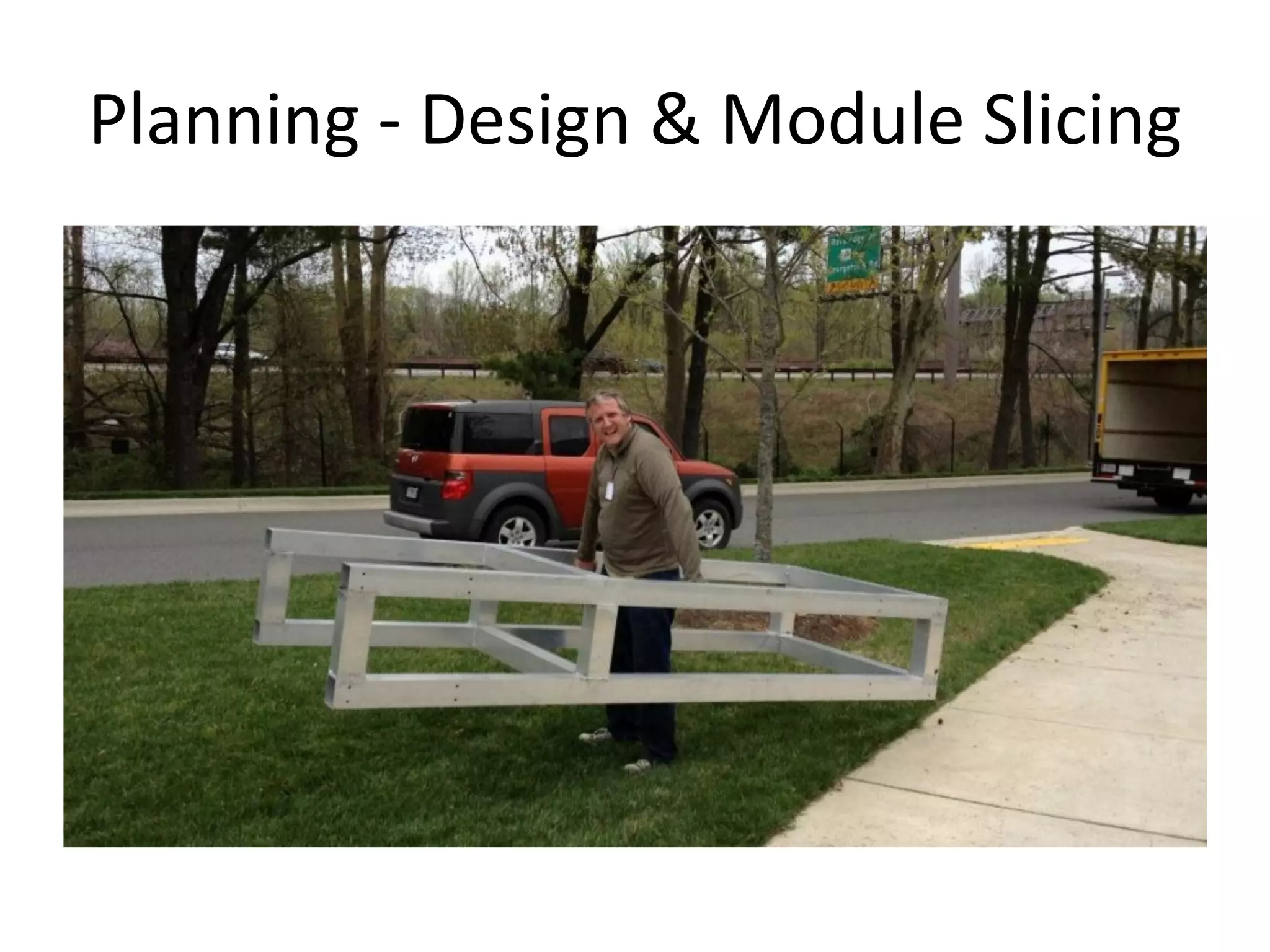
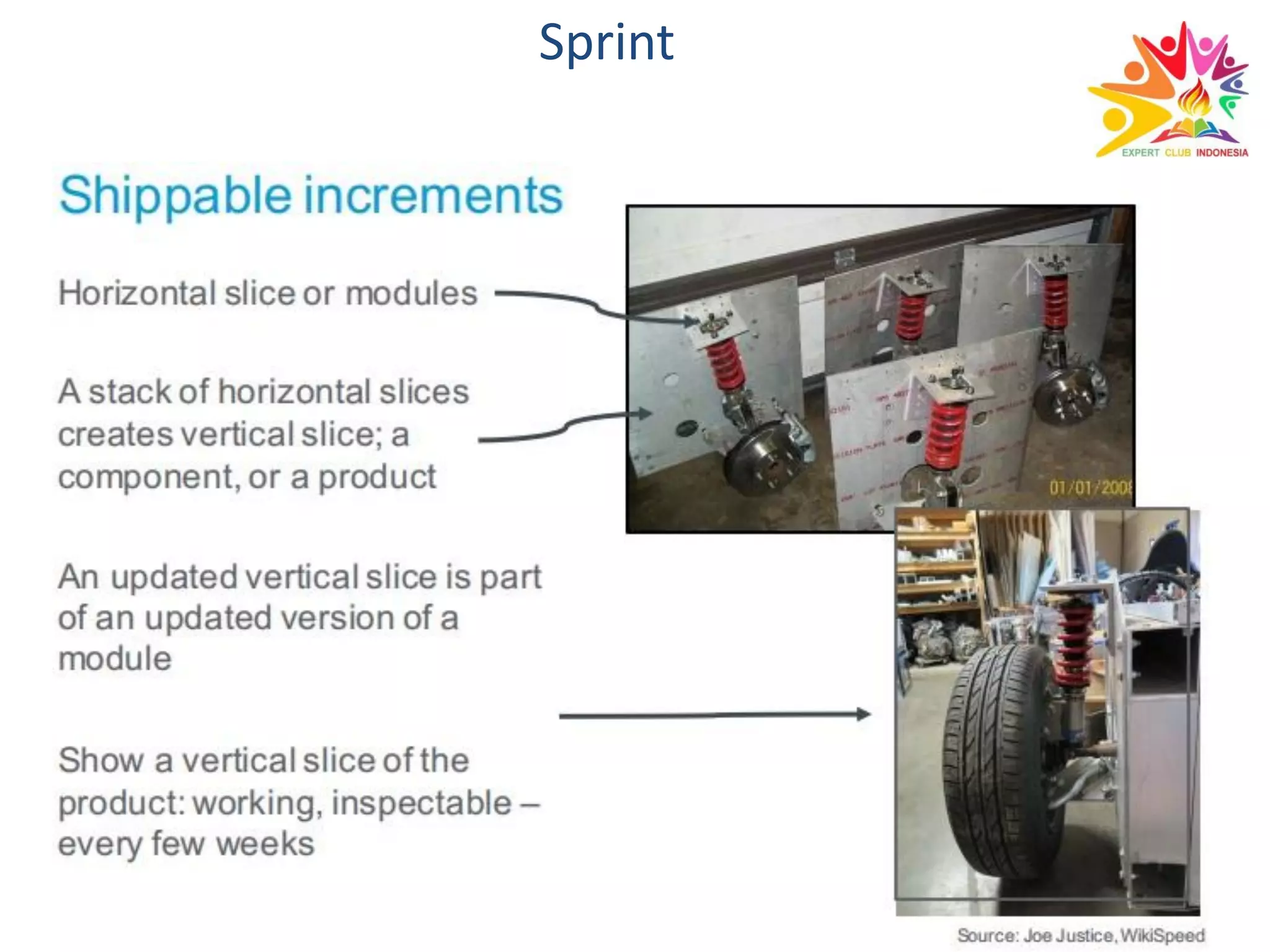
Planning - Design & Module Slicing
Analyze - Specification
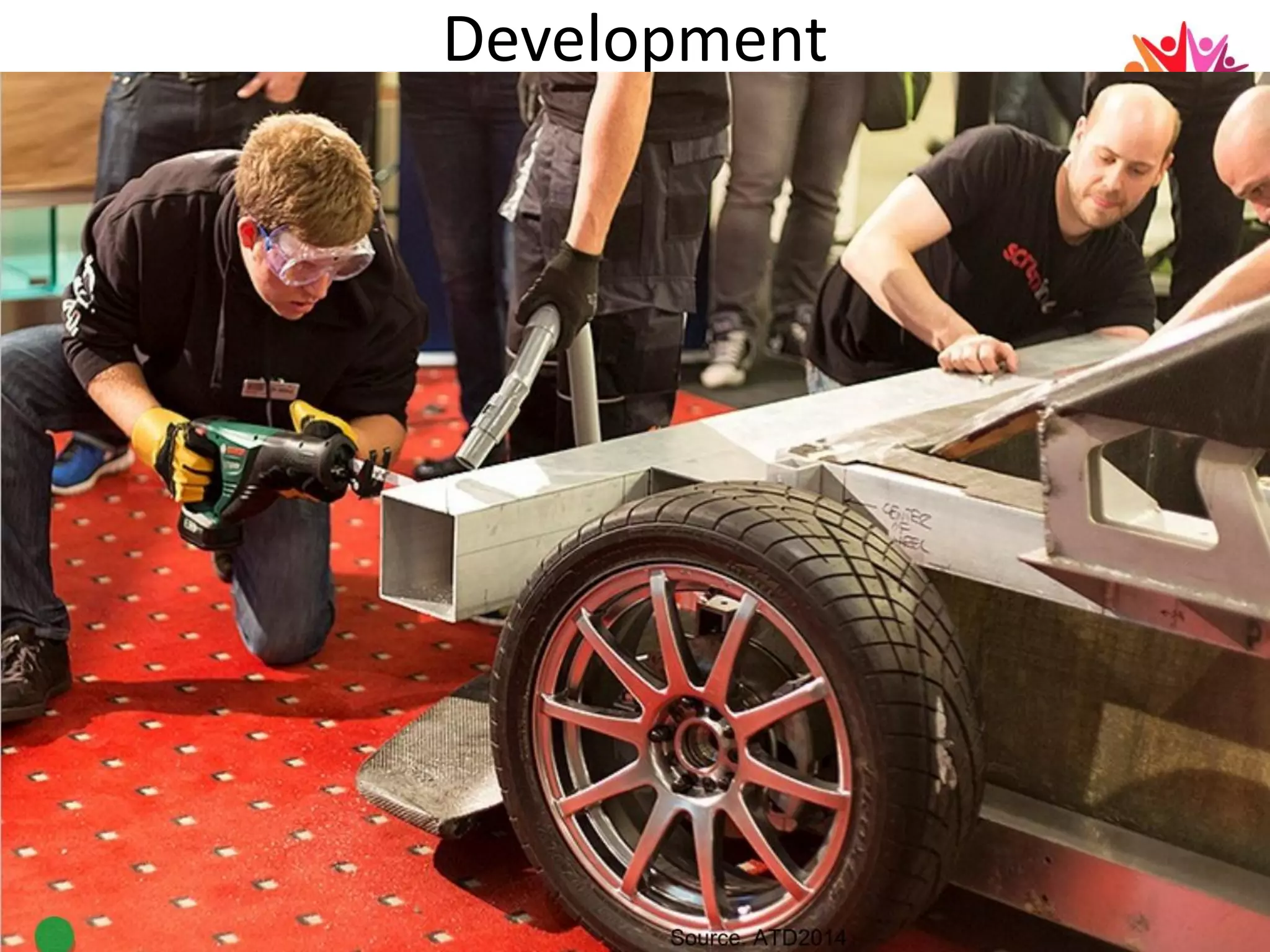
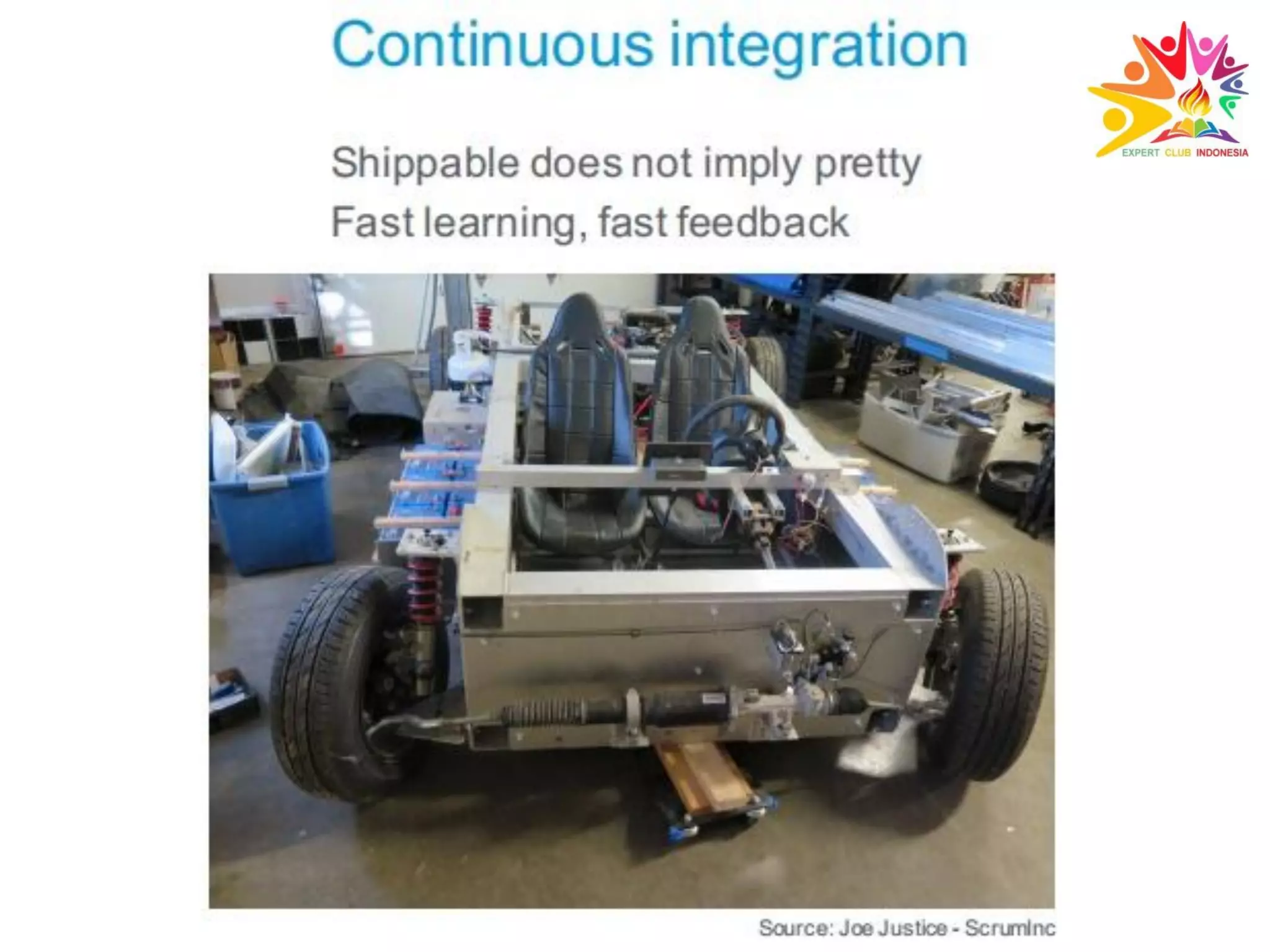
Development
Development
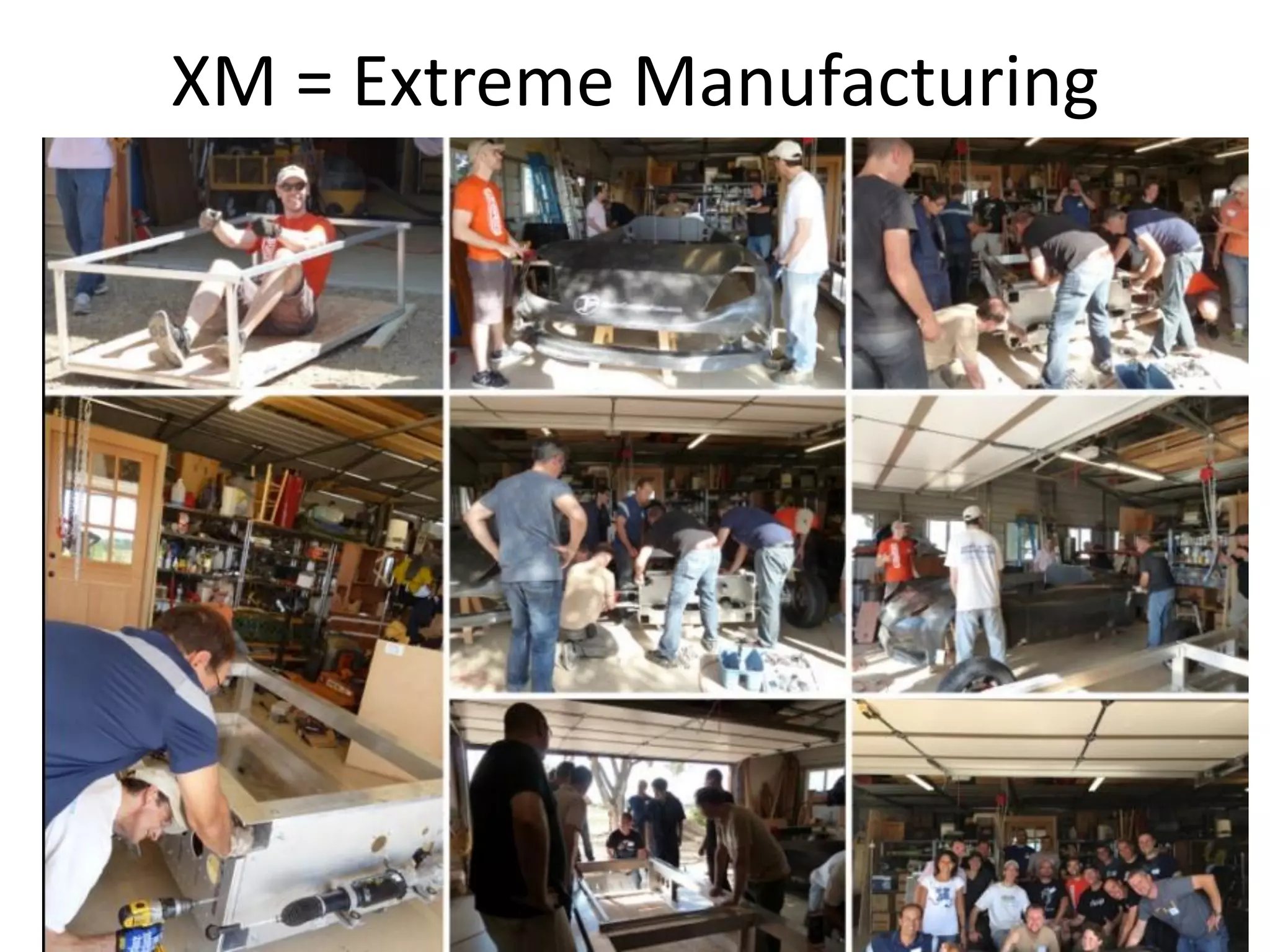
XM = Extreme Manufacturing
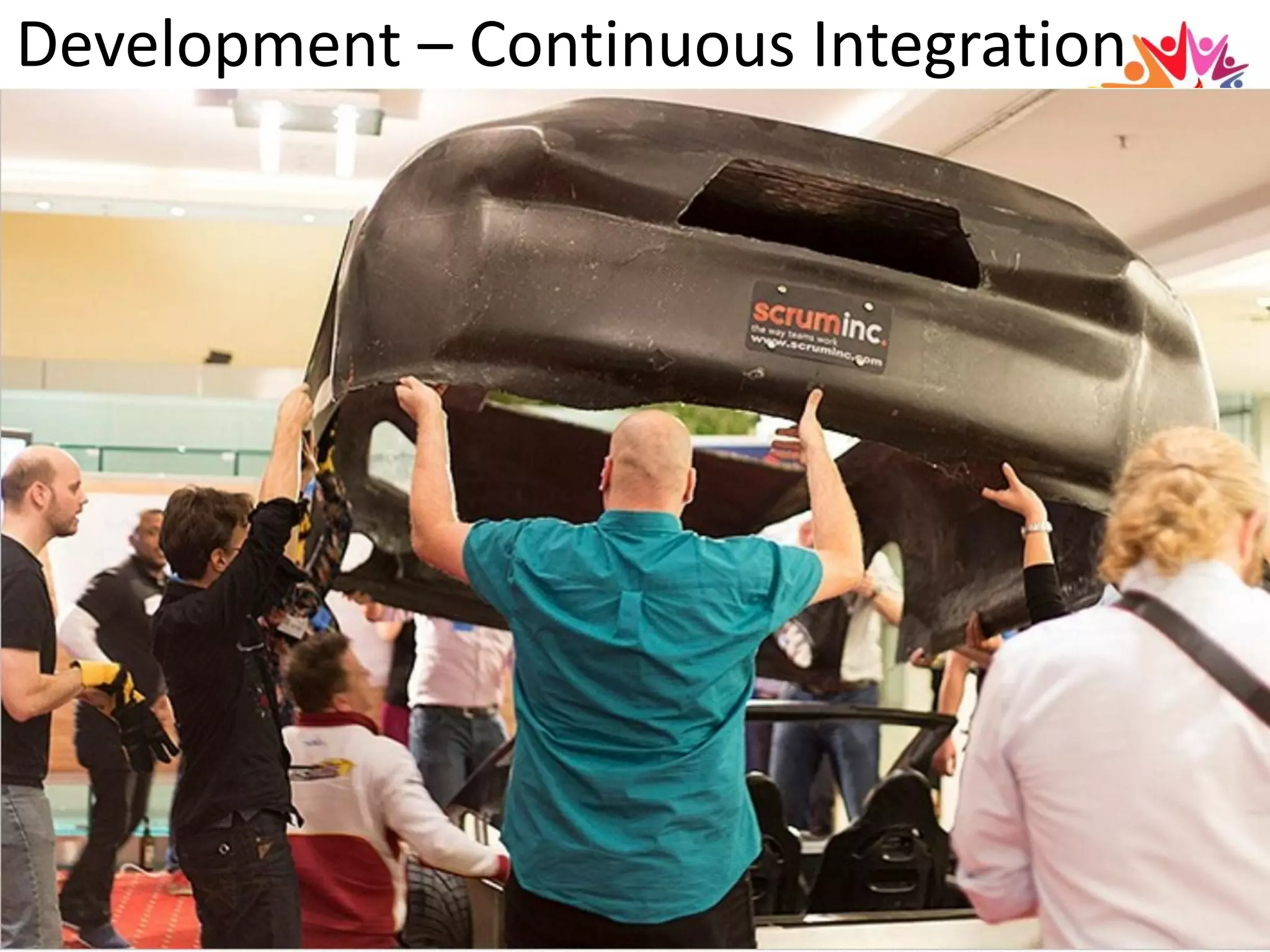
Development – Continuous Integration
Testing – Preparation Check List
Testing – Evaluation Result
Potentially Shippable Product
Roll Out - Ceremony
Scalable Product
Example
Administration Task
Scrum
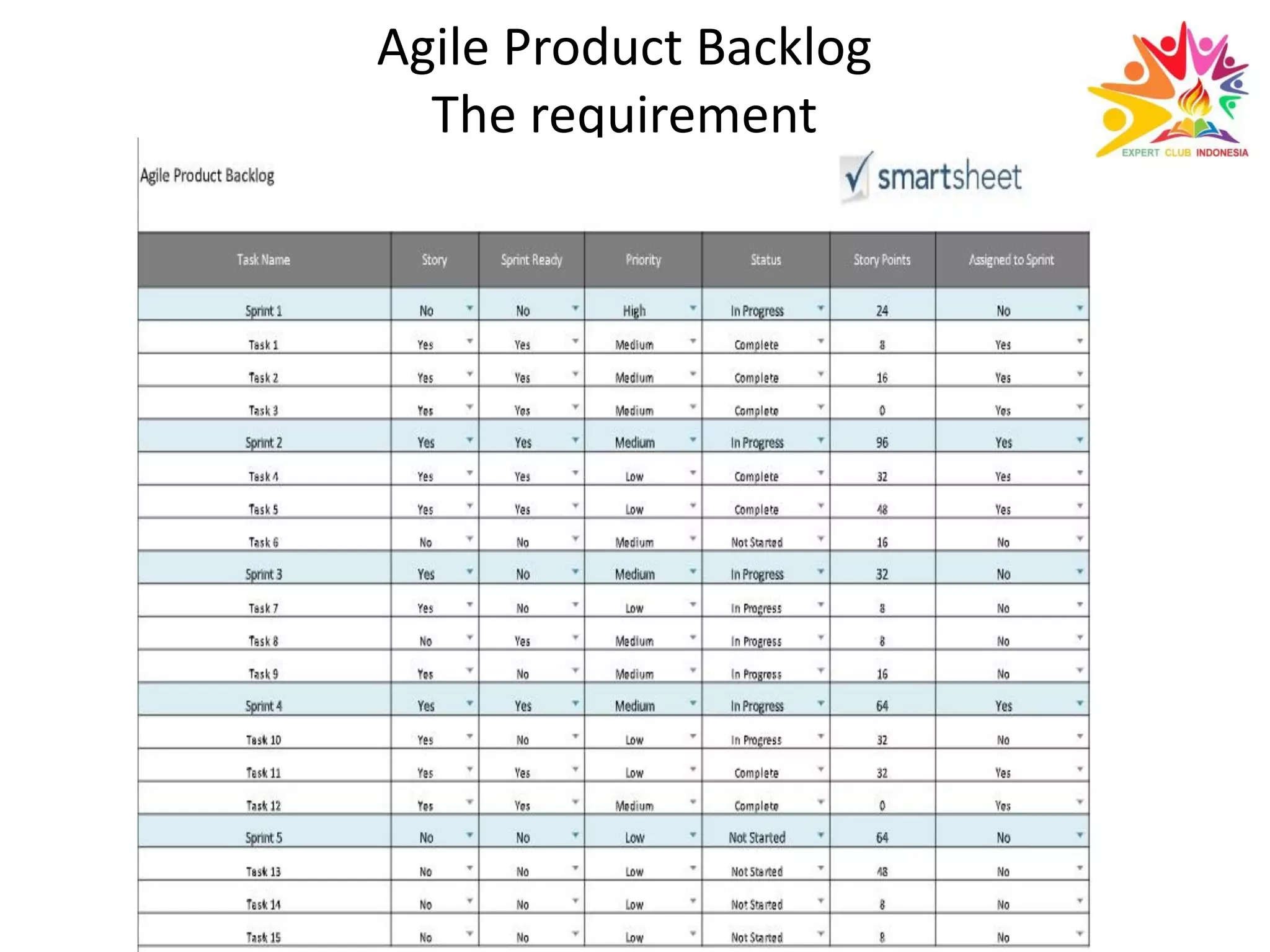
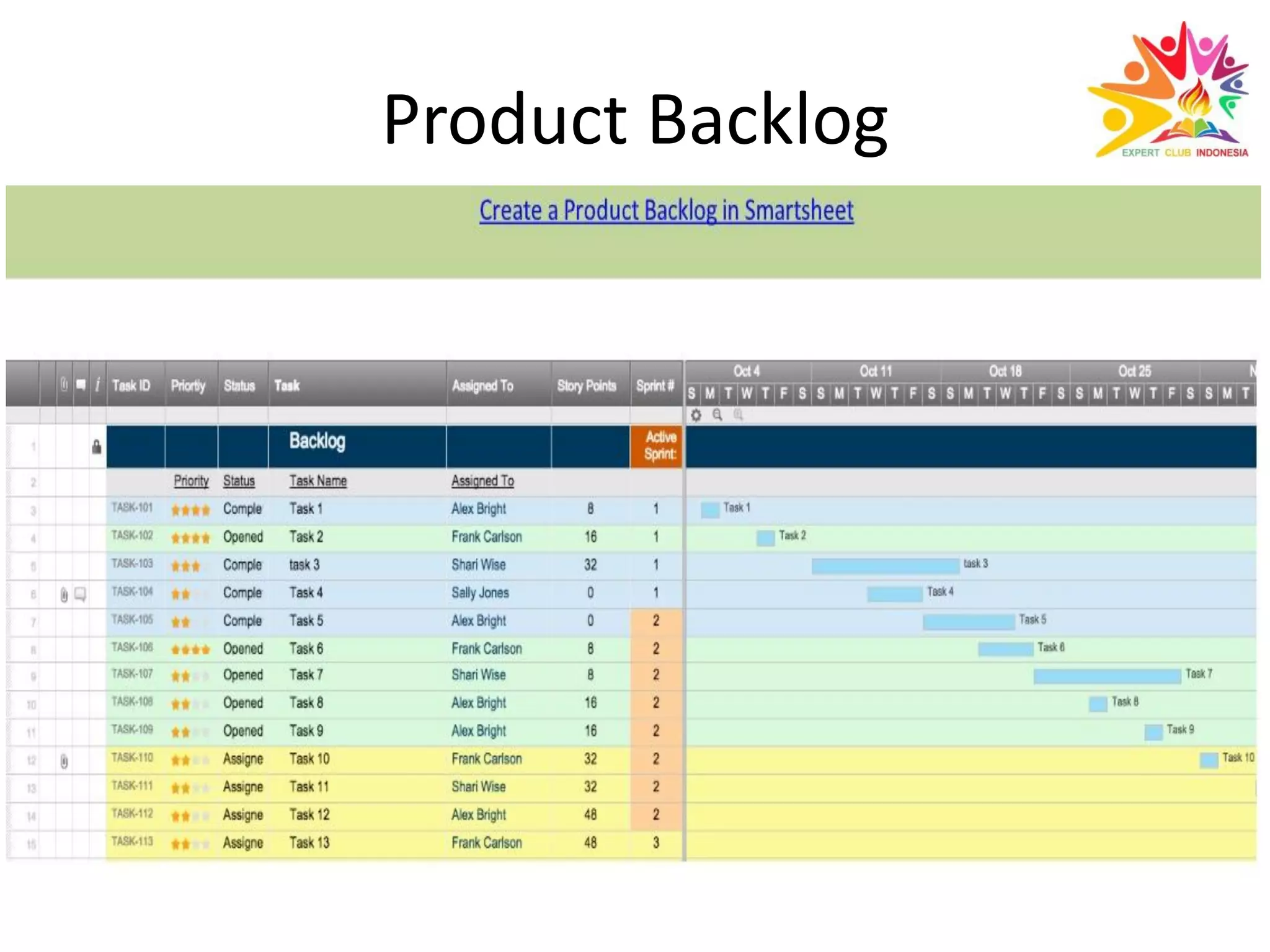
Agile Product Backlog
The requirement
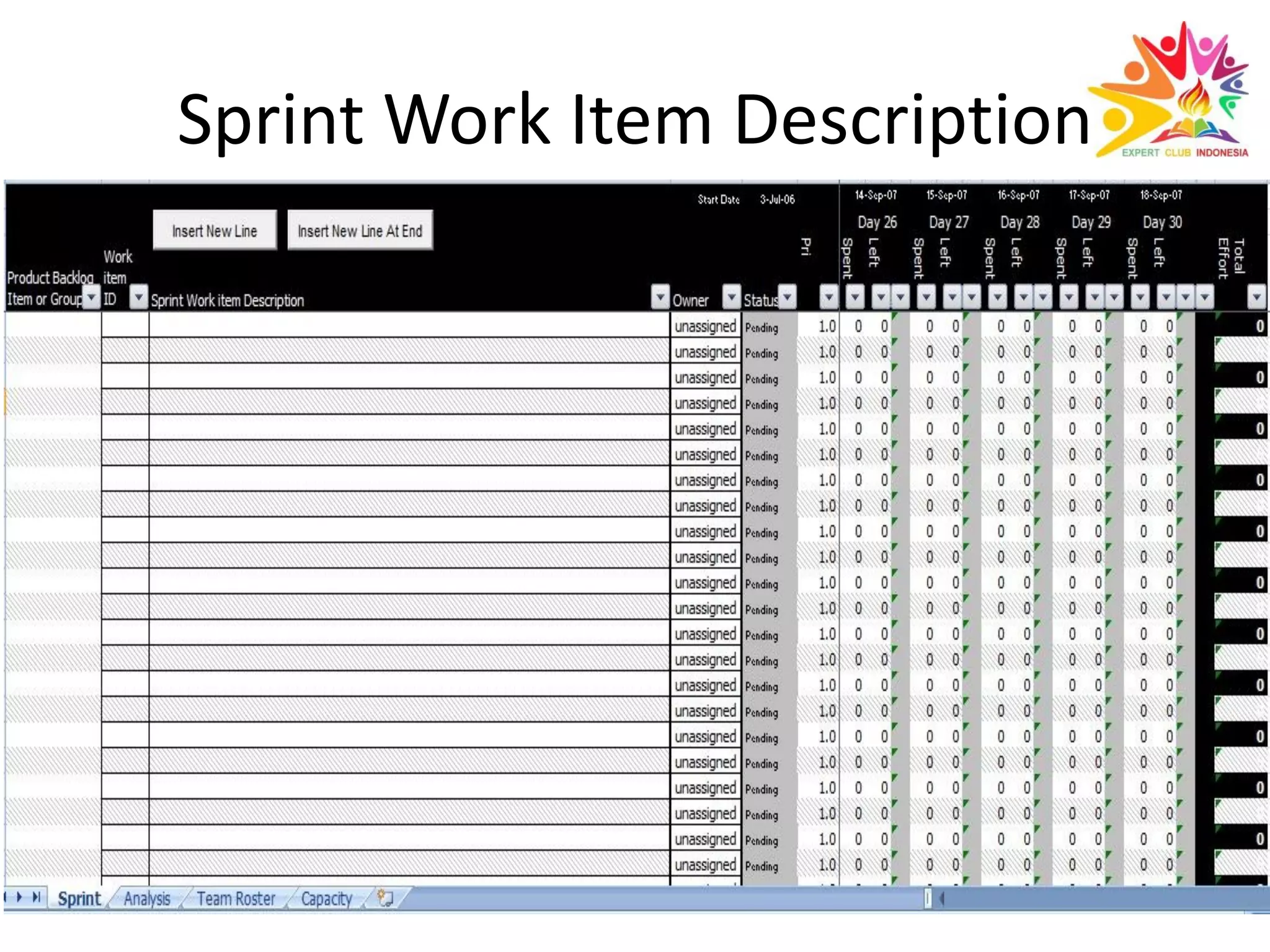
Sprint Work Item Description
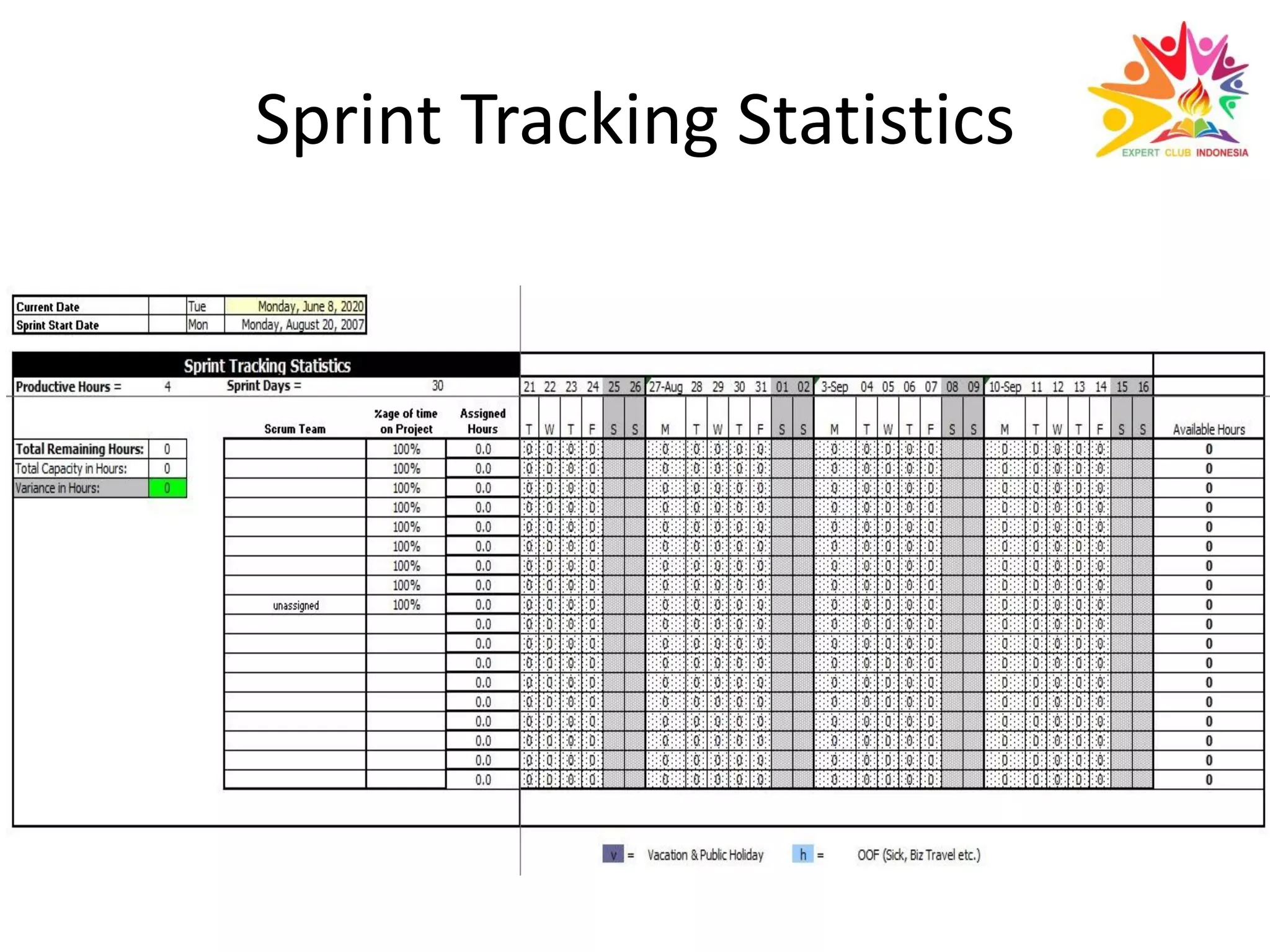
Sprint Tracking Statistics
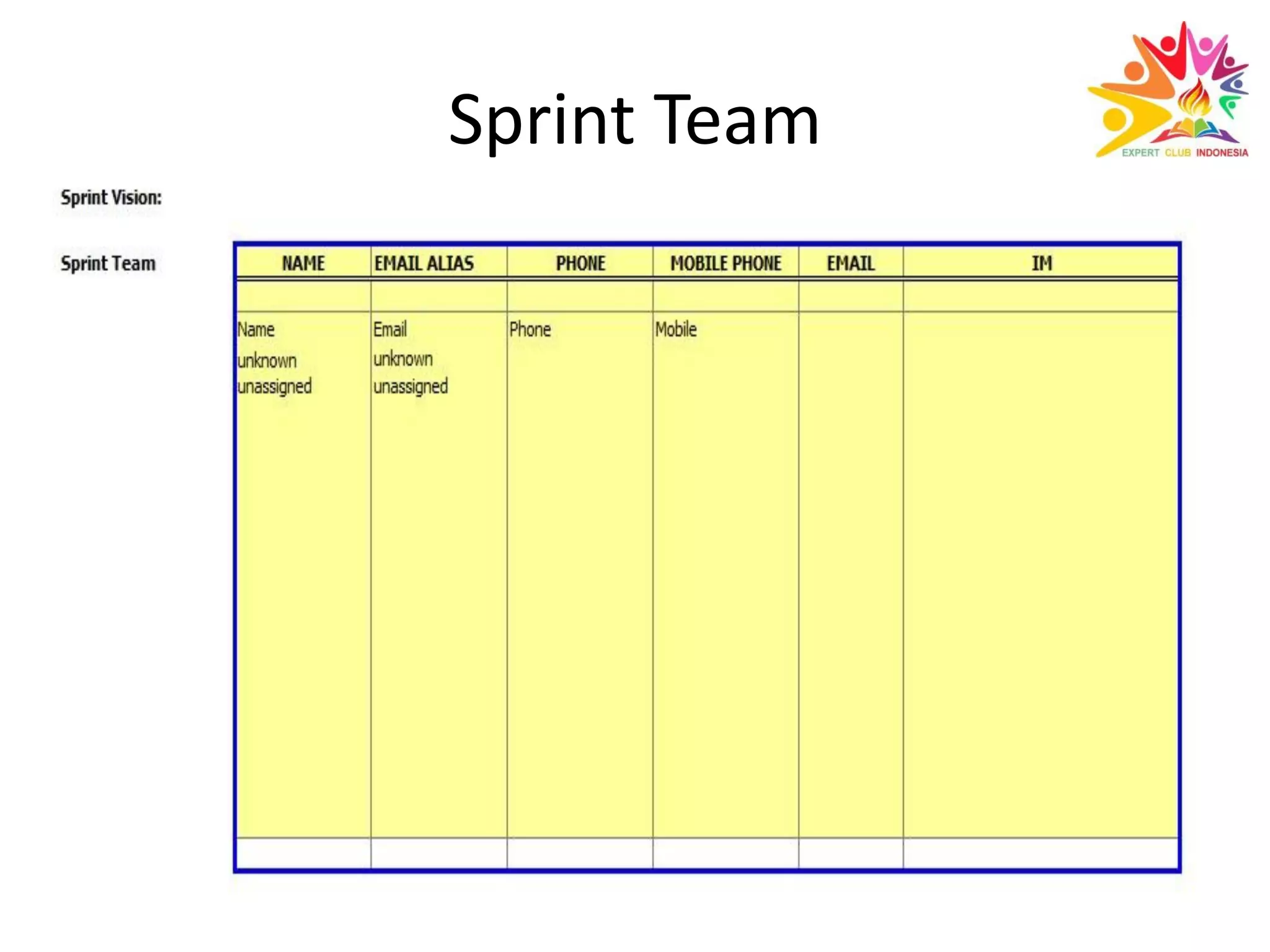
Sprint Team
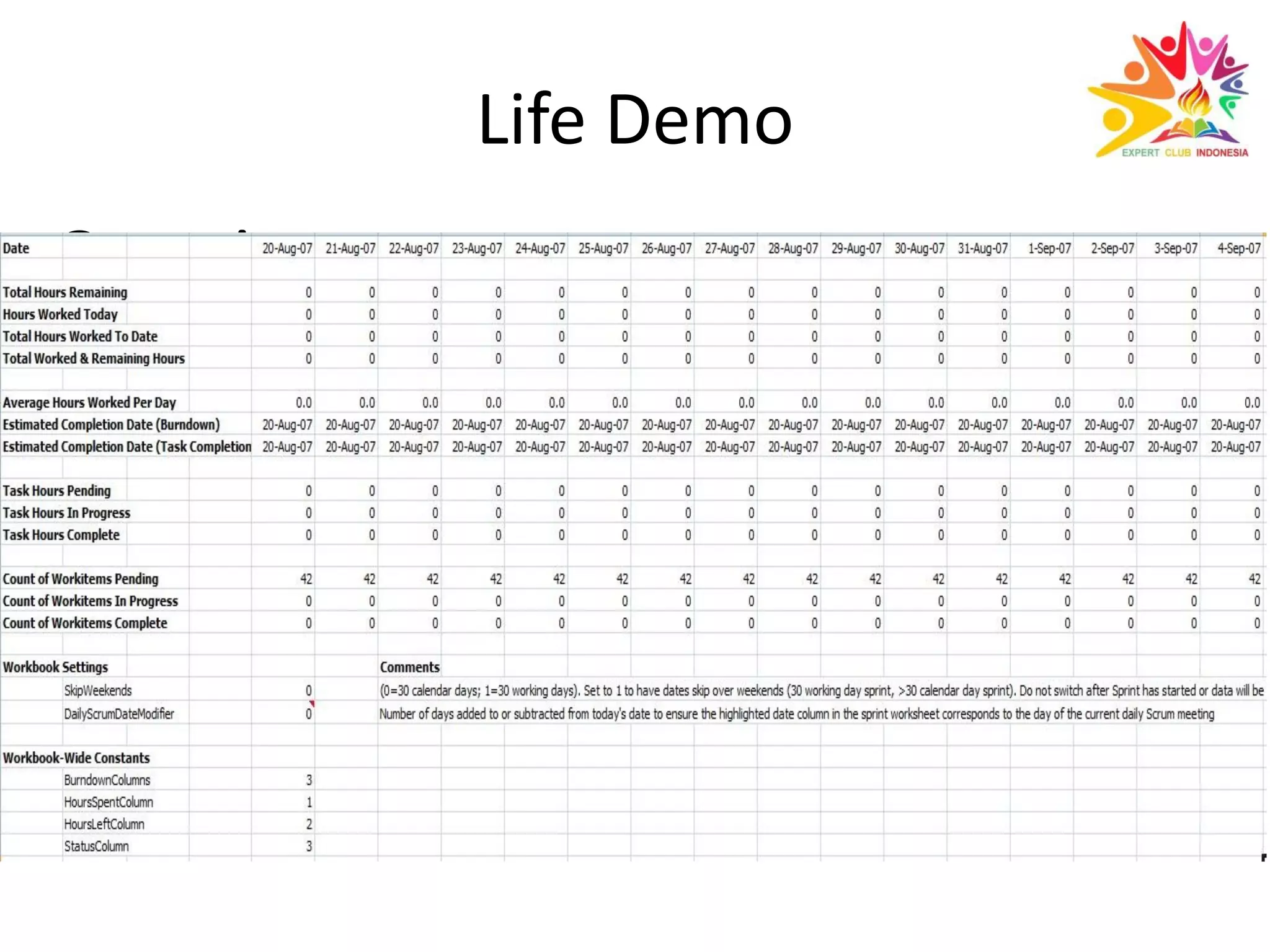
Life Demo
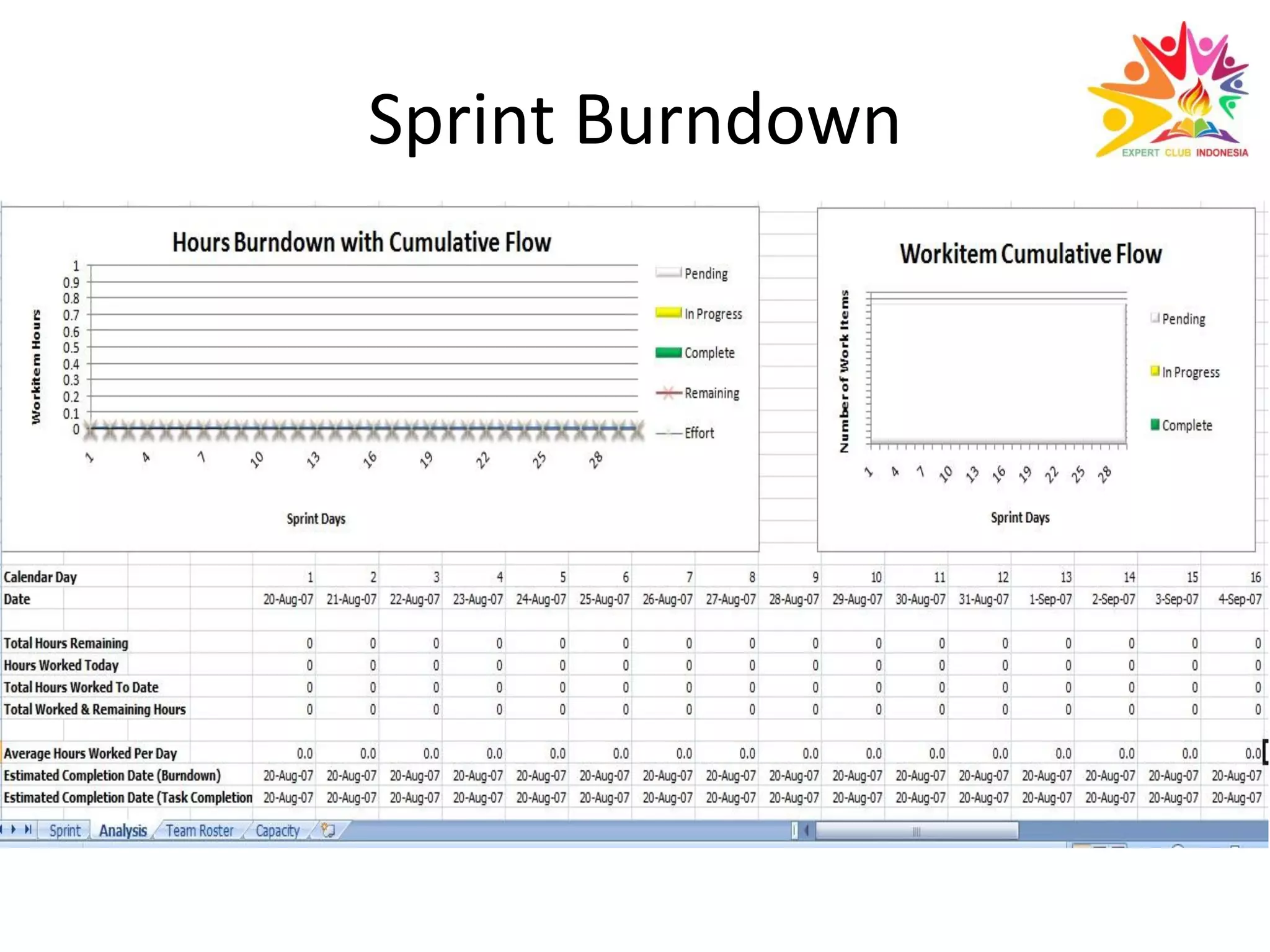
Sprint Burndown
Product Backlog
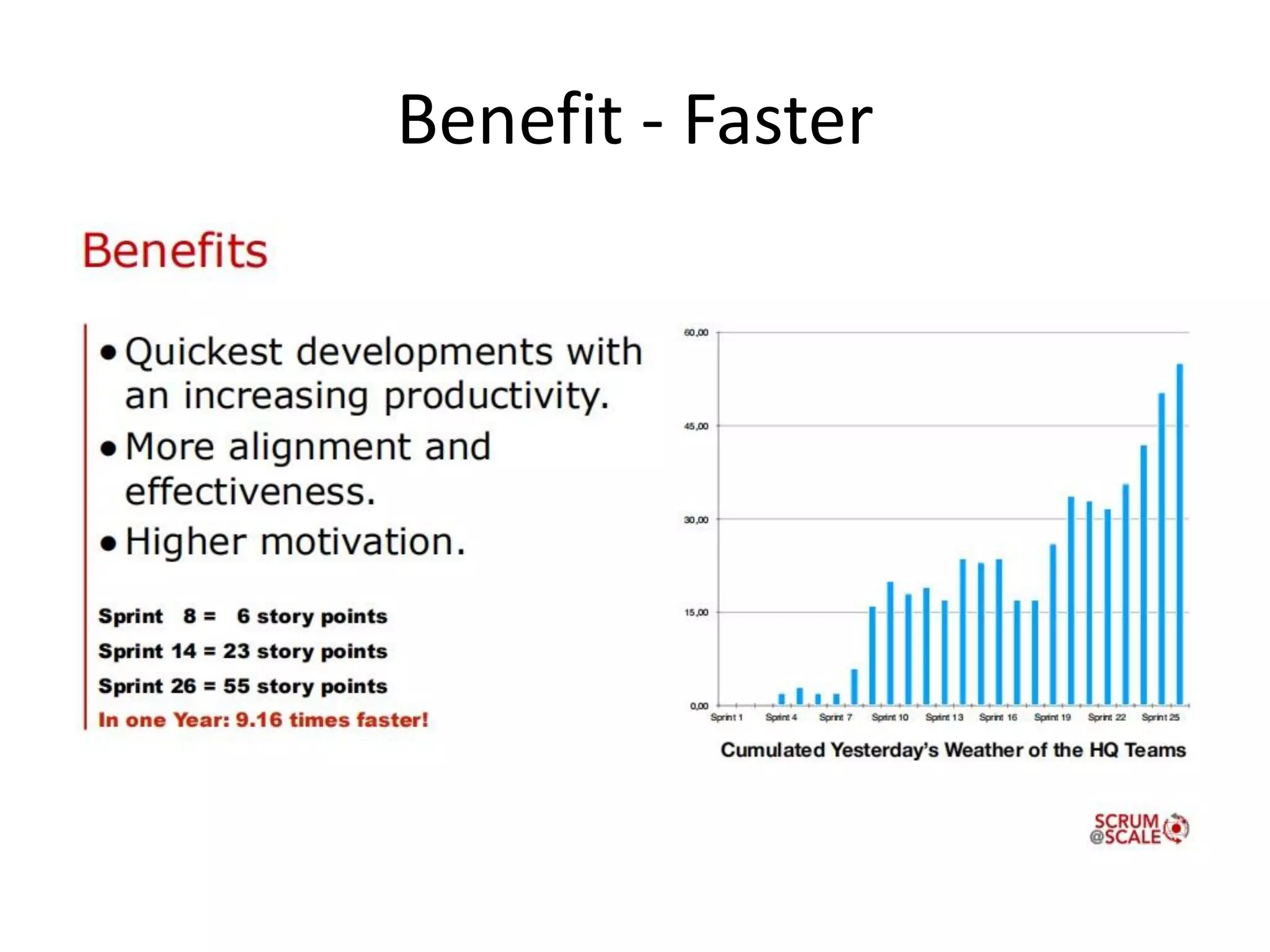
Benefit - Faster
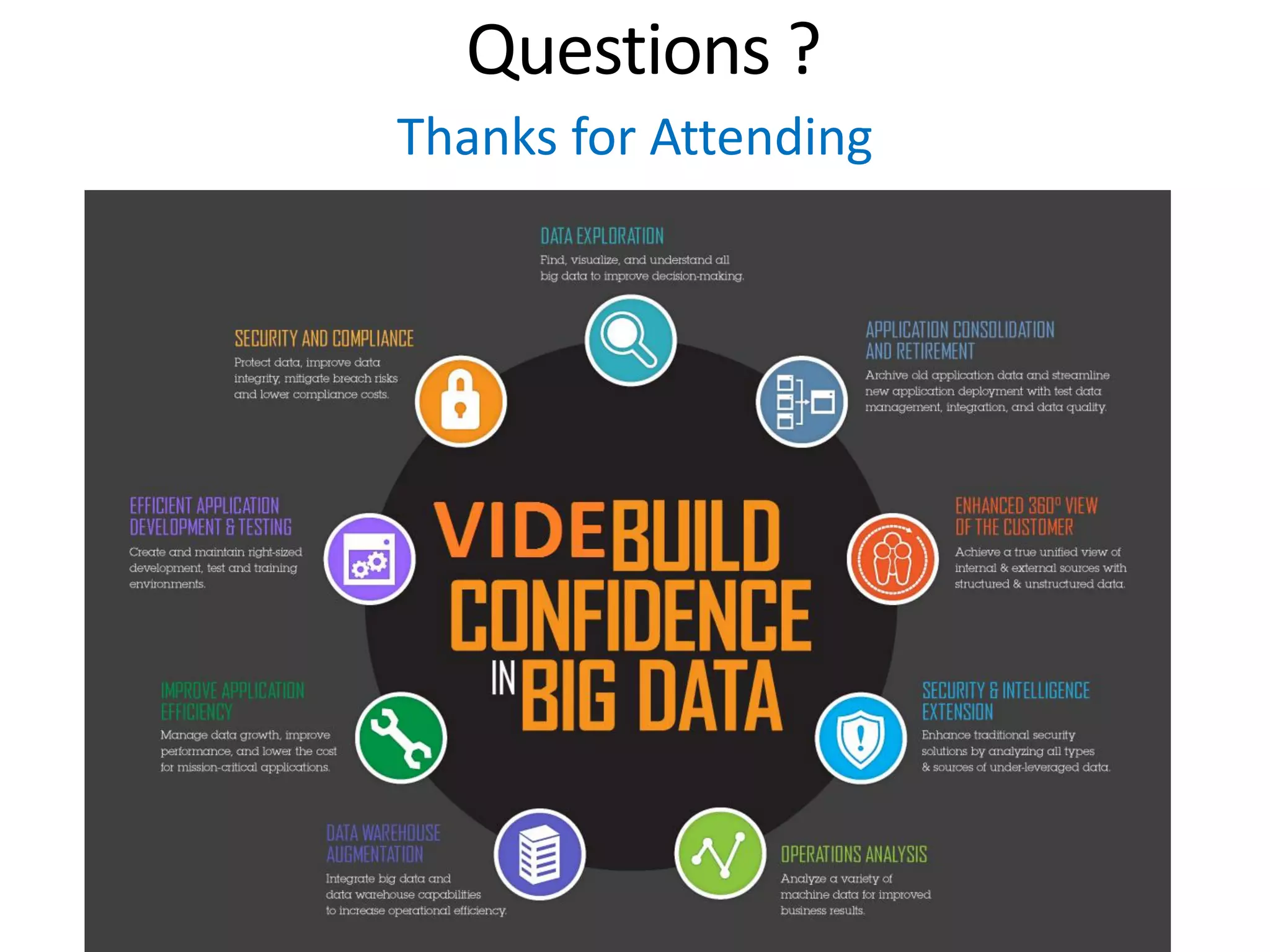
Thanks for Attending
Example
Administration Task
Scrum
Using MS Project MS Excel MS Word
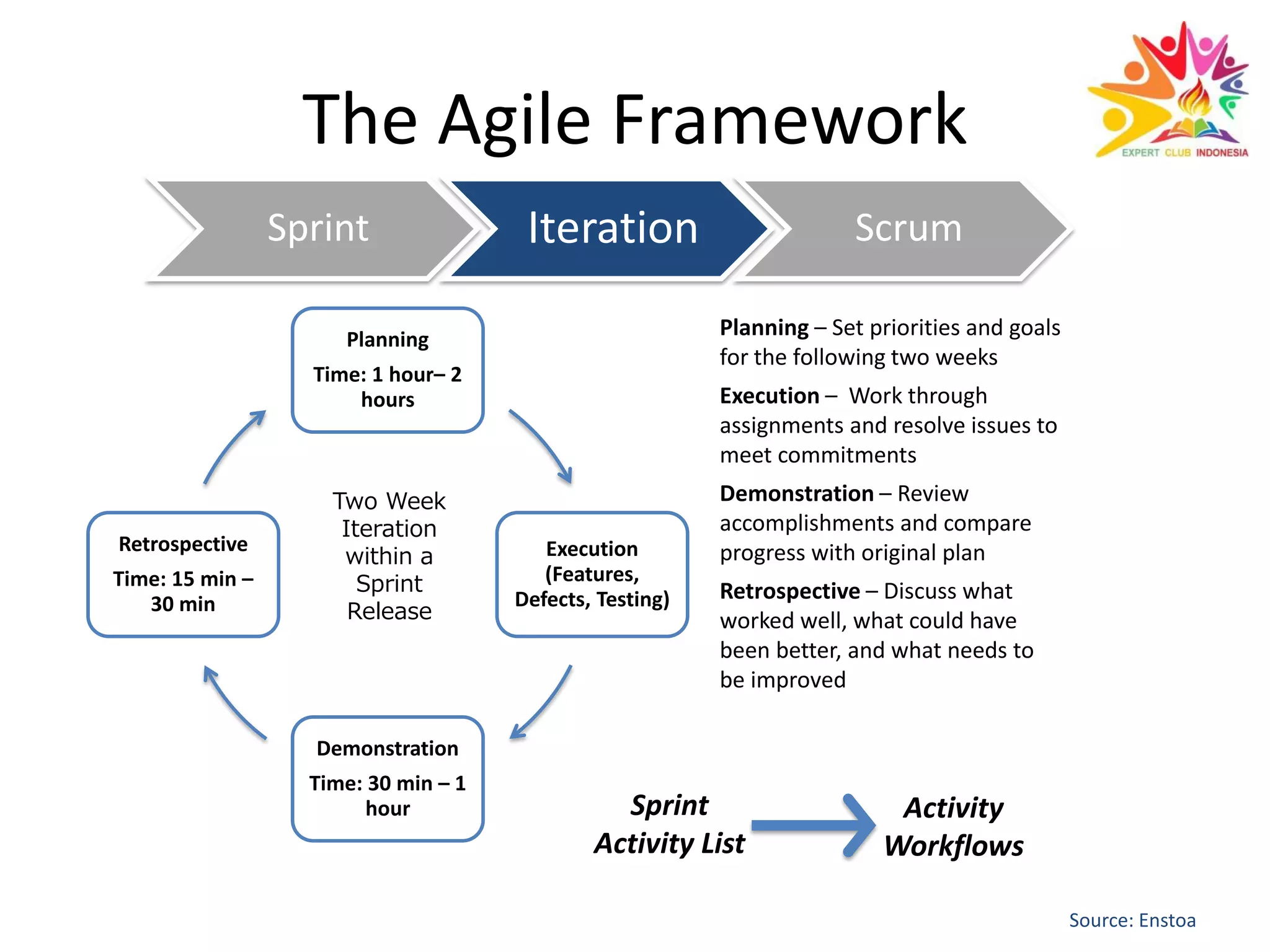
The Agile Framework
Sprint Iteration Scrum
Planning
Time: 1 hour– 2
hours
Execution
(Features,
Defects, Testing)
Demonstration
Time: 30 min – 1
hour
Retrospective
Time: 15 min –
30 min
Two Week
Iteration
within a
Sprint
Release
Planning – Set priorities and goals
for the following two weeks
Execution – Work through
assignments and resolve issues to
meet commitments
Demonstration – Review
accomplishments and compare
progress with original plan
Retrospective – Discuss what
worked well, what could have
been better, and what needs to
be improved
Sprint
Activity List
Activity
Workflows
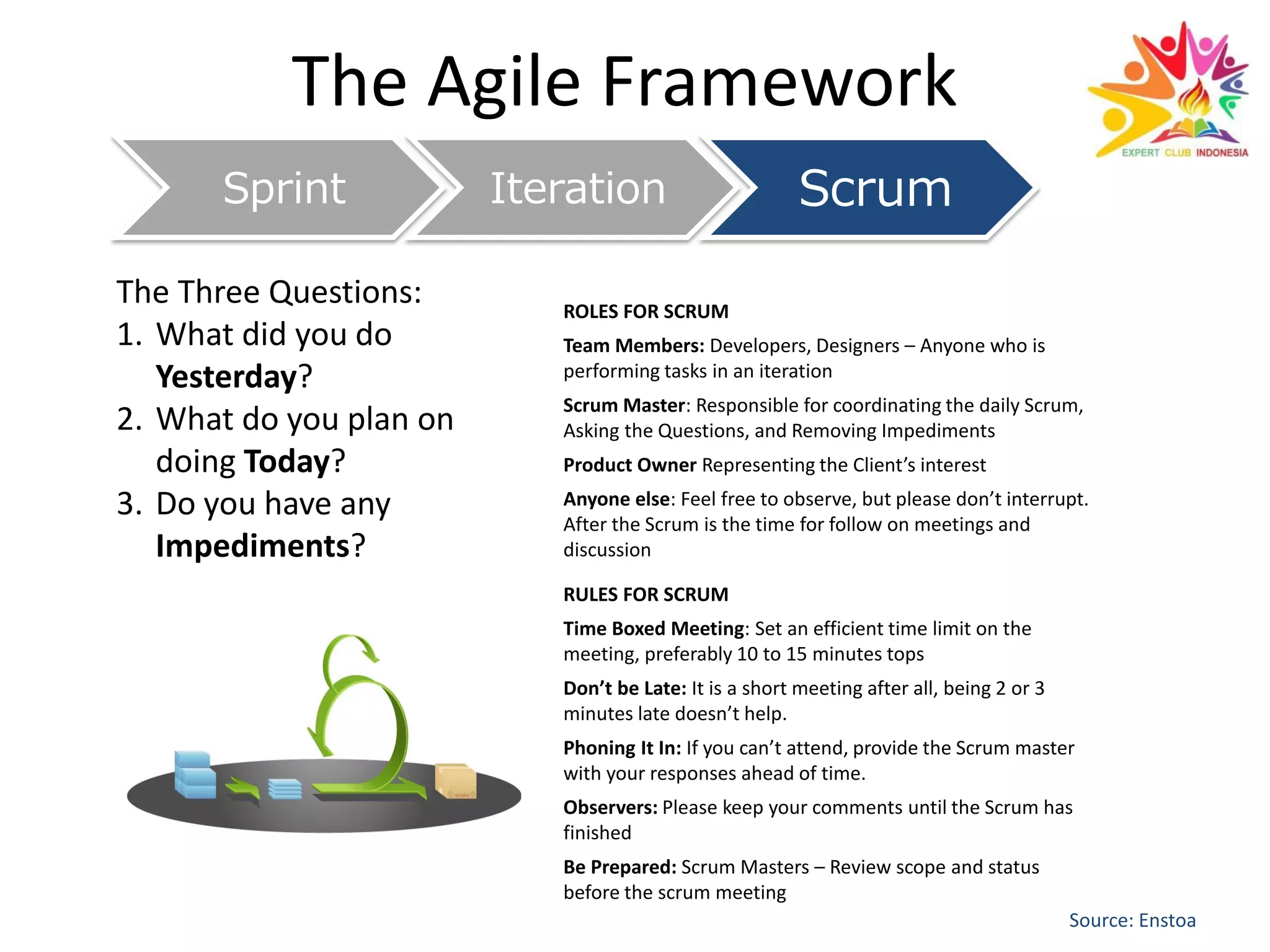
The Agile Framework
Sprint Iteration Scrum
ROLES FOR SCRUM
Team Members: Developers, Designers – Anyone who is
performing tasks in an iteration
Scrum Master: Responsible for coordinating the daily Scrum,
Asking the Questions, and Removing Impediments
Product Owner Representing the Client’s interest
Anyone else: Feel free to observe, but please don’t interrupt.
After the Scrum is the time for follow on meetings and
discussion
RULES FOR SCRUM
Time Boxed Meeting: Set an efficient time limit on the
meeting, preferably 10 to 15 minutes tops
Don’t be Late: It is a short meeting after all, being 2 or 3
minutes late doesn’t help.
Phoning It In: If you can’t attend, provide the Scrum master
with your responses ahead of time.
Observers: Please keep your comments until the Scrum has
finished
Be Prepared: Scrum Masters – Review scope and status
before the scrum meeting
The Three Questions:
1. What did you do
Yesterday?
2. What do you plan on
doing Today?
3. Do you have any
Impediments?
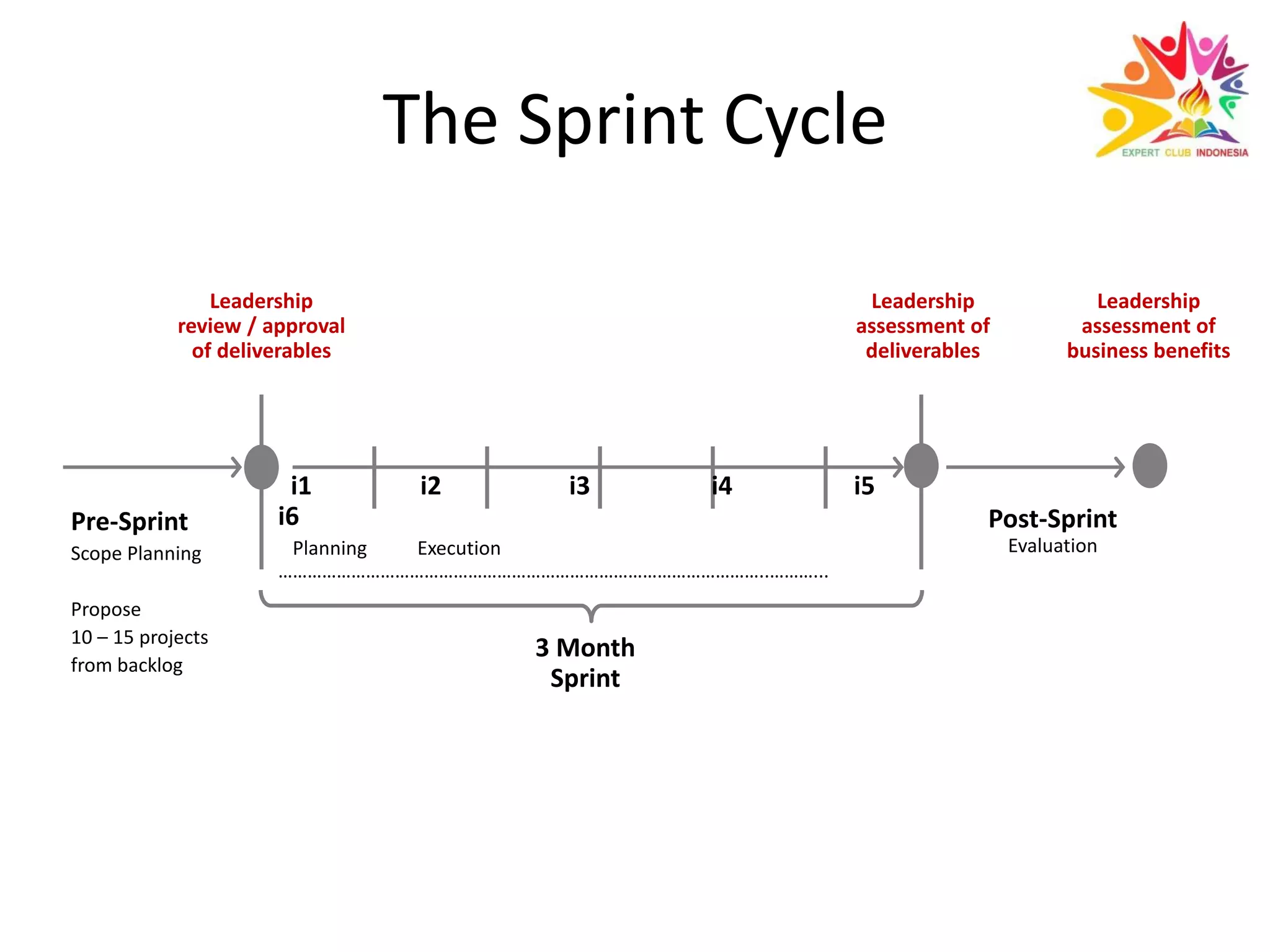
The Sprint Cycle
i1 i2 i3 i4 i5
i6
Planning Execution
………………………………………………………………………………………..………...
Leadership
review / approval
of deliverables
Leadership
assessment of
deliverables
Pre-Sprint
Scope Planning
Propose
10 – 15 projects
from backlog
Leadership
assessment of
business benefits
3 Month
Sprint
Post-Sprint
Evaluation
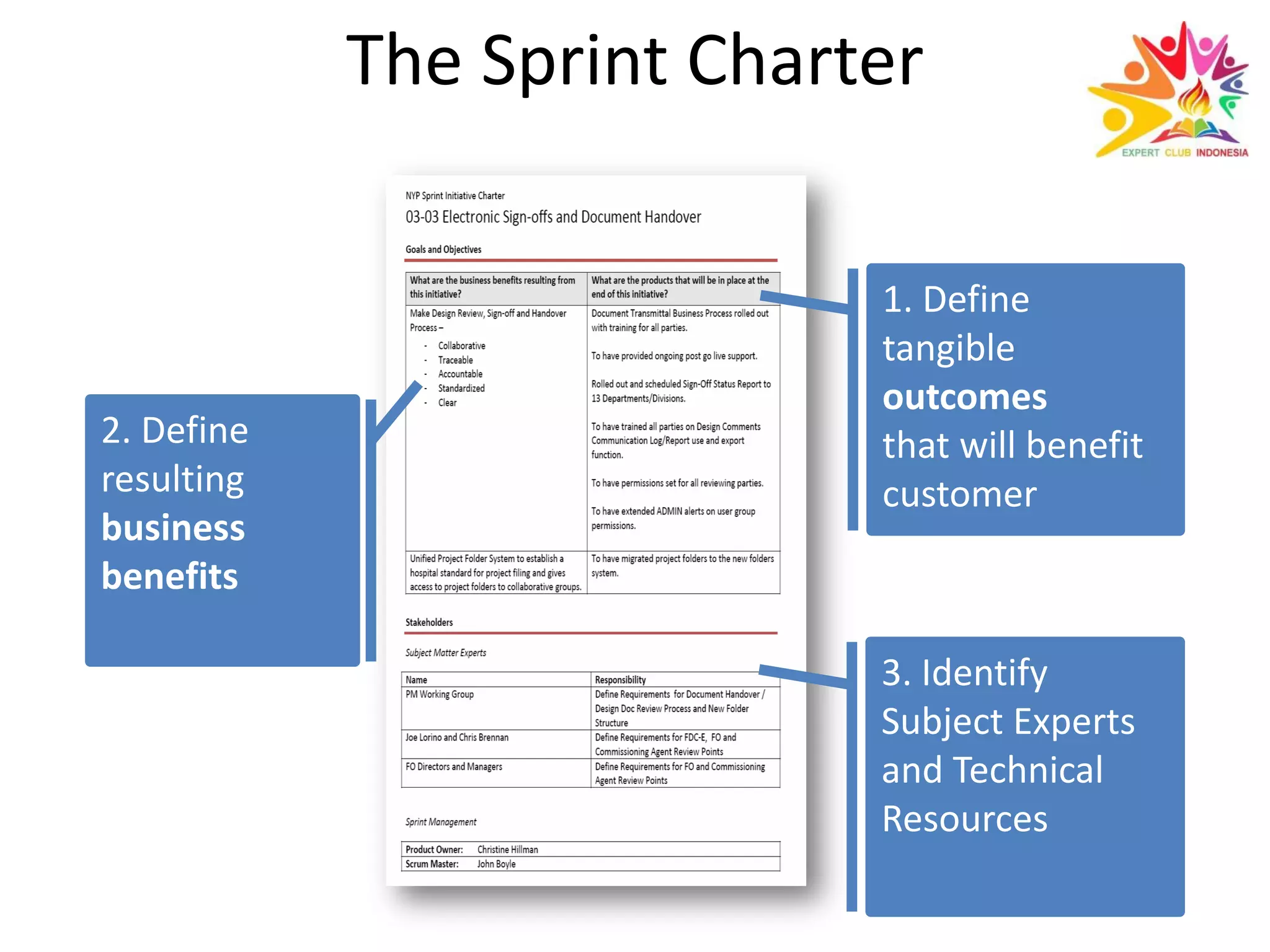
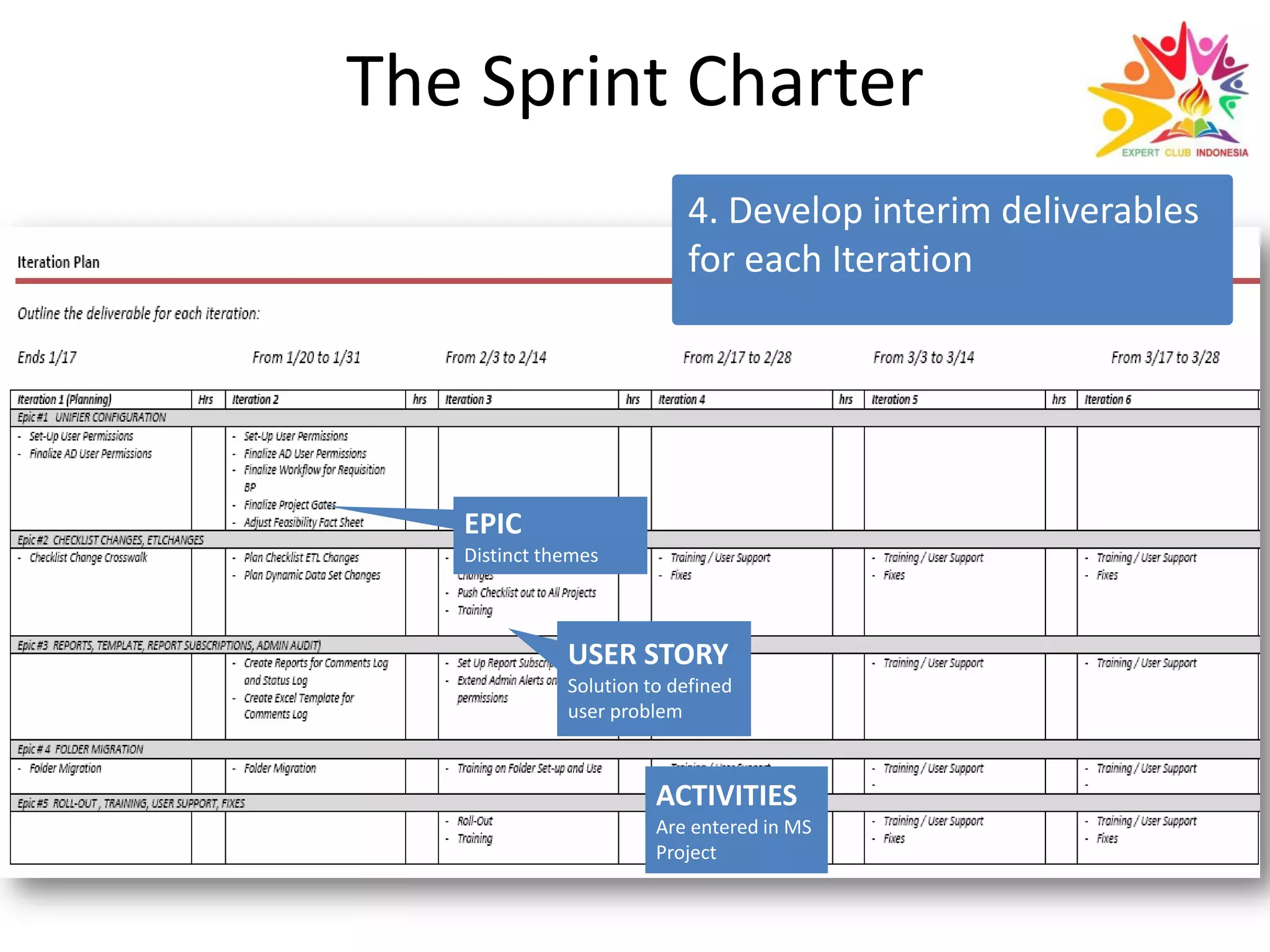
The Sprint Charter
1. Define
tangible
outcomes
that will benefit
customer
2. Define
resulting
business
benefits
3. Identify
Subject Experts
and Technical
Resources
The Sprint Charter
4. Develop interim deliverables
for each Iteration
EPIC
Distinct themes
USER STORY
Solution to defined
user problem
ACTIVITIES
Are entered in MS
Project
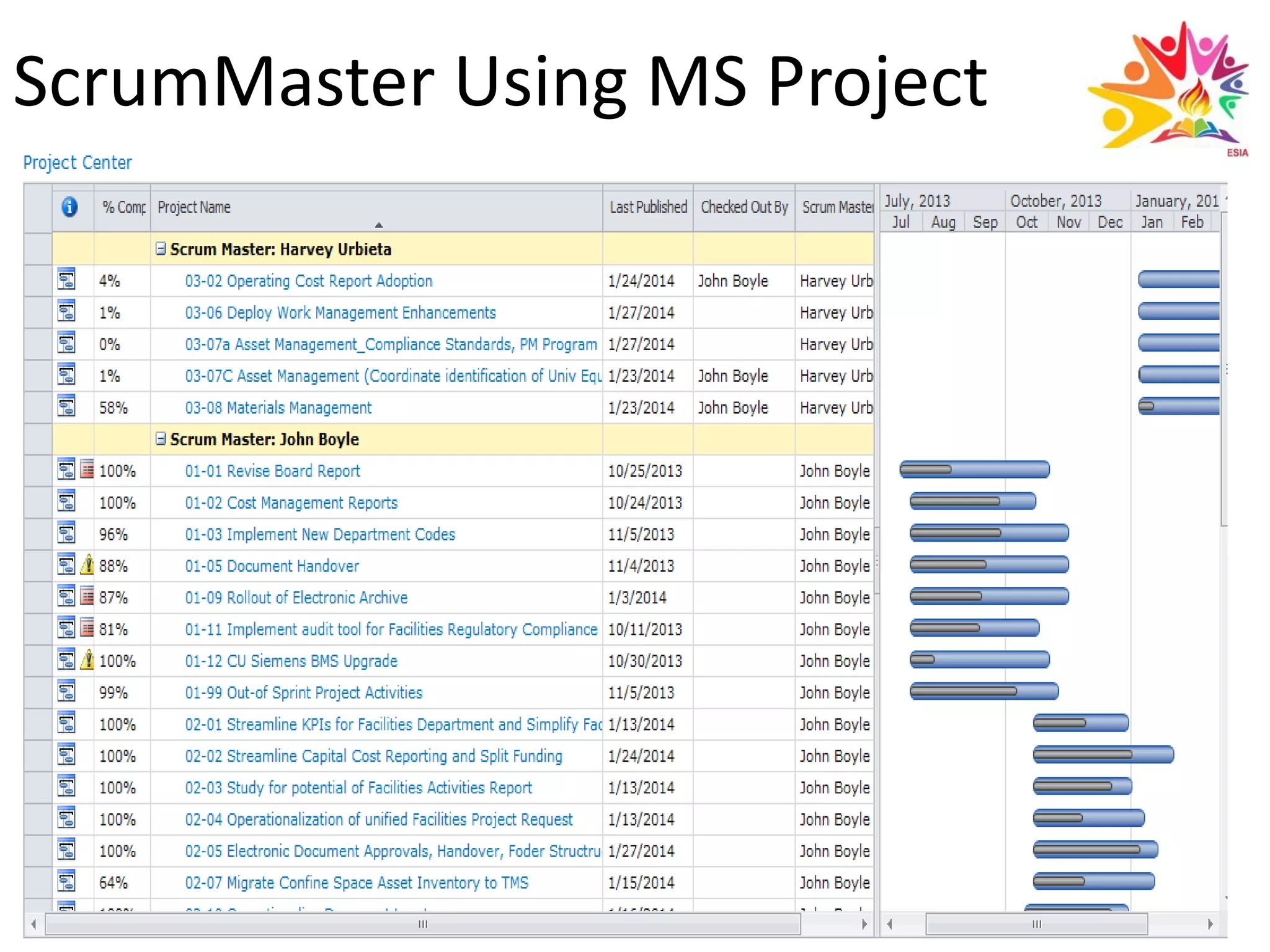
ScrumMaster Using MS Project
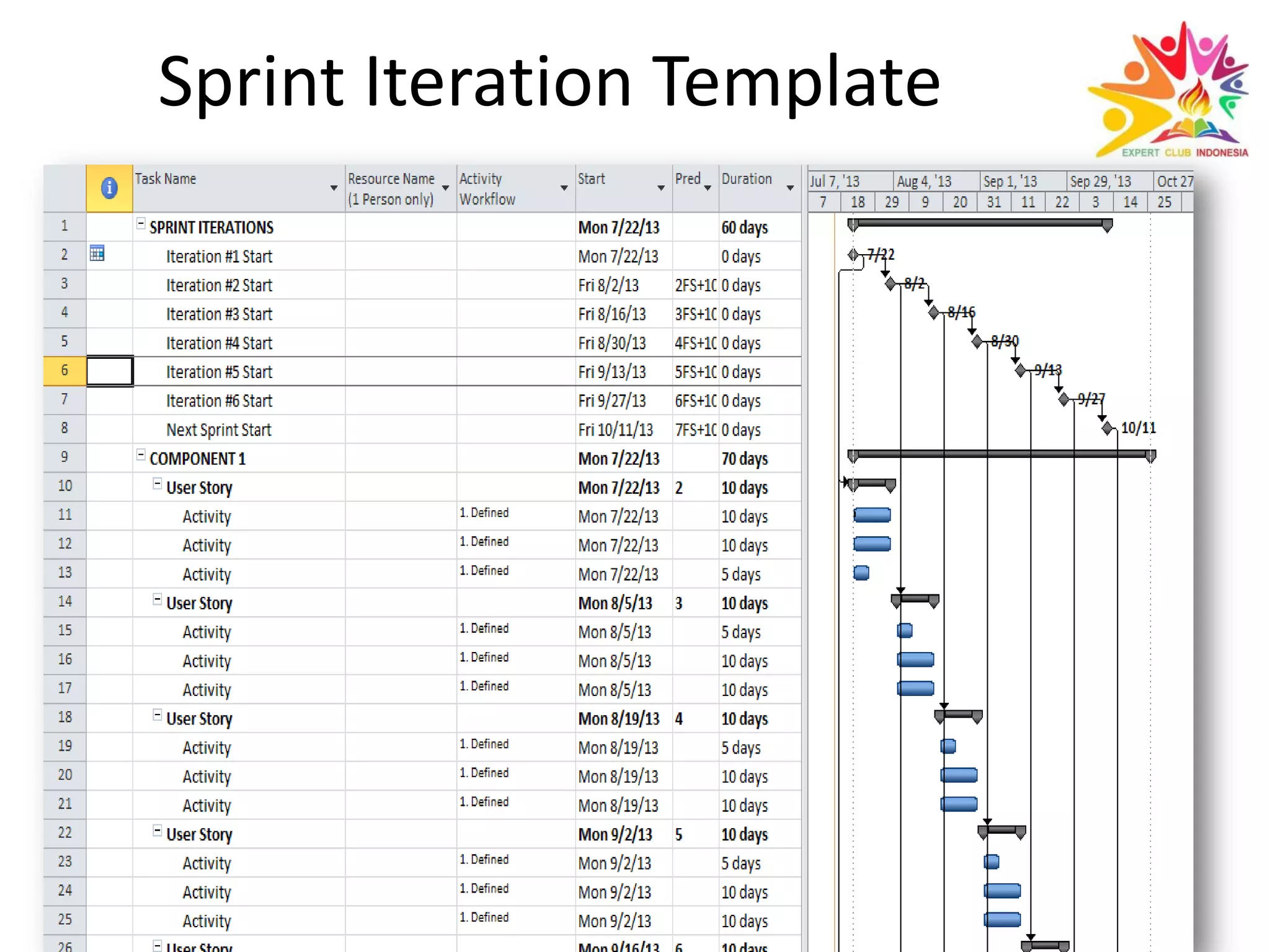
Sprint Iteration Template
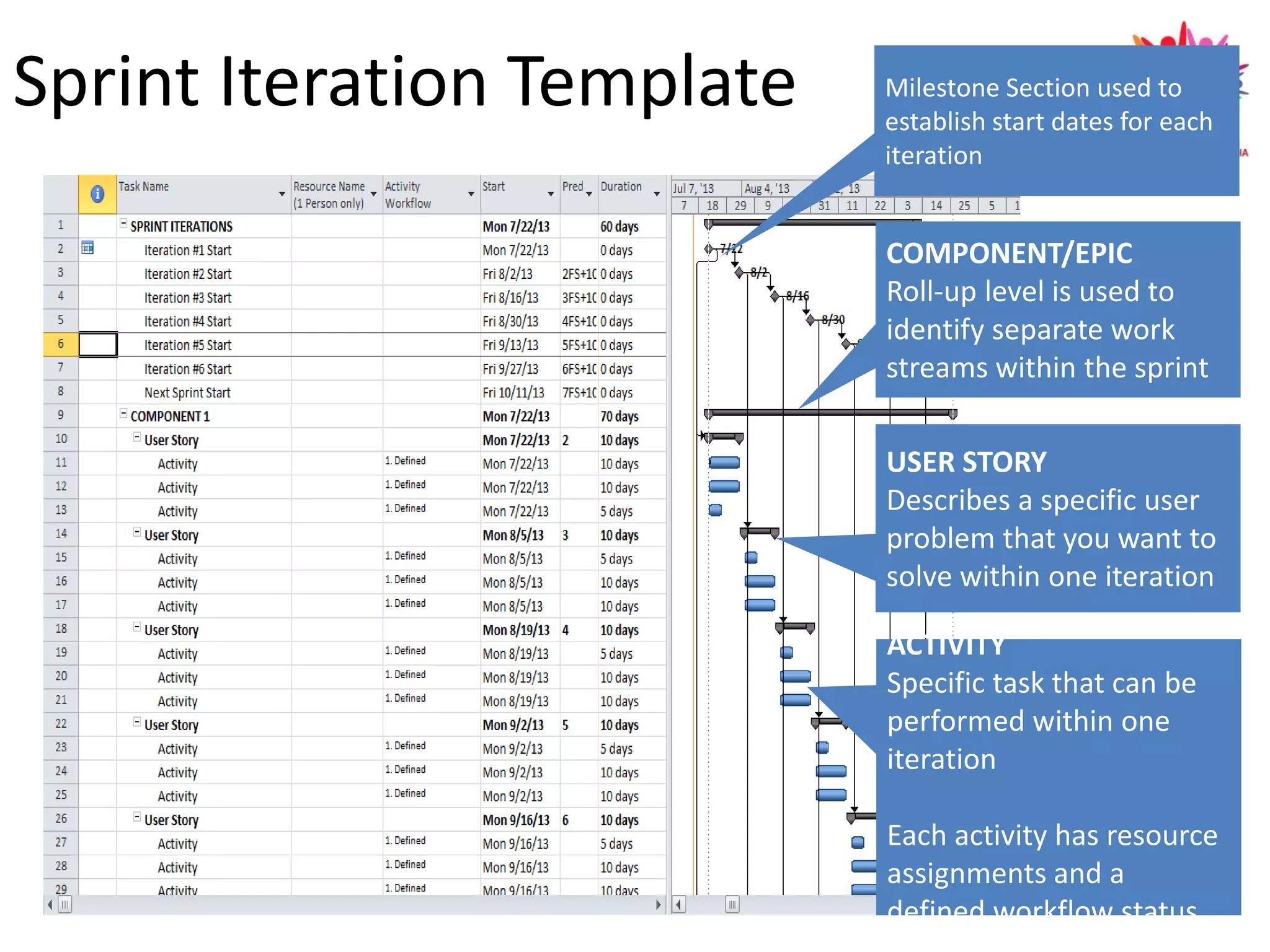
Sprint Iteration Template Milestone Section used to
establish start dates for each
iteration
COMPONENT/EPIC
Roll-up level is used to
identify separate work
streams within the sprint
USER STORY
Describes a specific user
problem that you want to
solve within one iteration
ACTIVITY
Specific task that can be
performed within one
iteration
Each activity has resource
assignments and a
defined workflow status
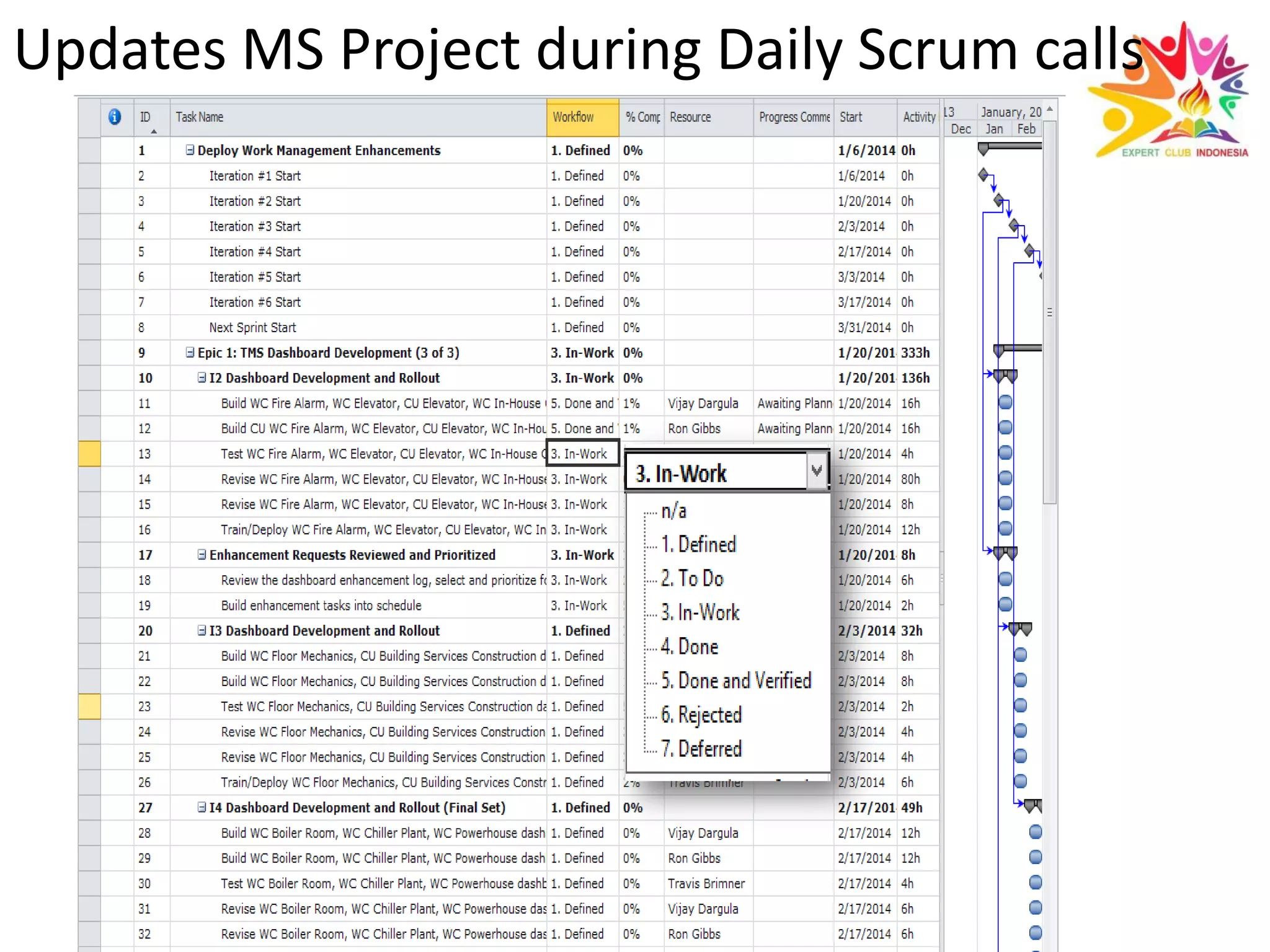
Updates MS Project during Daily Scrum calls
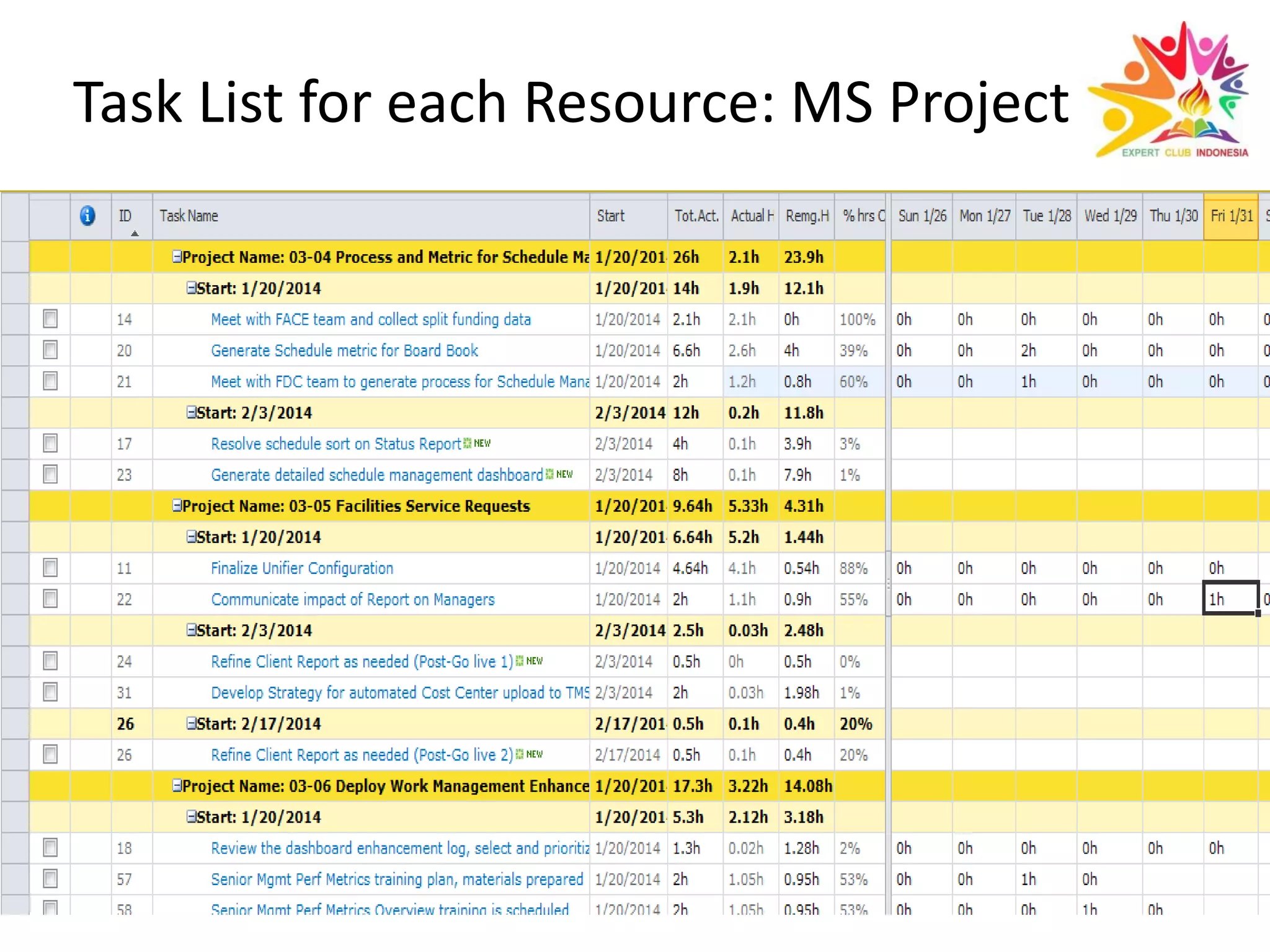
Task List for each Resource: MS Project
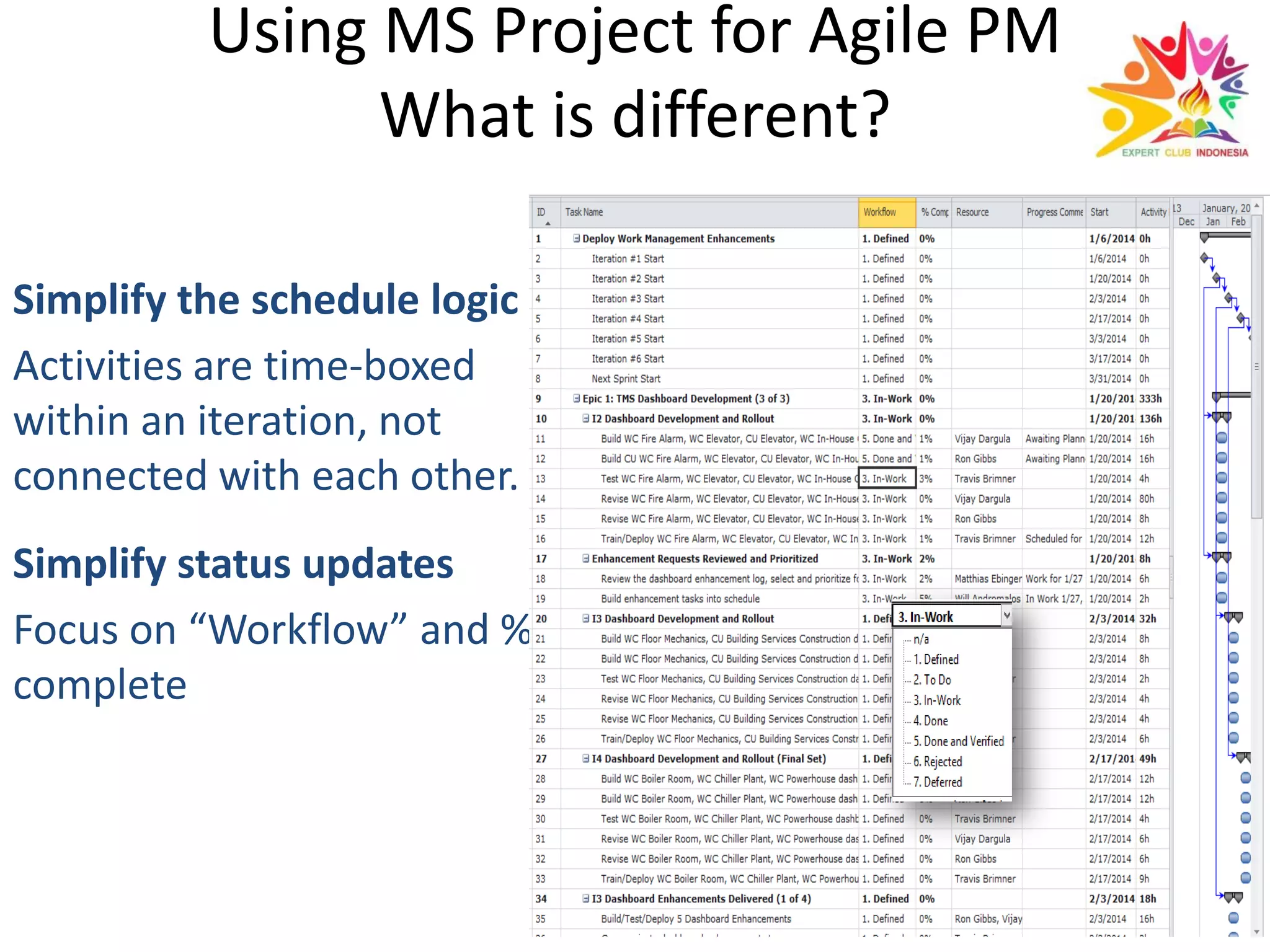
Using MS Project for Agile PM
What is different?
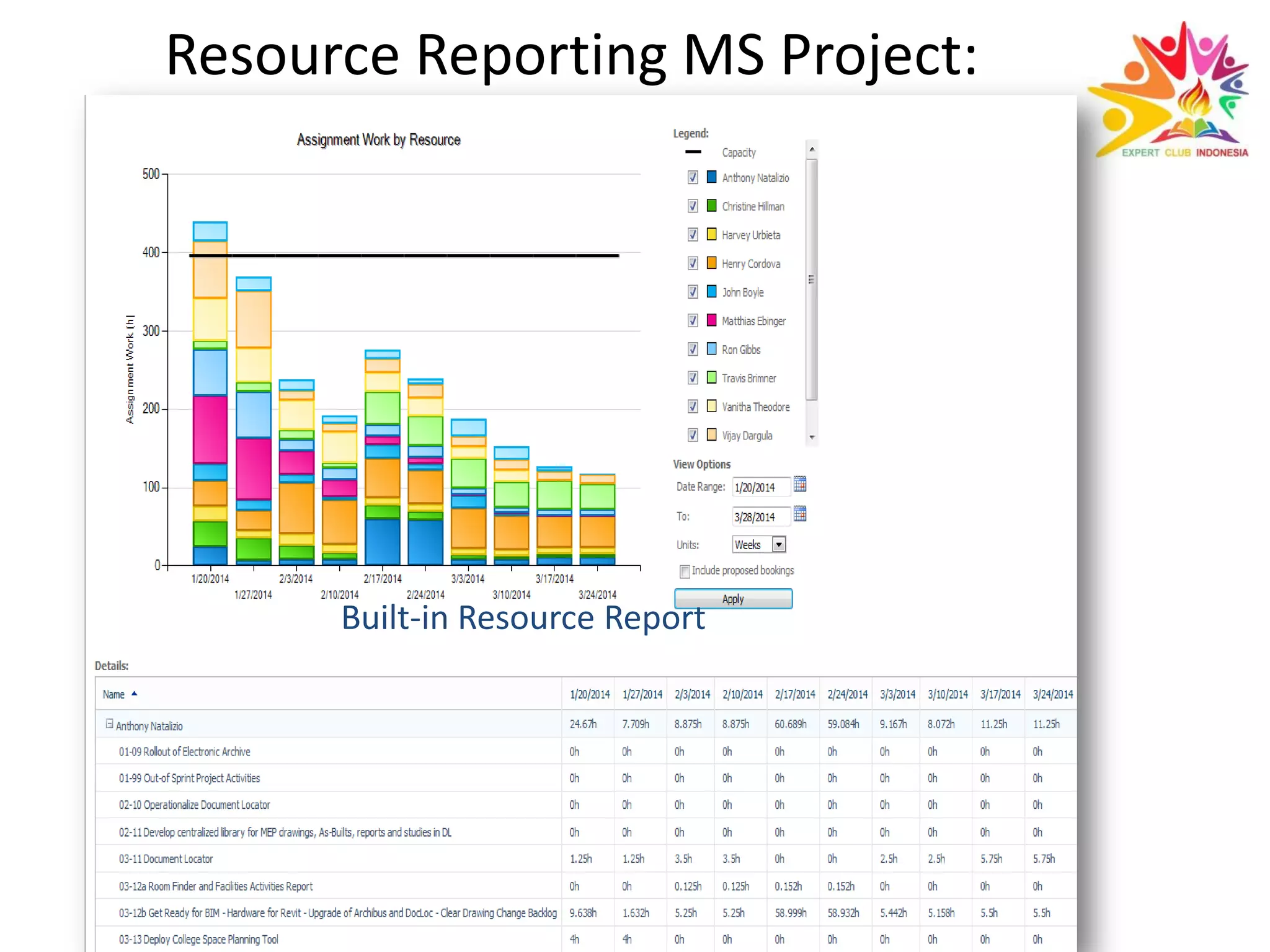
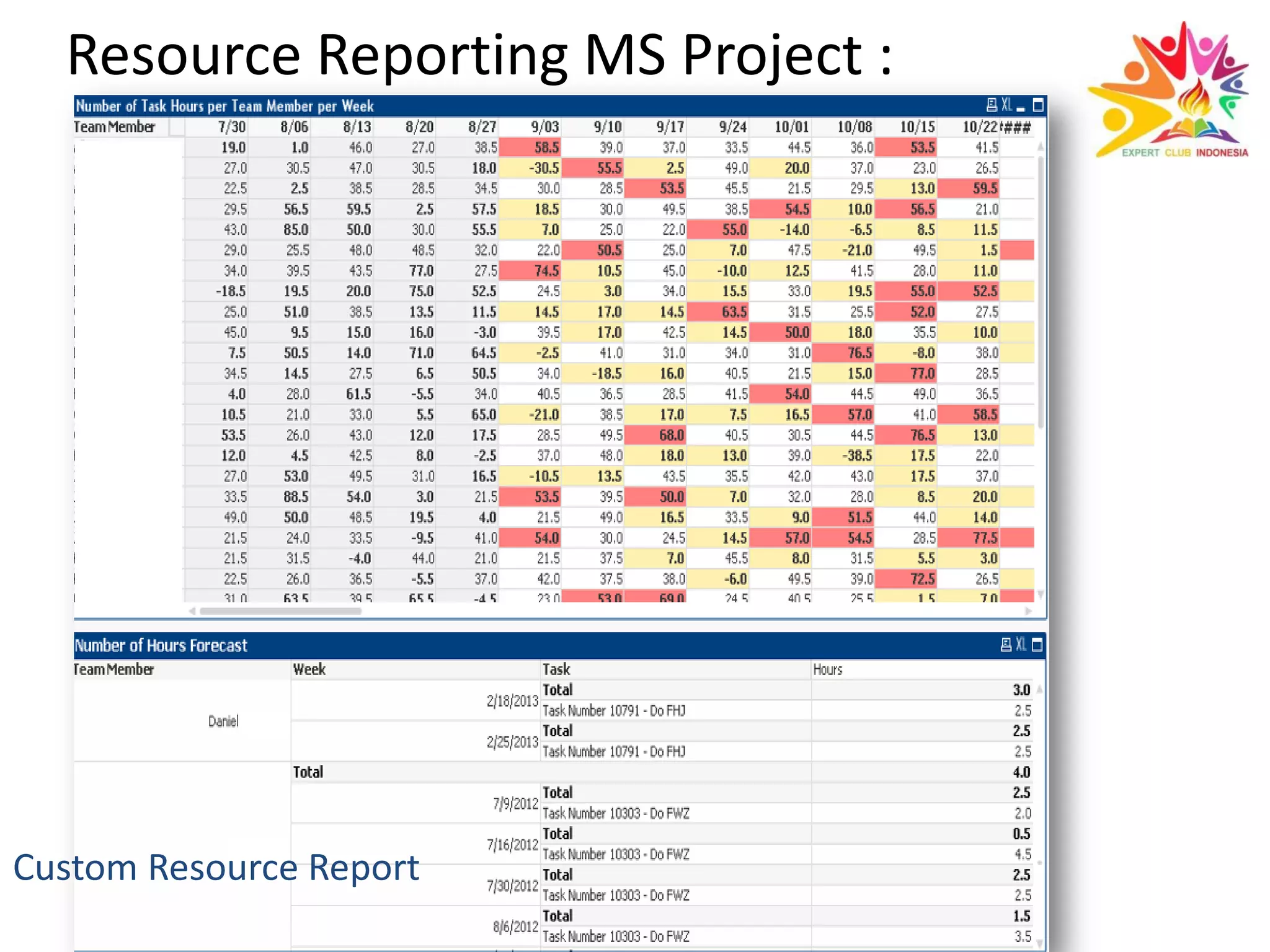
Resource Reporting MS Project:
Resource Reporting MS Project :

Scrum Project Examples Dwika v7.2