Digestive system
Structure and
Function
Prepared by: Ghazala Muhammad Hussain
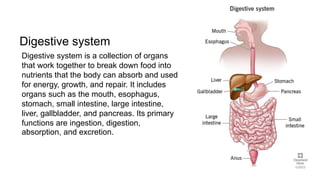
Digestive system is a collection of organs
that work together to break down food into
nutrients that the body can absorb and used
for energy, growth, and repair. It includes
organs such as the mouth, esophagus,
stomach, small intestine, large intestine,
liver, gallbladder, and pancreas. Its primary
functions are ingestion, digestion,
absorption, and excretion.
Digestive system
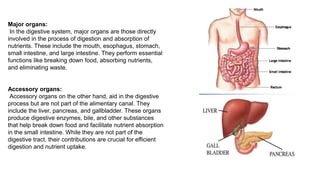
Major organs:
In the digestive system, major organs are those directly
involved in the process of digestion and absorption of
nutrients. These include the mouth, esophagus, stomach,
small intestine, and large intestine. They perform essential
functions like breaking down food, absorbing nutrients,
and eliminating waste.
Accessory organs:
Accessory organs on the other hand, aid in the digestive
process but are not part of the alimentary canal. They
include the liver, pancreas, and gallbladder. These organs
produce digestive enzymes, bile, and other substances
that help break down food and facilitate nutrient absorption
in the small intestine. While they are not part of the
digestive tract, their contributions are crucial for efficient
digestion and nutrient uptake.
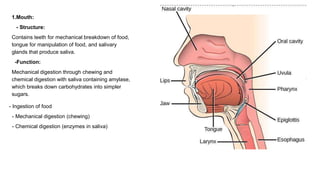
1.Mouth:
- Structure:
Contains teeth for mechanical breakdown of food,
tongue for manipulation of food, and salivary
glands that produce saliva.
-Function:
Mechanical digestion through chewing and
chemical digestion with saliva containing amylase,
which breaks down carbohydrates into simpler
sugars.
- Ingestion of food
- Mechanical digestion (chewing)
- Chemical digestion (enzymes in saliva)
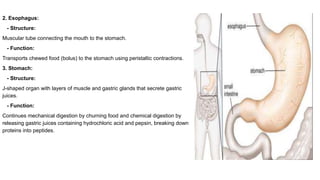
2. Esophagus:
- Structure:
Muscular tube connecting the mouth to the stomach.
- Function:
Transports chewed food (bolus) to the stomach using peristaltic contractions.
3. Stomach:
- Structure:
J-shaped organ with layers of muscle and gastric glands that secrete gastric
juices.
- Function:
Continues mechanical digestion by churning food and chemical digestion by
releasing gastric juices containing hydrochloric acid and pepsin, breaking down
proteins into peptides.
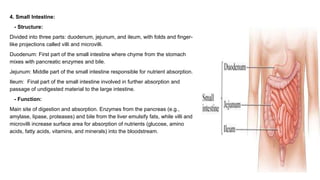
4. Small Intestine:
- Structure:
Divided into three parts: duodenum, jejunum, and ileum, with folds and finger-
like projections called villi and microvilli.
Duodenum: First part of the small intestine where chyme from the stomach
mixes with pancreatic enzymes and bile.
Jejunum: Middle part of the small intestine responsible for nutrient absorption.
Ileum: Final part of the small intestine involved in further absorption and
passage of undigested material to the large intestine.
- Function:
Main site of digestion and absorption. Enzymes from the pancreas (e.g.,
amylase, lipase, proteases) and bile from the liver emulsify fats, while villi and
microvilli increase surface area for absorption of nutrients (glucose, amino
acids, fatty acids, vitamins, and minerals) into the bloodstream.
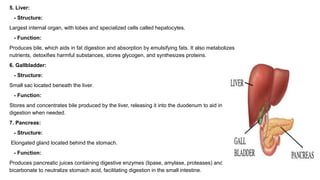
5. Liver:
- Structure:
Largest internal organ, with lobes and specialized cells called hepatocytes.
- Function:
Produces bile, which aids in fat digestion and absorption by emulsifying fats. It also metabolizes
nutrients, detoxifies harmful substances, stores glycogen, and synthesizes proteins.
6. Gallbladder:
- Structure:
Small sac located beneath the liver.
- Function:
Stores and concentrates bile produced by the liver, releasing it into the duodenum to aid in fat
digestion when needed.
7. Pancreas:
- Structure:
Elongated gland located behind the stomach.
- Function:
Produces pancreatic juices containing digestive enzymes (lipase, amylase, proteases) and
bicarbonate to neutralize stomach acid, facilitating digestion in the small intestine.
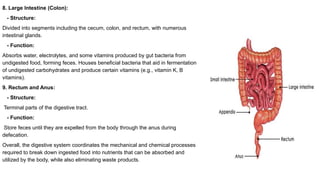
8. Large Intestine (Colon):
- Structure:
Divided into segments including the cecum, colon, and rectum, with numerous
intestinal glands.
- Function:
Absorbs water, electrolytes, and some vitamins produced by gut bacteria from
undigested food, forming feces. Houses beneficial bacteria that aid in fermentation
of undigested carbohydrates and produce certain vitamins (e.g., vitamin K, B
vitamins).
9. Rectum and Anus:
- Structure:
Terminal parts of the digestive tract.
- Function:
Store feces until they are expelled from the body through the anus during
defecation.
Overall, the digestive system coordinates the mechanical and chemical processes
required to break down ingested food into nutrients that can be absorbed and
utilized by the body, while also eliminating waste products.
Functions of the digestive system
1. Ingestion: Taking in food and liquids through the mouth.
2. Mechanical Digestion: Breaking down food into smaller pieces through chewing and muscular
contractions in the stomach and intestines.
3. Chemical Digestion: Breaking down complex molecules into simpler forms by enzymes and acids
released in various parts of the digestive tract.
4. Absorption: Transporting digested nutrients across the walls of the intestines into the bloodstream for
distribution to cells throughout the body.
5. Secretion: Releasing digestive enzymes, acids, and other substances necessary for digestion from
glands such as the salivary glands, stomach lining, pancreas, and liver.
6. Motility: Moving food along the digestive tract through coordinated muscle contractions, such as
peristalsis in the esophagus, stomach, and intestines.
Continue…
7. Storage and Elimination: Temporarily storing food in the stomach and intestines before expelling waste
products, such as feces, from the body through defecation.
8. Maintaining Homeostasis: Regulating the balance of fluids, electrolytes, and pH levels within the body to
support overall health and function.
Overall, the digestive system ensures the proper breakdown, absorption, and utilization of nutrients from
ingested food while eliminating waste materials, thus supporting the body's energy needs and physiological
processes.
Human digestive system structure and function

Human digestive system structure and function

  • 1.
  • 3.
    Digestive system isa collection of organs that work together to break down food into nutrients that the body can absorb and used for energy, growth, and repair. It includes organs such as the mouth, esophagus, stomach, small intestine, large intestine, liver, gallbladder, and pancreas. Its primary functions are ingestion, digestion, absorption, and excretion. Digestive system
  • 4.
    Major organs: In thedigestive system, major organs are those directly involved in the process of digestion and absorption of nutrients. These include the mouth, esophagus, stomach, small intestine, and large intestine. They perform essential functions like breaking down food, absorbing nutrients, and eliminating waste. Accessory organs: Accessory organs on the other hand, aid in the digestive process but are not part of the alimentary canal. They include the liver, pancreas, and gallbladder. These organs produce digestive enzymes, bile, and other substances that help break down food and facilitate nutrient absorption in the small intestine. While they are not part of the digestive tract, their contributions are crucial for efficient digestion and nutrient uptake.
  • 5.
    1.Mouth: - Structure: Contains teethfor mechanical breakdown of food, tongue for manipulation of food, and salivary glands that produce saliva. -Function: Mechanical digestion through chewing and chemical digestion with saliva containing amylase, which breaks down carbohydrates into simpler sugars. - Ingestion of food - Mechanical digestion (chewing) - Chemical digestion (enzymes in saliva)
  • 6.
    2. Esophagus: - Structure: Musculartube connecting the mouth to the stomach. - Function: Transports chewed food (bolus) to the stomach using peristaltic contractions. 3. Stomach: - Structure: J-shaped organ with layers of muscle and gastric glands that secrete gastric juices. - Function: Continues mechanical digestion by churning food and chemical digestion by releasing gastric juices containing hydrochloric acid and pepsin, breaking down proteins into peptides.
  • 7.
    4. Small Intestine: -Structure: Divided into three parts: duodenum, jejunum, and ileum, with folds and finger- like projections called villi and microvilli. Duodenum: First part of the small intestine where chyme from the stomach mixes with pancreatic enzymes and bile. Jejunum: Middle part of the small intestine responsible for nutrient absorption. Ileum: Final part of the small intestine involved in further absorption and passage of undigested material to the large intestine. - Function: Main site of digestion and absorption. Enzymes from the pancreas (e.g., amylase, lipase, proteases) and bile from the liver emulsify fats, while villi and microvilli increase surface area for absorption of nutrients (glucose, amino acids, fatty acids, vitamins, and minerals) into the bloodstream.
  • 8.
    5. Liver: - Structure: Largestinternal organ, with lobes and specialized cells called hepatocytes. - Function: Produces bile, which aids in fat digestion and absorption by emulsifying fats. It also metabolizes nutrients, detoxifies harmful substances, stores glycogen, and synthesizes proteins. 6. Gallbladder: - Structure: Small sac located beneath the liver. - Function: Stores and concentrates bile produced by the liver, releasing it into the duodenum to aid in fat digestion when needed. 7. Pancreas: - Structure: Elongated gland located behind the stomach. - Function: Produces pancreatic juices containing digestive enzymes (lipase, amylase, proteases) and bicarbonate to neutralize stomach acid, facilitating digestion in the small intestine.
  • 9.
    8. Large Intestine(Colon): - Structure: Divided into segments including the cecum, colon, and rectum, with numerous intestinal glands. - Function: Absorbs water, electrolytes, and some vitamins produced by gut bacteria from undigested food, forming feces. Houses beneficial bacteria that aid in fermentation of undigested carbohydrates and produce certain vitamins (e.g., vitamin K, B vitamins). 9. Rectum and Anus: - Structure: Terminal parts of the digestive tract. - Function: Store feces until they are expelled from the body through the anus during defecation. Overall, the digestive system coordinates the mechanical and chemical processes required to break down ingested food into nutrients that can be absorbed and utilized by the body, while also eliminating waste products.
  • 10.
    Functions of thedigestive system 1. Ingestion: Taking in food and liquids through the mouth. 2. Mechanical Digestion: Breaking down food into smaller pieces through chewing and muscular contractions in the stomach and intestines. 3. Chemical Digestion: Breaking down complex molecules into simpler forms by enzymes and acids released in various parts of the digestive tract. 4. Absorption: Transporting digested nutrients across the walls of the intestines into the bloodstream for distribution to cells throughout the body. 5. Secretion: Releasing digestive enzymes, acids, and other substances necessary for digestion from glands such as the salivary glands, stomach lining, pancreas, and liver. 6. Motility: Moving food along the digestive tract through coordinated muscle contractions, such as peristalsis in the esophagus, stomach, and intestines.
  • 11.
    Continue… 7. Storage andElimination: Temporarily storing food in the stomach and intestines before expelling waste products, such as feces, from the body through defecation. 8. Maintaining Homeostasis: Regulating the balance of fluids, electrolytes, and pH levels within the body to support overall health and function. Overall, the digestive system ensures the proper breakdown, absorption, and utilization of nutrients from ingested food while eliminating waste materials, thus supporting the body's energy needs and physiological processes.