Science Vs Engineering
Science – Means “to know”
Objectives of Science
• Study of natural phenomenon
• To understand natural systems
• Reasoned investigation
• Discovery of new principles
• Production of useful models of reality
Science Vs Engineering
Objectives of Engineering
• Application of scientific knowledge
• Designing tools, machine and systems based
on scientific principles
• Manipulation of nature for human welfare
• Innovation
Science and Engineering are interdependent
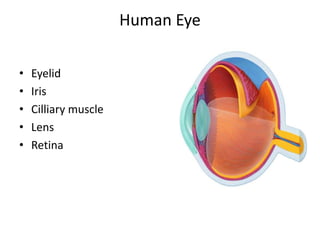
Human Eye
• Eyelid
• Iris
• Cilliary muscle
• Lens
• Retina
Eye Vs Camera
• Shutter - Cover the lens when not in use
• Aperture – allows to adjust the amount of light
• Focusing screw – For zooming
• Lens – Focus light on receptor surface
• Photosensitive receptor – Captures image
Birds and aircraft
• Same Principle different mechanisms
• Bernoulli’s principle – fast moving air has lower
pressure.
• Streamline body – Based on aerodynamics
• Wings – helps to stay afloat in air
• Feet / landing gear – helps in landing
• Light body material – cage like structure of bone.
Use of carbon fiber and aluminum
• Sense of direction/GPS

Science vs engineering.pptx

  • 1.
    Science Vs Engineering Science– Means “to know” Objectives of Science • Study of natural phenomenon • To understand natural systems • Reasoned investigation • Discovery of new principles • Production of useful models of reality
  • 2.
    Science Vs Engineering Objectivesof Engineering • Application of scientific knowledge • Designing tools, machine and systems based on scientific principles • Manipulation of nature for human welfare • Innovation Science and Engineering are interdependent
  • 3.
    Human Eye • Eyelid •Iris • Cilliary muscle • Lens • Retina
  • 4.
    Eye Vs Camera •Shutter - Cover the lens when not in use • Aperture – allows to adjust the amount of light • Focusing screw – For zooming • Lens – Focus light on receptor surface • Photosensitive receptor – Captures image
  • 5.
    Birds and aircraft •Same Principle different mechanisms • Bernoulli’s principle – fast moving air has lower pressure. • Streamline body – Based on aerodynamics • Wings – helps to stay afloat in air • Feet / landing gear – helps in landing • Light body material – cage like structure of bone. Use of carbon fiber and aluminum • Sense of direction/GPS