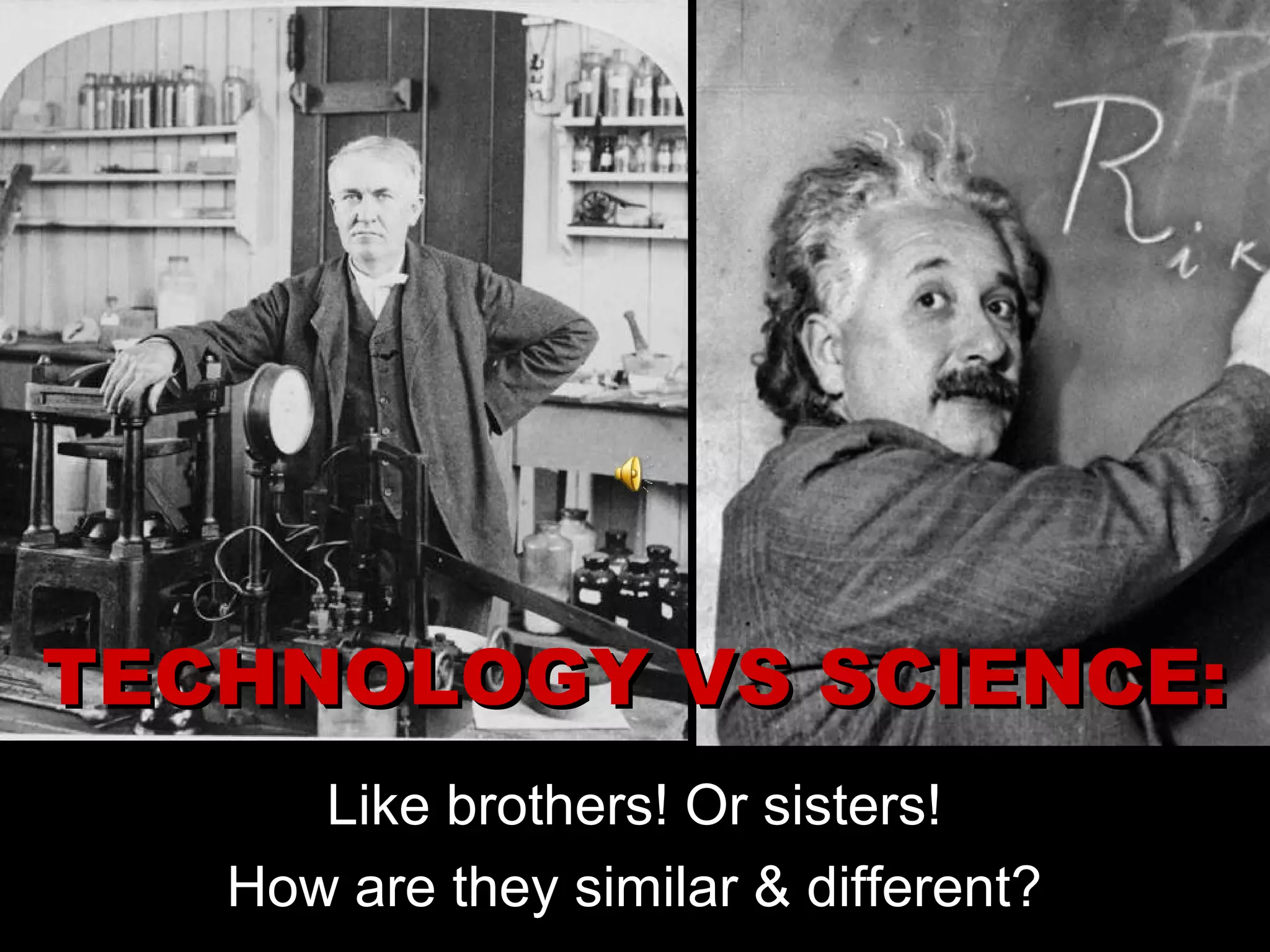
TECHNOLOGY VS SCIENCE:
Like brothers! Or sisters!
How are they similar & different?
After this presentation, your goal is
to..
• Understand the definition of technology
• Determine the difference between science
and technology
• Discover the human limitations, and the
technology we use to overcome them
• Explore the characteristics of technology
• Know the resources of technology
• Find out what a Renewable and
Nonrenewable resource is
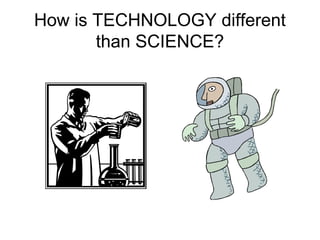
How is TECHNOLOGY different
than SCIENCE?
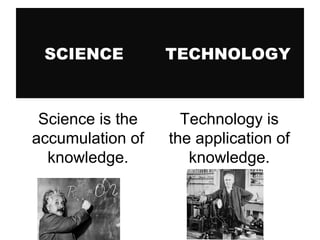
SCIENCE

TECHNOLOGY

Science is the
accumulation of
knowledge.

Technology is
the application of
knowledge.
SCIENCE

TECHNOLOGY

SCIENCE is the
study of
WHY natural
things happen the
way they do.

TECHNOLOGY is
the use of
knowledge to turn
resources into the
goods and
services that
society needs.
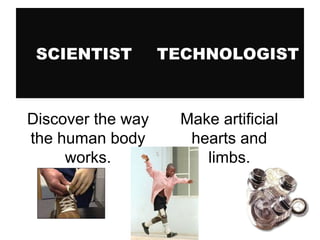
SCIENTIST

TECHNOLOGIST

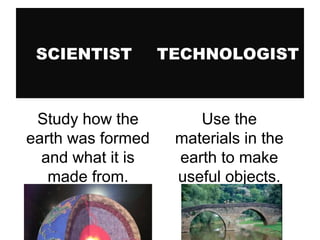
Study how the
earth was formed
and what it is
made from.

Use the
materials in the
earth to make
useful objects.
SCIENTIST

TECHNOLOGIST

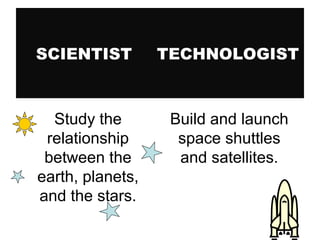
Study the
relationship
between the
earth, planets,
and the stars.

Build and launch
space shuttles
and satellites.
SCIENTIST

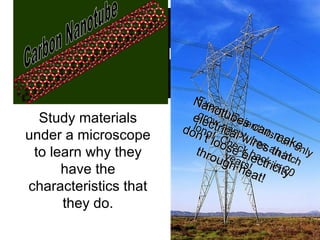
Study materials
under a microscope
to learn why they
have the
characteristics that
they do.

TECHNOLOGIST
Exc
Nane
gro opub c
ele w tt: Ses
Technologists
lon ctrinan ientan
don g! calot c ists m
u
’t loCh wibe
create cnewa caakon
e
ose k res tn n e l
thro y elba s hat y
e
materialss!ecctkicn inch
ughar with
hea r i it20
y
t!
improved

characteristics.
SCIENTIST

TECHNOLOGIST

Discover the way
the human body
works.

Make artificial
hearts and
limbs.
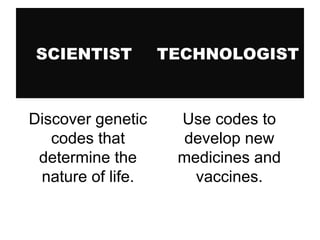
SCIENTIST

TECHNOLOGIST

Discover genetic
codes that
determine the
nature of life.

Use codes to
develop new
medicines and
vaccines.
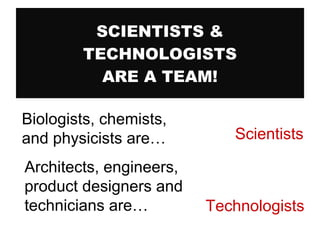
SCIENTISTS &
TECHNOLOGISTS
ARE A TEAM!
Biologists, chemists,
and physicists are…
Architects, engineers,
product designers and
technicians are…

Scientists

Technologists
al
Why does this chemic
react with this one?

Why do people fr
om Asia
look different from
people
in South America
?

Why does this m
aterial release
electricity when e
xposed to
the sun?

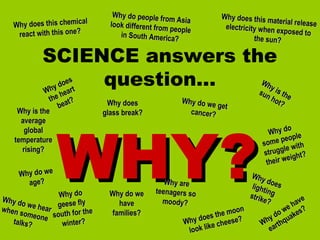
SCIENCE answers the
s
Wh
question…
doe
y is
y
Wh
art
s

e
he h t?
t
bea
Why is the
average
global
temperature
rising?

Why do we
age?

Why does
glass break?

Why do we
get
cancer?

th
un
hot e
?

WHY?

Why do
Why d
e fly
o we h
ear gees
when s
omeon south for the
e
talks?
winter?

Why do we
have
families?

Why are
teenagers so
moody?

oon
s the m ?
oe
Why d e cheese
k
look li

o
Why d le
eop
ome p ith
s
le w
strugg ght?
ei
their w

Why
d
light oes
in
strik g
e?

e
hav
e
o w akes?
d
hy hqu
W rt
ea
nHow can we make a no
explosive gasoline?

How can we best
transport people
from
Asia to South Am
erica?

How can we mak
e electricity
with the sun?

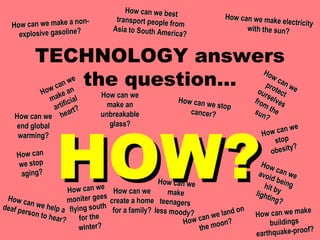
TECHNOLOGY answers
Ho
wc
we the question…
pro an w
can n
ou tec e
a
How

e
mak icial
f
arti rt?
a
How can we he
end global
warming?

How can
we stop
aging?

How can we
make an
unbreakable
glass?

How can w
e stop
cancer?

t
rs
fro elves
m
sun the
?

HOW?

How can we
we How can we
How can
make
r gees create a home teen
How ca
monite
agers
n we h
deaf pe
elp a flying south for a family? less
d on
moody?
rson to
we lan
hear?
an
for the
How c moon?
winter?
the

we
w can
Ho
stop
y?
obesit

How
c
avoi an we
d be
hit b ing
light y
i ng?
ke
How can we ma
buildings
of?
earthquake-pro
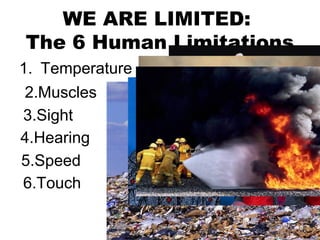
WE ARE LIMITED:
The 6 Human Limitations
1. Temperature
2.Muscles
3.Sight
4.Hearing
5.Speed
6.Touch
10 Characteristics of Technology
1. Technology is evident in all cultures.
2.is knowledge based
3.is fundamental to humanity
4.is fundamental to survival
5.extends our capabilities
6.is accumulative
7.alters our culture
8.is future oriented
9.is observable
10.seeks harmony
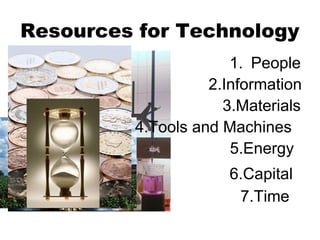
Resources for Technology
1. People
2.Information
3.Materials
4.Tools and Machines
5.Energy
6.Capital
7.Time
Resources can be either…
LIMITED
In short supply
Water in some places
Petroleum
UNLIMITED
Available in great quantity
Clay
Iron ore
Sand
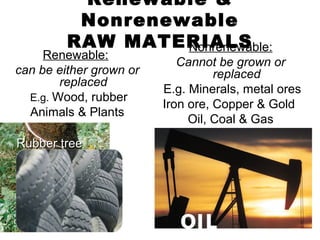
Renewable &
Nonrenewable
RAW MATERIALS
Nonrenewable:

Renewable:
can be either grown or
replaced
E.g. Wood, rubber
Animals & Plants
Rubber tree

Cannot be grown or
replaced
E.g. Minerals, metal ores
Iron ore, Copper & Gold
Oil, Coal & Gas
TEAM MEMBERS

Ppt1 (1)

  • 1.
    TECHNOLOGY VS SCIENCE: Likebrothers! Or sisters! How are they similar & different?
  • 2.
    After this presentation,your goal is to.. • Understand the definition of technology • Determine the difference between science and technology • Discover the human limitations, and the technology we use to overcome them • Explore the characteristics of technology • Know the resources of technology • Find out what a Renewable and Nonrenewable resource is
  • 3.
    How is TECHNOLOGYdifferent than SCIENCE?
  • 4.
    SCIENCE TECHNOLOGY Science is the accumulationof knowledge. Technology is the application of knowledge.
  • 5.
    SCIENCE TECHNOLOGY SCIENCE is the studyof WHY natural things happen the way they do. TECHNOLOGY is the use of knowledge to turn resources into the goods and services that society needs.
  • 6.
    SCIENTIST TECHNOLOGIST Study how the earthwas formed and what it is made from. Use the materials in the earth to make useful objects.
  • 7.
    SCIENTIST TECHNOLOGIST Study the relationship between the earth,planets, and the stars. Build and launch space shuttles and satellites.
  • 8.
    SCIENTIST Study materials under amicroscope to learn why they have the characteristics that they do. TECHNOLOGIST Exc Nane gro opub c ele w tt: Ses Technologists lon ctrinan ientan don g! calot c ists m u ’t loCh wibe create cnewa caakon e ose k res tn n e l thro y elba s hat y e materialss!ecctkicn inch ughar with hea r i it20 y t! improved characteristics.
  • 9.
    SCIENTIST TECHNOLOGIST Discover the way thehuman body works. Make artificial hearts and limbs.
  • 10.
    SCIENTIST TECHNOLOGIST Discover genetic codes that determinethe nature of life. Use codes to develop new medicines and vaccines.
  • 11.
    SCIENTISTS & TECHNOLOGISTS ARE ATEAM! Biologists, chemists, and physicists are… Architects, engineers, product designers and technicians are… Scientists Technologists
  • 12.
    al Why does thischemic react with this one? Why do people fr om Asia look different from people in South America ? Why does this m aterial release electricity when e xposed to the sun? SCIENCE answers the s Wh question… doe y is y Wh art s e he h t? t bea Why is the average global temperature rising? Why do we age? Why does glass break? Why do we get cancer? th un hot e ? WHY? Why do Why d e fly o we h ear gees when s omeon south for the e talks? winter? Why do we have families? Why are teenagers so moody? oon s the m ? oe Why d e cheese k look li o Why d le eop ome p ith s le w strugg ght? ei their w Why d light oes in strik g e? e hav e o w akes? d hy hqu W rt ea
  • 13.
    nHow can wemake a no explosive gasoline? How can we best transport people from Asia to South Am erica? How can we mak e electricity with the sun? TECHNOLOGY answers Ho wc we the question… pro an w can n ou tec e a How e mak icial f arti rt? a How can we he end global warming? How can we stop aging? How can we make an unbreakable glass? How can w e stop cancer? t rs fro elves m sun the ? HOW? How can we we How can we How can make r gees create a home teen How ca monite agers n we h deaf pe elp a flying south for a family? less d on moody? rson to we lan hear? an for the How c moon? winter? the we w can Ho stop y? obesit How c avoi an we d be hit b ing light y i ng? ke How can we ma buildings of? earthquake-pro
  • 14.
    WE ARE LIMITED: The6 Human Limitations 1. Temperature 2.Muscles 3.Sight 4.Hearing 5.Speed 6.Touch
  • 15.
    10 Characteristics ofTechnology 1. Technology is evident in all cultures. 2.is knowledge based 3.is fundamental to humanity 4.is fundamental to survival 5.extends our capabilities 6.is accumulative 7.alters our culture 8.is future oriented 9.is observable 10.seeks harmony
  • 16.
    Resources for Technology 1.People 2.Information 3.Materials 4.Tools and Machines 5.Energy 6.Capital 7.Time
  • 17.
    Resources can beeither… LIMITED In short supply Water in some places Petroleum UNLIMITED Available in great quantity Clay Iron ore Sand
  • 18.
    Renewable & Nonrenewable RAW MATERIALS Nonrenewable: Renewable: canbe either grown or replaced E.g. Wood, rubber Animals & Plants Rubber tree Cannot be grown or replaced E.g. Minerals, metal ores Iron ore, Copper & Gold Oil, Coal & Gas
  • 19.

Editor's Notes

  • #5 Einstein’s accumulation of e=mc2 created a legacy of technology. e=mc2 stands for "energy equals mass times the speed of light squared" Radiocarbon dating, which archeologists use to date ancient material, is an application of the formula. "The decay products that we see in carbon dating—that energy is directly obtained from the missing mass that you see in E = mc2," Gates says. Thomas Edison’s applications of inventions: Phonograph (initial invention leading to the iPod), Motion Picture Camera “Kinetoscope”, Light bulb, devices for maintaining constant voltage for electrical current, light sockets with on-off features.
  • #9 Carbon Nanotube: Strongest fiber known to humans. Also, superconductive meaning it conducts electricity with little to no loss. Current power transmission technology’s largest problem is “line loss”, the loss of electricity in the form of heat. Carbon nanotube fibers would allow us to set up giant solar energy fields in a desert and transmit that power anywhere we’d like it with no power loss. Problem: technologists and scientists have not successfully grown a carbon nanotube longer than an inch.
  • #11 Genetic research is working to cure or improve the following sicknesses. Anyone know anyone with: Asthma. 1 in 3 children are affected with 550,000 school days lost each year Bronchiectasis. A lung disease that causes 40 teenage deaths each year Childhood cancers. Our highest cause of death in children Cystic Fibrosis. An incurable lung disease which affects thousands of children Diabetes 1. Treatment costs over $1 million in a lifetime Genetic research. 1 in 30 babies are born with a genetic malformation Heart disease. Obesity. A growing epidemic in the USA Pneumonia. Pre-term babies. Costs $50m per annum to fund treatment and care
  • #20 M.SIVA SESHU REDDY N.GOWRI SHANKAR P.RAGHU VIKAS