Science of
Reading:
Transforming
Literay
Instruction
Rizalina C. Labanda
• Present Day
History of the Reading Wars
- Ongoing debate between
structured and balanced
literacy
• 2019 - Publication of Emily
Hanford’s article, “At a Loss
for Words”
• 2000s - Balanced literacy gains
traction
• 2000 - The National Reading Panel
issues its report
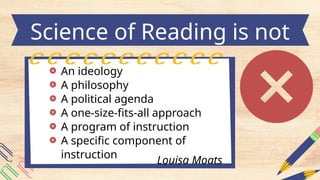
An ideology
A philosophy
A political agenda
A one-size-fits-all approach
A program of instruction
A specific component of
instruction
Science of Reading is not
Louisa Moats
Science of Reading revealed a great deal
about:
 How we learn to read
 What goes wrong when students don’t
learn
 What kind of instruction is most likely
to work the best for the most
students.
SoR: Where it Started
• National Reading Panel (NRP)
 Published a pivotal report on reading in
year 2000.
 Many professors, department of
education, publishers, and authors
IGNORED IT.
 This information was not filtering down
to those who needed it most: TEACHERS.
sOr: Where it is now?
Emily Hanford
• APM reports reporter
• A major contributor to
why SoR is gaining so
much traction recently.
The Science of
reading: 8
Simple Steps you
can take
 Gradually learn all you can about
the SoR.
 Read books, listen to podcasts,
watch webinars, participate in PD
trainings.
 Every students deserves a teacher
knowledgeable about the Science
of Reading.
1. Learn
 A guessing strategies not
reading strategies,
 No research to support
 We want our students to keep
their eyes on the words, to
process each letter, and to
decode from left to right. NO
GUESSING.
2. Stop using the 3-cueing
system
• Predictable text creates ineffective habits
that are hard to break and will lead to
reading failure.
• Decodable books are filled with sounds
and words they have been taught and
are able to decode.
• Once students have a solid foundation in
phonics, you can move to regular trade
books.
3. Replace predictable texts with
decodable texts
 Research supports a systematic and
explicit phonics approach.
 Be proactive and move through a set
scope and sequence that leaves
nothing to chance.
 There in no one correct sequence of
skills, look for a sequence that starts
with simple concepts and moves to
more complex ones.
4. Teach phonics explicitly and
systematically
 Make sure to spend time on PA in the
classroom.
 Embed this practice within phonics
lesson and spend a few minutes
before your lesson on these skills.
 Research supports about 6 minutes a
day on phonemic awareness
activities.
5. Encourage phonemic
awareness
 Surround your students with beautiful
texts, conversations, and read-alouds.
 Never neglect the language
comprehension side of reading
instruction.
 We can beef up this instruction by
explicitly teaching vocabulary words and
being intentional about the concepts and
subjects we teach in connection with our
6. Build vocabulary and background
knowledge
 Reach out to others at your
school or district for help and
support.
 Take a quality training
together, create a science of
reading book club.
7. Create a support network
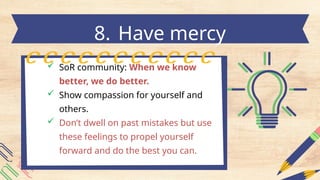
 SoR community: When we know
better, we do better.
 Show compassion for yourself and
others.
 Don’t dwell on past mistakes but use
these feelings to propel yourself
forward and do the best you can.
8. Have mercy
In conclusion
“Teaching our students to read is one of
the most powerful gifts we can give
them! Try not to be overwhelmed as you
begin to dive into all the resources
available. Just put one foot forward at a
time and know that you are changing
lives with each step you take!
The Science of
reading: First
Steps
Rizalina C. Labanda
Thank you!

Science of Reading First Steps: a Presentation.pptx

  • 1.
  • 2.
    • Present Day Historyof the Reading Wars - Ongoing debate between structured and balanced literacy • 2019 - Publication of Emily Hanford’s article, “At a Loss for Words” • 2000s - Balanced literacy gains traction • 2000 - The National Reading Panel issues its report
  • 3.
    An ideology A philosophy Apolitical agenda A one-size-fits-all approach A program of instruction A specific component of instruction Science of Reading is not Louisa Moats
  • 4.
    Science of Readingrevealed a great deal about:  How we learn to read  What goes wrong when students don’t learn  What kind of instruction is most likely to work the best for the most students.
  • 5.
    SoR: Where itStarted • National Reading Panel (NRP)  Published a pivotal report on reading in year 2000.  Many professors, department of education, publishers, and authors IGNORED IT.  This information was not filtering down to those who needed it most: TEACHERS.
  • 6.
    sOr: Where itis now? Emily Hanford • APM reports reporter • A major contributor to why SoR is gaining so much traction recently.
  • 7.
    The Science of reading:8 Simple Steps you can take
  • 8.
     Gradually learnall you can about the SoR.  Read books, listen to podcasts, watch webinars, participate in PD trainings.  Every students deserves a teacher knowledgeable about the Science of Reading. 1. Learn
  • 9.
     A guessingstrategies not reading strategies,  No research to support  We want our students to keep their eyes on the words, to process each letter, and to decode from left to right. NO GUESSING. 2. Stop using the 3-cueing system
  • 10.
    • Predictable textcreates ineffective habits that are hard to break and will lead to reading failure. • Decodable books are filled with sounds and words they have been taught and are able to decode. • Once students have a solid foundation in phonics, you can move to regular trade books. 3. Replace predictable texts with decodable texts
  • 11.
     Research supportsa systematic and explicit phonics approach.  Be proactive and move through a set scope and sequence that leaves nothing to chance.  There in no one correct sequence of skills, look for a sequence that starts with simple concepts and moves to more complex ones. 4. Teach phonics explicitly and systematically
  • 12.
     Make sureto spend time on PA in the classroom.  Embed this practice within phonics lesson and spend a few minutes before your lesson on these skills.  Research supports about 6 minutes a day on phonemic awareness activities. 5. Encourage phonemic awareness
  • 13.
     Surround yourstudents with beautiful texts, conversations, and read-alouds.  Never neglect the language comprehension side of reading instruction.  We can beef up this instruction by explicitly teaching vocabulary words and being intentional about the concepts and subjects we teach in connection with our 6. Build vocabulary and background knowledge
  • 14.
     Reach outto others at your school or district for help and support.  Take a quality training together, create a science of reading book club. 7. Create a support network
  • 15.
     SoR community:When we know better, we do better.  Show compassion for yourself and others.  Don’t dwell on past mistakes but use these feelings to propel yourself forward and do the best you can. 8. Have mercy
  • 16.
    In conclusion “Teaching ourstudents to read is one of the most powerful gifts we can give them! Try not to be overwhelmed as you begin to dive into all the resources available. Just put one foot forward at a time and know that you are changing lives with each step you take!
  • 17.
    The Science of reading:First Steps Rizalina C. Labanda Thank you!