Sumer
Mesopotamia - The Land
       Between Two Rivers
Mesopotamia was a place where many cities began to grow. As
its name suggests, Mesopotamia was located between two
rivers. The two rivers were the Tigris River and the Euphrates
River.


Mesopotamia was located in the Middle East, and surrounded
by desert. People came to Mesopotamia because the soil
between the two rivers was very fertile.
USA


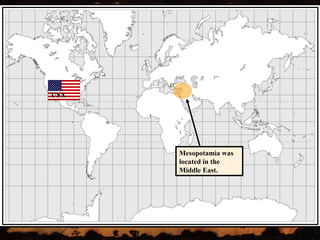
      Mesopotamia was
      located in the
      Middle East.
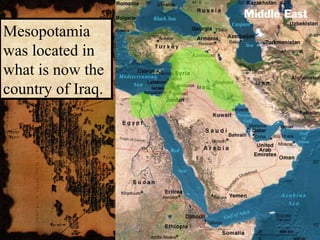
Mesopotamia
was located in
what is now the
country of Iraq.
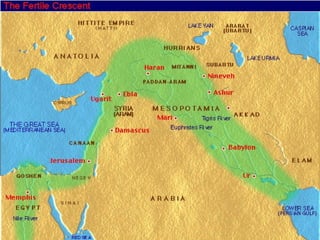
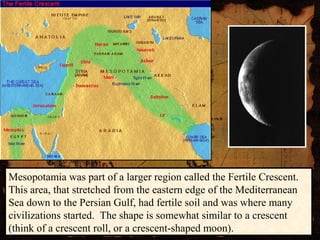
Mesopotamia was part of a larger region called the Fertile Crescent.
This area, that stretched from the eastern edge of the Mediterranean
Sea down to the Persian Gulf, had fertile soil and was where many
civilizations started. The shape is somewhat similar to a crescent
(think of a crescent roll, or a crescent-shaped moon).
The Cradle of Civilization
Mesopotamia is located in the Middle East, which is located
in Southwest Asia. As we’ve discussed before, the first
civilizations and examples of writing were found in
Southwest Asia. These things began in Mesopotamia.


When a newborn baby begins life, he or she is placed in a
cradle. Mesopotamia is called the cradle of civilization
because the first civilizations began there, about 5,500 years
ago in 3500 B.C.
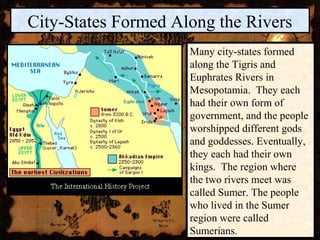
City-States Formed Along the Rivers
                     Many city-states formed
                     along the Tigris and
                     Euphrates Rivers in
                     Mesopotamia. They each
                     had their own form of
                     government, and the people
                     worshipped different gods
                     and goddesses. Eventually,
                     they each had their own
                     kings. The region where
                     the two rivers meet was
                     called Sumer. The people
                     who lived in the Sumer
                     region were called
                     Sumerians.
Why Did These Cities Develop?
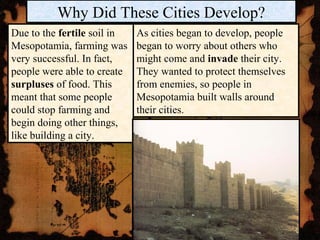
Due to the fertile soil in   As cities began to develop, people
Mesopotamia, farming was     began to worry about others who
very successful. In fact,    might come and invade their city.
people were able to create   They wanted to protect themselves
surpluses of food. This      from enemies, so people in
meant that some people       Mesopotamia built walls around
could stop farming and       their cities.
begin doing other things,
like building a city.
Sumerians
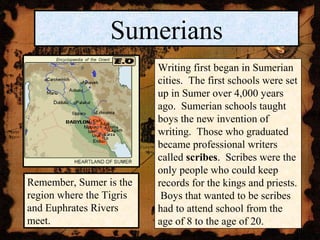
                          Writing first began in Sumerian
                          cities. The first schools were set
                          up in Sumer over 4,000 years
                          ago. Sumerian schools taught
                          boys the new invention of
                          writing. Those who graduated
                          became professional writers
                          called scribes. Scribes were the
                          only people who could keep
Remember, Sumer is the    records for the kings and priests.
region where the Tigris    Boys that wanted to be scribes
and Euphrates Rivers      had to attend school from the
meet.                     age of 8 to the age of 20.
Sumerian Writing
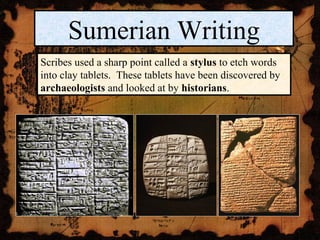
Scribes used a sharp point called a stylus to etch words
into clay tablets. These tablets have been discovered by
archaeologists and looked at by historians.
A Sumerian City
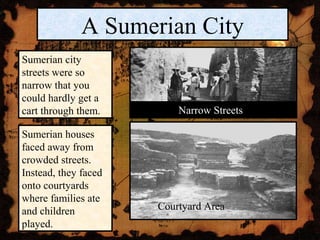
Sumerian city
streets were so
narrow that you
could hardly get a
cart through them.        Narrow Streets

Sumerian houses
faced away from
crowded streets.
Instead, they faced
onto courtyards
where families ate
and children          Courtyard Area
played.
Sumerian Cities
On hot nights,          Sumerians had a form of light
people slept            at night. They burned oil
outdoors on the top     lamps.
of their house’s flat
roof.
                        Sumerians even had plumbing!
                        Clay pipes that were buried
                        underground carried their waste
                        away. Inventions like plumbing
                        wouldn’t come around for
                        another thousand years in other
                        parts of the world!
Sumerian Religion
Sumerians
worshipped
many gods, not
just one. This
belief in many
gods is called
polytheism.
“Poly” means
many and
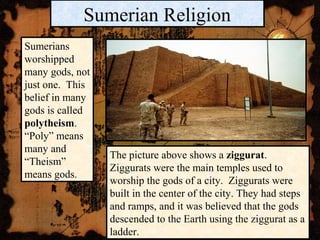
                 The picture above shows a ziggurat.
“Theism”
                 Ziggurats were the main temples used to
means gods.
                 worship the gods of a city. Ziggurats were
                 built in the center of the city. They had steps
                 and ramps, and it was believed that the gods
                 descended to the Earth using the ziggurat as a
                 ladder.
Sumerian Mythology

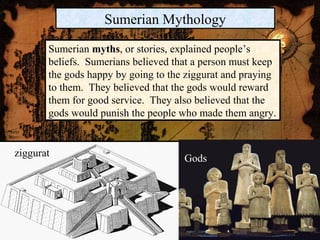
       Sumerian myths, or stories, explained people’s
       beliefs. Sumerians believed that a person must keep
       the gods happy by going to the ziggurat and praying
       to them. They believed that the gods would reward
       them for good service. They also believed that the
       gods would punish the people who made them angry.


ziggurat                             Gods
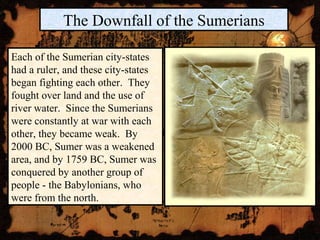
The Downfall of the Sumerians

Each of the Sumerian city-states
had a ruler, and these city-states
began fighting each other. They
fought over land and the use of
river water. Since the Sumerians
were constantly at war with each
other, they became weak. By
2000 BC, Sumer was a weakened
area, and by 1759 BC, Sumer was
conquered by another group of
people - the Babylonians, who
were from the north.

Science Chapter 01 Presentation

  • 1.
  • 2.
    Mesopotamia - TheLand Between Two Rivers Mesopotamia was a place where many cities began to grow. As its name suggests, Mesopotamia was located between two rivers. The two rivers were the Tigris River and the Euphrates River. Mesopotamia was located in the Middle East, and surrounded by desert. People came to Mesopotamia because the soil between the two rivers was very fertile.
  • 3.
    USA Mesopotamia was located in the Middle East.
  • 5.
    Mesopotamia was located in whatis now the country of Iraq.
  • 6.
    Mesopotamia was partof a larger region called the Fertile Crescent. This area, that stretched from the eastern edge of the Mediterranean Sea down to the Persian Gulf, had fertile soil and was where many civilizations started. The shape is somewhat similar to a crescent (think of a crescent roll, or a crescent-shaped moon).
  • 7.
    The Cradle ofCivilization Mesopotamia is located in the Middle East, which is located in Southwest Asia. As we’ve discussed before, the first civilizations and examples of writing were found in Southwest Asia. These things began in Mesopotamia. When a newborn baby begins life, he or she is placed in a cradle. Mesopotamia is called the cradle of civilization because the first civilizations began there, about 5,500 years ago in 3500 B.C.
  • 8.
    City-States Formed Alongthe Rivers Many city-states formed along the Tigris and Euphrates Rivers in Mesopotamia. They each had their own form of government, and the people worshipped different gods and goddesses. Eventually, they each had their own kings. The region where the two rivers meet was called Sumer. The people who lived in the Sumer region were called Sumerians.
  • 9.
    Why Did TheseCities Develop? Due to the fertile soil in As cities began to develop, people Mesopotamia, farming was began to worry about others who very successful. In fact, might come and invade their city. people were able to create They wanted to protect themselves surpluses of food. This from enemies, so people in meant that some people Mesopotamia built walls around could stop farming and their cities. begin doing other things, like building a city.
  • 10.
    Sumerians Writing first began in Sumerian cities. The first schools were set up in Sumer over 4,000 years ago. Sumerian schools taught boys the new invention of writing. Those who graduated became professional writers called scribes. Scribes were the only people who could keep Remember, Sumer is the records for the kings and priests. region where the Tigris Boys that wanted to be scribes and Euphrates Rivers had to attend school from the meet. age of 8 to the age of 20.
  • 11.
    Sumerian Writing Scribes useda sharp point called a stylus to etch words into clay tablets. These tablets have been discovered by archaeologists and looked at by historians.
  • 12.
    A Sumerian City Sumeriancity streets were so narrow that you could hardly get a cart through them. Narrow Streets Sumerian houses faced away from crowded streets. Instead, they faced onto courtyards where families ate and children Courtyard Area played.
  • 13.
    Sumerian Cities On hotnights, Sumerians had a form of light people slept at night. They burned oil outdoors on the top lamps. of their house’s flat roof. Sumerians even had plumbing! Clay pipes that were buried underground carried their waste away. Inventions like plumbing wouldn’t come around for another thousand years in other parts of the world!
  • 14.
    Sumerian Religion Sumerians worshipped many gods,not just one. This belief in many gods is called polytheism. “Poly” means many and The picture above shows a ziggurat. “Theism” Ziggurats were the main temples used to means gods. worship the gods of a city. Ziggurats were built in the center of the city. They had steps and ramps, and it was believed that the gods descended to the Earth using the ziggurat as a ladder.
  • 15.
    Sumerian Mythology Sumerian myths, or stories, explained people’s beliefs. Sumerians believed that a person must keep the gods happy by going to the ziggurat and praying to them. They believed that the gods would reward them for good service. They also believed that the gods would punish the people who made them angry. ziggurat Gods
  • 16.
    The Downfall ofthe Sumerians Each of the Sumerian city-states had a ruler, and these city-states began fighting each other. They fought over land and the use of river water. Since the Sumerians were constantly at war with each other, they became weak. By 2000 BC, Sumer was a weakened area, and by 1759 BC, Sumer was conquered by another group of people - the Babylonians, who were from the north.