SCIENCE
Daily Lesson
Log
Teacher Grade Level Grade 3
Teaching Dates Learning Area Science
Teaching Time 1 Hour Quarter Quarter 2
Session 1 Session 2 Session 3 Session 4
I. LEARNING TARGETS/
SPECIFIC OBJECTIVES
A. Content Standards
The learners demonstrate understanding of parts and function of animals and importance to humans.
B. Performance Standards
The learners enumerate ways of groupings animals based on their structure and importance.
C. Learning Competencies/
Objectives (L.C. Code)
S3LT-llc-d-3
The learners should be able to describe animals in their immediate surroundings..
Specific (Daily)
Objective/s
At the end of the one-hour
period, the learners should be
able to:
● identify the different
sorroundings where
animals can live;
● Infer the groupings of
animals based on their
structure;
● demonstrate
awareness about the
effect to animals and
humans in caring our
environment.
II. LEARNING CONTENT
● Animals in their
Sorroundings
III. LEARNING
RESOURCES
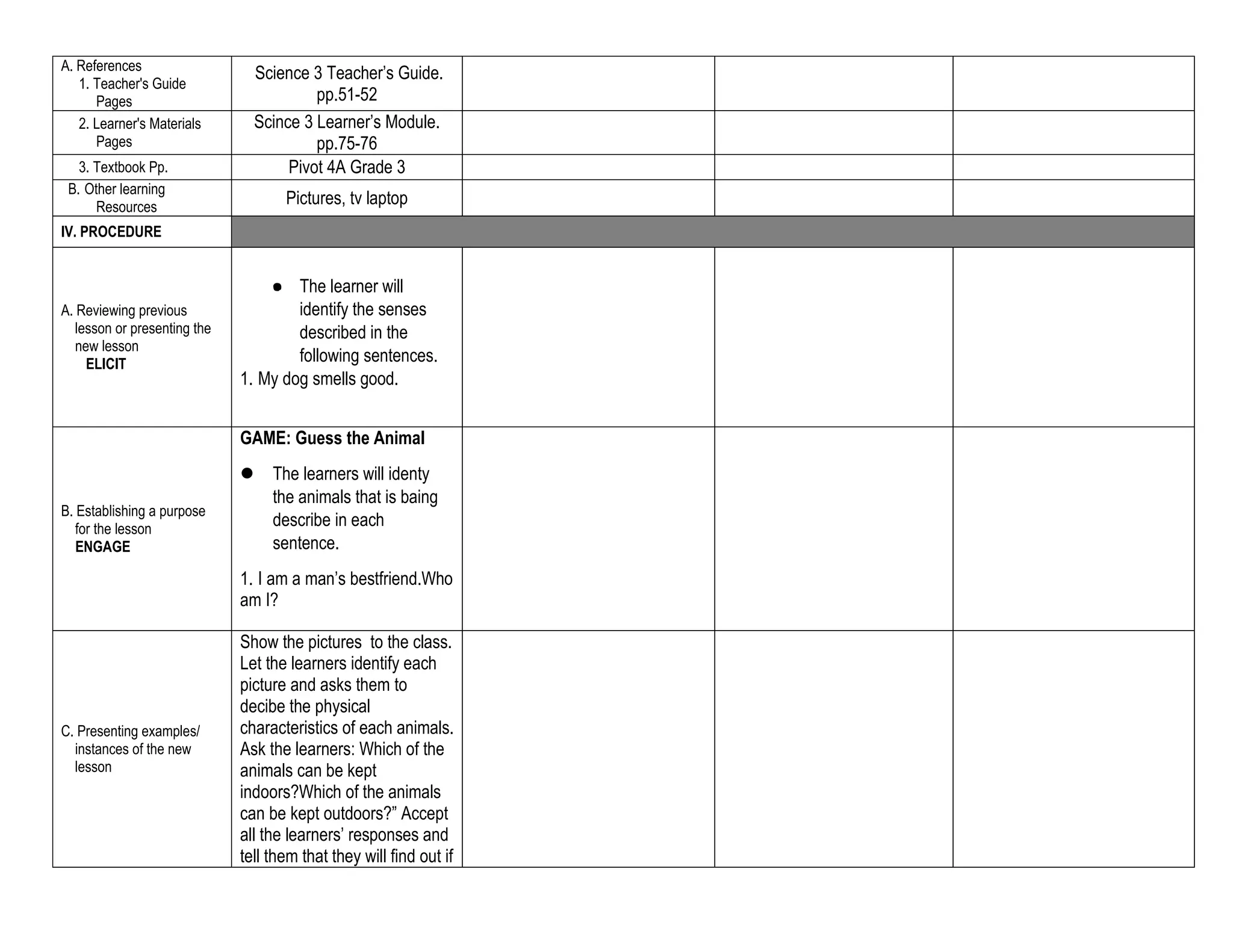
A. References
1. Teacher's Guide
Pages
Science 3 Teacher’s Guide.
pp.51-52
2. Learner's Materials
Pages
Scince 3 Learner’s Module.
pp.75-76
3. Textbook Pp. Pivot 4A Grade 3
B. Other learning
Resources
Pictures, tv laptop
IV. PROCEDURE
A. Reviewing previous
lesson or presenting the
new lesson
ELICIT
● The learner will
identify the senses
described in the
following sentences.
1. My dog smells good.
B. Establishing a purpose
for the lesson
ENGAGE
GAME: Guess the Animal
 The learners will identy
the animals that is baing
describe in each
sentence.
1. I am a man’s bestfriend.Who
am I?
C. Presenting examples/
instances of the new
lesson
Show the pictures to the class.
Let the learners identify each
picture and asks them to
decibe the physical
characteristics of each animals.
Ask the learners: Which of the
animals can be kept
indoors?Which of the animals
can be kept outdoors?” Accept
all the learners’ responses and
tell them that they will find out if
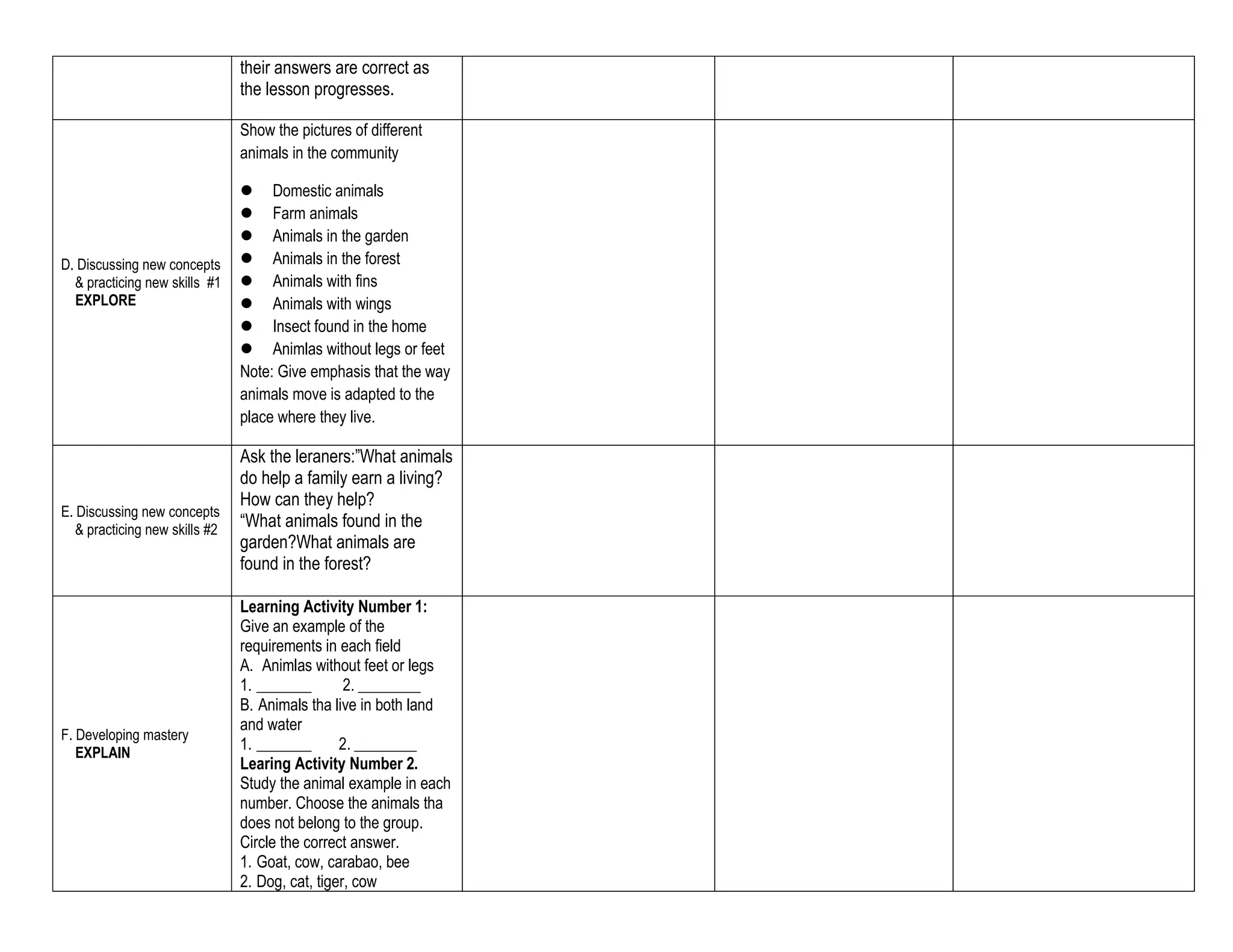
their answers are correct as
the lesson progresses.
D. Discussing new concepts
& practicing new skills #1
EXPLORE
Show the pictures of different
animals in the community
 Domestic animals
 Farm animals
 Animals in the garden
 Animals in the forest
 Animals with fins
 Animals with wings
 Insect found in the home
 Animlas without legs or feet
Note: Give emphasis that the way
animals move is adapted to the
place where they live.
E. Discussing new concepts
& practicing new skills #2
Ask the leraners:”What animals
do help a family earn a living?
How can they help?
“What animals found in the
garden?What animals are
found in the forest?
F. Developing mastery
EXPLAIN
Learning Activity Number 1:
Give an example of the
requirements in each field
A. Animlas without feet or legs
1. _______ 2. ________
B. Animals tha live in both land
and water
1. _______ 2. ________
Learing Activity Number 2.
Study the animal example in each
number. Choose the animals tha
does not belong to the group.
Circle the correct answer.
1. Goat, cow, carabao, bee
2. Dog, cat, tiger, cow
G. Finding practical
applications of concepts
and skills in daily living
ELABORATE
Group Activity
Remind to the class about the
rules in group activity.
Divide the class into groups of
five(5). Using the pictures put
where appropriate place the
animals live. Pick from the box.
Group 1: Domestic animals
Group 2: animals in the farm
Group 3: Insect found in the
home
Group 4: Animals found in the
garden
Group 5: Animals in the forest
Each group will present their
completed work in front.
*ESP Integration(Working
together on tasks)
H. Making generalizations
and abstraction
Ask the learners:
“Where can we found animals in
the community?”
“What are the animals found in:
 Home
 Garden
 Farm
 Forest
 Insects found in home
I. Evaluating Learning
EVALUATE
Syncronous
Identify the habitat(home, filed,
forest, and garden) of the
following examples of animals.
Write your answer in the blank.
1. picture of lion - ________
2. Picture of dog - _______
J. Additional activities for
application and
remediation
EXTEND
Assignment:
What animals do you see in
your environment that you
want to take care of? Draw it
inside the box and write the
different ways you can take
care of it.
V. REMARKS
VI. REFLECTION
A. No. of learners who earned 80% on
the formative assessment
B. No. of learners who require additional
activities for remediation
C. Did the remedial lessons work? No. of
learners who have caught up with the
lesson
D. No. of learners who continue to
require remediation
E. Which of my teaching strategies
worked well? Why did these work?
F. What difficulties did I encounter which
my principal or supervisor can help
me solve?
G. What innovation or localized
materials did I use/discover which I
wish to share with other teachers?

Science 3 template for 7Es.docx

  • 1.
    SCIENCE Daily Lesson Log Teacher GradeLevel Grade 3 Teaching Dates Learning Area Science Teaching Time 1 Hour Quarter Quarter 2 Session 1 Session 2 Session 3 Session 4 I. LEARNING TARGETS/ SPECIFIC OBJECTIVES A. Content Standards The learners demonstrate understanding of parts and function of animals and importance to humans. B. Performance Standards The learners enumerate ways of groupings animals based on their structure and importance. C. Learning Competencies/ Objectives (L.C. Code) S3LT-llc-d-3 The learners should be able to describe animals in their immediate surroundings.. Specific (Daily) Objective/s At the end of the one-hour period, the learners should be able to: ● identify the different sorroundings where animals can live; ● Infer the groupings of animals based on their structure; ● demonstrate awareness about the effect to animals and humans in caring our environment. II. LEARNING CONTENT ● Animals in their Sorroundings III. LEARNING RESOURCES
  • 2.
    A. References 1. Teacher'sGuide Pages Science 3 Teacher’s Guide. pp.51-52 2. Learner's Materials Pages Scince 3 Learner’s Module. pp.75-76 3. Textbook Pp. Pivot 4A Grade 3 B. Other learning Resources Pictures, tv laptop IV. PROCEDURE A. Reviewing previous lesson or presenting the new lesson ELICIT ● The learner will identify the senses described in the following sentences. 1. My dog smells good. B. Establishing a purpose for the lesson ENGAGE GAME: Guess the Animal  The learners will identy the animals that is baing describe in each sentence. 1. I am a man’s bestfriend.Who am I? C. Presenting examples/ instances of the new lesson Show the pictures to the class. Let the learners identify each picture and asks them to decibe the physical characteristics of each animals. Ask the learners: Which of the animals can be kept indoors?Which of the animals can be kept outdoors?” Accept all the learners’ responses and tell them that they will find out if
  • 3.
    their answers arecorrect as the lesson progresses. D. Discussing new concepts & practicing new skills #1 EXPLORE Show the pictures of different animals in the community  Domestic animals  Farm animals  Animals in the garden  Animals in the forest  Animals with fins  Animals with wings  Insect found in the home  Animlas without legs or feet Note: Give emphasis that the way animals move is adapted to the place where they live. E. Discussing new concepts & practicing new skills #2 Ask the leraners:”What animals do help a family earn a living? How can they help? “What animals found in the garden?What animals are found in the forest? F. Developing mastery EXPLAIN Learning Activity Number 1: Give an example of the requirements in each field A. Animlas without feet or legs 1. _______ 2. ________ B. Animals tha live in both land and water 1. _______ 2. ________ Learing Activity Number 2. Study the animal example in each number. Choose the animals tha does not belong to the group. Circle the correct answer. 1. Goat, cow, carabao, bee 2. Dog, cat, tiger, cow
  • 4.
    G. Finding practical applicationsof concepts and skills in daily living ELABORATE Group Activity Remind to the class about the rules in group activity. Divide the class into groups of five(5). Using the pictures put where appropriate place the animals live. Pick from the box. Group 1: Domestic animals Group 2: animals in the farm Group 3: Insect found in the home Group 4: Animals found in the garden Group 5: Animals in the forest Each group will present their completed work in front. *ESP Integration(Working together on tasks) H. Making generalizations and abstraction Ask the learners: “Where can we found animals in the community?” “What are the animals found in:  Home  Garden  Farm  Forest  Insects found in home I. Evaluating Learning EVALUATE Syncronous Identify the habitat(home, filed, forest, and garden) of the following examples of animals. Write your answer in the blank. 1. picture of lion - ________
  • 5.
    2. Picture ofdog - _______ J. Additional activities for application and remediation EXTEND Assignment: What animals do you see in your environment that you want to take care of? Draw it inside the box and write the different ways you can take care of it. V. REMARKS VI. REFLECTION A. No. of learners who earned 80% on the formative assessment B. No. of learners who require additional activities for remediation C. Did the remedial lessons work? No. of learners who have caught up with the lesson D. No. of learners who continue to require remediation E. Which of my teaching strategies worked well? Why did these work? F. What difficulties did I encounter which my principal or supervisor can help me solve? G. What innovation or localized materials did I use/discover which I wish to share with other teachers?