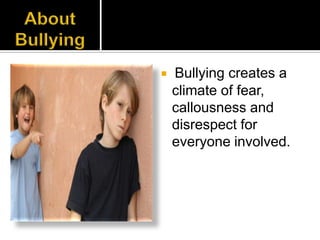
   Bullying creates a
    climate of fear,
    callousness and
    disrespect for
    everyone involved.
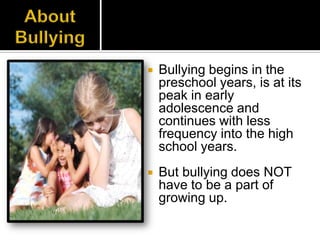
   Bullying begins in the
    preschool years, is at its
    peak in early
    adolescence and
    continues with less
    frequency into the high
    school years.
   But bullying does NOT
    have to be a part of
    growing up.
1.   Deliberate
– A bully’s intention is to hurt
    someone

2.   Repeated
– A bully targets the same
    victim again and again

3.   Power Imbalanced
– A bully chooses vulnerable
    victims
   Physical
Poking, hitting, pushing, kicking


   Verbal
Yelling, teasing, insulting, name-
   calling, threatening


   Indirect
Ignoring, excluding, spreading
   rumors, telling lies
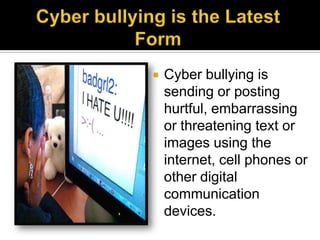
   Cyber bullying is
    sending or posting
    hurtful, embarrassing
    or threatening text or
    images using the
    internet, cell phones or
    other digital
    communication
    devices.
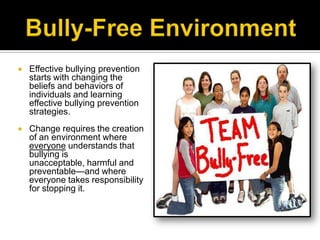
   Effective bullying prevention
    starts with changing the
    beliefs and behaviors of
    individuals and learning
    effective bullying prevention
    strategies.
   Change requires the creation
    of an environment where
    everyone understands that
    bullying is
    unacceptable, harmful and
    preventable—and where
    everyone takes responsibility
    for stopping it.
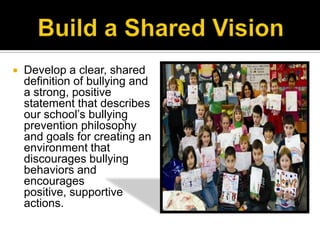
   Develop a clear, shared
    definition of bullying and
    a strong, positive
    statement that describes
    our school’s bullying
    prevention philosophy
    and goals for creating an
    environment that
    discourages bullying
    behaviors and
    encourages
    positive, supportive
    actions.
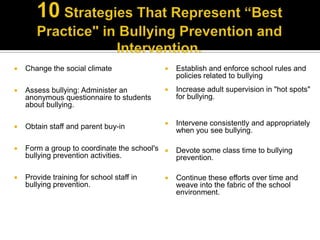
   Change the social climate                    Establish and enforce school rules and
                                                  policies related to bullying
   Assess bullying: Administer an               Increase adult supervision in "hot spots"
    anonymous questionnaire to students           for bullying.
    about bullying.

   Obtain staff and parent buy-in               Intervene consistently and appropriately
                                                  when you see bullying.

   Form a group to coordinate the school's      Devote some class time to bullying
    bullying prevention activities.               prevention.

   Provide training for school staff in         Continue these efforts over time and
    bullying prevention.                          weave into the fabric of the school
                                                  environment.
The word ―discipline‖ comes from the
 same root as the word ―disciple‖ and
 means ―to teach.‖ We are more likely
  to be successful in helping youths
  change their aggressive behavior
 when we use the principles of good
       teaching in our discipline
            interventions.
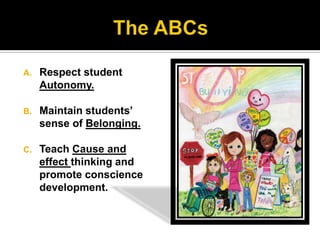
A.   Respect student
     Autonomy.

B.   Maintain students’
     sense of Belonging.

C.   Teach Cause and
     effect thinking and
     promote conscience
     development.
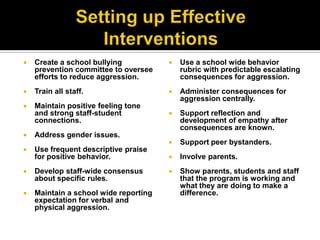
   Create a school bullying              Use a school wide behavior
    prevention committee to oversee        rubric with predictable escalating
    efforts to reduce aggression.          consequences for aggression.
   Train all staff.                      Administer consequences for
                                           aggression centrally.
   Maintain positive feeling tone
    and strong staff-student              Support reflection and
    connections.                           development of empathy after
                                           consequences are known.
   Address gender issues.
                                          Support peer bystanders.
   Use frequent descriptive praise
    for positive behavior.                Involve parents.
   Develop staff-wide consensus          Show parents, students and staff
    about specific rules.                  that the program is working and
                                           what they are doing to make a
   Maintain a school wide reporting       difference.
    expectation for verbal and
    physical aggression.
   I am the person you bullied at school,
   I am the person who didn’t know how to be cool.
   I’m the person that you alienated,
   I’m the person you ridiculed and hated.
   I am the person, who sat on her own,
   I am the person who walked home alone.
   I am the person you scared every day,
   I am the person who had nothing to say.
   I am the person with hurt in his eyes,
   I am the person you never saw cry.
   I am the person living alone with his fears,
   I am the person destroyed by his peers.
   I am the person, who drowned in your scorn,
   I am the person who wished she hadn’t been born.
   I am the person you destroyed for fun,
   I am the person, but not the only one.
   I’m the person whose name you didn’t know,
   I’m the person who just can’t let go.
   I’m the person, who has feelings too,
   I am the person, just like you.
 To increase our school community
awareness of bullying as a common
    serious problem of school-age
   children and to advocate for the
 implementation of effective bullying
prevention approaches in our school.
School safety project   bully prevention at barrett

School safety project bully prevention at barrett

  • 3.
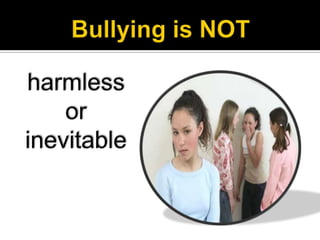
    Bullying creates a climate of fear, callousness and disrespect for everyone involved.
  • 4.
    Bullying begins in the preschool years, is at its peak in early adolescence and continues with less frequency into the high school years.  But bullying does NOT have to be a part of growing up.
  • 7.
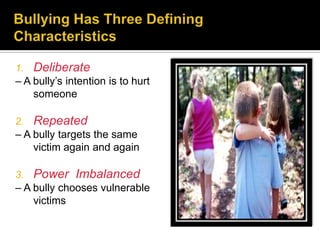
    1. Deliberate – A bully’s intention is to hurt someone 2. Repeated – A bully targets the same victim again and again 3. Power Imbalanced – A bully chooses vulnerable victims
  • 8.
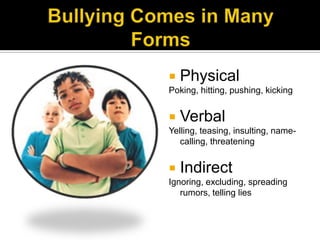
    Physical Poking, hitting, pushing, kicking  Verbal Yelling, teasing, insulting, name- calling, threatening  Indirect Ignoring, excluding, spreading rumors, telling lies
  • 9.
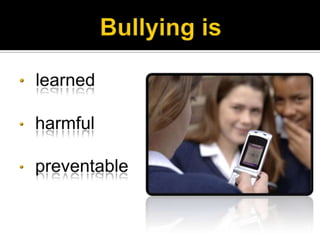
    Cyber bullying is sending or posting hurtful, embarrassing or threatening text or images using the internet, cell phones or other digital communication devices.
  • 11.
    Effective bullying prevention starts with changing the beliefs and behaviors of individuals and learning effective bullying prevention strategies.  Change requires the creation of an environment where everyone understands that bullying is unacceptable, harmful and preventable—and where everyone takes responsibility for stopping it.
  • 12.
    Develop a clear, shared definition of bullying and a strong, positive statement that describes our school’s bullying prevention philosophy and goals for creating an environment that discourages bullying behaviors and encourages positive, supportive actions.
  • 14.
    Change the social climate  Establish and enforce school rules and policies related to bullying  Assess bullying: Administer an  Increase adult supervision in "hot spots" anonymous questionnaire to students for bullying. about bullying.  Obtain staff and parent buy-in  Intervene consistently and appropriately when you see bullying.  Form a group to coordinate the school's  Devote some class time to bullying bullying prevention activities. prevention.  Provide training for school staff in  Continue these efforts over time and bullying prevention. weave into the fabric of the school environment.
  • 15.
    The word ―discipline‖comes from the same root as the word ―disciple‖ and means ―to teach.‖ We are more likely to be successful in helping youths change their aggressive behavior when we use the principles of good teaching in our discipline interventions.
  • 16.
    A. Respect student Autonomy. B. Maintain students’ sense of Belonging. C. Teach Cause and effect thinking and promote conscience development.
  • 17.
    Create a school bullying  Use a school wide behavior prevention committee to oversee rubric with predictable escalating efforts to reduce aggression. consequences for aggression.  Train all staff.  Administer consequences for aggression centrally.  Maintain positive feeling tone and strong staff-student  Support reflection and connections. development of empathy after consequences are known.  Address gender issues.  Support peer bystanders.  Use frequent descriptive praise for positive behavior.  Involve parents.  Develop staff-wide consensus  Show parents, students and staff about specific rules. that the program is working and what they are doing to make a  Maintain a school wide reporting difference. expectation for verbal and physical aggression.
  • 18.
    I am the person you bullied at school,  I am the person who didn’t know how to be cool.  I’m the person that you alienated,  I’m the person you ridiculed and hated.  I am the person, who sat on her own,  I am the person who walked home alone.  I am the person you scared every day,  I am the person who had nothing to say.  I am the person with hurt in his eyes,  I am the person you never saw cry.  I am the person living alone with his fears,  I am the person destroyed by his peers.  I am the person, who drowned in your scorn,  I am the person who wished she hadn’t been born.  I am the person you destroyed for fun,  I am the person, but not the only one.  I’m the person whose name you didn’t know,  I’m the person who just can’t let go.  I’m the person, who has feelings too,  I am the person, just like you.
  • 19.
     To increaseour school community awareness of bullying as a common serious problem of school-age children and to advocate for the implementation of effective bullying prevention approaches in our school.