K V M COLLEGE OF PHARMACY
ACADEMIC YEAR 2020-2021
SCHICK TEST
PREPARED BY : VAISHNAV SR
VANDHANA G DEPT : MICROBIOLOGY
SECOND PHARM D
TABLE OF CONTENTS
• INTRODUCTION
• PRINCIPLE
• PROCEDURE
• RESULT INTERPRETATION
INTRODUCTION
• Schick test is invented between 1910-1911, a test used to determine whether or
not a person susceptible to diphtheria and causative agent
is Corynebacterium diphtheriae. It was named after its inventor Bela Shichk
(1877-1967), Hungarian born American paediatrician. It is an intradermal test. The
test is carried out by injecting intradermally into the skin of forearm 0.1 ml of
diluted (1/50 MLD) diphtheria toxin, while into the opposite arm is injected as a
control, the same amount of toxin which has been inactivated by heat.
DIPHTHERIA
• Diphtheria is a serious infection caused by strains of gram positive bacteria called Corynebacterium
diphtheria that make toxin (poison). It spreads easily from one person to another , diphtheria can be
prevented through the use of vaccines .
• Signs of diphtheria often appear within two to five days of the infection occurring . Some people don’t
experience any symptoms . The most visible and common symptom of diphtheria is a thick , gray
coating on the throat and tonsils .
• Other common symptoms are ;
• Fever
• Chills
• Sore throat
• Difficulty breathing and swallowing
• A loud , barking cough
PRINCIPLE
The Schick test works by injecting intradermally into the skin of forearm 0.1 ml of
diluted (1/50 MLD) diphtheria toxin. If the person is susceptible to the disease, a red
swollen rash appears around the injection area.
PROCEDURE
1.Inject toxin intradermally.
2.Wait for 2 to 4 days.
OBSERVATION OF RESULT
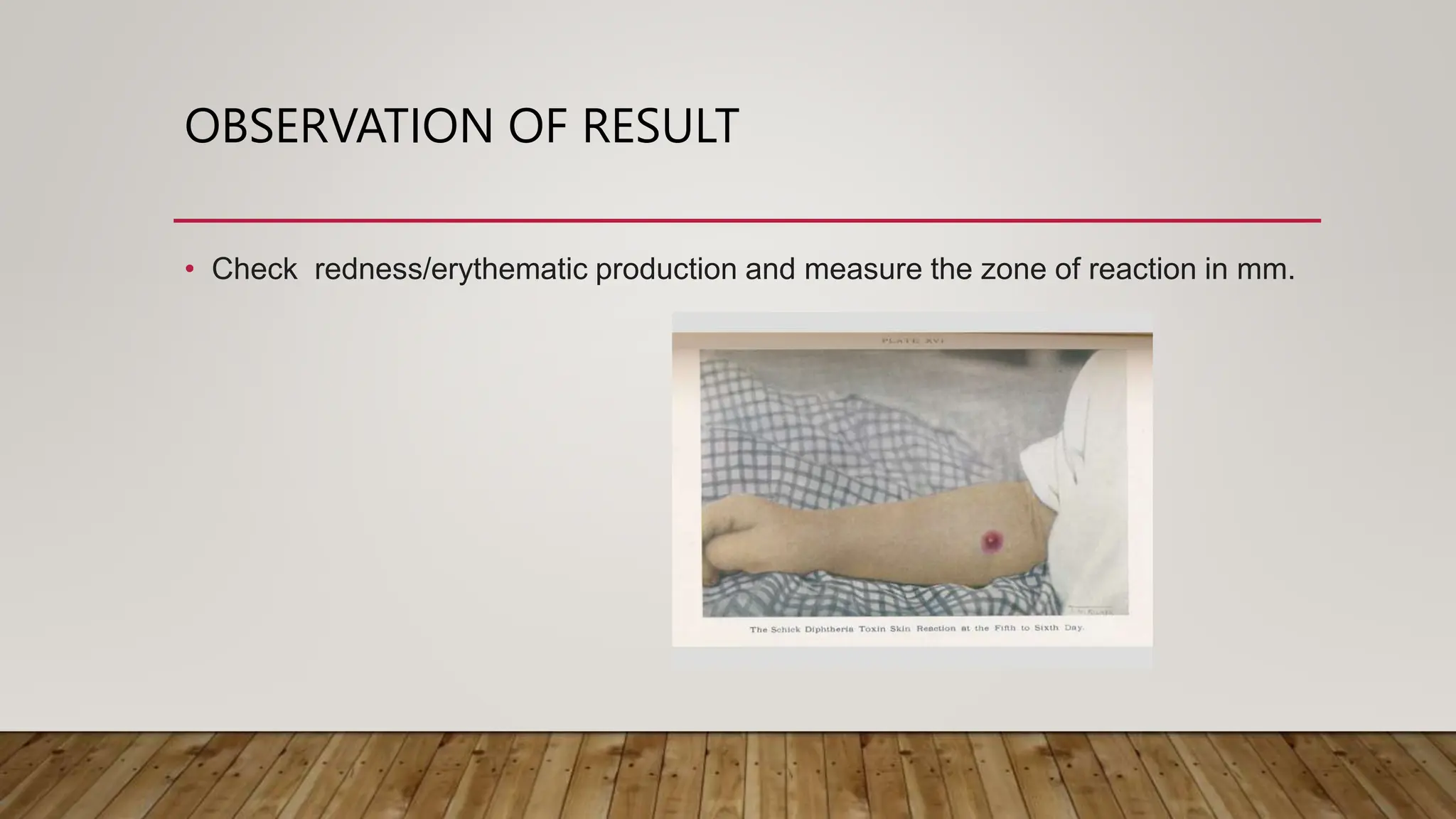
• Check redness/erythematic production and measure the zone of reaction in mm.
RESULT INTERPRETATION
• Negative reaction: If a person had immunity to diphtheria, no reaction will be
observed on either arm.
• Positive reaction: An area of in duration 10-15 mm in diameter generally
appears within 24-36 hours reaching its maximum development by 4-7 days, the
control arm shows no change. The person is susceptible to diphtheria.
• false positive reaction: A red flush develops in both arms, the reaction fades
very quickly, and disappears by 4th day. This is an allergic type of reaction found
in certain individuals
• Combined reaction: the control arm shows pseudo positive reaction and the test
arm is true +ve reaction, susceptible and need vaccination.
KEYNOTES
• Schick test is not indicated in very young children as they are susceptible and
require immunization
• No reaction – Protective immunity present.
• This test is now out dated due to vaccination and eradication.
• It also called toxigenic test.
• MLD stands for minimal lethal doses
THANK YOU

schick test diagnostic tests pharm D microbiology

  • 1.
    K V MCOLLEGE OF PHARMACY ACADEMIC YEAR 2020-2021 SCHICK TEST PREPARED BY : VAISHNAV SR VANDHANA G DEPT : MICROBIOLOGY SECOND PHARM D
  • 2.
    TABLE OF CONTENTS •INTRODUCTION • PRINCIPLE • PROCEDURE • RESULT INTERPRETATION
  • 3.
    INTRODUCTION • Schick testis invented between 1910-1911, a test used to determine whether or not a person susceptible to diphtheria and causative agent is Corynebacterium diphtheriae. It was named after its inventor Bela Shichk (1877-1967), Hungarian born American paediatrician. It is an intradermal test. The test is carried out by injecting intradermally into the skin of forearm 0.1 ml of diluted (1/50 MLD) diphtheria toxin, while into the opposite arm is injected as a control, the same amount of toxin which has been inactivated by heat.
  • 4.
    DIPHTHERIA • Diphtheria isa serious infection caused by strains of gram positive bacteria called Corynebacterium diphtheria that make toxin (poison). It spreads easily from one person to another , diphtheria can be prevented through the use of vaccines . • Signs of diphtheria often appear within two to five days of the infection occurring . Some people don’t experience any symptoms . The most visible and common symptom of diphtheria is a thick , gray coating on the throat and tonsils . • Other common symptoms are ; • Fever • Chills • Sore throat • Difficulty breathing and swallowing • A loud , barking cough
  • 5.
    PRINCIPLE The Schick testworks by injecting intradermally into the skin of forearm 0.1 ml of diluted (1/50 MLD) diphtheria toxin. If the person is susceptible to the disease, a red swollen rash appears around the injection area.
  • 6.
  • 7.
    OBSERVATION OF RESULT •Check redness/erythematic production and measure the zone of reaction in mm.
  • 8.
    RESULT INTERPRETATION • Negativereaction: If a person had immunity to diphtheria, no reaction will be observed on either arm. • Positive reaction: An area of in duration 10-15 mm in diameter generally appears within 24-36 hours reaching its maximum development by 4-7 days, the control arm shows no change. The person is susceptible to diphtheria. • false positive reaction: A red flush develops in both arms, the reaction fades very quickly, and disappears by 4th day. This is an allergic type of reaction found in certain individuals • Combined reaction: the control arm shows pseudo positive reaction and the test arm is true +ve reaction, susceptible and need vaccination.
  • 9.
    KEYNOTES • Schick testis not indicated in very young children as they are susceptible and require immunization • No reaction – Protective immunity present. • This test is now out dated due to vaccination and eradication. • It also called toxigenic test. • MLD stands for minimal lethal doses
  • 10.