Download to read offline

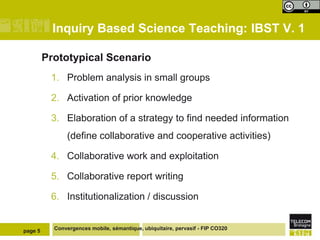
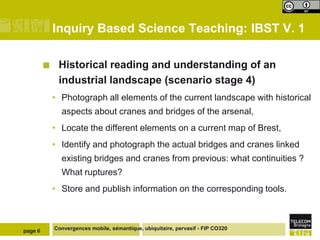
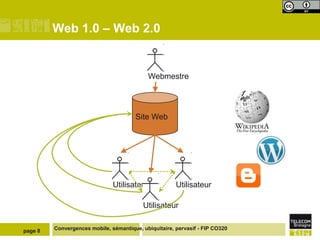
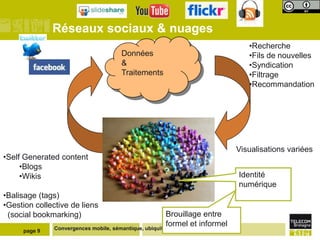
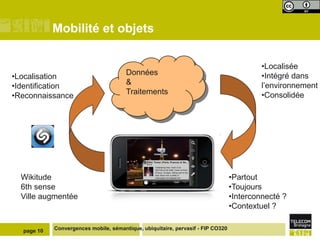
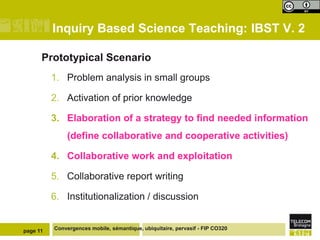
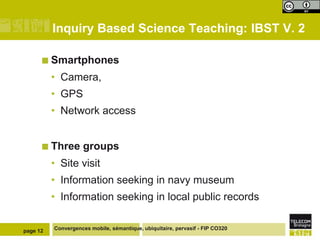
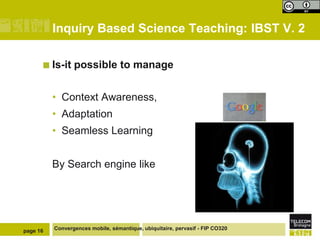
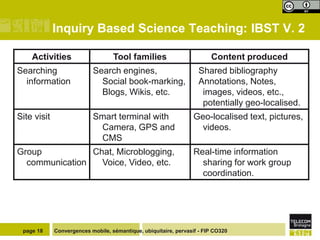
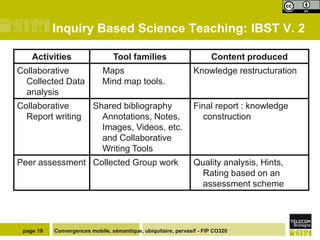
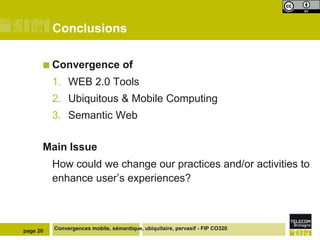

The document discusses inquiry-based science teaching and scenarios for its implementation. It describes key features of inquiry-based science teaching as including ill-defined, open-ended learning activities; experiments and practical experiences; emphasis on student autonomy; and peer communication. Two scenarios are proposed: the first involves students investigating the industrial landscape around a bridge, and the second uses smartphones and tools to support collaborative work during a site visit. The document advocates for the convergence of Web 2.0 tools, ubiquitous computing, and semantic technologies to enhance student experiences with inquiry-based learning.


