Successful Customer
Communications Strategies in
8 Steps and 2 Case Studies
David Azulay – Kern
Dan Ferguson – DIRECTV
Michelle Degen– Clear
Introducing Our Panelists
David Azulay
SVP, Client Services
KERN
Dan Ferguson
Senior Director of Marketing
DIRECTV
2
Michelle Degen
Marketing Manager
Clearwire
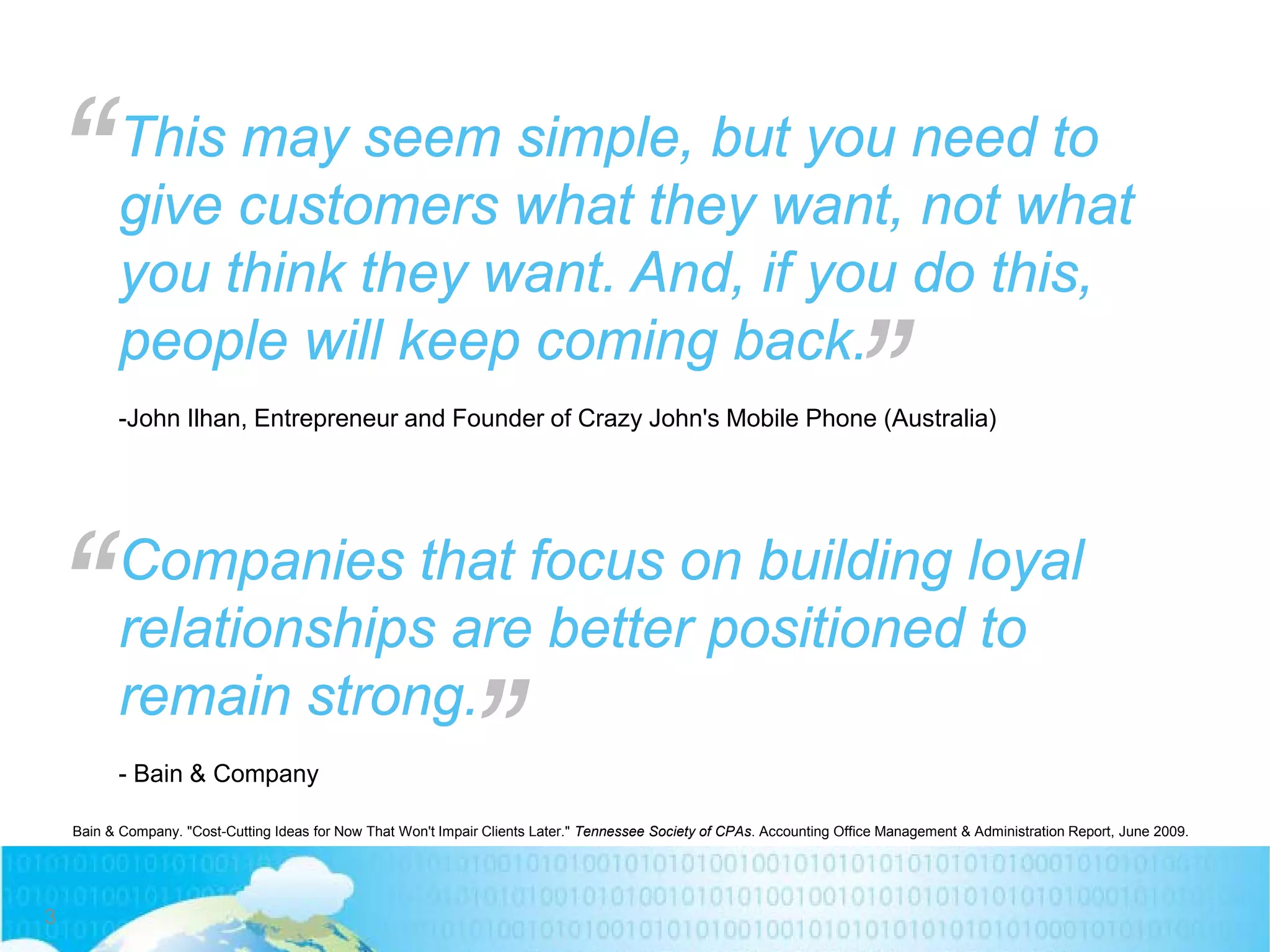
This may seem simple, but you need to
give customers what they want, not what
you think they want. And, if you do this,
people will keep coming back.
-John Ilhan, Entrepreneur and Founder of Crazy John's Mobile Phone (Australia)
Bain & Company. "Cost-Cutting Ideas for Now That Won't Impair Clients Later." Tennessee Society of CPAs. Accounting Office Management & Administration Report, June 2009.
“ “
Companies that focus on building loyal
relationships are better positioned to
remain strong.
- Bain & Company
“ “
3
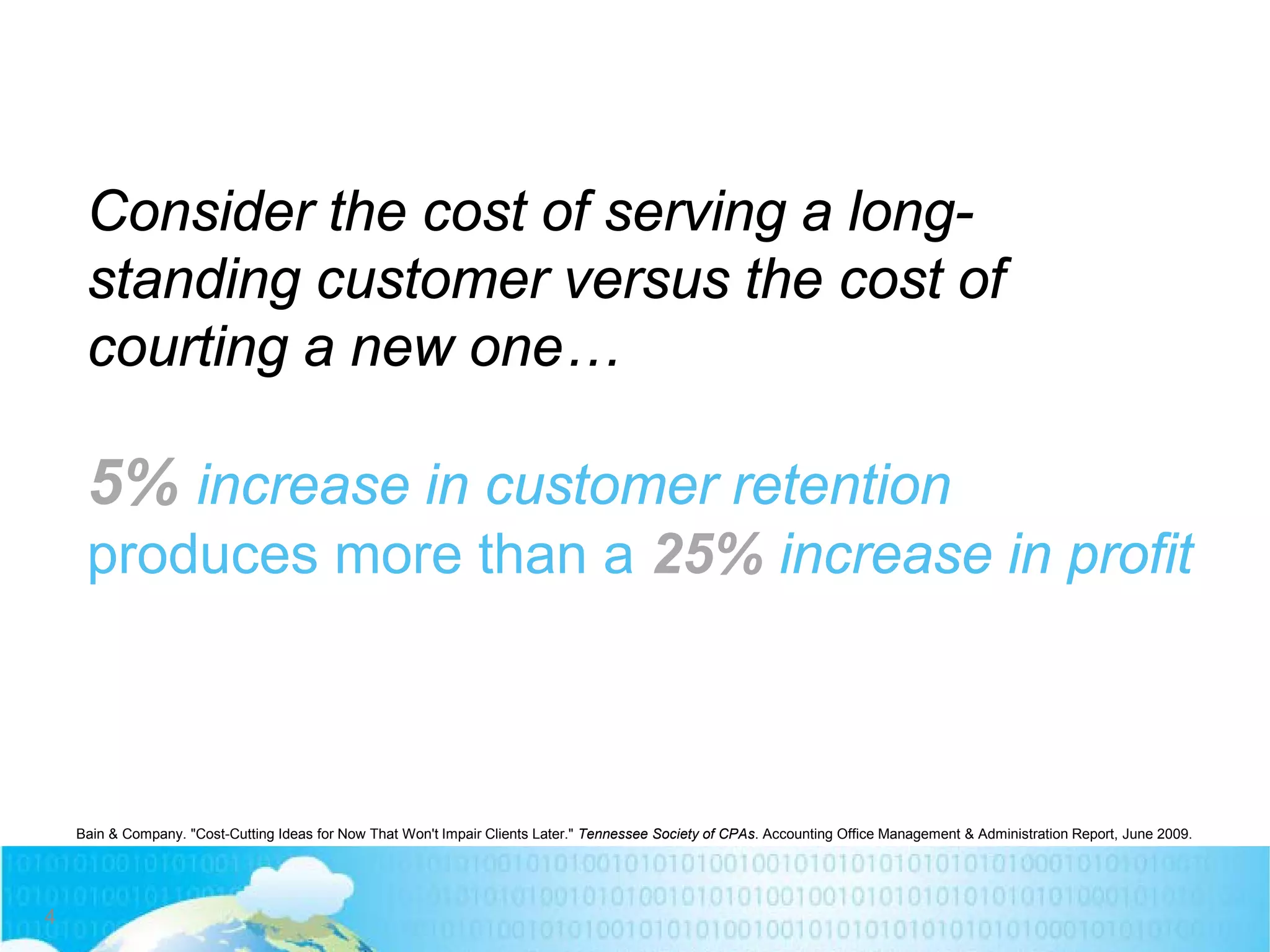
Consider the cost of serving a long-
standing customer versus the cost of
courting a new one…
5% increase in customer retention
produces more than a 25% increase in profit
Bain & Company. "Cost-Cutting Ideas for Now That Won't Impair Clients Later." Tennessee Society of CPAs. Accounting Office Management & Administration Report, June 2009.
4
Today’s Agenda
5
• Introductions
• Importance of a Customer Communications Strategy
• Getting Started – 8 Key Steps
• Cases
− DIRECTV
− CLEAR
• Panel Discussion / Q&A
6
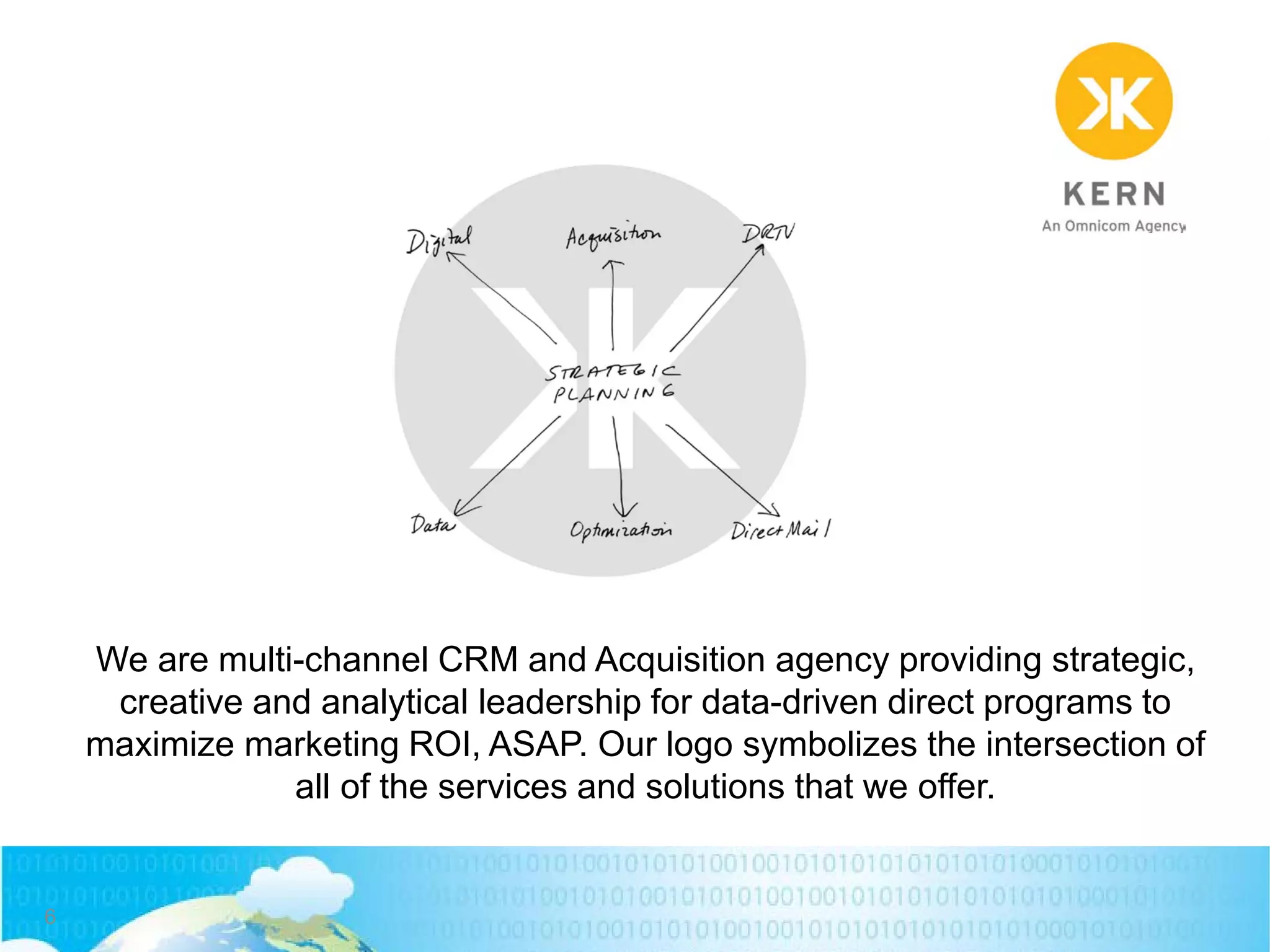
We are multi-channel CRM and Acquisition agency providing strategic,
creative and analytical leadership for data-driven direct programs to
maximize marketing ROI, ASAP. Our logo symbolizes the intersection of
all of the services and solutions that we offer.
The Importance of a Customer
Communications Strategy
7
- It is just as important to have a retention strategy in place as an
acquisition strategy.
- It costs more to acquire a new customer than it does to keep a
current customer.
- Most customers want to be appreciated and thanked along the way
for their business.
- Expectations are increasing. Customers expect their experience to
be consistent, relevant and personalized at every touch point.
Getting Started – 8 Key Steps
8
1. Know your objectives and success metrics
2. Conduct a communications audit
3. Listen to your customers
4. Determine customer segmentation and investment strategy
5. Plot customer lifecycle phases and timing
6. Define messaging strategy
7. Set test and implementation roadmap
8. Go to market and refine
Step 1: Know Your Objectives and
Success Metrics
Primary: Should be quantifiable
Example: Increase revenues by xx%; Increase renewals or mitigate
churn by xx%
Secondary: Should be extensions of meeting primary goals
Example: Satisfied customers and advocates, which lead to increased
purchases and increased revenues; increase customer opt in;
generate buzz
Are these realistic and measurable?
Align costs and ROI to meeting your goals
9
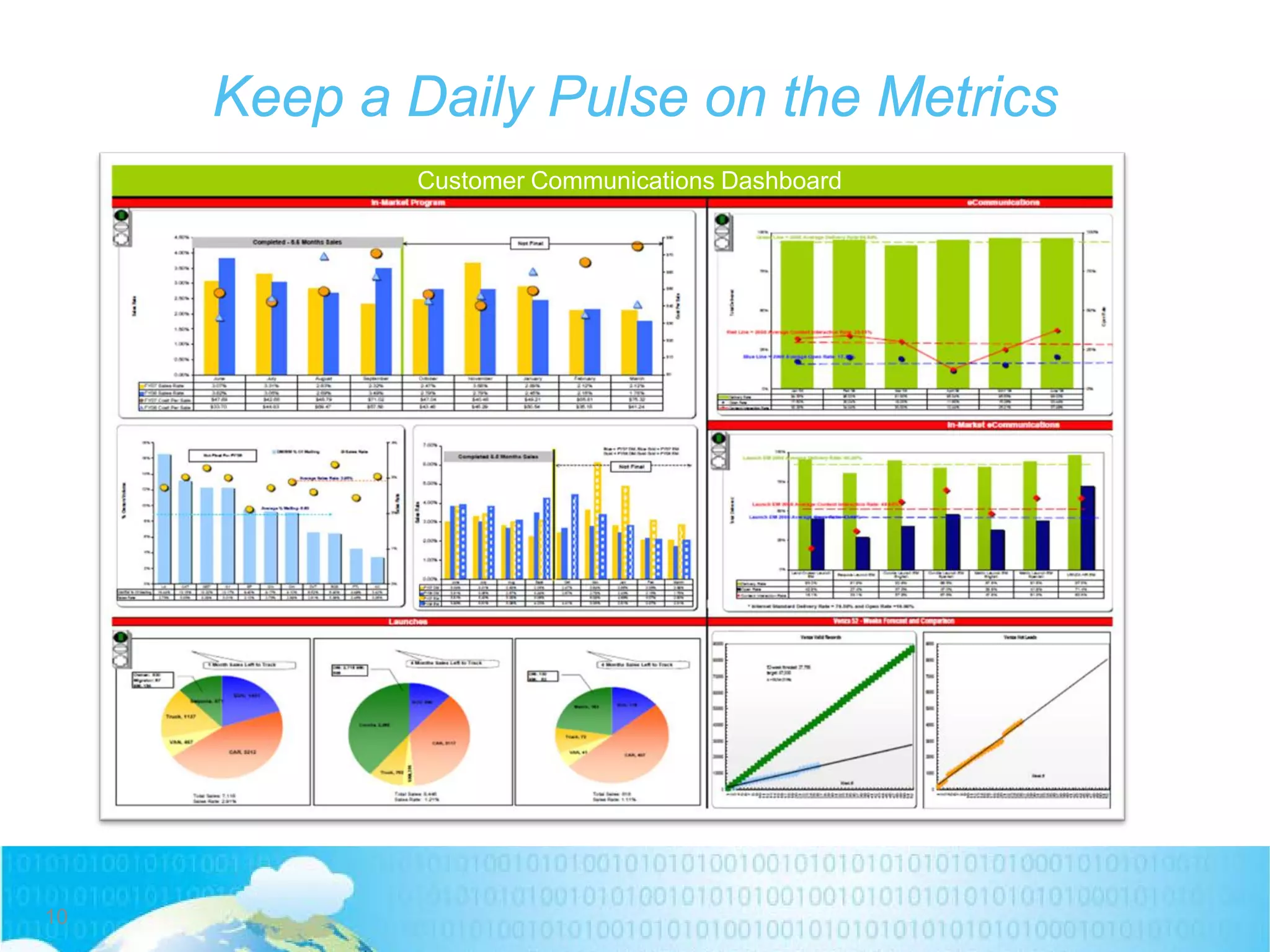
Keep a Daily Pulse on the Metrics
Customer Communications Dashboard
10
Step 2: Conduct a
Communications Audit
• Build a map of existing communications to identify
gaps/holes/opportunities
• Review all existing communication metrics
(open rates, response rates, etc.)
• Evaluate (or build) current offer library
• Analyze impact of current touches on goals, costs and revenues
• Perform competitive analysis
• Insights should enable specific plans by segment,
customer type, etc.
11
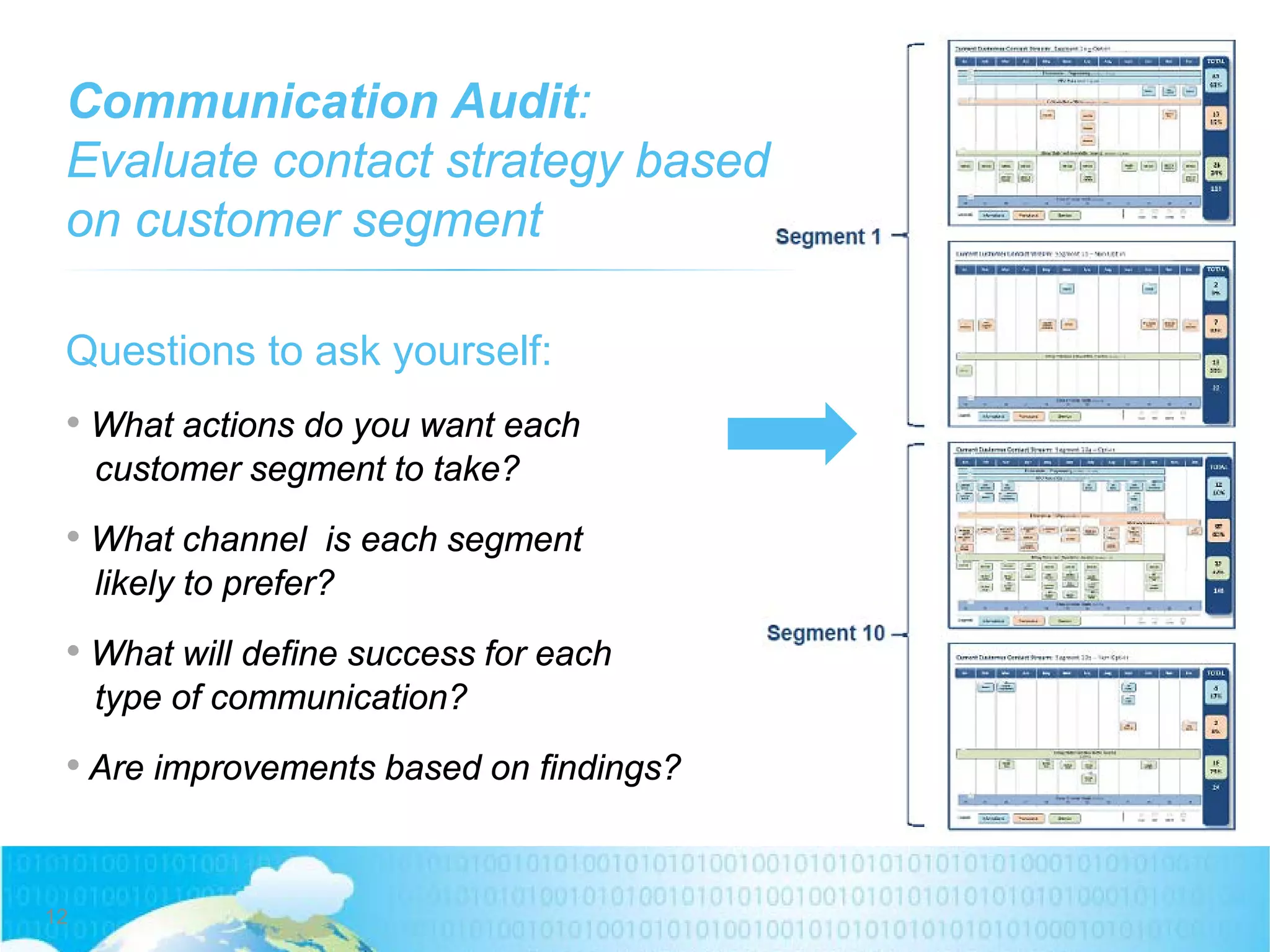
Communication Audit:
Evaluate contact strategy based
on customer segment
Questions to ask yourself:
• What actions do you want each
customer segment to take?
• What channel is each segment
likely to prefer?
• What will define success for each
type of communication?
• Are improvements based on findings?
12
• Use immediate feedback channels
– Surveys, one on one interviews, focus groups
• Build longer term feedback channels
– Customer panels to contact regularly for feedback
• Be prepared to act on the information you hear
– Customers appreciate being asked for their feedback but
expectations are that their opinion will be taken into account
(especially in Social Media Channels)
Step 3: Listen to Your Customers
13
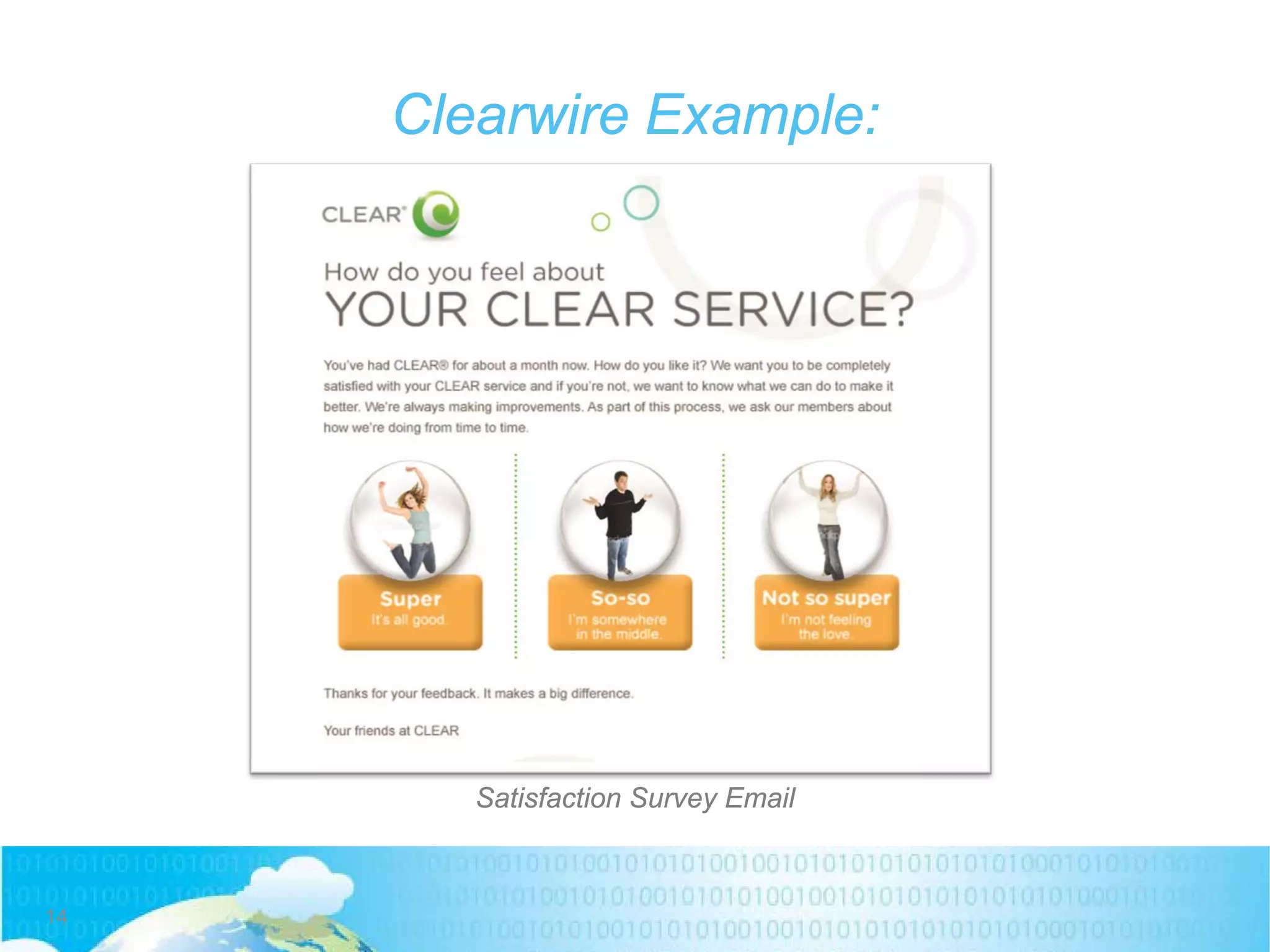
Clearwire Example:
14
Satisfaction Survey Email
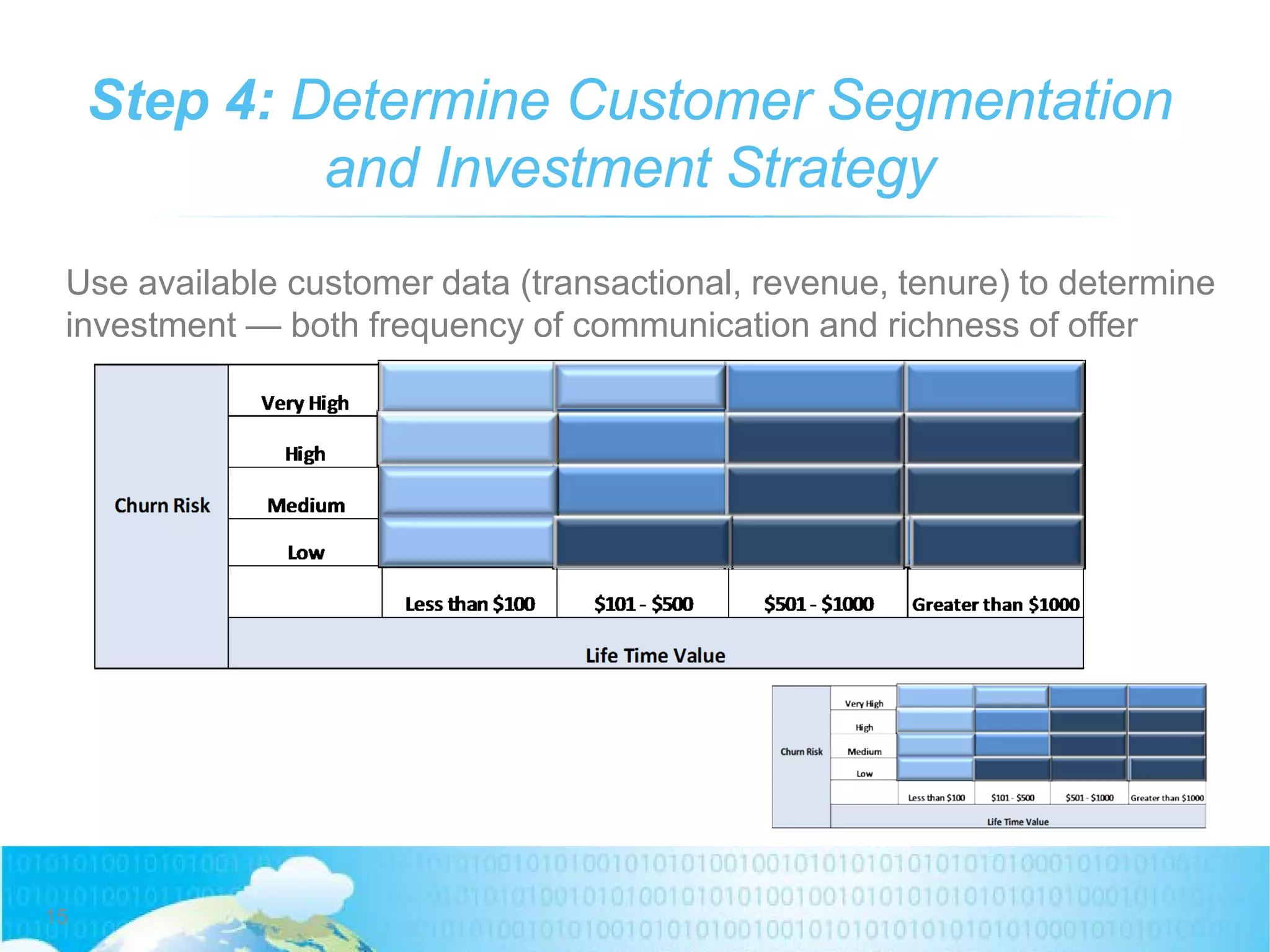
Step 4: Determine Customer Segmentation
and Investment Strategy
Use available customer data (transactional, revenue, tenure) to determine
investment — both frequency of communication and richness of offer
15
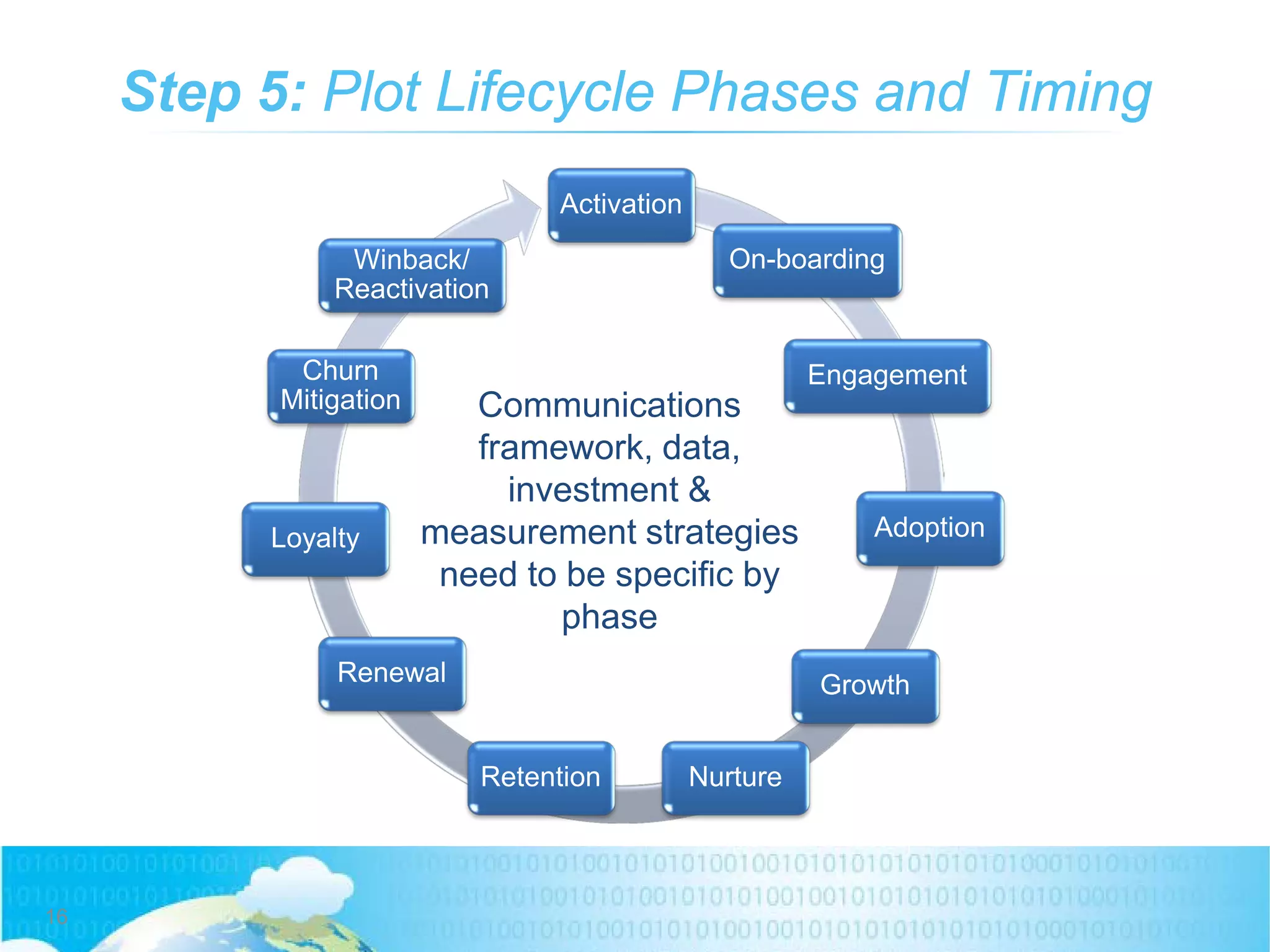
Step 5: Plot Lifecycle Phases and Timing
Activation
On-boarding
Engagement
Adoption
Growth
NurtureRetention
Renewal
Loyalty
Churn
Mitigation
Winback/
Reactivation
Communications
framework, data,
investment &
measurement strategies
need to be specific by
phase
16
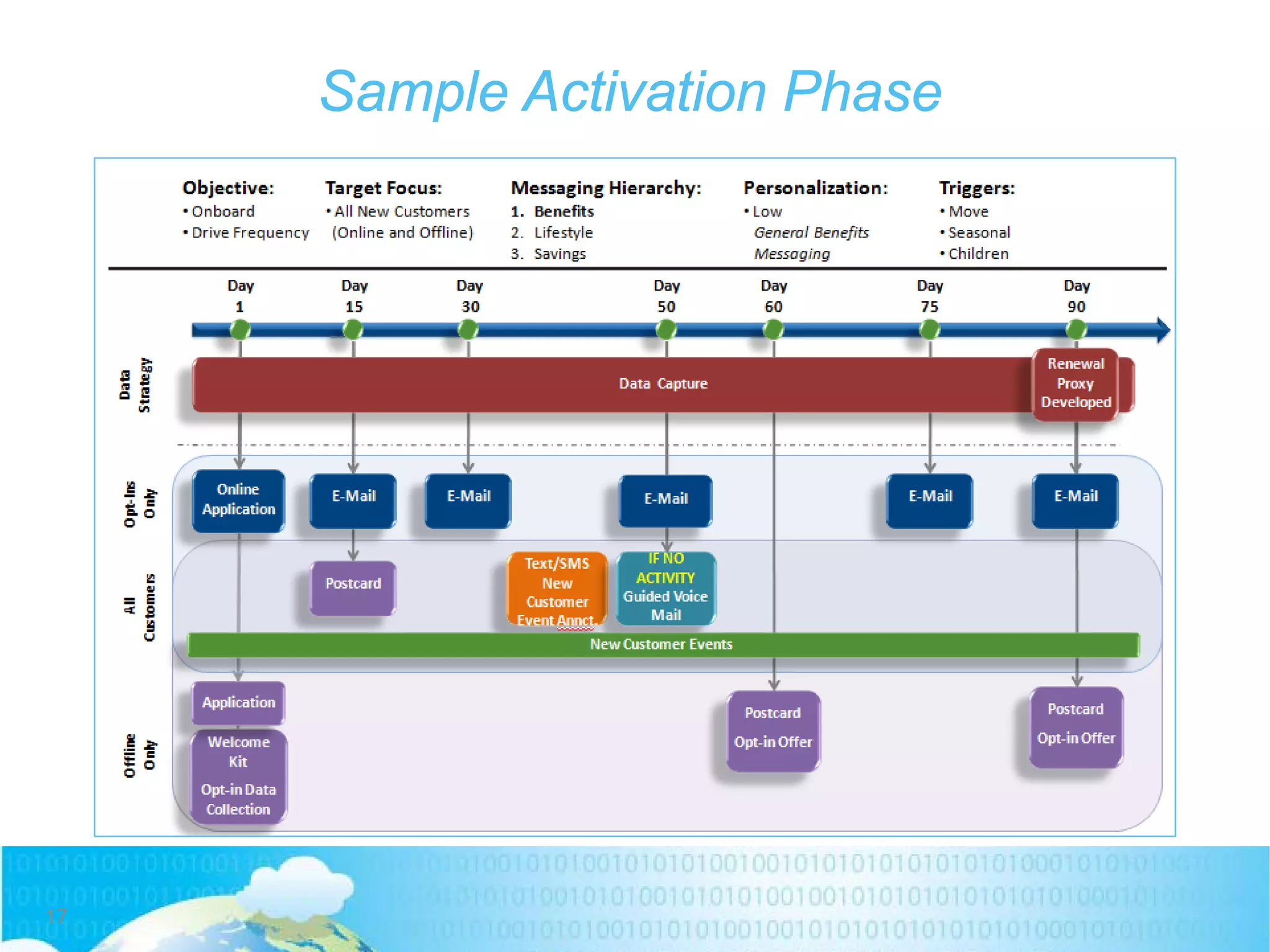
Sample Activation Phase
17
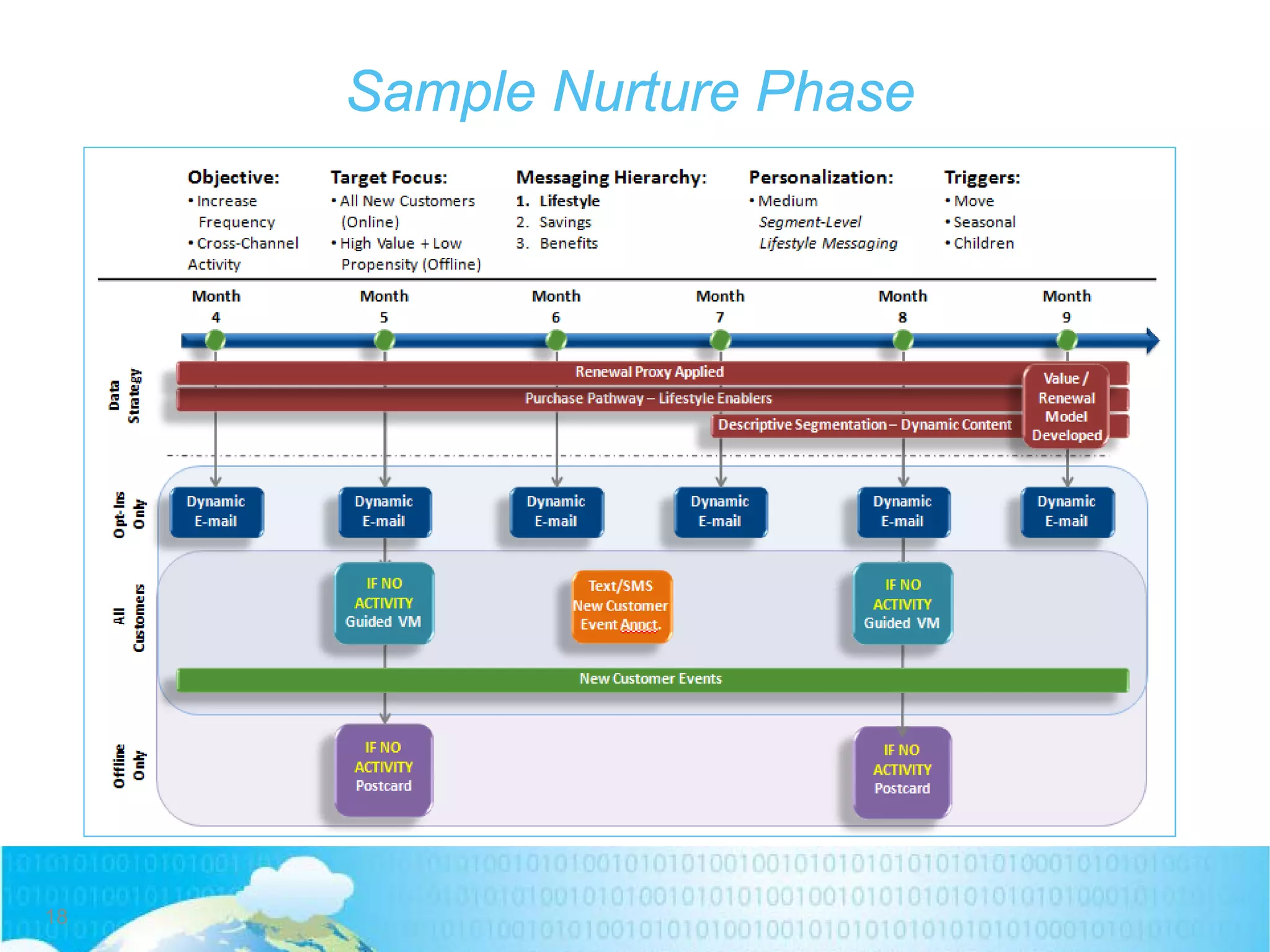
Sample Nurture Phase
18
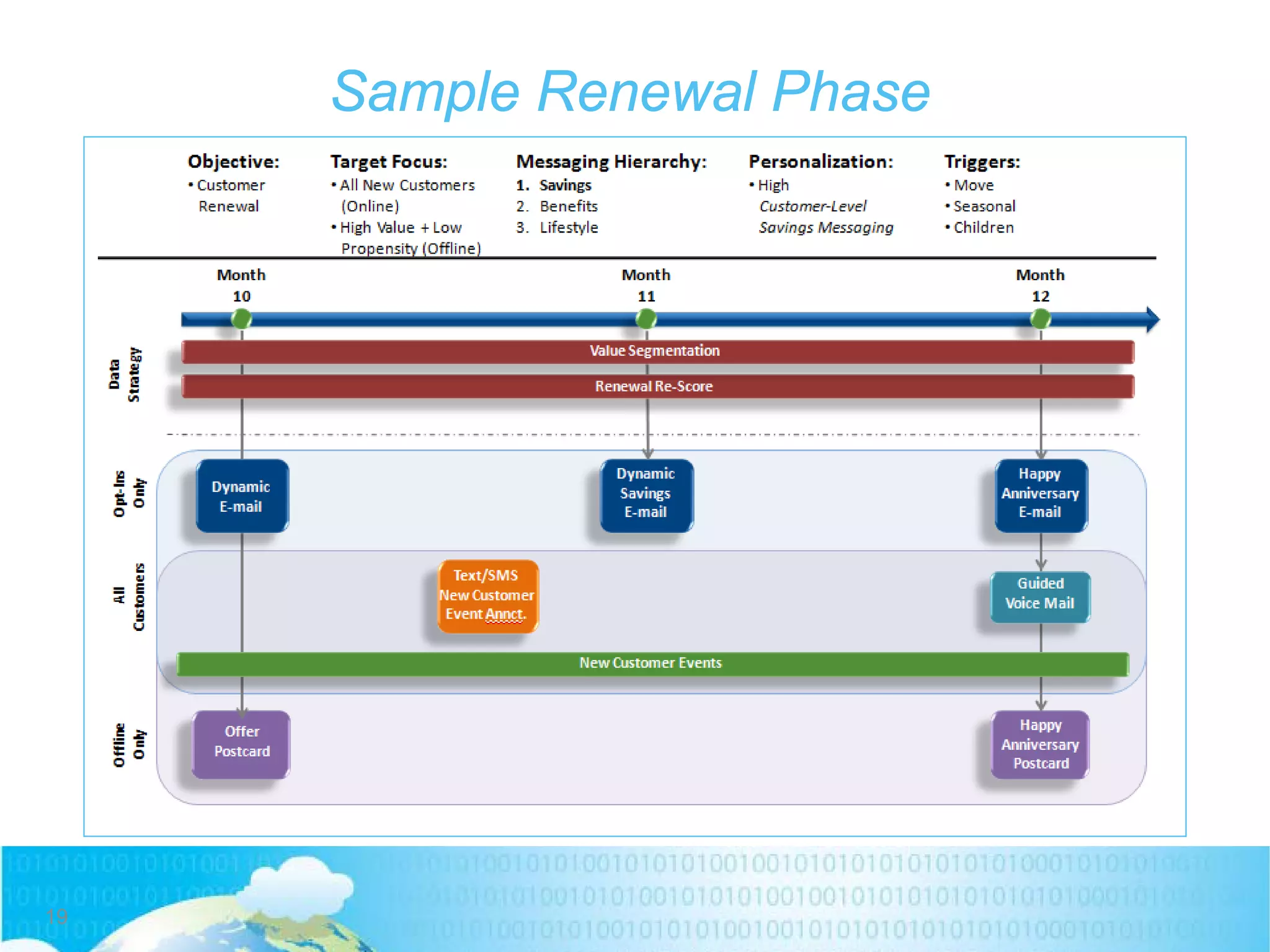
Sample Renewal Phase
19
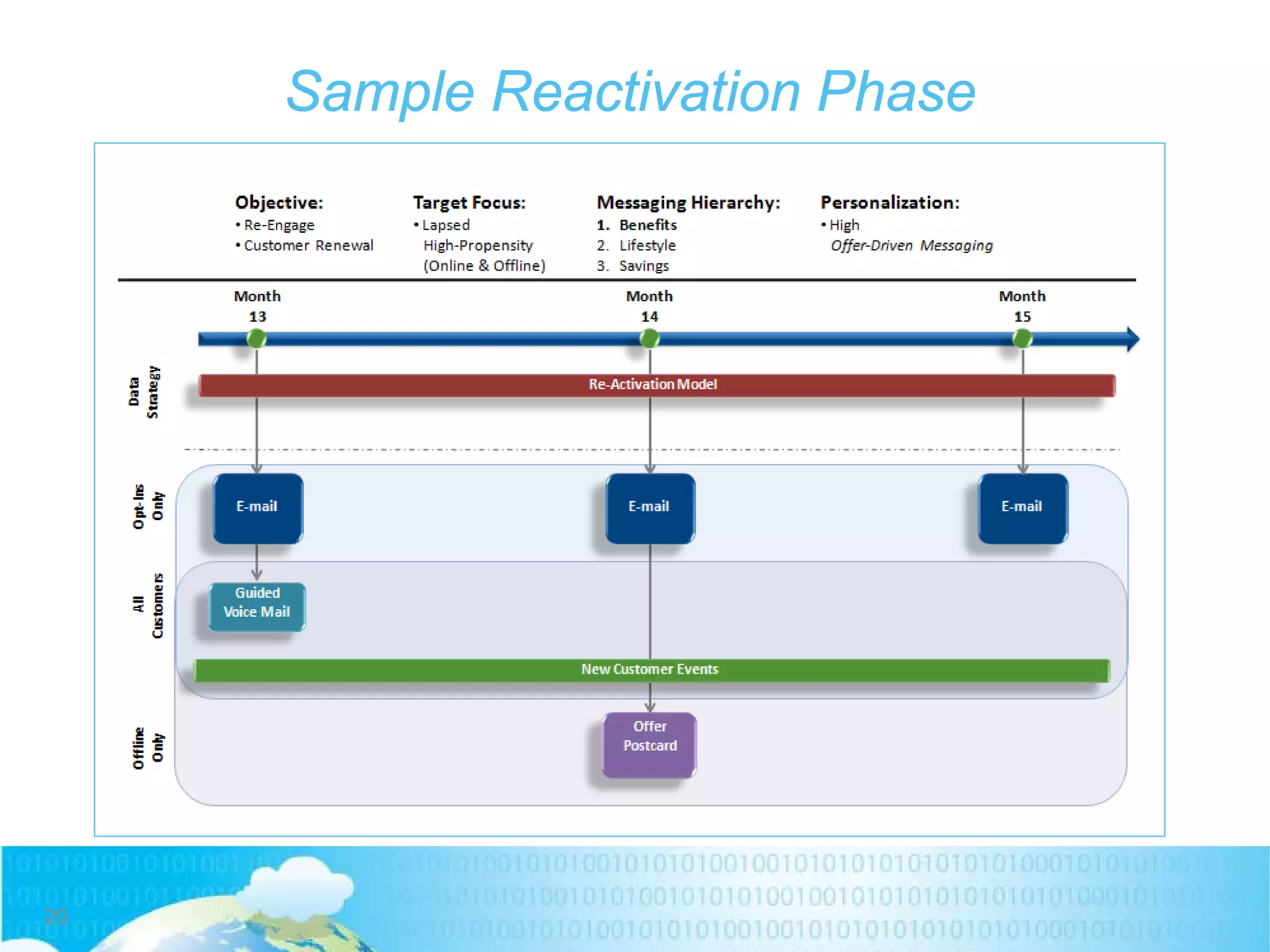
Sample Reactivation Phase
20
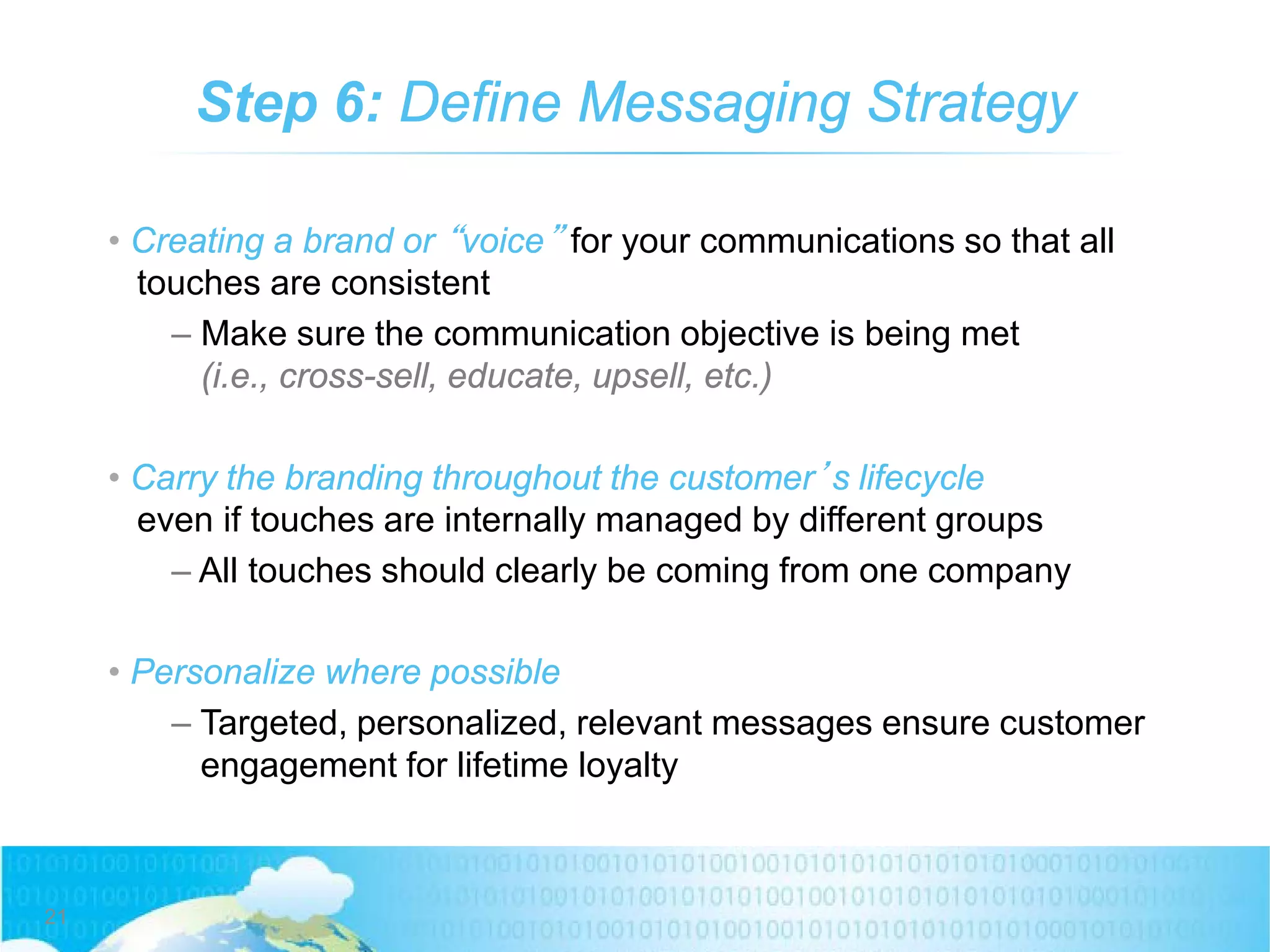
Step 6: Define Messaging Strategy
• Creating a brand or “voice” for your communications so that all
touches are consistent
– Make sure the communication objective is being met
(i.e., cross-sell, educate, upsell, etc.)
• Carry the branding throughout the customer’s lifecycle
even if touches are internally managed by different groups
– All touches should clearly be coming from one company
• Personalize where possible
– Targeted, personalized, relevant messages ensure customer
engagement for lifetime loyalty
21
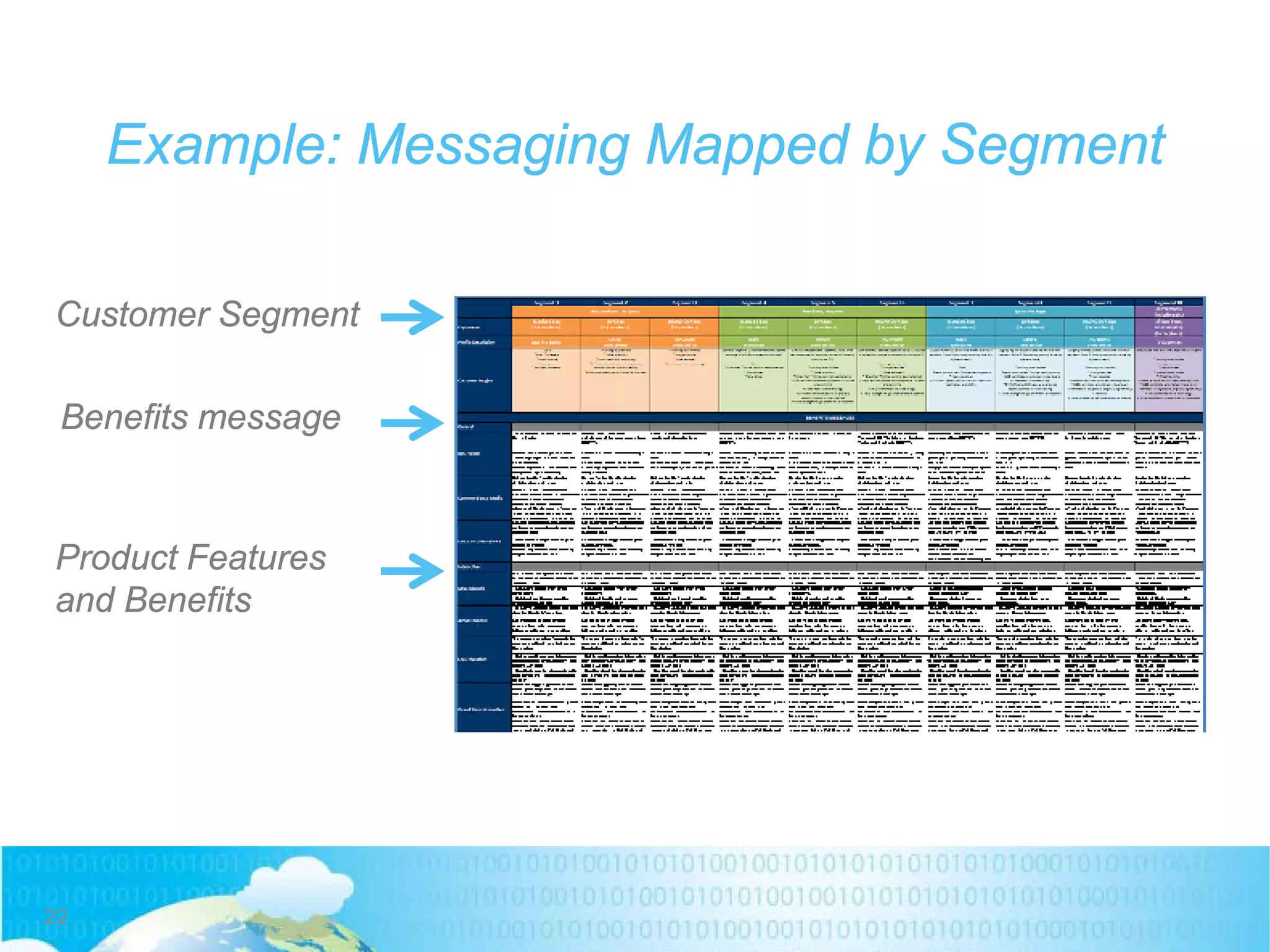
Example: Messaging Mapped by Segment
Customer Segment
Benefits message
Product Features
and Benefits
22
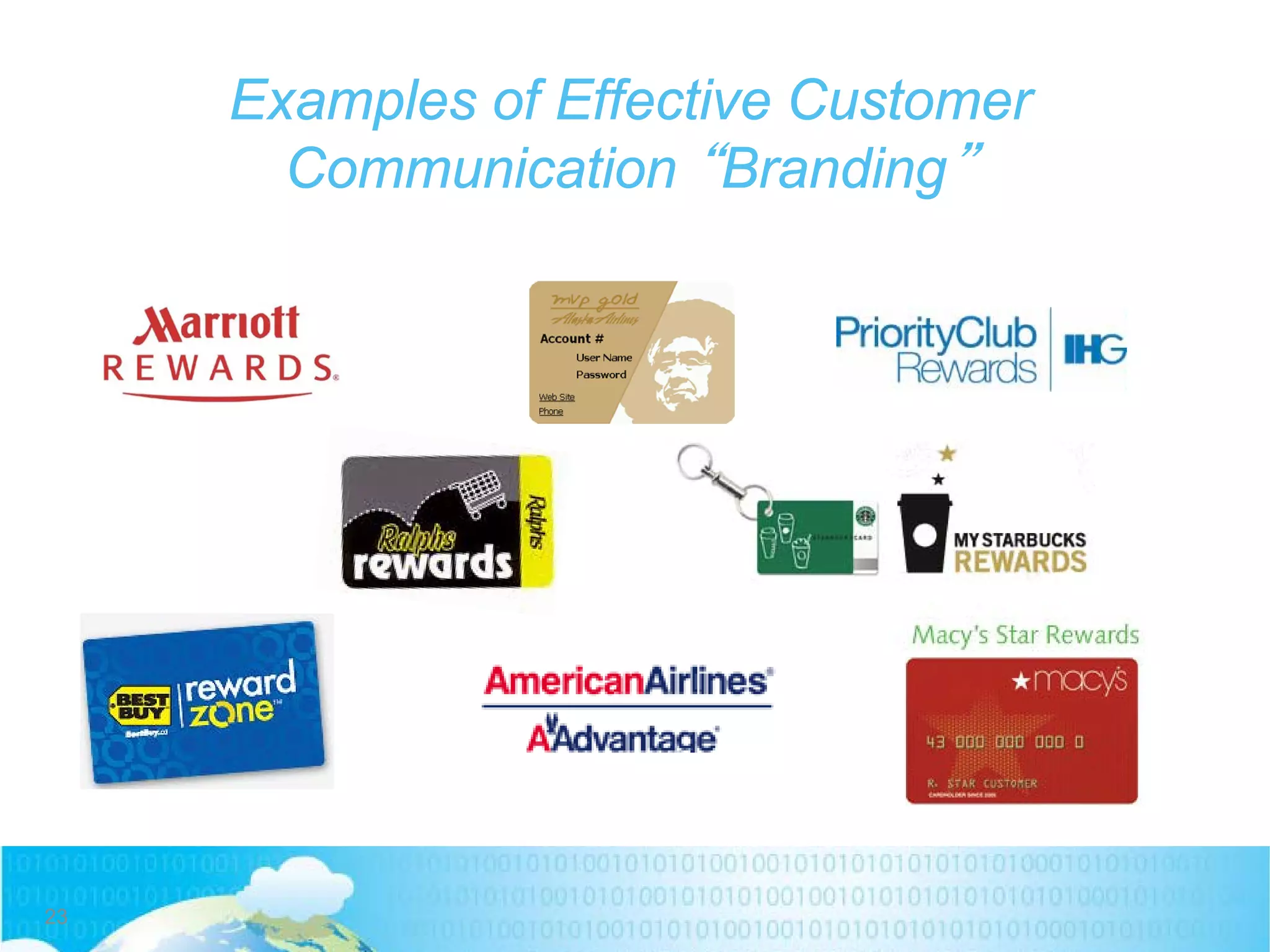
Examples of Effective Customer
Communication “Branding”
23
Step 7: Set Test and
Implementation Roadmap
• An implementation plan will help ensure that no steps are
overlooked and that each team member is clear on their role
• Participation by key stakeholders and support teams is a critical
component to the success of the implementation process
• Build in milestones and check points after key steps
• Schedule implementation with enough time to read results
accurately and rollout next steps
24
25
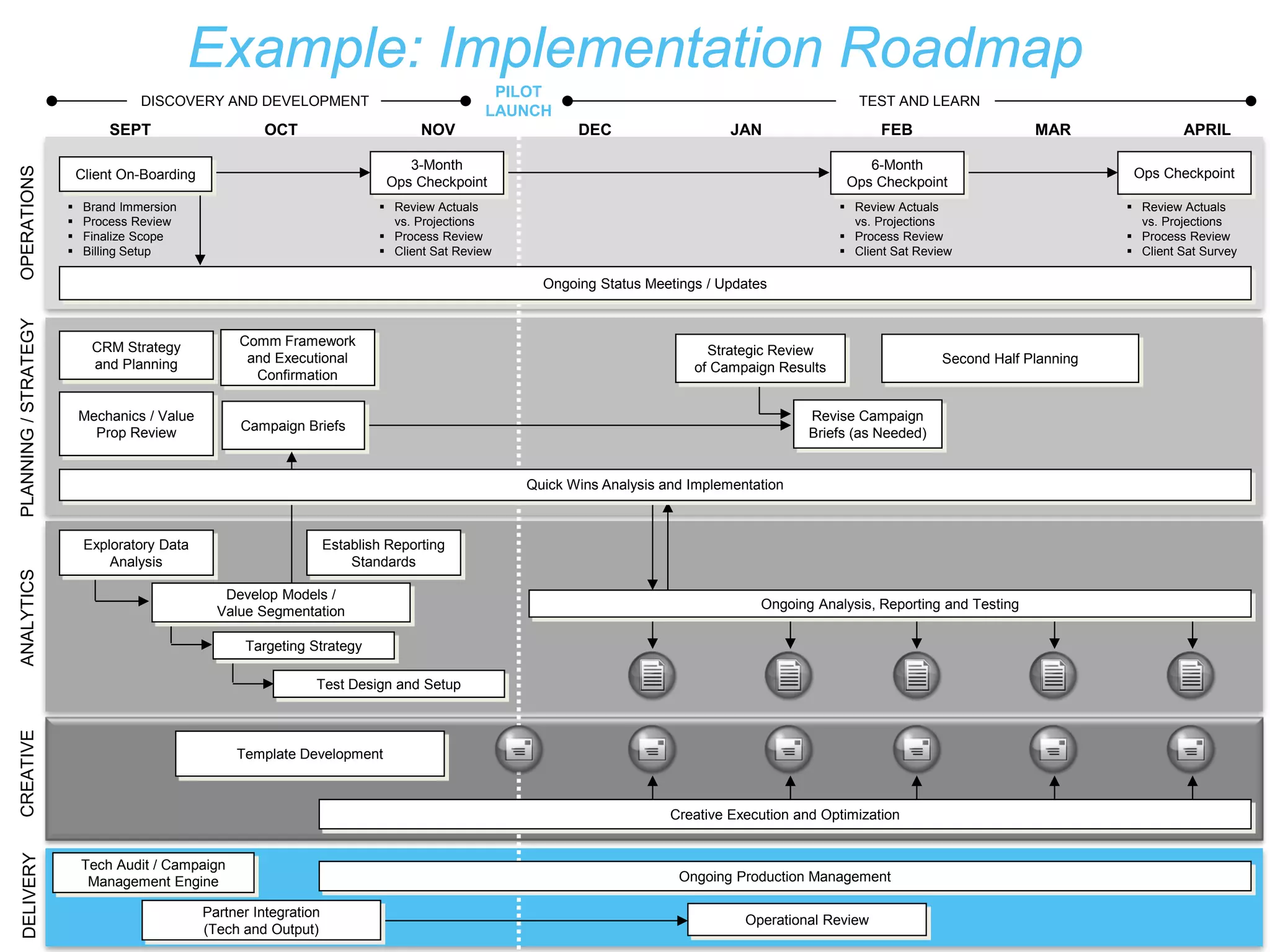
SEPT
ANALYTICSOPERATIONSCREATIVEDELIVERY
OCT NOV DEC JAN FEB MAR APRIL
PILOT
LAUNCH
DISCOVERY AND DEVELOPMENT TEST AND LEARN
PLANNING/STRATEGY
CRM Strategy
and Planning Second Half Planning
Mechanics / Value
Prop Review
 Brand Immersion
 Process Review
 Finalize Scope
 Billing Setup
Ongoing Status Meetings / Updates
Client On-Boarding
 Review Actuals
vs. Projections
 Process Review
 Client Sat Review
 Review Actuals
vs. Projections
 Process Review
 Client Sat Review
3-Month
Ops Checkpoint
 Review Actuals
vs. Projections
 Process Review
 Client Sat Survey
6-Month
Ops Checkpoint
Ops Checkpoint
Revise Campaign
Briefs (as Needed)
Strategic Review
of Campaign Results
Campaign Briefs
Exploratory Data
Analysis
Establish Reporting
Standards
Develop Models /
Value Segmentation
Test Design and Setup
Targeting Strategy
Quick Wins Analysis and Implementation
Ongoing Analysis, Reporting and Testing
Template Development
Creative Execution and Optimization
Tech Audit / Campaign
Management Engine Ongoing Production Management
Operational Review
Partner Integration
(Tech and Output)
Example: Implementation Roadmap
Comm Framework
and Executional
Confirmation
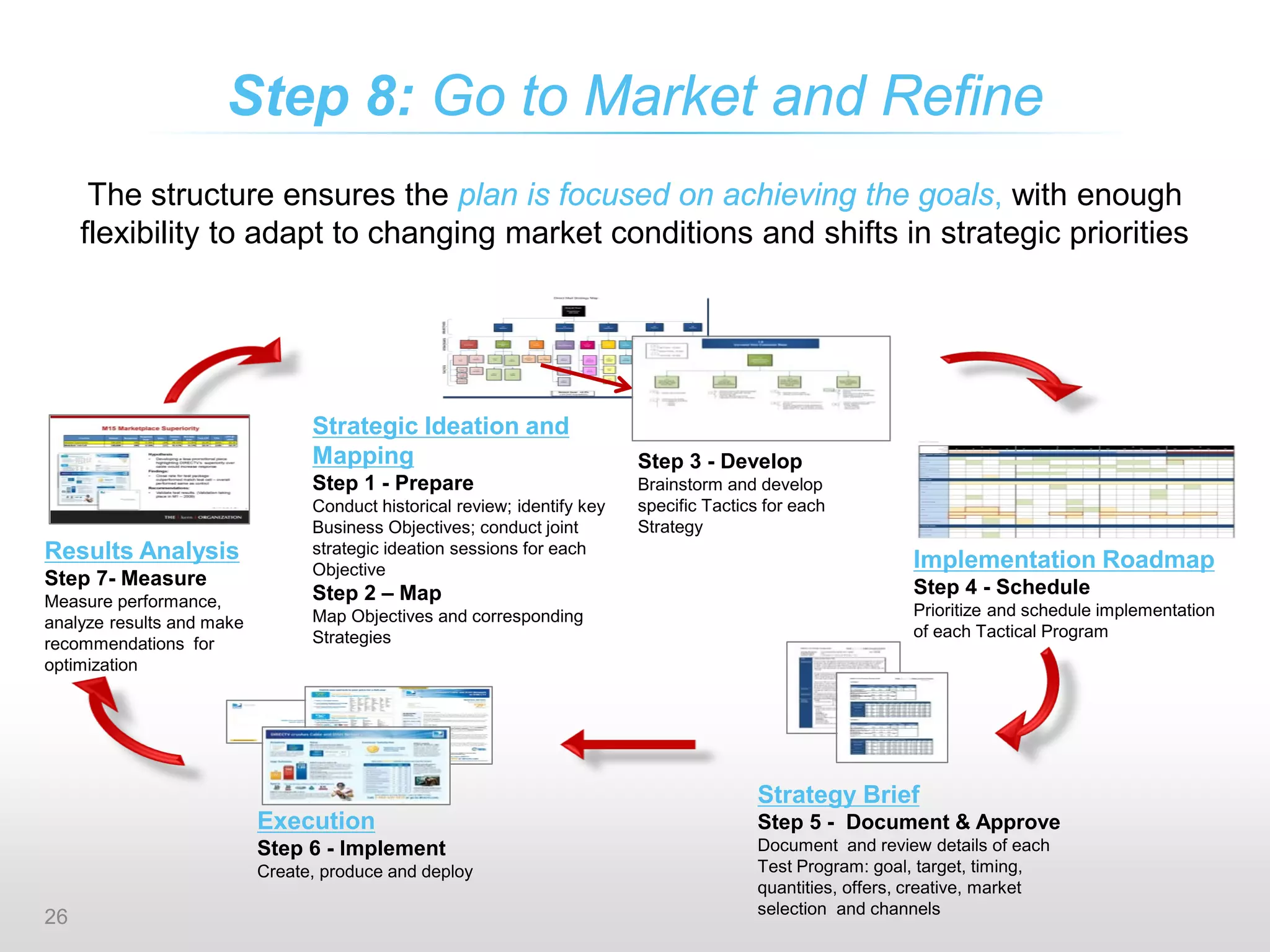
Step 8: Go to Market and Refine
Strategic Ideation and
Mapping
Step 1 - Prepare
Conduct historical review; identify key
Business Objectives; conduct joint
strategic ideation sessions for each
Objective
Step 2 – Map
Map Objectives and corresponding
Strategies
Implementation Roadmap
Step 4 - Schedule
Prioritize and schedule implementation
of each Tactical Program
Strategy Brief
Step 5 - Document & Approve
Document and review details of each
Test Program: goal, target, timing,
quantities, offers, creative, market
selection and channels
Execution
Step 6 - Implement
Create, produce and deploy
Results Analysis
Step 7- Measure
Measure performance,
analyze results and make
recommendations for
optimization
Step 3 - Develop
Brainstorm and develop
specific Tactics for each
Strategy
The structure ensures the plan is focused on achieving the goals, with enough
flexibility to adapt to changing market conditions and shifts in strategic priorities
26
Case Studies
27
Case Study: DIRECTV
Building a New Customer On-Boarding Strategy
28
Case Study: CLEAR
Developing a Customer Communications Program
29
Discussion / Q&A
30
Thank You!
If you would like us to email you a copy of the presentation,
please leave your business card upfront
David Azulay
dazulay@kernagency.com
818-703-8775
@davidazulay

Successful Customer Communications Strategies in 8 Steps and 2 Case Studies

  • 1.
    Successful Customer Communications Strategiesin 8 Steps and 2 Case Studies David Azulay – Kern Dan Ferguson – DIRECTV Michelle Degen– Clear
  • 2.
    Introducing Our Panelists DavidAzulay SVP, Client Services KERN Dan Ferguson Senior Director of Marketing DIRECTV 2 Michelle Degen Marketing Manager Clearwire
  • 3.
    This may seemsimple, but you need to give customers what they want, not what you think they want. And, if you do this, people will keep coming back. -John Ilhan, Entrepreneur and Founder of Crazy John's Mobile Phone (Australia) Bain & Company. "Cost-Cutting Ideas for Now That Won't Impair Clients Later." Tennessee Society of CPAs. Accounting Office Management & Administration Report, June 2009. “ “ Companies that focus on building loyal relationships are better positioned to remain strong. - Bain & Company “ “ 3
  • 4.
    Consider the costof serving a long- standing customer versus the cost of courting a new one… 5% increase in customer retention produces more than a 25% increase in profit Bain & Company. "Cost-Cutting Ideas for Now That Won't Impair Clients Later." Tennessee Society of CPAs. Accounting Office Management & Administration Report, June 2009. 4
  • 5.
    Today’s Agenda 5 • Introductions •Importance of a Customer Communications Strategy • Getting Started – 8 Key Steps • Cases − DIRECTV − CLEAR • Panel Discussion / Q&A
  • 6.
    6 We are multi-channelCRM and Acquisition agency providing strategic, creative and analytical leadership for data-driven direct programs to maximize marketing ROI, ASAP. Our logo symbolizes the intersection of all of the services and solutions that we offer.
  • 7.
    The Importance ofa Customer Communications Strategy 7 - It is just as important to have a retention strategy in place as an acquisition strategy. - It costs more to acquire a new customer than it does to keep a current customer. - Most customers want to be appreciated and thanked along the way for their business. - Expectations are increasing. Customers expect their experience to be consistent, relevant and personalized at every touch point.
  • 8.
    Getting Started –8 Key Steps 8 1. Know your objectives and success metrics 2. Conduct a communications audit 3. Listen to your customers 4. Determine customer segmentation and investment strategy 5. Plot customer lifecycle phases and timing 6. Define messaging strategy 7. Set test and implementation roadmap 8. Go to market and refine
  • 9.
    Step 1: KnowYour Objectives and Success Metrics Primary: Should be quantifiable Example: Increase revenues by xx%; Increase renewals or mitigate churn by xx% Secondary: Should be extensions of meeting primary goals Example: Satisfied customers and advocates, which lead to increased purchases and increased revenues; increase customer opt in; generate buzz Are these realistic and measurable? Align costs and ROI to meeting your goals 9
  • 10.
    Keep a DailyPulse on the Metrics Customer Communications Dashboard 10
  • 11.
    Step 2: Conducta Communications Audit • Build a map of existing communications to identify gaps/holes/opportunities • Review all existing communication metrics (open rates, response rates, etc.) • Evaluate (or build) current offer library • Analyze impact of current touches on goals, costs and revenues • Perform competitive analysis • Insights should enable specific plans by segment, customer type, etc. 11
  • 12.
    Communication Audit: Evaluate contactstrategy based on customer segment Questions to ask yourself: • What actions do you want each customer segment to take? • What channel is each segment likely to prefer? • What will define success for each type of communication? • Are improvements based on findings? 12
  • 13.
    • Use immediatefeedback channels – Surveys, one on one interviews, focus groups • Build longer term feedback channels – Customer panels to contact regularly for feedback • Be prepared to act on the information you hear – Customers appreciate being asked for their feedback but expectations are that their opinion will be taken into account (especially in Social Media Channels) Step 3: Listen to Your Customers 13
  • 14.
  • 15.
    Step 4: DetermineCustomer Segmentation and Investment Strategy Use available customer data (transactional, revenue, tenure) to determine investment — both frequency of communication and richness of offer 15
  • 16.
    Step 5: PlotLifecycle Phases and Timing Activation On-boarding Engagement Adoption Growth NurtureRetention Renewal Loyalty Churn Mitigation Winback/ Reactivation Communications framework, data, investment & measurement strategies need to be specific by phase 16
  • 17.
  • 18.
  • 19.
  • 20.
  • 21.
    Step 6: DefineMessaging Strategy • Creating a brand or “voice” for your communications so that all touches are consistent – Make sure the communication objective is being met (i.e., cross-sell, educate, upsell, etc.) • Carry the branding throughout the customer’s lifecycle even if touches are internally managed by different groups – All touches should clearly be coming from one company • Personalize where possible – Targeted, personalized, relevant messages ensure customer engagement for lifetime loyalty 21
  • 22.
    Example: Messaging Mappedby Segment Customer Segment Benefits message Product Features and Benefits 22
  • 23.
    Examples of EffectiveCustomer Communication “Branding” 23
  • 24.
    Step 7: SetTest and Implementation Roadmap • An implementation plan will help ensure that no steps are overlooked and that each team member is clear on their role • Participation by key stakeholders and support teams is a critical component to the success of the implementation process • Build in milestones and check points after key steps • Schedule implementation with enough time to read results accurately and rollout next steps 24
  • 25.
    25 SEPT ANALYTICSOPERATIONSCREATIVEDELIVERY OCT NOV DECJAN FEB MAR APRIL PILOT LAUNCH DISCOVERY AND DEVELOPMENT TEST AND LEARN PLANNING/STRATEGY CRM Strategy and Planning Second Half Planning Mechanics / Value Prop Review  Brand Immersion  Process Review  Finalize Scope  Billing Setup Ongoing Status Meetings / Updates Client On-Boarding  Review Actuals vs. Projections  Process Review  Client Sat Review  Review Actuals vs. Projections  Process Review  Client Sat Review 3-Month Ops Checkpoint  Review Actuals vs. Projections  Process Review  Client Sat Survey 6-Month Ops Checkpoint Ops Checkpoint Revise Campaign Briefs (as Needed) Strategic Review of Campaign Results Campaign Briefs Exploratory Data Analysis Establish Reporting Standards Develop Models / Value Segmentation Test Design and Setup Targeting Strategy Quick Wins Analysis and Implementation Ongoing Analysis, Reporting and Testing Template Development Creative Execution and Optimization Tech Audit / Campaign Management Engine Ongoing Production Management Operational Review Partner Integration (Tech and Output) Example: Implementation Roadmap Comm Framework and Executional Confirmation
  • 26.
    Step 8: Goto Market and Refine Strategic Ideation and Mapping Step 1 - Prepare Conduct historical review; identify key Business Objectives; conduct joint strategic ideation sessions for each Objective Step 2 – Map Map Objectives and corresponding Strategies Implementation Roadmap Step 4 - Schedule Prioritize and schedule implementation of each Tactical Program Strategy Brief Step 5 - Document & Approve Document and review details of each Test Program: goal, target, timing, quantities, offers, creative, market selection and channels Execution Step 6 - Implement Create, produce and deploy Results Analysis Step 7- Measure Measure performance, analyze results and make recommendations for optimization Step 3 - Develop Brainstorm and develop specific Tactics for each Strategy The structure ensures the plan is focused on achieving the goals, with enough flexibility to adapt to changing market conditions and shifts in strategic priorities 26
  • 27.
  • 28.
    Case Study: DIRECTV Buildinga New Customer On-Boarding Strategy 28
  • 29.
    Case Study: CLEAR Developinga Customer Communications Program 29
  • 30.
  • 31.
    Thank You! If youwould like us to email you a copy of the presentation, please leave your business card upfront David Azulay dazulay@kernagency.com 818-703-8775 @davidazulay