Delivering a Predictable Pipeline:
A B2B Revenue Ops Success Framework and Maturity Model
Matt Heinz
President, Heinz Marketing Inc
@heinzmarketing
HOUSEKEEPING
① Copy of this deck
② Freebies!
① Full Funnel Marketing (the book)
② Sales Velocity Calculator
③ KPI Metrics Architecture
④ Matt’s bacon recipe
③ Send me an email (matt@heinzmarketing.com) or bring me a business card
with what you want!
Why is selling so hard today?
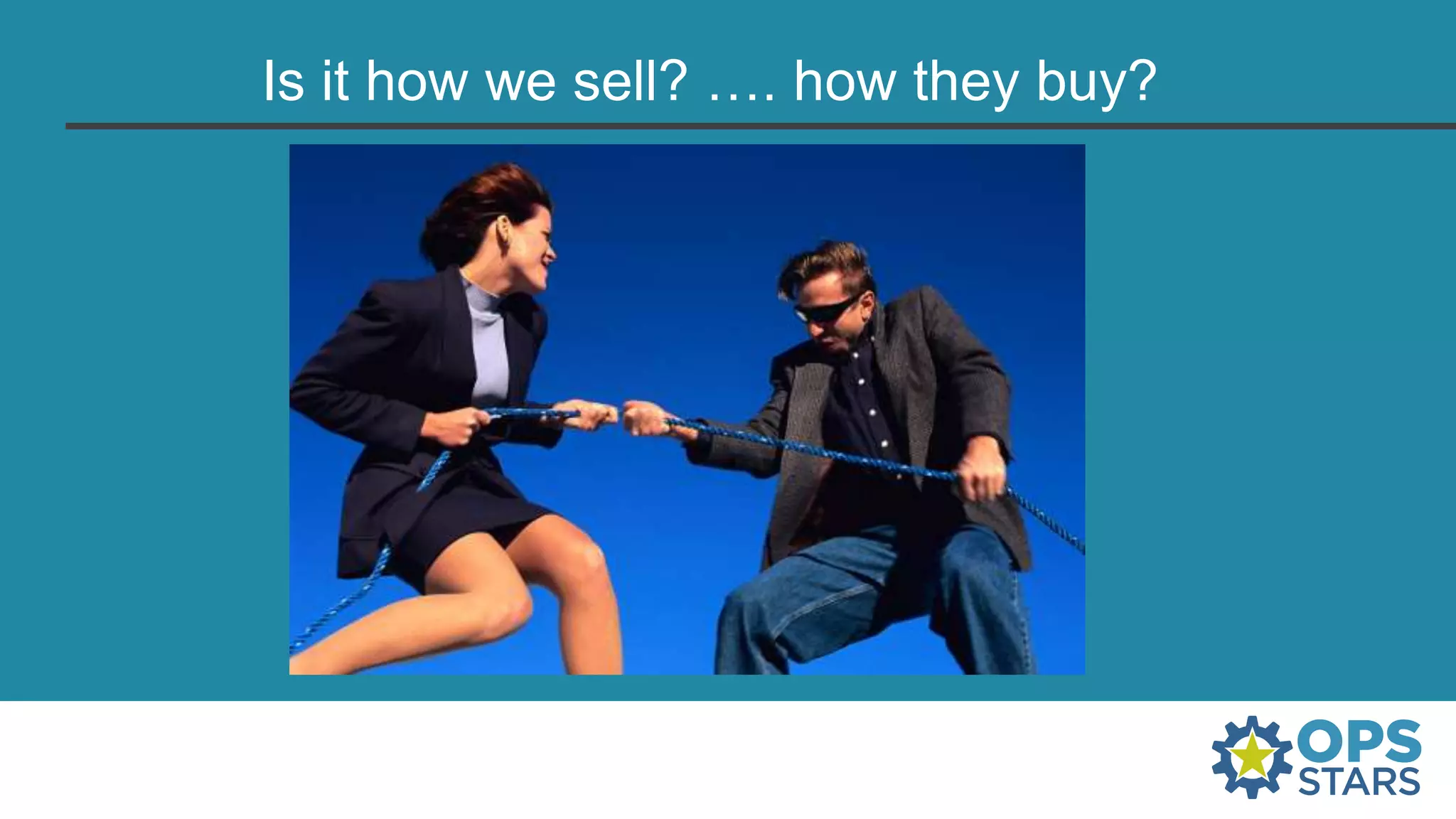
Is it how we sell? …. how they buy?
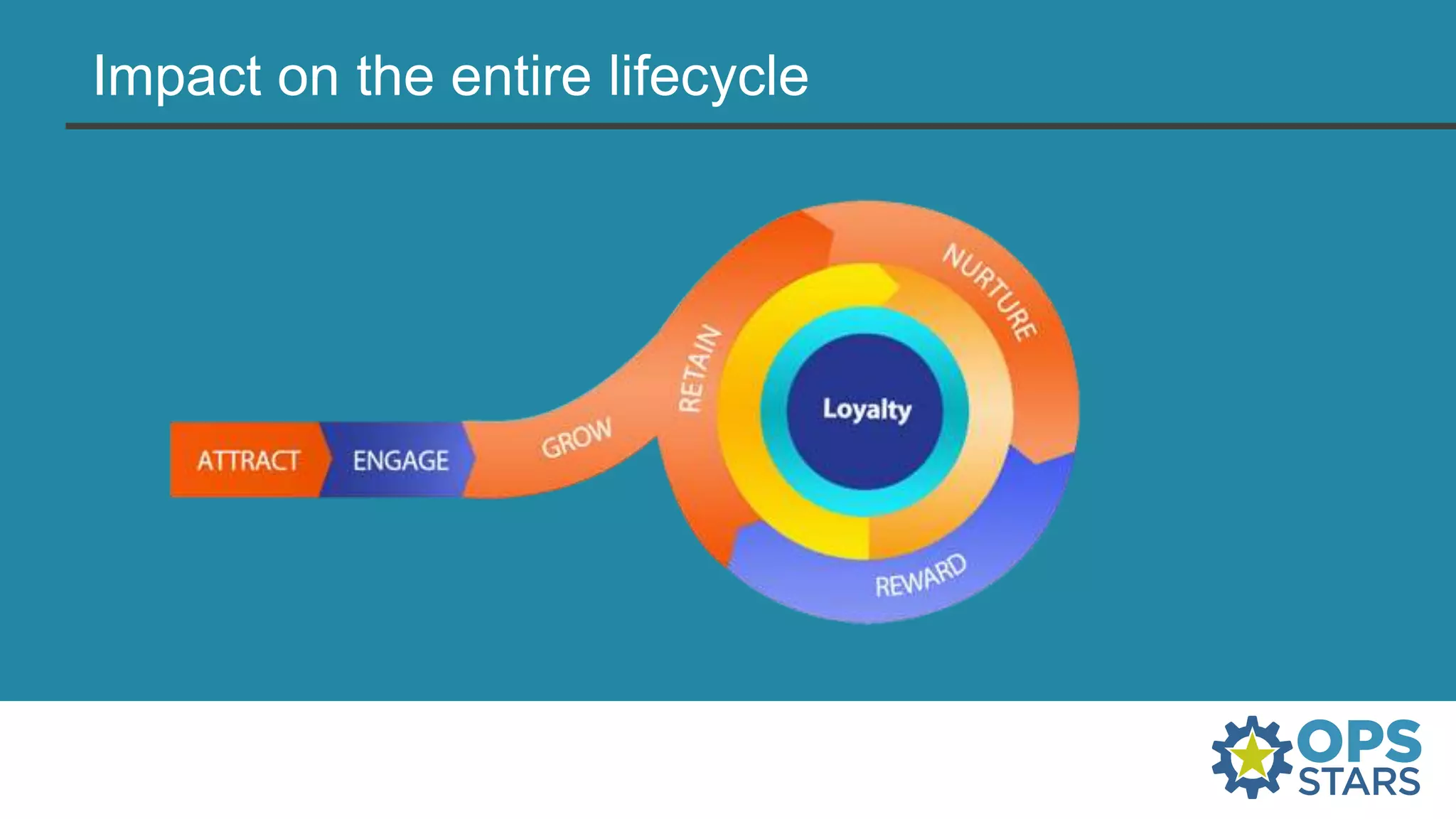
Impact on the entire lifecycle
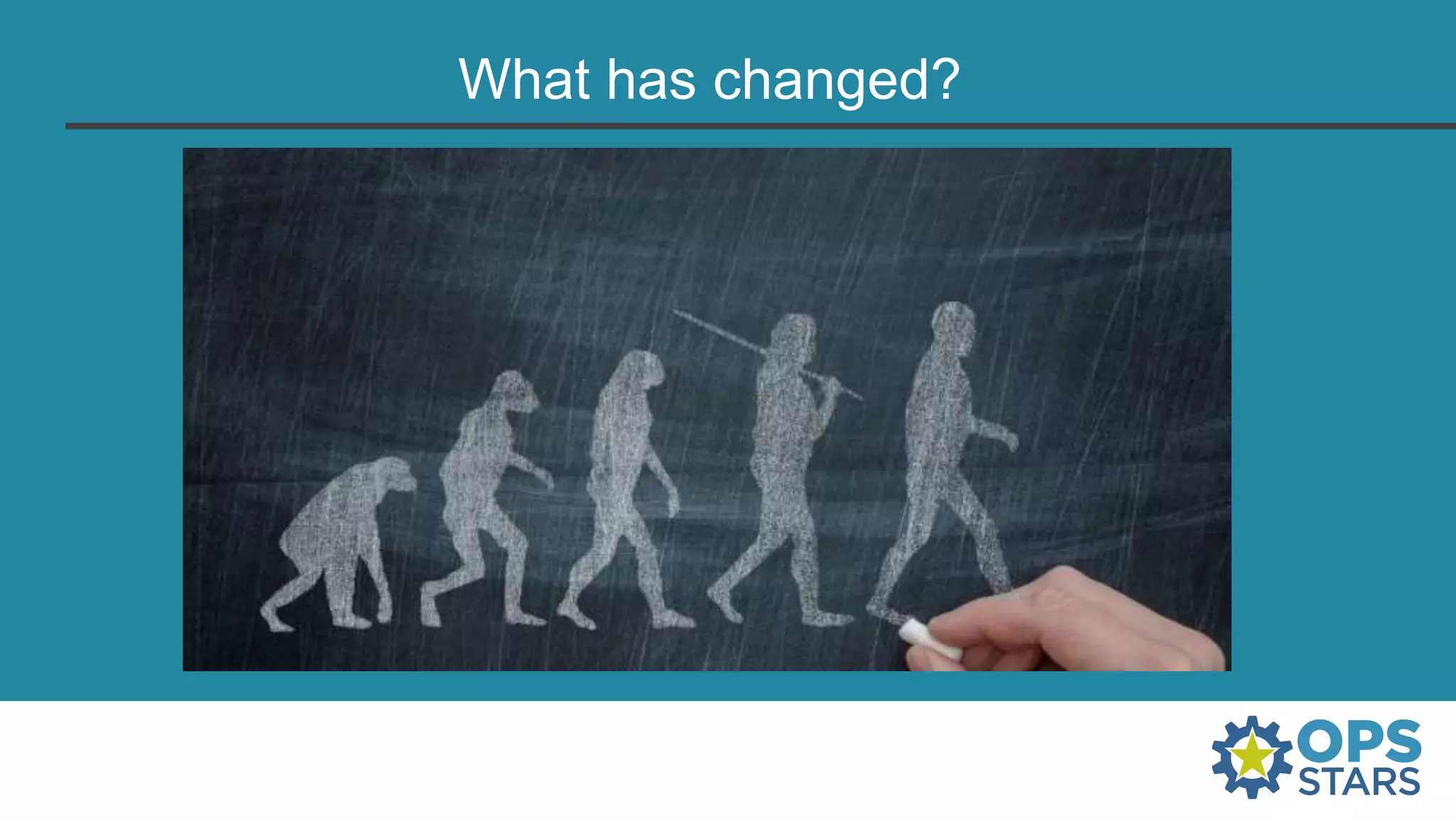
What has changed?
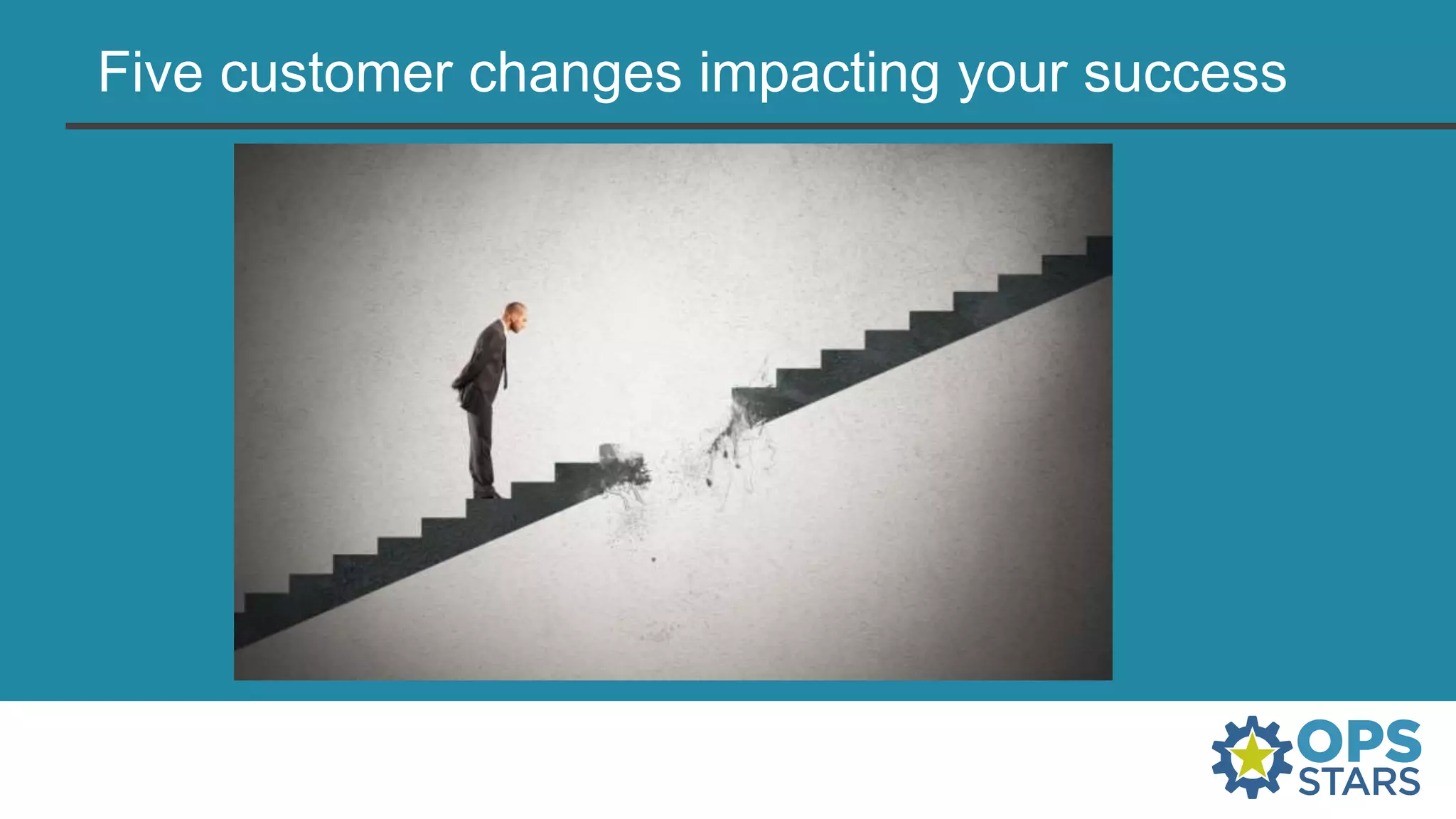
Five customer changes impacting your success
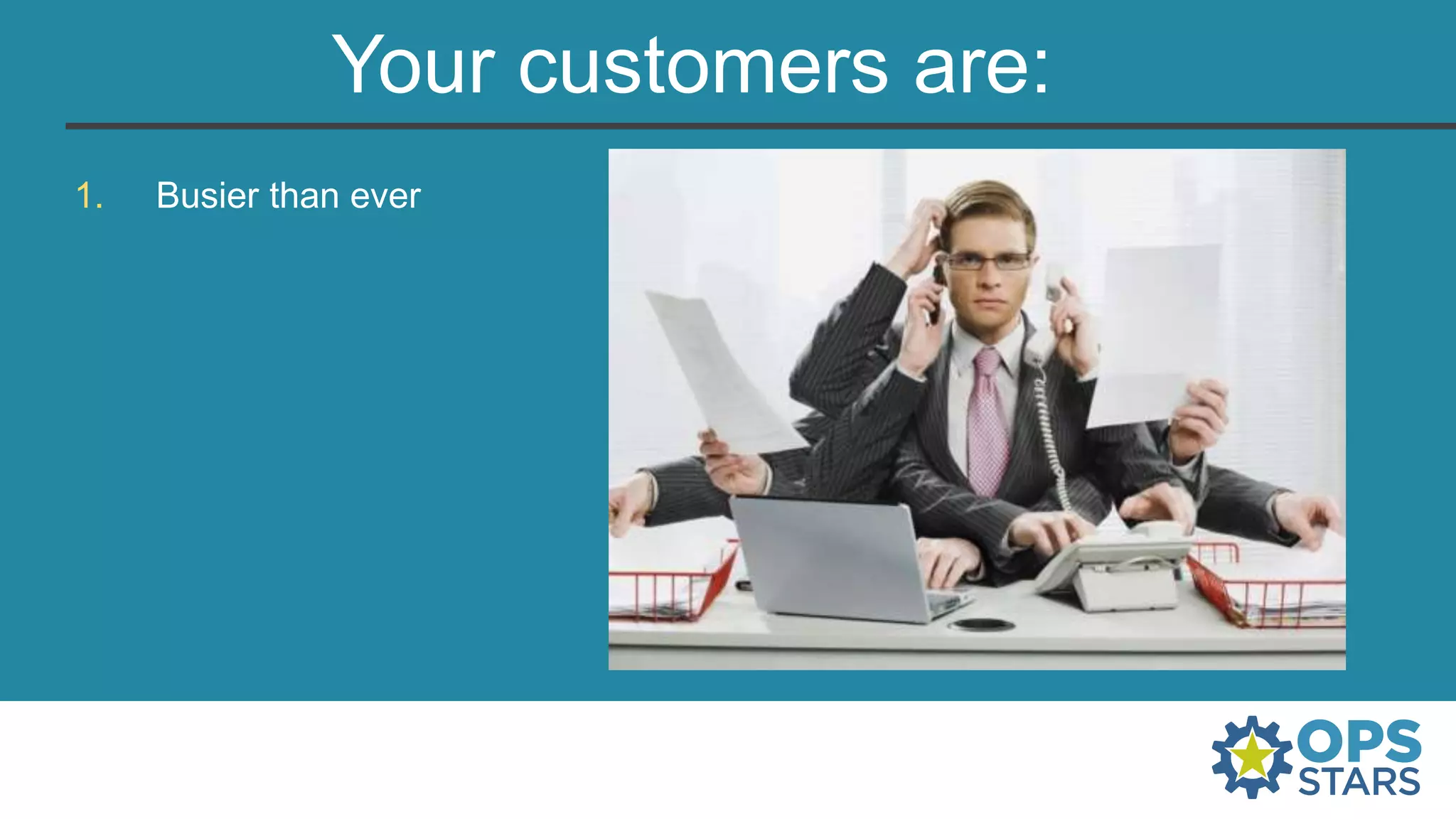
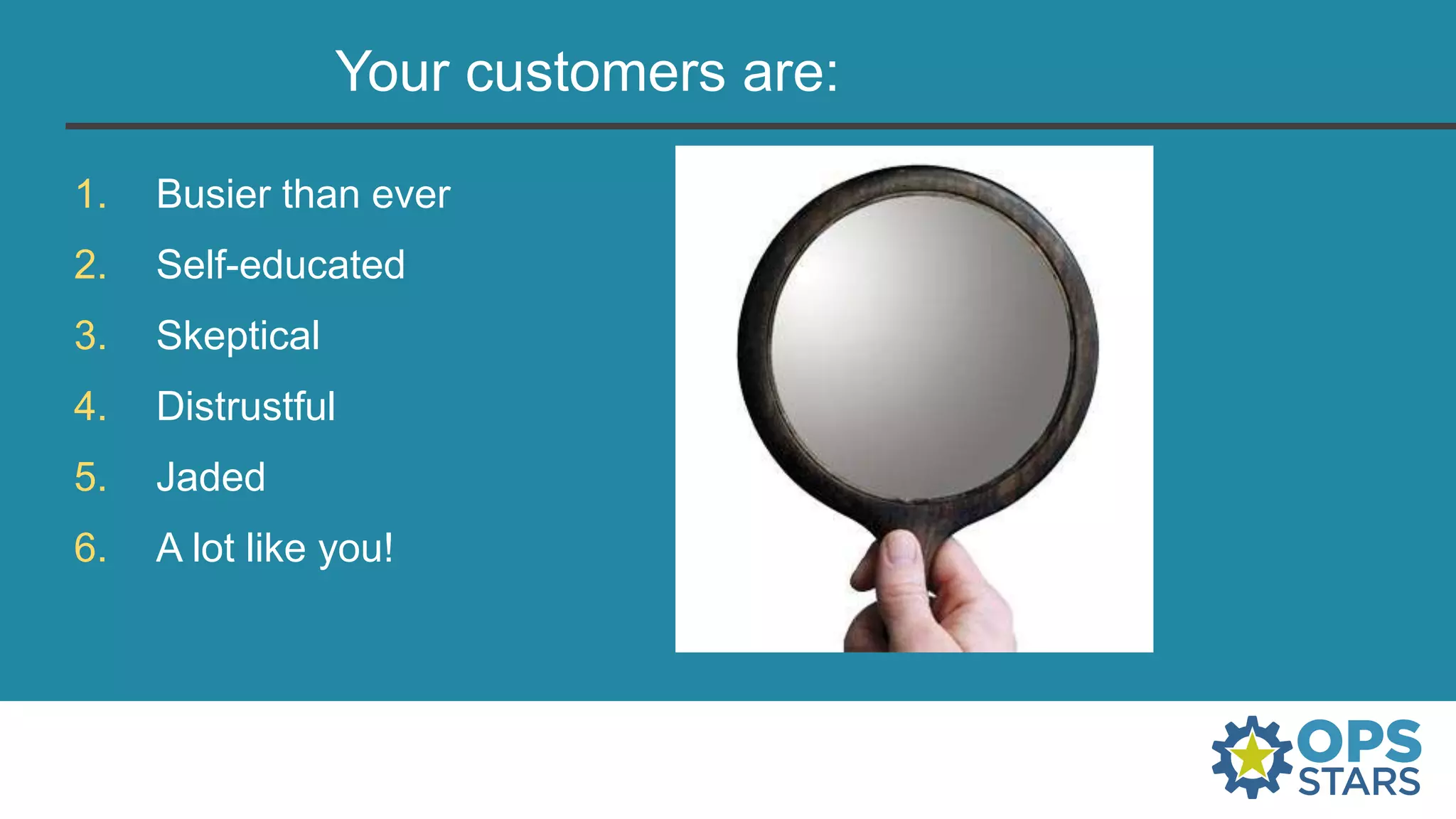
Your customers are:
1. Busier than ever
Your customers are:
1. Busier than ever
2. Self-educated
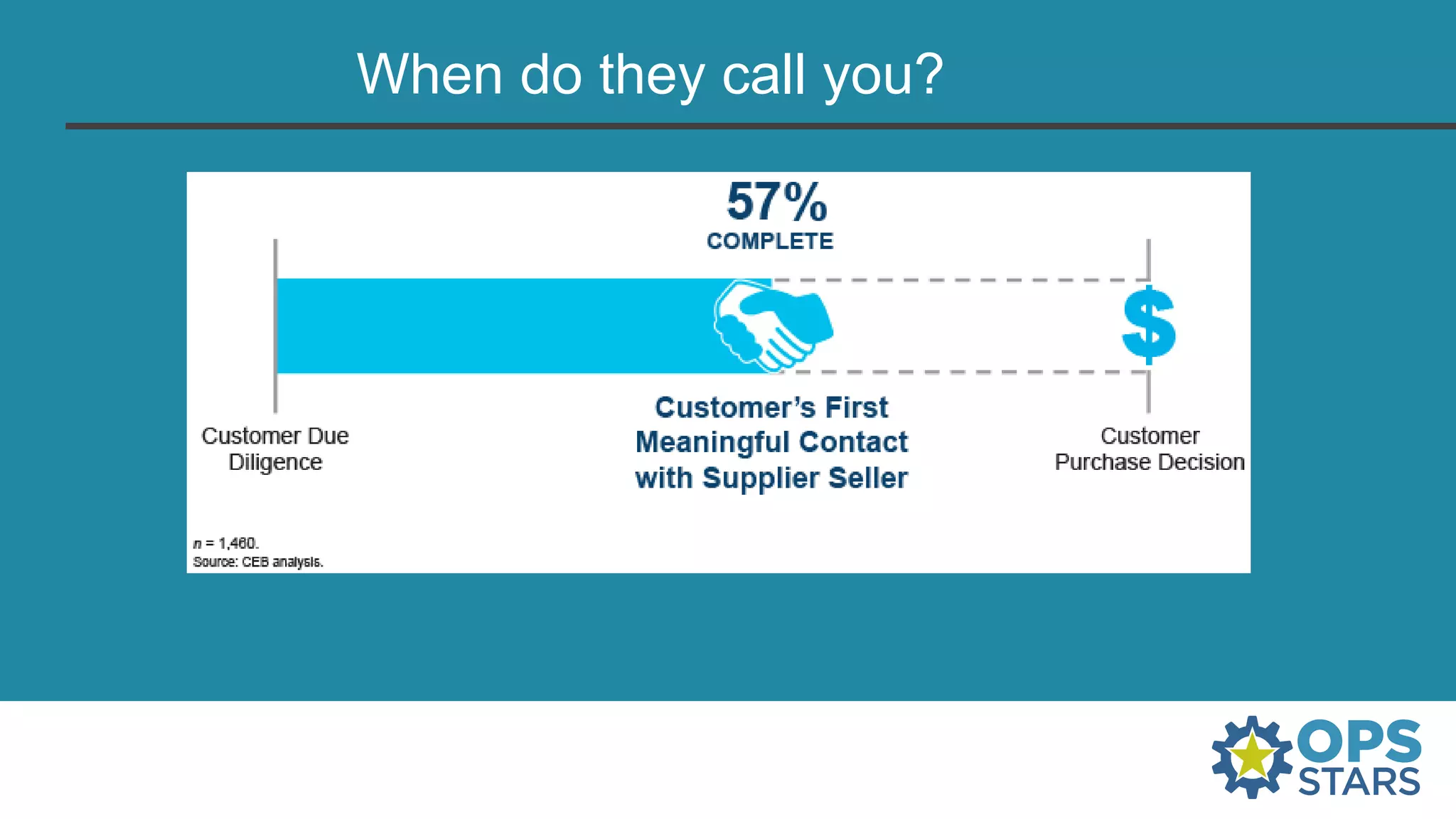
When do they call you?
1. Busier than ever
2. Self-educated
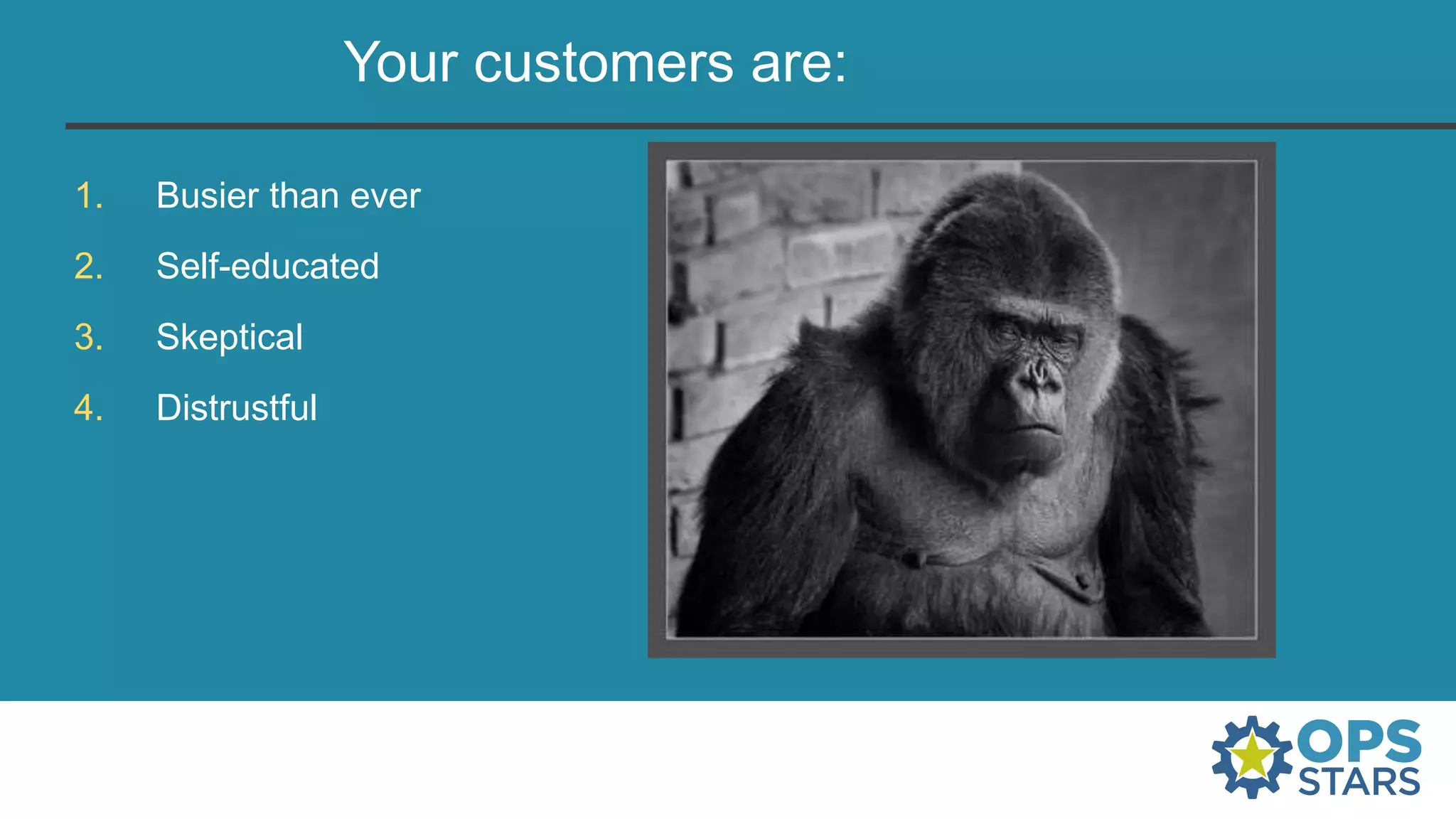
3. Skeptical
4. Distrustful
Your customers are:
Your customers are:
1. Busier than ever
2. Self-educated
3. Skeptical
4. Distrustful
5. Jaded
6. A lot like you!
So what IS working today?
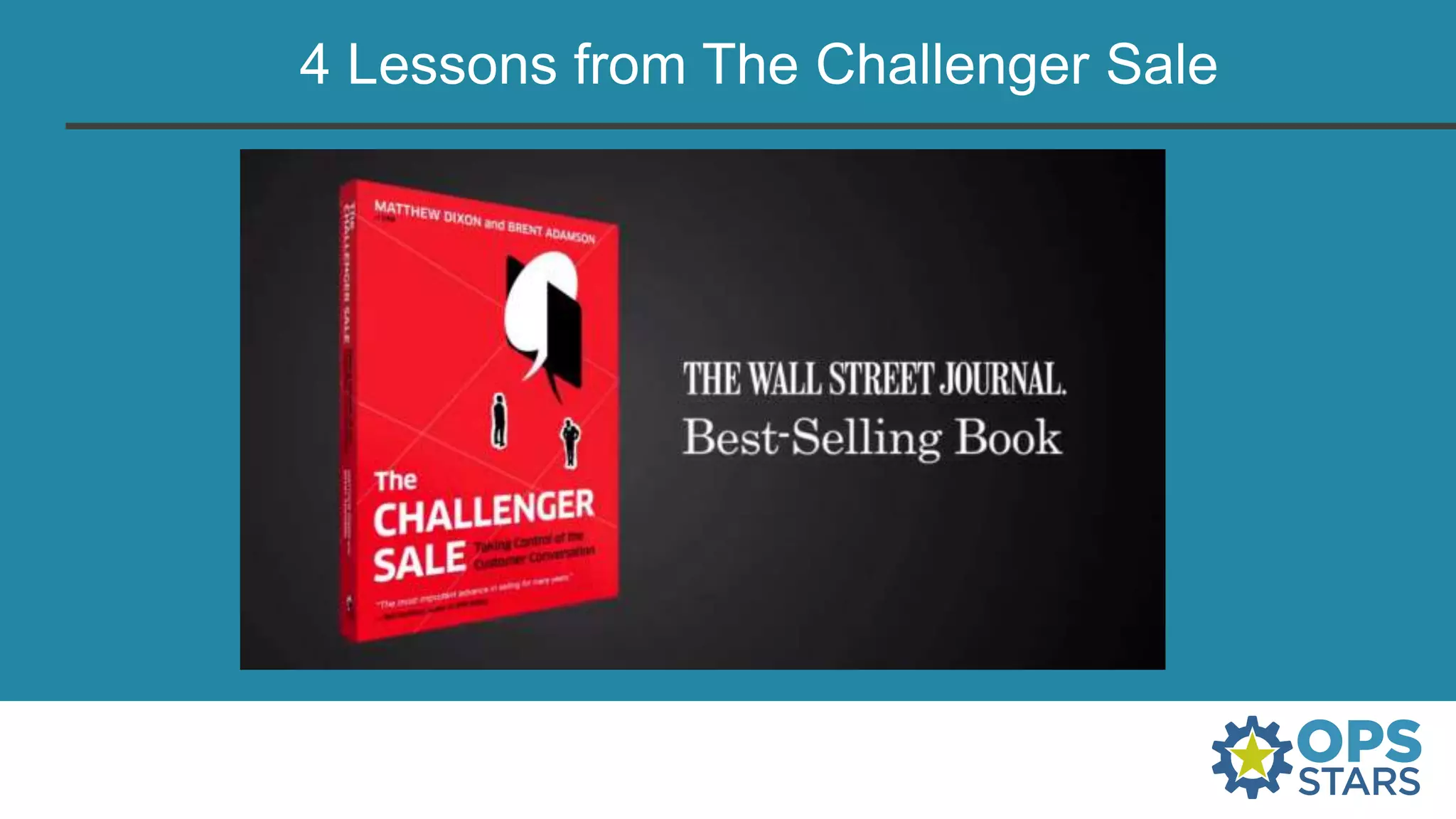
4 Lessons from The Challenger Sale
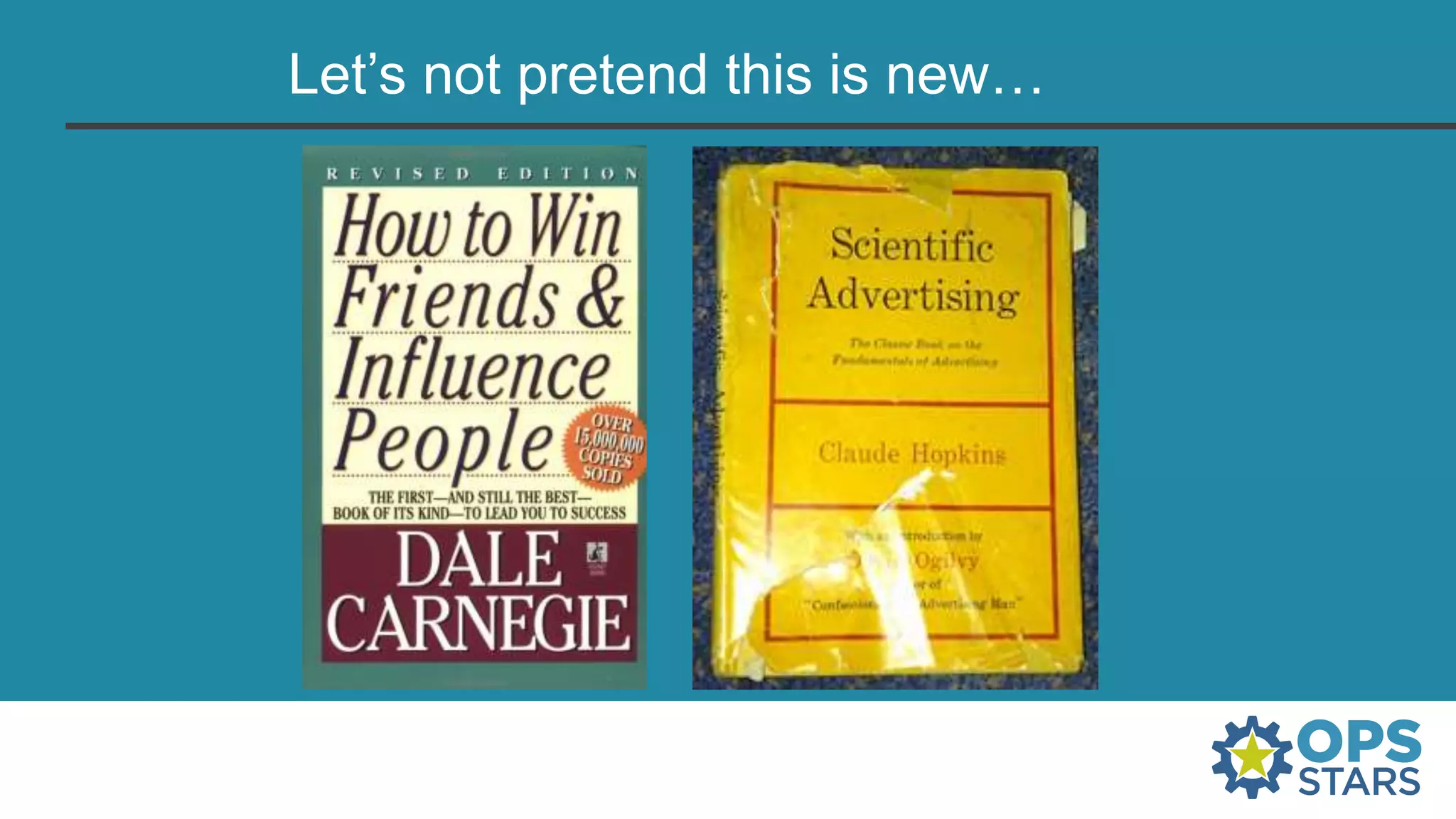
Let’s not pretend this is new…
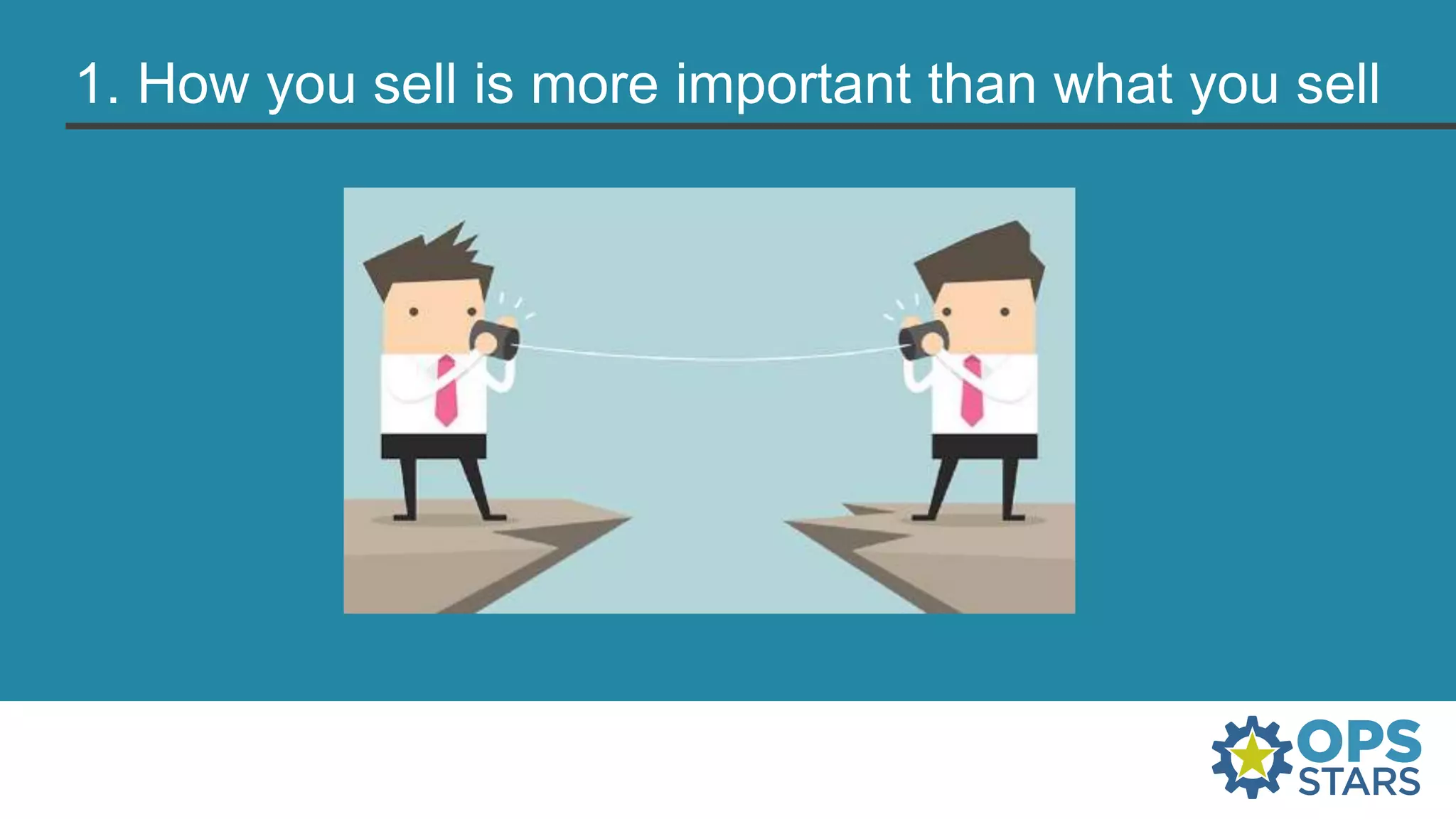
1. How you sell is more important than what you sell
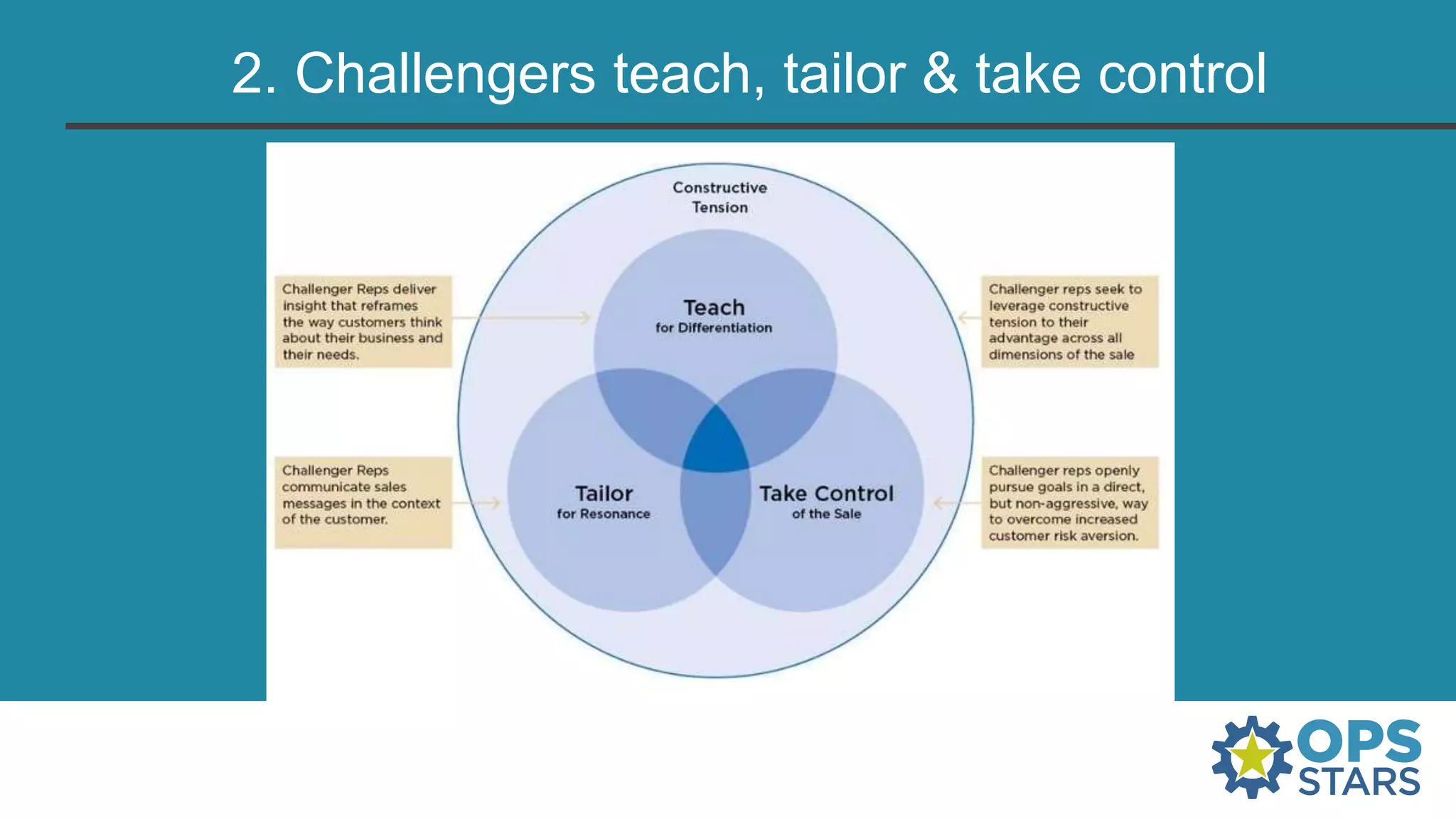
2. Challengers teach, tailor & take control
3. The value of your insights trumps the quality of your product
4. Be memorable, not agreeable
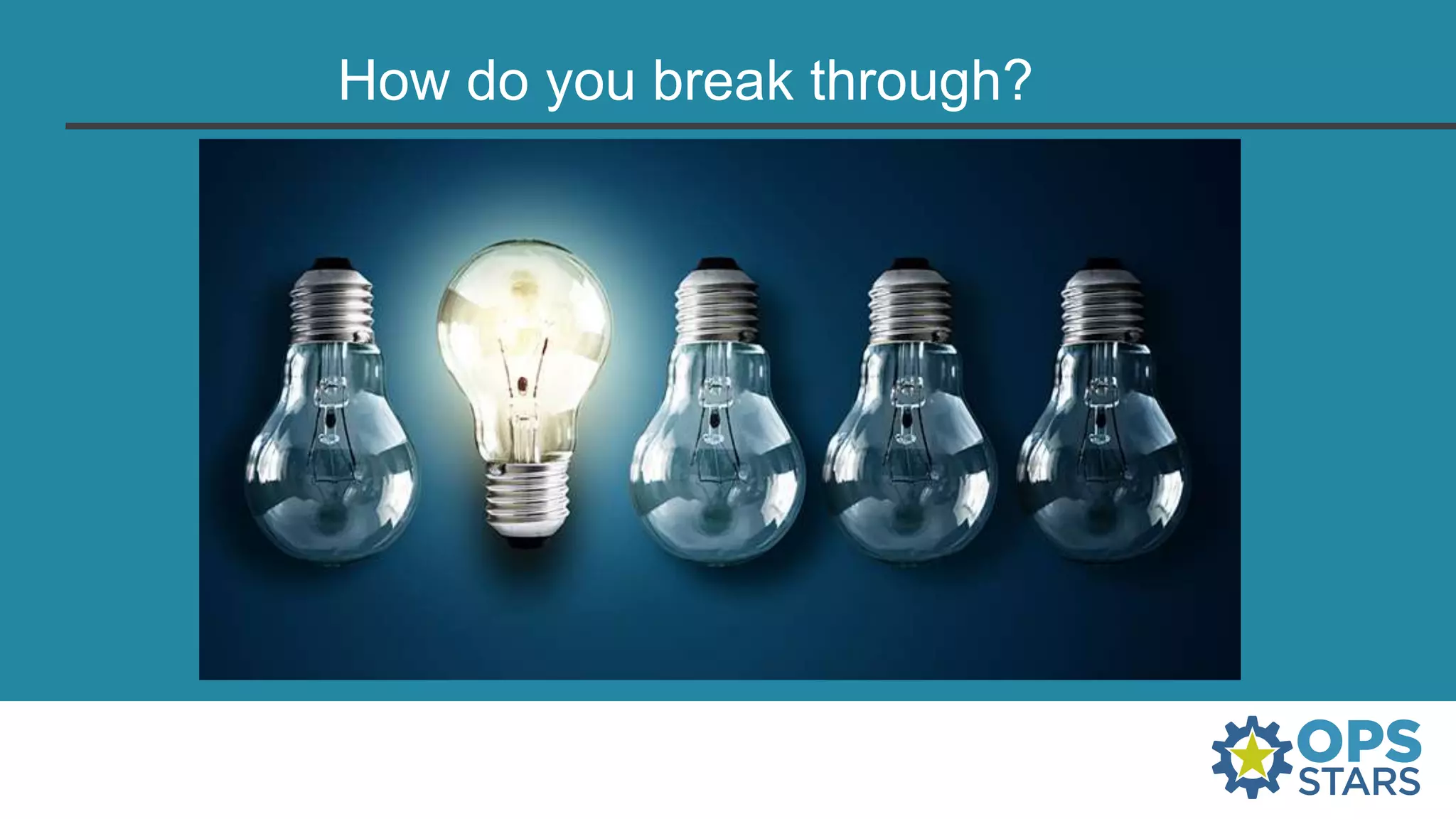
How do you break through?
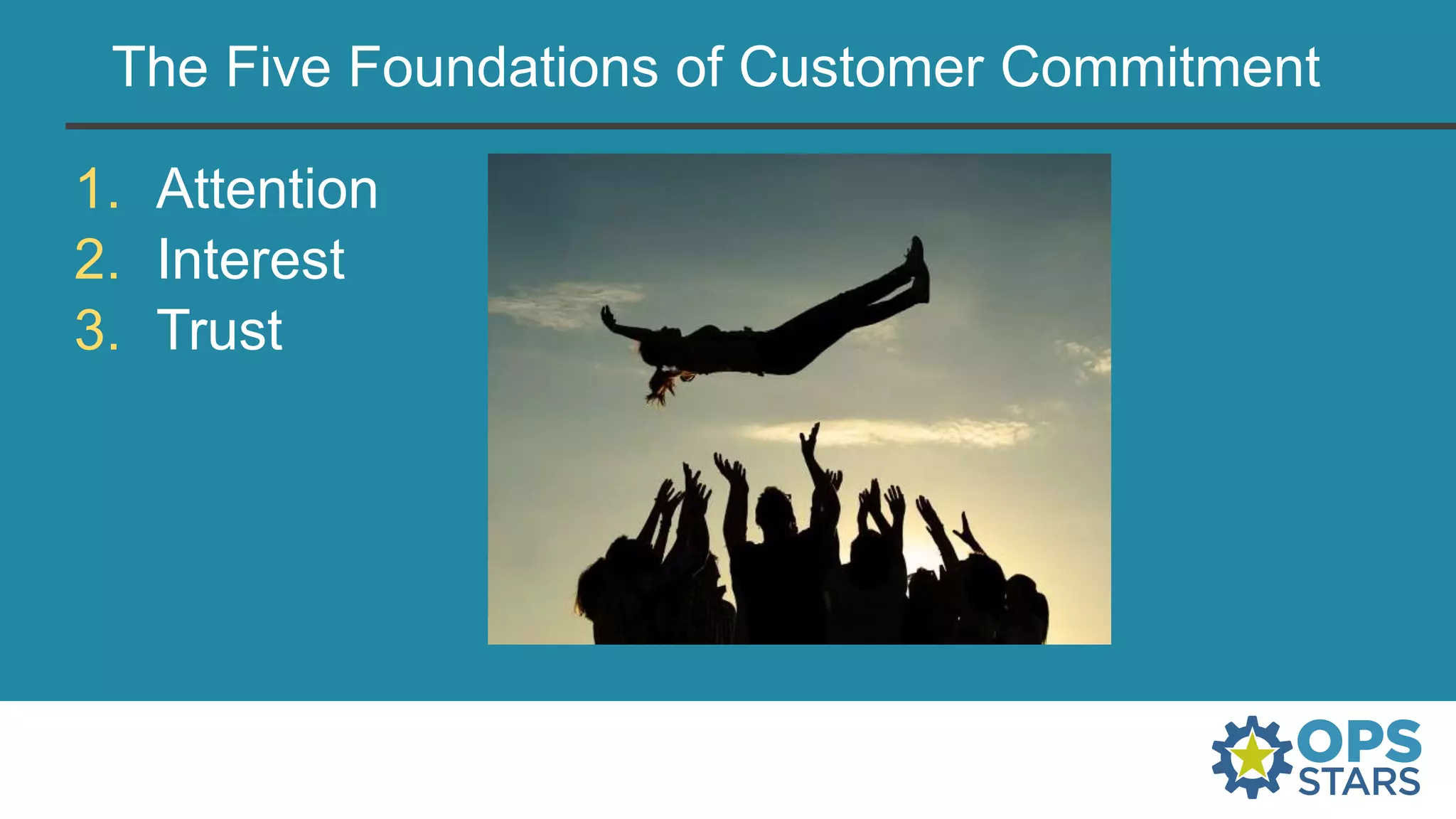
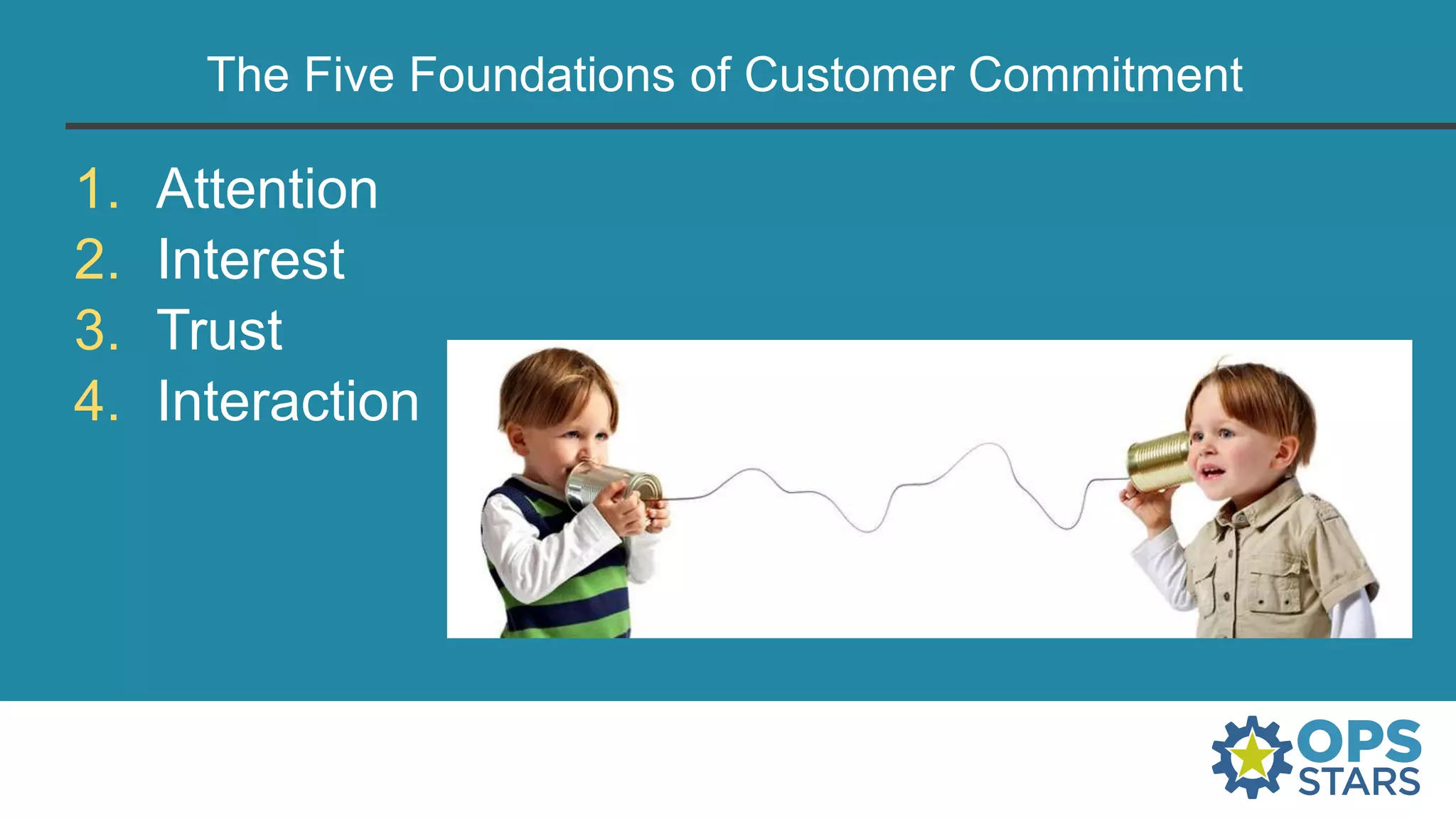
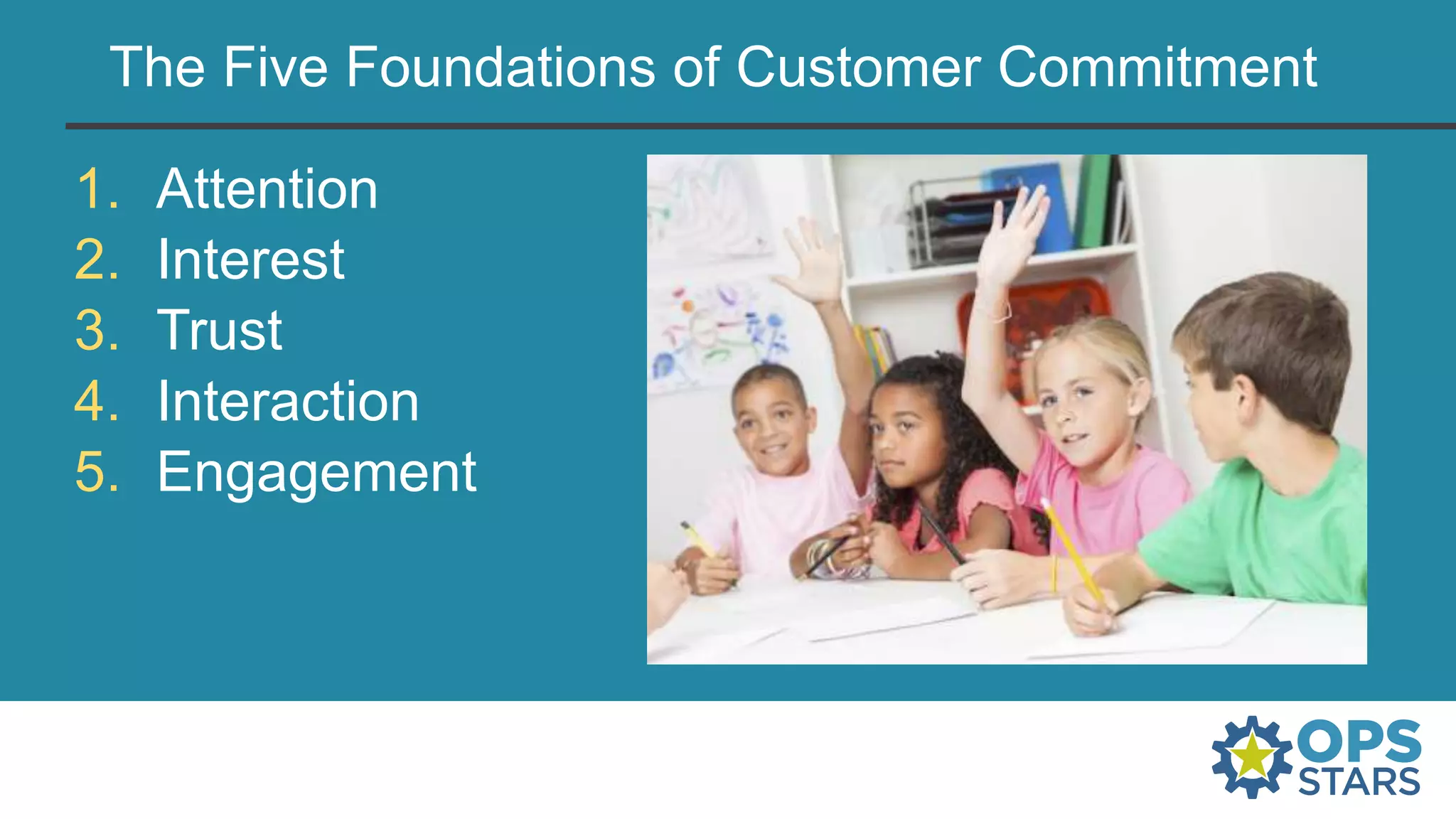
The Five Foundations of Customer Commitment
1. Attention
The Five Foundations of Customer Commitment
1. Attention
2. Interest
The Five Foundations of Customer Commitment
1. Attention
2. Interest
3. Trust
The Five Foundations of Customer Commitment
1. Attention
2. Interest
3. Trust
4. Interaction
The Five Foundations of Customer Commitment
1. Attention
2. Interest
3. Trust
4. Interaction
5. Engagement
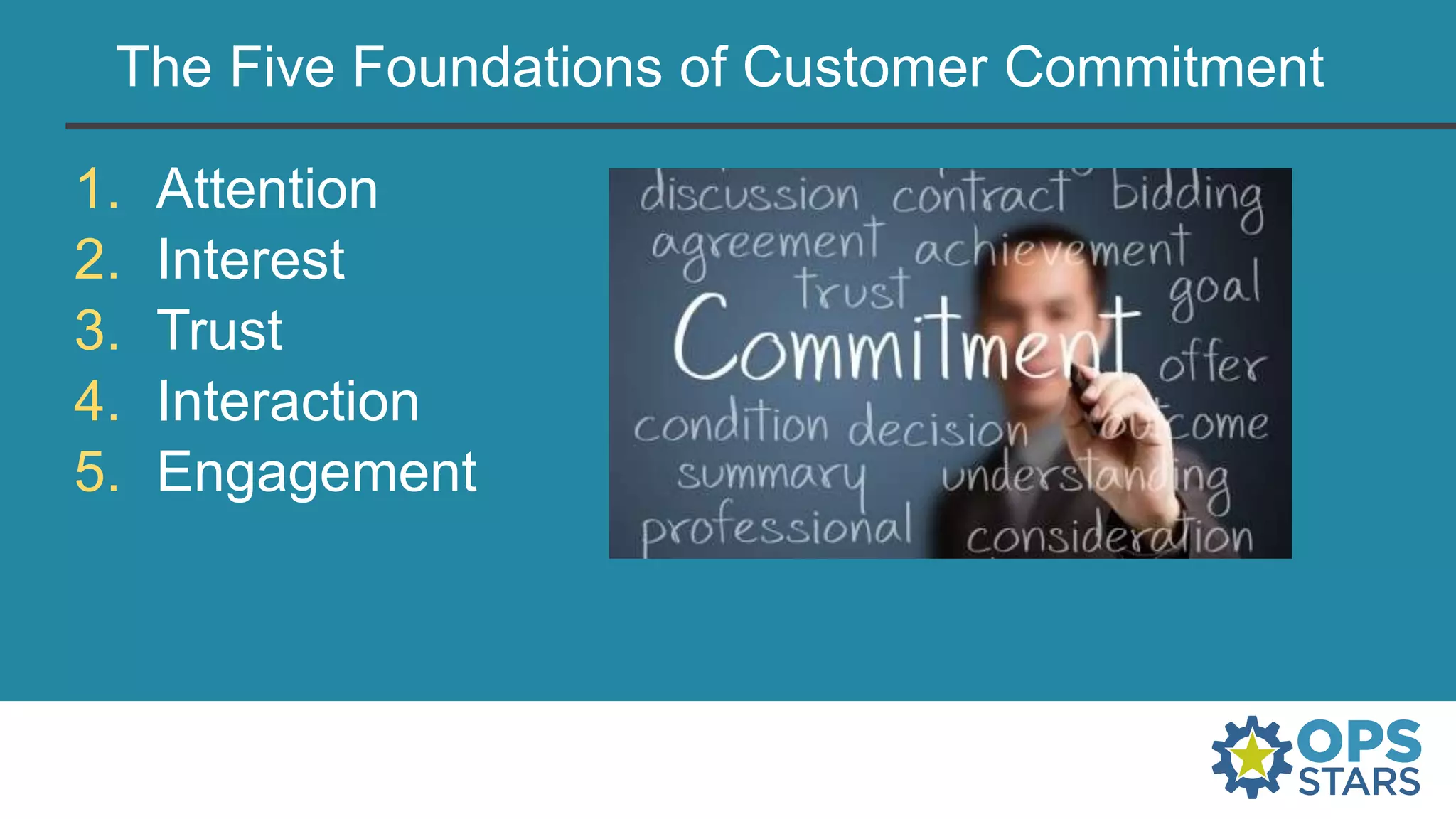
The Five Foundations of Customer Commitment
1. Attention
2. Interest
3. Trust
4. Interaction
5. Engagement
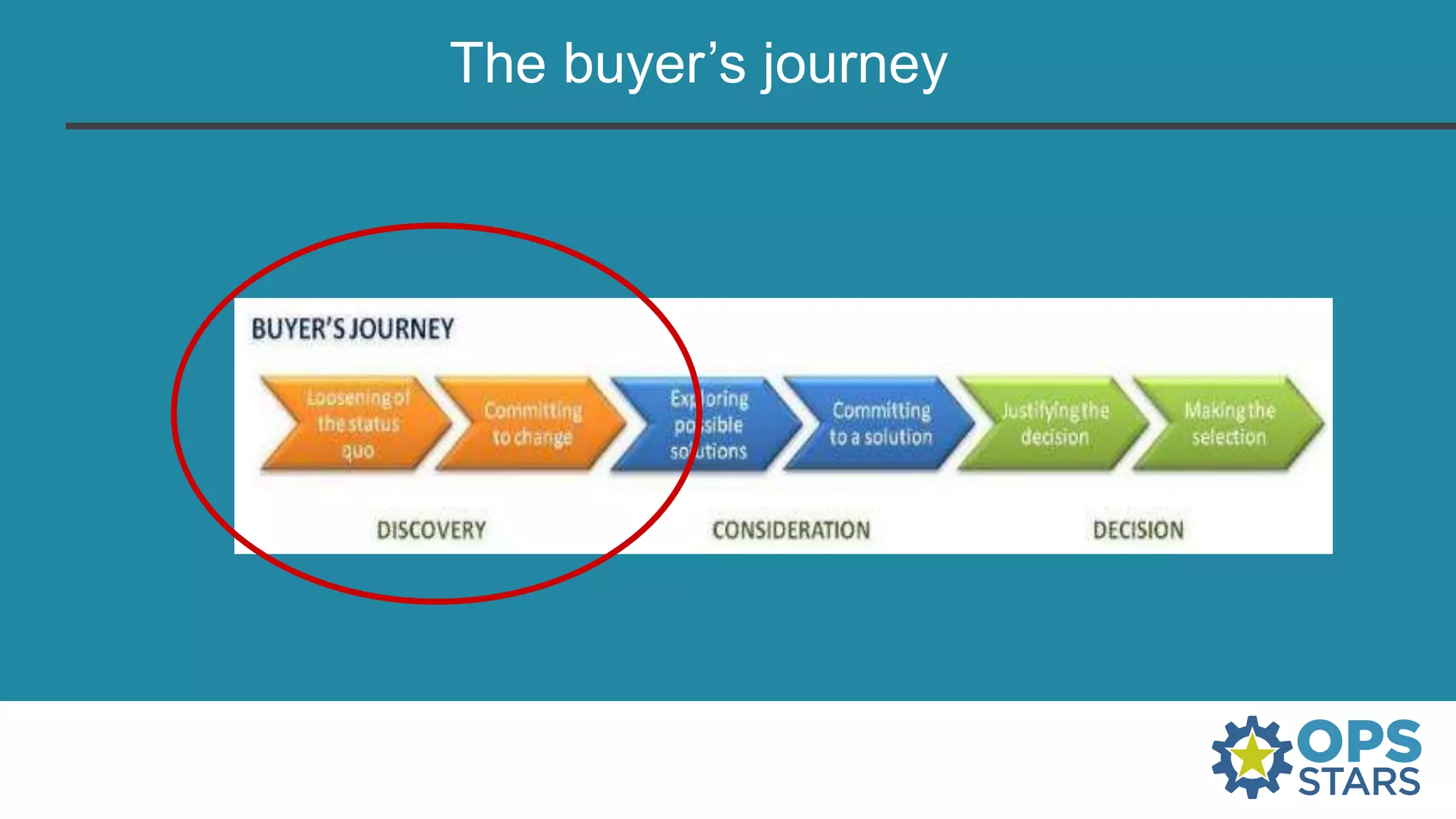
The buyer’s journey
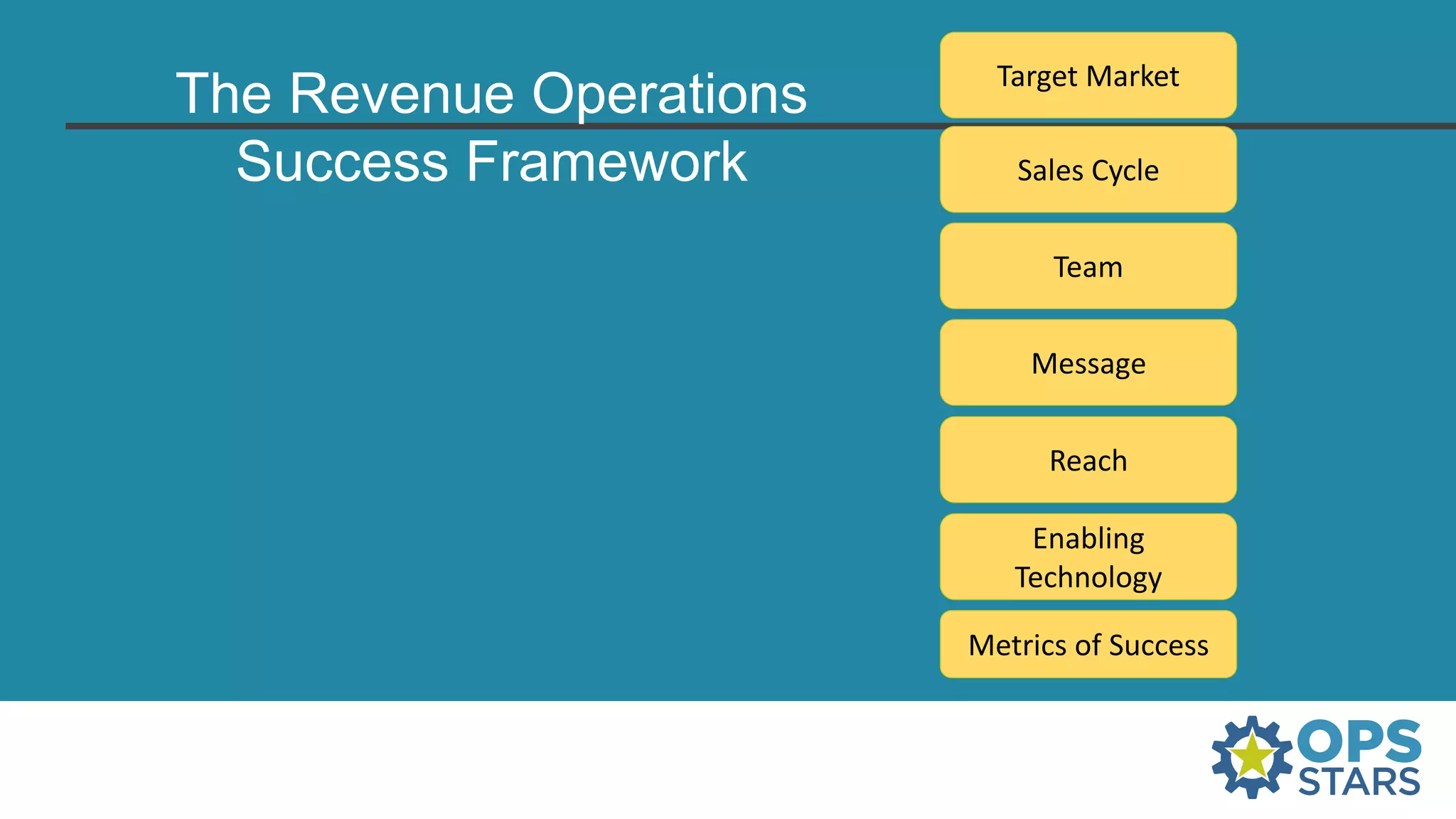
The Revenue Operations
Success Framework
Target Market
Sales Cycle
Team
Message
Reach
Enabling
Technology
Metrics of Success
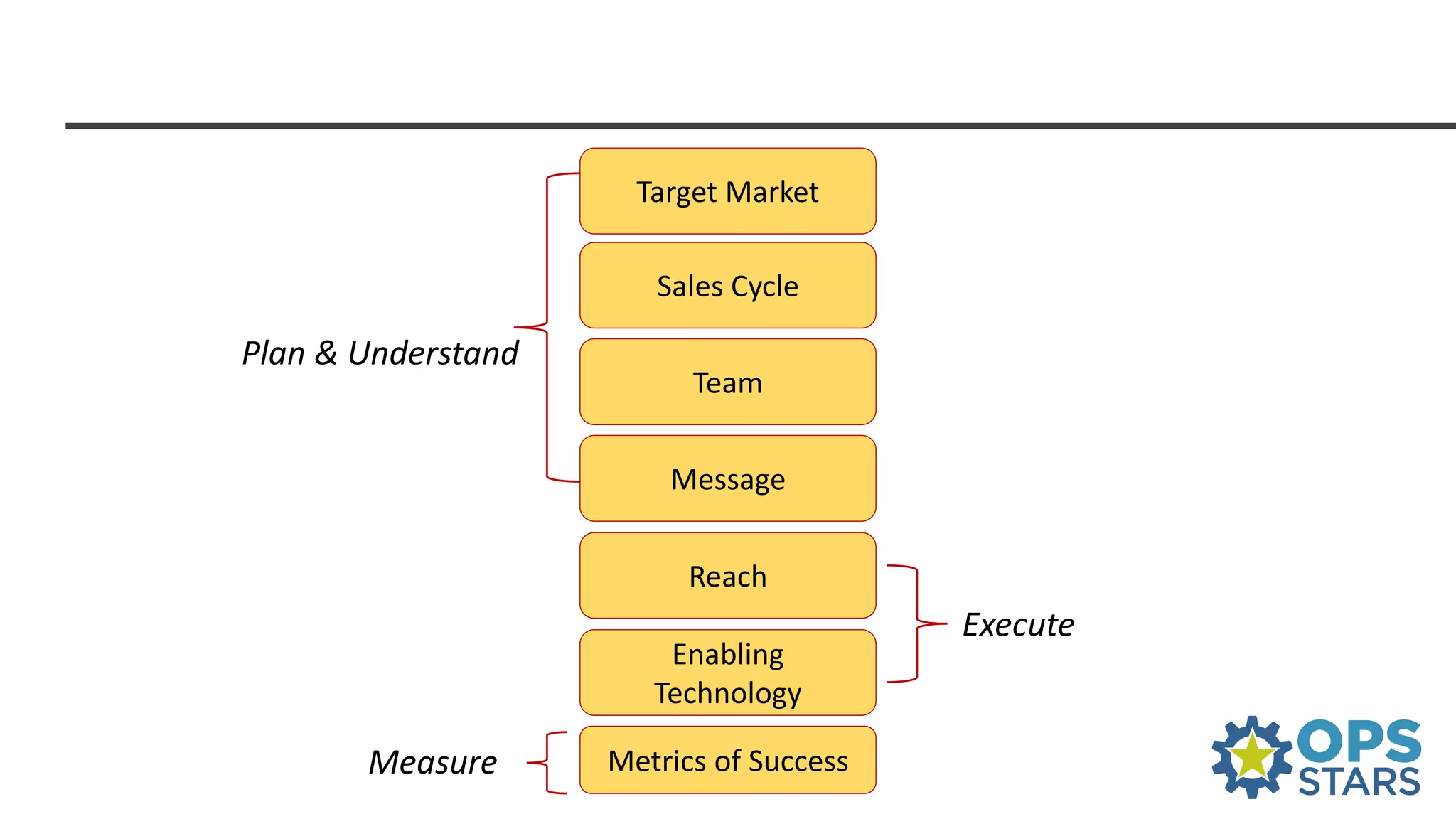
Target Market
Sales Cycle
Team
Message
Reach
Enabling
Technology
Metrics of Success
Plan & Understand
Execute
Measure
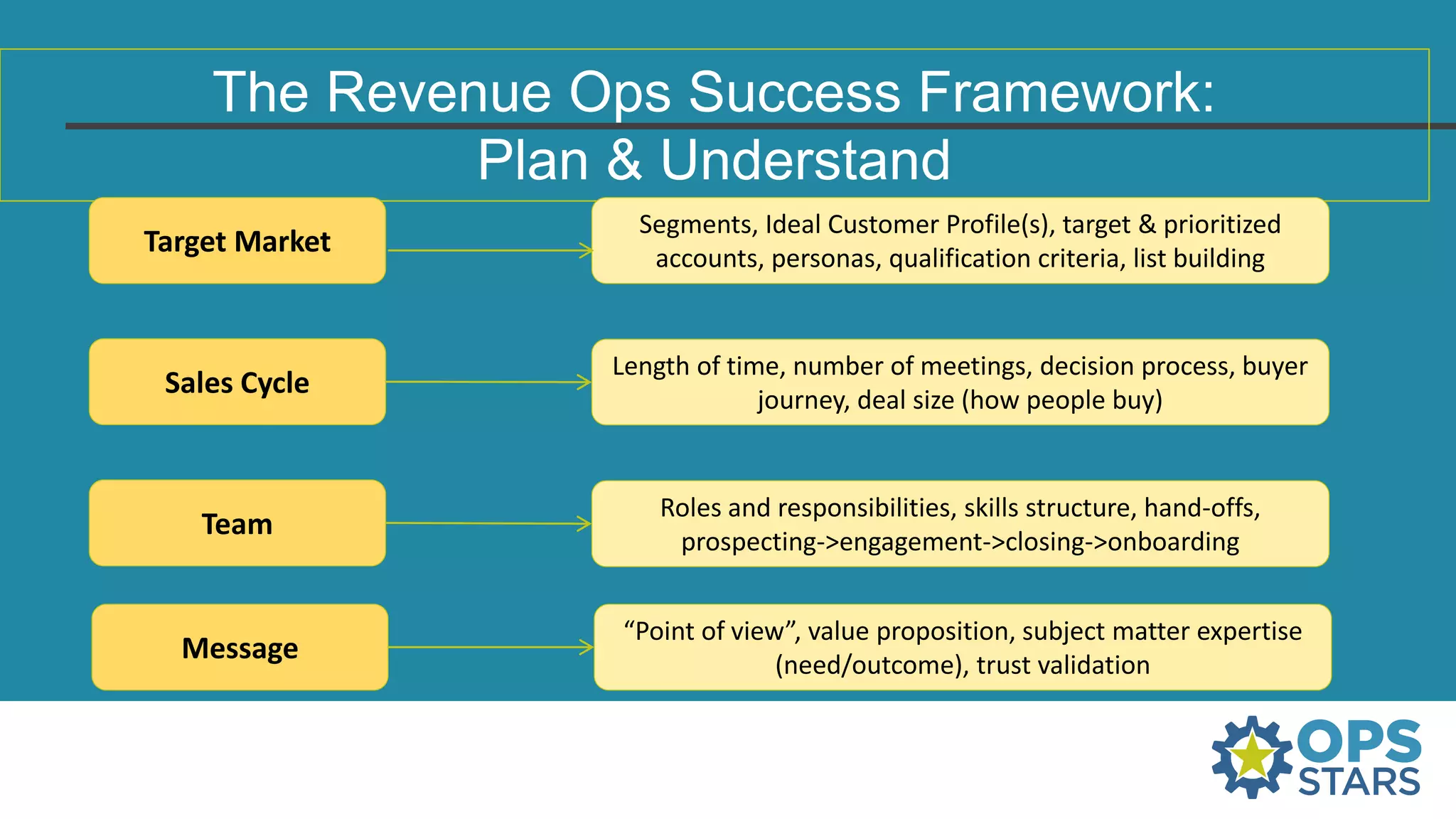
The Revenue Ops Success Framework:
Plan & Understand
Target Market
Sales Cycle
Team
Message
Segments, Ideal Customer Profile(s), target & prioritized
accounts, personas, qualification criteria, list building
Length of time, number of meetings, decision process, buyer
journey, deal size (how people buy)
Roles and responsibilities, skills structure, hand-offs,
prospecting->engagement->closing->onboarding
“Point of view”, value proposition, subject matter expertise
(need/outcome), trust validation
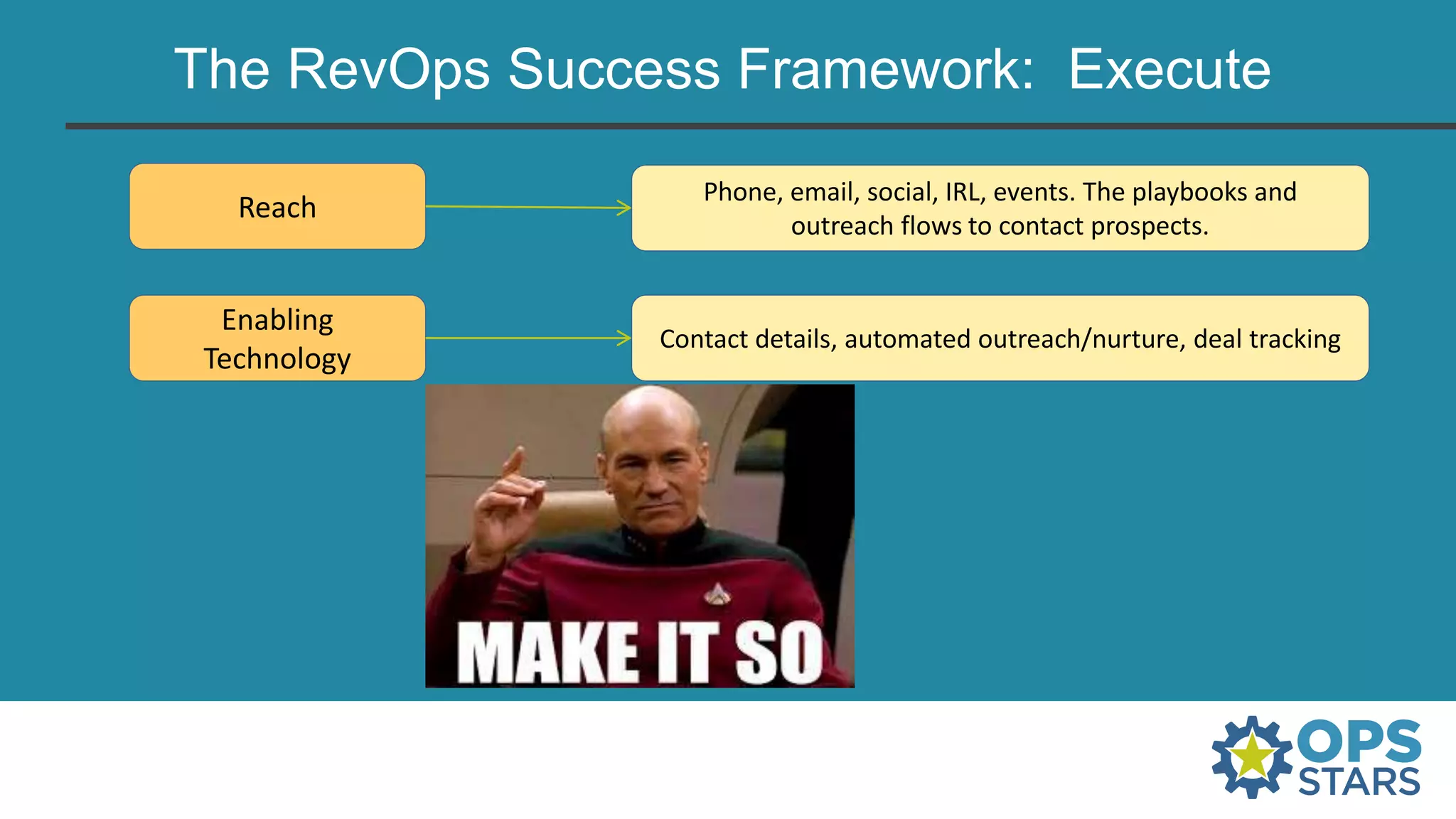
The RevOps Success Framework: Execute
Reach
Enabling
Technology
Phone, email, social, IRL, events. The playbooks and
outreach flows to contact prospects.
Contact details, automated outreach/nurture, deal tracking
The RevOps Success Framework: Measure
Metrics of Success
Contacts created, leads generated, opportunities created,
connect rates, conversion rates, revenue contribution
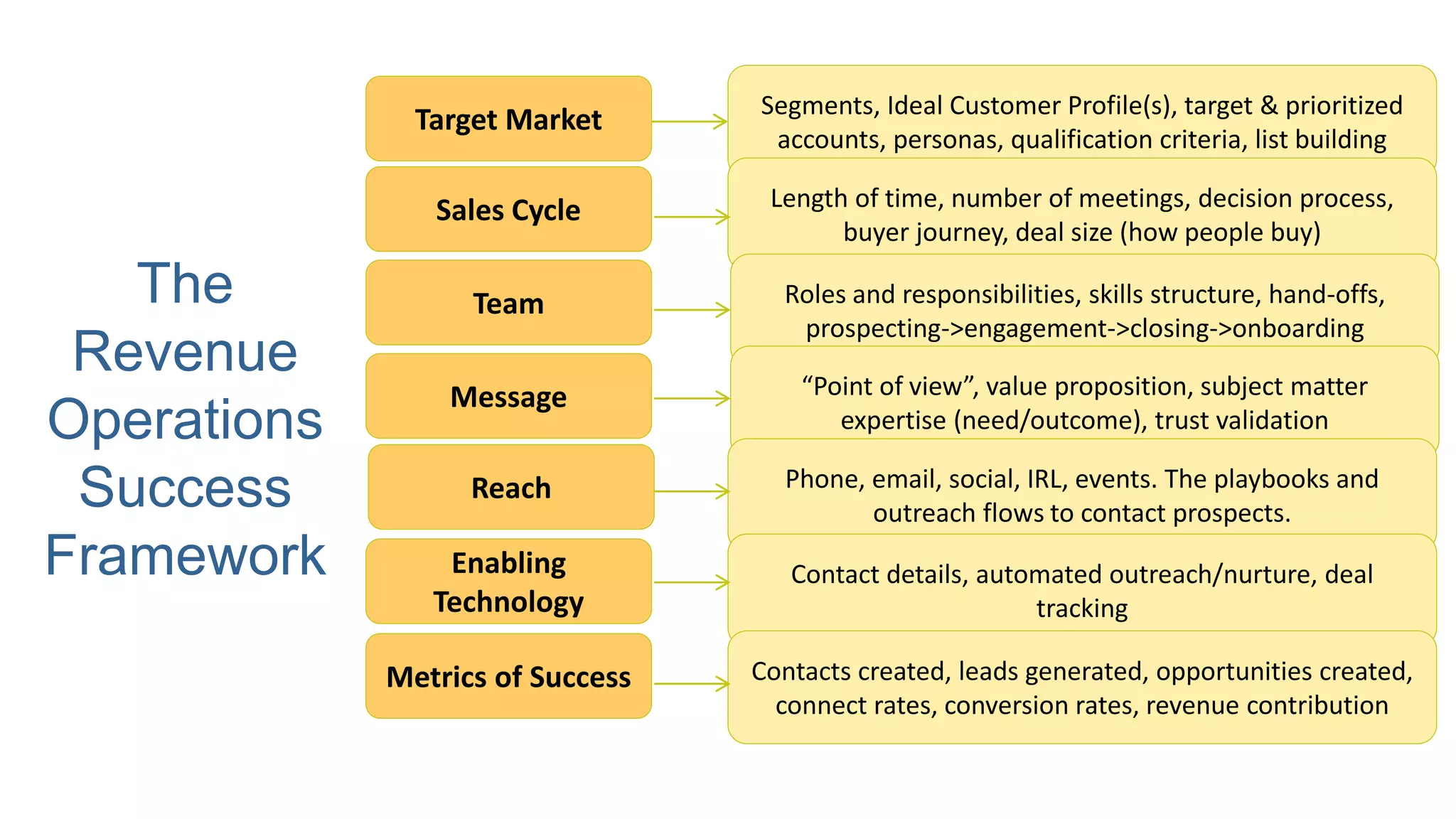
The
Revenue
Operations
Success
Framework
Target Market
Sales Cycle
Team
Message
Reach
Enabling
Technology
Metrics of Success
Segments, Ideal Customer Profile(s), target & prioritized
accounts, personas, qualification criteria, list building
Length of time, number of meetings, decision process,
buyer journey, deal size (how people buy)
Roles and responsibilities, skills structure, hand-offs,
prospecting->engagement->closing->onboarding
“Point of view”, value proposition, subject matter
expertise (need/outcome), trust validation
Phone, email, social, IRL, events. The playbooks and
outreach flows to contact prospects.
Contact details, automated outreach/nurture, deal
tracking
Contacts created, leads generated, opportunities created,
connect rates, conversion rates, revenue contribution
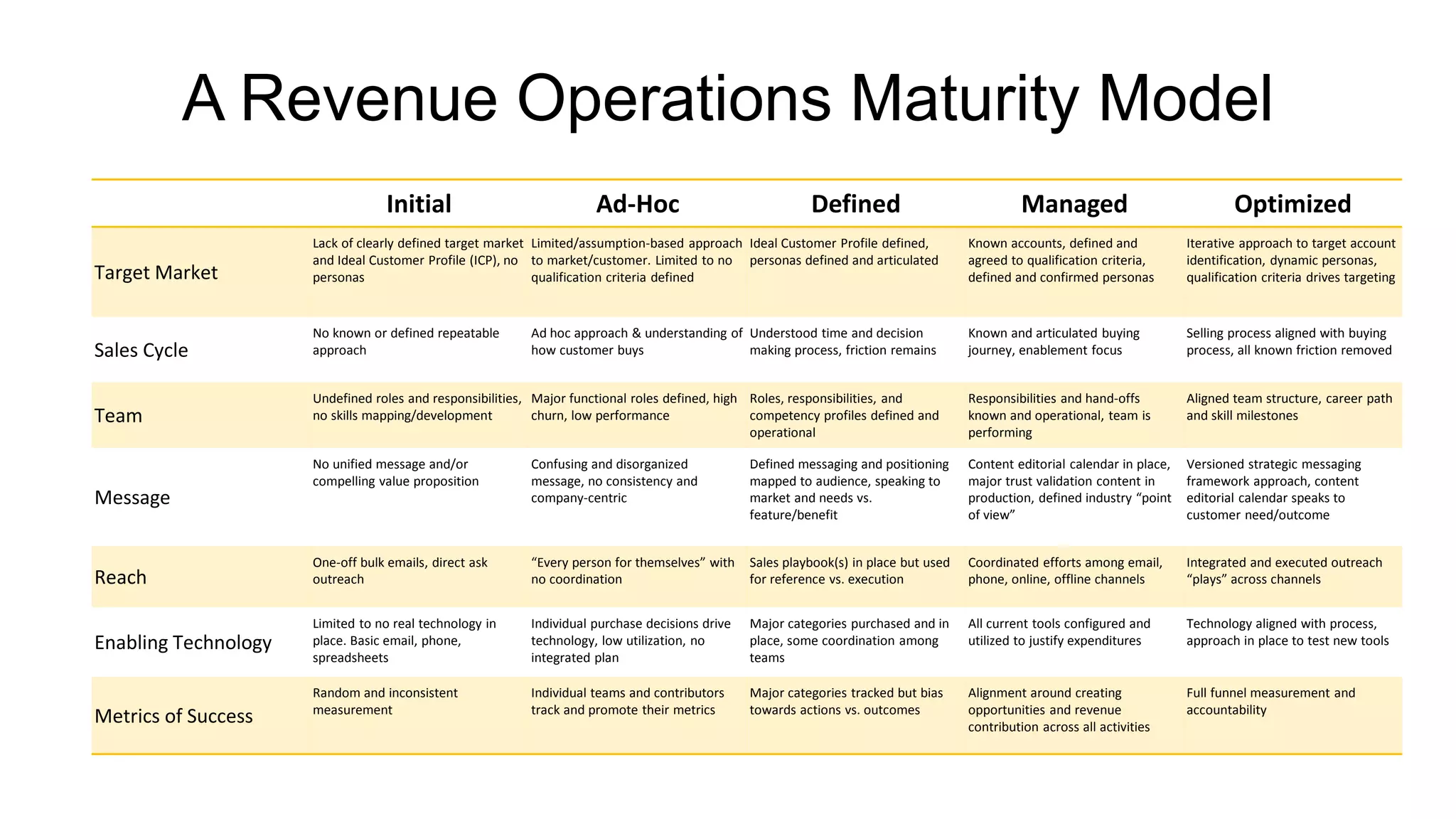
Initial Ad-Hoc Defined Managed Optimized
Target Market
Lack of clearly defined target market
and Ideal Customer Profile (ICP), no
personas
Limited/assumption-based approach
to market/customer. Limited to no
qualification criteria defined
Ideal Customer Profile defined,
personas defined and articulated
Known accounts, defined and
agreed to qualification criteria,
defined and confirmed personas
Iterative approach to target account
identification, dynamic personas,
qualification criteria drives targeting
Sales Cycle
No known or defined repeatable
approach
Ad hoc approach & understanding of
how customer buys
Understood time and decision
making process, friction remains
Known and articulated buying
journey, enablement focus
Selling process aligned with buying
process, all known friction removed
Team
Undefined roles and responsibilities,
no skills mapping/development
Major functional roles defined, high
churn, low performance
Roles, responsibilities, and
competency profiles defined and
operational
Responsibilities and hand-offs
known and operational, team is
performing
Aligned team structure, career path
and skill milestones
Message
No unified message and/or
compelling value proposition
Confusing and disorganized
message, no consistency and
company-centric
Defined messaging and positioning
mapped to audience, speaking to
market and needs vs.
feature/benefit
Content editorial calendar in place,
major trust validation content in
production, defined industry “point
of view”
Versioned strategic messaging
framework approach, content
editorial calendar speaks to
customer need/outcome
Reach
One-off bulk emails, direct ask
outreach
“Every person for themselves” with
no coordination
Sales playbook(s) in place but used
for reference vs. execution
Coordinated efforts among email,
phone, online, offline channels
Integrated and executed outreach
“plays” across channels
Enabling Technology
Limited to no real technology in
place. Basic email, phone,
spreadsheets
Individual purchase decisions drive
technology, low utilization, no
integrated plan
Major categories purchased and in
place, some coordination among
teams
All current tools configured and
utilized to justify expenditures
Technology aligned with process,
approach in place to test new tools
Metrics of Success
Random and inconsistent
measurement
Individual teams and contributors
track and promote their metrics
Major categories tracked but bias
towards actions vs. outcomes
Alignment around creating
opportunities and revenue
contribution across all activities
Full funnel measurement and
accountability
A Revenue Operations Maturity Model
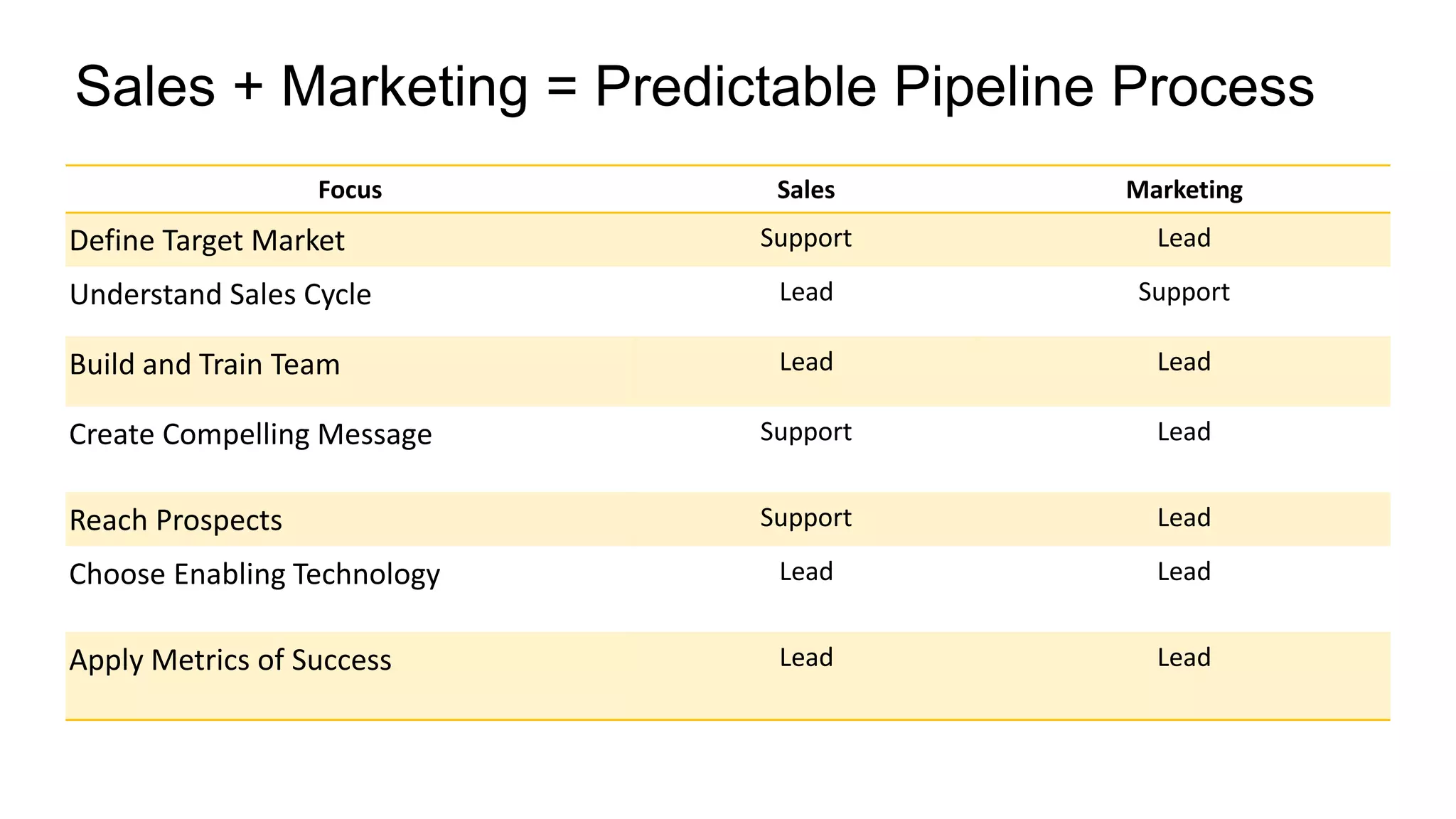
Sales + Marketing = Predictable Pipeline Process
Focus Sales Marketing
Define Target Market Support Lead
Understand Sales Cycle Lead Support
Build and Train Team Lead Lead
Create Compelling Message Support Lead
Reach Prospects Support Lead
Choose Enabling Technology Lead Lead
Apply Metrics of Success Lead Lead
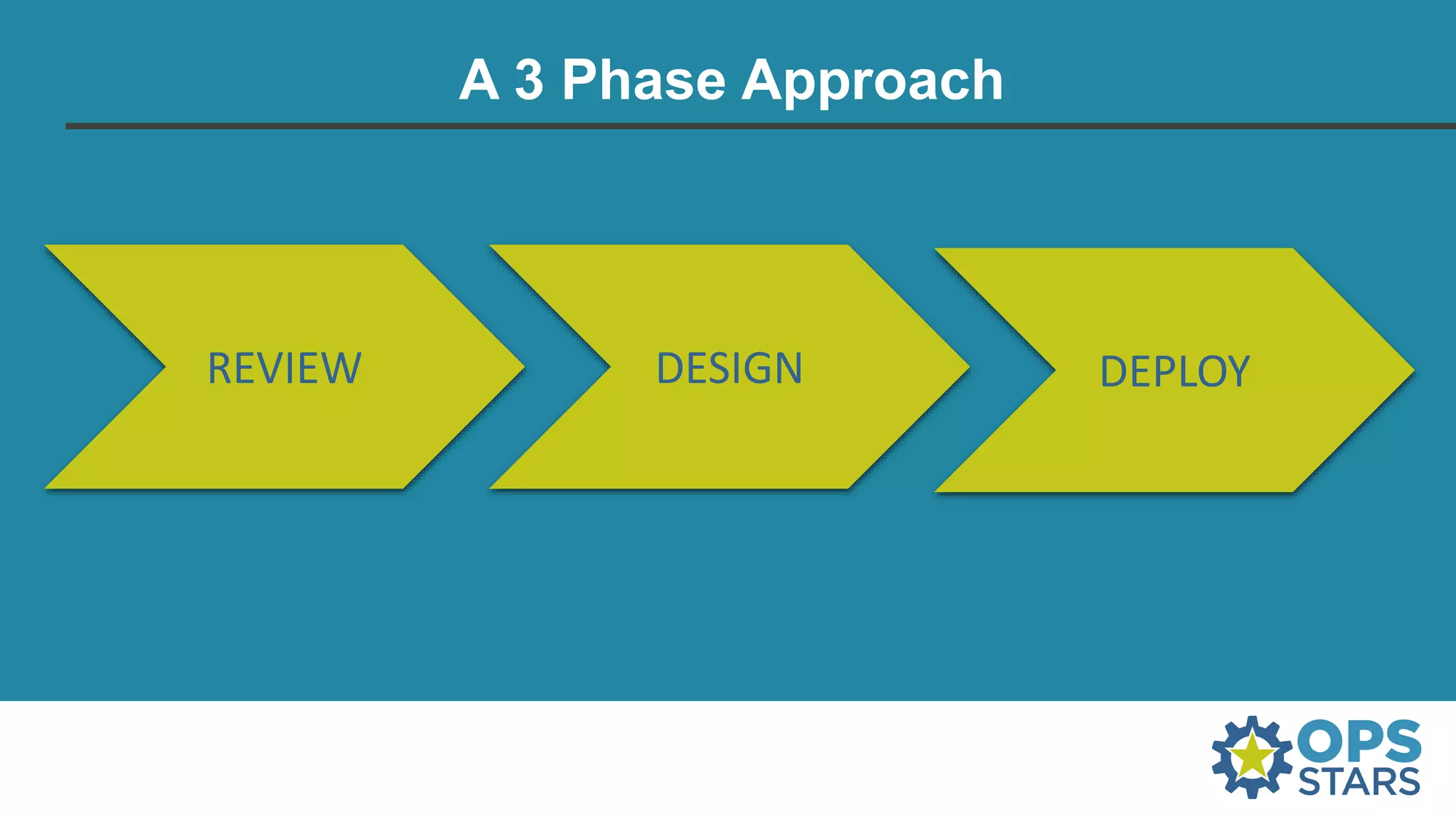
A 3 Phase Approach
REVIEW DESIGN DEPLOY
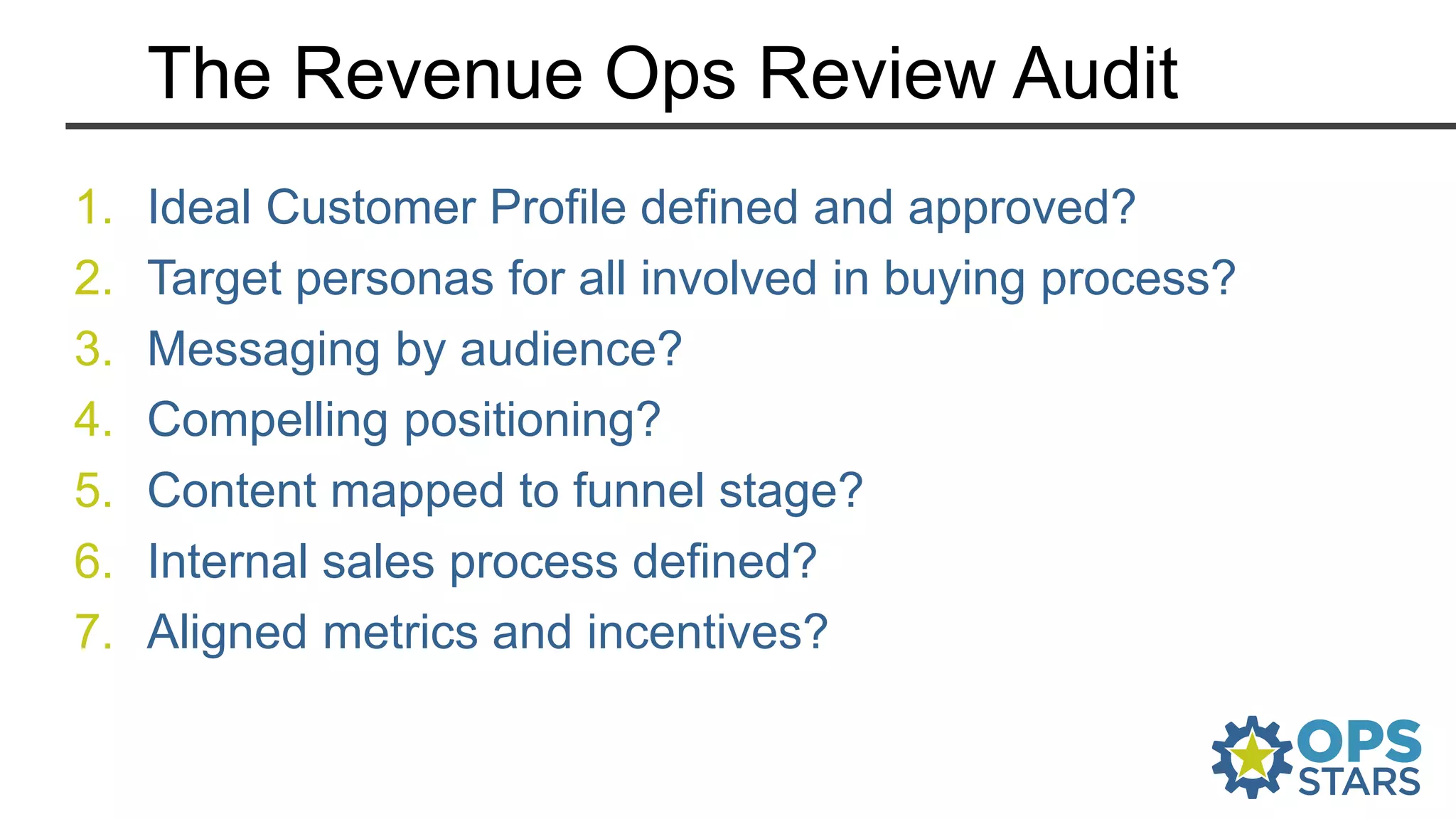
The Revenue Ops Review Audit
1. Ideal Customer Profile defined and approved?
2. Target personas for all involved in buying process?
3. Messaging by audience?
4. Compelling positioning?
5. Content mapped to funnel stage?
6. Internal sales process defined?
7. Aligned metrics and incentives?
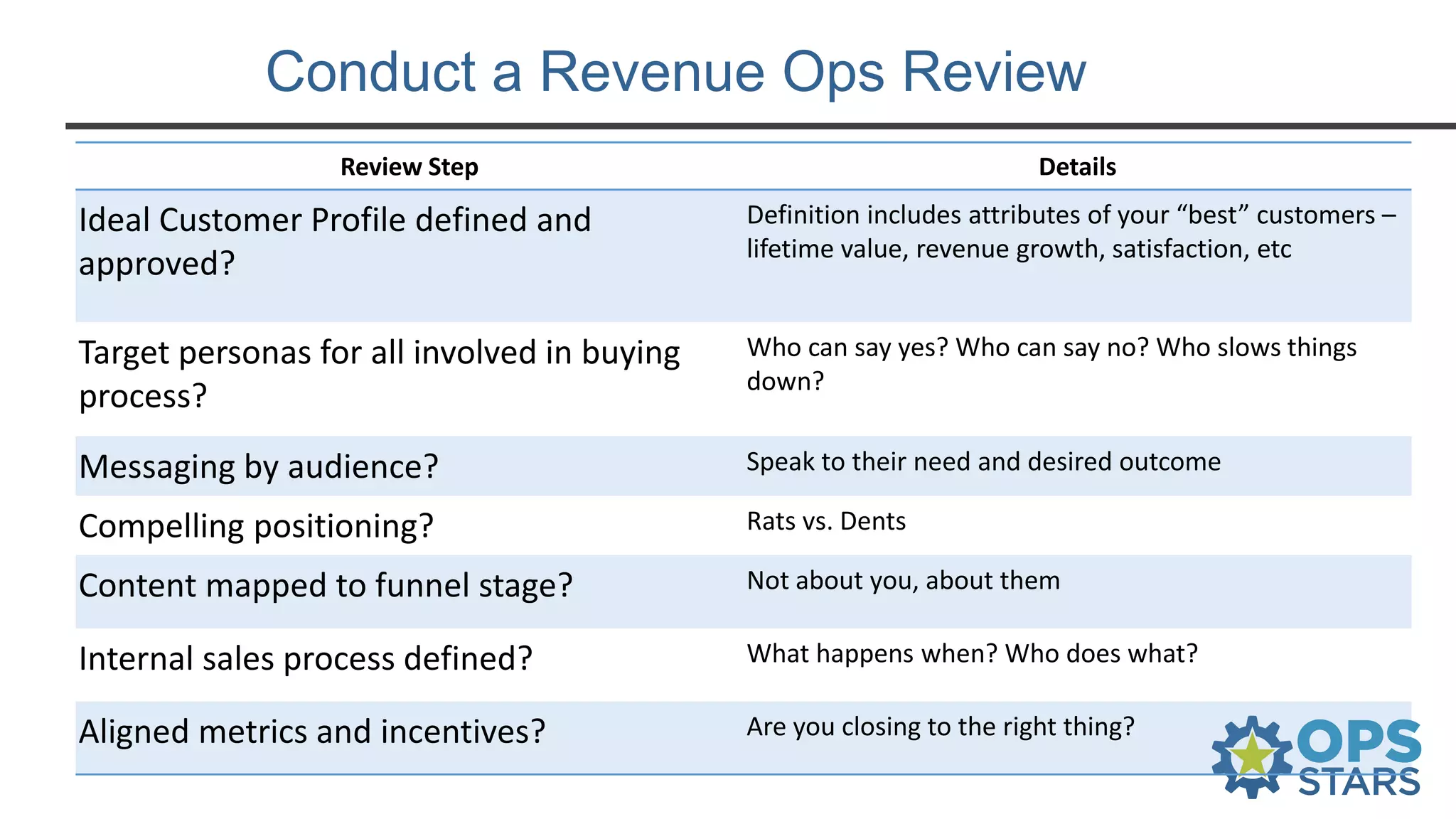
Conduct a Revenue Ops Review
Review Step Details
Ideal Customer Profile defined and
approved?
Definition includes attributes of your “best” customers –
lifetime value, revenue growth, satisfaction, etc
Target personas for all involved in buying
process?
Who can say yes? Who can say no? Who slows things
down?
Messaging by audience? Speak to their need and desired outcome
Compelling positioning? Rats vs. Dents
Content mapped to funnel stage? Not about you, about them
Internal sales process defined? What happens when? Who does what?
Aligned metrics and incentives? Are you closing to the right thing?
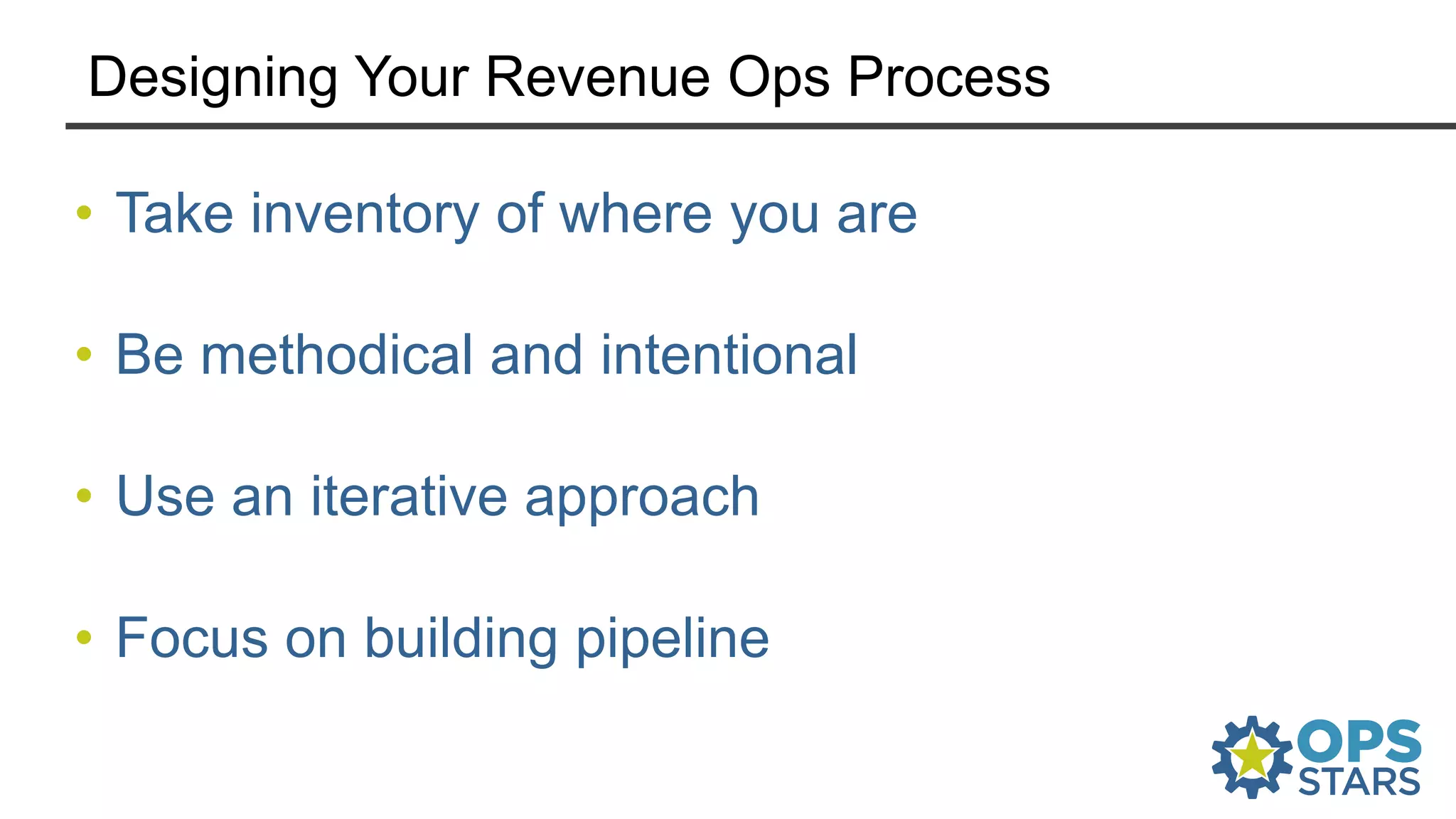
Designing Your Revenue Ops Process
• Take inventory of where you are
• Be methodical and intentional
• Use an iterative approach
• Focus on building pipeline
Design Your Revenue Ops Process
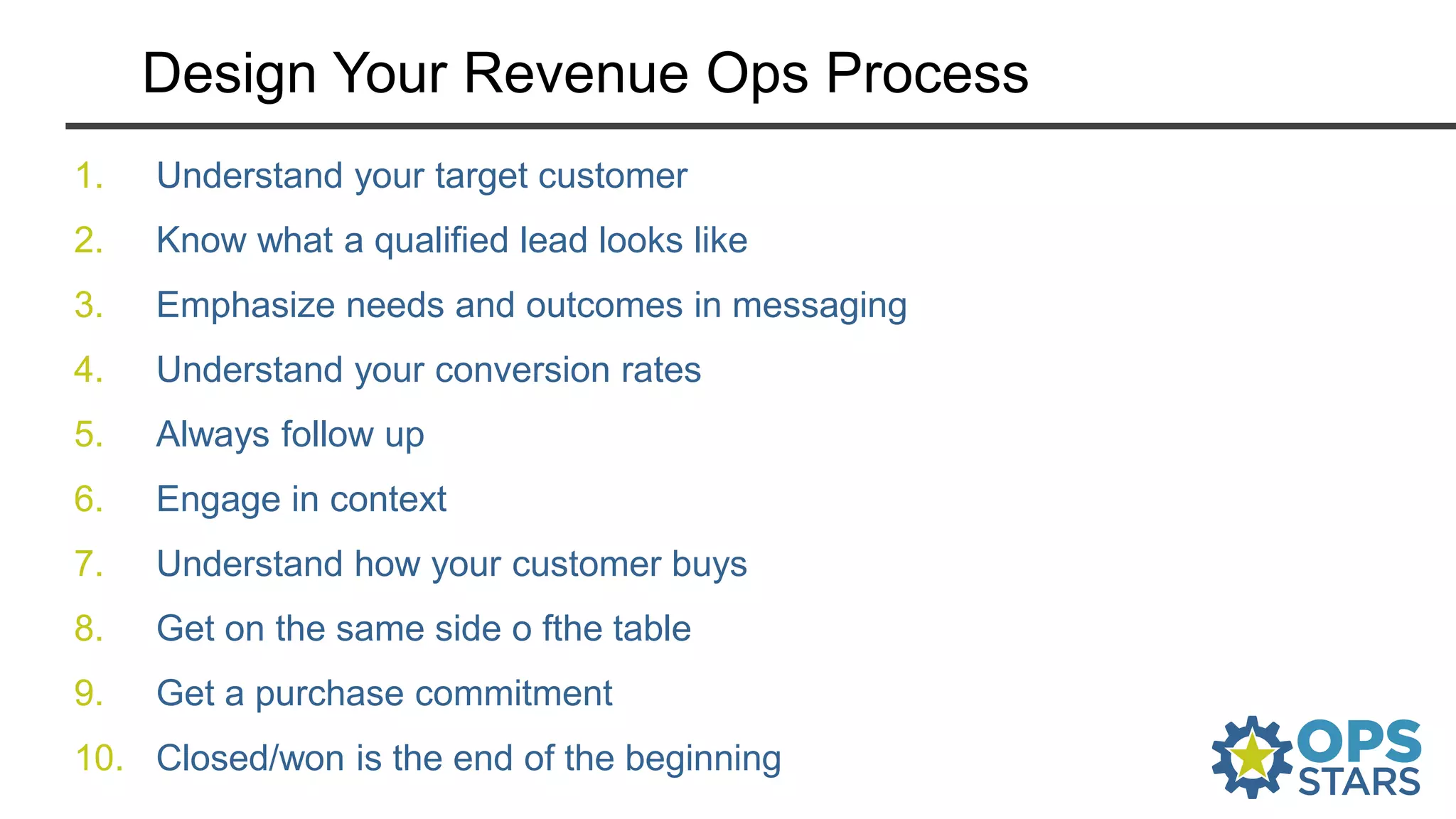
1. Understand your target customer
2. Know what a qualified lead looks like
3. Emphasize needs and outcomes in messaging
4. Understand your conversion rates
5. Always follow up
6. Engage in context
7. Understand how your customer buys
8. Get on the same side o fthe table
9. Get a purchase commitment
10. Closed/won is the end of the beginning
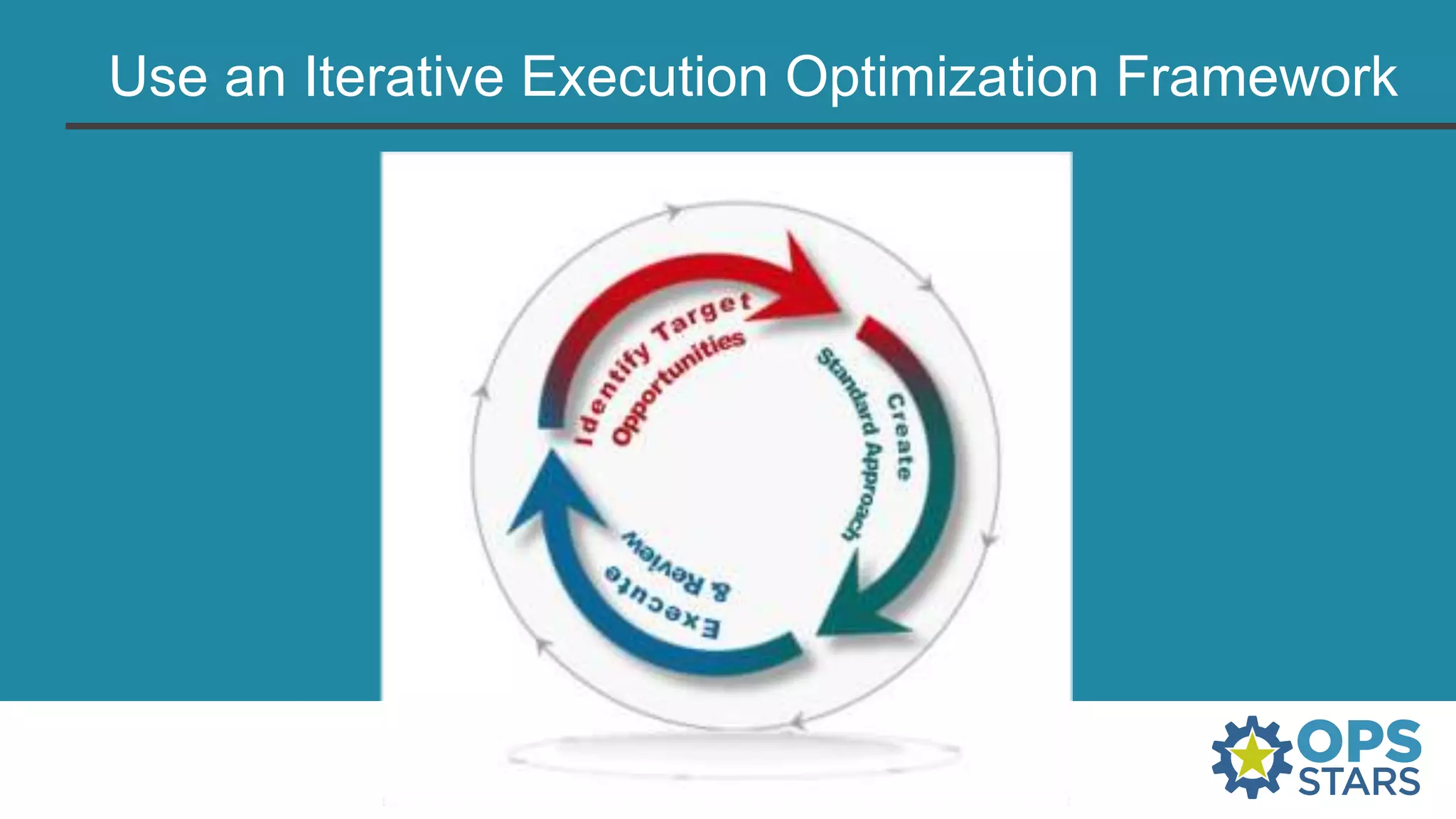
Use an Iterative Execution Optimization Framework
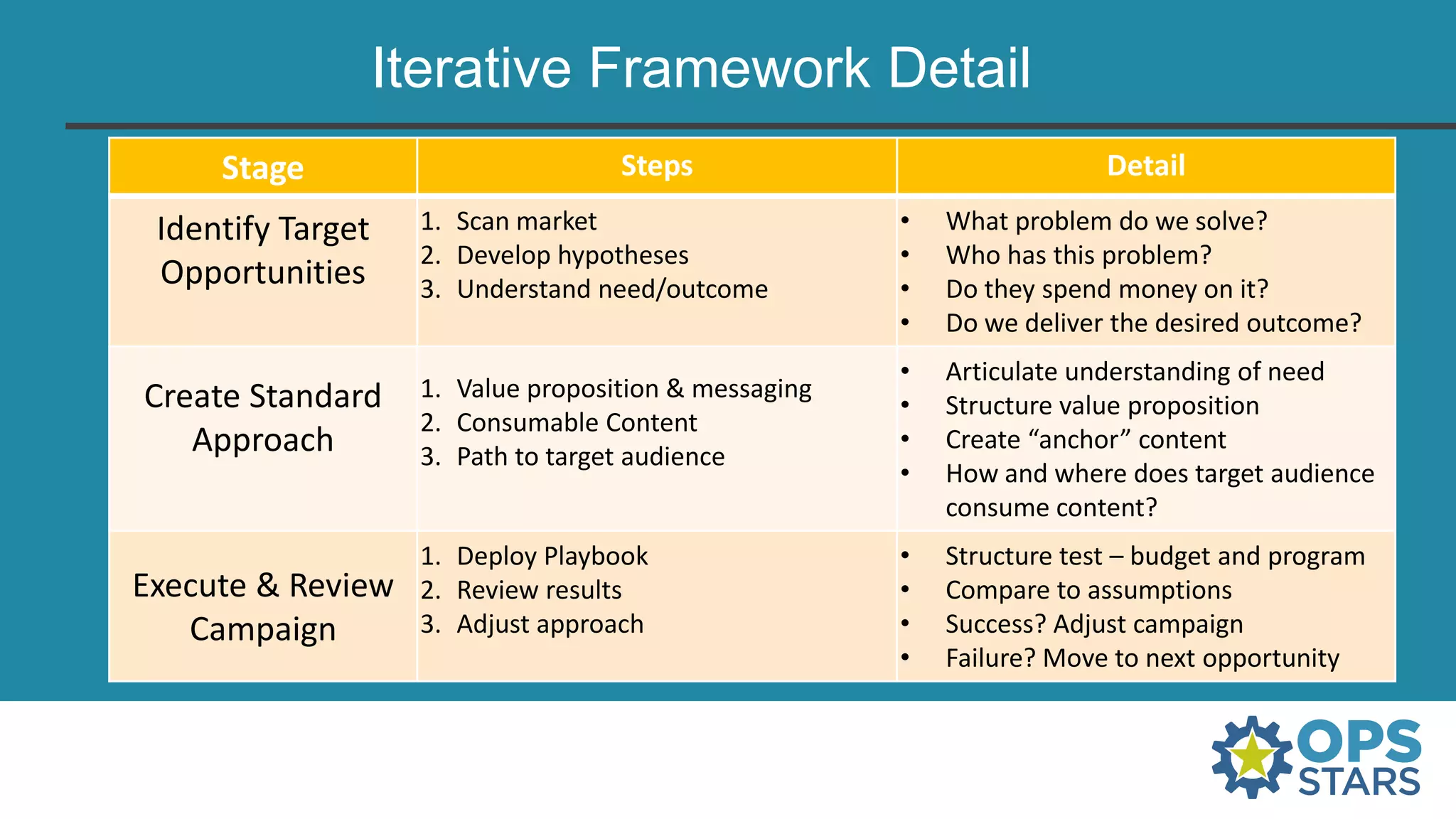
Iterative Framework Detail
Stage Steps Detail
Identify Target
Opportunities
1. Scan market
2. Develop hypotheses
3. Understand need/outcome
• What problem do we solve?
• Who has this problem?
• Do they spend money on it?
• Do we deliver the desired outcome?
Create Standard
Approach
1. Value proposition & messaging
2. Consumable Content
3. Path to target audience
• Articulate understanding of need
• Structure value proposition
• Create “anchor” content
• How and where does target audience
consume content?
Execute & Review
Campaign
1. Deploy Playbook
2. Review results
3. Adjust approach
• Structure test – budget and program
• Compare to assumptions
• Success? Adjust campaign
• Failure? Move to next opportunity
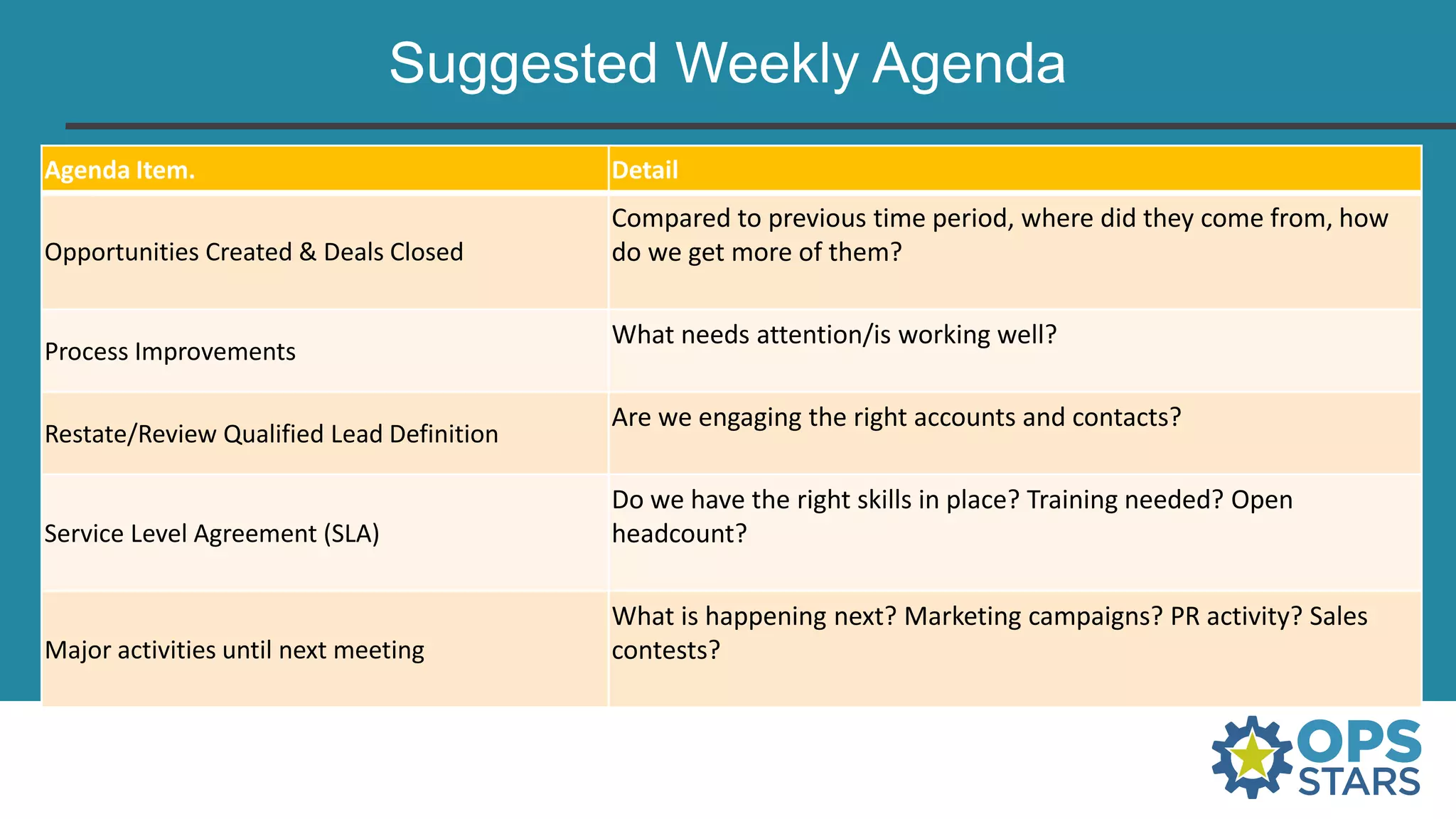
Suggested Weekly Agenda
Agenda Item. Detail
Opportunities Created & Deals Closed
Compared to previous time period, where did they come from, how
do we get more of them?
Process Improvements
What needs attention/is working well?
Restate/Review Qualified Lead Definition
Are we engaging the right accounts and contacts?
Service Level Agreement (SLA)
Do we have the right skills in place? Training needed? Open
headcount?
Major activities until next meeting
What is happening next? Marketing campaigns? PR activity? Sales
contests?
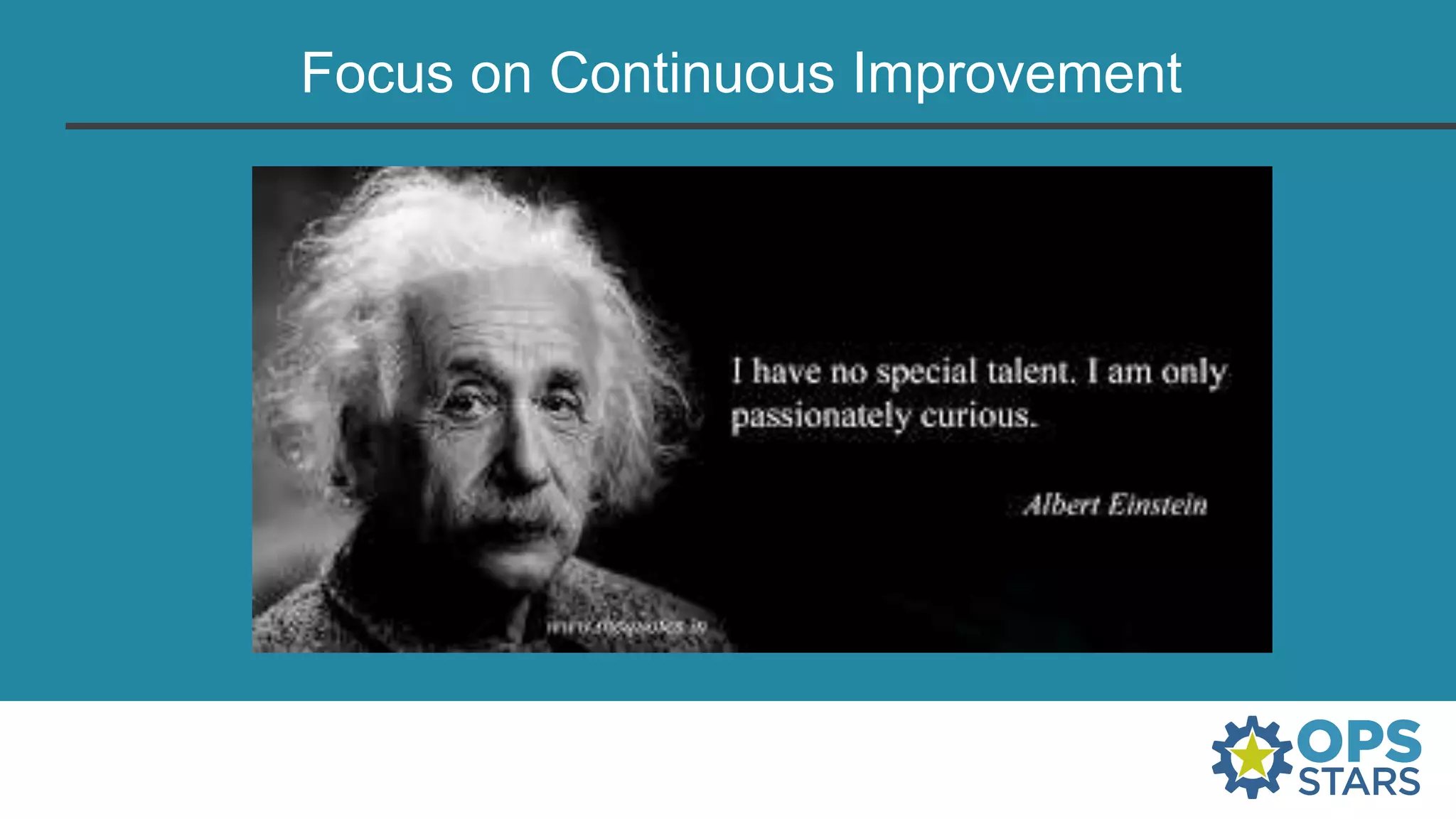
Focus on Continuous Improvement
HOUSEKEEPING
① Copy of this deck
② Freebies!
① Full Funnel Marketing (the book)
② Sales Velocity Calculator
③ KPI Metrics Architecture
④ Matt’s bacon recipe
③ Send me an email (matt@heinzmarketing.com) or bring me a
business card with what you want!
Matt Heinz
President
Heinz Marketing Inc
@heinzmarketing
matt@heinzmarketing.com
Thank you!

Delivering a Predictable Pipeline-A B2B Revenue Ops Success Framework and Maturity Model

  • 1.
    Delivering a PredictablePipeline: A B2B Revenue Ops Success Framework and Maturity Model Matt Heinz President, Heinz Marketing Inc @heinzmarketing
  • 2.
    HOUSEKEEPING ① Copy ofthis deck ② Freebies! ① Full Funnel Marketing (the book) ② Sales Velocity Calculator ③ KPI Metrics Architecture ④ Matt’s bacon recipe ③ Send me an email (matt@heinzmarketing.com) or bring me a business card with what you want!
  • 3.
    Why is sellingso hard today?
  • 4.
    Is it howwe sell? …. how they buy?
  • 5.
    Impact on theentire lifecycle
  • 6.
  • 7.
    Five customer changesimpacting your success
  • 8.
    Your customers are: 1.Busier than ever
  • 10.
    Your customers are: 1.Busier than ever 2. Self-educated
  • 11.
    When do theycall you?
  • 12.
    1. Busier thanever 2. Self-educated 3. Skeptical 4. Distrustful Your customers are:
  • 13.
    Your customers are: 1.Busier than ever 2. Self-educated 3. Skeptical 4. Distrustful 5. Jaded 6. A lot like you!
  • 14.
    So what ISworking today?
  • 15.
    4 Lessons fromThe Challenger Sale
  • 16.
    Let’s not pretendthis is new…
  • 17.
    1. How yousell is more important than what you sell
  • 18.
    2. Challengers teach,tailor & take control
  • 19.
    3. The valueof your insights trumps the quality of your product
  • 20.
    4. Be memorable,not agreeable
  • 21.
    How do youbreak through?
  • 22.
    The Five Foundationsof Customer Commitment
  • 23.
    The Five Foundationsof Customer Commitment 1. Attention
  • 24.
    The Five Foundationsof Customer Commitment 1. Attention 2. Interest
  • 25.
    The Five Foundationsof Customer Commitment 1. Attention 2. Interest 3. Trust
  • 26.
    The Five Foundationsof Customer Commitment 1. Attention 2. Interest 3. Trust 4. Interaction
  • 27.
    The Five Foundationsof Customer Commitment 1. Attention 2. Interest 3. Trust 4. Interaction 5. Engagement
  • 28.
    The Five Foundationsof Customer Commitment 1. Attention 2. Interest 3. Trust 4. Interaction 5. Engagement
  • 29.
  • 30.
    The Revenue Operations SuccessFramework Target Market Sales Cycle Team Message Reach Enabling Technology Metrics of Success
  • 31.
  • 32.
    The Revenue OpsSuccess Framework: Plan & Understand Target Market Sales Cycle Team Message Segments, Ideal Customer Profile(s), target & prioritized accounts, personas, qualification criteria, list building Length of time, number of meetings, decision process, buyer journey, deal size (how people buy) Roles and responsibilities, skills structure, hand-offs, prospecting->engagement->closing->onboarding “Point of view”, value proposition, subject matter expertise (need/outcome), trust validation
  • 33.
    The RevOps SuccessFramework: Execute Reach Enabling Technology Phone, email, social, IRL, events. The playbooks and outreach flows to contact prospects. Contact details, automated outreach/nurture, deal tracking
  • 34.
    The RevOps SuccessFramework: Measure Metrics of Success Contacts created, leads generated, opportunities created, connect rates, conversion rates, revenue contribution
  • 35.
    The Revenue Operations Success Framework Target Market Sales Cycle Team Message Reach Enabling Technology Metricsof Success Segments, Ideal Customer Profile(s), target & prioritized accounts, personas, qualification criteria, list building Length of time, number of meetings, decision process, buyer journey, deal size (how people buy) Roles and responsibilities, skills structure, hand-offs, prospecting->engagement->closing->onboarding “Point of view”, value proposition, subject matter expertise (need/outcome), trust validation Phone, email, social, IRL, events. The playbooks and outreach flows to contact prospects. Contact details, automated outreach/nurture, deal tracking Contacts created, leads generated, opportunities created, connect rates, conversion rates, revenue contribution
  • 36.
    Initial Ad-Hoc DefinedManaged Optimized Target Market Lack of clearly defined target market and Ideal Customer Profile (ICP), no personas Limited/assumption-based approach to market/customer. Limited to no qualification criteria defined Ideal Customer Profile defined, personas defined and articulated Known accounts, defined and agreed to qualification criteria, defined and confirmed personas Iterative approach to target account identification, dynamic personas, qualification criteria drives targeting Sales Cycle No known or defined repeatable approach Ad hoc approach & understanding of how customer buys Understood time and decision making process, friction remains Known and articulated buying journey, enablement focus Selling process aligned with buying process, all known friction removed Team Undefined roles and responsibilities, no skills mapping/development Major functional roles defined, high churn, low performance Roles, responsibilities, and competency profiles defined and operational Responsibilities and hand-offs known and operational, team is performing Aligned team structure, career path and skill milestones Message No unified message and/or compelling value proposition Confusing and disorganized message, no consistency and company-centric Defined messaging and positioning mapped to audience, speaking to market and needs vs. feature/benefit Content editorial calendar in place, major trust validation content in production, defined industry “point of view” Versioned strategic messaging framework approach, content editorial calendar speaks to customer need/outcome Reach One-off bulk emails, direct ask outreach “Every person for themselves” with no coordination Sales playbook(s) in place but used for reference vs. execution Coordinated efforts among email, phone, online, offline channels Integrated and executed outreach “plays” across channels Enabling Technology Limited to no real technology in place. Basic email, phone, spreadsheets Individual purchase decisions drive technology, low utilization, no integrated plan Major categories purchased and in place, some coordination among teams All current tools configured and utilized to justify expenditures Technology aligned with process, approach in place to test new tools Metrics of Success Random and inconsistent measurement Individual teams and contributors track and promote their metrics Major categories tracked but bias towards actions vs. outcomes Alignment around creating opportunities and revenue contribution across all activities Full funnel measurement and accountability A Revenue Operations Maturity Model
  • 37.
    Sales + Marketing= Predictable Pipeline Process Focus Sales Marketing Define Target Market Support Lead Understand Sales Cycle Lead Support Build and Train Team Lead Lead Create Compelling Message Support Lead Reach Prospects Support Lead Choose Enabling Technology Lead Lead Apply Metrics of Success Lead Lead
  • 38.
    A 3 PhaseApproach REVIEW DESIGN DEPLOY
  • 39.
    The Revenue OpsReview Audit 1. Ideal Customer Profile defined and approved? 2. Target personas for all involved in buying process? 3. Messaging by audience? 4. Compelling positioning? 5. Content mapped to funnel stage? 6. Internal sales process defined? 7. Aligned metrics and incentives?
  • 40.
    Conduct a RevenueOps Review Review Step Details Ideal Customer Profile defined and approved? Definition includes attributes of your “best” customers – lifetime value, revenue growth, satisfaction, etc Target personas for all involved in buying process? Who can say yes? Who can say no? Who slows things down? Messaging by audience? Speak to their need and desired outcome Compelling positioning? Rats vs. Dents Content mapped to funnel stage? Not about you, about them Internal sales process defined? What happens when? Who does what? Aligned metrics and incentives? Are you closing to the right thing?
  • 41.
    Designing Your RevenueOps Process • Take inventory of where you are • Be methodical and intentional • Use an iterative approach • Focus on building pipeline
  • 42.
    Design Your RevenueOps Process 1. Understand your target customer 2. Know what a qualified lead looks like 3. Emphasize needs and outcomes in messaging 4. Understand your conversion rates 5. Always follow up 6. Engage in context 7. Understand how your customer buys 8. Get on the same side o fthe table 9. Get a purchase commitment 10. Closed/won is the end of the beginning
  • 43.
    Use an IterativeExecution Optimization Framework
  • 44.
    Iterative Framework Detail StageSteps Detail Identify Target Opportunities 1. Scan market 2. Develop hypotheses 3. Understand need/outcome • What problem do we solve? • Who has this problem? • Do they spend money on it? • Do we deliver the desired outcome? Create Standard Approach 1. Value proposition & messaging 2. Consumable Content 3. Path to target audience • Articulate understanding of need • Structure value proposition • Create “anchor” content • How and where does target audience consume content? Execute & Review Campaign 1. Deploy Playbook 2. Review results 3. Adjust approach • Structure test – budget and program • Compare to assumptions • Success? Adjust campaign • Failure? Move to next opportunity
  • 45.
    Suggested Weekly Agenda AgendaItem. Detail Opportunities Created & Deals Closed Compared to previous time period, where did they come from, how do we get more of them? Process Improvements What needs attention/is working well? Restate/Review Qualified Lead Definition Are we engaging the right accounts and contacts? Service Level Agreement (SLA) Do we have the right skills in place? Training needed? Open headcount? Major activities until next meeting What is happening next? Marketing campaigns? PR activity? Sales contests?
  • 46.
  • 47.
    HOUSEKEEPING ① Copy ofthis deck ② Freebies! ① Full Funnel Marketing (the book) ② Sales Velocity Calculator ③ KPI Metrics Architecture ④ Matt’s bacon recipe ③ Send me an email (matt@heinzmarketing.com) or bring me a business card with what you want!
  • 48.
    Matt Heinz President Heinz MarketingInc @heinzmarketing matt@heinzmarketing.com Thank you!