The document discusses the Behvard Underground Dam project in Iran. It summarizes that:
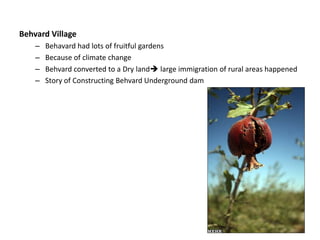
1) Behvard village faced water shortages due to climate change and converted to a dry land, causing mass immigration.
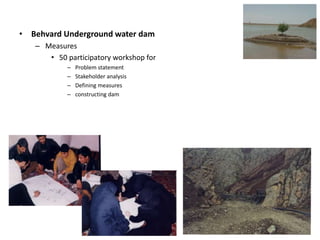
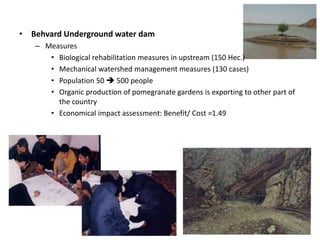
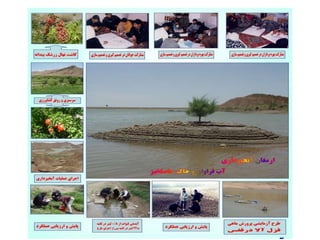
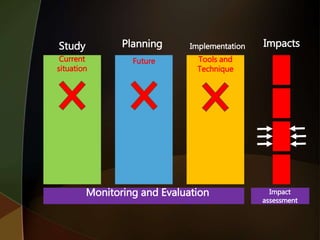
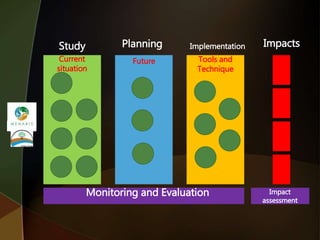
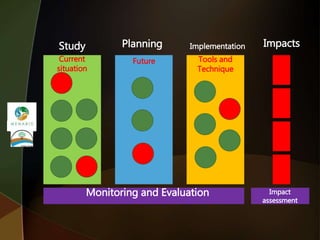
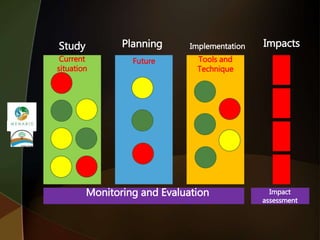
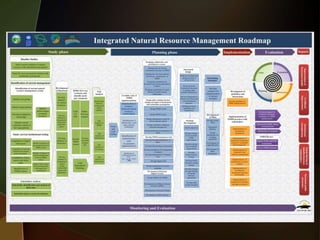
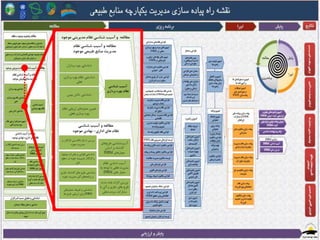
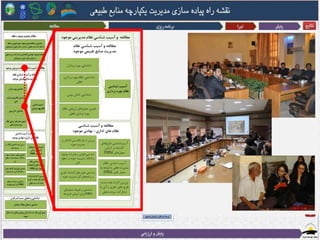
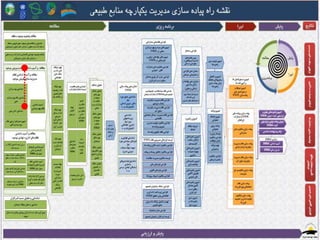
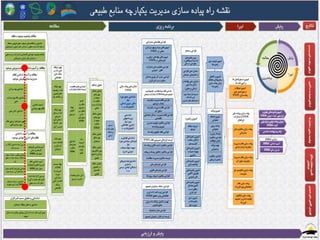
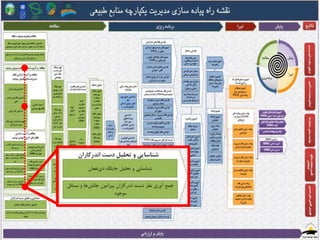
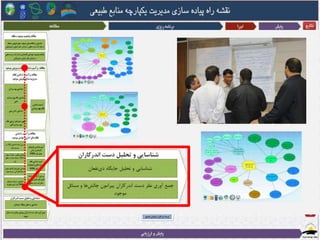
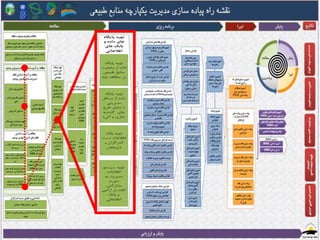
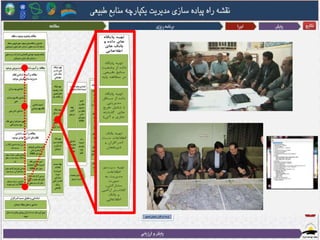
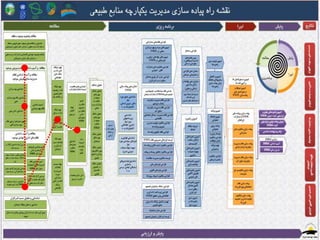
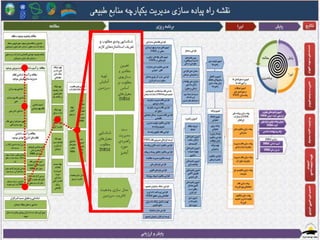
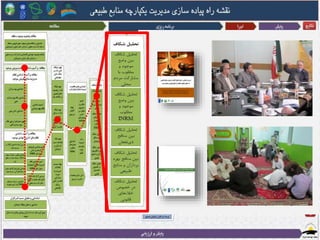
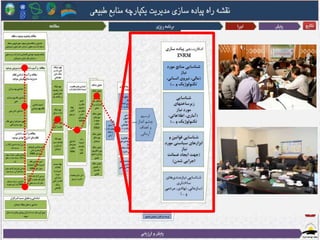
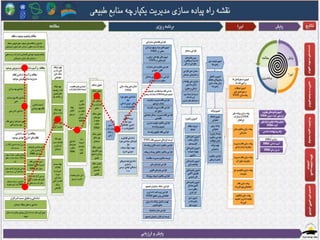
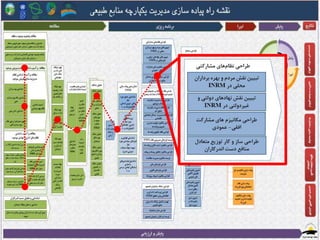
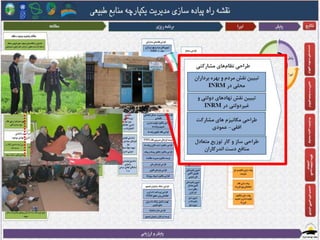
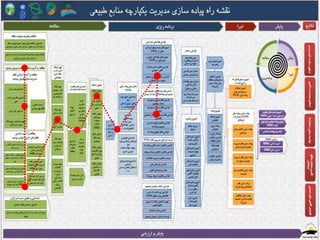
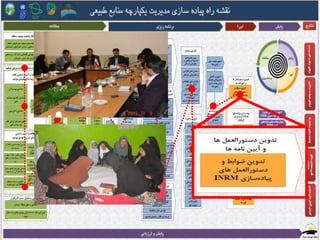
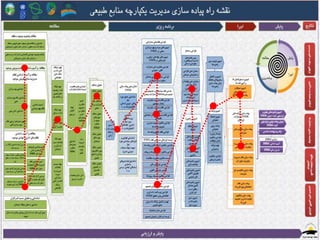
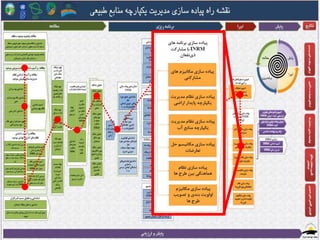
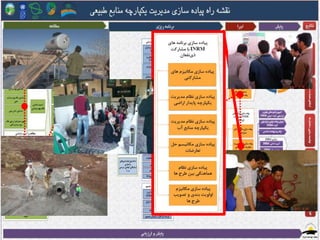
2) To address this, an underground dam was constructed in Behvard through 50 participatory workshops involving problem identification, stakeholder analysis, and measure development.
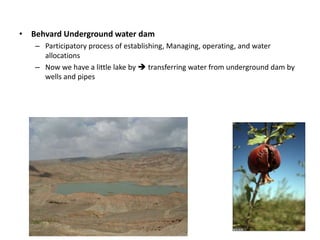
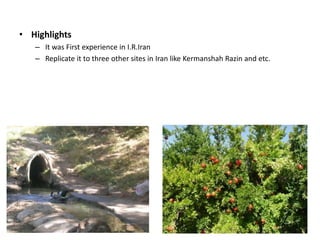
3) The dam involved biological and mechanical watershed management and helped increase the population from 50 to 500. It led to exporting organic pomegranates and had an economic benefit-cost ratio of 1.49.