Presented by:
Anisha Kilambu
Prasharam B.C
 Introduction
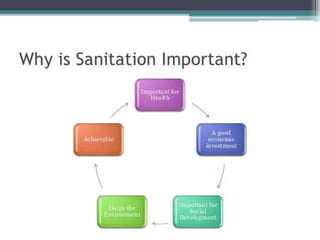
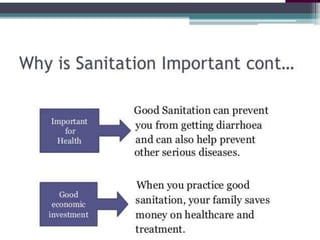
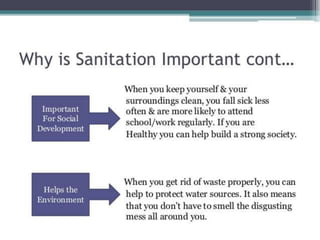
 Importance of sanitation
 Sanitation in context of Nepal
 National Policies/Strategy
 Local Regulations
 Summary
 References
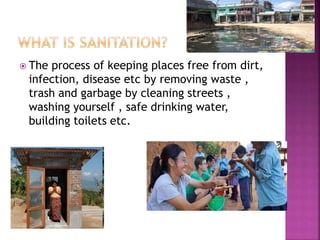
 The process of keeping places free from dirt,
infection, disease etc by removing waste ,
trash and garbage by cleaning streets ,
washing yourself , safe drinking water,
building toilets etc.
 "Sanitation generally refers to the provision
of facilities and services for the safe disposal
of human urine and feces.”
 The word 'sanitation' also refers to the
maintenance of hygienic conditions, through
services such as garbage collection and
wastewater disposal.
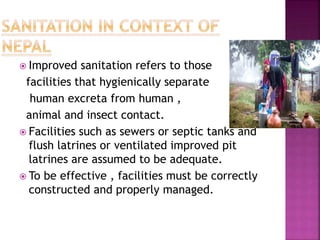
 Improved sanitation refers to those
facilities that hygienically separate
human excreta from human ,
animal and insect contact.
 Facilities such as sewers or septic tanks and
flush latrines or ventilated improved pit
latrines are assumed to be adequate.
 To be effective , facilities must be correctly
constructed and properly managed.
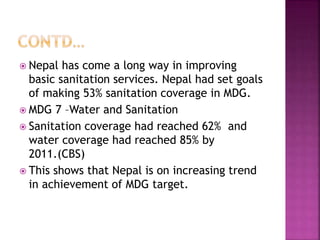
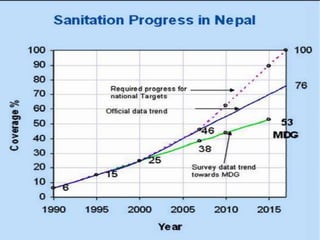
 Nepal has come a long way in improving
basic sanitation services. Nepal had set goals
of making 53% sanitation coverage in MDG.
 MDG 7 –Water and Sanitation
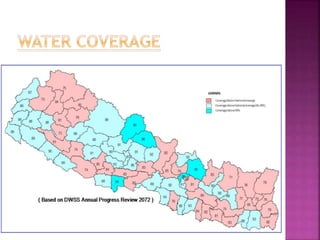
 Sanitation coverage had reached 62% and
water coverage had reached 85% by
2011.(CBS)
 This shows that Nepal is on increasing trend
in achievement of MDG target.
 Rural water supply policy 2004
 Urban water supply policy 2009
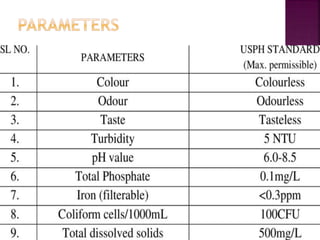
 National drinking water quality standards-2006
-service provider is responsible for meeting
quality standard
-WQ surveillance be done by MoHP
 Sanitation and hygeine master plan 2011
-ODF is entry point
-Coordination committees at different level
 NHSP-II (2010-2015) : WQ surveillance
 UNICEF Nepal WASH programme (2018-2022)
 Nepal water supply , sanitation and hygiene
sector development plan (2016-2030)
 Following the internalization of a National
sanitation and hygiene master plan 2011:
Nepal has witnessed social momentum and
transformation in several villages ,
municipalities and districts being declared
ODF .
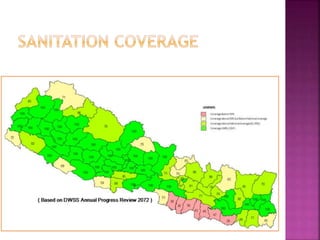
 Coverage to basic sanitation reached 81% of
population. (DWSS annual progress
review,2015)
 As of December 2018, the coverage
confirmed by government of Nepal is 99.02
%.
 The major consequences that affected the
target are :
 Earthquake 2015
 Boarder blockade 2016
 Local election 2017
 Terai flood
 National and Local election 2017
 Local reconstructing 2016/2017
 The sector is now targeting in completion of
100% universal assess to improved sanitation
facilities by mid 2019.
 Summary Update [2015-11-22]
 1st ODF District: Kaski
 1st ODF Municipality: Dharan and Ratnanagar
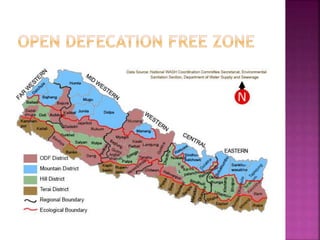
 Total ODF Districts: 27 (3 Mountain+20 Hill+ 4 Terai)
 Total ODF Zone: 1 Dhaulagiri
 Total ODF Municipalities : 79 out of 191
 Total ODF VDCs: 2026 out of 3282
 Government initiatives
 Development and implementation of
sanitation policies, guidelines, rules ,
regulations, acts ,strategies etc.
 The ministry of finance has provisioned up to
25% of VDC fund, if the village manages to
declare ODF and implement child friendly
programme.
 A national council for solid waste
management mobilizes concerned
ministries, municipalities ,private sector
agencies etc.
 Furthermore, a solid waste management and
resource mobilization centre(SWMRMC)
coordinates solid waste management
activities in urban areas.
 The government, in collaboration with UN
agencies and development organizations,
has initiated a Public–Private Partnership
(PPP), launched a campaign to promote
hand washing with soap.
 mobilized mass media to a greater extent,
and run various hand washing
demonstration activities in schools and
communities.
 A weeklong campaign on the occasion of
Global Hand- Washing Day.
 Sewerage system with treatment facilities in
emerging urban settlements.
 The construction of public toilets in major
public places.
 Nepal promotes decentralized wastewater
management systems and waste-based
alternative energy—for example, biogas—in
urban and peri-urban centers'.
 Waste water treatment plants existing in
Kathmandu valley .
 The sanitation promotion activities in rural
areas has mostly focused on hygiene
education and construction of toilet and
septic tank .
 Resources recovery from human feces and
urine.
 No citizenship if no toilet at home.
 Since 2000, Nepal has promoted the school
as a model and students as change agents for
improving hygiene and sanitation.
 A School Sanitation and Hygiene Education
programme is currently being implemented
in more than 1,500 schools in Nepal.
 The programme receives support from the
government, UN agencies, and other
development organizations.
 Since 2004, the government, through the
Ministry of Education and Sports, has
implemented a programme of constructing
separate toilets for girls in community
schools.
 This has contributed to a notable increase in
girls’ enrolment and their retention in
school.
 Simply , sanitation refers to public health
conditions related to clean and safe drinking
water along with proper disposal of sewage.
Despites of all the initiatives made by
government , urban , rural areas , schools
etc there are still some areas like park,
grounds where open defecation is done. A
further more focus on sanitation and we are
almost there to 100% coverage rate.
 Nepal water supply, sanitation and hygiene
sector development plan (2016-2030),
Ministry of water supply and sanitation.
 Dietvorst ,Dec.12, 2017 Water and Sanitation
(WASH) , UNICEF Nepal.
www.unicef.org/nepal/water-and-sanitation-
wash
Sanitation Context in Nepal.pptx

Sanitation Context in Nepal.pptx

  • 1.
  • 2.
     Introduction  Importanceof sanitation  Sanitation in context of Nepal  National Policies/Strategy  Local Regulations  Summary  References
  • 3.
     The processof keeping places free from dirt, infection, disease etc by removing waste , trash and garbage by cleaning streets , washing yourself , safe drinking water, building toilets etc.
  • 4.
     "Sanitation generallyrefers to the provision of facilities and services for the safe disposal of human urine and feces.”  The word 'sanitation' also refers to the maintenance of hygienic conditions, through services such as garbage collection and wastewater disposal.
  • 9.
     Improved sanitationrefers to those facilities that hygienically separate human excreta from human , animal and insect contact.  Facilities such as sewers or septic tanks and flush latrines or ventilated improved pit latrines are assumed to be adequate.  To be effective , facilities must be correctly constructed and properly managed.
  • 10.
     Nepal hascome a long way in improving basic sanitation services. Nepal had set goals of making 53% sanitation coverage in MDG.  MDG 7 –Water and Sanitation  Sanitation coverage had reached 62% and water coverage had reached 85% by 2011.(CBS)  This shows that Nepal is on increasing trend in achievement of MDG target.
  • 12.
     Rural watersupply policy 2004  Urban water supply policy 2009  National drinking water quality standards-2006 -service provider is responsible for meeting quality standard -WQ surveillance be done by MoHP  Sanitation and hygeine master plan 2011 -ODF is entry point -Coordination committees at different level
  • 13.
     NHSP-II (2010-2015): WQ surveillance  UNICEF Nepal WASH programme (2018-2022)  Nepal water supply , sanitation and hygiene sector development plan (2016-2030)
  • 14.
     Following theinternalization of a National sanitation and hygiene master plan 2011: Nepal has witnessed social momentum and transformation in several villages , municipalities and districts being declared ODF .  Coverage to basic sanitation reached 81% of population. (DWSS annual progress review,2015)
  • 15.
     As ofDecember 2018, the coverage confirmed by government of Nepal is 99.02 %.  The major consequences that affected the target are :  Earthquake 2015  Boarder blockade 2016  Local election 2017  Terai flood  National and Local election 2017  Local reconstructing 2016/2017
  • 16.
     The sectoris now targeting in completion of 100% universal assess to improved sanitation facilities by mid 2019.
  • 18.
     Summary Update[2015-11-22]  1st ODF District: Kaski  1st ODF Municipality: Dharan and Ratnanagar  Total ODF Districts: 27 (3 Mountain+20 Hill+ 4 Terai)  Total ODF Zone: 1 Dhaulagiri  Total ODF Municipalities : 79 out of 191  Total ODF VDCs: 2026 out of 3282
  • 22.
     Government initiatives Development and implementation of sanitation policies, guidelines, rules , regulations, acts ,strategies etc.  The ministry of finance has provisioned up to 25% of VDC fund, if the village manages to declare ODF and implement child friendly programme.
  • 23.
     A nationalcouncil for solid waste management mobilizes concerned ministries, municipalities ,private sector agencies etc.  Furthermore, a solid waste management and resource mobilization centre(SWMRMC) coordinates solid waste management activities in urban areas.
  • 24.
     The government,in collaboration with UN agencies and development organizations, has initiated a Public–Private Partnership (PPP), launched a campaign to promote hand washing with soap.  mobilized mass media to a greater extent, and run various hand washing demonstration activities in schools and communities.  A weeklong campaign on the occasion of Global Hand- Washing Day.
  • 25.
     Sewerage systemwith treatment facilities in emerging urban settlements.  The construction of public toilets in major public places.  Nepal promotes decentralized wastewater management systems and waste-based alternative energy—for example, biogas—in urban and peri-urban centers'.  Waste water treatment plants existing in Kathmandu valley .
  • 26.
     The sanitationpromotion activities in rural areas has mostly focused on hygiene education and construction of toilet and septic tank .  Resources recovery from human feces and urine.  No citizenship if no toilet at home.
  • 27.
     Since 2000,Nepal has promoted the school as a model and students as change agents for improving hygiene and sanitation.  A School Sanitation and Hygiene Education programme is currently being implemented in more than 1,500 schools in Nepal.  The programme receives support from the government, UN agencies, and other development organizations.
  • 28.
     Since 2004,the government, through the Ministry of Education and Sports, has implemented a programme of constructing separate toilets for girls in community schools.  This has contributed to a notable increase in girls’ enrolment and their retention in school.
  • 29.
     Simply ,sanitation refers to public health conditions related to clean and safe drinking water along with proper disposal of sewage. Despites of all the initiatives made by government , urban , rural areas , schools etc there are still some areas like park, grounds where open defecation is done. A further more focus on sanitation and we are almost there to 100% coverage rate.
  • 30.
     Nepal watersupply, sanitation and hygiene sector development plan (2016-2030), Ministry of water supply and sanitation.  Dietvorst ,Dec.12, 2017 Water and Sanitation (WASH) , UNICEF Nepal. www.unicef.org/nepal/water-and-sanitation- wash