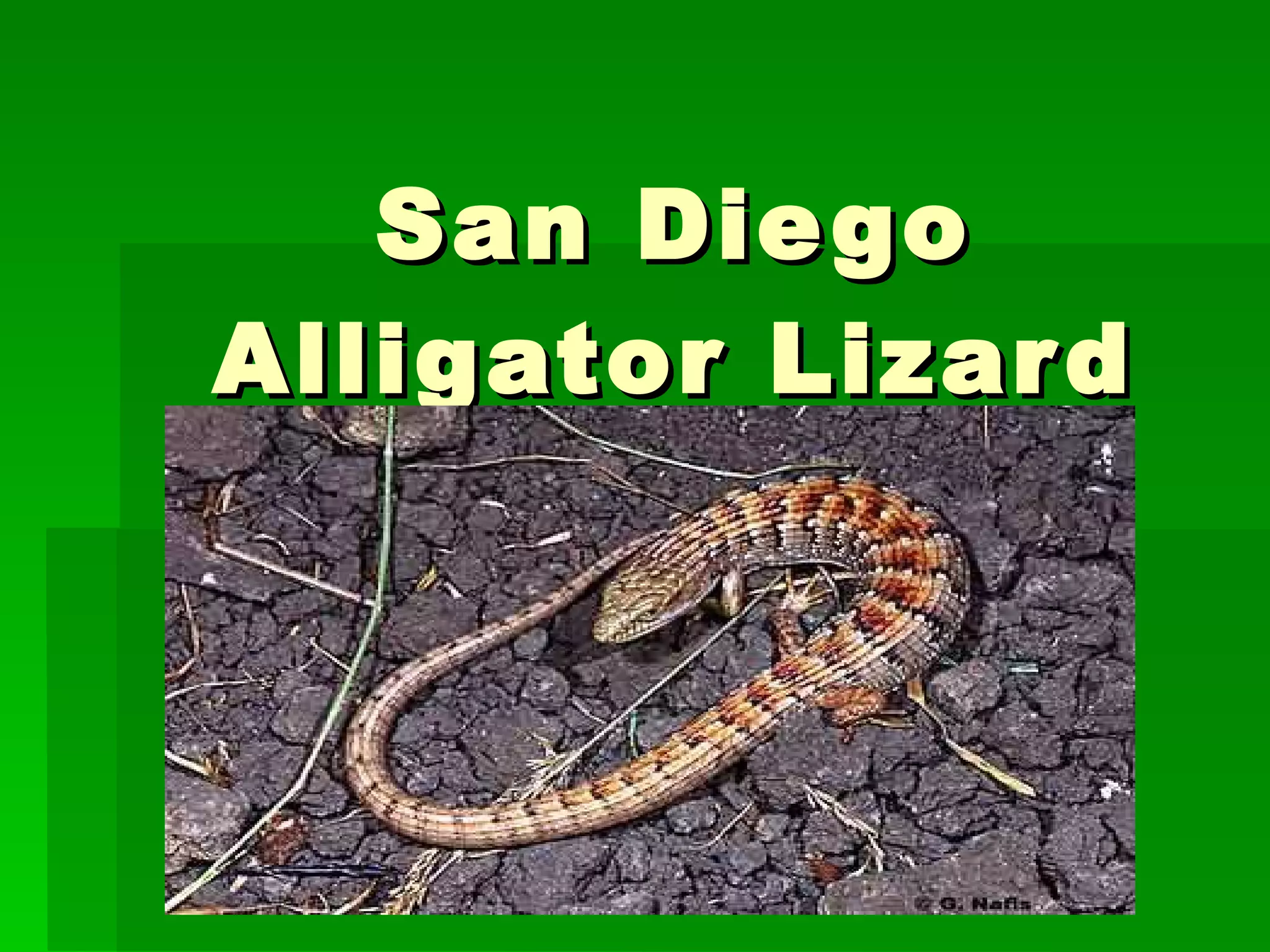
San Diego Alligator Lizard
Classification Kingdom: Animalia Phylum: Chordata Subphylum: Vertebrata Class: Reptilia Family: Anguidae Subfamily: Gerrhonotinae Genus:  Elgaria Species:  multicarinata Subspecies:  webbi
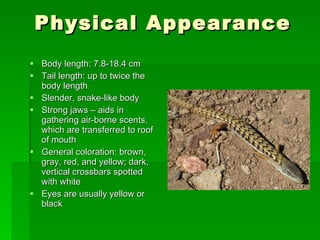
Physical Appearance Body length: 7.8-18.4 cm Tail length: up to twice the body length Slender, snake-like body Strong jaws – aids in gathering air-borne scents, which are transferred to roof of mouth General coloration: brown, gray, red, and yellow; dark, vertical crossbars spotted with white Eyes are usually yellow or black
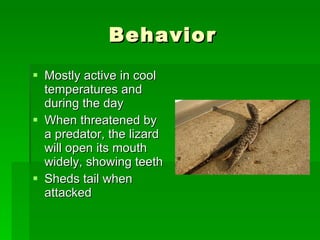
Behavior Mostly active in cool temperatures and during the day When threatened by a predator, the lizard will open its mouth widely, showing teeth Sheds tail when attacked
Habitat Lives mostly on coasts, in grasslands, oak woodlands, pine woodlands, and other forests. Can be found under plant cover and near water sources in dry zones Abundant in places that are highly condensed with trees and other natural organisms.
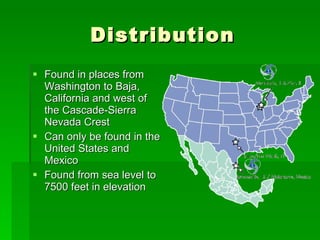
Distribution Found in places from Washington to Baja, California and west of the Cascade-Sierra Nevada Crest Can only be found in the United States and Mexico Found from sea level to 7500 feet in elevation
Diet Carnivores Feed on insects, especially beetles, grasshoppers, crickets, and wasps Also feed on arthropods, such as spiders, centipedes, and scorpions Other animals that alligator lizards feed on are snails and tadpoles.
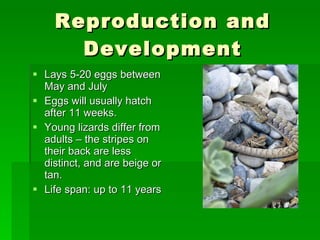
Reproduction and Development Lays 5-20 eggs between May and July Eggs will usually hatch after 11 weeks. Young lizards differ from adults – the stripes on their back are less distinct, and are beige or tan. Life span: up to 11 years
In the News… http://www.sciencedaily.com/releases/2011/02/110215191631.htm
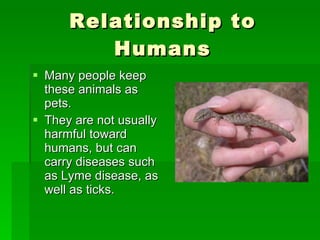
Relationship to Humans Many people keep these animals as pets. They are not usually harmful toward humans, but can carry diseases such as Lyme disease, as well as ticks.
Works Cited http://library.sandiegozoo.org/factsheets/alligator_lizard/alligatorlizard.htm http://www.bbc.co.uk/nature/animals/ http://dir.yahoo.com/Science/Biology/Zoology/Animals__Insects__and_Pets/

San diego alligator lizard

  • 1.
  • 2.
    Classification Kingdom: AnimaliaPhylum: Chordata Subphylum: Vertebrata Class: Reptilia Family: Anguidae Subfamily: Gerrhonotinae Genus: Elgaria Species: multicarinata Subspecies: webbi
  • 3.
    Physical Appearance Bodylength: 7.8-18.4 cm Tail length: up to twice the body length Slender, snake-like body Strong jaws – aids in gathering air-borne scents, which are transferred to roof of mouth General coloration: brown, gray, red, and yellow; dark, vertical crossbars spotted with white Eyes are usually yellow or black
  • 4.
    Behavior Mostly activein cool temperatures and during the day When threatened by a predator, the lizard will open its mouth widely, showing teeth Sheds tail when attacked
  • 5.
    Habitat Lives mostlyon coasts, in grasslands, oak woodlands, pine woodlands, and other forests. Can be found under plant cover and near water sources in dry zones Abundant in places that are highly condensed with trees and other natural organisms.
  • 6.
    Distribution Found inplaces from Washington to Baja, California and west of the Cascade-Sierra Nevada Crest Can only be found in the United States and Mexico Found from sea level to 7500 feet in elevation
  • 7.
    Diet Carnivores Feedon insects, especially beetles, grasshoppers, crickets, and wasps Also feed on arthropods, such as spiders, centipedes, and scorpions Other animals that alligator lizards feed on are snails and tadpoles.
  • 8.
    Reproduction and DevelopmentLays 5-20 eggs between May and July Eggs will usually hatch after 11 weeks. Young lizards differ from adults – the stripes on their back are less distinct, and are beige or tan. Life span: up to 11 years
  • 9.
    In the News…http://www.sciencedaily.com/releases/2011/02/110215191631.htm
  • 10.
    Relationship to HumansMany people keep these animals as pets. They are not usually harmful toward humans, but can carry diseases such as Lyme disease, as well as ticks.
  • 11.
    Works Cited http://library.sandiegozoo.org/factsheets/alligator_lizard/alligatorlizard.htmhttp://www.bbc.co.uk/nature/animals/ http://dir.yahoo.com/Science/Biology/Zoology/Animals__Insects__and_Pets/