THE NEXT BIG THING IS HERE
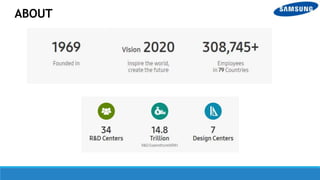
ABOUT
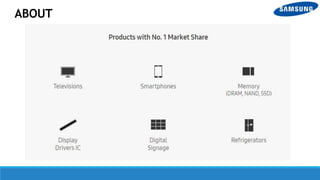
ABOUT
VISION
“Inspire the World, Create the Future”.
OBJECTIVES
Samsung's objectives is to sell quality products to customers interested in
purchasing mobile devices. Samsung offers mobile devices and cell phone accessories.
MANAGEMENT IDEOLOGY
Leverage Human Resources and Technologies
Create the Best Products and Services
Contribute to Society
BUSINESS PRINCIPLE
We comply with laws and ethical standards.
We maintain a clean organizational culture.
We respect customers, shareholders and employees.
We care for the environment, safety and health.
We are a socially responsible corporate citizen.
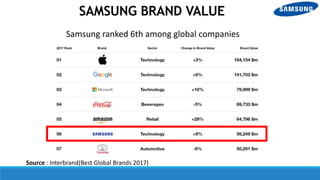
SAMSUNG BRAND VALUE
Samsung ranked 6th among global companies
Source : Interbrand(Best Global Brands 2017)
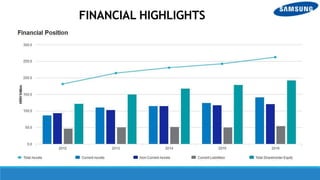
FINANCIAL HIGHLIGHTS
CASE
Samsung Galaxy Note 7 is a discontinued Android phablet smartphone that was produced and
marketed by Samsung Electronics.
On 2nd September 2016, Samsung suspended sales of the Galaxy Note 7 and announced a
voluntary recall after it was found that a manufacturing defect in the phones batteries had
caused some of them to generate excessive heat, resulting in fires and explosions. A formal
U.S. recall was announced on 15 September 2016.
Samsung exchanged the affected phones for a new revision, which utilized batteries sourced
from a different supplier. However, in early October 2016, reports emerged of incidents where
these replacement phones also caught on fire.
On 10 October 2016, in response to the new incidents, Samsung announced that it would
once again suspend sales of the Galaxy Note 7 and recall all devices worldwide.
The next day, Samsung also announced that it would permanently discontinue the Galaxy
Note 7 and cease its production.
The recall had a major impact on Samsung's business in the third quarter of 2016, with the
company projecting that its operating profits would be down by 33% in comparison to the
previous quarter.
Credit Suisse analysts estimated that Samsung would lose at least US$17 billion in revenue
from the production and recall of the Galaxy Note 7.
LEADERSHIP
Key people
Chairman - Lee Kun-hee
Vice chairman - Lee Jae-yong
CEO - Kwon Oh-hyun
Type
The Leadership type which is followed by the Samsung is AUTOCRATIC. Because the Samsung
not giving much importance to its architecture. So, the Note 7 problem spoiled the image of the
Company. The Company always want to Compete and want to be Market Leader but they are not
working in effective Manner.
SAMSUNG ELECTRONICS - PRODUCTS
 LCD and LED panels
 Mobiles & Tabs
 Semiconductors
 Televisions
 Printers
 Digital Camera’s
 Laptops
 Mp3 Players
 Refrigerator
 Washing Machine
Samsung Group has large number of Products and Services.
ELECTRONICS
 Samsung Electronics
 Samsung SDI
 Samsung Electro-Mechanics
Samsung SDS
 Samsung Display
 Samsung Corning Advanced Glass
 Samsung C&T Engineering & Construction Group
 Samsung Heavy Industries
 Samsung Engineering
HEAVY INDUSTRIES
FINANCIAL SERVICES
 Samsung Life Insurance
 Samsung Fire & Marine Insurance
 Samsung Card
 Samsung Securities
 Samsung Asset Management
 Samsung Venture Investment
 Samsung C&T Trading & Investment Group
 Samsung C&T Fashion Group
 Samsung C&T Resort & Construction
Group
 Hotel Shilla
 Cheil Worldwide
 S-1 Corporation
 Samsung Medical Centre
 Samsung Economic Research Institute
 Samsung Biologics
 Samsung Bioepis
 Samsung Welstory
OTHER AFFILIATED COMPANIES
COMPETITORS
 Apple
 Sony
 LG
 Lenovo
 Xiaomi
 HTC
 Huawei
 Asus
STRENGTH
 Samsung is the world’s most successful electronics manufacturer. It is the world’s largest
manufacturer of television sets, liquid crystal display (LCD) panels, mobile phones and
smartphones.
 Samsung is the world’s number one marketer of mobile phones with 21.4% of the world’s
largest market share in the second quarter of 2015. Apple is number two with 13.9%
STRENGTH
 Samsung has impressive research and design capabilities. It was able to create and roll out
Samsung Pay, a payment app with similar capabilities to Apple Pay, in less than a year. Samsung
has been able to replicate many of the capabilities of both Apple Inc.’s phones and Google Inc.’s
Android operating system for mobile devices.
 Samsung has strong manufacturing and marketing capabilities.
 Samsung has long-standing relationships with retailers in the United States and Europe that
provide a steady sales channel for its products.
WEAKNESS
 Samsung has not been able to match Apple Inc.’s marketing capabilities for smartphones. Its
share of the U.S. smartphone market fell by 2.3% between 2014 and 2015. In contrast, Apple’s
share price grew by 34.9%.
 Some Chinese competitors are catching up to Samsung in the smartphone market. Between
2014 and 2015 Huawei’s share grew by 48.1%, and Xiaomi’s share grew by 29.4%.
 Samsung is heavily dependent upon consumer electronics sales in markets with limited
potential for growth, such as the United States and Europe, for much of its revenue.
WEAKNESS
 Samsung’s devices use the Google Android open source operating system. Many consumers
seem to view Android as an inferior product to Apple’s iOS. The public has not been as
accepting of Android as the tech community has.
 Some consumers view Apple products as more advanced and dependable than Samsung
products.
 Samsung’s marketing efforts are not as sophisticated as Apple’s.
OPPORTUNITES
 Growing market for smartphones, tablets and other mobile devices, especially in
developing regions such as Africa and India, where consumers are unfamiliar with PCs. Sales
of tablets finally overtook sales of traditional personal computers in 2015.
 Increased demand for tablet and smartphone-based solutions such as Samsung Pay
 New technologies such as wearable tech
 Growing middle class in developing world will increase market for consumer electronics.
 Growing online market from sales channels such as Amazon.com
THREATS
 Apple has emerged as the dominant smartphone and tablet brand in some markets, such
as the United States. Samsung has not been able to overcome Apple’s reputation for
reliability.
 Apple’s reputation for quality, reliability and sophistication seems to be growing.
 The Google Android operating system, which Galaxy devices depend upon, is not as
popular with average people as iOS.
THREATS
 Declining or stagnating middle-class incomes in North America and the United States
could reduce consumer buying power in those key markets for Samsung.
 Chinese manufacturers such as Huawei and Xiaomi could emerge as serious rivals to
Samsung. These companies’ share of the critical mobile device market is growing while
Samsung’s is falling.
Apple could enter more consumer products areas such as home appliances and cameras
and directly compete with Samsung in those markets.
Thank you !
“Try not to become a man of success, but
rather try to become a man of value.”
- Albert Einstein

Samsung Galaxy Note 7 - Case Study

  • 1.
    THE NEXT BIGTHING IS HERE
  • 2.
  • 3.
  • 4.
    VISION “Inspire the World,Create the Future”. OBJECTIVES Samsung's objectives is to sell quality products to customers interested in purchasing mobile devices. Samsung offers mobile devices and cell phone accessories.
  • 5.
    MANAGEMENT IDEOLOGY Leverage HumanResources and Technologies Create the Best Products and Services Contribute to Society
  • 6.
    BUSINESS PRINCIPLE We complywith laws and ethical standards. We maintain a clean organizational culture. We respect customers, shareholders and employees. We care for the environment, safety and health. We are a socially responsible corporate citizen.
  • 7.
    SAMSUNG BRAND VALUE Samsungranked 6th among global companies Source : Interbrand(Best Global Brands 2017)
  • 8.
  • 9.
    CASE Samsung Galaxy Note7 is a discontinued Android phablet smartphone that was produced and marketed by Samsung Electronics. On 2nd September 2016, Samsung suspended sales of the Galaxy Note 7 and announced a voluntary recall after it was found that a manufacturing defect in the phones batteries had caused some of them to generate excessive heat, resulting in fires and explosions. A formal U.S. recall was announced on 15 September 2016.
  • 10.
    Samsung exchanged theaffected phones for a new revision, which utilized batteries sourced from a different supplier. However, in early October 2016, reports emerged of incidents where these replacement phones also caught on fire. On 10 October 2016, in response to the new incidents, Samsung announced that it would once again suspend sales of the Galaxy Note 7 and recall all devices worldwide.
  • 11.
    The next day,Samsung also announced that it would permanently discontinue the Galaxy Note 7 and cease its production. The recall had a major impact on Samsung's business in the third quarter of 2016, with the company projecting that its operating profits would be down by 33% in comparison to the previous quarter. Credit Suisse analysts estimated that Samsung would lose at least US$17 billion in revenue from the production and recall of the Galaxy Note 7.
  • 12.
    LEADERSHIP Key people Chairman -Lee Kun-hee Vice chairman - Lee Jae-yong CEO - Kwon Oh-hyun Type The Leadership type which is followed by the Samsung is AUTOCRATIC. Because the Samsung not giving much importance to its architecture. So, the Note 7 problem spoiled the image of the Company. The Company always want to Compete and want to be Market Leader but they are not working in effective Manner.
  • 13.
    SAMSUNG ELECTRONICS -PRODUCTS  LCD and LED panels  Mobiles & Tabs  Semiconductors  Televisions  Printers  Digital Camera’s  Laptops  Mp3 Players  Refrigerator  Washing Machine Samsung Group has large number of Products and Services.
  • 14.
    ELECTRONICS  Samsung Electronics Samsung SDI  Samsung Electro-Mechanics Samsung SDS  Samsung Display  Samsung Corning Advanced Glass  Samsung C&T Engineering & Construction Group  Samsung Heavy Industries  Samsung Engineering HEAVY INDUSTRIES
  • 15.
    FINANCIAL SERVICES  SamsungLife Insurance  Samsung Fire & Marine Insurance  Samsung Card  Samsung Securities  Samsung Asset Management  Samsung Venture Investment
  • 16.
     Samsung C&TTrading & Investment Group  Samsung C&T Fashion Group  Samsung C&T Resort & Construction Group  Hotel Shilla  Cheil Worldwide  S-1 Corporation  Samsung Medical Centre  Samsung Economic Research Institute  Samsung Biologics  Samsung Bioepis  Samsung Welstory OTHER AFFILIATED COMPANIES
  • 17.
    COMPETITORS  Apple  Sony LG  Lenovo  Xiaomi  HTC  Huawei  Asus
  • 18.
    STRENGTH  Samsung isthe world’s most successful electronics manufacturer. It is the world’s largest manufacturer of television sets, liquid crystal display (LCD) panels, mobile phones and smartphones.  Samsung is the world’s number one marketer of mobile phones with 21.4% of the world’s largest market share in the second quarter of 2015. Apple is number two with 13.9%
  • 19.
    STRENGTH  Samsung hasimpressive research and design capabilities. It was able to create and roll out Samsung Pay, a payment app with similar capabilities to Apple Pay, in less than a year. Samsung has been able to replicate many of the capabilities of both Apple Inc.’s phones and Google Inc.’s Android operating system for mobile devices.  Samsung has strong manufacturing and marketing capabilities.  Samsung has long-standing relationships with retailers in the United States and Europe that provide a steady sales channel for its products.
  • 20.
    WEAKNESS  Samsung hasnot been able to match Apple Inc.’s marketing capabilities for smartphones. Its share of the U.S. smartphone market fell by 2.3% between 2014 and 2015. In contrast, Apple’s share price grew by 34.9%.  Some Chinese competitors are catching up to Samsung in the smartphone market. Between 2014 and 2015 Huawei’s share grew by 48.1%, and Xiaomi’s share grew by 29.4%.  Samsung is heavily dependent upon consumer electronics sales in markets with limited potential for growth, such as the United States and Europe, for much of its revenue.
  • 21.
    WEAKNESS  Samsung’s devicesuse the Google Android open source operating system. Many consumers seem to view Android as an inferior product to Apple’s iOS. The public has not been as accepting of Android as the tech community has.  Some consumers view Apple products as more advanced and dependable than Samsung products.  Samsung’s marketing efforts are not as sophisticated as Apple’s.
  • 22.
    OPPORTUNITES  Growing marketfor smartphones, tablets and other mobile devices, especially in developing regions such as Africa and India, where consumers are unfamiliar with PCs. Sales of tablets finally overtook sales of traditional personal computers in 2015.  Increased demand for tablet and smartphone-based solutions such as Samsung Pay  New technologies such as wearable tech  Growing middle class in developing world will increase market for consumer electronics.  Growing online market from sales channels such as Amazon.com
  • 23.
    THREATS  Apple hasemerged as the dominant smartphone and tablet brand in some markets, such as the United States. Samsung has not been able to overcome Apple’s reputation for reliability.  Apple’s reputation for quality, reliability and sophistication seems to be growing.  The Google Android operating system, which Galaxy devices depend upon, is not as popular with average people as iOS.
  • 24.
    THREATS  Declining orstagnating middle-class incomes in North America and the United States could reduce consumer buying power in those key markets for Samsung.  Chinese manufacturers such as Huawei and Xiaomi could emerge as serious rivals to Samsung. These companies’ share of the critical mobile device market is growing while Samsung’s is falling. Apple could enter more consumer products areas such as home appliances and cameras and directly compete with Samsung in those markets.
  • 25.
    Thank you ! “Trynot to become a man of success, but rather try to become a man of value.” - Albert Einstein