Copyright © 2001 by Harcourt, Inc. All rights reserved.
PART I
INTRODUCTION TO
SALES MANAGEMENT
Copyright © 2001 by Harcourt, Inc. All rights reserved.
CHAPTER 1
SALES MANAGEMENT:
ITS NATURE, REWARDS, AND
RESPONSIBILITIES
Copyright © 2001 by Harcourt, Inc. All rights reserved.
 Provide you with an overview of a sales manager’s
job.
 Introduce you to the various types of sales managers
and the skills required of them.
 Discuss what a new manager experiences when
promoted from a sales job.
LEARNING OBJECTIVES
A career in sales management is exciting and unique and
provides numerous opportunities. This chapter will do
the following:
Copyright © 2001 by Harcourt, Inc. All rights reserved.
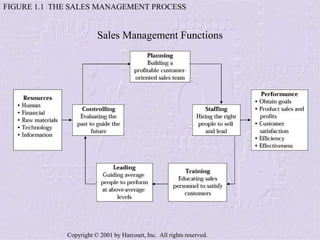
WHAT IS SALES MANAGEMENT?
Sales management is the attainment of sales force
goals in an effective and efficient manner through:
• Planning
• Staffing
• Training
• Leading
• Controlling organizational resources
Copyright © 2001 by Harcourt, Inc. All rights reserved.
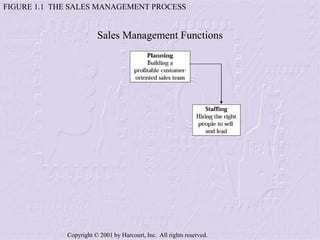
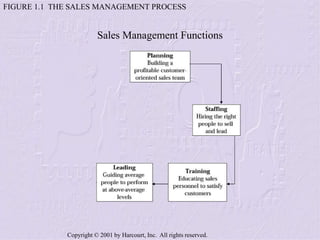
FIGURE 1.1 THE SALES MANAGEMENT PROCESS
Sales Management Functions
Copyright © 2001 by Harcourt, Inc. All rights reserved.
PLANNING
The conscious, systemic process of making
decisions about goals and activities that an
individual, group, work unit, or organization will
pursue in the future and the use of resources
needed to attain them.
Copyright © 2001 by Harcourt, Inc. All rights reserved.
FIGURE 1.1 THE SALES MANAGEMENT PROCESS
Sales Management Functions
Copyright © 2001 by Harcourt, Inc. All rights reserved.
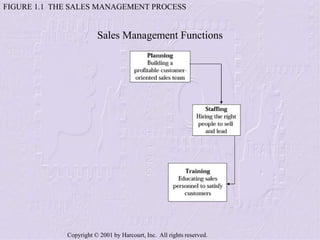
STAFFING
Activities undertaken to attract, develop, and
maintain effective sales personnel within an
organization.
Copyright © 2001 by Harcourt, Inc. All rights reserved.
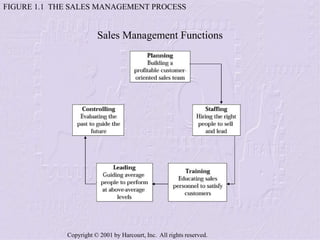
FIGURE 1.1 THE SALES MANAGEMENT PROCESS
Sales Management Functions
Copyright © 2001 by Harcourt, Inc. All rights reserved.
SALES TRAINING
The effort put forth by an employer to provide the
salesperson job-related culture, skills, knowledge,
and attitudes that result in improved performance
in the selling environment.
Copyright © 2001 by Harcourt, Inc. All rights reserved.
FIGURE 1.1 THE SALES MANAGEMENT PROCESS
Sales Management Functions
Copyright © 2001 by Harcourt, Inc. All rights reserved.
LEADING
The ability to influence other people toward
the attainment of objectives.
Copyright © 2001 by Harcourt, Inc. All rights reserved.
FIGURE 1.1 THE SALES MANAGEMENT PROCESS
Sales Management Functions
Copyright © 2001 by Harcourt, Inc. All rights reserved.
CONTROLLING
Monitoring sales personnel’s activities,
determining whether the organization is on target
toward its goals, and making corrections as
necessary.
Copyright © 2001 by Harcourt, Inc. All rights reserved.
FIGURE 1.1 THE SALES MANAGEMENT PROCESS
Sales Management Functions
Copyright © 2001 by Harcourt, Inc. All rights reserved.
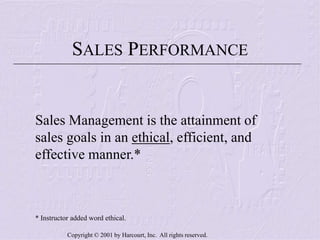
Sales Management is the attainment of
sales goals in an ethical, efficient, and
effective manner.*
* Instructor added word ethical.
SALES PERFORMANCE
Copyright © 2001 by Harcourt, Inc. All rights reserved.
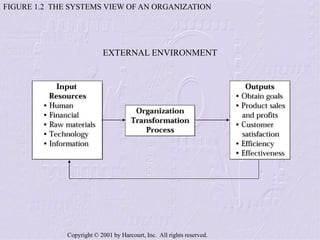
FIGURE 1.2 THE SYSTEMS VIEW OF AN ORGANIZATION
EXTERNAL ENVIRONMENT
Copyright © 2001 by Harcourt, Inc. All rights reserved.
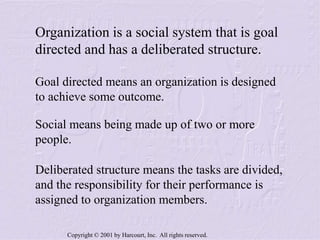
Organization is a social system that is goal
directed and has a deliberated structure.
Social means being made up of two or more
people.
Deliberated structure means the tasks are divided,
and the responsibility for their performance is
assigned to organization members.
Goal directed means an organization is designed
to achieve some outcome.
Copyright © 2001 by Harcourt, Inc. All rights reserved.
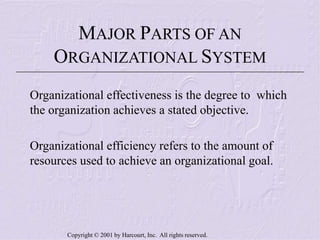
Organizational effectiveness is the degree to which
the organization achieves a stated objective.
Organizational efficiency refers to the amount of
resources used to achieve an organizational goal.
MAJOR PARTS OF AN
ORGANIZATIONAL SYSTEM
Copyright © 2001 by Harcourt, Inc. All rights reserved.
Top Sales Leaders
(Strategic)
F
irst-L
in
e
S
alesL
ead
ers
(O
p
eratio
n
al)
Middle Sales
Leaders
(Tactical)
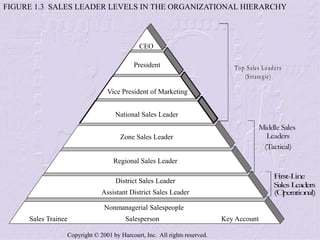
FIGURE 1.3 SALES LEADER LEVELS IN THE ORGANIZATIONAL HIERARCHY
Regional Sales Leader
CEO
President
Vice President of Marketing
National Sales Leader
Zone Sales Leader
District Sales Leader
Assistant District Sales Leader
Nonmanagerial Salespeople
Sales Trainee Salesperson Key Account
Copyright © 2001 by Harcourt, Inc. All rights reserved.
Planning
35%
Staffing
10%
Train-
ing
5%
Leading
30%
Controlling
20%
Planning
28%
Training
10%
Leading
30%
Controlling
22%
Staffing
10%
Planning
15%
Training
25%
Leading
25%
Controlling
15%
Staffing
20%
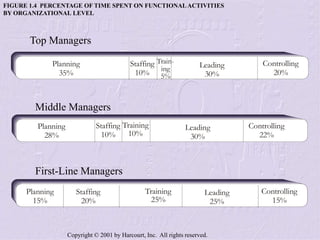
FIGURE 1.4 PERCENTAGE OF TIME SPENT ON FUNCTIONALACTIVITIES
BY ORGANIZATIONAL LEVEL
Top Managers
Middle Managers
First-Line Managers
Copyright © 2001 by Harcourt, Inc. All rights reserved.
Sales Trainee
Salesperson
Key Account Salesperson
District Sales Manager
Regional Sales Manager
Zone Sales Manager
National Sales Mgr.
Vice President of Marketing
President
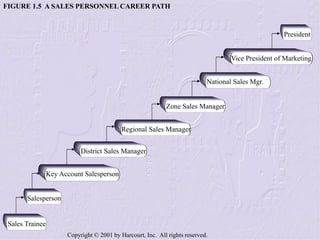
FIGURE 1.5 A SALES PERSONNEL CAREER PATH
Copyright © 2001 by Harcourt, Inc. All rights reserved.
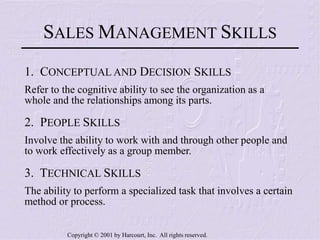
SALES MANAGEMENT SKILLS
1. CONCEPTUAL AND DECISION SKILLS
Refer to the cognitive ability to see the organization as a
whole and the relationships among its parts.
2. PEOPLE SKILLS
Involve the ability to work with and through other people and
to work effectively as a group member.
3. TECHNICAL SKILLS
The ability to perform a specialized task that involves a certain
method or process.
Copyright © 2001 by Harcourt, Inc. All rights reserved.
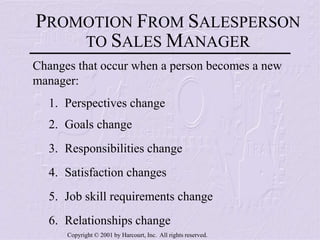
PROMOTION FROM SALESPERSON
TO SALES MANAGER
Changes that occur when a person becomes a new
manager:
1. Perspectives change
2. Goals change
3. Responsibilities change
4. Satisfaction changes
5. Job skill requirements change
6. Relationships change
Copyright © 2001 by Harcourt, Inc. All rights reserved.
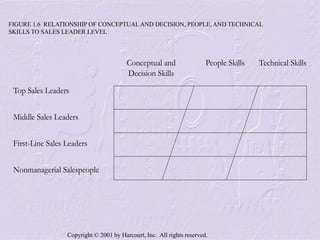
FIGURE 1.6 RELATIONSHIP OF CONCEPTUAL AND DECISION, PEOPLE, AND TECHNICAL
SKILLS TO SALES LEADER LEVEL
Top Sales Leaders
Middle Sales Leaders
First-Line Sales Leaders
Nonmanagerial Salespeople
Conceptual and
Decision Skills
People Skills Technical Skills
Copyright © 2001 by Harcourt, Inc. All rights reserved.
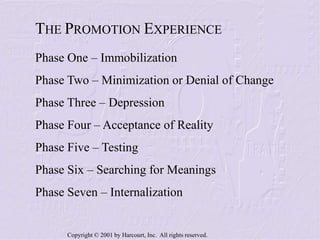
THE PROMOTION EXPERIENCE
Phase One – Immobilization
Phase Two – Minimization or Denial of Change
Phase Three – Depression
Phase Four – Acceptance of Reality
Phase Five – Testing
Phase Six – Searching for Meanings
Phase Seven – Internalization
Copyright © 2001 by Harcourt, Inc. All rights reserved.
PROBLEMS NEW MANAGERS EXPERIENCE
• Lack of preparation for the job.
• Expected to step into the job and
immediately function effectively.
• Often lacks an immediate peer group.
Copyright © 2001 by Harcourt, Inc. All rights reserved.
MAKING A SUCCESSFUL TRANSITION TO
MANAGEMENT
• Have a learning attitude – a
willingness to learn, change, adapt,
and seek help when needed.
• Having realistic expectations.
• Leave the old job behind.
Copyright © 2001 by Harcourt, Inc. All rights reserved.
THE BOTTOM LINE
Skilled sales managers are the key to a successful organization.
Sales managers have five functions that, when combined, can
allow them to achieve the goals desired by higher levels of
management.
The various types of sales managers can be broken down into the
categories of vertical and horizontal.
Most corporations hire a person who cannot only sell but who
also shows the potential to one day become a sales manager.

Sales Management roles and responsibilities

  • 1.
    Copyright © 2001by Harcourt, Inc. All rights reserved.
  • 2.
    Copyright © 2001by Harcourt, Inc. All rights reserved. PART I INTRODUCTION TO SALES MANAGEMENT
  • 3.
    Copyright © 2001by Harcourt, Inc. All rights reserved. CHAPTER 1 SALES MANAGEMENT: ITS NATURE, REWARDS, AND RESPONSIBILITIES
  • 4.
    Copyright © 2001by Harcourt, Inc. All rights reserved.  Provide you with an overview of a sales manager’s job.  Introduce you to the various types of sales managers and the skills required of them.  Discuss what a new manager experiences when promoted from a sales job. LEARNING OBJECTIVES A career in sales management is exciting and unique and provides numerous opportunities. This chapter will do the following:
  • 5.
    Copyright © 2001by Harcourt, Inc. All rights reserved. WHAT IS SALES MANAGEMENT? Sales management is the attainment of sales force goals in an effective and efficient manner through: • Planning • Staffing • Training • Leading • Controlling organizational resources
  • 6.
    Copyright © 2001by Harcourt, Inc. All rights reserved. FIGURE 1.1 THE SALES MANAGEMENT PROCESS Sales Management Functions
  • 7.
    Copyright © 2001by Harcourt, Inc. All rights reserved. PLANNING The conscious, systemic process of making decisions about goals and activities that an individual, group, work unit, or organization will pursue in the future and the use of resources needed to attain them.
  • 8.
    Copyright © 2001by Harcourt, Inc. All rights reserved. FIGURE 1.1 THE SALES MANAGEMENT PROCESS Sales Management Functions
  • 9.
    Copyright © 2001by Harcourt, Inc. All rights reserved. STAFFING Activities undertaken to attract, develop, and maintain effective sales personnel within an organization.
  • 10.
    Copyright © 2001by Harcourt, Inc. All rights reserved. FIGURE 1.1 THE SALES MANAGEMENT PROCESS Sales Management Functions
  • 11.
    Copyright © 2001by Harcourt, Inc. All rights reserved. SALES TRAINING The effort put forth by an employer to provide the salesperson job-related culture, skills, knowledge, and attitudes that result in improved performance in the selling environment.
  • 12.
    Copyright © 2001by Harcourt, Inc. All rights reserved. FIGURE 1.1 THE SALES MANAGEMENT PROCESS Sales Management Functions
  • 13.
    Copyright © 2001by Harcourt, Inc. All rights reserved. LEADING The ability to influence other people toward the attainment of objectives.
  • 14.
    Copyright © 2001by Harcourt, Inc. All rights reserved. FIGURE 1.1 THE SALES MANAGEMENT PROCESS Sales Management Functions
  • 15.
    Copyright © 2001by Harcourt, Inc. All rights reserved. CONTROLLING Monitoring sales personnel’s activities, determining whether the organization is on target toward its goals, and making corrections as necessary.
  • 16.
    Copyright © 2001by Harcourt, Inc. All rights reserved. FIGURE 1.1 THE SALES MANAGEMENT PROCESS Sales Management Functions
  • 17.
    Copyright © 2001by Harcourt, Inc. All rights reserved. Sales Management is the attainment of sales goals in an ethical, efficient, and effective manner.* * Instructor added word ethical. SALES PERFORMANCE
  • 18.
    Copyright © 2001by Harcourt, Inc. All rights reserved. FIGURE 1.2 THE SYSTEMS VIEW OF AN ORGANIZATION EXTERNAL ENVIRONMENT
  • 19.
    Copyright © 2001by Harcourt, Inc. All rights reserved. Organization is a social system that is goal directed and has a deliberated structure. Social means being made up of two or more people. Deliberated structure means the tasks are divided, and the responsibility for their performance is assigned to organization members. Goal directed means an organization is designed to achieve some outcome.
  • 20.
    Copyright © 2001by Harcourt, Inc. All rights reserved. Organizational effectiveness is the degree to which the organization achieves a stated objective. Organizational efficiency refers to the amount of resources used to achieve an organizational goal. MAJOR PARTS OF AN ORGANIZATIONAL SYSTEM
  • 21.
    Copyright © 2001by Harcourt, Inc. All rights reserved. Top Sales Leaders (Strategic) F irst-L in e S alesL ead ers (O p eratio n al) Middle Sales Leaders (Tactical) FIGURE 1.3 SALES LEADER LEVELS IN THE ORGANIZATIONAL HIERARCHY Regional Sales Leader CEO President Vice President of Marketing National Sales Leader Zone Sales Leader District Sales Leader Assistant District Sales Leader Nonmanagerial Salespeople Sales Trainee Salesperson Key Account
  • 22.
    Copyright © 2001by Harcourt, Inc. All rights reserved. Planning 35% Staffing 10% Train- ing 5% Leading 30% Controlling 20% Planning 28% Training 10% Leading 30% Controlling 22% Staffing 10% Planning 15% Training 25% Leading 25% Controlling 15% Staffing 20% FIGURE 1.4 PERCENTAGE OF TIME SPENT ON FUNCTIONALACTIVITIES BY ORGANIZATIONAL LEVEL Top Managers Middle Managers First-Line Managers
  • 23.
    Copyright © 2001by Harcourt, Inc. All rights reserved. Sales Trainee Salesperson Key Account Salesperson District Sales Manager Regional Sales Manager Zone Sales Manager National Sales Mgr. Vice President of Marketing President FIGURE 1.5 A SALES PERSONNEL CAREER PATH
  • 24.
    Copyright © 2001by Harcourt, Inc. All rights reserved. SALES MANAGEMENT SKILLS 1. CONCEPTUAL AND DECISION SKILLS Refer to the cognitive ability to see the organization as a whole and the relationships among its parts. 2. PEOPLE SKILLS Involve the ability to work with and through other people and to work effectively as a group member. 3. TECHNICAL SKILLS The ability to perform a specialized task that involves a certain method or process.
  • 25.
    Copyright © 2001by Harcourt, Inc. All rights reserved. PROMOTION FROM SALESPERSON TO SALES MANAGER Changes that occur when a person becomes a new manager: 1. Perspectives change 2. Goals change 3. Responsibilities change 4. Satisfaction changes 5. Job skill requirements change 6. Relationships change
  • 26.
    Copyright © 2001by Harcourt, Inc. All rights reserved. FIGURE 1.6 RELATIONSHIP OF CONCEPTUAL AND DECISION, PEOPLE, AND TECHNICAL SKILLS TO SALES LEADER LEVEL Top Sales Leaders Middle Sales Leaders First-Line Sales Leaders Nonmanagerial Salespeople Conceptual and Decision Skills People Skills Technical Skills
  • 27.
    Copyright © 2001by Harcourt, Inc. All rights reserved. THE PROMOTION EXPERIENCE Phase One – Immobilization Phase Two – Minimization or Denial of Change Phase Three – Depression Phase Four – Acceptance of Reality Phase Five – Testing Phase Six – Searching for Meanings Phase Seven – Internalization
  • 28.
    Copyright © 2001by Harcourt, Inc. All rights reserved. PROBLEMS NEW MANAGERS EXPERIENCE • Lack of preparation for the job. • Expected to step into the job and immediately function effectively. • Often lacks an immediate peer group.
  • 29.
    Copyright © 2001by Harcourt, Inc. All rights reserved. MAKING A SUCCESSFUL TRANSITION TO MANAGEMENT • Have a learning attitude – a willingness to learn, change, adapt, and seek help when needed. • Having realistic expectations. • Leave the old job behind.
  • 30.
    Copyright © 2001by Harcourt, Inc. All rights reserved. THE BOTTOM LINE Skilled sales managers are the key to a successful organization. Sales managers have five functions that, when combined, can allow them to achieve the goals desired by higher levels of management. The various types of sales managers can be broken down into the categories of vertical and horizontal. Most corporations hire a person who cannot only sell but who also shows the potential to one day become a sales manager.