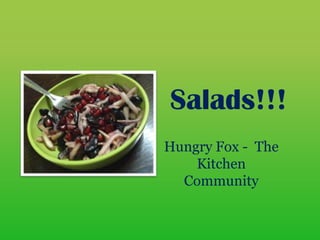
Salads!!!
Hungry Fox - The
Kitchen
Community
Introduction
• To keep it plain and simple a salad is nothing but a mix of
vegetables / fruits / meats / grains / cereals / nuts or
cheese usually tossed in a dressing which has a refreshing
flavour. It can be warm or cold, spicy or sweet, heavy or light
depending on what you want out of it and what ingredients you have
on hand.
• The goal of a great salad is to have fresh and stimulating
flavours. The point is very simple keep it fresh, vibrant and
colourful to act as an appetizer.
• A salad can also act as a great main course, given that the
quantity is substantial. The use of natural and fresh ingredients as
against overworked and over handled ingredients makes it a
healthier option.
Introduction
• A substantial quantity of salad made with protein rich
meats, eggs or vegetables makes for a great working lunch
which keeps you charged, stimulated and full throughout the day.
• Salads are also served as a course before the main dish arrives as it
not only refreshes the palate but a small stimulating quantity
helps increase the appetite for a bigger main course.
• Now-a-days a lot of modern restaurants are serving salads as part of
accompaniments with the main courses instead of vegetables as it
balances the heavier meat and the starchy potatoes.
Generally speaking – salads are of two
main types
Plain / Simple
Salads
These are usually the salads of the
season, a healthy mix of lettuce and any
main ingredient as the base tossed with a
light simple dressing which usually will be
vinaigrette. These salads are for simple
stimulating and refreshing purposes with
acidic dressings to enhance the appetite.
It might include 1 or 2 more ingredients
as part of the salad.
Compound /
Composite Salads
These are more complex salads including more
than 2 ingredients, a combination of fruits and
vegetables, vegetables and meats, meats and
pastas et al.
These generally form a part of the menu as a
separate salad course and are further divided into
Vegetable based salads
Fruit based salads
Seafood based salads
Meat based salads
Cereal based salads
A portion of salad has…
• A salad mainly consists of 3 parts – the lettuce or greens, the
base or the main ingredients of the salad and the dressing
which is any liquid or semi liquid that provides moisture to the
salad.
• Lettuce or the greens are the leafy vegetables that are high in
fibre, low in cholesterol and fats and also a great supply of nutrients
and vitamins to the body.
• Base or the main ingredients are the vegetables or meats which
provide the primary flavour to the salads and give the significance to
the salad. These ingredients can be more than 1 in number.
• Dressing is the blend of liquids which provides moisture to the
salad and makes it palatable. It gives a stimulating punch to the
salad thus making it appetizing. The dressing can be liquid or semi
liquid in nature and used to coat all the ingredients of a salad.
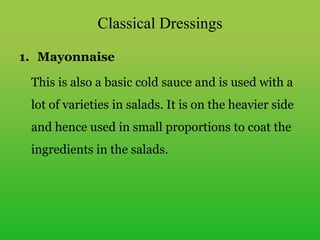
Classical Dressings
1. Mayonnaise
This is also a basic cold sauce and is used with a
lot of varieties in salads. It is on the heavier side
and hence used in small proportions to coat the
ingredients in the salads.
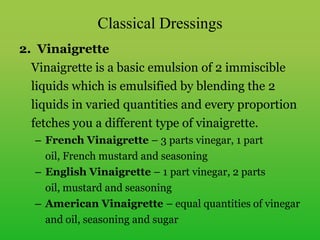
2. Vinaigrette
Vinaigrette is a basic emulsion of 2 immiscible
liquids which is emulsified by blending the 2
liquids in varied quantities and every proportion
fetches you a different type of vinaigrette.
– French Vinaigrette – 3 parts vinegar, 1 part
oil, French mustard and seasoning
– English Vinaigrette – 1 part vinegar, 2 parts
oil, mustard and seasoning
– American Vinaigrette – equal quantities of vinegar
and oil, seasoning and sugar
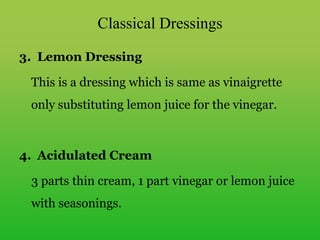
Classical Dressings
3. Lemon Dressing
This is a dressing which is same as vinaigrette
only substituting lemon juice for the vinegar.
4. Acidulated Cream
3 parts thin cream, 1 part vinegar or lemon juice
with seasonings.
Classical Dressings
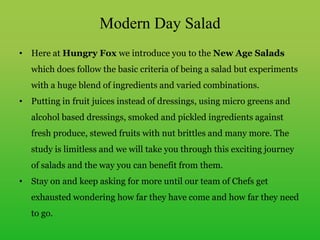
Modern Day Salad
• Here at Hungry Fox we introduce you to the New Age Salads
which does follow the basic criteria of being a salad but experiments
with a huge blend of ingredients and varied combinations.
• Putting in fruit juices instead of dressings, using micro greens and
alcohol based dressings, smoked and pickled ingredients against
fresh produce, stewed fruits with nut brittles and many more. The
study is limitless and we will take you through this exciting journey
of salads and the way you can benefit from them.
• Stay on and keep asking for more until our team of Chefs get
exhausted wondering how far they have come and how far they need
to go.
Thank You
• www.facebook.com/HFKComm
unity
• http://hungryfoxkc.blogspot.in

Salads!!! What you should know.....

  • 1.
    Salads!!! Hungry Fox -The Kitchen Community
  • 2.
    Introduction • To keepit plain and simple a salad is nothing but a mix of vegetables / fruits / meats / grains / cereals / nuts or cheese usually tossed in a dressing which has a refreshing flavour. It can be warm or cold, spicy or sweet, heavy or light depending on what you want out of it and what ingredients you have on hand. • The goal of a great salad is to have fresh and stimulating flavours. The point is very simple keep it fresh, vibrant and colourful to act as an appetizer. • A salad can also act as a great main course, given that the quantity is substantial. The use of natural and fresh ingredients as against overworked and over handled ingredients makes it a healthier option.
  • 3.
    Introduction • A substantialquantity of salad made with protein rich meats, eggs or vegetables makes for a great working lunch which keeps you charged, stimulated and full throughout the day. • Salads are also served as a course before the main dish arrives as it not only refreshes the palate but a small stimulating quantity helps increase the appetite for a bigger main course. • Now-a-days a lot of modern restaurants are serving salads as part of accompaniments with the main courses instead of vegetables as it balances the heavier meat and the starchy potatoes.
  • 4.
    Generally speaking –salads are of two main types Plain / Simple Salads These are usually the salads of the season, a healthy mix of lettuce and any main ingredient as the base tossed with a light simple dressing which usually will be vinaigrette. These salads are for simple stimulating and refreshing purposes with acidic dressings to enhance the appetite. It might include 1 or 2 more ingredients as part of the salad. Compound / Composite Salads These are more complex salads including more than 2 ingredients, a combination of fruits and vegetables, vegetables and meats, meats and pastas et al. These generally form a part of the menu as a separate salad course and are further divided into Vegetable based salads Fruit based salads Seafood based salads Meat based salads Cereal based salads
  • 5.
    A portion ofsalad has… • A salad mainly consists of 3 parts – the lettuce or greens, the base or the main ingredients of the salad and the dressing which is any liquid or semi liquid that provides moisture to the salad. • Lettuce or the greens are the leafy vegetables that are high in fibre, low in cholesterol and fats and also a great supply of nutrients and vitamins to the body. • Base or the main ingredients are the vegetables or meats which provide the primary flavour to the salads and give the significance to the salad. These ingredients can be more than 1 in number. • Dressing is the blend of liquids which provides moisture to the salad and makes it palatable. It gives a stimulating punch to the salad thus making it appetizing. The dressing can be liquid or semi liquid in nature and used to coat all the ingredients of a salad.
  • 6.
    Classical Dressings 1. Mayonnaise Thisis also a basic cold sauce and is used with a lot of varieties in salads. It is on the heavier side and hence used in small proportions to coat the ingredients in the salads.
  • 7.
    2. Vinaigrette Vinaigrette isa basic emulsion of 2 immiscible liquids which is emulsified by blending the 2 liquids in varied quantities and every proportion fetches you a different type of vinaigrette. – French Vinaigrette – 3 parts vinegar, 1 part oil, French mustard and seasoning – English Vinaigrette – 1 part vinegar, 2 parts oil, mustard and seasoning – American Vinaigrette – equal quantities of vinegar and oil, seasoning and sugar Classical Dressings
  • 8.
    3. Lemon Dressing Thisis a dressing which is same as vinaigrette only substituting lemon juice for the vinegar. 4. Acidulated Cream 3 parts thin cream, 1 part vinegar or lemon juice with seasonings. Classical Dressings
  • 9.
    Modern Day Salad •Here at Hungry Fox we introduce you to the New Age Salads which does follow the basic criteria of being a salad but experiments with a huge blend of ingredients and varied combinations. • Putting in fruit juices instead of dressings, using micro greens and alcohol based dressings, smoked and pickled ingredients against fresh produce, stewed fruits with nut brittles and many more. The study is limitless and we will take you through this exciting journey of salads and the way you can benefit from them. • Stay on and keep asking for more until our team of Chefs get exhausted wondering how far they have come and how far they need to go.
  • 10.