Building Local Economies: Enterprise Development,
Entrepreneurship and Innovation
SAHECEF, 7-8 May 2013, Johannesburg
History of the Network
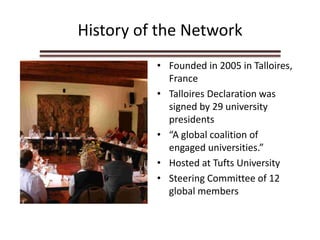
• Founded in 2005 in Talloires,
France
• Talloires Declaration was
signed by 29 university
presidents
• “A global coalition of
engaged universities.”
• Hosted at Tufts University
• Steering Committee of 12
global members
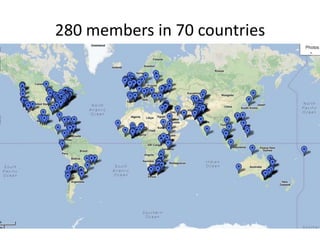
280 members in 70 countries
19 South African Members
Cape Peninsula University of Tech*
Central University of Technology
Durban University of Technology
North-West University
Rhodes University
Stellenbosch University
Tertiary School in Business
Administration
Tshwane University of Technology
University of Cape Town
University of Fort Hare
University of Johannesburg
University of Pretoria
University of South Africa
University of the Free State
University of Venda
University of the Western Cape
University of the Witwatersrand
Vaal University of Technology
Walter Sisulu University
SAHECEF is the African
regional network of 8 global
networks partnering with
Talloires Network
Talloires Network Programs
• MacJannet Prize
Finalists and Winners from South Africa:
Cape Peninsula University of Technology (2009)
North-West University (2012)
Stellenbosch University (2010)
University of Pretoria (2010, 2011)
University of Cape Town (2009, 2010) macjannet.org
University of South Africa (2011)
University of Venda (2011)
Walter Sisulu University (2009, 2012)
• University Volunteer Program
• Faculty & Staff Professional Development Program
• Youth Economic Participation Initiative (YEPI)
Youth Economic Participation Initiative
Background
Launched in 2012
$5.9 million global initiative
Partnership with the MasterCard Foundation
Goals
1. Address global crisis in youth unemployment by supporting
universities to develop innovative models enabling upper-year
students and recent alumni to accelerate their transition to the
work force.
1. Promote the exchange of knowledge through a global
Community of Practice with members.
The MasterCard Foundation
• Scale access to education in Sub-Saharan Africa
– Enable disadvantaged youth to complete secondary and tertiary education
• Develop skills of out-of-school youth
– Equip youth with employable skills
• Connect youth to jobs
– Create, connect and expand economic opportunities for youth
www.mastercardfdn.org
www.talloiresnetwork.tufts.edu
Youth Economic Participation Initiative
YEPI
Activities
• Award 6 - 8 Demonstration Grants of $350,000 to $465,000 to universities
in: West Africa, Southern Africa, Eastern Africa, North Africa, South Asia,
South East Asia, Central Asia, Latin America, Caribbean
• Support the exchange of knowledge through creation of a global
Community of Practice
• Web platform and moderated online discussions about best practices and
brokering joint projects
• Monitoring and Evaluation Plan with Learning Partners. Capturing and
documenting learning that will be both useful to member universities
• 4.5 years, including implementation period for demonstration projects and
dissemination of findings
IMU Cares Program
International Medical University, Malaysia
• Enable medical and
nursing undergraduate
students to practice their
knowledge and clinical
skills in a rural setting
• Villagers benefit from the
presence of IMU students
through regular free
health checks and health
education
imu.edu.my/imu-cares
Programa Social PROSOFI,
Pontificia Universidad Javeriana Bogota, Colombia
• Academic initiative in the
Engineering Faculty
• Multivariate mathematical
model was applied, taking
into account social,
economic and logistical
criteria, as well as previous
University presence and the
interest of the community
in involvement
• pujportal.javeriana.edu.co
Health Intervention Program of Córdoba
Universidad Católica de Córdoba Argentina
• improve the quality of life of
vulnerable populations with
structural deficiencies that
affect the high incidence
and prevalence of
communicable diseases
• students conduct a
participatory assessment
• Implement health
interventions for children
and animals
blog.ucc.edu.ar/proyeccionsocial
Emerging Research Questions
• What is the intersection of community engagement and
youth economic employment? How does job creation also
address a wide array of societal challenges? How is
employment also civic engagement?
• How do you teach entrepreneurship in the (South African)
context?
• When is international knowledge helpful or not helpful?
How are universities adapting their entrepreneurship and
job-preparation teaching strategies to fit local contexts?
• How do we train entrepreneurs who have a positive social
impact in their communities?
Supporting Your Work
• How can the Talloires Network support your work?
• Would you be interested in participating in an international
community of practice on these subjects? If so, how would
you ideally like to engage your colleagues around the
world? What would you hope to learn?
• What are some of the main obstacles that universities in
South Africa encounter in preparing students to become
active economic participants?
• What would you do at your university if you had the
resources?

Building Local Economies: Enterprise Development, Entrepreneurship and Innovation

  • 1.
    Building Local Economies:Enterprise Development, Entrepreneurship and Innovation SAHECEF, 7-8 May 2013, Johannesburg
  • 2.
    History of theNetwork • Founded in 2005 in Talloires, France • Talloires Declaration was signed by 29 university presidents • “A global coalition of engaged universities.” • Hosted at Tufts University • Steering Committee of 12 global members
  • 3.
    280 members in70 countries
  • 4.
    19 South AfricanMembers Cape Peninsula University of Tech* Central University of Technology Durban University of Technology North-West University Rhodes University Stellenbosch University Tertiary School in Business Administration Tshwane University of Technology University of Cape Town University of Fort Hare University of Johannesburg University of Pretoria University of South Africa University of the Free State University of Venda University of the Western Cape University of the Witwatersrand Vaal University of Technology Walter Sisulu University SAHECEF is the African regional network of 8 global networks partnering with Talloires Network
  • 5.
    Talloires Network Programs •MacJannet Prize Finalists and Winners from South Africa: Cape Peninsula University of Technology (2009) North-West University (2012) Stellenbosch University (2010) University of Pretoria (2010, 2011) University of Cape Town (2009, 2010) macjannet.org University of South Africa (2011) University of Venda (2011) Walter Sisulu University (2009, 2012) • University Volunteer Program • Faculty & Staff Professional Development Program • Youth Economic Participation Initiative (YEPI)
  • 6.
    Youth Economic ParticipationInitiative Background Launched in 2012 $5.9 million global initiative Partnership with the MasterCard Foundation Goals 1. Address global crisis in youth unemployment by supporting universities to develop innovative models enabling upper-year students and recent alumni to accelerate their transition to the work force. 1. Promote the exchange of knowledge through a global Community of Practice with members.
  • 7.
    The MasterCard Foundation •Scale access to education in Sub-Saharan Africa – Enable disadvantaged youth to complete secondary and tertiary education • Develop skills of out-of-school youth – Equip youth with employable skills • Connect youth to jobs – Create, connect and expand economic opportunities for youth www.mastercardfdn.org www.talloiresnetwork.tufts.edu
  • 8.
    Youth Economic ParticipationInitiative YEPI Activities • Award 6 - 8 Demonstration Grants of $350,000 to $465,000 to universities in: West Africa, Southern Africa, Eastern Africa, North Africa, South Asia, South East Asia, Central Asia, Latin America, Caribbean • Support the exchange of knowledge through creation of a global Community of Practice • Web platform and moderated online discussions about best practices and brokering joint projects • Monitoring and Evaluation Plan with Learning Partners. Capturing and documenting learning that will be both useful to member universities • 4.5 years, including implementation period for demonstration projects and dissemination of findings
  • 9.
    IMU Cares Program InternationalMedical University, Malaysia • Enable medical and nursing undergraduate students to practice their knowledge and clinical skills in a rural setting • Villagers benefit from the presence of IMU students through regular free health checks and health education imu.edu.my/imu-cares
  • 10.
    Programa Social PROSOFI, PontificiaUniversidad Javeriana Bogota, Colombia • Academic initiative in the Engineering Faculty • Multivariate mathematical model was applied, taking into account social, economic and logistical criteria, as well as previous University presence and the interest of the community in involvement • pujportal.javeriana.edu.co
  • 11.
    Health Intervention Programof Córdoba Universidad Católica de Córdoba Argentina • improve the quality of life of vulnerable populations with structural deficiencies that affect the high incidence and prevalence of communicable diseases • students conduct a participatory assessment • Implement health interventions for children and animals blog.ucc.edu.ar/proyeccionsocial
  • 12.
    Emerging Research Questions •What is the intersection of community engagement and youth economic employment? How does job creation also address a wide array of societal challenges? How is employment also civic engagement? • How do you teach entrepreneurship in the (South African) context? • When is international knowledge helpful or not helpful? How are universities adapting their entrepreneurship and job-preparation teaching strategies to fit local contexts? • How do we train entrepreneurs who have a positive social impact in their communities?
  • 13.
    Supporting Your Work •How can the Talloires Network support your work? • Would you be interested in participating in an international community of practice on these subjects? If so, how would you ideally like to engage your colleagues around the world? What would you hope to learn? • What are some of the main obstacles that universities in South Africa encounter in preparing students to become active economic participants? • What would you do at your university if you had the resources?