Essentials of Business


      Samanta Balina
MAIN POINTS
•   Introduction
•   IPEST Analysis
•   Porter’s 5 Forces
•   SWOT Analysis
•   Conclusions/Recommendations
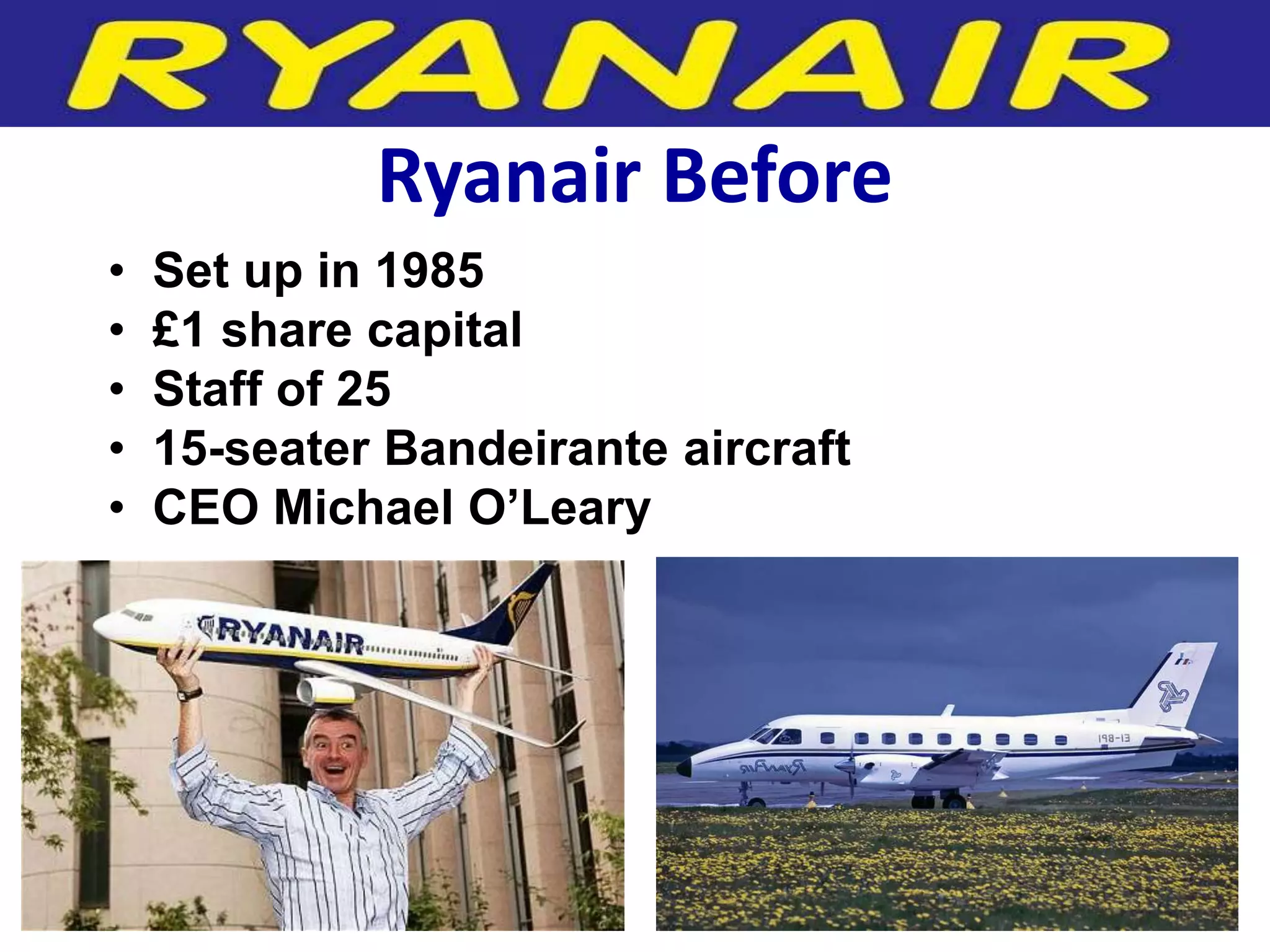
Ryanair Before
•   Set up in 1985
•   £1 share capital
•   Staff of 25
•   15-seater Bandeirante aircraft
•   CEO Michael O’Leary
Ryanair Now
• Europe’s largest low cost airline

• Operating 1,500 flights per day

• 28 countries

• 168 destinations

  Ryanair has a team of more than 8,500 people
  and expects to transmit over 80 million
  passengers in 2012
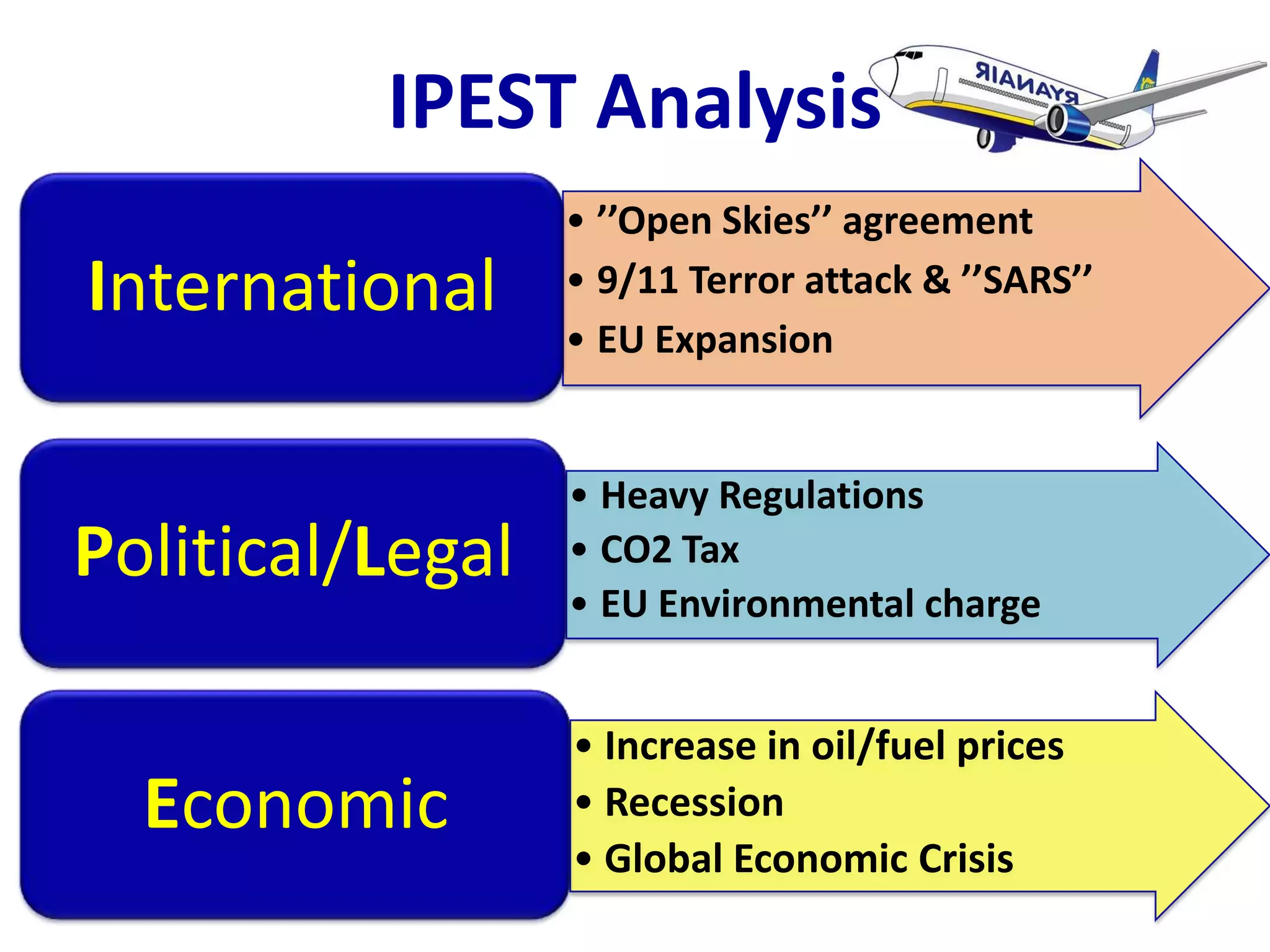
IPEST Analysis
                  • ’’Open Skies’’ agreement
International     • 9/11 Terror attack & ’’SARS’’
                  • EU Expansion


                  • Heavy Regulations
Political/Legal   • CO2 Tax
                  • EU Environmental charge


                  • Increase in oil/fuel prices
  Economic        • Recession
                  • Global Economic Crisis
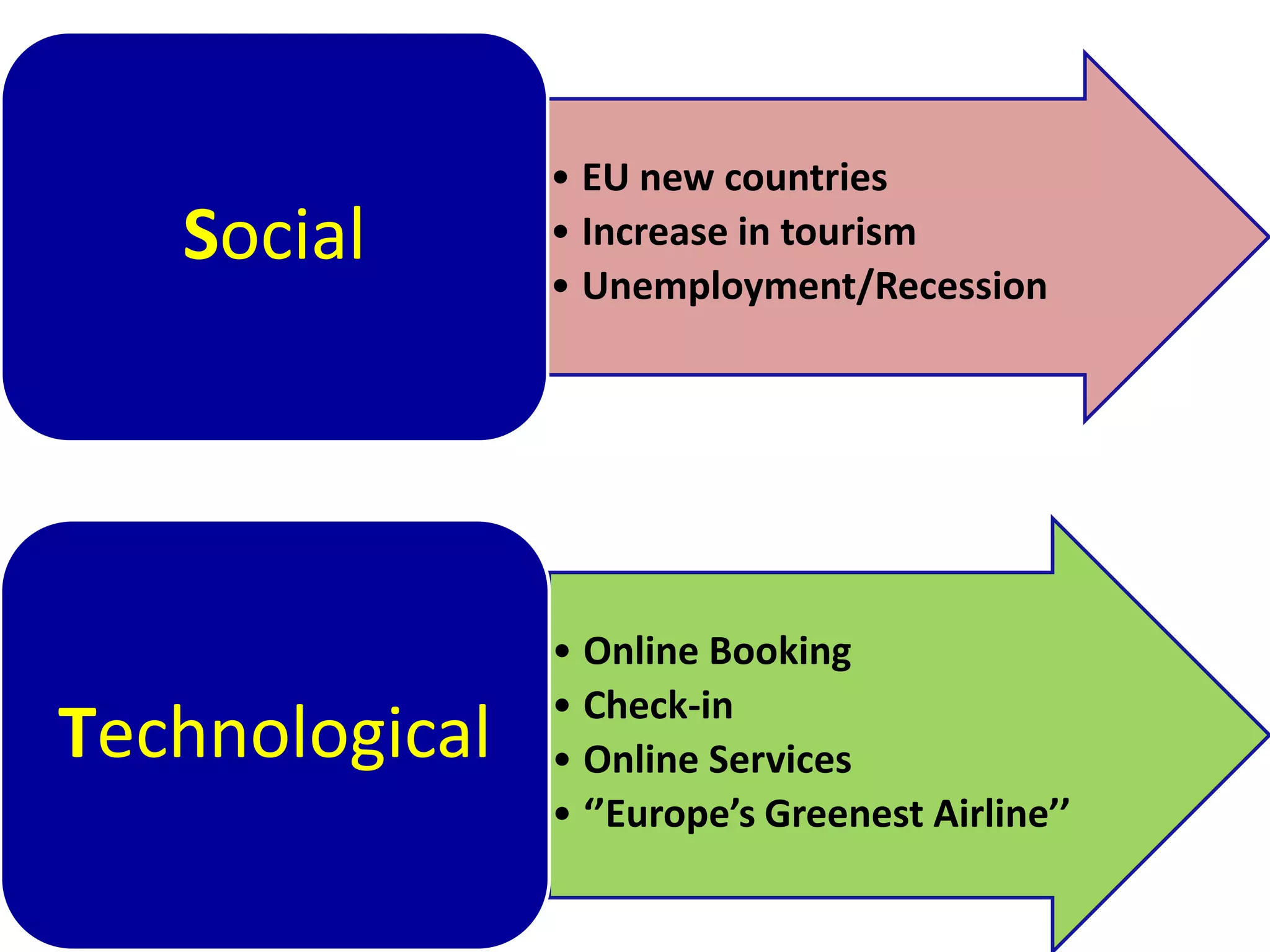
• EU new countries
   Social       • Increase in tourism
                • Unemployment/Recession


                • Online Booking
                • Check-in
Technological   • Online Services
                • ‘’Europe’s Greenest Airline’’
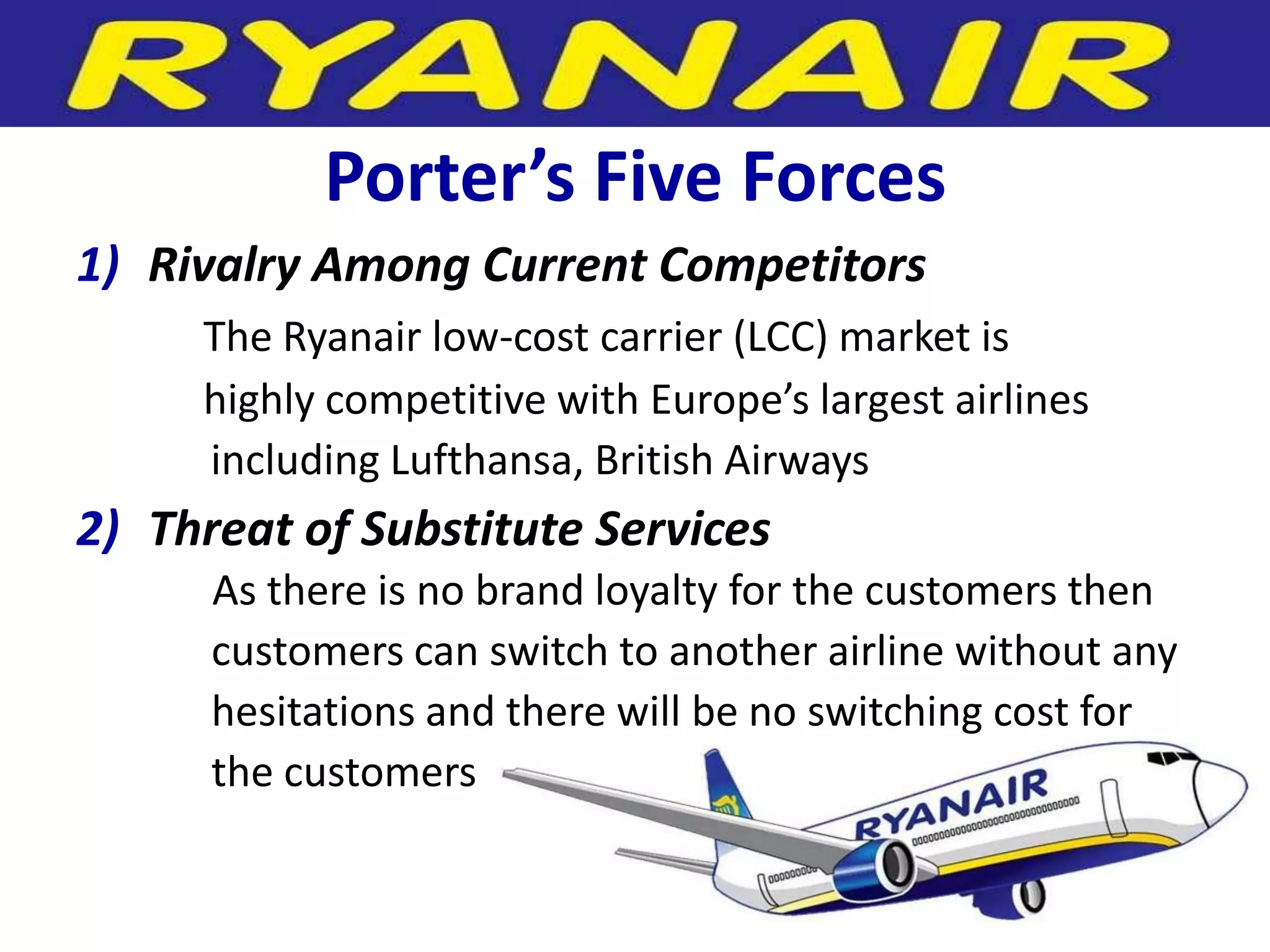
Porter’s Five Forces
1) Rivalry Among Current Competitors
     The Ryanair low-cost carrier (LCC) market is
     highly competitive with Europe’s largest airlines
     including Lufthansa, British Airways
2) Threat of Substitute Services
      As there is no brand loyalty for the customers then
      customers can switch to another airline without any
      hesitations and there will be no switching cost for
      the customers
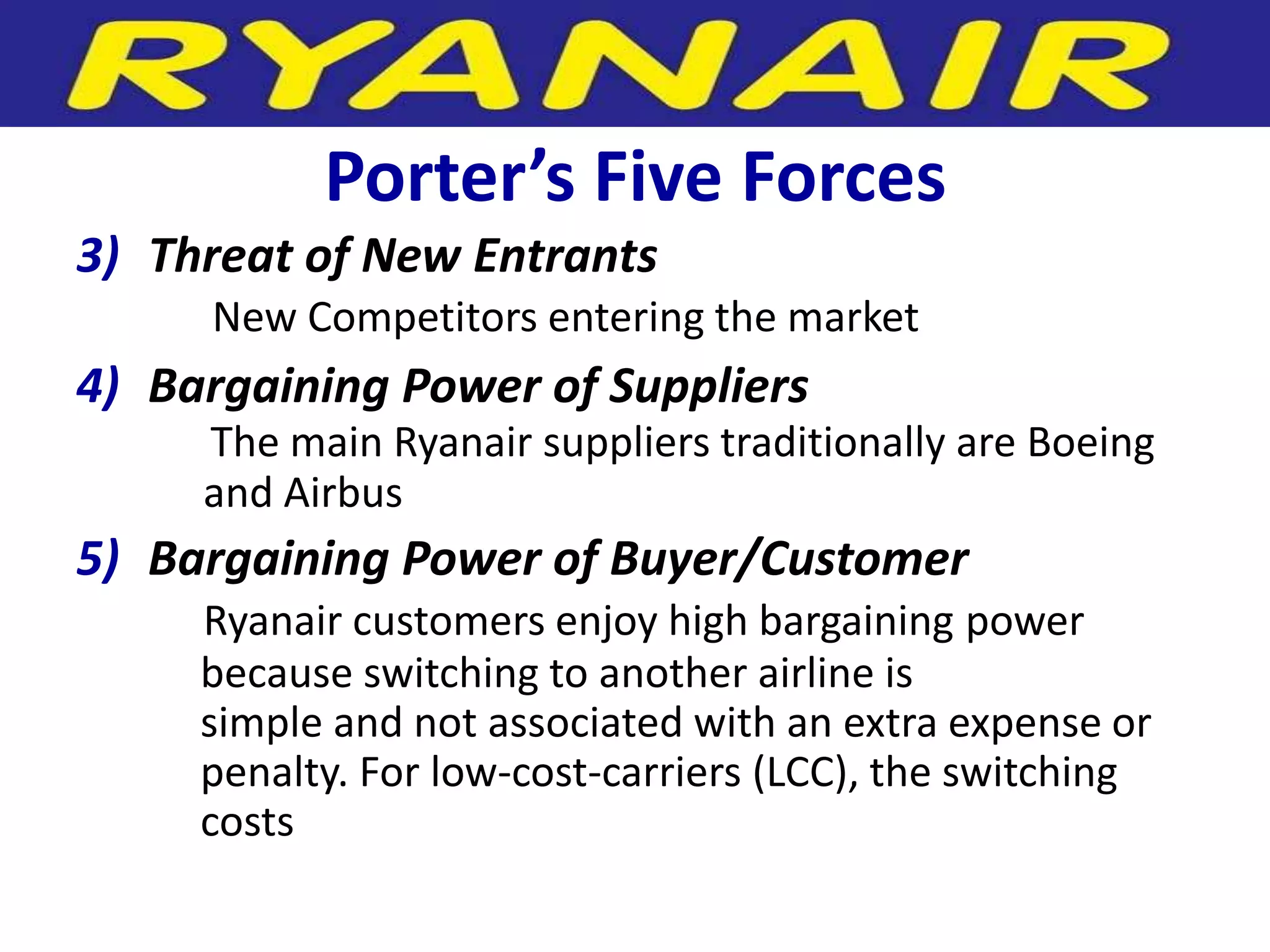
Porter’s Five Forces
3) Threat of New Entrants
     New Competitors entering the market
4) Bargaining Power of Suppliers
     The main Ryanair suppliers traditionally are Boeing
     and Airbus
5) Bargaining Power of Buyer/Customer
     Ryanair customers enjoy high bargaining power
     because switching to another airline is
     simple and not associated with an extra expense or
     penalty. For low-cost-carriers (LCC), the switching
     costs
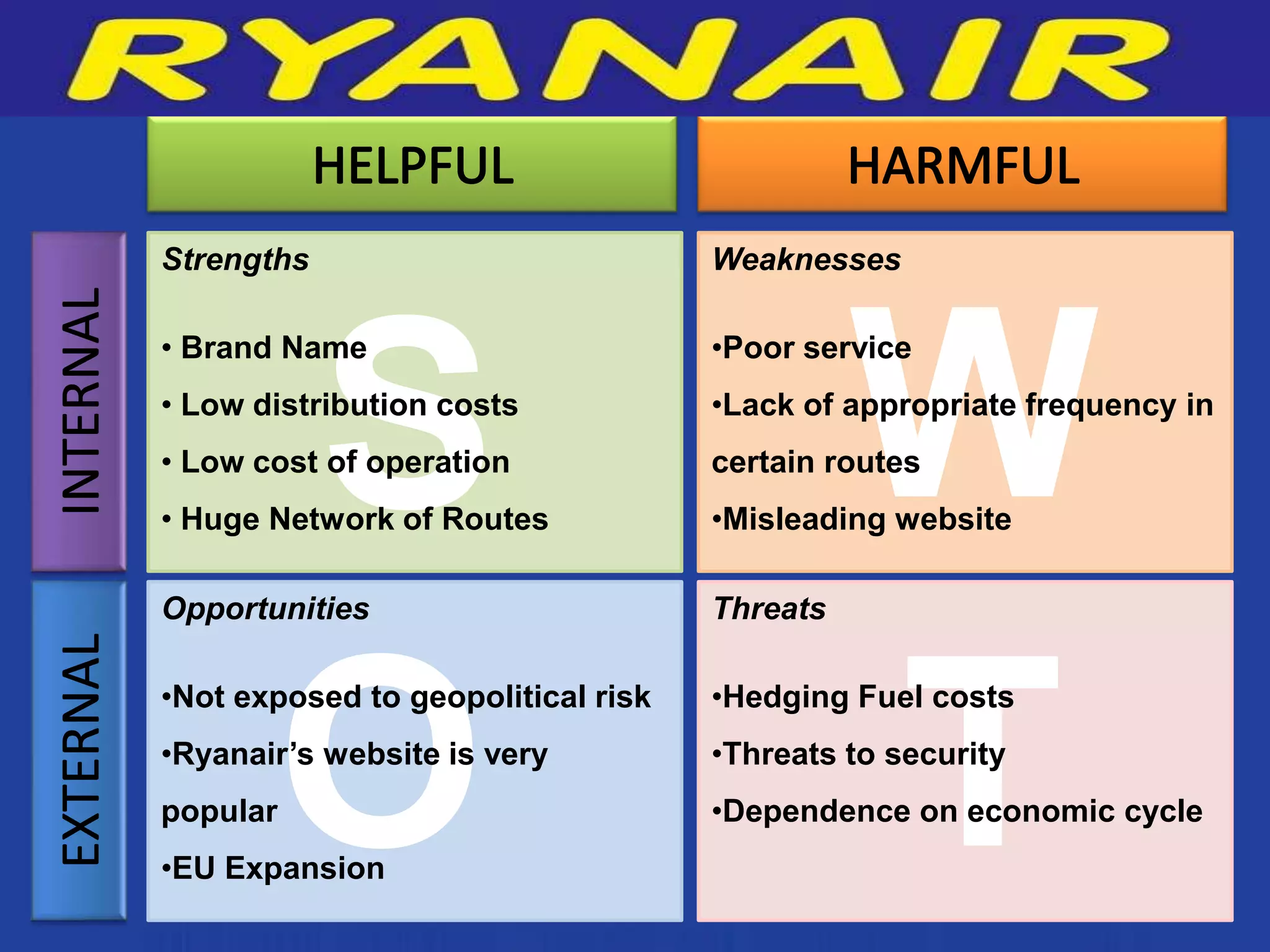
Strengths                           Weaknesses


       S                                      W
• Brand Name                        •Poor service
• Low distribution costs            •Lack of appropriate frequency in
• Low cost of operation             certain routes
• Huge Network of Routes            •Misleading website

Opportunities                       Threats


       O                                      T
•Not exposed to geopolitical risk   •Hedging Fuel costs
•Ryanair’s website is very          •Threats to security
popular                             •Dependence on economic cycle
•EU Expansion
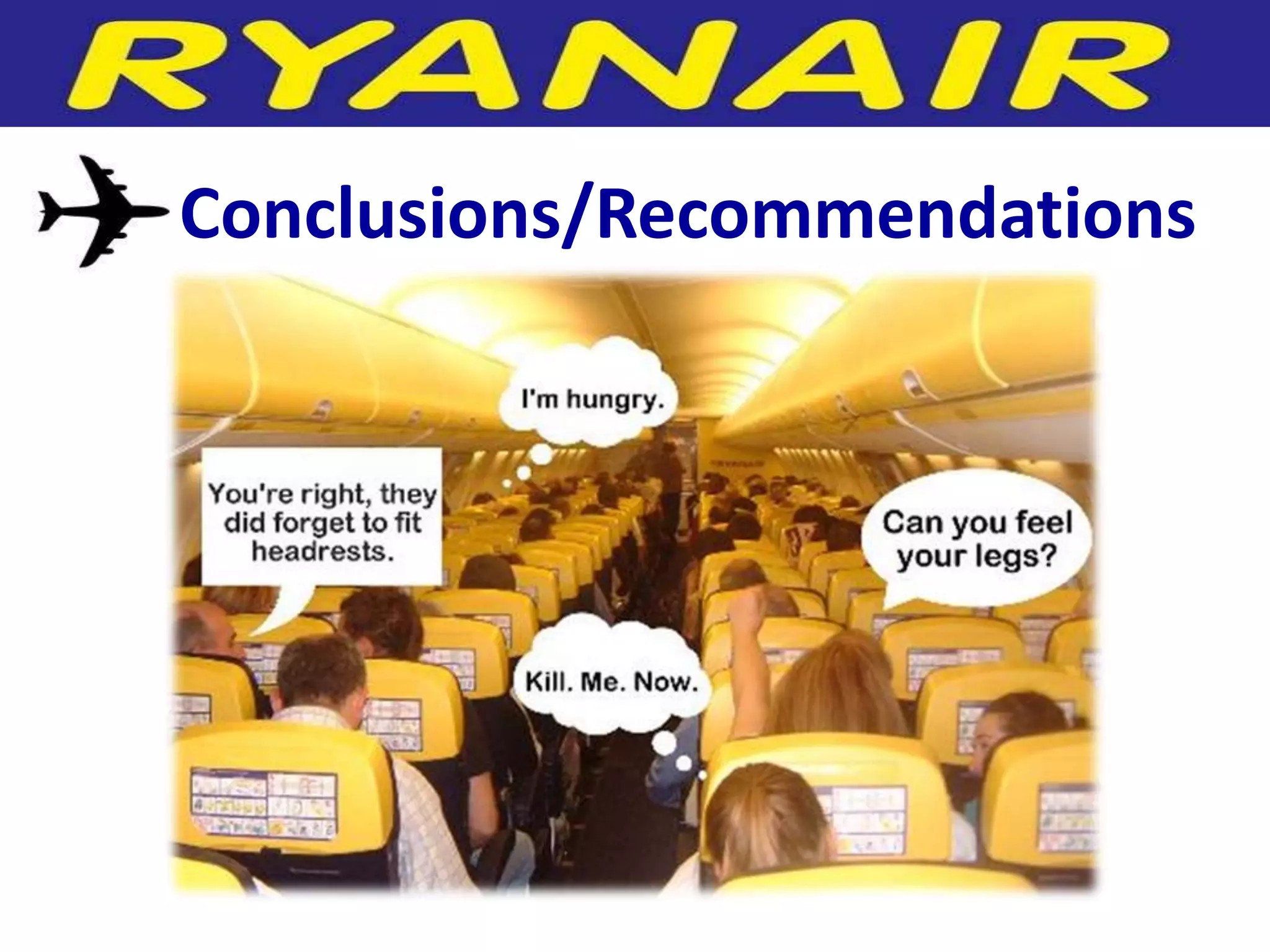
Conclusions/Recommendations
"Thank you for your attention"

Ryanair Presentation 2012

  • 1.
  • 2.
    MAIN POINTS • Introduction • IPEST Analysis • Porter’s 5 Forces • SWOT Analysis • Conclusions/Recommendations
  • 3.
    Ryanair Before • Set up in 1985 • £1 share capital • Staff of 25 • 15-seater Bandeirante aircraft • CEO Michael O’Leary
  • 4.
    Ryanair Now • Europe’slargest low cost airline • Operating 1,500 flights per day • 28 countries • 168 destinations Ryanair has a team of more than 8,500 people and expects to transmit over 80 million passengers in 2012
  • 5.
    IPEST Analysis • ’’Open Skies’’ agreement International • 9/11 Terror attack & ’’SARS’’ • EU Expansion • Heavy Regulations Political/Legal • CO2 Tax • EU Environmental charge • Increase in oil/fuel prices Economic • Recession • Global Economic Crisis
  • 6.
    • EU newcountries Social • Increase in tourism • Unemployment/Recession • Online Booking • Check-in Technological • Online Services • ‘’Europe’s Greenest Airline’’
  • 7.
    Porter’s Five Forces 1)Rivalry Among Current Competitors The Ryanair low-cost carrier (LCC) market is highly competitive with Europe’s largest airlines including Lufthansa, British Airways 2) Threat of Substitute Services As there is no brand loyalty for the customers then customers can switch to another airline without any hesitations and there will be no switching cost for the customers
  • 8.
    Porter’s Five Forces 3)Threat of New Entrants New Competitors entering the market 4) Bargaining Power of Suppliers The main Ryanair suppliers traditionally are Boeing and Airbus 5) Bargaining Power of Buyer/Customer Ryanair customers enjoy high bargaining power because switching to another airline is simple and not associated with an extra expense or penalty. For low-cost-carriers (LCC), the switching costs
  • 9.
    Strengths Weaknesses S W • Brand Name •Poor service • Low distribution costs •Lack of appropriate frequency in • Low cost of operation certain routes • Huge Network of Routes •Misleading website Opportunities Threats O T •Not exposed to geopolitical risk •Hedging Fuel costs •Ryanair’s website is very •Threats to security popular •Dependence on economic cycle •EU Expansion
  • 10.
  • 11.
    "Thank you foryour attention"