Download to read offline
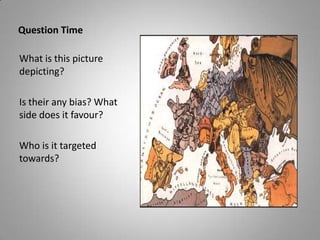
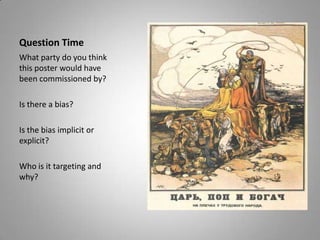

Prior to the Russian Revolution in 1917, Tsar Nicholas II ruled Russia but faced growing discontent from peasants and workers suffering from extreme poverty and the control of the bourgeoisie. Discontent increased after Russia's disastrous defeat in the 1904 Russo-Japanese War, which caused further economic hardship. Bloody Sunday in 1905 saw imperial guards kill over 100 protesters who had petitioned the Tsar at the palace gates for improved living conditions, shattering peasants' faith in the Tsar's protection. World War I weakened Russia further and led to the overthrow of the Tsar in 1917, ending centuries of imperial rule.


