Project: Rules For Humanity 
Muhammad Shahidul Islam 
Roll No: 12310145 
Department: CSE 
1
2 
Contents 
What Makes Humans Different 
From Other Animals? 
 Animal Intelligence And The 
Evolution of the Human Mind. 
What Does it Mean to be 
Human?
What makes humans different from other 
animals? 
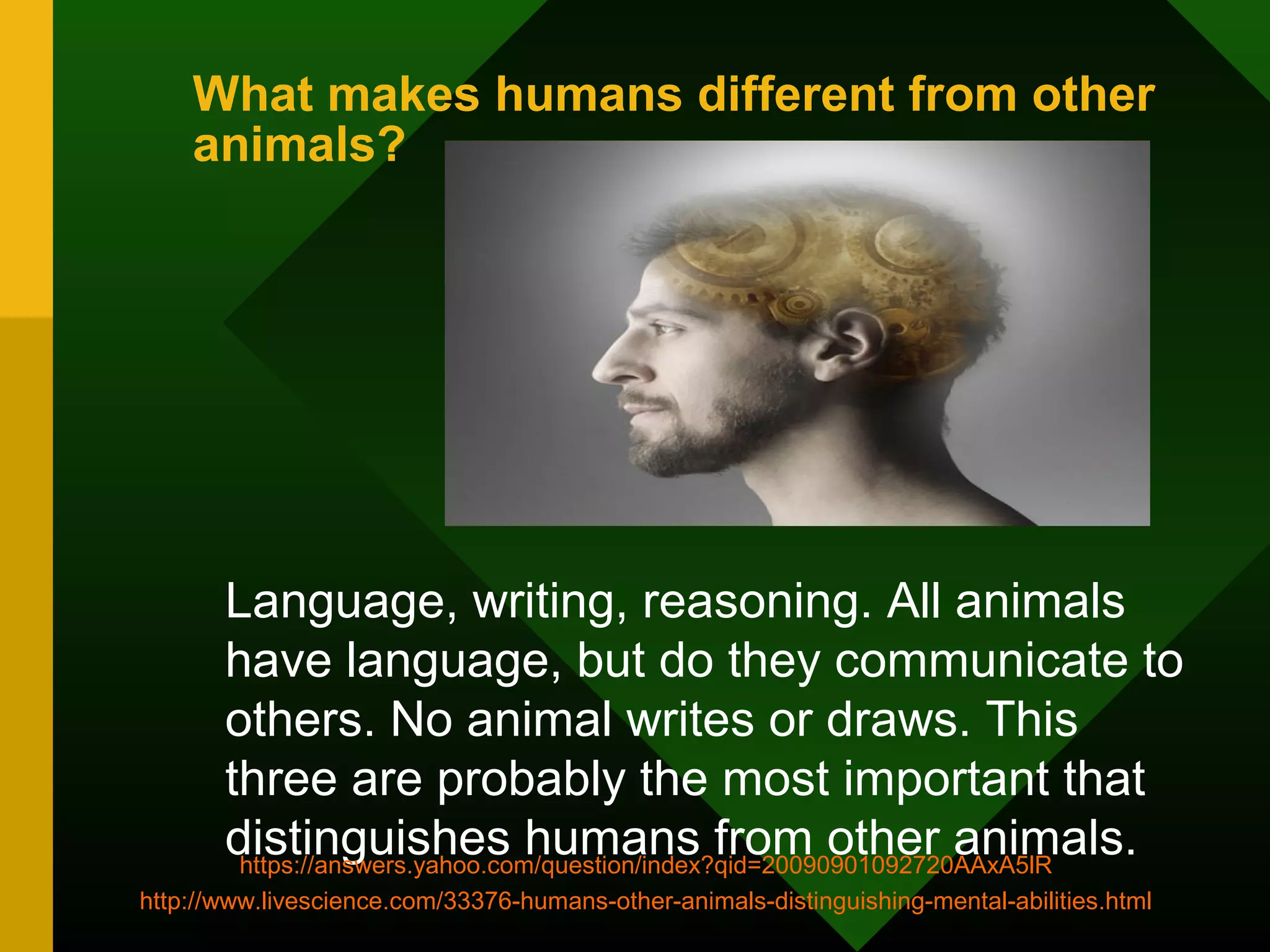
Language, writing, reasoning. All animals 
have language, but do they communicate to 
others. No animal writes or draws. This 
three are probably the most important that 
distinguishes humans from other animals. https://answers.yahoo.com/question/index?qid=20090901092720AAxA5lR 
http://www.livescience.com/33376-humans-other-animals-distinguishing-mental-abilities.html
4 
One is Communication 
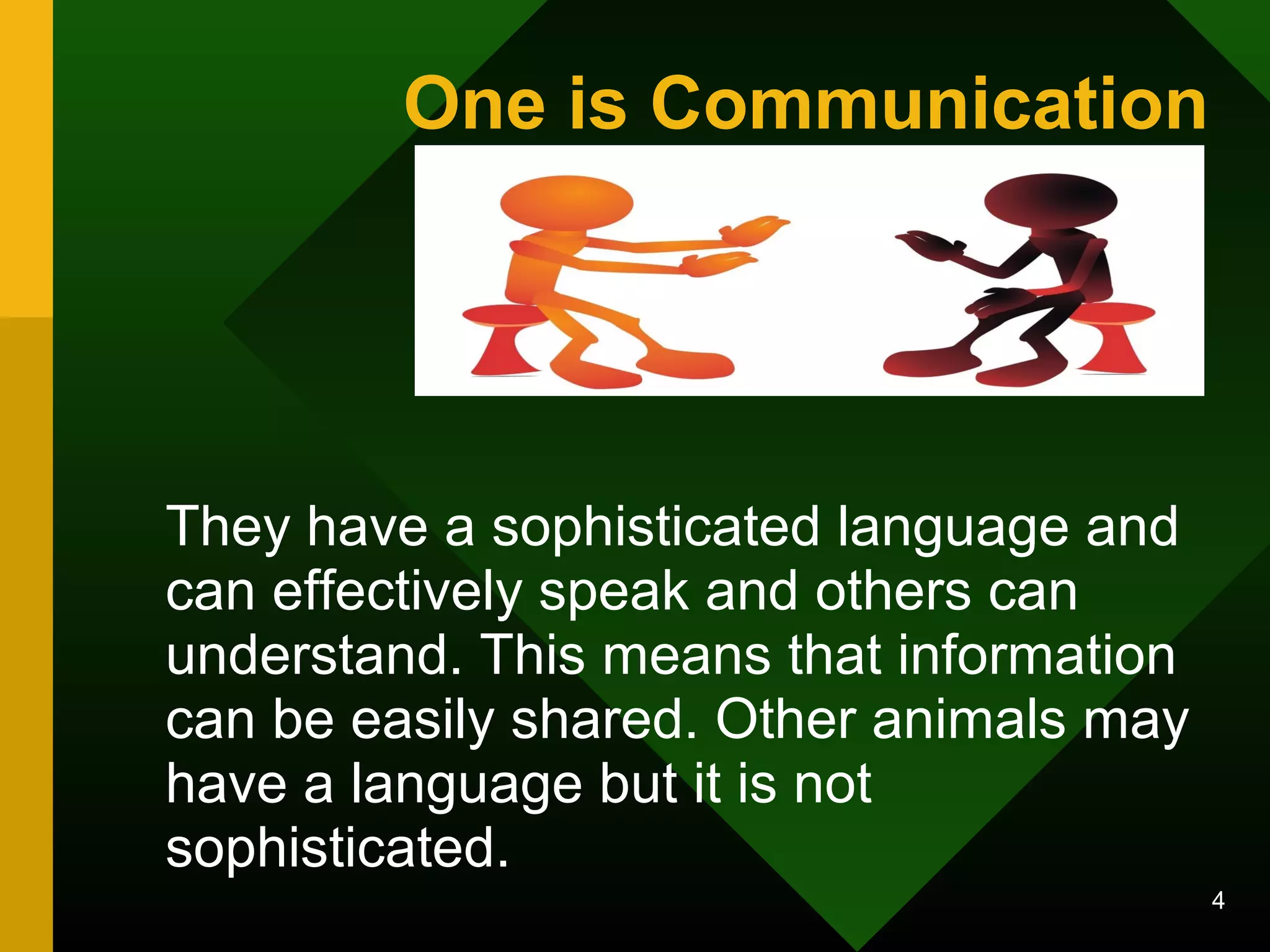
They have a sophisticated language and 
can effectively speak and others can 
understand. This means that information 
can be easily shared. Other animals may 
have a language but it is not 
sophisticated.
Second is Reasoning and 
Conscience 
5 
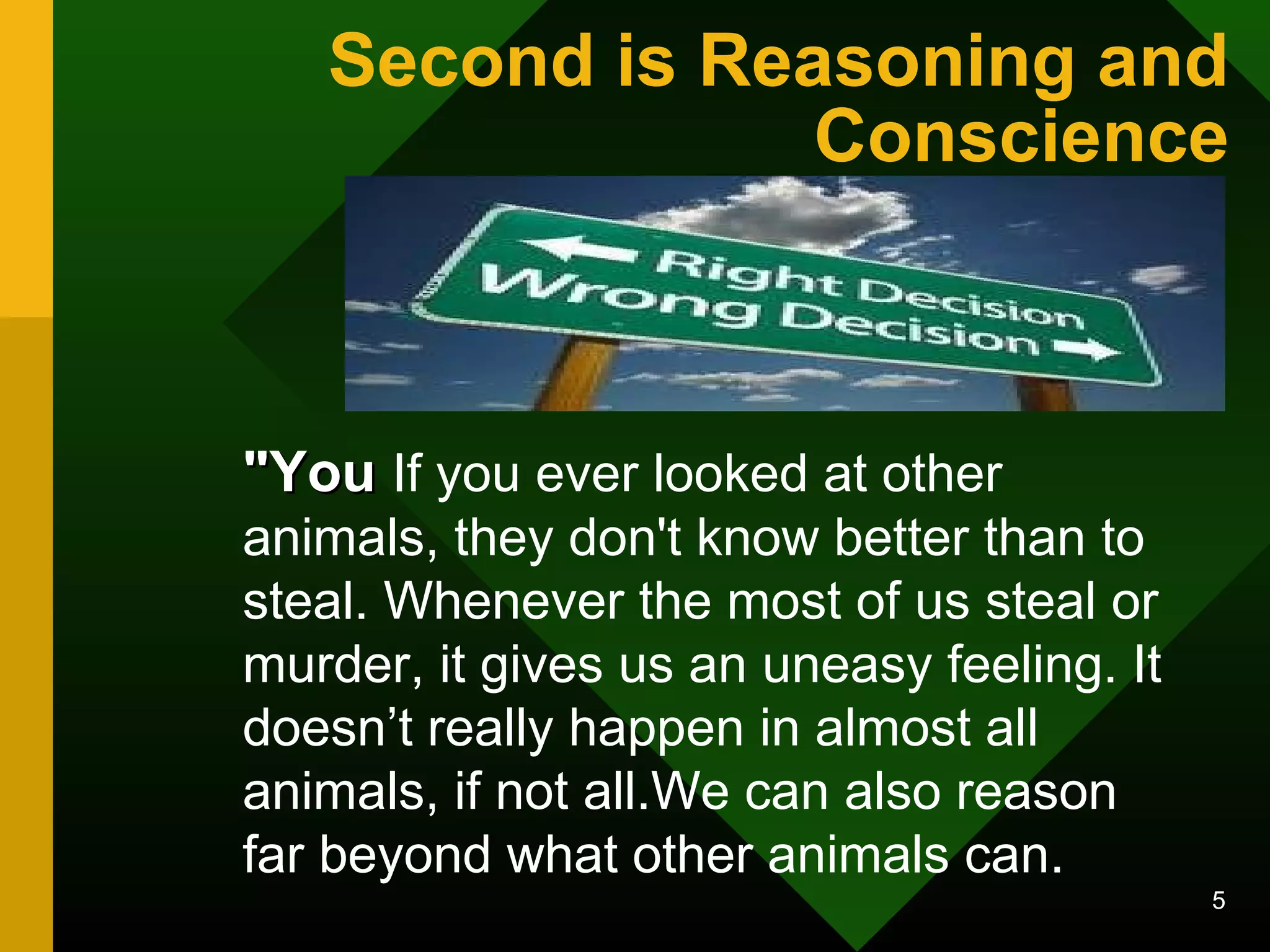
""YYoouu If you ever looked at other 
animals, they don't know better than to 
steal. Whenever the most of us steal or 
murder, it gives us an uneasy feeling. It 
doesn’t really happen in almost all 
animals, if not all.We can also reason 
far beyond what other animals can.
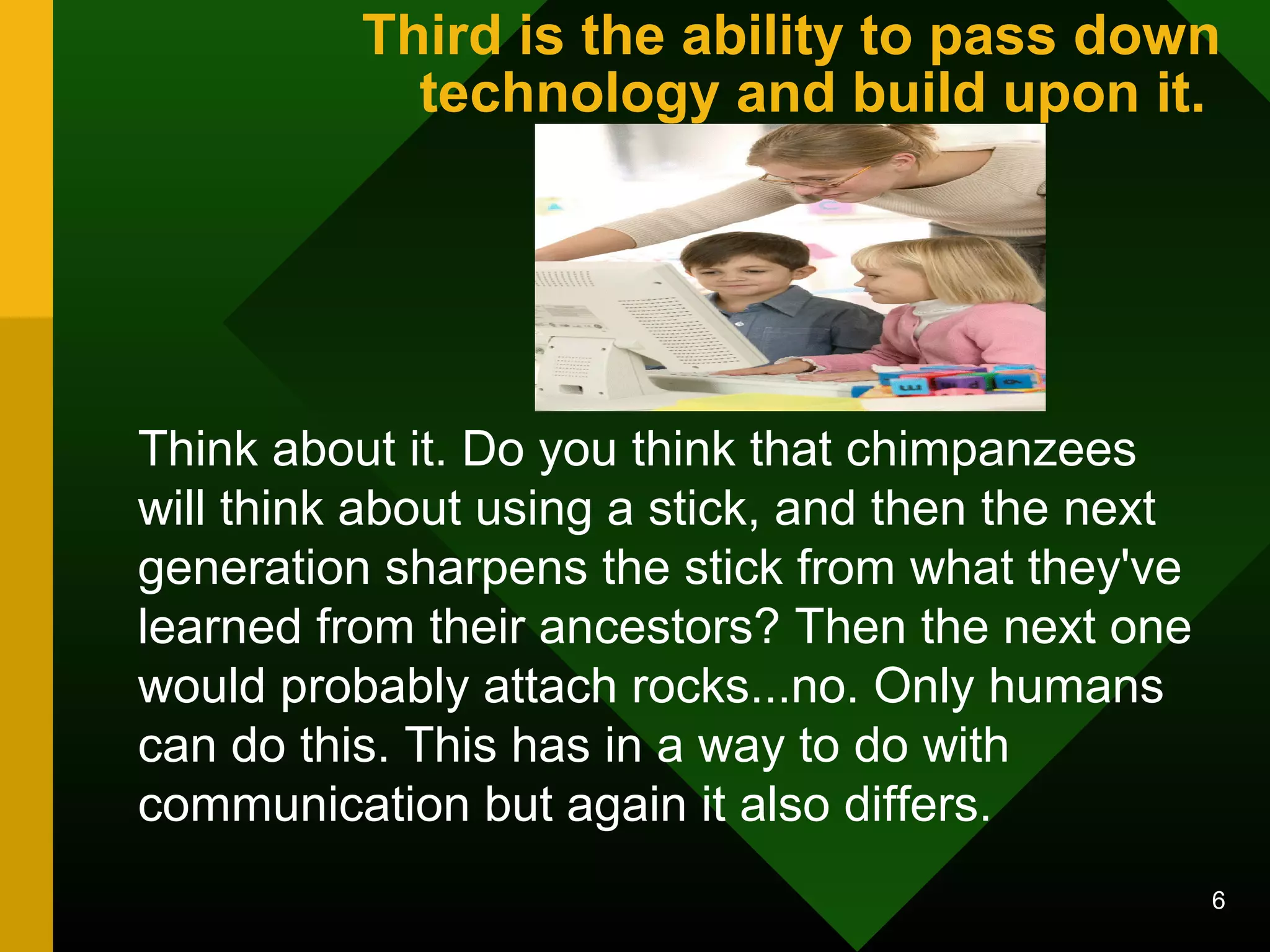
Third is the ability to pass down 
technology and build upon it. 
6 
Think about it. Do you think that chimpanzees 
will think about using a stick, and then the next 
generation sharpens the stick from what they've 
learned from their ancestors? Then the next one 
would probably attach rocks...no. Only humans 
can do this. This has in a way to do with 
communication but again it also differs.
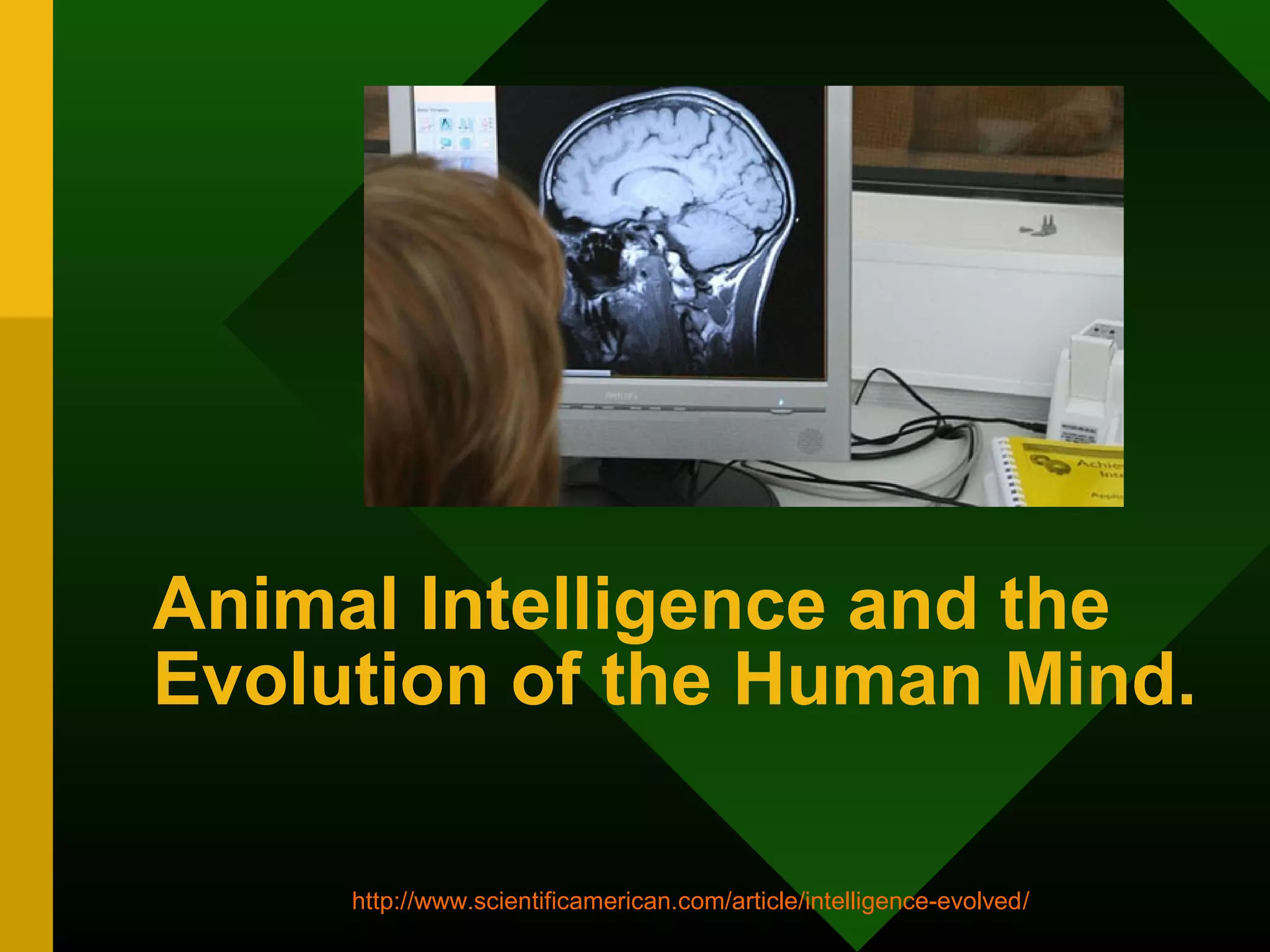
Animal Intelligence and the 
Evolution of the Human Mind. 
http://www.scientificamerican.com/article/intelligence-evolved/
8 
As far as we know, no dog can compose music, no 
dolphin can speak in rhymes, and no parrot can 
solve equations with two unknowns. Only humans 
can perform such intellectual feats, presumably 
because we are smarter than all other animal 
species—at least by our own definition of 
intelligence. 
Thus, researchers have tried to identify unique 
features of the human brain that could account for 
our superior intellectual abilities. But, anatomically, 
the human brain is very similar to that of other 
primates because humans and chimpanzees share 
an ancestor that walked the earth less than seven 
million years ago.
What Does it Mean to be 
Human? 
1. Upright Posture 
2. Extraordinary Brains 
3. Hands 
4. Clothing 
5. Blushing 
6. Long Childhoods 
7. Fire 
8. Social Life 
http://www.livescience.com/15689-evolution-human-special-species.html 
http://humanorigins.si.edu/human-characteristics
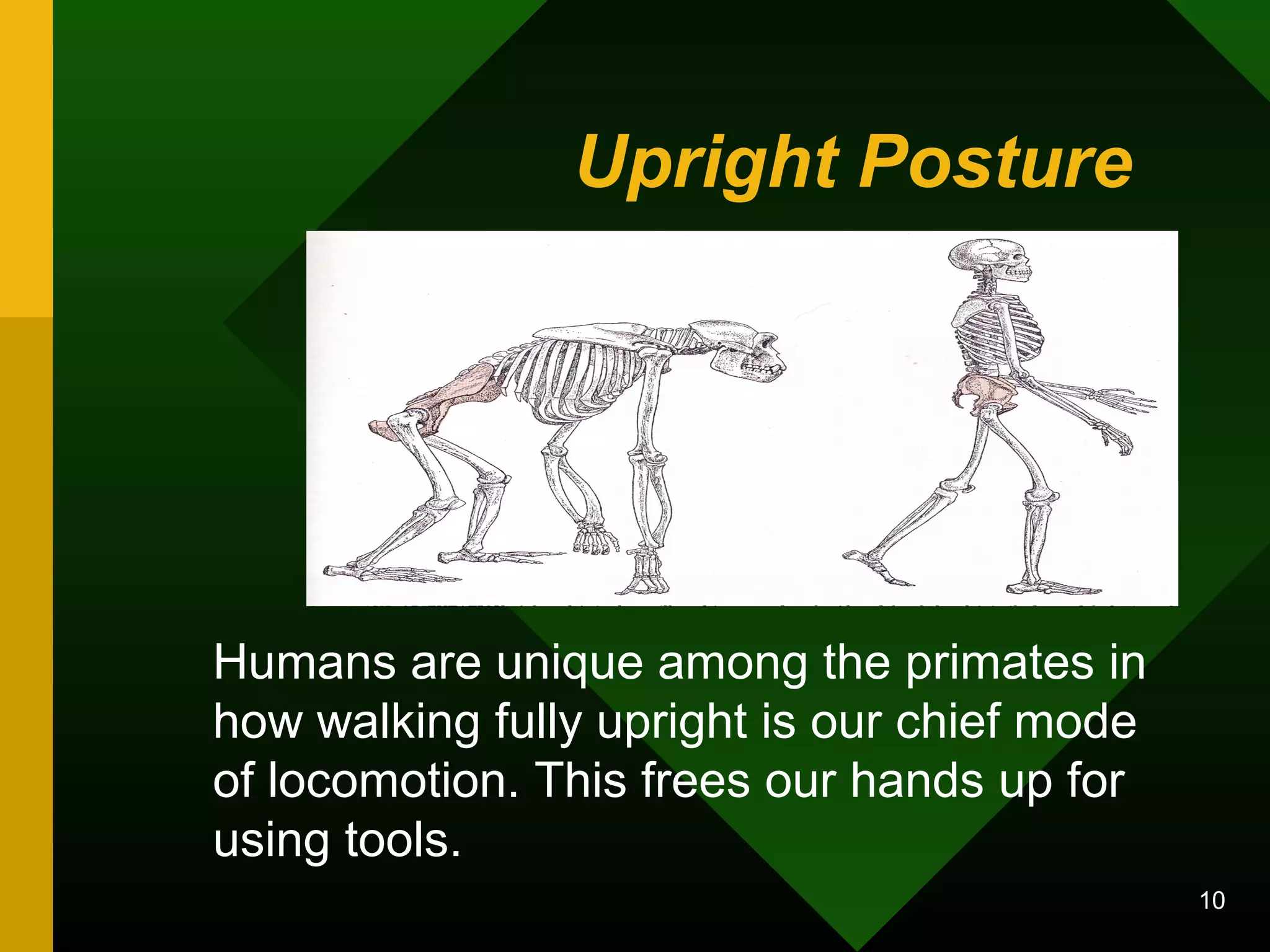
Upright Posture 
Humans are unique among the primates in 
how walking fully upright is our chief mode 
of locomotion. This frees our hands up for 
using tools. 
10
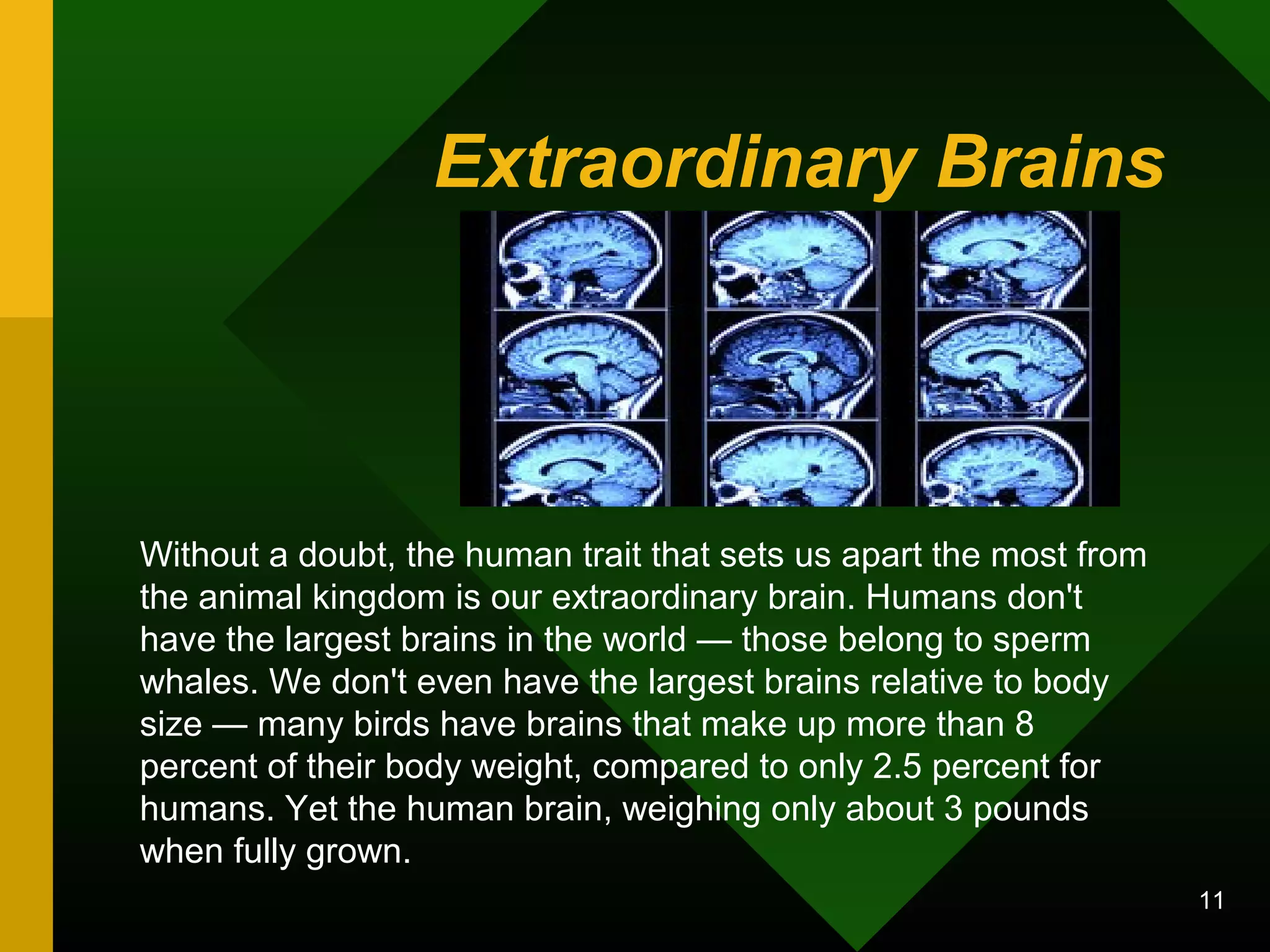
Extraordinary Brains 
Without a doubt, the human trait that sets us apart the most from 
the animal kingdom is our extraordinary brain. Humans don't 
have the largest brains in the world — those belong to sperm 
whales. We don't even have the largest brains relative to body 
size — many birds have brains that make up more than 8 
percent of their body weight, compared to only 2.5 percent for 
humans. Yet the human brain, weighing only about 3 pounds 
when fully grown. 
11
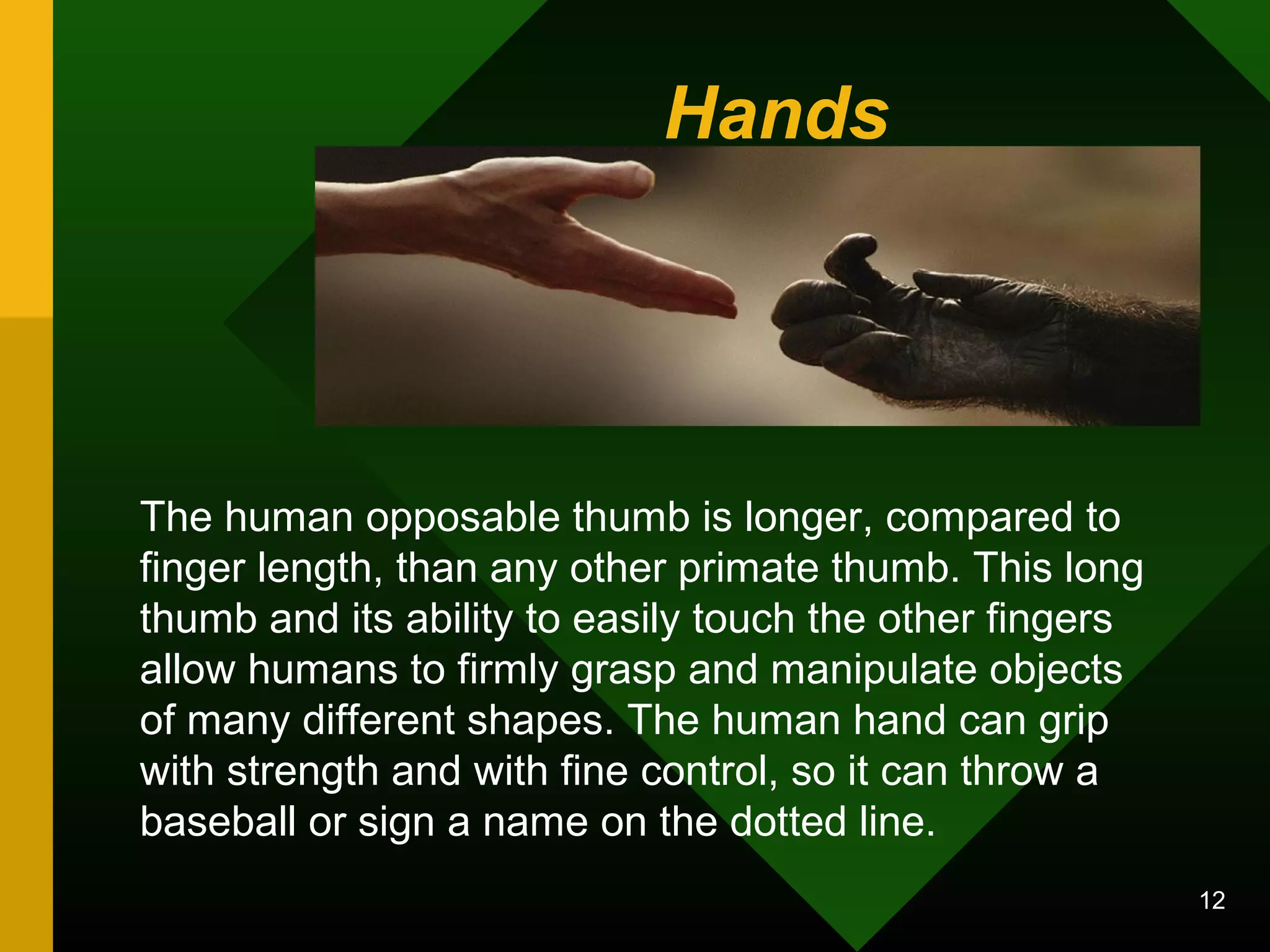
Hands 
The human opposable thumb is longer, compared to 
finger length, than any other primate thumb. This long 
thumb and its ability to easily touch the other fingers 
allow humans to firmly grasp and manipulate objects 
of many different shapes. The human hand can grip 
with strength and with fine control, so it can throw a 
baseball or sign a name on the dotted line. 
12
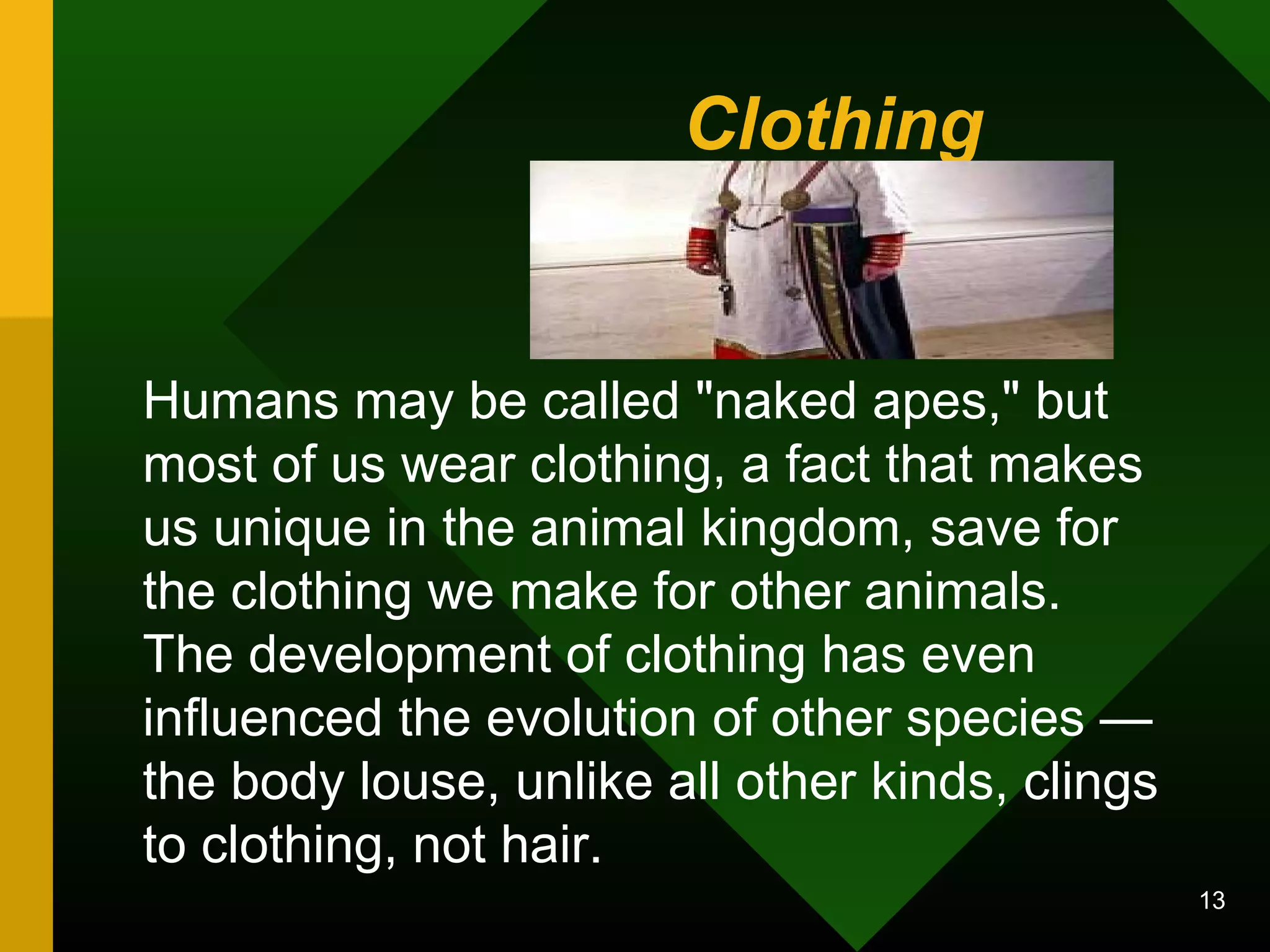
Clothing 
Humans may be called "naked apes," but 
most of us wear clothing, a fact that makes 
us unique in the animal kingdom, save for 
the clothing we make for other animals. 
The development of clothing has even 
influenced the evolution of other species — 
the body louse, unlike all other kinds, clings 
to clothing, not hair. 
13
Blushing 
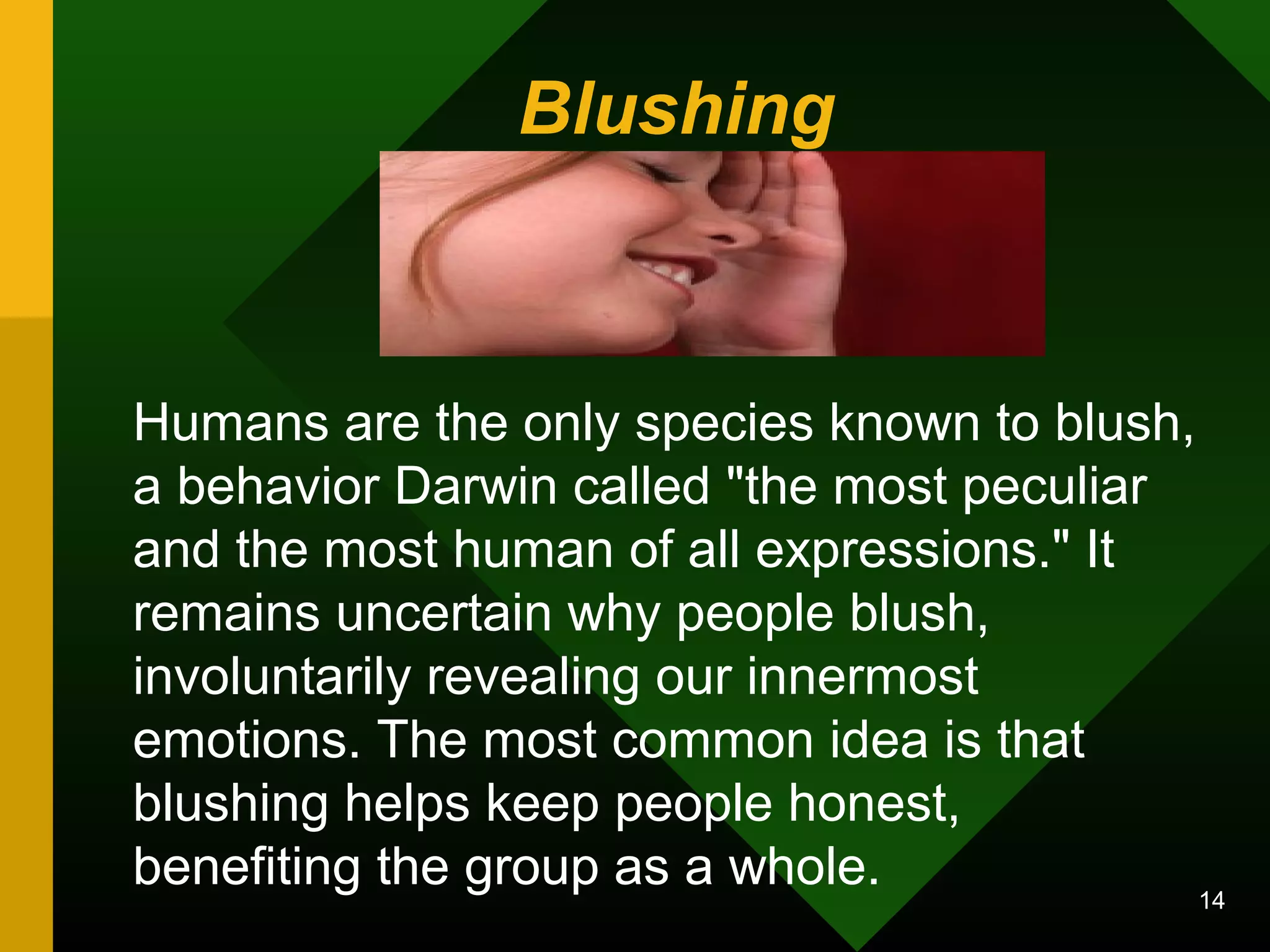
Humans are the only species known to blush, 
a behavior Darwin called "the most peculiar 
and the most human of all expressions." It 
remains uncertain why people blush, 
involuntarily revealing our innermost 
emotions. The most common idea is that 
blushing helps keep people honest, 
benefiting the group as a whole. 14
Long Childhoods 
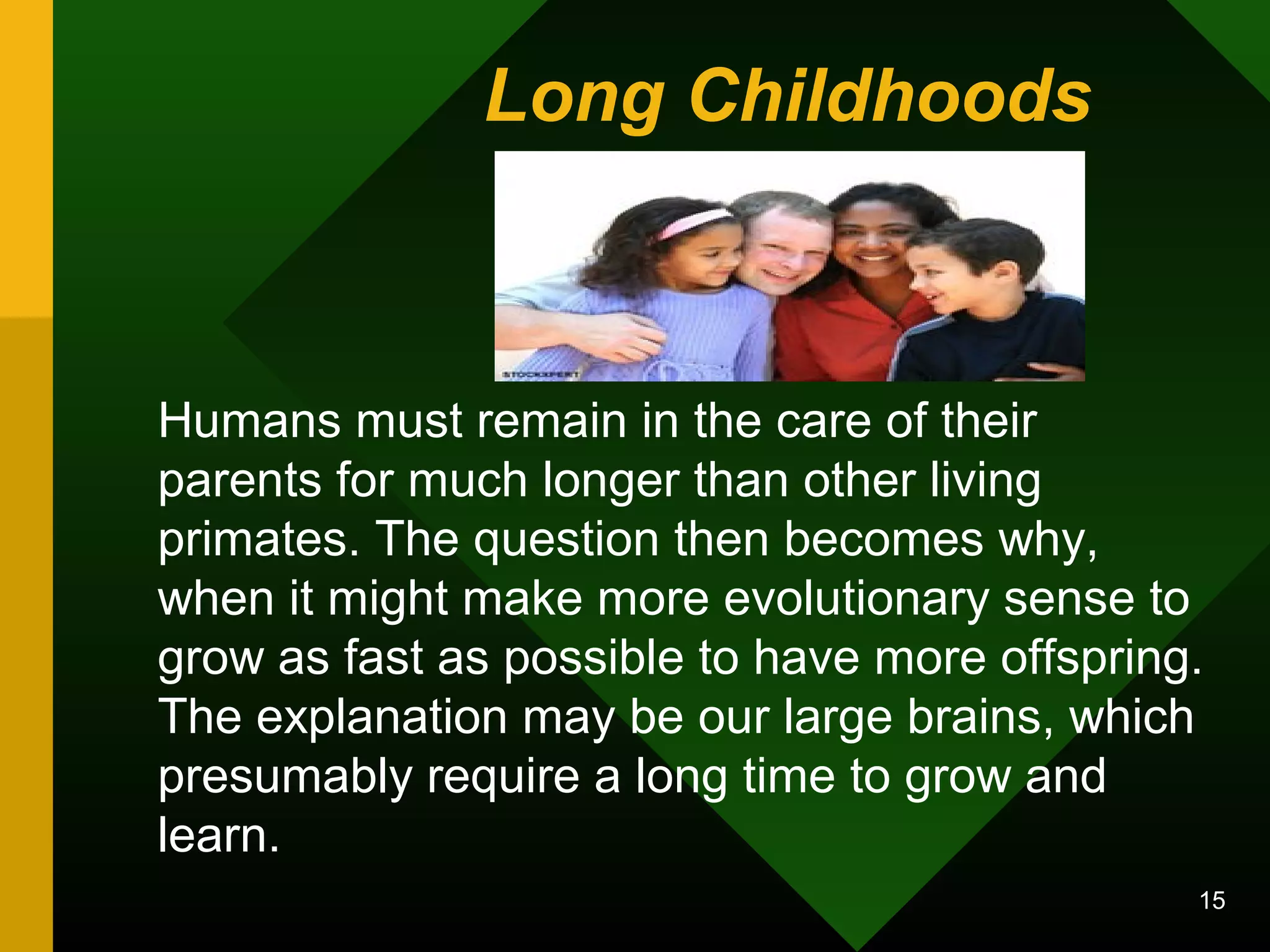
Humans must remain in the care of their 
parents for much longer than other living 
primates. The question then becomes why, 
when it might make more evolutionary sense to 
grow as fast as possible to have more offspring. 
The explanation may be our large brains, which 
presumably require a long time to grow and 
learn. 
15
Fire 
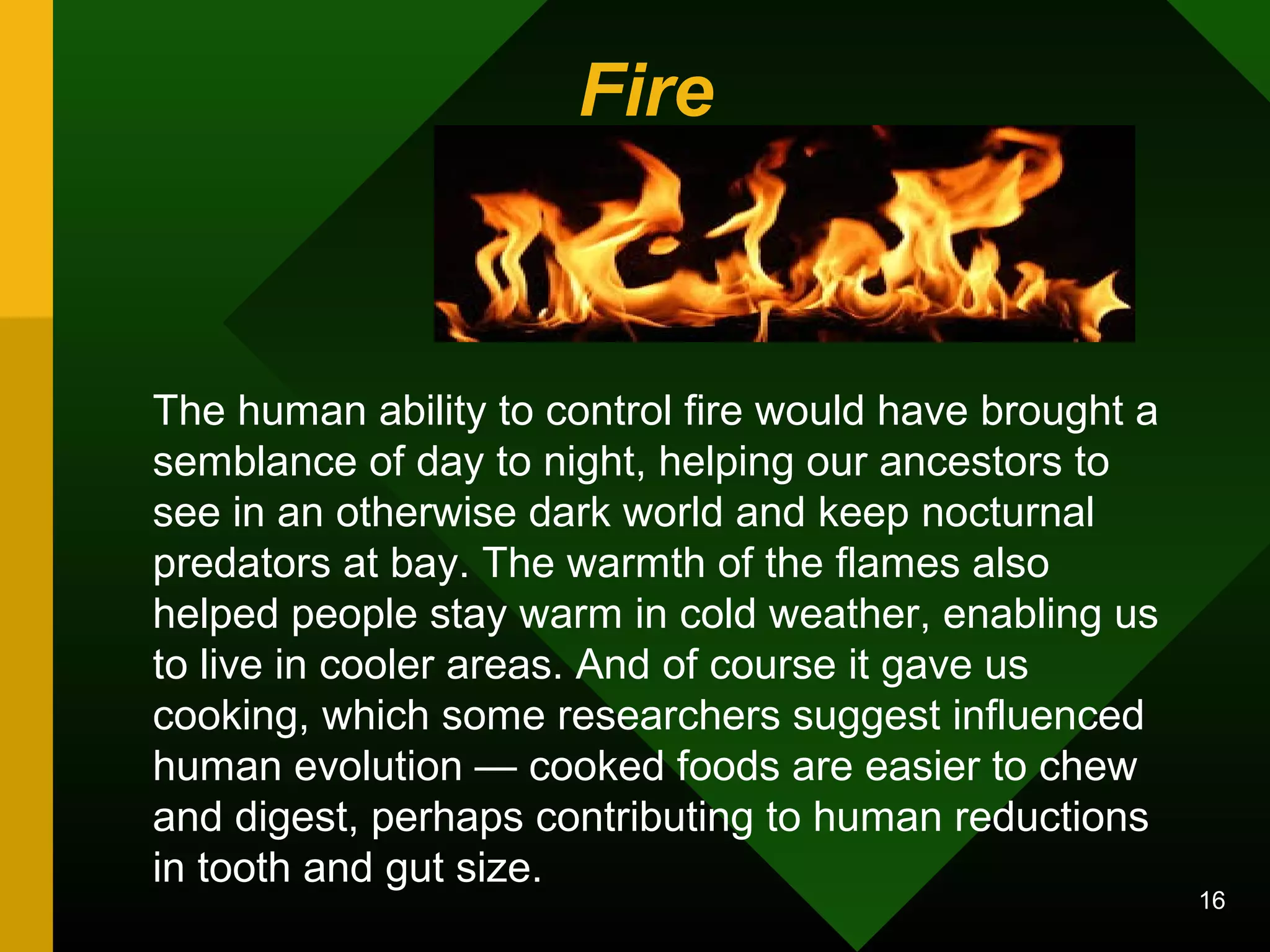
The human ability to control fire would have brought a 
semblance of day to night, helping our ancestors to 
see in an otherwise dark world and keep nocturnal 
predators at bay. The warmth of the flames also 
helped people stay warm in cold weather, enabling us 
to live in cooler areas. And of course it gave us 
cooking, which some researchers suggest influenced 
human evolution — cooked foods are easier to chew 
and digest, perhaps contributing to human reductions 
in tooth and gut size. 
16
Social Life 
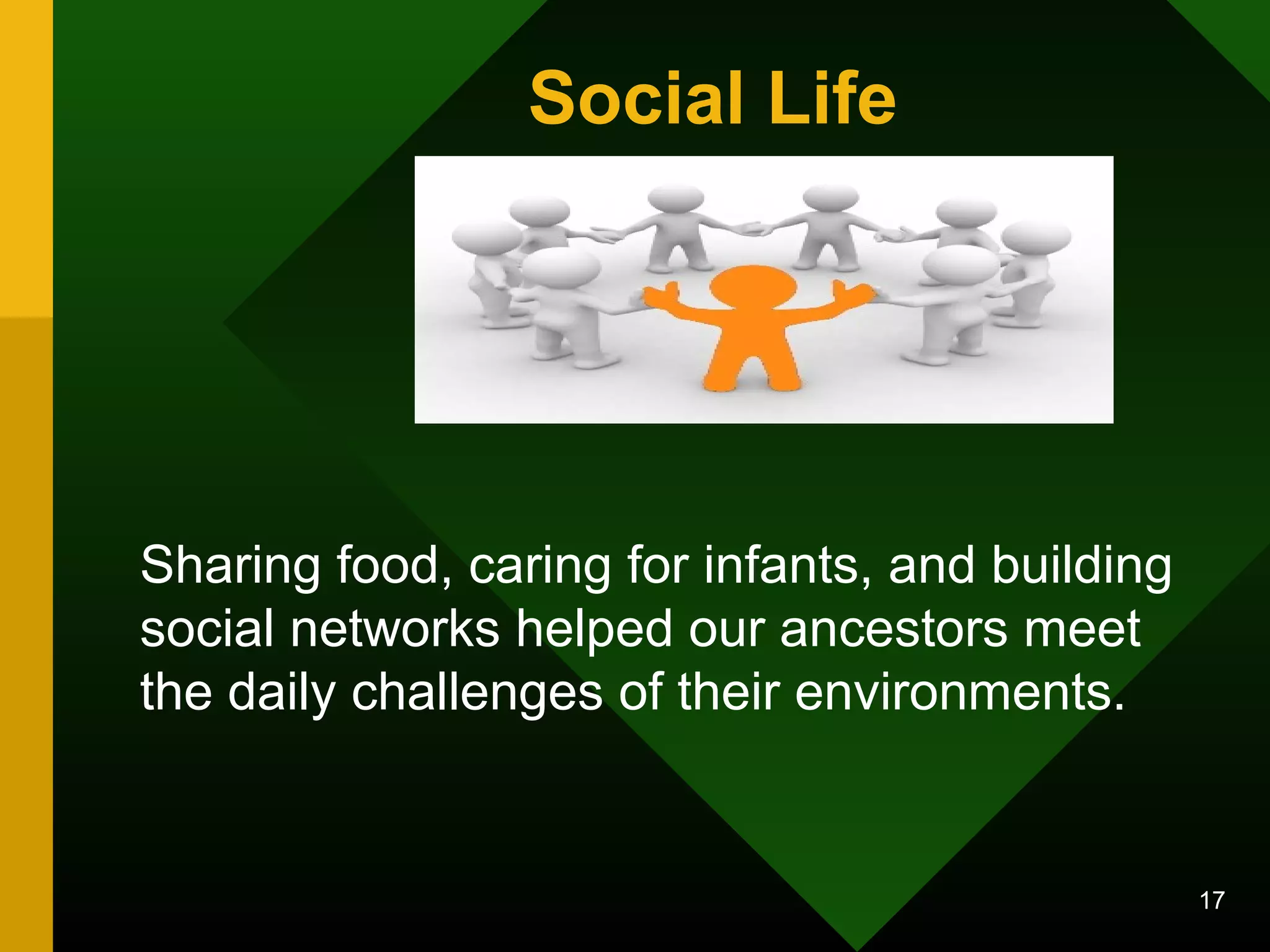
Sharing food, caring for infants, and building 
social networks helped our ancestors meet 
the daily challenges of their environments. 
17
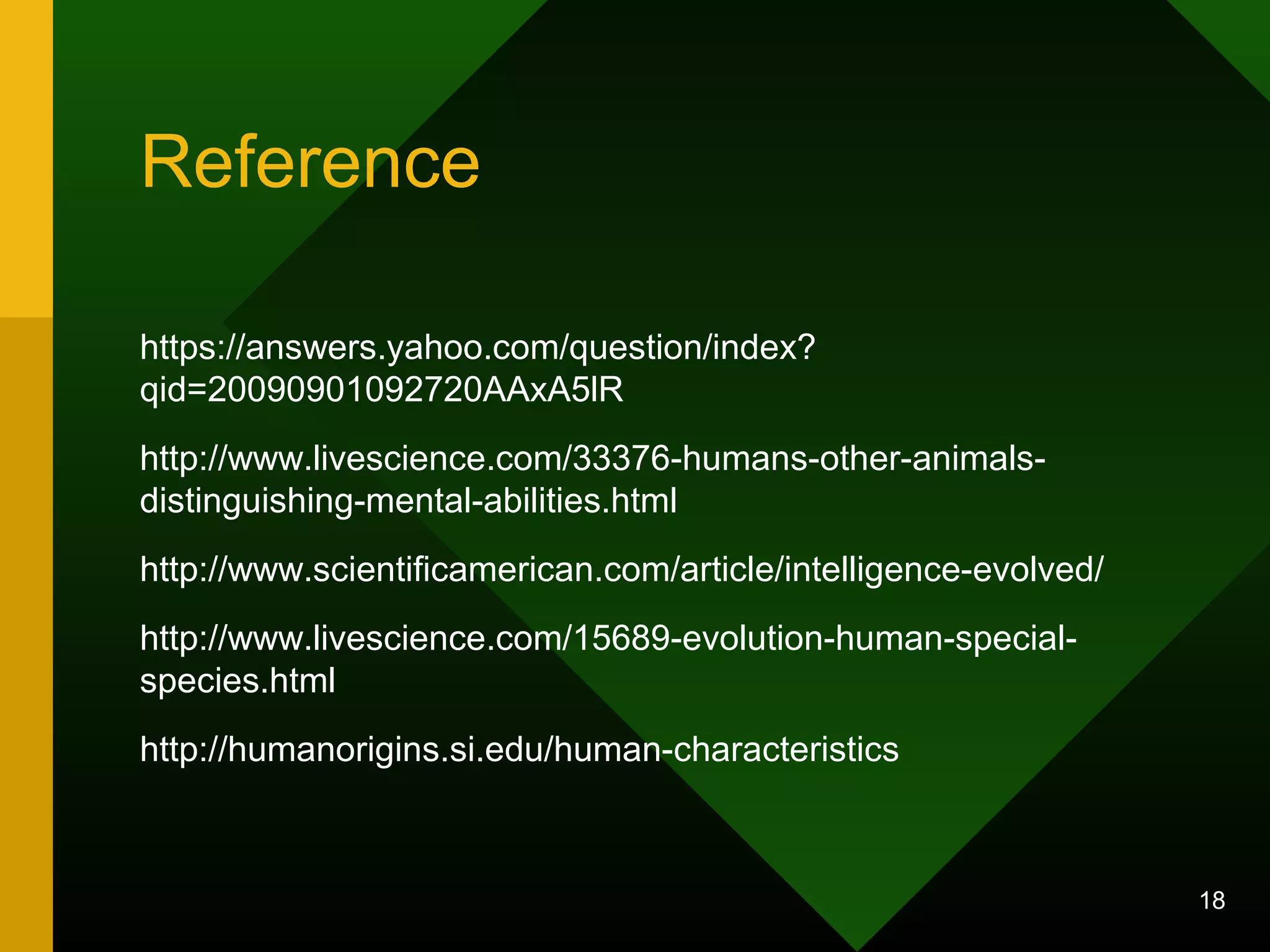
Reference 
https://answers.yahoo.com/question/index? 
qid=20090901092720AAxA5lR 
http://www.livescience.com/33376-humans-other-animals-distinguishing- 
mental-abilities.html 
http://www.scientificamerican.com/article/intelligence-evolved/ 
http://www.livescience.com/15689-evolution-human-special-species. 
html 
http://humanorigins.si.edu/human-characteristics 
18
19

Rules for Humanity - Presentation

  • 1.
    Project: Rules ForHumanity Muhammad Shahidul Islam Roll No: 12310145 Department: CSE 1
  • 2.
    2 Contents WhatMakes Humans Different From Other Animals?  Animal Intelligence And The Evolution of the Human Mind. What Does it Mean to be Human?
  • 3.
    What makes humansdifferent from other animals? Language, writing, reasoning. All animals have language, but do they communicate to others. No animal writes or draws. This three are probably the most important that distinguishes humans from other animals. https://answers.yahoo.com/question/index?qid=20090901092720AAxA5lR http://www.livescience.com/33376-humans-other-animals-distinguishing-mental-abilities.html
  • 4.
    4 One isCommunication They have a sophisticated language and can effectively speak and others can understand. This means that information can be easily shared. Other animals may have a language but it is not sophisticated.
  • 5.
    Second is Reasoningand Conscience 5 ""YYoouu If you ever looked at other animals, they don't know better than to steal. Whenever the most of us steal or murder, it gives us an uneasy feeling. It doesn’t really happen in almost all animals, if not all.We can also reason far beyond what other animals can.
  • 6.
    Third is theability to pass down technology and build upon it. 6 Think about it. Do you think that chimpanzees will think about using a stick, and then the next generation sharpens the stick from what they've learned from their ancestors? Then the next one would probably attach rocks...no. Only humans can do this. This has in a way to do with communication but again it also differs.
  • 7.
    Animal Intelligence andthe Evolution of the Human Mind. http://www.scientificamerican.com/article/intelligence-evolved/
  • 8.
    8 As faras we know, no dog can compose music, no dolphin can speak in rhymes, and no parrot can solve equations with two unknowns. Only humans can perform such intellectual feats, presumably because we are smarter than all other animal species—at least by our own definition of intelligence. Thus, researchers have tried to identify unique features of the human brain that could account for our superior intellectual abilities. But, anatomically, the human brain is very similar to that of other primates because humans and chimpanzees share an ancestor that walked the earth less than seven million years ago.
  • 9.
    What Does itMean to be Human? 1. Upright Posture 2. Extraordinary Brains 3. Hands 4. Clothing 5. Blushing 6. Long Childhoods 7. Fire 8. Social Life http://www.livescience.com/15689-evolution-human-special-species.html http://humanorigins.si.edu/human-characteristics
  • 10.
    Upright Posture Humansare unique among the primates in how walking fully upright is our chief mode of locomotion. This frees our hands up for using tools. 10
  • 11.
    Extraordinary Brains Withouta doubt, the human trait that sets us apart the most from the animal kingdom is our extraordinary brain. Humans don't have the largest brains in the world — those belong to sperm whales. We don't even have the largest brains relative to body size — many birds have brains that make up more than 8 percent of their body weight, compared to only 2.5 percent for humans. Yet the human brain, weighing only about 3 pounds when fully grown. 11
  • 12.
    Hands The humanopposable thumb is longer, compared to finger length, than any other primate thumb. This long thumb and its ability to easily touch the other fingers allow humans to firmly grasp and manipulate objects of many different shapes. The human hand can grip with strength and with fine control, so it can throw a baseball or sign a name on the dotted line. 12
  • 13.
    Clothing Humans maybe called "naked apes," but most of us wear clothing, a fact that makes us unique in the animal kingdom, save for the clothing we make for other animals. The development of clothing has even influenced the evolution of other species — the body louse, unlike all other kinds, clings to clothing, not hair. 13
  • 14.
    Blushing Humans arethe only species known to blush, a behavior Darwin called "the most peculiar and the most human of all expressions." It remains uncertain why people blush, involuntarily revealing our innermost emotions. The most common idea is that blushing helps keep people honest, benefiting the group as a whole. 14
  • 15.
    Long Childhoods Humansmust remain in the care of their parents for much longer than other living primates. The question then becomes why, when it might make more evolutionary sense to grow as fast as possible to have more offspring. The explanation may be our large brains, which presumably require a long time to grow and learn. 15
  • 16.
    Fire The humanability to control fire would have brought a semblance of day to night, helping our ancestors to see in an otherwise dark world and keep nocturnal predators at bay. The warmth of the flames also helped people stay warm in cold weather, enabling us to live in cooler areas. And of course it gave us cooking, which some researchers suggest influenced human evolution — cooked foods are easier to chew and digest, perhaps contributing to human reductions in tooth and gut size. 16
  • 17.
    Social Life Sharingfood, caring for infants, and building social networks helped our ancestors meet the daily challenges of their environments. 17
  • 18.
    Reference https://answers.yahoo.com/question/index? qid=20090901092720AAxA5lR http://www.livescience.com/33376-humans-other-animals-distinguishing- mental-abilities.html http://www.scientificamerican.com/article/intelligence-evolved/ http://www.livescience.com/15689-evolution-human-special-species. html http://humanorigins.si.edu/human-characteristics 18
  • 19.

Editor's Notes

  • #3 Develop plans of action to achieve each of your goals. Together these plans comprise your strategy to bring you from the As Is to the Should Be. Each plan should be specific, including who is responsible for each part, and how all the parts fit together. Use multiple slides if necessary.
  • #4 Develop plans of action to achieve each of your goals. Together these plans comprise your strategy to bring you from the As Is to the Should Be. Each plan should be specific, including who is responsible for each part, and how all the parts fit together. Use multiple slides if necessary.
  • #5 Once you’ve communicated where you want to go, estimate how close you are to achieving the vision. Identify strengths of the organization. Also note areas where improvements must be made to bring you closer to the vision. Be sure to include the “As Is” of leadership strengths and areas for improvement. Organizations don’t change, people do.
  • #6 Once you’ve communicated where you want to go, estimate how close you are to achieving the vision. Identify strengths of the organization. Also note areas where improvements must be made to bring you closer to the vision. Be sure to include the “As Is” of leadership strengths and areas for improvement. Organizations don’t change, people do.
  • #7 Once you’ve communicated where you want to go, estimate how close you are to achieving the vision. Identify strengths of the organization. Also note areas where improvements must be made to bring you closer to the vision. Be sure to include the “As Is” of leadership strengths and areas for improvement. Organizations don’t change, people do.
  • #8 Once you’ve communicated where you want to go, estimate how close you are to achieving the vision. Identify strengths of the organization. Also note areas where improvements must be made to bring you closer to the vision. Be sure to include the “As Is” of leadership strengths and areas for improvement. Organizations don’t change, people do.
  • #9 Once you’ve communicated where you want to go, estimate how close you are to achieving the vision. Identify strengths of the organization. Also note areas where improvements must be made to bring you closer to the vision. Be sure to include the “As Is” of leadership strengths and areas for improvement. Organizations don’t change, people do.
  • #10 Once you’ve communicated where you want to go, estimate how close you are to achieving the vision. Identify strengths of the organization. Also note areas where improvements must be made to bring you closer to the vision. Be sure to include the “As Is” of leadership strengths and areas for improvement. Organizations don’t change, people do.