Shri. Someshwar Shikshan Prasarak Mandal’s
Sharadchandra Pawar College of
Engineering
& Technology, Someshwarnagar
Department of Civil Engineering
Presentation
On
“Automatic irrigation
system”
Submitted by- Khalate Yash Pravin
Guided by- Prof. Naik.C.V
CONTENTS
Introduction
Literature Review
Methodology
Block Diagram
Components Used& Description
Types of automatic irrigation system
Advantages & Advantages
Application
Conclusion
References
Introduction
An automation of irrigation systems has several positive effects. Once installed,
the water distribution on fields or small-scale gardens is easier and does not have
to be permanently controlled by an operator. There are several solutions to design
automated irrigation systems. Modern big-scale systems allow big areas to be
managed by one operator only. Sprinkler, drip or subsurface drip
irrigation systems require pumps and some high tech-components and if used for
large surfaces skilled operators are also required. Extremely high-tech solutions
also exist using GIS and satellites to automatically measure the water needs
content of each crop parcel and optimise the irrigation system. But automation of
irrigation can sometimes also be done with simple, mechanical appliances: with
clay pot or porous capsule irrigation networks or bottle irrigation.
Literature Review
SR
NO.
AUTHER NAME TITLE OF
PAPER
CONCLUSION
1 Shoba Krishnan, Kalyani Lakkanige,
Dhaneesh Virwani
Automated
Irrigation
System
Using an automated irrigation
system reduces the farmer’s
presence for irrigation which is
the major part of the practice
of farming and optimises the
usage of water by reducing the
wastage of water.
2 R.Vagulabranan, M.Karthikeyan,
V.Sasikala
Automatic
Irrigation
System on
Sensing
Soil
Moisture
Content
The primary applications for
this project are for farmers and
gardeners who do not have
enough time to water their
Crops/plants.
Methodology
A. Sensor nodes- These are the primary nodes. They are spread
across the field strategically to retrieve the optimum readings to on
and off the pump which irrigates that part of the field. Generally,
they are to be placed at equal distances throughout the area of the
field.
Sink Node- From time and period, sink nodes get information from
sensor nodes. When this data matches with the required lower value
to start the pump, the water pump kicks in. The sink node identifies
which node sent the message and supplies water to only that part of
the field which is being monitored by the respective node.
Block Diagram
Fig. 1- Layout of the field in block diagram
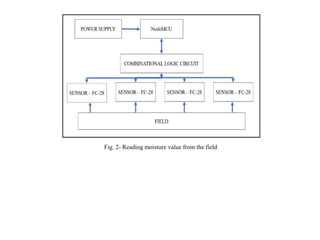
Fig. 2- Reading moisture value from the field
Components Used & Description
A. Node MCU(ESP8266)
B. IC 7413 9
C. IC 7404
D. CD 4051
E. Moisture sensor
Types of automatic irrigation system
Pneumatic system:-
Portable timer system:-
Timer or sensor hybrid:-
Supervisory Control and Data Acquisition (SCADA):-
Advantages of automatic irrigation-
The advantages of automatic irrigation are:
•timely irrigation — plants being watered when needed.
•management of higher flow rates.
•accurate cut-off of water compared to manual checking.
•reduced labour.
Disadvantages of automatic irrigation-
The disadvantages of automatic irrigation are:
•costs for purchasing, installing and maintaining the equipment.
•reliability of irrigation system (due to human error when setting up).
•increased maintenance of channels and equipment to ensure it is
working properly.
Applications-
•Some of the applications of the project are listed below:
• It can be used to measure the loss of moisture in the soil over time
due to evaporation and intake.
• Minimizes water waste and improves plant growth and the circuit
is designed to work automatically and hence, there is no need for
very less human intervention.
• It can be implemented in the process of spraying of pesticides.
Concluding Remark
•The primary applications for this project are for farmers and
gardeners who do not have enough time to water their Crops/plants.
•It also covers those farmers who are wasteful of water during
irrigation. The project can be extended to greenhouses where manual
supervision is far and few in between.
•The principle can be extended to create fully automated gardens and
farmlands. Combined with the principle of rain water harvesting, it
could lead to huge water savings if applied in the right manner.
•In agricultural lands with severe shortage of rainfall, this model can
be successfully applied to achieve great results with most types of
soil and save the time .
REFERENCES
•Anuparp Boonsongsrikul, Slavko Kocijancic and Somjet
Suppharangsan, “Effective Energy Consumption on Wireless Sensor
Networks: Survey and Challenges “, IEEE MIPRO 2013, May 20-
24, 2013, Opatija, Croatia
•Prakhar Srivastava, Mohit Bajaj and Ankur Singh Rana, “Overview
of ESP8266 Wi-Fi module based Smart Irrigation System using
IOT”, IEEE 2018 Fourth International Conference on Advances in
Electrical, Electronics, Information, Communication and Bio-
Informatics (AEEICB) Chennai, India 27-28 Feb. 2018
Thank You

RTYRY

  • 1.
    Shri. Someshwar ShikshanPrasarak Mandal’s Sharadchandra Pawar College of Engineering & Technology, Someshwarnagar Department of Civil Engineering Presentation On “Automatic irrigation system” Submitted by- Khalate Yash Pravin Guided by- Prof. Naik.C.V
  • 2.
    CONTENTS Introduction Literature Review Methodology Block Diagram ComponentsUsed& Description Types of automatic irrigation system Advantages & Advantages Application Conclusion References
  • 3.
    Introduction An automation ofirrigation systems has several positive effects. Once installed, the water distribution on fields or small-scale gardens is easier and does not have to be permanently controlled by an operator. There are several solutions to design automated irrigation systems. Modern big-scale systems allow big areas to be managed by one operator only. Sprinkler, drip or subsurface drip irrigation systems require pumps and some high tech-components and if used for large surfaces skilled operators are also required. Extremely high-tech solutions also exist using GIS and satellites to automatically measure the water needs content of each crop parcel and optimise the irrigation system. But automation of irrigation can sometimes also be done with simple, mechanical appliances: with clay pot or porous capsule irrigation networks or bottle irrigation.
  • 4.
    Literature Review SR NO. AUTHER NAMETITLE OF PAPER CONCLUSION 1 Shoba Krishnan, Kalyani Lakkanige, Dhaneesh Virwani Automated Irrigation System Using an automated irrigation system reduces the farmer’s presence for irrigation which is the major part of the practice of farming and optimises the usage of water by reducing the wastage of water. 2 R.Vagulabranan, M.Karthikeyan, V.Sasikala Automatic Irrigation System on Sensing Soil Moisture Content The primary applications for this project are for farmers and gardeners who do not have enough time to water their Crops/plants.
  • 5.
    Methodology A. Sensor nodes-These are the primary nodes. They are spread across the field strategically to retrieve the optimum readings to on and off the pump which irrigates that part of the field. Generally, they are to be placed at equal distances throughout the area of the field. Sink Node- From time and period, sink nodes get information from sensor nodes. When this data matches with the required lower value to start the pump, the water pump kicks in. The sink node identifies which node sent the message and supplies water to only that part of the field which is being monitored by the respective node.
  • 6.
    Block Diagram Fig. 1-Layout of the field in block diagram
  • 7.
    Fig. 2- Readingmoisture value from the field
  • 8.
    Components Used &Description A. Node MCU(ESP8266) B. IC 7413 9 C. IC 7404 D. CD 4051 E. Moisture sensor
  • 9.
    Types of automaticirrigation system Pneumatic system:- Portable timer system:- Timer or sensor hybrid:- Supervisory Control and Data Acquisition (SCADA):-
  • 10.
    Advantages of automaticirrigation- The advantages of automatic irrigation are: •timely irrigation — plants being watered when needed. •management of higher flow rates. •accurate cut-off of water compared to manual checking. •reduced labour.
  • 11.
    Disadvantages of automaticirrigation- The disadvantages of automatic irrigation are: •costs for purchasing, installing and maintaining the equipment. •reliability of irrigation system (due to human error when setting up). •increased maintenance of channels and equipment to ensure it is working properly.
  • 12.
    Applications- •Some of theapplications of the project are listed below: • It can be used to measure the loss of moisture in the soil over time due to evaporation and intake. • Minimizes water waste and improves plant growth and the circuit is designed to work automatically and hence, there is no need for very less human intervention. • It can be implemented in the process of spraying of pesticides.
  • 13.
    Concluding Remark •The primaryapplications for this project are for farmers and gardeners who do not have enough time to water their Crops/plants. •It also covers those farmers who are wasteful of water during irrigation. The project can be extended to greenhouses where manual supervision is far and few in between. •The principle can be extended to create fully automated gardens and farmlands. Combined with the principle of rain water harvesting, it could lead to huge water savings if applied in the right manner. •In agricultural lands with severe shortage of rainfall, this model can be successfully applied to achieve great results with most types of soil and save the time .
  • 14.
    REFERENCES •Anuparp Boonsongsrikul, SlavkoKocijancic and Somjet Suppharangsan, “Effective Energy Consumption on Wireless Sensor Networks: Survey and Challenges “, IEEE MIPRO 2013, May 20- 24, 2013, Opatija, Croatia •Prakhar Srivastava, Mohit Bajaj and Ankur Singh Rana, “Overview of ESP8266 Wi-Fi module based Smart Irrigation System using IOT”, IEEE 2018 Fourth International Conference on Advances in Electrical, Electronics, Information, Communication and Bio- Informatics (AEEICB) Chennai, India 27-28 Feb. 2018
  • 15.