 Respiratory Syncytial Virus (RSV) is a major
cause of respiratory illness in infants less
than 1 year old
› RSV is the most common cause of bronchiolitis
and pneumonia in children under the age of 1
year
› Each year, RSV hospitalizes up to 125,000
children under the age of 1 year
› RSV affects almost all children by their second
birthday
› RSV is a seasonal illness usually lasting from fall
to early spring (November-April)
 Most infants have
symptoms similar to
other respiratory
infections:
› Coughing
› Sneezing
› Runny nose
› Fever
› Decreased appetite
› Wheezing
 Very young infants
may only experience
these symptoms:
› Irritability
› Decreased activity
› Breathing difficulties
 Fast breathing
 Nostril flaring
 Caving in of chest
› Bluish color around
mouth or fingernails
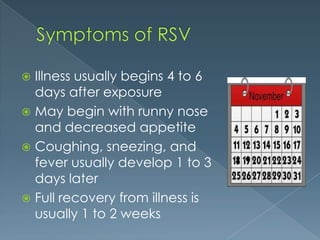
 Illness usually begins 4 to 6
days after exposure
 May begin with runny nose
and decreased appetite
 Coughing, sneezing, and
fever usually develop 1 to 3
days later
 Full recovery from illness is
usually 1 to 2 weeks
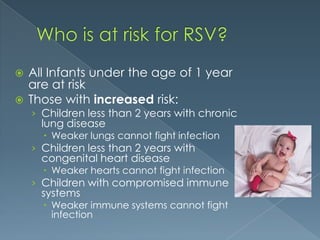
 All Infants under the age of 1 year
are at risk
 Those with increased risk:
› Children less than 2 years with chronic
lung disease
 Weaker lungs cannot fight infection
› Children less than 2 years with
congenital heart disease
 Weaker hearts cannot fight infection
› Children with compromised immune
systems
 Weaker immune systems cannot fight
infection
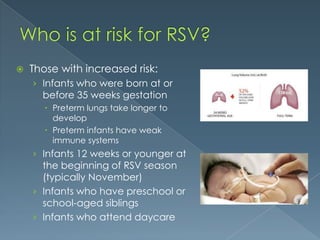
 Those with increased risk:
› Infants who were born at or
before 35 weeks gestation
 Preterm lungs take longer to
develop
 Preterm infants have weak
immune systems
› Infants 12 weeks or younger at
the beginning of RSV season
(typically November)
› Infants who have preschool or
school-aged siblings
› Infants who attend daycare
 Those with increased risk:
› Infants who live with 4 or more family
members
› Infants who are exposed to tobacco smoke
› Infants who are twins, triplets, or other
multiples
› Infants born less than 5 ½ pounds
› Infants with a family history of wheezing or
asthma
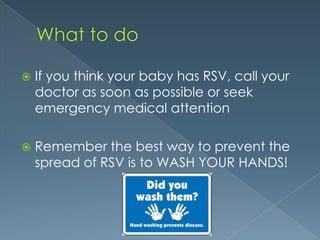
 The best way to prevent the spread of
RSV is to WASH YOUR HANDS!
 Keep infants away from those who are
sick or who have cold-like symptoms
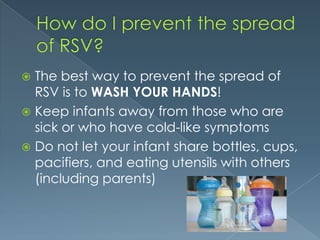
 Do not let your infant share bottles, cups,
pacifiers, and eating utensils with others
(including parents)
 Do not let others kiss your baby
 Wash your children’s
clothes, towels, blankets, bedding, and
toys often
 Limit visiting areas with large crowds
during the cold, winter months
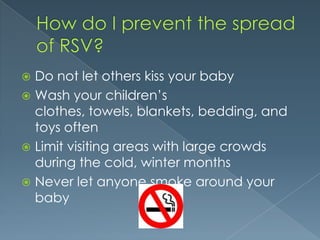
 Never let anyone smoke around your
baby
 For those with increased risk due to
chronic illness or being born premature:
› In addition to the other suggestions, you
should keep your infant away from other
infants and children if possible
 Limit time siblings spend around the infant
 Avoid taking your infant to settings such as
daycare and church
 Avoid taking your infant to places with large
crowds, such as Wal-Mart or sporting events
 For those with increased risk due to
chronic illness or being born premature:
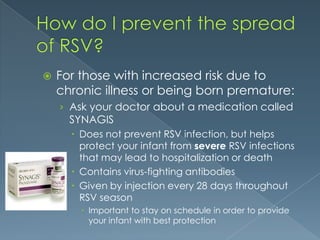
› Ask your doctor about a medication called
SYNAGIS
 Does not prevent RSV infection, but helps
protect your infant from severe RSV infections
that may lead to hospitalization or death
 Contains virus-fighting antibodies
 Given by injection every 28 days throughout
RSV season
 Important to stay on schedule in order to provide
your infant with best protection
 If you think your baby has RSV, call your
doctor as soon as possible or seek
emergency medical attention
 Remember the best way to prevent the
spread of RSV is to WASH YOUR HANDS!
 Centers for Disease Control and Prevention. (2013).
Respiratory syncytial virus. Retrieved from
http://www.cdc.gov/rsv/index.html
 World Health Organization. (2009). Clean care is safer care.
Retrieved from http://www.who.int/gpsc/en/
 Synagis Palivizumab. (2013). Retrieved from
https://www.synagis.com/

RSV

  • 2.
     Respiratory SyncytialVirus (RSV) is a major cause of respiratory illness in infants less than 1 year old › RSV is the most common cause of bronchiolitis and pneumonia in children under the age of 1 year › Each year, RSV hospitalizes up to 125,000 children under the age of 1 year › RSV affects almost all children by their second birthday › RSV is a seasonal illness usually lasting from fall to early spring (November-April)
  • 3.
     Most infantshave symptoms similar to other respiratory infections: › Coughing › Sneezing › Runny nose › Fever › Decreased appetite › Wheezing  Very young infants may only experience these symptoms: › Irritability › Decreased activity › Breathing difficulties  Fast breathing  Nostril flaring  Caving in of chest › Bluish color around mouth or fingernails
  • 4.
     Illness usuallybegins 4 to 6 days after exposure  May begin with runny nose and decreased appetite  Coughing, sneezing, and fever usually develop 1 to 3 days later  Full recovery from illness is usually 1 to 2 weeks
  • 5.
     All Infantsunder the age of 1 year are at risk  Those with increased risk: › Children less than 2 years with chronic lung disease  Weaker lungs cannot fight infection › Children less than 2 years with congenital heart disease  Weaker hearts cannot fight infection › Children with compromised immune systems  Weaker immune systems cannot fight infection
  • 6.
     Those withincreased risk: › Infants who were born at or before 35 weeks gestation  Preterm lungs take longer to develop  Preterm infants have weak immune systems › Infants 12 weeks or younger at the beginning of RSV season (typically November) › Infants who have preschool or school-aged siblings › Infants who attend daycare
  • 7.
     Those withincreased risk: › Infants who live with 4 or more family members › Infants who are exposed to tobacco smoke › Infants who are twins, triplets, or other multiples › Infants born less than 5 ½ pounds › Infants with a family history of wheezing or asthma
  • 8.
     The bestway to prevent the spread of RSV is to WASH YOUR HANDS!  Keep infants away from those who are sick or who have cold-like symptoms  Do not let your infant share bottles, cups, pacifiers, and eating utensils with others (including parents)
  • 9.
     Do notlet others kiss your baby  Wash your children’s clothes, towels, blankets, bedding, and toys often  Limit visiting areas with large crowds during the cold, winter months  Never let anyone smoke around your baby
  • 10.
     For thosewith increased risk due to chronic illness or being born premature: › In addition to the other suggestions, you should keep your infant away from other infants and children if possible  Limit time siblings spend around the infant  Avoid taking your infant to settings such as daycare and church  Avoid taking your infant to places with large crowds, such as Wal-Mart or sporting events
  • 11.
     For thosewith increased risk due to chronic illness or being born premature: › Ask your doctor about a medication called SYNAGIS  Does not prevent RSV infection, but helps protect your infant from severe RSV infections that may lead to hospitalization or death  Contains virus-fighting antibodies  Given by injection every 28 days throughout RSV season  Important to stay on schedule in order to provide your infant with best protection
  • 12.
     If youthink your baby has RSV, call your doctor as soon as possible or seek emergency medical attention  Remember the best way to prevent the spread of RSV is to WASH YOUR HANDS!
  • 13.
     Centers forDisease Control and Prevention. (2013). Respiratory syncytial virus. Retrieved from http://www.cdc.gov/rsv/index.html  World Health Organization. (2009). Clean care is safer care. Retrieved from http://www.who.int/gpsc/en/  Synagis Palivizumab. (2013). Retrieved from https://www.synagis.com/