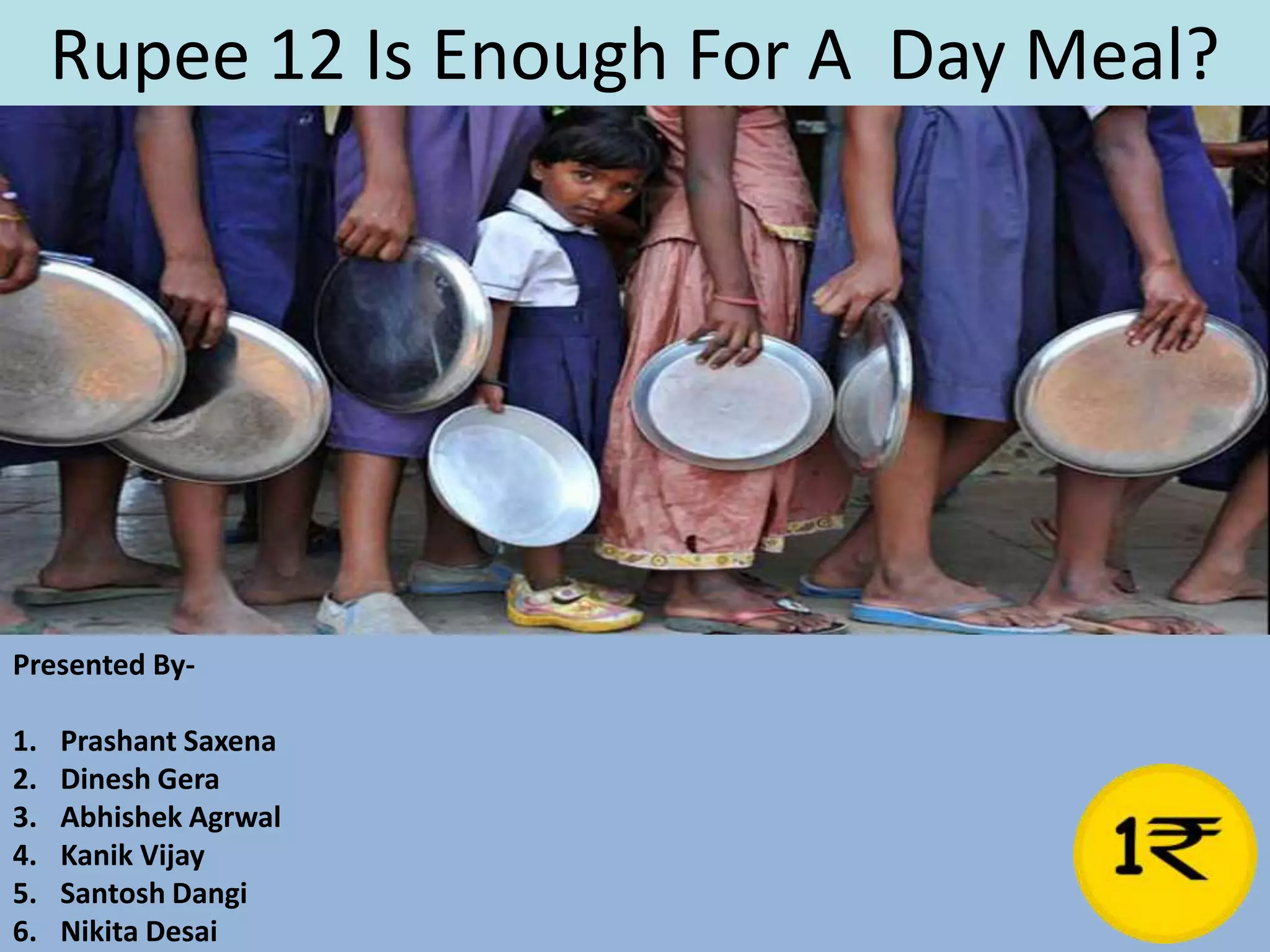
Rupee 12 Is Enough For A Day Meal?

Presented By1.
2.
3.
4.
5.
6.

Prashant Saxena
Dinesh Gera
Abhishek Agrwal
Kanik Vijay
Santosh Dangi
Nikita Desai
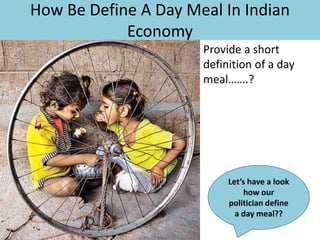
How Be Define A Day Meal In Indian
Economy
Provide a short
definition of a day
meal…….?

Let’s have a look
how our
politician define
a day meal??
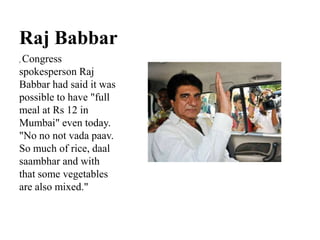
Raj Babbar
Congress
spokesperson Raj
Babbar had said it was
possible to have "full
meal at Rs 12 in
Mumbai" even today.
"No no not vada paav.
So much of rice, daal
saambhar and with
that some vegetables
are also mixed."
,
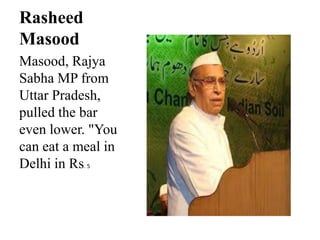
Rasheed
Masood
Masood, Rajya
Sabha MP from
Uttar Pradesh,
pulled the bar
even lower. "You
can eat a meal in
Delhi in Rs. 5
Really It is Possible? Any Guess?
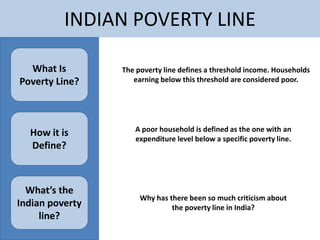
INDIAN POVERTY LINE
What Is
Poverty Line?

How it is
Define?

What’s the
Indian poverty
line?

The poverty line defines a threshold income. Households
earning below this threshold are considered poor.

A poor household is defined as the one with an
expenditure level below a specific poverty line.

Why has there been so much criticism about
the poverty line in India?
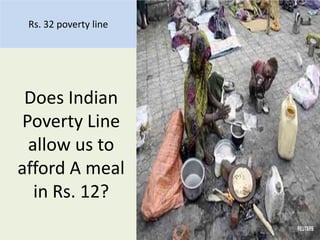
Rs. 32 poverty line

Does Indian
Poverty Line
allow us to
afford A meal
in Rs. 12?
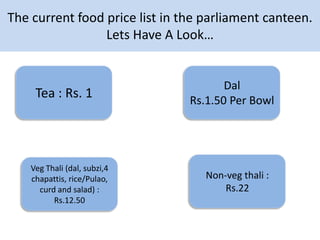
The current food price list in the parliament canteen.
Lets Have A Look…

Tea : Rs. 1

Veg Thali (dal, subzi,4
chapattis, rice/Pulao,
curd and salad) :
Rs.12.50

Dal
Rs.1.50 Per Bowl

Non-veg thali :
Rs.22
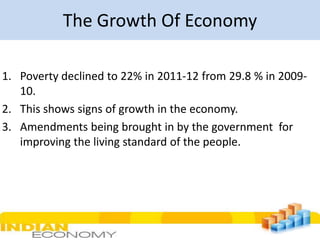
The Growth Of Economy
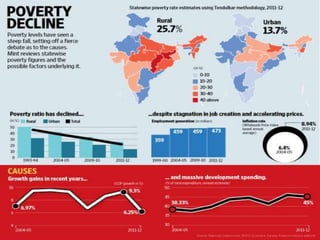
1. Poverty declined to 22% in 2011-12 from 29.8 % in 200910.
2. This shows signs of growth in the economy.
3. Amendments being brought in by the government for
improving the living standard of the people.
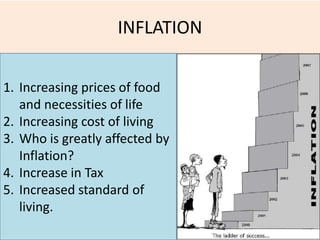
INFLATION
1. Increasing prices of food
and necessities of life
2. Increasing cost of living
3. Who is greatly affected by
Inflation?
4. Increase in Tax
5. Increased standard of
living.
OTHER FACTORS

Politics

Agricultural
factors

Low growth
in GDP

Poverty
Little children are Malnourished

EFFECTS

Extra financial stress

Wages, Salaries remaining same
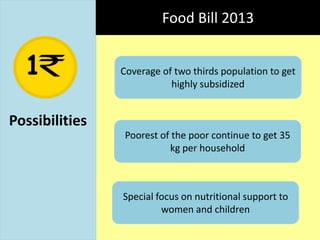
Food Bill 2013
Coverage of two thirds population to get
highly subsidized

Possibilities
Poorest of the poor continue to get 35
kg per household

Special focus on nutritional support to
women and children
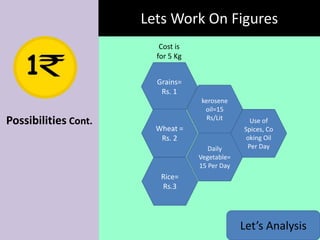
Lets Work On Figures
Cost is
for 5 Kg
Grains=
Rs. 1

Possibilities Cont.

kerosene
oil=15
Rs/Lit

Wheat =
Rs. 2
Daily
Vegetable=
15 Per Day

Use of
Spices, Co
oking Oil
Per Day

Rice=
Rs.3

Let’s Analysis
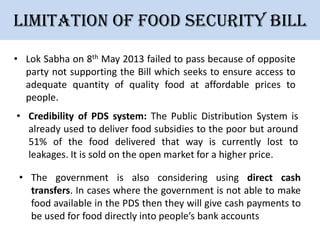
Limitation of Food security bill
• Lok Sabha on 8th May 2013 failed to pass because of opposite
party not supporting the Bill which seeks to ensure access to
adequate quantity of quality food at affordable prices to
people.
• Credibility of PDS system: The Public Distribution System is
already used to deliver food subsidies to the poor but around
51% of the food delivered that way is currently lost to
leakages. It is sold on the open market for a higher price.
• The government is also considering using direct cash
transfers. In cases where the government is not able to make
food available in the PDS then they will give cash payments to
be used for food directly into people’s bank accounts
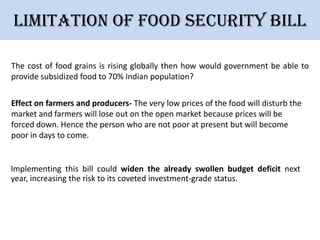
Limitation of Food security bill
The cost of food grains is rising globally then how would government be able to
provide subsidized food to 70% Indian population?
Effect on farmers and producers- The very low prices of the food will disturb the
market and farmers will lose out on the open market because prices will be
forced down. Hence the person who are not poor at present but will become
poor in days to come.

Implementing this bill could widen the already swollen budget deficit next
year, increasing the risk to its coveted investment-grade status.
Limitation of Food security bill
• Not enough resources: To implement this scheme, the total
estimated annual food grains requirements will be 61.23
million tones and is likely to cost Rs.1,24,724 crore. The cost
of it will go up from 0.8% of Gross Domestic Product to
around 1.1% of GDP. And the government does not have
enough resources.
• How to be implemented? Things are not very clear how it will
be initiated.
Overcome From The Problem In Food Bill
2013
For children in the age group of 6 months to 6 years, the Bill guarantees an age-appropriate
meal, free of charge, through the local anganwadi. For children aged 6-14 years, one free midday meal shall be provided every day (except on school holidays)

For rural households the savings amount exceeds their current annual medical and educational
spends. Higher disposable income would also allow BPL households to spend more on protein
rich food, thereby improving their nutritional intake.

The total estimated food grains requirement is 612.3 lakh tones a year. This requires a subsidy of
Rs 1,24,747 Crore but with many welfare schemes already in place, the additional subsidy would
be about Rs 23,800 Crore.
Overcome From The Problem In Food Bill
2013
It seeks to empower women. In a household, the eldest woman (at least 18 years old) will be
regarded the head of the household for issue of ration card. If there is no female in the
household, the eldest male would be eligible.

Also, pregnant women and lactating mothers, besides being entitled to nutritious meals as per
the prescribed nutritional norms will also receive maternity benefit at least of Rs. 6000/-.

Children in the age group of 6 months to 14 years will be entitled to take home ration or hot
cooked food as per prescribed nutritional norms.
Conclusion- Let’s Watch a Video!!

RS. 12 for a day's meal.

  • 1.
    Rupee 12 IsEnough For A Day Meal? Presented By1. 2. 3. 4. 5. 6. Prashant Saxena Dinesh Gera Abhishek Agrwal Kanik Vijay Santosh Dangi Nikita Desai
  • 2.
    How Be DefineA Day Meal In Indian Economy Provide a short definition of a day meal…….? Let’s have a look how our politician define a day meal??
  • 3.
    Raj Babbar Congress spokesperson Raj Babbarhad said it was possible to have "full meal at Rs 12 in Mumbai" even today. "No no not vada paav. So much of rice, daal saambhar and with that some vegetables are also mixed." ,
  • 4.
    Rasheed Masood Masood, Rajya Sabha MPfrom Uttar Pradesh, pulled the bar even lower. "You can eat a meal in Delhi in Rs. 5
  • 5.
    Really It isPossible? Any Guess?
  • 6.
    INDIAN POVERTY LINE WhatIs Poverty Line? How it is Define? What’s the Indian poverty line? The poverty line defines a threshold income. Households earning below this threshold are considered poor. A poor household is defined as the one with an expenditure level below a specific poverty line. Why has there been so much criticism about the poverty line in India?
  • 8.
    Rs. 32 povertyline Does Indian Poverty Line allow us to afford A meal in Rs. 12?
  • 9.
    The current foodprice list in the parliament canteen. Lets Have A Look… Tea : Rs. 1 Veg Thali (dal, subzi,4 chapattis, rice/Pulao, curd and salad) : Rs.12.50 Dal Rs.1.50 Per Bowl Non-veg thali : Rs.22
  • 10.
    The Growth OfEconomy 1. Poverty declined to 22% in 2011-12 from 29.8 % in 200910. 2. This shows signs of growth in the economy. 3. Amendments being brought in by the government for improving the living standard of the people.
  • 11.
    INFLATION 1. Increasing pricesof food and necessities of life 2. Increasing cost of living 3. Who is greatly affected by Inflation? 4. Increase in Tax 5. Increased standard of living.
  • 12.
  • 13.
    Little children areMalnourished EFFECTS Extra financial stress Wages, Salaries remaining same
  • 14.
    Food Bill 2013 Coverageof two thirds population to get highly subsidized Possibilities Poorest of the poor continue to get 35 kg per household Special focus on nutritional support to women and children
  • 15.
    Lets Work OnFigures Cost is for 5 Kg Grains= Rs. 1 Possibilities Cont. kerosene oil=15 Rs/Lit Wheat = Rs. 2 Daily Vegetable= 15 Per Day Use of Spices, Co oking Oil Per Day Rice= Rs.3 Let’s Analysis
  • 16.
    Limitation of Foodsecurity bill • Lok Sabha on 8th May 2013 failed to pass because of opposite party not supporting the Bill which seeks to ensure access to adequate quantity of quality food at affordable prices to people. • Credibility of PDS system: The Public Distribution System is already used to deliver food subsidies to the poor but around 51% of the food delivered that way is currently lost to leakages. It is sold on the open market for a higher price. • The government is also considering using direct cash transfers. In cases where the government is not able to make food available in the PDS then they will give cash payments to be used for food directly into people’s bank accounts
  • 17.
    Limitation of Foodsecurity bill The cost of food grains is rising globally then how would government be able to provide subsidized food to 70% Indian population? Effect on farmers and producers- The very low prices of the food will disturb the market and farmers will lose out on the open market because prices will be forced down. Hence the person who are not poor at present but will become poor in days to come. Implementing this bill could widen the already swollen budget deficit next year, increasing the risk to its coveted investment-grade status.
  • 18.
    Limitation of Foodsecurity bill • Not enough resources: To implement this scheme, the total estimated annual food grains requirements will be 61.23 million tones and is likely to cost Rs.1,24,724 crore. The cost of it will go up from 0.8% of Gross Domestic Product to around 1.1% of GDP. And the government does not have enough resources. • How to be implemented? Things are not very clear how it will be initiated.
  • 19.
    Overcome From TheProblem In Food Bill 2013 For children in the age group of 6 months to 6 years, the Bill guarantees an age-appropriate meal, free of charge, through the local anganwadi. For children aged 6-14 years, one free midday meal shall be provided every day (except on school holidays) For rural households the savings amount exceeds their current annual medical and educational spends. Higher disposable income would also allow BPL households to spend more on protein rich food, thereby improving their nutritional intake. The total estimated food grains requirement is 612.3 lakh tones a year. This requires a subsidy of Rs 1,24,747 Crore but with many welfare schemes already in place, the additional subsidy would be about Rs 23,800 Crore.
  • 20.
    Overcome From TheProblem In Food Bill 2013 It seeks to empower women. In a household, the eldest woman (at least 18 years old) will be regarded the head of the household for issue of ration card. If there is no female in the household, the eldest male would be eligible. Also, pregnant women and lactating mothers, besides being entitled to nutritious meals as per the prescribed nutritional norms will also receive maternity benefit at least of Rs. 6000/-. Children in the age group of 6 months to 14 years will be entitled to take home ration or hot cooked food as per prescribed nutritional norms.
  • 21.