Alice Paige-Smith 12.3.2010


Pro-forma to act as a nudge sheet on ‘reflection’ (for any TMA and the ECA),
Mike Reed

Check:
Line spacing appropriate                                                YES / NO
Pages numbered and name with PI on all pages                            YES / NO
Word Count as specified for the whole assignment                        YES / NO
Word Count balanced between different sections                          YES / NO
Confidentiality/setting/children respected                              YES / NO
References included correctly and a reference list at the end           YES / NO
Answered all questions from the assessment guide                        YES / NO
Appendix information used and if it was – it is used not just added     YES / NO

   When writing about your setting
        If you identify the curriculum framework (ensure you specify the
        curriculum area you are asked to consider) – explain why it is being used.
        How does it fulfil the TMA or ECA requirements? For example: is it
        compatible with the age range? Is it appropriate to developmental
        needs? Have you and your colleagues taken children through the whole
        curriculum over time? Have you made changes and reviewed your
        practice in this curriculum area? Try to expand any description by
        informing and illuminating your points. Refer to course materials when
        relevant.
        If you describe the community served explain the particular needs of the
        community and relate this to course materials. Convey to the reader why
        serving the community is important, as well as how you serve the
        community.
        If you describe the ethos –aims – objectives, again say why these are
        important, not just what they are.
        If you identify aspects of provision or a specialist setting or explain that
        you work within a childminding/domiciliary setting; say how this
        influences your practice. Not just in terms of limitations but opportunities
        to promote learning and care. In this way you reflect upon your role,
        rather than identify what you do.

   When writing about provision (environment, resources etc)
        Any aspect should be explained/justified – do not assume a ‘name’
        describes or reflects on what the provision is intended to promote –
        explain it and if possible illustrate your point from practice.
        Take care to reference documents/policies - supporting the aspect
        If you identify an aspect of resources, explain how these are
        used/developed AND how are these linked to provision. For example: do
        they promote inclusion? Do they promote independence? Do they
        promote collaborative learning?
        When you consider the role and responsibilities of those engaged in an
        aspect of provision; consider things wider than the here and now. For
        example is everyone involved in maintaining a positive environment for
Alice Paige-Smith 12.3.2010


           children? Does this demonstrate a team approach to enhancing
           provision? Remember that you are mainly thinking about your own
           practice in E100 and not criticising your colleagues.
           Learning experiences provided for the children – is this a result of
           planning and using provision effectively – if so how is this the case? Do
           not assume that because you have described provision it explains why the
           provision is effective. How do you know that what you do helps the
           children? What evidence do you have? Maybe observations, assessment
           information changes in children’s behaviour, changes in their interests or
           activities.

   When writing about practice
        Why are you involved? Is it because you play a part in planning – share
        the ethos – work as a team – have a particular skill? Share defined
        learning aims and expectations for the children?
        How are you involved? Importantly, does the how match up with the
        why?
        How do you evaluate practice? Individually and collectively?
        How do you evaluate children’s learning?
        Are the children involved in planning and evaluation? How does this take
        place? If an example is required – not a long piece of writing, only an
        example.
        Parental involvement is important - perhaps say why this is important

       Building aspects of yourself in your writing
            Recognising particular expertise gained from previous training and future
            training, not just a list of courses attended, but why did you attend these,
            have you put any of them into practice? Examples of how this occurred
            are useful.
            Recognising expertise within others and your ability to identify resources
            that are used well and those that could be used more effectively.
Any reflection on improvement/planning for the future should be realistic and not
too far removed from the reality of what may be possible. Include the ‘how’ and
sensible timescales.

Rp Forum Study Skills Document 2010

  • 1.
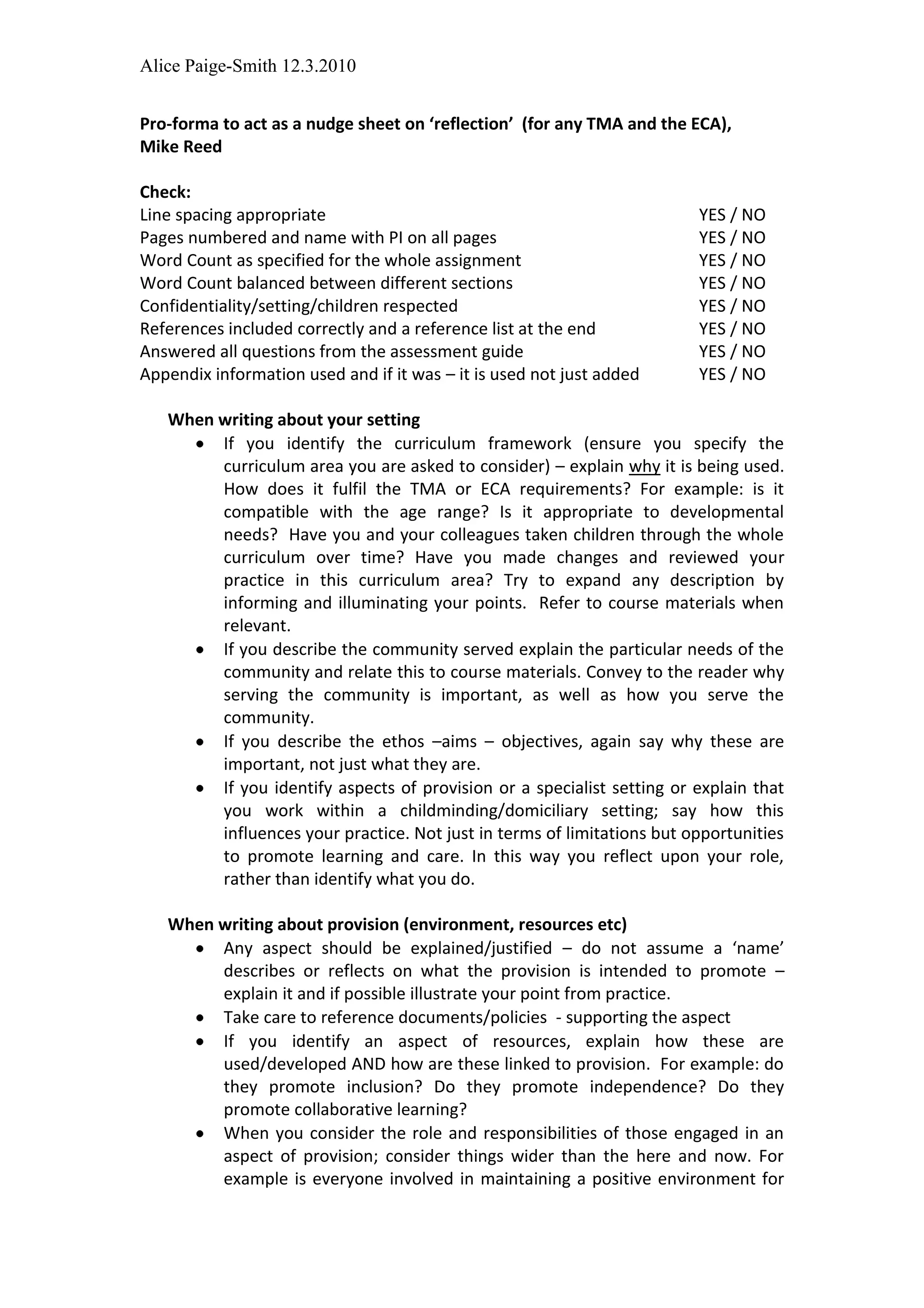
    Alice Paige-Smith 12.3.2010 Pro-formato act as a nudge sheet on ‘reflection’ (for any TMA and the ECA), Mike Reed Check: Line spacing appropriate YES / NO Pages numbered and name with PI on all pages YES / NO Word Count as specified for the whole assignment YES / NO Word Count balanced between different sections YES / NO Confidentiality/setting/children respected YES / NO References included correctly and a reference list at the end YES / NO Answered all questions from the assessment guide YES / NO Appendix information used and if it was – it is used not just added YES / NO When writing about your setting If you identify the curriculum framework (ensure you specify the curriculum area you are asked to consider) – explain why it is being used. How does it fulfil the TMA or ECA requirements? For example: is it compatible with the age range? Is it appropriate to developmental needs? Have you and your colleagues taken children through the whole curriculum over time? Have you made changes and reviewed your practice in this curriculum area? Try to expand any description by informing and illuminating your points. Refer to course materials when relevant. If you describe the community served explain the particular needs of the community and relate this to course materials. Convey to the reader why serving the community is important, as well as how you serve the community. If you describe the ethos –aims – objectives, again say why these are important, not just what they are. If you identify aspects of provision or a specialist setting or explain that you work within a childminding/domiciliary setting; say how this influences your practice. Not just in terms of limitations but opportunities to promote learning and care. In this way you reflect upon your role, rather than identify what you do. When writing about provision (environment, resources etc) Any aspect should be explained/justified – do not assume a ‘name’ describes or reflects on what the provision is intended to promote – explain it and if possible illustrate your point from practice. Take care to reference documents/policies - supporting the aspect If you identify an aspect of resources, explain how these are used/developed AND how are these linked to provision. For example: do they promote inclusion? Do they promote independence? Do they promote collaborative learning? When you consider the role and responsibilities of those engaged in an aspect of provision; consider things wider than the here and now. For example is everyone involved in maintaining a positive environment for
  • 2.
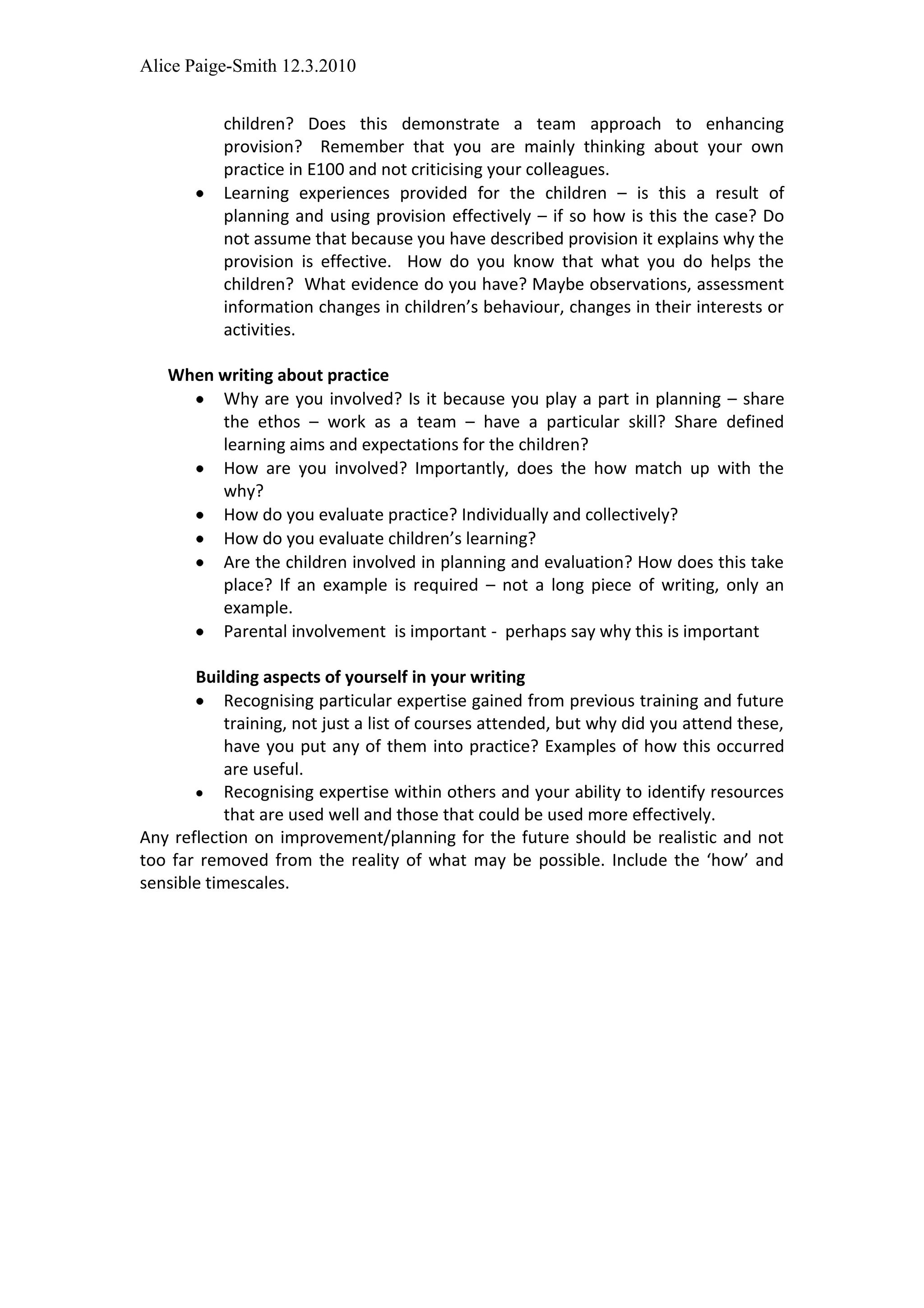
    Alice Paige-Smith 12.3.2010 children? Does this demonstrate a team approach to enhancing provision? Remember that you are mainly thinking about your own practice in E100 and not criticising your colleagues. Learning experiences provided for the children – is this a result of planning and using provision effectively – if so how is this the case? Do not assume that because you have described provision it explains why the provision is effective. How do you know that what you do helps the children? What evidence do you have? Maybe observations, assessment information changes in children’s behaviour, changes in their interests or activities. When writing about practice Why are you involved? Is it because you play a part in planning – share the ethos – work as a team – have a particular skill? Share defined learning aims and expectations for the children? How are you involved? Importantly, does the how match up with the why? How do you evaluate practice? Individually and collectively? How do you evaluate children’s learning? Are the children involved in planning and evaluation? How does this take place? If an example is required – not a long piece of writing, only an example. Parental involvement is important - perhaps say why this is important Building aspects of yourself in your writing Recognising particular expertise gained from previous training and future training, not just a list of courses attended, but why did you attend these, have you put any of them into practice? Examples of how this occurred are useful. Recognising expertise within others and your ability to identify resources that are used well and those that could be used more effectively. Any reflection on improvement/planning for the future should be realistic and not too far removed from the reality of what may be possible. Include the ‘how’ and sensible timescales.