1
SCEI Showcase
„Hotel Rotes Wildschwein“
Carmen Brenner
Semantic Technology Institute (STI)
University of Innsbruck, Austria
{firstname}.{lastname}@sti2.at
Abstract: This paper will introduce the SCEI showcase “Hotel Rotes
Wildschwein”. The different online communication channels for the
showcase hotel will shortly be described.
For the purpose of testing and developing the Semantic Communication Engine Innsbruck
(SCEI)1
we introduce the showcase hotel “Rotes Wildschwein”. In the following, we present
the information model that describes ou showcase, the different channels relevant in the
channel model to better test and further develop the SCEI tool, and finally the weaver
that describes the mappings of information items to the identified channels.
The Information Model
This section will describe the information model of the showcase hotel “Rotes Wildschwein”
and takes the observations on relevant content for a hotel into account. The model also tries
to offer the SCEI platform different concept types (e.g. text, video, images) for distributing
them to relevant channels.
We have identified following top-level concepts that are described in more detail in the
following paragraphs.
Rooms
A hotel will have a list of all rooms it offers. An information item that describes a room needs
to have following information:
1
The Semantic Communication Engine Innsbruck (SCEI) is a fully fledged online
communication software suite. It supports users in online communication, gathering feedback
and measuring online impact.
2
Room name
Room description
Images
Prices
Packages
The concept “Packages” describes special offers and packages that are usually only available
for certain times and seasons. Each item holds following information:
Package name
Package type (Business, Family, Christmas, Easter, Summer, etc.)
Date (when the package is valid)
Package description
Images
Prices
Wellness
The concept “Wellness” offers information on the Wellness treatments and the SPA of the
hotel. A wellness treatment item looks like this:
Title of treatment
Description
Category (Massage, Beauty Treatment, etc.)
Duration
Price
Events
Especially for business and conference hotels, but also relevant for others, we identified the
concept “Events”. An event content item holds following information:
Event title
Category (Business event, Concert events, etc.)
Date (when this event will take place)
Location
Image
Description
News
The concept “News” describes news items that are related to the hotel and may be published
on a Web site or other channels. This concept has following properties:
3
News title
News text
Image
Video
Tags
The Channel model
The channel model describes the different channels, their interaction patterns and the target
groups. In the following the different channels relevant for the “Rotes Wildschwein” show
case will be described. First we will introduce the static broadcasting channel Web site, and
then introduce different dynamic broadcasting channels including news, RSS, Facebook and
Twitter.
Static broadcasting
Web site
Web sites are an established means of providing (mostly) static information. Information that
reflects the structure of the contents is provided through this channel. A Web site offers a
smooth way for users to access this content.
We have identified the hotel Web site as core part of a hotel online presence and it usually
holds information about the hotel and its environment, on the rooms it offers, and often also
about his restaurants and SPA.
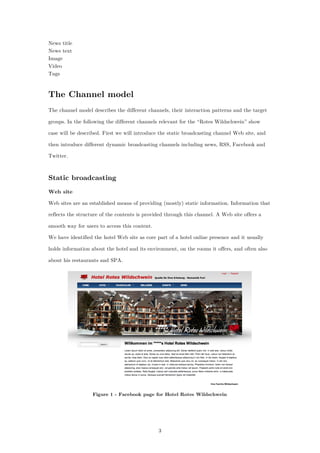
Figure 1 - Facebook page for Hotel Rotes Wildschwein
4
For our showcase hotel we have taking this into account and have set up a Web site at
http://www.rotes-wildschwein.at. The Web site uses the free and open content management
system (CMS) Drupal (version 7.x).
Dynamic Broadcasting
Web 2.0 has enabled the development of dedicated means for publishing streams and
interacting with prosumers have been added. Dynamic content refers to the information that
is available or relevant only for a limited period of time. Examples of dynamic publishing
channels include blogs, news articles, microblogs, etc. Such content is meant to have an
expiration date and to be replaced by “new” content with a similar limited shelf life.
News and RSS
The project Web site (as a means for static broadcasting) has be enriched by dynamic
broadcasting means. This includes a news section over which news and updates on the hotel
are published. Also an RSS feed is used to broadcast this news. Its purpose is to regularly
remind the user of the existence of a particular activity and the fact that it is producing
interesting results.
Twitter
Twitter is a microblogging system that is widely used for disseminating news. The Twitter
account for Hotel Rotes Wildschwein is available at https://twitter.com/#!/HotelRedBoar
and is used for testing the SCEI platform.
Facebook page
Facebook as a social networking site provides an additional community aspect, i.e., it forms a
community that multi-directionally shares news, photos, opinions, and other important
aspects. Notice that Facebook is actually not only one but several channels. It offers more
than 40 possibilities through which to disseminate information.
5
The Facebook page of our showcase hotel is available at
http://www.facebook.com/pages/Rotes-Wildschwein/321731534545050.
The Weaver
A weaver as described in the technical report “Effective and Efficient On-line
Communication”2
is a set of tuples of nine elements:
1. An information item: It defines an information category that should be
disseminated through various channels.
2. An editor: The editor defines the agent that is responsible for providing the content
of an information item.
3. An editor interaction protocol: This defines the interaction protocol governing
how an editor collects the content.
4. An information type: We make a distinction between three types of content: an
instance of a concept, a set of instances of a concept (i.e., an extensional definition of
the concept), and a concept description (i.e., an intentional definition of a concept).
5. A processing rule: These rules govern how the content is processed to fit a channel.
Often only a subset of the overall information item fits a certain channel.
6. A channel: The media that is used to disseminate the information.
7. Scheduling information: Information on how often and in which intervals the
dissemination will be performed which includes temporal constrains over multi-
channel disseminations.
8. An executor: It determines which agent or process is performing the update of a
channel. Such an agent can be a human or a software solution.
9. An executor interaction protocol: It governs the interaction protocol defining how
an executer receives its content.
Elements 1 to 3 are about the content. They define the actual categories, the agent
responsible for them, and the process of interacting with this agent. Elements 4 to 9 are about
the dissemination of these items.
Weaver for Holiday Packages
• Target group: families
• Content: text and pictures
2
http://www.sti-innsbruck.at/TR/OnlineCommunication
6
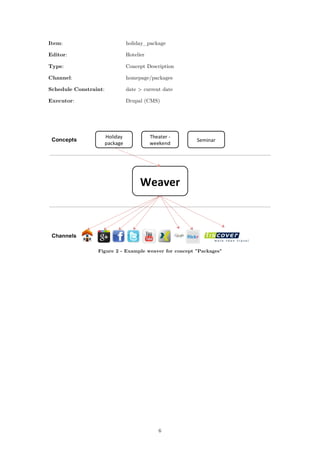
Item: holiday_package
Editor: Hotelier
Type: Concept Description
Channel: homepage/packages
Schedule Constraint: date > current date
Executor: Drupal (CMS)
Figure 2 - Example weaver for concept "Packages"

Rotes wildschwein showcase description - 2012-07-04

  • 1.
    1 SCEI Showcase „Hotel RotesWildschwein“ Carmen Brenner Semantic Technology Institute (STI) University of Innsbruck, Austria {firstname}.{lastname}@sti2.at Abstract: This paper will introduce the SCEI showcase “Hotel Rotes Wildschwein”. The different online communication channels for the showcase hotel will shortly be described. For the purpose of testing and developing the Semantic Communication Engine Innsbruck (SCEI)1 we introduce the showcase hotel “Rotes Wildschwein”. In the following, we present the information model that describes ou showcase, the different channels relevant in the channel model to better test and further develop the SCEI tool, and finally the weaver that describes the mappings of information items to the identified channels. The Information Model This section will describe the information model of the showcase hotel “Rotes Wildschwein” and takes the observations on relevant content for a hotel into account. The model also tries to offer the SCEI platform different concept types (e.g. text, video, images) for distributing them to relevant channels. We have identified following top-level concepts that are described in more detail in the following paragraphs. Rooms A hotel will have a list of all rooms it offers. An information item that describes a room needs to have following information: 1 The Semantic Communication Engine Innsbruck (SCEI) is a fully fledged online communication software suite. It supports users in online communication, gathering feedback and measuring online impact.
  • 2.
    2 Room name Room description Images Prices Packages Theconcept “Packages” describes special offers and packages that are usually only available for certain times and seasons. Each item holds following information: Package name Package type (Business, Family, Christmas, Easter, Summer, etc.) Date (when the package is valid) Package description Images Prices Wellness The concept “Wellness” offers information on the Wellness treatments and the SPA of the hotel. A wellness treatment item looks like this: Title of treatment Description Category (Massage, Beauty Treatment, etc.) Duration Price Events Especially for business and conference hotels, but also relevant for others, we identified the concept “Events”. An event content item holds following information: Event title Category (Business event, Concert events, etc.) Date (when this event will take place) Location Image Description News The concept “News” describes news items that are related to the hotel and may be published on a Web site or other channels. This concept has following properties:
  • 3.
    3 News title News text Image Video Tags TheChannel model The channel model describes the different channels, their interaction patterns and the target groups. In the following the different channels relevant for the “Rotes Wildschwein” show case will be described. First we will introduce the static broadcasting channel Web site, and then introduce different dynamic broadcasting channels including news, RSS, Facebook and Twitter. Static broadcasting Web site Web sites are an established means of providing (mostly) static information. Information that reflects the structure of the contents is provided through this channel. A Web site offers a smooth way for users to access this content. We have identified the hotel Web site as core part of a hotel online presence and it usually holds information about the hotel and its environment, on the rooms it offers, and often also about his restaurants and SPA. Figure 1 - Facebook page for Hotel Rotes Wildschwein
  • 4.
    4 For our showcasehotel we have taking this into account and have set up a Web site at http://www.rotes-wildschwein.at. The Web site uses the free and open content management system (CMS) Drupal (version 7.x). Dynamic Broadcasting Web 2.0 has enabled the development of dedicated means for publishing streams and interacting with prosumers have been added. Dynamic content refers to the information that is available or relevant only for a limited period of time. Examples of dynamic publishing channels include blogs, news articles, microblogs, etc. Such content is meant to have an expiration date and to be replaced by “new” content with a similar limited shelf life. News and RSS The project Web site (as a means for static broadcasting) has be enriched by dynamic broadcasting means. This includes a news section over which news and updates on the hotel are published. Also an RSS feed is used to broadcast this news. Its purpose is to regularly remind the user of the existence of a particular activity and the fact that it is producing interesting results. Twitter Twitter is a microblogging system that is widely used for disseminating news. The Twitter account for Hotel Rotes Wildschwein is available at https://twitter.com/#!/HotelRedBoar and is used for testing the SCEI platform. Facebook page Facebook as a social networking site provides an additional community aspect, i.e., it forms a community that multi-directionally shares news, photos, opinions, and other important aspects. Notice that Facebook is actually not only one but several channels. It offers more than 40 possibilities through which to disseminate information.
  • 5.
    5 The Facebook pageof our showcase hotel is available at http://www.facebook.com/pages/Rotes-Wildschwein/321731534545050. The Weaver A weaver as described in the technical report “Effective and Efficient On-line Communication”2 is a set of tuples of nine elements: 1. An information item: It defines an information category that should be disseminated through various channels. 2. An editor: The editor defines the agent that is responsible for providing the content of an information item. 3. An editor interaction protocol: This defines the interaction protocol governing how an editor collects the content. 4. An information type: We make a distinction between three types of content: an instance of a concept, a set of instances of a concept (i.e., an extensional definition of the concept), and a concept description (i.e., an intentional definition of a concept). 5. A processing rule: These rules govern how the content is processed to fit a channel. Often only a subset of the overall information item fits a certain channel. 6. A channel: The media that is used to disseminate the information. 7. Scheduling information: Information on how often and in which intervals the dissemination will be performed which includes temporal constrains over multi- channel disseminations. 8. An executor: It determines which agent or process is performing the update of a channel. Such an agent can be a human or a software solution. 9. An executor interaction protocol: It governs the interaction protocol defining how an executer receives its content. Elements 1 to 3 are about the content. They define the actual categories, the agent responsible for them, and the process of interacting with this agent. Elements 4 to 9 are about the dissemination of these items. Weaver for Holiday Packages • Target group: families • Content: text and pictures 2 http://www.sti-innsbruck.at/TR/OnlineCommunication
  • 6.
    6 Item: holiday_package Editor: Hotelier Type:Concept Description Channel: homepage/packages Schedule Constraint: date > current date Executor: Drupal (CMS) Figure 2 - Example weaver for concept "Packages"