Rolfe's Reflective Model: A
Guide to Self-Awareness
Discover how this model can help you reflect on your experiences and
become a more self-aware healthcare professional.
GC by George Cameron
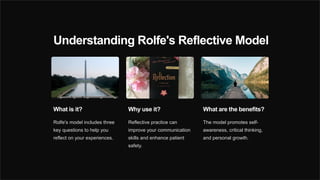
Understanding Rolfe's Reflective Model
What is it?
Rolfe's model includes three
key questions to help you
reflect on your experiences.
Why use it?
Reflective practice can
improve your communication
skills and enhance patient
safety.
What are the benefits?
The model promotes self-
awareness, critical thinking,
and personal growth.
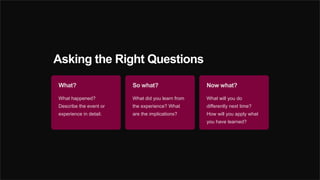
Asking the Right Questions
What?
What happened?
Describe the event or
experience in detail.
So what?
What did you learn from
the experience? What
are the implications?
Now what?
What will you do
differently next time?
How will you apply what
you have learned?
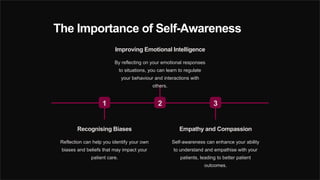
The Importance of Self-Awareness
1
Recognising Biases
Reflection can help you identify your own
biases and beliefs that may impact your
patient care.
2
Improving Emotional Intelligence
By reflecting on your emotional responses
to situations, you can learn to regulate
your behaviour and interactions with
others.
3
Empathy and Compassion
Self-awareness can enhance your ability
to understand and empathise with your
patients, leading to better patient
outcomes.
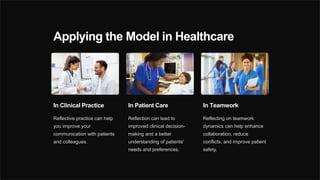
Applying the Model in Healthcare
In Clinical Practice
Reflective practice can help
you improve your
communication with patients
and colleagues.
In Patient Care
Reflection can lead to
improved clinical decision-
making and a better
understanding of patients'
needs and preferences.
In Teamwork
Reflecting on teamwork
dynamics can help enhance
collaboration, reduce
conflicts, and improve patient
safety.
Limitations of Rolfe's Model
1 Subjective
Experience
Some argue that the
model emphasizes
reflection on individual
experiences, ignoring
broader societal
factors that may
impact patient care.
2 Limited
Applicability
The model may not be
relevant or effective
for certain healthcare
professionals or in
certain practice
settings.
3 Lack of Rigour
The model may not be
rigorous or systematic
enough for some
practitioners, who may
prefer more structured
approaches to
reflection.
Alternative Models of Reflection
Gibbs Reflective Cycle
a popular model that
includes six stages of
reflection and encourages
deeper self-awareness.
Boud's Model of
Reflection
a model focused on
developing professional
practices through critical
reflection and action.
Johns' Model of
Structured Reflection
a model that emphasizes
attention to emotions in the
reflection process, to
engage with personal
growth and change.
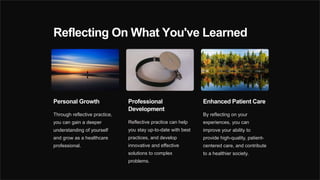
Reflecting On What You've Learned
Personal Growth
Through reflective practice,
you can gain a deeper
understanding of yourself
and grow as a healthcare
professional.
Professional
Development
Reflective practice can help
you stay up-to-date with best
practices, and develop
innovative and effective
solutions to complex
problems.
Enhanced Patient Care
By reflecting on your
experiences, you can
improve your ability to
provide high-quality, patient-
centered care, and contribute
to a healthier society.
Thank You.
Are you looking for practical tips on using reflective models to improve your writing skills in global
assignments? If so, have you checked out Rofle's Reflective Models for global assignment help
Blog? The blog offers insights into different models, such as Kolb's Experiential Learning Cycle and
Gibbs Reflective Cycle, and provides guidance for effective analysis and reflection in assignment
writing.

Rolfe's Reflective Model: A Guide to Self-Awareness

  • 1.
    Rolfe's Reflective Model:A Guide to Self-Awareness Discover how this model can help you reflect on your experiences and become a more self-aware healthcare professional. GC by George Cameron
  • 2.
    Understanding Rolfe's ReflectiveModel What is it? Rolfe's model includes three key questions to help you reflect on your experiences. Why use it? Reflective practice can improve your communication skills and enhance patient safety. What are the benefits? The model promotes self- awareness, critical thinking, and personal growth.
  • 3.
    Asking the RightQuestions What? What happened? Describe the event or experience in detail. So what? What did you learn from the experience? What are the implications? Now what? What will you do differently next time? How will you apply what you have learned?
  • 4.
    The Importance ofSelf-Awareness 1 Recognising Biases Reflection can help you identify your own biases and beliefs that may impact your patient care. 2 Improving Emotional Intelligence By reflecting on your emotional responses to situations, you can learn to regulate your behaviour and interactions with others. 3 Empathy and Compassion Self-awareness can enhance your ability to understand and empathise with your patients, leading to better patient outcomes.
  • 5.
    Applying the Modelin Healthcare In Clinical Practice Reflective practice can help you improve your communication with patients and colleagues. In Patient Care Reflection can lead to improved clinical decision- making and a better understanding of patients' needs and preferences. In Teamwork Reflecting on teamwork dynamics can help enhance collaboration, reduce conflicts, and improve patient safety.
  • 6.
    Limitations of Rolfe'sModel 1 Subjective Experience Some argue that the model emphasizes reflection on individual experiences, ignoring broader societal factors that may impact patient care. 2 Limited Applicability The model may not be relevant or effective for certain healthcare professionals or in certain practice settings. 3 Lack of Rigour The model may not be rigorous or systematic enough for some practitioners, who may prefer more structured approaches to reflection.
  • 7.
    Alternative Models ofReflection Gibbs Reflective Cycle a popular model that includes six stages of reflection and encourages deeper self-awareness. Boud's Model of Reflection a model focused on developing professional practices through critical reflection and action. Johns' Model of Structured Reflection a model that emphasizes attention to emotions in the reflection process, to engage with personal growth and change.
  • 8.
    Reflecting On WhatYou've Learned Personal Growth Through reflective practice, you can gain a deeper understanding of yourself and grow as a healthcare professional. Professional Development Reflective practice can help you stay up-to-date with best practices, and develop innovative and effective solutions to complex problems. Enhanced Patient Care By reflecting on your experiences, you can improve your ability to provide high-quality, patient- centered care, and contribute to a healthier society.
  • 9.
    Thank You. Are youlooking for practical tips on using reflective models to improve your writing skills in global assignments? If so, have you checked out Rofle's Reflective Models for global assignment help Blog? The blog offers insights into different models, such as Kolb's Experiential Learning Cycle and Gibbs Reflective Cycle, and provides guidance for effective analysis and reflection in assignment writing.