How to Write a Perfect
Dissertation with Topics
Writing a dissertation can be a daunting task, but with the right approach,
it can also be an incredibly rewarding experience. In this presentation, we
will guide you through the step-by-step process of writing a perfect
dissertation, starting with choosing a compelling topic.
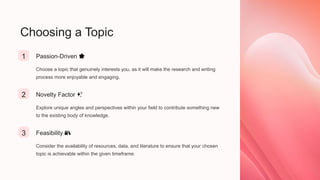
Choosing a Topic
1 Passion-Driven 🌟
Choose a topic that genuinely interests you, as it will make the research and writing
process more enjoyable and engaging.
2 Novelty Factor ✨
Explore unique angles and perspectives within your field to contribute something new
to the existing body of knowledge.
3 Feasibility 📚
Consider the availability of resources, data, and literature to ensure that your chosen
topic is achievable within the given timeframe.
Conducting Research
Library Exploration
Immerse yourself in the vast
wealth of books and
academic journals to gather
relevant information and
deepen your understanding
of the topic.
Internet Exploration
Utilize online databases,
scholarly articles, and
credible websites to access a
wide range of current and
relevant sources.
Conducting Interviews
Engage directly with experts
and professionals in the field
to gain unique insights and
gather firsthand data for your
research.
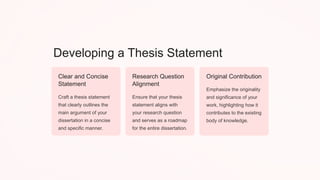
Developing a Thesis Statement
Clear and Concise
Statement
Craft a thesis statement
that clearly outlines the
main argument of your
dissertation in a concise
and specific manner.
Research Question
Alignment
Ensure that your thesis
statement aligns with
your research question
and serves as a roadmap
for the entire dissertation.
Original Contribution
Emphasize the originality
and significance of your
work, highlighting how it
contributes to the existing
body of knowledge.
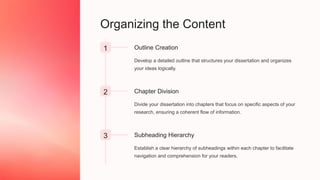
Organizing the Content
1 Outline Creation
Develop a detailed outline that structures your dissertation and organizes
your ideas logically.
2 Chapter Division
Divide your dissertation into chapters that focus on specific aspects of your
research, ensuring a coherent flow of information.
3 Subheading Hierarchy
Establish a clear hierarchy of subheadings within each chapter to facilitate
navigation and comprehension for your readers.
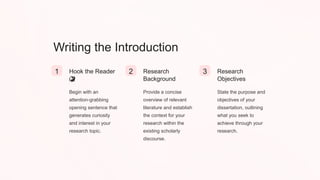
Writing the Introduction
1 Hook the Reader
🎣
Begin with an
attention-grabbing
opening sentence that
generates curiosity
and interest in your
research topic.
2 Research
Background
Provide a concise
overview of relevant
literature and establish
the context for your
research within the
existing scholarly
discourse.
3 Research
Objectives
State the purpose and
objectives of your
dissertation, outlining
what you seek to
achieve through your
research.
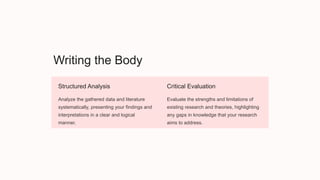
Writing the Body
Structured Analysis
Analyze the gathered data and literature
systematically, presenting your findings and
interpretations in a clear and logical
manner.
Critical Evaluation
Evaluate the strengths and limitations of
existing research and theories, highlighting
any gaps in knowledge that your research
aims to address.
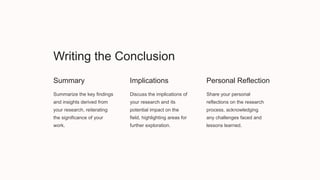
Writing the Conclusion
Summary
Summarize the key findings
and insights derived from
your research, reiterating
the significance of your
work.
Implications
Discuss the implications of
your research and its
potential impact on the
field, highlighting areas for
further exploration.
Personal Reflection
Share your personal
reflections on the research
process, acknowledging
any challenges faced and
lessons learned.
Global
Assignment
Help
USA
Thank You
Struggling with essay writing? Look no further! Our top-notch essay writing service is designed to elevate your
academic journey. Expert writers, on-time delivery, and 100% original content are just a few clicks away. Let's
make your academic dreams a reality!

How to Write a Perfect Dissertation with Topics.pptx

  • 1.
    How to Writea Perfect Dissertation with Topics Writing a dissertation can be a daunting task, but with the right approach, it can also be an incredibly rewarding experience. In this presentation, we will guide you through the step-by-step process of writing a perfect dissertation, starting with choosing a compelling topic.
  • 2.
    Choosing a Topic 1Passion-Driven 🌟 Choose a topic that genuinely interests you, as it will make the research and writing process more enjoyable and engaging. 2 Novelty Factor ✨ Explore unique angles and perspectives within your field to contribute something new to the existing body of knowledge. 3 Feasibility 📚 Consider the availability of resources, data, and literature to ensure that your chosen topic is achievable within the given timeframe.
  • 3.
    Conducting Research Library Exploration Immerseyourself in the vast wealth of books and academic journals to gather relevant information and deepen your understanding of the topic. Internet Exploration Utilize online databases, scholarly articles, and credible websites to access a wide range of current and relevant sources. Conducting Interviews Engage directly with experts and professionals in the field to gain unique insights and gather firsthand data for your research.
  • 4.
    Developing a ThesisStatement Clear and Concise Statement Craft a thesis statement that clearly outlines the main argument of your dissertation in a concise and specific manner. Research Question Alignment Ensure that your thesis statement aligns with your research question and serves as a roadmap for the entire dissertation. Original Contribution Emphasize the originality and significance of your work, highlighting how it contributes to the existing body of knowledge.
  • 5.
    Organizing the Content 1Outline Creation Develop a detailed outline that structures your dissertation and organizes your ideas logically. 2 Chapter Division Divide your dissertation into chapters that focus on specific aspects of your research, ensuring a coherent flow of information. 3 Subheading Hierarchy Establish a clear hierarchy of subheadings within each chapter to facilitate navigation and comprehension for your readers.
  • 6.
    Writing the Introduction 1Hook the Reader 🎣 Begin with an attention-grabbing opening sentence that generates curiosity and interest in your research topic. 2 Research Background Provide a concise overview of relevant literature and establish the context for your research within the existing scholarly discourse. 3 Research Objectives State the purpose and objectives of your dissertation, outlining what you seek to achieve through your research.
  • 7.
    Writing the Body StructuredAnalysis Analyze the gathered data and literature systematically, presenting your findings and interpretations in a clear and logical manner. Critical Evaluation Evaluate the strengths and limitations of existing research and theories, highlighting any gaps in knowledge that your research aims to address.
  • 8.
    Writing the Conclusion Summary Summarizethe key findings and insights derived from your research, reiterating the significance of your work. Implications Discuss the implications of your research and its potential impact on the field, highlighting areas for further exploration. Personal Reflection Share your personal reflections on the research process, acknowledging any challenges faced and lessons learned.
  • 9.
    Global Assignment Help USA Thank You Struggling withessay writing? Look no further! Our top-notch essay writing service is designed to elevate your academic journey. Expert writers, on-time delivery, and 100% original content are just a few clicks away. Let's make your academic dreams a reality!