1
Submitted To: Dr Saima Tahseen
Submitted By: Hira Zulfiqar
Course Code: FST-629
Credit Hours: 1(0-1)
Session: 2020-2024
Department: Food Science and Technology
2
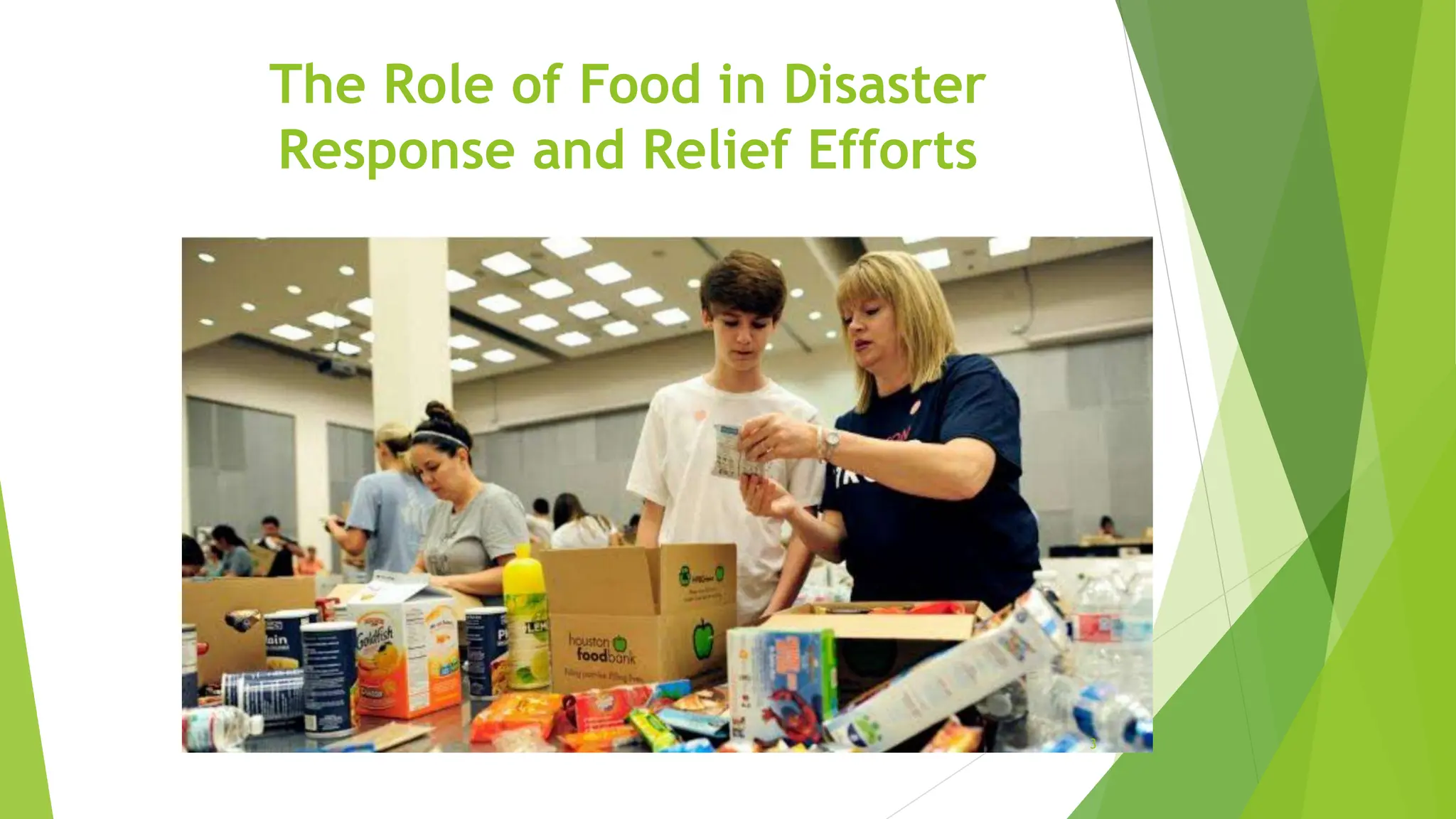
The Role of Food in Disaster
Response and Relief Efforts
3
Contents:
 Introduction
 Understanding disaster response
 Key components of disaster response
 Immediate Nutritional Needs
 Food as Psychological Support
 Logistics and Distribution
 Pre- positioning Food Supplies
 Case Studies
 Conclusion
 References
4
Introduction:
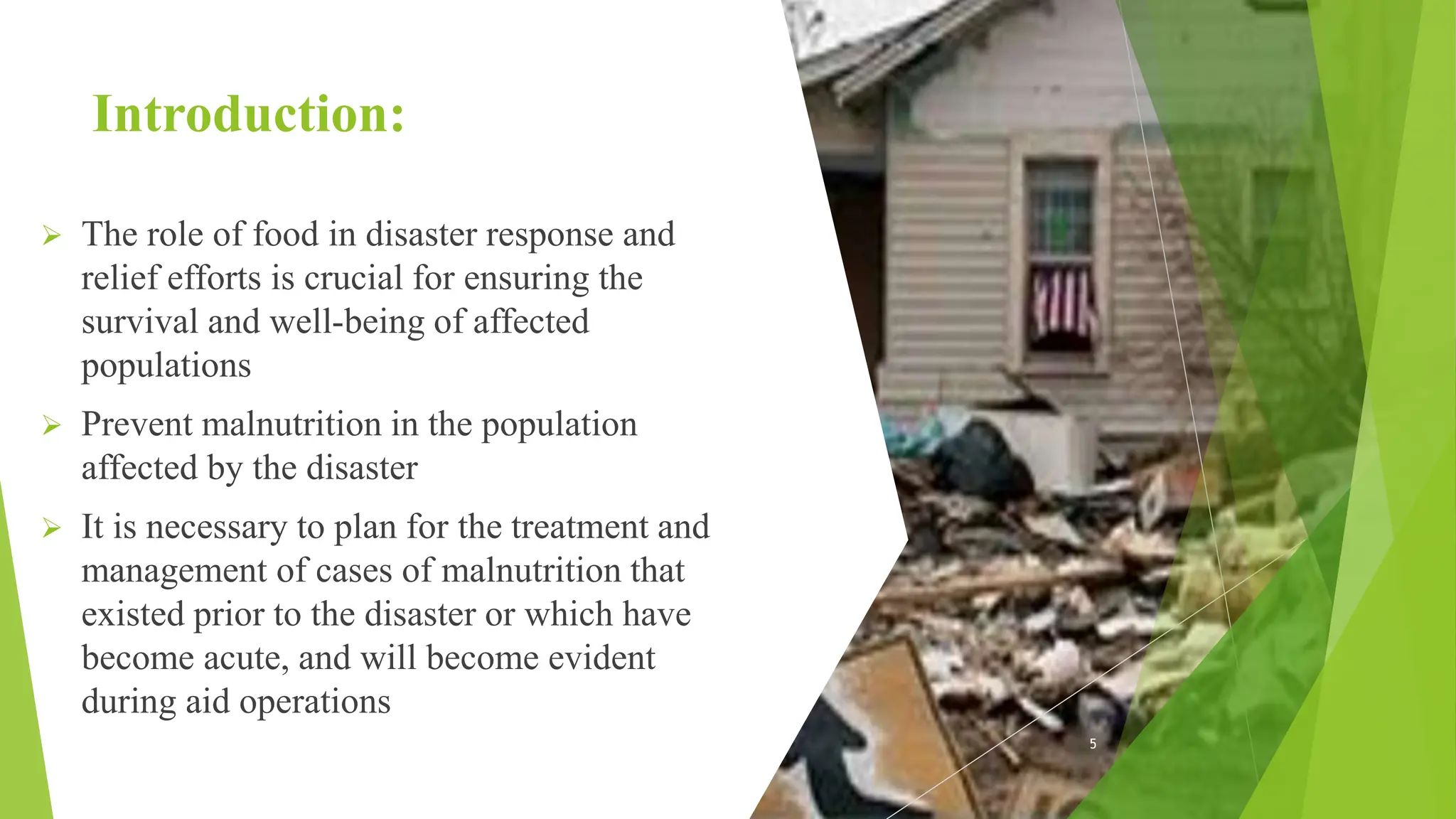
 The role of food in disaster response and
relief efforts is crucial for ensuring the
survival and well-being of affected
populations
 Prevent malnutrition in the population
affected by the disaster
 It is necessary to plan for the treatment and
management of cases of malnutrition that
existed prior to the disaster or which have
become acute, and will become evident
during aid operations
5
Definition
 A disaster is a sudden, catastrophic event that
causes significant damage, destruction, and
disruption, often resulting in harm to human
life, property, and the environment
 These events can include natural disasters like
earthquakes, hurricanes, and floods, as well as
human-made disasters such as industrial
accidents or acts of terrorism
6
Types of disaster
 Geophysical (e.g. Earthquakes, Landslides,
Tsunamis and Volcanic Activity
 Hydrological (e.g. Avalanches and Floods)
 Climatological (e.g. Extreme
Temperatures, Drought and Wildfires)
 Meteorological (e.g. Cyclones and
Storms/Wave Surges)
7
This Photo by Unknown author is licensed under CC BY-SA.
Importance of a Timely Effective Response
8
Survival and Health:
Timely access to food is
essential for the survival
and well-being of
disaster-affected
populations
Delayed or ineffective
food distribution can lead
to malnutrition,
dehydration, and
increased vulnerability to
diseases
Energy and Resilience
Food provides the energy
needed for individuals to
recover from the physical
and emotional stress of a
disaster
Well-nourished
individuals are better
equipped to cope with
the challenges of the
recovery process
Conti...
Psychological Well-being
 Access to familiar and culturally appropriate food can provide comfort and a
sense of normalcy in the midst of a crisis, contributing to the psychological
well-being of disaster survivors
 Efficiency in Relief Efforts
 Effective food distribution ensures that resources are utilized efficiently and
reach those in need
 Prevention of Secondary Disasters
 Inadequate food access can lead to secondary health crises, such as outbreaks
of disease, which can exacerbate the initial disaster’s impact
 Recovery and Rebuilding
 Adequate nutrition is essential for the recovery and rebuilding process. Without
proper nutrition, individuals and communities may struggle to regain their
strength and productivity 9
Key components of Disaster
Response
Food
 Purpose: Provides sustenance and nutrition to
disaster survivors, preventing hunger and
malnutrition
Distribution:
 Food aid is often distributed through relief
agencies and coordinated efforts, aiming to
ensure balanced nutrition and cultural
sensitivity
Challenges:
 Logistics, food safety, and dietary
requirements are key considerations in food
distribution
10
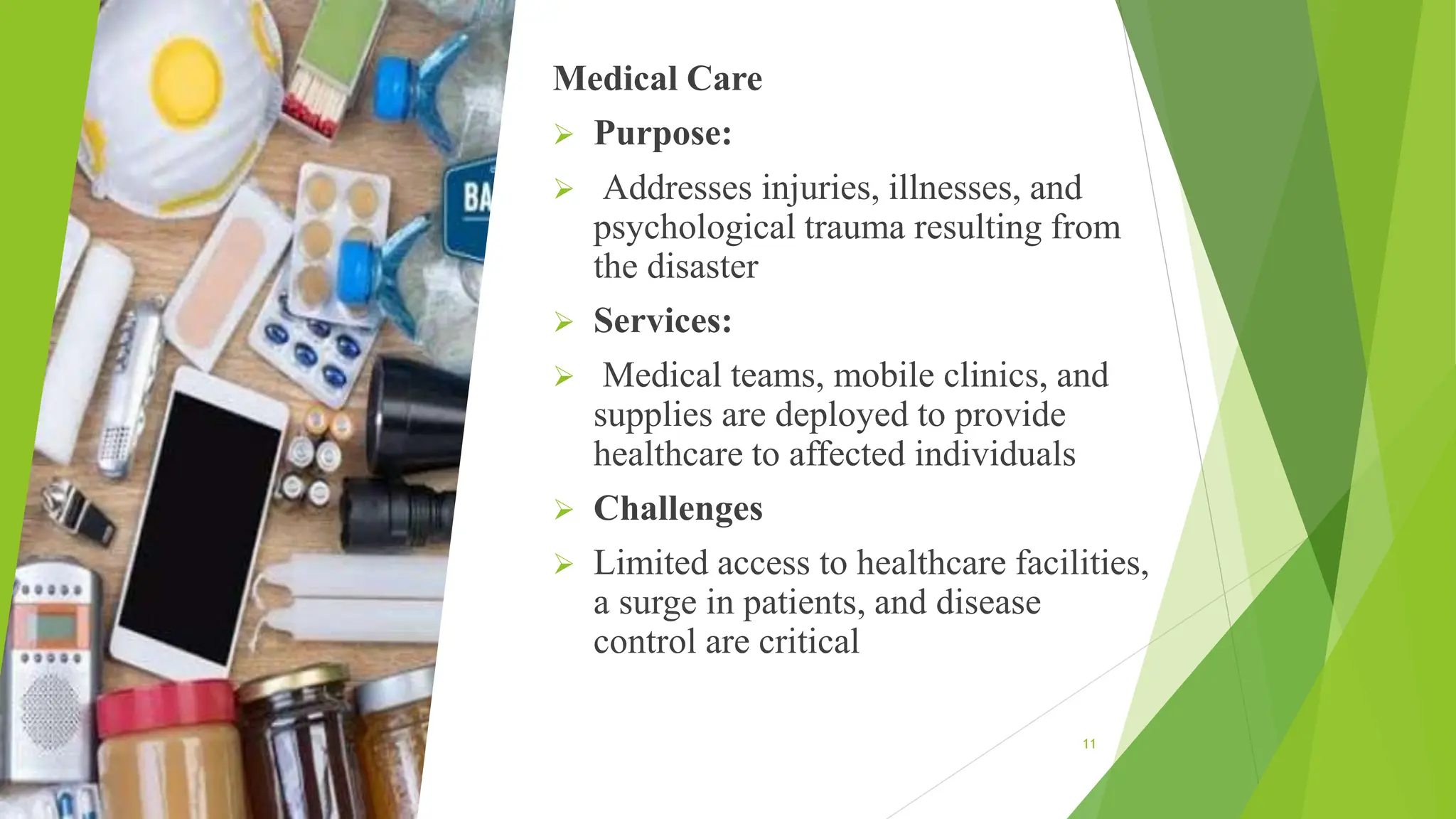
Medical Care
 Purpose:
 Addresses injuries, illnesses, and
psychological trauma resulting from
the disaster
 Services:
 Medical teams, mobile clinics, and
supplies are deployed to provide
healthcare to affected individuals
 Challenges
 Limited access to healthcare facilities,
a surge in patients, and disease
control are critical
11
Shelter
Purpose:
 Offers protection from the
elements, safety, and privacy to
displaced individuals who may have
lost their homes
 Types:
 Temporary shelters can include
tents, emergency housing, or
repurposed buildings
 Challenges:
 Ensuring adequate shelter
capacity, durability, and sanitation
are essential
12
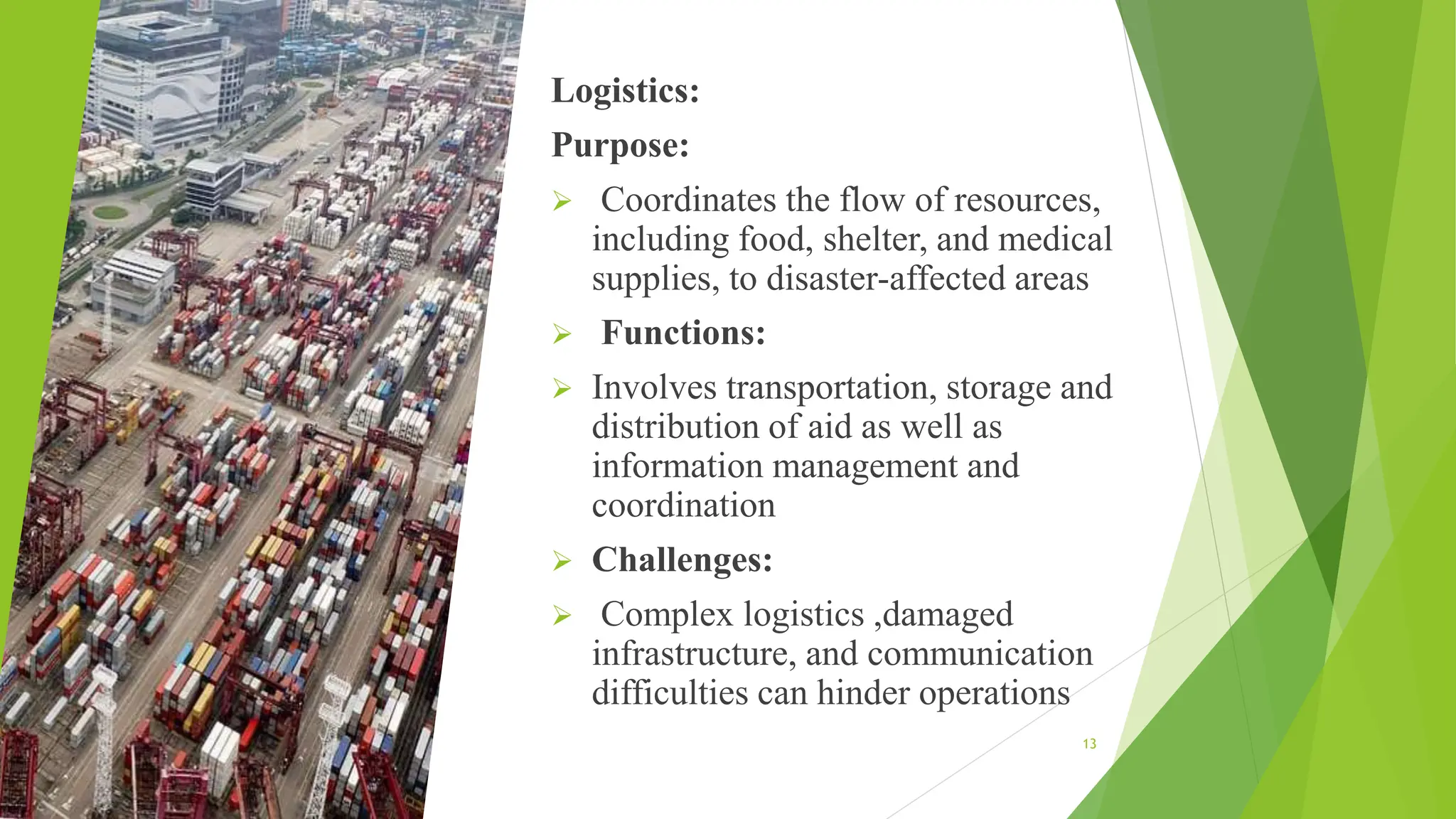
Logistics:
Purpose:
 Coordinates the flow of resources,
including food, shelter, and medical
supplies, to disaster-affected areas
 Functions:
 Involves transportation, storage and
distribution of aid as well as
information management and
coordination
 Challenges:
 Complex logistics ,damaged
infrastructure, and communication
difficulties can hinder operations
13
Central Role of Food Ensuring Survival and
Well Being
Nutrition:
 Food provides essential nutrients such as carbohydrates,
proteins, fats, vitamins, and minerals. That are necessary
for the proper functioning of the body. These nutrients
are crucial for growth, energy, and overall health
 Energy:
 Calories from food serve as the body’s primary source of
energy.
 Without an adequate supply of energy from food, the
body cannot perform its daily functions, and survival is at
risk
 Growth and Development:
 Adequate nutrition from food is essential for the growth
and development of individuals, particularly during
childhood and adolescence
14
Mental Well-being:
 The link between nutrition and mental
health is well-established. A balanced diet
can positively impact mood, cognitive
function, and overall mental well-being
 Preventing Malnutrition:
 Access to a variety of foods is crucial to
prevent malnutrition, which can lead to
various health issues, including stunted
growth, weakened immunity, and cognitive
impairments
15
Role in Humanitarian Assistance
 Food plays a critical role in humanitarian assistance,
especially in times of crisis, conflict, natural disasters, or
other emergencies. Its role can be summarized in several
key aspects
 Immediate Survival:
 In acute emergencies, such as natural disasters or
conflict, providing food is often the most immediate and
essential form of aid. It can save lives by preventing
malnutrition and starvation
 Nutritional Support:
 Humanitarian food aid includes the provision of
nutritious food to vulnerable populations, especially
children, pregnant women, and the elderly, who are more
susceptible to malnutrition 16
Food Security:
 Humanitarian organizations work to ensure food
security by distributing food, seeds, and tools to help
communities become self-sufficient
Water and Sanitation:
 Food assistance often complements efforts to provide
clean water and sanitation, as these factors are closely
linked to foodborne illnesses and overall health
Medical Treatment:
 Adequate nutrition is crucial for the recovery of
patients suffering from illness or injury. In medical
settings, food is an integral part of treatment and
rehabilitation
17
Targeted Assistance:
 Humanitarian agencies often use food aid to
target the most vulnerable populations, such
as refugees, internally displaced persons, and
those living in extreme poverty
Reduction:
 Food security and disaster preparedness
programs help communities be better
equipped to handle future crises and reduce
the need for emergency food assistance
18
This Photo by Unknown author is licensed under CC BY.
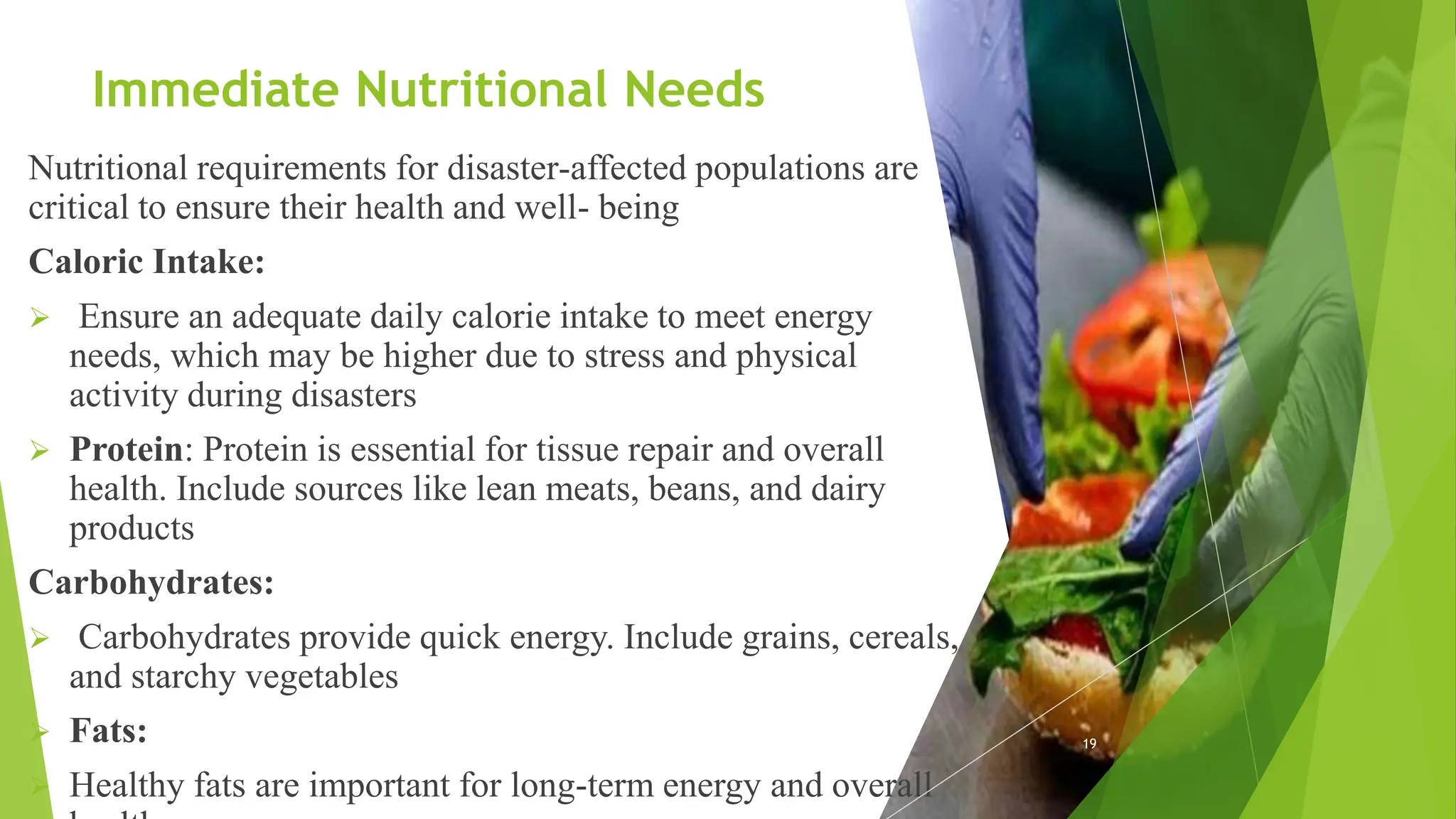
Immediate Nutritional Needs
Nutritional requirements for disaster-affected populations are
critical to ensure their health and well- being
Caloric Intake:
 Ensure an adequate daily calorie intake to meet energy
needs, which may be higher due to stress and physical
activity during disasters
 Protein: Protein is essential for tissue repair and overall
health. Include sources like lean meats, beans, and dairy
products
Carbohydrates:
 Carbohydrates provide quick energy. Include grains, cereals,
and starchy vegetables
 Fats:
 Healthy fats are important for long-term energy and overall
19
Special Diets
20
Dietary restrictions or
special diets for individuals
with medical conditions,
allergies, or cultural
preference
Pay special attention to the
nutritional needs of infants,
pregnant and lactating
women, and young children.
Breastfeeding should be
encouraged where possible
Food as Psychological Support
 Nutrition Support

 Stress Reduction

 Community and Bonding
21
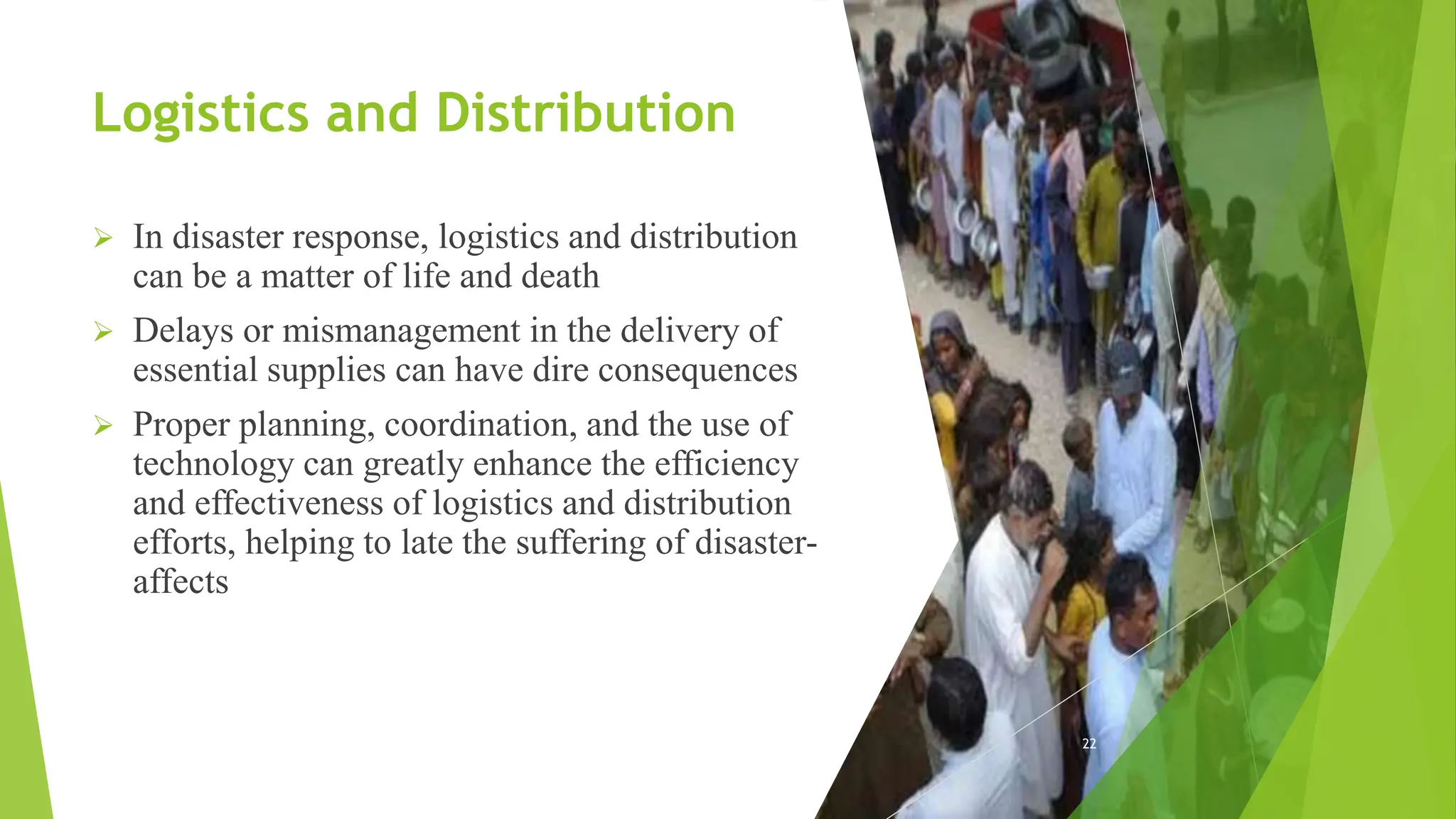
Logistics and Distribution
 In disaster response, logistics and distribution
can be a matter of life and death
 Delays or mismanagement in the delivery of
essential supplies can have dire consequences
 Proper planning, coordination, and the use of
technology can greatly enhance the efficiency
and effectiveness of logistics and distribution
efforts, helping to late the suffering of disaster-
affects
22
Foods Use in Disaster
Canned Goods
 Canned vegetables, fruits, and proteins (like tuna or chicken) are
convenient and have a long shelf life
 Dried Foods
 Dried fruits, nuts, and jerky are lightweight, energy-dense, and require no
refrigeration
 Granola Bars and Energy Bars
 These are portable, easy to eat, and can provide a quick source of energy
 Peanut Butter
 High in calories and protein, peanut butter is a good source. Of
sustenance. Choose plastic jars, not glass, for safety
 Crackers
 Salted or unsalted crackers can be a good source of carbohydrates and
23
Instant Soups and Noodles:
 These are quick to prepare and can provide warmth and
sustenance
 Water: While not a food, clean water is essential
Baby Food and Formula:
 If there are infants or young children, make sure to have
appropriate baby food and formula on hand
 Special Dietary Needs:
 Consider any specific dietary requirements or allergies
of those in your household. Having appropriate foods
for these needs is crucial
24
This Photo by Unknown author is licensed under CC BY-SA.
Case studies in Pakistan
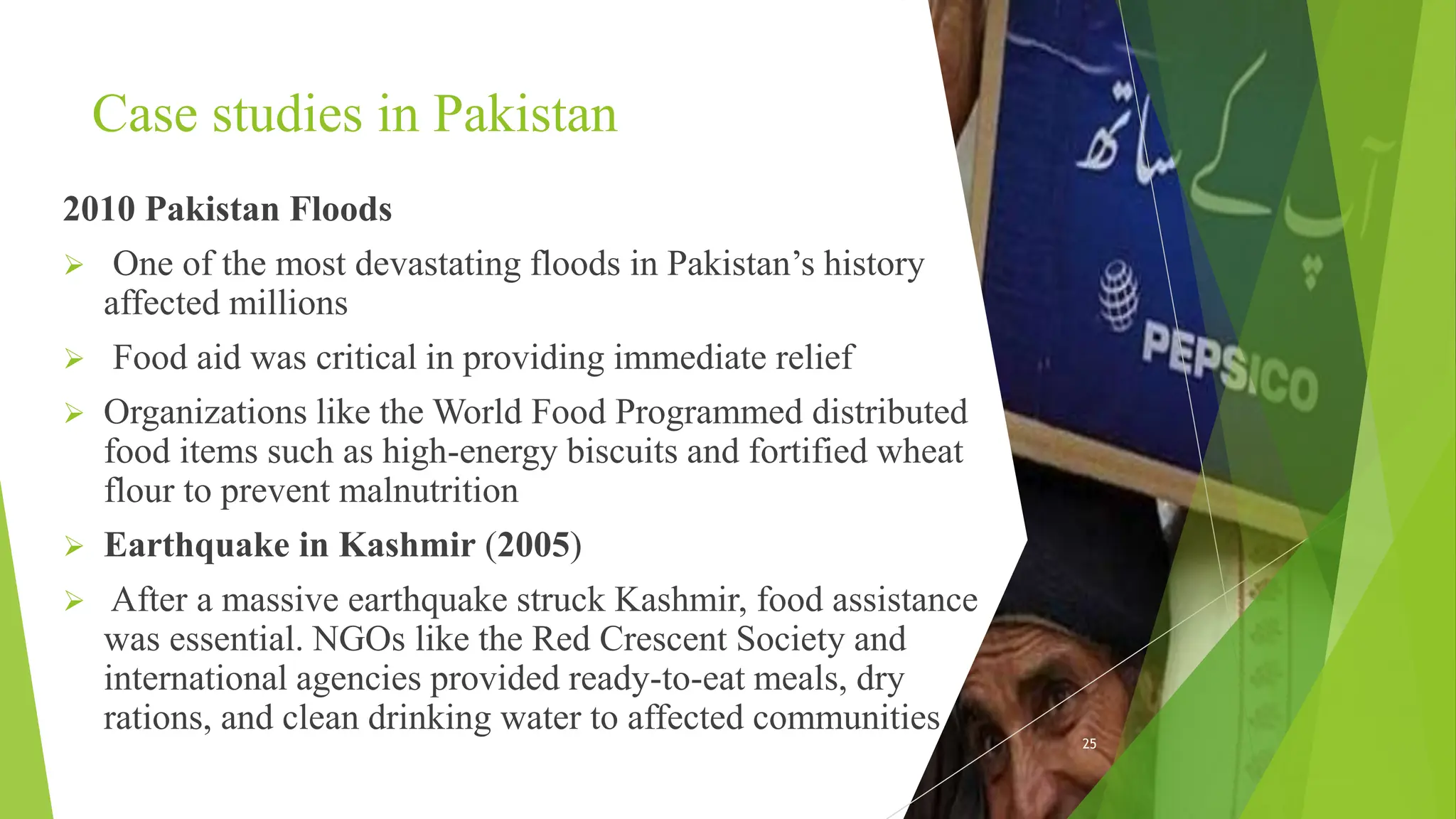
2010 Pakistan Floods
 One of the most devastating floods in Pakistan’s history
affected millions
 Food aid was critical in providing immediate relief
 Organizations like the World Food Programmed distributed
food items such as high-energy biscuits and fortified wheat
flour to prevent malnutrition
 Earthquake in Kashmir (2005)
 After a massive earthquake struck Kashmir, food assistance
was essential. NGOs like the Red Crescent Society and
international agencies provided ready-to-eat meals, dry
rations, and clean drinking water to affected communities
25
Conti...
Balochistan Earthquake (2013)
 In the wake of the Balochistan earthquake, food was dispatched to the
affected areas. The government, along with organizations like the
Pakistan Red Crescent, distributed food packages containing rice, lentils,
cooking oil, and other staples
 FATA Crisis
 The conflict in the Federally Administered Tribal Areas (FATA)
displaced many people. Humanitarian agencies delivered food supplies,
including rice, flour, and pulses, to internally displaced persons in camps
 Cyclone Phet (2010)
 After Cyclone Phet hit Pakistan’s coastal areas, food assistance was
provided to affected communities. The World Food Programme and other
agencies distributed food baskets containing staples like rice, wheat flour,
and cooking oil 26
Conclusion
 In conclusion, food plays a pivotal role in disaster response and
relief efforts, addressing not only the immediate physical needs of
survivors but also their emotional well-being and long-term
recovery
 Effective food distribution and management are essential to
ensure that aid reaches those who need it more
27
References
 J Educ Health Promot. 2019; 8: 58. Published online 2019 Mar 14
 health-emergencies/food-and-nutrition-disasters
 Assembling Food Safety Emergency Supply Kits
28
29
30

Role of food in disaster response

  • 1.
  • 2.
    Submitted To: DrSaima Tahseen Submitted By: Hira Zulfiqar Course Code: FST-629 Credit Hours: 1(0-1) Session: 2020-2024 Department: Food Science and Technology 2
  • 3.
    The Role ofFood in Disaster Response and Relief Efforts 3
  • 4.
    Contents:  Introduction  Understandingdisaster response  Key components of disaster response  Immediate Nutritional Needs  Food as Psychological Support  Logistics and Distribution  Pre- positioning Food Supplies  Case Studies  Conclusion  References 4
  • 5.
    Introduction:  The roleof food in disaster response and relief efforts is crucial for ensuring the survival and well-being of affected populations  Prevent malnutrition in the population affected by the disaster  It is necessary to plan for the treatment and management of cases of malnutrition that existed prior to the disaster or which have become acute, and will become evident during aid operations 5
  • 6.
    Definition  A disasteris a sudden, catastrophic event that causes significant damage, destruction, and disruption, often resulting in harm to human life, property, and the environment  These events can include natural disasters like earthquakes, hurricanes, and floods, as well as human-made disasters such as industrial accidents or acts of terrorism 6
  • 7.
    Types of disaster Geophysical (e.g. Earthquakes, Landslides, Tsunamis and Volcanic Activity  Hydrological (e.g. Avalanches and Floods)  Climatological (e.g. Extreme Temperatures, Drought and Wildfires)  Meteorological (e.g. Cyclones and Storms/Wave Surges) 7 This Photo by Unknown author is licensed under CC BY-SA.
  • 8.
    Importance of aTimely Effective Response 8 Survival and Health: Timely access to food is essential for the survival and well-being of disaster-affected populations Delayed or ineffective food distribution can lead to malnutrition, dehydration, and increased vulnerability to diseases Energy and Resilience Food provides the energy needed for individuals to recover from the physical and emotional stress of a disaster Well-nourished individuals are better equipped to cope with the challenges of the recovery process
  • 9.
    Conti... Psychological Well-being  Accessto familiar and culturally appropriate food can provide comfort and a sense of normalcy in the midst of a crisis, contributing to the psychological well-being of disaster survivors  Efficiency in Relief Efforts  Effective food distribution ensures that resources are utilized efficiently and reach those in need  Prevention of Secondary Disasters  Inadequate food access can lead to secondary health crises, such as outbreaks of disease, which can exacerbate the initial disaster’s impact  Recovery and Rebuilding  Adequate nutrition is essential for the recovery and rebuilding process. Without proper nutrition, individuals and communities may struggle to regain their strength and productivity 9
  • 10.
    Key components ofDisaster Response Food  Purpose: Provides sustenance and nutrition to disaster survivors, preventing hunger and malnutrition Distribution:  Food aid is often distributed through relief agencies and coordinated efforts, aiming to ensure balanced nutrition and cultural sensitivity Challenges:  Logistics, food safety, and dietary requirements are key considerations in food distribution 10
  • 11.
    Medical Care  Purpose: Addresses injuries, illnesses, and psychological trauma resulting from the disaster  Services:  Medical teams, mobile clinics, and supplies are deployed to provide healthcare to affected individuals  Challenges  Limited access to healthcare facilities, a surge in patients, and disease control are critical 11
  • 12.
    Shelter Purpose:  Offers protectionfrom the elements, safety, and privacy to displaced individuals who may have lost their homes  Types:  Temporary shelters can include tents, emergency housing, or repurposed buildings  Challenges:  Ensuring adequate shelter capacity, durability, and sanitation are essential 12
  • 13.
    Logistics: Purpose:  Coordinates theflow of resources, including food, shelter, and medical supplies, to disaster-affected areas  Functions:  Involves transportation, storage and distribution of aid as well as information management and coordination  Challenges:  Complex logistics ,damaged infrastructure, and communication difficulties can hinder operations 13
  • 14.
    Central Role ofFood Ensuring Survival and Well Being Nutrition:  Food provides essential nutrients such as carbohydrates, proteins, fats, vitamins, and minerals. That are necessary for the proper functioning of the body. These nutrients are crucial for growth, energy, and overall health  Energy:  Calories from food serve as the body’s primary source of energy.  Without an adequate supply of energy from food, the body cannot perform its daily functions, and survival is at risk  Growth and Development:  Adequate nutrition from food is essential for the growth and development of individuals, particularly during childhood and adolescence 14
  • 15.
    Mental Well-being:  Thelink between nutrition and mental health is well-established. A balanced diet can positively impact mood, cognitive function, and overall mental well-being  Preventing Malnutrition:  Access to a variety of foods is crucial to prevent malnutrition, which can lead to various health issues, including stunted growth, weakened immunity, and cognitive impairments 15
  • 16.
    Role in HumanitarianAssistance  Food plays a critical role in humanitarian assistance, especially in times of crisis, conflict, natural disasters, or other emergencies. Its role can be summarized in several key aspects  Immediate Survival:  In acute emergencies, such as natural disasters or conflict, providing food is often the most immediate and essential form of aid. It can save lives by preventing malnutrition and starvation  Nutritional Support:  Humanitarian food aid includes the provision of nutritious food to vulnerable populations, especially children, pregnant women, and the elderly, who are more susceptible to malnutrition 16
  • 17.
    Food Security:  Humanitarianorganizations work to ensure food security by distributing food, seeds, and tools to help communities become self-sufficient Water and Sanitation:  Food assistance often complements efforts to provide clean water and sanitation, as these factors are closely linked to foodborne illnesses and overall health Medical Treatment:  Adequate nutrition is crucial for the recovery of patients suffering from illness or injury. In medical settings, food is an integral part of treatment and rehabilitation 17
  • 18.
    Targeted Assistance:  Humanitarianagencies often use food aid to target the most vulnerable populations, such as refugees, internally displaced persons, and those living in extreme poverty Reduction:  Food security and disaster preparedness programs help communities be better equipped to handle future crises and reduce the need for emergency food assistance 18 This Photo by Unknown author is licensed under CC BY.
  • 19.
    Immediate Nutritional Needs Nutritionalrequirements for disaster-affected populations are critical to ensure their health and well- being Caloric Intake:  Ensure an adequate daily calorie intake to meet energy needs, which may be higher due to stress and physical activity during disasters  Protein: Protein is essential for tissue repair and overall health. Include sources like lean meats, beans, and dairy products Carbohydrates:  Carbohydrates provide quick energy. Include grains, cereals, and starchy vegetables  Fats:  Healthy fats are important for long-term energy and overall 19
  • 20.
    Special Diets 20 Dietary restrictionsor special diets for individuals with medical conditions, allergies, or cultural preference Pay special attention to the nutritional needs of infants, pregnant and lactating women, and young children. Breastfeeding should be encouraged where possible
  • 21.
    Food as PsychologicalSupport  Nutrition Support   Stress Reduction   Community and Bonding 21
  • 22.
    Logistics and Distribution In disaster response, logistics and distribution can be a matter of life and death  Delays or mismanagement in the delivery of essential supplies can have dire consequences  Proper planning, coordination, and the use of technology can greatly enhance the efficiency and effectiveness of logistics and distribution efforts, helping to late the suffering of disaster- affects 22
  • 23.
    Foods Use inDisaster Canned Goods  Canned vegetables, fruits, and proteins (like tuna or chicken) are convenient and have a long shelf life  Dried Foods  Dried fruits, nuts, and jerky are lightweight, energy-dense, and require no refrigeration  Granola Bars and Energy Bars  These are portable, easy to eat, and can provide a quick source of energy  Peanut Butter  High in calories and protein, peanut butter is a good source. Of sustenance. Choose plastic jars, not glass, for safety  Crackers  Salted or unsalted crackers can be a good source of carbohydrates and 23
  • 24.
    Instant Soups andNoodles:  These are quick to prepare and can provide warmth and sustenance  Water: While not a food, clean water is essential Baby Food and Formula:  If there are infants or young children, make sure to have appropriate baby food and formula on hand  Special Dietary Needs:  Consider any specific dietary requirements or allergies of those in your household. Having appropriate foods for these needs is crucial 24 This Photo by Unknown author is licensed under CC BY-SA.
  • 25.
    Case studies inPakistan 2010 Pakistan Floods  One of the most devastating floods in Pakistan’s history affected millions  Food aid was critical in providing immediate relief  Organizations like the World Food Programmed distributed food items such as high-energy biscuits and fortified wheat flour to prevent malnutrition  Earthquake in Kashmir (2005)  After a massive earthquake struck Kashmir, food assistance was essential. NGOs like the Red Crescent Society and international agencies provided ready-to-eat meals, dry rations, and clean drinking water to affected communities 25
  • 26.
    Conti... Balochistan Earthquake (2013) In the wake of the Balochistan earthquake, food was dispatched to the affected areas. The government, along with organizations like the Pakistan Red Crescent, distributed food packages containing rice, lentils, cooking oil, and other staples  FATA Crisis  The conflict in the Federally Administered Tribal Areas (FATA) displaced many people. Humanitarian agencies delivered food supplies, including rice, flour, and pulses, to internally displaced persons in camps  Cyclone Phet (2010)  After Cyclone Phet hit Pakistan’s coastal areas, food assistance was provided to affected communities. The World Food Programme and other agencies distributed food baskets containing staples like rice, wheat flour, and cooking oil 26
  • 27.
    Conclusion  In conclusion,food plays a pivotal role in disaster response and relief efforts, addressing not only the immediate physical needs of survivors but also their emotional well-being and long-term recovery  Effective food distribution and management are essential to ensure that aid reaches those who need it more 27
  • 28.
    References  J EducHealth Promot. 2019; 8: 58. Published online 2019 Mar 14  health-emergencies/food-and-nutrition-disasters  Assembling Food Safety Emergency Supply Kits 28
  • 29.
  • 30.