Chris Garbett
FM Roles
#BIFMWEBINARS
#FACMAN
About the presenter
> Chris is the Tutor for the IWFM Direct
Qualifications.
> He is the former Director of the FM
Programme of Studies at Leeds Beckett
University
Agenda
> In this presentation we will look at:
• Definitions of FM
• FM and the Core Activity
• FM at Operational, Tactical and Strategic
Levels
This is designed to help with:
• 3.01 Task 1 and Task 4
• 4.01 Task 1 and Task 3
What Is FM? IWFM
> The International Organisation for
Standardisation defines facilities
management (FM) as the “organizational
function which integrates people, place and
process within the built environment with the
purpose of improving the quality of life of
people and the productivity of the core
business.” – IWFM
What is FM - EuroFM
> The integration of processes within an
organization to maintain and develop the
agreed services which support and
improve the effectiveness of its
primary activities.
> (EN15221-1: 2006 Facility Management – Part
1: Terms and definitions)
Core Business
> IWFM mentions CORE BUSINESS
> EuroFM mentions PRIMARY ACTIVITIES
> This means the core business or primary
activity of the organisation receiving FM
services.
> Core Activity
Core Activity Example 1
>For a hospital, the
core business is
treating patients
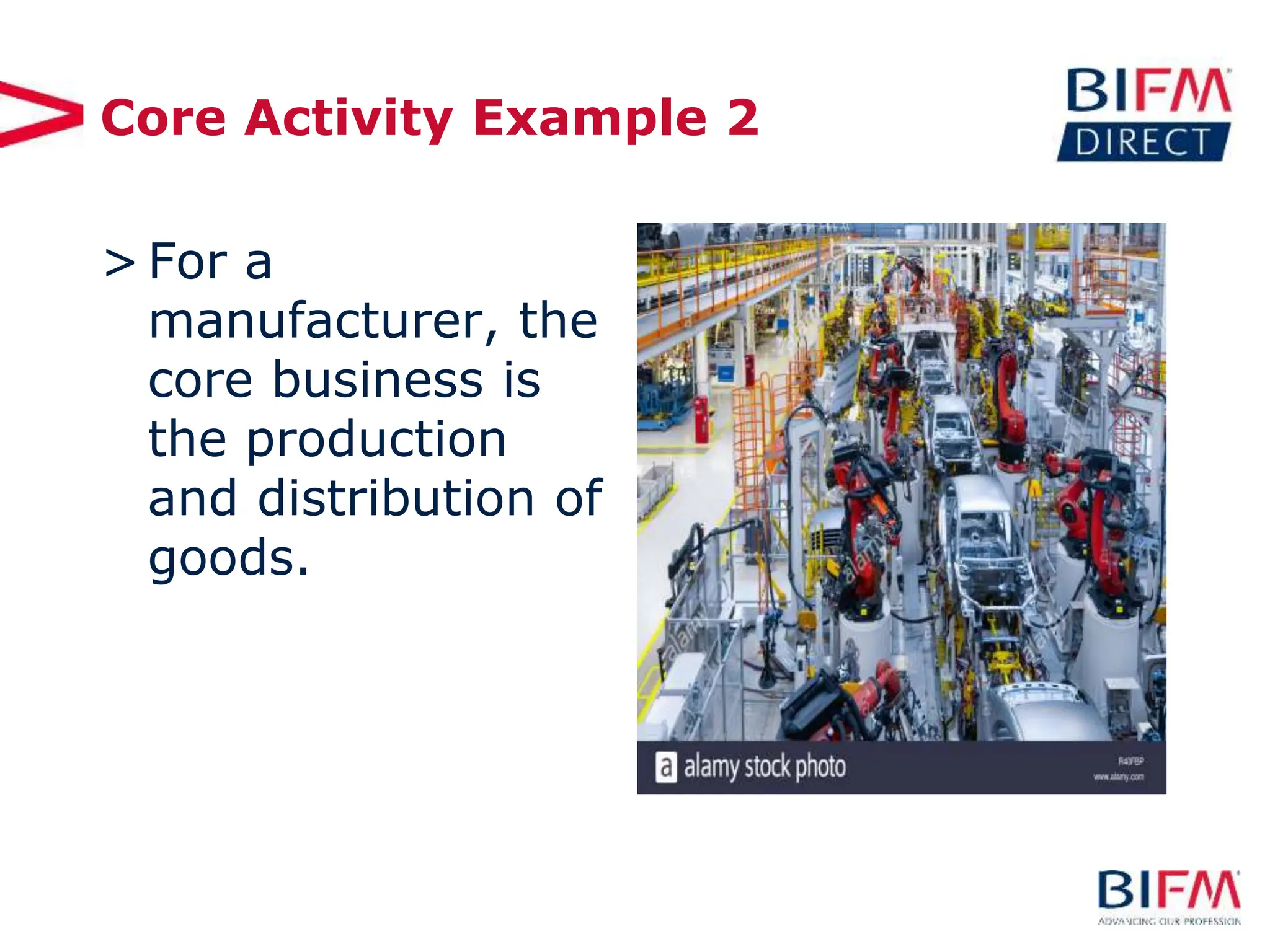
Core Activity Example 2
>For a
manufacturer, the
core business is
the production
and distribution of
goods.
Core Activity Example 3
>For a Charity,
such as the Dog’s
Trust, the core
business is the
care and re-
homing of dogs
Hard and Soft Support Services
Hard Services
> Building related
> Fabric
> Maintenance
> New builds
> Building Services
> Heating
> Energy
> Plumbing
Soft Services
> People related
> Catering
> Cleaning
> Office Supplies
> Furniture
Sectors
> Public – Government, Local Authority,
Hospital, School etc. Financed mainly from
taxes
> Private – Companies, e.g. manufacturers,
financial institutions, retailers etc. Financed
mainly from profits
> Not For Profit – Charities, Churches, some
research organisations. Financed mainly from
donations.
> Different sectors, different amount of funds
available. Some companies richer than
countries. 2017 Walmart earned more than
the whole of Belgium. (Business Insider)
Different Sectors and FM
Sector Example
Core
Activity
FM
Implications
Public Local Council
Services to
Local Area
Local
Suppliers
Private Retailer Sale of goods
Image and
appearance
Not
For
Profit
Housing
Association
Providing
social
Housing
Standards
of
Maintenance
Activity
> For your organisation:
> What sector is it in?
> What are the core activities?
> Type in your answer
Core Activity & Support Services
> All organisations need support services, e.g.
> a location,
> heating and lighting,
> supplies,
> etc.
> FM provides the support to enable the
organisation to undertake its core activities.
Hard and Soft
>If you pick up a
building and turn
it upside down:
>What falls out is
soft services
>What stays in is
hard services
Close to Core
> For some organisations, some support services
closer to core
> E.g.
> Cleaning. Critical for a hospital. Very high
standard. Not so critical for workshop. Lower
standard.
Other Support Services
> FM provides most of Support Services.
> Other Business Departments also provide
Support Services
> Who looks after IT?
> Who manages the money?
> Who hires and fires staff?
Operational, Tactical, Strategic
Operational
These are routine tasks with
little or no decision making
Tactical
This is middle management.
Some decisions are made
within delegated authority, to
manage the operations
Strategic
This is senior management
level. Major decisions are
made which affect the direction
of the organisation. Detail of
the operations is left to more
junior management.
Op, Tac, Strat Examples
Management
Function
Operational Tactical Strategic
Budget Planning and
Control
 Checking invoices
 Checking bank
statements
 Checking Purchase
Orders
 Monitoring
budgets for under
or over spends
 Signing off
payments up to a
delegated amount
 Comparing prices
and approved
suppliers
 Setting major
budgets
 Evaluating major
purchases or
projects
 Preparing detailed
financial cases (e.g.
if deciding whether
to buy or rent
equipment or
premises)
Contract Management   
Project Management   
Task and Team
Management
  
Health and Safety
Management
  
Recap
> FM provides Support Services to enable the
organisation to carry out its Core Activities
> There are many types of Support Services.
These are usually classed as Hard and Soft
Services
> FM Supports organisations in all Sectors of
the Economy
> Other departments provide support
> FM operates at Operational, Tactical and
Strategic Levels
Any questions?
Thank you
#BIFMWEBINARS
#FACMAN
Professional development
> CPD number: XXXX
> Upcoming Webinars:
> BIFM to populate

Role of FM.ppt

  • 1.
  • 2.
    About the presenter >Chris is the Tutor for the IWFM Direct Qualifications. > He is the former Director of the FM Programme of Studies at Leeds Beckett University
  • 3.
    Agenda > In thispresentation we will look at: • Definitions of FM • FM and the Core Activity • FM at Operational, Tactical and Strategic Levels This is designed to help with: • 3.01 Task 1 and Task 4 • 4.01 Task 1 and Task 3
  • 4.
    What Is FM?IWFM > The International Organisation for Standardisation defines facilities management (FM) as the “organizational function which integrates people, place and process within the built environment with the purpose of improving the quality of life of people and the productivity of the core business.” – IWFM
  • 5.
    What is FM- EuroFM > The integration of processes within an organization to maintain and develop the agreed services which support and improve the effectiveness of its primary activities. > (EN15221-1: 2006 Facility Management – Part 1: Terms and definitions)
  • 6.
    Core Business > IWFMmentions CORE BUSINESS > EuroFM mentions PRIMARY ACTIVITIES > This means the core business or primary activity of the organisation receiving FM services. > Core Activity
  • 7.
    Core Activity Example1 >For a hospital, the core business is treating patients
  • 8.
    Core Activity Example2 >For a manufacturer, the core business is the production and distribution of goods.
  • 9.
    Core Activity Example3 >For a Charity, such as the Dog’s Trust, the core business is the care and re- homing of dogs
  • 10.
    Hard and SoftSupport Services Hard Services > Building related > Fabric > Maintenance > New builds > Building Services > Heating > Energy > Plumbing Soft Services > People related > Catering > Cleaning > Office Supplies > Furniture
  • 11.
    Sectors > Public –Government, Local Authority, Hospital, School etc. Financed mainly from taxes > Private – Companies, e.g. manufacturers, financial institutions, retailers etc. Financed mainly from profits > Not For Profit – Charities, Churches, some research organisations. Financed mainly from donations. > Different sectors, different amount of funds available. Some companies richer than countries. 2017 Walmart earned more than the whole of Belgium. (Business Insider)
  • 12.
    Different Sectors andFM Sector Example Core Activity FM Implications Public Local Council Services to Local Area Local Suppliers Private Retailer Sale of goods Image and appearance Not For Profit Housing Association Providing social Housing Standards of Maintenance
  • 13.
    Activity > For yourorganisation: > What sector is it in? > What are the core activities? > Type in your answer
  • 14.
    Core Activity &Support Services > All organisations need support services, e.g. > a location, > heating and lighting, > supplies, > etc. > FM provides the support to enable the organisation to undertake its core activities.
  • 16.
    Hard and Soft >Ifyou pick up a building and turn it upside down: >What falls out is soft services >What stays in is hard services
  • 17.
    Close to Core >For some organisations, some support services closer to core > E.g. > Cleaning. Critical for a hospital. Very high standard. Not so critical for workshop. Lower standard.
  • 18.
    Other Support Services >FM provides most of Support Services. > Other Business Departments also provide Support Services > Who looks after IT? > Who manages the money? > Who hires and fires staff?
  • 19.
    Operational, Tactical, Strategic Operational Theseare routine tasks with little or no decision making Tactical This is middle management. Some decisions are made within delegated authority, to manage the operations Strategic This is senior management level. Major decisions are made which affect the direction of the organisation. Detail of the operations is left to more junior management.
  • 20.
    Op, Tac, StratExamples Management Function Operational Tactical Strategic Budget Planning and Control  Checking invoices  Checking bank statements  Checking Purchase Orders  Monitoring budgets for under or over spends  Signing off payments up to a delegated amount  Comparing prices and approved suppliers  Setting major budgets  Evaluating major purchases or projects  Preparing detailed financial cases (e.g. if deciding whether to buy or rent equipment or premises) Contract Management    Project Management    Task and Team Management    Health and Safety Management   
  • 21.
    Recap > FM providesSupport Services to enable the organisation to carry out its Core Activities > There are many types of Support Services. These are usually classed as Hard and Soft Services > FM Supports organisations in all Sectors of the Economy > Other departments provide support > FM operates at Operational, Tactical and Strategic Levels
  • 22.
  • 23.
    Professional development > CPDnumber: XXXX > Upcoming Webinars: > BIFM to populate