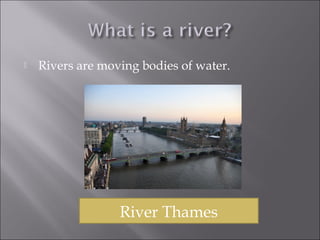
 Rivers are moving bodies of water.
River Thames
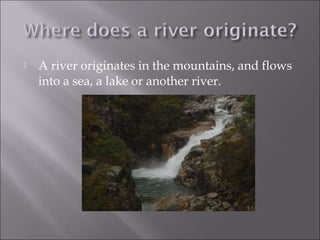
 A river originates in the mountains, and flows
into a sea, a lake or another river.
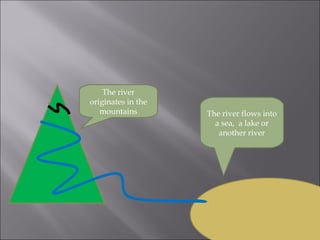
The river
originates in the
mountains The river flows into
a sea, a lake or
another river
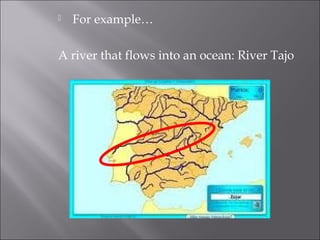
 For example…
A river that flows into an ocean: River Tajo
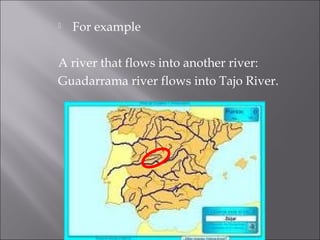
 For example
A river that flows into another river:
Guadarrama river flows into Tajo River.
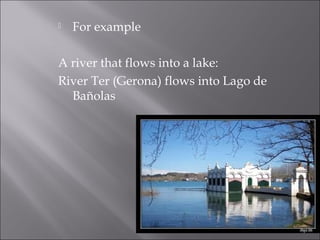
 For example
A river that flows into a lake:
River Ter (Gerona) flows into Lago de
Bañolas
- The course
 We can
Distinguish 3 - The flow
elements in
a river - The flow regime
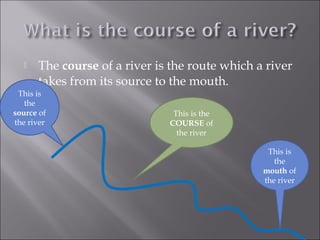
 The course of a river is the route which a river
takes from its source to the mouth.
This is
the
source of
the river
This is
the
mouth of
the river
This is the
COURSE of
the river
 There are
3 courses:
Upper course
Middle course
Lower course
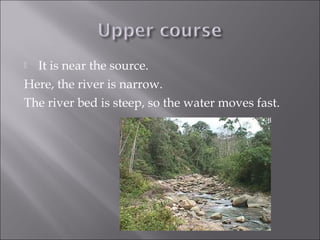
 It is near the source.
Here, the river is narrow.
The river bed is steep, so the water moves fast.
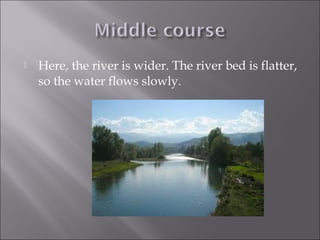
 Here, the river is wider. The river bed is flatter,
so the water flows slowly.
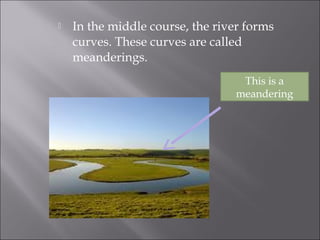
 In the middle course, the river forms
curves. These curves are called
meanderings.
This is a
meandering
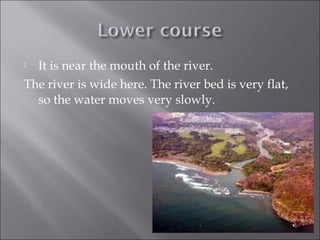
 It is near the mouth of the river.
The river is wide here. The river bed is very flat,
so the water moves very slowly.
What is the flow of a river?
 It is the amount of water that a river
carries.
The more precipitacion there is, the greater the
flow will be.
 Water can also be found in other places on the
surface of the Earth.
 Torrents
 Lakes
 Reservoirs
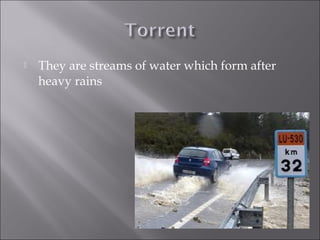
 They are streams of water which form after
heavy rains
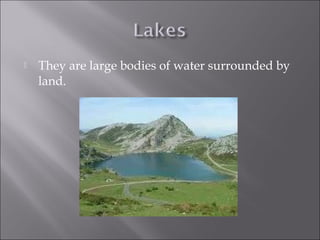
 They are large bodies of water surrounded by
land.
 They are man – made lakes.
They produce energy, irrigate fields and supply
water to urban areas. Canals and irrigation
chanels are used for transporting water from a
reservoir to other places.
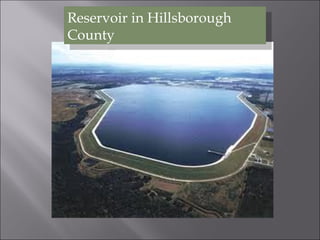
Reservoir in Hillsborough
County
Reservoir in Hillsborough
County
 Rivers that flow into the same sea belong to the
same watershed (vertiente).
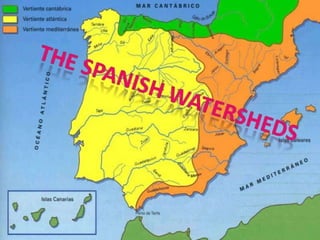
 The rivers in Spain flow into three different
seas, in other words, they belong to three
watersheds:
 Cantabrian watershed
 Mediterranean watershed
 Atlantic watershed
 Meter imagen de vertientes hidrográficas
 It has short, swift rivers.
 They have a regular flow regime and abundant
flow.
 The most important rivers are the Nervion,
Saja, Navia and Nalón
 It occupies about one third of Spain.
 With the exception of the Ebro, the rivers are
short and have irregular regimes.
 During rainy seasons, they may overflow.
In the summer, they may dry up.
 The most important rivers are the Ebro, the
Júcar, the Segura and de Llobregat
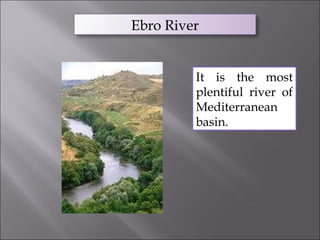
Ebro River
It is the most
plentiful river of
Mediterranean
basin.
 It occupies more than half the area of Spain.
 The rivers have abundant flows and regular
flows regimes.
 In the summer they carry less water.
 The most important rivers are the Miño, the
Duero, the Tagus, the Guadiana and the
Guadalquivir

Rivers in spain

  • 2.
     Rivers aremoving bodies of water. River Thames
  • 3.
     A riveroriginates in the mountains, and flows into a sea, a lake or another river.
  • 4.
    The river originates inthe mountains The river flows into a sea, a lake or another river
  • 5.
     For example… Ariver that flows into an ocean: River Tajo
  • 6.
     For example Ariver that flows into another river: Guadarrama river flows into Tajo River.
  • 7.
     For example Ariver that flows into a lake: River Ter (Gerona) flows into Lago de Bañolas
  • 8.
    - The course We can Distinguish 3 - The flow elements in a river - The flow regime
  • 9.
     The courseof a river is the route which a river takes from its source to the mouth. This is the source of the river This is the mouth of the river This is the COURSE of the river
  • 10.
     There are 3courses: Upper course Middle course Lower course
  • 11.
     It isnear the source. Here, the river is narrow. The river bed is steep, so the water moves fast.
  • 12.
     Here, theriver is wider. The river bed is flatter, so the water flows slowly.
  • 13.
     In themiddle course, the river forms curves. These curves are called meanderings. This is a meandering
  • 14.
     It isnear the mouth of the river. The river is wide here. The river bed is very flat, so the water moves very slowly.
  • 15.
    What is theflow of a river?  It is the amount of water that a river carries. The more precipitacion there is, the greater the flow will be.
  • 16.
     Water canalso be found in other places on the surface of the Earth.  Torrents  Lakes  Reservoirs
  • 17.
     They arestreams of water which form after heavy rains
  • 18.
     They arelarge bodies of water surrounded by land.
  • 19.
     They areman – made lakes. They produce energy, irrigate fields and supply water to urban areas. Canals and irrigation chanels are used for transporting water from a reservoir to other places.
  • 20.
  • 21.
     Rivers thatflow into the same sea belong to the same watershed (vertiente).  The rivers in Spain flow into three different seas, in other words, they belong to three watersheds:  Cantabrian watershed  Mediterranean watershed  Atlantic watershed
  • 22.
     Meter imagende vertientes hidrográficas
  • 23.
     It hasshort, swift rivers.  They have a regular flow regime and abundant flow.  The most important rivers are the Nervion, Saja, Navia and Nalón
  • 24.
     It occupiesabout one third of Spain.  With the exception of the Ebro, the rivers are short and have irregular regimes.  During rainy seasons, they may overflow. In the summer, they may dry up.  The most important rivers are the Ebro, the Júcar, the Segura and de Llobregat
  • 25.
    Ebro River It isthe most plentiful river of Mediterranean basin.
  • 26.
     It occupiesmore than half the area of Spain.  The rivers have abundant flows and regular flows regimes.  In the summer they carry less water.  The most important rivers are the Miño, the Duero, the Tagus, the Guadiana and the Guadalquivir