The Rigging Plan
Proper planning includes:
• Identifying information
• Written description of operation
– FLHA, Pre-Job/Tailgate
• Drawings or sketches
• People involved
• Communication methods
• Load characteristics.
Load Characteristics
• Determine connection used
• Center of gravity (CG) below hook.
Equipment Requirements
• Determine safe working load
• Working load limit (WLL) of sling
• Hardware attachments
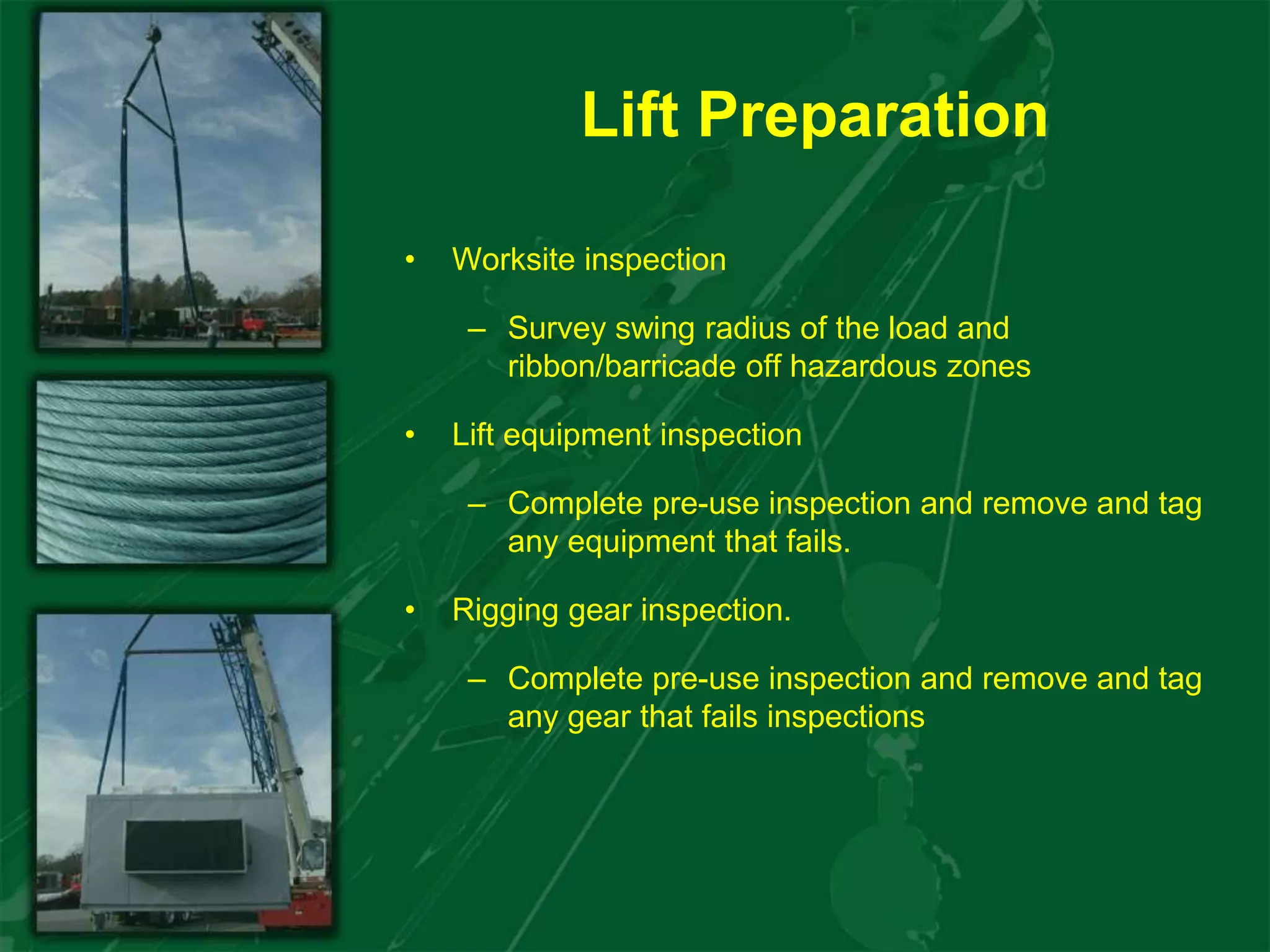
• Sling angles between 60 and 90
degrees
• Hoisting devices.
Environmental Factors
• Rigging plan notes unusual
conditions
• Examine surrounding area.
– Identify swing radius and hazard
zones
Inspection Requirements
• When new
• Competent person to inspect
• Qualified rigger
• Inspect each time lift completed
• Don't use if in doubt!
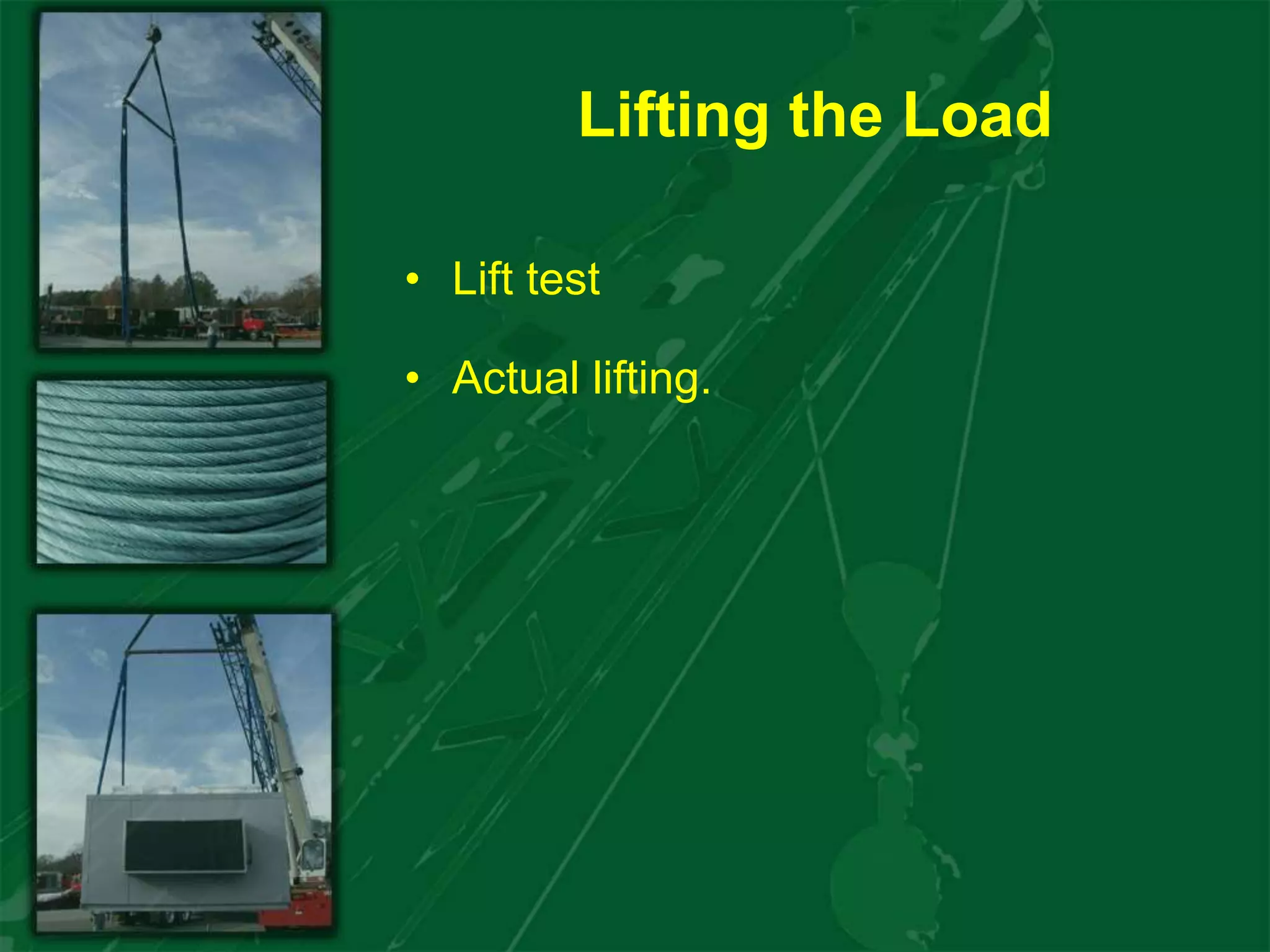
Inspect Wire Rope
• Damage or distortion
• Excessive stretching
• Splicing
• Thimbles
• Length in service.
Inspect Synthetic Webbing
• Burns
• Melting or charring
• Snags, punctures, tears or cuts
• Knots
• Abrasive wear
• Missing, broken or worn stitches
• Check fittings.
Inspect Hardware
Attachments
• Inspect hook
• Inspect shackle
• Replace if damaged
• Shackle pin.
Inspect Assembled
Rigging
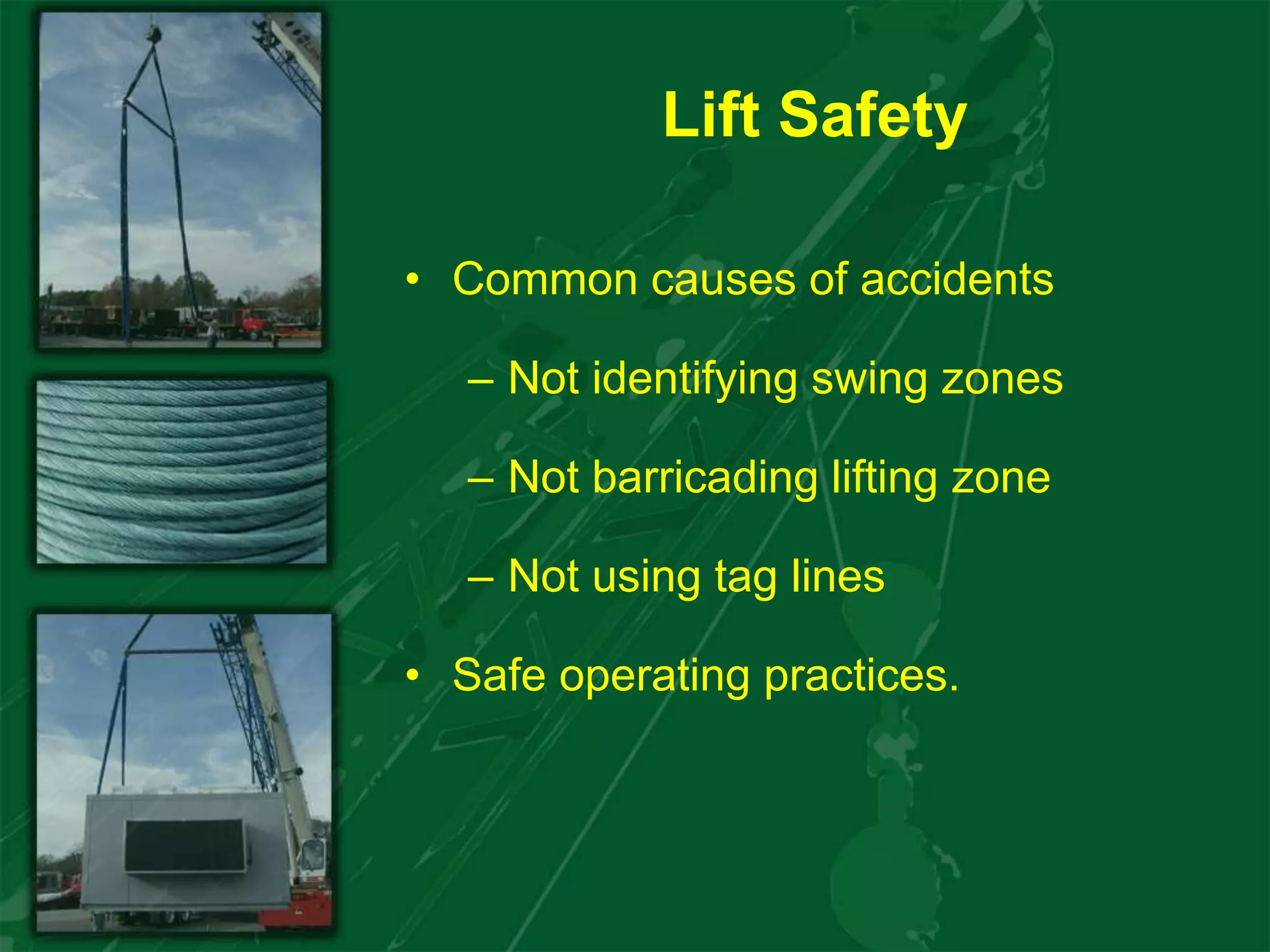
• Inspect before lifting
• Match rigging plan
• Sling attached correctly
• Check sling legs
• Pad sharp edges.
Lift Preparation
• Worksite inspection
– Survey swing radius of the load and
ribbon/barricade off hazardous zones
• Lift equipment inspection
– Complete pre-use inspection and remove and tag
any equipment that fails.
• Rigging gear inspection.
– Complete pre-use inspection and remove and tag
any gear that fails inspections
Lifting the Load
• Lift test
• Actual lifting.
Lift Safety
• Common causes of accidents
– Not identifying swing zones
– Not barricading lifting zone
– Not using tag lines
• Safe operating practices.
Sling Care and Use
• Carry slings
• Remove gear from area
• Inspect before and after lift
• Maintenance.
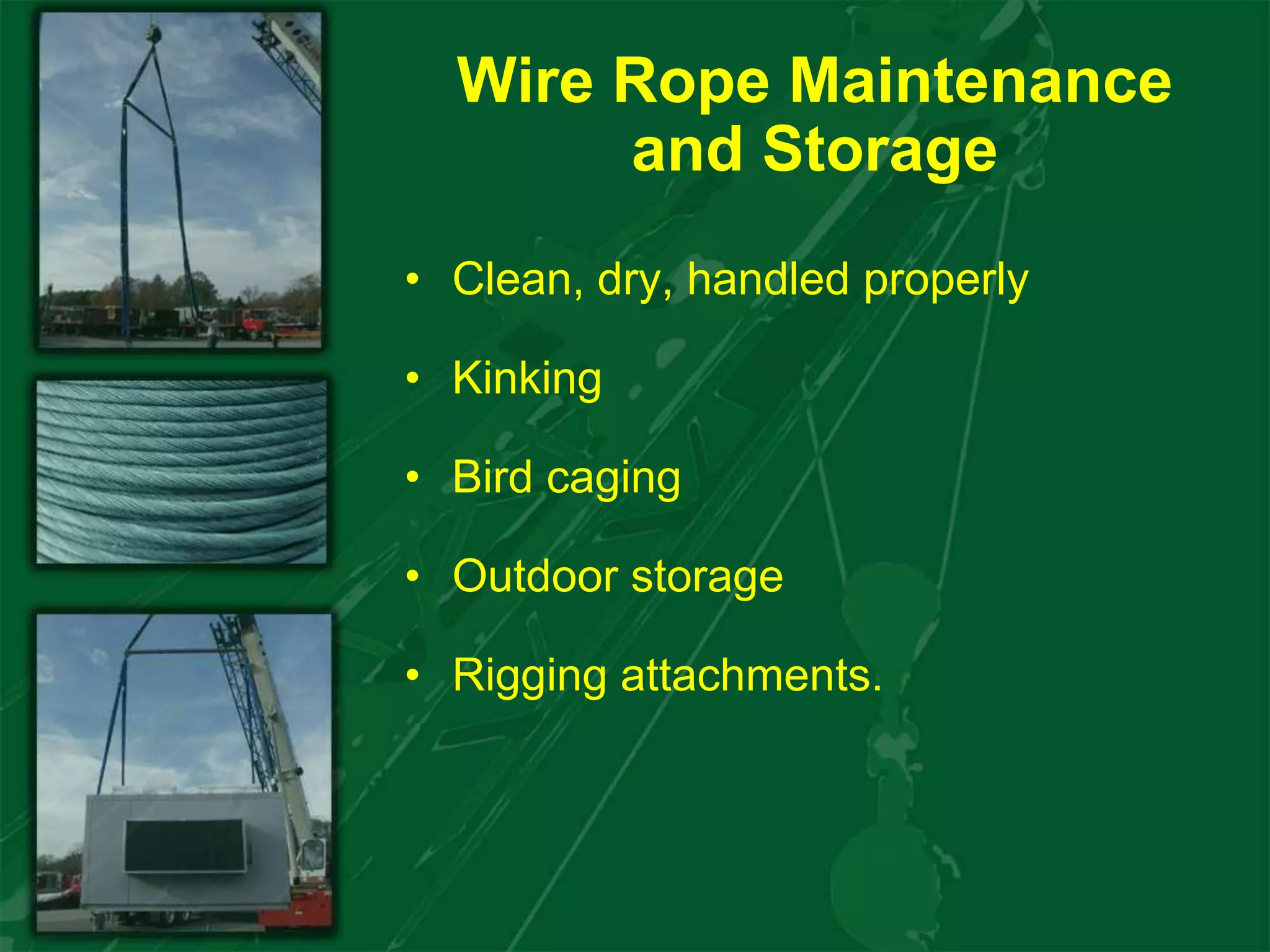
Wire Rope Maintenance
and Storage
• Clean, dry, handled properly
• Kinking
• Bird caging
• Outdoor storage
• Rigging attachments.
Synthetic Webbing
Maintenance
• Wash, hang dry
• Chemicals – do not use degreaser
• Moisture, heat, direct sunlight
• Exposure – sun exposure will damage
webbing
• Keep off floor.
Summary
• Rigging plan – FLHA & PJSM
• Choose right equipment
• Inspect carefully
• Prepare for lift
• Lift test
• Lift safety
• Maintain equipment.

Rigging and Hoisting PP.ppt

  • 2.
    The Rigging Plan Properplanning includes: • Identifying information • Written description of operation – FLHA, Pre-Job/Tailgate • Drawings or sketches • People involved • Communication methods • Load characteristics.
  • 3.
    Load Characteristics • Determineconnection used • Center of gravity (CG) below hook.
  • 4.
    Equipment Requirements • Determinesafe working load • Working load limit (WLL) of sling • Hardware attachments • Sling angles between 60 and 90 degrees • Hoisting devices.
  • 5.
    Environmental Factors • Riggingplan notes unusual conditions • Examine surrounding area. – Identify swing radius and hazard zones
  • 6.
    Inspection Requirements • Whennew • Competent person to inspect • Qualified rigger • Inspect each time lift completed • Don't use if in doubt!
  • 7.
    Inspect Wire Rope •Damage or distortion • Excessive stretching • Splicing • Thimbles • Length in service.
  • 8.
    Inspect Synthetic Webbing •Burns • Melting or charring • Snags, punctures, tears or cuts • Knots • Abrasive wear • Missing, broken or worn stitches • Check fittings.
  • 9.
    Inspect Hardware Attachments • Inspecthook • Inspect shackle • Replace if damaged • Shackle pin.
  • 10.
    Inspect Assembled Rigging • Inspectbefore lifting • Match rigging plan • Sling attached correctly • Check sling legs • Pad sharp edges.
  • 11.
    Lift Preparation • Worksiteinspection – Survey swing radius of the load and ribbon/barricade off hazardous zones • Lift equipment inspection – Complete pre-use inspection and remove and tag any equipment that fails. • Rigging gear inspection. – Complete pre-use inspection and remove and tag any gear that fails inspections
  • 12.
    Lifting the Load •Lift test • Actual lifting.
  • 13.
    Lift Safety • Commoncauses of accidents – Not identifying swing zones – Not barricading lifting zone – Not using tag lines • Safe operating practices.
  • 14.
    Sling Care andUse • Carry slings • Remove gear from area • Inspect before and after lift • Maintenance.
  • 15.
    Wire Rope Maintenance andStorage • Clean, dry, handled properly • Kinking • Bird caging • Outdoor storage • Rigging attachments.
  • 16.
    Synthetic Webbing Maintenance • Wash,hang dry • Chemicals – do not use degreaser • Moisture, heat, direct sunlight • Exposure – sun exposure will damage webbing • Keep off floor.
  • 17.
    Summary • Rigging plan– FLHA & PJSM • Choose right equipment • Inspect carefully • Prepare for lift • Lift test • Lift safety • Maintain equipment.