Escola E. B. 2, 3 D. Manuel de Faria e Sousa
                                                     English – 7th Form
                                                                                             Teacher: Fernanda Soares

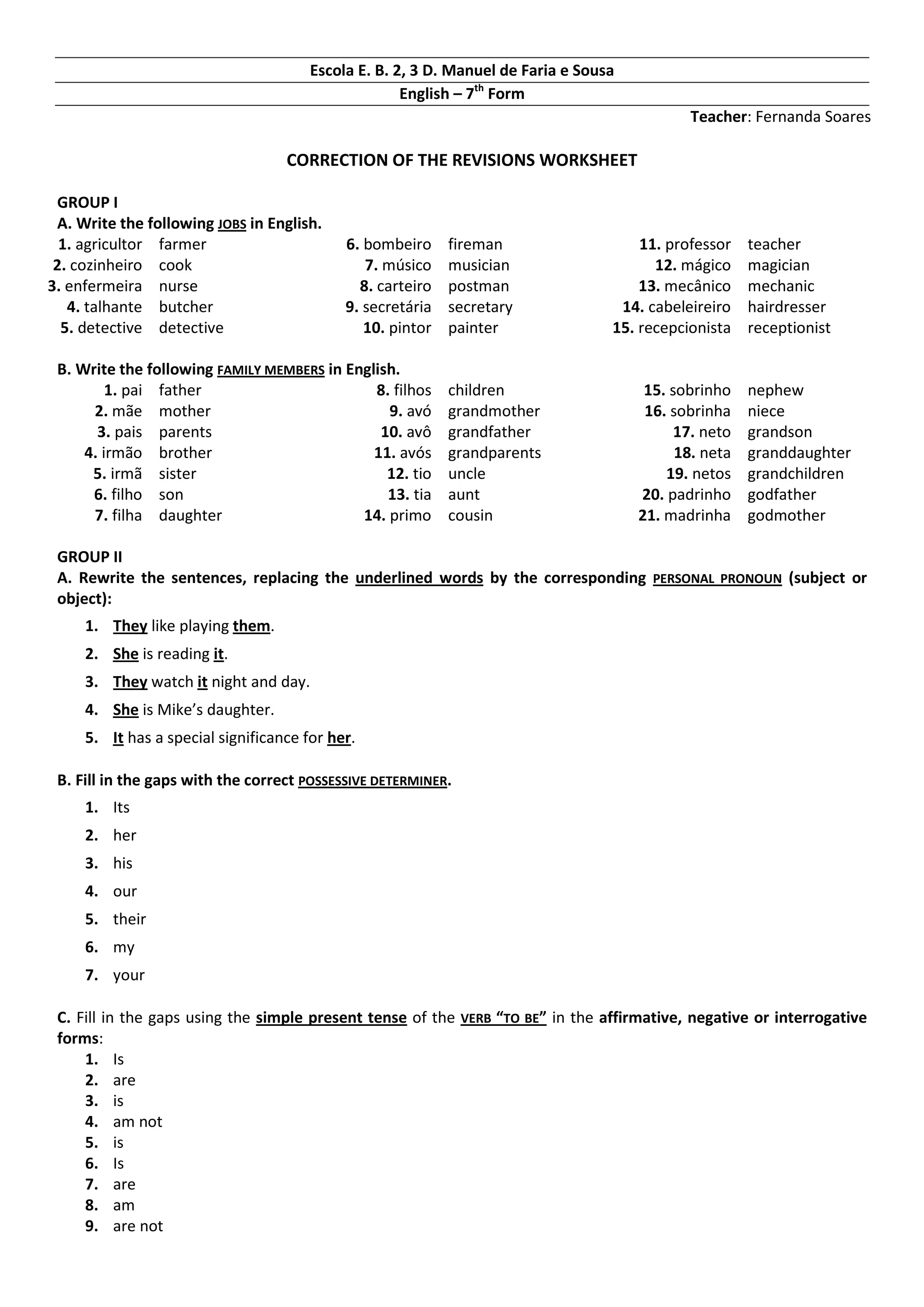
                                   CORRECTION OF THE REVISIONS WORKSHEET

 GROUP I
 A. Write the following JOBS in English.
  1. agricultor farmer                      6. bombeiro     fireman                   11. professor    teacher
 2. cozinheiro cook                            7. músico    musician                    12. mágico     magician
3. enfermeira nurse                           8. carteiro   postman                   13. mecânico     mechanic
   4. talhante butcher                      9. secretária   secretary              14. cabeleireiro    hairdresser
  5. detective detective                       10. pintor   painter               15. recepcionista    receptionist

 B. Write the following FAMILY MEMBERS in English.
         1. pai father                        8. filhos     children                   15. sobrinho    nephew
      2. mãe mother                             9. avó      grandmother                16. sobrinha    niece
       3. pais parents                         10. avô      grandfather                     17. neto   grandson
     4. irmão brother                         11. avós      grandparents                    18. neta   granddaughter
      5. irmã sister                            12. tio     uncle                         19. netos    grandchildren
      6. filho son                              13. tia     aunt                      20. padrinho     godfather
      7. filha daughter                     14. primo       cousin                    21. madrinha     godmother

 GROUP II
 A. Rewrite the sentences, replacing the underlined words by the corresponding PERSONAL PRONOUN (subject or
 object):
     1. They like playing them.
     2. She is reading it.
     3. They watch it night and day.
     4. She is Mike’s daughter.
     5. It has a special significance for her.

 B. Fill in the gaps with the correct POSSESSIVE DETERMINER.
     1. Its
     2. her
     3. his
     4. our
     5. their
     6. my
     7. your

 C. Fill in the gaps using the simple present tense of the VERB “TO BE” in the affirmative, negative or interrogative
 forms:
     1. Is
     2. are
     3. is
     4. am not
     5. is
     6. Is
     7. are
     8. am
     9. are not
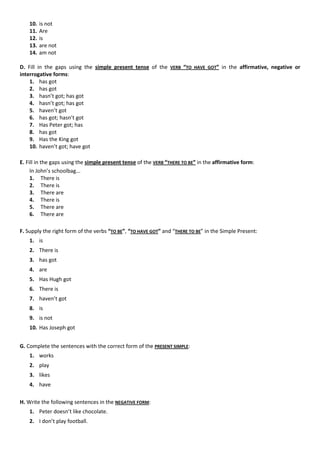
10.   is not
    11.   Are
    12.   is
    13.   are not
    14.   am not

D. Fill in the gaps using the simple present tense of the VERB “TO HAVE GOT” in the affirmative, negative or
interrogative forms:
    1. has got
    2. has got
    3. hasn’t got; has got
    4. hasn’t got; has got
    5. haven’t got
    6. has got; hasn’t got
    7. Has Peter got; has
    8. has got
    9. Has the King got
    10. haven’t got; have got

E. Fill in the gaps using the simple present tense of the VERB “THERE TO BE” in the affirmative form:
     In John’s schoolbag...
     1. There is
     2. There is
     3. There are
     4. There is
     5. There are
     6. There are

F. Supply the right form of the verbs “TO BE”, “TO HAVE GOT” and “THERE TO BE” in the Simple Present:
    1. is
    2. There is
    3. has got
    4. are
    5. Has Hugh got
    6. There is
    7. haven’t got
    8. is
    9. is not
    10. Has Joseph got


G. Complete the sentences with the correct form of the PRESENT SIMPLE:
    1. works
    2. play
    3. likes
    4. have

H. Write the following sentences in the NEGATIVE FORM:
    1. Peter doesn’t like chocolate.
    2. I don’t play football.
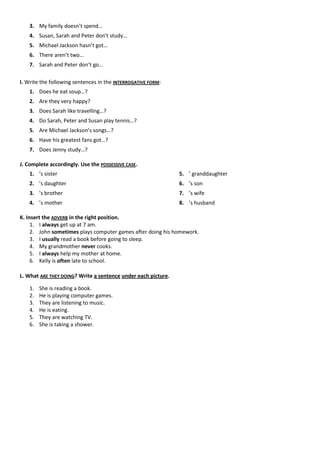
3. My family doesn’t spend…
    4. Susan, Sarah and Peter don’t study…
    5. Michael Jackson hasn’t got…
    6. There aren’t two…
    7. Sarah and Peter don’t go…

I. Write the following sentences in the INTERROGATIVE FORM:
    1. Does he eat soup…?
    2. Are they very happy?
    3. Does Sarah like travelling…?
    4. Do Sarah, Peter and Susan play tennis…?
    5. Are Michael Jackson’s songs…?
    6. Have his greatest fans got…?
    7. Does Jenny study…?

J. Complete accordingly. Use the POSSESSIVE CASE.
    1. ’s sister                                               5. ’ granddaughter
    2. ’s daughter                                             6. ’s son
    3. ’s brother                                              7. ’s wife
    4. ’s mother                                               8. ’s husband

K. Insert the ADVERB in the right position.
     1. I always get up at 7 am.
     2. John sometimes plays computer games after doing his homework.
     3. I usually read a book before going to sleep.
     4. My grandmother never cooks.
     5. I always help my mother at home.
     6. Kelly is often late to school.

L. What ARE THEY DOING? Write a sentence under each picture.

    1.   She is reading a book.
    2.   He is playing computer games.
    3.   They are listening to music.
    4.   He is eating.
    5.   They are watching TV.
    6.   She is taking a shower.

Revisions Correction

  • 1.
    Escola E. B.2, 3 D. Manuel de Faria e Sousa English – 7th Form Teacher: Fernanda Soares CORRECTION OF THE REVISIONS WORKSHEET GROUP I A. Write the following JOBS in English. 1. agricultor farmer 6. bombeiro fireman 11. professor teacher 2. cozinheiro cook 7. músico musician 12. mágico magician 3. enfermeira nurse 8. carteiro postman 13. mecânico mechanic 4. talhante butcher 9. secretária secretary 14. cabeleireiro hairdresser 5. detective detective 10. pintor painter 15. recepcionista receptionist B. Write the following FAMILY MEMBERS in English. 1. pai father 8. filhos children 15. sobrinho nephew 2. mãe mother 9. avó grandmother 16. sobrinha niece 3. pais parents 10. avô grandfather 17. neto grandson 4. irmão brother 11. avós grandparents 18. neta granddaughter 5. irmã sister 12. tio uncle 19. netos grandchildren 6. filho son 13. tia aunt 20. padrinho godfather 7. filha daughter 14. primo cousin 21. madrinha godmother GROUP II A. Rewrite the sentences, replacing the underlined words by the corresponding PERSONAL PRONOUN (subject or object): 1. They like playing them. 2. She is reading it. 3. They watch it night and day. 4. She is Mike’s daughter. 5. It has a special significance for her. B. Fill in the gaps with the correct POSSESSIVE DETERMINER. 1. Its 2. her 3. his 4. our 5. their 6. my 7. your C. Fill in the gaps using the simple present tense of the VERB “TO BE” in the affirmative, negative or interrogative forms: 1. Is 2. are 3. is 4. am not 5. is 6. Is 7. are 8. am 9. are not
  • 2.
    10. is not 11. Are 12. is 13. are not 14. am not D. Fill in the gaps using the simple present tense of the VERB “TO HAVE GOT” in the affirmative, negative or interrogative forms: 1. has got 2. has got 3. hasn’t got; has got 4. hasn’t got; has got 5. haven’t got 6. has got; hasn’t got 7. Has Peter got; has 8. has got 9. Has the King got 10. haven’t got; have got E. Fill in the gaps using the simple present tense of the VERB “THERE TO BE” in the affirmative form: In John’s schoolbag... 1. There is 2. There is 3. There are 4. There is 5. There are 6. There are F. Supply the right form of the verbs “TO BE”, “TO HAVE GOT” and “THERE TO BE” in the Simple Present: 1. is 2. There is 3. has got 4. are 5. Has Hugh got 6. There is 7. haven’t got 8. is 9. is not 10. Has Joseph got G. Complete the sentences with the correct form of the PRESENT SIMPLE: 1. works 2. play 3. likes 4. have H. Write the following sentences in the NEGATIVE FORM: 1. Peter doesn’t like chocolate. 2. I don’t play football.
  • 3.
    3. My familydoesn’t spend… 4. Susan, Sarah and Peter don’t study… 5. Michael Jackson hasn’t got… 6. There aren’t two… 7. Sarah and Peter don’t go… I. Write the following sentences in the INTERROGATIVE FORM: 1. Does he eat soup…? 2. Are they very happy? 3. Does Sarah like travelling…? 4. Do Sarah, Peter and Susan play tennis…? 5. Are Michael Jackson’s songs…? 6. Have his greatest fans got…? 7. Does Jenny study…? J. Complete accordingly. Use the POSSESSIVE CASE. 1. ’s sister 5. ’ granddaughter 2. ’s daughter 6. ’s son 3. ’s brother 7. ’s wife 4. ’s mother 8. ’s husband K. Insert the ADVERB in the right position. 1. I always get up at 7 am. 2. John sometimes plays computer games after doing his homework. 3. I usually read a book before going to sleep. 4. My grandmother never cooks. 5. I always help my mother at home. 6. Kelly is often late to school. L. What ARE THEY DOING? Write a sentence under each picture. 1. She is reading a book. 2. He is playing computer games. 3. They are listening to music. 4. He is eating. 5. They are watching TV. 6. She is taking a shower.