 Location occupies Important Position in Retailing.
 Location is the only Strategic Advantage that Competitors
cannot Copy or Imitate Easily!
 Major Factor Affecting Retailing is LLL
 Whether it is the first store or the hundredth store, retailer
must spend Time & Money in deciding Store Location &
Site Evaluation.
Retail Location
Steps Involved in Choosing a Retail
Location
1. Market Identification
2. Determining the Market Potential
 Demographic Mix
 Competition
 Trade Area Analysis
 Laws & Regulations
3. Identify Alternate Sites
 Traffic (both pedestrian & vehicular)
 Accessibility to market
 Check no. of stores & type of stores present in that area
4. Select the Site
 Real Estate & Rentals
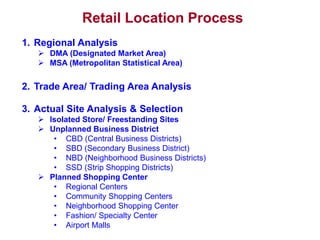
Retail Location Process
1. Regional Analysis
 DMA (Designated Market Area)
 MSA (Metropolitan Statistical Area)
2. Trade Area/ Trading Area Analysis
3. Actual Site Analysis & Selection
 Isolated Store/ Freestanding Sites
 Unplanned Business District
• CBD (Central Business Districts)
• SBD (Secondary Business District)
• NBD (Neighborhood Business Districts)
• SSD (Strip Shopping Districts)
 Planned Shopping Center
• Regional Centers
• Community Shopping Centers
• Neighborhood Shopping Center
• Fashion/ Specialty Center
• Airport Malls
 While Designing Store Layout, retailers consider the impact
of various physical & psychological factors on customer
behavior.
 A store revenue will improve if both interior & exterior of the
store are well-planned.
 A good store layout should attract customers in impulse
purchase!
 If the layout is too complex, customers may find it difficult to
locate the merchandise they are looking for & decide not to
patronize the store!
Retail Layout Plan
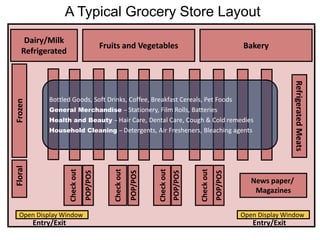
A Typical Grocery Store Layout
Open Display Window
Entry/Exit Entry/Exit
Floral
Frozen
Dairy/Milk
Refrigerated
Fruits and Vegetables Bakery
Refrigerated
Meats
News paper/
Magazines
Check
out
Check
out
Check
out
Check
out
Bottled Goods, Soft Drinks, Coffee, Breakfast Cereals, Pet Foods
General Merchandise – Stationery, Film Rolls, Batteries
Health and Beauty – Hair Care, Dental Care, Cough & Cold remedies
Household Cleaning – Detergents, Air Fresheners, Bleaching agents
Open Display Window
POP/POS
POP/POS
POP/POS
POP/POS
Let’s answer these questions?
• Why is the dairy/milk products kept at the last or
behind the Main shelves?
• Why are there magazines, mints, gums at the
checkout?
• Why is tobacco behind the service counter in many
stores?
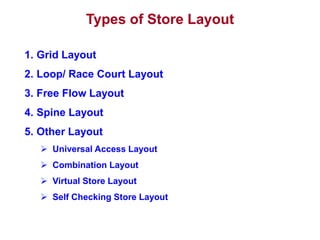
Types of Store Layout
1. Grid Layout
2. Loop/ Race Court Layout
3. Free Flow Layout
4. Spine Layout
5. Other Layout
 Universal Access Layout
 Combination Layout
 Virtual Store Layout
 Self Checking Store Layout
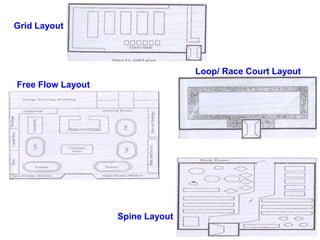
Grid Layout
Spine Layout
Free Flow Layout
Loop/ Race Court Layout
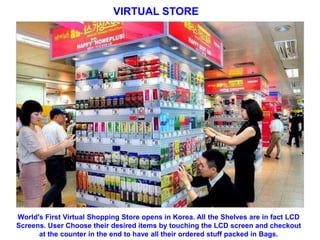
VIRTUAL STORE
World's First Virtual Shopping Store opens in Korea. All the Shelves are in fact LCD
Screens. User Choose their desired items by touching the LCD screen and checkout
at the counter in the end to have all their ordered stuff packed in Bags.
SELF CHECKOUT STORE

Retail Location & Layout Plan impotrtant

  • 1.
     Location occupiesImportant Position in Retailing.  Location is the only Strategic Advantage that Competitors cannot Copy or Imitate Easily!  Major Factor Affecting Retailing is LLL  Whether it is the first store or the hundredth store, retailer must spend Time & Money in deciding Store Location & Site Evaluation. Retail Location
  • 2.
    Steps Involved inChoosing a Retail Location 1. Market Identification 2. Determining the Market Potential  Demographic Mix  Competition  Trade Area Analysis  Laws & Regulations 3. Identify Alternate Sites  Traffic (both pedestrian & vehicular)  Accessibility to market  Check no. of stores & type of stores present in that area 4. Select the Site  Real Estate & Rentals
  • 3.
    Retail Location Process 1.Regional Analysis  DMA (Designated Market Area)  MSA (Metropolitan Statistical Area) 2. Trade Area/ Trading Area Analysis 3. Actual Site Analysis & Selection  Isolated Store/ Freestanding Sites  Unplanned Business District • CBD (Central Business Districts) • SBD (Secondary Business District) • NBD (Neighborhood Business Districts) • SSD (Strip Shopping Districts)  Planned Shopping Center • Regional Centers • Community Shopping Centers • Neighborhood Shopping Center • Fashion/ Specialty Center • Airport Malls
  • 4.
     While DesigningStore Layout, retailers consider the impact of various physical & psychological factors on customer behavior.  A store revenue will improve if both interior & exterior of the store are well-planned.  A good store layout should attract customers in impulse purchase!  If the layout is too complex, customers may find it difficult to locate the merchandise they are looking for & decide not to patronize the store! Retail Layout Plan
  • 5.
    A Typical GroceryStore Layout Open Display Window Entry/Exit Entry/Exit Floral Frozen Dairy/Milk Refrigerated Fruits and Vegetables Bakery Refrigerated Meats News paper/ Magazines Check out Check out Check out Check out Bottled Goods, Soft Drinks, Coffee, Breakfast Cereals, Pet Foods General Merchandise – Stationery, Film Rolls, Batteries Health and Beauty – Hair Care, Dental Care, Cough & Cold remedies Household Cleaning – Detergents, Air Fresheners, Bleaching agents Open Display Window POP/POS POP/POS POP/POS POP/POS
  • 6.
    Let’s answer thesequestions? • Why is the dairy/milk products kept at the last or behind the Main shelves? • Why are there magazines, mints, gums at the checkout? • Why is tobacco behind the service counter in many stores?
  • 7.
    Types of StoreLayout 1. Grid Layout 2. Loop/ Race Court Layout 3. Free Flow Layout 4. Spine Layout 5. Other Layout  Universal Access Layout  Combination Layout  Virtual Store Layout  Self Checking Store Layout
  • 8.
    Grid Layout Spine Layout FreeFlow Layout Loop/ Race Court Layout
  • 9.
    VIRTUAL STORE World's FirstVirtual Shopping Store opens in Korea. All the Shelves are in fact LCD Screens. User Choose their desired items by touching the LCD screen and checkout at the counter in the end to have all their ordered stuff packed in Bags.
  • 10.