OSHA Guidelines and Training
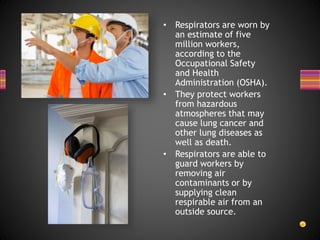
• Respirators are worn by
an estimate of five
million workers,
according to the
Occupational Safety
and Health
Administration (OSHA).
• They protect workers
from hazardous
atmospheres that may
cause lung cancer and
other lung diseases as
well as death.
• Respirators are able to
guard workers by
removing air
contaminants or by
supplying clean
respirable air from an
outside source.
“Respiratory protection is addressed in
standards specifically for the general,
shipyard employment, marine terminals,
longshoring, and construction industries.
The respiratory protection standards for
the shipyard employment (29 CFR
1915.154), marine terminals (29 CFR
1917.92), longshoring (29 CFR 1918.102),
and construction industries (29 CFR
1926.103) reference the respiratory
protection standard for general industry
(29 CFR 1910.134).”
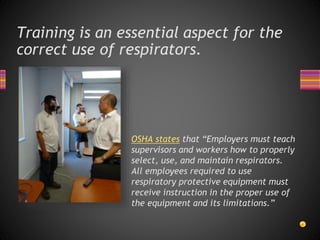
OSHA states that “Employers must teach
supervisors and workers how to properly
select, use, and maintain respirators.
All employees required to use
respiratory protective equipment must
receive instruction in the proper use of
the equipment and its limitations.”
Training is an essential aspect for the
correct use of respirators.
Training Program
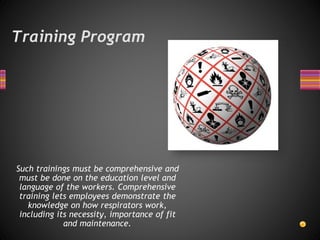
Such trainings must be comprehensive and
must be done on the education level and
language of the workers. Comprehensive
training lets employees demonstrate the
knowledge on how respirators work,
including its necessity, importance of fit
and maintenance.
OSHA maintains that training must answer
the following topics:
 Essential role of respirator use
 Nature of the respiratory hazard and consequences of not
fitting, using, and maintaining the respirator properly
 Reason(s) for selecting a particular type of respirator
 Capabilities and limitations of the selected respirator
 How to inspect, put on and remove, and check the seals of the
respirator
 Respirator maintenance and storage requirements
 How to use the respirator effectively in emergency situations,
including when the respirator malfunctions
 How to recognize medical signs and symptoms that may limit or
prevent the effective use of the respirator
OSHA provides assistance to employers and workers through Outreach
Training Programs like OSHA courses and through training videos which may
be viewed here. The agency also provides management leadership,
employee involvement and hazard prevention and control on all workplaces.
Compliance of these
standards may prevent the
fatalities and illnesses caused
by atmospheric contamination
in the workplace.
https://www.osha.gov/SLTC/respiratoryprotection/standards.html
https://www.osha.gov/SLTC/respiratoryprotection/index.html
https://www.osha.gov/video/respiratory_protection/training.html
http://www.oshacampus.com/osha-10-hour-training/
www.wsomag.com
www.efilmgroup.com
Moodboard/Corbis
Corbis
wcsafetytraining.co.za

Respiratory Protection Training for Workers

  • 1.
  • 2.
    • Respirators areworn by an estimate of five million workers, according to the Occupational Safety and Health Administration (OSHA). • They protect workers from hazardous atmospheres that may cause lung cancer and other lung diseases as well as death. • Respirators are able to guard workers by removing air contaminants or by supplying clean respirable air from an outside source.
  • 3.
    “Respiratory protection isaddressed in standards specifically for the general, shipyard employment, marine terminals, longshoring, and construction industries. The respiratory protection standards for the shipyard employment (29 CFR 1915.154), marine terminals (29 CFR 1917.92), longshoring (29 CFR 1918.102), and construction industries (29 CFR 1926.103) reference the respiratory protection standard for general industry (29 CFR 1910.134).”
  • 4.
    OSHA states that“Employers must teach supervisors and workers how to properly select, use, and maintain respirators. All employees required to use respiratory protective equipment must receive instruction in the proper use of the equipment and its limitations.” Training is an essential aspect for the correct use of respirators.
  • 5.
    Training Program Such trainingsmust be comprehensive and must be done on the education level and language of the workers. Comprehensive training lets employees demonstrate the knowledge on how respirators work, including its necessity, importance of fit and maintenance.
  • 6.
    OSHA maintains thattraining must answer the following topics:  Essential role of respirator use  Nature of the respiratory hazard and consequences of not fitting, using, and maintaining the respirator properly  Reason(s) for selecting a particular type of respirator  Capabilities and limitations of the selected respirator  How to inspect, put on and remove, and check the seals of the respirator  Respirator maintenance and storage requirements  How to use the respirator effectively in emergency situations, including when the respirator malfunctions  How to recognize medical signs and symptoms that may limit or prevent the effective use of the respirator
  • 7.
    OSHA provides assistanceto employers and workers through Outreach Training Programs like OSHA courses and through training videos which may be viewed here. The agency also provides management leadership, employee involvement and hazard prevention and control on all workplaces. Compliance of these standards may prevent the fatalities and illnesses caused by atmospheric contamination in the workplace.
  • 8.