My Lord, Uplift my heart for me, make my task easy, and
remove the dullness from my tongue so that they may
understand me
(Surah Ta Ha:25-26-27-28)
Resources
Management
ANSA NOOR
0449-BS-CHEM-22
Contents
Graphical Abstract
Resources and its Types
Principles of Environmental
Resources Management
Importance of Effective Resource
Allocation
Methods of Environmental
Resources Management
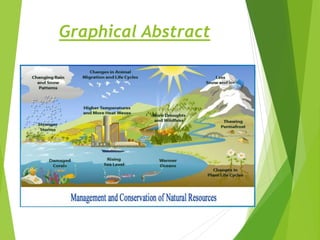
Graphical Abstract
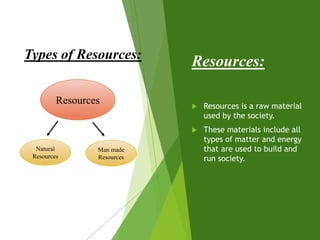
Resources:
 Resources is a raw material
used by the society.
 These materials include all
types of matter and energy
that are used to build and
run society.
Resources
Natural
Resources
Man made
Resources
Types of Resources:
Different Types of
Natural Resources:
1.Biotic and Abiotic
Resources
2.Renewble and Non-
renewable Resources
 Biotic and Abiotic Resources:
 Resource Management is the
process of planning, scheduling,
forecasting, and optimizing the
entire resource lifecycle for
successful project delivery..
Principle of
Resources
Management
“All material resources have to
be optimally utilized.”
 Optimum utilization of any
aterial is a cardinal principle
in the material management
of any institution.
 Maximal utilization improves
efficiency of the equipments,
proves to be economical.
Importance of Effective
Resource Allocation:
 Resource allocation is essential in project
management as it allows you to plan and
prepare for project implementation or achieving
goals. In addition, it helps schedule resources in
advance and provides insight into the project
team's progress.
Methods of
Environment Resources
Management
Natural resources
management
Forest
management
Fisheries
management
Wildlife
management
Natural resources
management:
Natural resource
management deals with
managing the way in which
people and natural landscapes
interact. It brings together
natural heritage management,
land use planning, water
management, bio-diversity
conservation, and the future
sustainability of industries like
agriculture, mining, tourism,
fisheries and forestry.
Forest management:
Forest management is the process of
protecting and maintaining a forested area.
It often involves evaluating the soil, trees
and vegetation within a forest ecosystem
and performing a variety of complex tasks
to improve land management practices.
One of the examples of sustainable
forest management is selective
logging, which is the practice of
removing certain trees while preserving
the balance of the woodland.
Fisheries
management:
Fisheries management is the
process that creates and
enforces the rules that are
needed to prevent overfishing
and help overfished stocks
rebound.
 From: Encyclopedia of
Ocean Sciences, 2001.
Wildlife management:
 Wildlife management is the
management process influencing
interactions among and between
wildlife, its habitats and people
to achieve predefined impacts.
 Among the most fundamental
roles of wildlife conservation to
humans is to enhance food
security. Protecting natural
habitats from degradation and
forests against deforestation
would increase the availability
of various food products.
Resources Management (1).pptx

Resources Management (1).pptx

  • 1.
    My Lord, Upliftmy heart for me, make my task easy, and remove the dullness from my tongue so that they may understand me (Surah Ta Ha:25-26-27-28)
  • 2.
  • 3.
    Contents Graphical Abstract Resources andits Types Principles of Environmental Resources Management Importance of Effective Resource Allocation Methods of Environmental Resources Management
  • 4.
  • 5.
    Resources:  Resources isa raw material used by the society.  These materials include all types of matter and energy that are used to build and run society. Resources Natural Resources Man made Resources Types of Resources:
  • 8.
    Different Types of NaturalResources: 1.Biotic and Abiotic Resources 2.Renewble and Non- renewable Resources
  • 9.
     Biotic andAbiotic Resources:
  • 12.
     Resource Managementis the process of planning, scheduling, forecasting, and optimizing the entire resource lifecycle for successful project delivery..
  • 13.
    Principle of Resources Management “All materialresources have to be optimally utilized.”  Optimum utilization of any aterial is a cardinal principle in the material management of any institution.  Maximal utilization improves efficiency of the equipments, proves to be economical.
  • 14.
    Importance of Effective ResourceAllocation:  Resource allocation is essential in project management as it allows you to plan and prepare for project implementation or achieving goals. In addition, it helps schedule resources in advance and provides insight into the project team's progress.
  • 16.
    Methods of Environment Resources Management Naturalresources management Forest management Fisheries management Wildlife management
  • 17.
    Natural resources management: Natural resource managementdeals with managing the way in which people and natural landscapes interact. It brings together natural heritage management, land use planning, water management, bio-diversity conservation, and the future sustainability of industries like agriculture, mining, tourism, fisheries and forestry.
  • 18.
    Forest management: Forest managementis the process of protecting and maintaining a forested area. It often involves evaluating the soil, trees and vegetation within a forest ecosystem and performing a variety of complex tasks to improve land management practices. One of the examples of sustainable forest management is selective logging, which is the practice of removing certain trees while preserving the balance of the woodland.
  • 19.
    Fisheries management: Fisheries management isthe process that creates and enforces the rules that are needed to prevent overfishing and help overfished stocks rebound.  From: Encyclopedia of Ocean Sciences, 2001.
  • 20.
    Wildlife management:  Wildlifemanagement is the management process influencing interactions among and between wildlife, its habitats and people to achieve predefined impacts.  Among the most fundamental roles of wildlife conservation to humans is to enhance food security. Protecting natural habitats from degradation and forests against deforestation would increase the availability of various food products.