1 | P a g e
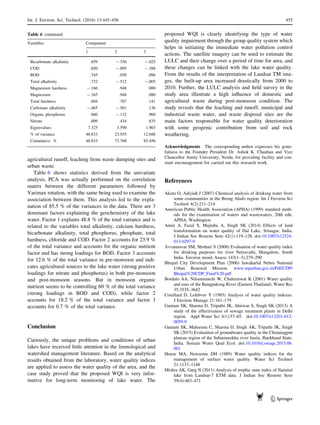
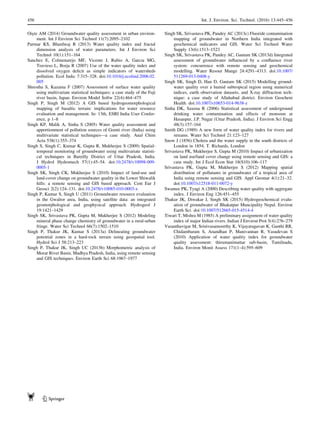
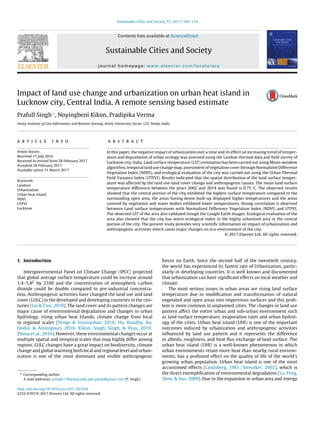
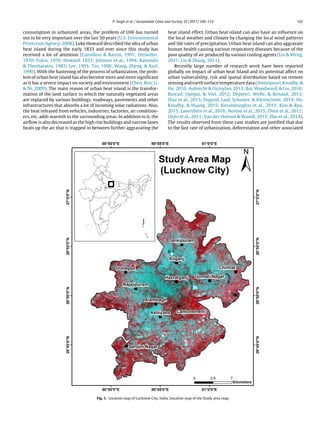
Government of India Ministry of Agriculture & Farmers’ Welfare
Department of Agriculture,
Cooperation & Farmers’ Welfare Mahalanobis National Crop
Forecast Centre Near Krishi Vistar Sadan Pusa Campus, New
Delhi-110012
Invitation for Expression of Interest for GP (Gram Panchayat) level
Crop Yield Estimation Using
Technology File No. 6/7(2)/PMFBY/2017-MNCFC (May 2019)
2 | P a g e
i. Introduction
Crop yield monitoring and estimation have proved to be of vital importance for planning and
for taking various policy decisions. The early prediction or forecasting of crop yield well before
harvest is crucial especially in regions characterized by climatic uncertainties. This enables
planners and policy makers to determine the amount of crop insurance to be paid to farmers in
case of famine or a natural calamity. It also enables decision makers to predict how much to
import in case of shortfalls or export in case of surplus.
Remote sensing has proved to be one of the important technologies for the agricultural
sector, as it is one of the backbones for precise agricultural resource mapping and monitoring.
The availability of satellite borne multispectral, multi- resolution and multi-temporal data play an
important role in crop management; their ability to represent crop growth and yield estimation on
the spatial and temporal scale is remarkable.
Precision agriculture (PA) is the application of geospatial techniques and remote sensors to
identify variations in the field and to deal with them using alternative strategies. Precision
agriculture is a way of addressing production variability and optimising management decisions.
Precision agriculture accounts for production variability and uncertainties, optimises resource
use and protects the environment (Gebbers and Adamchuk, 2010; Mulla, 2013).By definition, a
complete precision agriculture system consists of four aspects:
■ Field variability sensing and information extraction, ■ Decision making, ■ Precision field
control, and ■ Operation and result assessment (Yao et al., 2011). Precision agriculture adapts
management practices within an agricultural field, according to variability in site conditions
(Seelan et al., 2003).
Variability is well known to exist within many of agricultural fields. The causes of variability of
crop growth in an agricultural field might be due to tillage operations, influence of natural soil
fertility and physical structure, topography, crop stress, irrigation practices, incidence of pest and
disease etc. Effective management of the crop variability within the field can enhance financial
returns, by improving yields and farm production and reducing cost of production. Various
inputs to the farm such as fertilizers, irrigation, pesticides, seeding, etc. can be adjusted and
applied precisely according to the variability in soil properties and crop growth (Atherton et al.,
1999).
Aerial images have been widely used for crop yield prediction before harvest. These images can
provide high spatial cloud free information of the crop’s spectral characteristics. Analysis of
vegetation and detection of changes in vegetation patterns are important for natural resource
management and monitoring, such as crop vigour analysis. Healthy crops are characterized by
strong absorption of red energy and strong reflectance of NIR energy. The strong contrast of
absorption and scattering of the red and near-infrared bands can be combined into different
3 | P a g e
quantitative indices of vegetation conditions. The potential application of aerial images is
limitless in agriculture; some of them are as under:
■ Identifying and monitoring the spread of crop destroying weeds/pests ■ Monitoring the crop
health ■ Nitrogen content mapping, soil brightness mapping ■ Crop cover, Biomass estimation,
yield prediction.
Biophysical parameters such as plant height and biomass are monitored to describe crop growth
and serve as an indicator for the final crop yield. Multi-temporal Crop Surface Models (CSMs)
provide spatial information on plant height and plant growth.
ii. About the Organisation
Name of the Organization Amity University Uttar Pradesh , Noida
Location of the Principal
Office
Sector- 125, Gautam Buddha Nagar, Noida - 201 313 (India)
Telephone: 0120-4392359
Fax: 0120-2431870
Email: nkaushik5@amity.edu
Website: www.amity.edu
Date of Establishment 24 March, 2005
Copy of Gazzette Notification No. 404/VII-V-1-1(Ka)-1/2005 Dated
Lucknow,March 24,2005.
PAN Card No. : AAATR7314Q
GST No. : 09AAATR7314Q1ZW
Professional strength
No. of full time manpower available: 4200 plus
(a) Agriculture & Allied: 80
(b) Other Sector: 4100 plus
Financial capacity of Amity University
2017-18: 953.72 Crores
2016-17: INR 844.75 Crores.
2015-16 : INR 717.37 Crores.
4 | P a g e
Institutes and Centres at AAUP:
Various institutes and centers at Amity University which are performing academic and research activities in
food, agriculture and allied sciences. Some of them are listed below:
1. Amity Institute of Organic Agriculture
2. Amity Institute of Horticulture Studies & Research
3. Amity International Centre for Post Harvest Technology & Cold Chain Management
4. Centre for Agricultural Biotechnology
5. Amity Centre for Extension Services
6. Amity Centre for Bio Control & Plant Disease Management
7. Amity Institute for Herbal Research and Studies
8. Amity Institute of Phytochemistry & Phytomedicine
9. Amity Institute of Food Security Management
10. Amity Institute of Food Technology
11. Amity Institute of Biotechnology
12. Amity Institute of Microbial Biotechnology
13. Amity Institute of Microbial Technology
14. Amity Institute of Seabuckthorn Research
15. Amity Centre for Carbohydrate Research
16. Centre for Plant Cell Culture Technology
17. Amity Institute of Marine Science & Technology
18. Amity Institute of Environmental Toxicology, Safety and Management
19. Amity Institute of Environmental Sciences
20. Amity School of Natural Resources and Sustainable Development
21. Amity Institute of Geo-Informatics and Remote-Sensing
22. Amity Institute of Global Warming and Ecological Studies
23. Amity Institute of Water Technology and Educating Youth for Sustainable Development
Details of Project Coordinator
Name: DR.NUTAN KAUSHIK
Designation: Director General, Amity Food and Agriculture Foundation
Amity University Uttar Pradesh was established under RBEF vide The Amity University
Uttar Pradesh Act, 2005 (U.P. Act No.11 of 2005) in the State of Uttar Pradesh through state
legislature. The University has a rich resource of expertise in the field of social sciences,
economics, political science, agriculture, microbiology, biotechnology, anthropology, natural
resources, Organic Agriculture, Plan Protection, environment, education, psychology, Finance
5 | P a g e
Experts, Management Experts, Legal Experts, travel, Tourism and Hospitality experts etc. Amity
also has in-house training department which on the continuous basis is running trainings and
workshops from various government banks, other institutions, and other Central as well as State
Government Departments.
Description of Institutes
There are a number of institutes at AUUP but for the said project we have chosen a few.
1. Amity Institute of Organic Agriculture:
Amity Institute of Organic Agriculture (AIOA) is an unique Institute, the first of its kind in the
country and among the few in the world. Amity University known for academic excellence,
quality research, international linkages and strong industry interface. Visualizing the need for
sustainable food security and food safety management systems, the Institute consistently has set
standards for excellence towards human resource development in long-term sustainable
agricultural technologies manifested in the most viable option of Organic Agriculture in contrast
with the chemical-intensive conventional agriculture integrated and strongly supported with a
comprehensive and multifaceted management focused education. The Institute has also a
mandate in carrying out basic and applied research in organic production management systems,
an innovative farmer’s knowledge management apart from training, advisory, and consultancy
services. Institution is working on continuous development of the society and has also
implemented various projects.
2. Amity Institute of Geo-Informatics and Remote Sensin, Noida
Amity Institute of Geo-Informatics and Remote Sensing (AIGIRS) is an interdisciplinary center,
established as a part of Amity University Uttar Pradesh, NOIDA.
These Programmes in Geoinformatics combines technical, mathematical, computational and visual
knowledge and offers the students the possibility to not only use geoinformatics technology but also
develop and create new computational methods and applications. In addition to gaining an overall
perspective, students can further focus their skills on one of the subjects within geoinformatics, such as
geodesy, photogrammetry, laser scanning, remote sensing, geographic information technologies or
cartography. The programs have a long tradition as a technically and mathematically oriented curriculum.
This is why, for example, programming skills, basic courses in mathematics and statistics as well as an
interest in GeoIT are required. The programme provides both theoretical and practical skills, and develops
academic capabilities, problem-solving skills and analytical thinking, just to name a few. Teaching is
tightly connected to ongoing cutting-edge research.
The Institute conducts interdisciplinary research in the following areas of Remote Sensing & GIS
Applications:
 Groundwater Resource Management
 Groundwater Modeling
6 | P a g e
 Watershed management and Modeling
 Geophysics based Groundwater Survey
 Groundwater Pollution and Prediction Modeling
 GIS based decision support System for Solid Waste Management
 River dynamics and Mapping
 Web GIS based application in Resource Mapping
 Geological / Mineralogical Studies
 Urban Planning and Management
 Glaciology
 Landscape Evaluation
 Flood Mapping and Monitoring
 Drought Mapping and Monitoring
 Climate Change Studies
3. Amity Institute of Information technology (AIIT), Noida
Amity Institute of Information technology (AIIT), Noida, integral part of Amity University Uttar
Pradesh, is a centre of excellence for quality education in Information Technology with special
focus on emerging trends. AIIT is a CISCO Regional Networking Academy since March 2001,
now known as CISCO Instruction Training Center (ITC) and Network Academy. AIIT is
providing this course as a Value Addition Course to external students as well as the students of
MCA, M.Sc.(NT&M), Ph.D(IT), BCA, B.Sc. (IT), BCA+MCA (dual) and BCA (Evening). AIIT
also has a tie-up with CISCO and Intersystems Pvt. Ltd. and it is the first Institute in India to
offer InterSystems CacheCampus Program to foster knowledge about Cache among the student
community.
Amity University has collaboration with EMC2, Sun MicroSystems, Oracle , SAP, Infosys, etc.
Being a part of the University, the students of AIIT have the opportunity to avail access to the
courses offered by these organizations.
iii. List of Technical persons with their qualification.
Seri
al
No.
Name Qualification Expertise Experience
1. Dr. Nutan Kaushik, Ph.D. Agriculture 28 years
2. Dr. Neelani Ramawat Ph.D. Agronomy 18 years
3. Dr. Renu Yadav Ph.D. Botany 12 years
4. Dr. Prafull Singh Ph.D. Remote Sensing 10 years
5. Dr. Neel Mani Ph.D. Machine Learning 12 years
6. Dr. Mahesh M. Kadam Ph.D. Agril. Economics 6 years
7. Dr. Rachna Rana Ph.D. Agronomy 02 years
8. Dr. Saurabh Agarwal M.Tech, Ph.D. Machine Learning 12 years
9. Dr. Vandana Bhatia M.Tech, Ph.D. Machine Learning 02 years
10. Dr. Deepak Sharma M.Tech,Ph.D. Machine Learning 10 years
7 | P a g e
iv. Details of the previous study carried out:
Name of the Study Efficient Pattern Mining of Big Data using Graphs
(Dr. Vandana Bhatia)
Geographical location Not Applicable
Description
Big data has great amount of hidden knowledge and many insights which have
raised remarkable challenges in knowledge discovery and data mining. For
certain types of data, the relationships among the entities is of much more
importance than the information itself. Big data has many such connections
which can be mined efficiently using graphs. However, it is very challenging to
obtain ample profits from this complex data.
To overcome these challenges, graph mining approaches such as clustering and
subgraph mining are used. In recent times, these approaches have become an
indispensable tool for analyzing graphs in various domains.
The research work undertaken in the field of pattern mining approaches for
large graphs. The main objective of this research is to investigate the benefits of
using scalable approaches for mining large graphs.
Two fuzzy clustering algorithms namely “PGFC” and “PFCA” are proposed for
large graphs using different concepts of graph analysis. Furthermore, a scalable
deep learning based fuzzy clustering model named “DFuzzy” is proposed that
leverages the idea from stacked autoencoder pipelines to identify overlapping
and non-overlapping clusters in large graphs efficiently. Our proposed
clustering approaches are proved to be effective for small and large graph
dataset, and generate high quality clusters.
For mining frequent subgraphs, a scalable frequent subgraph mining algorithm
named “PaGro” is proposed for a single large graph using pattern-growth based
approach. In PaGro, a two-step hybrid approach is developed for optimization of
subgraph isomorphism and subgraph pruning task at both local and global levels
to avoid the excess communication overhead. Additionally, an approximate
frequent subgraph mining algorithm named “Ap-FSM” is proposed which
exploits PaGro using sampling for faster processing. The results of PaGro and
Ap-FSM show that both outperform the competent algorithms in various aspects
of processing Time, no. of iterations and memory overhead.
It is suggested that the utilization of graph clustering and frequent subgraph
mining generate discriminate and significant patterns, which can help in many
tasks such as classification and indexing of big data. The proposed algorithms
can be used in many applications like Social networks, Biological networks, etc.
The work can also be used for finding similar patterns in business and
agriculture.
8 | P a g e
Name of the Study
(Dr. Praful Singh)
Application of Thermal Imaging and Hyperspectral Remote Sensing for
Crop Water Deficit Stress Monitoring
Geographical location Not applicable
Description
Water deficit in crops induces a stress that may ultimately result in low
production. Identification of response of genotypes towards water deficit stress
is very crucial for plant phenotyping. The study was carried out with the
objective to identify the response of different rice genotypes to water deficit
stress. Ten rice genotypes were grown each under water deficit stress and well
watered or non-stress conditions. Thermal images coupled with visible images
were recorded to quantify the stress and response of genotypes towards stress,
and relative water content (RWC) synchronized with image acquisition was also
measured in the lab for rice leaves. Synced with thermal imaging, Canopy
reflectance spectra from same genotype fields were also recorded. For
quantification of water deficit stress, Crop Water Stress Index (CWSI) was
computed and its mode values were extracted from processed thermal imageries.
It was ascertained from observations that APO and Pusa Sugandha-5 genotypes
exhibited the highest resistance to the water deficit stress or drought whereas
CR-143, MTU-1010 and Pusa Basmati-1 genotypes ascertained the highest
sensitiveness to the drought. The study reveals that there is an effectual
relationship (R² = 0.63) between RWC and CWSI. The relationship between
canopy reflectance spectra and CWSI was also established through partial least
square regression technique. A very efficient relationship (Calibration R²= 0.94
and Cross-Validation R²= 0.71) was ascertained and 10 most optimal wavebands
related to water deficit stress were evoked from hyperspectral data resampled at
5nm wavelength gap. The identified ten most optimum wavebands can
contribute in the quick detection of water deficit stress in crops. This study
positively contributes towards the identification of drought tolerant and drought
resistant genotypes of rice and may provide valuable input for the development
of drought-tolerant rice genotypes in future.
.
9 | P a g e
Comparison of Various Modelling Approaches for Water Deficit Stress
Monitoring in Rice Crop through Hyperspectral Remote Sensing.
Agriculture Water Management
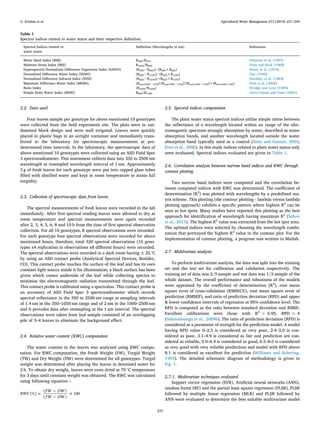
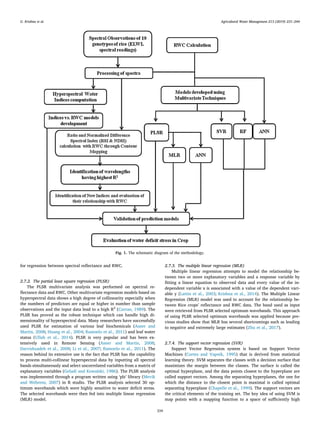
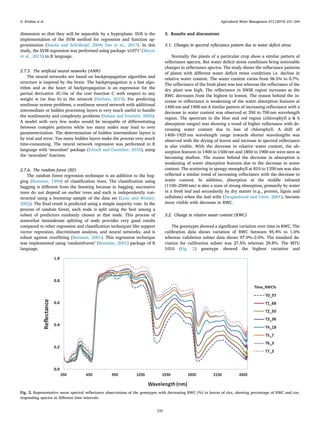
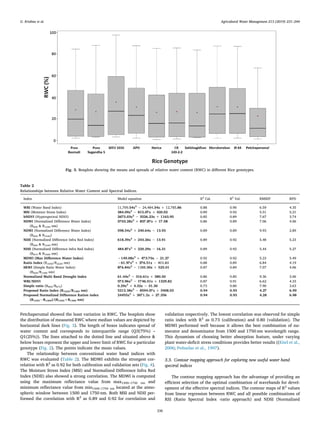
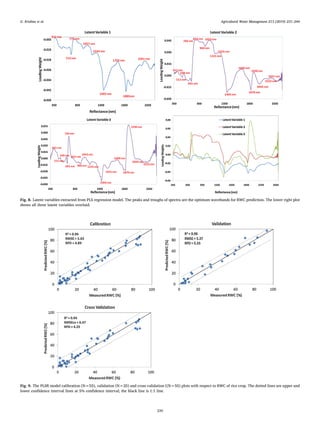
This study was conducted to understand the behaviour of ten rice genotypes for
different water deficit stress levels. The spectroscopic hyperspectral reflectance
data in the range of 350–2500 nm was recorded and relative water content
(RWC) of plants was measured at different stress levels. The optimal wavebands
were identified through spectral indices, multivariate techniques and neural
network technique, and prediction models were developed. The new water
sensitive spectral indices were developed and existing water band spectral
indices were also evaluated with respect to RWC. These indices based models
were efficient in predicting RWC with R2 values ranging from 0.73 to 0.94. The
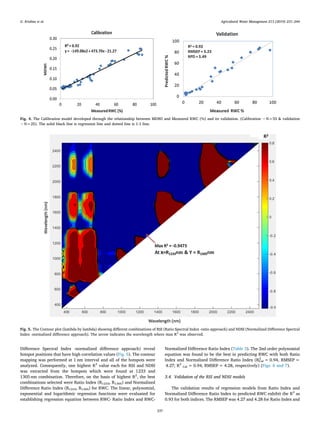
contour plotting using the ratio spectral indices (RSI) and normalized difference
spectral indices (NDSI) was done in all possible combinations within 350–2500
nm and their correlations with RWC were quantified to identify the best index.
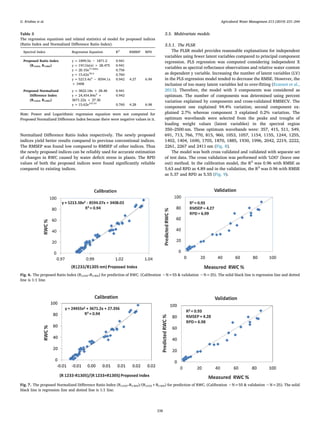
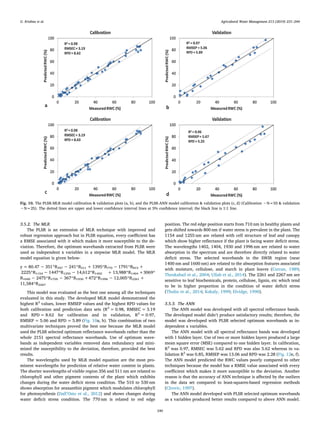
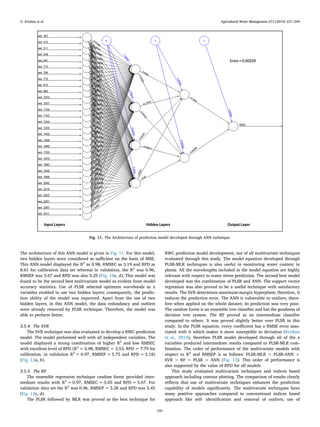
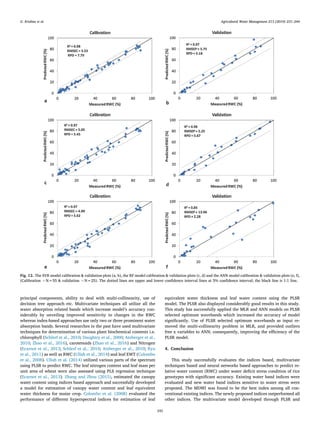
Spectral reflectance data was also used to develop partial least squares
regression (PLSR) followed by multiple linear regression (MLR) and Artificial
Neural Networks (ANN), support vector machine regression (SVR) and random
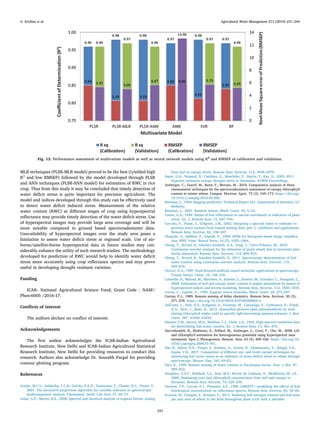
forest (RF) models to calculate plant RWC. Among these multivariate models,
PLSR-MLR was found to be the best model for prediction of RWC with R2 as
0.98 and 0.97 for calibration and validation respectively and Root mean square
error of prediction (RMSEP) as 5.06. The results indicate that PLSR is a robust
technique for identification of water deficit stress in the crop. Although the
PLSR is robust technique, if PLSR extracted optimum wavebands are fed into
MLR, the results are found to be improved significantly. The ANN model was
developed with all spectral reflectance bands. The 43 developed model didn’t
produce satisfactory results. Therefore, the model was developed 44 with PLSR
selected optimum wavebands as independent x variables and PLSR-ANN model
45 was found better than the ANN model alone. The study successfully conducts
a comparative 46 analysis among various modelling approaches to quantify
water deficit stress. The methodology developed would help to identify water
deficit stress more accurately by predicting RWC in the crops.
10 | P a g e
Name of study
Morphometric analysis of Morar River Basin, Madhya Pradesh, India,
using remote sensing and GIS techniques
Hydrogeological mapping and drainage analysis can form an important tool for
groundwater development. Assessment of drainage and their relative parameters
have been quantitatively carried out for the Morar River Basin, which has made
positive scientific contribution for the local people of area for the sustainable
water resource development and management. Geographical Information
System has been used for the calculation and delineation of the morphometric
characteristics of the basin. The dendritic type drainage network of the basin
exhibits the homogeneity in texture and lack of structural control. The stream
order ranges from first to sixth order. The drainage density in the area has been
found to be low which indicates that the area possesses highly permeable soils
and low relief. The bifurcation ratio varies from 2.00 to 5.50 and the elongation
ratio (0.327) reveals that the basin belongs to the elongated shaped basin
category. The results of this analysis would be useful in determining the effect
of catchment characteristics such as size, shape, slope of the catchment and
distribution of stream net work within the catchment.
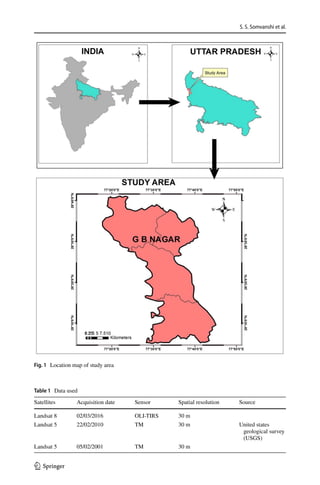
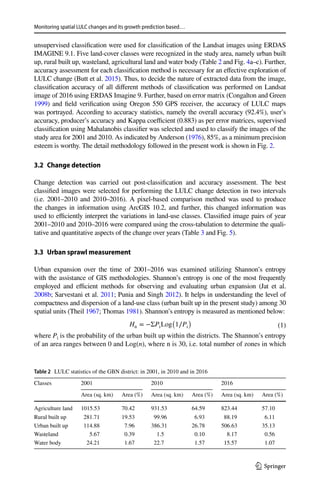
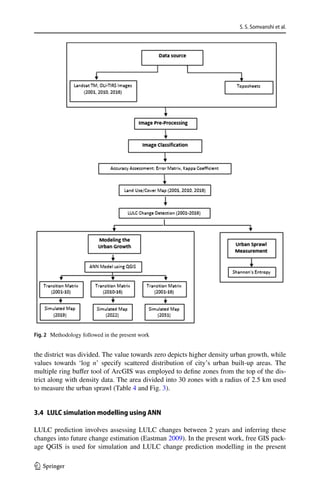
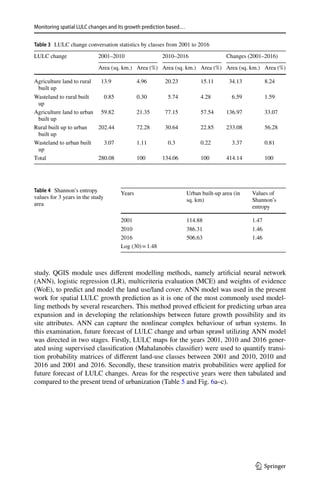
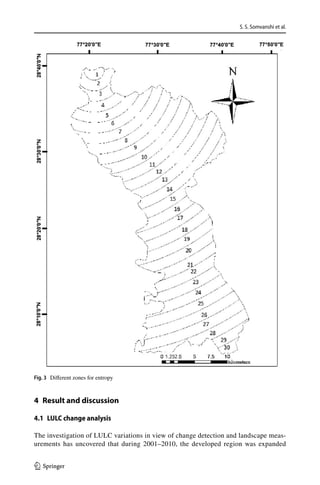
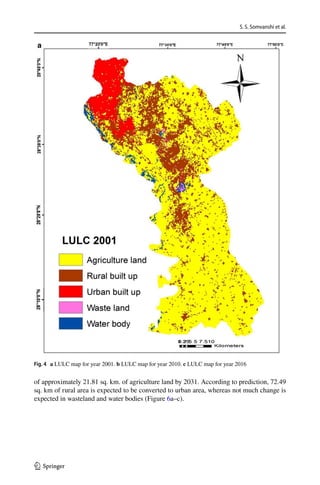
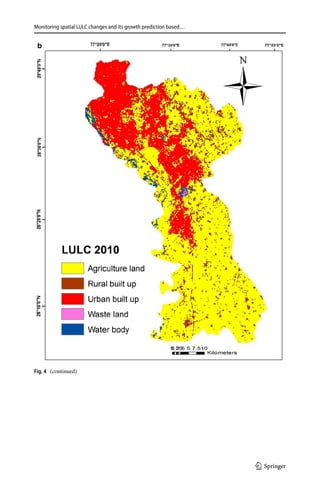
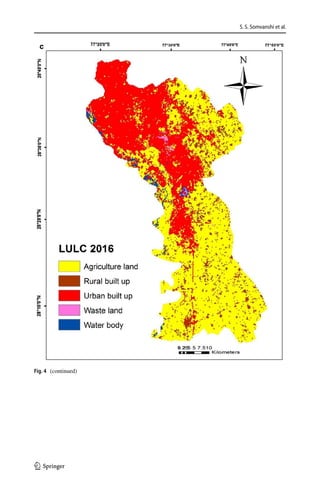
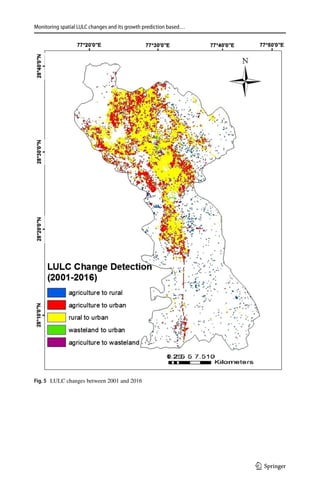
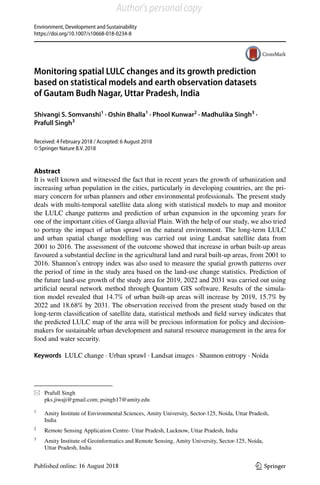
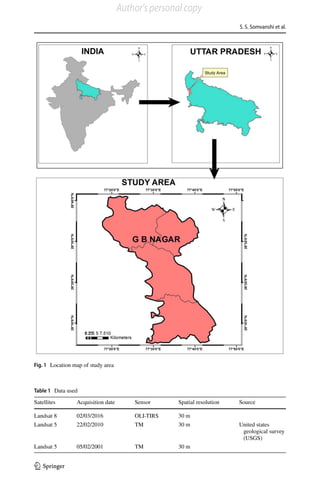
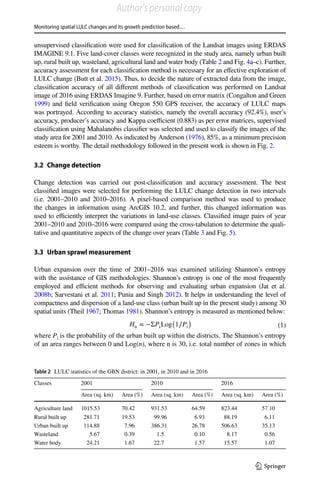
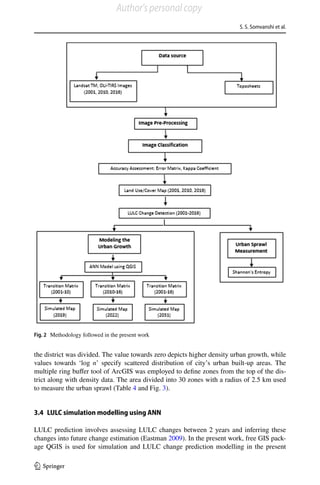
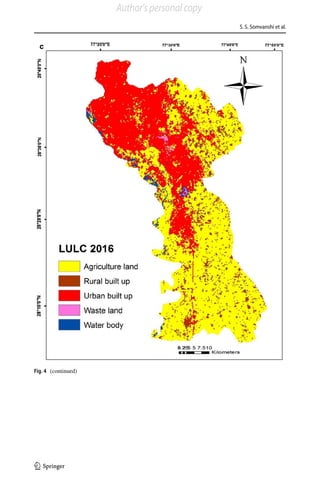
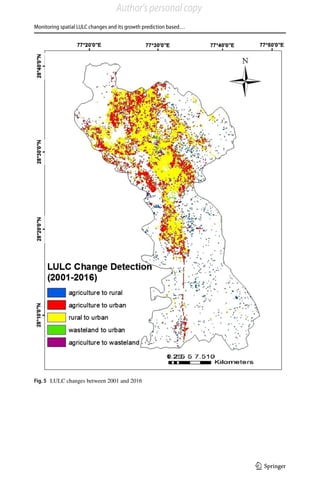
Name of study
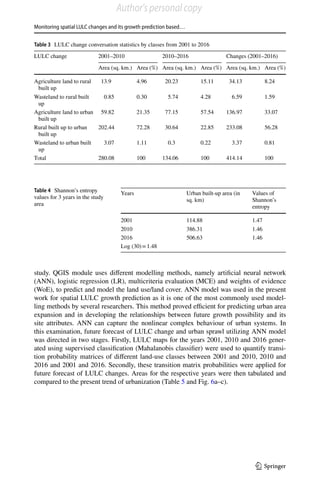
Monitoring spatial LULC changes and its growth prediction based on
statistical models and earth observation datasets of Gautam Budh Nagar,
Uttar Pradesh, India
Description
It is well known and witnessed the fact that in recent years the growth of
urbanization and increasing urban population in the cities, particularly in
developing countries, are the primary concern for urban planners and other
environmental professionals. The present study deals with multi-temporal
satellite data along with statistical models to map and monitor the LULC change
patterns and prediction of urban expansion in the upcoming years for one of the
important cities of Ganga alluvial Plain. With the help of our study, we also
11 | P a g e
tried to portray the impact of urban sprawl on the natural environment. The
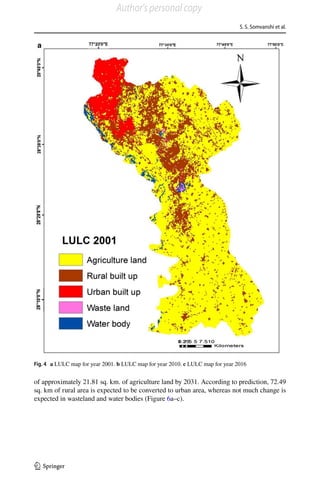
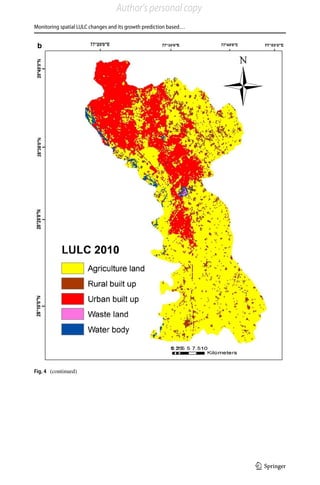
long-term LULC and urban spatial change modelling was carried out using
Landsat satellite data from 2001 to 2016. The assessment of the outcome
showed that increase in urban built-up areas favoured a substantial decline in the
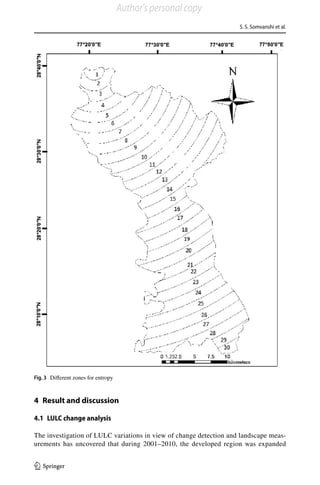
agricultural land and rural built-up areas, from 2001 to 2016. Shannon’s entropy
index was also used to measure the spatial growth patterns over the period of
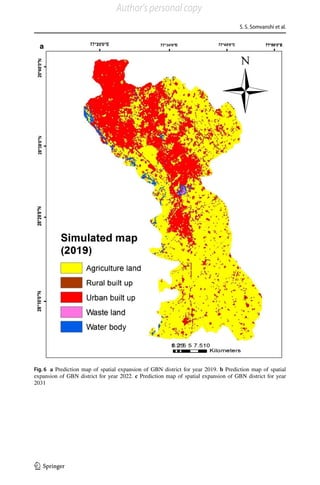
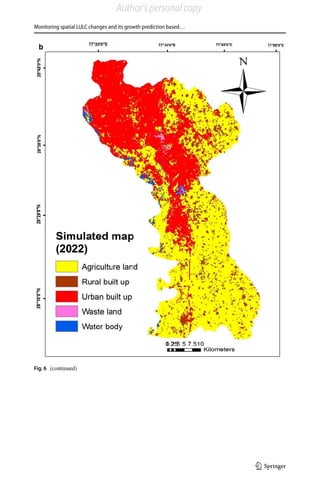
time in the study area based on the land-use change statistics. Prediction of the
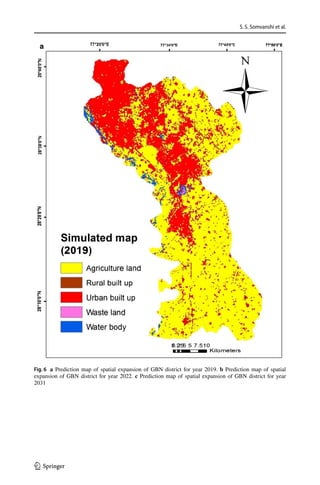
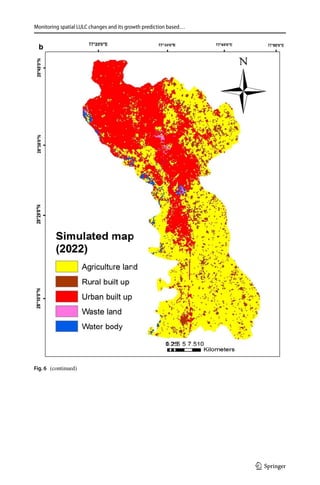
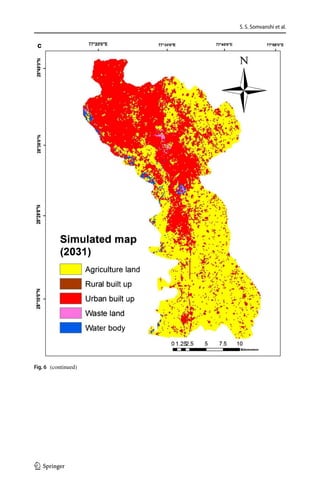
future land-use growth of the study area for 2019, 2022 and 2031 was carried
out using artificial neural network method through Quantum GIS software.
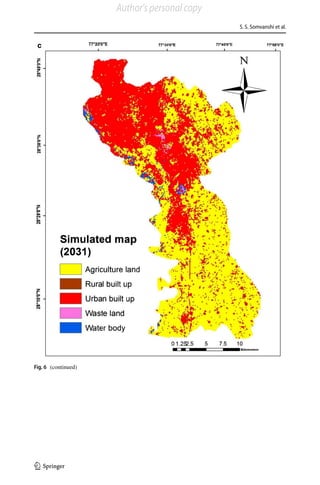
Results of the simulation model revealed that 14.7% of urban built-up areas will
increase by 2019, 15.7% by 2022 and 18.68% by 2031. The observation
received from the present study based on the long-term classification of satellite
data, statistical methods and field survey indicates that the predicted LULC map
of the area will be precious information for policy and decision-makers for
sustainable urban development and natural resource management in the area for
food and water security.
Name of the Study
(Dr. Renu Yadav)
Physiological and Biochemical studies on the essentiality and toxicity of Nickle
and cobalt on certain plant species
Geographical location Udaipur , Rajasthan
Description
This thesis work entitled Title:” Physiological and Biochemical studies on the
essentiality and toxicity of Nickle and cobalt on certain plant species” was
carried at Udaipur district of Rajasthan. Experiments was conducted to evaluate
response of Triticum aestivum L and Vigna sinensis L to the basal applications
of nickel and cobalt. Significant increase in the growth was observed at 5 & 25
µg g-1 nickel and cobalt doses. Addition of metals above this level reduced the
leaf area, plant growth, root length and yield of the plants. Fruiting stage showed
more severe toxicity symptoms in comparison to the vegetative stages.
Chlorophyll contents, protein contents and the nitrate reductase activity
increased significantly at the lower nickel doses. Peroxidase and superoxide -
dismutase activity increased in a concomitant manner by increasing the nickel
concentrations. Accumulations of nickel and cobalt in different parts of the
plants were studied. Increased concentrations of the soil applied nickel and
cobalt demonstrated an increase in the content of metals in roots as well as
shoots. The information obtained from this study should be useful for studying
the essentiality and toxicity of Nickle and cobalt on certain plant species.
12 | P a g e
Name of the study
(Dr. Mahesh M. Kadam)
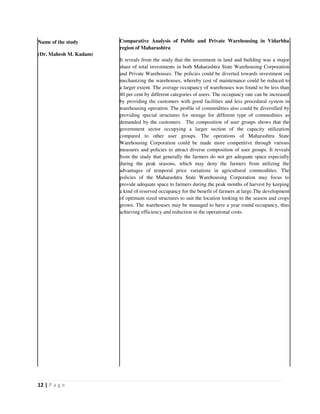
Comparative Analysis of Public and Private Warehousing in Vidarbha
region of Maharashtra
It reveals from the study that the investment in land and building was a major
share of total investments in both Maharashtra State Warehousing Corporation
and Private Warehouses. The policies could be diverted towards investment on
mechanizing the warehouses, whereby cost of maintenance could be reduced to
a larger extent. The average occupancy of warehouses was found to be less than
40 per cent by different categories of users. The occupancy rate can be increased
by providing the customers with good facilities and less procedural system in
warehousing operation. The profile of commodities also could be diversified by
providing special structures for storage for different type of commodities as
demanded by the customers. The composition of user groups shows that the
government sector occupying a larger section of the capacity utilization
compared to other user groups. The operations of Maharashtra State
Warehousing Corporation could be made more competitive through various
measures and policies to attract diverse composition of user groups. It reveals
from the study that generally the farmers do not get adequate space especially
during the peak seasons, which may deny the farmers from utilizing the
advantages of temporal price variations in agricultural commodities. The
policies of the Maharashtra State Warehousing Corporation may focus to
provide adequate space to farmers during the peak months of harvest by keeping
a kind of reserved occupancy for the benefit of farmers at large.The development
of optimum sized structures to suit the location looking to the season and crops
grown. The warehouses may be managed to have a year round occupancy, thus
achieving efficiency and reduction in the operational costs.
13 | P a g e
Name of the Study
(Dr.Naleeni Ramawat)
Simulation, validation and application of CERES-Maize model for yield
maximization of maize in North Western Himalayas
Geographical location Palampur, Himachal Pradesh
Description
Maize (Zea mays L.) is one of the most important cereal crops of the
world. Investigations were carried out for determination of genotypic
coefficients of important varieties of maize by using CERES-Maize model in
the Decision Support System for Agrotechnology Transfer (DSSAT v 3.5). The
CERES-Maize model was evaluated with experimental data collected during
two field experiments conducted in Palampur, India. Field experiments
comprising of four dates of sowing (June 1, June 10, June 20 and June 30)
and four varieties(KH 9451, KH 5991, early composite and local) of maize
were conducted during Summer 2003 and 2004 in split plot design.
Observations on development stages, dry matter accumulation at 15 days
interval, yield attributes, yield (grains, stover and biological), nitrogen content
and uptake were recorded. Genotypic coefficients of important varieties of
maize were worked out. CERES-Maize model successfully simulated
phenological stages, yield attributes (except single grain weight), yield and also N
uptake with coefficient of variation (CV) nearly equal to 10 %. CERES-Maize
model was validated with fair degree of accuracy. Simulation guided management
practices were worked out under potential production and resource limiting
situations. Best time of sowing of both hybrids (KH 9451, KH 5991) was worked
out to be last week of April. While for early composite (EC), first week of May
proved advantageous and for local variety second fortnight of April was the
best time of sowing. The best schedule of N application was 60 kg ha-1 at sowing
time and 30 kg ha-1 at knee high stage for all varieties except for local where it was
60 kg ha-1 at sowing and 30 kg ha-1 each at knee high and silking stages.
14 | P a g e
Name of Study
Name of study
Methods of LeafArea for Stevia rebaudiana (Bert.) Bertoni
Leaf area is a valuable index for evaluating growth and development of sweet herb
Stevia [Stevia rebaudiana (Bert.) Bertoni]. A simple methodology was developed
during 2006 to estimate the leaf area through Leaf Area Distribution Pattern
(LADP) and regression equations. Plant height, leaf height as well as the length and
breadth of all the measurable leaves were measured and their area was measured
through Area meter (AM 300) for a six month old crop of Stevia. A leaf area
coefficient of 0.548 was found to fit for the linear equation without intercept.
LADP was prepared with relative leaf height and relative leaf area. Based on the
adjusted second order polynomial equation of LADP, the relative leaf height of
plants representing the mean leaf area was ascertained and a regression equation
was obtained to calculate the total leaf area of the plant. The results were validated
with 3, 4 and 5 months old crops as well as with another accession. Different
combinations of prediction equations were obtained from length and breadth of all
leaves and a simplest equation i.e, linear equation was used to predict the leaf area.
A non-destructive methodology for estimating leaf area of Stevia based on linear
measurement was developed in this study.
SIMULATION AND VALIDATION OF CERES-MAIZE AND CERES-
BARLEY MODELS
Investigations were carried out for determination of genotypic co-efficients of
important varieties of maize and barley, simulation and validation of CERES-Maize
and CERES- Barley crop models for growth, yield and yield attributes, and working
out simulation-guided management practices for yield maximization of both the
crops. Field experiments comprising of four dates of sowing (June 1, June 10, June
20 and June 30) and four varieties (KH 9451, KH 5991, early composite and local)
of maize and four dates of sowing (October 10, November 1, November 20 and
December 10) and three varieties (Dolma, Sonu and HBL-113) of barley were
conducted during Kharif 2002 to Rabi 2004-05 in split plot design. Observations on
development stages, dry matter accumulation (leaves, stem and grains) at 15 days
interval, yield attributes, yield (grains, stover/straw and biological), nitrogen
content and uptake were recorded. Genotypic coefficients of important
recommended varieties of maize and barley were worked out. CERES-Maize model
successfully simulated phenological stages, yield attributes (except test weight),
yield and also N uptake, but failed to simulate accurately dry matter accumulation
in different plant parts at different growth periods. CERES-Barley model also
successfully simulated phenological stages, yield attributes and grain yield, but
failed to simulate straw yield, dry matter accumulation in different plant parts at
different growth periods and N content and uptake. Both the models were validated
with fair degree of accuracy. Simulation guided management practices were
worked out under potential production and resource limiting situations. In case of
maize, best time of sowing of both hybrids(KH 9451, KH 5991) was worked out to
be last week of April. While for early composite, first week of May proved
advantageous and for local second fortnight of April. The best schedule of N
application was 60 kg /ha at sowing time and 30 kg/ha at knee high stage for all
varieties except for local where it was 60 kg /ha at sowing and 30kg/ha at knee high
stage and 30 kg/ha at silking. In case of barley, best time of sowing for Dolma and
15 | P a g e
Sonu was last week of October to first week of November but for HBL-113 earlier
sowing from 20th to 27th October were best. Best N schedule was 60 kg/ha at
sowing time followed by 20 kg/ha top dressing at 30 DAS for Dolma and Sonu and
50 kg/ ha at sowing time and 50kg/ha as top dressing at 30DAS for HBL-113.
Study Area
(Dr. Rachna Rana)
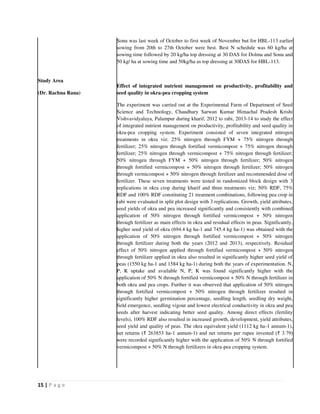
Effect of integrated nutrient management on productivity, profitability and
seed quality in okra-pea cropping system
The experiment was carried out at the Experimental Farm of Department of Seed
Science and Technology, Chaudhary Sarwan Kumar Himachal Pradesh Krishi
Vishvavidyalaya, Palampur during kharif, 2012 to rabi, 2013-14 to study the effect
of integrated nutrient management on productivity, profitability and seed quality in
okra-pea cropping system. Experiment consisted of seven integrated nitrogen
treatments in okra viz; 25% nitrogen through FYM + 75% nitrogen through
fertilizer; 25% nitrogen through fortified vermicompost + 75% nitrogen through
fertilizer; 25% nitrogen through vermicompost + 75% nitrogen through fertilizer;
50% nitrogen through FYM + 50% nitrogen through fertilizer; 50% nitrogen
through fortified vermicompost + 50% nitrogen through fertilizer; 50% nitrogen
through vermicompost + 50% nitrogen through fertilizer and recommended dose of
fertilizer. These seven treatments were tested in randomized block design with 3
replications in okra crop during kharif and three treatments viz; 50% RDF, 75%
RDF and 100% RDF constituting 21 treatment combinations, following pea crop in
rabi were evaluated in split plot design with 3 replications. Growth, yield attributes,
seed yields of okra and pea increased significantly and consistently with combined
application of 50% nitrogen through fortified vermicompost + 50% nitrogen
through fertilizer as main effects in okra and residual effects in peas. Significantly,
higher seed yield of okra (694.4 kg ha-1 and 745.4 kg ha-1) was obtained with the
application of 50% nitrogen through fortified vermicompost + 50% nitrogen
through fertilizer during both the years (2012 and 2013), respectively. Residual
effect of 50% nitrogen applied through fortified vermicompost + 50% nitrogen
through fertilizer applied in okra also resulted in significantly higher seed yield of
peas (1550 kg ha-1 and 1584 kg ha-1) during both the years of experimentation. N,
P, K uptake and available N, P, K was found significantly higher with the
application of 50% N through fortified vermicompost + 50% N through fertilizer in
both okra and pea crops. Further it was observed that application of 50% nitrogen
through fortified vermicompost + 50% nitrogen through fertilizer resulted in
significantly higher germination percentage, seedling length, seedling dry weight,
field emergence, seedling vigour and lowest electrical conductivity in okra and pea
seeds after harvest indicating better seed quality. Among direct effects (fertility
levels), 100% RDF also resulted in increased growth, development, yield attributes,
seed yield and quality of peas. The okra equivalent yield (1112 kg ha-1 annum-1),
net returns (₹ 263853 ha-1 annum-1) and net returns per rupee invested (₹ 3.79)
were recorded significantly higher with the application of 50% N through fortified
vermicompost + 50% N through fertilizers in okra-pea cropping system.
16 | P a g e
Name of the Study
Designing Algorithms for Trends Analysis in Research
Geographical location
Netaji Subhas Institute of Technology, University of Delhi, Sector-3,
Dwarka, New Delhi-110078
Description
My research is mainly focussed on identifying Trends in Research. We
have identified and analyse trends in Machine Learning Research.
The name of Machine Learning firstly devised by Arthur Samuel, who
was acknowledged for the checkers-playing program to improve game
by game and studying which moves makeup winning strategies and
incorporating those moves into the program. It is a subset of artificial
intelligence area, and its methodology has unconventional in
17 | P a g e
performance with the primary concerns of the field. The machine
learning field has reincarnated many times in past and is known for its
existence for many decades. For decades, there have always been
challenges to researchers in artificial intelligence to build machines that
can mimic the human intellect. The machine learning algorithms have
motivated the researchers to empower a computer to autonomously drive
cars, write and publish sport match reports, communicate with human
beings and find the suspected terrorist. These algorithms are used
unconventionally to obtain knowledge from the data. In machine
learning, the computers don’t require to be explicitly programmed, but
they can improve and change their algorithms by themselves. The
machine learning systems automatically learn the program from data,
which is a challenging task to make them manually. In the last couple of
decades, the use of machine learning has spread rapidly in various
disciplines. Therefore, the algorithms in machine learning field are also
known as algorithm about algorithms. In particular, the popularity of
machine learning motivates us to understand the research trends in this
field since the existing machine learning techniques have been applied to
large-scale data processing environments or have extended to various
application areas such as fraud detection, the stock market, weather
forecasting, etc. Also, the algorithms changed according to newly
emerged technology. So understanding the machine learning research
themes of the past five decades will help to study the current machine
learning trends and applies it to practical applications. We have prepared
a dataset of machine learning research articles from 1968~2017.
In our thesis, we adopted various methodologies to analyze trend in
machine learning research which are given below:
 Trend Analysis in Machine Learning Research Using Text
Mining.
 A Trend Analysis of Machine Learning Research with Topic
Models and Mann-Kendall Test.
 Trend Analysis of Machine Learning Research Using Topic
Network Analysis.
 A Trend Analysis of Significant Topics over Time in Machine
Learning Research.
 Identify and Recommending Researchers in Machine Learning
Based on Author-Topic Model.
 Uncovering Research Trends and Topics of Communities in
Machine Learning.
List of Publications:
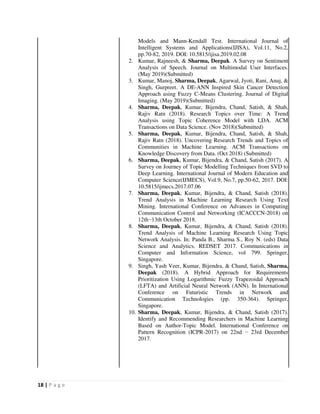
1. Sharma, Deepak, Kumar, Bijendra, & Chand, Satish (2018). A
Trend Analysis of Machine Learning Research with Topic
18 | P a g e
Models and Mann-Kendall Test. International Journal of
Intelligent Systems and Applications(IJISA), Vol.11, No.2,
pp.70-82, 2019. DOI: 10.5815/ijisa.2019.02.08
2. Kumar, Rajneesh, & Sharma, Deepak. A Survey on Sentiment
Analysis of Speech. Journal on Multimodal User Interfaces.
(May 2019)(Submitted)
3. Kumar, Manoj, Sharma, Deepak, Agarwal, Jyoti, Rani, Anuj, &
Singh, Gurpreet. A DE-ANN Inspired Skin Cancer Detection
Approach using Fuzzy C-Means Clustering. Journal of Digital
Imaging. (May 2019)(Submitted)
4. Sharma, Deepak, Kumar, Bijendra, Chand, Satish, & Shah,
Rajiv Ratn (2018). Research Topics over Time: A Trend
Analysis using Topic Coherence Model with LDA. ACM
Transactions on Data Science. (Nov 2018)(Submitted)
5. Sharma, Deepak, Kumar, Bijendra, Chand, Satish, & Shah,
Rajiv Ratn (2018). Uncovering Research Trends and Topics of
Communities in Machine Learning. ACM Transactions on
Knowledge Discovery from Data. (Oct 2018) (Submitted)
6. Sharma, Deepak, Kumar, Bijendra, & Chand, Satish (2017). A
Survey on Journey of Topic Modelling Techniques from SVD to
Deep Learning. International Journal of Modern Education and
Computer Science(IJMECS), Vol.9, No.7, pp.50-62, 2017. DOI:
10.5815/ijmecs.2017.07.06
7. Sharma, Deepak, Kumar, Bijendra, & Chand, Satish (2018).
Trend Analysis in Machine Learning Research Using Text
Mining. International Conference on Advances in Computing
Communication Control and Networking (ICACCCN-2018) on
12th−13th October 2018.
8. Sharma, Deepak, Kumar, Bijendra, & Chand, Satish (2018).
Trend Analysis of Machine Learning Research Using Topic
Network Analysis. In: Panda B., Sharma S., Roy N. (eds) Data
Science and Analytics. REDSET 2017. Communications in
Computer and Information Science, vol 799. Springer,
Singapore.
9. Singh, Yash Veer, Kumar, Bijendra, & Chand, Satish, Sharma,
Deepak (2018). A Hybrid Approach for Requirements
Prioritization Using Logarithmic Fuzzy Trapezoidal Approach
(LFTA) and Artificial Neural Network (ANN). In International
Conference on Futuristic Trends in Network and
Communication Technologies (pp. 350-364). Springer,
Singapore.
10. Sharma, Deepak, Kumar, Bijendra, & Chand, Satish (2017).
Identify and Recommending Researchers in Machine Learning
Based on Author-Topic Model. International Conference on
Pattern Recognition (ICPR-2017) on 22nd − 23rd December
2017.
19 | P a g e
Name of the Study
Design & Analysis of Image Forensic Techniques
Geographical location NSIT, University of Delhi, Delhi
Description
My research is mainly focussed on forensic analysis of digital images. Digital
images directly or indirectly affect every aspect of human life like medical,
traffic management, agriculture, journalism, etc. So credibility of digital content
should be assured. There are many operations that can be performed on the
images. Out of which some are for good purpose and some are for wrong
purpose. Generally, image enhancement operations like contrast enhancement,
histogram equalization, etc. are performed to enhance the image visual quality.
These operations are harmless. However, investigation of these operations
20 | P a g e
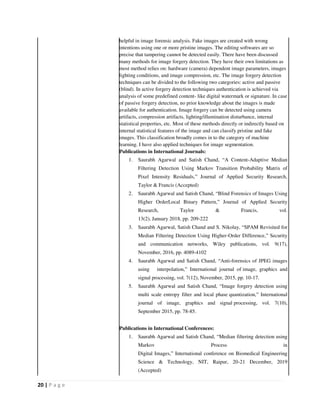
helpful in image forensic analysis. Fake images are created with wrong
intentions using one or more pristine images. The editing softwares are so
precise that tampering cannot be detected easily. There have been discussed
many methods for image forgery detection. They have their own limitations as
most method relies on: hardware (camera) dependent image parameters, images
lighting conditions, and image compression, etc. The image forgery detection
techniques can be divided to the following two categories: active and passive
(blind). In active forgery detection techniques authentication is achieved via
analysis of some predefined content- like digital watermark or signature. In case
of passive forgery detection, no prior knowledge about the images is made
available for authentication. Image forgery can be detected using camera
artifacts, compression artifacts, lighting/illumination disturbance, internal
statistical properties, etc. Most of these methods directly or indirectly based on
internal statistical features of the image and can classify pristine and fake
images. This classification broadly comes in to the category of machine
learning. I have also applied techniques for image segmentation.
Publications in International Journals:
1. Saurabh Agarwal and Satish Chand, “A Content-Adaptive Median
Filtering Detection Using Markov Transition Probability Matrix of
Pixel Intensity Residuals,” Journal of Applied Security Research,
Taylor & Francis (Accepted)
2. Saurabh Agarwal and Satish Chand, “Blind Forensics of Images Using
Higher OrderLocal Binary Pattern,” Journal of Applied Security
Research, Taylor & Francis, vol.
13(2), January 2018, pp. 209-222
3. Saurabh Agarwal, Satish Chand and S. Nikolay, “SPAM Revisited for
Median Filtering Detection Using Higher-Order Difference,” Security
and communication networks, Wiley publications, vol. 9(17),
November, 2016, pp. 4089-4102
4. Saurabh Agarwal and Satish Chand, “Anti-forensics of JPEG images
using interpolation,” International journal of image, graphics and
signal processing, vol. 7(12), November, 2015, pp. 10-17.
5. Saurabh Agarwal and Satish Chand, “Image forgery detection using
multi scale entropy filter and local phase quantization,” International
journal of image, graphics and signal processing, vol. 7(10),
September 2015, pp. 78-85.
Publications in International Conferences:
1. Saurabh Agarwal and Satish Chand, “Median filtering detection using
Markov Process in
Digital Images,” International conference on Biomedical Engineering
Science & Technology, NIT, Raipur, 20-21 December, 2019
(Accepted)
21 | P a g e
2. Saurabh Agarwal and Satish Chand, “Image Forgery Detection Using
Co-occurrence Based Texture Operator in Frequency Domain,” 4th
ICACNI, Advances in Intelligent
Systems and Computing series Springer, 22-24 September, 2016
3. Saurabh Agarwal and Satish Chand, “Image Forgery Detection Using
Markov Features in Undecimated Wavelet Transform,” Ninth
International Conference on Contemporary Computing, JP, Noida, 11-
13 August, 2016, pp. 178-183.
4. Saurabh Agarwal and Satish Chand, “Image Tampering Detection
using Local Phase
based Operator,” International Conference on Emerging Trends in
Electrical, Electronics
& Sustainable Energy Systems, KNIT, Sultanpur, 11-12 March, 2016,
pp. 355-360.
5. Saurabh Agarwal and Satish Chand, “Texture operator based image
splicing detection
hybrid technique,” International Conference on Computational
Intelligence & Communication Technology (CICT), ABES, Ghaziabad,
12-13 February, 2016, pp. 116-120.
6. Saurabh Agarwal and Satish Chand, “Image Forgery Detection using
Texture Descriptors,” International Conference on Modern
Mathematical Methods and High
Performance Computing in Science and Technology, RKGIT,
Ghaziabad, 27-29 December, 2015, pp. 44.
22 | P a g e
v. Study Area intended to be taken up.
States District Gram Panchayat Crops
Uttar Pradesh Bulendshaer, Meerut 10 Wheat, Rice
Maharashtra Nagpur 10 Cotton
Madhya Pradesh Bhopal, Indore 10 Soybean, Chickpea
vi. Crops to be taken
1. Wheat,
2. Rice
3. Cotton
4. Soybean
5. Chickpea
vii. Methodology/Technology to be used:
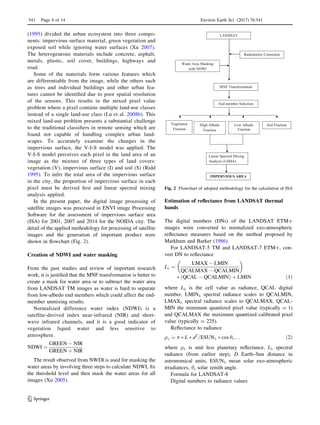
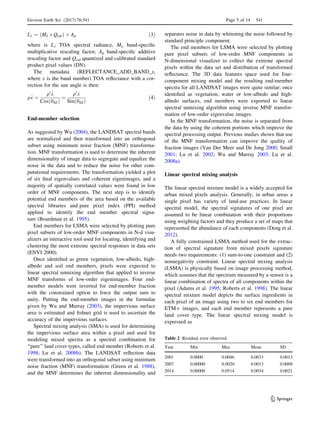
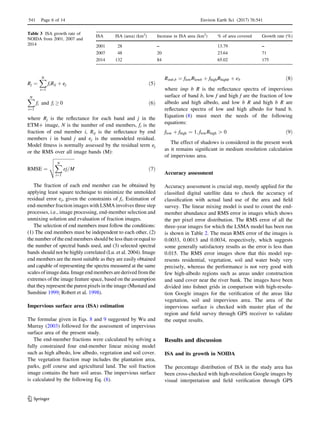
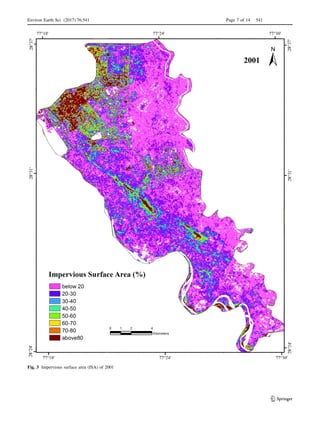
Methodology regarding Remote Sensing approach
Many models are available for crop health and acreage estimation from the satellite data by
developing various indices from processing of multi set satellite images such as leaf area index
(LAI), Normalized Difference Vegetation Index (NDVI), Enhanced Vegetation Index (ENDVI)
and many other models. The methodology applied in most of the models is based on indices
based and crop type. The overall methodology will be selection of appropriate set of multi-
temporal satellite images and image processing techniques to extract the information from the
23 | P a g e
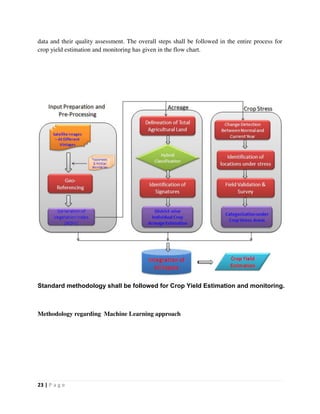
data and their quality assessment. The overall steps shall be followed in the entire process for
crop yield estimation and monitoring has given in the flow chart.
Standard methodology shall be followed for Crop Yield Estimation and monitoring.
Methodology regarding Machine Learning approach
24 | P a g e
Satellite data &
Field based
digital
photograph
Field Data
Labeled
Data
Crop growth
Characteristics
Machine Learning Algorithms
Data
Cleaning
Feature
Engineering
and Feature
Selction
Model
Selection
and
Training
Prediction
and
Evalauation
Satellite data &
Field based
digital
photograph
Field Data
Labeled
Data
Crop growth
Characteristics
Machine Learning Algorithms
Data
Cleaning
Feature
Engineering
and Feature
Selction
Model
Selection
and
Training
Prediction
and
Evalauation
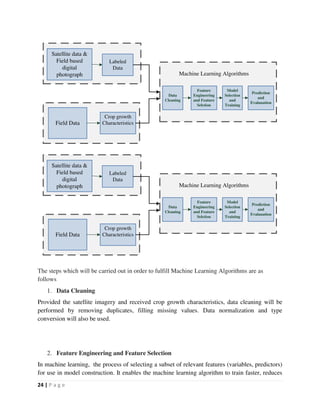
The steps which will be carried out in order to fulfill Machine Learning Algorithms are as
follows
1. Data Cleaning
Provided the satellite imagery and received crop growth characteristics, data cleaning will be
performed by removing duplicates, filling missing values. Data normalization and type
conversion will also be used.
2. Feature Engineering and Feature Selection
In machine learning, the process of selecting a subset of relevant features (variables, predictors)
for use in model construction. It enables the machine learning algorithm to train faster, reduces
25 | P a g e
the complexity and makes it easier to interpret. The appropriate features of the provided data will
be selected. The features can be among following:
 Crop type
 Timestamp
 Temperature
 Rainfall amount
 Crop production Amount
 Geographic Area
 Soil Type
3. Model selection and Training
The literature review shows that the most popular models in agriculture are Artificial and Deep
Neural Networks (ANNs and DL) and Support Vector Machines (SVMs).
ANNs are inspired by the human brain functionality and represent a simplified model of the
structure of the biological neural network emulating complex functions such as pattern
generation, cognition, learning, and decision making. Such models are typically used for
regression and classification tasks which prove their usefulness in crop management and
detection of weeds, diseases, or specific characteristics. The recent development of ANNs into
deep learning that has expanded the scope of ANN application in all domains, including
agriculture. ANN and Deep Learning can be implemented by using Tenserflow, H2o, etc.
SVMs are binary classifiers that construct a linear separating hyperplane to classify data
instances. SVMs are used for classification, regression, and clustering. In farming, they are used
to predict yield and quality of crops as well as livestock production. Scalable models will be
designed by using advanced technologies and environments.
4. Prediction and Evaluation
After getting output from the machine learning models, final prediction will be performed. Here,
the value of machine learning is realized. The valuable patterns are analyzed and final results
based on the analysis will be provided. It may include the best time of harvesting crops, yield
prediction and crop quality.
26 | P a g e
Field Survey and Validation Use
The study will comprise of three states, namely, U.P., Maharashtra and M.P. respectively. The
study will lead with selection of 5 districts from above states by random sampling method.
Further from each district, 10 Gram panchayats will be selected on the basis of crop area,
production and productivity. The crops selected for study purpose are Wheat, Rice, Cotton,
Pigeon pea and chick pea.
States District Gram Panchayat Crops
Uttar Pradesh Bulendshaer, Meerut 10 Wheat, Rice
Maharashtra Nagpur 10 Cotton
Madhya Pradesh Bhopal, Indore 10 Soybean, Chickpea
The following parameters for crop data collection are discussed below
Crop Growth Parameters Yield Parameters
Wheat a. Plant height (cm)
b. Dry matter
accumulation (g/m2
)
c. Chlorophyll content
d. Leaf area index
a. Effective tillers/m2
b. Spike length
c. Grains/spike
d. 1000 grain weight
e. Grain yield
f. Straw yield
g. Harvest index
Rice a. Plant height (cm)
b. Dry matter
accumulation
(g/m2
)
c. Chlorophyll content
d. Leaf area index
a. Effective tillers/hill
b. panicle length
c. no. of filled
gains/plant
d. no. of unfilled
grains/plant
e. 1000 grain weight
f. Grain yield
g. Straw yield
h. Harvest index
Cotton a. Plant height (cm)
b. Dry matter
accumulation
(g/m2
)
c. Chlorophyll content
d. Sympodial length
e. Sympodial
number/plant
f. Monopodial length
g. Monopodial
number/plant
a. No. of bolls/plant
b. Boll weight
c. Seed cotton
yield/plant
d. Ginning percentage
e. Seed index
f. Lint index
27 | P a g e
Soybean a. Plant height (cm)
b. Dry matter
accumulation
(g/m2
)
c. Chlorophyll content
d. Number and dry
weight of nodules
a. Number of branches
b. Pods per plant
c. No. of seeds per pod
d. 100 seed weight
e. Seed yield
f. Biological yield
g. Harvest index
Chick Pea a. Plant height (cm)
b. Drymatter
accumulation
(g/m2
)
c. Chlorophyll content
d. Number and dry
weight of nodules
h. Number of branches
i. Pods per plant
j. No. of seeds per pod
k. 100 seed weight
l. Seed yield
m. Biological yield
n. Harvest index
Other Parameters 1. Weather parameter
studies
2. Crop quality studies
such as protein content
3. Moisture content
Field Selection and Conduction of Crop Cutting Experiments (CCE)
1. Each CCE plot will be of minimum 5x5 sq m size or as defined by the Revenue Department of
the concerned state.
2. The plots for CCE will be selected based on the vegetation condition map (NDVI and NDWI)
derived from high resolution satellite data
3. The Field, where CCE will be conducted, should be at least of 1 acre area.
4. The CCE plot within the field will be representative of the whole field, not affected by site
specific external factors.
5. The selected field will be sole-cropped (no mixed cropping) with the concerned crop.
6. The CCE should be conducted in the field, which is ready for harvest.
7. The CCE plot will be at least 3 m away from the field borders.
8. The CCE data will be collected through Smartphones using the Android App. It will be
checked that the GPS accuracy is <5 m.
9. The smartphone will have Navigation App, for showing GPS reading and North Direction.
28 | P a g e
10. Each CCE information will come along with latitude - longitude and 2 photographs (of crop
cutting and grain weighing)
11. Additionally, 2 photographs i) of the field and ii) of the CCE plot (taken from 1 m above
nadir viewing) will also be provided.
12. For Cotton crop CCE will be conducted for at least 3 pickings.
13. The accuracy of Biomass weighing will be 2 decimal levels in kg and grain yield in 3
decimal levels.
14. The Biomass and Grain yield should be weighed using high precision digital balance.
Different digital balances should be used for weighing different items (Biomass, Grain Weight,
1000 Seed Weight)
15. Apart from the information coming through smart phones, the hardcopy form to be filled up
and signed by the Observer, farmer and a third party not related to above two, along with their
name and phone numbers will also be provided to the Centre.
16.The moisture percentage of Biomass will be obtained, at least in 5% cases, through drying
method. The Grain moisture percentage will be obtained using portable grain moisture meter
29 | P a g e
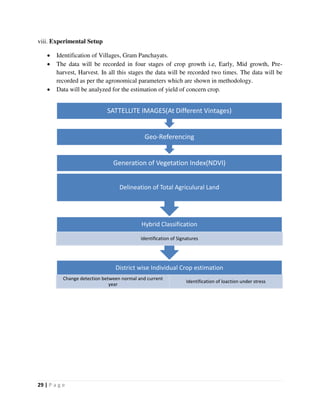
viii. Experimental Setup
 Identification of Villages, Gram Panchayats.
 The data will be recorded in four stages of crop growth i.e, Early, Mid growth, Pre-
harvest, Harvest. In all this stages the data will be recorded two times. The data will be
recorded as per the agronomical parameters which are shown in methodology.
 Data will be analyzed for the estimation of yield of concern crop.
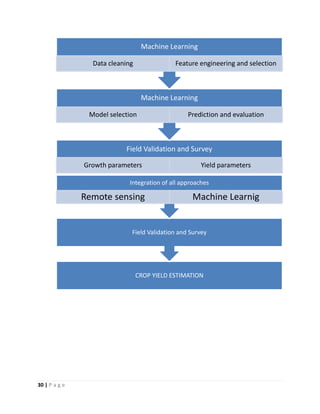
Generation of Vegetation Index(NDVI)
Geo-Referencing
SATTELLITE IMAGES(At Different Vintages)
District wise Individual Crop estimation
Change detection between normal and current
year
Identification of loaction under stress
Hybrid Classification
Identification of Signatures
Delineation of Total Agriculural Land
30 | P a g e
Field Validation and Survey
Growth parameters Yield parameters
Machine Learning
Model selection Prediction and evaluation
Machine Learning
Data cleaning Feature engineering and selection
CROP YIELD ESTIMATION
Field Validation and Survey
Integration of all approaches
Remote sensing Machine Learnig
31 | P a g e
ix. Time line: 24 months
x. Expected Results:
 The data obtained from the project will be helpful to estimate the yield of the crops
 It help the farmers to overcome the risk and uncertainties
 Benefit cost Analysis
 Help farmers time, cost and energy
 Government can frame policies regarding crop insurance
 Collaboration of I.T. ,Remote Sensing and Agriculture to overcome the risk and
uncertainties
 Low income and marginal farmers can benefit with technology applied attributes.
xi. Tentative Cost/Budget
Tentative Budget
Manpower
(2 Research Associates, 6 J.R.F, 4 Field
Staff)
Rs.37,20,000/- (Thirty Seven Lakh Twenty Thousand)
Multi-temporal Satellite Data information
Rs. 7,00,000/- (Seven lakh)
Hard ware/ Software
(Graphical Processing Unit (GPU) enabled
Server with 512GB RAM, Client machine
with Intel i7 processor, 64GB RAM, 1 TB
SSD, External Hard Disk 10 TB
Rs. 10,00,000/- (Ten lakh)
Field verification and Data Collection Rs. 8,00,000/- (Eight Lakh)
Consumables Rs.6,00,000/- (Six Lakh)
Total Rs. 68,20,000/- (Sixty Eight Lakh Twenty Thousand)
32 | P a g e
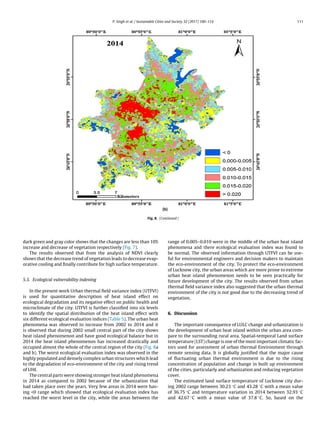
xii. Lists of Patents/publications in the similar works:
 Prafull Singh (2019) Application of Thermal Imaging and Hyperspectral Remote
Sensing for Crop Water Deficit Stress Monitoring.Geocarto International. DOI:
10.1080/10106049.2019.1618922 (Impact Factor 1.759).
 Prafull Singh (2019) Comparison of Various Modelling Approaches for Water Deficit
Stress Monitoring in Rice Crop through Hyperspectral Remote Sensing. Agriculture
Water Management. 213, 231–244. (Impact Factor 3.182).
 Prafull Singh (2019) Probabilistic Landslide Hazard Assessment using Statistical
Information Value (SIV) and GIS Techniques: a case study of Himachal Pradesh, India.
1-12, American Geophysical Union. John Wiley & Sons,
 Prafull Singh (2019) A Comparative Study of Spatial Interpolation Technique (IDW and
Kriging) for Determining the Ground Water Quality.GIS and Geostatistical Techniques
for Groundwater Science, 1-15, doi.org/10.1016/B978-0-12-815413-7.00005-5 .Elsevier
(USA).
 Prafull Singh (2018) Monitoring spatial LULC changes and its growth prediction based
on Statistical Models and Earth Observation Datasets of Gautam Buddha Nagar, Uttar
Pradesh, India. Environment, Development and Sustainability. 1-19 (Impact Factor
1.379).
 Prafull Singh (2018) Morphotectonic Analysis of Sheer Khadd River Basin Using Geo-
spatial Tools. Spatial Information Research. 26, 4 , 405–414.
 Prafull Singh (2018) Modeling LULC Change Dynamics and its Impact on Environment
and Water Security: Geospatial Technology Based Assessment. Journal of Ecology,
Environment and conservation .24, 300-306.
 Prafull Singh (2018) Hydrological inferences through morphometric analysis of lower
Kosi river basin of India for water resource management based on remote sensing data .
Applied Water Science, DOI: 10.1007/s13201-018-0660-7.
33 | P a g e
 Prafull Singh (2017) Geoinformatics for assessing the inferences of quantitative
drainage morphometry of the Narmada Basin in India. Applied Geomatics. 9. 167–189.
 Prafull Singh (2017) Assessment of impervious surface growth in urban environment
through remote sensing estimates. Environmental Earth Science, 76:541-554. (Impact
Factor 1.435).
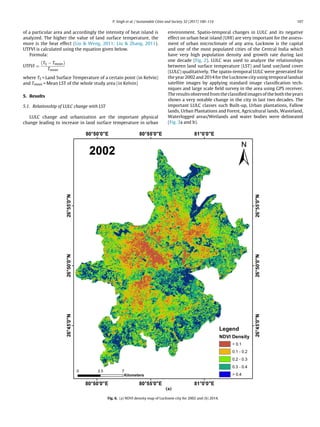
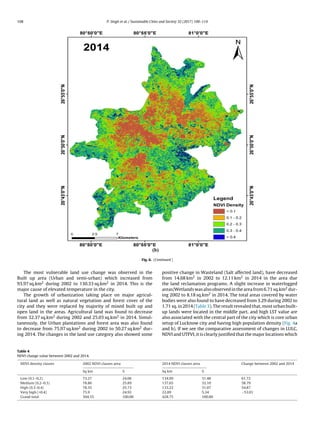
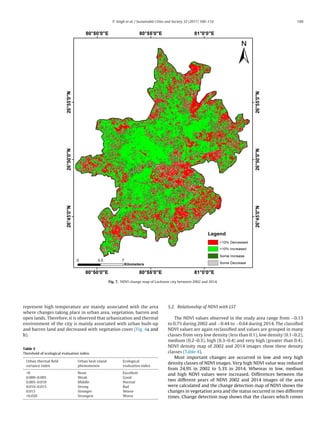
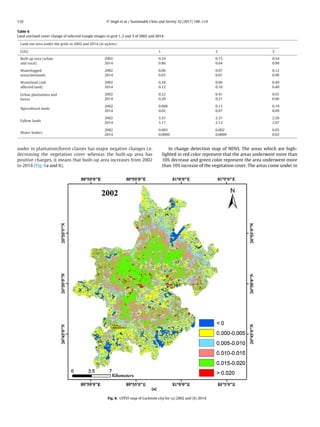
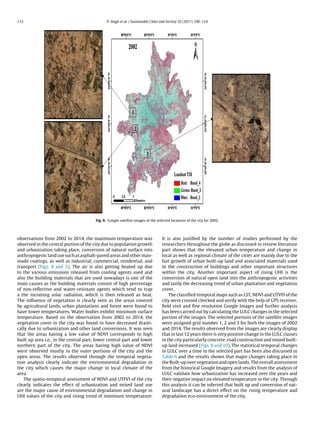
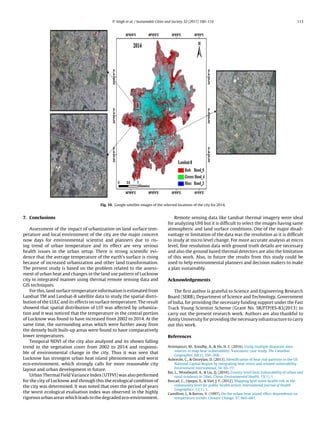
 Prafull Singh (2017) Impact of Land use Change and Urbanization on Urban Heat
Islands in Lucknow City, Central India. A Remote Sensing Based Estimate. Sustainable
Cities and Society. 32: 100-114. (Impact Factor 3.072).
 Pafull Singh (2016) Hydrogeological Component Assessment for Water Resources
Management of Semi-Arid Region: A Case Study of Gwalior, M.P., India. Aabian
Journal of Geoscience. DOI: 10.1007/s12517-016-2736-8.(Impact Factor 0.860).
 Prafull Singh (2016) Appraisal of Urban Lake Water Quality through Numerical Index,
Multivariate Statistics and Earth Observation Datasets. International Journal of
Environmental Science and Technology. 445-456. (Impact Factor 2.037).
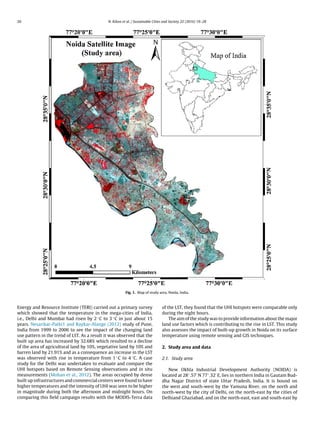
 Prafull Singh (2016) Assessment of Urban Heat Islands (UHI) of Noida City, India
using multi-temporal satellite data. Sustainable Cities and Society, 19–28. (Impact Factor
3.072).
 Prafull Singh (2016) Appraisal of surface and groundwater of the Suburnarekha River
Basin, Jharkhand, India: Using remote sensing, Irrigation Indices and statistical
techniques. Geospatial technology for Water Resource Application. CRC Press, Taylor
Francis. ISBN: 978-1-4987-1968-1.
 Prafull Singh (2015) Morphometric evaluation of Swarnrekha watershed, Madhya
Pradesh, India: an integrated GIS-based approach. Applied Water Science. DOI:
10.1007/s13201-015-0354-3.
 Prafull Singh (2014) Hydrological Inferences from Watershed Analysis for Water
Resource Management using Remote Sensing and GIS Techniques. The Egyptian Journal
of Remote Sensing and Space Sciences. 17, 111–121.
34 | P a g e
 Prafull Singh (2015) Water Reuse Product in Urban Area. Urban Water Reuse Handbook.
CRC Press, Taylor Francis. ISBN: 9781482229141.
 Prafull Singh (2013) Assessment of Groundwater Prospect zones of a hard rock terrain
using Geospatial tool. Hydrological Science Journal (58: 213-223). (Impact Factor
2.546).
 Prafull Singh (2013) Morphometric analysis of Morar River Basin, Madhya Pradesh,
India, using remote sensing and GIS techniques. Environmental Earth Science (68:1967–
1977). (Impact Factor 1.435).
 Prafull Singh (2013) Geochemical modelling of fluoride concentration of hard rock
terrain of Madhya Pradesh, India. Acta Geologica Sinica. (87: 1421-1433). (Impact
Factor 2.506).
 Prafull Singh (2012) Groundwater resource evaluation in the Gwalior area, India, using
satellite data: an integrated geomorphologic and geophysical approach. Hydrogeology
Journal(19: 1421–1429). (Impact Factor2.071).
 Naleeni Ramawat, H.L. Sharma, and Rakesh Kumar 2012. Simulation and validation of
CERES-Maize model in North Western Himalayas. Applied Ecology and Environment
Research. 10(3):301-318.
 Ramawat Naleeni, Sharma Hira Lal and Kumar Rakesh 2009 Simulating sowing date
effect on barley varieties using CERES-Barley model in North Western Himalayas.
Indian Journal of Plant Physiology14 (2):147-155.
 K. Ramesh, Naleeni Ramawat and Virendra Singh. 2007. Leaf Area Distribution Pattern
and Non-Destructive Estimation Methods of Leaf Area for Stevia rebaudiana (Bert.)
Bertoni .Asian Journal of Plant Sciences 6 (7): 1037-1043.
 Ramawat Naleeni, Sharma Hira Lal and Kumar Rakesh 2009 Simulating sowing date
effect on barley varieties using CERES-Barley model in North Western Himalayas.
Indian Journal of Plant Physiology14 (2):147-155.
 Monika Choudhary and Renu Yadav (2013). Antagonistic potential of bacillus species
against plant pathogenic fungi. Progressive. Agriculture. 13(1): 49–54.
 Monika Choudhary, D.C. Sharma and Renu Yadav (2013). Antagonistic activities of
bacillus spp. strains isolated from the different soil samples. Progressive. Agriculture.
13(2): 223-227.
 Soi, Sangita; Chauhan, U.S.; Yadav, Renu; Kumar, J.; Yadav, S.S.; Yadav, Hemant and
Kumar, Rajendra(2014). STMS based diversity analysis in chickpea(Cicer arietinum L.),
35 | P a g e
New Agriculturist, New Agriculturist, 25(2) : 243–250. NAAS ISSN-0971-0647, NAAS
I.F.-4.17.
 Yadav, Yashwant K; Singh, Rajesh K.; Yadav, Manju; Kumar, Pushpendra Yadav,
M.K.; Kumar , Sujit ; Yadav, Renu; Upadhyaya, H.D. ; Yadav, Hemant and, Kumar,
Rajendra .(2014).Molecular characterization of a subset of minicore germplasm of
pigeonpea (Cajanus cajan ). BIOG-An International Journal, 1(1):39-46.
 Renu Yadav and Archana yadav (2015) Organic Farming management for Vegetable
Production in rural areas. Indian Journal of applied Research, 5(2): 40-42. (Impact factor:
2.1652).
 Renu Yadav and Archana yadav (2015) Low Cost Agricultural Practices to reduce heavy
metals..4(4) 70-71Global journal of research Analysis 2277-8160 Impact
factor3.1218
 Archana Yadav and Renu Yadav(2015). Role of Stress Tolerant Microbes in Sustainable
Agriculture. Indian journal of Research, 4(1):30-31. (Impact factor : 1.6714)
 Yadav Renu, Nainwal Navin Chandra (2015) Micropropagation of walnut (Juglans regia
L) trees Annals of Horticulture Year : Volume : 8, Issue : 1: ( 16) Last page : ( 21) Print
ISSN : 0974-8784. Online ISSN : 0976-4623.
 Yadav A.,Kumar A., Yadav Renu &Kumar R (2016) In-Vitro regeneration through
organogenesis in pigeonpea (Cajanus cajan(L.) Journal of Cell and Tissue Research
Vol. 16(1) ISSN: 0973-0028; E-ISSN: 0974-0910
 Naleeni Ramawat & Renu Yadav (2015) Organic Management practices to enhance
nitrogen use efficiency in rice. Global journal of Research Analysis.volume 4 Issue 8
ISSN NO 2277-8160 (2015)
 Sangeeta Mehrotra, Narendra K. Jawali, U.K.Chauhan and Renu Yadav
(2016)Transferability of Sequence tagged Microsattelite site (STMS)markers from Vigna
unguiculata (L). Progressive Agriculture 16 (1) pp36-40.
 Katoch Omika, Chauhan U.S., Yadav Renu & Kumar Rajendra (2016) Nitrate
Reductase based phylogenetic analysis in chickpea Research Journal of Chemistry and
Environment Vol. 20 (7) ISSN2249-555X
36 | P a g e
 Sashi prabha, Renu Yadav & Archana Yadav (2016) Isolation & Optimization of culture
conditions for polyBeta Hydroxybutrate (biopolymer)producing bacteria pp1926-
1929Journal of Global BiosciencesISSN 2320-1355 PEER Reviewed1.115.
 Renu Yadav, Syam Prasad, Sumeet Kumar Singh, Vishnu Vijay, Twinkle Sabu, Sonam
Lama, Pawan Kumar, Jadhav Sandesh, Anjali Thakur and Naleeni Ramawat. (2016). Bio-
management of sugarcane aphid Melanaphis Sacchari (z.) In sorghum. Plant Archives
Vol. 16 No. 2, 2016 pp. 559-562.Scopus Indexed journal
 Monica Chaudhary, Anjali. Malik, Archana Yadav, Naleeni Ramawat and Renu Yadav
(2016).evaluation of microbial antibiotic and commercial antibiotics. Journal of Global
Biosciences.volume5,No.5, pp 4145-4148.ISSN 2320-1355
 J.P. Misra, Gyan Manjary Rao, Ashwani Kumar, Ashwani Yadav,Sujit Kumar, Renu
Yadav, R. Kumar and Seweta Srivastava1Molecular Assisted Breeding for Ascochyta
Blight Resistance in Chickpea (Cicer arietinum L.) - A Review JOURNAL OF PURE
AND APPLIED MICROBIOLOGY, June 2016. Vol. 10(2), p. 1469-1475.
 Yadav Ashwani , Sharma Anubhuti , Kumar Ashwani , Yadav Renu , Misra J.P., Kumar
P., Singh D. and Kumar R. Expression Analysis of DREB2A Transcriptional Factor
under drought stresses in rice (Oryza sativa L.) Research Journal of BiotechnologyVol.
11 (8) August (2016).
 Misra J.P, Yadav Ashwani , Kumar Ashwani1,, Yadav Renu, Vaishali1 and Kumar R.
Bio-chemical characterization of chickpea genotypes with special reference to protein.
Research Journal of Chemistry and EnvironmentVol. 20 (8) August (2016).
 Naleeni Ramawat and Renu Yadav (2017) Influence of Bio-Fertilizers on growth
attributes of Gaur (Cymopsis Tetraagonoloba) Plant Archives Vol. 17 No. 2, 2017 pp.
869-870ISSN 0972-521
 Beila Sehdev Krishnan, Shivam, Naleeni Ramawat and Renu Yadav Investing in the
health of Soil: Paramount to Future of Organic Farming Plant Archives Vol. 17 No. 1,
2017 pp. 69-74 ISSN 0972-5210
 Rana R Badiyala D and Gunjan G. 2018. Effect of variable nitrogen sources on seed
yield, seed quality and nutrient uptake of okra (Abelmoschus esculentus (L.) Moench).
37 | P a g e
Indian Journal of Agricultural sciences 88 (6): 910–915, June {NAAS-6.22}/I028/0019-
5022
 Rana R and Badiyala D. 2014. Effect of integrated nutrient management on seed yield,
quality and nutrient uptake of soybean (Glycine max) under mid hill conditions of
Himachal Pradesh. Indian Journal of Agronomy 59(4): 641-645 {NAAS-
5.46}/I030/0537-197X
 Rana R and Badiyala D. 2014. Influence of organic manures, fertility levels and method
of storage on storability of soybean (Glycine max (L.) Merr.). Journal of Environment
and Bio-sciences 28(2): 145-150{NAAS- 4.43}J175/0973-6913
 Rana R and Badiyala D. 2014. Physiological parameters, nodulation and yield in
soybean as influenced by organic manures and fertility levels. Himachal Journal of
Agricultural Research 40(2): 110-117 /H011/0970-0595
 Gautam P, Sharma GD, Rana R and Lal B. 2013. Effect of integrated nutrient
management and spacing on growth parameters, nutrient content and productivity of rice
under system of rice intensification. International Journal of Research in Bio-sciences
2(3): 53-59
 Gautam P, Sharma GD, Rana R and Joshi E. 2013. Evaluation of integrated nutrient
management and plant density on productivity and profitability of rice (Oryza sativa)
under system of rice intensification in mid-hills of Himachal Pradesh. Indian Journal of
Agronomy 58 (3): 421-423
 Manoj R. Mane, Nilesh P. Tayade And Mahesh M. Kadam, Impact of adoption startup
scenario of recommended potato production technology by the potato growers in Gujarat,
Agriculture Update, Volume : 1, Issue : 12 , Feburary : 2017, Pg. no. 344-350.
 MANOJ R. MANE, NILESH P. TAYADE AND MAHESH M. KADAM, Extent of
adoption of potato production technology by the potato growers in Sabarkantha district of
Gujarat, Agriculture Update, Volume : 1, Issue : 12 , Feburary : 2017, Pg. no. 101-109.
 Kadam M.M., Sharad Sachan and R.G.Deshmukh (2016): Economic Analysis of Public
and Private Warehouses in Maharashtra- A Stochastic frontier Approach, Indian Journal
of Applied Research, Volume : 6 , Issue : 12 , December : 2016, Pg. no. 731-733.
 Kadam M.M., Sharad Sachan and R.G.Deshmukh (2016): Comparative Analysis of
Public and Private Food grain Warehousing in Vidarbha region of Maharashtra, Indian
Journal of Applied Research Volume : 6 , Issue : 12 , December : 2016, Pg. no. 727-
730.
 J. A. Lamtule, R. G. Deshmukh, V. K. Khobarkar And M. M. Kadam, Growth in Export
and Import of Cotton Under WTO Regime in India, Advances in Life Sciences 5(11),
2016. Pg. No. 4651-4657.
38 | P a g e
 J. A. Lamtule, R. G. Deshmukh, V. K. Khobarkar And M. M. Kadam, Growth and
Instability in Cotton Production Under WTO Regime, Advances in Life Sciences 5(11),
2016. Pg. No. 4338-4394.
 Gebbers and Adamchuk, 2010, Precision agriculture and food security, National Center
for Biotechnology Information, Science. 2010 Feb 12;327(5967):828-31. doi:
10.1126/science.1183899.
 David J. Mulla, 2012-13, Twenty five years of remote sensing in precision agriculture:
Key advances and remaining knowledge gaps, Elsevier Ltd. All rights reserved.
http://dx.doi.org/10.1016/j.biosystemseng.2012.08.009
 Vandana Bhatia 2019, A distributed overlapping community detection model for large
graphs using autoencoder, Elsevier-Future Generation Computer Systems( IF4.639), vol.
94, pp-16-26.
 Vandana Bhatia 2018, PFCA: An influence based parallel fuzzy clustering algorithm for
large complex networks, Wiley- Expert Systems, vol. 35, no. 6.
 Vandana Bhatia , 2018 Ap-FSM: A parallel algorithm for approximate frequent
subgraph mining using Pregel, Elsevier-Expert Systems with Applications (IF-3.768),
106, 217-232.
 Vandana Bhatia, 2018 DFuzzy: A Deep Learning Based Fuzzy Clustering Model for
Large Graphs, Springer-Knowledge and Information System, vol. 57, no. 1, pp159-181.
 Vandana Bhatia , 2017 A Parallel Fuzzy Clustering Algorithm for Large Graphs using
Pregel, Elsevier-Expert Systems with Applications (IF-3.768), 78, 135-144.
 Vandana Bhatia , 2017 An Efficient Influence based Label Propagation Algorithm for
Clustering large Graphs, presented in International Conference on Infocom Technologies
and Unmanned Systems (ICTUS'2017) held in Dubai during Dec 18-20.
 Vandana Bhatia , 2017 An Efficient Algorithm for Sampling of a Single Large Graph,
presented in IEEE Tenth International Conference on Contemporary Computing held at
JIIT, Noida on 10-12 August 2017.
39 | P a g e
 Vandana Bhatia ,2015 An Efficient Storage framework design for Cloud Computing:
Deploying Compression on De-duplicated No-SQL DB using Hadoop Distributed File
System, In IEEE 1st International Conference on Next Generation Computing
Technologies (NGCT), pp 1-6.
 Vandana Bhatia ,2014 SETiNS: Storage Efficiency Techniques in No-SQL database for
cloud based design, In IEEE International Conference on Advances in Engineering and
Technology Research (ICAETR), held on 1st and 2nd August 2014 at Dr. Virendra
Swarup Group of Institutions, Unnao, Uttar Pradesh, India.
 Vandana Bhatia ,2014 A review on Cloud Computing and Data Management in Cloud,
In 2nd International Conference on Futuristic Trends in Engineering and Management
held on 3rd and 4th May 2014, Ambala, Haryana, India. 2013 A Study on Swarm
Artificial Intelligence, International Journal of Advanced Research in Computer Science
and Software Engineering, Volume 3, Issue 8, August 2013.
 Mehta, Akriti, &Sharma, Deepak(2014). Towards SolvingtheGoogleCAPTCHA..
International Journal of Computer Applications, 89.20 , 32–35.
 Sharma, Deepak, & Devale, R. Prakash (2012). Approach for Transforming
Monolingual Text Corpus into XML Corpus. International Journal of Applied
Information Systems, 1.9, 1–5.
 Sharma, Deepak, Kumar, Bijendra, & Chand, Satish (2017). A Survey on Journey of
Topic Modelling Techniques from SVD to Deep Learning. International Journal of
Modern Education and Computer Science(IJMECS), Vol.9, No.7, pp.50-62, 2017. DOI:
10.5815/ijmecs.2017.07.06.
 Sharma, Deepak, Kumar, Bijendra, & Chand, Satish (2018). A Trend Analysis of
Machine Learning Research with Topic Models and Mann-Kendall Test. International
Journal of Intelligent Systems and Applications(IJISA), Vol.11, No.2, pp.70-82, 2019.
DOI: 10.5815/ijisa.2019.02.08.
 Saurabh Agarwal, Satish Chand and S. Nikolay, “SPAM Revisited for Median Filtering
Detection Using Higher-Order Difference,” Security and communication networks,
Wiley publications, vol. 9(17), November, 2016, pp. 4089-4102.
40 | P a g e
 Saurabh Agarwal and Satish Chand, “Anti-forensics of JPEG images using
interpolation,” International journal of image, graphics and signal processing, vol. 7(12),
November, 2015, pp. 10-17.
 Saurabh Agarwal and Satish Chand, “Image forgery detection using multi scale entropy
filter and local phase quantization,” International journal of image, graphics and signal
processing, vol. 7(10), September 2015, pp. 78-85.
 Mani, Neel, Helfert, Markus and Pahl, Claus (2016), Business Process Model
Customisation using Domain-driven Controlled Variability Management and Rule
Generation, International Journal on Advances in Software, vol. 9, pp. 179 - 190, 2016.
 Mani, Neel, Helfert, Markus, Pahl, Claus, Nimmagadda, Shastri L and Vasant, Pandian
(2017), Domain Models Definition for Rule Generation Using Controlled Variability
Management, Computational Intelligence, Innovative Computing, Optimization and Its
Applications.
 Mani, Neel, Helfert, Markus and Pahl, Claus (2017), A Framework for Generating
Domain-specific Rule for Process Model Customisation, In, International Conference on
Computer-Human Interaction Research and Applications (CHIRA), 31 Oct, 1-2 Nov
2017, Funchal, Maderia- Portugal.
 Mani, Neel, Helfert, Markus and Pahl, Claus (2017), Domain-specific Generation Using
Variability for Business Process Model Constraint, In, 21st International Conference on
Knowledge-Based and Intelligent Information & Engineering Systems, 06-08 Sep 2017,
Marseille, France.
 Sanjay Kumar, Mani, Neel and Singh, Bharat (2016) A framework for extracting reliable
information from unstructured uncertain big data In: 8th International KES Conference
on INTELLIGENT DECISION TECHNOLOGIES IDT 2016,15-17 June 2016 in Teneri
ORIGINAL PAPER
Appraisal of urban lake water quality through numerical index,
multivariate statistics and earth observation data sets
S. K. Singh1 • Prafull Singh2 • S. K. Gautam3
Received: 6 January 2015 / Revised: 23 May 2015 / Accepted: 5 July 2015 / Published online: 7 August 2015
Ó Islamic Azad University (IAU) 2015
Abstract The earth observation data sets were employed
to study the land use/land cover change in study area from
year 2000–2010. Vegetation, built-up area and agriculture
classes had shown maximum changes. The lake water
samples were analyzed, and further, Water Quality Index
(WQI) was computed to categorize the lake water. The
average value of WQI is 64.52, 52.23 and 42.45 in pre-
monsoon, monsoon and post-monsoon seasons, respec-
tively. Generally, pre-monsoon samples have higher num-
ber of polluted samples. Moreover, we applied the
multivariate statistical techniques for handling large and
complex data sets in order to get better information about
the lake water quality. Factor analysis and principal com-
ponent analysis are applied to understand the latent struc-
ture of the data sets, and we have identified a total of four
factors in pre-monsoon, three factors in monsoon and three
factors in post-monsoon season, which are responsible for
the whole data structure. These factors have explained that
90.908, 89.078 and 85.456 % of the cumulative percentage
variance of the pre-monsoon, monsoon and post-monsoon
data sets. Overall analysis reveals that the agricultural
runoff, waste disposal, leaching and irrigation with
wastewater, land transformation in the surrounding areas
are the main causes of lake water pollution followed by
some degree of pollution from geogenic sources such as
rock weathering. Hence, there is an urgent need of proper
attention and management of resources.
Keywords Lake Á Land use/land cover change Á
Pollution Á Earth observation data sets
Introduction
There are very limited studies on lake in India. In recent
decades, the developing countries are witnessed of water
pollution after industrialization, and unprecedented popu-
lation growth (Singh et al. 2013a, b, c, d; Ois¸te 2014;
Thakur et al. 2015; Gautam et al. 2015). The increasing
population around the urban lake has continuously
encroached lake area due to demand of land and water
(Singh et al. 2010) and acts as waste dumping sites which
have many adverse effects on humans (Rast ; Mishra and
Garg 2011). The direct discharge of sewage from the
households into the urban lake and the surface runoff
brings sediment, nutrients and chemicals from catchment
area into lake, and hence, they get polluted. These exces-
sive nutrients mainly nitrate and phosphates promote
excessive growth of aquatic plants in the lake and make
them anaerobic (Gautam et al. 2013) and destroy the
aquatic flora and fauna. Such undesirable change in water
chemistry (Akoto and Adiyiah 2007) brings deterioration
of lake water quality.
With rapid urban development since 1956, when Bhopal
became the state capital of Madhya Pradesh, the lake has
simultaneously been affected by increased inflows of silt,
untreated sewage, nutrients and pesticides from urban and
rural areas, and growing domestic water demand and
treatment costs for the municipal water supply. Therefore,
& Prafull Singh
singhgeoscience@rediffmail.com
1
K. Banerjee Centre of Atmospheric and Ocean Studies, IIDS,
Nehru Science Centre, University of Allahabad, Allahabad
211002, India
2
Amity Institute of Geo-Informatics and Remote Sensing,
Amity University, Sector 125, Noida 201303, India
3
School of Environmental Sciences, Jawaharlal Nehru
University, New Delhi 110067, India
123
Int. J. Environ. Sci. Technol. (2016) 13:445–456
DOI 10.1007/s13762-015-0850-x
the regular monitoring and assessment are a prerequisite to
understand the water quality. Many governments are now
seeing other approaches in response to increasing aware-
ness of degrading lake water resources and growing con-
cern over the significant fiscal burden of agricultural
subsidies.
Earth observation data sets, e.g., satellite images, are
quite useful, which could be used for synoptic representa-
tion of any area (Srivastava et al. 2010). Land use/land
cover change (LULCC) quantification is one of the major
application of earth observation data sets, and it is impor-
tant for assessing global environmental change processes
and helps in making new policies and optimizing the
maximum use of natural resources in sustainable manners
(Srivastava et al. 2012). The land use/land cover
(LULC) types, such as agricultural land and urban area, are
associated with human activities that often affect the water
quality and change the aquatic ecological environment;
hence, monitoring spatial–temporal changes is essential to
understand the driving factors which influence the water
quality of any area. Amin et al. (2014) and Mishra and
Garg (2011) has did research on lake of India by implying
the satellite data.
According to Singh et al. (2015), the concept of water
quality to categorize water according to its degree of purity
or pollution dated back to year 1848. Around the same
time, the importance of water quality to public health was
recognized in the UK (Snow 1856). Water Quality Index
(WQI) methodologies have been developed to provide
single number that expresses the overall water quality at a
certain location and time, based on several water quality
parameters (Parmar and Bhardwaj 2013; Vasanthavigar
et al. 2010; Avvannavar and Shrihari 2008; Singh et al.
2015) and can be used to provide the overall summaries of
water quality on a scientific basis. Parmer and Bhardwaj
(2013) have applied WQI and fractal dimension approach
to study the water of Harike lake on the confluence of Beas
and Sutlej rivers of Punjab (India). Many researchers have
discussed the importance and applicability of WQI for
water characterization (Couillard and Lefebvre 1985;
House and Newsome 1989; Bordalo et al. 2001; Smith
1989; Swamee Tyagi 2000; Sanchez et al. 2007).
In combination with remote sensing water quality, the
use of multivariate statistical techniques offers a detailed
understanding of water quality parameters and possible
factors that influence the water quality behavior (Srivastava
et al. 2012). Principal component analysis (PCA) and factor
analysis (FA) offer a valuable tool for consistent, reliable,
effective management of water resources (Srivastava et al.
2012; Singh et al. 2009, 2013d, 2015). Many authors in past
have used multivariate statistical techniques to characterize
and evaluate surface and groundwater quality and have
found it interesting for studying the variations caused by
geogenic and anthropogenic factors (Shrestha and Kazama
2007; Singh et al. 2005). For understanding the lake water
quality, multivariate statistical techniques integrated with
remote sensing, and WQI (Srivastava et al. 2012) could be
used for identification of the possible factor/sources that
influences urban lake water quality.
As the study area occupied by hard basaltic terrain and
groundwater resource are limited. Hence, largely the water
supply in urban areas setteled at hard rock terrain depends
on lake water too for drinking and small scale industrial
purposes. The water supply of bhopal urban area mainly
depends on the Bhopal lake for drinking, irrigation and
small scale industries.
The specific objective of this research was focused on to
quantify the historical changes in LULC using satellite data
sets and its probable impact on the lake water quality with
integration of statistical techniques to know the pollution
status of Bhopal lake and to categorize lake water by WQI
method. The findings of the study will be useful for the
restoration of Bhopal lake.
Materials and methods
Description of study area
District Bhopal [latitudes 20°100
–23°200
N and longitudes
77°150
–77°250
E (Fig. 1)] is the capital city of the state of
Madhya Pradesh, India. Upper lake commonly known as
Bhoj wetland is the main lake of the city and provides
water to the dwellers. The lake surrounded by natural
landscape, settlements and agricultural fields. The average
annual rainfall is 1270 mm. The southern part of the city
receives more rainfall than northern part of the city. The
maximum rainfall takes place during the month of July.
The area is drained by small drains which are lastly
contributing water to the river Betwa in the downstream.
Bhopal has been growing at a fast rate due to urban
development and industrialization, in search of better
facilities and for educational purposes. The major part of
the city is covered by Vindhyan hills and by basaltic
Deccan trap. The Deccan trap covers almost one-third of
the area followed by Vindhyan sandstone (Singh and Singh
2012). In Deccan trap basalts, aquifer is encountered at
shallow depth and in Vindhyan sandstone depth ranges
more than 150 meter below ground level (mbgl). The water
supply to Bhopal city mainly comes from surface water
bodies and small amount by groundwater. Nowadays, a
number of boreholes/tube wells are drilled in the area
without consideration of hydrological status of the aquifer
formation to meet the water requirement, and this unaware
drilling has also led to the declining trend of water level
and also failure of well in successive years. Upper lake is a
446 Int. J. Environ. Sci. Technol. (2016) 13:445–456
123
major source of drinking water for the urban residents,
serving around 40 % of the residents with nearly
140,000 m3
of water per day. Bada talaab, along with the
nearby Chhota talaab, constitutes Bhoj wetland, which is
now a Ramsar site. The two lakes support flora and fauna.
White stork, blacknecked stork, barheaded goose,
spoonbill, etc., which have been rare sightings in the past,
have started appearing. A recent phenomenon is the gath-
ering of 100–120 sarus cranes in the lake. The largest bird
of India, sarus crane (Grusantigone), is known for its size,
majestic flight and lifetime pairing. Flora 106 species of
Macrophytes (belonging to 87 genera of 46 families),
Fig. 1 Location map of Bhopal
Lake, MP, India
Int. J. Environ. Sci. Technol. (2016) 13:445–456 447
123
which includes 14 rare species and 208 species of Phyto-
plankton comprising 106 species of Chlorophyceae, 37
species of Cyano phyceae, 34 species of Euglenophyceae,
27 species of Bacilariophyceae and 4 species of Dino-
phyceae. Fauna 105 species of zooplanktons, which
includes (rotifera 41, Protozoa 10, Cladocera 14, Copepoda
5, Ostracoda 9, Coleoptera 11, and Diptera 25). Fish fauna
consist of 43 species (natural and cultured species), and 27
species of avifauna, 98 species of insects and more than 10
species of reptiles and amphibians (including 5 species of
tortoise) have been recorded.
Geology and geomorphology of the study area
The Deccan trap sequence consists of multiple layers of
solidified lava flows. It is more than 2000 m thick on its
western margin and decreases in thickness eastward and
occupies *5, 00,000 km2
area spread over parts of Mad-
hya Pradesh, Maharashtra, Gujarat, Andhra Pradesh and
Karnataka (Singh et al. 2011, 2013a, b, c). The basaltic
lava flows vary in color from dark gray to purple and pink.
Each lava flow consists of an upper vesicular unit and a
lower massive unit which may or may not be fractured/
jointed. Two lava flows at some places are separated by
intertrappean sedimentary beds. Therefore, unlike other
hard rocks, the Deccan trap behaves as a multiaquifer
system, somewhat similar to a sedimentary rock sequence.
Bhopal is occupied by the rocks of Vindhyan and Deccan
trap basalt and alluvial formations. Hydrogeologically, area
is divided into three major type’s alluvium, Deccan trap
and Vindhyan sandstones with small patches of shale
which makes the major aquifers of the city.
In the study area, Deccan trap is sporadically distributed
mainly in the form of linear patches. On the satellite image,
this rock type is seen with distinct gray color with rough
texture. The derivatives of Deccan trap rock are the black
soils, which are seen on the satellite image as dark gray tone
with smooth texture. The major geomorphic landforms
within the catchment of Bhopal lake are pediplain, shallow
weathered/shallow buried pediplain and pediplain weath-
ered/buried with varying thickness. On the basis of thick-
ness and composition of weathered material, the pediplain
has been classified into shallow weathered pediplain and
moderate weathered pediplain (Singh et al. 2013a, b, c).
Most of the area covers under shallow pediplain; hence, this
landform classified as good zone of groundwater and agri-
cultural activity within the lake catchment.
Data and Methodology
The study is mainly based on laboratory based data, sup-
plemented by primary information especially of social and
economic characteristics.
Land use/land cover
The earth observation data sets used for the preparation
of LULC maps of year 2000 and 2010 using Landsat
satellite images. The multispectral satellite image from
the Landsat data was geometrically rectified and regis-
tered with Survey of India (SOI) topographical sheets
used as a reference for taking ground control points
(GCP) by using UTM projection and WGS 84 datum.
Further, all geocoded images were mosaic using
ERDAS Imagine 9.1. Further, for assistance in the
process of interpretation, SOI (55 E/7 and 55 E/8) at
1:50,000 scales was used as the reference map for
interpretation of the basic information of the lake
catchment (Table 1).
Field and laboratory analysis
Water samples were collected during month of January
2010–December 2010 on monthly time intervals in 1 L
plastic bottles. Total of 15 sample collection sites were
monitored for chemical pollutant analyses during pre-
monsoon, monsoon and post-monsoon seasons. The col-
lected samples were separated into three aliquots. All
samples were stored at 4 °C for further analysis. Col-
lection and analysis were performed as specified standard
international methods (APHA, 1999). Total alkalinity (as
HCO3
-
), total hardness, calcium, magnesium, chloride,
phosphate, nitrate, biological oxygen demand (BOD) and
chemical oxygen demand (COD) were measured from
the collected samples on the monthly basis. Alkalinity is
measured using a Hath field titration kit (through titration
with 0.1 M HCl). The major cations are (Mg2?
and
Ca2?
) analyzed using an atomic absorption spectropho-
tometer. Major anions (Cl-
, NO3–N and PO4
3-
) for
samples are undertaken by ion chromatography. The
Table 1 Different standard given by World Health Organization
Sr. no. Parameters Standard (Si) Wi
1 Total alkalinity 120 0.0084
2 Total hardness 500 0.002
3 Calcium content 75 0.0134
4 Magnesium content 75 0.0134
5 Chloride 250 0.004
6 Phosphate 1.5 0.6689
7 Nitrate 50 0.0201
8 BOD 5 0.2007
9 COD 14.5 0.0692
P
Wi = 1
Vi = 0 for the parameters except for pH and dissolved oxygen
(D.O) (Sinha and Saxena 2006)
448 Int. J. Environ. Sci. Technol. (2016) 13:445–456
123
methodological limitations starts from collection of
samples, transportation, sample analysis in laboratory,
instrumentation limitation in terms of sensitivity and
precision, and interpretation of results. The sampling and
analysis were performed according to APHA (1999).
Methodological limitation of ion chromatography is
equivalency, and a high concentration of any one ion
also interferes with the resolution, and sometimes
retention, of others. Sample dilution or gradient elution
overcomes much interference. To resolve uncertainties of
identification or quantitation, use the method of known
additions. The most troublesome type of interference is
termed ‘‘chemical’’ and results from the lack of absorp-
tion by atoms bound in molecular combination in the
flame. This can occur when the flame is not hot enough
to dissociate the molecules or when the dissociated atom
is oxidized immediately to a compound that will not
dissociate further at the flame temperature. Such inter-
ferences may be reduced or eliminated by adding specific
elements or compounds to the sample solution. The
precision and accuracy of the analysis are within 5 %
(evaluated through repeated analyses of standards and
samples) (Singh et al. 2015). In the present study, we did
not analyze any lake sediment and water for the metal
analysis due to financial constraints which will be our
future scope of research.
Water Quality Index estimation
WQI provides an unambiguous picture about the
usability of water for different purposes such as drinking,
irrigation and industrial usage (Singh et al. 2015).
However, it is difficult to simplify surface and ground-
water quality to a specific index because of its sensitive
nature to inputs received from sources such as geogenic
contribution, water–rock reactions, agricultural runoff,
domestic and industrial wastes (Singh et al. 2012).
However, the modified WQI by Tiwari and Mishra
(1985) is useful and efficient method for assessing the
quality of water and presently used by many scientists
and water managers. To determine the suitability of the
water for drinking purposes (Srivastava et al. 2012;
Singh et al. 2015), WQI can be estimated by using the
following methodology:
WQI ¼ Anti log
Xn
i¼1
Wi log10 qi
" #
ð1Þ
where Wi is the weighting factor computed using equation
Wi ¼ K=Si ð2Þ
K is proportionality constant derived from Eq. 3
K ¼
1
Pn
i¼1
1=Si
 
2
6
6
4
3
7
7
5 ð3Þ
where Si is the World Health Organization (WHO) standard
values of the water quality parameter.
Quality rating (qi) is calculated using the formula,
qi ¼ Vactual À Videalð Þ= Vstandard À Videalð Þ½ Š Â 100 ð4Þ
where qi is quality rating of ith parameter for a total of n
water quality parameters, Vactual is the value of the water
quality parameter obtained from laboratory analysis, Videal
is zero except for pH and D.O. and Vstandard is WHO
standard of the water quality parameters (Table 1). The
rating and category chart for WQI is represented through
Table 2.
Multivariate statistical method
The application of multivariate statistical techniques is
very useful for classification, modeling and interpretation
of large data sets which allow the reduction in dimen-
sionality of the large data sets (Singh et al. 2009, 2015).
FA/PCA techniques are applied for multivariate analysis of
data sets of lake water quality. PCA is applied after stan-
dardizing the data sets through the z-scale transformation
to avoid any misclassification (Singh et al. 2015). The
principal component (PC) is expressed as:
zij ¼ ai1x1j þ ai2x2j þ ai3x3j þ Á Á Á þ aimxmj ð5Þ
where a is the component loading, z the component
score, x the measured value of a variable, i the component
number, j the sample number, and m the total number of
variables. The FA analysis attempts to reduce the
contribution to less significant variables obtained from
PCA and the new group of variables known as varifactors
(VFs). VFs are extracted through rotating the axis defined
by PCA. In FA, the basic concept is expressed in Eq. (6),
zji ¼ af1f1i þ af2f2i þ af3f3i þ Á Á Á þ afmfmi þ efi ð6Þ
where z is the measured value of a variable, a the factor
loading, f the factor score, e the residual term accounting
Table 2 Rating and category chart of WQI
Sr. no. WQI level Water quality rating
1 25 Excellent
2 26–50 Good
3 51–75 Poor
4 76–100 Very Poor
5 [100 Unfit for drinking purposes
Int. J. Environ. Sci. Technol. (2016) 13:445–456 449
123
for errors or other sources of variation, i the sample num-
ber, j the variable number and m the total number of
factors.
Results and discussion
Hydrochemistry of lake water
The descriptive statistics of 12 physicochemical parameters
at the 15 locations are summarized in Table 3. The average
value of total alkalinity 78.67, 60.07 and 57.20 was
observed during the pre-monsoon, monsoon and post-
monsoon seasons. Carbonate alkalinity average value was
13.19, 11.80 and 6.80, and bicarbonate alkalinity was
65.49, 49.43 and 50.96; total hardness average value was
85.25, 94.77 and 89.84, calcium hardness was 60.12, 67.10
and 68.58 and magnesium hardness was 25.14, 27.67 and
21.27 in the pre-monsoon, monsoon and post-monsoon
seasons, respectively. Calcium and magnesium are an
essential nutrient that is required by all living organisms.
Calcium and magnesium are entirely derived from rock
weathering. The sources of Ca mainly are carbonate rocks
containing calcite (CaCO3) and dolomite [(CaMg(CO3)2],
with a lesser proportion derived from Ca-silicate minerals.
Calcium is usually one of the most important contributors
to hardness. The average value of Ca was 25.25, 28.18 and
28.80, magnesium 6.11, 6.72 and 5.17 in the pre-monsoon,
monsoon and post-monsoon seasons, respectively.
Chloride is extremely mobile and very much soluble in
surface water. The main geogenic sources of chloride are
sea salt and dissolution of halite (NaCl) in bedded evap-
orites or dispersed in shales, and anthropogenic sources are
domestic and industrial sewage, mining, and road salt
runoff. The average value of chloride was 6.13, 21.03 and
19.35 in the all three seasons, respectively.
Phosphorus is a vital and often limiting nutrient. The
most common minerals are apatite, which is calcium
phosphate with variable amounts of hydroxyl-, chloro-, or
fluoro-apatite and various impurities. Some other phos-
phate minerals contain aluminum or iron. The anthro-
pogenic sources of phosphorus are domestic sewage, as the
element is essential in metabolism, industrial sewage and
household detergents. Phosphates and nitrates are the major
cause of eutrophication problem in lakes. The average
values of phosphate were 1.05, 0.76 and 0.62, total phos-
phorous was 1.62, 1.91, and 1.80, organic phosphorous was
1.13, 1.16 and 1.18 and nitrate was 0.73, 0.73 and 0.64 in
the pre-monsoon, monsoon and post-monsoon season,
respectively. Aqueous geochemistry behavior of nitrogen is
strongly influenced by the vital importance of the element
in plants and animal nutrition. The anthropogenic sources
of nitrate in surface water are runoff from the agriculture
field, and leachates from the landfill sites. The BOD was
3.83, 4.83 and 4.42, and COD was 29.60, 21.06 and 15.73
in the pre-monsoon, monsoon and post-monsoon season,
respectively. The development activity and expansion of
the city leading to discharge of waste water in the upper
Table 3 Physicochemical properties of lake water samples during the three seasons (all the parameters units are in mg/l)
Parameters Pre-monsoon Monsoon Post-monsoon
Max Min Avg Std Max Min Avg Std Max Min Avg Std
Total alkalinity 129.60 61.60 78.67 18.55 98.00 49.00 60.07 12.03 78.67 46.67 57.20 7.50
Carbonate alkalinity 17.60 7.00 13.19 2.95 16.67 7.00 11.80 2.78 11.33 4.00 6.80 2.30
Bicarbonate alkalinity 118.40 46.00 65.49 19.84 94.50 36.50 49.43 13.99 76.00 42.67 50.96 8.06
Total hardness 146.00 74.80 85.25 17.53 155.50 79.50 94.77 18.13 116.67 62.67 89.84 17.23
Ca hardness 105.00 51.66 60.12 13.26 122.85 55.65 67.10 16.66 104.30 55.30 68.58 12.99
Mg hardness 41.00 18.56 25.14 5.90 33.73 19.48 27.67 5.27 42.07 7.37 21.27 10.38
Calcium content 44.10 21.70 25.25 5.57 51.60 23.37 28.18 7.00 43.81 23.23 28.80 5.46
Magnesium content 9.96 4.51 6.11 1.43 8.20 4.73 6.72 1.28 10.22 1.79 5.17 2.52
Chloride 31.17 12.99 16.13 4.27 35.21 16.23 21.03 4.54 27.64 15.65 19.35 2.83
Phosphate 3.19 0.49 1.05 0.68 3.14 0.18 0.76 0.74 3.06 0.12 0.62 0.72
Total phosphorus 3.56 0.94 1.62 0.71 4.05 1.15 1.91 0.8 3.93 1.03 1.80 0.80
Organic phosphorus 2.31 0.43 1.13 0.47 2.33 0.45 1.16 0.47 2.66 0.55 1.18 0.51
Nitrate 1.88 0.11 0.73 0.46 1.86 0.09 0.73 0.45 1.77 0.07 0.64 0.46
BOD 4.88 3.08 3.83 0.56 11.60 3.40 4.83 1.94 10.00 2.00 4.42 2.60
COD 44.80 23.20 29.60 4.70 35.00 16.06 21 4.75 30.67 12.00 15.73 4.37
450 Int. J. Environ. Sci. Technol. (2016) 13:445–456
123
and lower lakes are serious threats to these water bodies
(Bhopal City Development Plan, 2006). Dumping of solid
waste in the open drains increases the BOD and COD of
the water as well as makes it breeding ground for patho-
genic bacteria, further leading to contamination of ground
water (Bhopal City Development Plan 2006). Solid waste
dumping in the surface water bodies leads to growth of
invasive aquatic plant, which harms to the biodiversity
(Bhopal City Development Plan 2006). Ponds are been
abandoned due to siltation and growth of terrestrial and
aquatic plants (Bhopal City Development Plan 2006).
Water Quality Index (WQI)
The WQI of different sites for lake water is mentioned in
Table 4. All the values calculated are explicitly higher than
the limits, indicating very high pollution status of the
samples during the pre-monsoon period. The analysis
indicates that the maximum (max) (150.83) and minimum
(min) (40.15) values of WQI are reported at BHADB-
HADA (U/13) and at KAMLA PARK, respectively, with
standard deviation 27.66 in pre-monsoon season. The max
(176.86) and min (19.97) values of WQI during post-
monsoon are observed at BHADBHADA and at BISEN-
KHEDI with standard deviation 38.75 in monsoon season.
The max (160.91) and min (14.82) values of WQI during
post-monsoon are determined at BHADBHADA and at
KHANUGAU with standard deviation 35.79. The detailed
analysis showed that 6.66 % samples unfit for drinking
purposes in each season, 6.66 % sample was very poor in
pre-monsoon, monsoon and 13.33 % sample poor in post-
monsoon, 60 % sample lay in the poor category in pre-
monsoon season, 33.33 % poor in monsoon season, while
13.33 % sample in post-monsoon season was in poor cat-
egory. In pre-monsoon season, 26.66 % samples fall in
good category, 26.66 % in monsoon season, while 46.66 %
sample in the post-monsoon season. Only 26.66 and
33.33 % samples fall in the category of excellent in the
monsoon and post-monsoon seasons, respectively, and no
sample was qualified for the excellent category in pre-
monsoon season.
LULC-based assessment of lake water quality
LULC change analysis (Fig. 2) results are presented in
Table 5. The object-based classification results show that
the seven LULC categories (water bodies, vegetation,
aquatic, barren/waste land, agriculture, fallow land, built-
up area) has changed significantly in the study area
during the last 20-year period. Specifically, the built-up
Table 4 WQI values estimated during the three seasons
Sr.
no.
Site WQI (Pre-monsoon) WQI (monsoon) WQI (post-monsoon)
1 Kolans (U/1) 64.26 (Poor) 55.86 (Poor) 48.34 (Good)
2 Bhori (U/2) 61.36 (Poor) 52.86 (Poor) 43.18 (Good)
3 Betha. (U/3) 52.46 (Poor) 28.09 (Good) 21.83 Excellent
4 Bairagarh (U/4) 61.38 (Poor) 43.81 (Good) 33.42 (Good)
5 Bairagarh East (U/5) 53.74 (Poor) 39.50 (Good) 28.81 (Good)
6 Khanugau (U/6) 44.98 (Good) 23.35 (Excellent) 14.82 (Excellent)
7 Karbala (U/7) 57.18 (Poor) 35.52 (Good) 27.10 (Good)
8 Medical College (U/
8)
74.37 (Poor) 72.53 (Poor) 49.53 (Good)
9 Kamla Park (U/9) 40.15 (Good) 24.59 (Excellent) 15.65 (Excellent)
10 Yatch Club (U/10) 58.19 (Poor) 50.63 (Poor) 43.48 (Good)
11 Ban Vihar (U/11) 62.95 (Poor) 50.48 (Poor) 51.34 (Poor)
12 Spill Chanel (U/12) 96.47 (Very Poor) 80.24 (Very Poor) 58.73 (Poor)
13 Bhadbhada (U/13) 150.83 (Unfit for Drinking
Purposes)
176.86 (Unfit for Drinking
Purposes)
160.91 (Unfit for Drinking
Purposes)
14 Stud Farm (U/14) 47.31 (Good) 29.09 (Excellent) 23.96 (Excellent)
15 Bisenkhedi (U/15) 42.23 (Good) 19.97 (Excellent) 15.61 (Excellent)
Max 150.83 176.86 160.91
Min 40.15 19.97 14.82
Avg 64.52 52.23 42.45
Std 27.66 38.75 35.79
Int. J. Environ. Sci. Technol. (2016) 13:445–456 451
123
area increases from 40 km2
in 2000 to 45 km2
in 2010
with a percentage increase of 1.38 %. This increase has
probably taken place due to migration of population from
rural or non developed areas toward city due to better
educational activities, business opportunity and avail-
ability of better urban infrastructure facility. The total
area of cultivable land decreases from 130 km2
in 2000
to 120 km2
in 2010 with a percentage decrease in
2.77 %. The decrease may be mainly due to expansion in
urban area. The area of fallow land increased from
90 km2
in 1990 to 95 km2
in 2010 with a percentage
increase of 1.38 %. Some changes in the quantity of
water bodies are also observed, and it decreases around
3 km2
from year 2010 classified satellite image of the
study area. This change in the water bodies in the area
because of population pressure, changes in rain intensity
and deteriorating of water-holding capacity of natural
lakes and ponds within the area (Fig. 3).
The vegetation area is 44 km2
in 2000 which increased
to 50 km2
in 2010, indicating a percentage increase of
1.66 %. This increase can be attributed to some afforesta-
tion activities. The area of waste land has shown a
declining trend from 2000 to 2010, and in year 2000, it is
25 km2
which decreases to 24 km2
in a decade with per-
centage change of 1 %.
The Bhopal, a small town of 1901, started growing
rapidly after the becoming a state capital in 1956 and
becomes Bhopal Municipal Corporation. The people star-
ted migration toward the district for good job opportunities,
better infrastructural facilities and education. The district
shows tremendous growth after 1971. The population in
year 2011 was 23, 68,145 million with growth rate
28.46 %. In 2001 census, Bhopal had a population of
1,843,510 with growth rate 28.62. Bhopal District recorded
increase of 36.40 % to its population compared to 1991.
The population density of Bhopal district for 2011 is 855
Fig. 2 Land use/land cover
map of Bhopal Lake, 2000
452 Int. J. Environ. Sci. Technol. (2016) 13:445–456
123
persons/km2
. In 2001, Bhopal district density was at 665
persons/km2
. The continuous increase in population and
population density shows that there is continuous and
identifiable human pressure on land and water resources of
the area.
The urban lake pollution is a very common issue around
the world. The urban lakes are getting non treated water as
from domestic sewage, industrial effluents, agricultural
runoff and siltation due to increased erosion resulting from
expansion of urban and agricultural areas, deforestation,
Table 5 Land use/land cover
statistics of Bhopal Lake, MP,
India
S.No. LU/LC 2000 2010 Change
km2
% km2
% km2
(2000–2010) % (2000–2010)
1 Water bodies 23 6.37 20 5.54 3 0.83
2 Vegetation 44 12.18 50 13.85 -6 -1.66
3 Aquatic 9 2.49 7 1.93 2 0.55
4 Barren/waste land 25 6.92 24 6.64 1 0.27
5 Agriculture 130 36.01 120 33.24 10 2.77
6 Fallow land 90 24.93 95 26.31 -5 -1.38
7 Settlement 40 11.08 45 12.46 -5 -1.38
Total 361 100 361 100
Fig. 3 Land use/land cover
map of Bhopal Lake, 2010
Int. J. Environ. Sci. Technol. (2016) 13:445–456 453
123
road construction, and such other land disturbances in the
lake catchment area, which deteriorates the quality of lake
water. Therefore, the regular monitoring and assessment
are a prerequisite to understand the change in water quality.
Multivariate statistical techniques
The results of PCA analysis are indicated in (Table 6a–c).
In the pre-monsoon season, four PCs are extracted. The
first PC, accounting for *48.833 % of total variance, is
correlated with representing influences from point sources
such as municipal and industrial effluents and soil leaching.
This factor is characterized by very high loadings of total
alkalinity, calcium, calcium hardness, bicarbonate alkalin-
ity, total phosphorus, phosphate, total hardness, chloride
and COD, thus accounting for the temporary hardness of
the water. The second factor (which accounts for 23.935 %
of the total variance) is mainly associated with very high
loading of BOD, magnesium and magnesium hardness. The
analysis of second component represents influences from
point sources such as from industries. The third PC shows
high loading of nitrate and organic phosphorus. This factor
(*12.688 % variance) probably represents geogenic con-
tribution (Table 6a–c). The fourth PC (*5.453 %) has
high loading of carbonate alkalinity. In the monsoon sea-
son, three components are extracted in which the first PC,
accounting for *60.091 % of the total variance, is corre-
lated with representing influences from point sources such
as municipal (possibly laundry industries) and industrial
effluents. This factor is characterized by very high loadings
of calcium, calcium hardness, phosphate, bicarbonate
alkalinity, total hardness, BOD, total alkalinity, total
phosphorus, COD and chloride and accounts for the
salinity of the water. The second factor (which accounts for
18.230 % of the total variance) is mainly associated with
the very high loading of carbonate alkalinity, magnesium
and magnesium hardness. The analysis of the second
component represents influences from non point sources
such as agriculture runoff. The third PC (*10.756 %
variance) is influenced by nitrate, and organic phosphorus
represents the laundry influence on lake water. In the post-
monsoon, three PCs are extracted, the first PC (48.833 %)
is mainly associated with the very high loading of phos-
phate, calcium, calcium hardness, total phosphorus, chlo-
ride, bicarbonate alkalinity, COD, total hardness, BOD and
total alkalinity mainly comes from agricultural and
domestic sources. The second PC (23.935 %) is mainly
associated with the very high loading of magnesium
hardness, magnesium and total hardness. The third PC
(12.688 %) is mainly associated with very high loading
organic phosphorus and nitrate. Over here, the samples
suffered from all sort of pollution such as industrial waste,
Table 6 Rotated component matrix of (varimax with Kaiser nor-
malization) (a) pre-monsoon (b) monsoon (c) post-monsoon
Variables Component
1 2 3 4
(a)
Total alkalinity .964 .015 .102 -.166
Calcium .936 .234 -.124 -.102
Calcium hardness .936 .234 -.125 -.102
Bicarbonate alkalinity .935 .015 .080 -.299
Total phosphorus .910 .205 .301 .028
Phosphate .907 .294 .018 -.086
Total hardness .885 .444 -.078 -.070
Chloride .805 .452 -.306 .070
COD .750 .367 -.288 .125
BOD .041 .895 -.057 -.067
Magnesium .524 .792 .050 .021
Magnesium hardness .525 .792 .049 .021
Nitrate -.137 .154 .933 -.114
Organic phosphorus .132 -.220 .838 .335
Carbonate alkalinity -.232 -.014 .101 .953
Eigenvalues 7.325 3.590 1.903 .818
% of variance 48.833 23.935 12.688 5.453
Cumulative % 48.833 72.768 85.456 90.908
Variables Component
1 2 3
(b)
Calcium .985 .013 .034
Calcium hardness .985 .013 .034
Phosphate .964 .034 -.102
Bicarbonate alkalinity .957 -.081 -.091
Total hardness .946 .289 -.013
BOD .938 .051 .020
Total alkalinity .924 -.013 -.112
Total phosphorus .877 -.074 .414
COD .852 .103 .053
Chloride .783 .419 .039
Carbonate alkalinity -.641 .626 .071
Magnesium .140 .951 -.154
Magnesium hardness .141 .951 -.155
Nitrate .017 -.045 .912
Organic phosphorus -.018 -.185 .879
Eigenvalues 9.014 2.735 1.613
% of variance 60.091 18.230 10.756
Cumulative % 60.091 78.322 89.078
(c)
Phosphate .934 -.127 -.234
Calcium .933 .259 .123
Calcium hardness .933 .259 .123
Total phosphorus .873 -.197 .395
Chloride .866 .080 .047
454 Int. J. Environ. Sci. Technol. (2016) 13:445–456
123
agricultural runoff, leaching from waste dumping sites and
urban waste.
Table 6 shows statistics derived from the univariate
analysis. PCA was actually performed on the correlation
matrix between the different parameters followed by
Varimax rotation, with the same being used to examine the
association between them. This analysis led to the expla-
nation of 85.5 % of the variances in the data. There are 3
dominant factors explaining the geochemistry of the lake
water. Factor 1 explains 48.8 % of the total variance and is
related to the variables total alkalinity, calcium hardness,
bicarbonate alkalinity, total phosphorus, phosphate, total
hardness, chloride and COD. Factor 2 accounts for 23.9 %
of the total variance and accounts for the organic nutrient
factor and has strong loadings for BOD. Factor 3 accounts
for 12.6 % of the total variance in pre-monsoon and indi-
cates agricultural sources to the lake water (strong positive
loadings for nitrate and phosphorus) in both pre-monsoon
and post-monsoon seasons. But in monsoon organic
nutrient seems to be controlling 60 % of the total variance
(strong loadings in BOD and COD), while factor 2
accounts for 18.2 % of the total variance and factor 3
accounts for 0.7 % of the total variance.
Conclusion
Curiously, the unique problems and conditions of urban
lakes have received little attention in the limnological and
watershed management literature. Based on the analytical
results obtained from the laboratory, water quality indices
are applied to assess the water quality of the area, and the
case study proved that the proposed WQI is very infor-
mative for long-term monitoring of lake water. The
proposed WQI is clearly identifying the type of water
quality impairment through the group quality system which
helps in initiating the immediate water pollution control
actions. The satellite imagery can be used to estimate the
LULC and their change over a period of time for area, and
these changes can be linked with the lake water quality.
From the results of the interpretation of Landsat TM ima-
ges, the built-up area increased drastically from 2000 to
2010. Further, the LULC analysis and field survey in the
study area illustrate a high influence of domestic and
agricultural waste during post-monsoon condition. The
study reveals that the leaching and runoff, municipal and
industrial waste water, and waste disposal sites are the
main factors responsible for water quality deterioration
with some geogenic contribution from soil and rock
weathering.
Acknowledgments The corresponding author expresses his grate-
fulness to the Founder President Dr. Ashok K. Chauhan and Vice
Chancellor Amity University, Noida, for providing facility and con-
stant encouragement for carried out this research work.
References
Akoto O, Adiyiah J (2007) Chemical analysis of drinking water from
some communities in the Brong Ahafo region. Int J Environ Sci
Technol 4(2):211–214
American Public Health Association (APHA) (1999) standard meth-
ods for the examination of waters and wastewaters, 20th edn.
APHA, Washington
Amin A, Fazal S, Mujtaba A, Singh SK (2014) Effects of land
transformation on water quality of Dal Lake, Srinagar, India.
J Indian Soc Remote Sens 42(1):119–128. doi:10.1007/s12524-
013-0297-9
Avvannavar SM, Shrihari S (2008) Evaluation of water quality index
for drinking purposes for river Netravathi, Mangalore, South
India. Environ monit Assess 143(1–3):279–290
Bhopal City Development Plan (2006) Jawaharlal Nehru National
Urban Renewal Mission. www.mpurban.gov.in/Pdf/CDP/
Bhopal%20CDP_Final%20.pdf
Bordalo AA, Nilsumranchi W, Chalermwat K (2001) Water quality
and uses of the Bangpakong River (Eastern Thailand). Water Res
35:3535–3642
Couillard D, Lefebvre Y (1985) Analysis of water quality indexes.
J Environ Manage 21:161–179
Gautam SK, Sharma D, Tripathi JK, Ahirwar S, Singh SK (2013) A
study of the effectiveness of sewage treatment plants in Delhi
region. Appl Water Sci 3(1):57–65. doi:10.1007/s13201-012-
0059-9
Gautam SK, Maharana C, Sharma D, Singh AK, Tripathi JK, Singh
SK (2015) Evaluation of groundwater quality in the Chotanagpur
plateau region of the Subarnarekha river basin, Jharkhand State,
India. Sustain Water Qual Ecol. doi:10.1016/j.swaqe.2015.06.
001
House MA, Newsome DH (1989) Water quality indices for the
management of surface water quality. Water Sci Technol
21:1137–1148
Mishra AK, Garg N (2011) Analysis of trophic state index of Nainital
lake from Landsat-7 ETM data. J Indian Soc Remote Sens
39(4):463–471
Table 6 continued
Variables Component
1 2 3
Bicarbonate alkalinity .859 -.336 -.025
COD .850 -.095 -.388
BOD .745 .058 .096
Total alkalinity .732 -.512 -.005
Magnesium hardness -.166 .948 .080
Magnesium -.165 .948 .080
Total hardness .604 .767 .141
Carbonate alkalinity -.465 -.501 .136
Organic phosphorus .060 -.132 .960
Nitrate .009 .434 .835
Eigenvalues 7.325 3.590 1.903
% of variance 48.833 23.935 12.688
Cumulative % 48.833 72.768 85.456
Int. J. Environ. Sci. Technol. (2016) 13:445–456 455
123
Ois¸te AM (2014) Groundwater quality assessment in urban environ-
ment. Int J Environ Sci Technol 11(7):2095–2102
Parmar KS, Bhardwaj R (2013) Water quality index and fractal
dimension analysis of water parameters. Int J Environ Sci
Technol 10(1):151–164
Sanchez E, Colmenarejo MF, Vicente J, Rubio A, Garcıa MG,
Travieso L, Borja R (2007) Use of the water quality index and
dissolved oxygen deficit as simple indicators of watersheds
pollution. Ecol Indic 7:315–328. doi:10.1016/j.ecolind.2006.02.
005
Shrestha S, Kazama F (2007) Assessment of surface water quality
using multivariate statistical techniques: a case study of the Fuji
river basin, Japan. Environ Model Softw 22(4):464–475
Singh P, Singh M (2012) A GIS based hydrogeomorphological
mapping of basaltic terrain: implications for water resource
evaluation and management. In: 13th, ESRI India User Confer-
ence, p 1–8
Singh KP, Malik A, Sinha S (2005) Water quality assessment and
apportionment of pollution sources of Gomti river (India) using
multivariate statistical techniques—a case study. Anal Chim
Acta 538(1):355–374
Singh S, Singh C, Kumar K, Gupta R, Mukherjee S (2009) Spatial-
temporal monitoring of groundwater using multivariate statisti-
cal techniques in Bareilly District of Uttar Pradesh, India.
J Hydrol Hydromech 57(1):45–54. doi:10.2478/v10098-009-
0005-1
Singh SK, Singh CK, Mukherjee S (2010) Impact of land-use and
land-cover change on groundwater quality in the Lower Shiwalik
hills: a remote sensing and GIS based approach. Cent Eur J
Geosci 2(2):124–131. doi:10.2478/v10085-010-0003-x
Singh P, Kumar S, Singh U (2011) Groundwater resource evaluation
in the Gwalior area, India, using satellite data: an integrated
geomorphological and geophysical approach. Hydrogeol J
19:1421–1429
Singh SK, Srivastava PK, Gupta M, Mukherjee S (2012) Modeling
mineral phase change chemistry of groundwater in a rural-urban
fringe. Water Sci Technol 66(7):1502–1510
Singh P, Thakur JK, Kumar S (2013a) Delineating groundwater
potential zones in a hard-rock terrain using geospatial tool.
Hydrol Sci J 58:213–223
Singh P, Thakur JK, Singh UC (2013b) Morphometric analysis of
Morar River Basin, Madhya Pradesh, India, using remote sensing
and GIS techniques. Environ Earth Sci 68:1967–1977
Singh SK, Srivastava PK, Pandey AC (2013c) Fluoride contamination
mapping of groundwater in Northern India integrated with
geochemical indicators and GIS. Water Sci Technol Water
Supply 13(6):1513–1523
Singh SK, Srivastava PK, Pandey AC, Gautam SK (2013d) Integrated
assessment of groundwater influenced by a confluence river
system: concurrence with remote sensing and geochemical
modelling. Water Resour Mange 24:4291–4313. doi:10.1007/
511269-013-0408-y
Singh SK, Singh D, Han D, Gautam SK (2015) Modelling ground-
water quality over a humid subtropical region using numerical
indices, earth observation datasets, and X-ray diffraction tech-
nique: a case study of Allahabad district. Environ Geochem
Health. doi:10.1007/s10653-014-9638-z
Sinha DK, Saxena R (2006) Statistical assessment of underground
drinking water contamination and effects of monsoon at
Hasanpur, J.P. Nagar (Uttar Pradesh, India). J Environ Sci Engg
48(3):157–164
Smith DG (1989) A new form of water quality index for rivers and
streams. Water Sci Technol 21:123–127
Snow J (1856) Cholera and the water supply in the south districts of
London in 1854. T. Richards, London
Srivastava PK, Mukherjee S, Gupta M (2010) Impact of urbanization
on land use/land cover change using remote sensing and GIS: a
case study. Int J Ecol Econ Stat 18(S10):106–117
Srivastava PK, Gupta M, Mukherjee S (2012) Mapping spatial
distribution of pollutants in groundwater of a tropical area of
India using remote sensing and GIS. Appl Geomat 4(1):21–32.
doi:10.1007/s12518-011-0072-y
Swamee PK, Tyagi A (2000) Describing water quality with aggregate
index. J Environ Eng 126:451–455
Thakur JK, Diwakar J, Singh SK (2015) Hydrogeochemical evalu-
ation of groundwater of Bhakatpur Muncipality Nepal. Environ
Earth Sci. doi:10.1007/512665-015-4514-4
Tiwari T, Mishra M (1985) A preliminary assignment of water quality
index of major Indian rivers. Indian J Environ Prot 5(4):276–279
Vasanthavigar M, Srinivasamoorthy K, Vijayaragavan K, Ganthi RR,
Chidambaram S, Anandhan P, Manivannan R, Vasudevan S
(2010) Application of water quality index for groundwater
quality assessment: thirumanimuttar sub-basin, Tamilnadu,
India. Environ Monit Assess 171(1–4):595–609
456 Int. J. Environ. Sci. Technol. (2016) 13:445–456
123
Sustainable Cities and Society 32 (2017) 100–114
Contents lists available at ScienceDirect
Sustainable Cities and Society
journal homepage: www.elsevier.com/locate/scs
Impact of land use change and urbanization on urban heat island in
Lucknow city, Central India. A remote sensing based estimate
Prafull Singh∗
, Noyingbeni Kikon, Pradipika Verma
Amity Institute of Geo-Informatics and Remote Sensing, Amity University-Sector 125, Noida, India
a r t i c l e i n f o
Article history:
Received 17 July 2016
Received in revised form 28 February 2017
Accepted 28 February 2017
Available online 31 March 2017
Keywords:
Landuse
Urbanization
Urban heat island
NDVI
UTFVI
Lucknow
a b s t r a c t
In this paper, the negative impact of urbanization over a time and its effect on increasing trend of temper-
ature and degradation of urban ecology was assessed using the Landsat thermal data and field survey of
Lucknow city, India. Land surface temperature (LST) estimation has been carried out using Mono-window
algorithm, temporal land use change map, assessment of vegetation cover through Normalized Difference
Vegetation Index (NDVI), and ecological evaluation of the city was carried out using the Urban Thermal
Field Variance Index (UTFVI). Results indicated that the spatial distribution of the land surface temper-
ature was affected by the land use-land cover change and anthropogenic causes. The mean land surface
temperature difference between the years 2002 and 2014 was found is 0.75 ◦
C. The observed results
showed that the central portion of the city exhibited the highest surface temperature compared to the
surrounding open area, the areas having dense built-up displayed higher temperatures and the areas
covered by vegetation and water bodies exhibited lower temperatures. Strong correlation is observed
between Land surface temperatures with Normalized Difference Vegetation Index (NDVI) and UTFVI.
The observed LST of the area also validated trough the Google Earth Images. Ecological evaluation of the
area also showed that the city has worst ecological index in the highly urbanized area in the central
portion of the city. The present study provides very scientific information on impact of urbanization and
anthropogenic activities which cause major changes on eco-environment of the city.
© 2017 Elsevier Ltd. All rights reserved.
1. Introduction
Intergovernmental Panel on Climate Change (IPCC) projected
that global average surface temperature could be increase around
1.4–5.8C by 2100 and the concentration of atmospheric carbon
dioxide could be double compared to pre-industrial concentra-
tion. Anthropogenic activities have changed the land use and land
cover (LULC) in the developed and developing countries in the cen-
turies (Liu  Tian, 2010). The land cover and its pattern changes are
major cause of environmental degradation and changes in urban
hydrology, rising urban heat Islands, climate change from local
to regional scales (Denge  Srinivashan, 2016; Ho, Knudby, Xu,
Hodul,  Aminipouri, 2016; Kikon, Singh, Singh,  Vyas, 2016;
Zhoua et al., 2016). However, these environmental changes occur at
multiple spatial and temporal scales that may highly differ among
regions. LULC changes have a great impact on biodiversity, climate
change and global warming both local and regional level and urban-
ization is one of the most dominant and visible anthropogenic
∗ Corresponding author.
E-mail addresses: psingh17@amity.edu, pks.jiwaji@gmail.com (P. Singh).
forces on Earth. Since the second half of the twentieth century,
the world has experienced its fastest rate of Urbanization, partic-
ularly in developing countries. It is well known and documented
that urbanization can have significant effects on local weather and
climate.
The most serious issues in urban areas are rising land surface
temperature due to modification and transformation of natural
vegetated and open areas into impervious surfaces and this prob-
lem is more common in unplanned cities. The changes in land use
pattern affect the entire urban and sub-urban environment such
as land surface temperature, evaporation rates and urban hydrol-
ogy of the cities. Urban heat island (UHI) is one of the important
outcomes induced by urbanization and anthropogenic activities
influenced by land use pattern and it represents the difference
in albedo, roughness, and heat flux exchange of land surface. The
urban heat island (UHI) is a well-known phenomenon in which
urban environments retain more heat than nearby rural environ-
ments, has a profound effect on the quality of life of the world’s
growing urban population. Urban heat island is one of the most
accustomed effects (Landsberg, 1981; Streutker, 2002), which is
the direct exemplification of environmental degradation (Lu, Feng,
Shen,  Sun, 2009). Due to the expansion in urban area and energy
http://dx.doi.org/10.1016/j.scs.2017.02.018
2210-6707/© 2017 Elsevier Ltd. All rights reserved.
P. Singh et al. / Sustainable Cities and Society 32 (2017) 100–114 101
consumption in urbanized areas, the problem of UHI has turned
out to be very important over the last 50 years (U.S. Environmental
Protection Agency, 2008). Luke Howard described the idea of urban
heat island during the early 1833 and ever since this study has
received a lot of attention (Camilloni  Barros, 1997; Detwiller,
1970; Fukui, 1970; Howard, 1833; Johnson et al., 1994; Katsoulis
 Theoharatos, 1985; Lee, 1993; Tso, 1996; Wang, Zheng,  Karl,
1990). With the hastening of the process of urbanization, the prob-
lem of urban heat island has also become more and more significant
as it has a severe impact on society and environment (Chen, Ren, Li,
 Ni, 2009). The main reason of urban heat island is the transfor-
mation of the land surface in which the naturally vegetated areas
are replaced by various buildings, roadways, pavements and other
infrastructures that absorbs a lot of incoming solar radiations. Also,
the heat released from vehicles, industries, factories, air condition-
ers, etc. adds warmth to the surrounding areas. In addition to it, the
airflow is also decreased as the high rise buildings and narrow lanes
heats up the air that is trapped in between further aggravating the
heat island effect. Urban heat island can also have an influence on
the local weather and climate by changing the local wind patterns
and the rates of precipitation. Urban heat island can also aggravate
human health causing various respiratory diseases because of the
poor quality of air produced by various cooling agents (Liu  Weng,
2011; Liu  Zhang, 2011).
Recently large number of research work have been reported
globally on impact of urban heat Island and its potential affect on
urban vulnerability, risk and spatial distribution based on remote
sensing and earth surface temperature data (Aminipouri, Knudby, 
Ho, 2016; Aubrecht  Ozceylan, 2013; Bai, Woodward,  Liu, 2016;
Buscail, Upegui,  Viel, 2012; Depietri, Welle,  Renaud, 2013;
Díaz et al., 2015; Dugord, Lauf, Schuster,  Kleinschmit, 2014; Ho,
Knudby,  Huang, 2015; Keramitsoglou et al., 2013; Kim  Ryu,
2015; Laverdière et al., 2016; Norton et al., 2015; Oven et al., 2012;
Uejio et al., 2011; Van der Hoeven  Wandl, 2015; Zhu et al., 2014).
The results observed from these case studies are justified that due
to the fast rate of urbanization, deforestation and other associated
Fig. 1. Location map of Lucknow City, India. Location map of the Study area map.
102 P. Singh et al. / Sustainable Cities and Society 32 (2017) 100–114
anthropogenic activities in the urban and sub-urban areas cause a
very serious health and environmental issues.
Recently some of the studies has been reported from Indian
cities on impact of urbanization and land use change on envi-
ronment and increasing trend of urban temperature based on
multi-temporal thermal remote sensing data and field survey to
estimate the Urban Heat Island and their spatial distribution (Kikon
et al., 2016). Grover and Singh (2015) conduct a comparative study
on urban heat island assessment for the Delhi and Mumbai city
based on the thermal satellite data for assessment of rising trend
of urban heat and its correlation with NDVI and they concluded
that due to urbanization and declining trend of natural vegeta-
tion are the main cause of elevated temperature in urban area. A
case study for the city of Delhi was carried out for evaluating and
comparing the UHI hotspots based on in situ measurements and
Remote Sensing observations and it is observed that higher tem-
peratures were found in the areas, which are occupied by dense
built up infrastructures and commercial centers and the intensity
of UHI was found to be higher during midnight and afternoon hours
(Mohan et al., 2012). A study was carried out by Venkatesh Dutta
in 2012 for the city of Lucknow to assess the impact of changing
land use dynamics on the peri-urban growth characteristics. As a
result it was observed that the urban sprawl population was found
to be 44.03 sq.km in 1901 which increased to 303.63 sq.km during
2011 and is expected to further increase to 414.34 sq.km in 2021
and at this rate based on the observations of urban sprawl popu-
lation the intensity of UHI is also likely to increase over the years
(Dutta, 2012).
Lucknow is the capital city; it is one of the largest metropolitan
cities in the central India and one of the fastest growing economic
and industrial growths. The spatial distribution of urban temper-
ature in Lucknow area was studied, and the influences of LULC
and vegetation cover were analyzed in the present work. Since
mono-window algorithm is suitable for the retrieval of land surface
temperature from a single thermal band data, so this algorithm has
been used in this current study for the retrieval of land surface tem-
peratures from Landsat TM and Landsat 8 TIR bands. The ecological
evaluation for the city of Lucknow has also been carried out in this
study to quantitatively describe the influence of urban heat island
using urban thermal field variance index (UTFVI).
2. Geographic information of the study area
The city of Lucknow is situated in the state of Uttar Pradesh in
Central part of India is a Capital city. The study area of Lucknow city
covers an area of 429.50 km2 (Fig. 1). Its boundary lies between the
latitude 26◦45 0 N and 26◦55 0 N and longitude 80◦50 0 E and
81◦5 0 E. Lucknow has transformed from a small population cen-
ter during the early 1990s to a big urbanized city having varied
economic, physical and political features and emerging as becom-
ing one of the most rapidly growing urban cities of Central India.
Lucknow is located on banks of the Gomati River in the Central
Ganga Alluvial Plain. The Ganga Alluvial Plain is located between
the Indus Plain in the West and the Brahmaputra Plain in the
East. It is an outstanding geographical feature characterized by
its low elevation (300 m above mean sea level (AMSL)), low relief
(20–35 m) and high population density. The Plain is drained by
rivers originating from the Himalaya and also originating within
the Plain. Rivers originating from the Plain are the groundwater-fed
alluvial rivers. The Ganga Alluvial Plain represents characteristic
geomorphic feature exhibiting network of river channels, their
valleys and prevailing large areas referred as interfluve. The area
has come under sub-humid climate and four well marked seasons
are visible as follows: the Summer season (March–May) followed
by the Monsoon season (June–September) of heavy precipitation,
Fig. 2. Graph shows population growth in the Lucknow in last two decades.
Post-monsoon season (October–November) and then the Winter
season (December–February). Fogs are common in late December
to late January. The maximum and minimum temperature ranges
from 40–45 ◦C to 5–15 ◦C. The average rainfall in the region is
904 mm. The growth rate of population in last two decades of
Lucknow has increased drastically and the current population of
the city is more than 45 lakhs (Fig. 2). The main cause of popula-
tion growth is the capital city of the state and most of the rural
population and nearby district are concentrated in the capital due
better life style, job and academic facility. The population growth
also responsible for conversion of natural and open lands into the
urbanized landscape.
3. Data used
3.1. Satellite data and other auxiliary data
The details of satellite images used in the present work are
given in Table 1 and other auxiliary data such as Survey of India
Toposheets and MOSDAC data are also used.
3.2. Pre-processing
Landsat TM satellite dataset for the year 30th September 2002
and Landsat 8 satellite dataset for the year 23rd September 2014
was used in order to effectively classify the spatial distribution of
land cover/land use (LULC) classes and for identifying the land sur-
face temperature for the city. Data-preprocessing have been carried
out using ENVI 4.7 software. Landsat TM and Landsat 8 comprises
of independent different band images which was layer stacked and
then combined to form a multi-band image. All these dataset’s have
been converted to 30 m cell size and brought to same projection in
order to carry out the spatial analysis. The band 6 (thermal infrared
band) of Landsat TM and band 10 (thermal infrared band) of Landsat
8 was used to retrieve the land surface temperatures by converting
the Digital number (DNs) to radiances. This study also evaluated the
normalized difference vegetation index (NDVI) in which the bands
within solar reflectance spectral range were used for extracting the
vegetation indexes. After the step of pre-processing, the satellite
images were then used for the study of urban heat island. Further
processing’s has been carried out using ERDAS 9.1 and Arc GIS 10.2.1
softwares.
Table 1
Data used and their source.
Data used Data acquisition date Source
LANDSAT TM 30th September 2002
http://earthexplorer.usgs.gov/
LANDSAT 8 23rd September 2014
P. Singh et al. / Sustainable Cities and Society 32 (2017) 100–114 103
3.3. Image classification
Supervised classification scheme has been used for the pro-
cess of image classification in which training sets were selected
for image classification using Maximum Likelihood classifier
(MLC), a statistical decision in which the pixels are assigned
based on the class of maximum probability. Image classifica-
tion was used to define the Land use/Land cover types into
seven classes, namely, Built up, Water logged areas/Wetlands,
Wasteland (Salt affected land), Urban Plantations and Forest,
Agricultural lands, Fallow lands and Water bodies have been
categorized. As described by Lillesand, Kiefer, and Chipman
(2014), confusion matrix was also generated from the classified
image and signature file for the accuracy assessment. Overall
accuracy of LULC map was 88.38% and Kappa coefficient was
0.832.
4. Methodology
4.1. Mono-window algorithm for the retrieval of LST
In this study, land surface temperature (LST) of Lucknow city
was estimated from the thermal infrared bands of Landsat satel-
lite data’s using the mono-window algorithm proposed by Liu and
Weng (2011), Liu and Zhang (2011) and Qin, Zhang, Amon, and
Pedro (2001). This algorithm is carried out using three main param-
eters, namely, transmittance, emissivity and mean atmospheric
temperature. TIR band 6 of Landsat TM and TIR band 10 of Landsat
8 records the radiation with spectral range ranging from 10.40 to
12.50 for Landsat TM data’s and 10.60 to 11.19 for Landsat 8 data’s.
Formula:
Tc = {a(1 − C − D) + [b(1 − C − D) + C + D]Ti − D ∗ Ta}/C
Fig. 3. (a) Land use/land cover map of Lucknow city for 2002 and (b) 2014.
104 P. Singh et al. / Sustainable Cities and Society 32 (2017) 100–114
Fig. 3. (Continued )
where a = −67.355351, b = 0.4558606, C = εi * i, D = (1 − i)
[1 + (1 − εi) * i), εi = emissivity and i = transmissivity.
4.2. Conversion of digital number to radiance
For converting the DN’s of band 6 of Landsat TM and band 10 of
Landsat 8 into spectral radiance values, the equation can be written
in band math of ENVI 4.7 software as:
(a) For Landsat TM
CVR1 =
((LMAX − LMIN )
(QCALMAX − QCALMIN)) ∗ (QCAL − QCALMIN) + LMIN
where CVR1 is the cell value as radiance, QCAL = Digital Num-
ber, LMIN = Spectral radiance scales to QCALMIN, LMAX = Spectral
radiance scales to QCALMAX, QCALMIN = the minimum quantized
calibrated pixel value (typically 1) and QCALMAX = the maximum
quantized calibrated pixel value (typically 255).
(b) For Landsat 8
L = MLQCal + AL
where L = TOA spectral radiance (Watts/(m2 × srad × ␮m)), ML =
Band-specific multiplicative rescaling factor from the meta-
data (RADIANCE MULT BAND x, where x is the band number),
AL = Band-specific additive rescaling factor from the meta-
data (RADIANCE ADD BAND x, where x is the band number),
QCal = Quantized and calibrated standard product pixel values (DN).
P. Singh et al. / Sustainable Cities and Society 32 (2017) 100–114 105
4.3. Calculation of brightness temperature
The inverse of Plank function is applied to the radiance val-
ues estimated from the DN’s of the thermal bands to derive the
temperature values (Wang et al., 1990).
T =
K2
ln
K1×ε
CVR1
+ 1
where T = Degrees (in Kelvin), CVR1 = Cell value as Radiance, K1 and
K2 values can be obtained from the Meta data file.
4.3.1. Calculation of atmospheric transmittance
The “NASA webpage for atmospheric correction” modules have
been used for calculating the atmospheric transmittance from
Landsat TM and Landsat 8 data.
4.3.2. Calculation of land surface emissivity
NDVI is used for the estimation of Land Surface emissivity and
when the value of NDVI ranges from 0.157 to 0.727, the following
Table 2
Emissivity estimation using NDVI.
NDVI Land surface emissivity (εi)
NDVI  −0.185 0.995
−0.185 ≤ NDVI  0.157 0.970
0.157 ≤ NDVI ≤ 0.727 1.0094 + 0.047 ln (NDVI)
NDVI  0.727 0.990
equation can be applied. This method was proposed by Van de
Griend in the year 2003 (Van de Griend  Owe, 1993).
i = 1.0094 + 0.0047 ln(NDVI)
During 2006, another complete method for the estimation of
land surface emissivity was also proposed by Zhang et al. and the
following equations as shown in Table 2 below can be used for
calculating Emissivity using NDVI (Zhang, Wang,  Li, 2006).
4.4. Estimation of normalized difference vegetation index (NDVI)
Vegetation density mapping from remotely sensed data is calcu-
lated by an index known as Normalized Difference Vegetation Index
(NDVI). Using this algorithm, NDVI from multi-temporal images
Fig. 4. (a) LST map of Lucknow city for 2002 and (b) 2014.
106 P. Singh et al. / Sustainable Cities and Society 32 (2017) 100–114
Fig. 4. (Continued )
Table 3
Land use/land cover of Lucknow city during 2002 and 2014.
Lucknow temporal landuse (in sq.kms)
LULC 30th September 2002 23rd September 2014
Built up area (urban and rural) 93.97 130.33
Waterlogged areas/wetlands 6.71 8.18
Wasteland (salt affected land) 14.68 12.11
Urban plantations and forest 75.97 50.27
Agricultural lands 32.37 25.03
Fallow lands 202.47 201.84
Water bodies 3.29 1.71
(2002 and 2014) from Landsat TM and Landsat 8 is calculated
from reflectance measurements in the red and near infrared (NIR)
portion where the wavelengths are segregated and normalized by
dividing the overall brightness of each pixel (Liu  Weng, 2011; Liu
 Zhang, 2011; Mallick, 2014). Classified Multi-temporal satellite
data of 2002 and 2014 were used for NDVI change analysis and gen-
eration of Change matrices of the area using Arc GIS 10.2 and ERDAS
IMAGINE 2014 software. The classified NDVI images were further
reclassified in five categories based on the density of vegetation
from very low (less than 0.1), low (0.1–0.2), medium (0.2–0.3),
high (0.3–0.4) and very high (greater than 0.4) NDVI values.
Formula:
NDVI =
NIR − R
NIR + R
where NIR = Band 4 (For Landsat TM) and Band 5 (For Landsat 8)
and R = Band 3 (For Landsat TM and ETM) and Band 4 (For Landsat
8).
4.5. Urban thermal field variance index (UTFVI)
Urban Thermal Field Variance Index (UTFVI) was also calculated
for the city to describe the effect of urban heat island quantita-
tively. UTFVI is based on the value of land surface temperature
Fig. 5. Bar graph of mean LST of Lucknow city between 2002 and 2014.
P. Singh et al. / Sustainable Cities and Society 32 (2017) 100–114 107
of a particular area and accordingly the intensity of heat island is
analyzed. The higher the value of land surface temperature, the
more is the heat effect (Liu  Weng, 2011; Liu  Zhang, 2011).
UTFVI is calculated using the equation given below.
Formula:
UTFVI =
(TS − Tmean)
Tmean
where TS = Land Surface Temperature of a certain point (in Kelvin)
and Tmean = Mean LST of the whole study area (in Kelvin)
5. Results
5.1. Relationship of LULC change with LST
LULC change and urbanization are the important physical
change leading to increase in land surface temperature in urban
environment. Spatio-temporal changes in LULC and its negative
effect on urban heat island (UHI) are very important for the assess-
ment of urban microclimate of any area. Lucknow is the capital
and one of the most populated cities of the Central India which
have very high population density and growth rate during last
one decade (Fig. 2). LULC was used to analyze the relationships
between land surface temperature (LST) and land use/land cover
(LULC) qualitatively. The spatio-temporal LULC were generated for
the year 2002 and 2014 for the Lucknow city using temporal landsat
satellite images by applying standard image classification tech-
niques and large scale field survey in the area using GPS receiver.
The results observed from the classified images of the both the years
shows a very notable change in the city in last two decades. The
important LULC classes such Built-up, Urban plantations, Fallow
lands, Urban Plantations and Forest, Agricultural lands, Wasteland,
Waterlogged areas/Wetlands and water bodies were delineated
(Fig. 3a and b).
Fig. 6. (a) NDVI density map of Lucknow city for 2002 and (b) 2014.
108 P. Singh et al. / Sustainable Cities and Society 32 (2017) 100–114
Fig. 6. (Continued )
The most vulnerable land use change was observed in the
Built up area (Urban and semi-urban) which increased from
93.97 sq.km2 during 2002 to 130.33 sq.km2 in 2014. This is the
major cause of elevated temperature in the city.
The growth of urbanization taking place on major agricul-
tural land as well as natural vegetation and forest cover of the
city and they were replaced by majority of mixed built up and
open land in the areas. Agricultural land was found to decrease
from 32.37 sq.km2 during 2002 and 25.03 sq.km2 in 2014. Simul-
taneously, the Urban plantations and forest area was also found
to decrease from 75.97 sq.km2 during 2002 to 50.27 sq.km2 dur-
ing 2014. The changes in the land use category also showed some
positive change in Wasteland (Salt affected land), have decreased
from 14.68 km2 in 2002 to 12.11 km2 in 2014 in the area due
the land reclamation programs. A slight increase in waterlogged
areas/Wetlands was also observed in the area from 6.71 sq.km2 dur-
ing 2002 to 8.18 sq.km2 in 2014. The total areas covered by water
bodies were also found to have decreased from 3.29 during 2002 to
1.71 sq. in 2014 (Table 3). The result revealed that, most urban built-
up lands were located in the middle part, and high LST value are
also associated with the central part of the city which is core urban
setup of Lucknow city and having high population density (Fig. 4a
and b). If we see the comparative assessment of changes in LULC,
NDVI and UTFVI, it is clearly justified that the major locations which
Table 4
NDVI change value between 2002 and 2014.
NDVI density classes 2002 NDVI classes area 2014 NDVI classes area Change between 2002 and 2014
Sq km % Sq km %
Low (0.1–0.2) 73.27 24.06 134.99 31.48 61.72
Medium (0.2–0.3) 78.86 25.89 137.65 32.10 58.79
High (0.3–0.4) 78.35 25.73 133.22 31.07 54.87
Very high (0.4) 75.9 24.92 22.89 5.34 −53.01
Grand total 304.55 100.00 428.75 100.00
P. Singh et al. / Sustainable Cities and Society 32 (2017) 100–114 109
Fig. 7. NDVI change map of Lucknow city between 2002 and 2014.
represent high temperature are mainly associated with the area
where changes taking place in urban area, vegetation, barren and
open lands. Therefore, it is observed that urbanization and thermal
environment of the city is mainly associated with urban built-up
and barren land and decreased with vegetation cover (Fig. 4a and
b).
Table 5
Threshold of ecological evaluation index.
Urban thermal field
variance index
Urban heat island
phenomenon
Ecological
evaluation index
0 None Excellent
0.000–0.005 Weak Good
0.005–0.010 Middle Normal
0.010–0.015 Strong Bad
0.015 Stronger Worse
0.020 Strongest Worst
5.2. Relationship of NDVI with LST
The NDVI values observed in the study area range from −0.13
to 0.75 during 2002 and −0.44 to −0.64 during 2014. The classified
NDVI values are again reclassified and values are grouped in many
classes from very low density (less than 0.1), low density (0.1–0.2),
medium (0.2–0.3), high (0.3–0.4) and very high (greater than 0.4).
NDVI density map of 2002 and 2014 images show these density
classes (Table 4).
Most important changes are occurred in low and very high
density classes of NDVI images. Very high NDVI value was reduced
from 24.9% in 2002 to 5.3% in 2014. Whereas in low, medium
and high NDVI values were increased. Differences between the
two different years of NDVI 2002 and 2014 images of the area
were calculated and the change detection map of NDVI shows the
changes in vegetation area and the status occurred in two different
times. Change detection map shows that the classes which comes
110 P. Singh et al. / Sustainable Cities and Society 32 (2017) 100–114
Table 6
Land use/land cover change of selected Google images in grid 1, 2 and 3 of 2002 and 2014.
Land use area under the grids in 2002 and 2014 (in sq.kms)
LULC 1 2 3
Built up area (urban
and rural)
2002 0.24 0.15 0.54
2014 0.86 0.64 0.90
Waterlogged
areas/wetlands
2002 0.06 0.07 0.12
2014 0.03 0.01 0.09
Wasteland (salt
affected land)
2002 0.28 0.06 0.49
2014 0.12 0.10 0.40
Urban plantations and
forest
2002 0.22 0.41 0.01
2014 0.20 0.21 0.06
Agricultural lands
2002 0.008 0.13 0.14
2014 0.02 0.07 0.09
Fallow lands
2002 3.57 2.31 2.26
2014 3.17 2.13 2.07
Water bodies
2002 0.003 0.002 0.05
2014 0.0009 0.0009 0.02
under in plantation/forest classes has major negative changes i.e.
decreasing the vegetation cover whereas the built-up area has
positive changes, it means that built-up area increases from 2002
to 2014 (Fig. 6a and b).
In change detection map of NDVI, The areas which are high-
lighted in red color represent that the areas underwent more than
10% decrease and green color represent the area underwent more
than 10% increase of the vegetation cover. The areas come under in
Fig. 8. UTFVI map of Lucknow city for (a) 2002 and (b) 2014.
P. Singh et al. / Sustainable Cities and Society 32 (2017) 100–114 111
Fig. 8. (Continued )
dark green and gray color shows that the changes are less than 10%
increase and decrease of vegetation respectively (Fig. 7).
The results observed that from the analysis of NDVI clearly
shows that the decrease trend of vegetation leads to decrease evap-
orative cooling and finally contribute for high surface temperature.
5.3. Ecological vulnerability indexing
In the present work Urban thermal field variance index (UTFVI)
is used for quantitative description of heat island effect on
ecological degradation and its negative effect on public health and
microclimate of the city. UTFVI is further classified into six levels
to identify the spatial distribution of the heat island effect with
six different ecological evaluation indices (Table 5). The urban heat
phenomena was observed to increase from 2002 to 2014 and it
is observed that during 2002 small central part of the city shows
heat island phenomenon and have good ecological balance but in
2014 the heat island phenomenon has increased drastically and
occupied almost the whole of the central region of the city (Fig. 8a
and b). The worst ecological evaluation index was observed in the
highly populated and densely complex urban structures which lead
to the degradation of eco-environment of the city and rising trend
of UHI.
The central parts were showing stronger heat island phenomena
in 2014 as compared to 2002 because of the urbanization that
had taken place over the years. Very few areas in 2014 were hav-
ing 0 range which showed that ecological evaluation index has
reached the worst level in the city, while the areas between the
range of 0.005–0.010 were in the middle of the urban heat island
phenomena and there ecological evaluation index was found to
be normal. The observed information through UTFVI can be use-
ful for environmental engineers and decision makers to maintain
the eco-environment of the city. To protect the eco-environment
of Lucknow city, the urban areas which are more prone to extreme
urban heat island phenomenon needs to be seen practically for
future development of the city. The results observed from urban
thermal field variance index also suggested that the urban thermal
environment of the city is not good due to the decreasing trend of
vegetation.
6. Discussion
The important consequence of LULC change and urbanization is
the development of urban heat island within the urban area com-
pare to the surrounding rural area. Spatial-temporal Land surface
temperature (LST) change is one of the most important climatic fac-
tors used for assessment of urban thermal Environment through
remote sensing data. It is globally justified that the major cause
of fluctuating urban thermal environment is due to the rising
concentration of population and change in built up environment
of the cities, particularly and urbanization and reducing vegetation
cover.
The estimated land surface temperature of Lucknow city dur-
ing 2002 range between 30.23 ◦C and 43.28 ◦C with a mean value
of 36.75 ◦C and temperature variation in 2014 between 32.93 ◦C
and 42.67 ◦C with a mean value of 37.8 ◦C. So, based on the
112 P. Singh et al. / Sustainable Cities and Society 32 (2017) 100–114
Fig. 9. Google satellite images of the selected locations of the city for 2002.
observations from 2002 to 2014, the maximum temperature was
observed in the central portion of the city due to population growth
and urbanization taking place, conversion of natural surface into
anthropogenic land use such as asphalt-paved areas and other man-
made coatings, as well as industrial, commercial, residential, and
transport (Figs. 4 and 5). The air is also getting heated up due
to the various emissions released from cooling agents used and
also the building materials that are used nowadays is one of the
main causes as the building materials consist of high percentage
of non-reflective and water-resistant agents which tend to trap
a the incoming solar radiation, which is then released as heat.
The influence of vegetation is clearly seen as the areas covered
by agricultural lands, urban plantations and forest were found to
have lower temperatures. Water bodies exhibit minimum surface
temperature. Based on the observation from 2002 to 2014, the
vegetation cover in the city was found to have decreased drasti-
cally due to urbanization and other land conversions. It was seen
that the areas having a low value of NDVI corresponds to high
built up area i.e., in the central part, lower central part and lower
northern part of the city. The areas having high value of NDVI
were observed mostly in the outer portions of the city and the
open areas. The results observed through the temporal vegeta-
tion analysis clearly indicate the environmental degradation in
the city which causes the major change in local climate of the
area.
The spatio-temporal assessment of NDVI and UTFVI of the city
clearly indicates the effect of urbanization and mixed land use
are the major cause of environmental degradation and change in
UHI values of the city and rising trend of minimum temperature.
It is also justified by the number of studies performed by the
researchers throughout the globe as discussed in review literature
part shows that the elevated urban temperature and change in
local as well as regional climate of the cities are mainly due to the
fast growth of urban built-up land and associated materials used
in the construction of buildings and other important structures
within the city. Another important aspect of rising UHI is the
conversion of natural open land into the anthropogenic activities
and lastly the decreasing trend of urban plantation and vegetation
cover.
The classified temporal maps such as LST, NDVI and UTVFI of the
city were crossed checked and verify with the help of GPS receiver,
field visit and fine resolution Google Images and further analysis
has been carried out by calculating the LULC changes in the selected
portion of the images. The selected portions of the satellite images
were assigned grid number 1, 2 and 3 for both the images of 2002
and 2014. The results observed from the images are clearly display
that in last 12 years there is very positive change in the LULC classes
in the city particularly concrete, road construction and mixed built-
up land increased (Figs. 9 and 10). The statistical temporal changes
in LULC over a time in the selected part has been also discussed in
Table 6 and the results shown that major changes taking place in
the Built-up over vegetation and open lands. The overall assessment
from the historical Google Imagery and results from the analysis of
LULC validate how urbanization has increased over the years and
their negative impact on elevated temperature in the city. Through
this analysis it can be inferred that built up and conversion of nat-
ural landscape has a direct effect on the rising temperature and
degradation eco-environment of the city.
P. Singh et al. / Sustainable Cities and Society 32 (2017) 100–114 113
Fig. 10. Google satellite images of the selected locations of the city for 2014.
7. Conclusions
Assessment of the impact of urbanization on land surface tem-
perature and local environment of the city are the major concern
now days for environmental scientist and planners due to ris-
ing trend of urban temperature and its effect are very serious
health issues in the urban setup. There is strong scientific evi-
dence that the average temperature of the earth’s surface is rising
because of increased urbanization and other land transformation.
The present study is based on the problem related to the assess-
ment of urban heat and changes in the land use pattern of Lucknow
city in integrated manner using thermal remote sensing data and
GIS techniques.
For this, land surface temperature information is estimated from
Landsat TM and Landsat-8 satellite data to study the spatial distri-
bution of the LULC and its effects on surface temperature. The result
showed that spatial distribution of LST was affected by urbaniza-
tion and it was noticed that the temperature in the central portion
of Lucknow was found to have increased from 2002 to 2014. At the
same time, the surrounding areas which were further away from
the densely built built-up areas were found to have comparatively
lower temperatures.
Temporal NDVI of the city also analyzed and its shown falling
trend in the vegetation cover from 2002 to 2014 and responsi-
ble of environmental change in the city. Thus it was seen that
Lucknow has strongest urban heat island phenomenon and worst
eco-environment, which strongly calls for more reasonable city
layout and urban development in future.
Urban Thermal Field Variance Index (UTFVI) was also performed
for the city of Lucknow and through this the ecological condition of
the city was determined. It was noted that over the period of years
the worst ecological evaluation index was observed in the highly
rigorous urban areas which leads to the degraded eco-environment.
Remote sensing data like Landsat thermal imagery were ideal
for analyzing UHI but it is difficult to select the images having same
atmospheric and land surface conditions. One of the major disad-
vantage or limitation of the data was the resolution as it is difficult
to study at micro level change. For more accurate analysis at micro
level, fine resolution data with ground truth details are necessary
and also the ground based thermal detectors are also the limitation
of this work. Also, in future the results from this study could be
used to help environmental planners and decision makers to make
a plan sustainably.
Acknowledgements
The first author is grateful to Science and Engineering Research
Board (SERB), Department of Science and Technology, Government
of India, for providing the necessary funding support under the Fast
Track Young Scientist Scheme (Grant No. SR/FTP/ES-83/2013) to
carry out the present research work. Authors are also thankful to
Amity University for providing the necessary infrastructure to carry
out this work.
References
Aminipouri, M., Knudby, A.,  Ho, H. C. (2016). Using multiple disparate data
sources to map heat vulnerability: Vancouver case study. The Canadian
Geographer, 60(3), 356–368.
Aubrecht, C.,  Ozceylan, D. (2013). Identification of heat risk patterns in the US
National Capital Region by integrating heat stress and related vulnerability.
Environment International, 56, 65–77.
Bai, L., Woodward, A.,  Liu, Q. (2016). County-level heat vulnerability of urban and
rural residents in Tibet, China. Environmental Health, 15(1), 1.
Buscail, C., Upegui, E.,  Viel, J. F. (2012). Mapping heat wave health risk at the
community level for public health action. International Journal of Health
Geographics, 11(1), 1.
Camilloni, I.,  Barros, V. (1997). On the urban heat island effect dependence on
temperature trends. Climatic Change, 37, 665–681.
114 P. Singh et al. / Sustainable Cities and Society 32 (2017) 100–114
Chen, Q., Ren, J., Li, Z.,  Ni, C. (2009). Urban heat island effect research in Chengdu
city based on MODIS data. In Proceedings of 3rd international conference on
bioinformatics and biomedical engineering, ICBBE 2009, Beijing, China (pp. 1–5).
Denge, Y.,  Srinivashan, N. (2016). Urban land use change and regional access: A
study in Beijing, China. Habitat International, 51, 103–113.
Depietri, Y., Welle, T.,  Renaud, F. G. (2013). Social vulnerability assessment of the
Cologne urban area (Germany) to heat waves: Links to ecosystem services.
International Journal of Disaster Risk Reduction, 6, 98–117.
Detwiller, J. (1970). Deep soil temperature trends and urban effects at Paris. Journal
of Applied Meteorology, 9, 178–180.
Díaz, J., Carmona, R., Mirón, I. J., Ortiz, C., León, I.,  Linares, C. (2015). Geographical
variation in relative risks associated with heat: Update of Spain’s heat wave
prevention plan. Environment International, 85, 273–283.
Dugord, P. A., Lauf, S., Schuster, C.,  Kleinschmit, B. (2014). Land use patterns,
temperature distribution, and potential heat stress risk-the case study Berlin,
Germany. Computers, Environment and Urban Systems, 48, 86–98.
Dutta, V. (2012). Land use dynamics and peri-urban growth characteristics
reflections on master plan and urban suitability from a sprawling North Indian
City. Environment and Urbanization Asia, 3(2), 277–301. http://dx.doi.org/10.
1177/0975425312473226
Fukui, E. (1970). The recent rise of temperature in Japan. In Japanese progress in
climatology (pp. 46–65). Tokyo, Japan: Tokyo University of Education.
Grover, A.,  Singh, R. B. (2015). Analysis of urban heat island (UHI) in relation to
normalized difference vegetation index (NDVI): A comparative study of Delhi
and Mumbai. Environments, 2(2), 125–138.
Ho, H. C., Knudby, A.,  Huang, W. (2015). A spatial framework to map heat health
risks at multiple scales. International Journal of Environmental Research and
Public Health, 12(12), 16110–16123.
Hoa, H. C., Knudby, A., Xu, Y., Hodul, M.,  Aminipouri, M. (2016). A comparison of
urban heat islands mapped using skin temperature, air temperature, and
apparent temperature (Humidex), for the greater Vancouver area. Science of
the Total Environment, 544(15), 929–938.
Howard, L. (1833). . pp. 1818–1820. The climate of London (Vol. 2) London, UK:
London Harvey and Dorton.
Johnson, G. L., Davis, J. M., Karl, T. R., McNab, A. L., Gallo, K. P., Tarpley, J. D., et al.
(1994). Estimating urban temperature bias using polar-orbiting satellite data.
Journal of Applied Meteorology, 33, 358–369.
Katsoulis, B. D.,  Theoharatos, G. A. (1985). Indications of the urban heat island in
Athens, Greece. Journal of Climate and Applied Meteorology, 24,
1296–1302.
Keramitsoglou, I., Kiranoudis, C. T., Maiheu, B., De Ridder, K., Daglis, I. A., Manunta,
P., et al. (2013). Heat wave hazard classification and risk assessment using
artificial intelligence fuzzy logic. Environmental Monitoring and Assessment,
185(10), 8239–8258.
Kikon, N., Singh, P., Singh, S. K.,  Vyas, A. (2016). Assessment of urban heat islands
(UHI) of Noida City, India using multi-temporal satellite data. Sustainable Cities
and Society, 22(2016), 19–28.
Kim, S.,  Ryu, Y. (2015). Describing the spatial patterns of heat vulnerability from
urban design perspectives. International Journal of Sustainable Development 
World Ecology, 22(3), 189–200.
Landsberg, H. E. (1981). The urban climate. pp. 84–89. New York, NY, USA:
Academic Press.
Laverdière, É., Payette, H., Gaudreau, P., Morais, J. A., Shatenstein, B.,  Généreux,
M. (2016). Risk and protective factors for heat-related events among older
adults of Southern Quebec (Canada): The NuAge study. Canadian Journal of
Public Health, 107(3), e258–e265.
Lee, H. (1993). An application of NOAA AVHRR thermal data to the study of urban
heat islands. Atmospheric Environment, 27, 1–13.
Lillesand, T., Kiefer, R. W.,  Chipman, J. (2004). Remote sensing and image
interpretation (5th ed.). New York: John Wiley  Sons Inc.
Liu, H.,  Weng, Q. (2011). Enhancing temporal resolution of satellite imagery for
public health studies: A case study of West Nile Virus outbreak in Los Angeles
in 2007. Remote Sensing of Environment, 117, 57–71. http://dx.doi.org/10.1016/
j.rse.2011.06.023
Liu, L.,  Zhang, Y. (2011). Urban heat island analysis using the Landsat TM data
and ASTER data: A case study in Hong Kong. Remote Sensing, 3, 1535–1552.
http://dx.doi.org/10.3390/rs3071535
Liu, M. L.,  Tian, H. Q. (2010). China’s land cover and land use change from 1700 to
2005: Estimations from high-resolution satellite data and historical archives.
Global Biogeochemical Cycles, 24, GB3003. http://dx.doi.org/10.1029/
2009GB003687
Lu, Y., Feng, P., Shen, C.,  Sun, J. (2009). Urban heat island in summer of Nanjing
based on TM Data. In Proceedings of 2009 joint urban remote sensing event,
Shanghai, China, Vol. 20 (pp. 1–5).
Mallick, J. (2014). Land characterization analysis of surface temperature of
semi-arid mountainous city Abha, Saudi Arabia using remote sensing and GIS.
Journal of Geographic Information System, 6, 664–676. http://dx.doi.org/10.
4236/jgis.2014.66055
Mohan, M., Kikegawa, Y., Gurjar, B. R., Bhati, S., Kandya, A.,  Ogawa, K. (2012).
Urban heat island assessment for a tropical urban air shed in India. Atmospheric
and Climate Sciences, 2, 127–138. http://dx.doi.org/10.4236/acs.2012.22014
Norton, B. A., Coutts, A. M., Livesley, S. J., Harris, R. J., Hunter, A. M.,  Williams, N. S.
(2015). Planning for cooler cities: A framework to prioritise green
infrastructure to mitigate high temperatures in urban landscapes. Landscape
and Urban Planning, 134, 127–138.
Oven, K. J., Curtis, S. E., Reaney, S., Riva, M., Stewart, M. G., Ohlemüller, R., et al.
(2012). Climate change and health and social care: Defining future hazard
vulnerability and risk for infrastructure systems supporting older people’s
health care in England. Applied Geography, 33, 16–24.
Qin, Z., Zhang, M., Amon, K.,  Pedro, B. (2001). Mono-window algorithm for
retrieving land surface temperature from Landsat TM 6 data. Acta Geographica
Sinica, 56, 456–466.
Streutker, D. R. (2002). A remote sensing study of the urban heat island of Houston,
Texas. International Journal of Remote Sensing, 23, 2595–2608.
Tso, C. P. (1996). A survey of urban heat island studies in two tropical cities.
Atmospheric Environment, 30, 507–519.
U.S. Environmental Protection Agency. (2008). Reducing urban heat islands:
Compendium of strategies. Climate Protection Partnership Division U.S.
Washington, DC: U.S. Environmental Protection Agency.
Uejio, C. K., Wilhelmi, O. V., Golden, J. S., Mills, D. M., Gulino, S. P.,  Samenow, J. P.
(2011). Intra-urban societal vulnerability to extreme heat: The role of heat
exposure and the built environment, socioeconomics, and neighborhood
stability. Health  Place, 17(2), 498–507.
Van der Hoeven, F.,  Wandl, A. (2015). Amsterwarm: Mapping the landuse, health
and energy-efficiency implications of the Amsterdam urban heat island.
Building Services Engineering Research and Technology, 36(1), 67–88.
Van de Griend, A. A.,  Owe, M. (1993). On the relationship between thermal
emissivity and the normalized difference vegetation index for natural surfaces.
International Journal of Remote Sensing, 14(6), 1119–1131.
Wang, W., Zheng, Z.,  Karl, T. R. (1990). Urban heat islands in China. Geophysical
Research Letters, 17(12), 2377–2380.
Zhang, J., Wang, Y.,  Li, Y. (2006). A C++ program for retrieving land surface
temperature from the data of Landsat TM/ETM Band 6. Computers and
Geosciences, 32(10), 1796–1805.
Zhou, D., Zhang, L., Hao, L., Sun, G., Liu, Y.,  Zhu, C. (2016). Spatiotemporal trends
of urban heat island effect along the urban development intensity gradient in
China. Science of the Total Environment, 544(15), 617–626.
Zhu, Q., Liu, T., Lin, H., Xiao, J., Luo, Y., Zeng, W., et al. (2014). The spatial
distribution of health vulnerability to heat waves in Guangdong Province,
China. Global Health Action, 7.
Vol.:(0123456789)
Environment, Development and Sustainability
https://doi.org/10.1007/s10668-018-0234-8
1 3
Monitoring spatial LULC changes and its growth prediction
based on statistical models and earth observation datasets
of Gautam Budh Nagar, Uttar Pradesh, India
Shivangi S. Somvanshi1
 · Oshin Bhalla1
 · Phool Kunwar2
 · Madhulika Singh3
 ·
Prafull Singh3
Received: 4 February 2018 / Accepted: 6 August 2018
© Springer Nature B.V. 2018
Abstract
It is well known and witnessed the fact that in recent years the growth of urbanization and
increasing urban population in the cities, particularly in developing countries, are the pri-
mary concern for urban planners and other environmental professionals. The present study
deals with multi-temporal satellite data along with statistical models to map and monitor
the LULC change patterns and prediction of urban expansion in the upcoming years for
one of the important cities of Ganga alluvial Plain. With the help of our study, we also tried
to portray the impact of urban sprawl on the natural environment. The long-term LULC
and urban spatial change modelling was carried out using Landsat satellite data from
2001 to 2016. The assessment of the outcome showed that increase in urban built-up areas
favoured a substantial decline in the agricultural land and rural built-up areas, from 2001 to
2016. Shannon’s entropy index was also used to measure the spatial growth patterns over
the period of time in the study area based on the land-use change statistics. Prediction of
the future land-use growth of the study area for 2019, 2022 and 2031 was carried out using
artificial neural network method through Quantum GIS software. Results of the simula-
tion model revealed that 14.7% of urban built-up areas will increase by 2019, 15.7% by
2022 and 18.68% by 2031. The observation received from the present study based on the
long-term classification of satellite data, statistical methods and field survey indicates that
the predicted LULC map of the area will be precious information for policy and decision-
makers for sustainable urban development and natural resource management in the area for
food and water security.
Keywords  LULC change · Urban sprawl · Landsat images · Shannon entropy · Noida
*	 Prafull Singh
	 pks.jiwaji@gmail.com; psingh17@amity.edu
1
	 Amity Institute of Environmental Sciences, Amity University, Sector‑125, Noida, Uttar Pradesh,
India
2
	 Remote Sensing Application Centre- Uttar Pradesh, Lucknow, Uttar Pradesh, India
3
	 Amity Institute of Geoinformatics and Remote Sensing, Amity University, Sector‑125, Noida,
Uttar Pradesh, India
S. S. Somvanshi et al.
1 3
1 Introduction
One of the most significant parameters of LULC change related to human population and
economy development is urbanization (Weng 2001). One of the major challenges faced by
government planning agencies and decision-makers worldwide is the exponential growth of
population in urban areas, mainly in developing countries. Population explosion is leading
to the spatial extension of cities beyond their boundaries, in order to sustain the increasing
population pressure in urban areas, which is known as urban sprawl (Hassan et al. 2016).
The adverse effects of the spatial extension of urban areas on natural resources need to be
minimized, in order to escape the problems related to ecosystem imbalance and to encour-
age sustainable development (Burgess and Jenks 2002). The adverse social, environmen-
tal and economic effects are the major concerns with the increasing urban growth and the
changes in LULC (Buiton 1994; EEA 2006; Hasse and Lathrop 2003). Urban expansion
on a large scale may result in the encroachment and alteration of the adjacent natural land
such as croplands, wetlands and forests (Xu et al. 2001). Therefore, effective and efficient
land-use planning is necessary for urban planners and decision-makers to attain a more
sustainable urban growth.
Since urbanization is an inevitable phenomenon, efforts can be made to sustainably
manage the natural resources and to fulfil the people requirement by proper land-use plan-
ning (Soffianian et al. 2010). Accurate mapping and monitoring urban growth is becom-
ing gradually significant worldwide (Guindon and Zhang 2009). Over the period of sev-
eral years, the worsening of these problems related to increase in urban growth promoted
the development of new methodologies and techniques in attaining a more sustainable
urban form by monitoring and analysing urban expansion process and its concerns (Ewing
1997; Kushner 2002; Shaw 2000; Jenks and Dempsey 2005). Urban landscape planning
has many profits in terms of the environment. Urban landscape planning means making
verdicts about the future state of urban land. In this case, it is obligatory to forecast how
the land has changed over time and the effects of natural factors and human activities on
the land. In this way, effective and sustainable landscape planning studies can be attained
(Cetin 2015a, b, c, d; Cetin and Sevik 2016a, b; Cetin 2016a, b; Cetin et al. 2018a, b; Yuce-
dag et al. 2018).
The traditional surveying and mapping procedures were time taking and costly for the
urban sprawl assessment; hence, different statistical methods along with remote sensing
and GIS techniques have been used as an efficient substitute for the assessment of urban
expansion (Yeh and Li 2001; Punia and Singh 2011; Sudhira et al. 2004). Over a period
of time, these strategies turned out to be a powerful device for mapping, monitoring and
predicting urban expansion and LULC change (Yeh and Li 1997; Masser 2001; Jat et al.
2008a; Belal and Moghanm 2011; Butt et al. 2015; Singh et al. 2015; Dadras et al. 2015;
Epsteln et al. 2002; Haack and Rafter 2006), if done with appropriate technique and suf-
ficient expertise. Land cover is one of the most important data used to determine the effects
of land-use changes, especially human activities. Creation of land-use maps can be done by
using different methods on satellite images. Several studies have been conducted to gen-
erate land-use/land-cover mapping using variety of techniques and models over Landsat
satellite imagery (Yang et al. 2012; Tian et al. 2011; Castella and Verburg 2007). By using
land-cover maps, the changes in urban development and green cover over time have been
assessed. At the same time, the association between changes in the land cover over time
and changes in the urban population has been scrutinized (Cetin 2015a, b, c, d; Cetin and
Sevik 2016a, b; Cetin 2016a, b; Cetin et al. 2018a, b; Yucedag et al. 2018).
Monitoring spatial LULC changes and its growth prediction based…
1 3
Noteworthy work has been carried out using remote sensing, GIS techniques and Shan-
non entropy method for the assessment of urban expansion trends (Sun et al. 2007; Sudhira
et al. 2004; Sarvestani et al. 2011; Joshi et al. 2006). Shannon’s entropy is an informa-
tion system-based method. It acts as a symbol of spatial distribution and can be useful to
explore geographical units. It is a statistical method where spatial and temporal changes
over an area are considered to measure urban expansion patterns (Gar-on Yeh and Xia
1998). It can likewise express the level of urban sprawl by investigating whether the land
development is discrete or dense (Lata et al. 2001).
Since the majority of the metropolitan cities in India are situated in the core of fertile
agricultural lands, understanding and monitoring the urban expansion and LULC change is
important. It is also helpful for the city organizers and chiefs to take the judicious decision
for future development (Simmons 2007; Sudhira et al. 2004; Singh  et al. 2017). Kikon
et al. 2016 and Sarkar et al. 2017 has carried out an important work on impact of urbaniza-
tion and its effect on urban temperature and water resources of Noida city based on remote
sensing data. They found that large-scale LULC change and climate variations in the study
area are the major causes of rising trend of temperature and development of impervious
surface area over the last 2 decades. Very few studies have been reported on the present
study area based on long-term land-use change and urbanization and its effect on agricul-
ture and urban growth prediction. The aim of the present study is to explore the possibility
of remote sensing data to monitor the urban spatial expansion patterns and its effect in
Gautam Budh Nagar, Uttar Pradesh, India, using satellite data.
2 Study area
The district Gautam Budh Nagar (GBN), India, lies between longitude 77°17′E to 77°45′E
and 28°5′ to 28°41′N latitudes in Central India and known as one of the important cities of
National Capital Region (Fig. 1). The district covers an area of approximately 1442 sq. km
with an altitude of approximately 200 m above sea level and comes under the plain region
of Indo Gangetic Plain. The area is characterized by sub-humid climate with hot summers
and bracing cold winters. The annual average precipitation of the district is approximately
790  mm, and major crops cultivated are rice, wheat, sugarcane, barley, mustard, toria,
pigeon pea, maize. GBN experienced population growth exponentially over last 2 decades,
from 8,38,469 people in 1991 to 16,48,115 in 2011 (Census 2011).
3 Materials and methods
3.1 Satellite data sets
Multi-temporal and multi-sensor Landsat satellite images for the years 2001, 2010 and 2016
were used in the present study (Table 1) along with the field data collection and verification
using Oregon 550 GPS receiver for accuracy assessment. All the images were re-projected in
UTM (WGS-84) coordinate system, in order to reduce the variance between different data sets.
Further images were enhanced using hyperspherical colour space (HCS) fusion method fol-
lowed by low-pass filtering (Somvanshi et al. 2017). All the enhanced images were then sub-
jected to image classification. The maximum likelihood classifier, minimum distance classifier
and Mahalanobis classifier in case of supervised classification and Isodata clustering in case
S. S. Somvanshi et al.
1 3
Fig. 1  Location map of study area
Table 1  Data used
Satellites Acquisition date Sensor Spatial resolution Source
Landsat 8 02/03/2016 OLI-TIRS 30 m
Landsat 5 22/02/2010 TM 30 m United states
geological survey
(USGS)
Landsat 5 05/02/2001 TM 30 m
Monitoring spatial LULC changes and its growth prediction based…
1 3
unsupervised classification were used for classification of the Landsat images using ERDAS
IMAGINE 9.1. Five land-cover classes were recognized in the study area, namely urban built
up, rural built up, wasteland, agricultural land and water body (Table 2 and Fig. 4a–c). Further,
accuracy assessment for each classification method is necessary for an effective exploration of
LULC change (Butt et al. 2015). Thus, to decide the nature of extracted data from the image,
classification accuracy of all different methods of classification was performed on Landsat
image of 2016 using ERDAS Imagine 9. Further, based on error matrix (Congalton and Green
1999) and field verification using Oregon 550 GPS receiver, the accuracy of LULC maps
was portrayed. According to accuracy statistics, namely the overall accuracy (92.4%), user’s
accuracy, producer’s accuracy and Kappa coefficient (0.883) as per error matrices, supervised
classification using Mahalanobis classifier was selected and used to classify the images of the
study area for 2001 and 2010. As indicated by Anderson (1976), 85%, as a minimum precision
esteem is worthy. The detail methodology followed in the present work is shown in Fig. 2.
3.2 Change detection
Change detection was carried out post-classification and accuracy assessment. The best
classified images were selected for performing the LULC change detection in two intervals
(i.e. 2001–2010 and 2010–2016). A pixel-based comparison method was used to produce
the changes in information using ArcGIS 10.2, and further, this changed information was
used to efficiently interpret the variations in land-use classes. Classified image pairs of year
2001–2010 and 2010–2016 were compared using the cross-tabulation to determine the quali-
tative and quantitative aspects of the change over years (Table 3 and Fig. 5).
3.3 Urban sprawl measurement
Urban expansion over the time of 2001–2016 was examined utilizing Shannon’s entropy
with the assistance of GIS methodologies. Shannon’s entropy is one of the most frequently
employed and efficient methods for observing and evaluating urban expansion (Jat et  al.
2008b; Sarvestani et al. 2011; Punia and Singh 2012). It helps in understanding the level of
compactness and dispersion of a land-use class (urban built up in the present study) among 30
spatial units (Theil 1967; Thomas 1981). Shannon’s entropy is measured as mentioned below:
where Pi is the probability of the urban built up within the districts. The Shannon’s entropy
of an area ranges between 0 and Log(n), where n is 30, i.e. total number of zones in which
(1)Hn = −ΣPiLog
(
1∕Pi
)
Table 2  LULC statistics of the GBN district: in 2001, in 2010 and in 2016
Classes 2001 2010 2016
Area (sq. km) Area (%) Area (sq. km) Area (%) Area (sq. km) Area (%)
Agriculture land 1015.53 70.42 931.53 64.59 823.44 57.10
Rural built up 281.71 19.53 99.96 6.93 88.19 6.11
Urban built up 114.88 7.96 386.31 26.78 506.63 35.13
Wasteland 5.67 0.39 1.5 0.10 8.17 0.56
Water body 24.21 1.67 22.7 1.57 15.57 1.07
S. S. Somvanshi et al.
1 3
the district was divided. The value towards zero depicts higher density urban growth, while
values towards ‘log n’ specify scattered distribution of city’s urban built-up areas. The
multiple ring buffer tool of ArcGIS was employed to define zones from the top of the dis-
trict along with density data. The area divided into 30 zones with a radius of 2.5 km used
to measure the urban sprawl (Table 4 and Fig. 3).
3.4 LULC simulation modelling using ANN
LULC prediction involves assessing LULC changes between 2 years and inferring these
changes into future change estimation (Eastman 2009). In the present work, free GIS pack-
age QGIS is used for simulation and LULC change prediction modelling in the present
Fig. 2  Methodology followed in the present work
Monitoring spatial LULC changes and its growth prediction based…
1 3
study. QGIS module uses different modelling methods, namely artificial neural network
(ANN), logistic regression (LR), multicriteria evaluation (MCE) and weights of evidence
(WoE), to predict and model the land use/land cover. ANN model was used in the present
work for spatial LULC growth prediction as it is one of the most commonly used model-
ling methods by several researchers. This method proved efficient for predicting urban area
expansion and in developing the relationships between future growth possibility and its
site attributes. ANN can capture the nonlinear complex behaviour of urban systems. In
this examination, future forecast of LULC change and urban sprawl utilizing ANN model
was directed in two stages. Firstly, LULC maps for the years 2001, 2010 and 2016 gener-
ated using supervised classification (Mahalanobis classifier) were used to quantify transi-
tion probability matrices of different land-use classes between 2001 and 2010, 2010 and
2016 and 2001 and 2016. Secondly, these transition matrix probabilities were applied for
future forecast of LULC changes. Areas for the respective years were then tabulated and
compared to the present trend of urbanization (Table 5 and Fig. 6a–c).
Table 3  LULC change conversation statistics by classes from 2001 to 2016
LULC change 2001–2010 2010–2016 Changes (2001–2016)
Area (sq. km.) Area (%) Area (sq. km.) Area (%) Area (sq. km.) Area (%)
Agriculture land to rural
built up
13.9 4.96 20.23 15.11 34.13 8.24
Wasteland to rural built
up
0.85 0.30 5.74 4.28 6.59 1.59
Agriculture land to urban
built up
59.82 21.35 77.15 57.54 136.97 33.07
Rural built up to urban
built up
202.44 72.28 30.64 22.85 233.08 56.28
Wasteland to urban built
up
3.07 1.11 0.3 0.22 3.37 0.81
Total 280.08 100 134.06 100 414.14 100
Table 4  Shannon’s entropy
values for 3 years in the study
area
Years Urban built-up area (in
sq. km)
Values of
Shannon’s
entropy
2001 114.88 1.47
2010 386.31 1.46
2016 506.63 1.46
Log (30) = 1.48
S. S. Somvanshi et al.
1 3
4 Result and discussion
4.1 LULC change analysis
The investigation of LULC variations in view of change detection and landscape meas-
urements has uncovered that during 2001–2010, the developed region was expanded
Fig. 3  Different zones for entropy
Monitoring spatial LULC changes and its growth prediction based…
1 3
by 271.43 sq. km. The LULC cover change in the area clearly indicates that in last 2
decades the growth of urbanization increases drastically and the major changes were
observed in conversion of agricultural land into urban and rural area in urban built up.
The urban built-up area in 2001 was 114.88 sq. km, and agriculture area was 1015.53
sq. km; however, in 2010, the urban built-up increased to 386.31 sq. km and agricul-
ture land decreased to 931.53 sq. km (Fig. 4a–c). It is also observed that large-scale
change in rural area into dense built-up land due to the growth in construction projects.
Another important LULC change was observed between second phase of development
from 2010 to 2016 in urban built land and its increase up to 120.32 sq. km in last
6 years (Table 2). It is observed that more than 34.13 sq. km of agricultural land has
been converted to the urban built-up area in the last 16 years and most of the urbaniza-
tion has taken place on agricultural and open lands (Fig. 5). The unexpected expan-
sion of urban developed regions not just brought about the discontinuity of crop land,
but also decreased the productivity of crop and groundwater resource due to reduction
in surface recharge area. Ultimately, it caused a serious problem for food and water
security.
4.2 Urban sprawl analysis
The Shannon’s entropy (Hn) was measured for the assessment of urban environment to
examine the degree of dispersion or compactness of the spatial growth of the city. The
highest range of Shannon’s entropy ­[Loge (30)] is 1.48, and entropy results obtained from
three study periods were 1.47, 1.46 and 1.46, respectively (Table 4). The values observed
for all the 3 years were towards 1.48 (log 30). The entropy results revealed that there was
urban expansion in the area exponentially since 2001 in south-east direction. The rate of
overall expansion of the area has very negative impact on ecological, environmental, eco-
nomic and social aspect (Mumford and Copeland 1961; Munda 2006; Bhatta et al. 2009).
4.3 LULC prediction modelling
LULC maps of 2001 and 2010 were identified as input data to predict 2019 land use, 2010
and 2016 maps were used as input to predict 2022, and LULC maps of 2001 and 2016
were used as input data to predict 2031. According to the analysis during the study, the
land-use change will reach to extreme in 2019, 2022 and 2031 and urban area will increase
and occupy 40.29%, 40.65% and 41.69% of the district’s area, respectively (Table 5). How-
ever, cultivated land will decrease, respectively, year after year, resulting in potential loss
Table 5  Estimation of urban sprawl and LULC changes for 2019, 2022 and 2031
Classes 2019 2022 2031
Area (sq. km.) Area (%) Area (sq. km.) Area (%) Area (sq. km.) Area (%)
Agriculture land 818.94 56.6 814.24 56.46 801.61 55.59
Rural built up 18.31 1.26 18.12 1.25 15.70 1.08
Urban built up 581.12 40.29 586.18 40.65 601.23 41.69
Wasteland 1.39 0.09 1.37 0.09 1.25 0.08
Water body 22.24 1.54 22.09 1.53 22.21 1.54
S. S. Somvanshi et al.
1 3
of approximately 21.81 sq. km. of agriculture land by 2031. According to prediction, 72.49
sq. km of rural area is expected to be converted to urban area, whereas not much change is
expected in wasteland and water bodies (Figure 6a–c).
Fig. 4  a LULC map for year 2001. b LULC map for year 2010. c LULC map for year 2016
Monitoring spatial LULC changes and its growth prediction based…
1 3
Fig. 4  (continued)
S. S. Somvanshi et al.
1 3
Fig. 4  (continued)
Monitoring spatial LULC changes and its growth prediction based…
1 3
Fig. 5  LULC changes between 2001 and 2016
S. S. Somvanshi et al.
1 3
Fig. 6  a Prediction map of spatial expansion of GBN district for year 2019. b Prediction map of spatial
expansion of GBN district for year 2022. c Prediction map of spatial expansion of GBN district for year
2031
Monitoring spatial LULC changes and its growth prediction based…
1 3
Fig. 6  (continued)
S. S. Somvanshi et al.
1 3
Fig. 6  (continued)
Monitoring spatial LULC changes and its growth prediction based…
1 3
5 Conclusions
The extensive use of temporal satellite image along with statistical tools is one of the
promising methods for long-term LULC analysis and change assessment for monitoring of
urbanization and natural resources. The results observed from the present study for LULC
change analysis and its future growth prediction using GIS and ANN model for 30-year
period will be very useful database for future urban planning and sustainable management
of natural resources of the area. The satellite data combined with Shannon entropy method
go about as a good indicator to identify and calculate the spatial reaches of land develop-
ment at both local and regional levels. Change detection analysis exposed that the urban
built-up area has increased persistently over the last 15  years and agriculture land, and
rural areas have decreased constantly. The unexpected urban sprawl has led to the loss of
approximately 192.09 sq. km of agriculture land and 192.81 sq. km of rural built-up land,
from 2001 to 2016. The ANN model projected that this unsustainable pattern of expansion
will continue in the future and urban developed zones will increase by 18.68% by 2031. It
is anticipated that 21.83 sq. km of agriculture land and 72.49 sq. km of rural built-up land
will be converted to urban built-up area. The future scope of the present study is to develop
an appropriate management of natural resource management plan using fine-resolution sat-
ellite images and use of socioeconomic parameters for any developmental programme in
the area.
Compliance with ethical standards 
Conflict of interest  On behalf of all authors, I Prafull Singh (corresponding author) states that there is no
conflict of interest.
Acknowledgements  The authors express his gratefulness to the Amity University for providing facility and
constant encouragement for carried out this research work. Authors are very thankful to the anonymous
reviewers for their meaningful comments for improvement of the manuscript.
References
Anderson, J. R. (1976). In: A land use and land cover classification system for use with remote sensor data,
vol. 964. US Government Printing Office, Washington, DC (pp. 1–26) Geological Survey Professional
Paper.
Belal, A. A.,  Moghanm, F. S. (2011). Detecting urban growth using remote sensing and GIS techniques in
Al Gharbiya governorate, Egypt. The Egyptian Journal of Remote Sensing and Space Science, 14(2),
73–79.
Bhatta, B., Saraswati, S.,  Bandyopadhyay, D. (2009). Quantifying the degree-of-freedom, degree-of-
sprawl, and degree-of-goodness of urban growth from remote sensing data. Applied Geography,
30(1), 96–111.
Buiton, P. J. (1994). A vision for equitable land use allocation. Land Use Policy, 12(1), 63–68.
Burgess, R.,  Jenks, M. (Eds.). (2002). Compact cities: Sustainable urban forms for developing coun-
tries. Abingdon: Routledge.
Butt, A., Shabbir, R., Ahmad, S. S.,  Aziz, N. (2015). Land use change mapping and analysis using
remote sensing and GIS: A case study of Simly watershed, Islamabad, Pakistan. The Egyptian
Journal of Remote Sensing and Space Science, 18(2), 251–259.
Castella, J. C.,  Verburg, P. H. (2007). Combination of process-oriented and pattern-oriented models of
land-use change in a mountain area of Vietnam. Ecological Modelling, 202, 410–420.
Census of India. (2011). Provisional population totals. Paper no. 2, Registrar General, New Delhi, India.
Cetin, M. (2015a). Determining the bioclimatic comfort in Kastamonu City. Environmental Monitoring
and Assessment, 187(10), 640. https​://doi.org/10.1007/s1066​1-015-4861-3.
S. S. Somvanshi et al.
1 3
Cetin, M. (2015b). Evaluation of the sustainable tourism potential of a protected area for landscape plan-
ning: A case study of the ancient city of Pompeipolis in Kastamonu. International Journal of Sus-
tainable Development and World Ecology, 22(6), 490–495.
Cetin, M. (2015c). Using GIS analysis to assess urban green space in terms of accessibility: Case study
in Kutahya. International Journal of Sustainable Development and World Ecology, 22(5), 420–424.
https​://doi.org/10.1080/13504​509.2015.10610​66.
Cetin, M. (2015d). Consideration of permeable pavement in landscape architecture. Journal of Environ-
mental Protection and Ecology, 16(1), 385–392.
Cetin, M. (2016a). Determination of bioclimatic comfort areas in landscape planning: A case study of
Cide Coastline. Turkish Journal of Agriculture-Food Science and Technology, 4(9), 800–804.
Cetin, M. (2016b). Sustainability of urban coastal area management: A case study on Cide. Journal of
Sustainable Forestry, 35(7), 527–541. https​://doi.org/10.1080/10549​811.2016.12280​72.
Cetin, M., Adiguzel, F., Kaya, O.,  Sahap, A. (2018a). Mapping of bioclimatic comfort for potential
planning using GIS in Aydin. Environment, Development and Sustainability, 20(1), 361–375. https​
://doi.org/10.1007/s1066​8-016-9885-5.
Cetin, M.,  Sevik, H. (2016a). Evaluating the recreation potential of Ilgaz Mountain National Park
in Turkey. Environmental Monitoring and Assessment, 188(1), 52. https​://doi.org/10.1007/s1066​
1-015-5064-7.
Cetin, M.,  Sevik, H. (2016b). Assessing potential areas of ecotourism through a case study in Ilgaz
mountain national park. InTech, Chapter 5, Eds:Leszek Butowski, 190, ISBN: 978-953-51-2281-
4, 81 110, http://www.intec​hopen​.com/books​/touri​sm-from-empir​ical-resea​rch-towar​ds-pract​ical-
appli​catio​n/asses​sing-poten​tial-areas​-of-ecoto​urism​-throu​gh-a-case-study​-in-ilgaz​-mount​ain-natio​
nal-park.
Cetin, M., Zeren, I., Sevik, H., Cakir, C.,  Akpinar, H. (2018b). A study on the determination of the
natural park’s sustainable tourism potential. Environmental Monitoring and Assessment, 190(3),
167. https​://doi.org/10.1007/s1066​1-018-6534-5.
Congalton, R. G.,  Green, K. (1999). Assessing the accuracy of remotely sensed data: Principles and
practices (pp. 44–64). Boca Raton, FL: CRC Press.
Dadras, M., Shafri, H. Z., Ahmad, N., Pradhan, B.,  Safarpour, S. (2015). Spatio-temporal analysis
of urban growth from remote sensing data in Bandar Abbas city, Iran. The Egyptian Journal of
Remote Sensing and Space Science, 18(1), 35–52.
Eastman, J. R. (2009). Idrisi Taiga guide to GIS and image processing. Worcester, MA: Clark Labs
Clark University.
EEA. (2006). Urban sprawl in Europe. The ignored challenge. European Environmental Agency Report
10/2006.
Epsteln, J., Payne, K.,  Kramer, E. (2002). Techniques for mapping suburban sprawl. Photogrammetric
Engineering and Remote Sensing, 63, 913–918.
Ewing, R. (1997). Is Los Angeles-style sprawl desirable? Journal of the American Planning Association,
63(1), 107–126.
Gar-On Yeh, A.,  Xia, L. (1998). Sustainable land development model for rapid growth areas using
GIS. International Journal of Geographical Information Science, 12(2), 169–189.
Guindon, B.,  Zhang, Y. (2009). Automated urban delineation from landsat imagery based on spatial
information processing. Photogrammetric Engineering  Remote Sensing, 75(7), 845–858.
Haack, B. N.,  Rafter, A. (2006). Urban growth analysis and modeling in the Kathmandu Valley,
Nepal. Habitat International, 30(4), 1056–1065.
Hassan, M. M., Jamileh, T. N., Hadi, K., Asghar, T.,  Mohammad, K. (2016). Monitoring land use change
and measuring urban sprawl based on its spatial forms: The case of Qom city. The Egyptian Journal of
Remote Sensing and Space Science, 20(1), 103–116.
Hasse, J. E.,  Lathrop, R. G. (2003). Land resource impact indicators of urban sprawl. Applied Geography,
23(2), 159–175.
Jat, M. K., Garg, P. K.,  Khare, D. (2008a). Modelling of urban growth using spatial analysis techniques:
A case study of Ajmer city (India). International Journal of Remote Sensing, 29(2), 543–567.
Jat, M. K., Garg, P. K.,  Khare, D. (2008b). Monitoring and modelling of urban sprawl using remote
sensing and GIS techniques. International Journal of Applied Earth Observation and Geoinformation,
10(1), 26–43.
Jenks, M.,  Dempsey, N. (2005). Future forms and design for sustainable cities. Oxford: Elsevier.
Joshi, P. K., Lele, N.,  Agarwal, S. P. (2006). Entropy as an indicator of fragmented landscape—Northeast
India case study. Current Science, 91(3), 276–278.
Kikon, N., Singh, P., Singh, S. K.,  Vyas, A. (2016). Assessment of urban heat islands (UHI) of Noida
City, India using multi-temporal satellite data. Sustainable Cities and Society, 22, 19–28.
Monitoring spatial LULC changes and its growth prediction based…
1 3
Kushner, J. A. (2002). Smart growth, new urbanism and diversity: Progressive planning movements in
America and their impact on poor and minority ethnic populations. UCLA Journal of Environmental
Law and Policy, 21, 45.
Lata, K. M., Sankar, R. C. H., Krishna, P. V.,  Badrinath, K. V. S. (2001). Measuring urban sprawl: A case
study of Hyderabad. GIS Development, 5, 8–13.
Masser, I. (2001). Managing our urban future: The role of remote sensing and geographic information sys-
tems. Habitat International, 25(4), 503–512.
Mumford, L.,  Copeland, G. (1961). The city in history: Its origins, its transformations, and its prospects.
New York: Harcourt, Brace  World.
Munda, G. (2006). Social multi-criteria evaluation for urban sustainability policies. Land Use Policy, 23(1),
86–94.
Punia, M.,  Singh, L. (2011). Entropy approach for assessment of urban growth: A case study of Jaipur,
India. Journal of Indian Society of Remote Sensing. https​://doi.org/10.1007/s1252​4-011-0141-z.
Punia, M.,  Singh, L. (2012). Entropy approach for assessment of urban growth: A case study of Jaipur,
India. Journal of the Indian Society of Remote Sensing, 40(2), 231–244.
Sarkar Chaudhuri, A., Singh, P.,  Rai, S. C. (2017). Assessment of impervious surface growth in urban
environment through remote sensing estimates. Environmental Earth Sciences. https​://doi.org/10.1007/
s1266​5-017-6877-1.
Sarvestani, M. S., Ibrahim, A. L.,  Kanaroglou, P. (2011). Three decades of urban growth in the city of
Shiraz, Iran: A remote sensing and geographic information systems application. Cities, 28(4), 320–329.
Shaw, J. S. (2000). Sprawl and smart growth. Journal of Environmental Law, 21, 43–74.
Simmons, C. (2007). Ecological footprint analysis: A useful method for exploring the interaction between
lifestyles and the built environment. Sustainable Urban Development, 2, 223–235.
Singh, S. K., Mustak, S., Srivastava, P. K., Szabó, S.,  Islam, T. (2015). Predicting spatial and decadal
LULC changes through cellular automata Markov chain models using earth observation datasets and
geo-information. Environmental Processes, 2, 61–78.
Singh, P., Kikon, N.,  Verma, P. (2017). Impact of land use change and urbanization on urban heat islands
in Lucknow city, Central India. A remote sensing based estimate. Sustainable Cities and Society, 32,
100–114.
Soffianian, A., Nadoushan, M. A., Yaghmaei, L.,  Falahatkar, S. (2010). Mapping and analyzing urban
expansion using remotely sensed imagery in Isfahan, Iran. World Applied Sciences Journal, 9(12),
1370–1378.
Somvanshi, S. S., Kunwar, P., Tomar, S.,  Singh, M. (2017). Comparative statistical analysis of the qual-
ity of image enhancement techniques. International Journal of Image and Data Fusion. https​://doi.
org/10.1080/19479​832.2017.13553​36.
Sudhira, H. S., Ramachandra, T. V.,  Jagadish, K. S. (2004). Urban sprawl: Metrics, dynamics and model-
ling using GIS. International Journal of Applied Earth Observation and Geoinformation, 5(1), 29–39.
Sun, H., Forsythe, W.,  Waters, N. (2007). Modeling urban land use change and urban sprawl: Calgary,
Alberta, Canada. Network and Spatial Economics, 7(4), 353–376.
Theil, H. (1967). Economics and information theory (Vol. 7, p. 488). Amsterdam: North-Holland.
Thomas, R. W. (1981). Information statistics in geography: Geo abstracts (p. 42). Norwich: University of
East Anglia.
Tian, G. J., Ouyang, Y., Quan, Q. A.,  Wu, J. G. (2011). Simulating spatiotemporal dynamics of urbani-
zation with multi-agent systems—a case study of the Phoenix metropolitan region, USA. Ecological
Modelling, 222, 1129–1138.
Weng, Q. (2001). A remote sensing GIS evaluation of urban expansion and its impact on surface tempera-
ture in the Zhujiang Delta, China. International Journal of Remote Sensing, 22(10), 1999–2014.
Xu, H., Wang, X.,  Xiao, G. (2001). A remote sensing and GIS integrated study on urbanization and its
impact on arable lands: Fuqing City, Fujian Province, China. Land Degradation and Development,
11(4), 301–314.
Yang, X., Zheng, X.,  Lu, L. (2012). A spatiotemporal model of land use change based on ant colony opti-
mization, Markov chain and cellular automata. Ecological Modelling, 233, 11–19.
Yeh, A. G. O.,  Li, X. (1997). An integrated remote sensing and GIS approach in the monitoring and
evaluation of rapid urban growth for sustainable development in the Pearl River Delta, China. Interna-
tional Planning Studies, 2(2), 193–210.
Yeh, A. G. O.,  Li, X. (2001). Measurement and monitoring of urban sprawl in a rapidly growing region
using entropy. Photogrammetric Engineering and Remote Sensing, 67(1), 83–90.
Yucedag, C., Kaya, L. G.,  Cetin, M. (2018). Identifying and assessing environmental awareness of hotel
and restaurant employees’ attitudes in the Amasra District of Bartin. Environmental Monitoring and
Assessment, 190(2), 60. https​://doi.org/10.1007/s1066​1-017-6456-7.
ORIGINAL ARTICLE
Assessment of impervious surface growth in urban environment
through remote sensing estimates
Anindita Sarkar Chaudhuri1 • Prafull Singh1 • S. C. Rai2
Received: 16 July 2016 / Accepted: 31 July 2017
Ó Springer-Verlag GmbH Germany 2017
Abstract The fast growth in population and expansion of
urban built area has led to the transformation of the natural
landscape into impervious surfaces. Remote sensing-based
estimate of impervious surface area (ISA) has emerged as
an important indicator for the assessment of water resour-
ces depletion in urban areas and developed a correlation
between land-use change and their potential impact on
urban hydrology. In the present work, a remote sensing-
based Impervious Surface Area (ISA) was carried out for
New Okhla Industrial Development Authority (NOIDA)
city, one of the fastest growing cities in National Capital
Region (NCR) of India. The impervious surface area (ISA)
of NOIDA was calculated for the years 2001, 2007 and
2014 using multi-temporal LANDSAT thermal data by
applying linear spectral mixing analysis (LSMA) tech-
niques to monitor the growth rate of impervious surface.
The results observed by analysis of multi-temporal satellite
images show an extreme temporal change in the growth of
ISA in the city. The ISA observed for the year 2001 is
28 sq.km; in 2007, its increase was 48 sq.km and was 132
in 2014. The results were observed from this work through
the use of satellite data which is very important for water
resource management, planning and prediction of ISA
impact on hydrology.
Keywords Urbanization Á Impervious surface area (ISA) Á
LANDSAT Á National Capital Region (NCR) Á NOIDA
Introduction
Growing population and their migration toward urban area
are the major environmental issues in the developing
countries, and by 2050, some 70% of the world’s popula-
tion are expected to live in urban areas (UN 2008).
The process of urbanization cannot be stopped; how-
ever, on the other hand, the impact of unplanned and
unscientific growth of urbanization cannot be overlooked
as it caused a serious impact on urban environment and
natural resources. The use of digital satellite data, spatial
information and computer-aided mapping technologies has
become a key factor in modern times for earth and envi-
ronmental monitoring. This will not only gather the data
but, more importantly, also manage, index and interoperate
this into information on varying scales and time spans for
the user community, governmental decision making and
environmental management (Xu et al. 2000).
The world population has increased drastically in the
last two decades, new megacities have taken place, and
existing cities have become more and more densely pop-
ulated. Fast growth of new megacities and urban popula-
tion makes the city more vulnerable for environmental and
economical transformation, particularly an increase in
urban and suburban temperature, eco-environment, water
resources and most severely the impact on the natural land-
use change into impervious surfaces (Hardison et al. 2009).
Urbanization causes a wide range of environmental
challenges for both the local and regional environment as it
directly affects the hydrological cycle and biochemical and
physical changes in the hydrological system of the city
(Fletcher et al. 2013; Jacobson 2011). The rising trend of
impervious surfaces in the urban area, high rate of surface
runoff and local climate are the main factors for hydro-
logical changes in the urban watershed.
 Prafull Singh
psingh17@amity.edu; pks.jiwaji@gmail.com
1
Amity Institute of Geo-Informatics and Remote Sensing,
Amity University, Sector 125, Noida 201303, India
2
Department of Geography, Delhi School of Economics,
University of Delhi, Delhi 110007, India
123
Environ Earth Sci (2017) 76:541
DOI 10.1007/s12665-017-6877-1
Increased impervious surface area is a consequence of
urbanization which has a significant impact on the hydro-
logical cycle, and hydrogeology of the urban is responsible
for a higher runoff and less recharge (Shuster et al. 2005).
Impervious surfaces in the urban areas are mainly man-
made structures for urban utilities such as roads, sidewalks,
parking lots, driveways, residential colonies and paved
market places as they are covered with impenetrable
materials like asphalt, concrete, brick, rooftops, even soils
which are compacted and behave as impervious surfaces.
Development of impervious surfaces is considered as an
indicator of environmental change and an important input
parameter for the hydrological cycle simulation (Zhang
et al. 2007). It is a well-known fact that urbanization can
have significant effects on urban hydrology due to the
change in the pervious surfaces into impervious surfaces
which reduces the natural recharge phenomenon. Studies
have shown that changes in LULC and increase in imper-
vious surfaces in urban areas have very negative impact on
hydrological setup and water resources of the urban area
such as reducing groundwater recharge and base flow,
surface runoff, storm water problems, urban flooding,
development of urban heat island (UHI) and eco-environ-
mental problems (Braud et al. 2013; Kikon et al. 2016).
Recently, a large number of studies have been reported
by researchers to identify and monitor the changes in urban
impervious surface by applying digital image analysis
techniques (Weng 2012; Sugg et al. 2014) and Deng et al.
(2012) used multi-temporal LANDSAT TM/ETM? ima-
ges for extraction and assessment of impervious surface
areas using spectral unmixing method for Pearl River Delta
of China and concluded in their work that multi-temporal
satellite images are a very useful database for impervious
surface area estimation and can be used for water man-
agement in urban areas.
Satellite-based technology has already shown its
potential in mapping urban areas and generation of a spatial
database for future urban planning and growth assessment.
Remote sensing technology provides spatially consistent
data sets that cover large areas with high spatial and tem-
poral resolution along with consistent historical time series
data for urban change analysis. There is a positive rela-
tionship between urbanization and environmental change
such as increase in impervious surface and urban heat
island (UHI) and consequently depletion of groundwater
(Singh et al. 2012).
Increasing trend of impervious surface area in urban
watershed is an important environmental and socioeco-
nomic indicator of land-use change. Urban and its
peripheral areas are growing at a very fast rate and are a
major source of growth of urban impervious surfaces which
affect the hydrological and geochemical cycle of urban
ecosystems. At the same time, large numbers of studies
have been conducted globally to estimate and monitor the
changes in ISA using multi-temporal satellite data (Srini-
vasan et al. 2013).
Recently, Rai and Saha (2015) and Kikon et al. (2016)
have worked on the impact of urbanization and other
anthropogenic pressures on the natural resources and
environment of National Capital Region (NCR) using
remote sensing and field data and they concluded that
unexpected short-time growth has a very negative impact
on natural resources and environment of National Capital
Region (NCR).
The main objective of the present work is to assess the
impact of urbanization and conversion of natural land
cover into urban built-up area through the use of multi-
temporal satellite images and its possible impact analysis
on urban hydrology and water resources of the city.
Geographical setup of city
New Okhla Industrial Development Authority (NOIDA) is
one of the important industrial setups of National Capital
Region (NCR), the capital of India. The city NOIDA comes
under the District Gautam Budh Nagar district of Uttar
Pradesh. The study area of the present work encompasses the
total geographical area of around 203 sq.km2
and lies
between geographical longitude 77°180
E to 77°300
E and
latitude 28°240
N to 28°370
N (Fig. 1). It is bound on the west
and southwest by the Yamuna River, on the north and
northwest by the city of Delhi, on the northeast by the cities
of Delhi and Ghaziabad and on the northeast, east and
southeast by the Hindon River. NOIDA has hot and humid
climate for most of the year. The weather remains hot during
summers, i.e., from March to June, and temperature ranges
from maximum of 48 °C to minimum of 28 °C. Monsoon
season prevails during mid-June to mid-September with an
average rainfall of 93.2 cm (36.7 in.), but sometimes fre-
quent heavy rain causes flood and temperatures about 4 °C at
the peak of winters. The average rainfall is 792 mm.
The city generally has a flat topography with gradual
slope varying between 0.2 and 0.1 from northeast to
southwest. The maximum altitude is 204 m above MSL
near Karthala Hanaper Village in northeast, and minimum
elevation is 195 m above MSL near Geri Village in the
southwestern part. NOIDA is located at the lowest point in
relation to its surrounding areas, and the general level of
the area is lower than the high flood level of river Yamuna.
NOIDA came to an administrative existence on April 17,
1976. The city was created under Uttar Pradesh Industrial
Area Development Act. It has the highest per capita
income in the whole NCR and has high density of popu-
lation around 2463 persons per sq.km2
. Actual develop-
ment of residential land is more than what was expected in
541 Page 2 of 14 Environ Earth Sci (2017) 76:541
123
2011, and the high growth rate of population during last
decade reflects the picture. NOIDA accounts for almost
4.8% of the total country’s net domestic product (NDP)
primarily due to its proximity to Delhi one of the key hubs
of economic activity in the country. The per capita income
of this belt at 21,000 is one of the highest and almost 22%
higher than the country’s average. All these make NOI-
DA’s growth haphazard and create pressure on the natural
resources like water resources.
NOIDA city comes under the confluence zone of the two
important river systems of Central India, Yamuna and
Hindon; both the rivers are lifelines for water resources of
this region and make up one of the potential aquifer sys-
tems of Indo-Gangetic Plain (IGP).
Data sets
To estimate ISA, three images of LANDSAT-5, LANDSAT-
7 ETM? and LANDSAT-8 (Path/Row/146/40) of NOIDA
acquired on October 25, 2001, January 26, 2007, and
September 09, 2014, were used. The data acquisition has
clear atmospheric condition, and the image was acquired
through the USGS Earth Resource Observation Systems
Data Centre. Images were further re-projected to common
UTM projection zone 43 Northern Hemisphere. LANDSAT
images are radiometric corrected; however, for calculating
radiance value the correction has been performed. The
radiance images are used for the extraction of end member
like soil, high-albedo, low-albedo and vegetation fraction.
The difference between the high albedo and the low albedo
gives the reflected radiance from the urban area. The details
of data used in the present work are shown in Table 1.
Methods
An urban area is a complex ecosystem composed of
heterogeneous materials, and there are still some gen-
eralizing components among these materials. Ridd
Fig. 1 Location map of the NOIDA, India
Table 1 Data used in the present work
S. no Satellite Sensors Path/row Date
1 LANDSAT-5 TM 146/40 25-10-2001
2 LANDSAT-7 ETM? 146/40 23-01-2007
3 LANDSAT-8 OLI 146/40 09-09-2014
Environ Earth Sci (2017) 76:541 Page 3 of 14 541
123
(1995) divided the urban ecosystem into three compo-
nents: impervious surface material, green vegetation and
exposed soil while ignoring water surfaces (Xu 2007).
The heterogeneous materials include concrete, asphalt,
metals, plastic, soil cover, buildings, highways and
road.
Some of the materials form various features which
are differentiable from the image, while the others such
as trees and individual buildings and other urban fea-
tures cannot be identified due to poor spatial resolution
of the sensors. This results in the mixed pixel value
problem where a pixel contains multiple land-use classes
instead of a single land-use class (Lu et al. 2008b). This
mixed land-use problem presents a substantial challenge
to the traditional classifiers in remote sensing which are
found not capable of handling complex urban land-
scapes. To accurately examine the changes in the
impervious surface, the V-I-S model was applied. The
V-I-S model perceives each pixel in the land area of an
image as the mixture of three types of land covers:
vegetation (V), impervious surface (I) and soil (S) (Ridd
1995). To infer the total area of the impervious surface
in the city, the proportion of impervious surface in each
pixel must be derived first and linear spectral mixing
analysis applied.
In the present paper, the digital image processing of
satellite images was processed in ENVI image Processing
Software for the assessment of impervious surface area
(ISA) for 2001, 2007 and 2014 for the NOIDA city. The
detail of the applied methodology for processing of satellite
images and the generation of important product were
shown in flowchart (Fig. 2).
Creation of NDWI and water masking
From the past studies and review of important research
work, it is justified that the MNF transformation is better to
create a mask for water area or to subtract the water area
from LANDSAT TM images as water is hard to separate
from low-albedo end members which could affect the end-
member unmixing results.
Normalized difference water index (NDWI) is a
satellite-derived index near-infrared (NIR) and short-
wave infrared channels, and it is a good indicator of
vegetation liquid water and less sensitive to
atmosphere.
NDWI ¼
GREEN À NIR
GREEN þ NIR
:
The result observed from NWDI is used for masking the
water areas by involving three steps to calculate NDWI, fix
the threshold level and then mask the water areas for all
images (Xu 2005).
Estimation of reflectance from LANDSAT thermal
bands
The digital numbers (DNs) of the LANDSAT ETM?
images were converted to normalized exo-atmospheric
reflectance measures based on the method proposed by
Markham and Barker (1986).
For LANDSAT-5 TM and LANDSAT-7 ETM?, con-
vert DN to reflectance
Lk ¼
LMAX À LMIN
QCALMAX À QCALMIN
 
à QCAL À QCALMINð Þ þ LMIN ð1Þ
where Lk is the cell value as radiance, QCAL digital
number, LMINk spectral radiance scales to QCALMIN,
LMAXk spectral radiance scales to QCALMAX, QCAL-
MIN the minimum quantized pixel value (typically = 1)
and QCALMAX the maximum quantized calibrated pixel
value (typically = 225).
Reflectance to radiance
qk ¼ p à L à d2
=ESUNk à cos hs. . . ð2Þ
where qk is unit less planetary reflectance, Lk spectral
radiance (from earlier step), D Earth–Sun distance in
astronomical units, ESUNk mean solar exo-atmospheric
irradiances, hs solar zenith angle.
Formula for LANDSAT-8
Digital numbers to radiance values
LANDSAT
Radiometric Correction
Water Area Masking
with NDWI
MNF Transformation
End-member Selection
Vegetation
Fraction
High Albedo
Fraction
Low Albedo
Fraction
Soil Fraction
Linear Spectral Mixing
Analysis (LSMA)
IMPERVIOUS AREA
Fig. 2 Flowchart of adopted methodology for the calculation of ISA
541 Page 4 of 14 Environ Earth Sci (2017) 76:541
123
Lk ¼ ML Ã Qcalð Þ þ Ap ð3Þ
where is Lk TOA spectral radiance, ML band-specific
multiplicative rescaling factor, Ap band-specific additive
rescaling factor and Qcal quantized and calibrated standard
product pixel values (DN).
The metadata (REFLECTANCE_ADD_BAND_x,
where x is the band number) TOA reflectance with a cor-
rection for the sun angle is then:
qk ¼
q8
k
CosðhSZÞ
¼
q8
k
SinðhSZÞ
ð4Þ
End-member selection
As suggested by Wu (2004), the LANDSAT spectral bands
are normalized and then transformed into an orthogonal
subset using minimum noise fraction (MNF) transforma-
tion. MNF transformation is used to determine the inherent
dimensionality of image data to segregate and equalize the
noise in the data and to reduce the noise for other com-
putational requirements. The transformation yielded a plot
of six final eigenvalues and coherent eigenimages, and a
majority of spatially correlated values were found in low
order of MNF components. The next step is to identify
potential end members of the area based on the available
spectral libraries and pure pixel index (PPI) method
applied to identify the end member spectral signa-
ture (Boardman et al. 1995).
End members for LSMA were selected by plotting pure
pixel subsets of low-order MNF components in N-d visu-
alizers an interactive tool used for locating, identifying and
clustering the most extreme spectral responses in data sets
(ENVI 2000).
Once identified as green vegetation, low-albedo, high-
albedo and soil end members, pixels were expected to
linear spectral unmixing algorithm that applied to inverse
MNF transforms of low-order eigenimages. Four end-
member models were inverted for end-member fraction
with the constrained option to force the output sum to
unity. Putting the end-member images in the formulae
given by Wu and Murray (2003), the impervious surface
area is estimated and fishnet grid is used to ascertain the
accuracy of the impervious surfaces.
Spectral mixing analysis (SMA) is used for determining
the impervious surface area within a pixel and used for
modeling mixed spectra as a spectral combination for
‘‘pure’’ land cover types, called end member (Roberts et al.
1998; Lu et al. 2008b). The LANDSAT reflection data
were transformed into an orthogonal subset using minimum
noise fraction (MNF) transformation (Green et al. 1988),
and the MNF determines the inherent dimensionality and
separates noise in data by whitening the noise followed by
standard principle component.
The end members for LSMA were selected by plotting
pure pixel subsets of low-order MNF components in
N-dimensional visualizer to collect the extreme spectral
pixels within the data set and distribution of transformed
reflectance. The 3D data features space used for four-
component mixing model and the resulting end-member
spectra for all LANDSAT images were quite similar; once
identified as vegetation, water or low-albedo and high-
albedo surfaces, end members were exported to linear
spectral unmixing algorithm using inverse MNF transfor-
mation of low-order eigenvalue images.
In the MNF transformation, the noise is separated from
the data by using the coherent portions which improve the
spectral processing output. Previous studies shown that use
of the MNF transformation can improve the quality of
fraction images (Van Der Meer and De Jong 2000; Small
2001; Lu et al. 2002; Wu and Murray 2003; Lu et al.
2008a).
Linear spectral mixing analysis
The linear spectral mixture model is a widely accepted for
urban mixed pixels analysis. Generally, in urban areas a
single pixel has variety of land-use practices. In linear
spectral model, the spectral signatures of one pixel are
assumed to be linear combination with their proportions
using weighting factors and they produce a set of maps that
represented the abundance of each components (Deng et al.
2012).
A fully constrained LSMA method used for the extrac-
tion of spectral signature from mixed pixels signature
needs two requirements: (1) sum-to-one constraint and (2)
nonnegativity constraint. Linear spectral mixing analysis
(LSMA) is physically based on image processing method,
which assumes that the spectrum measured by a sensor is a
linear combination of spectra of all components within the
pixel (Adams et al. 1995; Roberts et al. 1998). The linear
spectral mixture model depicts the surface ingredients in
each pixel of an image using two to six end members for
ETM? images, and each end member represents a pure
land cover type. The linear spectral mixing model is
expressed as
Table 2 Residual error observed
Year Min Max Mean SD
2001 0.0000 0.0046 0.0033 0.0013
2007 0.00000 0.0020 0.0013 0.0009
2014 0.00000 0.0514 0.0034 0.0021
Environ Earth Sci (2017) 76:541 Page 5 of 14 541
123
Rj ¼
XN
i¼1
fiRij þ ej ð5Þ
XN
i¼1
fi and fi ! 0 ð6Þ
where Rj is the reflectance for each band and j in the
ETM? image, N is the number of end members, fi is the
fraction of end member i, Rij is the reflectance by end
members i in band j and ej is the unmodeled residual.
Model fitness is normally assessed by the residual term ej
or the RMS over all image bands (M):
RMSE ¼
ffiffiffiffiffiffiffiffiffiffiffiffiffiffiffiffiffiffi
XN
i¼1
ej=M
v
u
u
t ð7Þ
The fraction of each end member can be obtained by
applying least square technique to minimize the unmolded
residual error ej, given the constraints of fi. Estimation of
end-member fraction images with LSMA involves three step
processes, i.e., image processing, end-member selection and
unmixing solution and evaluation of fraction images.
The selection of end members must follow the conditions:
(1) The end members must be independent to each other, (2)
the number of the end members should be less than or equal to
the number of spectral bands used, and (3) selected spectral
bands should not be highly correlated (Lu. et al. 2004). Image
end members are the most suitable as they are easily obtained
and capable of representing the spectra measured at the same
scales of image data. Image end members are derived fromthe
extremes of the image feature space, based on the assumption
that they represent the purest pixels in the image (Mustard and
Sunshine 1999; Robert et al. 1998).
Impervious surface area (ISA) estimation
The formulae given in Eqs. 8 and 9 suggested by Wu and
Murray (2003) followed for the assessment of impervious
surface area of the present study.
The end-member fractions were calculated by solving a
fully constrained four end-member linear mixing model
such as high albedo, low albedo, vegetation and soil cover.
The vegetation fraction map includes the plantation area,
parks, golf course and agricultural land. The soil fraction
image contains the bare soil areas. The impervious surface
is calculated by the following Eq. (8).
Rimb;b ¼ flowRlowb þ fhighRhighb þ eb ð8Þ
where imp b R is the reflectance spectra of impervious
surface of band b, low f and high f are the fraction of low
albedo and high albedo, and low b R and high b R are
reflectance spectra of low and high albedo for band b.
Equation (8) must meet the needs of the following
equations:
flow þ fhigh ¼ 1; flowRhigh [ 0 ð9Þ
The effect of shadows is considered in the present work
as it remains significant in medium resolution calculation
of impervious area.
Accuracy assessment
Accuracy assessment is crucial step, mostly applied for the
classified digital satellite data to check the accuracy of
classification with actual land use of the area and field
survey. The linear mixing model is used to count the end-
member abundance and RMS error in images which shows
the per pixel error distribution. The RMS error of all the
three-year images for which the LSMA model has been run
is shown in Table 2. The mean RMS error of the images is
0.0033, 0.0013 and 0.0034, respectively, which suggests
some generally satisfactory results as the error is less than
0.015. The RMS error images show that this model rep-
resents residential, vegetation, soil and water body very
precisely, whereas the performance is not very good with
few high-albedo regions such as areas under construction
and sand cover near the river bank. The images have been
divided into fishnet grids in comparison with high-resolu-
tion Google images for the verification of the areas like
vegetation, soil and impervious area. The area of the
impervious surface is checked with master plan of the
region and field survey through GPS receiver to validate
the output results.
Results and discussion
ISA and its growth in NOIDA
The percentage distribution of ISA in the study area has
been cross-checked with high-resolution Google images by
visual interpretation and field verification through GPS
Table 3 ISA growth rate of
NOIDA from 2001, 2007 and
2014
ISA ISA (area) (km2
) Increase in ISA area (km2
) % of area covered Growth rate (%)
2001 28 – 13.79 –
2007 48 20 23.64 71
2014 132 84 65.02 175
541 Page 6 of 14 Environ Earth Sci (2017) 76:541
123
Fig. 3 Impervious surface area (ISA) of 2001
Environ Earth Sci (2017) 76:541 Page 7 of 14 541
123
Fig. 4 Impervious surface area (ISA) of 2007
541 Page 8 of 14 Environ Earth Sci (2017) 76:541
123
Fig. 5 Impervious surface area (ISA) of 2014
Environ Earth Sci (2017) 76:541 Page 9 of 14 541
123
Fig. 6 Impervious surface area (ISA) change above 80%
541 Page 10 of 14 Environ Earth Sci (2017) 76:541
123
receiver. The classified ISA maps are also cross-checked
with the LULC map of master plan.
In master plan, the land-use/land-cover classes are
divided into several categories: residential, commercial,
industrial, public and semi-public, recreational and trans-
portation. For the model justification and assessment of
impervious surface areas, the residential, commercial,
industrial and transportation classes were taken to achieve
a near ISA area and their calculation with LSMA model.
The temporal change and growth of ISA in the last
14 years in the NOIDA city have been assessed, and its
shows very fast growth in the development of ISA (Table 3).
The most positive changes were observed near to the prox-
imity of Delhi, Ghaziabad, Faridabad and Gurgaon, which
are the important urban centers of NCR. The distribution of
ISA in NOIDA city for years 2001, 2007 and 2014 is divided
into eight groups as the impervious surface from less than
20% to more than 80% (Figs. 3, 4, 5). To understand the
changes in ISA, it is important to calculate and monitor the
growth rate. The ISA growth rate of the city had a very high
rate between 2007 and 2014 (Table 3). The high rate of ISA
between 2007 and 2014 is due to large-scale urbanization
and number of industrial development taking place.
The impervious surface is classified into eight categories
based on percentage of ISA, i.e., from less than 20% to
above 80%. The classified ISA in the city has been vali-
dated and crossed-checked with high-resolution Google
images, and it is observed that the low range of ISA less
than 40 is mainly associated with agricultural fields, parks,
golf course and plantation. The areas with more than 60%
of ISA belong to the core residential blocks.
Impact of ISA growth and urbanization on urban
hydrology
The process of urbanization continuously decreasing the
natural land cover and reducing the potential recharge area
is global urban issue. The process of urbanization com-
posed of diversified setup includes residential, commercial,
transportation and recreational, urban plantation, agricul-
tural activities, industrial development and many other
complex anthropogenic activities which affect the recharge
capacity and degrade the urban natural hydrological setup.
Many studies have been shown that urbanization and rising
trend of ISA along with the climate change cause a major
threat for natural resources particularly on quantity and
quality of water resources in the urban area. It is also
observed that the rate of water table depletion also
increases compared to previous years. The NOIDA is one
the highly populated city of National Capital Region
(NCR) as discussed in previous sections also and practicing
the fast growth of real estate development in last two
decades and most the important urban development plan
and government schemes are the part of this city. The fast
urban and population growth has very negative impact on
water quantity and quality due to the increasing trend of
imperviousness in the city such as concrete, asphalt and
rooftops. Livestock grazing and many other activities with
the city cause increased runoff and reduce the recharge of
ground water.
NOIDA comes under the part of Ganga Alluvial Plain
which is known as world most productive aquifer forma-
tion composed of older and younger alluvial aquifers. As
per the report published by Central Ground Water Board
(CGWB), the water table of NOIDA and its surrounding
areas are depleting at a very fast rate compared to the
previous year’s data and they concluded that the main
cause of water table depletion in the area is overexploita-
tion of groundwater resources and deterioration of the
recharge area due to the urbanization and vertical growth of
residential and industrial buildings. The report also notified
that the area comes under the critical zone for groundwater
availability and future development. NOIDA was catego-
rized in the safe category on the basis of existing water
Table 4 Water-level fluctuation (Mgbl) with respect to impervious surface area (ISA)
Change in water-level depth in (m) to increase in impervious surface area
Location 2006 2014
Impervious area (%) Water level (Mbgl) Impervious area (%) Water level (Mbgl)
Sector 102 10 8.65 65 26.66
Chhajarsi Village (Sec 63) 20 10.83 65 NA*
Sector 58 25 15.49 70 NA*
Phase 2 45 11.9 72 14.65
Nagli 55 7.61 78 26.66
Sector 147 70 5.85 80 16.82
Sector 5 75 10.83 82 26.62
Khora Village (62A) 80 11.66 84 NA*
* Not available (NA)
Environ Earth Sci (2017) 76:541 Page 11 of 14 541
123
table in 2004; in 2009, it came under the semi-critical, and
the current status is very serious in terms of water avail-
ability and rate of water table depletion. The ISA change
map was also prepared based on the satellite data for 2001,
2007 and 2014 for the area where more than 80% ISA
taking place. The results clearly indicate that the rate of
ISA was observed more in the core urban areas (Fig. 6).
The validity of ISA has been performed by collecting
water-level data (mbgl) for selected location of the city
taken from Central Ground Water Board. The total bore-
hole data from eight locations were collected for the years
2006 and 2014 (Table 4). The results observed from the
analysis of the water-level fluctuation data of various
locations for the years 2006 and 2014 clearly justified that
when ISA percentage was low in 2006, the water level is
also shallow in the same locations, and in 2014 due to the
high growth of ISA in the same locations water-level
depletion also increases at the fast rate and now it comes as
a very alarming stage as per government reports (Fig. 7).
Conclusions
The spatiotemporal aspect of remote sensing, GIS and field
data provides an innovative approach for the study of
urbanization and other land conversion activities over a
Fig. 7 Showing water level in
(m) and percentage of
impervious area in 2006 and
2014 for the selected bore well
541 Page 12 of 14 Environ Earth Sci (2017) 76:541
123
period. The results observed from spatiotemporal moni-
toring of land-use change can provide valuable information
on causes of deterioration of urban hydrology and built-up
environment. The present study has demonstrated the
capabilities of multi-temporal satellite images for under-
standing and monitoring of urbanization and its affect on
urban hydrological components of NOIDA city.
The temporal land-use change and impervious surface
area (ISA) of the NOIDA city have been quantitatively and
qualitatively analyzed over 14 years, and relationship
between the ISA and groundwater-level fluctuation dis-
cussed shows very positive impact of urban hydrology of
the city. The results observed from ISA calculation 2001 to
2014 clearly indicated that there is enormous pressure on
the natural landscape due to urbanization and they affect
the groundwater recharging capacity of potential aquifer
formations. It is a common exercise to observe from this
study that whenever ISA is increased in any location of the
city, the water level also depletes at a fast rate due to
decrease in recharge and high groundwater withdrawal.
The study has also highlighted that the impact of fast
growth of urban population and vertical growth in infras-
tructure in the area is also responsible for depletion of
groundwater level at a fast rate compared to previous years.
It is also suggested that further research should also include
a more detailed integrated investigation with very fine
satellite images to identify and map the urban feature along
field investigation for making the proper model for urban
development and management of groundwater resources to
meet the water requirement of the city. Therefore, there is a
need for a new governance policy for extraction of
groundwater resources and urbanization that can reduce the
vulnerability of water shortages in urban areas.
Acknowledgements The authors express his gratefulness to the
Amity University for providing facility and constant encouragement
for carried out this research work. Authors are very thankful to the
anonymous reviewers for their meaningful comments for improve-
ment of the manuscript.
References
Adams JB, Sabol DE, Kapos V, Filho RA, Roberts DA, Smith MO
et al (1995) Classification of multispectral images based on
fractions of endmembers: application to land cover change in the
Brazilian Amazon. Remote Sens Environ 52:137–154
Boardman JM, Kruse FA, Green RO (1995) Mapping target signature
via partial unmixing of AVIRIS data. Summaries of the Fifth
JPL Airborne Earth Science Workshop, vol 95(1). JPL Publica-
tion, pp 23–26
Braud I, Breil P, Thollet F, Lagouy M, Branger F, Jacqueminet C,
Kermadi S, Michel K (2013) Evidence of the impact of
urbanization on the hydrological regime of a medium-sized
periurban catchment in France. J Hydrol 485:5–23
Deng Y, Fan F, Chen R (2012) Extraction and analysis of impervious
surfaces based on a spectral un-mixing method using Pearl River
Delta of China Landsat TM/ETM? imagery from 1998 to 2008.
Sensors 12:1846–1862
Fletcher TD, Andrieu H, Hamel P (2013) Understanding, manage-
ment and modelling of urban hydrology and its consequences for
receiving waters; a state of the art review. Adv Water Resour
51:261–279
Green AA, Berman M, Switzer P, Craig MD (1988) A transformation
for ordering multispectral data in terms of image quality with
implications for noise removal. IEEE Trans Geosci Remote Sens
26:65–74
Hardison EC, Michael A, John PD, Robert JH, Mark MB (2009)
Urban land use, channelincision, and riparian water table decline
along inner coastal plain streams, North Carolina. J Am Water
Resour Assoc 45(4):1032–1046
Jacobson CR (2011) Identification and quantification of the hydro-
logical impacts of imperviousness in urban catchments: a review.
J Environ Manage 92:1438–1448
Kikon N, Singh P, Singh SK, Vyas A (2016) Assessment of urban
heat islands (UHI) of Noida City, India using multi-temporal
satellite data. Sustain Cities Soc 22:19–28
Lu D, Mausel P, Brondı´zio E, Moran E (2002) Assessment of
atmospheric correction methods for Landsat TM data applicable
to Amazon basin LBA research. Int J Remote Sens
23(13):2651–2671
Lu D, Song K, Zeng L, Liu D, Khan S, Zhang B, Wang Z, Jin C
(2008a) Estimating impervious surface for the urban area
expansion: examples from changchun, northeast china. In: The
international archives of the photogrammetry, remote sensing
and spatial information sciences, 36( Part B8), pp 385–391
Lu D, Batistella M, Moran E, de Miranda EE (2008b) A comparative
study of Landsat TM and SPOT HRG images for vegetation
classification in the Brazilian Amazon. Photogram Eng Remote
Sens 74(3):311– 321
Markham BL, Barker JL (1986) Landsat MSS and TM post-
calibration dynamic ranges, exoatmospheric reflectances and
at-satellite temperatures. EOSAT Landsat Technical Notes,
No. 1
Mustard JF, Sunshine JM (1999) Spectral analysis for earth science
investigations. In: Manual of remote sensing. Remote sensing for
the earth sciences, vol 3. Wiley, New York pp 251–307
Rai SC, Saha A (2015) Impact of urban sprawl on groundwater
quality: a case study of Faridabad city, National Capital Region
of Delhi. Arab J Geosci 8(10):8039–8045
Ridd MK (1995) Exploring a VIS (vegetation-impervious surface
soil) model for urban ecosystem analysis through remote
sensing: comparative anatomy for cities. Int J Remote Sens
16(12):2165–2185
Roberts DA, Gardner M, Church R, Ustin S, Scheer G, Green RO
(1998) Mapping chaparral in the Santa Monica mountains using
multiple endmember spectral mixture models. Remote Sens
Environ 65:267–279
Shuster WD, Bonta J, Thurston H, Warnemuende E, Smith DR
(2005) Impacts of impervioussurface on watershed hydrology: a
review. Urban Water J 2(4):263–275. doi:10.1080/
15730620500386529
Singh P, Thakur JK, Kumar S, Singh UC (2012) Assessment of land
use/land cover using geospatial techniques in a semi-arid region
of Madhya Pradesh, India. In: Thakur Singh, Prasad Gossel (eds)
Geospatial techniques for managing environmental resources.
Springer, Heidelberg, pp 152–163
Small C (2001) Estimation of urban vegetation abundance by spectral
mixture analysis. Int J Remote Sens 22(7):1305–1334
Srinivasan V, Karen CS, Emerson R, Steven MG (2013) The impact
of urbanization on water vulnerability: a coupled human–
environment system approach for Chennai, India. Glob Environ
Change 23:229–239
Environ Earth Sci (2017) 76:541 Page 13 of 14 541
123
Sugg ZP, Finke P, Goodrich DC, Moran MS, Yool SR (2014)
Mapping impervious surfaces using object-oriented classification
in a semiarid urban region. Photogramm Eng Remote Sens
80(4):343–352
United Nations (2008) United Nations expert group meeting on
population distribution, urbanization, internal migration and
development. United Nations Population Division
Van Der Meer F, De Jong SM (2000) Improving the results of spectral
un-mixing of Landsat Thematic Mapper imagery by enhancing
the orthogonality of end-members. Int J Remote Sens
21:2781–2797
Weng Q (2012) Remote sensing of impervious surfaces in the urban
areas: requirements, methods, and trends. Remote Sens Environ
117:34–49
Wu C (2004) Normalized spectral mixture analysis for monitoring
urban composition using ETM? imagery. Remote Sens Environ
93:480–492
Wu C, Murray AT (2003) Estimating impervious surface distribu-
tion by spectral mixture analysis. Remote Sensi Environ
84(4):493–505
Xu H (2005) A study on information extraction of water body with
the modified normalized difference water index (MNDWI).
J Remote Sens 9(5):511–517
Xu H (2007) Etraction of urban built-up land features from Landsat
imagery using a thematicoriented index combination technique.
Photogram Eng Remote Sens 73(12):1381–1391
Xu H, Wang X, Xiao G (2000) A remote sensing and GIS integrated
study on urbanization with its impact on arable lands: Fuqing
City, Fujian Province, China. Land Degrad Dev 11(4):301–314
Zhang Y, Ma X, Chen L (2007) Hybrid change detection for
watershed impervious surface using multi-time remotely sensed
data. In Proceedings of IEEE international geoscience and
remote sensing symposium, IGARSS 2007, vol 23(28), Barce-
lona, Spain, pp 1939–1942
541 Page 14 of 14 Environ Earth Sci (2017) 76:541
123
Sustainable Cities and Society 22 (2016) 19–28
Contents lists available at ScienceDirect
Sustainable Cities and Society
journal homepage: www.elsevier.com/locate/scs
Assessment of urban heat islands (UHI) of Noida City, India using
multi-temporal satellite data
Noyingbeni Kikona
, Prafull Singha,∗
, Sudhir Kumar Singhb
, Anjana Vyasc
a
Amity Institute of Geo-Informatics and Remote Sensing, Amity University, Sector 125, Noida, India
b
K. Banerjee Centre of Atmospheric and Ocean Studies, IIDS, Nehru Science Centre, University of Allahabad, Allahabad 211002, India
c
Faculty of Technology, CEPT University, Ahmedabad, India
a r t i c l e i n f o
Article history:
Received 21 October 2015
Accepted 4 January 2016
Available online 6 January 2016
Keywords:
Thermal data
Urban heat island
Land surface temperature
Noida
a b s t r a c t
In the present research work an integrated use of Landsat thermal data sets of year 2000 and 2013, field
data and meteorological observation were used to assess the temporal changes in rising trends of urban
heat island (UHI) in Noida city, India. The temperature estimation was performed on the basis of grid
level analysis and compared with the land cover pattern for validation of temperature with reference to
urban land use/land cover. During 2000, the total built up area was 28.17 km2
which it further increased to
88.35 km2
during 2013. Over the period of thirteen years from 2000 to 2013 it was observed that the built
up area has increased by 26.94% of the total area (203 km2
). In order to study the relationship between UHI
and land cover, statistical analysis was performed between temperature and Normalized Difference Built-
up Index (NDBI), Normalized Difference Vegetation Index (NDVI), Albedo and Emissivity. The correlation
between NDVI, Emissivity and temperature was negative but NDBI, Albedo and temperature showed
a positive correlation. Results showed that the change in temperature was mainly due to increase in
impervious areas. The results of this study will be useful to the urban planners and environmentalists in
formulating local policies.
© 2016 Elsevier Ltd. All rights reserved.
1. Introduction
Over the last five decades, the fast growth of urban area and con-
version of natural landscape into anthropogenic structure results in
change of local atmosphere and elevated land surface temperature
compared to the surrounding open areas. The temperature vari-
ability represents human-urban and rural contrast, which is due
to deforestation and conversion natural land surface into imper-
vious land due to the urbanization (Chakraborty, Kant,  Mitra,
2015).
Un-planned and non-managed urbanization activities are gen-
erally having negative outcomes loss in green spaces, loss of water
bodies and environmental degradation. Urban heat island (UHI)
was described by Luke Howard on the onset of 1833 (Howard,
1833), described as the urbanized areas which are having higher
temperature than the nearby rural areas and ever since this sub-
ject matter has received a lot of interest (Detwiller, 1970; Dousset
 Gourmelon, 2003; Fukui, 1970; Johnson et al., 1993; Katsoulis 
∗ Corresponding author at: Amity Institute of Geo-Informatics and Remote
Sensing, Amity University, Sector 125, 201303, India.
E-mail addresses: pks.jiwaji@gmail.com, psingh17@amity.edu (P. Singh).
Theoharatos, 1985; Wang, Zheng,  Karl, 1990). UHI is a familiar
effects, which is an exemplification of environmental degradation
(Hove et al., 2015; Ramachandra  Aithal, 2013; Streuker, 2002) and
leads to adverse impact on the human health, it is expected to exac-
erbate in the upcoming years. The variation in land use/land cover
(LULC) and population ballooning also caused a substantial change
in the spatiotemporal patterns of the UHI due to the loss of water
bodies and vegetated areas (Ramachandra, Aithal,  Sowmyashree,
2015; Zhang et al., 2013). In comparison with the surrounding
lands, the dense-built up areas exhibits higher land surface tem-
perature (LST) (Mallick, 2014), results in urban warming; globally
urban cities are warmer compared to surrounding rural areas (Oke,
1973), the day temperature variation between rural and urban
regions varies from 3 ◦C to 5 ◦C whereas the night time difference
is observable as high 12 ◦C mainly due to slow release of heat from
the urban surfaces.
A study on UHI carried out for China stated that during the past
50 years UHI contributed to 0.2–0.33 ◦C of the overall warming in
China. The differences in the thermal properties of the radiating sur-
faces and a decrease in the rate of evapo-transpiration are the major
reasons responsible for the formation of UHI (Streuker, 2002).
The temperature in the mega cities of India which houses nearly
18 million people is expected to increase to 46 ◦C. The Delhi-based
http://dx.doi.org/10.1016/j.scs.2016.01.005
2210-6707/© 2016 Elsevier Ltd. All rights reserved.
20 N. Kikon et al. / Sustainable Cities and Society 22 (2016) 19–28
Fig. 1. Map of study area, Noida, India.
Energy and Resource Institute (TERI) carried out a primary survey
which showed that the temperature in the mega-cities of India,
i.e., Delhi and Mumbai had risen by 2 ◦C to 3 ◦C in just about 15
years. Nesarikar-Patki1 and Raykar-Alange (2012) study of Pune,
India from 1999 to 2006 to see the impact of the changing land
use pattern in the trend of LST. As a result it was observed that the
built up area has increased by 32.68% which resulted to a decline
of the area of agricultural land by 10%, vegetative land by 10% and
barren land by 21.91% and as a consequence an increase in the LST
was observed with rise in temperature from 1 ◦C to 4 ◦C. A case
study for the Delhi was undertaken to evaluate and compare the
UHI hotspots based on Remote Sensing observations and in situ
measurements (Mohan et al., 2012). The areas occupied by dense
built up infrastructures and commercial centers were found to have
higher temperatures and the intensity of UHI was seen to be higher
in magnitude during both the afternoon and midnight hours. On
comparing this field campaign results with the MODIS-Terra data
of the LST, they found that the UHI hotspots were comparable only
during the night hours.
The aim of the study was to provide information about the major
land use factors which is contributing to the rise in LST. This study
also assesses the impact of built-up growth in Noida on its surface
temperature using remote sensing and GIS techniques.
2. Study area and data
2.1. Study area
New Okhla Industrial Development Authority (NOIDA) is
located at 28◦.57 N 77◦.32 E, lies in northern India in Gautam Bud-
dha Nagar District of state Uttar Pradesh, India. It is bound on
the west and south-west by the Yamuna River, on the north and
north-west by the city of Delhi, on the north-east by the cities of
Delhiand Ghaziabad, and on the north-east, east and south-east by
N. Kikon et al. / Sustainable Cities and Society 22 (2016) 19–28 21
Table 1
Data used and their source.
Data used Data acquisition date Data source
LANDSAT ETM 1st May 2000 http://earthexplorer.
usgs.gov/LANDSAT 8 29th May 2013
the Hindon River. Noida is spread over an area of 203 km2, and has a
population of around 0.64 million. Noida has hot and humid climate
for most of the year. The weather remains hot during summers, i.e.,
from March to June, and temperature ranges from maximum of
48 ◦C to minimum of 28 ◦C. Monsoon season prevails during mid-
June to mid-September with an average rainfall of 93.2 cm (36.7 in.),
but sometimes frequent heavy rain causes flood. Temperatures fall
down to as low as 3 to 4 ◦C at the peak of winters. Noida also has
fog and smog in winters (http://noida.trade/cityClimatesection).
Due to a rapid industrialization and urbanization and infrastructure
development in Delhi and Noida, develops ecological imbalance
due to exploitation and overuse of environmental resources which
have adverse effect as UHI (Fig. 1).
2.2. Data used
2.2.1. Satellite data and other auxiliary data
The details of satellite images are given in Table 1 and other
auxiliary data as Survey of India Toposheets and MOSDAC data has
been used in the study.
2.2.2. Preprocessing
Satellite data pre-processing was carried out using ENVI 4.7
software. Each Landsat ETM and Landsat 8 data consisted of inde-
pendent distinct band images which was first layer stacked and
combined into a multi-band image. These images have a spatial res-
olution of 30 m per pixel. In this study the band 6 (thermal infrared
band) of ETM and band 10 (thermal infrared band) of Landsat 8 was
used to retrieve the LST by converting the Digital number (DNs)
into radiances. The bands within solar reflectance spectral range
were used for extracting the vegetation and built up indexes. After
pre-processing, the images of the study area were used for the anal-
ysis of UHI study. Further, processing has been carried out on Arc
GIS 10.2.1 software. Statistical analysis was carried out using SPSS
software.
3. Methodology used
3.1. Mono-window algorithm for the retrieval of LST
Mono-window algorithm proposed by Qin, Karnieli, and
Berliner (2001), for the retrieval of LST from Landsat TM 6 data have
been used in the study (Liu  Zhang, 2011). This algorithm necessi-
tates three main parameters – emissivity, transmittance and mean
atmospheric temperature. Band 6 of Landsat ETM and band 10 of
Landsat 8 records the radiation with spectral range from 10.40 to
12.50 ␮m for Landsat ETM and 10.60 to 11.19 ␮m for Landsat 8. The
following expression is given below as Eq. (1):
Ts = {a(1 − C − D) + [b(1 − C − D) + C + D]Ti − D ∗ Ta}/C (1)
where a = −67.355351, b = 0.4558606, C = εi * i, D = (1 − i)
[1 + (1 − εi) * i), εi = emissivity and i = transmissivity.
3.1.1. Conversion of digital numbers to radiance
In order to convert the DN data of band 6 of Landsat ETM and
band 10 of Landsat 8 into spectral radiance Eqs. (2) and (3) can be
written in band math of ENVI 4.7 as:
Fig. 2. NASA webpage for atmospheric correction.
Source: atmcorr.gsfc.nasa.gov/
(a) For Landsat ETM
CVR1 =
(LMAX − LMIN )
(QCALMAX − QCALMIN) ∗ (QCAL − QCALMIN) + LMIN
(2)
where CVR1 is the cell value as radiance, QCAL = Digital Number,
LMIN = spectral radiance scales to QCALMIN, LMAX = spectral
radiance scales to QCALMAX, QCALMIN = the minimum quan-
tized calibrated pixel value (typically 1) and QCALMAX = the
maximum quantized calibrated pixel value (typically 255).
(b) For Landsat 8
L = MLQCal + AL (3)
where L = TOA spectral radiance (Watts/(m2 × srad × ␮m)),
ML = band-specific multiplicative rescaling factor from the
metadata (RADIANCE MULT BAND x, where x is the band num-
ber), AL = Band-specific additive rescaling factor from the
metadata (RADIANCE ADD BAND x, where x is the band num-
ber), QCal = quantized and calibrated standard product pixel
values (DN). These useful values can all be obtained from the
meta-data file of the satellite image data.
3.1.2. Calculation of brightness temperature
Once the radiance values have been calculated using the DNs of
the thermal bands, the inverse of the Plank function is applied to
derive the temperature values (Wang et al., 1990) expressed as Eq.
(4).
T =
K2
ln
K1×ε
CVR1
+ 1
(4)
where T = degrees (in K), CVR1 = cell value as radiance. K1 and K2
values can be obtained from the meta-data file.
3.1.3. Calculation of atmospheric transmittance
The atmospheric transmittance for Landsat ETM and Landsat
8 data was calculated using the “NASA webpage for atmospheric
correction” module (Fig. 2).
22 N. Kikon et al. / Sustainable Cities and Society 22 (2016) 19–28
Table 2
Emissivity estimation using NDVI.
NDVI Land surface emissivity
NDVI  −0.185 0.995
−0.185 ≤ NDVI  0.157 0.970
0.157 ≤ NDVI ≤ 0.727 1.0094 + 0.047ln(NDVI)
NDVI  0.727 0.990
3.1.4. Calculation of land surface emissivity
Land surface emissivity estimation can be done using NDVI. The
following equation can be applied when the values of NDVI ranges
from 0.157 to 0.727. Van de Griend and Owe (1993) proposed this
method (Eq. (5)).
i = 1.0094 + 0.0047 ln(NDVI) (5)
Zhang, Wang, and Li (2006) proposed another complete land
surface emissivity estimation method and the following equations
can be used for calculating emissivity using NDVI (Table 2).
3.2. Retrieval of land surface parameters
3.2.1. Derivation of NDVI
NDVI from Landsat ETM and Landsat 8 is calculated from
reflectance measurements in the red and near infrared (NIR)
portion of the spectrum (Liu  Weng, 2011). The NDVI expressed
as in Eq. (6):
NDVI =
NIR − R
NIR + R
(6)
where NIR = Band 4 (For Landsat ETM) and Band 5 (For Landsat 8)
and R = Band 3 (For Landsat ETM) and Band 4 (For Landsat 8).
3.2.2. Derivation of NDBI
NDBI from Landsat ETM and Landsat 8 is calculated from
reflectance measurements in the red and mid infrared (MIR)
portion of the spectrum (Liu  Weng, 2011). The NDBI expressed
as in Eq. (7):
NDBI =
MIR − R
MIR + R
(7)
where MIR = Band 5 (for Landsat ETM) and Band 6 (for Landsat 8)
and R = Band 3 (for Landsat ETM) and Band 4 (for Landsat 8).
3.2.3. Derivation of Albedo
Albedo from Landsat ETM and Landsat 8 is calculated from the
reflectance measurements (Coakley, 2003; Liang, 2000) expressed
by Eq. (8) as:
Formula:
˛ =
0.356˛1 + 0.130˛3 + 0.373˛4 + 0.085˛5 + 0.072˛7 − 0.0018
1.016
(8)
where ˛i = Band number 1, 3, 4, 5 and 7 (for Landsat ETM) and Band
number 2, 4, 5, 6 and 7 (for Landsat 8).
Fig. 3. LULC map of Noida of May 2000 and May 2013.
N. Kikon et al. / Sustainable Cities and Society 22 (2016) 19–28 23
Fig. 4. NDVI map of Noida of May 2000 and May 2013.
Table 3
Noida temporal LULC.
Date 1st May 2000 29th May 2013
Sq km % Sq km %
Built up 28.17 13.09 88.35 41.03
Vegetation 29.33 13.62 54.56 25.34
Cultivation and others 150.21 69.79 69.29 32.18
Water bodies 7.49 3.48 3.06 1.42
4. Results
The spatial distribution of LST, NDVI and LULC within the study
area is shown in figure below. LST is carried out on the basis of these
LST parameters.
4.1. Spatio-temporal analysis of LULC
Maximum Likelihood Classifier, a statistical decision in which
the pixels are allotted based on the class of highest probability,
results was obtained as LULC types, i.e., built-up, vegetation, water
bodies and cultivation and others (Fig. 3, Table 3).
In Noida, the percentage of Built up area has increased rapidly
from 2000 to 2013. During 2000, the total built up area was
28.17 km2 which it further increased to 88.35 km2 during 2013.
Over the period of thirteen years from 2000 to 2013 it was observed
that the built up area has increased by 26.94% of the total area
(203 km2). The changes in the land cover category also showed
some positive land use analysis in which the wastelands are get-
ting reduced as it is getting replaced by vegetative area which is
showing an increasing trend over the years. Vegetative land was
found to be 29.33 km2 in 2000 which increased to 54.56 km2 during
2013. Thus, most of the increase in the urban area resulted from the
conversion of agricultural land to other land use classes in which
Table 4
Noida mean NDVI (temporal change).
Date Minimum NDVI Maximum NDVI Mean NDVI
1st May 2000 −0.21 0.39 0.04
29th May 2013 −0.07 0.62 0.06
cultivated lands and other open lands were replaced by buildings,
roads, pavements and other infrastructures which also resulted in
the increase of urban vegetation.
4.2. Spatio-temporal analysis of NDVI
Fig. 4 shows the spatial distribution of NDVI from Landsat image
for the years 2000 and 2013 in the city of Noida. The minimum and
maximum NDVI values of 2000 are in the range between −0.21 and
0.39 and during 2013, the range was between −0.07 and 0.62. The
city was showing an overall increase in the trend of vegetation over
the years. It was observed that with the increase in urbanization,
the urban plantations are also increasing due to which the NDVI
is showing an increasing trend over the years. According to the
India State of Forest Report 2011, brought out by the Union Min-
istry of Environment and Forests, over the decade Delhi’s green
cover has doubled up from 151 km2 in 2001 to 296.2 km2 in 2011.
Around 367 km2 of land officially classified as forest was lost coun-
trywide between the years 2009 and 2011. According to the report,
Delhi lists a remarkable 20% of their area under forest cover despite
the other major cities in India having less than 15% of forest cover.
It is claimed by the city’s forest department that the number has
increased at least by 2% now and is set to keep increasing over the
years. The area having value more than zero represents green areas
with increasing value of NDVI showing more greener areas whereas
values below zero or near to zero represents non-vegetated fea-
tures such as barren lands and water (Fig. 5, Table 4).
24 N. Kikon et al. / Sustainable Cities and Society 22 (2016) 19–28
Fig. 5. Bar graph showing mean NDVI for Noida (temporal change) of May 2000 and
May 2013.
4.3. Spatio-temporal analysis of LST
Due to the spatial variations in land cover, the soil representative
meteorological conditions from the limited number of climate sta-
tions cannot always be obtained. In such cases the remote sensing
data helps in procuring the consistent and frequent observation
of land surface on both micro as well as macro scale (Southworth,
2004). The LST is calculated with the radiance value of thermal band
from Landsat ETM and Landsat 8 data. Fig. 6 shows the land surface
temperature maps of Noida (Fig. 7, Table 5).
It was observed that during 2000, the temperature ranged
between 32.46 ◦C and 47.83 ◦C having a mean LST of 40.14 ◦C.
The overall mean temperature showed an increasing trend dur-
ing May 2013 with a mean LST of 40.95 ◦C and the temperature
ranging between 33.89 ◦C and 48.01 ◦C. As Noida becoming one
of the fastest developing cities in Delhi/NCR, urbanization is also
Fig. 7. Bar graph showing mean LST for Noida (temporal change) of May 2000 and
May 2013.
Table 5
Noida mean LST (temporal change) Noida 2000.
Date Minimum LST Maximum LST Mean LST (◦
C)
1st May 2000 32.46 47.83 40.14
29th May 2013 33.89 48.01 40.95
increasing rapidly in which the natural land surface are getting
replaced by roadways, buildings and other constructions which is
contributing to rise in temperature thus increasing the urban heat
island effect in a number of ways. In the built-up regions, the radia-
tions are getting trapped because to the various building materials
used nowadays and as observed closely from 2000 onwards it was
seen that in the areas where built-up has increased, LST is also
reportedly found to be increased. But in some regions during 2013,
low LST is also reported. This is because of the increase in the green
cover and the moisture trapping properties of the vegetation due to
Fig. 6. LST map of Noida of May 2000 and May 2013.
N. Kikon et al. / Sustainable Cities and Society 22 (2016) 19–28 25
Table 6i
Impact of LST on land use change of Noida of May 2000.
Noida 2000
Grid number Built up Cultivationandothers Vegetation Water bodies LST Mean LST
Sq km % Sq km % Sq km % Sq km % ◦
C ◦
C
0 0.19 2.32 7.01 82.08 0.95 11.12 0.38 4.46 45–47 46
1 2.74 1.71 15.08 94.02 0.64 3.99 0.04 0.26 42–44 43
2 0.31 1.97 14.71 92.44 0.85 5.38 0.03 0.19 45–47 46
3 0.83 5.27 14.12 88.73 0.91 5.72 0.04 0.26 44–45 44.5
4 1.41 8.86 11.91 74.83 2.58 16.22 0.01 0.07 44–45 44.5
Table 6ii
Impact of LST on land use change of Noida of May 2013.
Noida 2013
Grid number Built up Cultivationandothers Vegetation Water bodies LST Mean LST
Sq km % Sq km % Sq km % Sq km % ◦
C ◦
C
0 2.45 29.03 4.21 49.74 1.31 15.74 0.48 5.73 45–47 46
1 8.32 33.01 2.37 53.04 5.67 14.38 0.04 0.02 45–47 46
2 7.25 42.81 4.64 49.54 4.01 7.64 0.01 0 45–47 46
3 5.82 60.28 5.57 25.68 4.17 13.87 0.01 0.15 45–47 46
4 7.94 63.08 0.65 11.78 7.30 24.81 0.01 0.31 43–45 42
which the LST appears to be low. Vegetation has a high emissivity
due to which the LST is low. NDVI plays a vital role in determina-
tion of the vegetation pixels and provides useful information as to
understand the condition of the urban areas. Open lands are also
reportedly found to have high temperatures. Water bodies exhibit
minimum temperatures.
4.4. Grid level analysis of LST with LULC
Grid level analysis was carried out to estimate the land sur-
face temperature for Noida urban area and the area was divided
into 2/2 km2 grid using the Arc GIS zonal statistical tool. The main
objective of performing this analysis was to find out and correlate
the major land use or land cover category which is responsible for
the rising of land surface temperature. Grid level analysis of LST
was performed by calculating the mean of land surface temper-
ature within the area of 2/2 km2 grid. The results observed from
these analysis and their variations are shown in Fig. 8 (i and ii) and
Tables 6i and 6ii.
During the years from May 2000 to May 2013, it was observed
that out of the four land-use category, i.e., built-up, cultivation and
others, vegetation and water bodies, grids having the major cat-
egory of built-up greatly contributed to the rise in temperature.
Grids having majority of built up near water bodies were found
to have lower temperatures. Least temperature was observed in
case of grids having majority of vegetation class and water bod-
ies. Further, analysis has been carried out by selecting grids which
was showing a major temperature deviation. The selected grids are
numbered in the map in Fig. 8 (i and ii). It was observed that built
up has a direct impact on the rising temperature. Fig. 9 (i and ii)
showed some examples of images taken from Google Earth Histori-
cal Imagery of Grid numbers 3 and 4 which shows how urbanization
has increased over the years.
4.4.1. Grid number 3 (Noida)
As Noida becoming a fast developing city, it can be seen from
the image that over the period of year’s urbanization has rapidly
taken place in which the agricultural lands are getting replaced by
pavements, highways, buildings and other infrastructures. The per-
centage of built up area in this grid increased tremendously with the
percentage of built-up being 31.65% in May 2000 which increased
to 60.28% during May 2013. Similarly, with the changing pattern in
land use especially with the increase in the built up area the LST
was also showing an increasing trend. The trend of land use change
and temperature variation for the years 2000 and 2013 within this
grid number 3 can be seen in Tables 6i and 6ii.
4.4.2. Grid number 4 (Noida)
This grid is showing one of the most important highways of
Noida which is the Greater Noida Expressway. This expressway
also connects to Yamuna expressway which is a new and shorter
route to Taj Mahal in Agra, one of the important tourist des-
tinations in India. This expressway connects many universities,
workplaces, residential townships and independent settlements.
Over the period years, it can be witnessed from the image on how
development has taken place in this region. Built-up is replacing
the agricultural lands and as a consequence the temperature was
also found to increase. The trend of land use change and tempera-
ture variation for the years 2000, and 2013 within this grid number
4 can be seen in Tables 6i and 6ii.
4.5. Pearson’s correlation
Correlation analysis between the LST and various indices, i.e.
NDVI, NDBI, Emissivity and Albedo was done for finding out the
relationships. The analysis showed that there is a strong positive
correlation of LST with NDBI which indicated a direct relation of
LST with NDBI. In other words, as NDBI increases the LST is also
increasing. Similarly, a weak positive correlation was seen between
LST and Albedo which showed that where there is high albedo, the
temperature is also high (Table 7).
The results obtained through the correlation between LST and
NDVI showed a negative correlation in which the areas with high
NDVI values was found to have a lower temperature as compared
to the areas with low values of NDVI. This is because plants are
good absorbers as vegetation and moisture trapping soils utilize a
relatively large proportion of the absorbed radiation in the evapo-
transpiration process and release water vapor that contributes to
cool the air in their vicinity due to which the heat gets trapped
and hence the emissivity in those regions are found to be high.
Emissivity was found to be strongly negatively correlated because
di-electric properties of a feature greatly impacts its ability to
absorb or radiate heat. For example, all areas where water bodies
were found to exist in both the study regions, lower temperature
26 N. Kikon et al. / Sustainable Cities and Society 22 (2016) 19–28
Fig. 8. (i) Map of grid wise LST of Noida of May 2000 and May 2013. Note: The meaning of Grid as 0, 1, 2, 3, and 4 are the numbering of grids as these grids are sum of the
grids where major land use change and temperature change is observed both in positive and negative way and its tabulations of the grid wise major land use changes of
these numbered grids are shown is Tables 6i and 6ii. Only some particular grids are selected for validation point of view. (ii) Map of grid wise major LULC category of Noida
of May 2000 and May 2013.
N. Kikon et al. / Sustainable Cities and Society 22 (2016) 19–28 27
Fig. 9. (i) Google Earth Historical Imagery for Grid 3 (a) Noida 2000 and (b) Noida 2013 are showing the level of urbanization in the area. (ii) Google Earth Historical Imagery
for Grid 4 (a) Noida 2000 and (b) Noida 2013 are showing the level of urbanization in the area.
Table 7
Correlation table of Noida.
Correlations
LST
LST
Pearson correlation 1
Sig. (2-tailed)
N 10
NDVI
Pearson correlation −547
Sig. (2-tailed) .083
N 10
NDBI
Pearson correlation .812
Sig. (2-tailed) .004
N 10
Emissivity
Pearson correlation −.574
Sig. (2-tailed) .083
N 10
Albedo
Pearson correlation .572
Sig. (2-tailed) .4
N 10
were reported with its emissivity being the highest of about
0.993–0.998. On the contrary in Urban areas as as well as in open
lands due to building material property and soil/sand di-electric
constant, comparatively higher temperatures were reported.
5. Future implications for reducing the effect of urban heat
island
The unbalanced temperature rise has adverse effects both on
the human population of the city and the ecosystem of the sur-
roundings. As urbanization is never ending process it is becoming
mandatory to take necessary steps to create a balance between the
environment and human settlements. So actions should be taken
to minimize the urban heat island phenomenon. First and foremost
steps to reduce the effects are to increase the vegetation cover in
the city which would help in stimulating the rate of evapotranspira-
tion. Planting trees around the settlements will help in shading the
urban surfaces which reduces the temperature of roofs and walls.
It leads to considerable decreases in energy usage for air condition-
ing. Secondly, other UHI reduction strategy is to increase surface
reflectivity (i.e., high albedo) for reducing the radiation absorption
properties of urban surfaces. So Building materials with high emis-
sivity property should be used as it will store less heat and the roofs
28 N. Kikon et al. / Sustainable Cities and Society 22 (2016) 19–28
tops, pavements etc. should be painted in light color like white
as it will absorb less amount of solar radiation and keep the tem-
perature low. Roof top Gardens or “Green roofs” which uses live
vegetation on roofs are gaining popularity in order to reduce heat
accumulation and helps in extending the lifespan of roofing materi-
als as compared to traditional rooftops, reducing air pollutants and
greenhouse gases, and insulation of buildings. Appropriate plan-
ning such as planting of trees and vegetation cover in urban areas,
creation of green space such as parks will help in cooling of the
atmosphere. Usage of renewable resources of energy like solar and
wind should be promoted and fuels having low carbon emissions
must be implemented. Carbon Credits or cap-and-trade markets
are useful and an abrupt solutions for reducing Green House Gas
(GHGs) emissions in the atmosphere. It is helpful in lowering the
costs of renewable and low carbon technologies.
6. Conclusion
Temporal analysis was performed for the year 2000 and 2013 to
study the trend of LST. LST was retrieved using mono-window algo-
rithm using the Landsat ETM and Landsat 8 data. From the results
obtained it was found that escalating trend of LST was observed in
major parts of Noida city where built up area has increased. Through
the correlation analysis, the relationship of LST with NDVI, NDBI,
Albedo and Emissivity it was noticed that LST and NDBI share a
positive relationship because in built up areas there is no type of
restrictions such as sun radiations do not directly get in contact
with the surface and hence the emissivity is comparatively lower.
Albedo was also found to have a direct relationship with LST as the
higher the albedo, the LST increases. A significant negative relation-
ship was observed between LST and NDVI in which it was found that
the areas where vegetation exists, the UHI effect was weak. Emis-
sivity was also found to have a strong negative correlation with LST
because di-electric properties of a feature greatly impact its ability
to absorb or radiate heat and hence it was observed that the areas
where emissivity was found to be high, low LST was reported.
Grid level analysis was also carried out to see which land use cat-
egory had a major influence on the effect of LST. It was evident that
built-up is one of the major land use category which is contributing
to the formation of UHI.
Acknowledgments
The corresponding author expresses his gratefulness to the Vice
Chancellor and Director, Amity Institute of Geoinformatics and
Remote Sensing, Noida, for providing facility and constant encour-
agement for carried out this research work.
References
Chakraborty, S. D., Kant, Y.,  Mitra, D. (2015). Assessment of land surface
temperature and heat fluxes over Delhi using remote sensing data. Journal of
Environmental Management., 148, 143–152.
Coakley, J. A. (2003). Reflectance and Albedo, surface. Corvallis: Oregon State
University. http://www.curry.eas.gatech.edu/Courses/6140/ency/Chapter9/
Ency Atmos/Reflectance Albedo Surface.pdf
Detwiller, J. (1970). Deep soil temperature trends and urban effects at Paris. Journal
of Applied Meteorology, 9, 178–180.
Dousset, B.,  Gourmelon, F. (2003). Satellite multi-sensor data analysis of urban
surface temperatures and land cover. ISPRS Journal of Photogrammetry and
Remote Sensing, 58, 43–54.
Fukui, E. (1970). The recent rise of temperature in Japan. In Japanese Progress in
Climatology. pp. 46–65. Tokyo, Japan: Tokyo University of Education.
Hove, V., Jacobs, J., Heusinkveld, B. G., Elbers, J. A., Driel, V.,  Holtslag, M. (2015).
Temporal and spatial variability of urban heat island and thermal comfort
within the Rotterdam agglomeration. Building and Environment, 83,
91–103.
Howard, L. (1833). . pp. 1818–1820. The climate of London (Vol. 2) London, UK:
London Harvey and Dorton.
Johnson, G. L., Davis, M., Karl, T. R., McNab, A. L., Gallo, K. P., Tarpley, J. D., et al.
(1993). Estimating urban temperature bias using polar-orbiting satellite data.
Journal of Applied Meteorology, 33, 358–369.
Katsoulis, B. D.,  Theoharatos, G. A. (1985). Indications of the urban heat island in
Athens. Greece, 24, 1296–1302.
Liang, S. (2000). Narrowband to broadband conversions of land surface Albedo I
algorithms. Remote Sensing of Environment, 76, 213–238.
Liu, H.,  Weng, Q. (2011). Enhancing temporal resolution of satellite imagery for
public health studies: A case study of West Nile Virus outbreak in Los Angeles
in 2007. Remote Sensing of Environment, 117, 57–71.
Liu, L.,  Zhang, Y. (2011). Urban heat island analysis using the Landsat TM data and
ASTER data: A case study in Hong Kong. Remote Sensing Journal, 3, 1535–1552.
Mallick, J. (2014). Land characterization analysis of surface temperature of
semi-arid mountainous city Abha. Saudi Arabia Using Remote Sensing and GIS, 6,
664–676.
Mohan, M., Kikegawa, Y., Gurjar, B., Bhati, S., Kandya, A.,  Ogawa, K. (2012). Urban
heat island assessment for a tropical urban air shed in India. Atmospheric and
Climate Sciences, 2, 127–138.
Nesarikar-Patki1, P.,  Raykar-Alange, P. (2012). Study of influence of land cover
on urban heat islands in Pune using remote sensing. IOSR Journal of Mechanical
and Civil Engineering (IOSR-JMSE), 3, 39–43.
Oke, T. R. (1973). City size and the urban heat island. Atmospheric Environment, 7,
769–779.
Qin, Z., Karnieli.A.,  Berliner, P. (2001). A mono-window algorithm for retrieving
land surface temperature from Landsat TM data and its application to the
Israel-Egypt border region. Internal Journal of Remote Sensing, 22, 3719–
3746.
Ramachandra, V.,  Aithal, H. (2013). Urbanization and Sprawl in the Tier 2 city:
Metrics, dynamics and modelling using spatio-temporal data. International
Journal of Remote Sensing, 3, 65–74.
Ramachandra, V., Aithal, H.,  Sowmyashree, M. V. (2015). Monitoring
urbanization and its implications in a mega city from space: Spatiotemporal
patterns and its indicators. Journal of Environmental Management, 148,
67–81.
Southworth, J. (2004). An assessment of Landsat TM Band 6 thermal data for
analyzing land cover in tropical dry forest regions. International Journal of
Remote Sensing, 25, 689–706.
Streuker, D. R. (2002). A remote sensing study of the urban heat island of Houston,
Texas. International Journal of Remote Sensing, 23(13), 2595–2608.
Van de Griend, A. A.,  Owe, M. (1993). On the relationship between thermal
emissivity and the normalized difference vegetation index for natural surfaces.
International Journal of Remote Sensing, 14, 1119–1131.
Wang, W., Zheng, Z.,  Karl, T. R. (1990). Urban heat islands in China. Geophysical
Research Letters, 17, 2377–2380.
Zhang, H., Qi, Z., Ye, X., Cai, Y., Ma, W.,  Chen, M. (2013). Analysis of land use/land
cover change, population shift, and their effects on spatiotemporal patterns of
urban heat islands in metropolitan Shanghai, China. Applied Geography, 44,
121–133.
Zhang, J., Wang, Y.,  Li, Y. (2006). A C++ program for retrieving land surface
temperature from the data of Landsat TM/ETM Band 6. Computers and
Geosciences, 32, 1796–1805.
1 23
Environment, Development and
Sustainability
A Multidisciplinary Approach to the
Theory and Practice of Sustainable
Development
ISSN 1387-585X
Environ Dev Sustain
DOI 10.1007/s10668-018-0234-8
Monitoring spatial LULC changes and
its growth prediction based on statistical
models and earth observation datasets of
Gautam Budh Nagar, Uttar Pradesh, India
Shivangi S. Somvanshi, Oshin Bhalla,
Phool Kunwar, Madhulika Singh 
Prafull Singh
1 23
Your article is protected by copyright and
all rights are held exclusively by Springer
Nature B.V.. This e-offprint is for personal
use only and shall not be self-archived
in electronic repositories. If you wish to
self-archive your article, please use the
accepted manuscript version for posting on
your own website. You may further deposit
the accepted manuscript version in any
repository, provided it is only made publicly
available 12 months after official publication
or later and provided acknowledgement is
given to the original source of publication
and a link is inserted to the published article
on Springer's website. The link must be
accompanied by the following text: The final
publication is available at link.springer.com”.
Vol.:(0123456789)
Environment, Development and Sustainability
https://doi.org/10.1007/s10668-018-0234-8
1 3
Monitoring spatial LULC changes and its growth prediction
based on statistical models and earth observation datasets
of Gautam Budh Nagar, Uttar Pradesh, India
Shivangi S. Somvanshi1
 · Oshin Bhalla1
 · Phool Kunwar2
 · Madhulika Singh3
 ·
Prafull Singh3
Received: 4 February 2018 / Accepted: 6 August 2018
© Springer Nature B.V. 2018
Abstract
It is well known and witnessed the fact that in recent years the growth of urbanization and
increasing urban population in the cities, particularly in developing countries, are the pri-
mary concern for urban planners and other environmental professionals. The present study
deals with multi-temporal satellite data along with statistical models to map and monitor
the LULC change patterns and prediction of urban expansion in the upcoming years for
one of the important cities of Ganga alluvial Plain. With the help of our study, we also tried
to portray the impact of urban sprawl on the natural environment. The long-term LULC
and urban spatial change modelling was carried out using Landsat satellite data from
2001 to 2016. The assessment of the outcome showed that increase in urban built-up areas
favoured a substantial decline in the agricultural land and rural built-up areas, from 2001 to
2016. Shannon’s entropy index was also used to measure the spatial growth patterns over
the period of time in the study area based on the land-use change statistics. Prediction of
the future land-use growth of the study area for 2019, 2022 and 2031 was carried out using
artificial neural network method through Quantum GIS software. Results of the simula-
tion model revealed that 14.7% of urban built-up areas will increase by 2019, 15.7% by
2022 and 18.68% by 2031. The observation received from the present study based on the
long-term classification of satellite data, statistical methods and field survey indicates that
the predicted LULC map of the area will be precious information for policy and decision-
makers for sustainable urban development and natural resource management in the area for
food and water security.
Keywords  LULC change · Urban sprawl · Landsat images · Shannon entropy · Noida
*	 Prafull Singh
	 pks.jiwaji@gmail.com; psingh17@amity.edu
1
	 Amity Institute of Environmental Sciences, Amity University, Sector‑125, Noida, Uttar Pradesh,
India
2
	 Remote Sensing Application Centre- Uttar Pradesh, Lucknow, Uttar Pradesh, India
3
	 Amity Institute of Geoinformatics and Remote Sensing, Amity University, Sector‑125, Noida,
Uttar Pradesh, India
Author's personal copy
S. S. Somvanshi et al.
1 3
1 Introduction
One of the most significant parameters of LULC change related to human population and
economy development is urbanization (Weng 2001). One of the major challenges faced by
government planning agencies and decision-makers worldwide is the exponential growth of
population in urban areas, mainly in developing countries. Population explosion is leading
to the spatial extension of cities beyond their boundaries, in order to sustain the increasing
population pressure in urban areas, which is known as urban sprawl (Hassan et al. 2016).
The adverse effects of the spatial extension of urban areas on natural resources need to be
minimized, in order to escape the problems related to ecosystem imbalance and to encour-
age sustainable development (Burgess and Jenks 2002). The adverse social, environmen-
tal and economic effects are the major concerns with the increasing urban growth and the
changes in LULC (Buiton 1994; EEA 2006; Hasse and Lathrop 2003). Urban expansion
on a large scale may result in the encroachment and alteration of the adjacent natural land
such as croplands, wetlands and forests (Xu et al. 2001). Therefore, effective and efficient
land-use planning is necessary for urban planners and decision-makers to attain a more
sustainable urban growth.
Since urbanization is an inevitable phenomenon, efforts can be made to sustainably
manage the natural resources and to fulfil the people requirement by proper land-use plan-
ning (Soffianian et al. 2010). Accurate mapping and monitoring urban growth is becom-
ing gradually significant worldwide (Guindon and Zhang 2009). Over the period of sev-
eral years, the worsening of these problems related to increase in urban growth promoted
the development of new methodologies and techniques in attaining a more sustainable
urban form by monitoring and analysing urban expansion process and its concerns (Ewing
1997; Kushner 2002; Shaw 2000; Jenks and Dempsey 2005). Urban landscape planning
has many profits in terms of the environment. Urban landscape planning means making
verdicts about the future state of urban land. In this case, it is obligatory to forecast how
the land has changed over time and the effects of natural factors and human activities on
the land. In this way, effective and sustainable landscape planning studies can be attained
(Cetin 2015a, b, c, d; Cetin and Sevik 2016a, b; Cetin 2016a, b; Cetin et al. 2018a, b; Yuce-
dag et al. 2018).
The traditional surveying and mapping procedures were time taking and costly for the
urban sprawl assessment; hence, different statistical methods along with remote sensing
and GIS techniques have been used as an efficient substitute for the assessment of urban
expansion (Yeh and Li 2001; Punia and Singh 2011; Sudhira et al. 2004). Over a period
of time, these strategies turned out to be a powerful device for mapping, monitoring and
predicting urban expansion and LULC change (Yeh and Li 1997; Masser 2001; Jat et al.
2008a; Belal and Moghanm 2011; Butt et al. 2015; Singh et al. 2015; Dadras et al. 2015;
Epsteln et al. 2002; Haack and Rafter 2006), if done with appropriate technique and suf-
ficient expertise. Land cover is one of the most important data used to determine the effects
of land-use changes, especially human activities. Creation of land-use maps can be done by
using different methods on satellite images. Several studies have been conducted to gen-
erate land-use/land-cover mapping using variety of techniques and models over Landsat
satellite imagery (Yang et al. 2012; Tian et al. 2011; Castella and Verburg 2007). By using
land-cover maps, the changes in urban development and green cover over time have been
assessed. At the same time, the association between changes in the land cover over time
and changes in the urban population has been scrutinized (Cetin 2015a, b, c, d; Cetin and
Sevik 2016a, b; Cetin 2016a, b; Cetin et al. 2018a, b; Yucedag et al. 2018).
Author's personal copy
Monitoring spatial LULC changes and its growth prediction based…
1 3
Noteworthy work has been carried out using remote sensing, GIS techniques and Shan-
non entropy method for the assessment of urban expansion trends (Sun et al. 2007; Sudhira
et al. 2004; Sarvestani et al. 2011; Joshi et al. 2006). Shannon’s entropy is an informa-
tion system-based method. It acts as a symbol of spatial distribution and can be useful to
explore geographical units. It is a statistical method where spatial and temporal changes
over an area are considered to measure urban expansion patterns (Gar-on Yeh and Xia
1998). It can likewise express the level of urban sprawl by investigating whether the land
development is discrete or dense (Lata et al. 2001).
Since the majority of the metropolitan cities in India are situated in the core of fertile
agricultural lands, understanding and monitoring the urban expansion and LULC change is
important. It is also helpful for the city organizers and chiefs to take the judicious decision
for future development (Simmons 2007; Sudhira et al. 2004; Singh  et al. 2017). Kikon
et al. 2016 and Sarkar et al. 2017 has carried out an important work on impact of urbaniza-
tion and its effect on urban temperature and water resources of Noida city based on remote
sensing data. They found that large-scale LULC change and climate variations in the study
area are the major causes of rising trend of temperature and development of impervious
surface area over the last 2 decades. Very few studies have been reported on the present
study area based on long-term land-use change and urbanization and its effect on agricul-
ture and urban growth prediction. The aim of the present study is to explore the possibility
of remote sensing data to monitor the urban spatial expansion patterns and its effect in
Gautam Budh Nagar, Uttar Pradesh, India, using satellite data.
2 Study area
The district Gautam Budh Nagar (GBN), India, lies between longitude 77°17′E to 77°45′E
and 28°5′ to 28°41′N latitudes in Central India and known as one of the important cities of
National Capital Region (Fig. 1). The district covers an area of approximately 1442 sq. km
with an altitude of approximately 200 m above sea level and comes under the plain region
of Indo Gangetic Plain. The area is characterized by sub-humid climate with hot summers
and bracing cold winters. The annual average precipitation of the district is approximately
790  mm, and major crops cultivated are rice, wheat, sugarcane, barley, mustard, toria,
pigeon pea, maize. GBN experienced population growth exponentially over last 2 decades,
from 8,38,469 people in 1991 to 16,48,115 in 2011 (Census 2011).
3 Materials and methods
3.1 Satellite data sets
Multi-temporal and multi-sensor Landsat satellite images for the years 2001, 2010 and 2016
were used in the present study (Table 1) along with the field data collection and verification
using Oregon 550 GPS receiver for accuracy assessment. All the images were re-projected in
UTM (WGS-84) coordinate system, in order to reduce the variance between different data sets.
Further images were enhanced using hyperspherical colour space (HCS) fusion method fol-
lowed by low-pass filtering (Somvanshi et al. 2017). All the enhanced images were then sub-
jected to image classification. The maximum likelihood classifier, minimum distance classifier
and Mahalanobis classifier in case of supervised classification and Isodata clustering in case
Author's personal copy
S. S. Somvanshi et al.
1 3
Fig. 1  Location map of study area
Table 1  Data used
Satellites Acquisition date Sensor Spatial resolution Source
Landsat 8 02/03/2016 OLI-TIRS 30 m
Landsat 5 22/02/2010 TM 30 m United states
geological survey
(USGS)
Landsat 5 05/02/2001 TM 30 m
Author's personal copy
Monitoring spatial LULC changes and its growth prediction based…
1 3
unsupervised classification were used for classification of the Landsat images using ERDAS
IMAGINE 9.1. Five land-cover classes were recognized in the study area, namely urban built
up, rural built up, wasteland, agricultural land and water body (Table 2 and Fig. 4a–c). Further,
accuracy assessment for each classification method is necessary for an effective exploration of
LULC change (Butt et al. 2015). Thus, to decide the nature of extracted data from the image,
classification accuracy of all different methods of classification was performed on Landsat
image of 2016 using ERDAS Imagine 9. Further, based on error matrix (Congalton and Green
1999) and field verification using Oregon 550 GPS receiver, the accuracy of LULC maps
was portrayed. According to accuracy statistics, namely the overall accuracy (92.4%), user’s
accuracy, producer’s accuracy and Kappa coefficient (0.883) as per error matrices, supervised
classification using Mahalanobis classifier was selected and used to classify the images of the
study area for 2001 and 2010. As indicated by Anderson (1976), 85%, as a minimum precision
esteem is worthy. The detail methodology followed in the present work is shown in Fig. 2.
3.2 Change detection
Change detection was carried out post-classification and accuracy assessment. The best
classified images were selected for performing the LULC change detection in two intervals
(i.e. 2001–2010 and 2010–2016). A pixel-based comparison method was used to produce
the changes in information using ArcGIS 10.2, and further, this changed information was
used to efficiently interpret the variations in land-use classes. Classified image pairs of year
2001–2010 and 2010–2016 were compared using the cross-tabulation to determine the quali-
tative and quantitative aspects of the change over years (Table 3 and Fig. 5).
3.3 Urban sprawl measurement
Urban expansion over the time of 2001–2016 was examined utilizing Shannon’s entropy
with the assistance of GIS methodologies. Shannon’s entropy is one of the most frequently
employed and efficient methods for observing and evaluating urban expansion (Jat et  al.
2008b; Sarvestani et al. 2011; Punia and Singh 2012). It helps in understanding the level of
compactness and dispersion of a land-use class (urban built up in the present study) among 30
spatial units (Theil 1967; Thomas 1981). Shannon’s entropy is measured as mentioned below:
where Pi is the probability of the urban built up within the districts. The Shannon’s entropy
of an area ranges between 0 and Log(n), where n is 30, i.e. total number of zones in which
(1)Hn = −ΣPiLog
(
1∕Pi
)
Table 2  LULC statistics of the GBN district: in 2001, in 2010 and in 2016
Classes 2001 2010 2016
Area (sq. km) Area (%) Area (sq. km) Area (%) Area (sq. km) Area (%)
Agriculture land 1015.53 70.42 931.53 64.59 823.44 57.10
Rural built up 281.71 19.53 99.96 6.93 88.19 6.11
Urban built up 114.88 7.96 386.31 26.78 506.63 35.13
Wasteland 5.67 0.39 1.5 0.10 8.17 0.56
Water body 24.21 1.67 22.7 1.57 15.57 1.07
Author's personal copy
S. S. Somvanshi et al.
1 3
the district was divided. The value towards zero depicts higher density urban growth, while
values towards ‘log n’ specify scattered distribution of city’s urban built-up areas. The
multiple ring buffer tool of ArcGIS was employed to define zones from the top of the dis-
trict along with density data. The area divided into 30 zones with a radius of 2.5 km used
to measure the urban sprawl (Table 4 and Fig. 3).
3.4 LULC simulation modelling using ANN
LULC prediction involves assessing LULC changes between 2 years and inferring these
changes into future change estimation (Eastman 2009). In the present work, free GIS pack-
age QGIS is used for simulation and LULC change prediction modelling in the present
Fig. 2  Methodology followed in the present work
Author's personal copy
Monitoring spatial LULC changes and its growth prediction based…
1 3
study. QGIS module uses different modelling methods, namely artificial neural network
(ANN), logistic regression (LR), multicriteria evaluation (MCE) and weights of evidence
(WoE), to predict and model the land use/land cover. ANN model was used in the present
work for spatial LULC growth prediction as it is one of the most commonly used model-
ling methods by several researchers. This method proved efficient for predicting urban area
expansion and in developing the relationships between future growth possibility and its
site attributes. ANN can capture the nonlinear complex behaviour of urban systems. In
this examination, future forecast of LULC change and urban sprawl utilizing ANN model
was directed in two stages. Firstly, LULC maps for the years 2001, 2010 and 2016 gener-
ated using supervised classification (Mahalanobis classifier) were used to quantify transi-
tion probability matrices of different land-use classes between 2001 and 2010, 2010 and
2016 and 2001 and 2016. Secondly, these transition matrix probabilities were applied for
future forecast of LULC changes. Areas for the respective years were then tabulated and
compared to the present trend of urbanization (Table 5 and Fig. 6a–c).
Table 3  LULC change conversation statistics by classes from 2001 to 2016
LULC change 2001–2010 2010–2016 Changes (2001–2016)
Area (sq. km.) Area (%) Area (sq. km.) Area (%) Area (sq. km.) Area (%)
Agriculture land to rural
built up
13.9 4.96 20.23 15.11 34.13 8.24
Wasteland to rural built
up
0.85 0.30 5.74 4.28 6.59 1.59
Agriculture land to urban
built up
59.82 21.35 77.15 57.54 136.97 33.07
Rural built up to urban
built up
202.44 72.28 30.64 22.85 233.08 56.28
Wasteland to urban built
up
3.07 1.11 0.3 0.22 3.37 0.81
Total 280.08 100 134.06 100 414.14 100
Table 4  Shannon’s entropy
values for 3 years in the study
area
Years Urban built-up area (in
sq. km)
Values of
Shannon’s
entropy
2001 114.88 1.47
2010 386.31 1.46
2016 506.63 1.46
Log (30) = 1.48
Author's personal copy
S. S. Somvanshi et al.
1 3
4 Result and discussion
4.1 LULC change analysis
The investigation of LULC variations in view of change detection and landscape meas-
urements has uncovered that during 2001–2010, the developed region was expanded
Fig. 3  Different zones for entropy
Author's personal copy
Monitoring spatial LULC changes and its growth prediction based…
1 3
by 271.43 sq. km. The LULC cover change in the area clearly indicates that in last 2
decades the growth of urbanization increases drastically and the major changes were
observed in conversion of agricultural land into urban and rural area in urban built up.
The urban built-up area in 2001 was 114.88 sq. km, and agriculture area was 1015.53
sq. km; however, in 2010, the urban built-up increased to 386.31 sq. km and agricul-
ture land decreased to 931.53 sq. km (Fig. 4a–c). It is also observed that large-scale
change in rural area into dense built-up land due to the growth in construction projects.
Another important LULC change was observed between second phase of development
from 2010 to 2016 in urban built land and its increase up to 120.32 sq. km in last
6 years (Table 2). It is observed that more than 34.13 sq. km of agricultural land has
been converted to the urban built-up area in the last 16 years and most of the urbaniza-
tion has taken place on agricultural and open lands (Fig. 5). The unexpected expan-
sion of urban developed regions not just brought about the discontinuity of crop land,
but also decreased the productivity of crop and groundwater resource due to reduction
in surface recharge area. Ultimately, it caused a serious problem for food and water
security.
4.2 Urban sprawl analysis
The Shannon’s entropy (Hn) was measured for the assessment of urban environment to
examine the degree of dispersion or compactness of the spatial growth of the city. The
highest range of Shannon’s entropy ­[Loge (30)] is 1.48, and entropy results obtained from
three study periods were 1.47, 1.46 and 1.46, respectively (Table 4). The values observed
for all the 3 years were towards 1.48 (log 30). The entropy results revealed that there was
urban expansion in the area exponentially since 2001 in south-east direction. The rate of
overall expansion of the area has very negative impact on ecological, environmental, eco-
nomic and social aspect (Mumford and Copeland 1961; Munda 2006; Bhatta et al. 2009).
4.3 LULC prediction modelling
LULC maps of 2001 and 2010 were identified as input data to predict 2019 land use, 2010
and 2016 maps were used as input to predict 2022, and LULC maps of 2001 and 2016
were used as input data to predict 2031. According to the analysis during the study, the
land-use change will reach to extreme in 2019, 2022 and 2031 and urban area will increase
and occupy 40.29%, 40.65% and 41.69% of the district’s area, respectively (Table 5). How-
ever, cultivated land will decrease, respectively, year after year, resulting in potential loss
Table 5  Estimation of urban sprawl and LULC changes for 2019, 2022 and 2031
Classes 2019 2022 2031
Area (sq. km.) Area (%) Area (sq. km.) Area (%) Area (sq. km.) Area (%)
Agriculture land 818.94 56.6 814.24 56.46 801.61 55.59
Rural built up 18.31 1.26 18.12 1.25 15.70 1.08
Urban built up 581.12 40.29 586.18 40.65 601.23 41.69
Wasteland 1.39 0.09 1.37 0.09 1.25 0.08
Water body 22.24 1.54 22.09 1.53 22.21 1.54
Author's personal copy
S. S. Somvanshi et al.
1 3
of approximately 21.81 sq. km. of agriculture land by 2031. According to prediction, 72.49
sq. km of rural area is expected to be converted to urban area, whereas not much change is
expected in wasteland and water bodies (Figure 6a–c).
Fig. 4  a LULC map for year 2001. b LULC map for year 2010. c LULC map for year 2016
Author's personal copy
Monitoring spatial LULC changes and its growth prediction based…
1 3
Fig. 4  (continued)
Author's personal copy
S. S. Somvanshi et al.
1 3
Fig. 4  (continued)
Author's personal copy
Monitoring spatial LULC changes and its growth prediction based…
1 3
Fig. 5  LULC changes between 2001 and 2016
Author's personal copy
S. S. Somvanshi et al.
1 3
Fig. 6  a Prediction map of spatial expansion of GBN district for year 2019. b Prediction map of spatial
expansion of GBN district for year 2022. c Prediction map of spatial expansion of GBN district for year
2031
Author's personal copy
Monitoring spatial LULC changes and its growth prediction based…
1 3
Fig. 6  (continued)
Author's personal copy
S. S. Somvanshi et al.
1 3
Fig. 6  (continued)
Author's personal copy
Monitoring spatial LULC changes and its growth prediction based…
1 3
5 Conclusions
The extensive use of temporal satellite image along with statistical tools is one of the
promising methods for long-term LULC analysis and change assessment for monitoring of
urbanization and natural resources. The results observed from the present study for LULC
change analysis and its future growth prediction using GIS and ANN model for 30-year
period will be very useful database for future urban planning and sustainable management
of natural resources of the area. The satellite data combined with Shannon entropy method
go about as a good indicator to identify and calculate the spatial reaches of land develop-
ment at both local and regional levels. Change detection analysis exposed that the urban
built-up area has increased persistently over the last 15  years and agriculture land, and
rural areas have decreased constantly. The unexpected urban sprawl has led to the loss of
approximately 192.09 sq. km of agriculture land and 192.81 sq. km of rural built-up land,
from 2001 to 2016. The ANN model projected that this unsustainable pattern of expansion
will continue in the future and urban developed zones will increase by 18.68% by 2031. It
is anticipated that 21.83 sq. km of agriculture land and 72.49 sq. km of rural built-up land
will be converted to urban built-up area. The future scope of the present study is to develop
an appropriate management of natural resource management plan using fine-resolution sat-
ellite images and use of socioeconomic parameters for any developmental programme in
the area.
Compliance with ethical standards 
Conflict of interest  On behalf of all authors, I Prafull Singh (corresponding author) states that there is no
conflict of interest.
Acknowledgements  The authors express his gratefulness to the Amity University for providing facility and
constant encouragement for carried out this research work. Authors are very thankful to the anonymous
reviewers for their meaningful comments for improvement of the manuscript.
References
Anderson, J. R. (1976). In: A land use and land cover classification system for use with remote sensor data,
vol. 964. US Government Printing Office, Washington, DC (pp. 1–26) Geological Survey Professional
Paper.
Belal, A. A.,  Moghanm, F. S. (2011). Detecting urban growth using remote sensing and GIS techniques in
Al Gharbiya governorate, Egypt. The Egyptian Journal of Remote Sensing and Space Science, 14(2),
73–79.
Bhatta, B., Saraswati, S.,  Bandyopadhyay, D. (2009). Quantifying the degree-of-freedom, degree-of-
sprawl, and degree-of-goodness of urban growth from remote sensing data. Applied Geography,
30(1), 96–111.
Buiton, P. J. (1994). A vision for equitable land use allocation. Land Use Policy, 12(1), 63–68.
Burgess, R.,  Jenks, M. (Eds.). (2002). Compact cities: Sustainable urban forms for developing coun-
tries. Abingdon: Routledge.
Butt, A., Shabbir, R., Ahmad, S. S.,  Aziz, N. (2015). Land use change mapping and analysis using
remote sensing and GIS: A case study of Simly watershed, Islamabad, Pakistan. The Egyptian
Journal of Remote Sensing and Space Science, 18(2), 251–259.
Castella, J. C.,  Verburg, P. H. (2007). Combination of process-oriented and pattern-oriented models of
land-use change in a mountain area of Vietnam. Ecological Modelling, 202, 410–420.
Census of India. (2011). Provisional population totals. Paper no. 2, Registrar General, New Delhi, India.
Cetin, M. (2015a). Determining the bioclimatic comfort in Kastamonu City. Environmental Monitoring
and Assessment, 187(10), 640. https​://doi.org/10.1007/s1066​1-015-4861-3.
Author's personal copy
S. S. Somvanshi et al.
1 3
Cetin, M. (2015b). Evaluation of the sustainable tourism potential of a protected area for landscape plan-
ning: A case study of the ancient city of Pompeipolis in Kastamonu. International Journal of Sus-
tainable Development and World Ecology, 22(6), 490–495.
Cetin, M. (2015c). Using GIS analysis to assess urban green space in terms of accessibility: Case study
in Kutahya. International Journal of Sustainable Development and World Ecology, 22(5), 420–424.
https​://doi.org/10.1080/13504​509.2015.10610​66.
Cetin, M. (2015d). Consideration of permeable pavement in landscape architecture. Journal of Environ-
mental Protection and Ecology, 16(1), 385–392.
Cetin, M. (2016a). Determination of bioclimatic comfort areas in landscape planning: A case study of
Cide Coastline. Turkish Journal of Agriculture-Food Science and Technology, 4(9), 800–804.
Cetin, M. (2016b). Sustainability of urban coastal area management: A case study on Cide. Journal of
Sustainable Forestry, 35(7), 527–541. https​://doi.org/10.1080/10549​811.2016.12280​72.
Cetin, M., Adiguzel, F., Kaya, O.,  Sahap, A. (2018a). Mapping of bioclimatic comfort for potential
planning using GIS in Aydin. Environment, Development and Sustainability, 20(1), 361–375. https​
://doi.org/10.1007/s1066​8-016-9885-5.
Cetin, M.,  Sevik, H. (2016a). Evaluating the recreation potential of Ilgaz Mountain National Park
in Turkey. Environmental Monitoring and Assessment, 188(1), 52. https​://doi.org/10.1007/s1066​
1-015-5064-7.
Cetin, M.,  Sevik, H. (2016b). Assessing potential areas of ecotourism through a case study in Ilgaz
mountain national park. InTech, Chapter 5, Eds:Leszek Butowski, 190, ISBN: 978-953-51-2281-
4, 81 110, http://www.intec​hopen​.com/books​/touri​sm-from-empir​ical-resea​rch-towar​ds-pract​ical-
appli​catio​n/asses​sing-poten​tial-areas​-of-ecoto​urism​-throu​gh-a-case-study​-in-ilgaz​-mount​ain-natio​
nal-park.
Cetin, M., Zeren, I., Sevik, H., Cakir, C.,  Akpinar, H. (2018b). A study on the determination of the
natural park’s sustainable tourism potential. Environmental Monitoring and Assessment, 190(3),
167. https​://doi.org/10.1007/s1066​1-018-6534-5.
Congalton, R. G.,  Green, K. (1999). Assessing the accuracy of remotely sensed data: Principles and
practices (pp. 44–64). Boca Raton, FL: CRC Press.
Dadras, M., Shafri, H. Z., Ahmad, N., Pradhan, B.,  Safarpour, S. (2015). Spatio-temporal analysis
of urban growth from remote sensing data in Bandar Abbas city, Iran. The Egyptian Journal of
Remote Sensing and Space Science, 18(1), 35–52.
Eastman, J. R. (2009). Idrisi Taiga guide to GIS and image processing. Worcester, MA: Clark Labs
Clark University.
EEA. (2006). Urban sprawl in Europe. The ignored challenge. European Environmental Agency Report
10/2006.
Epsteln, J., Payne, K.,  Kramer, E. (2002). Techniques for mapping suburban sprawl. Photogrammetric
Engineering and Remote Sensing, 63, 913–918.
Ewing, R. (1997). Is Los Angeles-style sprawl desirable? Journal of the American Planning Association,
63(1), 107–126.
Gar-On Yeh, A.,  Xia, L. (1998). Sustainable land development model for rapid growth areas using
GIS. International Journal of Geographical Information Science, 12(2), 169–189.
Guindon, B.,  Zhang, Y. (2009). Automated urban delineation from landsat imagery based on spatial
information processing. Photogrammetric Engineering  Remote Sensing, 75(7), 845–858.
Haack, B. N.,  Rafter, A. (2006). Urban growth analysis and modeling in the Kathmandu Valley,
Nepal. Habitat International, 30(4), 1056–1065.
Hassan, M. M., Jamileh, T. N., Hadi, K., Asghar, T.,  Mohammad, K. (2016). Monitoring land use change
and measuring urban sprawl based on its spatial forms: The case of Qom city. The Egyptian Journal of
Remote Sensing and Space Science, 20(1), 103–116.
Hasse, J. E.,  Lathrop, R. G. (2003). Land resource impact indicators of urban sprawl. Applied Geography,
23(2), 159–175.
Jat, M. K., Garg, P. K.,  Khare, D. (2008a). Modelling of urban growth using spatial analysis techniques:
A case study of Ajmer city (India). International Journal of Remote Sensing, 29(2), 543–567.
Jat, M. K., Garg, P. K.,  Khare, D. (2008b). Monitoring and modelling of urban sprawl using remote
sensing and GIS techniques. International Journal of Applied Earth Observation and Geoinformation,
10(1), 26–43.
Jenks, M.,  Dempsey, N. (2005). Future forms and design for sustainable cities. Oxford: Elsevier.
Joshi, P. K., Lele, N.,  Agarwal, S. P. (2006). Entropy as an indicator of fragmented landscape—Northeast
India case study. Current Science, 91(3), 276–278.
Kikon, N., Singh, P., Singh, S. K.,  Vyas, A. (2016). Assessment of urban heat islands (UHI) of Noida
City, India using multi-temporal satellite data. Sustainable Cities and Society, 22, 19–28.
Author's personal copy
Monitoring spatial LULC changes and its growth prediction based…
1 3
Kushner, J. A. (2002). Smart growth, new urbanism and diversity: Progressive planning movements in
America and their impact on poor and minority ethnic populations. UCLA Journal of Environmental
Law and Policy, 21, 45.
Lata, K. M., Sankar, R. C. H., Krishna, P. V.,  Badrinath, K. V. S. (2001). Measuring urban sprawl: A case
study of Hyderabad. GIS Development, 5, 8–13.
Masser, I. (2001). Managing our urban future: The role of remote sensing and geographic information sys-
tems. Habitat International, 25(4), 503–512.
Mumford, L.,  Copeland, G. (1961). The city in history: Its origins, its transformations, and its prospects.
New York: Harcourt, Brace  World.
Munda, G. (2006). Social multi-criteria evaluation for urban sustainability policies. Land Use Policy, 23(1),
86–94.
Punia, M.,  Singh, L. (2011). Entropy approach for assessment of urban growth: A case study of Jaipur,
India. Journal of Indian Society of Remote Sensing. https​://doi.org/10.1007/s1252​4-011-0141-z.
Punia, M.,  Singh, L. (2012). Entropy approach for assessment of urban growth: A case study of Jaipur,
India. Journal of the Indian Society of Remote Sensing, 40(2), 231–244.
Sarkar Chaudhuri, A., Singh, P.,  Rai, S. C. (2017). Assessment of impervious surface growth in urban
environment through remote sensing estimates. Environmental Earth Sciences. https​://doi.org/10.1007/
s1266​5-017-6877-1.
Sarvestani, M. S., Ibrahim, A. L.,  Kanaroglou, P. (2011). Three decades of urban growth in the city of
Shiraz, Iran: A remote sensing and geographic information systems application. Cities, 28(4), 320–329.
Shaw, J. S. (2000). Sprawl and smart growth. Journal of Environmental Law, 21, 43–74.
Simmons, C. (2007). Ecological footprint analysis: A useful method for exploring the interaction between
lifestyles and the built environment. Sustainable Urban Development, 2, 223–235.
Singh, S. K., Mustak, S., Srivastava, P. K., Szabó, S.,  Islam, T. (2015). Predicting spatial and decadal
LULC changes through cellular automata Markov chain models using earth observation datasets and
geo-information. Environmental Processes, 2, 61–78.
Singh, P., Kikon, N.,  Verma, P. (2017). Impact of land use change and urbanization on urban heat islands
in Lucknow city, Central India. A remote sensing based estimate. Sustainable Cities and Society, 32,
100–114.
Soffianian, A., Nadoushan, M. A., Yaghmaei, L.,  Falahatkar, S. (2010). Mapping and analyzing urban
expansion using remotely sensed imagery in Isfahan, Iran. World Applied Sciences Journal, 9(12),
1370–1378.
Somvanshi, S. S., Kunwar, P., Tomar, S.,  Singh, M. (2017). Comparative statistical analysis of the qual-
ity of image enhancement techniques. International Journal of Image and Data Fusion. https​://doi.
org/10.1080/19479​832.2017.13553​36.
Sudhira, H. S., Ramachandra, T. V.,  Jagadish, K. S. (2004). Urban sprawl: Metrics, dynamics and model-
ling using GIS. International Journal of Applied Earth Observation and Geoinformation, 5(1), 29–39.
Sun, H., Forsythe, W.,  Waters, N. (2007). Modeling urban land use change and urban sprawl: Calgary,
Alberta, Canada. Network and Spatial Economics, 7(4), 353–376.
Theil, H. (1967). Economics and information theory (Vol. 7, p. 488). Amsterdam: North-Holland.
Thomas, R. W. (1981). Information statistics in geography: Geo abstracts (p. 42). Norwich: University of
East Anglia.
Tian, G. J., Ouyang, Y., Quan, Q. A.,  Wu, J. G. (2011). Simulating spatiotemporal dynamics of urbani-
zation with multi-agent systems—a case study of the Phoenix metropolitan region, USA. Ecological
Modelling, 222, 1129–1138.
Weng, Q. (2001). A remote sensing GIS evaluation of urban expansion and its impact on surface tempera-
ture in the Zhujiang Delta, China. International Journal of Remote Sensing, 22(10), 1999–2014.
Xu, H., Wang, X.,  Xiao, G. (2001). A remote sensing and GIS integrated study on urbanization and its
impact on arable lands: Fuqing City, Fujian Province, China. Land Degradation and Development,
11(4), 301–314.
Yang, X., Zheng, X.,  Lu, L. (2012). A spatiotemporal model of land use change based on ant colony opti-
mization, Markov chain and cellular automata. Ecological Modelling, 233, 11–19.
Yeh, A. G. O.,  Li, X. (1997). An integrated remote sensing and GIS approach in the monitoring and
evaluation of rapid urban growth for sustainable development in the Pearl River Delta, China. Interna-
tional Planning Studies, 2(2), 193–210.
Yeh, A. G. O.,  Li, X. (2001). Measurement and monitoring of urban sprawl in a rapidly growing region
using entropy. Photogrammetric Engineering and Remote Sensing, 67(1), 83–90.
Yucedag, C., Kaya, L. G.,  Cetin, M. (2018). Identifying and assessing environmental awareness of hotel
and restaurant employees’ attitudes in the Amasra District of Bartin. Environmental Monitoring and
Assessment, 190(2), 60. https​://doi.org/10.1007/s1066​1-017-6456-7.
Author's personal copy
Contents lists available at ScienceDirect
Agricultural Water Management
journal homepage: www.elsevier.com/locate/agwat
Comparison of various modelling approaches for water deficit stress
monitoring in rice crop through hyperspectral remote sensing
Gopal Krishnaa,b
, Rabi N. Sahooc,⁎
, Prafull Singhb
, Vaishangi Bajpaic
, Himesh Patrac
,
Sudhir Kumard
, Raju Dandapanid
, Vinod K. Guptac
, C. Viswanathand
, Tauqueer Ahmada
,
Prachi M. Sahooa
a
Division of Sample Surveys, ICAR-Indian Agricultural Statistics Research Institute, New Delhi, India
b
Amity Institute of Geoinformatics and Remote Sensing, Amity University, Noida, U.P., India
c
Division of Agricultural Physics, ICAR-Indian Agricultural Research Institute, New Delhi, India
d
Division of Plant Physiology, ICAR-Indian Agricultural Research Institute, New Delhi, India
A R T I C L E I N F O
Keywords:
Hyperspectral reflectance
Water deficit stress
Relative water content (RWC)
Multivariate analysis
ANN
A B S T R A C T
This study was conducted to understand the behaviour of ten rice genotypes for different water deficit stress
levels. The spectroscopic hyperspectral reflectance data in the range of 350–2500 nm was recorded and relative
water content (RWC) of plants was measured at different stress levels. The optimal wavebands were identified
through spectral indices, multivariate techniques and neural network technique, and prediction models were
developed. The new water sensitive spectral indices were developed and existing water band spectral indices
were also evaluated with respect to RWC. These indices based models were efficient in predicting RWC with R2
values ranging from 0.73 to 0.94. The contour plotting using the ratio spectral indices (RSI) and normalized
difference spectral indices (NDSI) was done in all possible combinations within 350–2500 nm and their corre-
lations with RWC were quantified to identify the best index. Spectral reflectance data was also used to develop
partial least squares regression (PLSR) followed by multiple linear regression (MLR) and Artificial Neural
Networks (ANN), support vector machine regression (SVR) and random forest (RF) models to calculate plant
RWC. Among these multivariate models, PLSR-MLR was found to be the best model for prediction of RWC with
R2
as 0.98 and 0.97 for calibration and validation respectively and Root mean square error of prediction
(RMSEP) as 5.06. The results indicate that PLSR is a robust technique for identification of water deficit stress in
the crop. Although the PLSR is robust technique, if PLSR extracted optimum wavebands are fed into MLR, the
results are found to be improved significantly. The ANN model was developed with all spectral reflectance
bands. The 43 developed model didn’t produce satisfactory results. Therefore, the model was developed 44 with
PLSR selected optimum wavebands as independent x variables and PLSR-ANN model 45 was found better than
the ANN model alone. The study successfully conducts a comparative 46 analysis among various modelling
approaches to quantify water deficit stress. The methodology developed would help to identify water deficit
stress more accurately by predicting RWC in the crops.
1. Introduction
Quantification of leaf biochemical and canopy biophysical variables
is a key element for the successful deployment of remote sensing in crop
condition monitoring. Accurate estimation of biophysical parameters
from remote sensing can assist in the determination of vegetation
physiological status (Carter, 1994). Estimation of one of the most im-
portant biochemical constituent, crop water content through remote
sensing has important significances in agriculture and forestry (Zarco-
Tejada et al., 2003; Gao and Goetz, 1995). Determination of plant water
status plays a significant role in assessing drought stress, predicting
susceptibility to wildfire (Ustin et al., 1998; Pyne et al., 1996) and
monitoring the general physiological status of crops (Datt, 1999; Cheng
et al., 2011). The determination of water content in plants is very
crucial for drought assessment because the insufficient amount of water
in crop hampers the production of the food grains negatively. The re-
mote sensing is very widely used for accurate retrieval of leaf water
content (Hunt and Rock, 1989; Peñuelas et al., 1997). The leaf water
https://doi.org/10.1016/j.agwat.2018.08.029
Received 9 October 2017; Received in revised form 19 August 2018; Accepted 21 August 2018
⁎
Corresponding author at: Division of Agricultural Physics, ICAR-Indian Agricultural Research Institute, New Delhi 110012, India.
E-mail address: rnsahoo.iari@gmail.com (R.N. Sahoo).
Agricultural Water Management 213 (2019) 231–244
0378-3774/ © 2018 Elsevier B.V. All rights reserved.
T
content is commonly expressed as equivalent water thickness (EWT),
gravimetric water content (GWC) and relative water content (RWC)
(Datt, 1999; Cheng et al., 2010). The EWT is mass per unit leaf area (g/
cm2) whereas the GWC expresses leaf water content as the gravimetric
proportions of water relative to other plant material. The RWC can be
expressed as the ratio of the difference between fresh weight and dry
weight to that of the difference of turgid weight and dry weight. The
RWC serves as a key leaf parameter to determine leaf water content
(Ullah et al., 2014; Das et al., 2017). Although the remote sensing
technique is widely used for timely detection of variations in the
spectral response of plants to changing levels of plant water status over
large areas (Peñuelas et al., 1997; Ustin et al., 1998; Pu et al., 2003;
Stimson et al., 2005; Eitel et al., 2006), The multispectral satellite re-
mote sensors exhibit serious limitations to accurately detect changes in
plant water status due to coarse spectral resolution and larger revisit
time. Therefore, the need of high spectral and spatial resolution remote
sensing instruments and sensors was experienced. This contributed for
the advent of highly precise spectroradiometers for detection of spectral
changes. The field spectroradiometers and hyperspectral sensors has the
capability to detect the electromagnetic spectrum in very narrow con-
tiguous bands which allows the development of spectral indices using
minor fluctuations of wavelengths due to change in water status (Horler
et al., 1983; Gao, 1996; Peñuelas et al., 1993; Eitel et al., 2006).
Several previous studies have demonstrated the utilization of spec-
tral reflectance in 350–2500 nm range to assess water content in plants
through spectral indices, regression analysis and radiative transfer
modeling (Féret et al., 2011; Zarco-Tejada et al., 2003). In the earlier
studies, the primary and secondary effects of water content on the
spectral response of leaf were evaluated by Carter (1994) and it was
concluded that 1450 nm, 1940 nm, and 2500 nm are the most optimal
wavebands showing sensitivity to water content. The wavelength
400 nm and 700 nm (red edge position) were also found to be sensitive
to plant water content (Filella and Peñuelas, 1994). Roberts et al., 1997
reported the NDVI as a water content sensitive index. Several studies
demonstrated a good relationship between spectral indices developed
through NIR region (700–1300 nm) and plant water content (Peñuelas
et al., 1997; Serrano et al., 2000; Ceccato et al., 2002; Asner et al.,
2003; Imanishi et al., 2004; Stimson et al., 2005). Few studies have also
indicated that NIR region is the less sensitive region of the spectrum
compared to SWIR (1300–2500 nm) to establish a relationship between
indices and water content (Danson et al.,1992; Ceccato et al., 2002;
Eitel et al., 2006). Most of the indices are two band simple ratio indices,
utilizing two spectral wavebands. Mostly one of the wavelengths is
found within strong absorption region of water and another is found
outside the absorption region of water (Sims and Gamon, 2003; Eitel
et al., 2006).
To extract larger information on crop water status, investigation of
entire spectrum is essential. Use of multivariate regression techniques,
machine learning methods, and artificial neural network approach can
utilize the entire spectrum for detection of crop water stress. However
the high dimensionality and contiguity of hyperspectral data is a pro-
blem (Vaiphasa et al., 2005) when utilizing entire spectrum
(350–2500 nm range). The reason is that the regression techniques like
multiple linear regression (MLR) may suffer from multi-collinearity and
are often prone to over-fitting as numbers of observations could be
equal or lesser than the predictors (Curran, 1989). Contrary to MLR, the
partial least square regression technique (PLSR) is a robust technique
for development of prediction models. The PLSR is a combination of
principal component analysis (PCA)  MLR techniques. The concept
behind PLS is to find a few eigenvectors of spectral matrices that will
produce score values that both summarize the variance of spectral re-
flectance well and are highly correlated with response variables (Li
et al., 2007). Several researches indicate that PLSR can effectively de-
crease complexity and the multi-collinearity of spectral responses by
performing simple projection operations in a vector space (Araújo et al.,
2001; Galvão et al., 2001, 2008; Mahmood et al., 2012) consequently
reducing the over-fitting. The PLSR combines the most useful in-
formation from hundreds of contiguous spectral bands into several
principal components to develop a calibration model. Several studies
have highlighted that PLSR is a robust prediction model development
technique and researchers have used PLSR successfully to establish a
relationship between spectral reflectance and leaf biochemical and
biophysical properties under varying canopy structures (Asner and
Martin, 2008). The PLS regression has been successfully used with
spectral data to predict chlorophyll content (Zhao et al., 2016; Ji et al.,
2012), estimation of carotenoid content (Zhao et al., 2015), estimation
of relative water content (Ullah et al., 2014), estimation of protein,
lignin and cellulose (Thulin et al., 2014),estimation of leaf nitrogen
content (Ecarnot et al., 2013), estimation of leaf area index and
chlorophyll content (Darvishzadeh et al., 2008), estimation of soil or-
ganic carbon (Peng et al., 2014), prediction of soil properties
(Mahmood et al.,2012) and retrieval of leaf fuel moisture content (Li
et al., 2007). Though PLSR is the most robust technique for prediction
model development, few researchers have reported that there is a
possibility of over-fitting that would lead to inaccurate results when
testing the developed model on a very different dataset to the calibra-
tion one (Féret et al., 2011). Therefore, optimum wavebands extracted
from PLSR were fed into MLR and ANN techniques separately to check
whether the outcome of the combined models is better or not. Neural
networks technique has also been evaluated for development of water
content prediction models. Dawson et al. (1998) developed the ANN
model for prediction of leaf water content and reported a satisfactory
coefficient of determination as 0.86 with low RMSE (1.3%).There are
several researches which evaluate multivariate techniques for estima-
tion of crop biochemical and biophysical parameters using spectral
reflectance data but very few studies have demonstrated the compar-
ison among efficiency and accuracy of various multivariate models to
estimate water content of crop from hyperspectral observations. This
study bridges this gap by comparing models developed from PLSR,
MLR, RF and SVR multivariate techniques and ANN too. The present
investigation was done with the following objectives (i) Evaluation of
existing water bands indices as well as development of new efficacious
water band indices (ii) Identification of the most optimum wavebands
sensitive to predict RWC in crops (iii) Development of various RWC
prediction models using multivariate techniques and neural networks,
and their comparison with each other. (iv) Evaluation of PLSR-MLR
model to test its efficacy over model developed through only PLS re-
gression.
2. Materials and methods
2.1. Study area
The study of the research study was ICAR-Indian Agricultural
Research Institute (IARI), New Delhi research farms (28°38′28.59″N,
77° 9′28.09″E). This study area was selected to conduct the research
study because it has all the ideal conditions required for the experiment
and the adjoining labs have plentiful facilities. The study area has an
average elevation of 230 m above sea level. The soil is mostly well-
drained sandy loam. The minimum temperature is recorded between
0 °C to 7 °C during the winter season and the maximum temperature
ranged between 41 °C to 46 °C. The average annual rainfall is about
750 mm. The relative humidity (RH) is found to be the highest during
the monsoon season. In the summer months, the RH is observed be-
tween 40 to 45%. Ten rice genotypes were grown in the farms of the
division of plant pathology, ICAR-IARI, New Delhi. Five genotypes were
Drought Sensitive - MTU 1010, Patchaiperumal, Pusa Basmati-1, Pusa
Sugandha-5, IR 64 and five were Drought Tolerant - Sahbhagidhan, CR-
143, Nerica L44, Moroberekan, APO.
G. Krishna et al. Agricultural Water Management 213 (2019) 231–244
232
2.2. Data used
Four leaves sample per genotype for above mentioned 10 genotypes
were collected from the field experiment site. The plots were in ran-
domized block design and were well irrigated. Leaves were quickly
placed in plastic bags in an airtight container and immediately trans-
ferred to the laboratory for spectroscopic measurements at pre-
determined time intervals. In the laboratory, the spectroscopic data of
above mentioned 10 genotypes were collected using an ASD Field Spec
3 spectroradiometer. This instrument collects data into 350 to 2500 nm
wavelength at resampled wavelength interval of 1 nm. Approximately
3 g of fresh leaves for each genotype were put into capped glass tubes
filled with distilled water and kept at room temperature to attain full
turgidity.
2.3. Collection of spectroscopic data from leaves
The spectral measurements of fresh leaves were recorded in the lab
immediately. After first spectral reading leaves were allowed to dry at
room temperature and spectral measurements were again recorded
after 2, 3, 4, 5, 6, 8 and 10 h from the time of first spectral observation
collection. For all 10 genotypes, 8 spectral observations were recorded.
For each genotype four spectral observations were recorded for above
mentioned hours, therefore, total 320 spectral observations (10 geno-
types x4 replication in observations x8 different hours) were recorded.
The spectral observations were recorded in a dark room having ± 25 °C
by using an ASD contact probe (Analytical Spectral Devices, Boulder,
CO). This contact probe touches the surface of the leaf and has its own
constant light source inside it for illumination; a black surface has been
given which comes underside of the leaf while collecting spectra to
minimise the electromagnetic radiation transmitted through the leaf.
This contact probe is calibrated using a spectralon. This contact probe is
an accessory of ASD Field Spec 3 spectroradiometer which records
spectral reflectance in the 350 to 2500 nm range at sampling intervals
of 1.4 nm in the 350–1050 nm range and of 2 nm in the 1000–2500 nm
and It provides data after resampling at the 1 nm interval. The spectral
observations were taken from leaf sample consisted of an overlapping
pile of 3–4 leaves to eliminate the background effect.
2.4. Relative water content (RWC) computation
The water content in the leaves was analyzed using RWC compu-
tation. For RWC computation, the Fresh Weight (FW), Turgid Weight
(TW) and Dry Weight (DW) were determined for all genotypes. Turgid
weight was determined after placing the leaves in deionised water for
2 h. To obtain dry weight, leaves were oven dried at 70 °C temperature
for 3 days until constant weight was obtained. The RWC was calculated
using following equation –
RWC
FW DW
TW DW
(%)
( )
( )
100= ×
2.5. Spectral indices computation
The plant water status spectral indices utilize simple ratios between
the reflectance of a wavelength located within an range of the elec-
tromagnetic spectrum strongly absorption by water, described as water
absorption bands, and another wavelength located outside the water
absorption band typically used as a control (Sims and Gamon, 2003;
Eitel et al., 2006). In this study indices related to plant water status only
were evaluated. Spectral indices evaluated are given in Table 1.
2.6. Correlation analysis between narrow band indices and RWC through
contour plotting
Two narrow band indices were computed and the correlation be-
tween computed indices with RWC was determined. The coefficient of
determination (R2
) was plotted with wavelengths by a predefined ma-
trix scheme. This plotting (the contour plotting - lambda versus lambda
plotting approach) exhibits a specific pattern where highest R2
can be
seen as hot spots. Many studies have reported this plotting as the best
approach for identification of wavelength having maximum R2
(Sahoo
et al., 2015). The highest R2
value was extracted from the hot spot area.
The optimal indices were selected by choosing the wavelength combi-
nation that portrayed the highest R2
value in the contour plot. For the
implementation of contour plotting, a program was written in Matlab.
2.7. Multivariate analysis
To perform multivariate analysis, the data was split into the training
set and the test set for calibration and validation respectively. The
training set of data was 2/3 sample and test data was 1/3 sample of the
whole dataset. The overall performance and robustness of the models
were appraised by the coefficient of determination (R2
), root mean
square error of cross-validation (RMSECV), root mean square error of
prediction (RMSEP), and ratio of prediction deviation (RPD) and upper
 lower confidence intervals of regression at 95% confidence level. The
RPD is computed as the ratio between standard deviation and RMSE.
Excellent calibrations were those with R2
 0.95, RPD  4
(Nduwamungu et al., 2009b). The ratio of prediction deviation (RPD) is
considered as a parameter of strength for the prediction model. A model
having RPD value 0–2.3 is considered as very poor, 2.4–3.0 is con-
sidered as poor, 3.1–4.9 is considered as fair and prediction are con-
sidered as reliable, 5.0–6.4 is considered as good, 6.5–8.0 is considered
as very good with very reliable predictions and model with RPD above
8.1 is considered as excellent for prediction (Williams and Sobering,
1993). The detailed schematic diagram of methodology is given in
Fig. 1.
2.7.1. Multivariate techniques evaluated
Support vector regression (SVR), Artificial neural networks (ANN),
random forest (RF) and the partial least square regression (PLSR), PLSR
followed by multiple linear regression (MLR) and PLSR followed by
ANN were evaluated to determine the best suitable multivariate model
Table 1
Spectral indices related to water status and their respective definition.
Spectral Indices related to
water status
Definition (Wavelengths in nm) References
Water Band Index (WBI) R900/R970 Peñuelas et al. (1997)
Moisture Stress Index (MSI) R1600/R820 Hunt and Rock (1989)
Hyperspectral Normalized Difference Vegetation Index (hNDVI) (R900−R685)/ (R900+R685) Rouse et al. (1974)
Normalized Difference Water Index (NDWI) (R820−R1240)/ (R820+R1240) Gao (1996)
Normalized Difference Infrared Index (NDII) (R820−R1649)/ (R820+R1649) Hardisky et al. (1983)
Maximum Difference Water Index (MDWI) (Rmax1500−1750)-(Rmin1500−1750)/(Rmax1500−1750)+(Rmin1500-1750) Eitel et al. (2006)
Ratio Index (R1650/R2220) Elvidge and Lyon (1985)
Simple Ratio Water Index (SRWI) R800/R1200 Zarco-Tejada and Ustin (2001)
G. Krishna et al. Agricultural Water Management 213 (2019) 231–244
233
for regression between spectral reflectance and RWC.
2.7.2. The partial least square regression (PLSR)
The PLSR multivariate analysis was performed on spectral re-
flectance data and RWC. Other multivariate regression models based on
hyperspectral data shows a high degree of collinearity especially when
the numbers of predictors are equal or higher in number than sample
observations and the input data lead to a high R2
(Curran, 1989). The
PLSR has proved as the robust technique which can handle high di-
mensionality of hyperspectral data. Many researchers have successfully
used PLSR for estimation of various leaf biochemicals (Asner and
Martin, 2008; Huang et al., 2004; Ramoelo et al., 2011) and leaf water
status (Ullah et al., 2014). PLSR is very popular and has been ex-
tensively used in Remote Sensing (Asner and Martin, 2008;
Darvishzadeh et al., 2008; Li et al., 2007; Ramoelo et al., 2011). The
reason behind its extensive use is the fact that PLSR has the capability
to process multi-collinear hyperspectral data by inputting all spectral
bands simultaneously and select uncorrelated variables from a matrix of
explanatory variables (Geladi and Kowalski, 1986). The PLSR analysis
was implemented through a program written using ‘pls’ library (Mevik
and Wehrens, 2007) in R studio. The PLSR analysis selected 30 op-
timum wavebands which were highly sensitive to water deficit stress.
The selected wavebands were then fed into multiple linear regression
(MLR) model.
2.7.3. The multiple linear regression (MLR)
Multiple linear regression attempts to model the relationship be-
tween two or more explanatory variables and a response variable by
fitting a linear equation to observed data and every value of the in-
dependent variable x is associated with a value of the dependent vari-
able y (Lattin et al., 2003; Krishna et al., 2014). The Multiple Linear
Regression (MLR) model was used to account for the relationship be-
tween Rice crops’ reflectance and RWC data. The band used as input
were retrieved from PLSR selected optimum wavebands. This approach
of using PLSR selected optimum wavebands was applied because pre-
vious studies show that MLR has several shortcomings such as leading
to negative and extremely large estimates (Zhu et al., 2017).
2.7.4. The support vector regression (SVR)
Support Vector Regression system is based on Support Vector
Machines (Cortes and Vapnik, 1995) that is derived from statistical
learning theory. SVM separates the classes with a decision surface that
maximizes the margin between the classes. The surface is called the
optimal hyperplane, and the data points closest to the hyperplane are
called support vectors. Among the separating hyperplanes, the one for
which the distance to the closest point is maximal is called optimal
separating hyperplane (Chapelle et al., 1999). The support vectors are
the critical elements of the training set. The key idea of using SVM is
map points with a mapping function to a space of sufficiently high
Fig. 1. The schematic diagram of the methodology.
G. Krishna et al. Agricultural Water Management 213 (2019) 231–244
234
dimension so that they will be separable by a hyperplane. SVR is the
implementation of the SVM method for regression and function ap-
proximation (Smola and Schölkopf, 2004; Das et al., 2017). In this
study, the SVM regression was performed using package ‘e1071′ (Meyer
et al., 2015) in R language.
2.7.5. The artificial neural networks (ANN)
The neural networks are based on backpropagation algorithm and
structure is inspired by the brain. The backpropagation is a fast algo-
rithm and at the heart of backpropagation is an expression for the
partial derivative ∂C/∂w of the cost function C with respect to any
weight w (or bias b) in the network (Nielsen, 2015). For predicting
nonlinear system problems, a nonlinear neural network with additional
intermediate or hidden processing layers is very much useful to handle
the nonlinearity and complexity problems (Subasi and Erçelebi, 2005).
A model with very few nodes would be incapable of differentiating
between complex patterns while too many nodes may lead to over
parameterization. The determination of hidden intermediate layers is
by trial and error. Too many hidden layers make the process very much
time-consuming. The neural network regression was performed in R
language with ‘neuralnet’ package (Fritsch and Guenther, 2016), using
the ‘neuralnet’ function.
2.7.6. The random forest (RF)
The random forest regression technique is an addition to the bag-
ging (Breiman, 1994) of classification trees. The classification using
bagging is different from the boosting because in bagging, successive
trees do not depend on earlier trees and each is independently con-
structed using a bootstrap sample of the data set (Liaw and Wiener,
2002). The final result is predicted using a simple majority vote. In the
process of random forest, each node is split using the best among a
subset of predictors randomly chosen at that node. This process of
somewhat immoderate splitting of node provides very good results
compared to other regression and classification techniques like support
vector regression, discriminant analysis, and neural networks, and is
robust against overfitting (Breiman, 2001). This regression technique
was implemented using ‘randomForest’ (Breiman, 2001) package of R
language.
3. Results and discussions
3.1. Changes in spectral reflectance pattern due to water deficit stress
Normally the plants of a particular crop show a similar pattern of
reflectance spectra. But water deficit stress conditions bring noticeable
changes in reflectance spectra. The study shows the reflectance patterns
of plants with different water deficit stress conditions i.e. decline in
relative water content. The water content varies from 96.5% to 0.7%.
The reflectance of the fresh plant was less whereas the reflectance of the
dry plant was high. The reflectance in SWIR region increases as the
RWC decreases from the highest to lowest. The reason behind the in-
crease in reflectance is weakening of the water absorption features at
1400 nm and 1900 nm A similar pattern of increasing reflectance with a
decrease in water content was observed at 350 to 700 nm wavelength
region. The spectrum in the blue and red region (chlorophyll a  b
absorption ranges) was showing a trend of higher reflectance with de-
creasing water content due to loss of chlorophyll. A shift of
1400–1925 nm wavelength range towards shorter wavelengths was
observed with the drying of leaves and increase in spectral reflectance
is also visible. With the decrease in relative water content, the ab-
sorption features in 1400 to 1500 nm and 1850 to 1900 nm were seen as
becoming shallow. The reason behind the decrease in absorption is
weakening of water absorption features due to the decrease in water
content. The scattering in spongy mesophyll at 810 to 1350 nm was also
reflected a similar trend of increasing reflectance with the decrease in
water content. In addition, absorption at the middle infrared
(1100–2500 nm) is also a zone of strong absorption, primarily by water
in a fresh leaf and secondarily by dry matter (e.g., protein, lignin and
cellulose) when the leaf wilts (Jacquemoud and Ustin, 2001), become
more visible with decrease in RWC.
3.2. Change in relative water content (RWC)
The genotypes showed a significant variation over time in RWC. The
calibration data shows variation of RWC between 95.4% to 1.0%
whereas validation subset data shows 97.0%–2.0%. The standard de-
viation for calibration subset was 27.5% whereas 29.8%. The MTU
1010 (Fig. 2) genotype showed the highest variation and
Fig. 2. Representative mean spectral reflectance observations of the genotypes with decreasing RWC (%) in leaves of rice, showing percentage of RWC and cor-
responding spectra at different time intervals.
G. Krishna et al. Agricultural Water Management 213 (2019) 231–244
235
Petchaperumal showed the least variation in RWC. The boxplots show
the distribution of measured RWC where median values are depicted by
horizontal dark lines (Fig. 3). The length of boxes indicates spread of
water content and corresponds to interquartile range (Q3(75%) –
Q1(25%)). The lines attached to the dotted line and situated above 
below boxes represent the upper and lower limit of RWC for a particular
genotype (Fig. 2). The points indicate the mean values.
The relationship between conventional water band indices with
RWC was evaluated (Table 2). The MDWI exhibits the strongest cor-
relation with R2
as 0.92 for both calibration and validation sets (Fig. 4).
The Moisture Stress Index (MSI) and Normalized Difference Infra Red
Index (NDII) also showed a strong correlation. The MDWI is computed
using the maximum reflectance value from max1500–1750 nm and
minimum reflectance value from min1500–1750 nm located at the atmo-
spheric window between 1500 and 1750 nm. Both MSI and NDII per-
formed the correlation with R2
as 0.89 and 0.92 for correlation and
validation respectively. The lowest correlation was observed for simple
ratio index with R2
as 0.73 (calibration) and 0.80 (validation). The
MDWI performed well because it allows the best combination of nu-
merator and denominator from 1500 and 1750 nm wavelength range.
This dynamism of choosing better absorption feature, under varying
plant water-deficit stress conditions provides better results ((Eitel et al.,
2006; Peñuelas et al., 1997).
3.3. Contour mapping approach for exploring new useful water band
spectral indices
The contour mapping approach has the advantage of providing an
efficient selection of the optimal combination of wavebands for devel-
opment of the effective spectral indices. The contour maps of R2
values
from linear regression between RWC and all possible combinations of
RSI (Ratio Spectral Index -ratio approach) and NDSI (Normalized
Fig. 3. Boxplots showing the means and spreads of relative water content (RWC) in different Rice genotypes.
Table 2
Relationships between Relative Water Content and Spectral Indices.
Index Model equation R2
Cal. R2
Val. RMSEP RPD
WBI (Water Band Index) 11,709.54x2
− 24,484.34x + 12,785.86 0.88 0.90 6.59 4.35
MSI (Moisture Stress Index) 384.09x2
− 815.07x + 420.02 0.89 0.92 5.51 5.21
hNDVI (Hyperspectral NDVI) 2675.03x2
− 3526.23x + 1163.95 0.85 0.89 7.67 3.74
NDWI (Normalized Difference Water Index)
(R820  R1240 nm)
5703.28x2
+ 857.87x + 17.08 0.86 0.89 7.06 4.06
NDWI (Normalized Difference Water Index)
(R820  R1640)
598.54x2
+ 240.64x − 13.93 0.89 0.89 9.93 2.89
NDII (Normalized Difference Infra Red Index)
(R820  R1649 nm)
618.39x2
+ 243.26x − 13.91 0.89 0.92 5.48 5.23
NDII (Normalized Difference Infra Red Index)
(R819  R1600 nm)
484.87x2
+ 220.29x − 16.31 0.89 0.92 5.44 5.27
MDWI (Max Difference Water Index) −149.08x2
+ 473.70x − 21.27 0.92 0.92 5.23 5.49
Ratio Index (R1650/R2220 nm) −61.97x2
+ 376.51x − 411.61 0.88 0.89 6.84 4.19
SRWI (Simple Ratio Water Index)
(R820/R1200 nm)
876.84x2
− 1388.30x + 525.01 0.87 0.89 7.07 4.06
Normalized Multi Band Drought Index 61.44x2
− 316.61x + 380.50 0.86 0.85 9.36 3.06
WBI/NDVI 573.96x2
− 1746.51x + 1329.82 0.87 0.91 6.62 4.33
Simple ratio (R895/R675) 0.29x2
+ 4.32x − 31.30 0.73 0.80 7.90 3.63
Proposed Ratio Index (R1233/R1305 nm) 5213.38x2
− 8594.07x + 3408.03 0.94 0.93 4.27 6.99
Proposed Normalized Difference Ration index
(R1233−R1305)/(R1233+R1305 nm)
24455x2
+ 3671.2x + 27.356 0.94 0.93 4.28 6.98
G. Krishna et al. Agricultural Water Management 213 (2019) 231–244
236
Difference Spectral Index -normalized difference approach) reveal
hotspot positions that have high correlation values (Fig. 5). The contour
mapping was performed at 1 nm interval and all of the hotspots were
analyzed. Consequently, one highest R2
value each for RSI and NDSI
was extracted from the hotspots which were found at 1233 and
1305 nm combination. Therefore, on the basis of highest R2
, the best
combinations selected were Ratio Index (R1233, R1305) and Normalized
Difference Ratio Index (R1233, R1305) for RWC. The linear, polynomial,
exponential and logarithmic regression functions were evaluated for
establishing regression equation between RWC- Ratio Index and RWC-
Normalized Difference Ratio Index (Table 3). The 2nd order polynomial
equation was found to be the best in predicting RWC with both Ratio
Index and Normalized Difference Ratio Index (R2
Cal = 0.94, RMSEP =
4.27; R2
Cal = 0.94, RMSEP = 4.28, respectively) (Figs. 6 and 7).
3.4. Validation of the RSI and NDSI models
The validation results of regression models from Ratio Index and
Normalized Difference Ratio Index to predicted RWC exhibit the R2
as
0.93 for both indices. The RMSEP was 4.27 and 4.28 for Ratio Index and
Fig. 4. The Calibration model developed through the relationship between MDWI and Measured RWC (%) and its validation. (Calibration −N=55  validation
−N=25). The solid black line is regression line and dotted line is 1:1 line.
Fig. 5. The Contour plot (lambda by lambda) showing different combinations of RSI (Ratio Spectral Index -ratio approach) and NDSI (Normalized Difference Spectral
Index -normalized difference approach). The arrow indicates the wavelength where max R2
was observed.
G. Krishna et al. Agricultural Water Management 213 (2019) 231–244
237
Normalized Difference Ratio Index respectively. The newly proposed
indices yield better results compared to previous conventional indices.
The RMSEP was found low compared to RMSEP of other indices. Thus
the newly proposed indices can be reliably used for accurate estimation
of changes in RWC caused by water deficit stress in plants. The RPD
values of both the proposed indices were found significantly reliable
compared to existing indices.
3.5. Multivariate models
3.5.1. The PLSR
The PLSR model provides reasonable explanations for independent
variables using fewer latent variables compared to principal component
regression. PLS regression was computed considering independent X
variables as spectral reflectance observations and relative water content
as dependent y variable. Increasing the number of latent variables (LV)
in the PLS regression model tended to decrease the RMSE. However, the
inclusion of too many latent variables led to over-fitting (Ecarnot et al.,
2013). Therefore, the model with 3 components was considered as
optimum. The number of components was determined using percent
variation explained by components and cross-validated RMSECV. The
component one explained 94.4% variation; second component ex-
plained 2.7% whereas component 3 explained 0.2% variation. The
optimum wavebands were selected from the peaks and troughs of
loading weight values (latent variables) in the spectral region
350–2500 nm. These optimum wavebands were: 357, 415, 511, 549,
691, 713, 766, 770, 815, 960, 1053, 1057, 1154, 1155, 1244, 1255,
1402, 1404, 1690, 1705, 1870, 1885, 1930, 1996, 2042, 2219, 2222,
2261, 2267 and 2411 nm (Fig. 8).
The model was both cross validated and validated with separate set
of test data. The cross validation was performed with ‘LOO’ (leave one
out) method. In the calibration model, the R2
was 0.96 with RMSE as
5.63 and RPD as 4.89 and in the validation, the R2
was 0.96 with RMSE
as 5.37 and RPD as 5.55 (Fig. 9).
Table 3
The regression equations and related statistics of model for proposed indices
(Ratio Index and Normalized Difference Ratio Index).
Spectral Index Regression Equation R2
RMSEP RPD
Proposed Ratio Index
(R1233, R1305)
y = 1899.5x − 1871.2 0.941
y = 1911ln(x) + 28.475 0.941
y = 2E-33e77.826x
0.756
y = 15.62x78.5
0.760
y = 5213.4x2
− 8594.1x
+ 3408
0.942 4.27 6.99
Proposed Normalized
Difference Index
(R1233, R1305)
y = 3822.18x + 28.48 0.941
y = 24,454.84x2
+
3671.22x + 27.36
0.942
y = 15.62e157.01
0.760 4.28 6.98
Note: Power and Logarithmic regression equation were not computed for
Proposed Normalized Difference Index because there were negative values in it.
Fig. 6. The proposed Ratio Index (R1233–R1305) for prediction of RWC. (Calibration −N=55  validation −N=25). The solid black line is regression line and dotted
line is 1:1 line.
Fig. 7. The proposed Normalized Difference Ratio Index (R1233–R1305)/(R1233+R1305) for prediction of RWC. (Calibration −N=55  validation −N=25). The solid
black line is regression line and dotted line is 1:1 line.
G. Krishna et al. Agricultural Water Management 213 (2019) 231–244
238
Fig. 8. Latent variables extracted from PLS regression model. The peaks and troughs of spectra are the optimum wavebands for RWC prediction. The lower right plot
shows all three latent variables overlaid.
Fig. 9. The PLSR model calibration (N=55), validation (N=25) and cross validation ((N=55) plots with respect to RWC of rice crop. The dotted lines are upper and
lower confidence interval lines at 5% confidence interval; the black line is 1:1 line.
G. Krishna et al. Agricultural Water Management 213 (2019) 231–244
239
3.5.2. The MLR
The PLSR is an extension of MLR technique with improved and
robust regression approach but in PLSR equation, every coefficient has
a RMSE associated with it which makes it more susceptible to the de-
viation. Therefore, the optimum wavebands extracted from PLSR were
used as independent x variables in a stepwise MLR model. The MLR
model equation is given below-
y = 80.47 − 351*R357 − 241*R511 + 1395*R770 − 1791*R815 +
2225*R1154 − 1447*R1255 − 14,612*R1402 + 13,988*R1404 +3069*
R1690 − 2475*R1705 − 367*R1930 +472*R1996 − 12,005*R2261 +
11,584*R2267
This model was evaluated as the best one among all the techniques
evaluated in this study. The developed MLR model demonstrated the
highest R2
values, lower RMSEP values and the highest RPD values for
both calibration and prediction data sets (R2
= 0.98, RMSEC = 3.19
and RPD = 8.62 for calibration and in validation, R2
= 0.97,
RMSEP = 5.06 and RPD = 5.89 (Fig. 10a, b). This combination of two
multivariate techniques proved the best one because the MLR model
used the PLSR selected optimum reflectance wavebands rather than the
whole 2151 spectral reflectance wavebands. Use of optimum wave-
bands as independent variables removed data redundancy and mini-
mized the susceptibility to the deviation, therefore, provided the best
results.
The wavelengths used by MLR model equation are the most pro-
minent wavelengths for prediction of relative water content in plants.
The shorter wavelengths of visible region 356 and 511 nm are related to
chlorophyll and other pigment contents of the plant which exhibits
changes during the water deficit stress condition. The 510 to 530 nm
shows absorption for zeaxanthin pigment which modulates chlorophyll
for photosynthesis (Dall’Osto et al., 2012) and shows changes during
water deficit stress condition. The 770 nm is related to red edge
position. The red edge position starts from 710 nm in healthy plants and
gets shifted towards 800 nm if water stress is prevalent in the plant. The
1154 and 1255 nm are related with cell structure of leaf and canopy
which show higher reflectance if the plant is facing water deficit stress.
The wavelengths 1402, 1404, 1930 and 1996 nm are related to water
absorption in the spectrum and are therefore directly related to water
deficit stress. The selected wavebands in the SWIR region (near
1400 nm and 1600 nm) are related to the absorption features associated
with moisture, cellulose, and starch in plant leaves (Curran, 1989;
Thenkabail et al., 2004; Ullah et al., 2014). The 2261 and 2267 nm are
sensitive to leaf biochemicals, protein, cellulose, lignin, etc which tend
to be in higher proportion in the condition of water deficit stress
(Thulin et al., 2014; Kokaly, 1999; Elvidge, 1990).
3.5.3. The ANN
The ANN model was developed with all spectral reflectance bands.
The developed model didn’t produce satisfactory results; therefore, the
model was developed with PLSR selected optimum wavebands as in-
dependent x variables.
The ANN model with all spectral reflectance bands was developed
with 1 hidden layer. Use of two or more hidden layers produced a large
mean square error (MSE) compared to one hidden layer. In calibration,
R2
was 0.97, RMSEC was 5.62 and RPD was also 5.62 whereas in va-
lidation R2
was 0.85, RMSEP was 13.06 and RPD was 2.28 (Fig. 12e, f).
The ANN model predicted the RWC values poorly compared to other
techniques because the model has a RMSE value associated with every
coefficient which makes it more susceptible to the deviation. Another
reason is that the accuracy of ANN technique is affected by the outliers
in the data set compared to least-squares-based regression methods
(Clrovic, 1997).
The ANN model developed with PLSR selected optimum wavebands
as x variables produced better results compared to above ANN model.
Fig. 10. The PLSR-MLR model calibration  validation plots (a, b), and the PLSR-ANN model calibration  validation plots (c, d) (Calibration −N=55  validation
−N=25). The dotted lines are upper and lower confidence interval lines at 5% confidence interval; the black line is 1:1 line.
G. Krishna et al. Agricultural Water Management 213 (2019) 231–244
240
The architecture of this ANN model is given in Fig. 11. For this model,
two hidden layers were considered as sufficient on the basis of MSE.
This ANN model displayed the R2
as 0.98, RMSEC as 3.19 and RPD as
8.61 for calibration data set whereas in validation, the R2
was 0.96,
RMSEP was 5.67 and RPD was also 5.25 (Fig. 10c, d). This model was
found to be the second best multivariate model as evident from model
accuracy statistics. Use of PLSR selected optimum wavebands as x
variables enabled to use two hidden layers; consequently, the predic-
tion ability of the model was improved. Apart from the use of two
hidden layers, in this ANN model, the data redundancy and outliers
were already removed by PLSR technique. Therefore, the model was
able to perform better.
3.5.4. The SVR
The SVR technique was also evaluated to develop a RWC prediction
model. The model performed well with all independent variables. The
model displayed a strong combination of higher R2
and low RMSEC
with excellent level of RPD (R2
= 0.98, RMSEC = 3.53, RPD = 7.79 for
calibration, in validation R2
= 0.97, RMSEP = 5.75 and RPD = 5.18)
(Fig. 12a, b).
3.5.5. The RF
The ensemble regression technique random forest provided inter-
mediate results with R2
= 0.97, RMSEC = 5.05 and RPD = 5.67. For
validation data set the R2
was 0.96, RMSEP = 5.26 and RPD was 5.45
(Fig. 12c, d).
The PLSR followed by MLR was proved as the best technique for
RWC prediction model development, out of all multivariate techniques
evaluated through this study. The model equation developed through
PLSR-MLR techniques is also useful in monitoring water content in
plants. All the wavelengths included in the model equation are highly
relevant with respect to water stress prediction. The second best model
developed was the combination of PLSR and ANN. The support vector
regression was also proved to be a useful technique with satisfactory
results. The SVR determines maximum-margin hyperplane; therefore, it
reduces the prediction error. The ANN is vulnerable to outliers, there-
fore when applied on the whole dataset; its prediction was very poor.
The random forest is an ensemble tree classifier and has the goodness of
decision tree system. The RF proved as an intermediate classifier
compared to others. It was proved slightly better over PLSR in this
study. In the PLSR equation, every coefficient has a RMSE error asso-
ciated with it which makes it more susceptible to deviation (Krishna
et al., 2014), therefore PLSR model developed through all of the x
variables produced intermediate results compared to PLSR-MLR com-
bination. The order of performance of the multivariate models with
respect to R2
and RMSEP is as follows: PLSR-MLR  PLSR-ANN 
SVR  RF  PLSR  ANN (Fig. 13). This order of performance is
also supported by the value of RPD for all models.
This study evaluated multivariate techniques and indices based
approach including contour plotting. The comparison of results clearly
reflects that use of multivariate techniques enhances the prediction
capability of models significantly. The multivariate techniques have
many positive approaches compared to conventional indices based
approach like self- identification and removal of outliers, use of
Fig. 11. The Architecture of prediction model developed through ANN technique.
G. Krishna et al. Agricultural Water Management 213 (2019) 231–244
241
principal components, ability to deal with multi-collinearity, use of
decision tree approach etc. Multivariate techniques all utilize all the
water absorption related bands which increase model’s accuracy con-
siderably by unveiling improved sensitivity to changes in the RWC
whereas index-based approaches use only two or three prominent water
absorption bands. Several researches in the past have used multivariate
techniques for determination of various plant biochemical contents i.e.
chlorophyll (Schlerf et al., 2010; Daughtry et al., 2000; Atzberger et al.,
2010; Zhao et al., 2016), carotenoids (Zhao et al., 2016) and Nitrogen
(Ecarnot et al., 2013; Schlerf et al., 2010; Atzberger et al., 2010; Ryu
et al., 2011) as well as RWC (Ullah et al., 2014) and leaf EWT (Colombo
et al., 2008). Ullah et al. (2014) utilized various parts of the spectrum
using PLSR to predict RWC. The leaf nitrogen content and leaf mass per
unit area of wheat were also assessed using PLS regression technique
(Ecarnot et al., 2013). Zhang and Zhou (2015), estimated the canopy
water content using indices based approach and successfully developed
a model for estimation of canopy water content and leaf equivalent
water thickness for maize crop. Colombo et al. (2008) evaluated the
performance of different hyperspectral indices for estimation of leaf
equivalent water thickness and leaf water content using the PLSR
model. The PLSR also displayed considerably good results in this study.
This study has successfully applied the MLR and ANN models on PLSR
selected optimum wavebands which increased the accuracy of model
significantly. Use of PLSR selected optimum wavebands as input re-
moved the multi-collinearity problem in MLR, and provided outliers
free x variables to ANN; consequently, improving the efficiency of the
PLSR model.
4. Conclusion
This study successfully evaluates the indices based, multivariate
techniques based and neural networks based approaches to predict re-
lative water content (RWC) under water deficit stress condition of rice
genotypes with significant accuracy. Existing water band indices were
evaluated and new water band indices sensitive to water stress were
proposed. The MDWI was found to be the best index among all con-
ventional existing indices. The newly proposed indices outperformed all
other indices. The multivariate model developed through PLSR and
Fig. 12. The SVR model calibration  validation plots (a, b), the RF model calibration  validation plots (c, d) and the ANN model calibration  validation plots (e, f),
(Calibration −N=55  validation −N=25). The dotted lines are upper and lower confidence interval lines at 5% confidence interval; the black line is 1:1 line.
G. Krishna et al. Agricultural Water Management 213 (2019) 231–244
242
MLR techniques (PLSR-MLR model) proved to be the best ((yielded high
R2
and low RMSEP) followed by the model developed through PLSR
and ANN techniques (PLSR-ANN model) for estimation of RWC in rice
crop. Thus from this study it may be concluded that timely detection of
water deficit stress is quite important for precision agriculture. The
model and indices developed through this study can be effectively used
to detect water deficit induced stress. Measurement of the relative
water content (RWC) at different stages of crop using hyperspectral
reflectance may provide timely detection of the water deficit stress. Use
of hyperspectral images may provide large area coverage and will be
more suitable compared to ground based spectroradiometer data.
Unavailability of hyperspectral images over the study area poses a
limitation to assess water deficit stress at regional scale. Use of air-
borne/satellite-borne hyperspectral data in future studies may con-
siderably enhance the utility of such research studies. The methodology
developed for prediction of RWC would help to identify water deficit
stress more accurately using crop reflectance spectra and may prove
useful in developing drought resistant varieties.
Funding
ICAR- National Agricultural Science Fund; Grant Code : NASF/
Phen-6005 /2016-17.
Conflicts of interest
The authors declare no conflict of interest.
Acknowledgements
The first author acknowledges the ICAR-Indian Agricultural
Research Institute, New Delhi and ICAR-Indian Agricultural Statistical
Research Institute, New Delhi for providing resources to conduct this
research. Authors also acknowledge Dr. Sourabh Pargal for providing
contour plotting program.
References
Araújo, M.C.U., Saldanha, T.C.B., Galvão, R.K.H., Yoneyama, T., Chame, H.C., Visani, V.,
2001. The successive projections algorithm for variable selection in spectroscopic
multicomponent analysis. Chemometr. Intell. Lab. Syst. 57, 65–73.
Asner, G.P., Martin, R.E., 2008. Spectral and chemical analysis of tropical forests: scaling
from leaf to canopy levels. Remote Sens. Environ. 112, 3958–3970.
Asner, G.A., Nepstad, D., Cardinot, G., Moutinho, P., Harris, T., Ray, D., 2003. EO-1
hyperion measures canopy drought stress in Amazonia. AVIRIS Proceedings.
Atzberger, C., Guerif, M., Baret, F., Werner, W., 2010. Comparative analysis of three
chemometric techniques for the spectroradiometric assessment of canopy chlorophyll
content in winter wheat. Comput. Electron. Agric. 73 (2), 165–173. https://doi.org/
10.1016/j.compag.2010.05.006.
Breiman, L., 1994. Bagging predictors, Technical Report 421. Department of Statistics, UC
Berkeley.
Breiman, L., 2001. Random forests. Mach. Learn. 45, 5–32.
Carter, G.A., 1994. Ratios of leaf reflectances in narrow wavebands as indicators of plant
stress. Int. J. Remote Sens. 15, 697–704.
Ceccato, P., Flasse, S., Grégoire, J.M., 2002. Designing a spectral index to estimate ve-
getation water content from remote sensing data: part 2- validation and applications.
Remote Sens. Environ. 82, 198–207.
Chapelle, O., Haffner, P., Vapnik, V., 1999. SVMs for histogram-based image classifica-
tion. IEEE Trans. Neural Netw. 10 (5), 1055–1064.
Cheng, T., Rivard, B., Sánchez-Azofeifa, G.A., Feng, J., Calvo-Polanco, M., 2010.
Continuous wavelet analysis for the detection of green attack due to mountain pine
beetle infestation. Remote Sens. Environ. 114, 899–910.
Cheng, T., Rivard, B., Sanchez-Azofeifa, A., 2011. Spectroscopic determination of leaf
water content using continuous wavelet analysis. Remote Sens. Environ. 115,
659–670.
Clrovic, D.A., 1997. Feed-forward artificial neural networks: applications to spectroscopy.
Trends Analyt. Chem. 16, 148–155.
Colombo, R., Meroni, M., Marchesi, A., Busetto, L., Rossini, M., Giardino, C., Panigada, C.,
2008. Estimation of leaf and canopy water content in poplar plantations by means of
hyperspectral indices and inverse modeling. Remote Sens. Environ. 112, 1820–1834.
Cortes, C., Vapnik, V., 1995. Support vector networks. Mach. Learn. 20, 273–297.
Curran, P.J., 1989. Remote sensing of foliar chemistry. Remote Sens. Environ. 30 (3),
271–278. https://doi.org/10.1016/0034-4257(89)90069-2.
Dall’osto, L., Holt, N.E., Kaligotla, S., Fuciman, M., Cazzaniga, S., Carbonera, D., Frank,
H.A., Alric, J., Bassi, R., 2012. Zeaxanthin protects plant photosynthesis by mod-
ulating chlorophyll triplet yield in specific light-harvesting antenna subunits. J. Biol.
Chem. 287, 41820–41834.
Danson, F.M., Steven, M.D., Malthus, T.J., Clark, J.A., 1992. High-spectral resolution data
for determining leaf water content. Int. J. Remote Sens. 13, 461–470.
Darvishzadeh, R., Skidmore, A., Schlerf, M., Atzberger, C., Corsi, F., Cho, M., 2008. LAI
and chlorophyll estimation for heterogeneous grassland using hyperspectral mea-
surements. Isprs J. Photogramm. Remote. Sens. 63 (4), 409–426. https://doi.org/10.
1016/j.isprsjprs.2008.01.001.
Das, B., Sahoo, R.N., Pargal, S., Krishna, G., Verma, R., Chinnusamy, V., Sehgal, V.K.,
Gupta, V.K., 2017. Comparison of different uni- and multi-variate techniques for
monitoring leaf water status as an indicator of water-deficit stress in wheat through
spectroscopy. Biosyst. Eng. 160, 69–83.
Datt, B., 1999. Remote sensing of water content in Eucalyptus leaves. Aust. J. Bot. 47,
909–923.
Daughtry, C.S.T., Walthall, C.L., Kim, M.S., Brown de Colstoun, E., McMurtrey III, J.E.,
2000. Estimating corn leaf chlorophyll concentration from leaf and canopy re-
flectance. Remote Sens. Environ. 74, 229–239.
Dawson, T.P., Curran, P.J., Plummer, S.E., 1998. LIBERTY—modelling the effects of leaf
biochemical concentration on reflectance spectra. Remote Sens. Environ. 65, 50–60.
Ecarnot, M., Compan, F., Roumet, P., 2013. Assessing leaf nitrogen content and leaf mass
per unit area of wheat in the field throughout plant cycle with a portable
Fig. 13. Performance assessment of multivariate models as well as neural network models using R2
and RMSEP of calibration and validation.
G. Krishna et al. Agricultural Water Management 213 (2019) 231–244
243
spectrometer. Field Crops Res. 140, 44–50.
Eitel, J.U.H., Gessler, P.E., Smith, A.M.S., Robberecht, R., 2006. Suitability of existing and
novel spectral indices to remotely detect water stress in Populus spp. For. Ecol.
Manage. 229 (1–3), 170–182. https://doi.org/10.1016/ j.foreco.2006.03.027.
Elvidge, C.D., 1990. Visible and near infrared reflectance characteristics of dry plant
materials. Int. J. Remote Sens. 11 (10), 1775–1795. https://doi.org/10.1080/
01431169008955129.
Elvidge, C.D., Lyon, R.J.P., 1985. Estimation of the vegetation contribution to the 1.65/
2.22 mm ratio in airborne thematicmapper imagery of the Virginia Range, Nevada.
Int. J. Remote Sens. 6 (1), 75–88.
Féret, J.-B., François, C., Gitelson, A.A., Barry, K.M., Panigada, C., Richardson, A.D.,
Jacquemoud, S., 2011. Optimizing spectral indices and chemometric analysis of leaf
chemical properties using radiative transfer modeling. Remote Sens. Environ. 115,
2742–2750.
Filella, I., Peñuelas, J., 1994. The red edge position and shape as indicators of plant
chlorophyll content, biomass and hydric status. Int. J. Remote Sens. 15–17,
1459–1470.
Fritsch, S., Guenther, F., 2016. Neuralnet: Training of Neural Networks. R Package
Version 1.33. https://CRAN.R-project.org/package=neuralnet.
Galvão, R.K.H., Pimentel, M.F., Araújo, U.M.C., Yoneyamaa, T., Visani, V., 2001. Aspects
of the successive projections algorithm for variable selection in multivariate cali-
bration applied to plasma emission spectrometry. Anal. Chim. Acta 443, 107–115.
https://doi.org/10.1016/S0003-2670(01)01182-5.
Galvão, R.K.H., Araújo, M.C.U., Fragoso, W.D., Silva, E.C., José, G.E., Soares, S.F.C.,
Paiva, H.M., 2008. A variable elimination method to improve the parsimony of MLR
models using the successive projections algorithm. Chemometr. Intell. Lab. Syst. 92,
83–91.
Gao, B.-C., 1996. NDWI—a normalized difference water index for remote sensing of ve-
getation liquid water from space. Remote Sens. Environ. 58, 322–331.
Gao, B.-C., Goetz, A.F.H., 1995. Retrieval of equivalent water thickness and information
related to biochemical components of vegetation canopies from AVIRIS data. Remote
Sens. Environ. 52, 155–162.
Geladi, P., Kowalski, B.R., 1986. Partial least-squares regression: a tutorial. Anal. Chim.
Acta 185, 1–17.
Hardisky, M.A., Klemas, V., Smart, R.M., 1983. The influence of soil salinity, growth form,
and leaf moisture on the spectral radiance of Spartina alterniflora canopies.
Photogramm. Eng. Remote Sens. 49, 77–83.
Horler, D.N.H., Docray, M., Barber, J., 1983. The red edge of plant leaf reflectance. Int. J.
Remote Sens. 4 (2), 273–288. https://doi.org/10.1080/01431168308948546.
Huang, Z., Turner, B.J., Dury, S.J., Wallis, I.R., Foley, W.J., 2004. Estimating foliage
nitrogen concentration from HYMAP data using continuum removal analysis. Remote
Sens. Environ. 93, 18–29.
Hunt Jr., E.R., Rock, B.N., 1989. Detection of changes in leaf water content using near-
and middle-infrared reflectance. Remote Sens. Environ. 30 (1), 43–54.
Imanishi, J., Sugimoto, K., Morimoto, Y., 2004. Detecting drought status and LAI of two
Quercus species canopies using derivative spectra. Comput. Electron. Agric. 43,
109–129.
Jacquemoud, S., Ustin, S.L., 2001. Leaf optical properties: a state of the art. Proceedings
of the Eighth International Symposium Physical Measurements  Signatures in
Remote Sensing, CNES.
Ji, L., Wylie, B.K., Nossov, D.R., Peterson, B., Waldrop, M.P., McFarland, J.W., Rover, J.,
Hollingsworth, T.N., 2012. Estimating aboveground biomass in interior Alaska with
Landsat data and field measurements. Int. J. Appl. Earth Obs. Geoinf. 18, 451–461.
Kokaly, R., 1999. Spectroscopic determination of leaf biochemistry using band-depth
analysis of absorption features and stepwise multiple linear regression. Remote Sens.
Environ. 67 (3), 267–287. https://doi.org/10.1016/S0034-4257(98)00084-4.
Krishna, G., Sahoo, R.N., Pargal, S., Gupta, V.K., Sinha, P., Bhagat, S., Saharan, M.S.,
Singh, R., Chattopadhyay, C., 2014. Assessing wheat yellow rust disease through
hyperspectral remote sensing. Int. Arch. Photogramm. Remote Sens. Spatial Inf. Sci.
40 (8), 1413–1416.
Lattin, J.M., Douglas, J., Green, P.E., 2003. Analyzing Multivariate Data. Machine Press,
China, pp. 38–40.
Li, L., Ustin, S.L., Riano, D., 2007. Retrieval of fresh leaf fuel moisture content using
genetic algorithm partial least squares (GA-PLS) modeling. Geosci. Remote Sens. Lett.
IEEE 4, 216–220.
Liaw, A., Wiener, M., 2002. Classification and regression by random forest. R News 2 (3),
18–22.
Mahmood, H., Hoogmoed, W., Henten, E., 2012. Sensor data fusion to predict multiple
soil properties. Precision Agric. 13, 628–645.
Mevik, B.-H., Wehrens, R., 2007. The pls package: principal component and partial least
squares regression in r. J. Stat. Softw. 18 (2), 1–24.
Meyer, D., Dimitriadou, E., Hornik, K., Weingessel, A., Leisch, F., 2015. e1071: Misc
Functions of the Department of Statistics, Probability Theory Group (Formerly:
E1071), TU Wien. R Package Version 1.6-6. http://CRAN.R-project.org/package=
e1071.
Nduwamungu, C., Ziadi, N., Tremblay, G.F., Parent, L.-E., 2009b. Near-infrared re-
flectance spectroscopy prediction of soil properties: effects of sample cups and pre-
paration. Soil Sci. Soc. Am. J. 73, 1896–1903.
Nielsen, M.A., 2015. Neural Networks and Deep Learning. Determination Press.
Peng, X., Shi, T., Song, A., Chen, Y., Gao, W., 2014. Estimating soil organic carbon using
Vis/NIR spectroscopy with SVMR and SPA methods. Remote Sens. (Basel) 6,
2699–2717.
Peñuelas, J., Gamon, J.A., Griffin, K.L., Field, C.B., 1993. Assessing community type,
plant biomass, pigment composition, and photosynthetic efficiency of aquatic vege-
tation from spectral reflectance. Remote Sens. Environ. 46 (2), 110–118. https://doi.
org/10.1016/0034-4257(93)90088-F.
Peñuelas, J., Piñol, J., Ogaya, R., Filella, I., 1997. Estimation of plant water concentration
by the reflectance water index WI (R900/R970). Int. J. Remote Sens. 18, 2869–2875.
Pu, R., Ge, S., Kelly, N.M., Gong, P., 2003. Spectral absorption features as indicators of
water status in coast live oak (Quercus agrifolia) leaves. Int. J. Remote Sens. 24,
1799–1810.
Pyne, S.J., Andrews, P.L., Laven, R.D., 1996. Introduction to Wildland Fire, 2nd ed. Wiley,
New York.
Ramoelo, A., Skidmore, A.K., Schlerf, M., Mathieu, R., Heitkönig, I.M.A., 2011. Water
removed spectra increase the retrieval accuracy when estimating savanna grass ni-
trogen and phosphorus concentrations. ISPRS J. Photogramm. Remote Sens. 66,
408–417.
Roberts, D.A., Green, R.O., Adams, J.B., 1997. Temporal and spatial patterns in vegeta-
tion and atmospheric properties from AVIRIS. Remote Sens. Environ. 62, 223–240.
Rouse, J.W., Haas, R.H., Schell, J.A., Deering, D.W., 1974. Monitoring vegetation systems
in the Great Plains with ERTS. In: Freden, S.C., Mercanti, E.P., Becker, M. (Eds.),
Third Earth Resources Technology Satellite–1 Syposium. Volume I: Technical
Presentations. NASA SP-351, NASA, Washington, D.C, pp. 309–317.
Ryu, C., Suguri, M., Umeda, M., 2011. Multivariate analysis of nitrogen content for rice at
the heading stage using reflectance of airborne hyperspectral remote sensing. Field
Crops Res. 122, 214–224.
Sahoo, R.N., Ray, S.S., Manjunath, K.R., 2015. Hyperspectral remote sensing of agri-
culture. Curr. Sci. 108 (5), 848–859.
Schlerf, M., Atzberger, C., Hill, J., Buddenbaum, H., Werner, W., Schueler, G., 2010.
Retrieval of chlorophyll and nitrogen in Norway spruce (Picea abies L. Karst.) using
imaging spectroscopy. Int. J. Appl. Earth Obs. Geoinf. 12, 17–26.
Serrano, L., Ustin, S.L., Roberts, D.A., Gamon, J.A., Peñuelas, J., 2000. Deriving water
content of chaparral vegetation from AVIRIS data. Remote Sens. Environ. 74,
570–581.
Sims, D.A., Gamon, J.A., 2003. Estimation of vegetation water content and photo-
synthetic tissue area from spectral reflectance: a comparison of indices based on li-
quid water and chlorophyll absorption features. Remote Sens. Environ. 84, 526–537.
Smola, A.J., Schölkopf, B., 2004. A tutorial on support vector regression. Stat. Comput. 14
(3), 199–222.
Stimson, H.C., Breshears, D.D., Ustin, S.L., Kefauver, S.C., 2005. Spectral sensing of foliar
water conditions in two co-occurring conifer species: Pinus edulis and Juniperus
monosperma. Remote Sens. Environ. 96, 108–118.
Subasi, A., Erçelebi, E., 2005. Classification of EEG signals using neural network and
logistic regression. Comput. Methods Programs Biomed. 78, 87–99.
Thenkabail, P.S., Enclona, E.A., Ashton, M.S., Legg, C., De Dieu, M.J., 2004. Hyperion,
IKONOS, ALI, and ETM+ sensors in the study of African rainforests. Remote Sens.
Environ. 90, 23–43.
Thulin, S., Hill, M., Held, A., Jones, S., Woodgate, P., 2014. Predicting levels of crude
protein, digestibility, lignin and cellulose in temperate pastures using hyperspectral
image data. Am. J. Plant Sci. 5 (7), 997–1019.
Ullah, S., Skidmore, A.K., Ramoelo, A., Groen, T.A., Naeem, M., Ali, A., 2014. Retrieval of
leaf water content spanning the visible to thermal infrared spectra. ISPRS J.
Photogramm. Remote Sens. 93, 56–64.
Ustin, S.L., Roberts, D.A., Pinzon, J., Jacquemoud, S., Gardner, M., Scheer, G., Castañeda,
C.M., Palacios-Orueta, A., 1998. Estimating canopy water content of chaparral shrubs
using optical methods. Remote Sens. Environ. 65, 280–291.
Vaiphasa, C., Ongsomwang, S., Vaiphasa, T., Skidmore, A.K., 2005. Tropical mangrove
species discrimination using hyperspectral data: a laboratory study. Estuar. Coast.
Shelf Sci. 65, 371–379.
Williams, P.C., Sobering, D.C., 1993. Comparison of commercial near infrared transmit-
tance and reflectance instruments for analysis of whole grains and seeds. J. Near
Infrared Spectrosc. 1, 25–32.
Zarco-Tejada, P.J., Ustin, S.L., 2001. Modeling canopy water content for carbon estimates
from MODIS data at land EOS validation sites. Proceedings of the IEEE 2001
International Geoscience and Remote Sensing Symposium 342–344.
Zarco-Tejada, P.J., Rueda, C.A., Ustin, S.L., 2003. Water content estimation in vegetation
with MODIS reflectance data and model inversion methods. Remote Sens. Environ.
85, 109–124.
Zhang, F., Zhou, G., 2015. Estimation of canopy water content by means of hyperspectral
indices based on drought stress gradient experiments of maize in the North Plain
China. Remote Sens. (Basel) 7, 15203–15223.
Zhao, L., Xiang, W., Li, J., Lei, P., Deng, X., Fang, X., Peng, C., 2015. Effects of topo-
graphic and soil factors on woody species assembly in a Chinese subtropical ever-
green broadleaved forest. Forests 6, 650–669.
Zhao, Y.R., Li, X., Yu, K.Q., Cheng, F., He, Y., 2016. Hyperspectral imaging for de-
termining pigment contents in cucumber leaves in response to angular leaf spot
disease. Sci. Rep. Ist. Super. Sanita 6.
Zhu, J., Huang, Z., Sun, H., Wang, G., 2017. Mapping forest ecosystem biomass density for
Xiangjiang River Basin by combining plot and remote sensing data and comparing
spatial extrapolation methods. Remote Sens. (Basel) 9 (241), 1–23.
G. Krishna et al. Agricultural Water Management 213 (2019) 231–244
244

Research proposal amity university

  • 1.
    1 | Pa g e Government of India Ministry of Agriculture & Farmers’ Welfare Department of Agriculture, Cooperation & Farmers’ Welfare Mahalanobis National Crop Forecast Centre Near Krishi Vistar Sadan Pusa Campus, New Delhi-110012 Invitation for Expression of Interest for GP (Gram Panchayat) level Crop Yield Estimation Using Technology File No. 6/7(2)/PMFBY/2017-MNCFC (May 2019)
  • 2.
    2 | Pa g e i. Introduction Crop yield monitoring and estimation have proved to be of vital importance for planning and for taking various policy decisions. The early prediction or forecasting of crop yield well before harvest is crucial especially in regions characterized by climatic uncertainties. This enables planners and policy makers to determine the amount of crop insurance to be paid to farmers in case of famine or a natural calamity. It also enables decision makers to predict how much to import in case of shortfalls or export in case of surplus. Remote sensing has proved to be one of the important technologies for the agricultural sector, as it is one of the backbones for precise agricultural resource mapping and monitoring. The availability of satellite borne multispectral, multi- resolution and multi-temporal data play an important role in crop management; their ability to represent crop growth and yield estimation on the spatial and temporal scale is remarkable. Precision agriculture (PA) is the application of geospatial techniques and remote sensors to identify variations in the field and to deal with them using alternative strategies. Precision agriculture is a way of addressing production variability and optimising management decisions. Precision agriculture accounts for production variability and uncertainties, optimises resource use and protects the environment (Gebbers and Adamchuk, 2010; Mulla, 2013).By definition, a complete precision agriculture system consists of four aspects: ■ Field variability sensing and information extraction, ■ Decision making, ■ Precision field control, and ■ Operation and result assessment (Yao et al., 2011). Precision agriculture adapts management practices within an agricultural field, according to variability in site conditions (Seelan et al., 2003). Variability is well known to exist within many of agricultural fields. The causes of variability of crop growth in an agricultural field might be due to tillage operations, influence of natural soil fertility and physical structure, topography, crop stress, irrigation practices, incidence of pest and disease etc. Effective management of the crop variability within the field can enhance financial returns, by improving yields and farm production and reducing cost of production. Various inputs to the farm such as fertilizers, irrigation, pesticides, seeding, etc. can be adjusted and applied precisely according to the variability in soil properties and crop growth (Atherton et al., 1999). Aerial images have been widely used for crop yield prediction before harvest. These images can provide high spatial cloud free information of the crop’s spectral characteristics. Analysis of vegetation and detection of changes in vegetation patterns are important for natural resource management and monitoring, such as crop vigour analysis. Healthy crops are characterized by strong absorption of red energy and strong reflectance of NIR energy. The strong contrast of absorption and scattering of the red and near-infrared bands can be combined into different
  • 3.
    3 | Pa g e quantitative indices of vegetation conditions. The potential application of aerial images is limitless in agriculture; some of them are as under: ■ Identifying and monitoring the spread of crop destroying weeds/pests ■ Monitoring the crop health ■ Nitrogen content mapping, soil brightness mapping ■ Crop cover, Biomass estimation, yield prediction. Biophysical parameters such as plant height and biomass are monitored to describe crop growth and serve as an indicator for the final crop yield. Multi-temporal Crop Surface Models (CSMs) provide spatial information on plant height and plant growth. ii. About the Organisation Name of the Organization Amity University Uttar Pradesh , Noida Location of the Principal Office Sector- 125, Gautam Buddha Nagar, Noida - 201 313 (India) Telephone: 0120-4392359 Fax: 0120-2431870 Email: nkaushik5@amity.edu Website: www.amity.edu Date of Establishment 24 March, 2005 Copy of Gazzette Notification No. 404/VII-V-1-1(Ka)-1/2005 Dated Lucknow,March 24,2005. PAN Card No. : AAATR7314Q GST No. : 09AAATR7314Q1ZW Professional strength No. of full time manpower available: 4200 plus (a) Agriculture & Allied: 80 (b) Other Sector: 4100 plus Financial capacity of Amity University 2017-18: 953.72 Crores 2016-17: INR 844.75 Crores. 2015-16 : INR 717.37 Crores.
  • 4.
    4 | Pa g e Institutes and Centres at AAUP: Various institutes and centers at Amity University which are performing academic and research activities in food, agriculture and allied sciences. Some of them are listed below: 1. Amity Institute of Organic Agriculture 2. Amity Institute of Horticulture Studies & Research 3. Amity International Centre for Post Harvest Technology & Cold Chain Management 4. Centre for Agricultural Biotechnology 5. Amity Centre for Extension Services 6. Amity Centre for Bio Control & Plant Disease Management 7. Amity Institute for Herbal Research and Studies 8. Amity Institute of Phytochemistry & Phytomedicine 9. Amity Institute of Food Security Management 10. Amity Institute of Food Technology 11. Amity Institute of Biotechnology 12. Amity Institute of Microbial Biotechnology 13. Amity Institute of Microbial Technology 14. Amity Institute of Seabuckthorn Research 15. Amity Centre for Carbohydrate Research 16. Centre for Plant Cell Culture Technology 17. Amity Institute of Marine Science & Technology 18. Amity Institute of Environmental Toxicology, Safety and Management 19. Amity Institute of Environmental Sciences 20. Amity School of Natural Resources and Sustainable Development 21. Amity Institute of Geo-Informatics and Remote-Sensing 22. Amity Institute of Global Warming and Ecological Studies 23. Amity Institute of Water Technology and Educating Youth for Sustainable Development Details of Project Coordinator Name: DR.NUTAN KAUSHIK Designation: Director General, Amity Food and Agriculture Foundation Amity University Uttar Pradesh was established under RBEF vide The Amity University Uttar Pradesh Act, 2005 (U.P. Act No.11 of 2005) in the State of Uttar Pradesh through state legislature. The University has a rich resource of expertise in the field of social sciences, economics, political science, agriculture, microbiology, biotechnology, anthropology, natural resources, Organic Agriculture, Plan Protection, environment, education, psychology, Finance
  • 5.
    5 | Pa g e Experts, Management Experts, Legal Experts, travel, Tourism and Hospitality experts etc. Amity also has in-house training department which on the continuous basis is running trainings and workshops from various government banks, other institutions, and other Central as well as State Government Departments. Description of Institutes There are a number of institutes at AUUP but for the said project we have chosen a few. 1. Amity Institute of Organic Agriculture: Amity Institute of Organic Agriculture (AIOA) is an unique Institute, the first of its kind in the country and among the few in the world. Amity University known for academic excellence, quality research, international linkages and strong industry interface. Visualizing the need for sustainable food security and food safety management systems, the Institute consistently has set standards for excellence towards human resource development in long-term sustainable agricultural technologies manifested in the most viable option of Organic Agriculture in contrast with the chemical-intensive conventional agriculture integrated and strongly supported with a comprehensive and multifaceted management focused education. The Institute has also a mandate in carrying out basic and applied research in organic production management systems, an innovative farmer’s knowledge management apart from training, advisory, and consultancy services. Institution is working on continuous development of the society and has also implemented various projects. 2. Amity Institute of Geo-Informatics and Remote Sensin, Noida Amity Institute of Geo-Informatics and Remote Sensing (AIGIRS) is an interdisciplinary center, established as a part of Amity University Uttar Pradesh, NOIDA. These Programmes in Geoinformatics combines technical, mathematical, computational and visual knowledge and offers the students the possibility to not only use geoinformatics technology but also develop and create new computational methods and applications. In addition to gaining an overall perspective, students can further focus their skills on one of the subjects within geoinformatics, such as geodesy, photogrammetry, laser scanning, remote sensing, geographic information technologies or cartography. The programs have a long tradition as a technically and mathematically oriented curriculum. This is why, for example, programming skills, basic courses in mathematics and statistics as well as an interest in GeoIT are required. The programme provides both theoretical and practical skills, and develops academic capabilities, problem-solving skills and analytical thinking, just to name a few. Teaching is tightly connected to ongoing cutting-edge research. The Institute conducts interdisciplinary research in the following areas of Remote Sensing & GIS Applications:  Groundwater Resource Management  Groundwater Modeling
  • 6.
    6 | Pa g e  Watershed management and Modeling  Geophysics based Groundwater Survey  Groundwater Pollution and Prediction Modeling  GIS based decision support System for Solid Waste Management  River dynamics and Mapping  Web GIS based application in Resource Mapping  Geological / Mineralogical Studies  Urban Planning and Management  Glaciology  Landscape Evaluation  Flood Mapping and Monitoring  Drought Mapping and Monitoring  Climate Change Studies 3. Amity Institute of Information technology (AIIT), Noida Amity Institute of Information technology (AIIT), Noida, integral part of Amity University Uttar Pradesh, is a centre of excellence for quality education in Information Technology with special focus on emerging trends. AIIT is a CISCO Regional Networking Academy since March 2001, now known as CISCO Instruction Training Center (ITC) and Network Academy. AIIT is providing this course as a Value Addition Course to external students as well as the students of MCA, M.Sc.(NT&M), Ph.D(IT), BCA, B.Sc. (IT), BCA+MCA (dual) and BCA (Evening). AIIT also has a tie-up with CISCO and Intersystems Pvt. Ltd. and it is the first Institute in India to offer InterSystems CacheCampus Program to foster knowledge about Cache among the student community. Amity University has collaboration with EMC2, Sun MicroSystems, Oracle , SAP, Infosys, etc. Being a part of the University, the students of AIIT have the opportunity to avail access to the courses offered by these organizations. iii. List of Technical persons with their qualification. Seri al No. Name Qualification Expertise Experience 1. Dr. Nutan Kaushik, Ph.D. Agriculture 28 years 2. Dr. Neelani Ramawat Ph.D. Agronomy 18 years 3. Dr. Renu Yadav Ph.D. Botany 12 years 4. Dr. Prafull Singh Ph.D. Remote Sensing 10 years 5. Dr. Neel Mani Ph.D. Machine Learning 12 years 6. Dr. Mahesh M. Kadam Ph.D. Agril. Economics 6 years 7. Dr. Rachna Rana Ph.D. Agronomy 02 years 8. Dr. Saurabh Agarwal M.Tech, Ph.D. Machine Learning 12 years 9. Dr. Vandana Bhatia M.Tech, Ph.D. Machine Learning 02 years 10. Dr. Deepak Sharma M.Tech,Ph.D. Machine Learning 10 years
  • 7.
    7 | Pa g e iv. Details of the previous study carried out: Name of the Study Efficient Pattern Mining of Big Data using Graphs (Dr. Vandana Bhatia) Geographical location Not Applicable Description Big data has great amount of hidden knowledge and many insights which have raised remarkable challenges in knowledge discovery and data mining. For certain types of data, the relationships among the entities is of much more importance than the information itself. Big data has many such connections which can be mined efficiently using graphs. However, it is very challenging to obtain ample profits from this complex data. To overcome these challenges, graph mining approaches such as clustering and subgraph mining are used. In recent times, these approaches have become an indispensable tool for analyzing graphs in various domains. The research work undertaken in the field of pattern mining approaches for large graphs. The main objective of this research is to investigate the benefits of using scalable approaches for mining large graphs. Two fuzzy clustering algorithms namely “PGFC” and “PFCA” are proposed for large graphs using different concepts of graph analysis. Furthermore, a scalable deep learning based fuzzy clustering model named “DFuzzy” is proposed that leverages the idea from stacked autoencoder pipelines to identify overlapping and non-overlapping clusters in large graphs efficiently. Our proposed clustering approaches are proved to be effective for small and large graph dataset, and generate high quality clusters. For mining frequent subgraphs, a scalable frequent subgraph mining algorithm named “PaGro” is proposed for a single large graph using pattern-growth based approach. In PaGro, a two-step hybrid approach is developed for optimization of subgraph isomorphism and subgraph pruning task at both local and global levels to avoid the excess communication overhead. Additionally, an approximate frequent subgraph mining algorithm named “Ap-FSM” is proposed which exploits PaGro using sampling for faster processing. The results of PaGro and Ap-FSM show that both outperform the competent algorithms in various aspects of processing Time, no. of iterations and memory overhead. It is suggested that the utilization of graph clustering and frequent subgraph mining generate discriminate and significant patterns, which can help in many tasks such as classification and indexing of big data. The proposed algorithms can be used in many applications like Social networks, Biological networks, etc. The work can also be used for finding similar patterns in business and agriculture.
  • 8.
    8 | Pa g e Name of the Study (Dr. Praful Singh) Application of Thermal Imaging and Hyperspectral Remote Sensing for Crop Water Deficit Stress Monitoring Geographical location Not applicable Description Water deficit in crops induces a stress that may ultimately result in low production. Identification of response of genotypes towards water deficit stress is very crucial for plant phenotyping. The study was carried out with the objective to identify the response of different rice genotypes to water deficit stress. Ten rice genotypes were grown each under water deficit stress and well watered or non-stress conditions. Thermal images coupled with visible images were recorded to quantify the stress and response of genotypes towards stress, and relative water content (RWC) synchronized with image acquisition was also measured in the lab for rice leaves. Synced with thermal imaging, Canopy reflectance spectra from same genotype fields were also recorded. For quantification of water deficit stress, Crop Water Stress Index (CWSI) was computed and its mode values were extracted from processed thermal imageries. It was ascertained from observations that APO and Pusa Sugandha-5 genotypes exhibited the highest resistance to the water deficit stress or drought whereas CR-143, MTU-1010 and Pusa Basmati-1 genotypes ascertained the highest sensitiveness to the drought. The study reveals that there is an effectual relationship (R² = 0.63) between RWC and CWSI. The relationship between canopy reflectance spectra and CWSI was also established through partial least square regression technique. A very efficient relationship (Calibration R²= 0.94 and Cross-Validation R²= 0.71) was ascertained and 10 most optimal wavebands related to water deficit stress were evoked from hyperspectral data resampled at 5nm wavelength gap. The identified ten most optimum wavebands can contribute in the quick detection of water deficit stress in crops. This study positively contributes towards the identification of drought tolerant and drought resistant genotypes of rice and may provide valuable input for the development of drought-tolerant rice genotypes in future. .
  • 9.
    9 | Pa g e Comparison of Various Modelling Approaches for Water Deficit Stress Monitoring in Rice Crop through Hyperspectral Remote Sensing. Agriculture Water Management This study was conducted to understand the behaviour of ten rice genotypes for different water deficit stress levels. The spectroscopic hyperspectral reflectance data in the range of 350–2500 nm was recorded and relative water content (RWC) of plants was measured at different stress levels. The optimal wavebands were identified through spectral indices, multivariate techniques and neural network technique, and prediction models were developed. The new water sensitive spectral indices were developed and existing water band spectral indices were also evaluated with respect to RWC. These indices based models were efficient in predicting RWC with R2 values ranging from 0.73 to 0.94. The contour plotting using the ratio spectral indices (RSI) and normalized difference spectral indices (NDSI) was done in all possible combinations within 350–2500 nm and their correlations with RWC were quantified to identify the best index. Spectral reflectance data was also used to develop partial least squares regression (PLSR) followed by multiple linear regression (MLR) and Artificial Neural Networks (ANN), support vector machine regression (SVR) and random forest (RF) models to calculate plant RWC. Among these multivariate models, PLSR-MLR was found to be the best model for prediction of RWC with R2 as 0.98 and 0.97 for calibration and validation respectively and Root mean square error of prediction (RMSEP) as 5.06. The results indicate that PLSR is a robust technique for identification of water deficit stress in the crop. Although the PLSR is robust technique, if PLSR extracted optimum wavebands are fed into MLR, the results are found to be improved significantly. The ANN model was developed with all spectral reflectance bands. The 43 developed model didn’t produce satisfactory results. Therefore, the model was developed 44 with PLSR selected optimum wavebands as independent x variables and PLSR-ANN model 45 was found better than the ANN model alone. The study successfully conducts a comparative 46 analysis among various modelling approaches to quantify water deficit stress. The methodology developed would help to identify water deficit stress more accurately by predicting RWC in the crops.
  • 10.
    10 | Pa g e Name of study Morphometric analysis of Morar River Basin, Madhya Pradesh, India, using remote sensing and GIS techniques Hydrogeological mapping and drainage analysis can form an important tool for groundwater development. Assessment of drainage and their relative parameters have been quantitatively carried out for the Morar River Basin, which has made positive scientific contribution for the local people of area for the sustainable water resource development and management. Geographical Information System has been used for the calculation and delineation of the morphometric characteristics of the basin. The dendritic type drainage network of the basin exhibits the homogeneity in texture and lack of structural control. The stream order ranges from first to sixth order. The drainage density in the area has been found to be low which indicates that the area possesses highly permeable soils and low relief. The bifurcation ratio varies from 2.00 to 5.50 and the elongation ratio (0.327) reveals that the basin belongs to the elongated shaped basin category. The results of this analysis would be useful in determining the effect of catchment characteristics such as size, shape, slope of the catchment and distribution of stream net work within the catchment. Name of study Monitoring spatial LULC changes and its growth prediction based on statistical models and earth observation datasets of Gautam Budh Nagar, Uttar Pradesh, India Description It is well known and witnessed the fact that in recent years the growth of urbanization and increasing urban population in the cities, particularly in developing countries, are the primary concern for urban planners and other environmental professionals. The present study deals with multi-temporal satellite data along with statistical models to map and monitor the LULC change patterns and prediction of urban expansion in the upcoming years for one of the important cities of Ganga alluvial Plain. With the help of our study, we also
  • 11.
    11 | Pa g e tried to portray the impact of urban sprawl on the natural environment. The long-term LULC and urban spatial change modelling was carried out using Landsat satellite data from 2001 to 2016. The assessment of the outcome showed that increase in urban built-up areas favoured a substantial decline in the agricultural land and rural built-up areas, from 2001 to 2016. Shannon’s entropy index was also used to measure the spatial growth patterns over the period of time in the study area based on the land-use change statistics. Prediction of the future land-use growth of the study area for 2019, 2022 and 2031 was carried out using artificial neural network method through Quantum GIS software. Results of the simulation model revealed that 14.7% of urban built-up areas will increase by 2019, 15.7% by 2022 and 18.68% by 2031. The observation received from the present study based on the long-term classification of satellite data, statistical methods and field survey indicates that the predicted LULC map of the area will be precious information for policy and decision-makers for sustainable urban development and natural resource management in the area for food and water security. Name of the Study (Dr. Renu Yadav) Physiological and Biochemical studies on the essentiality and toxicity of Nickle and cobalt on certain plant species Geographical location Udaipur , Rajasthan Description This thesis work entitled Title:” Physiological and Biochemical studies on the essentiality and toxicity of Nickle and cobalt on certain plant species” was carried at Udaipur district of Rajasthan. Experiments was conducted to evaluate response of Triticum aestivum L and Vigna sinensis L to the basal applications of nickel and cobalt. Significant increase in the growth was observed at 5 & 25 µg g-1 nickel and cobalt doses. Addition of metals above this level reduced the leaf area, plant growth, root length and yield of the plants. Fruiting stage showed more severe toxicity symptoms in comparison to the vegetative stages. Chlorophyll contents, protein contents and the nitrate reductase activity increased significantly at the lower nickel doses. Peroxidase and superoxide - dismutase activity increased in a concomitant manner by increasing the nickel concentrations. Accumulations of nickel and cobalt in different parts of the plants were studied. Increased concentrations of the soil applied nickel and cobalt demonstrated an increase in the content of metals in roots as well as shoots. The information obtained from this study should be useful for studying the essentiality and toxicity of Nickle and cobalt on certain plant species.
  • 12.
    12 | Pa g e Name of the study (Dr. Mahesh M. Kadam) Comparative Analysis of Public and Private Warehousing in Vidarbha region of Maharashtra It reveals from the study that the investment in land and building was a major share of total investments in both Maharashtra State Warehousing Corporation and Private Warehouses. The policies could be diverted towards investment on mechanizing the warehouses, whereby cost of maintenance could be reduced to a larger extent. The average occupancy of warehouses was found to be less than 40 per cent by different categories of users. The occupancy rate can be increased by providing the customers with good facilities and less procedural system in warehousing operation. The profile of commodities also could be diversified by providing special structures for storage for different type of commodities as demanded by the customers. The composition of user groups shows that the government sector occupying a larger section of the capacity utilization compared to other user groups. The operations of Maharashtra State Warehousing Corporation could be made more competitive through various measures and policies to attract diverse composition of user groups. It reveals from the study that generally the farmers do not get adequate space especially during the peak seasons, which may deny the farmers from utilizing the advantages of temporal price variations in agricultural commodities. The policies of the Maharashtra State Warehousing Corporation may focus to provide adequate space to farmers during the peak months of harvest by keeping a kind of reserved occupancy for the benefit of farmers at large.The development of optimum sized structures to suit the location looking to the season and crops grown. The warehouses may be managed to have a year round occupancy, thus achieving efficiency and reduction in the operational costs.
  • 13.
    13 | Pa g e Name of the Study (Dr.Naleeni Ramawat) Simulation, validation and application of CERES-Maize model for yield maximization of maize in North Western Himalayas Geographical location Palampur, Himachal Pradesh Description Maize (Zea mays L.) is one of the most important cereal crops of the world. Investigations were carried out for determination of genotypic coefficients of important varieties of maize by using CERES-Maize model in the Decision Support System for Agrotechnology Transfer (DSSAT v 3.5). The CERES-Maize model was evaluated with experimental data collected during two field experiments conducted in Palampur, India. Field experiments comprising of four dates of sowing (June 1, June 10, June 20 and June 30) and four varieties(KH 9451, KH 5991, early composite and local) of maize were conducted during Summer 2003 and 2004 in split plot design. Observations on development stages, dry matter accumulation at 15 days interval, yield attributes, yield (grains, stover and biological), nitrogen content and uptake were recorded. Genotypic coefficients of important varieties of maize were worked out. CERES-Maize model successfully simulated phenological stages, yield attributes (except single grain weight), yield and also N uptake with coefficient of variation (CV) nearly equal to 10 %. CERES-Maize model was validated with fair degree of accuracy. Simulation guided management practices were worked out under potential production and resource limiting situations. Best time of sowing of both hybrids (KH 9451, KH 5991) was worked out to be last week of April. While for early composite (EC), first week of May proved advantageous and for local variety second fortnight of April was the best time of sowing. The best schedule of N application was 60 kg ha-1 at sowing time and 30 kg ha-1 at knee high stage for all varieties except for local where it was 60 kg ha-1 at sowing and 30 kg ha-1 each at knee high and silking stages.
  • 14.
    14 | Pa g e Name of Study Name of study Methods of LeafArea for Stevia rebaudiana (Bert.) Bertoni Leaf area is a valuable index for evaluating growth and development of sweet herb Stevia [Stevia rebaudiana (Bert.) Bertoni]. A simple methodology was developed during 2006 to estimate the leaf area through Leaf Area Distribution Pattern (LADP) and regression equations. Plant height, leaf height as well as the length and breadth of all the measurable leaves were measured and their area was measured through Area meter (AM 300) for a six month old crop of Stevia. A leaf area coefficient of 0.548 was found to fit for the linear equation without intercept. LADP was prepared with relative leaf height and relative leaf area. Based on the adjusted second order polynomial equation of LADP, the relative leaf height of plants representing the mean leaf area was ascertained and a regression equation was obtained to calculate the total leaf area of the plant. The results were validated with 3, 4 and 5 months old crops as well as with another accession. Different combinations of prediction equations were obtained from length and breadth of all leaves and a simplest equation i.e, linear equation was used to predict the leaf area. A non-destructive methodology for estimating leaf area of Stevia based on linear measurement was developed in this study. SIMULATION AND VALIDATION OF CERES-MAIZE AND CERES- BARLEY MODELS Investigations were carried out for determination of genotypic co-efficients of important varieties of maize and barley, simulation and validation of CERES-Maize and CERES- Barley crop models for growth, yield and yield attributes, and working out simulation-guided management practices for yield maximization of both the crops. Field experiments comprising of four dates of sowing (June 1, June 10, June 20 and June 30) and four varieties (KH 9451, KH 5991, early composite and local) of maize and four dates of sowing (October 10, November 1, November 20 and December 10) and three varieties (Dolma, Sonu and HBL-113) of barley were conducted during Kharif 2002 to Rabi 2004-05 in split plot design. Observations on development stages, dry matter accumulation (leaves, stem and grains) at 15 days interval, yield attributes, yield (grains, stover/straw and biological), nitrogen content and uptake were recorded. Genotypic coefficients of important recommended varieties of maize and barley were worked out. CERES-Maize model successfully simulated phenological stages, yield attributes (except test weight), yield and also N uptake, but failed to simulate accurately dry matter accumulation in different plant parts at different growth periods. CERES-Barley model also successfully simulated phenological stages, yield attributes and grain yield, but failed to simulate straw yield, dry matter accumulation in different plant parts at different growth periods and N content and uptake. Both the models were validated with fair degree of accuracy. Simulation guided management practices were worked out under potential production and resource limiting situations. In case of maize, best time of sowing of both hybrids(KH 9451, KH 5991) was worked out to be last week of April. While for early composite, first week of May proved advantageous and for local second fortnight of April. The best schedule of N application was 60 kg /ha at sowing time and 30 kg/ha at knee high stage for all varieties except for local where it was 60 kg /ha at sowing and 30kg/ha at knee high stage and 30 kg/ha at silking. In case of barley, best time of sowing for Dolma and
  • 15.
    15 | Pa g e Sonu was last week of October to first week of November but for HBL-113 earlier sowing from 20th to 27th October were best. Best N schedule was 60 kg/ha at sowing time followed by 20 kg/ha top dressing at 30 DAS for Dolma and Sonu and 50 kg/ ha at sowing time and 50kg/ha as top dressing at 30DAS for HBL-113. Study Area (Dr. Rachna Rana) Effect of integrated nutrient management on productivity, profitability and seed quality in okra-pea cropping system The experiment was carried out at the Experimental Farm of Department of Seed Science and Technology, Chaudhary Sarwan Kumar Himachal Pradesh Krishi Vishvavidyalaya, Palampur during kharif, 2012 to rabi, 2013-14 to study the effect of integrated nutrient management on productivity, profitability and seed quality in okra-pea cropping system. Experiment consisted of seven integrated nitrogen treatments in okra viz; 25% nitrogen through FYM + 75% nitrogen through fertilizer; 25% nitrogen through fortified vermicompost + 75% nitrogen through fertilizer; 25% nitrogen through vermicompost + 75% nitrogen through fertilizer; 50% nitrogen through FYM + 50% nitrogen through fertilizer; 50% nitrogen through fortified vermicompost + 50% nitrogen through fertilizer; 50% nitrogen through vermicompost + 50% nitrogen through fertilizer and recommended dose of fertilizer. These seven treatments were tested in randomized block design with 3 replications in okra crop during kharif and three treatments viz; 50% RDF, 75% RDF and 100% RDF constituting 21 treatment combinations, following pea crop in rabi were evaluated in split plot design with 3 replications. Growth, yield attributes, seed yields of okra and pea increased significantly and consistently with combined application of 50% nitrogen through fortified vermicompost + 50% nitrogen through fertilizer as main effects in okra and residual effects in peas. Significantly, higher seed yield of okra (694.4 kg ha-1 and 745.4 kg ha-1) was obtained with the application of 50% nitrogen through fortified vermicompost + 50% nitrogen through fertilizer during both the years (2012 and 2013), respectively. Residual effect of 50% nitrogen applied through fortified vermicompost + 50% nitrogen through fertilizer applied in okra also resulted in significantly higher seed yield of peas (1550 kg ha-1 and 1584 kg ha-1) during both the years of experimentation. N, P, K uptake and available N, P, K was found significantly higher with the application of 50% N through fortified vermicompost + 50% N through fertilizer in both okra and pea crops. Further it was observed that application of 50% nitrogen through fortified vermicompost + 50% nitrogen through fertilizer resulted in significantly higher germination percentage, seedling length, seedling dry weight, field emergence, seedling vigour and lowest electrical conductivity in okra and pea seeds after harvest indicating better seed quality. Among direct effects (fertility levels), 100% RDF also resulted in increased growth, development, yield attributes, seed yield and quality of peas. The okra equivalent yield (1112 kg ha-1 annum-1), net returns (₹ 263853 ha-1 annum-1) and net returns per rupee invested (₹ 3.79) were recorded significantly higher with the application of 50% N through fortified vermicompost + 50% N through fertilizers in okra-pea cropping system.
  • 16.
    16 | Pa g e Name of the Study Designing Algorithms for Trends Analysis in Research Geographical location Netaji Subhas Institute of Technology, University of Delhi, Sector-3, Dwarka, New Delhi-110078 Description My research is mainly focussed on identifying Trends in Research. We have identified and analyse trends in Machine Learning Research. The name of Machine Learning firstly devised by Arthur Samuel, who was acknowledged for the checkers-playing program to improve game by game and studying which moves makeup winning strategies and incorporating those moves into the program. It is a subset of artificial intelligence area, and its methodology has unconventional in
  • 17.
    17 | Pa g e performance with the primary concerns of the field. The machine learning field has reincarnated many times in past and is known for its existence for many decades. For decades, there have always been challenges to researchers in artificial intelligence to build machines that can mimic the human intellect. The machine learning algorithms have motivated the researchers to empower a computer to autonomously drive cars, write and publish sport match reports, communicate with human beings and find the suspected terrorist. These algorithms are used unconventionally to obtain knowledge from the data. In machine learning, the computers don’t require to be explicitly programmed, but they can improve and change their algorithms by themselves. The machine learning systems automatically learn the program from data, which is a challenging task to make them manually. In the last couple of decades, the use of machine learning has spread rapidly in various disciplines. Therefore, the algorithms in machine learning field are also known as algorithm about algorithms. In particular, the popularity of machine learning motivates us to understand the research trends in this field since the existing machine learning techniques have been applied to large-scale data processing environments or have extended to various application areas such as fraud detection, the stock market, weather forecasting, etc. Also, the algorithms changed according to newly emerged technology. So understanding the machine learning research themes of the past five decades will help to study the current machine learning trends and applies it to practical applications. We have prepared a dataset of machine learning research articles from 1968~2017. In our thesis, we adopted various methodologies to analyze trend in machine learning research which are given below:  Trend Analysis in Machine Learning Research Using Text Mining.  A Trend Analysis of Machine Learning Research with Topic Models and Mann-Kendall Test.  Trend Analysis of Machine Learning Research Using Topic Network Analysis.  A Trend Analysis of Significant Topics over Time in Machine Learning Research.  Identify and Recommending Researchers in Machine Learning Based on Author-Topic Model.  Uncovering Research Trends and Topics of Communities in Machine Learning. List of Publications: 1. Sharma, Deepak, Kumar, Bijendra, & Chand, Satish (2018). A Trend Analysis of Machine Learning Research with Topic
  • 18.
    18 | Pa g e Models and Mann-Kendall Test. International Journal of Intelligent Systems and Applications(IJISA), Vol.11, No.2, pp.70-82, 2019. DOI: 10.5815/ijisa.2019.02.08 2. Kumar, Rajneesh, & Sharma, Deepak. A Survey on Sentiment Analysis of Speech. Journal on Multimodal User Interfaces. (May 2019)(Submitted) 3. Kumar, Manoj, Sharma, Deepak, Agarwal, Jyoti, Rani, Anuj, & Singh, Gurpreet. A DE-ANN Inspired Skin Cancer Detection Approach using Fuzzy C-Means Clustering. Journal of Digital Imaging. (May 2019)(Submitted) 4. Sharma, Deepak, Kumar, Bijendra, Chand, Satish, & Shah, Rajiv Ratn (2018). Research Topics over Time: A Trend Analysis using Topic Coherence Model with LDA. ACM Transactions on Data Science. (Nov 2018)(Submitted) 5. Sharma, Deepak, Kumar, Bijendra, Chand, Satish, & Shah, Rajiv Ratn (2018). Uncovering Research Trends and Topics of Communities in Machine Learning. ACM Transactions on Knowledge Discovery from Data. (Oct 2018) (Submitted) 6. Sharma, Deepak, Kumar, Bijendra, & Chand, Satish (2017). A Survey on Journey of Topic Modelling Techniques from SVD to Deep Learning. International Journal of Modern Education and Computer Science(IJMECS), Vol.9, No.7, pp.50-62, 2017. DOI: 10.5815/ijmecs.2017.07.06 7. Sharma, Deepak, Kumar, Bijendra, & Chand, Satish (2018). Trend Analysis in Machine Learning Research Using Text Mining. International Conference on Advances in Computing Communication Control and Networking (ICACCCN-2018) on 12th−13th October 2018. 8. Sharma, Deepak, Kumar, Bijendra, & Chand, Satish (2018). Trend Analysis of Machine Learning Research Using Topic Network Analysis. In: Panda B., Sharma S., Roy N. (eds) Data Science and Analytics. REDSET 2017. Communications in Computer and Information Science, vol 799. Springer, Singapore. 9. Singh, Yash Veer, Kumar, Bijendra, & Chand, Satish, Sharma, Deepak (2018). A Hybrid Approach for Requirements Prioritization Using Logarithmic Fuzzy Trapezoidal Approach (LFTA) and Artificial Neural Network (ANN). In International Conference on Futuristic Trends in Network and Communication Technologies (pp. 350-364). Springer, Singapore. 10. Sharma, Deepak, Kumar, Bijendra, & Chand, Satish (2017). Identify and Recommending Researchers in Machine Learning Based on Author-Topic Model. International Conference on Pattern Recognition (ICPR-2017) on 22nd − 23rd December 2017.
  • 19.
    19 | Pa g e Name of the Study Design & Analysis of Image Forensic Techniques Geographical location NSIT, University of Delhi, Delhi Description My research is mainly focussed on forensic analysis of digital images. Digital images directly or indirectly affect every aspect of human life like medical, traffic management, agriculture, journalism, etc. So credibility of digital content should be assured. There are many operations that can be performed on the images. Out of which some are for good purpose and some are for wrong purpose. Generally, image enhancement operations like contrast enhancement, histogram equalization, etc. are performed to enhance the image visual quality. These operations are harmless. However, investigation of these operations
  • 20.
    20 | Pa g e helpful in image forensic analysis. Fake images are created with wrong intentions using one or more pristine images. The editing softwares are so precise that tampering cannot be detected easily. There have been discussed many methods for image forgery detection. They have their own limitations as most method relies on: hardware (camera) dependent image parameters, images lighting conditions, and image compression, etc. The image forgery detection techniques can be divided to the following two categories: active and passive (blind). In active forgery detection techniques authentication is achieved via analysis of some predefined content- like digital watermark or signature. In case of passive forgery detection, no prior knowledge about the images is made available for authentication. Image forgery can be detected using camera artifacts, compression artifacts, lighting/illumination disturbance, internal statistical properties, etc. Most of these methods directly or indirectly based on internal statistical features of the image and can classify pristine and fake images. This classification broadly comes in to the category of machine learning. I have also applied techniques for image segmentation. Publications in International Journals: 1. Saurabh Agarwal and Satish Chand, “A Content-Adaptive Median Filtering Detection Using Markov Transition Probability Matrix of Pixel Intensity Residuals,” Journal of Applied Security Research, Taylor & Francis (Accepted) 2. Saurabh Agarwal and Satish Chand, “Blind Forensics of Images Using Higher OrderLocal Binary Pattern,” Journal of Applied Security Research, Taylor & Francis, vol. 13(2), January 2018, pp. 209-222 3. Saurabh Agarwal, Satish Chand and S. Nikolay, “SPAM Revisited for Median Filtering Detection Using Higher-Order Difference,” Security and communication networks, Wiley publications, vol. 9(17), November, 2016, pp. 4089-4102 4. Saurabh Agarwal and Satish Chand, “Anti-forensics of JPEG images using interpolation,” International journal of image, graphics and signal processing, vol. 7(12), November, 2015, pp. 10-17. 5. Saurabh Agarwal and Satish Chand, “Image forgery detection using multi scale entropy filter and local phase quantization,” International journal of image, graphics and signal processing, vol. 7(10), September 2015, pp. 78-85. Publications in International Conferences: 1. Saurabh Agarwal and Satish Chand, “Median filtering detection using Markov Process in Digital Images,” International conference on Biomedical Engineering Science & Technology, NIT, Raipur, 20-21 December, 2019 (Accepted)
  • 21.
    21 | Pa g e 2. Saurabh Agarwal and Satish Chand, “Image Forgery Detection Using Co-occurrence Based Texture Operator in Frequency Domain,” 4th ICACNI, Advances in Intelligent Systems and Computing series Springer, 22-24 September, 2016 3. Saurabh Agarwal and Satish Chand, “Image Forgery Detection Using Markov Features in Undecimated Wavelet Transform,” Ninth International Conference on Contemporary Computing, JP, Noida, 11- 13 August, 2016, pp. 178-183. 4. Saurabh Agarwal and Satish Chand, “Image Tampering Detection using Local Phase based Operator,” International Conference on Emerging Trends in Electrical, Electronics & Sustainable Energy Systems, KNIT, Sultanpur, 11-12 March, 2016, pp. 355-360. 5. Saurabh Agarwal and Satish Chand, “Texture operator based image splicing detection hybrid technique,” International Conference on Computational Intelligence & Communication Technology (CICT), ABES, Ghaziabad, 12-13 February, 2016, pp. 116-120. 6. Saurabh Agarwal and Satish Chand, “Image Forgery Detection using Texture Descriptors,” International Conference on Modern Mathematical Methods and High Performance Computing in Science and Technology, RKGIT, Ghaziabad, 27-29 December, 2015, pp. 44.
  • 22.
    22 | Pa g e v. Study Area intended to be taken up. States District Gram Panchayat Crops Uttar Pradesh Bulendshaer, Meerut 10 Wheat, Rice Maharashtra Nagpur 10 Cotton Madhya Pradesh Bhopal, Indore 10 Soybean, Chickpea vi. Crops to be taken 1. Wheat, 2. Rice 3. Cotton 4. Soybean 5. Chickpea vii. Methodology/Technology to be used: Methodology regarding Remote Sensing approach Many models are available for crop health and acreage estimation from the satellite data by developing various indices from processing of multi set satellite images such as leaf area index (LAI), Normalized Difference Vegetation Index (NDVI), Enhanced Vegetation Index (ENDVI) and many other models. The methodology applied in most of the models is based on indices based and crop type. The overall methodology will be selection of appropriate set of multi- temporal satellite images and image processing techniques to extract the information from the
  • 23.
    23 | Pa g e data and their quality assessment. The overall steps shall be followed in the entire process for crop yield estimation and monitoring has given in the flow chart. Standard methodology shall be followed for Crop Yield Estimation and monitoring. Methodology regarding Machine Learning approach
  • 24.
    24 | Pa g e Satellite data & Field based digital photograph Field Data Labeled Data Crop growth Characteristics Machine Learning Algorithms Data Cleaning Feature Engineering and Feature Selction Model Selection and Training Prediction and Evalauation Satellite data & Field based digital photograph Field Data Labeled Data Crop growth Characteristics Machine Learning Algorithms Data Cleaning Feature Engineering and Feature Selction Model Selection and Training Prediction and Evalauation The steps which will be carried out in order to fulfill Machine Learning Algorithms are as follows 1. Data Cleaning Provided the satellite imagery and received crop growth characteristics, data cleaning will be performed by removing duplicates, filling missing values. Data normalization and type conversion will also be used. 2. Feature Engineering and Feature Selection In machine learning, the process of selecting a subset of relevant features (variables, predictors) for use in model construction. It enables the machine learning algorithm to train faster, reduces
  • 25.
    25 | Pa g e the complexity and makes it easier to interpret. The appropriate features of the provided data will be selected. The features can be among following:  Crop type  Timestamp  Temperature  Rainfall amount  Crop production Amount  Geographic Area  Soil Type 3. Model selection and Training The literature review shows that the most popular models in agriculture are Artificial and Deep Neural Networks (ANNs and DL) and Support Vector Machines (SVMs). ANNs are inspired by the human brain functionality and represent a simplified model of the structure of the biological neural network emulating complex functions such as pattern generation, cognition, learning, and decision making. Such models are typically used for regression and classification tasks which prove their usefulness in crop management and detection of weeds, diseases, or specific characteristics. The recent development of ANNs into deep learning that has expanded the scope of ANN application in all domains, including agriculture. ANN and Deep Learning can be implemented by using Tenserflow, H2o, etc. SVMs are binary classifiers that construct a linear separating hyperplane to classify data instances. SVMs are used for classification, regression, and clustering. In farming, they are used to predict yield and quality of crops as well as livestock production. Scalable models will be designed by using advanced technologies and environments. 4. Prediction and Evaluation After getting output from the machine learning models, final prediction will be performed. Here, the value of machine learning is realized. The valuable patterns are analyzed and final results based on the analysis will be provided. It may include the best time of harvesting crops, yield prediction and crop quality.
  • 26.
    26 | Pa g e Field Survey and Validation Use The study will comprise of three states, namely, U.P., Maharashtra and M.P. respectively. The study will lead with selection of 5 districts from above states by random sampling method. Further from each district, 10 Gram panchayats will be selected on the basis of crop area, production and productivity. The crops selected for study purpose are Wheat, Rice, Cotton, Pigeon pea and chick pea. States District Gram Panchayat Crops Uttar Pradesh Bulendshaer, Meerut 10 Wheat, Rice Maharashtra Nagpur 10 Cotton Madhya Pradesh Bhopal, Indore 10 Soybean, Chickpea The following parameters for crop data collection are discussed below Crop Growth Parameters Yield Parameters Wheat a. Plant height (cm) b. Dry matter accumulation (g/m2 ) c. Chlorophyll content d. Leaf area index a. Effective tillers/m2 b. Spike length c. Grains/spike d. 1000 grain weight e. Grain yield f. Straw yield g. Harvest index Rice a. Plant height (cm) b. Dry matter accumulation (g/m2 ) c. Chlorophyll content d. Leaf area index a. Effective tillers/hill b. panicle length c. no. of filled gains/plant d. no. of unfilled grains/plant e. 1000 grain weight f. Grain yield g. Straw yield h. Harvest index Cotton a. Plant height (cm) b. Dry matter accumulation (g/m2 ) c. Chlorophyll content d. Sympodial length e. Sympodial number/plant f. Monopodial length g. Monopodial number/plant a. No. of bolls/plant b. Boll weight c. Seed cotton yield/plant d. Ginning percentage e. Seed index f. Lint index
  • 27.
    27 | Pa g e Soybean a. Plant height (cm) b. Dry matter accumulation (g/m2 ) c. Chlorophyll content d. Number and dry weight of nodules a. Number of branches b. Pods per plant c. No. of seeds per pod d. 100 seed weight e. Seed yield f. Biological yield g. Harvest index Chick Pea a. Plant height (cm) b. Drymatter accumulation (g/m2 ) c. Chlorophyll content d. Number and dry weight of nodules h. Number of branches i. Pods per plant j. No. of seeds per pod k. 100 seed weight l. Seed yield m. Biological yield n. Harvest index Other Parameters 1. Weather parameter studies 2. Crop quality studies such as protein content 3. Moisture content Field Selection and Conduction of Crop Cutting Experiments (CCE) 1. Each CCE plot will be of minimum 5x5 sq m size or as defined by the Revenue Department of the concerned state. 2. The plots for CCE will be selected based on the vegetation condition map (NDVI and NDWI) derived from high resolution satellite data 3. The Field, where CCE will be conducted, should be at least of 1 acre area. 4. The CCE plot within the field will be representative of the whole field, not affected by site specific external factors. 5. The selected field will be sole-cropped (no mixed cropping) with the concerned crop. 6. The CCE should be conducted in the field, which is ready for harvest. 7. The CCE plot will be at least 3 m away from the field borders. 8. The CCE data will be collected through Smartphones using the Android App. It will be checked that the GPS accuracy is <5 m. 9. The smartphone will have Navigation App, for showing GPS reading and North Direction.
  • 28.
    28 | Pa g e 10. Each CCE information will come along with latitude - longitude and 2 photographs (of crop cutting and grain weighing) 11. Additionally, 2 photographs i) of the field and ii) of the CCE plot (taken from 1 m above nadir viewing) will also be provided. 12. For Cotton crop CCE will be conducted for at least 3 pickings. 13. The accuracy of Biomass weighing will be 2 decimal levels in kg and grain yield in 3 decimal levels. 14. The Biomass and Grain yield should be weighed using high precision digital balance. Different digital balances should be used for weighing different items (Biomass, Grain Weight, 1000 Seed Weight) 15. Apart from the information coming through smart phones, the hardcopy form to be filled up and signed by the Observer, farmer and a third party not related to above two, along with their name and phone numbers will also be provided to the Centre. 16.The moisture percentage of Biomass will be obtained, at least in 5% cases, through drying method. The Grain moisture percentage will be obtained using portable grain moisture meter
  • 29.
    29 | Pa g e viii. Experimental Setup  Identification of Villages, Gram Panchayats.  The data will be recorded in four stages of crop growth i.e, Early, Mid growth, Pre- harvest, Harvest. In all this stages the data will be recorded two times. The data will be recorded as per the agronomical parameters which are shown in methodology.  Data will be analyzed for the estimation of yield of concern crop. Generation of Vegetation Index(NDVI) Geo-Referencing SATTELLITE IMAGES(At Different Vintages) District wise Individual Crop estimation Change detection between normal and current year Identification of loaction under stress Hybrid Classification Identification of Signatures Delineation of Total Agriculural Land
  • 30.
    30 | Pa g e Field Validation and Survey Growth parameters Yield parameters Machine Learning Model selection Prediction and evaluation Machine Learning Data cleaning Feature engineering and selection CROP YIELD ESTIMATION Field Validation and Survey Integration of all approaches Remote sensing Machine Learnig
  • 31.
    31 | Pa g e ix. Time line: 24 months x. Expected Results:  The data obtained from the project will be helpful to estimate the yield of the crops  It help the farmers to overcome the risk and uncertainties  Benefit cost Analysis  Help farmers time, cost and energy  Government can frame policies regarding crop insurance  Collaboration of I.T. ,Remote Sensing and Agriculture to overcome the risk and uncertainties  Low income and marginal farmers can benefit with technology applied attributes. xi. Tentative Cost/Budget Tentative Budget Manpower (2 Research Associates, 6 J.R.F, 4 Field Staff) Rs.37,20,000/- (Thirty Seven Lakh Twenty Thousand) Multi-temporal Satellite Data information Rs. 7,00,000/- (Seven lakh) Hard ware/ Software (Graphical Processing Unit (GPU) enabled Server with 512GB RAM, Client machine with Intel i7 processor, 64GB RAM, 1 TB SSD, External Hard Disk 10 TB Rs. 10,00,000/- (Ten lakh) Field verification and Data Collection Rs. 8,00,000/- (Eight Lakh) Consumables Rs.6,00,000/- (Six Lakh) Total Rs. 68,20,000/- (Sixty Eight Lakh Twenty Thousand)
  • 32.
    32 | Pa g e xii. Lists of Patents/publications in the similar works:  Prafull Singh (2019) Application of Thermal Imaging and Hyperspectral Remote Sensing for Crop Water Deficit Stress Monitoring.Geocarto International. DOI: 10.1080/10106049.2019.1618922 (Impact Factor 1.759).  Prafull Singh (2019) Comparison of Various Modelling Approaches for Water Deficit Stress Monitoring in Rice Crop through Hyperspectral Remote Sensing. Agriculture Water Management. 213, 231–244. (Impact Factor 3.182).  Prafull Singh (2019) Probabilistic Landslide Hazard Assessment using Statistical Information Value (SIV) and GIS Techniques: a case study of Himachal Pradesh, India. 1-12, American Geophysical Union. John Wiley & Sons,  Prafull Singh (2019) A Comparative Study of Spatial Interpolation Technique (IDW and Kriging) for Determining the Ground Water Quality.GIS and Geostatistical Techniques for Groundwater Science, 1-15, doi.org/10.1016/B978-0-12-815413-7.00005-5 .Elsevier (USA).  Prafull Singh (2018) Monitoring spatial LULC changes and its growth prediction based on Statistical Models and Earth Observation Datasets of Gautam Buddha Nagar, Uttar Pradesh, India. Environment, Development and Sustainability. 1-19 (Impact Factor 1.379).  Prafull Singh (2018) Morphotectonic Analysis of Sheer Khadd River Basin Using Geo- spatial Tools. Spatial Information Research. 26, 4 , 405–414.  Prafull Singh (2018) Modeling LULC Change Dynamics and its Impact on Environment and Water Security: Geospatial Technology Based Assessment. Journal of Ecology, Environment and conservation .24, 300-306.  Prafull Singh (2018) Hydrological inferences through morphometric analysis of lower Kosi river basin of India for water resource management based on remote sensing data . Applied Water Science, DOI: 10.1007/s13201-018-0660-7.
  • 33.
    33 | Pa g e  Prafull Singh (2017) Geoinformatics for assessing the inferences of quantitative drainage morphometry of the Narmada Basin in India. Applied Geomatics. 9. 167–189.  Prafull Singh (2017) Assessment of impervious surface growth in urban environment through remote sensing estimates. Environmental Earth Science, 76:541-554. (Impact Factor 1.435).  Prafull Singh (2017) Impact of Land use Change and Urbanization on Urban Heat Islands in Lucknow City, Central India. A Remote Sensing Based Estimate. Sustainable Cities and Society. 32: 100-114. (Impact Factor 3.072).  Pafull Singh (2016) Hydrogeological Component Assessment for Water Resources Management of Semi-Arid Region: A Case Study of Gwalior, M.P., India. Aabian Journal of Geoscience. DOI: 10.1007/s12517-016-2736-8.(Impact Factor 0.860).  Prafull Singh (2016) Appraisal of Urban Lake Water Quality through Numerical Index, Multivariate Statistics and Earth Observation Datasets. International Journal of Environmental Science and Technology. 445-456. (Impact Factor 2.037).  Prafull Singh (2016) Assessment of Urban Heat Islands (UHI) of Noida City, India using multi-temporal satellite data. Sustainable Cities and Society, 19–28. (Impact Factor 3.072).  Prafull Singh (2016) Appraisal of surface and groundwater of the Suburnarekha River Basin, Jharkhand, India: Using remote sensing, Irrigation Indices and statistical techniques. Geospatial technology for Water Resource Application. CRC Press, Taylor Francis. ISBN: 978-1-4987-1968-1.  Prafull Singh (2015) Morphometric evaluation of Swarnrekha watershed, Madhya Pradesh, India: an integrated GIS-based approach. Applied Water Science. DOI: 10.1007/s13201-015-0354-3.  Prafull Singh (2014) Hydrological Inferences from Watershed Analysis for Water Resource Management using Remote Sensing and GIS Techniques. The Egyptian Journal of Remote Sensing and Space Sciences. 17, 111–121.
  • 34.
    34 | Pa g e  Prafull Singh (2015) Water Reuse Product in Urban Area. Urban Water Reuse Handbook. CRC Press, Taylor Francis. ISBN: 9781482229141.  Prafull Singh (2013) Assessment of Groundwater Prospect zones of a hard rock terrain using Geospatial tool. Hydrological Science Journal (58: 213-223). (Impact Factor 2.546).  Prafull Singh (2013) Morphometric analysis of Morar River Basin, Madhya Pradesh, India, using remote sensing and GIS techniques. Environmental Earth Science (68:1967– 1977). (Impact Factor 1.435).  Prafull Singh (2013) Geochemical modelling of fluoride concentration of hard rock terrain of Madhya Pradesh, India. Acta Geologica Sinica. (87: 1421-1433). (Impact Factor 2.506).  Prafull Singh (2012) Groundwater resource evaluation in the Gwalior area, India, using satellite data: an integrated geomorphologic and geophysical approach. Hydrogeology Journal(19: 1421–1429). (Impact Factor2.071).  Naleeni Ramawat, H.L. Sharma, and Rakesh Kumar 2012. Simulation and validation of CERES-Maize model in North Western Himalayas. Applied Ecology and Environment Research. 10(3):301-318.  Ramawat Naleeni, Sharma Hira Lal and Kumar Rakesh 2009 Simulating sowing date effect on barley varieties using CERES-Barley model in North Western Himalayas. Indian Journal of Plant Physiology14 (2):147-155.  K. Ramesh, Naleeni Ramawat and Virendra Singh. 2007. Leaf Area Distribution Pattern and Non-Destructive Estimation Methods of Leaf Area for Stevia rebaudiana (Bert.) Bertoni .Asian Journal of Plant Sciences 6 (7): 1037-1043.  Ramawat Naleeni, Sharma Hira Lal and Kumar Rakesh 2009 Simulating sowing date effect on barley varieties using CERES-Barley model in North Western Himalayas. Indian Journal of Plant Physiology14 (2):147-155.  Monika Choudhary and Renu Yadav (2013). Antagonistic potential of bacillus species against plant pathogenic fungi. Progressive. Agriculture. 13(1): 49–54.  Monika Choudhary, D.C. Sharma and Renu Yadav (2013). Antagonistic activities of bacillus spp. strains isolated from the different soil samples. Progressive. Agriculture. 13(2): 223-227.  Soi, Sangita; Chauhan, U.S.; Yadav, Renu; Kumar, J.; Yadav, S.S.; Yadav, Hemant and Kumar, Rajendra(2014). STMS based diversity analysis in chickpea(Cicer arietinum L.),
  • 35.
    35 | Pa g e New Agriculturist, New Agriculturist, 25(2) : 243–250. NAAS ISSN-0971-0647, NAAS I.F.-4.17.  Yadav, Yashwant K; Singh, Rajesh K.; Yadav, Manju; Kumar, Pushpendra Yadav, M.K.; Kumar , Sujit ; Yadav, Renu; Upadhyaya, H.D. ; Yadav, Hemant and, Kumar, Rajendra .(2014).Molecular characterization of a subset of minicore germplasm of pigeonpea (Cajanus cajan ). BIOG-An International Journal, 1(1):39-46.  Renu Yadav and Archana yadav (2015) Organic Farming management for Vegetable Production in rural areas. Indian Journal of applied Research, 5(2): 40-42. (Impact factor: 2.1652).  Renu Yadav and Archana yadav (2015) Low Cost Agricultural Practices to reduce heavy metals..4(4) 70-71Global journal of research Analysis 2277-8160 Impact factor3.1218  Archana Yadav and Renu Yadav(2015). Role of Stress Tolerant Microbes in Sustainable Agriculture. Indian journal of Research, 4(1):30-31. (Impact factor : 1.6714)  Yadav Renu, Nainwal Navin Chandra (2015) Micropropagation of walnut (Juglans regia L) trees Annals of Horticulture Year : Volume : 8, Issue : 1: ( 16) Last page : ( 21) Print ISSN : 0974-8784. Online ISSN : 0976-4623.  Yadav A.,Kumar A., Yadav Renu &Kumar R (2016) In-Vitro regeneration through organogenesis in pigeonpea (Cajanus cajan(L.) Journal of Cell and Tissue Research Vol. 16(1) ISSN: 0973-0028; E-ISSN: 0974-0910  Naleeni Ramawat & Renu Yadav (2015) Organic Management practices to enhance nitrogen use efficiency in rice. Global journal of Research Analysis.volume 4 Issue 8 ISSN NO 2277-8160 (2015)  Sangeeta Mehrotra, Narendra K. Jawali, U.K.Chauhan and Renu Yadav (2016)Transferability of Sequence tagged Microsattelite site (STMS)markers from Vigna unguiculata (L). Progressive Agriculture 16 (1) pp36-40.  Katoch Omika, Chauhan U.S., Yadav Renu & Kumar Rajendra (2016) Nitrate Reductase based phylogenetic analysis in chickpea Research Journal of Chemistry and Environment Vol. 20 (7) ISSN2249-555X
  • 36.
    36 | Pa g e  Sashi prabha, Renu Yadav & Archana Yadav (2016) Isolation & Optimization of culture conditions for polyBeta Hydroxybutrate (biopolymer)producing bacteria pp1926- 1929Journal of Global BiosciencesISSN 2320-1355 PEER Reviewed1.115.  Renu Yadav, Syam Prasad, Sumeet Kumar Singh, Vishnu Vijay, Twinkle Sabu, Sonam Lama, Pawan Kumar, Jadhav Sandesh, Anjali Thakur and Naleeni Ramawat. (2016). Bio- management of sugarcane aphid Melanaphis Sacchari (z.) In sorghum. Plant Archives Vol. 16 No. 2, 2016 pp. 559-562.Scopus Indexed journal  Monica Chaudhary, Anjali. Malik, Archana Yadav, Naleeni Ramawat and Renu Yadav (2016).evaluation of microbial antibiotic and commercial antibiotics. Journal of Global Biosciences.volume5,No.5, pp 4145-4148.ISSN 2320-1355  J.P. Misra, Gyan Manjary Rao, Ashwani Kumar, Ashwani Yadav,Sujit Kumar, Renu Yadav, R. Kumar and Seweta Srivastava1Molecular Assisted Breeding for Ascochyta Blight Resistance in Chickpea (Cicer arietinum L.) - A Review JOURNAL OF PURE AND APPLIED MICROBIOLOGY, June 2016. Vol. 10(2), p. 1469-1475.  Yadav Ashwani , Sharma Anubhuti , Kumar Ashwani , Yadav Renu , Misra J.P., Kumar P., Singh D. and Kumar R. Expression Analysis of DREB2A Transcriptional Factor under drought stresses in rice (Oryza sativa L.) Research Journal of BiotechnologyVol. 11 (8) August (2016).  Misra J.P, Yadav Ashwani , Kumar Ashwani1,, Yadav Renu, Vaishali1 and Kumar R. Bio-chemical characterization of chickpea genotypes with special reference to protein. Research Journal of Chemistry and EnvironmentVol. 20 (8) August (2016).  Naleeni Ramawat and Renu Yadav (2017) Influence of Bio-Fertilizers on growth attributes of Gaur (Cymopsis Tetraagonoloba) Plant Archives Vol. 17 No. 2, 2017 pp. 869-870ISSN 0972-521  Beila Sehdev Krishnan, Shivam, Naleeni Ramawat and Renu Yadav Investing in the health of Soil: Paramount to Future of Organic Farming Plant Archives Vol. 17 No. 1, 2017 pp. 69-74 ISSN 0972-5210  Rana R Badiyala D and Gunjan G. 2018. Effect of variable nitrogen sources on seed yield, seed quality and nutrient uptake of okra (Abelmoschus esculentus (L.) Moench).
  • 37.
    37 | Pa g e Indian Journal of Agricultural sciences 88 (6): 910–915, June {NAAS-6.22}/I028/0019- 5022  Rana R and Badiyala D. 2014. Effect of integrated nutrient management on seed yield, quality and nutrient uptake of soybean (Glycine max) under mid hill conditions of Himachal Pradesh. Indian Journal of Agronomy 59(4): 641-645 {NAAS- 5.46}/I030/0537-197X  Rana R and Badiyala D. 2014. Influence of organic manures, fertility levels and method of storage on storability of soybean (Glycine max (L.) Merr.). Journal of Environment and Bio-sciences 28(2): 145-150{NAAS- 4.43}J175/0973-6913  Rana R and Badiyala D. 2014. Physiological parameters, nodulation and yield in soybean as influenced by organic manures and fertility levels. Himachal Journal of Agricultural Research 40(2): 110-117 /H011/0970-0595  Gautam P, Sharma GD, Rana R and Lal B. 2013. Effect of integrated nutrient management and spacing on growth parameters, nutrient content and productivity of rice under system of rice intensification. International Journal of Research in Bio-sciences 2(3): 53-59  Gautam P, Sharma GD, Rana R and Joshi E. 2013. Evaluation of integrated nutrient management and plant density on productivity and profitability of rice (Oryza sativa) under system of rice intensification in mid-hills of Himachal Pradesh. Indian Journal of Agronomy 58 (3): 421-423  Manoj R. Mane, Nilesh P. Tayade And Mahesh M. Kadam, Impact of adoption startup scenario of recommended potato production technology by the potato growers in Gujarat, Agriculture Update, Volume : 1, Issue : 12 , Feburary : 2017, Pg. no. 344-350.  MANOJ R. MANE, NILESH P. TAYADE AND MAHESH M. KADAM, Extent of adoption of potato production technology by the potato growers in Sabarkantha district of Gujarat, Agriculture Update, Volume : 1, Issue : 12 , Feburary : 2017, Pg. no. 101-109.  Kadam M.M., Sharad Sachan and R.G.Deshmukh (2016): Economic Analysis of Public and Private Warehouses in Maharashtra- A Stochastic frontier Approach, Indian Journal of Applied Research, Volume : 6 , Issue : 12 , December : 2016, Pg. no. 731-733.  Kadam M.M., Sharad Sachan and R.G.Deshmukh (2016): Comparative Analysis of Public and Private Food grain Warehousing in Vidarbha region of Maharashtra, Indian Journal of Applied Research Volume : 6 , Issue : 12 , December : 2016, Pg. no. 727- 730.  J. A. Lamtule, R. G. Deshmukh, V. K. Khobarkar And M. M. Kadam, Growth in Export and Import of Cotton Under WTO Regime in India, Advances in Life Sciences 5(11), 2016. Pg. No. 4651-4657.
  • 38.
    38 | Pa g e  J. A. Lamtule, R. G. Deshmukh, V. K. Khobarkar And M. M. Kadam, Growth and Instability in Cotton Production Under WTO Regime, Advances in Life Sciences 5(11), 2016. Pg. No. 4338-4394.  Gebbers and Adamchuk, 2010, Precision agriculture and food security, National Center for Biotechnology Information, Science. 2010 Feb 12;327(5967):828-31. doi: 10.1126/science.1183899.  David J. Mulla, 2012-13, Twenty five years of remote sensing in precision agriculture: Key advances and remaining knowledge gaps, Elsevier Ltd. All rights reserved. http://dx.doi.org/10.1016/j.biosystemseng.2012.08.009  Vandana Bhatia 2019, A distributed overlapping community detection model for large graphs using autoencoder, Elsevier-Future Generation Computer Systems( IF4.639), vol. 94, pp-16-26.  Vandana Bhatia 2018, PFCA: An influence based parallel fuzzy clustering algorithm for large complex networks, Wiley- Expert Systems, vol. 35, no. 6.  Vandana Bhatia , 2018 Ap-FSM: A parallel algorithm for approximate frequent subgraph mining using Pregel, Elsevier-Expert Systems with Applications (IF-3.768), 106, 217-232.  Vandana Bhatia, 2018 DFuzzy: A Deep Learning Based Fuzzy Clustering Model for Large Graphs, Springer-Knowledge and Information System, vol. 57, no. 1, pp159-181.  Vandana Bhatia , 2017 A Parallel Fuzzy Clustering Algorithm for Large Graphs using Pregel, Elsevier-Expert Systems with Applications (IF-3.768), 78, 135-144.  Vandana Bhatia , 2017 An Efficient Influence based Label Propagation Algorithm for Clustering large Graphs, presented in International Conference on Infocom Technologies and Unmanned Systems (ICTUS'2017) held in Dubai during Dec 18-20.  Vandana Bhatia , 2017 An Efficient Algorithm for Sampling of a Single Large Graph, presented in IEEE Tenth International Conference on Contemporary Computing held at JIIT, Noida on 10-12 August 2017.
  • 39.
    39 | Pa g e  Vandana Bhatia ,2015 An Efficient Storage framework design for Cloud Computing: Deploying Compression on De-duplicated No-SQL DB using Hadoop Distributed File System, In IEEE 1st International Conference on Next Generation Computing Technologies (NGCT), pp 1-6.  Vandana Bhatia ,2014 SETiNS: Storage Efficiency Techniques in No-SQL database for cloud based design, In IEEE International Conference on Advances in Engineering and Technology Research (ICAETR), held on 1st and 2nd August 2014 at Dr. Virendra Swarup Group of Institutions, Unnao, Uttar Pradesh, India.  Vandana Bhatia ,2014 A review on Cloud Computing and Data Management in Cloud, In 2nd International Conference on Futuristic Trends in Engineering and Management held on 3rd and 4th May 2014, Ambala, Haryana, India. 2013 A Study on Swarm Artificial Intelligence, International Journal of Advanced Research in Computer Science and Software Engineering, Volume 3, Issue 8, August 2013.  Mehta, Akriti, &Sharma, Deepak(2014). Towards SolvingtheGoogleCAPTCHA.. International Journal of Computer Applications, 89.20 , 32–35.  Sharma, Deepak, & Devale, R. Prakash (2012). Approach for Transforming Monolingual Text Corpus into XML Corpus. International Journal of Applied Information Systems, 1.9, 1–5.  Sharma, Deepak, Kumar, Bijendra, & Chand, Satish (2017). A Survey on Journey of Topic Modelling Techniques from SVD to Deep Learning. International Journal of Modern Education and Computer Science(IJMECS), Vol.9, No.7, pp.50-62, 2017. DOI: 10.5815/ijmecs.2017.07.06.  Sharma, Deepak, Kumar, Bijendra, & Chand, Satish (2018). A Trend Analysis of Machine Learning Research with Topic Models and Mann-Kendall Test. International Journal of Intelligent Systems and Applications(IJISA), Vol.11, No.2, pp.70-82, 2019. DOI: 10.5815/ijisa.2019.02.08.  Saurabh Agarwal, Satish Chand and S. Nikolay, “SPAM Revisited for Median Filtering Detection Using Higher-Order Difference,” Security and communication networks, Wiley publications, vol. 9(17), November, 2016, pp. 4089-4102.
  • 40.
    40 | Pa g e  Saurabh Agarwal and Satish Chand, “Anti-forensics of JPEG images using interpolation,” International journal of image, graphics and signal processing, vol. 7(12), November, 2015, pp. 10-17.  Saurabh Agarwal and Satish Chand, “Image forgery detection using multi scale entropy filter and local phase quantization,” International journal of image, graphics and signal processing, vol. 7(10), September 2015, pp. 78-85.  Mani, Neel, Helfert, Markus and Pahl, Claus (2016), Business Process Model Customisation using Domain-driven Controlled Variability Management and Rule Generation, International Journal on Advances in Software, vol. 9, pp. 179 - 190, 2016.  Mani, Neel, Helfert, Markus, Pahl, Claus, Nimmagadda, Shastri L and Vasant, Pandian (2017), Domain Models Definition for Rule Generation Using Controlled Variability Management, Computational Intelligence, Innovative Computing, Optimization and Its Applications.  Mani, Neel, Helfert, Markus and Pahl, Claus (2017), A Framework for Generating Domain-specific Rule for Process Model Customisation, In, International Conference on Computer-Human Interaction Research and Applications (CHIRA), 31 Oct, 1-2 Nov 2017, Funchal, Maderia- Portugal.  Mani, Neel, Helfert, Markus and Pahl, Claus (2017), Domain-specific Generation Using Variability for Business Process Model Constraint, In, 21st International Conference on Knowledge-Based and Intelligent Information & Engineering Systems, 06-08 Sep 2017, Marseille, France.  Sanjay Kumar, Mani, Neel and Singh, Bharat (2016) A framework for extracting reliable information from unstructured uncertain big data In: 8th International KES Conference on INTELLIGENT DECISION TECHNOLOGIES IDT 2016,15-17 June 2016 in Teneri
  • 44.
    ORIGINAL PAPER Appraisal ofurban lake water quality through numerical index, multivariate statistics and earth observation data sets S. K. Singh1 • Prafull Singh2 • S. K. Gautam3 Received: 6 January 2015 / Revised: 23 May 2015 / Accepted: 5 July 2015 / Published online: 7 August 2015 Ó Islamic Azad University (IAU) 2015 Abstract The earth observation data sets were employed to study the land use/land cover change in study area from year 2000–2010. Vegetation, built-up area and agriculture classes had shown maximum changes. The lake water samples were analyzed, and further, Water Quality Index (WQI) was computed to categorize the lake water. The average value of WQI is 64.52, 52.23 and 42.45 in pre- monsoon, monsoon and post-monsoon seasons, respec- tively. Generally, pre-monsoon samples have higher num- ber of polluted samples. Moreover, we applied the multivariate statistical techniques for handling large and complex data sets in order to get better information about the lake water quality. Factor analysis and principal com- ponent analysis are applied to understand the latent struc- ture of the data sets, and we have identified a total of four factors in pre-monsoon, three factors in monsoon and three factors in post-monsoon season, which are responsible for the whole data structure. These factors have explained that 90.908, 89.078 and 85.456 % of the cumulative percentage variance of the pre-monsoon, monsoon and post-monsoon data sets. Overall analysis reveals that the agricultural runoff, waste disposal, leaching and irrigation with wastewater, land transformation in the surrounding areas are the main causes of lake water pollution followed by some degree of pollution from geogenic sources such as rock weathering. Hence, there is an urgent need of proper attention and management of resources. Keywords Lake Á Land use/land cover change Á Pollution Á Earth observation data sets Introduction There are very limited studies on lake in India. In recent decades, the developing countries are witnessed of water pollution after industrialization, and unprecedented popu- lation growth (Singh et al. 2013a, b, c, d; Ois¸te 2014; Thakur et al. 2015; Gautam et al. 2015). The increasing population around the urban lake has continuously encroached lake area due to demand of land and water (Singh et al. 2010) and acts as waste dumping sites which have many adverse effects on humans (Rast ; Mishra and Garg 2011). The direct discharge of sewage from the households into the urban lake and the surface runoff brings sediment, nutrients and chemicals from catchment area into lake, and hence, they get polluted. These exces- sive nutrients mainly nitrate and phosphates promote excessive growth of aquatic plants in the lake and make them anaerobic (Gautam et al. 2013) and destroy the aquatic flora and fauna. Such undesirable change in water chemistry (Akoto and Adiyiah 2007) brings deterioration of lake water quality. With rapid urban development since 1956, when Bhopal became the state capital of Madhya Pradesh, the lake has simultaneously been affected by increased inflows of silt, untreated sewage, nutrients and pesticides from urban and rural areas, and growing domestic water demand and treatment costs for the municipal water supply. Therefore, & Prafull Singh singhgeoscience@rediffmail.com 1 K. Banerjee Centre of Atmospheric and Ocean Studies, IIDS, Nehru Science Centre, University of Allahabad, Allahabad 211002, India 2 Amity Institute of Geo-Informatics and Remote Sensing, Amity University, Sector 125, Noida 201303, India 3 School of Environmental Sciences, Jawaharlal Nehru University, New Delhi 110067, India 123 Int. J. Environ. Sci. Technol. (2016) 13:445–456 DOI 10.1007/s13762-015-0850-x
  • 45.
    the regular monitoringand assessment are a prerequisite to understand the water quality. Many governments are now seeing other approaches in response to increasing aware- ness of degrading lake water resources and growing con- cern over the significant fiscal burden of agricultural subsidies. Earth observation data sets, e.g., satellite images, are quite useful, which could be used for synoptic representa- tion of any area (Srivastava et al. 2010). Land use/land cover change (LULCC) quantification is one of the major application of earth observation data sets, and it is impor- tant for assessing global environmental change processes and helps in making new policies and optimizing the maximum use of natural resources in sustainable manners (Srivastava et al. 2012). The land use/land cover (LULC) types, such as agricultural land and urban area, are associated with human activities that often affect the water quality and change the aquatic ecological environment; hence, monitoring spatial–temporal changes is essential to understand the driving factors which influence the water quality of any area. Amin et al. (2014) and Mishra and Garg (2011) has did research on lake of India by implying the satellite data. According to Singh et al. (2015), the concept of water quality to categorize water according to its degree of purity or pollution dated back to year 1848. Around the same time, the importance of water quality to public health was recognized in the UK (Snow 1856). Water Quality Index (WQI) methodologies have been developed to provide single number that expresses the overall water quality at a certain location and time, based on several water quality parameters (Parmar and Bhardwaj 2013; Vasanthavigar et al. 2010; Avvannavar and Shrihari 2008; Singh et al. 2015) and can be used to provide the overall summaries of water quality on a scientific basis. Parmer and Bhardwaj (2013) have applied WQI and fractal dimension approach to study the water of Harike lake on the confluence of Beas and Sutlej rivers of Punjab (India). Many researchers have discussed the importance and applicability of WQI for water characterization (Couillard and Lefebvre 1985; House and Newsome 1989; Bordalo et al. 2001; Smith 1989; Swamee Tyagi 2000; Sanchez et al. 2007). In combination with remote sensing water quality, the use of multivariate statistical techniques offers a detailed understanding of water quality parameters and possible factors that influence the water quality behavior (Srivastava et al. 2012). Principal component analysis (PCA) and factor analysis (FA) offer a valuable tool for consistent, reliable, effective management of water resources (Srivastava et al. 2012; Singh et al. 2009, 2013d, 2015). Many authors in past have used multivariate statistical techniques to characterize and evaluate surface and groundwater quality and have found it interesting for studying the variations caused by geogenic and anthropogenic factors (Shrestha and Kazama 2007; Singh et al. 2005). For understanding the lake water quality, multivariate statistical techniques integrated with remote sensing, and WQI (Srivastava et al. 2012) could be used for identification of the possible factor/sources that influences urban lake water quality. As the study area occupied by hard basaltic terrain and groundwater resource are limited. Hence, largely the water supply in urban areas setteled at hard rock terrain depends on lake water too for drinking and small scale industrial purposes. The water supply of bhopal urban area mainly depends on the Bhopal lake for drinking, irrigation and small scale industries. The specific objective of this research was focused on to quantify the historical changes in LULC using satellite data sets and its probable impact on the lake water quality with integration of statistical techniques to know the pollution status of Bhopal lake and to categorize lake water by WQI method. The findings of the study will be useful for the restoration of Bhopal lake. Materials and methods Description of study area District Bhopal [latitudes 20°100 –23°200 N and longitudes 77°150 –77°250 E (Fig. 1)] is the capital city of the state of Madhya Pradesh, India. Upper lake commonly known as Bhoj wetland is the main lake of the city and provides water to the dwellers. The lake surrounded by natural landscape, settlements and agricultural fields. The average annual rainfall is 1270 mm. The southern part of the city receives more rainfall than northern part of the city. The maximum rainfall takes place during the month of July. The area is drained by small drains which are lastly contributing water to the river Betwa in the downstream. Bhopal has been growing at a fast rate due to urban development and industrialization, in search of better facilities and for educational purposes. The major part of the city is covered by Vindhyan hills and by basaltic Deccan trap. The Deccan trap covers almost one-third of the area followed by Vindhyan sandstone (Singh and Singh 2012). In Deccan trap basalts, aquifer is encountered at shallow depth and in Vindhyan sandstone depth ranges more than 150 meter below ground level (mbgl). The water supply to Bhopal city mainly comes from surface water bodies and small amount by groundwater. Nowadays, a number of boreholes/tube wells are drilled in the area without consideration of hydrological status of the aquifer formation to meet the water requirement, and this unaware drilling has also led to the declining trend of water level and also failure of well in successive years. Upper lake is a 446 Int. J. Environ. Sci. Technol. (2016) 13:445–456 123
  • 46.
    major source ofdrinking water for the urban residents, serving around 40 % of the residents with nearly 140,000 m3 of water per day. Bada talaab, along with the nearby Chhota talaab, constitutes Bhoj wetland, which is now a Ramsar site. The two lakes support flora and fauna. White stork, blacknecked stork, barheaded goose, spoonbill, etc., which have been rare sightings in the past, have started appearing. A recent phenomenon is the gath- ering of 100–120 sarus cranes in the lake. The largest bird of India, sarus crane (Grusantigone), is known for its size, majestic flight and lifetime pairing. Flora 106 species of Macrophytes (belonging to 87 genera of 46 families), Fig. 1 Location map of Bhopal Lake, MP, India Int. J. Environ. Sci. Technol. (2016) 13:445–456 447 123
  • 47.
    which includes 14rare species and 208 species of Phyto- plankton comprising 106 species of Chlorophyceae, 37 species of Cyano phyceae, 34 species of Euglenophyceae, 27 species of Bacilariophyceae and 4 species of Dino- phyceae. Fauna 105 species of zooplanktons, which includes (rotifera 41, Protozoa 10, Cladocera 14, Copepoda 5, Ostracoda 9, Coleoptera 11, and Diptera 25). Fish fauna consist of 43 species (natural and cultured species), and 27 species of avifauna, 98 species of insects and more than 10 species of reptiles and amphibians (including 5 species of tortoise) have been recorded. Geology and geomorphology of the study area The Deccan trap sequence consists of multiple layers of solidified lava flows. It is more than 2000 m thick on its western margin and decreases in thickness eastward and occupies *5, 00,000 km2 area spread over parts of Mad- hya Pradesh, Maharashtra, Gujarat, Andhra Pradesh and Karnataka (Singh et al. 2011, 2013a, b, c). The basaltic lava flows vary in color from dark gray to purple and pink. Each lava flow consists of an upper vesicular unit and a lower massive unit which may or may not be fractured/ jointed. Two lava flows at some places are separated by intertrappean sedimentary beds. Therefore, unlike other hard rocks, the Deccan trap behaves as a multiaquifer system, somewhat similar to a sedimentary rock sequence. Bhopal is occupied by the rocks of Vindhyan and Deccan trap basalt and alluvial formations. Hydrogeologically, area is divided into three major type’s alluvium, Deccan trap and Vindhyan sandstones with small patches of shale which makes the major aquifers of the city. In the study area, Deccan trap is sporadically distributed mainly in the form of linear patches. On the satellite image, this rock type is seen with distinct gray color with rough texture. The derivatives of Deccan trap rock are the black soils, which are seen on the satellite image as dark gray tone with smooth texture. The major geomorphic landforms within the catchment of Bhopal lake are pediplain, shallow weathered/shallow buried pediplain and pediplain weath- ered/buried with varying thickness. On the basis of thick- ness and composition of weathered material, the pediplain has been classified into shallow weathered pediplain and moderate weathered pediplain (Singh et al. 2013a, b, c). Most of the area covers under shallow pediplain; hence, this landform classified as good zone of groundwater and agri- cultural activity within the lake catchment. Data and Methodology The study is mainly based on laboratory based data, sup- plemented by primary information especially of social and economic characteristics. Land use/land cover The earth observation data sets used for the preparation of LULC maps of year 2000 and 2010 using Landsat satellite images. The multispectral satellite image from the Landsat data was geometrically rectified and regis- tered with Survey of India (SOI) topographical sheets used as a reference for taking ground control points (GCP) by using UTM projection and WGS 84 datum. Further, all geocoded images were mosaic using ERDAS Imagine 9.1. Further, for assistance in the process of interpretation, SOI (55 E/7 and 55 E/8) at 1:50,000 scales was used as the reference map for interpretation of the basic information of the lake catchment (Table 1). Field and laboratory analysis Water samples were collected during month of January 2010–December 2010 on monthly time intervals in 1 L plastic bottles. Total of 15 sample collection sites were monitored for chemical pollutant analyses during pre- monsoon, monsoon and post-monsoon seasons. The col- lected samples were separated into three aliquots. All samples were stored at 4 °C for further analysis. Col- lection and analysis were performed as specified standard international methods (APHA, 1999). Total alkalinity (as HCO3 - ), total hardness, calcium, magnesium, chloride, phosphate, nitrate, biological oxygen demand (BOD) and chemical oxygen demand (COD) were measured from the collected samples on the monthly basis. Alkalinity is measured using a Hath field titration kit (through titration with 0.1 M HCl). The major cations are (Mg2? and Ca2? ) analyzed using an atomic absorption spectropho- tometer. Major anions (Cl- , NO3–N and PO4 3- ) for samples are undertaken by ion chromatography. The Table 1 Different standard given by World Health Organization Sr. no. Parameters Standard (Si) Wi 1 Total alkalinity 120 0.0084 2 Total hardness 500 0.002 3 Calcium content 75 0.0134 4 Magnesium content 75 0.0134 5 Chloride 250 0.004 6 Phosphate 1.5 0.6689 7 Nitrate 50 0.0201 8 BOD 5 0.2007 9 COD 14.5 0.0692 P Wi = 1 Vi = 0 for the parameters except for pH and dissolved oxygen (D.O) (Sinha and Saxena 2006) 448 Int. J. Environ. Sci. Technol. (2016) 13:445–456 123
  • 48.
    methodological limitations startsfrom collection of samples, transportation, sample analysis in laboratory, instrumentation limitation in terms of sensitivity and precision, and interpretation of results. The sampling and analysis were performed according to APHA (1999). Methodological limitation of ion chromatography is equivalency, and a high concentration of any one ion also interferes with the resolution, and sometimes retention, of others. Sample dilution or gradient elution overcomes much interference. To resolve uncertainties of identification or quantitation, use the method of known additions. The most troublesome type of interference is termed ‘‘chemical’’ and results from the lack of absorp- tion by atoms bound in molecular combination in the flame. This can occur when the flame is not hot enough to dissociate the molecules or when the dissociated atom is oxidized immediately to a compound that will not dissociate further at the flame temperature. Such inter- ferences may be reduced or eliminated by adding specific elements or compounds to the sample solution. The precision and accuracy of the analysis are within 5 % (evaluated through repeated analyses of standards and samples) (Singh et al. 2015). In the present study, we did not analyze any lake sediment and water for the metal analysis due to financial constraints which will be our future scope of research. Water Quality Index estimation WQI provides an unambiguous picture about the usability of water for different purposes such as drinking, irrigation and industrial usage (Singh et al. 2015). However, it is difficult to simplify surface and ground- water quality to a specific index because of its sensitive nature to inputs received from sources such as geogenic contribution, water–rock reactions, agricultural runoff, domestic and industrial wastes (Singh et al. 2012). However, the modified WQI by Tiwari and Mishra (1985) is useful and efficient method for assessing the quality of water and presently used by many scientists and water managers. To determine the suitability of the water for drinking purposes (Srivastava et al. 2012; Singh et al. 2015), WQI can be estimated by using the following methodology: WQI ¼ Anti log Xn i¼1 Wi log10 qi " # ð1Þ where Wi is the weighting factor computed using equation Wi ¼ K=Si ð2Þ K is proportionality constant derived from Eq. 3 K ¼ 1 Pn i¼1 1=Si 2 6 6 4 3 7 7 5 ð3Þ where Si is the World Health Organization (WHO) standard values of the water quality parameter. Quality rating (qi) is calculated using the formula, qi ¼ Vactual À Videalð Þ= Vstandard À Videalð Þ½ Š Â 100 ð4Þ where qi is quality rating of ith parameter for a total of n water quality parameters, Vactual is the value of the water quality parameter obtained from laboratory analysis, Videal is zero except for pH and D.O. and Vstandard is WHO standard of the water quality parameters (Table 1). The rating and category chart for WQI is represented through Table 2. Multivariate statistical method The application of multivariate statistical techniques is very useful for classification, modeling and interpretation of large data sets which allow the reduction in dimen- sionality of the large data sets (Singh et al. 2009, 2015). FA/PCA techniques are applied for multivariate analysis of data sets of lake water quality. PCA is applied after stan- dardizing the data sets through the z-scale transformation to avoid any misclassification (Singh et al. 2015). The principal component (PC) is expressed as: zij ¼ ai1x1j þ ai2x2j þ ai3x3j þ Á Á Á þ aimxmj ð5Þ where a is the component loading, z the component score, x the measured value of a variable, i the component number, j the sample number, and m the total number of variables. The FA analysis attempts to reduce the contribution to less significant variables obtained from PCA and the new group of variables known as varifactors (VFs). VFs are extracted through rotating the axis defined by PCA. In FA, the basic concept is expressed in Eq. (6), zji ¼ af1f1i þ af2f2i þ af3f3i þ Á Á Á þ afmfmi þ efi ð6Þ where z is the measured value of a variable, a the factor loading, f the factor score, e the residual term accounting Table 2 Rating and category chart of WQI Sr. no. WQI level Water quality rating 1 25 Excellent 2 26–50 Good 3 51–75 Poor 4 76–100 Very Poor 5 [100 Unfit for drinking purposes Int. J. Environ. Sci. Technol. (2016) 13:445–456 449 123
  • 49.
    for errors orother sources of variation, i the sample num- ber, j the variable number and m the total number of factors. Results and discussion Hydrochemistry of lake water The descriptive statistics of 12 physicochemical parameters at the 15 locations are summarized in Table 3. The average value of total alkalinity 78.67, 60.07 and 57.20 was observed during the pre-monsoon, monsoon and post- monsoon seasons. Carbonate alkalinity average value was 13.19, 11.80 and 6.80, and bicarbonate alkalinity was 65.49, 49.43 and 50.96; total hardness average value was 85.25, 94.77 and 89.84, calcium hardness was 60.12, 67.10 and 68.58 and magnesium hardness was 25.14, 27.67 and 21.27 in the pre-monsoon, monsoon and post-monsoon seasons, respectively. Calcium and magnesium are an essential nutrient that is required by all living organisms. Calcium and magnesium are entirely derived from rock weathering. The sources of Ca mainly are carbonate rocks containing calcite (CaCO3) and dolomite [(CaMg(CO3)2], with a lesser proportion derived from Ca-silicate minerals. Calcium is usually one of the most important contributors to hardness. The average value of Ca was 25.25, 28.18 and 28.80, magnesium 6.11, 6.72 and 5.17 in the pre-monsoon, monsoon and post-monsoon seasons, respectively. Chloride is extremely mobile and very much soluble in surface water. The main geogenic sources of chloride are sea salt and dissolution of halite (NaCl) in bedded evap- orites or dispersed in shales, and anthropogenic sources are domestic and industrial sewage, mining, and road salt runoff. The average value of chloride was 6.13, 21.03 and 19.35 in the all three seasons, respectively. Phosphorus is a vital and often limiting nutrient. The most common minerals are apatite, which is calcium phosphate with variable amounts of hydroxyl-, chloro-, or fluoro-apatite and various impurities. Some other phos- phate minerals contain aluminum or iron. The anthro- pogenic sources of phosphorus are domestic sewage, as the element is essential in metabolism, industrial sewage and household detergents. Phosphates and nitrates are the major cause of eutrophication problem in lakes. The average values of phosphate were 1.05, 0.76 and 0.62, total phos- phorous was 1.62, 1.91, and 1.80, organic phosphorous was 1.13, 1.16 and 1.18 and nitrate was 0.73, 0.73 and 0.64 in the pre-monsoon, monsoon and post-monsoon season, respectively. Aqueous geochemistry behavior of nitrogen is strongly influenced by the vital importance of the element in plants and animal nutrition. The anthropogenic sources of nitrate in surface water are runoff from the agriculture field, and leachates from the landfill sites. The BOD was 3.83, 4.83 and 4.42, and COD was 29.60, 21.06 and 15.73 in the pre-monsoon, monsoon and post-monsoon season, respectively. The development activity and expansion of the city leading to discharge of waste water in the upper Table 3 Physicochemical properties of lake water samples during the three seasons (all the parameters units are in mg/l) Parameters Pre-monsoon Monsoon Post-monsoon Max Min Avg Std Max Min Avg Std Max Min Avg Std Total alkalinity 129.60 61.60 78.67 18.55 98.00 49.00 60.07 12.03 78.67 46.67 57.20 7.50 Carbonate alkalinity 17.60 7.00 13.19 2.95 16.67 7.00 11.80 2.78 11.33 4.00 6.80 2.30 Bicarbonate alkalinity 118.40 46.00 65.49 19.84 94.50 36.50 49.43 13.99 76.00 42.67 50.96 8.06 Total hardness 146.00 74.80 85.25 17.53 155.50 79.50 94.77 18.13 116.67 62.67 89.84 17.23 Ca hardness 105.00 51.66 60.12 13.26 122.85 55.65 67.10 16.66 104.30 55.30 68.58 12.99 Mg hardness 41.00 18.56 25.14 5.90 33.73 19.48 27.67 5.27 42.07 7.37 21.27 10.38 Calcium content 44.10 21.70 25.25 5.57 51.60 23.37 28.18 7.00 43.81 23.23 28.80 5.46 Magnesium content 9.96 4.51 6.11 1.43 8.20 4.73 6.72 1.28 10.22 1.79 5.17 2.52 Chloride 31.17 12.99 16.13 4.27 35.21 16.23 21.03 4.54 27.64 15.65 19.35 2.83 Phosphate 3.19 0.49 1.05 0.68 3.14 0.18 0.76 0.74 3.06 0.12 0.62 0.72 Total phosphorus 3.56 0.94 1.62 0.71 4.05 1.15 1.91 0.8 3.93 1.03 1.80 0.80 Organic phosphorus 2.31 0.43 1.13 0.47 2.33 0.45 1.16 0.47 2.66 0.55 1.18 0.51 Nitrate 1.88 0.11 0.73 0.46 1.86 0.09 0.73 0.45 1.77 0.07 0.64 0.46 BOD 4.88 3.08 3.83 0.56 11.60 3.40 4.83 1.94 10.00 2.00 4.42 2.60 COD 44.80 23.20 29.60 4.70 35.00 16.06 21 4.75 30.67 12.00 15.73 4.37 450 Int. J. Environ. Sci. Technol. (2016) 13:445–456 123
  • 50.
    and lower lakesare serious threats to these water bodies (Bhopal City Development Plan, 2006). Dumping of solid waste in the open drains increases the BOD and COD of the water as well as makes it breeding ground for patho- genic bacteria, further leading to contamination of ground water (Bhopal City Development Plan 2006). Solid waste dumping in the surface water bodies leads to growth of invasive aquatic plant, which harms to the biodiversity (Bhopal City Development Plan 2006). Ponds are been abandoned due to siltation and growth of terrestrial and aquatic plants (Bhopal City Development Plan 2006). Water Quality Index (WQI) The WQI of different sites for lake water is mentioned in Table 4. All the values calculated are explicitly higher than the limits, indicating very high pollution status of the samples during the pre-monsoon period. The analysis indicates that the maximum (max) (150.83) and minimum (min) (40.15) values of WQI are reported at BHADB- HADA (U/13) and at KAMLA PARK, respectively, with standard deviation 27.66 in pre-monsoon season. The max (176.86) and min (19.97) values of WQI during post- monsoon are observed at BHADBHADA and at BISEN- KHEDI with standard deviation 38.75 in monsoon season. The max (160.91) and min (14.82) values of WQI during post-monsoon are determined at BHADBHADA and at KHANUGAU with standard deviation 35.79. The detailed analysis showed that 6.66 % samples unfit for drinking purposes in each season, 6.66 % sample was very poor in pre-monsoon, monsoon and 13.33 % sample poor in post- monsoon, 60 % sample lay in the poor category in pre- monsoon season, 33.33 % poor in monsoon season, while 13.33 % sample in post-monsoon season was in poor cat- egory. In pre-monsoon season, 26.66 % samples fall in good category, 26.66 % in monsoon season, while 46.66 % sample in the post-monsoon season. Only 26.66 and 33.33 % samples fall in the category of excellent in the monsoon and post-monsoon seasons, respectively, and no sample was qualified for the excellent category in pre- monsoon season. LULC-based assessment of lake water quality LULC change analysis (Fig. 2) results are presented in Table 5. The object-based classification results show that the seven LULC categories (water bodies, vegetation, aquatic, barren/waste land, agriculture, fallow land, built- up area) has changed significantly in the study area during the last 20-year period. Specifically, the built-up Table 4 WQI values estimated during the three seasons Sr. no. Site WQI (Pre-monsoon) WQI (monsoon) WQI (post-monsoon) 1 Kolans (U/1) 64.26 (Poor) 55.86 (Poor) 48.34 (Good) 2 Bhori (U/2) 61.36 (Poor) 52.86 (Poor) 43.18 (Good) 3 Betha. (U/3) 52.46 (Poor) 28.09 (Good) 21.83 Excellent 4 Bairagarh (U/4) 61.38 (Poor) 43.81 (Good) 33.42 (Good) 5 Bairagarh East (U/5) 53.74 (Poor) 39.50 (Good) 28.81 (Good) 6 Khanugau (U/6) 44.98 (Good) 23.35 (Excellent) 14.82 (Excellent) 7 Karbala (U/7) 57.18 (Poor) 35.52 (Good) 27.10 (Good) 8 Medical College (U/ 8) 74.37 (Poor) 72.53 (Poor) 49.53 (Good) 9 Kamla Park (U/9) 40.15 (Good) 24.59 (Excellent) 15.65 (Excellent) 10 Yatch Club (U/10) 58.19 (Poor) 50.63 (Poor) 43.48 (Good) 11 Ban Vihar (U/11) 62.95 (Poor) 50.48 (Poor) 51.34 (Poor) 12 Spill Chanel (U/12) 96.47 (Very Poor) 80.24 (Very Poor) 58.73 (Poor) 13 Bhadbhada (U/13) 150.83 (Unfit for Drinking Purposes) 176.86 (Unfit for Drinking Purposes) 160.91 (Unfit for Drinking Purposes) 14 Stud Farm (U/14) 47.31 (Good) 29.09 (Excellent) 23.96 (Excellent) 15 Bisenkhedi (U/15) 42.23 (Good) 19.97 (Excellent) 15.61 (Excellent) Max 150.83 176.86 160.91 Min 40.15 19.97 14.82 Avg 64.52 52.23 42.45 Std 27.66 38.75 35.79 Int. J. Environ. Sci. Technol. (2016) 13:445–456 451 123
  • 51.
    area increases from40 km2 in 2000 to 45 km2 in 2010 with a percentage increase of 1.38 %. This increase has probably taken place due to migration of population from rural or non developed areas toward city due to better educational activities, business opportunity and avail- ability of better urban infrastructure facility. The total area of cultivable land decreases from 130 km2 in 2000 to 120 km2 in 2010 with a percentage decrease in 2.77 %. The decrease may be mainly due to expansion in urban area. The area of fallow land increased from 90 km2 in 1990 to 95 km2 in 2010 with a percentage increase of 1.38 %. Some changes in the quantity of water bodies are also observed, and it decreases around 3 km2 from year 2010 classified satellite image of the study area. This change in the water bodies in the area because of population pressure, changes in rain intensity and deteriorating of water-holding capacity of natural lakes and ponds within the area (Fig. 3). The vegetation area is 44 km2 in 2000 which increased to 50 km2 in 2010, indicating a percentage increase of 1.66 %. This increase can be attributed to some afforesta- tion activities. The area of waste land has shown a declining trend from 2000 to 2010, and in year 2000, it is 25 km2 which decreases to 24 km2 in a decade with per- centage change of 1 %. The Bhopal, a small town of 1901, started growing rapidly after the becoming a state capital in 1956 and becomes Bhopal Municipal Corporation. The people star- ted migration toward the district for good job opportunities, better infrastructural facilities and education. The district shows tremendous growth after 1971. The population in year 2011 was 23, 68,145 million with growth rate 28.46 %. In 2001 census, Bhopal had a population of 1,843,510 with growth rate 28.62. Bhopal District recorded increase of 36.40 % to its population compared to 1991. The population density of Bhopal district for 2011 is 855 Fig. 2 Land use/land cover map of Bhopal Lake, 2000 452 Int. J. Environ. Sci. Technol. (2016) 13:445–456 123
  • 52.
    persons/km2 . In 2001,Bhopal district density was at 665 persons/km2 . The continuous increase in population and population density shows that there is continuous and identifiable human pressure on land and water resources of the area. The urban lake pollution is a very common issue around the world. The urban lakes are getting non treated water as from domestic sewage, industrial effluents, agricultural runoff and siltation due to increased erosion resulting from expansion of urban and agricultural areas, deforestation, Table 5 Land use/land cover statistics of Bhopal Lake, MP, India S.No. LU/LC 2000 2010 Change km2 % km2 % km2 (2000–2010) % (2000–2010) 1 Water bodies 23 6.37 20 5.54 3 0.83 2 Vegetation 44 12.18 50 13.85 -6 -1.66 3 Aquatic 9 2.49 7 1.93 2 0.55 4 Barren/waste land 25 6.92 24 6.64 1 0.27 5 Agriculture 130 36.01 120 33.24 10 2.77 6 Fallow land 90 24.93 95 26.31 -5 -1.38 7 Settlement 40 11.08 45 12.46 -5 -1.38 Total 361 100 361 100 Fig. 3 Land use/land cover map of Bhopal Lake, 2010 Int. J. Environ. Sci. Technol. (2016) 13:445–456 453 123
  • 53.
    road construction, andsuch other land disturbances in the lake catchment area, which deteriorates the quality of lake water. Therefore, the regular monitoring and assessment are a prerequisite to understand the change in water quality. Multivariate statistical techniques The results of PCA analysis are indicated in (Table 6a–c). In the pre-monsoon season, four PCs are extracted. The first PC, accounting for *48.833 % of total variance, is correlated with representing influences from point sources such as municipal and industrial effluents and soil leaching. This factor is characterized by very high loadings of total alkalinity, calcium, calcium hardness, bicarbonate alkalin- ity, total phosphorus, phosphate, total hardness, chloride and COD, thus accounting for the temporary hardness of the water. The second factor (which accounts for 23.935 % of the total variance) is mainly associated with very high loading of BOD, magnesium and magnesium hardness. The analysis of second component represents influences from point sources such as from industries. The third PC shows high loading of nitrate and organic phosphorus. This factor (*12.688 % variance) probably represents geogenic con- tribution (Table 6a–c). The fourth PC (*5.453 %) has high loading of carbonate alkalinity. In the monsoon sea- son, three components are extracted in which the first PC, accounting for *60.091 % of the total variance, is corre- lated with representing influences from point sources such as municipal (possibly laundry industries) and industrial effluents. This factor is characterized by very high loadings of calcium, calcium hardness, phosphate, bicarbonate alkalinity, total hardness, BOD, total alkalinity, total phosphorus, COD and chloride and accounts for the salinity of the water. The second factor (which accounts for 18.230 % of the total variance) is mainly associated with the very high loading of carbonate alkalinity, magnesium and magnesium hardness. The analysis of the second component represents influences from non point sources such as agriculture runoff. The third PC (*10.756 % variance) is influenced by nitrate, and organic phosphorus represents the laundry influence on lake water. In the post- monsoon, three PCs are extracted, the first PC (48.833 %) is mainly associated with the very high loading of phos- phate, calcium, calcium hardness, total phosphorus, chlo- ride, bicarbonate alkalinity, COD, total hardness, BOD and total alkalinity mainly comes from agricultural and domestic sources. The second PC (23.935 %) is mainly associated with the very high loading of magnesium hardness, magnesium and total hardness. The third PC (12.688 %) is mainly associated with very high loading organic phosphorus and nitrate. Over here, the samples suffered from all sort of pollution such as industrial waste, Table 6 Rotated component matrix of (varimax with Kaiser nor- malization) (a) pre-monsoon (b) monsoon (c) post-monsoon Variables Component 1 2 3 4 (a) Total alkalinity .964 .015 .102 -.166 Calcium .936 .234 -.124 -.102 Calcium hardness .936 .234 -.125 -.102 Bicarbonate alkalinity .935 .015 .080 -.299 Total phosphorus .910 .205 .301 .028 Phosphate .907 .294 .018 -.086 Total hardness .885 .444 -.078 -.070 Chloride .805 .452 -.306 .070 COD .750 .367 -.288 .125 BOD .041 .895 -.057 -.067 Magnesium .524 .792 .050 .021 Magnesium hardness .525 .792 .049 .021 Nitrate -.137 .154 .933 -.114 Organic phosphorus .132 -.220 .838 .335 Carbonate alkalinity -.232 -.014 .101 .953 Eigenvalues 7.325 3.590 1.903 .818 % of variance 48.833 23.935 12.688 5.453 Cumulative % 48.833 72.768 85.456 90.908 Variables Component 1 2 3 (b) Calcium .985 .013 .034 Calcium hardness .985 .013 .034 Phosphate .964 .034 -.102 Bicarbonate alkalinity .957 -.081 -.091 Total hardness .946 .289 -.013 BOD .938 .051 .020 Total alkalinity .924 -.013 -.112 Total phosphorus .877 -.074 .414 COD .852 .103 .053 Chloride .783 .419 .039 Carbonate alkalinity -.641 .626 .071 Magnesium .140 .951 -.154 Magnesium hardness .141 .951 -.155 Nitrate .017 -.045 .912 Organic phosphorus -.018 -.185 .879 Eigenvalues 9.014 2.735 1.613 % of variance 60.091 18.230 10.756 Cumulative % 60.091 78.322 89.078 (c) Phosphate .934 -.127 -.234 Calcium .933 .259 .123 Calcium hardness .933 .259 .123 Total phosphorus .873 -.197 .395 Chloride .866 .080 .047 454 Int. J. Environ. Sci. Technol. (2016) 13:445–456 123
  • 54.
    agricultural runoff, leachingfrom waste dumping sites and urban waste. Table 6 shows statistics derived from the univariate analysis. PCA was actually performed on the correlation matrix between the different parameters followed by Varimax rotation, with the same being used to examine the association between them. This analysis led to the expla- nation of 85.5 % of the variances in the data. There are 3 dominant factors explaining the geochemistry of the lake water. Factor 1 explains 48.8 % of the total variance and is related to the variables total alkalinity, calcium hardness, bicarbonate alkalinity, total phosphorus, phosphate, total hardness, chloride and COD. Factor 2 accounts for 23.9 % of the total variance and accounts for the organic nutrient factor and has strong loadings for BOD. Factor 3 accounts for 12.6 % of the total variance in pre-monsoon and indi- cates agricultural sources to the lake water (strong positive loadings for nitrate and phosphorus) in both pre-monsoon and post-monsoon seasons. But in monsoon organic nutrient seems to be controlling 60 % of the total variance (strong loadings in BOD and COD), while factor 2 accounts for 18.2 % of the total variance and factor 3 accounts for 0.7 % of the total variance. Conclusion Curiously, the unique problems and conditions of urban lakes have received little attention in the limnological and watershed management literature. Based on the analytical results obtained from the laboratory, water quality indices are applied to assess the water quality of the area, and the case study proved that the proposed WQI is very infor- mative for long-term monitoring of lake water. The proposed WQI is clearly identifying the type of water quality impairment through the group quality system which helps in initiating the immediate water pollution control actions. The satellite imagery can be used to estimate the LULC and their change over a period of time for area, and these changes can be linked with the lake water quality. From the results of the interpretation of Landsat TM ima- ges, the built-up area increased drastically from 2000 to 2010. Further, the LULC analysis and field survey in the study area illustrate a high influence of domestic and agricultural waste during post-monsoon condition. The study reveals that the leaching and runoff, municipal and industrial waste water, and waste disposal sites are the main factors responsible for water quality deterioration with some geogenic contribution from soil and rock weathering. Acknowledgments The corresponding author expresses his grate- fulness to the Founder President Dr. Ashok K. Chauhan and Vice Chancellor Amity University, Noida, for providing facility and con- stant encouragement for carried out this research work. References Akoto O, Adiyiah J (2007) Chemical analysis of drinking water from some communities in the Brong Ahafo region. Int J Environ Sci Technol 4(2):211–214 American Public Health Association (APHA) (1999) standard meth- ods for the examination of waters and wastewaters, 20th edn. APHA, Washington Amin A, Fazal S, Mujtaba A, Singh SK (2014) Effects of land transformation on water quality of Dal Lake, Srinagar, India. J Indian Soc Remote Sens 42(1):119–128. doi:10.1007/s12524- 013-0297-9 Avvannavar SM, Shrihari S (2008) Evaluation of water quality index for drinking purposes for river Netravathi, Mangalore, South India. Environ monit Assess 143(1–3):279–290 Bhopal City Development Plan (2006) Jawaharlal Nehru National Urban Renewal Mission. www.mpurban.gov.in/Pdf/CDP/ Bhopal%20CDP_Final%20.pdf Bordalo AA, Nilsumranchi W, Chalermwat K (2001) Water quality and uses of the Bangpakong River (Eastern Thailand). Water Res 35:3535–3642 Couillard D, Lefebvre Y (1985) Analysis of water quality indexes. J Environ Manage 21:161–179 Gautam SK, Sharma D, Tripathi JK, Ahirwar S, Singh SK (2013) A study of the effectiveness of sewage treatment plants in Delhi region. Appl Water Sci 3(1):57–65. doi:10.1007/s13201-012- 0059-9 Gautam SK, Maharana C, Sharma D, Singh AK, Tripathi JK, Singh SK (2015) Evaluation of groundwater quality in the Chotanagpur plateau region of the Subarnarekha river basin, Jharkhand State, India. Sustain Water Qual Ecol. doi:10.1016/j.swaqe.2015.06. 001 House MA, Newsome DH (1989) Water quality indices for the management of surface water quality. Water Sci Technol 21:1137–1148 Mishra AK, Garg N (2011) Analysis of trophic state index of Nainital lake from Landsat-7 ETM data. J Indian Soc Remote Sens 39(4):463–471 Table 6 continued Variables Component 1 2 3 Bicarbonate alkalinity .859 -.336 -.025 COD .850 -.095 -.388 BOD .745 .058 .096 Total alkalinity .732 -.512 -.005 Magnesium hardness -.166 .948 .080 Magnesium -.165 .948 .080 Total hardness .604 .767 .141 Carbonate alkalinity -.465 -.501 .136 Organic phosphorus .060 -.132 .960 Nitrate .009 .434 .835 Eigenvalues 7.325 3.590 1.903 % of variance 48.833 23.935 12.688 Cumulative % 48.833 72.768 85.456 Int. J. Environ. Sci. Technol. (2016) 13:445–456 455 123
  • 55.
    Ois¸te AM (2014)Groundwater quality assessment in urban environ- ment. Int J Environ Sci Technol 11(7):2095–2102 Parmar KS, Bhardwaj R (2013) Water quality index and fractal dimension analysis of water parameters. Int J Environ Sci Technol 10(1):151–164 Sanchez E, Colmenarejo MF, Vicente J, Rubio A, Garcıa MG, Travieso L, Borja R (2007) Use of the water quality index and dissolved oxygen deficit as simple indicators of watersheds pollution. Ecol Indic 7:315–328. doi:10.1016/j.ecolind.2006.02. 005 Shrestha S, Kazama F (2007) Assessment of surface water quality using multivariate statistical techniques: a case study of the Fuji river basin, Japan. Environ Model Softw 22(4):464–475 Singh P, Singh M (2012) A GIS based hydrogeomorphological mapping of basaltic terrain: implications for water resource evaluation and management. In: 13th, ESRI India User Confer- ence, p 1–8 Singh KP, Malik A, Sinha S (2005) Water quality assessment and apportionment of pollution sources of Gomti river (India) using multivariate statistical techniques—a case study. Anal Chim Acta 538(1):355–374 Singh S, Singh C, Kumar K, Gupta R, Mukherjee S (2009) Spatial- temporal monitoring of groundwater using multivariate statisti- cal techniques in Bareilly District of Uttar Pradesh, India. J Hydrol Hydromech 57(1):45–54. doi:10.2478/v10098-009- 0005-1 Singh SK, Singh CK, Mukherjee S (2010) Impact of land-use and land-cover change on groundwater quality in the Lower Shiwalik hills: a remote sensing and GIS based approach. Cent Eur J Geosci 2(2):124–131. doi:10.2478/v10085-010-0003-x Singh P, Kumar S, Singh U (2011) Groundwater resource evaluation in the Gwalior area, India, using satellite data: an integrated geomorphological and geophysical approach. Hydrogeol J 19:1421–1429 Singh SK, Srivastava PK, Gupta M, Mukherjee S (2012) Modeling mineral phase change chemistry of groundwater in a rural-urban fringe. Water Sci Technol 66(7):1502–1510 Singh P, Thakur JK, Kumar S (2013a) Delineating groundwater potential zones in a hard-rock terrain using geospatial tool. Hydrol Sci J 58:213–223 Singh P, Thakur JK, Singh UC (2013b) Morphometric analysis of Morar River Basin, Madhya Pradesh, India, using remote sensing and GIS techniques. Environ Earth Sci 68:1967–1977 Singh SK, Srivastava PK, Pandey AC (2013c) Fluoride contamination mapping of groundwater in Northern India integrated with geochemical indicators and GIS. Water Sci Technol Water Supply 13(6):1513–1523 Singh SK, Srivastava PK, Pandey AC, Gautam SK (2013d) Integrated assessment of groundwater influenced by a confluence river system: concurrence with remote sensing and geochemical modelling. Water Resour Mange 24:4291–4313. doi:10.1007/ 511269-013-0408-y Singh SK, Singh D, Han D, Gautam SK (2015) Modelling ground- water quality over a humid subtropical region using numerical indices, earth observation datasets, and X-ray diffraction tech- nique: a case study of Allahabad district. Environ Geochem Health. doi:10.1007/s10653-014-9638-z Sinha DK, Saxena R (2006) Statistical assessment of underground drinking water contamination and effects of monsoon at Hasanpur, J.P. Nagar (Uttar Pradesh, India). J Environ Sci Engg 48(3):157–164 Smith DG (1989) A new form of water quality index for rivers and streams. Water Sci Technol 21:123–127 Snow J (1856) Cholera and the water supply in the south districts of London in 1854. T. Richards, London Srivastava PK, Mukherjee S, Gupta M (2010) Impact of urbanization on land use/land cover change using remote sensing and GIS: a case study. Int J Ecol Econ Stat 18(S10):106–117 Srivastava PK, Gupta M, Mukherjee S (2012) Mapping spatial distribution of pollutants in groundwater of a tropical area of India using remote sensing and GIS. Appl Geomat 4(1):21–32. doi:10.1007/s12518-011-0072-y Swamee PK, Tyagi A (2000) Describing water quality with aggregate index. J Environ Eng 126:451–455 Thakur JK, Diwakar J, Singh SK (2015) Hydrogeochemical evalu- ation of groundwater of Bhakatpur Muncipality Nepal. Environ Earth Sci. doi:10.1007/512665-015-4514-4 Tiwari T, Mishra M (1985) A preliminary assignment of water quality index of major Indian rivers. Indian J Environ Prot 5(4):276–279 Vasanthavigar M, Srinivasamoorthy K, Vijayaragavan K, Ganthi RR, Chidambaram S, Anandhan P, Manivannan R, Vasudevan S (2010) Application of water quality index for groundwater quality assessment: thirumanimuttar sub-basin, Tamilnadu, India. Environ Monit Assess 171(1–4):595–609 456 Int. J. Environ. Sci. Technol. (2016) 13:445–456 123
  • 56.
    Sustainable Cities andSociety 32 (2017) 100–114 Contents lists available at ScienceDirect Sustainable Cities and Society journal homepage: www.elsevier.com/locate/scs Impact of land use change and urbanization on urban heat island in Lucknow city, Central India. A remote sensing based estimate Prafull Singh∗ , Noyingbeni Kikon, Pradipika Verma Amity Institute of Geo-Informatics and Remote Sensing, Amity University-Sector 125, Noida, India a r t i c l e i n f o Article history: Received 17 July 2016 Received in revised form 28 February 2017 Accepted 28 February 2017 Available online 31 March 2017 Keywords: Landuse Urbanization Urban heat island NDVI UTFVI Lucknow a b s t r a c t In this paper, the negative impact of urbanization over a time and its effect on increasing trend of temper- ature and degradation of urban ecology was assessed using the Landsat thermal data and field survey of Lucknow city, India. Land surface temperature (LST) estimation has been carried out using Mono-window algorithm, temporal land use change map, assessment of vegetation cover through Normalized Difference Vegetation Index (NDVI), and ecological evaluation of the city was carried out using the Urban Thermal Field Variance Index (UTFVI). Results indicated that the spatial distribution of the land surface temper- ature was affected by the land use-land cover change and anthropogenic causes. The mean land surface temperature difference between the years 2002 and 2014 was found is 0.75 ◦ C. The observed results showed that the central portion of the city exhibited the highest surface temperature compared to the surrounding open area, the areas having dense built-up displayed higher temperatures and the areas covered by vegetation and water bodies exhibited lower temperatures. Strong correlation is observed between Land surface temperatures with Normalized Difference Vegetation Index (NDVI) and UTFVI. The observed LST of the area also validated trough the Google Earth Images. Ecological evaluation of the area also showed that the city has worst ecological index in the highly urbanized area in the central portion of the city. The present study provides very scientific information on impact of urbanization and anthropogenic activities which cause major changes on eco-environment of the city. © 2017 Elsevier Ltd. All rights reserved. 1. Introduction Intergovernmental Panel on Climate Change (IPCC) projected that global average surface temperature could be increase around 1.4–5.8C by 2100 and the concentration of atmospheric carbon dioxide could be double compared to pre-industrial concentra- tion. Anthropogenic activities have changed the land use and land cover (LULC) in the developed and developing countries in the cen- turies (Liu Tian, 2010). The land cover and its pattern changes are major cause of environmental degradation and changes in urban hydrology, rising urban heat Islands, climate change from local to regional scales (Denge Srinivashan, 2016; Ho, Knudby, Xu, Hodul, Aminipouri, 2016; Kikon, Singh, Singh, Vyas, 2016; Zhoua et al., 2016). However, these environmental changes occur at multiple spatial and temporal scales that may highly differ among regions. LULC changes have a great impact on biodiversity, climate change and global warming both local and regional level and urban- ization is one of the most dominant and visible anthropogenic ∗ Corresponding author. E-mail addresses: psingh17@amity.edu, pks.jiwaji@gmail.com (P. Singh). forces on Earth. Since the second half of the twentieth century, the world has experienced its fastest rate of Urbanization, partic- ularly in developing countries. It is well known and documented that urbanization can have significant effects on local weather and climate. The most serious issues in urban areas are rising land surface temperature due to modification and transformation of natural vegetated and open areas into impervious surfaces and this prob- lem is more common in unplanned cities. The changes in land use pattern affect the entire urban and sub-urban environment such as land surface temperature, evaporation rates and urban hydrol- ogy of the cities. Urban heat island (UHI) is one of the important outcomes induced by urbanization and anthropogenic activities influenced by land use pattern and it represents the difference in albedo, roughness, and heat flux exchange of land surface. The urban heat island (UHI) is a well-known phenomenon in which urban environments retain more heat than nearby rural environ- ments, has a profound effect on the quality of life of the world’s growing urban population. Urban heat island is one of the most accustomed effects (Landsberg, 1981; Streutker, 2002), which is the direct exemplification of environmental degradation (Lu, Feng, Shen, Sun, 2009). Due to the expansion in urban area and energy http://dx.doi.org/10.1016/j.scs.2017.02.018 2210-6707/© 2017 Elsevier Ltd. All rights reserved.
  • 57.
    P. Singh etal. / Sustainable Cities and Society 32 (2017) 100–114 101 consumption in urbanized areas, the problem of UHI has turned out to be very important over the last 50 years (U.S. Environmental Protection Agency, 2008). Luke Howard described the idea of urban heat island during the early 1833 and ever since this study has received a lot of attention (Camilloni Barros, 1997; Detwiller, 1970; Fukui, 1970; Howard, 1833; Johnson et al., 1994; Katsoulis Theoharatos, 1985; Lee, 1993; Tso, 1996; Wang, Zheng, Karl, 1990). With the hastening of the process of urbanization, the prob- lem of urban heat island has also become more and more significant as it has a severe impact on society and environment (Chen, Ren, Li, Ni, 2009). The main reason of urban heat island is the transfor- mation of the land surface in which the naturally vegetated areas are replaced by various buildings, roadways, pavements and other infrastructures that absorbs a lot of incoming solar radiations. Also, the heat released from vehicles, industries, factories, air condition- ers, etc. adds warmth to the surrounding areas. In addition to it, the airflow is also decreased as the high rise buildings and narrow lanes heats up the air that is trapped in between further aggravating the heat island effect. Urban heat island can also have an influence on the local weather and climate by changing the local wind patterns and the rates of precipitation. Urban heat island can also aggravate human health causing various respiratory diseases because of the poor quality of air produced by various cooling agents (Liu Weng, 2011; Liu Zhang, 2011). Recently large number of research work have been reported globally on impact of urban heat Island and its potential affect on urban vulnerability, risk and spatial distribution based on remote sensing and earth surface temperature data (Aminipouri, Knudby, Ho, 2016; Aubrecht Ozceylan, 2013; Bai, Woodward, Liu, 2016; Buscail, Upegui, Viel, 2012; Depietri, Welle, Renaud, 2013; Díaz et al., 2015; Dugord, Lauf, Schuster, Kleinschmit, 2014; Ho, Knudby, Huang, 2015; Keramitsoglou et al., 2013; Kim Ryu, 2015; Laverdière et al., 2016; Norton et al., 2015; Oven et al., 2012; Uejio et al., 2011; Van der Hoeven Wandl, 2015; Zhu et al., 2014). The results observed from these case studies are justified that due to the fast rate of urbanization, deforestation and other associated Fig. 1. Location map of Lucknow City, India. Location map of the Study area map.
  • 58.
    102 P. Singhet al. / Sustainable Cities and Society 32 (2017) 100–114 anthropogenic activities in the urban and sub-urban areas cause a very serious health and environmental issues. Recently some of the studies has been reported from Indian cities on impact of urbanization and land use change on envi- ronment and increasing trend of urban temperature based on multi-temporal thermal remote sensing data and field survey to estimate the Urban Heat Island and their spatial distribution (Kikon et al., 2016). Grover and Singh (2015) conduct a comparative study on urban heat island assessment for the Delhi and Mumbai city based on the thermal satellite data for assessment of rising trend of urban heat and its correlation with NDVI and they concluded that due to urbanization and declining trend of natural vegeta- tion are the main cause of elevated temperature in urban area. A case study for the city of Delhi was carried out for evaluating and comparing the UHI hotspots based on in situ measurements and Remote Sensing observations and it is observed that higher tem- peratures were found in the areas, which are occupied by dense built up infrastructures and commercial centers and the intensity of UHI was found to be higher during midnight and afternoon hours (Mohan et al., 2012). A study was carried out by Venkatesh Dutta in 2012 for the city of Lucknow to assess the impact of changing land use dynamics on the peri-urban growth characteristics. As a result it was observed that the urban sprawl population was found to be 44.03 sq.km in 1901 which increased to 303.63 sq.km during 2011 and is expected to further increase to 414.34 sq.km in 2021 and at this rate based on the observations of urban sprawl popu- lation the intensity of UHI is also likely to increase over the years (Dutta, 2012). Lucknow is the capital city; it is one of the largest metropolitan cities in the central India and one of the fastest growing economic and industrial growths. The spatial distribution of urban temper- ature in Lucknow area was studied, and the influences of LULC and vegetation cover were analyzed in the present work. Since mono-window algorithm is suitable for the retrieval of land surface temperature from a single thermal band data, so this algorithm has been used in this current study for the retrieval of land surface tem- peratures from Landsat TM and Landsat 8 TIR bands. The ecological evaluation for the city of Lucknow has also been carried out in this study to quantitatively describe the influence of urban heat island using urban thermal field variance index (UTFVI). 2. Geographic information of the study area The city of Lucknow is situated in the state of Uttar Pradesh in Central part of India is a Capital city. The study area of Lucknow city covers an area of 429.50 km2 (Fig. 1). Its boundary lies between the latitude 26◦45 0 N and 26◦55 0 N and longitude 80◦50 0 E and 81◦5 0 E. Lucknow has transformed from a small population cen- ter during the early 1990s to a big urbanized city having varied economic, physical and political features and emerging as becom- ing one of the most rapidly growing urban cities of Central India. Lucknow is located on banks of the Gomati River in the Central Ganga Alluvial Plain. The Ganga Alluvial Plain is located between the Indus Plain in the West and the Brahmaputra Plain in the East. It is an outstanding geographical feature characterized by its low elevation (300 m above mean sea level (AMSL)), low relief (20–35 m) and high population density. The Plain is drained by rivers originating from the Himalaya and also originating within the Plain. Rivers originating from the Plain are the groundwater-fed alluvial rivers. The Ganga Alluvial Plain represents characteristic geomorphic feature exhibiting network of river channels, their valleys and prevailing large areas referred as interfluve. The area has come under sub-humid climate and four well marked seasons are visible as follows: the Summer season (March–May) followed by the Monsoon season (June–September) of heavy precipitation, Fig. 2. Graph shows population growth in the Lucknow in last two decades. Post-monsoon season (October–November) and then the Winter season (December–February). Fogs are common in late December to late January. The maximum and minimum temperature ranges from 40–45 ◦C to 5–15 ◦C. The average rainfall in the region is 904 mm. The growth rate of population in last two decades of Lucknow has increased drastically and the current population of the city is more than 45 lakhs (Fig. 2). The main cause of popula- tion growth is the capital city of the state and most of the rural population and nearby district are concentrated in the capital due better life style, job and academic facility. The population growth also responsible for conversion of natural and open lands into the urbanized landscape. 3. Data used 3.1. Satellite data and other auxiliary data The details of satellite images used in the present work are given in Table 1 and other auxiliary data such as Survey of India Toposheets and MOSDAC data are also used. 3.2. Pre-processing Landsat TM satellite dataset for the year 30th September 2002 and Landsat 8 satellite dataset for the year 23rd September 2014 was used in order to effectively classify the spatial distribution of land cover/land use (LULC) classes and for identifying the land sur- face temperature for the city. Data-preprocessing have been carried out using ENVI 4.7 software. Landsat TM and Landsat 8 comprises of independent different band images which was layer stacked and then combined to form a multi-band image. All these dataset’s have been converted to 30 m cell size and brought to same projection in order to carry out the spatial analysis. The band 6 (thermal infrared band) of Landsat TM and band 10 (thermal infrared band) of Landsat 8 was used to retrieve the land surface temperatures by converting the Digital number (DNs) to radiances. This study also evaluated the normalized difference vegetation index (NDVI) in which the bands within solar reflectance spectral range were used for extracting the vegetation indexes. After the step of pre-processing, the satellite images were then used for the study of urban heat island. Further processing’s has been carried out using ERDAS 9.1 and Arc GIS 10.2.1 softwares. Table 1 Data used and their source. Data used Data acquisition date Source LANDSAT TM 30th September 2002 http://earthexplorer.usgs.gov/ LANDSAT 8 23rd September 2014
  • 59.
    P. Singh etal. / Sustainable Cities and Society 32 (2017) 100–114 103 3.3. Image classification Supervised classification scheme has been used for the pro- cess of image classification in which training sets were selected for image classification using Maximum Likelihood classifier (MLC), a statistical decision in which the pixels are assigned based on the class of maximum probability. Image classifica- tion was used to define the Land use/Land cover types into seven classes, namely, Built up, Water logged areas/Wetlands, Wasteland (Salt affected land), Urban Plantations and Forest, Agricultural lands, Fallow lands and Water bodies have been categorized. As described by Lillesand, Kiefer, and Chipman (2014), confusion matrix was also generated from the classified image and signature file for the accuracy assessment. Overall accuracy of LULC map was 88.38% and Kappa coefficient was 0.832. 4. Methodology 4.1. Mono-window algorithm for the retrieval of LST In this study, land surface temperature (LST) of Lucknow city was estimated from the thermal infrared bands of Landsat satel- lite data’s using the mono-window algorithm proposed by Liu and Weng (2011), Liu and Zhang (2011) and Qin, Zhang, Amon, and Pedro (2001). This algorithm is carried out using three main param- eters, namely, transmittance, emissivity and mean atmospheric temperature. TIR band 6 of Landsat TM and TIR band 10 of Landsat 8 records the radiation with spectral range ranging from 10.40 to 12.50 for Landsat TM data’s and 10.60 to 11.19 for Landsat 8 data’s. Formula: Tc = {a(1 − C − D) + [b(1 − C − D) + C + D]Ti − D ∗ Ta}/C Fig. 3. (a) Land use/land cover map of Lucknow city for 2002 and (b) 2014.
  • 60.
    104 P. Singhet al. / Sustainable Cities and Society 32 (2017) 100–114 Fig. 3. (Continued ) where a = −67.355351, b = 0.4558606, C = εi * i, D = (1 − i) [1 + (1 − εi) * i), εi = emissivity and i = transmissivity. 4.2. Conversion of digital number to radiance For converting the DN’s of band 6 of Landsat TM and band 10 of Landsat 8 into spectral radiance values, the equation can be written in band math of ENVI 4.7 software as: (a) For Landsat TM CVR1 = ((LMAX − LMIN ) (QCALMAX − QCALMIN)) ∗ (QCAL − QCALMIN) + LMIN where CVR1 is the cell value as radiance, QCAL = Digital Num- ber, LMIN = Spectral radiance scales to QCALMIN, LMAX = Spectral radiance scales to QCALMAX, QCALMIN = the minimum quantized calibrated pixel value (typically 1) and QCALMAX = the maximum quantized calibrated pixel value (typically 255). (b) For Landsat 8 L = MLQCal + AL where L = TOA spectral radiance (Watts/(m2 × srad × ␮m)), ML = Band-specific multiplicative rescaling factor from the meta- data (RADIANCE MULT BAND x, where x is the band number), AL = Band-specific additive rescaling factor from the meta- data (RADIANCE ADD BAND x, where x is the band number), QCal = Quantized and calibrated standard product pixel values (DN).
  • 61.
    P. Singh etal. / Sustainable Cities and Society 32 (2017) 100–114 105 4.3. Calculation of brightness temperature The inverse of Plank function is applied to the radiance val- ues estimated from the DN’s of the thermal bands to derive the temperature values (Wang et al., 1990). T = K2 ln K1×ε CVR1 + 1 where T = Degrees (in Kelvin), CVR1 = Cell value as Radiance, K1 and K2 values can be obtained from the Meta data file. 4.3.1. Calculation of atmospheric transmittance The “NASA webpage for atmospheric correction” modules have been used for calculating the atmospheric transmittance from Landsat TM and Landsat 8 data. 4.3.2. Calculation of land surface emissivity NDVI is used for the estimation of Land Surface emissivity and when the value of NDVI ranges from 0.157 to 0.727, the following Table 2 Emissivity estimation using NDVI. NDVI Land surface emissivity (εi) NDVI −0.185 0.995 −0.185 ≤ NDVI 0.157 0.970 0.157 ≤ NDVI ≤ 0.727 1.0094 + 0.047 ln (NDVI) NDVI 0.727 0.990 equation can be applied. This method was proposed by Van de Griend in the year 2003 (Van de Griend Owe, 1993). i = 1.0094 + 0.0047 ln(NDVI) During 2006, another complete method for the estimation of land surface emissivity was also proposed by Zhang et al. and the following equations as shown in Table 2 below can be used for calculating Emissivity using NDVI (Zhang, Wang, Li, 2006). 4.4. Estimation of normalized difference vegetation index (NDVI) Vegetation density mapping from remotely sensed data is calcu- lated by an index known as Normalized Difference Vegetation Index (NDVI). Using this algorithm, NDVI from multi-temporal images Fig. 4. (a) LST map of Lucknow city for 2002 and (b) 2014.
  • 62.
    106 P. Singhet al. / Sustainable Cities and Society 32 (2017) 100–114 Fig. 4. (Continued ) Table 3 Land use/land cover of Lucknow city during 2002 and 2014. Lucknow temporal landuse (in sq.kms) LULC 30th September 2002 23rd September 2014 Built up area (urban and rural) 93.97 130.33 Waterlogged areas/wetlands 6.71 8.18 Wasteland (salt affected land) 14.68 12.11 Urban plantations and forest 75.97 50.27 Agricultural lands 32.37 25.03 Fallow lands 202.47 201.84 Water bodies 3.29 1.71 (2002 and 2014) from Landsat TM and Landsat 8 is calculated from reflectance measurements in the red and near infrared (NIR) portion where the wavelengths are segregated and normalized by dividing the overall brightness of each pixel (Liu Weng, 2011; Liu Zhang, 2011; Mallick, 2014). Classified Multi-temporal satellite data of 2002 and 2014 were used for NDVI change analysis and gen- eration of Change matrices of the area using Arc GIS 10.2 and ERDAS IMAGINE 2014 software. The classified NDVI images were further reclassified in five categories based on the density of vegetation from very low (less than 0.1), low (0.1–0.2), medium (0.2–0.3), high (0.3–0.4) and very high (greater than 0.4) NDVI values. Formula: NDVI = NIR − R NIR + R where NIR = Band 4 (For Landsat TM) and Band 5 (For Landsat 8) and R = Band 3 (For Landsat TM and ETM) and Band 4 (For Landsat 8). 4.5. Urban thermal field variance index (UTFVI) Urban Thermal Field Variance Index (UTFVI) was also calculated for the city to describe the effect of urban heat island quantita- tively. UTFVI is based on the value of land surface temperature Fig. 5. Bar graph of mean LST of Lucknow city between 2002 and 2014.
  • 63.
    P. Singh etal. / Sustainable Cities and Society 32 (2017) 100–114 107 of a particular area and accordingly the intensity of heat island is analyzed. The higher the value of land surface temperature, the more is the heat effect (Liu Weng, 2011; Liu Zhang, 2011). UTFVI is calculated using the equation given below. Formula: UTFVI = (TS − Tmean) Tmean where TS = Land Surface Temperature of a certain point (in Kelvin) and Tmean = Mean LST of the whole study area (in Kelvin) 5. Results 5.1. Relationship of LULC change with LST LULC change and urbanization are the important physical change leading to increase in land surface temperature in urban environment. Spatio-temporal changes in LULC and its negative effect on urban heat island (UHI) are very important for the assess- ment of urban microclimate of any area. Lucknow is the capital and one of the most populated cities of the Central India which have very high population density and growth rate during last one decade (Fig. 2). LULC was used to analyze the relationships between land surface temperature (LST) and land use/land cover (LULC) qualitatively. The spatio-temporal LULC were generated for the year 2002 and 2014 for the Lucknow city using temporal landsat satellite images by applying standard image classification tech- niques and large scale field survey in the area using GPS receiver. The results observed from the classified images of the both the years shows a very notable change in the city in last two decades. The important LULC classes such Built-up, Urban plantations, Fallow lands, Urban Plantations and Forest, Agricultural lands, Wasteland, Waterlogged areas/Wetlands and water bodies were delineated (Fig. 3a and b). Fig. 6. (a) NDVI density map of Lucknow city for 2002 and (b) 2014.
  • 64.
    108 P. Singhet al. / Sustainable Cities and Society 32 (2017) 100–114 Fig. 6. (Continued ) The most vulnerable land use change was observed in the Built up area (Urban and semi-urban) which increased from 93.97 sq.km2 during 2002 to 130.33 sq.km2 in 2014. This is the major cause of elevated temperature in the city. The growth of urbanization taking place on major agricul- tural land as well as natural vegetation and forest cover of the city and they were replaced by majority of mixed built up and open land in the areas. Agricultural land was found to decrease from 32.37 sq.km2 during 2002 and 25.03 sq.km2 in 2014. Simul- taneously, the Urban plantations and forest area was also found to decrease from 75.97 sq.km2 during 2002 to 50.27 sq.km2 dur- ing 2014. The changes in the land use category also showed some positive change in Wasteland (Salt affected land), have decreased from 14.68 km2 in 2002 to 12.11 km2 in 2014 in the area due the land reclamation programs. A slight increase in waterlogged areas/Wetlands was also observed in the area from 6.71 sq.km2 dur- ing 2002 to 8.18 sq.km2 in 2014. The total areas covered by water bodies were also found to have decreased from 3.29 during 2002 to 1.71 sq. in 2014 (Table 3). The result revealed that, most urban built- up lands were located in the middle part, and high LST value are also associated with the central part of the city which is core urban setup of Lucknow city and having high population density (Fig. 4a and b). If we see the comparative assessment of changes in LULC, NDVI and UTFVI, it is clearly justified that the major locations which Table 4 NDVI change value between 2002 and 2014. NDVI density classes 2002 NDVI classes area 2014 NDVI classes area Change between 2002 and 2014 Sq km % Sq km % Low (0.1–0.2) 73.27 24.06 134.99 31.48 61.72 Medium (0.2–0.3) 78.86 25.89 137.65 32.10 58.79 High (0.3–0.4) 78.35 25.73 133.22 31.07 54.87 Very high (0.4) 75.9 24.92 22.89 5.34 −53.01 Grand total 304.55 100.00 428.75 100.00
  • 65.
    P. Singh etal. / Sustainable Cities and Society 32 (2017) 100–114 109 Fig. 7. NDVI change map of Lucknow city between 2002 and 2014. represent high temperature are mainly associated with the area where changes taking place in urban area, vegetation, barren and open lands. Therefore, it is observed that urbanization and thermal environment of the city is mainly associated with urban built-up and barren land and decreased with vegetation cover (Fig. 4a and b). Table 5 Threshold of ecological evaluation index. Urban thermal field variance index Urban heat island phenomenon Ecological evaluation index 0 None Excellent 0.000–0.005 Weak Good 0.005–0.010 Middle Normal 0.010–0.015 Strong Bad 0.015 Stronger Worse 0.020 Strongest Worst 5.2. Relationship of NDVI with LST The NDVI values observed in the study area range from −0.13 to 0.75 during 2002 and −0.44 to −0.64 during 2014. The classified NDVI values are again reclassified and values are grouped in many classes from very low density (less than 0.1), low density (0.1–0.2), medium (0.2–0.3), high (0.3–0.4) and very high (greater than 0.4). NDVI density map of 2002 and 2014 images show these density classes (Table 4). Most important changes are occurred in low and very high density classes of NDVI images. Very high NDVI value was reduced from 24.9% in 2002 to 5.3% in 2014. Whereas in low, medium and high NDVI values were increased. Differences between the two different years of NDVI 2002 and 2014 images of the area were calculated and the change detection map of NDVI shows the changes in vegetation area and the status occurred in two different times. Change detection map shows that the classes which comes
  • 66.
    110 P. Singhet al. / Sustainable Cities and Society 32 (2017) 100–114 Table 6 Land use/land cover change of selected Google images in grid 1, 2 and 3 of 2002 and 2014. Land use area under the grids in 2002 and 2014 (in sq.kms) LULC 1 2 3 Built up area (urban and rural) 2002 0.24 0.15 0.54 2014 0.86 0.64 0.90 Waterlogged areas/wetlands 2002 0.06 0.07 0.12 2014 0.03 0.01 0.09 Wasteland (salt affected land) 2002 0.28 0.06 0.49 2014 0.12 0.10 0.40 Urban plantations and forest 2002 0.22 0.41 0.01 2014 0.20 0.21 0.06 Agricultural lands 2002 0.008 0.13 0.14 2014 0.02 0.07 0.09 Fallow lands 2002 3.57 2.31 2.26 2014 3.17 2.13 2.07 Water bodies 2002 0.003 0.002 0.05 2014 0.0009 0.0009 0.02 under in plantation/forest classes has major negative changes i.e. decreasing the vegetation cover whereas the built-up area has positive changes, it means that built-up area increases from 2002 to 2014 (Fig. 6a and b). In change detection map of NDVI, The areas which are high- lighted in red color represent that the areas underwent more than 10% decrease and green color represent the area underwent more than 10% increase of the vegetation cover. The areas come under in Fig. 8. UTFVI map of Lucknow city for (a) 2002 and (b) 2014.
  • 67.
    P. Singh etal. / Sustainable Cities and Society 32 (2017) 100–114 111 Fig. 8. (Continued ) dark green and gray color shows that the changes are less than 10% increase and decrease of vegetation respectively (Fig. 7). The results observed that from the analysis of NDVI clearly shows that the decrease trend of vegetation leads to decrease evap- orative cooling and finally contribute for high surface temperature. 5.3. Ecological vulnerability indexing In the present work Urban thermal field variance index (UTFVI) is used for quantitative description of heat island effect on ecological degradation and its negative effect on public health and microclimate of the city. UTFVI is further classified into six levels to identify the spatial distribution of the heat island effect with six different ecological evaluation indices (Table 5). The urban heat phenomena was observed to increase from 2002 to 2014 and it is observed that during 2002 small central part of the city shows heat island phenomenon and have good ecological balance but in 2014 the heat island phenomenon has increased drastically and occupied almost the whole of the central region of the city (Fig. 8a and b). The worst ecological evaluation index was observed in the highly populated and densely complex urban structures which lead to the degradation of eco-environment of the city and rising trend of UHI. The central parts were showing stronger heat island phenomena in 2014 as compared to 2002 because of the urbanization that had taken place over the years. Very few areas in 2014 were hav- ing 0 range which showed that ecological evaluation index has reached the worst level in the city, while the areas between the range of 0.005–0.010 were in the middle of the urban heat island phenomena and there ecological evaluation index was found to be normal. The observed information through UTFVI can be use- ful for environmental engineers and decision makers to maintain the eco-environment of the city. To protect the eco-environment of Lucknow city, the urban areas which are more prone to extreme urban heat island phenomenon needs to be seen practically for future development of the city. The results observed from urban thermal field variance index also suggested that the urban thermal environment of the city is not good due to the decreasing trend of vegetation. 6. Discussion The important consequence of LULC change and urbanization is the development of urban heat island within the urban area com- pare to the surrounding rural area. Spatial-temporal Land surface temperature (LST) change is one of the most important climatic fac- tors used for assessment of urban thermal Environment through remote sensing data. It is globally justified that the major cause of fluctuating urban thermal environment is due to the rising concentration of population and change in built up environment of the cities, particularly and urbanization and reducing vegetation cover. The estimated land surface temperature of Lucknow city dur- ing 2002 range between 30.23 ◦C and 43.28 ◦C with a mean value of 36.75 ◦C and temperature variation in 2014 between 32.93 ◦C and 42.67 ◦C with a mean value of 37.8 ◦C. So, based on the
  • 68.
    112 P. Singhet al. / Sustainable Cities and Society 32 (2017) 100–114 Fig. 9. Google satellite images of the selected locations of the city for 2002. observations from 2002 to 2014, the maximum temperature was observed in the central portion of the city due to population growth and urbanization taking place, conversion of natural surface into anthropogenic land use such as asphalt-paved areas and other man- made coatings, as well as industrial, commercial, residential, and transport (Figs. 4 and 5). The air is also getting heated up due to the various emissions released from cooling agents used and also the building materials that are used nowadays is one of the main causes as the building materials consist of high percentage of non-reflective and water-resistant agents which tend to trap a the incoming solar radiation, which is then released as heat. The influence of vegetation is clearly seen as the areas covered by agricultural lands, urban plantations and forest were found to have lower temperatures. Water bodies exhibit minimum surface temperature. Based on the observation from 2002 to 2014, the vegetation cover in the city was found to have decreased drasti- cally due to urbanization and other land conversions. It was seen that the areas having a low value of NDVI corresponds to high built up area i.e., in the central part, lower central part and lower northern part of the city. The areas having high value of NDVI were observed mostly in the outer portions of the city and the open areas. The results observed through the temporal vegeta- tion analysis clearly indicate the environmental degradation in the city which causes the major change in local climate of the area. The spatio-temporal assessment of NDVI and UTFVI of the city clearly indicates the effect of urbanization and mixed land use are the major cause of environmental degradation and change in UHI values of the city and rising trend of minimum temperature. It is also justified by the number of studies performed by the researchers throughout the globe as discussed in review literature part shows that the elevated urban temperature and change in local as well as regional climate of the cities are mainly due to the fast growth of urban built-up land and associated materials used in the construction of buildings and other important structures within the city. Another important aspect of rising UHI is the conversion of natural open land into the anthropogenic activities and lastly the decreasing trend of urban plantation and vegetation cover. The classified temporal maps such as LST, NDVI and UTVFI of the city were crossed checked and verify with the help of GPS receiver, field visit and fine resolution Google Images and further analysis has been carried out by calculating the LULC changes in the selected portion of the images. The selected portions of the satellite images were assigned grid number 1, 2 and 3 for both the images of 2002 and 2014. The results observed from the images are clearly display that in last 12 years there is very positive change in the LULC classes in the city particularly concrete, road construction and mixed built- up land increased (Figs. 9 and 10). The statistical temporal changes in LULC over a time in the selected part has been also discussed in Table 6 and the results shown that major changes taking place in the Built-up over vegetation and open lands. The overall assessment from the historical Google Imagery and results from the analysis of LULC validate how urbanization has increased over the years and their negative impact on elevated temperature in the city. Through this analysis it can be inferred that built up and conversion of nat- ural landscape has a direct effect on the rising temperature and degradation eco-environment of the city.
  • 69.
    P. Singh etal. / Sustainable Cities and Society 32 (2017) 100–114 113 Fig. 10. Google satellite images of the selected locations of the city for 2014. 7. Conclusions Assessment of the impact of urbanization on land surface tem- perature and local environment of the city are the major concern now days for environmental scientist and planners due to ris- ing trend of urban temperature and its effect are very serious health issues in the urban setup. There is strong scientific evi- dence that the average temperature of the earth’s surface is rising because of increased urbanization and other land transformation. The present study is based on the problem related to the assess- ment of urban heat and changes in the land use pattern of Lucknow city in integrated manner using thermal remote sensing data and GIS techniques. For this, land surface temperature information is estimated from Landsat TM and Landsat-8 satellite data to study the spatial distri- bution of the LULC and its effects on surface temperature. The result showed that spatial distribution of LST was affected by urbaniza- tion and it was noticed that the temperature in the central portion of Lucknow was found to have increased from 2002 to 2014. At the same time, the surrounding areas which were further away from the densely built built-up areas were found to have comparatively lower temperatures. Temporal NDVI of the city also analyzed and its shown falling trend in the vegetation cover from 2002 to 2014 and responsi- ble of environmental change in the city. Thus it was seen that Lucknow has strongest urban heat island phenomenon and worst eco-environment, which strongly calls for more reasonable city layout and urban development in future. Urban Thermal Field Variance Index (UTFVI) was also performed for the city of Lucknow and through this the ecological condition of the city was determined. It was noted that over the period of years the worst ecological evaluation index was observed in the highly rigorous urban areas which leads to the degraded eco-environment. Remote sensing data like Landsat thermal imagery were ideal for analyzing UHI but it is difficult to select the images having same atmospheric and land surface conditions. One of the major disad- vantage or limitation of the data was the resolution as it is difficult to study at micro level change. For more accurate analysis at micro level, fine resolution data with ground truth details are necessary and also the ground based thermal detectors are also the limitation of this work. Also, in future the results from this study could be used to help environmental planners and decision makers to make a plan sustainably. Acknowledgements The first author is grateful to Science and Engineering Research Board (SERB), Department of Science and Technology, Government of India, for providing the necessary funding support under the Fast Track Young Scientist Scheme (Grant No. SR/FTP/ES-83/2013) to carry out the present research work. Authors are also thankful to Amity University for providing the necessary infrastructure to carry out this work. References Aminipouri, M., Knudby, A., Ho, H. C. (2016). Using multiple disparate data sources to map heat vulnerability: Vancouver case study. The Canadian Geographer, 60(3), 356–368. Aubrecht, C., Ozceylan, D. (2013). Identification of heat risk patterns in the US National Capital Region by integrating heat stress and related vulnerability. Environment International, 56, 65–77. Bai, L., Woodward, A., Liu, Q. (2016). County-level heat vulnerability of urban and rural residents in Tibet, China. Environmental Health, 15(1), 1. Buscail, C., Upegui, E., Viel, J. F. (2012). Mapping heat wave health risk at the community level for public health action. International Journal of Health Geographics, 11(1), 1. Camilloni, I., Barros, V. (1997). On the urban heat island effect dependence on temperature trends. Climatic Change, 37, 665–681.
  • 70.
    114 P. Singhet al. / Sustainable Cities and Society 32 (2017) 100–114 Chen, Q., Ren, J., Li, Z., Ni, C. (2009). Urban heat island effect research in Chengdu city based on MODIS data. In Proceedings of 3rd international conference on bioinformatics and biomedical engineering, ICBBE 2009, Beijing, China (pp. 1–5). Denge, Y., Srinivashan, N. (2016). Urban land use change and regional access: A study in Beijing, China. Habitat International, 51, 103–113. Depietri, Y., Welle, T., Renaud, F. G. (2013). Social vulnerability assessment of the Cologne urban area (Germany) to heat waves: Links to ecosystem services. International Journal of Disaster Risk Reduction, 6, 98–117. Detwiller, J. (1970). Deep soil temperature trends and urban effects at Paris. Journal of Applied Meteorology, 9, 178–180. Díaz, J., Carmona, R., Mirón, I. J., Ortiz, C., León, I., Linares, C. (2015). Geographical variation in relative risks associated with heat: Update of Spain’s heat wave prevention plan. Environment International, 85, 273–283. Dugord, P. A., Lauf, S., Schuster, C., Kleinschmit, B. (2014). Land use patterns, temperature distribution, and potential heat stress risk-the case study Berlin, Germany. Computers, Environment and Urban Systems, 48, 86–98. Dutta, V. (2012). Land use dynamics and peri-urban growth characteristics reflections on master plan and urban suitability from a sprawling North Indian City. Environment and Urbanization Asia, 3(2), 277–301. http://dx.doi.org/10. 1177/0975425312473226 Fukui, E. (1970). The recent rise of temperature in Japan. In Japanese progress in climatology (pp. 46–65). Tokyo, Japan: Tokyo University of Education. Grover, A., Singh, R. B. (2015). Analysis of urban heat island (UHI) in relation to normalized difference vegetation index (NDVI): A comparative study of Delhi and Mumbai. Environments, 2(2), 125–138. Ho, H. C., Knudby, A., Huang, W. (2015). A spatial framework to map heat health risks at multiple scales. International Journal of Environmental Research and Public Health, 12(12), 16110–16123. Hoa, H. C., Knudby, A., Xu, Y., Hodul, M., Aminipouri, M. (2016). A comparison of urban heat islands mapped using skin temperature, air temperature, and apparent temperature (Humidex), for the greater Vancouver area. Science of the Total Environment, 544(15), 929–938. Howard, L. (1833). . pp. 1818–1820. The climate of London (Vol. 2) London, UK: London Harvey and Dorton. Johnson, G. L., Davis, J. M., Karl, T. R., McNab, A. L., Gallo, K. P., Tarpley, J. D., et al. (1994). Estimating urban temperature bias using polar-orbiting satellite data. Journal of Applied Meteorology, 33, 358–369. Katsoulis, B. D., Theoharatos, G. A. (1985). Indications of the urban heat island in Athens, Greece. Journal of Climate and Applied Meteorology, 24, 1296–1302. Keramitsoglou, I., Kiranoudis, C. T., Maiheu, B., De Ridder, K., Daglis, I. A., Manunta, P., et al. (2013). Heat wave hazard classification and risk assessment using artificial intelligence fuzzy logic. Environmental Monitoring and Assessment, 185(10), 8239–8258. Kikon, N., Singh, P., Singh, S. K., Vyas, A. (2016). Assessment of urban heat islands (UHI) of Noida City, India using multi-temporal satellite data. Sustainable Cities and Society, 22(2016), 19–28. Kim, S., Ryu, Y. (2015). Describing the spatial patterns of heat vulnerability from urban design perspectives. International Journal of Sustainable Development World Ecology, 22(3), 189–200. Landsberg, H. E. (1981). The urban climate. pp. 84–89. New York, NY, USA: Academic Press. Laverdière, É., Payette, H., Gaudreau, P., Morais, J. A., Shatenstein, B., Généreux, M. (2016). Risk and protective factors for heat-related events among older adults of Southern Quebec (Canada): The NuAge study. Canadian Journal of Public Health, 107(3), e258–e265. Lee, H. (1993). An application of NOAA AVHRR thermal data to the study of urban heat islands. Atmospheric Environment, 27, 1–13. Lillesand, T., Kiefer, R. W., Chipman, J. (2004). Remote sensing and image interpretation (5th ed.). New York: John Wiley Sons Inc. Liu, H., Weng, Q. (2011). Enhancing temporal resolution of satellite imagery for public health studies: A case study of West Nile Virus outbreak in Los Angeles in 2007. Remote Sensing of Environment, 117, 57–71. http://dx.doi.org/10.1016/ j.rse.2011.06.023 Liu, L., Zhang, Y. (2011). Urban heat island analysis using the Landsat TM data and ASTER data: A case study in Hong Kong. Remote Sensing, 3, 1535–1552. http://dx.doi.org/10.3390/rs3071535 Liu, M. L., Tian, H. Q. (2010). China’s land cover and land use change from 1700 to 2005: Estimations from high-resolution satellite data and historical archives. Global Biogeochemical Cycles, 24, GB3003. http://dx.doi.org/10.1029/ 2009GB003687 Lu, Y., Feng, P., Shen, C., Sun, J. (2009). Urban heat island in summer of Nanjing based on TM Data. In Proceedings of 2009 joint urban remote sensing event, Shanghai, China, Vol. 20 (pp. 1–5). Mallick, J. (2014). Land characterization analysis of surface temperature of semi-arid mountainous city Abha, Saudi Arabia using remote sensing and GIS. Journal of Geographic Information System, 6, 664–676. http://dx.doi.org/10. 4236/jgis.2014.66055 Mohan, M., Kikegawa, Y., Gurjar, B. R., Bhati, S., Kandya, A., Ogawa, K. (2012). Urban heat island assessment for a tropical urban air shed in India. Atmospheric and Climate Sciences, 2, 127–138. http://dx.doi.org/10.4236/acs.2012.22014 Norton, B. A., Coutts, A. M., Livesley, S. J., Harris, R. J., Hunter, A. M., Williams, N. S. (2015). Planning for cooler cities: A framework to prioritise green infrastructure to mitigate high temperatures in urban landscapes. Landscape and Urban Planning, 134, 127–138. Oven, K. J., Curtis, S. E., Reaney, S., Riva, M., Stewart, M. G., Ohlemüller, R., et al. (2012). Climate change and health and social care: Defining future hazard vulnerability and risk for infrastructure systems supporting older people’s health care in England. Applied Geography, 33, 16–24. Qin, Z., Zhang, M., Amon, K., Pedro, B. (2001). Mono-window algorithm for retrieving land surface temperature from Landsat TM 6 data. Acta Geographica Sinica, 56, 456–466. Streutker, D. R. (2002). A remote sensing study of the urban heat island of Houston, Texas. International Journal of Remote Sensing, 23, 2595–2608. Tso, C. P. (1996). A survey of urban heat island studies in two tropical cities. Atmospheric Environment, 30, 507–519. U.S. Environmental Protection Agency. (2008). Reducing urban heat islands: Compendium of strategies. Climate Protection Partnership Division U.S. Washington, DC: U.S. Environmental Protection Agency. Uejio, C. K., Wilhelmi, O. V., Golden, J. S., Mills, D. M., Gulino, S. P., Samenow, J. P. (2011). Intra-urban societal vulnerability to extreme heat: The role of heat exposure and the built environment, socioeconomics, and neighborhood stability. Health Place, 17(2), 498–507. Van der Hoeven, F., Wandl, A. (2015). Amsterwarm: Mapping the landuse, health and energy-efficiency implications of the Amsterdam urban heat island. Building Services Engineering Research and Technology, 36(1), 67–88. Van de Griend, A. A., Owe, M. (1993). On the relationship between thermal emissivity and the normalized difference vegetation index for natural surfaces. International Journal of Remote Sensing, 14(6), 1119–1131. Wang, W., Zheng, Z., Karl, T. R. (1990). Urban heat islands in China. Geophysical Research Letters, 17(12), 2377–2380. Zhang, J., Wang, Y., Li, Y. (2006). A C++ program for retrieving land surface temperature from the data of Landsat TM/ETM Band 6. Computers and Geosciences, 32(10), 1796–1805. Zhou, D., Zhang, L., Hao, L., Sun, G., Liu, Y., Zhu, C. (2016). Spatiotemporal trends of urban heat island effect along the urban development intensity gradient in China. Science of the Total Environment, 544(15), 617–626. Zhu, Q., Liu, T., Lin, H., Xiao, J., Luo, Y., Zeng, W., et al. (2014). The spatial distribution of health vulnerability to heat waves in Guangdong Province, China. Global Health Action, 7.
  • 71.
    Vol.:(0123456789) Environment, Development andSustainability https://doi.org/10.1007/s10668-018-0234-8 1 3 Monitoring spatial LULC changes and its growth prediction based on statistical models and earth observation datasets of Gautam Budh Nagar, Uttar Pradesh, India Shivangi S. Somvanshi1  · Oshin Bhalla1  · Phool Kunwar2  · Madhulika Singh3  · Prafull Singh3 Received: 4 February 2018 / Accepted: 6 August 2018 © Springer Nature B.V. 2018 Abstract It is well known and witnessed the fact that in recent years the growth of urbanization and increasing urban population in the cities, particularly in developing countries, are the pri- mary concern for urban planners and other environmental professionals. The present study deals with multi-temporal satellite data along with statistical models to map and monitor the LULC change patterns and prediction of urban expansion in the upcoming years for one of the important cities of Ganga alluvial Plain. With the help of our study, we also tried to portray the impact of urban sprawl on the natural environment. The long-term LULC and urban spatial change modelling was carried out using Landsat satellite data from 2001 to 2016. The assessment of the outcome showed that increase in urban built-up areas favoured a substantial decline in the agricultural land and rural built-up areas, from 2001 to 2016. Shannon’s entropy index was also used to measure the spatial growth patterns over the period of time in the study area based on the land-use change statistics. Prediction of the future land-use growth of the study area for 2019, 2022 and 2031 was carried out using artificial neural network method through Quantum GIS software. Results of the simula- tion model revealed that 14.7% of urban built-up areas will increase by 2019, 15.7% by 2022 and 18.68% by 2031. The observation received from the present study based on the long-term classification of satellite data, statistical methods and field survey indicates that the predicted LULC map of the area will be precious information for policy and decision- makers for sustainable urban development and natural resource management in the area for food and water security. Keywords  LULC change · Urban sprawl · Landsat images · Shannon entropy · Noida * Prafull Singh pks.jiwaji@gmail.com; psingh17@amity.edu 1 Amity Institute of Environmental Sciences, Amity University, Sector‑125, Noida, Uttar Pradesh, India 2 Remote Sensing Application Centre- Uttar Pradesh, Lucknow, Uttar Pradesh, India 3 Amity Institute of Geoinformatics and Remote Sensing, Amity University, Sector‑125, Noida, Uttar Pradesh, India
  • 72.
    S. S. Somvanshi et al. 13 1 Introduction One of the most significant parameters of LULC change related to human population and economy development is urbanization (Weng 2001). One of the major challenges faced by government planning agencies and decision-makers worldwide is the exponential growth of population in urban areas, mainly in developing countries. Population explosion is leading to the spatial extension of cities beyond their boundaries, in order to sustain the increasing population pressure in urban areas, which is known as urban sprawl (Hassan et al. 2016). The adverse effects of the spatial extension of urban areas on natural resources need to be minimized, in order to escape the problems related to ecosystem imbalance and to encour- age sustainable development (Burgess and Jenks 2002). The adverse social, environmen- tal and economic effects are the major concerns with the increasing urban growth and the changes in LULC (Buiton 1994; EEA 2006; Hasse and Lathrop 2003). Urban expansion on a large scale may result in the encroachment and alteration of the adjacent natural land such as croplands, wetlands and forests (Xu et al. 2001). Therefore, effective and efficient land-use planning is necessary for urban planners and decision-makers to attain a more sustainable urban growth. Since urbanization is an inevitable phenomenon, efforts can be made to sustainably manage the natural resources and to fulfil the people requirement by proper land-use plan- ning (Soffianian et al. 2010). Accurate mapping and monitoring urban growth is becom- ing gradually significant worldwide (Guindon and Zhang 2009). Over the period of sev- eral years, the worsening of these problems related to increase in urban growth promoted the development of new methodologies and techniques in attaining a more sustainable urban form by monitoring and analysing urban expansion process and its concerns (Ewing 1997; Kushner 2002; Shaw 2000; Jenks and Dempsey 2005). Urban landscape planning has many profits in terms of the environment. Urban landscape planning means making verdicts about the future state of urban land. In this case, it is obligatory to forecast how the land has changed over time and the effects of natural factors and human activities on the land. In this way, effective and sustainable landscape planning studies can be attained (Cetin 2015a, b, c, d; Cetin and Sevik 2016a, b; Cetin 2016a, b; Cetin et al. 2018a, b; Yuce- dag et al. 2018). The traditional surveying and mapping procedures were time taking and costly for the urban sprawl assessment; hence, different statistical methods along with remote sensing and GIS techniques have been used as an efficient substitute for the assessment of urban expansion (Yeh and Li 2001; Punia and Singh 2011; Sudhira et al. 2004). Over a period of time, these strategies turned out to be a powerful device for mapping, monitoring and predicting urban expansion and LULC change (Yeh and Li 1997; Masser 2001; Jat et al. 2008a; Belal and Moghanm 2011; Butt et al. 2015; Singh et al. 2015; Dadras et al. 2015; Epsteln et al. 2002; Haack and Rafter 2006), if done with appropriate technique and suf- ficient expertise. Land cover is one of the most important data used to determine the effects of land-use changes, especially human activities. Creation of land-use maps can be done by using different methods on satellite images. Several studies have been conducted to gen- erate land-use/land-cover mapping using variety of techniques and models over Landsat satellite imagery (Yang et al. 2012; Tian et al. 2011; Castella and Verburg 2007). By using land-cover maps, the changes in urban development and green cover over time have been assessed. At the same time, the association between changes in the land cover over time and changes in the urban population has been scrutinized (Cetin 2015a, b, c, d; Cetin and Sevik 2016a, b; Cetin 2016a, b; Cetin et al. 2018a, b; Yucedag et al. 2018).
  • 73.
    Monitoring spatial LULCchanges and its growth prediction based… 1 3 Noteworthy work has been carried out using remote sensing, GIS techniques and Shan- non entropy method for the assessment of urban expansion trends (Sun et al. 2007; Sudhira et al. 2004; Sarvestani et al. 2011; Joshi et al. 2006). Shannon’s entropy is an informa- tion system-based method. It acts as a symbol of spatial distribution and can be useful to explore geographical units. It is a statistical method where spatial and temporal changes over an area are considered to measure urban expansion patterns (Gar-on Yeh and Xia 1998). It can likewise express the level of urban sprawl by investigating whether the land development is discrete or dense (Lata et al. 2001). Since the majority of the metropolitan cities in India are situated in the core of fertile agricultural lands, understanding and monitoring the urban expansion and LULC change is important. It is also helpful for the city organizers and chiefs to take the judicious decision for future development (Simmons 2007; Sudhira et al. 2004; Singh  et al. 2017). Kikon et al. 2016 and Sarkar et al. 2017 has carried out an important work on impact of urbaniza- tion and its effect on urban temperature and water resources of Noida city based on remote sensing data. They found that large-scale LULC change and climate variations in the study area are the major causes of rising trend of temperature and development of impervious surface area over the last 2 decades. Very few studies have been reported on the present study area based on long-term land-use change and urbanization and its effect on agricul- ture and urban growth prediction. The aim of the present study is to explore the possibility of remote sensing data to monitor the urban spatial expansion patterns and its effect in Gautam Budh Nagar, Uttar Pradesh, India, using satellite data. 2 Study area The district Gautam Budh Nagar (GBN), India, lies between longitude 77°17′E to 77°45′E and 28°5′ to 28°41′N latitudes in Central India and known as one of the important cities of National Capital Region (Fig. 1). The district covers an area of approximately 1442 sq. km with an altitude of approximately 200 m above sea level and comes under the plain region of Indo Gangetic Plain. The area is characterized by sub-humid climate with hot summers and bracing cold winters. The annual average precipitation of the district is approximately 790  mm, and major crops cultivated are rice, wheat, sugarcane, barley, mustard, toria, pigeon pea, maize. GBN experienced population growth exponentially over last 2 decades, from 8,38,469 people in 1991 to 16,48,115 in 2011 (Census 2011). 3 Materials and methods 3.1 Satellite data sets Multi-temporal and multi-sensor Landsat satellite images for the years 2001, 2010 and 2016 were used in the present study (Table 1) along with the field data collection and verification using Oregon 550 GPS receiver for accuracy assessment. All the images were re-projected in UTM (WGS-84) coordinate system, in order to reduce the variance between different data sets. Further images were enhanced using hyperspherical colour space (HCS) fusion method fol- lowed by low-pass filtering (Somvanshi et al. 2017). All the enhanced images were then sub- jected to image classification. The maximum likelihood classifier, minimum distance classifier and Mahalanobis classifier in case of supervised classification and Isodata clustering in case
  • 74.
    S. S. Somvanshi et al. 13 Fig. 1  Location map of study area Table 1  Data used Satellites Acquisition date Sensor Spatial resolution Source Landsat 8 02/03/2016 OLI-TIRS 30 m Landsat 5 22/02/2010 TM 30 m United states geological survey (USGS) Landsat 5 05/02/2001 TM 30 m
  • 75.
    Monitoring spatial LULCchanges and its growth prediction based… 1 3 unsupervised classification were used for classification of the Landsat images using ERDAS IMAGINE 9.1. Five land-cover classes were recognized in the study area, namely urban built up, rural built up, wasteland, agricultural land and water body (Table 2 and Fig. 4a–c). Further, accuracy assessment for each classification method is necessary for an effective exploration of LULC change (Butt et al. 2015). Thus, to decide the nature of extracted data from the image, classification accuracy of all different methods of classification was performed on Landsat image of 2016 using ERDAS Imagine 9. Further, based on error matrix (Congalton and Green 1999) and field verification using Oregon 550 GPS receiver, the accuracy of LULC maps was portrayed. According to accuracy statistics, namely the overall accuracy (92.4%), user’s accuracy, producer’s accuracy and Kappa coefficient (0.883) as per error matrices, supervised classification using Mahalanobis classifier was selected and used to classify the images of the study area for 2001 and 2010. As indicated by Anderson (1976), 85%, as a minimum precision esteem is worthy. The detail methodology followed in the present work is shown in Fig. 2. 3.2 Change detection Change detection was carried out post-classification and accuracy assessment. The best classified images were selected for performing the LULC change detection in two intervals (i.e. 2001–2010 and 2010–2016). A pixel-based comparison method was used to produce the changes in information using ArcGIS 10.2, and further, this changed information was used to efficiently interpret the variations in land-use classes. Classified image pairs of year 2001–2010 and 2010–2016 were compared using the cross-tabulation to determine the quali- tative and quantitative aspects of the change over years (Table 3 and Fig. 5). 3.3 Urban sprawl measurement Urban expansion over the time of 2001–2016 was examined utilizing Shannon’s entropy with the assistance of GIS methodologies. Shannon’s entropy is one of the most frequently employed and efficient methods for observing and evaluating urban expansion (Jat et  al. 2008b; Sarvestani et al. 2011; Punia and Singh 2012). It helps in understanding the level of compactness and dispersion of a land-use class (urban built up in the present study) among 30 spatial units (Theil 1967; Thomas 1981). Shannon’s entropy is measured as mentioned below: where Pi is the probability of the urban built up within the districts. The Shannon’s entropy of an area ranges between 0 and Log(n), where n is 30, i.e. total number of zones in which (1)Hn = −ΣPiLog ( 1∕Pi ) Table 2  LULC statistics of the GBN district: in 2001, in 2010 and in 2016 Classes 2001 2010 2016 Area (sq. km) Area (%) Area (sq. km) Area (%) Area (sq. km) Area (%) Agriculture land 1015.53 70.42 931.53 64.59 823.44 57.10 Rural built up 281.71 19.53 99.96 6.93 88.19 6.11 Urban built up 114.88 7.96 386.31 26.78 506.63 35.13 Wasteland 5.67 0.39 1.5 0.10 8.17 0.56 Water body 24.21 1.67 22.7 1.57 15.57 1.07
  • 76.
    S. S. Somvanshi et al. 13 the district was divided. The value towards zero depicts higher density urban growth, while values towards ‘log n’ specify scattered distribution of city’s urban built-up areas. The multiple ring buffer tool of ArcGIS was employed to define zones from the top of the dis- trict along with density data. The area divided into 30 zones with a radius of 2.5 km used to measure the urban sprawl (Table 4 and Fig. 3). 3.4 LULC simulation modelling using ANN LULC prediction involves assessing LULC changes between 2 years and inferring these changes into future change estimation (Eastman 2009). In the present work, free GIS pack- age QGIS is used for simulation and LULC change prediction modelling in the present Fig. 2  Methodology followed in the present work
  • 77.
    Monitoring spatial LULCchanges and its growth prediction based… 1 3 study. QGIS module uses different modelling methods, namely artificial neural network (ANN), logistic regression (LR), multicriteria evaluation (MCE) and weights of evidence (WoE), to predict and model the land use/land cover. ANN model was used in the present work for spatial LULC growth prediction as it is one of the most commonly used model- ling methods by several researchers. This method proved efficient for predicting urban area expansion and in developing the relationships between future growth possibility and its site attributes. ANN can capture the nonlinear complex behaviour of urban systems. In this examination, future forecast of LULC change and urban sprawl utilizing ANN model was directed in two stages. Firstly, LULC maps for the years 2001, 2010 and 2016 gener- ated using supervised classification (Mahalanobis classifier) were used to quantify transi- tion probability matrices of different land-use classes between 2001 and 2010, 2010 and 2016 and 2001 and 2016. Secondly, these transition matrix probabilities were applied for future forecast of LULC changes. Areas for the respective years were then tabulated and compared to the present trend of urbanization (Table 5 and Fig. 6a–c). Table 3  LULC change conversation statistics by classes from 2001 to 2016 LULC change 2001–2010 2010–2016 Changes (2001–2016) Area (sq. km.) Area (%) Area (sq. km.) Area (%) Area (sq. km.) Area (%) Agriculture land to rural built up 13.9 4.96 20.23 15.11 34.13 8.24 Wasteland to rural built up 0.85 0.30 5.74 4.28 6.59 1.59 Agriculture land to urban built up 59.82 21.35 77.15 57.54 136.97 33.07 Rural built up to urban built up 202.44 72.28 30.64 22.85 233.08 56.28 Wasteland to urban built up 3.07 1.11 0.3 0.22 3.37 0.81 Total 280.08 100 134.06 100 414.14 100 Table 4  Shannon’s entropy values for 3 years in the study area Years Urban built-up area (in sq. km) Values of Shannon’s entropy 2001 114.88 1.47 2010 386.31 1.46 2016 506.63 1.46 Log (30) = 1.48
  • 78.
    S. S. Somvanshi et al. 13 4 Result and discussion 4.1 LULC change analysis The investigation of LULC variations in view of change detection and landscape meas- urements has uncovered that during 2001–2010, the developed region was expanded Fig. 3  Different zones for entropy
  • 79.
    Monitoring spatial LULCchanges and its growth prediction based… 1 3 by 271.43 sq. km. The LULC cover change in the area clearly indicates that in last 2 decades the growth of urbanization increases drastically and the major changes were observed in conversion of agricultural land into urban and rural area in urban built up. The urban built-up area in 2001 was 114.88 sq. km, and agriculture area was 1015.53 sq. km; however, in 2010, the urban built-up increased to 386.31 sq. km and agricul- ture land decreased to 931.53 sq. km (Fig. 4a–c). It is also observed that large-scale change in rural area into dense built-up land due to the growth in construction projects. Another important LULC change was observed between second phase of development from 2010 to 2016 in urban built land and its increase up to 120.32 sq. km in last 6 years (Table 2). It is observed that more than 34.13 sq. km of agricultural land has been converted to the urban built-up area in the last 16 years and most of the urbaniza- tion has taken place on agricultural and open lands (Fig. 5). The unexpected expan- sion of urban developed regions not just brought about the discontinuity of crop land, but also decreased the productivity of crop and groundwater resource due to reduction in surface recharge area. Ultimately, it caused a serious problem for food and water security. 4.2 Urban sprawl analysis The Shannon’s entropy (Hn) was measured for the assessment of urban environment to examine the degree of dispersion or compactness of the spatial growth of the city. The highest range of Shannon’s entropy ­[Loge (30)] is 1.48, and entropy results obtained from three study periods were 1.47, 1.46 and 1.46, respectively (Table 4). The values observed for all the 3 years were towards 1.48 (log 30). The entropy results revealed that there was urban expansion in the area exponentially since 2001 in south-east direction. The rate of overall expansion of the area has very negative impact on ecological, environmental, eco- nomic and social aspect (Mumford and Copeland 1961; Munda 2006; Bhatta et al. 2009). 4.3 LULC prediction modelling LULC maps of 2001 and 2010 were identified as input data to predict 2019 land use, 2010 and 2016 maps were used as input to predict 2022, and LULC maps of 2001 and 2016 were used as input data to predict 2031. According to the analysis during the study, the land-use change will reach to extreme in 2019, 2022 and 2031 and urban area will increase and occupy 40.29%, 40.65% and 41.69% of the district’s area, respectively (Table 5). How- ever, cultivated land will decrease, respectively, year after year, resulting in potential loss Table 5  Estimation of urban sprawl and LULC changes for 2019, 2022 and 2031 Classes 2019 2022 2031 Area (sq. km.) Area (%) Area (sq. km.) Area (%) Area (sq. km.) Area (%) Agriculture land 818.94 56.6 814.24 56.46 801.61 55.59 Rural built up 18.31 1.26 18.12 1.25 15.70 1.08 Urban built up 581.12 40.29 586.18 40.65 601.23 41.69 Wasteland 1.39 0.09 1.37 0.09 1.25 0.08 Water body 22.24 1.54 22.09 1.53 22.21 1.54
  • 80.
    S. S. Somvanshi et al. 13 of approximately 21.81 sq. km. of agriculture land by 2031. According to prediction, 72.49 sq. km of rural area is expected to be converted to urban area, whereas not much change is expected in wasteland and water bodies (Figure 6a–c). Fig. 4  a LULC map for year 2001. b LULC map for year 2010. c LULC map for year 2016
  • 81.
    Monitoring spatial LULCchanges and its growth prediction based… 1 3 Fig. 4  (continued)
  • 82.
    S. S. Somvanshi et al. 13 Fig. 4  (continued)
  • 83.
    Monitoring spatial LULCchanges and its growth prediction based… 1 3 Fig. 5  LULC changes between 2001 and 2016
  • 84.
    S. S. Somvanshi et al. 13 Fig. 6  a Prediction map of spatial expansion of GBN district for year 2019. b Prediction map of spatial expansion of GBN district for year 2022. c Prediction map of spatial expansion of GBN district for year 2031
  • 85.
    Monitoring spatial LULCchanges and its growth prediction based… 1 3 Fig. 6  (continued)
  • 86.
    S. S. Somvanshi et al. 13 Fig. 6  (continued)
  • 87.
    Monitoring spatial LULCchanges and its growth prediction based… 1 3 5 Conclusions The extensive use of temporal satellite image along with statistical tools is one of the promising methods for long-term LULC analysis and change assessment for monitoring of urbanization and natural resources. The results observed from the present study for LULC change analysis and its future growth prediction using GIS and ANN model for 30-year period will be very useful database for future urban planning and sustainable management of natural resources of the area. The satellite data combined with Shannon entropy method go about as a good indicator to identify and calculate the spatial reaches of land develop- ment at both local and regional levels. Change detection analysis exposed that the urban built-up area has increased persistently over the last 15  years and agriculture land, and rural areas have decreased constantly. The unexpected urban sprawl has led to the loss of approximately 192.09 sq. km of agriculture land and 192.81 sq. km of rural built-up land, from 2001 to 2016. The ANN model projected that this unsustainable pattern of expansion will continue in the future and urban developed zones will increase by 18.68% by 2031. It is anticipated that 21.83 sq. km of agriculture land and 72.49 sq. km of rural built-up land will be converted to urban built-up area. The future scope of the present study is to develop an appropriate management of natural resource management plan using fine-resolution sat- ellite images and use of socioeconomic parameters for any developmental programme in the area. Compliance with ethical standards  Conflict of interest  On behalf of all authors, I Prafull Singh (corresponding author) states that there is no conflict of interest. Acknowledgements  The authors express his gratefulness to the Amity University for providing facility and constant encouragement for carried out this research work. Authors are very thankful to the anonymous reviewers for their meaningful comments for improvement of the manuscript. References Anderson, J. R. (1976). In: A land use and land cover classification system for use with remote sensor data, vol. 964. US Government Printing Office, Washington, DC (pp. 1–26) Geological Survey Professional Paper. Belal, A. A., Moghanm, F. S. (2011). Detecting urban growth using remote sensing and GIS techniques in Al Gharbiya governorate, Egypt. The Egyptian Journal of Remote Sensing and Space Science, 14(2), 73–79. Bhatta, B., Saraswati, S., Bandyopadhyay, D. (2009). Quantifying the degree-of-freedom, degree-of- sprawl, and degree-of-goodness of urban growth from remote sensing data. Applied Geography, 30(1), 96–111. Buiton, P. J. (1994). A vision for equitable land use allocation. Land Use Policy, 12(1), 63–68. Burgess, R., Jenks, M. (Eds.). (2002). Compact cities: Sustainable urban forms for developing coun- tries. Abingdon: Routledge. Butt, A., Shabbir, R., Ahmad, S. S., Aziz, N. (2015). Land use change mapping and analysis using remote sensing and GIS: A case study of Simly watershed, Islamabad, Pakistan. The Egyptian Journal of Remote Sensing and Space Science, 18(2), 251–259. Castella, J. C., Verburg, P. H. (2007). Combination of process-oriented and pattern-oriented models of land-use change in a mountain area of Vietnam. Ecological Modelling, 202, 410–420. Census of India. (2011). Provisional population totals. Paper no. 2, Registrar General, New Delhi, India. Cetin, M. (2015a). Determining the bioclimatic comfort in Kastamonu City. Environmental Monitoring and Assessment, 187(10), 640. https​://doi.org/10.1007/s1066​1-015-4861-3.
  • 88.
    S. S. Somvanshi et al. 13 Cetin, M. (2015b). Evaluation of the sustainable tourism potential of a protected area for landscape plan- ning: A case study of the ancient city of Pompeipolis in Kastamonu. International Journal of Sus- tainable Development and World Ecology, 22(6), 490–495. Cetin, M. (2015c). Using GIS analysis to assess urban green space in terms of accessibility: Case study in Kutahya. International Journal of Sustainable Development and World Ecology, 22(5), 420–424. https​://doi.org/10.1080/13504​509.2015.10610​66. Cetin, M. (2015d). Consideration of permeable pavement in landscape architecture. Journal of Environ- mental Protection and Ecology, 16(1), 385–392. Cetin, M. (2016a). Determination of bioclimatic comfort areas in landscape planning: A case study of Cide Coastline. Turkish Journal of Agriculture-Food Science and Technology, 4(9), 800–804. Cetin, M. (2016b). Sustainability of urban coastal area management: A case study on Cide. Journal of Sustainable Forestry, 35(7), 527–541. https​://doi.org/10.1080/10549​811.2016.12280​72. Cetin, M., Adiguzel, F., Kaya, O., Sahap, A. (2018a). Mapping of bioclimatic comfort for potential planning using GIS in Aydin. Environment, Development and Sustainability, 20(1), 361–375. https​ ://doi.org/10.1007/s1066​8-016-9885-5. Cetin, M., Sevik, H. (2016a). Evaluating the recreation potential of Ilgaz Mountain National Park in Turkey. Environmental Monitoring and Assessment, 188(1), 52. https​://doi.org/10.1007/s1066​ 1-015-5064-7. Cetin, M., Sevik, H. (2016b). Assessing potential areas of ecotourism through a case study in Ilgaz mountain national park. InTech, Chapter 5, Eds:Leszek Butowski, 190, ISBN: 978-953-51-2281- 4, 81 110, http://www.intec​hopen​.com/books​/touri​sm-from-empir​ical-resea​rch-towar​ds-pract​ical- appli​catio​n/asses​sing-poten​tial-areas​-of-ecoto​urism​-throu​gh-a-case-study​-in-ilgaz​-mount​ain-natio​ nal-park. Cetin, M., Zeren, I., Sevik, H., Cakir, C., Akpinar, H. (2018b). A study on the determination of the natural park’s sustainable tourism potential. Environmental Monitoring and Assessment, 190(3), 167. https​://doi.org/10.1007/s1066​1-018-6534-5. Congalton, R. G., Green, K. (1999). Assessing the accuracy of remotely sensed data: Principles and practices (pp. 44–64). Boca Raton, FL: CRC Press. Dadras, M., Shafri, H. Z., Ahmad, N., Pradhan, B., Safarpour, S. (2015). Spatio-temporal analysis of urban growth from remote sensing data in Bandar Abbas city, Iran. The Egyptian Journal of Remote Sensing and Space Science, 18(1), 35–52. Eastman, J. R. (2009). Idrisi Taiga guide to GIS and image processing. Worcester, MA: Clark Labs Clark University. EEA. (2006). Urban sprawl in Europe. The ignored challenge. European Environmental Agency Report 10/2006. Epsteln, J., Payne, K., Kramer, E. (2002). Techniques for mapping suburban sprawl. Photogrammetric Engineering and Remote Sensing, 63, 913–918. Ewing, R. (1997). Is Los Angeles-style sprawl desirable? Journal of the American Planning Association, 63(1), 107–126. Gar-On Yeh, A., Xia, L. (1998). Sustainable land development model for rapid growth areas using GIS. International Journal of Geographical Information Science, 12(2), 169–189. Guindon, B., Zhang, Y. (2009). Automated urban delineation from landsat imagery based on spatial information processing. Photogrammetric Engineering Remote Sensing, 75(7), 845–858. Haack, B. N., Rafter, A. (2006). Urban growth analysis and modeling in the Kathmandu Valley, Nepal. Habitat International, 30(4), 1056–1065. Hassan, M. M., Jamileh, T. N., Hadi, K., Asghar, T., Mohammad, K. (2016). Monitoring land use change and measuring urban sprawl based on its spatial forms: The case of Qom city. The Egyptian Journal of Remote Sensing and Space Science, 20(1), 103–116. Hasse, J. E., Lathrop, R. G. (2003). Land resource impact indicators of urban sprawl. Applied Geography, 23(2), 159–175. Jat, M. K., Garg, P. K., Khare, D. (2008a). Modelling of urban growth using spatial analysis techniques: A case study of Ajmer city (India). International Journal of Remote Sensing, 29(2), 543–567. Jat, M. K., Garg, P. K., Khare, D. (2008b). Monitoring and modelling of urban sprawl using remote sensing and GIS techniques. International Journal of Applied Earth Observation and Geoinformation, 10(1), 26–43. Jenks, M., Dempsey, N. (2005). Future forms and design for sustainable cities. Oxford: Elsevier. Joshi, P. K., Lele, N., Agarwal, S. P. (2006). Entropy as an indicator of fragmented landscape—Northeast India case study. Current Science, 91(3), 276–278. Kikon, N., Singh, P., Singh, S. K., Vyas, A. (2016). Assessment of urban heat islands (UHI) of Noida City, India using multi-temporal satellite data. Sustainable Cities and Society, 22, 19–28.
  • 89.
    Monitoring spatial LULCchanges and its growth prediction based… 1 3 Kushner, J. A. (2002). Smart growth, new urbanism and diversity: Progressive planning movements in America and their impact on poor and minority ethnic populations. UCLA Journal of Environmental Law and Policy, 21, 45. Lata, K. M., Sankar, R. C. H., Krishna, P. V., Badrinath, K. V. S. (2001). Measuring urban sprawl: A case study of Hyderabad. GIS Development, 5, 8–13. Masser, I. (2001). Managing our urban future: The role of remote sensing and geographic information sys- tems. Habitat International, 25(4), 503–512. Mumford, L., Copeland, G. (1961). The city in history: Its origins, its transformations, and its prospects. New York: Harcourt, Brace World. Munda, G. (2006). Social multi-criteria evaluation for urban sustainability policies. Land Use Policy, 23(1), 86–94. Punia, M., Singh, L. (2011). Entropy approach for assessment of urban growth: A case study of Jaipur, India. Journal of Indian Society of Remote Sensing. https​://doi.org/10.1007/s1252​4-011-0141-z. Punia, M., Singh, L. (2012). Entropy approach for assessment of urban growth: A case study of Jaipur, India. Journal of the Indian Society of Remote Sensing, 40(2), 231–244. Sarkar Chaudhuri, A., Singh, P., Rai, S. C. (2017). Assessment of impervious surface growth in urban environment through remote sensing estimates. Environmental Earth Sciences. https​://doi.org/10.1007/ s1266​5-017-6877-1. Sarvestani, M. S., Ibrahim, A. L., Kanaroglou, P. (2011). Three decades of urban growth in the city of Shiraz, Iran: A remote sensing and geographic information systems application. Cities, 28(4), 320–329. Shaw, J. S. (2000). Sprawl and smart growth. Journal of Environmental Law, 21, 43–74. Simmons, C. (2007). Ecological footprint analysis: A useful method for exploring the interaction between lifestyles and the built environment. Sustainable Urban Development, 2, 223–235. Singh, S. K., Mustak, S., Srivastava, P. K., Szabó, S., Islam, T. (2015). Predicting spatial and decadal LULC changes through cellular automata Markov chain models using earth observation datasets and geo-information. Environmental Processes, 2, 61–78. Singh, P., Kikon, N., Verma, P. (2017). Impact of land use change and urbanization on urban heat islands in Lucknow city, Central India. A remote sensing based estimate. Sustainable Cities and Society, 32, 100–114. Soffianian, A., Nadoushan, M. A., Yaghmaei, L., Falahatkar, S. (2010). Mapping and analyzing urban expansion using remotely sensed imagery in Isfahan, Iran. World Applied Sciences Journal, 9(12), 1370–1378. Somvanshi, S. S., Kunwar, P., Tomar, S., Singh, M. (2017). Comparative statistical analysis of the qual- ity of image enhancement techniques. International Journal of Image and Data Fusion. https​://doi. org/10.1080/19479​832.2017.13553​36. Sudhira, H. S., Ramachandra, T. V., Jagadish, K. S. (2004). Urban sprawl: Metrics, dynamics and model- ling using GIS. International Journal of Applied Earth Observation and Geoinformation, 5(1), 29–39. Sun, H., Forsythe, W., Waters, N. (2007). Modeling urban land use change and urban sprawl: Calgary, Alberta, Canada. Network and Spatial Economics, 7(4), 353–376. Theil, H. (1967). Economics and information theory (Vol. 7, p. 488). Amsterdam: North-Holland. Thomas, R. W. (1981). Information statistics in geography: Geo abstracts (p. 42). Norwich: University of East Anglia. Tian, G. J., Ouyang, Y., Quan, Q. A., Wu, J. G. (2011). Simulating spatiotemporal dynamics of urbani- zation with multi-agent systems—a case study of the Phoenix metropolitan region, USA. Ecological Modelling, 222, 1129–1138. Weng, Q. (2001). A remote sensing GIS evaluation of urban expansion and its impact on surface tempera- ture in the Zhujiang Delta, China. International Journal of Remote Sensing, 22(10), 1999–2014. Xu, H., Wang, X., Xiao, G. (2001). A remote sensing and GIS integrated study on urbanization and its impact on arable lands: Fuqing City, Fujian Province, China. Land Degradation and Development, 11(4), 301–314. Yang, X., Zheng, X., Lu, L. (2012). A spatiotemporal model of land use change based on ant colony opti- mization, Markov chain and cellular automata. Ecological Modelling, 233, 11–19. Yeh, A. G. O., Li, X. (1997). An integrated remote sensing and GIS approach in the monitoring and evaluation of rapid urban growth for sustainable development in the Pearl River Delta, China. Interna- tional Planning Studies, 2(2), 193–210. Yeh, A. G. O., Li, X. (2001). Measurement and monitoring of urban sprawl in a rapidly growing region using entropy. Photogrammetric Engineering and Remote Sensing, 67(1), 83–90. Yucedag, C., Kaya, L. G., Cetin, M. (2018). Identifying and assessing environmental awareness of hotel and restaurant employees’ attitudes in the Amasra District of Bartin. Environmental Monitoring and Assessment, 190(2), 60. https​://doi.org/10.1007/s1066​1-017-6456-7.
  • 90.
    ORIGINAL ARTICLE Assessment ofimpervious surface growth in urban environment through remote sensing estimates Anindita Sarkar Chaudhuri1 • Prafull Singh1 • S. C. Rai2 Received: 16 July 2016 / Accepted: 31 July 2017 Ó Springer-Verlag GmbH Germany 2017 Abstract The fast growth in population and expansion of urban built area has led to the transformation of the natural landscape into impervious surfaces. Remote sensing-based estimate of impervious surface area (ISA) has emerged as an important indicator for the assessment of water resour- ces depletion in urban areas and developed a correlation between land-use change and their potential impact on urban hydrology. In the present work, a remote sensing- based Impervious Surface Area (ISA) was carried out for New Okhla Industrial Development Authority (NOIDA) city, one of the fastest growing cities in National Capital Region (NCR) of India. The impervious surface area (ISA) of NOIDA was calculated for the years 2001, 2007 and 2014 using multi-temporal LANDSAT thermal data by applying linear spectral mixing analysis (LSMA) tech- niques to monitor the growth rate of impervious surface. The results observed by analysis of multi-temporal satellite images show an extreme temporal change in the growth of ISA in the city. The ISA observed for the year 2001 is 28 sq.km; in 2007, its increase was 48 sq.km and was 132 in 2014. The results were observed from this work through the use of satellite data which is very important for water resource management, planning and prediction of ISA impact on hydrology. Keywords Urbanization Á Impervious surface area (ISA) Á LANDSAT Á National Capital Region (NCR) Á NOIDA Introduction Growing population and their migration toward urban area are the major environmental issues in the developing countries, and by 2050, some 70% of the world’s popula- tion are expected to live in urban areas (UN 2008). The process of urbanization cannot be stopped; how- ever, on the other hand, the impact of unplanned and unscientific growth of urbanization cannot be overlooked as it caused a serious impact on urban environment and natural resources. The use of digital satellite data, spatial information and computer-aided mapping technologies has become a key factor in modern times for earth and envi- ronmental monitoring. This will not only gather the data but, more importantly, also manage, index and interoperate this into information on varying scales and time spans for the user community, governmental decision making and environmental management (Xu et al. 2000). The world population has increased drastically in the last two decades, new megacities have taken place, and existing cities have become more and more densely pop- ulated. Fast growth of new megacities and urban popula- tion makes the city more vulnerable for environmental and economical transformation, particularly an increase in urban and suburban temperature, eco-environment, water resources and most severely the impact on the natural land- use change into impervious surfaces (Hardison et al. 2009). Urbanization causes a wide range of environmental challenges for both the local and regional environment as it directly affects the hydrological cycle and biochemical and physical changes in the hydrological system of the city (Fletcher et al. 2013; Jacobson 2011). The rising trend of impervious surfaces in the urban area, high rate of surface runoff and local climate are the main factors for hydro- logical changes in the urban watershed. Prafull Singh psingh17@amity.edu; pks.jiwaji@gmail.com 1 Amity Institute of Geo-Informatics and Remote Sensing, Amity University, Sector 125, Noida 201303, India 2 Department of Geography, Delhi School of Economics, University of Delhi, Delhi 110007, India 123 Environ Earth Sci (2017) 76:541 DOI 10.1007/s12665-017-6877-1
  • 91.
    Increased impervious surfacearea is a consequence of urbanization which has a significant impact on the hydro- logical cycle, and hydrogeology of the urban is responsible for a higher runoff and less recharge (Shuster et al. 2005). Impervious surfaces in the urban areas are mainly man- made structures for urban utilities such as roads, sidewalks, parking lots, driveways, residential colonies and paved market places as they are covered with impenetrable materials like asphalt, concrete, brick, rooftops, even soils which are compacted and behave as impervious surfaces. Development of impervious surfaces is considered as an indicator of environmental change and an important input parameter for the hydrological cycle simulation (Zhang et al. 2007). It is a well-known fact that urbanization can have significant effects on urban hydrology due to the change in the pervious surfaces into impervious surfaces which reduces the natural recharge phenomenon. Studies have shown that changes in LULC and increase in imper- vious surfaces in urban areas have very negative impact on hydrological setup and water resources of the urban area such as reducing groundwater recharge and base flow, surface runoff, storm water problems, urban flooding, development of urban heat island (UHI) and eco-environ- mental problems (Braud et al. 2013; Kikon et al. 2016). Recently, a large number of studies have been reported by researchers to identify and monitor the changes in urban impervious surface by applying digital image analysis techniques (Weng 2012; Sugg et al. 2014) and Deng et al. (2012) used multi-temporal LANDSAT TM/ETM? ima- ges for extraction and assessment of impervious surface areas using spectral unmixing method for Pearl River Delta of China and concluded in their work that multi-temporal satellite images are a very useful database for impervious surface area estimation and can be used for water man- agement in urban areas. Satellite-based technology has already shown its potential in mapping urban areas and generation of a spatial database for future urban planning and growth assessment. Remote sensing technology provides spatially consistent data sets that cover large areas with high spatial and tem- poral resolution along with consistent historical time series data for urban change analysis. There is a positive rela- tionship between urbanization and environmental change such as increase in impervious surface and urban heat island (UHI) and consequently depletion of groundwater (Singh et al. 2012). Increasing trend of impervious surface area in urban watershed is an important environmental and socioeco- nomic indicator of land-use change. Urban and its peripheral areas are growing at a very fast rate and are a major source of growth of urban impervious surfaces which affect the hydrological and geochemical cycle of urban ecosystems. At the same time, large numbers of studies have been conducted globally to estimate and monitor the changes in ISA using multi-temporal satellite data (Srini- vasan et al. 2013). Recently, Rai and Saha (2015) and Kikon et al. (2016) have worked on the impact of urbanization and other anthropogenic pressures on the natural resources and environment of National Capital Region (NCR) using remote sensing and field data and they concluded that unexpected short-time growth has a very negative impact on natural resources and environment of National Capital Region (NCR). The main objective of the present work is to assess the impact of urbanization and conversion of natural land cover into urban built-up area through the use of multi- temporal satellite images and its possible impact analysis on urban hydrology and water resources of the city. Geographical setup of city New Okhla Industrial Development Authority (NOIDA) is one of the important industrial setups of National Capital Region (NCR), the capital of India. The city NOIDA comes under the District Gautam Budh Nagar district of Uttar Pradesh. The study area of the present work encompasses the total geographical area of around 203 sq.km2 and lies between geographical longitude 77°180 E to 77°300 E and latitude 28°240 N to 28°370 N (Fig. 1). It is bound on the west and southwest by the Yamuna River, on the north and northwest by the city of Delhi, on the northeast by the cities of Delhi and Ghaziabad and on the northeast, east and southeast by the Hindon River. NOIDA has hot and humid climate for most of the year. The weather remains hot during summers, i.e., from March to June, and temperature ranges from maximum of 48 °C to minimum of 28 °C. Monsoon season prevails during mid-June to mid-September with an average rainfall of 93.2 cm (36.7 in.), but sometimes fre- quent heavy rain causes flood and temperatures about 4 °C at the peak of winters. The average rainfall is 792 mm. The city generally has a flat topography with gradual slope varying between 0.2 and 0.1 from northeast to southwest. The maximum altitude is 204 m above MSL near Karthala Hanaper Village in northeast, and minimum elevation is 195 m above MSL near Geri Village in the southwestern part. NOIDA is located at the lowest point in relation to its surrounding areas, and the general level of the area is lower than the high flood level of river Yamuna. NOIDA came to an administrative existence on April 17, 1976. The city was created under Uttar Pradesh Industrial Area Development Act. It has the highest per capita income in the whole NCR and has high density of popu- lation around 2463 persons per sq.km2 . Actual develop- ment of residential land is more than what was expected in 541 Page 2 of 14 Environ Earth Sci (2017) 76:541 123
  • 92.
    2011, and thehigh growth rate of population during last decade reflects the picture. NOIDA accounts for almost 4.8% of the total country’s net domestic product (NDP) primarily due to its proximity to Delhi one of the key hubs of economic activity in the country. The per capita income of this belt at 21,000 is one of the highest and almost 22% higher than the country’s average. All these make NOI- DA’s growth haphazard and create pressure on the natural resources like water resources. NOIDA city comes under the confluence zone of the two important river systems of Central India, Yamuna and Hindon; both the rivers are lifelines for water resources of this region and make up one of the potential aquifer sys- tems of Indo-Gangetic Plain (IGP). Data sets To estimate ISA, three images of LANDSAT-5, LANDSAT- 7 ETM? and LANDSAT-8 (Path/Row/146/40) of NOIDA acquired on October 25, 2001, January 26, 2007, and September 09, 2014, were used. The data acquisition has clear atmospheric condition, and the image was acquired through the USGS Earth Resource Observation Systems Data Centre. Images were further re-projected to common UTM projection zone 43 Northern Hemisphere. LANDSAT images are radiometric corrected; however, for calculating radiance value the correction has been performed. The radiance images are used for the extraction of end member like soil, high-albedo, low-albedo and vegetation fraction. The difference between the high albedo and the low albedo gives the reflected radiance from the urban area. The details of data used in the present work are shown in Table 1. Methods An urban area is a complex ecosystem composed of heterogeneous materials, and there are still some gen- eralizing components among these materials. Ridd Fig. 1 Location map of the NOIDA, India Table 1 Data used in the present work S. no Satellite Sensors Path/row Date 1 LANDSAT-5 TM 146/40 25-10-2001 2 LANDSAT-7 ETM? 146/40 23-01-2007 3 LANDSAT-8 OLI 146/40 09-09-2014 Environ Earth Sci (2017) 76:541 Page 3 of 14 541 123
  • 93.
    (1995) divided theurban ecosystem into three compo- nents: impervious surface material, green vegetation and exposed soil while ignoring water surfaces (Xu 2007). The heterogeneous materials include concrete, asphalt, metals, plastic, soil cover, buildings, highways and road. Some of the materials form various features which are differentiable from the image, while the others such as trees and individual buildings and other urban fea- tures cannot be identified due to poor spatial resolution of the sensors. This results in the mixed pixel value problem where a pixel contains multiple land-use classes instead of a single land-use class (Lu et al. 2008b). This mixed land-use problem presents a substantial challenge to the traditional classifiers in remote sensing which are found not capable of handling complex urban land- scapes. To accurately examine the changes in the impervious surface, the V-I-S model was applied. The V-I-S model perceives each pixel in the land area of an image as the mixture of three types of land covers: vegetation (V), impervious surface (I) and soil (S) (Ridd 1995). To infer the total area of the impervious surface in the city, the proportion of impervious surface in each pixel must be derived first and linear spectral mixing analysis applied. In the present paper, the digital image processing of satellite images was processed in ENVI image Processing Software for the assessment of impervious surface area (ISA) for 2001, 2007 and 2014 for the NOIDA city. The detail of the applied methodology for processing of satellite images and the generation of important product were shown in flowchart (Fig. 2). Creation of NDWI and water masking From the past studies and review of important research work, it is justified that the MNF transformation is better to create a mask for water area or to subtract the water area from LANDSAT TM images as water is hard to separate from low-albedo end members which could affect the end- member unmixing results. Normalized difference water index (NDWI) is a satellite-derived index near-infrared (NIR) and short- wave infrared channels, and it is a good indicator of vegetation liquid water and less sensitive to atmosphere. NDWI ¼ GREEN À NIR GREEN þ NIR : The result observed from NWDI is used for masking the water areas by involving three steps to calculate NDWI, fix the threshold level and then mask the water areas for all images (Xu 2005). Estimation of reflectance from LANDSAT thermal bands The digital numbers (DNs) of the LANDSAT ETM? images were converted to normalized exo-atmospheric reflectance measures based on the method proposed by Markham and Barker (1986). For LANDSAT-5 TM and LANDSAT-7 ETM?, con- vert DN to reflectance Lk ¼ LMAX À LMIN QCALMAX À QCALMIN à QCAL À QCALMINð Þ þ LMIN ð1Þ where Lk is the cell value as radiance, QCAL digital number, LMINk spectral radiance scales to QCALMIN, LMAXk spectral radiance scales to QCALMAX, QCAL- MIN the minimum quantized pixel value (typically = 1) and QCALMAX the maximum quantized calibrated pixel value (typically = 225). Reflectance to radiance qk ¼ p à L à d2 =ESUNk à cos hs. . . ð2Þ where qk is unit less planetary reflectance, Lk spectral radiance (from earlier step), D Earth–Sun distance in astronomical units, ESUNk mean solar exo-atmospheric irradiances, hs solar zenith angle. Formula for LANDSAT-8 Digital numbers to radiance values LANDSAT Radiometric Correction Water Area Masking with NDWI MNF Transformation End-member Selection Vegetation Fraction High Albedo Fraction Low Albedo Fraction Soil Fraction Linear Spectral Mixing Analysis (LSMA) IMPERVIOUS AREA Fig. 2 Flowchart of adopted methodology for the calculation of ISA 541 Page 4 of 14 Environ Earth Sci (2017) 76:541 123
  • 94.
    Lk ¼ MLÃ Qcalð Þ þ Ap ð3Þ where is Lk TOA spectral radiance, ML band-specific multiplicative rescaling factor, Ap band-specific additive rescaling factor and Qcal quantized and calibrated standard product pixel values (DN). The metadata (REFLECTANCE_ADD_BAND_x, where x is the band number) TOA reflectance with a cor- rection for the sun angle is then: qk ¼ q8 k CosðhSZÞ ¼ q8 k SinðhSZÞ ð4Þ End-member selection As suggested by Wu (2004), the LANDSAT spectral bands are normalized and then transformed into an orthogonal subset using minimum noise fraction (MNF) transforma- tion. MNF transformation is used to determine the inherent dimensionality of image data to segregate and equalize the noise in the data and to reduce the noise for other com- putational requirements. The transformation yielded a plot of six final eigenvalues and coherent eigenimages, and a majority of spatially correlated values were found in low order of MNF components. The next step is to identify potential end members of the area based on the available spectral libraries and pure pixel index (PPI) method applied to identify the end member spectral signa- ture (Boardman et al. 1995). End members for LSMA were selected by plotting pure pixel subsets of low-order MNF components in N-d visu- alizers an interactive tool used for locating, identifying and clustering the most extreme spectral responses in data sets (ENVI 2000). Once identified as green vegetation, low-albedo, high- albedo and soil end members, pixels were expected to linear spectral unmixing algorithm that applied to inverse MNF transforms of low-order eigenimages. Four end- member models were inverted for end-member fraction with the constrained option to force the output sum to unity. Putting the end-member images in the formulae given by Wu and Murray (2003), the impervious surface area is estimated and fishnet grid is used to ascertain the accuracy of the impervious surfaces. Spectral mixing analysis (SMA) is used for determining the impervious surface area within a pixel and used for modeling mixed spectra as a spectral combination for ‘‘pure’’ land cover types, called end member (Roberts et al. 1998; Lu et al. 2008b). The LANDSAT reflection data were transformed into an orthogonal subset using minimum noise fraction (MNF) transformation (Green et al. 1988), and the MNF determines the inherent dimensionality and separates noise in data by whitening the noise followed by standard principle component. The end members for LSMA were selected by plotting pure pixel subsets of low-order MNF components in N-dimensional visualizer to collect the extreme spectral pixels within the data set and distribution of transformed reflectance. The 3D data features space used for four- component mixing model and the resulting end-member spectra for all LANDSAT images were quite similar; once identified as vegetation, water or low-albedo and high- albedo surfaces, end members were exported to linear spectral unmixing algorithm using inverse MNF transfor- mation of low-order eigenvalue images. In the MNF transformation, the noise is separated from the data by using the coherent portions which improve the spectral processing output. Previous studies shown that use of the MNF transformation can improve the quality of fraction images (Van Der Meer and De Jong 2000; Small 2001; Lu et al. 2002; Wu and Murray 2003; Lu et al. 2008a). Linear spectral mixing analysis The linear spectral mixture model is a widely accepted for urban mixed pixels analysis. Generally, in urban areas a single pixel has variety of land-use practices. In linear spectral model, the spectral signatures of one pixel are assumed to be linear combination with their proportions using weighting factors and they produce a set of maps that represented the abundance of each components (Deng et al. 2012). A fully constrained LSMA method used for the extrac- tion of spectral signature from mixed pixels signature needs two requirements: (1) sum-to-one constraint and (2) nonnegativity constraint. Linear spectral mixing analysis (LSMA) is physically based on image processing method, which assumes that the spectrum measured by a sensor is a linear combination of spectra of all components within the pixel (Adams et al. 1995; Roberts et al. 1998). The linear spectral mixture model depicts the surface ingredients in each pixel of an image using two to six end members for ETM? images, and each end member represents a pure land cover type. The linear spectral mixing model is expressed as Table 2 Residual error observed Year Min Max Mean SD 2001 0.0000 0.0046 0.0033 0.0013 2007 0.00000 0.0020 0.0013 0.0009 2014 0.00000 0.0514 0.0034 0.0021 Environ Earth Sci (2017) 76:541 Page 5 of 14 541 123
  • 95.
    Rj ¼ XN i¼1 fiRij þej ð5Þ XN i¼1 fi and fi ! 0 ð6Þ where Rj is the reflectance for each band and j in the ETM? image, N is the number of end members, fi is the fraction of end member i, Rij is the reflectance by end members i in band j and ej is the unmodeled residual. Model fitness is normally assessed by the residual term ej or the RMS over all image bands (M): RMSE ¼ ffiffiffiffiffiffiffiffiffiffiffiffiffiffiffiffiffiffi XN i¼1 ej=M v u u t ð7Þ The fraction of each end member can be obtained by applying least square technique to minimize the unmolded residual error ej, given the constraints of fi. Estimation of end-member fraction images with LSMA involves three step processes, i.e., image processing, end-member selection and unmixing solution and evaluation of fraction images. The selection of end members must follow the conditions: (1) The end members must be independent to each other, (2) the number of the end members should be less than or equal to the number of spectral bands used, and (3) selected spectral bands should not be highly correlated (Lu. et al. 2004). Image end members are the most suitable as they are easily obtained and capable of representing the spectra measured at the same scales of image data. Image end members are derived fromthe extremes of the image feature space, based on the assumption that they represent the purest pixels in the image (Mustard and Sunshine 1999; Robert et al. 1998). Impervious surface area (ISA) estimation The formulae given in Eqs. 8 and 9 suggested by Wu and Murray (2003) followed for the assessment of impervious surface area of the present study. The end-member fractions were calculated by solving a fully constrained four end-member linear mixing model such as high albedo, low albedo, vegetation and soil cover. The vegetation fraction map includes the plantation area, parks, golf course and agricultural land. The soil fraction image contains the bare soil areas. The impervious surface is calculated by the following Eq. (8). Rimb;b ¼ flowRlowb þ fhighRhighb þ eb ð8Þ where imp b R is the reflectance spectra of impervious surface of band b, low f and high f are the fraction of low albedo and high albedo, and low b R and high b R are reflectance spectra of low and high albedo for band b. Equation (8) must meet the needs of the following equations: flow þ fhigh ¼ 1; flowRhigh [ 0 ð9Þ The effect of shadows is considered in the present work as it remains significant in medium resolution calculation of impervious area. Accuracy assessment Accuracy assessment is crucial step, mostly applied for the classified digital satellite data to check the accuracy of classification with actual land use of the area and field survey. The linear mixing model is used to count the end- member abundance and RMS error in images which shows the per pixel error distribution. The RMS error of all the three-year images for which the LSMA model has been run is shown in Table 2. The mean RMS error of the images is 0.0033, 0.0013 and 0.0034, respectively, which suggests some generally satisfactory results as the error is less than 0.015. The RMS error images show that this model rep- resents residential, vegetation, soil and water body very precisely, whereas the performance is not very good with few high-albedo regions such as areas under construction and sand cover near the river bank. The images have been divided into fishnet grids in comparison with high-resolu- tion Google images for the verification of the areas like vegetation, soil and impervious area. The area of the impervious surface is checked with master plan of the region and field survey through GPS receiver to validate the output results. Results and discussion ISA and its growth in NOIDA The percentage distribution of ISA in the study area has been cross-checked with high-resolution Google images by visual interpretation and field verification through GPS Table 3 ISA growth rate of NOIDA from 2001, 2007 and 2014 ISA ISA (area) (km2 ) Increase in ISA area (km2 ) % of area covered Growth rate (%) 2001 28 – 13.79 – 2007 48 20 23.64 71 2014 132 84 65.02 175 541 Page 6 of 14 Environ Earth Sci (2017) 76:541 123
  • 96.
    Fig. 3 Impervioussurface area (ISA) of 2001 Environ Earth Sci (2017) 76:541 Page 7 of 14 541 123
  • 97.
    Fig. 4 Impervioussurface area (ISA) of 2007 541 Page 8 of 14 Environ Earth Sci (2017) 76:541 123
  • 98.
    Fig. 5 Impervioussurface area (ISA) of 2014 Environ Earth Sci (2017) 76:541 Page 9 of 14 541 123
  • 99.
    Fig. 6 Impervioussurface area (ISA) change above 80% 541 Page 10 of 14 Environ Earth Sci (2017) 76:541 123
  • 100.
    receiver. The classifiedISA maps are also cross-checked with the LULC map of master plan. In master plan, the land-use/land-cover classes are divided into several categories: residential, commercial, industrial, public and semi-public, recreational and trans- portation. For the model justification and assessment of impervious surface areas, the residential, commercial, industrial and transportation classes were taken to achieve a near ISA area and their calculation with LSMA model. The temporal change and growth of ISA in the last 14 years in the NOIDA city have been assessed, and its shows very fast growth in the development of ISA (Table 3). The most positive changes were observed near to the prox- imity of Delhi, Ghaziabad, Faridabad and Gurgaon, which are the important urban centers of NCR. The distribution of ISA in NOIDA city for years 2001, 2007 and 2014 is divided into eight groups as the impervious surface from less than 20% to more than 80% (Figs. 3, 4, 5). To understand the changes in ISA, it is important to calculate and monitor the growth rate. The ISA growth rate of the city had a very high rate between 2007 and 2014 (Table 3). The high rate of ISA between 2007 and 2014 is due to large-scale urbanization and number of industrial development taking place. The impervious surface is classified into eight categories based on percentage of ISA, i.e., from less than 20% to above 80%. The classified ISA in the city has been vali- dated and crossed-checked with high-resolution Google images, and it is observed that the low range of ISA less than 40 is mainly associated with agricultural fields, parks, golf course and plantation. The areas with more than 60% of ISA belong to the core residential blocks. Impact of ISA growth and urbanization on urban hydrology The process of urbanization continuously decreasing the natural land cover and reducing the potential recharge area is global urban issue. The process of urbanization com- posed of diversified setup includes residential, commercial, transportation and recreational, urban plantation, agricul- tural activities, industrial development and many other complex anthropogenic activities which affect the recharge capacity and degrade the urban natural hydrological setup. Many studies have been shown that urbanization and rising trend of ISA along with the climate change cause a major threat for natural resources particularly on quantity and quality of water resources in the urban area. It is also observed that the rate of water table depletion also increases compared to previous years. The NOIDA is one the highly populated city of National Capital Region (NCR) as discussed in previous sections also and practicing the fast growth of real estate development in last two decades and most the important urban development plan and government schemes are the part of this city. The fast urban and population growth has very negative impact on water quantity and quality due to the increasing trend of imperviousness in the city such as concrete, asphalt and rooftops. Livestock grazing and many other activities with the city cause increased runoff and reduce the recharge of ground water. NOIDA comes under the part of Ganga Alluvial Plain which is known as world most productive aquifer forma- tion composed of older and younger alluvial aquifers. As per the report published by Central Ground Water Board (CGWB), the water table of NOIDA and its surrounding areas are depleting at a very fast rate compared to the previous year’s data and they concluded that the main cause of water table depletion in the area is overexploita- tion of groundwater resources and deterioration of the recharge area due to the urbanization and vertical growth of residential and industrial buildings. The report also notified that the area comes under the critical zone for groundwater availability and future development. NOIDA was catego- rized in the safe category on the basis of existing water Table 4 Water-level fluctuation (Mgbl) with respect to impervious surface area (ISA) Change in water-level depth in (m) to increase in impervious surface area Location 2006 2014 Impervious area (%) Water level (Mbgl) Impervious area (%) Water level (Mbgl) Sector 102 10 8.65 65 26.66 Chhajarsi Village (Sec 63) 20 10.83 65 NA* Sector 58 25 15.49 70 NA* Phase 2 45 11.9 72 14.65 Nagli 55 7.61 78 26.66 Sector 147 70 5.85 80 16.82 Sector 5 75 10.83 82 26.62 Khora Village (62A) 80 11.66 84 NA* * Not available (NA) Environ Earth Sci (2017) 76:541 Page 11 of 14 541 123
  • 101.
    table in 2004;in 2009, it came under the semi-critical, and the current status is very serious in terms of water avail- ability and rate of water table depletion. The ISA change map was also prepared based on the satellite data for 2001, 2007 and 2014 for the area where more than 80% ISA taking place. The results clearly indicate that the rate of ISA was observed more in the core urban areas (Fig. 6). The validity of ISA has been performed by collecting water-level data (mbgl) for selected location of the city taken from Central Ground Water Board. The total bore- hole data from eight locations were collected for the years 2006 and 2014 (Table 4). The results observed from the analysis of the water-level fluctuation data of various locations for the years 2006 and 2014 clearly justified that when ISA percentage was low in 2006, the water level is also shallow in the same locations, and in 2014 due to the high growth of ISA in the same locations water-level depletion also increases at the fast rate and now it comes as a very alarming stage as per government reports (Fig. 7). Conclusions The spatiotemporal aspect of remote sensing, GIS and field data provides an innovative approach for the study of urbanization and other land conversion activities over a Fig. 7 Showing water level in (m) and percentage of impervious area in 2006 and 2014 for the selected bore well 541 Page 12 of 14 Environ Earth Sci (2017) 76:541 123
  • 102.
    period. The resultsobserved from spatiotemporal moni- toring of land-use change can provide valuable information on causes of deterioration of urban hydrology and built-up environment. The present study has demonstrated the capabilities of multi-temporal satellite images for under- standing and monitoring of urbanization and its affect on urban hydrological components of NOIDA city. The temporal land-use change and impervious surface area (ISA) of the NOIDA city have been quantitatively and qualitatively analyzed over 14 years, and relationship between the ISA and groundwater-level fluctuation dis- cussed shows very positive impact of urban hydrology of the city. The results observed from ISA calculation 2001 to 2014 clearly indicated that there is enormous pressure on the natural landscape due to urbanization and they affect the groundwater recharging capacity of potential aquifer formations. It is a common exercise to observe from this study that whenever ISA is increased in any location of the city, the water level also depletes at a fast rate due to decrease in recharge and high groundwater withdrawal. The study has also highlighted that the impact of fast growth of urban population and vertical growth in infras- tructure in the area is also responsible for depletion of groundwater level at a fast rate compared to previous years. It is also suggested that further research should also include a more detailed integrated investigation with very fine satellite images to identify and map the urban feature along field investigation for making the proper model for urban development and management of groundwater resources to meet the water requirement of the city. Therefore, there is a need for a new governance policy for extraction of groundwater resources and urbanization that can reduce the vulnerability of water shortages in urban areas. Acknowledgements The authors express his gratefulness to the Amity University for providing facility and constant encouragement for carried out this research work. Authors are very thankful to the anonymous reviewers for their meaningful comments for improve- ment of the manuscript. References Adams JB, Sabol DE, Kapos V, Filho RA, Roberts DA, Smith MO et al (1995) Classification of multispectral images based on fractions of endmembers: application to land cover change in the Brazilian Amazon. Remote Sens Environ 52:137–154 Boardman JM, Kruse FA, Green RO (1995) Mapping target signature via partial unmixing of AVIRIS data. Summaries of the Fifth JPL Airborne Earth Science Workshop, vol 95(1). JPL Publica- tion, pp 23–26 Braud I, Breil P, Thollet F, Lagouy M, Branger F, Jacqueminet C, Kermadi S, Michel K (2013) Evidence of the impact of urbanization on the hydrological regime of a medium-sized periurban catchment in France. J Hydrol 485:5–23 Deng Y, Fan F, Chen R (2012) Extraction and analysis of impervious surfaces based on a spectral un-mixing method using Pearl River Delta of China Landsat TM/ETM? imagery from 1998 to 2008. Sensors 12:1846–1862 Fletcher TD, Andrieu H, Hamel P (2013) Understanding, manage- ment and modelling of urban hydrology and its consequences for receiving waters; a state of the art review. Adv Water Resour 51:261–279 Green AA, Berman M, Switzer P, Craig MD (1988) A transformation for ordering multispectral data in terms of image quality with implications for noise removal. IEEE Trans Geosci Remote Sens 26:65–74 Hardison EC, Michael A, John PD, Robert JH, Mark MB (2009) Urban land use, channelincision, and riparian water table decline along inner coastal plain streams, North Carolina. J Am Water Resour Assoc 45(4):1032–1046 Jacobson CR (2011) Identification and quantification of the hydro- logical impacts of imperviousness in urban catchments: a review. J Environ Manage 92:1438–1448 Kikon N, Singh P, Singh SK, Vyas A (2016) Assessment of urban heat islands (UHI) of Noida City, India using multi-temporal satellite data. Sustain Cities Soc 22:19–28 Lu D, Mausel P, Brondı´zio E, Moran E (2002) Assessment of atmospheric correction methods for Landsat TM data applicable to Amazon basin LBA research. Int J Remote Sens 23(13):2651–2671 Lu D, Song K, Zeng L, Liu D, Khan S, Zhang B, Wang Z, Jin C (2008a) Estimating impervious surface for the urban area expansion: examples from changchun, northeast china. In: The international archives of the photogrammetry, remote sensing and spatial information sciences, 36( Part B8), pp 385–391 Lu D, Batistella M, Moran E, de Miranda EE (2008b) A comparative study of Landsat TM and SPOT HRG images for vegetation classification in the Brazilian Amazon. Photogram Eng Remote Sens 74(3):311– 321 Markham BL, Barker JL (1986) Landsat MSS and TM post- calibration dynamic ranges, exoatmospheric reflectances and at-satellite temperatures. EOSAT Landsat Technical Notes, No. 1 Mustard JF, Sunshine JM (1999) Spectral analysis for earth science investigations. In: Manual of remote sensing. Remote sensing for the earth sciences, vol 3. Wiley, New York pp 251–307 Rai SC, Saha A (2015) Impact of urban sprawl on groundwater quality: a case study of Faridabad city, National Capital Region of Delhi. Arab J Geosci 8(10):8039–8045 Ridd MK (1995) Exploring a VIS (vegetation-impervious surface soil) model for urban ecosystem analysis through remote sensing: comparative anatomy for cities. Int J Remote Sens 16(12):2165–2185 Roberts DA, Gardner M, Church R, Ustin S, Scheer G, Green RO (1998) Mapping chaparral in the Santa Monica mountains using multiple endmember spectral mixture models. Remote Sens Environ 65:267–279 Shuster WD, Bonta J, Thurston H, Warnemuende E, Smith DR (2005) Impacts of impervioussurface on watershed hydrology: a review. Urban Water J 2(4):263–275. doi:10.1080/ 15730620500386529 Singh P, Thakur JK, Kumar S, Singh UC (2012) Assessment of land use/land cover using geospatial techniques in a semi-arid region of Madhya Pradesh, India. In: Thakur Singh, Prasad Gossel (eds) Geospatial techniques for managing environmental resources. Springer, Heidelberg, pp 152–163 Small C (2001) Estimation of urban vegetation abundance by spectral mixture analysis. Int J Remote Sens 22(7):1305–1334 Srinivasan V, Karen CS, Emerson R, Steven MG (2013) The impact of urbanization on water vulnerability: a coupled human– environment system approach for Chennai, India. Glob Environ Change 23:229–239 Environ Earth Sci (2017) 76:541 Page 13 of 14 541 123
  • 103.
    Sugg ZP, FinkeP, Goodrich DC, Moran MS, Yool SR (2014) Mapping impervious surfaces using object-oriented classification in a semiarid urban region. Photogramm Eng Remote Sens 80(4):343–352 United Nations (2008) United Nations expert group meeting on population distribution, urbanization, internal migration and development. United Nations Population Division Van Der Meer F, De Jong SM (2000) Improving the results of spectral un-mixing of Landsat Thematic Mapper imagery by enhancing the orthogonality of end-members. Int J Remote Sens 21:2781–2797 Weng Q (2012) Remote sensing of impervious surfaces in the urban areas: requirements, methods, and trends. Remote Sens Environ 117:34–49 Wu C (2004) Normalized spectral mixture analysis for monitoring urban composition using ETM? imagery. Remote Sens Environ 93:480–492 Wu C, Murray AT (2003) Estimating impervious surface distribu- tion by spectral mixture analysis. Remote Sensi Environ 84(4):493–505 Xu H (2005) A study on information extraction of water body with the modified normalized difference water index (MNDWI). J Remote Sens 9(5):511–517 Xu H (2007) Etraction of urban built-up land features from Landsat imagery using a thematicoriented index combination technique. Photogram Eng Remote Sens 73(12):1381–1391 Xu H, Wang X, Xiao G (2000) A remote sensing and GIS integrated study on urbanization with its impact on arable lands: Fuqing City, Fujian Province, China. Land Degrad Dev 11(4):301–314 Zhang Y, Ma X, Chen L (2007) Hybrid change detection for watershed impervious surface using multi-time remotely sensed data. In Proceedings of IEEE international geoscience and remote sensing symposium, IGARSS 2007, vol 23(28), Barce- lona, Spain, pp 1939–1942 541 Page 14 of 14 Environ Earth Sci (2017) 76:541 123
  • 104.
    Sustainable Cities andSociety 22 (2016) 19–28 Contents lists available at ScienceDirect Sustainable Cities and Society journal homepage: www.elsevier.com/locate/scs Assessment of urban heat islands (UHI) of Noida City, India using multi-temporal satellite data Noyingbeni Kikona , Prafull Singha,∗ , Sudhir Kumar Singhb , Anjana Vyasc a Amity Institute of Geo-Informatics and Remote Sensing, Amity University, Sector 125, Noida, India b K. Banerjee Centre of Atmospheric and Ocean Studies, IIDS, Nehru Science Centre, University of Allahabad, Allahabad 211002, India c Faculty of Technology, CEPT University, Ahmedabad, India a r t i c l e i n f o Article history: Received 21 October 2015 Accepted 4 January 2016 Available online 6 January 2016 Keywords: Thermal data Urban heat island Land surface temperature Noida a b s t r a c t In the present research work an integrated use of Landsat thermal data sets of year 2000 and 2013, field data and meteorological observation were used to assess the temporal changes in rising trends of urban heat island (UHI) in Noida city, India. The temperature estimation was performed on the basis of grid level analysis and compared with the land cover pattern for validation of temperature with reference to urban land use/land cover. During 2000, the total built up area was 28.17 km2 which it further increased to 88.35 km2 during 2013. Over the period of thirteen years from 2000 to 2013 it was observed that the built up area has increased by 26.94% of the total area (203 km2 ). In order to study the relationship between UHI and land cover, statistical analysis was performed between temperature and Normalized Difference Built- up Index (NDBI), Normalized Difference Vegetation Index (NDVI), Albedo and Emissivity. The correlation between NDVI, Emissivity and temperature was negative but NDBI, Albedo and temperature showed a positive correlation. Results showed that the change in temperature was mainly due to increase in impervious areas. The results of this study will be useful to the urban planners and environmentalists in formulating local policies. © 2016 Elsevier Ltd. All rights reserved. 1. Introduction Over the last five decades, the fast growth of urban area and con- version of natural landscape into anthropogenic structure results in change of local atmosphere and elevated land surface temperature compared to the surrounding open areas. The temperature vari- ability represents human-urban and rural contrast, which is due to deforestation and conversion natural land surface into imper- vious land due to the urbanization (Chakraborty, Kant, Mitra, 2015). Un-planned and non-managed urbanization activities are gen- erally having negative outcomes loss in green spaces, loss of water bodies and environmental degradation. Urban heat island (UHI) was described by Luke Howard on the onset of 1833 (Howard, 1833), described as the urbanized areas which are having higher temperature than the nearby rural areas and ever since this sub- ject matter has received a lot of interest (Detwiller, 1970; Dousset Gourmelon, 2003; Fukui, 1970; Johnson et al., 1993; Katsoulis ∗ Corresponding author at: Amity Institute of Geo-Informatics and Remote Sensing, Amity University, Sector 125, 201303, India. E-mail addresses: pks.jiwaji@gmail.com, psingh17@amity.edu (P. Singh). Theoharatos, 1985; Wang, Zheng, Karl, 1990). UHI is a familiar effects, which is an exemplification of environmental degradation (Hove et al., 2015; Ramachandra Aithal, 2013; Streuker, 2002) and leads to adverse impact on the human health, it is expected to exac- erbate in the upcoming years. The variation in land use/land cover (LULC) and population ballooning also caused a substantial change in the spatiotemporal patterns of the UHI due to the loss of water bodies and vegetated areas (Ramachandra, Aithal, Sowmyashree, 2015; Zhang et al., 2013). In comparison with the surrounding lands, the dense-built up areas exhibits higher land surface tem- perature (LST) (Mallick, 2014), results in urban warming; globally urban cities are warmer compared to surrounding rural areas (Oke, 1973), the day temperature variation between rural and urban regions varies from 3 ◦C to 5 ◦C whereas the night time difference is observable as high 12 ◦C mainly due to slow release of heat from the urban surfaces. A study on UHI carried out for China stated that during the past 50 years UHI contributed to 0.2–0.33 ◦C of the overall warming in China. The differences in the thermal properties of the radiating sur- faces and a decrease in the rate of evapo-transpiration are the major reasons responsible for the formation of UHI (Streuker, 2002). The temperature in the mega cities of India which houses nearly 18 million people is expected to increase to 46 ◦C. The Delhi-based http://dx.doi.org/10.1016/j.scs.2016.01.005 2210-6707/© 2016 Elsevier Ltd. All rights reserved.
  • 105.
    20 N. Kikonet al. / Sustainable Cities and Society 22 (2016) 19–28 Fig. 1. Map of study area, Noida, India. Energy and Resource Institute (TERI) carried out a primary survey which showed that the temperature in the mega-cities of India, i.e., Delhi and Mumbai had risen by 2 ◦C to 3 ◦C in just about 15 years. Nesarikar-Patki1 and Raykar-Alange (2012) study of Pune, India from 1999 to 2006 to see the impact of the changing land use pattern in the trend of LST. As a result it was observed that the built up area has increased by 32.68% which resulted to a decline of the area of agricultural land by 10%, vegetative land by 10% and barren land by 21.91% and as a consequence an increase in the LST was observed with rise in temperature from 1 ◦C to 4 ◦C. A case study for the Delhi was undertaken to evaluate and compare the UHI hotspots based on Remote Sensing observations and in situ measurements (Mohan et al., 2012). The areas occupied by dense built up infrastructures and commercial centers were found to have higher temperatures and the intensity of UHI was seen to be higher in magnitude during both the afternoon and midnight hours. On comparing this field campaign results with the MODIS-Terra data of the LST, they found that the UHI hotspots were comparable only during the night hours. The aim of the study was to provide information about the major land use factors which is contributing to the rise in LST. This study also assesses the impact of built-up growth in Noida on its surface temperature using remote sensing and GIS techniques. 2. Study area and data 2.1. Study area New Okhla Industrial Development Authority (NOIDA) is located at 28◦.57 N 77◦.32 E, lies in northern India in Gautam Bud- dha Nagar District of state Uttar Pradesh, India. It is bound on the west and south-west by the Yamuna River, on the north and north-west by the city of Delhi, on the north-east by the cities of Delhiand Ghaziabad, and on the north-east, east and south-east by
  • 106.
    N. Kikon etal. / Sustainable Cities and Society 22 (2016) 19–28 21 Table 1 Data used and their source. Data used Data acquisition date Data source LANDSAT ETM 1st May 2000 http://earthexplorer. usgs.gov/LANDSAT 8 29th May 2013 the Hindon River. Noida is spread over an area of 203 km2, and has a population of around 0.64 million. Noida has hot and humid climate for most of the year. The weather remains hot during summers, i.e., from March to June, and temperature ranges from maximum of 48 ◦C to minimum of 28 ◦C. Monsoon season prevails during mid- June to mid-September with an average rainfall of 93.2 cm (36.7 in.), but sometimes frequent heavy rain causes flood. Temperatures fall down to as low as 3 to 4 ◦C at the peak of winters. Noida also has fog and smog in winters (http://noida.trade/cityClimatesection). Due to a rapid industrialization and urbanization and infrastructure development in Delhi and Noida, develops ecological imbalance due to exploitation and overuse of environmental resources which have adverse effect as UHI (Fig. 1). 2.2. Data used 2.2.1. Satellite data and other auxiliary data The details of satellite images are given in Table 1 and other auxiliary data as Survey of India Toposheets and MOSDAC data has been used in the study. 2.2.2. Preprocessing Satellite data pre-processing was carried out using ENVI 4.7 software. Each Landsat ETM and Landsat 8 data consisted of inde- pendent distinct band images which was first layer stacked and combined into a multi-band image. These images have a spatial res- olution of 30 m per pixel. In this study the band 6 (thermal infrared band) of ETM and band 10 (thermal infrared band) of Landsat 8 was used to retrieve the LST by converting the Digital number (DNs) into radiances. The bands within solar reflectance spectral range were used for extracting the vegetation and built up indexes. After pre-processing, the images of the study area were used for the anal- ysis of UHI study. Further, processing has been carried out on Arc GIS 10.2.1 software. Statistical analysis was carried out using SPSS software. 3. Methodology used 3.1. Mono-window algorithm for the retrieval of LST Mono-window algorithm proposed by Qin, Karnieli, and Berliner (2001), for the retrieval of LST from Landsat TM 6 data have been used in the study (Liu Zhang, 2011). This algorithm necessi- tates three main parameters – emissivity, transmittance and mean atmospheric temperature. Band 6 of Landsat ETM and band 10 of Landsat 8 records the radiation with spectral range from 10.40 to 12.50 ␮m for Landsat ETM and 10.60 to 11.19 ␮m for Landsat 8. The following expression is given below as Eq. (1): Ts = {a(1 − C − D) + [b(1 − C − D) + C + D]Ti − D ∗ Ta}/C (1) where a = −67.355351, b = 0.4558606, C = εi * i, D = (1 − i) [1 + (1 − εi) * i), εi = emissivity and i = transmissivity. 3.1.1. Conversion of digital numbers to radiance In order to convert the DN data of band 6 of Landsat ETM and band 10 of Landsat 8 into spectral radiance Eqs. (2) and (3) can be written in band math of ENVI 4.7 as: Fig. 2. NASA webpage for atmospheric correction. Source: atmcorr.gsfc.nasa.gov/ (a) For Landsat ETM CVR1 = (LMAX − LMIN ) (QCALMAX − QCALMIN) ∗ (QCAL − QCALMIN) + LMIN (2) where CVR1 is the cell value as radiance, QCAL = Digital Number, LMIN = spectral radiance scales to QCALMIN, LMAX = spectral radiance scales to QCALMAX, QCALMIN = the minimum quan- tized calibrated pixel value (typically 1) and QCALMAX = the maximum quantized calibrated pixel value (typically 255). (b) For Landsat 8 L = MLQCal + AL (3) where L = TOA spectral radiance (Watts/(m2 × srad × ␮m)), ML = band-specific multiplicative rescaling factor from the metadata (RADIANCE MULT BAND x, where x is the band num- ber), AL = Band-specific additive rescaling factor from the metadata (RADIANCE ADD BAND x, where x is the band num- ber), QCal = quantized and calibrated standard product pixel values (DN). These useful values can all be obtained from the meta-data file of the satellite image data. 3.1.2. Calculation of brightness temperature Once the radiance values have been calculated using the DNs of the thermal bands, the inverse of the Plank function is applied to derive the temperature values (Wang et al., 1990) expressed as Eq. (4). T = K2 ln K1×ε CVR1 + 1 (4) where T = degrees (in K), CVR1 = cell value as radiance. K1 and K2 values can be obtained from the meta-data file. 3.1.3. Calculation of atmospheric transmittance The atmospheric transmittance for Landsat ETM and Landsat 8 data was calculated using the “NASA webpage for atmospheric correction” module (Fig. 2).
  • 107.
    22 N. Kikonet al. / Sustainable Cities and Society 22 (2016) 19–28 Table 2 Emissivity estimation using NDVI. NDVI Land surface emissivity NDVI −0.185 0.995 −0.185 ≤ NDVI 0.157 0.970 0.157 ≤ NDVI ≤ 0.727 1.0094 + 0.047ln(NDVI) NDVI 0.727 0.990 3.1.4. Calculation of land surface emissivity Land surface emissivity estimation can be done using NDVI. The following equation can be applied when the values of NDVI ranges from 0.157 to 0.727. Van de Griend and Owe (1993) proposed this method (Eq. (5)). i = 1.0094 + 0.0047 ln(NDVI) (5) Zhang, Wang, and Li (2006) proposed another complete land surface emissivity estimation method and the following equations can be used for calculating emissivity using NDVI (Table 2). 3.2. Retrieval of land surface parameters 3.2.1. Derivation of NDVI NDVI from Landsat ETM and Landsat 8 is calculated from reflectance measurements in the red and near infrared (NIR) portion of the spectrum (Liu Weng, 2011). The NDVI expressed as in Eq. (6): NDVI = NIR − R NIR + R (6) where NIR = Band 4 (For Landsat ETM) and Band 5 (For Landsat 8) and R = Band 3 (For Landsat ETM) and Band 4 (For Landsat 8). 3.2.2. Derivation of NDBI NDBI from Landsat ETM and Landsat 8 is calculated from reflectance measurements in the red and mid infrared (MIR) portion of the spectrum (Liu Weng, 2011). The NDBI expressed as in Eq. (7): NDBI = MIR − R MIR + R (7) where MIR = Band 5 (for Landsat ETM) and Band 6 (for Landsat 8) and R = Band 3 (for Landsat ETM) and Band 4 (for Landsat 8). 3.2.3. Derivation of Albedo Albedo from Landsat ETM and Landsat 8 is calculated from the reflectance measurements (Coakley, 2003; Liang, 2000) expressed by Eq. (8) as: Formula: ˛ = 0.356˛1 + 0.130˛3 + 0.373˛4 + 0.085˛5 + 0.072˛7 − 0.0018 1.016 (8) where ˛i = Band number 1, 3, 4, 5 and 7 (for Landsat ETM) and Band number 2, 4, 5, 6 and 7 (for Landsat 8). Fig. 3. LULC map of Noida of May 2000 and May 2013.
  • 108.
    N. Kikon etal. / Sustainable Cities and Society 22 (2016) 19–28 23 Fig. 4. NDVI map of Noida of May 2000 and May 2013. Table 3 Noida temporal LULC. Date 1st May 2000 29th May 2013 Sq km % Sq km % Built up 28.17 13.09 88.35 41.03 Vegetation 29.33 13.62 54.56 25.34 Cultivation and others 150.21 69.79 69.29 32.18 Water bodies 7.49 3.48 3.06 1.42 4. Results The spatial distribution of LST, NDVI and LULC within the study area is shown in figure below. LST is carried out on the basis of these LST parameters. 4.1. Spatio-temporal analysis of LULC Maximum Likelihood Classifier, a statistical decision in which the pixels are allotted based on the class of highest probability, results was obtained as LULC types, i.e., built-up, vegetation, water bodies and cultivation and others (Fig. 3, Table 3). In Noida, the percentage of Built up area has increased rapidly from 2000 to 2013. During 2000, the total built up area was 28.17 km2 which it further increased to 88.35 km2 during 2013. Over the period of thirteen years from 2000 to 2013 it was observed that the built up area has increased by 26.94% of the total area (203 km2). The changes in the land cover category also showed some positive land use analysis in which the wastelands are get- ting reduced as it is getting replaced by vegetative area which is showing an increasing trend over the years. Vegetative land was found to be 29.33 km2 in 2000 which increased to 54.56 km2 during 2013. Thus, most of the increase in the urban area resulted from the conversion of agricultural land to other land use classes in which Table 4 Noida mean NDVI (temporal change). Date Minimum NDVI Maximum NDVI Mean NDVI 1st May 2000 −0.21 0.39 0.04 29th May 2013 −0.07 0.62 0.06 cultivated lands and other open lands were replaced by buildings, roads, pavements and other infrastructures which also resulted in the increase of urban vegetation. 4.2. Spatio-temporal analysis of NDVI Fig. 4 shows the spatial distribution of NDVI from Landsat image for the years 2000 and 2013 in the city of Noida. The minimum and maximum NDVI values of 2000 are in the range between −0.21 and 0.39 and during 2013, the range was between −0.07 and 0.62. The city was showing an overall increase in the trend of vegetation over the years. It was observed that with the increase in urbanization, the urban plantations are also increasing due to which the NDVI is showing an increasing trend over the years. According to the India State of Forest Report 2011, brought out by the Union Min- istry of Environment and Forests, over the decade Delhi’s green cover has doubled up from 151 km2 in 2001 to 296.2 km2 in 2011. Around 367 km2 of land officially classified as forest was lost coun- trywide between the years 2009 and 2011. According to the report, Delhi lists a remarkable 20% of their area under forest cover despite the other major cities in India having less than 15% of forest cover. It is claimed by the city’s forest department that the number has increased at least by 2% now and is set to keep increasing over the years. The area having value more than zero represents green areas with increasing value of NDVI showing more greener areas whereas values below zero or near to zero represents non-vegetated fea- tures such as barren lands and water (Fig. 5, Table 4).
  • 109.
    24 N. Kikonet al. / Sustainable Cities and Society 22 (2016) 19–28 Fig. 5. Bar graph showing mean NDVI for Noida (temporal change) of May 2000 and May 2013. 4.3. Spatio-temporal analysis of LST Due to the spatial variations in land cover, the soil representative meteorological conditions from the limited number of climate sta- tions cannot always be obtained. In such cases the remote sensing data helps in procuring the consistent and frequent observation of land surface on both micro as well as macro scale (Southworth, 2004). The LST is calculated with the radiance value of thermal band from Landsat ETM and Landsat 8 data. Fig. 6 shows the land surface temperature maps of Noida (Fig. 7, Table 5). It was observed that during 2000, the temperature ranged between 32.46 ◦C and 47.83 ◦C having a mean LST of 40.14 ◦C. The overall mean temperature showed an increasing trend dur- ing May 2013 with a mean LST of 40.95 ◦C and the temperature ranging between 33.89 ◦C and 48.01 ◦C. As Noida becoming one of the fastest developing cities in Delhi/NCR, urbanization is also Fig. 7. Bar graph showing mean LST for Noida (temporal change) of May 2000 and May 2013. Table 5 Noida mean LST (temporal change) Noida 2000. Date Minimum LST Maximum LST Mean LST (◦ C) 1st May 2000 32.46 47.83 40.14 29th May 2013 33.89 48.01 40.95 increasing rapidly in which the natural land surface are getting replaced by roadways, buildings and other constructions which is contributing to rise in temperature thus increasing the urban heat island effect in a number of ways. In the built-up regions, the radia- tions are getting trapped because to the various building materials used nowadays and as observed closely from 2000 onwards it was seen that in the areas where built-up has increased, LST is also reportedly found to be increased. But in some regions during 2013, low LST is also reported. This is because of the increase in the green cover and the moisture trapping properties of the vegetation due to Fig. 6. LST map of Noida of May 2000 and May 2013.
  • 110.
    N. Kikon etal. / Sustainable Cities and Society 22 (2016) 19–28 25 Table 6i Impact of LST on land use change of Noida of May 2000. Noida 2000 Grid number Built up Cultivationandothers Vegetation Water bodies LST Mean LST Sq km % Sq km % Sq km % Sq km % ◦ C ◦ C 0 0.19 2.32 7.01 82.08 0.95 11.12 0.38 4.46 45–47 46 1 2.74 1.71 15.08 94.02 0.64 3.99 0.04 0.26 42–44 43 2 0.31 1.97 14.71 92.44 0.85 5.38 0.03 0.19 45–47 46 3 0.83 5.27 14.12 88.73 0.91 5.72 0.04 0.26 44–45 44.5 4 1.41 8.86 11.91 74.83 2.58 16.22 0.01 0.07 44–45 44.5 Table 6ii Impact of LST on land use change of Noida of May 2013. Noida 2013 Grid number Built up Cultivationandothers Vegetation Water bodies LST Mean LST Sq km % Sq km % Sq km % Sq km % ◦ C ◦ C 0 2.45 29.03 4.21 49.74 1.31 15.74 0.48 5.73 45–47 46 1 8.32 33.01 2.37 53.04 5.67 14.38 0.04 0.02 45–47 46 2 7.25 42.81 4.64 49.54 4.01 7.64 0.01 0 45–47 46 3 5.82 60.28 5.57 25.68 4.17 13.87 0.01 0.15 45–47 46 4 7.94 63.08 0.65 11.78 7.30 24.81 0.01 0.31 43–45 42 which the LST appears to be low. Vegetation has a high emissivity due to which the LST is low. NDVI plays a vital role in determina- tion of the vegetation pixels and provides useful information as to understand the condition of the urban areas. Open lands are also reportedly found to have high temperatures. Water bodies exhibit minimum temperatures. 4.4. Grid level analysis of LST with LULC Grid level analysis was carried out to estimate the land sur- face temperature for Noida urban area and the area was divided into 2/2 km2 grid using the Arc GIS zonal statistical tool. The main objective of performing this analysis was to find out and correlate the major land use or land cover category which is responsible for the rising of land surface temperature. Grid level analysis of LST was performed by calculating the mean of land surface temper- ature within the area of 2/2 km2 grid. The results observed from these analysis and their variations are shown in Fig. 8 (i and ii) and Tables 6i and 6ii. During the years from May 2000 to May 2013, it was observed that out of the four land-use category, i.e., built-up, cultivation and others, vegetation and water bodies, grids having the major cat- egory of built-up greatly contributed to the rise in temperature. Grids having majority of built up near water bodies were found to have lower temperatures. Least temperature was observed in case of grids having majority of vegetation class and water bod- ies. Further, analysis has been carried out by selecting grids which was showing a major temperature deviation. The selected grids are numbered in the map in Fig. 8 (i and ii). It was observed that built up has a direct impact on the rising temperature. Fig. 9 (i and ii) showed some examples of images taken from Google Earth Histori- cal Imagery of Grid numbers 3 and 4 which shows how urbanization has increased over the years. 4.4.1. Grid number 3 (Noida) As Noida becoming a fast developing city, it can be seen from the image that over the period of year’s urbanization has rapidly taken place in which the agricultural lands are getting replaced by pavements, highways, buildings and other infrastructures. The per- centage of built up area in this grid increased tremendously with the percentage of built-up being 31.65% in May 2000 which increased to 60.28% during May 2013. Similarly, with the changing pattern in land use especially with the increase in the built up area the LST was also showing an increasing trend. The trend of land use change and temperature variation for the years 2000 and 2013 within this grid number 3 can be seen in Tables 6i and 6ii. 4.4.2. Grid number 4 (Noida) This grid is showing one of the most important highways of Noida which is the Greater Noida Expressway. This expressway also connects to Yamuna expressway which is a new and shorter route to Taj Mahal in Agra, one of the important tourist des- tinations in India. This expressway connects many universities, workplaces, residential townships and independent settlements. Over the period years, it can be witnessed from the image on how development has taken place in this region. Built-up is replacing the agricultural lands and as a consequence the temperature was also found to increase. The trend of land use change and tempera- ture variation for the years 2000, and 2013 within this grid number 4 can be seen in Tables 6i and 6ii. 4.5. Pearson’s correlation Correlation analysis between the LST and various indices, i.e. NDVI, NDBI, Emissivity and Albedo was done for finding out the relationships. The analysis showed that there is a strong positive correlation of LST with NDBI which indicated a direct relation of LST with NDBI. In other words, as NDBI increases the LST is also increasing. Similarly, a weak positive correlation was seen between LST and Albedo which showed that where there is high albedo, the temperature is also high (Table 7). The results obtained through the correlation between LST and NDVI showed a negative correlation in which the areas with high NDVI values was found to have a lower temperature as compared to the areas with low values of NDVI. This is because plants are good absorbers as vegetation and moisture trapping soils utilize a relatively large proportion of the absorbed radiation in the evapo- transpiration process and release water vapor that contributes to cool the air in their vicinity due to which the heat gets trapped and hence the emissivity in those regions are found to be high. Emissivity was found to be strongly negatively correlated because di-electric properties of a feature greatly impacts its ability to absorb or radiate heat. For example, all areas where water bodies were found to exist in both the study regions, lower temperature
  • 111.
    26 N. Kikonet al. / Sustainable Cities and Society 22 (2016) 19–28 Fig. 8. (i) Map of grid wise LST of Noida of May 2000 and May 2013. Note: The meaning of Grid as 0, 1, 2, 3, and 4 are the numbering of grids as these grids are sum of the grids where major land use change and temperature change is observed both in positive and negative way and its tabulations of the grid wise major land use changes of these numbered grids are shown is Tables 6i and 6ii. Only some particular grids are selected for validation point of view. (ii) Map of grid wise major LULC category of Noida of May 2000 and May 2013.
  • 112.
    N. Kikon etal. / Sustainable Cities and Society 22 (2016) 19–28 27 Fig. 9. (i) Google Earth Historical Imagery for Grid 3 (a) Noida 2000 and (b) Noida 2013 are showing the level of urbanization in the area. (ii) Google Earth Historical Imagery for Grid 4 (a) Noida 2000 and (b) Noida 2013 are showing the level of urbanization in the area. Table 7 Correlation table of Noida. Correlations LST LST Pearson correlation 1 Sig. (2-tailed) N 10 NDVI Pearson correlation −547 Sig. (2-tailed) .083 N 10 NDBI Pearson correlation .812 Sig. (2-tailed) .004 N 10 Emissivity Pearson correlation −.574 Sig. (2-tailed) .083 N 10 Albedo Pearson correlation .572 Sig. (2-tailed) .4 N 10 were reported with its emissivity being the highest of about 0.993–0.998. On the contrary in Urban areas as as well as in open lands due to building material property and soil/sand di-electric constant, comparatively higher temperatures were reported. 5. Future implications for reducing the effect of urban heat island The unbalanced temperature rise has adverse effects both on the human population of the city and the ecosystem of the sur- roundings. As urbanization is never ending process it is becoming mandatory to take necessary steps to create a balance between the environment and human settlements. So actions should be taken to minimize the urban heat island phenomenon. First and foremost steps to reduce the effects are to increase the vegetation cover in the city which would help in stimulating the rate of evapotranspira- tion. Planting trees around the settlements will help in shading the urban surfaces which reduces the temperature of roofs and walls. It leads to considerable decreases in energy usage for air condition- ing. Secondly, other UHI reduction strategy is to increase surface reflectivity (i.e., high albedo) for reducing the radiation absorption properties of urban surfaces. So Building materials with high emis- sivity property should be used as it will store less heat and the roofs
  • 113.
    28 N. Kikonet al. / Sustainable Cities and Society 22 (2016) 19–28 tops, pavements etc. should be painted in light color like white as it will absorb less amount of solar radiation and keep the tem- perature low. Roof top Gardens or “Green roofs” which uses live vegetation on roofs are gaining popularity in order to reduce heat accumulation and helps in extending the lifespan of roofing materi- als as compared to traditional rooftops, reducing air pollutants and greenhouse gases, and insulation of buildings. Appropriate plan- ning such as planting of trees and vegetation cover in urban areas, creation of green space such as parks will help in cooling of the atmosphere. Usage of renewable resources of energy like solar and wind should be promoted and fuels having low carbon emissions must be implemented. Carbon Credits or cap-and-trade markets are useful and an abrupt solutions for reducing Green House Gas (GHGs) emissions in the atmosphere. It is helpful in lowering the costs of renewable and low carbon technologies. 6. Conclusion Temporal analysis was performed for the year 2000 and 2013 to study the trend of LST. LST was retrieved using mono-window algo- rithm using the Landsat ETM and Landsat 8 data. From the results obtained it was found that escalating trend of LST was observed in major parts of Noida city where built up area has increased. Through the correlation analysis, the relationship of LST with NDVI, NDBI, Albedo and Emissivity it was noticed that LST and NDBI share a positive relationship because in built up areas there is no type of restrictions such as sun radiations do not directly get in contact with the surface and hence the emissivity is comparatively lower. Albedo was also found to have a direct relationship with LST as the higher the albedo, the LST increases. A significant negative relation- ship was observed between LST and NDVI in which it was found that the areas where vegetation exists, the UHI effect was weak. Emis- sivity was also found to have a strong negative correlation with LST because di-electric properties of a feature greatly impact its ability to absorb or radiate heat and hence it was observed that the areas where emissivity was found to be high, low LST was reported. Grid level analysis was also carried out to see which land use cat- egory had a major influence on the effect of LST. It was evident that built-up is one of the major land use category which is contributing to the formation of UHI. Acknowledgments The corresponding author expresses his gratefulness to the Vice Chancellor and Director, Amity Institute of Geoinformatics and Remote Sensing, Noida, for providing facility and constant encour- agement for carried out this research work. References Chakraborty, S. D., Kant, Y., Mitra, D. (2015). Assessment of land surface temperature and heat fluxes over Delhi using remote sensing data. Journal of Environmental Management., 148, 143–152. Coakley, J. A. (2003). Reflectance and Albedo, surface. Corvallis: Oregon State University. http://www.curry.eas.gatech.edu/Courses/6140/ency/Chapter9/ Ency Atmos/Reflectance Albedo Surface.pdf Detwiller, J. (1970). Deep soil temperature trends and urban effects at Paris. Journal of Applied Meteorology, 9, 178–180. Dousset, B., Gourmelon, F. (2003). Satellite multi-sensor data analysis of urban surface temperatures and land cover. ISPRS Journal of Photogrammetry and Remote Sensing, 58, 43–54. Fukui, E. (1970). The recent rise of temperature in Japan. In Japanese Progress in Climatology. pp. 46–65. Tokyo, Japan: Tokyo University of Education. Hove, V., Jacobs, J., Heusinkveld, B. G., Elbers, J. A., Driel, V., Holtslag, M. (2015). Temporal and spatial variability of urban heat island and thermal comfort within the Rotterdam agglomeration. Building and Environment, 83, 91–103. Howard, L. (1833). . pp. 1818–1820. The climate of London (Vol. 2) London, UK: London Harvey and Dorton. Johnson, G. L., Davis, M., Karl, T. R., McNab, A. L., Gallo, K. P., Tarpley, J. D., et al. (1993). Estimating urban temperature bias using polar-orbiting satellite data. Journal of Applied Meteorology, 33, 358–369. Katsoulis, B. D., Theoharatos, G. A. (1985). Indications of the urban heat island in Athens. Greece, 24, 1296–1302. Liang, S. (2000). Narrowband to broadband conversions of land surface Albedo I algorithms. Remote Sensing of Environment, 76, 213–238. Liu, H., Weng, Q. (2011). Enhancing temporal resolution of satellite imagery for public health studies: A case study of West Nile Virus outbreak in Los Angeles in 2007. Remote Sensing of Environment, 117, 57–71. Liu, L., Zhang, Y. (2011). Urban heat island analysis using the Landsat TM data and ASTER data: A case study in Hong Kong. Remote Sensing Journal, 3, 1535–1552. Mallick, J. (2014). Land characterization analysis of surface temperature of semi-arid mountainous city Abha. Saudi Arabia Using Remote Sensing and GIS, 6, 664–676. Mohan, M., Kikegawa, Y., Gurjar, B., Bhati, S., Kandya, A., Ogawa, K. (2012). Urban heat island assessment for a tropical urban air shed in India. Atmospheric and Climate Sciences, 2, 127–138. Nesarikar-Patki1, P., Raykar-Alange, P. (2012). Study of influence of land cover on urban heat islands in Pune using remote sensing. IOSR Journal of Mechanical and Civil Engineering (IOSR-JMSE), 3, 39–43. Oke, T. R. (1973). City size and the urban heat island. Atmospheric Environment, 7, 769–779. Qin, Z., Karnieli.A., Berliner, P. (2001). A mono-window algorithm for retrieving land surface temperature from Landsat TM data and its application to the Israel-Egypt border region. Internal Journal of Remote Sensing, 22, 3719– 3746. Ramachandra, V., Aithal, H. (2013). Urbanization and Sprawl in the Tier 2 city: Metrics, dynamics and modelling using spatio-temporal data. International Journal of Remote Sensing, 3, 65–74. Ramachandra, V., Aithal, H., Sowmyashree, M. V. (2015). Monitoring urbanization and its implications in a mega city from space: Spatiotemporal patterns and its indicators. Journal of Environmental Management, 148, 67–81. Southworth, J. (2004). An assessment of Landsat TM Band 6 thermal data for analyzing land cover in tropical dry forest regions. International Journal of Remote Sensing, 25, 689–706. Streuker, D. R. (2002). A remote sensing study of the urban heat island of Houston, Texas. International Journal of Remote Sensing, 23(13), 2595–2608. Van de Griend, A. A., Owe, M. (1993). On the relationship between thermal emissivity and the normalized difference vegetation index for natural surfaces. International Journal of Remote Sensing, 14, 1119–1131. Wang, W., Zheng, Z., Karl, T. R. (1990). Urban heat islands in China. Geophysical Research Letters, 17, 2377–2380. Zhang, H., Qi, Z., Ye, X., Cai, Y., Ma, W., Chen, M. (2013). Analysis of land use/land cover change, population shift, and their effects on spatiotemporal patterns of urban heat islands in metropolitan Shanghai, China. Applied Geography, 44, 121–133. Zhang, J., Wang, Y., Li, Y. (2006). A C++ program for retrieving land surface temperature from the data of Landsat TM/ETM Band 6. Computers and Geosciences, 32, 1796–1805.
  • 114.
    1 23 Environment, Developmentand Sustainability A Multidisciplinary Approach to the Theory and Practice of Sustainable Development ISSN 1387-585X Environ Dev Sustain DOI 10.1007/s10668-018-0234-8 Monitoring spatial LULC changes and its growth prediction based on statistical models and earth observation datasets of Gautam Budh Nagar, Uttar Pradesh, India Shivangi S. Somvanshi, Oshin Bhalla, Phool Kunwar, Madhulika Singh Prafull Singh
  • 115.
    1 23 Your articleis protected by copyright and all rights are held exclusively by Springer Nature B.V.. This e-offprint is for personal use only and shall not be self-archived in electronic repositories. If you wish to self-archive your article, please use the accepted manuscript version for posting on your own website. You may further deposit the accepted manuscript version in any repository, provided it is only made publicly available 12 months after official publication or later and provided acknowledgement is given to the original source of publication and a link is inserted to the published article on Springer's website. The link must be accompanied by the following text: The final publication is available at link.springer.com”.
  • 116.
    Vol.:(0123456789) Environment, Development andSustainability https://doi.org/10.1007/s10668-018-0234-8 1 3 Monitoring spatial LULC changes and its growth prediction based on statistical models and earth observation datasets of Gautam Budh Nagar, Uttar Pradesh, India Shivangi S. Somvanshi1  · Oshin Bhalla1  · Phool Kunwar2  · Madhulika Singh3  · Prafull Singh3 Received: 4 February 2018 / Accepted: 6 August 2018 © Springer Nature B.V. 2018 Abstract It is well known and witnessed the fact that in recent years the growth of urbanization and increasing urban population in the cities, particularly in developing countries, are the pri- mary concern for urban planners and other environmental professionals. The present study deals with multi-temporal satellite data along with statistical models to map and monitor the LULC change patterns and prediction of urban expansion in the upcoming years for one of the important cities of Ganga alluvial Plain. With the help of our study, we also tried to portray the impact of urban sprawl on the natural environment. The long-term LULC and urban spatial change modelling was carried out using Landsat satellite data from 2001 to 2016. The assessment of the outcome showed that increase in urban built-up areas favoured a substantial decline in the agricultural land and rural built-up areas, from 2001 to 2016. Shannon’s entropy index was also used to measure the spatial growth patterns over the period of time in the study area based on the land-use change statistics. Prediction of the future land-use growth of the study area for 2019, 2022 and 2031 was carried out using artificial neural network method through Quantum GIS software. Results of the simula- tion model revealed that 14.7% of urban built-up areas will increase by 2019, 15.7% by 2022 and 18.68% by 2031. The observation received from the present study based on the long-term classification of satellite data, statistical methods and field survey indicates that the predicted LULC map of the area will be precious information for policy and decision- makers for sustainable urban development and natural resource management in the area for food and water security. Keywords  LULC change · Urban sprawl · Landsat images · Shannon entropy · Noida * Prafull Singh pks.jiwaji@gmail.com; psingh17@amity.edu 1 Amity Institute of Environmental Sciences, Amity University, Sector‑125, Noida, Uttar Pradesh, India 2 Remote Sensing Application Centre- Uttar Pradesh, Lucknow, Uttar Pradesh, India 3 Amity Institute of Geoinformatics and Remote Sensing, Amity University, Sector‑125, Noida, Uttar Pradesh, India Author's personal copy
  • 117.
    S. S. Somvanshi et al. 13 1 Introduction One of the most significant parameters of LULC change related to human population and economy development is urbanization (Weng 2001). One of the major challenges faced by government planning agencies and decision-makers worldwide is the exponential growth of population in urban areas, mainly in developing countries. Population explosion is leading to the spatial extension of cities beyond their boundaries, in order to sustain the increasing population pressure in urban areas, which is known as urban sprawl (Hassan et al. 2016). The adverse effects of the spatial extension of urban areas on natural resources need to be minimized, in order to escape the problems related to ecosystem imbalance and to encour- age sustainable development (Burgess and Jenks 2002). The adverse social, environmen- tal and economic effects are the major concerns with the increasing urban growth and the changes in LULC (Buiton 1994; EEA 2006; Hasse and Lathrop 2003). Urban expansion on a large scale may result in the encroachment and alteration of the adjacent natural land such as croplands, wetlands and forests (Xu et al. 2001). Therefore, effective and efficient land-use planning is necessary for urban planners and decision-makers to attain a more sustainable urban growth. Since urbanization is an inevitable phenomenon, efforts can be made to sustainably manage the natural resources and to fulfil the people requirement by proper land-use plan- ning (Soffianian et al. 2010). Accurate mapping and monitoring urban growth is becom- ing gradually significant worldwide (Guindon and Zhang 2009). Over the period of sev- eral years, the worsening of these problems related to increase in urban growth promoted the development of new methodologies and techniques in attaining a more sustainable urban form by monitoring and analysing urban expansion process and its concerns (Ewing 1997; Kushner 2002; Shaw 2000; Jenks and Dempsey 2005). Urban landscape planning has many profits in terms of the environment. Urban landscape planning means making verdicts about the future state of urban land. In this case, it is obligatory to forecast how the land has changed over time and the effects of natural factors and human activities on the land. In this way, effective and sustainable landscape planning studies can be attained (Cetin 2015a, b, c, d; Cetin and Sevik 2016a, b; Cetin 2016a, b; Cetin et al. 2018a, b; Yuce- dag et al. 2018). The traditional surveying and mapping procedures were time taking and costly for the urban sprawl assessment; hence, different statistical methods along with remote sensing and GIS techniques have been used as an efficient substitute for the assessment of urban expansion (Yeh and Li 2001; Punia and Singh 2011; Sudhira et al. 2004). Over a period of time, these strategies turned out to be a powerful device for mapping, monitoring and predicting urban expansion and LULC change (Yeh and Li 1997; Masser 2001; Jat et al. 2008a; Belal and Moghanm 2011; Butt et al. 2015; Singh et al. 2015; Dadras et al. 2015; Epsteln et al. 2002; Haack and Rafter 2006), if done with appropriate technique and suf- ficient expertise. Land cover is one of the most important data used to determine the effects of land-use changes, especially human activities. Creation of land-use maps can be done by using different methods on satellite images. Several studies have been conducted to gen- erate land-use/land-cover mapping using variety of techniques and models over Landsat satellite imagery (Yang et al. 2012; Tian et al. 2011; Castella and Verburg 2007). By using land-cover maps, the changes in urban development and green cover over time have been assessed. At the same time, the association between changes in the land cover over time and changes in the urban population has been scrutinized (Cetin 2015a, b, c, d; Cetin and Sevik 2016a, b; Cetin 2016a, b; Cetin et al. 2018a, b; Yucedag et al. 2018). Author's personal copy
  • 118.
    Monitoring spatial LULCchanges and its growth prediction based… 1 3 Noteworthy work has been carried out using remote sensing, GIS techniques and Shan- non entropy method for the assessment of urban expansion trends (Sun et al. 2007; Sudhira et al. 2004; Sarvestani et al. 2011; Joshi et al. 2006). Shannon’s entropy is an informa- tion system-based method. It acts as a symbol of spatial distribution and can be useful to explore geographical units. It is a statistical method where spatial and temporal changes over an area are considered to measure urban expansion patterns (Gar-on Yeh and Xia 1998). It can likewise express the level of urban sprawl by investigating whether the land development is discrete or dense (Lata et al. 2001). Since the majority of the metropolitan cities in India are situated in the core of fertile agricultural lands, understanding and monitoring the urban expansion and LULC change is important. It is also helpful for the city organizers and chiefs to take the judicious decision for future development (Simmons 2007; Sudhira et al. 2004; Singh  et al. 2017). Kikon et al. 2016 and Sarkar et al. 2017 has carried out an important work on impact of urbaniza- tion and its effect on urban temperature and water resources of Noida city based on remote sensing data. They found that large-scale LULC change and climate variations in the study area are the major causes of rising trend of temperature and development of impervious surface area over the last 2 decades. Very few studies have been reported on the present study area based on long-term land-use change and urbanization and its effect on agricul- ture and urban growth prediction. The aim of the present study is to explore the possibility of remote sensing data to monitor the urban spatial expansion patterns and its effect in Gautam Budh Nagar, Uttar Pradesh, India, using satellite data. 2 Study area The district Gautam Budh Nagar (GBN), India, lies between longitude 77°17′E to 77°45′E and 28°5′ to 28°41′N latitudes in Central India and known as one of the important cities of National Capital Region (Fig. 1). The district covers an area of approximately 1442 sq. km with an altitude of approximately 200 m above sea level and comes under the plain region of Indo Gangetic Plain. The area is characterized by sub-humid climate with hot summers and bracing cold winters. The annual average precipitation of the district is approximately 790  mm, and major crops cultivated are rice, wheat, sugarcane, barley, mustard, toria, pigeon pea, maize. GBN experienced population growth exponentially over last 2 decades, from 8,38,469 people in 1991 to 16,48,115 in 2011 (Census 2011). 3 Materials and methods 3.1 Satellite data sets Multi-temporal and multi-sensor Landsat satellite images for the years 2001, 2010 and 2016 were used in the present study (Table 1) along with the field data collection and verification using Oregon 550 GPS receiver for accuracy assessment. All the images were re-projected in UTM (WGS-84) coordinate system, in order to reduce the variance between different data sets. Further images were enhanced using hyperspherical colour space (HCS) fusion method fol- lowed by low-pass filtering (Somvanshi et al. 2017). All the enhanced images were then sub- jected to image classification. The maximum likelihood classifier, minimum distance classifier and Mahalanobis classifier in case of supervised classification and Isodata clustering in case Author's personal copy
  • 119.
    S. S. Somvanshi et al. 13 Fig. 1  Location map of study area Table 1  Data used Satellites Acquisition date Sensor Spatial resolution Source Landsat 8 02/03/2016 OLI-TIRS 30 m Landsat 5 22/02/2010 TM 30 m United states geological survey (USGS) Landsat 5 05/02/2001 TM 30 m Author's personal copy
  • 120.
    Monitoring spatial LULCchanges and its growth prediction based… 1 3 unsupervised classification were used for classification of the Landsat images using ERDAS IMAGINE 9.1. Five land-cover classes were recognized in the study area, namely urban built up, rural built up, wasteland, agricultural land and water body (Table 2 and Fig. 4a–c). Further, accuracy assessment for each classification method is necessary for an effective exploration of LULC change (Butt et al. 2015). Thus, to decide the nature of extracted data from the image, classification accuracy of all different methods of classification was performed on Landsat image of 2016 using ERDAS Imagine 9. Further, based on error matrix (Congalton and Green 1999) and field verification using Oregon 550 GPS receiver, the accuracy of LULC maps was portrayed. According to accuracy statistics, namely the overall accuracy (92.4%), user’s accuracy, producer’s accuracy and Kappa coefficient (0.883) as per error matrices, supervised classification using Mahalanobis classifier was selected and used to classify the images of the study area for 2001 and 2010. As indicated by Anderson (1976), 85%, as a minimum precision esteem is worthy. The detail methodology followed in the present work is shown in Fig. 2. 3.2 Change detection Change detection was carried out post-classification and accuracy assessment. The best classified images were selected for performing the LULC change detection in two intervals (i.e. 2001–2010 and 2010–2016). A pixel-based comparison method was used to produce the changes in information using ArcGIS 10.2, and further, this changed information was used to efficiently interpret the variations in land-use classes. Classified image pairs of year 2001–2010 and 2010–2016 were compared using the cross-tabulation to determine the quali- tative and quantitative aspects of the change over years (Table 3 and Fig. 5). 3.3 Urban sprawl measurement Urban expansion over the time of 2001–2016 was examined utilizing Shannon’s entropy with the assistance of GIS methodologies. Shannon’s entropy is one of the most frequently employed and efficient methods for observing and evaluating urban expansion (Jat et  al. 2008b; Sarvestani et al. 2011; Punia and Singh 2012). It helps in understanding the level of compactness and dispersion of a land-use class (urban built up in the present study) among 30 spatial units (Theil 1967; Thomas 1981). Shannon’s entropy is measured as mentioned below: where Pi is the probability of the urban built up within the districts. The Shannon’s entropy of an area ranges between 0 and Log(n), where n is 30, i.e. total number of zones in which (1)Hn = −ΣPiLog ( 1∕Pi ) Table 2  LULC statistics of the GBN district: in 2001, in 2010 and in 2016 Classes 2001 2010 2016 Area (sq. km) Area (%) Area (sq. km) Area (%) Area (sq. km) Area (%) Agriculture land 1015.53 70.42 931.53 64.59 823.44 57.10 Rural built up 281.71 19.53 99.96 6.93 88.19 6.11 Urban built up 114.88 7.96 386.31 26.78 506.63 35.13 Wasteland 5.67 0.39 1.5 0.10 8.17 0.56 Water body 24.21 1.67 22.7 1.57 15.57 1.07 Author's personal copy
  • 121.
    S. S. Somvanshi et al. 13 the district was divided. The value towards zero depicts higher density urban growth, while values towards ‘log n’ specify scattered distribution of city’s urban built-up areas. The multiple ring buffer tool of ArcGIS was employed to define zones from the top of the dis- trict along with density data. The area divided into 30 zones with a radius of 2.5 km used to measure the urban sprawl (Table 4 and Fig. 3). 3.4 LULC simulation modelling using ANN LULC prediction involves assessing LULC changes between 2 years and inferring these changes into future change estimation (Eastman 2009). In the present work, free GIS pack- age QGIS is used for simulation and LULC change prediction modelling in the present Fig. 2  Methodology followed in the present work Author's personal copy
  • 122.
    Monitoring spatial LULCchanges and its growth prediction based… 1 3 study. QGIS module uses different modelling methods, namely artificial neural network (ANN), logistic regression (LR), multicriteria evaluation (MCE) and weights of evidence (WoE), to predict and model the land use/land cover. ANN model was used in the present work for spatial LULC growth prediction as it is one of the most commonly used model- ling methods by several researchers. This method proved efficient for predicting urban area expansion and in developing the relationships between future growth possibility and its site attributes. ANN can capture the nonlinear complex behaviour of urban systems. In this examination, future forecast of LULC change and urban sprawl utilizing ANN model was directed in two stages. Firstly, LULC maps for the years 2001, 2010 and 2016 gener- ated using supervised classification (Mahalanobis classifier) were used to quantify transi- tion probability matrices of different land-use classes between 2001 and 2010, 2010 and 2016 and 2001 and 2016. Secondly, these transition matrix probabilities were applied for future forecast of LULC changes. Areas for the respective years were then tabulated and compared to the present trend of urbanization (Table 5 and Fig. 6a–c). Table 3  LULC change conversation statistics by classes from 2001 to 2016 LULC change 2001–2010 2010–2016 Changes (2001–2016) Area (sq. km.) Area (%) Area (sq. km.) Area (%) Area (sq. km.) Area (%) Agriculture land to rural built up 13.9 4.96 20.23 15.11 34.13 8.24 Wasteland to rural built up 0.85 0.30 5.74 4.28 6.59 1.59 Agriculture land to urban built up 59.82 21.35 77.15 57.54 136.97 33.07 Rural built up to urban built up 202.44 72.28 30.64 22.85 233.08 56.28 Wasteland to urban built up 3.07 1.11 0.3 0.22 3.37 0.81 Total 280.08 100 134.06 100 414.14 100 Table 4  Shannon’s entropy values for 3 years in the study area Years Urban built-up area (in sq. km) Values of Shannon’s entropy 2001 114.88 1.47 2010 386.31 1.46 2016 506.63 1.46 Log (30) = 1.48 Author's personal copy
  • 123.
    S. S. Somvanshi et al. 13 4 Result and discussion 4.1 LULC change analysis The investigation of LULC variations in view of change detection and landscape meas- urements has uncovered that during 2001–2010, the developed region was expanded Fig. 3  Different zones for entropy Author's personal copy
  • 124.
    Monitoring spatial LULCchanges and its growth prediction based… 1 3 by 271.43 sq. km. The LULC cover change in the area clearly indicates that in last 2 decades the growth of urbanization increases drastically and the major changes were observed in conversion of agricultural land into urban and rural area in urban built up. The urban built-up area in 2001 was 114.88 sq. km, and agriculture area was 1015.53 sq. km; however, in 2010, the urban built-up increased to 386.31 sq. km and agricul- ture land decreased to 931.53 sq. km (Fig. 4a–c). It is also observed that large-scale change in rural area into dense built-up land due to the growth in construction projects. Another important LULC change was observed between second phase of development from 2010 to 2016 in urban built land and its increase up to 120.32 sq. km in last 6 years (Table 2). It is observed that more than 34.13 sq. km of agricultural land has been converted to the urban built-up area in the last 16 years and most of the urbaniza- tion has taken place on agricultural and open lands (Fig. 5). The unexpected expan- sion of urban developed regions not just brought about the discontinuity of crop land, but also decreased the productivity of crop and groundwater resource due to reduction in surface recharge area. Ultimately, it caused a serious problem for food and water security. 4.2 Urban sprawl analysis The Shannon’s entropy (Hn) was measured for the assessment of urban environment to examine the degree of dispersion or compactness of the spatial growth of the city. The highest range of Shannon’s entropy ­[Loge (30)] is 1.48, and entropy results obtained from three study periods were 1.47, 1.46 and 1.46, respectively (Table 4). The values observed for all the 3 years were towards 1.48 (log 30). The entropy results revealed that there was urban expansion in the area exponentially since 2001 in south-east direction. The rate of overall expansion of the area has very negative impact on ecological, environmental, eco- nomic and social aspect (Mumford and Copeland 1961; Munda 2006; Bhatta et al. 2009). 4.3 LULC prediction modelling LULC maps of 2001 and 2010 were identified as input data to predict 2019 land use, 2010 and 2016 maps were used as input to predict 2022, and LULC maps of 2001 and 2016 were used as input data to predict 2031. According to the analysis during the study, the land-use change will reach to extreme in 2019, 2022 and 2031 and urban area will increase and occupy 40.29%, 40.65% and 41.69% of the district’s area, respectively (Table 5). How- ever, cultivated land will decrease, respectively, year after year, resulting in potential loss Table 5  Estimation of urban sprawl and LULC changes for 2019, 2022 and 2031 Classes 2019 2022 2031 Area (sq. km.) Area (%) Area (sq. km.) Area (%) Area (sq. km.) Area (%) Agriculture land 818.94 56.6 814.24 56.46 801.61 55.59 Rural built up 18.31 1.26 18.12 1.25 15.70 1.08 Urban built up 581.12 40.29 586.18 40.65 601.23 41.69 Wasteland 1.39 0.09 1.37 0.09 1.25 0.08 Water body 22.24 1.54 22.09 1.53 22.21 1.54 Author's personal copy
  • 125.
    S. S. Somvanshi et al. 13 of approximately 21.81 sq. km. of agriculture land by 2031. According to prediction, 72.49 sq. km of rural area is expected to be converted to urban area, whereas not much change is expected in wasteland and water bodies (Figure 6a–c). Fig. 4  a LULC map for year 2001. b LULC map for year 2010. c LULC map for year 2016 Author's personal copy
  • 126.
    Monitoring spatial LULCchanges and its growth prediction based… 1 3 Fig. 4  (continued) Author's personal copy
  • 127.
    S. S. Somvanshi et al. 13 Fig. 4  (continued) Author's personal copy
  • 128.
    Monitoring spatial LULCchanges and its growth prediction based… 1 3 Fig. 5  LULC changes between 2001 and 2016 Author's personal copy
  • 129.
    S. S. Somvanshi et al. 13 Fig. 6  a Prediction map of spatial expansion of GBN district for year 2019. b Prediction map of spatial expansion of GBN district for year 2022. c Prediction map of spatial expansion of GBN district for year 2031 Author's personal copy
  • 130.
    Monitoring spatial LULCchanges and its growth prediction based… 1 3 Fig. 6  (continued) Author's personal copy
  • 131.
    S. S. Somvanshi et al. 13 Fig. 6  (continued) Author's personal copy
  • 132.
    Monitoring spatial LULCchanges and its growth prediction based… 1 3 5 Conclusions The extensive use of temporal satellite image along with statistical tools is one of the promising methods for long-term LULC analysis and change assessment for monitoring of urbanization and natural resources. The results observed from the present study for LULC change analysis and its future growth prediction using GIS and ANN model for 30-year period will be very useful database for future urban planning and sustainable management of natural resources of the area. The satellite data combined with Shannon entropy method go about as a good indicator to identify and calculate the spatial reaches of land develop- ment at both local and regional levels. Change detection analysis exposed that the urban built-up area has increased persistently over the last 15  years and agriculture land, and rural areas have decreased constantly. The unexpected urban sprawl has led to the loss of approximately 192.09 sq. km of agriculture land and 192.81 sq. km of rural built-up land, from 2001 to 2016. The ANN model projected that this unsustainable pattern of expansion will continue in the future and urban developed zones will increase by 18.68% by 2031. It is anticipated that 21.83 sq. km of agriculture land and 72.49 sq. km of rural built-up land will be converted to urban built-up area. The future scope of the present study is to develop an appropriate management of natural resource management plan using fine-resolution sat- ellite images and use of socioeconomic parameters for any developmental programme in the area. Compliance with ethical standards  Conflict of interest  On behalf of all authors, I Prafull Singh (corresponding author) states that there is no conflict of interest. Acknowledgements  The authors express his gratefulness to the Amity University for providing facility and constant encouragement for carried out this research work. Authors are very thankful to the anonymous reviewers for their meaningful comments for improvement of the manuscript. References Anderson, J. R. (1976). In: A land use and land cover classification system for use with remote sensor data, vol. 964. US Government Printing Office, Washington, DC (pp. 1–26) Geological Survey Professional Paper. Belal, A. A., Moghanm, F. S. (2011). Detecting urban growth using remote sensing and GIS techniques in Al Gharbiya governorate, Egypt. The Egyptian Journal of Remote Sensing and Space Science, 14(2), 73–79. Bhatta, B., Saraswati, S., Bandyopadhyay, D. (2009). Quantifying the degree-of-freedom, degree-of- sprawl, and degree-of-goodness of urban growth from remote sensing data. Applied Geography, 30(1), 96–111. Buiton, P. J. (1994). A vision for equitable land use allocation. Land Use Policy, 12(1), 63–68. Burgess, R., Jenks, M. (Eds.). (2002). Compact cities: Sustainable urban forms for developing coun- tries. Abingdon: Routledge. Butt, A., Shabbir, R., Ahmad, S. S., Aziz, N. (2015). Land use change mapping and analysis using remote sensing and GIS: A case study of Simly watershed, Islamabad, Pakistan. The Egyptian Journal of Remote Sensing and Space Science, 18(2), 251–259. Castella, J. C., Verburg, P. H. (2007). Combination of process-oriented and pattern-oriented models of land-use change in a mountain area of Vietnam. Ecological Modelling, 202, 410–420. Census of India. (2011). Provisional population totals. Paper no. 2, Registrar General, New Delhi, India. Cetin, M. (2015a). Determining the bioclimatic comfort in Kastamonu City. Environmental Monitoring and Assessment, 187(10), 640. https​://doi.org/10.1007/s1066​1-015-4861-3. Author's personal copy
  • 133.
    S. S. Somvanshi et al. 13 Cetin, M. (2015b). Evaluation of the sustainable tourism potential of a protected area for landscape plan- ning: A case study of the ancient city of Pompeipolis in Kastamonu. International Journal of Sus- tainable Development and World Ecology, 22(6), 490–495. Cetin, M. (2015c). Using GIS analysis to assess urban green space in terms of accessibility: Case study in Kutahya. International Journal of Sustainable Development and World Ecology, 22(5), 420–424. https​://doi.org/10.1080/13504​509.2015.10610​66. Cetin, M. (2015d). Consideration of permeable pavement in landscape architecture. Journal of Environ- mental Protection and Ecology, 16(1), 385–392. Cetin, M. (2016a). Determination of bioclimatic comfort areas in landscape planning: A case study of Cide Coastline. Turkish Journal of Agriculture-Food Science and Technology, 4(9), 800–804. Cetin, M. (2016b). Sustainability of urban coastal area management: A case study on Cide. Journal of Sustainable Forestry, 35(7), 527–541. https​://doi.org/10.1080/10549​811.2016.12280​72. Cetin, M., Adiguzel, F., Kaya, O., Sahap, A. (2018a). Mapping of bioclimatic comfort for potential planning using GIS in Aydin. Environment, Development and Sustainability, 20(1), 361–375. https​ ://doi.org/10.1007/s1066​8-016-9885-5. Cetin, M., Sevik, H. (2016a). Evaluating the recreation potential of Ilgaz Mountain National Park in Turkey. Environmental Monitoring and Assessment, 188(1), 52. https​://doi.org/10.1007/s1066​ 1-015-5064-7. Cetin, M., Sevik, H. (2016b). Assessing potential areas of ecotourism through a case study in Ilgaz mountain national park. InTech, Chapter 5, Eds:Leszek Butowski, 190, ISBN: 978-953-51-2281- 4, 81 110, http://www.intec​hopen​.com/books​/touri​sm-from-empir​ical-resea​rch-towar​ds-pract​ical- appli​catio​n/asses​sing-poten​tial-areas​-of-ecoto​urism​-throu​gh-a-case-study​-in-ilgaz​-mount​ain-natio​ nal-park. Cetin, M., Zeren, I., Sevik, H., Cakir, C., Akpinar, H. (2018b). A study on the determination of the natural park’s sustainable tourism potential. Environmental Monitoring and Assessment, 190(3), 167. https​://doi.org/10.1007/s1066​1-018-6534-5. Congalton, R. G., Green, K. (1999). Assessing the accuracy of remotely sensed data: Principles and practices (pp. 44–64). Boca Raton, FL: CRC Press. Dadras, M., Shafri, H. Z., Ahmad, N., Pradhan, B., Safarpour, S. (2015). Spatio-temporal analysis of urban growth from remote sensing data in Bandar Abbas city, Iran. The Egyptian Journal of Remote Sensing and Space Science, 18(1), 35–52. Eastman, J. R. (2009). Idrisi Taiga guide to GIS and image processing. Worcester, MA: Clark Labs Clark University. EEA. (2006). Urban sprawl in Europe. The ignored challenge. European Environmental Agency Report 10/2006. Epsteln, J., Payne, K., Kramer, E. (2002). Techniques for mapping suburban sprawl. Photogrammetric Engineering and Remote Sensing, 63, 913–918. Ewing, R. (1997). Is Los Angeles-style sprawl desirable? Journal of the American Planning Association, 63(1), 107–126. Gar-On Yeh, A., Xia, L. (1998). Sustainable land development model for rapid growth areas using GIS. International Journal of Geographical Information Science, 12(2), 169–189. Guindon, B., Zhang, Y. (2009). Automated urban delineation from landsat imagery based on spatial information processing. Photogrammetric Engineering Remote Sensing, 75(7), 845–858. Haack, B. N., Rafter, A. (2006). Urban growth analysis and modeling in the Kathmandu Valley, Nepal. Habitat International, 30(4), 1056–1065. Hassan, M. M., Jamileh, T. N., Hadi, K., Asghar, T., Mohammad, K. (2016). Monitoring land use change and measuring urban sprawl based on its spatial forms: The case of Qom city. The Egyptian Journal of Remote Sensing and Space Science, 20(1), 103–116. Hasse, J. E., Lathrop, R. G. (2003). Land resource impact indicators of urban sprawl. Applied Geography, 23(2), 159–175. Jat, M. K., Garg, P. K., Khare, D. (2008a). Modelling of urban growth using spatial analysis techniques: A case study of Ajmer city (India). International Journal of Remote Sensing, 29(2), 543–567. Jat, M. K., Garg, P. K., Khare, D. (2008b). Monitoring and modelling of urban sprawl using remote sensing and GIS techniques. International Journal of Applied Earth Observation and Geoinformation, 10(1), 26–43. Jenks, M., Dempsey, N. (2005). Future forms and design for sustainable cities. Oxford: Elsevier. Joshi, P. K., Lele, N., Agarwal, S. P. (2006). Entropy as an indicator of fragmented landscape—Northeast India case study. Current Science, 91(3), 276–278. Kikon, N., Singh, P., Singh, S. K., Vyas, A. (2016). Assessment of urban heat islands (UHI) of Noida City, India using multi-temporal satellite data. Sustainable Cities and Society, 22, 19–28. Author's personal copy
  • 134.
    Monitoring spatial LULCchanges and its growth prediction based… 1 3 Kushner, J. A. (2002). Smart growth, new urbanism and diversity: Progressive planning movements in America and their impact on poor and minority ethnic populations. UCLA Journal of Environmental Law and Policy, 21, 45. Lata, K. M., Sankar, R. C. H., Krishna, P. V., Badrinath, K. V. S. (2001). Measuring urban sprawl: A case study of Hyderabad. GIS Development, 5, 8–13. Masser, I. (2001). Managing our urban future: The role of remote sensing and geographic information sys- tems. Habitat International, 25(4), 503–512. Mumford, L., Copeland, G. (1961). The city in history: Its origins, its transformations, and its prospects. New York: Harcourt, Brace World. Munda, G. (2006). Social multi-criteria evaluation for urban sustainability policies. Land Use Policy, 23(1), 86–94. Punia, M., Singh, L. (2011). Entropy approach for assessment of urban growth: A case study of Jaipur, India. Journal of Indian Society of Remote Sensing. https​://doi.org/10.1007/s1252​4-011-0141-z. Punia, M., Singh, L. (2012). Entropy approach for assessment of urban growth: A case study of Jaipur, India. Journal of the Indian Society of Remote Sensing, 40(2), 231–244. Sarkar Chaudhuri, A., Singh, P., Rai, S. C. (2017). Assessment of impervious surface growth in urban environment through remote sensing estimates. Environmental Earth Sciences. https​://doi.org/10.1007/ s1266​5-017-6877-1. Sarvestani, M. S., Ibrahim, A. L., Kanaroglou, P. (2011). Three decades of urban growth in the city of Shiraz, Iran: A remote sensing and geographic information systems application. Cities, 28(4), 320–329. Shaw, J. S. (2000). Sprawl and smart growth. Journal of Environmental Law, 21, 43–74. Simmons, C. (2007). Ecological footprint analysis: A useful method for exploring the interaction between lifestyles and the built environment. Sustainable Urban Development, 2, 223–235. Singh, S. K., Mustak, S., Srivastava, P. K., Szabó, S., Islam, T. (2015). Predicting spatial and decadal LULC changes through cellular automata Markov chain models using earth observation datasets and geo-information. Environmental Processes, 2, 61–78. Singh, P., Kikon, N., Verma, P. (2017). Impact of land use change and urbanization on urban heat islands in Lucknow city, Central India. A remote sensing based estimate. Sustainable Cities and Society, 32, 100–114. Soffianian, A., Nadoushan, M. A., Yaghmaei, L., Falahatkar, S. (2010). Mapping and analyzing urban expansion using remotely sensed imagery in Isfahan, Iran. World Applied Sciences Journal, 9(12), 1370–1378. Somvanshi, S. S., Kunwar, P., Tomar, S., Singh, M. (2017). Comparative statistical analysis of the qual- ity of image enhancement techniques. International Journal of Image and Data Fusion. https​://doi. org/10.1080/19479​832.2017.13553​36. Sudhira, H. S., Ramachandra, T. V., Jagadish, K. S. (2004). Urban sprawl: Metrics, dynamics and model- ling using GIS. International Journal of Applied Earth Observation and Geoinformation, 5(1), 29–39. Sun, H., Forsythe, W., Waters, N. (2007). Modeling urban land use change and urban sprawl: Calgary, Alberta, Canada. Network and Spatial Economics, 7(4), 353–376. Theil, H. (1967). Economics and information theory (Vol. 7, p. 488). Amsterdam: North-Holland. Thomas, R. W. (1981). Information statistics in geography: Geo abstracts (p. 42). Norwich: University of East Anglia. Tian, G. J., Ouyang, Y., Quan, Q. A., Wu, J. G. (2011). Simulating spatiotemporal dynamics of urbani- zation with multi-agent systems—a case study of the Phoenix metropolitan region, USA. Ecological Modelling, 222, 1129–1138. Weng, Q. (2001). A remote sensing GIS evaluation of urban expansion and its impact on surface tempera- ture in the Zhujiang Delta, China. International Journal of Remote Sensing, 22(10), 1999–2014. Xu, H., Wang, X., Xiao, G. (2001). A remote sensing and GIS integrated study on urbanization and its impact on arable lands: Fuqing City, Fujian Province, China. Land Degradation and Development, 11(4), 301–314. Yang, X., Zheng, X., Lu, L. (2012). A spatiotemporal model of land use change based on ant colony opti- mization, Markov chain and cellular automata. Ecological Modelling, 233, 11–19. Yeh, A. G. O., Li, X. (1997). An integrated remote sensing and GIS approach in the monitoring and evaluation of rapid urban growth for sustainable development in the Pearl River Delta, China. Interna- tional Planning Studies, 2(2), 193–210. Yeh, A. G. O., Li, X. (2001). Measurement and monitoring of urban sprawl in a rapidly growing region using entropy. Photogrammetric Engineering and Remote Sensing, 67(1), 83–90. Yucedag, C., Kaya, L. G., Cetin, M. (2018). Identifying and assessing environmental awareness of hotel and restaurant employees’ attitudes in the Amasra District of Bartin. Environmental Monitoring and Assessment, 190(2), 60. https​://doi.org/10.1007/s1066​1-017-6456-7. Author's personal copy
  • 135.
    Contents lists availableat ScienceDirect Agricultural Water Management journal homepage: www.elsevier.com/locate/agwat Comparison of various modelling approaches for water deficit stress monitoring in rice crop through hyperspectral remote sensing Gopal Krishnaa,b , Rabi N. Sahooc,⁎ , Prafull Singhb , Vaishangi Bajpaic , Himesh Patrac , Sudhir Kumard , Raju Dandapanid , Vinod K. Guptac , C. Viswanathand , Tauqueer Ahmada , Prachi M. Sahooa a Division of Sample Surveys, ICAR-Indian Agricultural Statistics Research Institute, New Delhi, India b Amity Institute of Geoinformatics and Remote Sensing, Amity University, Noida, U.P., India c Division of Agricultural Physics, ICAR-Indian Agricultural Research Institute, New Delhi, India d Division of Plant Physiology, ICAR-Indian Agricultural Research Institute, New Delhi, India A R T I C L E I N F O Keywords: Hyperspectral reflectance Water deficit stress Relative water content (RWC) Multivariate analysis ANN A B S T R A C T This study was conducted to understand the behaviour of ten rice genotypes for different water deficit stress levels. The spectroscopic hyperspectral reflectance data in the range of 350–2500 nm was recorded and relative water content (RWC) of plants was measured at different stress levels. The optimal wavebands were identified through spectral indices, multivariate techniques and neural network technique, and prediction models were developed. The new water sensitive spectral indices were developed and existing water band spectral indices were also evaluated with respect to RWC. These indices based models were efficient in predicting RWC with R2 values ranging from 0.73 to 0.94. The contour plotting using the ratio spectral indices (RSI) and normalized difference spectral indices (NDSI) was done in all possible combinations within 350–2500 nm and their corre- lations with RWC were quantified to identify the best index. Spectral reflectance data was also used to develop partial least squares regression (PLSR) followed by multiple linear regression (MLR) and Artificial Neural Networks (ANN), support vector machine regression (SVR) and random forest (RF) models to calculate plant RWC. Among these multivariate models, PLSR-MLR was found to be the best model for prediction of RWC with R2 as 0.98 and 0.97 for calibration and validation respectively and Root mean square error of prediction (RMSEP) as 5.06. The results indicate that PLSR is a robust technique for identification of water deficit stress in the crop. Although the PLSR is robust technique, if PLSR extracted optimum wavebands are fed into MLR, the results are found to be improved significantly. The ANN model was developed with all spectral reflectance bands. The 43 developed model didn’t produce satisfactory results. Therefore, the model was developed 44 with PLSR selected optimum wavebands as independent x variables and PLSR-ANN model 45 was found better than the ANN model alone. The study successfully conducts a comparative 46 analysis among various modelling approaches to quantify water deficit stress. The methodology developed would help to identify water deficit stress more accurately by predicting RWC in the crops. 1. Introduction Quantification of leaf biochemical and canopy biophysical variables is a key element for the successful deployment of remote sensing in crop condition monitoring. Accurate estimation of biophysical parameters from remote sensing can assist in the determination of vegetation physiological status (Carter, 1994). Estimation of one of the most im- portant biochemical constituent, crop water content through remote sensing has important significances in agriculture and forestry (Zarco- Tejada et al., 2003; Gao and Goetz, 1995). Determination of plant water status plays a significant role in assessing drought stress, predicting susceptibility to wildfire (Ustin et al., 1998; Pyne et al., 1996) and monitoring the general physiological status of crops (Datt, 1999; Cheng et al., 2011). The determination of water content in plants is very crucial for drought assessment because the insufficient amount of water in crop hampers the production of the food grains negatively. The re- mote sensing is very widely used for accurate retrieval of leaf water content (Hunt and Rock, 1989; Peñuelas et al., 1997). The leaf water https://doi.org/10.1016/j.agwat.2018.08.029 Received 9 October 2017; Received in revised form 19 August 2018; Accepted 21 August 2018 ⁎ Corresponding author at: Division of Agricultural Physics, ICAR-Indian Agricultural Research Institute, New Delhi 110012, India. E-mail address: rnsahoo.iari@gmail.com (R.N. Sahoo). Agricultural Water Management 213 (2019) 231–244 0378-3774/ © 2018 Elsevier B.V. All rights reserved. T
  • 136.
    content is commonlyexpressed as equivalent water thickness (EWT), gravimetric water content (GWC) and relative water content (RWC) (Datt, 1999; Cheng et al., 2010). The EWT is mass per unit leaf area (g/ cm2) whereas the GWC expresses leaf water content as the gravimetric proportions of water relative to other plant material. The RWC can be expressed as the ratio of the difference between fresh weight and dry weight to that of the difference of turgid weight and dry weight. The RWC serves as a key leaf parameter to determine leaf water content (Ullah et al., 2014; Das et al., 2017). Although the remote sensing technique is widely used for timely detection of variations in the spectral response of plants to changing levels of plant water status over large areas (Peñuelas et al., 1997; Ustin et al., 1998; Pu et al., 2003; Stimson et al., 2005; Eitel et al., 2006), The multispectral satellite re- mote sensors exhibit serious limitations to accurately detect changes in plant water status due to coarse spectral resolution and larger revisit time. Therefore, the need of high spectral and spatial resolution remote sensing instruments and sensors was experienced. This contributed for the advent of highly precise spectroradiometers for detection of spectral changes. The field spectroradiometers and hyperspectral sensors has the capability to detect the electromagnetic spectrum in very narrow con- tiguous bands which allows the development of spectral indices using minor fluctuations of wavelengths due to change in water status (Horler et al., 1983; Gao, 1996; Peñuelas et al., 1993; Eitel et al., 2006). Several previous studies have demonstrated the utilization of spec- tral reflectance in 350–2500 nm range to assess water content in plants through spectral indices, regression analysis and radiative transfer modeling (Féret et al., 2011; Zarco-Tejada et al., 2003). In the earlier studies, the primary and secondary effects of water content on the spectral response of leaf were evaluated by Carter (1994) and it was concluded that 1450 nm, 1940 nm, and 2500 nm are the most optimal wavebands showing sensitivity to water content. The wavelength 400 nm and 700 nm (red edge position) were also found to be sensitive to plant water content (Filella and Peñuelas, 1994). Roberts et al., 1997 reported the NDVI as a water content sensitive index. Several studies demonstrated a good relationship between spectral indices developed through NIR region (700–1300 nm) and plant water content (Peñuelas et al., 1997; Serrano et al., 2000; Ceccato et al., 2002; Asner et al., 2003; Imanishi et al., 2004; Stimson et al., 2005). Few studies have also indicated that NIR region is the less sensitive region of the spectrum compared to SWIR (1300–2500 nm) to establish a relationship between indices and water content (Danson et al.,1992; Ceccato et al., 2002; Eitel et al., 2006). Most of the indices are two band simple ratio indices, utilizing two spectral wavebands. Mostly one of the wavelengths is found within strong absorption region of water and another is found outside the absorption region of water (Sims and Gamon, 2003; Eitel et al., 2006). To extract larger information on crop water status, investigation of entire spectrum is essential. Use of multivariate regression techniques, machine learning methods, and artificial neural network approach can utilize the entire spectrum for detection of crop water stress. However the high dimensionality and contiguity of hyperspectral data is a pro- blem (Vaiphasa et al., 2005) when utilizing entire spectrum (350–2500 nm range). The reason is that the regression techniques like multiple linear regression (MLR) may suffer from multi-collinearity and are often prone to over-fitting as numbers of observations could be equal or lesser than the predictors (Curran, 1989). Contrary to MLR, the partial least square regression technique (PLSR) is a robust technique for development of prediction models. The PLSR is a combination of principal component analysis (PCA) MLR techniques. The concept behind PLS is to find a few eigenvectors of spectral matrices that will produce score values that both summarize the variance of spectral re- flectance well and are highly correlated with response variables (Li et al., 2007). Several researches indicate that PLSR can effectively de- crease complexity and the multi-collinearity of spectral responses by performing simple projection operations in a vector space (Araújo et al., 2001; Galvão et al., 2001, 2008; Mahmood et al., 2012) consequently reducing the over-fitting. The PLSR combines the most useful in- formation from hundreds of contiguous spectral bands into several principal components to develop a calibration model. Several studies have highlighted that PLSR is a robust prediction model development technique and researchers have used PLSR successfully to establish a relationship between spectral reflectance and leaf biochemical and biophysical properties under varying canopy structures (Asner and Martin, 2008). The PLS regression has been successfully used with spectral data to predict chlorophyll content (Zhao et al., 2016; Ji et al., 2012), estimation of carotenoid content (Zhao et al., 2015), estimation of relative water content (Ullah et al., 2014), estimation of protein, lignin and cellulose (Thulin et al., 2014),estimation of leaf nitrogen content (Ecarnot et al., 2013), estimation of leaf area index and chlorophyll content (Darvishzadeh et al., 2008), estimation of soil or- ganic carbon (Peng et al., 2014), prediction of soil properties (Mahmood et al.,2012) and retrieval of leaf fuel moisture content (Li et al., 2007). Though PLSR is the most robust technique for prediction model development, few researchers have reported that there is a possibility of over-fitting that would lead to inaccurate results when testing the developed model on a very different dataset to the calibra- tion one (Féret et al., 2011). Therefore, optimum wavebands extracted from PLSR were fed into MLR and ANN techniques separately to check whether the outcome of the combined models is better or not. Neural networks technique has also been evaluated for development of water content prediction models. Dawson et al. (1998) developed the ANN model for prediction of leaf water content and reported a satisfactory coefficient of determination as 0.86 with low RMSE (1.3%).There are several researches which evaluate multivariate techniques for estima- tion of crop biochemical and biophysical parameters using spectral reflectance data but very few studies have demonstrated the compar- ison among efficiency and accuracy of various multivariate models to estimate water content of crop from hyperspectral observations. This study bridges this gap by comparing models developed from PLSR, MLR, RF and SVR multivariate techniques and ANN too. The present investigation was done with the following objectives (i) Evaluation of existing water bands indices as well as development of new efficacious water band indices (ii) Identification of the most optimum wavebands sensitive to predict RWC in crops (iii) Development of various RWC prediction models using multivariate techniques and neural networks, and their comparison with each other. (iv) Evaluation of PLSR-MLR model to test its efficacy over model developed through only PLS re- gression. 2. Materials and methods 2.1. Study area The study of the research study was ICAR-Indian Agricultural Research Institute (IARI), New Delhi research farms (28°38′28.59″N, 77° 9′28.09″E). This study area was selected to conduct the research study because it has all the ideal conditions required for the experiment and the adjoining labs have plentiful facilities. The study area has an average elevation of 230 m above sea level. The soil is mostly well- drained sandy loam. The minimum temperature is recorded between 0 °C to 7 °C during the winter season and the maximum temperature ranged between 41 °C to 46 °C. The average annual rainfall is about 750 mm. The relative humidity (RH) is found to be the highest during the monsoon season. In the summer months, the RH is observed be- tween 40 to 45%. Ten rice genotypes were grown in the farms of the division of plant pathology, ICAR-IARI, New Delhi. Five genotypes were Drought Sensitive - MTU 1010, Patchaiperumal, Pusa Basmati-1, Pusa Sugandha-5, IR 64 and five were Drought Tolerant - Sahbhagidhan, CR- 143, Nerica L44, Moroberekan, APO. G. Krishna et al. Agricultural Water Management 213 (2019) 231–244 232
  • 137.
    2.2. Data used Fourleaves sample per genotype for above mentioned 10 genotypes were collected from the field experiment site. The plots were in ran- domized block design and were well irrigated. Leaves were quickly placed in plastic bags in an airtight container and immediately trans- ferred to the laboratory for spectroscopic measurements at pre- determined time intervals. In the laboratory, the spectroscopic data of above mentioned 10 genotypes were collected using an ASD Field Spec 3 spectroradiometer. This instrument collects data into 350 to 2500 nm wavelength at resampled wavelength interval of 1 nm. Approximately 3 g of fresh leaves for each genotype were put into capped glass tubes filled with distilled water and kept at room temperature to attain full turgidity. 2.3. Collection of spectroscopic data from leaves The spectral measurements of fresh leaves were recorded in the lab immediately. After first spectral reading leaves were allowed to dry at room temperature and spectral measurements were again recorded after 2, 3, 4, 5, 6, 8 and 10 h from the time of first spectral observation collection. For all 10 genotypes, 8 spectral observations were recorded. For each genotype four spectral observations were recorded for above mentioned hours, therefore, total 320 spectral observations (10 geno- types x4 replication in observations x8 different hours) were recorded. The spectral observations were recorded in a dark room having ± 25 °C by using an ASD contact probe (Analytical Spectral Devices, Boulder, CO). This contact probe touches the surface of the leaf and has its own constant light source inside it for illumination; a black surface has been given which comes underside of the leaf while collecting spectra to minimise the electromagnetic radiation transmitted through the leaf. This contact probe is calibrated using a spectralon. This contact probe is an accessory of ASD Field Spec 3 spectroradiometer which records spectral reflectance in the 350 to 2500 nm range at sampling intervals of 1.4 nm in the 350–1050 nm range and of 2 nm in the 1000–2500 nm and It provides data after resampling at the 1 nm interval. The spectral observations were taken from leaf sample consisted of an overlapping pile of 3–4 leaves to eliminate the background effect. 2.4. Relative water content (RWC) computation The water content in the leaves was analyzed using RWC compu- tation. For RWC computation, the Fresh Weight (FW), Turgid Weight (TW) and Dry Weight (DW) were determined for all genotypes. Turgid weight was determined after placing the leaves in deionised water for 2 h. To obtain dry weight, leaves were oven dried at 70 °C temperature for 3 days until constant weight was obtained. The RWC was calculated using following equation – RWC FW DW TW DW (%) ( ) ( ) 100= × 2.5. Spectral indices computation The plant water status spectral indices utilize simple ratios between the reflectance of a wavelength located within an range of the elec- tromagnetic spectrum strongly absorption by water, described as water absorption bands, and another wavelength located outside the water absorption band typically used as a control (Sims and Gamon, 2003; Eitel et al., 2006). In this study indices related to plant water status only were evaluated. Spectral indices evaluated are given in Table 1. 2.6. Correlation analysis between narrow band indices and RWC through contour plotting Two narrow band indices were computed and the correlation be- tween computed indices with RWC was determined. The coefficient of determination (R2 ) was plotted with wavelengths by a predefined ma- trix scheme. This plotting (the contour plotting - lambda versus lambda plotting approach) exhibits a specific pattern where highest R2 can be seen as hot spots. Many studies have reported this plotting as the best approach for identification of wavelength having maximum R2 (Sahoo et al., 2015). The highest R2 value was extracted from the hot spot area. The optimal indices were selected by choosing the wavelength combi- nation that portrayed the highest R2 value in the contour plot. For the implementation of contour plotting, a program was written in Matlab. 2.7. Multivariate analysis To perform multivariate analysis, the data was split into the training set and the test set for calibration and validation respectively. The training set of data was 2/3 sample and test data was 1/3 sample of the whole dataset. The overall performance and robustness of the models were appraised by the coefficient of determination (R2 ), root mean square error of cross-validation (RMSECV), root mean square error of prediction (RMSEP), and ratio of prediction deviation (RPD) and upper lower confidence intervals of regression at 95% confidence level. The RPD is computed as the ratio between standard deviation and RMSE. Excellent calibrations were those with R2 0.95, RPD 4 (Nduwamungu et al., 2009b). The ratio of prediction deviation (RPD) is considered as a parameter of strength for the prediction model. A model having RPD value 0–2.3 is considered as very poor, 2.4–3.0 is con- sidered as poor, 3.1–4.9 is considered as fair and prediction are con- sidered as reliable, 5.0–6.4 is considered as good, 6.5–8.0 is considered as very good with very reliable predictions and model with RPD above 8.1 is considered as excellent for prediction (Williams and Sobering, 1993). The detailed schematic diagram of methodology is given in Fig. 1. 2.7.1. Multivariate techniques evaluated Support vector regression (SVR), Artificial neural networks (ANN), random forest (RF) and the partial least square regression (PLSR), PLSR followed by multiple linear regression (MLR) and PLSR followed by ANN were evaluated to determine the best suitable multivariate model Table 1 Spectral indices related to water status and their respective definition. Spectral Indices related to water status Definition (Wavelengths in nm) References Water Band Index (WBI) R900/R970 Peñuelas et al. (1997) Moisture Stress Index (MSI) R1600/R820 Hunt and Rock (1989) Hyperspectral Normalized Difference Vegetation Index (hNDVI) (R900−R685)/ (R900+R685) Rouse et al. (1974) Normalized Difference Water Index (NDWI) (R820−R1240)/ (R820+R1240) Gao (1996) Normalized Difference Infrared Index (NDII) (R820−R1649)/ (R820+R1649) Hardisky et al. (1983) Maximum Difference Water Index (MDWI) (Rmax1500−1750)-(Rmin1500−1750)/(Rmax1500−1750)+(Rmin1500-1750) Eitel et al. (2006) Ratio Index (R1650/R2220) Elvidge and Lyon (1985) Simple Ratio Water Index (SRWI) R800/R1200 Zarco-Tejada and Ustin (2001) G. Krishna et al. Agricultural Water Management 213 (2019) 231–244 233
  • 138.
    for regression betweenspectral reflectance and RWC. 2.7.2. The partial least square regression (PLSR) The PLSR multivariate analysis was performed on spectral re- flectance data and RWC. Other multivariate regression models based on hyperspectral data shows a high degree of collinearity especially when the numbers of predictors are equal or higher in number than sample observations and the input data lead to a high R2 (Curran, 1989). The PLSR has proved as the robust technique which can handle high di- mensionality of hyperspectral data. Many researchers have successfully used PLSR for estimation of various leaf biochemicals (Asner and Martin, 2008; Huang et al., 2004; Ramoelo et al., 2011) and leaf water status (Ullah et al., 2014). PLSR is very popular and has been ex- tensively used in Remote Sensing (Asner and Martin, 2008; Darvishzadeh et al., 2008; Li et al., 2007; Ramoelo et al., 2011). The reason behind its extensive use is the fact that PLSR has the capability to process multi-collinear hyperspectral data by inputting all spectral bands simultaneously and select uncorrelated variables from a matrix of explanatory variables (Geladi and Kowalski, 1986). The PLSR analysis was implemented through a program written using ‘pls’ library (Mevik and Wehrens, 2007) in R studio. The PLSR analysis selected 30 op- timum wavebands which were highly sensitive to water deficit stress. The selected wavebands were then fed into multiple linear regression (MLR) model. 2.7.3. The multiple linear regression (MLR) Multiple linear regression attempts to model the relationship be- tween two or more explanatory variables and a response variable by fitting a linear equation to observed data and every value of the in- dependent variable x is associated with a value of the dependent vari- able y (Lattin et al., 2003; Krishna et al., 2014). The Multiple Linear Regression (MLR) model was used to account for the relationship be- tween Rice crops’ reflectance and RWC data. The band used as input were retrieved from PLSR selected optimum wavebands. This approach of using PLSR selected optimum wavebands was applied because pre- vious studies show that MLR has several shortcomings such as leading to negative and extremely large estimates (Zhu et al., 2017). 2.7.4. The support vector regression (SVR) Support Vector Regression system is based on Support Vector Machines (Cortes and Vapnik, 1995) that is derived from statistical learning theory. SVM separates the classes with a decision surface that maximizes the margin between the classes. The surface is called the optimal hyperplane, and the data points closest to the hyperplane are called support vectors. Among the separating hyperplanes, the one for which the distance to the closest point is maximal is called optimal separating hyperplane (Chapelle et al., 1999). The support vectors are the critical elements of the training set. The key idea of using SVM is map points with a mapping function to a space of sufficiently high Fig. 1. The schematic diagram of the methodology. G. Krishna et al. Agricultural Water Management 213 (2019) 231–244 234
  • 139.
    dimension so thatthey will be separable by a hyperplane. SVR is the implementation of the SVM method for regression and function ap- proximation (Smola and Schölkopf, 2004; Das et al., 2017). In this study, the SVM regression was performed using package ‘e1071′ (Meyer et al., 2015) in R language. 2.7.5. The artificial neural networks (ANN) The neural networks are based on backpropagation algorithm and structure is inspired by the brain. The backpropagation is a fast algo- rithm and at the heart of backpropagation is an expression for the partial derivative ∂C/∂w of the cost function C with respect to any weight w (or bias b) in the network (Nielsen, 2015). For predicting nonlinear system problems, a nonlinear neural network with additional intermediate or hidden processing layers is very much useful to handle the nonlinearity and complexity problems (Subasi and Erçelebi, 2005). A model with very few nodes would be incapable of differentiating between complex patterns while too many nodes may lead to over parameterization. The determination of hidden intermediate layers is by trial and error. Too many hidden layers make the process very much time-consuming. The neural network regression was performed in R language with ‘neuralnet’ package (Fritsch and Guenther, 2016), using the ‘neuralnet’ function. 2.7.6. The random forest (RF) The random forest regression technique is an addition to the bag- ging (Breiman, 1994) of classification trees. The classification using bagging is different from the boosting because in bagging, successive trees do not depend on earlier trees and each is independently con- structed using a bootstrap sample of the data set (Liaw and Wiener, 2002). The final result is predicted using a simple majority vote. In the process of random forest, each node is split using the best among a subset of predictors randomly chosen at that node. This process of somewhat immoderate splitting of node provides very good results compared to other regression and classification techniques like support vector regression, discriminant analysis, and neural networks, and is robust against overfitting (Breiman, 2001). This regression technique was implemented using ‘randomForest’ (Breiman, 2001) package of R language. 3. Results and discussions 3.1. Changes in spectral reflectance pattern due to water deficit stress Normally the plants of a particular crop show a similar pattern of reflectance spectra. But water deficit stress conditions bring noticeable changes in reflectance spectra. The study shows the reflectance patterns of plants with different water deficit stress conditions i.e. decline in relative water content. The water content varies from 96.5% to 0.7%. The reflectance of the fresh plant was less whereas the reflectance of the dry plant was high. The reflectance in SWIR region increases as the RWC decreases from the highest to lowest. The reason behind the in- crease in reflectance is weakening of the water absorption features at 1400 nm and 1900 nm A similar pattern of increasing reflectance with a decrease in water content was observed at 350 to 700 nm wavelength region. The spectrum in the blue and red region (chlorophyll a b absorption ranges) was showing a trend of higher reflectance with de- creasing water content due to loss of chlorophyll. A shift of 1400–1925 nm wavelength range towards shorter wavelengths was observed with the drying of leaves and increase in spectral reflectance is also visible. With the decrease in relative water content, the ab- sorption features in 1400 to 1500 nm and 1850 to 1900 nm were seen as becoming shallow. The reason behind the decrease in absorption is weakening of water absorption features due to the decrease in water content. The scattering in spongy mesophyll at 810 to 1350 nm was also reflected a similar trend of increasing reflectance with the decrease in water content. In addition, absorption at the middle infrared (1100–2500 nm) is also a zone of strong absorption, primarily by water in a fresh leaf and secondarily by dry matter (e.g., protein, lignin and cellulose) when the leaf wilts (Jacquemoud and Ustin, 2001), become more visible with decrease in RWC. 3.2. Change in relative water content (RWC) The genotypes showed a significant variation over time in RWC. The calibration data shows variation of RWC between 95.4% to 1.0% whereas validation subset data shows 97.0%–2.0%. The standard de- viation for calibration subset was 27.5% whereas 29.8%. The MTU 1010 (Fig. 2) genotype showed the highest variation and Fig. 2. Representative mean spectral reflectance observations of the genotypes with decreasing RWC (%) in leaves of rice, showing percentage of RWC and cor- responding spectra at different time intervals. G. Krishna et al. Agricultural Water Management 213 (2019) 231–244 235
  • 140.
    Petchaperumal showed theleast variation in RWC. The boxplots show the distribution of measured RWC where median values are depicted by horizontal dark lines (Fig. 3). The length of boxes indicates spread of water content and corresponds to interquartile range (Q3(75%) – Q1(25%)). The lines attached to the dotted line and situated above below boxes represent the upper and lower limit of RWC for a particular genotype (Fig. 2). The points indicate the mean values. The relationship between conventional water band indices with RWC was evaluated (Table 2). The MDWI exhibits the strongest cor- relation with R2 as 0.92 for both calibration and validation sets (Fig. 4). The Moisture Stress Index (MSI) and Normalized Difference Infra Red Index (NDII) also showed a strong correlation. The MDWI is computed using the maximum reflectance value from max1500–1750 nm and minimum reflectance value from min1500–1750 nm located at the atmo- spheric window between 1500 and 1750 nm. Both MSI and NDII per- formed the correlation with R2 as 0.89 and 0.92 for correlation and validation respectively. The lowest correlation was observed for simple ratio index with R2 as 0.73 (calibration) and 0.80 (validation). The MDWI performed well because it allows the best combination of nu- merator and denominator from 1500 and 1750 nm wavelength range. This dynamism of choosing better absorption feature, under varying plant water-deficit stress conditions provides better results ((Eitel et al., 2006; Peñuelas et al., 1997). 3.3. Contour mapping approach for exploring new useful water band spectral indices The contour mapping approach has the advantage of providing an efficient selection of the optimal combination of wavebands for devel- opment of the effective spectral indices. The contour maps of R2 values from linear regression between RWC and all possible combinations of RSI (Ratio Spectral Index -ratio approach) and NDSI (Normalized Fig. 3. Boxplots showing the means and spreads of relative water content (RWC) in different Rice genotypes. Table 2 Relationships between Relative Water Content and Spectral Indices. Index Model equation R2 Cal. R2 Val. RMSEP RPD WBI (Water Band Index) 11,709.54x2 − 24,484.34x + 12,785.86 0.88 0.90 6.59 4.35 MSI (Moisture Stress Index) 384.09x2 − 815.07x + 420.02 0.89 0.92 5.51 5.21 hNDVI (Hyperspectral NDVI) 2675.03x2 − 3526.23x + 1163.95 0.85 0.89 7.67 3.74 NDWI (Normalized Difference Water Index) (R820 R1240 nm) 5703.28x2 + 857.87x + 17.08 0.86 0.89 7.06 4.06 NDWI (Normalized Difference Water Index) (R820 R1640) 598.54x2 + 240.64x − 13.93 0.89 0.89 9.93 2.89 NDII (Normalized Difference Infra Red Index) (R820 R1649 nm) 618.39x2 + 243.26x − 13.91 0.89 0.92 5.48 5.23 NDII (Normalized Difference Infra Red Index) (R819 R1600 nm) 484.87x2 + 220.29x − 16.31 0.89 0.92 5.44 5.27 MDWI (Max Difference Water Index) −149.08x2 + 473.70x − 21.27 0.92 0.92 5.23 5.49 Ratio Index (R1650/R2220 nm) −61.97x2 + 376.51x − 411.61 0.88 0.89 6.84 4.19 SRWI (Simple Ratio Water Index) (R820/R1200 nm) 876.84x2 − 1388.30x + 525.01 0.87 0.89 7.07 4.06 Normalized Multi Band Drought Index 61.44x2 − 316.61x + 380.50 0.86 0.85 9.36 3.06 WBI/NDVI 573.96x2 − 1746.51x + 1329.82 0.87 0.91 6.62 4.33 Simple ratio (R895/R675) 0.29x2 + 4.32x − 31.30 0.73 0.80 7.90 3.63 Proposed Ratio Index (R1233/R1305 nm) 5213.38x2 − 8594.07x + 3408.03 0.94 0.93 4.27 6.99 Proposed Normalized Difference Ration index (R1233−R1305)/(R1233+R1305 nm) 24455x2 + 3671.2x + 27.356 0.94 0.93 4.28 6.98 G. Krishna et al. Agricultural Water Management 213 (2019) 231–244 236
  • 141.
    Difference Spectral Index-normalized difference approach) reveal hotspot positions that have high correlation values (Fig. 5). The contour mapping was performed at 1 nm interval and all of the hotspots were analyzed. Consequently, one highest R2 value each for RSI and NDSI was extracted from the hotspots which were found at 1233 and 1305 nm combination. Therefore, on the basis of highest R2 , the best combinations selected were Ratio Index (R1233, R1305) and Normalized Difference Ratio Index (R1233, R1305) for RWC. The linear, polynomial, exponential and logarithmic regression functions were evaluated for establishing regression equation between RWC- Ratio Index and RWC- Normalized Difference Ratio Index (Table 3). The 2nd order polynomial equation was found to be the best in predicting RWC with both Ratio Index and Normalized Difference Ratio Index (R2 Cal = 0.94, RMSEP = 4.27; R2 Cal = 0.94, RMSEP = 4.28, respectively) (Figs. 6 and 7). 3.4. Validation of the RSI and NDSI models The validation results of regression models from Ratio Index and Normalized Difference Ratio Index to predicted RWC exhibit the R2 as 0.93 for both indices. The RMSEP was 4.27 and 4.28 for Ratio Index and Fig. 4. The Calibration model developed through the relationship between MDWI and Measured RWC (%) and its validation. (Calibration −N=55 validation −N=25). The solid black line is regression line and dotted line is 1:1 line. Fig. 5. The Contour plot (lambda by lambda) showing different combinations of RSI (Ratio Spectral Index -ratio approach) and NDSI (Normalized Difference Spectral Index -normalized difference approach). The arrow indicates the wavelength where max R2 was observed. G. Krishna et al. Agricultural Water Management 213 (2019) 231–244 237
  • 142.
    Normalized Difference RatioIndex respectively. The newly proposed indices yield better results compared to previous conventional indices. The RMSEP was found low compared to RMSEP of other indices. Thus the newly proposed indices can be reliably used for accurate estimation of changes in RWC caused by water deficit stress in plants. The RPD values of both the proposed indices were found significantly reliable compared to existing indices. 3.5. Multivariate models 3.5.1. The PLSR The PLSR model provides reasonable explanations for independent variables using fewer latent variables compared to principal component regression. PLS regression was computed considering independent X variables as spectral reflectance observations and relative water content as dependent y variable. Increasing the number of latent variables (LV) in the PLS regression model tended to decrease the RMSE. However, the inclusion of too many latent variables led to over-fitting (Ecarnot et al., 2013). Therefore, the model with 3 components was considered as optimum. The number of components was determined using percent variation explained by components and cross-validated RMSECV. The component one explained 94.4% variation; second component ex- plained 2.7% whereas component 3 explained 0.2% variation. The optimum wavebands were selected from the peaks and troughs of loading weight values (latent variables) in the spectral region 350–2500 nm. These optimum wavebands were: 357, 415, 511, 549, 691, 713, 766, 770, 815, 960, 1053, 1057, 1154, 1155, 1244, 1255, 1402, 1404, 1690, 1705, 1870, 1885, 1930, 1996, 2042, 2219, 2222, 2261, 2267 and 2411 nm (Fig. 8). The model was both cross validated and validated with separate set of test data. The cross validation was performed with ‘LOO’ (leave one out) method. In the calibration model, the R2 was 0.96 with RMSE as 5.63 and RPD as 4.89 and in the validation, the R2 was 0.96 with RMSE as 5.37 and RPD as 5.55 (Fig. 9). Table 3 The regression equations and related statistics of model for proposed indices (Ratio Index and Normalized Difference Ratio Index). Spectral Index Regression Equation R2 RMSEP RPD Proposed Ratio Index (R1233, R1305) y = 1899.5x − 1871.2 0.941 y = 1911ln(x) + 28.475 0.941 y = 2E-33e77.826x 0.756 y = 15.62x78.5 0.760 y = 5213.4x2 − 8594.1x + 3408 0.942 4.27 6.99 Proposed Normalized Difference Index (R1233, R1305) y = 3822.18x + 28.48 0.941 y = 24,454.84x2 + 3671.22x + 27.36 0.942 y = 15.62e157.01 0.760 4.28 6.98 Note: Power and Logarithmic regression equation were not computed for Proposed Normalized Difference Index because there were negative values in it. Fig. 6. The proposed Ratio Index (R1233–R1305) for prediction of RWC. (Calibration −N=55 validation −N=25). The solid black line is regression line and dotted line is 1:1 line. Fig. 7. The proposed Normalized Difference Ratio Index (R1233–R1305)/(R1233+R1305) for prediction of RWC. (Calibration −N=55 validation −N=25). The solid black line is regression line and dotted line is 1:1 line. G. Krishna et al. Agricultural Water Management 213 (2019) 231–244 238
  • 143.
    Fig. 8. Latentvariables extracted from PLS regression model. The peaks and troughs of spectra are the optimum wavebands for RWC prediction. The lower right plot shows all three latent variables overlaid. Fig. 9. The PLSR model calibration (N=55), validation (N=25) and cross validation ((N=55) plots with respect to RWC of rice crop. The dotted lines are upper and lower confidence interval lines at 5% confidence interval; the black line is 1:1 line. G. Krishna et al. Agricultural Water Management 213 (2019) 231–244 239
  • 144.
    3.5.2. The MLR ThePLSR is an extension of MLR technique with improved and robust regression approach but in PLSR equation, every coefficient has a RMSE associated with it which makes it more susceptible to the de- viation. Therefore, the optimum wavebands extracted from PLSR were used as independent x variables in a stepwise MLR model. The MLR model equation is given below- y = 80.47 − 351*R357 − 241*R511 + 1395*R770 − 1791*R815 + 2225*R1154 − 1447*R1255 − 14,612*R1402 + 13,988*R1404 +3069* R1690 − 2475*R1705 − 367*R1930 +472*R1996 − 12,005*R2261 + 11,584*R2267 This model was evaluated as the best one among all the techniques evaluated in this study. The developed MLR model demonstrated the highest R2 values, lower RMSEP values and the highest RPD values for both calibration and prediction data sets (R2 = 0.98, RMSEC = 3.19 and RPD = 8.62 for calibration and in validation, R2 = 0.97, RMSEP = 5.06 and RPD = 5.89 (Fig. 10a, b). This combination of two multivariate techniques proved the best one because the MLR model used the PLSR selected optimum reflectance wavebands rather than the whole 2151 spectral reflectance wavebands. Use of optimum wave- bands as independent variables removed data redundancy and mini- mized the susceptibility to the deviation, therefore, provided the best results. The wavelengths used by MLR model equation are the most pro- minent wavelengths for prediction of relative water content in plants. The shorter wavelengths of visible region 356 and 511 nm are related to chlorophyll and other pigment contents of the plant which exhibits changes during the water deficit stress condition. The 510 to 530 nm shows absorption for zeaxanthin pigment which modulates chlorophyll for photosynthesis (Dall’Osto et al., 2012) and shows changes during water deficit stress condition. The 770 nm is related to red edge position. The red edge position starts from 710 nm in healthy plants and gets shifted towards 800 nm if water stress is prevalent in the plant. The 1154 and 1255 nm are related with cell structure of leaf and canopy which show higher reflectance if the plant is facing water deficit stress. The wavelengths 1402, 1404, 1930 and 1996 nm are related to water absorption in the spectrum and are therefore directly related to water deficit stress. The selected wavebands in the SWIR region (near 1400 nm and 1600 nm) are related to the absorption features associated with moisture, cellulose, and starch in plant leaves (Curran, 1989; Thenkabail et al., 2004; Ullah et al., 2014). The 2261 and 2267 nm are sensitive to leaf biochemicals, protein, cellulose, lignin, etc which tend to be in higher proportion in the condition of water deficit stress (Thulin et al., 2014; Kokaly, 1999; Elvidge, 1990). 3.5.3. The ANN The ANN model was developed with all spectral reflectance bands. The developed model didn’t produce satisfactory results; therefore, the model was developed with PLSR selected optimum wavebands as in- dependent x variables. The ANN model with all spectral reflectance bands was developed with 1 hidden layer. Use of two or more hidden layers produced a large mean square error (MSE) compared to one hidden layer. In calibration, R2 was 0.97, RMSEC was 5.62 and RPD was also 5.62 whereas in va- lidation R2 was 0.85, RMSEP was 13.06 and RPD was 2.28 (Fig. 12e, f). The ANN model predicted the RWC values poorly compared to other techniques because the model has a RMSE value associated with every coefficient which makes it more susceptible to the deviation. Another reason is that the accuracy of ANN technique is affected by the outliers in the data set compared to least-squares-based regression methods (Clrovic, 1997). The ANN model developed with PLSR selected optimum wavebands as x variables produced better results compared to above ANN model. Fig. 10. The PLSR-MLR model calibration validation plots (a, b), and the PLSR-ANN model calibration validation plots (c, d) (Calibration −N=55 validation −N=25). The dotted lines are upper and lower confidence interval lines at 5% confidence interval; the black line is 1:1 line. G. Krishna et al. Agricultural Water Management 213 (2019) 231–244 240
  • 145.
    The architecture ofthis ANN model is given in Fig. 11. For this model, two hidden layers were considered as sufficient on the basis of MSE. This ANN model displayed the R2 as 0.98, RMSEC as 3.19 and RPD as 8.61 for calibration data set whereas in validation, the R2 was 0.96, RMSEP was 5.67 and RPD was also 5.25 (Fig. 10c, d). This model was found to be the second best multivariate model as evident from model accuracy statistics. Use of PLSR selected optimum wavebands as x variables enabled to use two hidden layers; consequently, the predic- tion ability of the model was improved. Apart from the use of two hidden layers, in this ANN model, the data redundancy and outliers were already removed by PLSR technique. Therefore, the model was able to perform better. 3.5.4. The SVR The SVR technique was also evaluated to develop a RWC prediction model. The model performed well with all independent variables. The model displayed a strong combination of higher R2 and low RMSEC with excellent level of RPD (R2 = 0.98, RMSEC = 3.53, RPD = 7.79 for calibration, in validation R2 = 0.97, RMSEP = 5.75 and RPD = 5.18) (Fig. 12a, b). 3.5.5. The RF The ensemble regression technique random forest provided inter- mediate results with R2 = 0.97, RMSEC = 5.05 and RPD = 5.67. For validation data set the R2 was 0.96, RMSEP = 5.26 and RPD was 5.45 (Fig. 12c, d). The PLSR followed by MLR was proved as the best technique for RWC prediction model development, out of all multivariate techniques evaluated through this study. The model equation developed through PLSR-MLR techniques is also useful in monitoring water content in plants. All the wavelengths included in the model equation are highly relevant with respect to water stress prediction. The second best model developed was the combination of PLSR and ANN. The support vector regression was also proved to be a useful technique with satisfactory results. The SVR determines maximum-margin hyperplane; therefore, it reduces the prediction error. The ANN is vulnerable to outliers, there- fore when applied on the whole dataset; its prediction was very poor. The random forest is an ensemble tree classifier and has the goodness of decision tree system. The RF proved as an intermediate classifier compared to others. It was proved slightly better over PLSR in this study. In the PLSR equation, every coefficient has a RMSE error asso- ciated with it which makes it more susceptible to deviation (Krishna et al., 2014), therefore PLSR model developed through all of the x variables produced intermediate results compared to PLSR-MLR com- bination. The order of performance of the multivariate models with respect to R2 and RMSEP is as follows: PLSR-MLR PLSR-ANN SVR RF PLSR ANN (Fig. 13). This order of performance is also supported by the value of RPD for all models. This study evaluated multivariate techniques and indices based approach including contour plotting. The comparison of results clearly reflects that use of multivariate techniques enhances the prediction capability of models significantly. The multivariate techniques have many positive approaches compared to conventional indices based approach like self- identification and removal of outliers, use of Fig. 11. The Architecture of prediction model developed through ANN technique. G. Krishna et al. Agricultural Water Management 213 (2019) 231–244 241
  • 146.
    principal components, abilityto deal with multi-collinearity, use of decision tree approach etc. Multivariate techniques all utilize all the water absorption related bands which increase model’s accuracy con- siderably by unveiling improved sensitivity to changes in the RWC whereas index-based approaches use only two or three prominent water absorption bands. Several researches in the past have used multivariate techniques for determination of various plant biochemical contents i.e. chlorophyll (Schlerf et al., 2010; Daughtry et al., 2000; Atzberger et al., 2010; Zhao et al., 2016), carotenoids (Zhao et al., 2016) and Nitrogen (Ecarnot et al., 2013; Schlerf et al., 2010; Atzberger et al., 2010; Ryu et al., 2011) as well as RWC (Ullah et al., 2014) and leaf EWT (Colombo et al., 2008). Ullah et al. (2014) utilized various parts of the spectrum using PLSR to predict RWC. The leaf nitrogen content and leaf mass per unit area of wheat were also assessed using PLS regression technique (Ecarnot et al., 2013). Zhang and Zhou (2015), estimated the canopy water content using indices based approach and successfully developed a model for estimation of canopy water content and leaf equivalent water thickness for maize crop. Colombo et al. (2008) evaluated the performance of different hyperspectral indices for estimation of leaf equivalent water thickness and leaf water content using the PLSR model. The PLSR also displayed considerably good results in this study. This study has successfully applied the MLR and ANN models on PLSR selected optimum wavebands which increased the accuracy of model significantly. Use of PLSR selected optimum wavebands as input re- moved the multi-collinearity problem in MLR, and provided outliers free x variables to ANN; consequently, improving the efficiency of the PLSR model. 4. Conclusion This study successfully evaluates the indices based, multivariate techniques based and neural networks based approaches to predict re- lative water content (RWC) under water deficit stress condition of rice genotypes with significant accuracy. Existing water band indices were evaluated and new water band indices sensitive to water stress were proposed. The MDWI was found to be the best index among all con- ventional existing indices. The newly proposed indices outperformed all other indices. The multivariate model developed through PLSR and Fig. 12. The SVR model calibration validation plots (a, b), the RF model calibration validation plots (c, d) and the ANN model calibration validation plots (e, f), (Calibration −N=55 validation −N=25). The dotted lines are upper and lower confidence interval lines at 5% confidence interval; the black line is 1:1 line. G. Krishna et al. Agricultural Water Management 213 (2019) 231–244 242
  • 147.
    MLR techniques (PLSR-MLRmodel) proved to be the best ((yielded high R2 and low RMSEP) followed by the model developed through PLSR and ANN techniques (PLSR-ANN model) for estimation of RWC in rice crop. Thus from this study it may be concluded that timely detection of water deficit stress is quite important for precision agriculture. The model and indices developed through this study can be effectively used to detect water deficit induced stress. Measurement of the relative water content (RWC) at different stages of crop using hyperspectral reflectance may provide timely detection of the water deficit stress. Use of hyperspectral images may provide large area coverage and will be more suitable compared to ground based spectroradiometer data. Unavailability of hyperspectral images over the study area poses a limitation to assess water deficit stress at regional scale. Use of air- borne/satellite-borne hyperspectral data in future studies may con- siderably enhance the utility of such research studies. The methodology developed for prediction of RWC would help to identify water deficit stress more accurately using crop reflectance spectra and may prove useful in developing drought resistant varieties. Funding ICAR- National Agricultural Science Fund; Grant Code : NASF/ Phen-6005 /2016-17. Conflicts of interest The authors declare no conflict of interest. Acknowledgements The first author acknowledges the ICAR-Indian Agricultural Research Institute, New Delhi and ICAR-Indian Agricultural Statistical Research Institute, New Delhi for providing resources to conduct this research. Authors also acknowledge Dr. Sourabh Pargal for providing contour plotting program. References Araújo, M.C.U., Saldanha, T.C.B., Galvão, R.K.H., Yoneyama, T., Chame, H.C., Visani, V., 2001. The successive projections algorithm for variable selection in spectroscopic multicomponent analysis. Chemometr. Intell. Lab. Syst. 57, 65–73. Asner, G.P., Martin, R.E., 2008. Spectral and chemical analysis of tropical forests: scaling from leaf to canopy levels. Remote Sens. Environ. 112, 3958–3970. Asner, G.A., Nepstad, D., Cardinot, G., Moutinho, P., Harris, T., Ray, D., 2003. EO-1 hyperion measures canopy drought stress in Amazonia. AVIRIS Proceedings. Atzberger, C., Guerif, M., Baret, F., Werner, W., 2010. Comparative analysis of three chemometric techniques for the spectroradiometric assessment of canopy chlorophyll content in winter wheat. Comput. Electron. Agric. 73 (2), 165–173. https://doi.org/ 10.1016/j.compag.2010.05.006. Breiman, L., 1994. Bagging predictors, Technical Report 421. Department of Statistics, UC Berkeley. Breiman, L., 2001. Random forests. Mach. Learn. 45, 5–32. Carter, G.A., 1994. Ratios of leaf reflectances in narrow wavebands as indicators of plant stress. Int. J. Remote Sens. 15, 697–704. Ceccato, P., Flasse, S., Grégoire, J.M., 2002. Designing a spectral index to estimate ve- getation water content from remote sensing data: part 2- validation and applications. Remote Sens. Environ. 82, 198–207. Chapelle, O., Haffner, P., Vapnik, V., 1999. SVMs for histogram-based image classifica- tion. IEEE Trans. Neural Netw. 10 (5), 1055–1064. Cheng, T., Rivard, B., Sánchez-Azofeifa, G.A., Feng, J., Calvo-Polanco, M., 2010. Continuous wavelet analysis for the detection of green attack due to mountain pine beetle infestation. Remote Sens. Environ. 114, 899–910. Cheng, T., Rivard, B., Sanchez-Azofeifa, A., 2011. Spectroscopic determination of leaf water content using continuous wavelet analysis. Remote Sens. Environ. 115, 659–670. Clrovic, D.A., 1997. Feed-forward artificial neural networks: applications to spectroscopy. Trends Analyt. Chem. 16, 148–155. Colombo, R., Meroni, M., Marchesi, A., Busetto, L., Rossini, M., Giardino, C., Panigada, C., 2008. Estimation of leaf and canopy water content in poplar plantations by means of hyperspectral indices and inverse modeling. Remote Sens. Environ. 112, 1820–1834. Cortes, C., Vapnik, V., 1995. Support vector networks. Mach. Learn. 20, 273–297. Curran, P.J., 1989. Remote sensing of foliar chemistry. Remote Sens. Environ. 30 (3), 271–278. https://doi.org/10.1016/0034-4257(89)90069-2. Dall’osto, L., Holt, N.E., Kaligotla, S., Fuciman, M., Cazzaniga, S., Carbonera, D., Frank, H.A., Alric, J., Bassi, R., 2012. Zeaxanthin protects plant photosynthesis by mod- ulating chlorophyll triplet yield in specific light-harvesting antenna subunits. J. Biol. Chem. 287, 41820–41834. Danson, F.M., Steven, M.D., Malthus, T.J., Clark, J.A., 1992. High-spectral resolution data for determining leaf water content. Int. J. Remote Sens. 13, 461–470. Darvishzadeh, R., Skidmore, A., Schlerf, M., Atzberger, C., Corsi, F., Cho, M., 2008. LAI and chlorophyll estimation for heterogeneous grassland using hyperspectral mea- surements. Isprs J. Photogramm. Remote. Sens. 63 (4), 409–426. https://doi.org/10. 1016/j.isprsjprs.2008.01.001. Das, B., Sahoo, R.N., Pargal, S., Krishna, G., Verma, R., Chinnusamy, V., Sehgal, V.K., Gupta, V.K., 2017. Comparison of different uni- and multi-variate techniques for monitoring leaf water status as an indicator of water-deficit stress in wheat through spectroscopy. Biosyst. Eng. 160, 69–83. Datt, B., 1999. Remote sensing of water content in Eucalyptus leaves. Aust. J. Bot. 47, 909–923. Daughtry, C.S.T., Walthall, C.L., Kim, M.S., Brown de Colstoun, E., McMurtrey III, J.E., 2000. Estimating corn leaf chlorophyll concentration from leaf and canopy re- flectance. Remote Sens. Environ. 74, 229–239. Dawson, T.P., Curran, P.J., Plummer, S.E., 1998. LIBERTY—modelling the effects of leaf biochemical concentration on reflectance spectra. Remote Sens. Environ. 65, 50–60. Ecarnot, M., Compan, F., Roumet, P., 2013. Assessing leaf nitrogen content and leaf mass per unit area of wheat in the field throughout plant cycle with a portable Fig. 13. Performance assessment of multivariate models as well as neural network models using R2 and RMSEP of calibration and validation. G. Krishna et al. Agricultural Water Management 213 (2019) 231–244 243
  • 148.
    spectrometer. Field CropsRes. 140, 44–50. Eitel, J.U.H., Gessler, P.E., Smith, A.M.S., Robberecht, R., 2006. Suitability of existing and novel spectral indices to remotely detect water stress in Populus spp. For. Ecol. Manage. 229 (1–3), 170–182. https://doi.org/10.1016/ j.foreco.2006.03.027. Elvidge, C.D., 1990. Visible and near infrared reflectance characteristics of dry plant materials. Int. J. Remote Sens. 11 (10), 1775–1795. https://doi.org/10.1080/ 01431169008955129. Elvidge, C.D., Lyon, R.J.P., 1985. Estimation of the vegetation contribution to the 1.65/ 2.22 mm ratio in airborne thematicmapper imagery of the Virginia Range, Nevada. Int. J. Remote Sens. 6 (1), 75–88. Féret, J.-B., François, C., Gitelson, A.A., Barry, K.M., Panigada, C., Richardson, A.D., Jacquemoud, S., 2011. Optimizing spectral indices and chemometric analysis of leaf chemical properties using radiative transfer modeling. Remote Sens. Environ. 115, 2742–2750. Filella, I., Peñuelas, J., 1994. The red edge position and shape as indicators of plant chlorophyll content, biomass and hydric status. Int. J. Remote Sens. 15–17, 1459–1470. Fritsch, S., Guenther, F., 2016. Neuralnet: Training of Neural Networks. R Package Version 1.33. https://CRAN.R-project.org/package=neuralnet. Galvão, R.K.H., Pimentel, M.F., Araújo, U.M.C., Yoneyamaa, T., Visani, V., 2001. Aspects of the successive projections algorithm for variable selection in multivariate cali- bration applied to plasma emission spectrometry. Anal. Chim. Acta 443, 107–115. https://doi.org/10.1016/S0003-2670(01)01182-5. Galvão, R.K.H., Araújo, M.C.U., Fragoso, W.D., Silva, E.C., José, G.E., Soares, S.F.C., Paiva, H.M., 2008. A variable elimination method to improve the parsimony of MLR models using the successive projections algorithm. Chemometr. Intell. Lab. Syst. 92, 83–91. Gao, B.-C., 1996. NDWI—a normalized difference water index for remote sensing of ve- getation liquid water from space. Remote Sens. Environ. 58, 322–331. Gao, B.-C., Goetz, A.F.H., 1995. Retrieval of equivalent water thickness and information related to biochemical components of vegetation canopies from AVIRIS data. Remote Sens. Environ. 52, 155–162. Geladi, P., Kowalski, B.R., 1986. Partial least-squares regression: a tutorial. Anal. Chim. Acta 185, 1–17. Hardisky, M.A., Klemas, V., Smart, R.M., 1983. The influence of soil salinity, growth form, and leaf moisture on the spectral radiance of Spartina alterniflora canopies. Photogramm. Eng. Remote Sens. 49, 77–83. Horler, D.N.H., Docray, M., Barber, J., 1983. The red edge of plant leaf reflectance. Int. J. Remote Sens. 4 (2), 273–288. https://doi.org/10.1080/01431168308948546. Huang, Z., Turner, B.J., Dury, S.J., Wallis, I.R., Foley, W.J., 2004. Estimating foliage nitrogen concentration from HYMAP data using continuum removal analysis. Remote Sens. Environ. 93, 18–29. Hunt Jr., E.R., Rock, B.N., 1989. Detection of changes in leaf water content using near- and middle-infrared reflectance. Remote Sens. Environ. 30 (1), 43–54. Imanishi, J., Sugimoto, K., Morimoto, Y., 2004. Detecting drought status and LAI of two Quercus species canopies using derivative spectra. Comput. Electron. Agric. 43, 109–129. Jacquemoud, S., Ustin, S.L., 2001. Leaf optical properties: a state of the art. Proceedings of the Eighth International Symposium Physical Measurements Signatures in Remote Sensing, CNES. Ji, L., Wylie, B.K., Nossov, D.R., Peterson, B., Waldrop, M.P., McFarland, J.W., Rover, J., Hollingsworth, T.N., 2012. Estimating aboveground biomass in interior Alaska with Landsat data and field measurements. Int. J. Appl. Earth Obs. Geoinf. 18, 451–461. Kokaly, R., 1999. Spectroscopic determination of leaf biochemistry using band-depth analysis of absorption features and stepwise multiple linear regression. Remote Sens. Environ. 67 (3), 267–287. https://doi.org/10.1016/S0034-4257(98)00084-4. Krishna, G., Sahoo, R.N., Pargal, S., Gupta, V.K., Sinha, P., Bhagat, S., Saharan, M.S., Singh, R., Chattopadhyay, C., 2014. Assessing wheat yellow rust disease through hyperspectral remote sensing. Int. Arch. Photogramm. Remote Sens. Spatial Inf. Sci. 40 (8), 1413–1416. Lattin, J.M., Douglas, J., Green, P.E., 2003. Analyzing Multivariate Data. Machine Press, China, pp. 38–40. Li, L., Ustin, S.L., Riano, D., 2007. Retrieval of fresh leaf fuel moisture content using genetic algorithm partial least squares (GA-PLS) modeling. Geosci. Remote Sens. Lett. IEEE 4, 216–220. Liaw, A., Wiener, M., 2002. Classification and regression by random forest. R News 2 (3), 18–22. Mahmood, H., Hoogmoed, W., Henten, E., 2012. Sensor data fusion to predict multiple soil properties. Precision Agric. 13, 628–645. Mevik, B.-H., Wehrens, R., 2007. The pls package: principal component and partial least squares regression in r. J. Stat. Softw. 18 (2), 1–24. Meyer, D., Dimitriadou, E., Hornik, K., Weingessel, A., Leisch, F., 2015. e1071: Misc Functions of the Department of Statistics, Probability Theory Group (Formerly: E1071), TU Wien. R Package Version 1.6-6. http://CRAN.R-project.org/package= e1071. Nduwamungu, C., Ziadi, N., Tremblay, G.F., Parent, L.-E., 2009b. Near-infrared re- flectance spectroscopy prediction of soil properties: effects of sample cups and pre- paration. Soil Sci. Soc. Am. J. 73, 1896–1903. Nielsen, M.A., 2015. Neural Networks and Deep Learning. Determination Press. Peng, X., Shi, T., Song, A., Chen, Y., Gao, W., 2014. Estimating soil organic carbon using Vis/NIR spectroscopy with SVMR and SPA methods. Remote Sens. (Basel) 6, 2699–2717. Peñuelas, J., Gamon, J.A., Griffin, K.L., Field, C.B., 1993. Assessing community type, plant biomass, pigment composition, and photosynthetic efficiency of aquatic vege- tation from spectral reflectance. Remote Sens. Environ. 46 (2), 110–118. https://doi. org/10.1016/0034-4257(93)90088-F. Peñuelas, J., Piñol, J., Ogaya, R., Filella, I., 1997. Estimation of plant water concentration by the reflectance water index WI (R900/R970). Int. J. Remote Sens. 18, 2869–2875. Pu, R., Ge, S., Kelly, N.M., Gong, P., 2003. Spectral absorption features as indicators of water status in coast live oak (Quercus agrifolia) leaves. Int. J. Remote Sens. 24, 1799–1810. Pyne, S.J., Andrews, P.L., Laven, R.D., 1996. Introduction to Wildland Fire, 2nd ed. Wiley, New York. Ramoelo, A., Skidmore, A.K., Schlerf, M., Mathieu, R., Heitkönig, I.M.A., 2011. Water removed spectra increase the retrieval accuracy when estimating savanna grass ni- trogen and phosphorus concentrations. ISPRS J. Photogramm. Remote Sens. 66, 408–417. Roberts, D.A., Green, R.O., Adams, J.B., 1997. Temporal and spatial patterns in vegeta- tion and atmospheric properties from AVIRIS. Remote Sens. Environ. 62, 223–240. Rouse, J.W., Haas, R.H., Schell, J.A., Deering, D.W., 1974. Monitoring vegetation systems in the Great Plains with ERTS. In: Freden, S.C., Mercanti, E.P., Becker, M. (Eds.), Third Earth Resources Technology Satellite–1 Syposium. Volume I: Technical Presentations. NASA SP-351, NASA, Washington, D.C, pp. 309–317. Ryu, C., Suguri, M., Umeda, M., 2011. Multivariate analysis of nitrogen content for rice at the heading stage using reflectance of airborne hyperspectral remote sensing. Field Crops Res. 122, 214–224. Sahoo, R.N., Ray, S.S., Manjunath, K.R., 2015. Hyperspectral remote sensing of agri- culture. Curr. Sci. 108 (5), 848–859. Schlerf, M., Atzberger, C., Hill, J., Buddenbaum, H., Werner, W., Schueler, G., 2010. Retrieval of chlorophyll and nitrogen in Norway spruce (Picea abies L. Karst.) using imaging spectroscopy. Int. J. Appl. Earth Obs. Geoinf. 12, 17–26. Serrano, L., Ustin, S.L., Roberts, D.A., Gamon, J.A., Peñuelas, J., 2000. Deriving water content of chaparral vegetation from AVIRIS data. Remote Sens. Environ. 74, 570–581. Sims, D.A., Gamon, J.A., 2003. Estimation of vegetation water content and photo- synthetic tissue area from spectral reflectance: a comparison of indices based on li- quid water and chlorophyll absorption features. Remote Sens. Environ. 84, 526–537. Smola, A.J., Schölkopf, B., 2004. A tutorial on support vector regression. Stat. Comput. 14 (3), 199–222. Stimson, H.C., Breshears, D.D., Ustin, S.L., Kefauver, S.C., 2005. Spectral sensing of foliar water conditions in two co-occurring conifer species: Pinus edulis and Juniperus monosperma. Remote Sens. Environ. 96, 108–118. Subasi, A., Erçelebi, E., 2005. Classification of EEG signals using neural network and logistic regression. Comput. Methods Programs Biomed. 78, 87–99. Thenkabail, P.S., Enclona, E.A., Ashton, M.S., Legg, C., De Dieu, M.J., 2004. Hyperion, IKONOS, ALI, and ETM+ sensors in the study of African rainforests. Remote Sens. Environ. 90, 23–43. Thulin, S., Hill, M., Held, A., Jones, S., Woodgate, P., 2014. Predicting levels of crude protein, digestibility, lignin and cellulose in temperate pastures using hyperspectral image data. Am. J. Plant Sci. 5 (7), 997–1019. Ullah, S., Skidmore, A.K., Ramoelo, A., Groen, T.A., Naeem, M., Ali, A., 2014. Retrieval of leaf water content spanning the visible to thermal infrared spectra. ISPRS J. Photogramm. Remote Sens. 93, 56–64. Ustin, S.L., Roberts, D.A., Pinzon, J., Jacquemoud, S., Gardner, M., Scheer, G., Castañeda, C.M., Palacios-Orueta, A., 1998. Estimating canopy water content of chaparral shrubs using optical methods. Remote Sens. Environ. 65, 280–291. Vaiphasa, C., Ongsomwang, S., Vaiphasa, T., Skidmore, A.K., 2005. Tropical mangrove species discrimination using hyperspectral data: a laboratory study. Estuar. Coast. Shelf Sci. 65, 371–379. Williams, P.C., Sobering, D.C., 1993. Comparison of commercial near infrared transmit- tance and reflectance instruments for analysis of whole grains and seeds. J. Near Infrared Spectrosc. 1, 25–32. Zarco-Tejada, P.J., Ustin, S.L., 2001. Modeling canopy water content for carbon estimates from MODIS data at land EOS validation sites. Proceedings of the IEEE 2001 International Geoscience and Remote Sensing Symposium 342–344. Zarco-Tejada, P.J., Rueda, C.A., Ustin, S.L., 2003. Water content estimation in vegetation with MODIS reflectance data and model inversion methods. Remote Sens. Environ. 85, 109–124. Zhang, F., Zhou, G., 2015. Estimation of canopy water content by means of hyperspectral indices based on drought stress gradient experiments of maize in the North Plain China. Remote Sens. (Basel) 7, 15203–15223. Zhao, L., Xiang, W., Li, J., Lei, P., Deng, X., Fang, X., Peng, C., 2015. Effects of topo- graphic and soil factors on woody species assembly in a Chinese subtropical ever- green broadleaved forest. Forests 6, 650–669. Zhao, Y.R., Li, X., Yu, K.Q., Cheng, F., He, Y., 2016. Hyperspectral imaging for de- termining pigment contents in cucumber leaves in response to angular leaf spot disease. Sci. Rep. Ist. Super. Sanita 6. Zhu, J., Huang, Z., Sun, H., Wang, G., 2017. Mapping forest ecosystem biomass density for Xiangjiang River Basin by combining plot and remote sensing data and comparing spatial extrapolation methods. Remote Sens. (Basel) 9 (241), 1–23. G. Krishna et al. Agricultural Water Management 213 (2019) 231–244 244