RESEARCH POSTER PRESENTATION DESIGN © 2012
www.PosterPresentations.com
ABSTRACT	
  
INTRODUCTION	
  
RESULTS	
   DISCUSSION	
  AND	
  CONCLUSIONS	
  
REFERENCES	
  
ACKNOWLEDGMENTS	
  
The	
  University	
  of	
  Texas	
  at	
  Aus.n,	
  Health	
  Informa.cs	
  and	
  Health	
  IT	
  	
  Cer.ficate	
  Program,	
  Summer	
  2015	
  
Shilpa	
  Jose	
  and	
  Ashley	
  McDonald	
  
Technologies	
  Improving	
  Hospital	
  Efficiency	
  
METHODS	
  
CONTACT	
  INFORMATION	


This project was completed with guidance from Mr. Bob Ligon.
We used Google Scholar and PubMed to locate articles for this
poster. We used keywords such as technology, efficiency, and
hospital setting. Articles from the Journal of Commonwealth, the
Journal of Information Management, the Geriatric Nursing Journal,
Journal of the American College of Radiology and the Journal of
Robotics and Autonomous Systems were reviewed. We used
articles published between 2001 and 2014 that reported on the core
topic, “Technologies Improving Hospital Efficiencies”.
Information was incorporated from a face-to-face interview with UT
Southwestern Medical Center Vice President of Application
Services, Ms. Kathryn Flores. Additionally, we used facts from
videos titled, “Creative Destruction of Medicine” from Dr. Eric Topol
and a presentation by the Austin Chapter of HIMSS featuring Dr.
Kenneth Shine titled, “21s Century Medicine – A Team Sport”.
1. Silow-Carroll, Sharon (2012). Using Electronic Health Records to
Improve Quality and Efficiency: The Experiences of Leading
Hospitals. Commonwealth Fund pub. 17, 1608
2. Ferrari, M., DNP, RN, Harrison, B., PhD, APRN, GNP, BC,
Rawashdeh, O., PhD, PE, Hammond, R., PhD, Avery, Y.,
BSN, Rawashdeh, M., MS, Sa’deh, W., MS, Maddens, M.,
MD, et al (2011). Clinical Feasibility Trial of a Motion Detection
System for Fall Prevention in Hospitalized Older Adult Patients.
Geriatric Nursing 33, 177-183. doi:10.1016/j.gerinurse
2011.11.011
3. Han, Y., Han, M., Hyungtae, C., Hong, M., Hahn, H., BSN, et al
(2001). Tracking of a moving object using ultrasonic sensors
based on a virtual ultrasonic image. Robotics and Autonomous
Systems 36, 11-19. doi:10.1016/s0921-8890(01)00126-9
4. Yazici ,Hulya Julie (2014). An exploratory analysis of hospital
perspectives on real time information requirements and
perceived benefits of RFID technology for future adoption.
International Journal of Information Management.34, 603-621,
doi:10.1016/j.ijinfomgt.2014.04.010
5. Berkowitz, S., MD, Kung, J., MD, Eisenberg, R., MD, JD,
Donohoe, K., MD, Tsai, L., MD, PhD, MSc, Slanetz, P., MD,
MPH, et al. (2014). Resident iPad Use: Has It Really Changed
the Game?. Journal of the American College of Radiology 11,
180-184. doi:10.1016/j.jacr.2013.04.017
PURPOSE	
  
The purpose of this research was to determine technologies that
improve efficiency in various ways throughout hospitals.
Rising costs and increased losses due to wastes have led
healthcare employers, consumers, and governmental agencies to
demand that health plans and providers improve the efficiency of
healthcare delivery. Exact estimates vary, but analysts indicate that
inefficiencies in administration, operations, and clinical care total
billions of dollars per year. The Institute for Healthcare Improvement
(IHI), a leader in quality improvement research and practice,
incorporated the need to increase efficiency into one of its core
teaching concepts—the Triple Aim. Improving hospital efficiency is a
critical goal for managers and policy makers.
The Medicare Payment Advisory Commission defines efficiency as
using fewer inputs to get the same or better outcomes. Efficiency
combines concepts of resource use and quality. Technology is
arguably the best tool to accomplish the objectives of efficiency,
keeping its attributes. Technology provides numerous channels to
maximize efficiency of hospital operations; therefore, it saves time.
Innovative devices can help greatly improve the way staff carry out
tasks. These cutting-edge approaches can either speed up existing
processes or allow new, more flexible ways of carrying out the job.
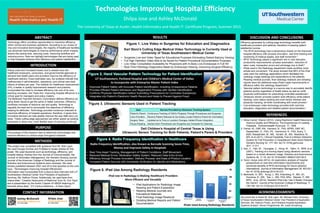
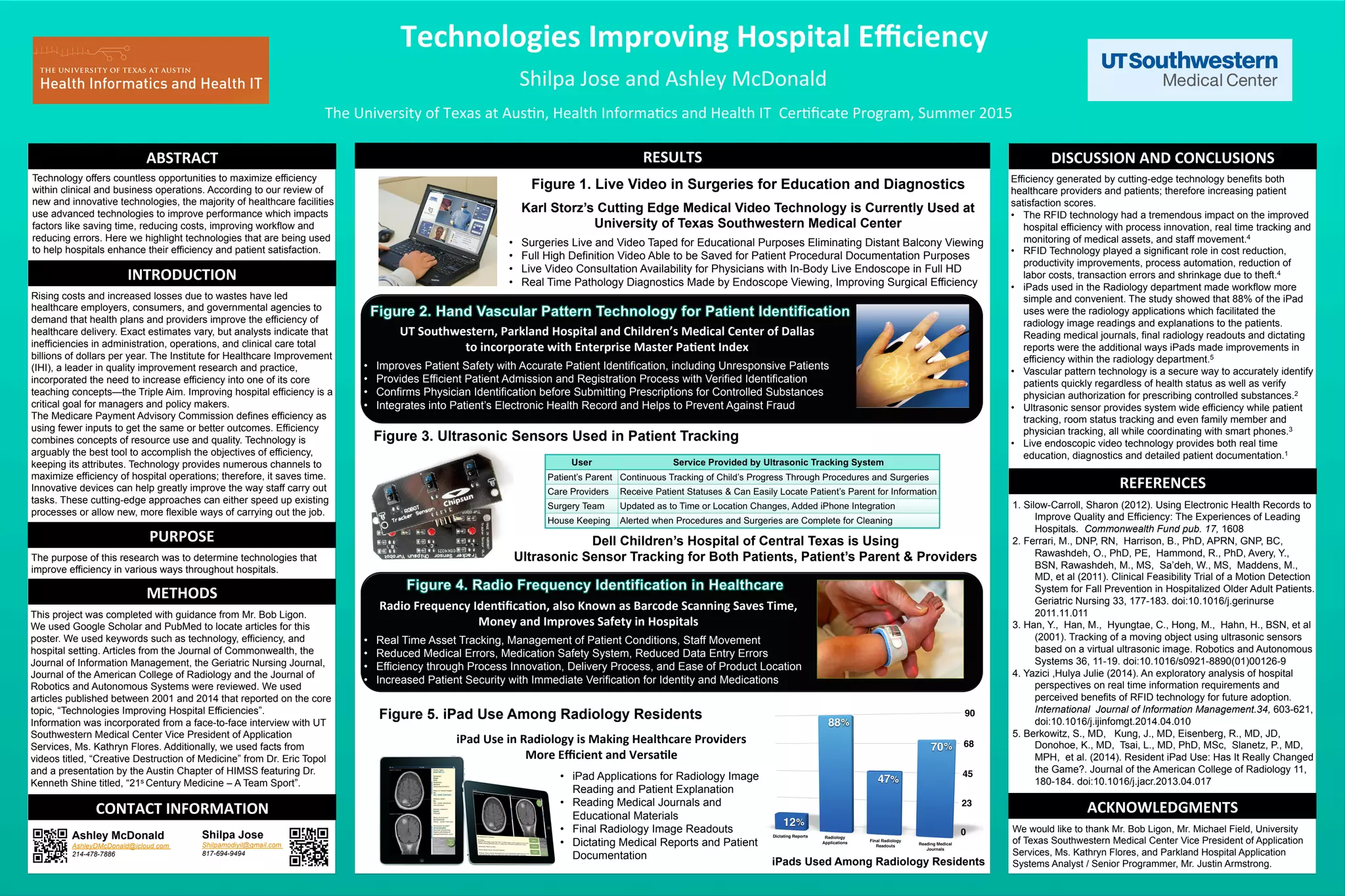
Figure 5. iPad Use Among Radiology Residents
Figure 1. Live Video in Surgeries for Education and Diagnostics
Karl Storz’s Cutting Edge Medical Video Technology is Currently Used at
University of Texas Southwestern Medical Center
•  Surgeries Live and Video Taped for Educational Purposes Eliminating Distant Balcony Viewing
•  Full High Definition Video Able to be Saved for Patient Procedural Documentation Purposes
•  Live Video Consultation Availability for Physicians with In-Body Live Endoscope in Full HD
•  Real Time Pathology Diagnostics Made by Endoscope Viewing, Improving Surgical Efficiency
	
  
Radio	
  Frequency	
  IdenLficaLon,	
  also	
  Known	
  as	
  Barcode	
  Scanning	
  Saves	
  Time,	
  
Money	
  and	
  Improves	
  Safety	
  in	
  Hospitals	
  
•  Real Time Asset Tracking, Management of Patient Conditions, Staff Movement
•  Reduced Medical Errors, Medication Safety System, Reduced Data Entry Errors
•  Efficiency through Process Innovation, Delivery Process, and Ease of Product Location
•  Increased Patient Security with Immediate Verification for Identity and Medications
iPad	
  Use	
  in	
  Radiology	
  is	
  Making	
  Healthcare	
  Providers	
  
More	
  Efficient	
  and	
  VersaLle	
  
iPads Used Among Radiology Residents
•  iPad Applications for Radiology Image
Reading and Patient Explanation
•  Reading Medical Journals and
Educational Materials
•  Final Radiology Image Readouts
•  Dictating Medical Reports and Patient
Documentation
•  Improves Patient Safety with Accurate Patient Identification, including Unresponsive Patients
•  Provides Efficient Patient Admission and Registration Process with Verified Identification
•  Confirms Physician Identification before Submitting Prescriptions for Controlled Substances
•  Integrates into Patient’s Electronic Health Record and Helps to Prevent Against Fraud
UT	
  Southwestern,	
  Parkland	
  Hospital	
  and	
  Children’s	
  Medical	
  Center	
  of	
  Dallas	
  	
  
to	
  incorporate	
  with	
  Enterprise	
  Master	
  PaLent	
  Index	
  	
  
We would like to thank Mr. Bob Ligon, Mr. Michael Field, University
of Texas Southwestern Medical Center Vice President of Application
Services, Ms. Kathryn Flores, and Parkland Hospital Application
Systems Analyst / Senior Programmer, Mr. Justin Armstrong.
Ashley McDonald
AshleyDMcDonald@icloud.com
214-478-7886
Shilpa Jose
Shilpamodiyil@gmail.com
817-694-9494
Figure 3. Ultrasonic Sensors Used in Patient Tracking
Dell Children’s Hospital of Central Texas is Using
Ultrasonic Sensor Tracking for Both Patients, Patient’s Parent & Providers
Technology offers countless opportunities to maximize efficiency
within clinical and business operations. According to our review of
new and innovative technologies, the majority of healthcare facilities
use advanced technologies to improve performance which impacts
factors like saving time, reducing costs, improving workflow and
reducing errors. Here we highlight technologies that are being used
to help hospitals enhance their efficiency and patient satisfaction.
Efficiency generated by cutting-edge technology benefits both
healthcare providers and patients; therefore increasing patient
satisfaction scores.
•  The RFID technology had a tremendous impact on the improved
hospital efficiency with process innovation, real time tracking and
monitoring of medical assets, and staff movement.4
•  RFID Technology played a significant role in cost reduction,
productivity improvements, process automation, reduction of
labor costs, transaction errors and shrinkage due to theft.4
•  iPads used in the Radiology department made workflow more
simple and convenient. The study showed that 88% of the iPad
uses were the radiology applications which facilitated the
radiology image readings and explanations to the patients.
Reading medical journals, final radiology readouts and dictating
reports were the additional ways iPads made improvements in
efficiency within the radiology department.5
•  Vascular pattern technology is a secure way to accurately identify
patients quickly regardless of health status as well as verify
physician authorization for prescribing controlled substances.2
•  Ultrasonic sensor provides system wide efficiency while patient
tracking, room status tracking and even family member and
physician tracking, all while coordinating with smart phones.3
•  Live endoscopic video technology provides both real time
education, diagnostics and detailed patient documentation.1

Research Poster

  • 1.
    RESEARCH POSTER PRESENTATIONDESIGN © 2012 www.PosterPresentations.com ABSTRACT   INTRODUCTION   RESULTS   DISCUSSION  AND  CONCLUSIONS   REFERENCES   ACKNOWLEDGMENTS   The  University  of  Texas  at  Aus.n,  Health  Informa.cs  and  Health  IT    Cer.ficate  Program,  Summer  2015   Shilpa  Jose  and  Ashley  McDonald   Technologies  Improving  Hospital  Efficiency   METHODS   CONTACT  INFORMATION               This project was completed with guidance from Mr. Bob Ligon. We used Google Scholar and PubMed to locate articles for this poster. We used keywords such as technology, efficiency, and hospital setting. Articles from the Journal of Commonwealth, the Journal of Information Management, the Geriatric Nursing Journal, Journal of the American College of Radiology and the Journal of Robotics and Autonomous Systems were reviewed. We used articles published between 2001 and 2014 that reported on the core topic, “Technologies Improving Hospital Efficiencies”. Information was incorporated from a face-to-face interview with UT Southwestern Medical Center Vice President of Application Services, Ms. Kathryn Flores. Additionally, we used facts from videos titled, “Creative Destruction of Medicine” from Dr. Eric Topol and a presentation by the Austin Chapter of HIMSS featuring Dr. Kenneth Shine titled, “21s Century Medicine – A Team Sport”. 1. Silow-Carroll, Sharon (2012). Using Electronic Health Records to Improve Quality and Efficiency: The Experiences of Leading Hospitals. Commonwealth Fund pub. 17, 1608 2. Ferrari, M., DNP, RN, Harrison, B., PhD, APRN, GNP, BC, Rawashdeh, O., PhD, PE, Hammond, R., PhD, Avery, Y., BSN, Rawashdeh, M., MS, Sa’deh, W., MS, Maddens, M., MD, et al (2011). Clinical Feasibility Trial of a Motion Detection System for Fall Prevention in Hospitalized Older Adult Patients. Geriatric Nursing 33, 177-183. doi:10.1016/j.gerinurse 2011.11.011 3. Han, Y., Han, M., Hyungtae, C., Hong, M., Hahn, H., BSN, et al (2001). Tracking of a moving object using ultrasonic sensors based on a virtual ultrasonic image. Robotics and Autonomous Systems 36, 11-19. doi:10.1016/s0921-8890(01)00126-9 4. Yazici ,Hulya Julie (2014). An exploratory analysis of hospital perspectives on real time information requirements and perceived benefits of RFID technology for future adoption. International Journal of Information Management.34, 603-621, doi:10.1016/j.ijinfomgt.2014.04.010 5. Berkowitz, S., MD, Kung, J., MD, Eisenberg, R., MD, JD, Donohoe, K., MD, Tsai, L., MD, PhD, MSc, Slanetz, P., MD, MPH, et al. (2014). Resident iPad Use: Has It Really Changed the Game?. Journal of the American College of Radiology 11, 180-184. doi:10.1016/j.jacr.2013.04.017 PURPOSE   The purpose of this research was to determine technologies that improve efficiency in various ways throughout hospitals. Rising costs and increased losses due to wastes have led healthcare employers, consumers, and governmental agencies to demand that health plans and providers improve the efficiency of healthcare delivery. Exact estimates vary, but analysts indicate that inefficiencies in administration, operations, and clinical care total billions of dollars per year. The Institute for Healthcare Improvement (IHI), a leader in quality improvement research and practice, incorporated the need to increase efficiency into one of its core teaching concepts—the Triple Aim. Improving hospital efficiency is a critical goal for managers and policy makers. The Medicare Payment Advisory Commission defines efficiency as using fewer inputs to get the same or better outcomes. Efficiency combines concepts of resource use and quality. Technology is arguably the best tool to accomplish the objectives of efficiency, keeping its attributes. Technology provides numerous channels to maximize efficiency of hospital operations; therefore, it saves time. Innovative devices can help greatly improve the way staff carry out tasks. These cutting-edge approaches can either speed up existing processes or allow new, more flexible ways of carrying out the job. Figure 5. iPad Use Among Radiology Residents Figure 1. Live Video in Surgeries for Education and Diagnostics Karl Storz’s Cutting Edge Medical Video Technology is Currently Used at University of Texas Southwestern Medical Center •  Surgeries Live and Video Taped for Educational Purposes Eliminating Distant Balcony Viewing •  Full High Definition Video Able to be Saved for Patient Procedural Documentation Purposes •  Live Video Consultation Availability for Physicians with In-Body Live Endoscope in Full HD •  Real Time Pathology Diagnostics Made by Endoscope Viewing, Improving Surgical Efficiency   Radio  Frequency  IdenLficaLon,  also  Known  as  Barcode  Scanning  Saves  Time,   Money  and  Improves  Safety  in  Hospitals   •  Real Time Asset Tracking, Management of Patient Conditions, Staff Movement •  Reduced Medical Errors, Medication Safety System, Reduced Data Entry Errors •  Efficiency through Process Innovation, Delivery Process, and Ease of Product Location •  Increased Patient Security with Immediate Verification for Identity and Medications iPad  Use  in  Radiology  is  Making  Healthcare  Providers   More  Efficient  and  VersaLle   iPads Used Among Radiology Residents •  iPad Applications for Radiology Image Reading and Patient Explanation •  Reading Medical Journals and Educational Materials •  Final Radiology Image Readouts •  Dictating Medical Reports and Patient Documentation •  Improves Patient Safety with Accurate Patient Identification, including Unresponsive Patients •  Provides Efficient Patient Admission and Registration Process with Verified Identification •  Confirms Physician Identification before Submitting Prescriptions for Controlled Substances •  Integrates into Patient’s Electronic Health Record and Helps to Prevent Against Fraud UT  Southwestern,  Parkland  Hospital  and  Children’s  Medical  Center  of  Dallas     to  incorporate  with  Enterprise  Master  PaLent  Index     We would like to thank Mr. Bob Ligon, Mr. Michael Field, University of Texas Southwestern Medical Center Vice President of Application Services, Ms. Kathryn Flores, and Parkland Hospital Application Systems Analyst / Senior Programmer, Mr. Justin Armstrong. Ashley McDonald AshleyDMcDonald@icloud.com 214-478-7886 Shilpa Jose Shilpamodiyil@gmail.com 817-694-9494 Figure 3. Ultrasonic Sensors Used in Patient Tracking Dell Children’s Hospital of Central Texas is Using Ultrasonic Sensor Tracking for Both Patients, Patient’s Parent & Providers Technology offers countless opportunities to maximize efficiency within clinical and business operations. According to our review of new and innovative technologies, the majority of healthcare facilities use advanced technologies to improve performance which impacts factors like saving time, reducing costs, improving workflow and reducing errors. Here we highlight technologies that are being used to help hospitals enhance their efficiency and patient satisfaction. Efficiency generated by cutting-edge technology benefits both healthcare providers and patients; therefore increasing patient satisfaction scores. •  The RFID technology had a tremendous impact on the improved hospital efficiency with process innovation, real time tracking and monitoring of medical assets, and staff movement.4 •  RFID Technology played a significant role in cost reduction, productivity improvements, process automation, reduction of labor costs, transaction errors and shrinkage due to theft.4 •  iPads used in the Radiology department made workflow more simple and convenient. The study showed that 88% of the iPad uses were the radiology applications which facilitated the radiology image readings and explanations to the patients. Reading medical journals, final radiology readouts and dictating reports were the additional ways iPads made improvements in efficiency within the radiology department.5 •  Vascular pattern technology is a secure way to accurately identify patients quickly regardless of health status as well as verify physician authorization for prescribing controlled substances.2 •  Ultrasonic sensor provides system wide efficiency while patient tracking, room status tracking and even family member and physician tracking, all while coordinating with smart phones.3 •  Live endoscopic video technology provides both real time education, diagnostics and detailed patient documentation.1