RESEARCH
METHODS
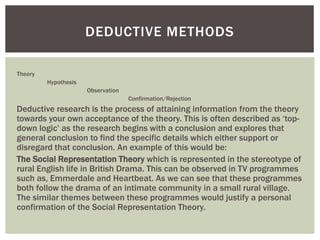
Theory
Hypothesis
Observation
Confirmation/Rejection
Deductive research is the process of attaining information from the theory
towards your own acceptance of the theory. This is often described as ‘top-
down logic’ as the research begins with a conclusion and explores that
general conclusion to find the specific details which either support or
disregard that conclusion. An example of this would be:
The Social Representation Theory which is represented in the stereotype of
rural English life in British Drama. This can be observed in TV programmes
such as, Emmerdale and Heartbeat. As we can see that these programmes
both follow the drama of an intimate community in a small rural village.
The similar themes between these programmes would justify a personal
confirmation of the Social Representation Theory.
DEDUCTIVE METHODS
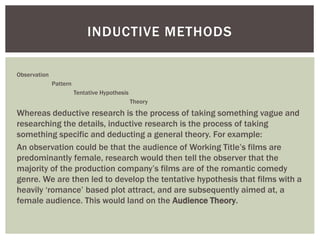
Observation
Pattern
Tentative Hypothesis
Theory
Whereas deductive research is the process of taking something vague and
researching the details, inductive research is the process of taking
something specific and deducting a general theory. For example:
An observation could be that the audience of Working Title’s films are
predominantly female, research would then tell the observer that the
majority of the production company’s films are of the romantic comedy
genre. We are then led to develop the tentative hypothesis that films with a
heavily ‘romance’ based plot attract, and are subsequently aimed at, a
female audience. This would land on the Audience Theory.
INDUCTIVE METHODS
When researching there are two types of information which are used to
deduct a conclusive hypothesis.
QUANTITATIVE DATA
This is research which can be measured; it deals with number based data.
For example, this includes percentages, trends and basic viewing figures,
etc. This form of data can be helpful to your own research as it can back up
any argument with facts that can’t be argued against.
QUALITATIVE DATA
This form of data includes the study of social phenomena through action
research. This comes in the form of case studies, textual analysis,
interviews and questionnaires, etc.
METHODOLOGY
 Libraries
 The Internet
 Written Essays – Dissertations, Reviews, etc.
 Interviews
 Questionnaires/Surveys (in person, email, telephone)
 Talking With People
RESEARCH METHODS & SOURCES

Research Methods

  • 1.
  • 2.
    Theory Hypothesis Observation Confirmation/Rejection Deductive research isthe process of attaining information from the theory towards your own acceptance of the theory. This is often described as ‘top- down logic’ as the research begins with a conclusion and explores that general conclusion to find the specific details which either support or disregard that conclusion. An example of this would be: The Social Representation Theory which is represented in the stereotype of rural English life in British Drama. This can be observed in TV programmes such as, Emmerdale and Heartbeat. As we can see that these programmes both follow the drama of an intimate community in a small rural village. The similar themes between these programmes would justify a personal confirmation of the Social Representation Theory. DEDUCTIVE METHODS
  • 3.
    Observation Pattern Tentative Hypothesis Theory Whereas deductiveresearch is the process of taking something vague and researching the details, inductive research is the process of taking something specific and deducting a general theory. For example: An observation could be that the audience of Working Title’s films are predominantly female, research would then tell the observer that the majority of the production company’s films are of the romantic comedy genre. We are then led to develop the tentative hypothesis that films with a heavily ‘romance’ based plot attract, and are subsequently aimed at, a female audience. This would land on the Audience Theory. INDUCTIVE METHODS
  • 4.
    When researching thereare two types of information which are used to deduct a conclusive hypothesis. QUANTITATIVE DATA This is research which can be measured; it deals with number based data. For example, this includes percentages, trends and basic viewing figures, etc. This form of data can be helpful to your own research as it can back up any argument with facts that can’t be argued against. QUALITATIVE DATA This form of data includes the study of social phenomena through action research. This comes in the form of case studies, textual analysis, interviews and questionnaires, etc. METHODOLOGY
  • 5.
     Libraries  TheInternet  Written Essays – Dissertations, Reviews, etc.  Interviews  Questionnaires/Surveys (in person, email, telephone)  Talking With People RESEARCH METHODS & SOURCES