Islam Mansour | OPK-A Aircraft Structure I | November 12, 2015
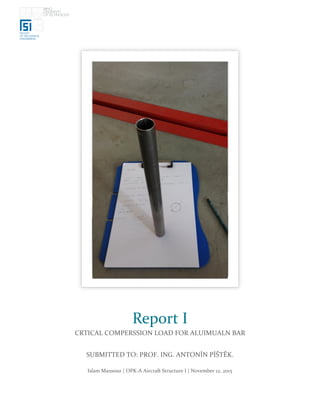
Report I
CRTICAL COMPERSSION LOAD FOR ALUIMUALN BAR
SUBMITTED TO: PROF. ING. ANTONÍN PÍŠTĚK.
PAGE 1
Contents
Defenation of the sample .............................................................................................................................2
Experminent ..................................................................................................................................................3
Resutls from test............................................................................................................................................5
Thertoical calcuatlion .................................................................................................................................. 6
Figure 1: The length of specimen .................................................................................................................2
Figure 2: The diameter of specimen ............................................................................................................2
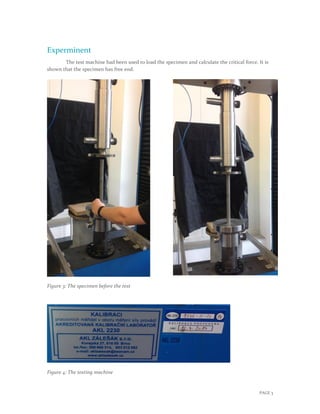
Figure 3: The specimen before the test .......................................................................................................3
Figure 4: The testing machine......................................................................................................................3
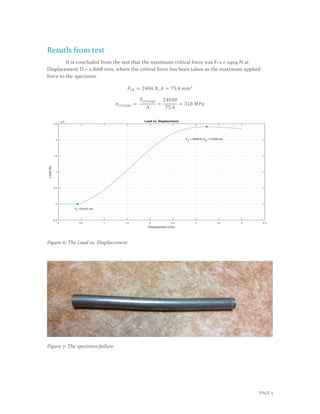
Figure 5: The testing machine..................................................................................................................... 4
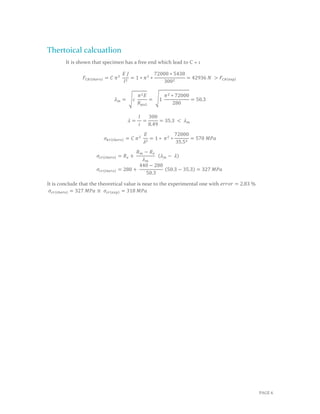
Figure 6: The Load vs. Displacement ..........................................................................................................5
Figure 7: The specimen failure.....................................................................................................................5
PAGE 2
Defenation of the sample
The sample is a hollow cylinder tube of Duralumin alloy which has charities as followings:
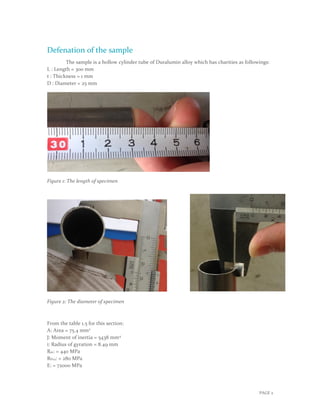
L : Length = 300 mm
t : Thickness = 1 mm
D : Diameter = 25 mm
Figure 1: The length of specimen
Figure 2: The diameter of specimen
From the table 1.5 for this section:
A: Area = 75.4 mm2
J: Moment of inertia = 5438 mm4
i: Radius of gyration = 8.49 mm
Rm: = 440 MPa
RP02: = 280 MPa
E: = 72000 MPa
PAGE 3
Experminent
The test machine had been used to load the specimen and calculate the critical force. It is
shown that the specimen has free end.
Figure 3: The specimen before the test
Figure 4: The testing machine
PAGE 4
Figure 5: The testing machine
PAGE 5
Resutls from test
It is concluded from the test that the maximum critical force was FCR = 2404 N at
Displacement D = 2.8168 mm, where the critical force has been taken as the maximum applied
force to the specimen.
𝐹𝐶𝑅 = 2404 𝑁, 𝐴 = 75.4 𝑚𝑚2
𝜎𝑐𝑟(𝑒𝑥𝑝) =
𝐹𝑐𝑟(𝑒𝑥𝑝)
𝐴
=
24040
75.4
= 318 𝑀𝑃𝑎
Figure 6: The Load vs. Displacement
Figure 7: The specimen failure
PAGE 6
Thertoical calcuatlion
It is shown that specimen has a free end which lead to C = 1
𝐹𝐶𝑅(𝑡ℎ𝑒𝑟𝑜) = 𝐶 𝜋2
𝐸 𝐽
𝑙2
= 1 ∗ 𝜋2
∗
72000 ∗ 5438
3002
= 42936 𝑁 > 𝐹𝐶𝑅(exp)
𝜆 𝑚 = √𝑐
𝜋2 𝐸
𝑅 𝑝𝑜2
= √1
𝜋2 ∗ 72000
280
= 50.3
𝜆 =
𝑙
𝑖
=
300
8.49
= 35.3 < 𝜆 𝑚
𝜎𝑘𝑟(𝑡ℎ𝑒𝑟𝑜) = 𝐶 𝜋2
𝐸
𝜆2
= 1 ∗ 𝜋2
∗
72000
35.52
= 570 𝑀𝑃𝑎
𝜎𝑐𝑟(𝑡ℎ𝑒𝑟𝑜) = 𝑅 𝑒 +
𝑅 𝑚 − 𝑅 𝑒
𝜆 𝑚
(𝜆 𝑚 − 𝜆)
𝜎𝑐𝑟(𝑡ℎ𝑒𝑟𝑜) = 280 +
440 − 280
50.3
(50.3 − 35.3) = 327 𝑀𝑃𝑎
It is conclude that the theoretical value is near to the experimental one with 𝑒𝑟𝑟𝑜𝑟 = 2.83 %
𝜎𝑐𝑟(𝑡ℎ𝑒𝑟𝑜) = 327 𝑀𝑃𝑎 ≅ 𝜎𝑐𝑟(𝑒𝑥𝑝) = 318 𝑀𝑃𝑎

report_1

  • 1.
    Islam Mansour |OPK-A Aircraft Structure I | November 12, 2015 Report I CRTICAL COMPERSSION LOAD FOR ALUIMUALN BAR SUBMITTED TO: PROF. ING. ANTONÍN PÍŠTĚK.
  • 2.
    PAGE 1 Contents Defenation ofthe sample .............................................................................................................................2 Experminent ..................................................................................................................................................3 Resutls from test............................................................................................................................................5 Thertoical calcuatlion .................................................................................................................................. 6 Figure 1: The length of specimen .................................................................................................................2 Figure 2: The diameter of specimen ............................................................................................................2 Figure 3: The specimen before the test .......................................................................................................3 Figure 4: The testing machine......................................................................................................................3 Figure 5: The testing machine..................................................................................................................... 4 Figure 6: The Load vs. Displacement ..........................................................................................................5 Figure 7: The specimen failure.....................................................................................................................5
  • 3.
    PAGE 2 Defenation ofthe sample The sample is a hollow cylinder tube of Duralumin alloy which has charities as followings: L : Length = 300 mm t : Thickness = 1 mm D : Diameter = 25 mm Figure 1: The length of specimen Figure 2: The diameter of specimen From the table 1.5 for this section: A: Area = 75.4 mm2 J: Moment of inertia = 5438 mm4 i: Radius of gyration = 8.49 mm Rm: = 440 MPa RP02: = 280 MPa E: = 72000 MPa
  • 4.
    PAGE 3 Experminent The testmachine had been used to load the specimen and calculate the critical force. It is shown that the specimen has free end. Figure 3: The specimen before the test Figure 4: The testing machine
  • 5.
    PAGE 4 Figure 5:The testing machine
  • 6.
    PAGE 5 Resutls fromtest It is concluded from the test that the maximum critical force was FCR = 2404 N at Displacement D = 2.8168 mm, where the critical force has been taken as the maximum applied force to the specimen. 𝐹𝐶𝑅 = 2404 𝑁, 𝐴 = 75.4 𝑚𝑚2 𝜎𝑐𝑟(𝑒𝑥𝑝) = 𝐹𝑐𝑟(𝑒𝑥𝑝) 𝐴 = 24040 75.4 = 318 𝑀𝑃𝑎 Figure 6: The Load vs. Displacement Figure 7: The specimen failure
  • 7.
    PAGE 6 Thertoical calcuatlion Itis shown that specimen has a free end which lead to C = 1 𝐹𝐶𝑅(𝑡ℎ𝑒𝑟𝑜) = 𝐶 𝜋2 𝐸 𝐽 𝑙2 = 1 ∗ 𝜋2 ∗ 72000 ∗ 5438 3002 = 42936 𝑁 > 𝐹𝐶𝑅(exp) 𝜆 𝑚 = √𝑐 𝜋2 𝐸 𝑅 𝑝𝑜2 = √1 𝜋2 ∗ 72000 280 = 50.3 𝜆 = 𝑙 𝑖 = 300 8.49 = 35.3 < 𝜆 𝑚 𝜎𝑘𝑟(𝑡ℎ𝑒𝑟𝑜) = 𝐶 𝜋2 𝐸 𝜆2 = 1 ∗ 𝜋2 ∗ 72000 35.52 = 570 𝑀𝑃𝑎 𝜎𝑐𝑟(𝑡ℎ𝑒𝑟𝑜) = 𝑅 𝑒 + 𝑅 𝑚 − 𝑅 𝑒 𝜆 𝑚 (𝜆 𝑚 − 𝜆) 𝜎𝑐𝑟(𝑡ℎ𝑒𝑟𝑜) = 280 + 440 − 280 50.3 (50.3 − 35.3) = 327 𝑀𝑃𝑎 It is conclude that the theoretical value is near to the experimental one with 𝑒𝑟𝑟𝑜𝑟 = 2.83 % 𝜎𝑐𝑟(𝑡ℎ𝑒𝑟𝑜) = 327 𝑀𝑃𝑎 ≅ 𝜎𝑐𝑟(𝑒𝑥𝑝) = 318 𝑀𝑃𝑎