
RENEWABLE ENERGY IN 
RWANDA – 2014 
Workshop on 
Higher Education Activities for Renewable Energy in Africa 
10-11 July 2014 
Umubano Hotel, Kigali, Rwanda 
By 
Marcel GAKUBA 
Head – SRDU, EWSA Ltd 
10/07/2014
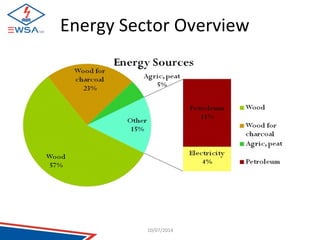
Energy Sector Overview 
10/07/2014
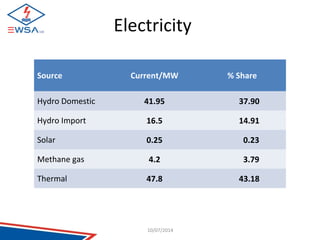
Electricity 
Source Current/MW % Share 
Hydro Domestic 41.95 37.90 
Hydro Import 16.5 14.91 
Solar 0.25 0.23 
Methane gas 4.2 3.79 
Thermal 47.8 43.18 
10/07/2014
Biomass 
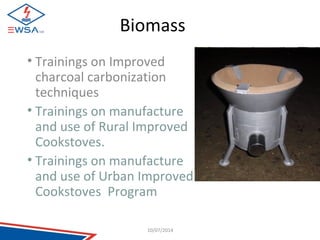
• Trainings on Improved 
charcoal carbonization 
techniques 
• Trainings on manufacture 
and use of Rural Improved 
Cookstoves. 
• Trainings on manufacture 
and use of Urban Improved 
Cookstoves Program 
10/07/2014
Biogas 
Green 
•It is renewable 
•It does not emit soot (CO2) when cooking and it favours 
cleanliness in the kitchen 
•Bio-effluent is a good fertiliser 
Sustainability 
•Biogas plant normally lasts for 20 to 30 years 
•We train masons for construction & maintenance of 
domestic & institutional biogas- in all Districts 
•User training is provided to household owning biogas 
•Provision of after sale services for a period of 1 year 
10/07/2014
Biogas 
Domestic Biogas 
• One cow approx. gives 20 kg/ day of dung 
• Min. size of the Biogas Plant is 4 m3 (2 cows) 
• Maximum Domestic Biogas Plant has capacity 
of 10 m3 
Institutional Biogas 
• Design based on the group size of people or 
animals 
• Minimum size is 10 m3 
• The largest is in Ntsinda Prison- 1200 m3 
10/07/2014
Likely Benefits 
• Bio digesters Construction Cost reduction 
• Research on Bio-effluent as good fertiliser 
• Updating the existing biogas models in 
terms of gas production. 
10/07/2014
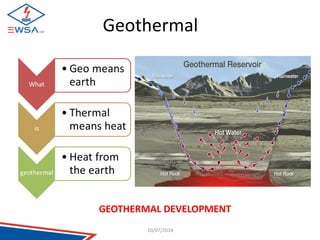
Geothermal 
GEOTHERMAL DEVELOPMENT 
10/07/2014
Geothermal 
• The potential for power generation is estimated to 
be about 700 MW 
• Two wells were drilled and as there were no 
promising outcomes, therefore have to be 
halted 
• A scoping phase has been initiated, with the 
development of a master plan and completion of 
missing surface level studies. 
Surface Manifestation studies 
Geology, Geochemistry, 1G0/0e7/o20p14hysics, Hydrology
Renewable Hydro 
Existing Hydropower Electricity 
• Rwanda presently has about 53% of electricity 
supply from hydropower 
• Approximately a total of around 40 MW are at 
advanced construction stages. Likely to 
increase it contribution to 79% of all electricity 
supply. 
Regional Potential Projects 
• A total of 512 MW shared with our neighbour 
are at different stages of development. Rwanda 
share will be 1/3. 
10/07/2014
The Likely Benefits 
• Water resource management (Hydrological 
modelling of river behaviour and sediments 
analysis) 
• Feasibility studies of pico and micro hydro 
• Model for management of off-grid micro 
hydro power plants 
• Scientific guidance on manufacturing of 
pico turbines 
10/07/2014
Solar PV Energy 
• Rwanda is characterised by Savannah 
climate- solar radiation intensity approx. 
equal to 5kWh/m2/day and peak sun hours 
of approximately 5 hours per day. 
• Existing projects include a 250 kWp grid 
connected solar plant (since 2007). 
• A two projects 8.5+10 MW are under 
development in the Eastern Province 
10/07/2014
Solar Energy 
Solar Water Heaters (SolaRwanda) Program 
•The SolaRwanda Program is scheduled for a period of 
four years (2012-2015). 
• The objectives & targets of SolaRwanda Program is to 
promote the widespread use of solar water heaters in 
residential sector through financial incentives, and other 
support measures, 
•Subsidy of 186,000 or 279,000RwF for 200 or 300 L 
SWH 
•Goal = 12,000 SWH by the end of the year 2015 with a 
total estimated yearly saving of 23,328 MWh 
10/07/2014
Solar Energy 
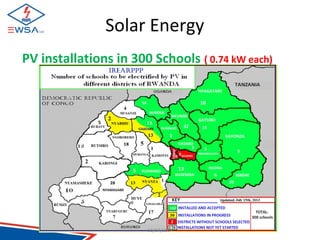
PV installations in 300 Schools ( 0.74 kW each) 
10/07/2014
Other RE Considerations 
• Off Grid Solutions (Solar, Wind and Hydro) 
• 52% of access is expected to be from off grid connections 
by 2018. 
• Solar PV off grid connections are considered for 
promotion. 
• A wind assessment study (5 sites) has been undertaken 
and suggested there is potential for off-grid wind energy 
solutions to provide electricity to people in the east of 
Rwanda. A comprehensive study for wind potential 
assessment is under consideration. 
• 69 Hydro Sites FS is just being concluded and most of 
them are likely to be developed through off grid systems. 
10/07/2014
SRDU Areas of Engagement 
Our Main focus is in the four areas below (but 
not limited to that) 
o Integration of the energy market, 
o Renewable forms of energy, 
o Energy efficiency and 
o Consequences of climate change on the energy 
sector. 
10/07/2014
THE END 
mgakuba@ewsa.rw 
www.ewsa.rw 
10/07/2014

Renewable energy in Rwanda – 2014

  • 1.
    RENEWABLE ENERGY IN RWANDA – 2014 Workshop on Higher Education Activities for Renewable Energy in Africa 10-11 July 2014 Umubano Hotel, Kigali, Rwanda By Marcel GAKUBA Head – SRDU, EWSA Ltd 10/07/2014
  • 2.
  • 3.
    Electricity Source Current/MW% Share Hydro Domestic 41.95 37.90 Hydro Import 16.5 14.91 Solar 0.25 0.23 Methane gas 4.2 3.79 Thermal 47.8 43.18 10/07/2014
  • 4.
    Biomass • Trainingson Improved charcoal carbonization techniques • Trainings on manufacture and use of Rural Improved Cookstoves. • Trainings on manufacture and use of Urban Improved Cookstoves Program 10/07/2014
  • 5.
    Biogas Green •Itis renewable •It does not emit soot (CO2) when cooking and it favours cleanliness in the kitchen •Bio-effluent is a good fertiliser Sustainability •Biogas plant normally lasts for 20 to 30 years •We train masons for construction & maintenance of domestic & institutional biogas- in all Districts •User training is provided to household owning biogas •Provision of after sale services for a period of 1 year 10/07/2014
  • 6.
    Biogas Domestic Biogas • One cow approx. gives 20 kg/ day of dung • Min. size of the Biogas Plant is 4 m3 (2 cows) • Maximum Domestic Biogas Plant has capacity of 10 m3 Institutional Biogas • Design based on the group size of people or animals • Minimum size is 10 m3 • The largest is in Ntsinda Prison- 1200 m3 10/07/2014
  • 7.
    Likely Benefits •Bio digesters Construction Cost reduction • Research on Bio-effluent as good fertiliser • Updating the existing biogas models in terms of gas production. 10/07/2014
  • 8.
  • 9.
    Geothermal • Thepotential for power generation is estimated to be about 700 MW • Two wells were drilled and as there were no promising outcomes, therefore have to be halted • A scoping phase has been initiated, with the development of a master plan and completion of missing surface level studies. Surface Manifestation studies Geology, Geochemistry, 1G0/0e7/o20p14hysics, Hydrology
  • 10.
    Renewable Hydro ExistingHydropower Electricity • Rwanda presently has about 53% of electricity supply from hydropower • Approximately a total of around 40 MW are at advanced construction stages. Likely to increase it contribution to 79% of all electricity supply. Regional Potential Projects • A total of 512 MW shared with our neighbour are at different stages of development. Rwanda share will be 1/3. 10/07/2014
  • 11.
    The Likely Benefits • Water resource management (Hydrological modelling of river behaviour and sediments analysis) • Feasibility studies of pico and micro hydro • Model for management of off-grid micro hydro power plants • Scientific guidance on manufacturing of pico turbines 10/07/2014
  • 12.
    Solar PV Energy • Rwanda is characterised by Savannah climate- solar radiation intensity approx. equal to 5kWh/m2/day and peak sun hours of approximately 5 hours per day. • Existing projects include a 250 kWp grid connected solar plant (since 2007). • A two projects 8.5+10 MW are under development in the Eastern Province 10/07/2014
  • 13.
    Solar Energy SolarWater Heaters (SolaRwanda) Program •The SolaRwanda Program is scheduled for a period of four years (2012-2015). • The objectives & targets of SolaRwanda Program is to promote the widespread use of solar water heaters in residential sector through financial incentives, and other support measures, •Subsidy of 186,000 or 279,000RwF for 200 or 300 L SWH •Goal = 12,000 SWH by the end of the year 2015 with a total estimated yearly saving of 23,328 MWh 10/07/2014
  • 14.
    Solar Energy PVinstallations in 300 Schools ( 0.74 kW each) 10/07/2014
  • 15.
    Other RE Considerations • Off Grid Solutions (Solar, Wind and Hydro) • 52% of access is expected to be from off grid connections by 2018. • Solar PV off grid connections are considered for promotion. • A wind assessment study (5 sites) has been undertaken and suggested there is potential for off-grid wind energy solutions to provide electricity to people in the east of Rwanda. A comprehensive study for wind potential assessment is under consideration. • 69 Hydro Sites FS is just being concluded and most of them are likely to be developed through off grid systems. 10/07/2014
  • 16.
    SRDU Areas ofEngagement Our Main focus is in the four areas below (but not limited to that) o Integration of the energy market, o Renewable forms of energy, o Energy efficiency and o Consequences of climate change on the energy sector. 10/07/2014
  • 17.
    THE END mgakuba@ewsa.rw www.ewsa.rw 10/07/2014