Paper No. 9 : The Modernist Literature
Unit-3 : Waiting for Godot
Name: Trivedi Hezal K.
PG Reg. No. PG15101040
Roll No:32
M.A. – English Regular, Semester-1 Year:
2015
Submitted to: S.B. Gardi Department of
English Maharaja Krishnakumarsinhji
Bhavnagar University (Gujarat – India)
Relationship between Estragon and
Vladimir in “Waiting For Godot”
About the Author
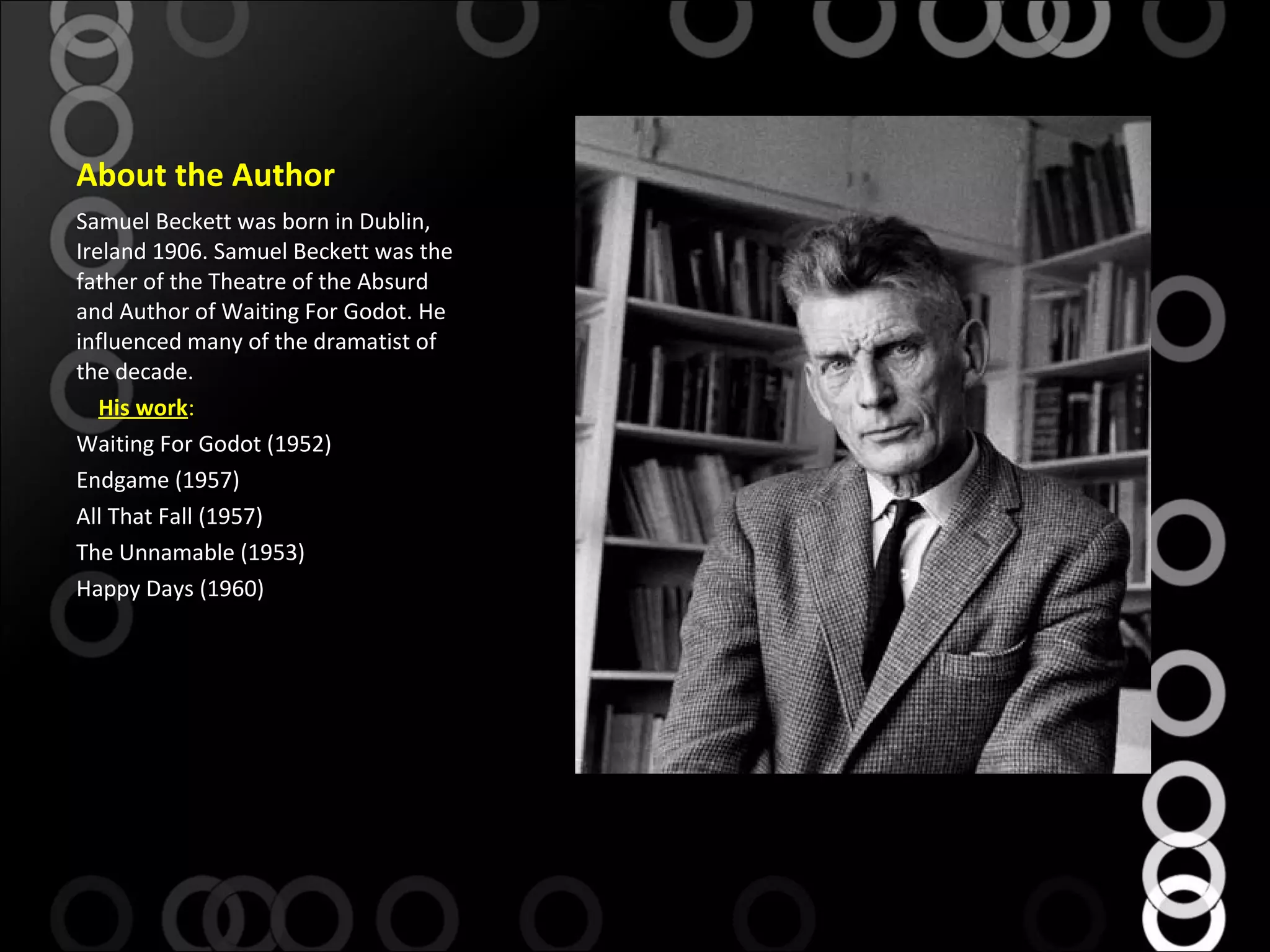
Samuel Beckett was born in Dublin,
Ireland 1906. Samuel Beckett was the
father of the Theatre of the Absurd
and Author of Waiting For Godot. He
influenced many of the dramatist of
the decade.
His work:
Waiting For Godot (1952)
Endgame (1957)
All That Fall (1957)
The Unnamable (1953)
Happy Days (1960)
About Waiting For Godot
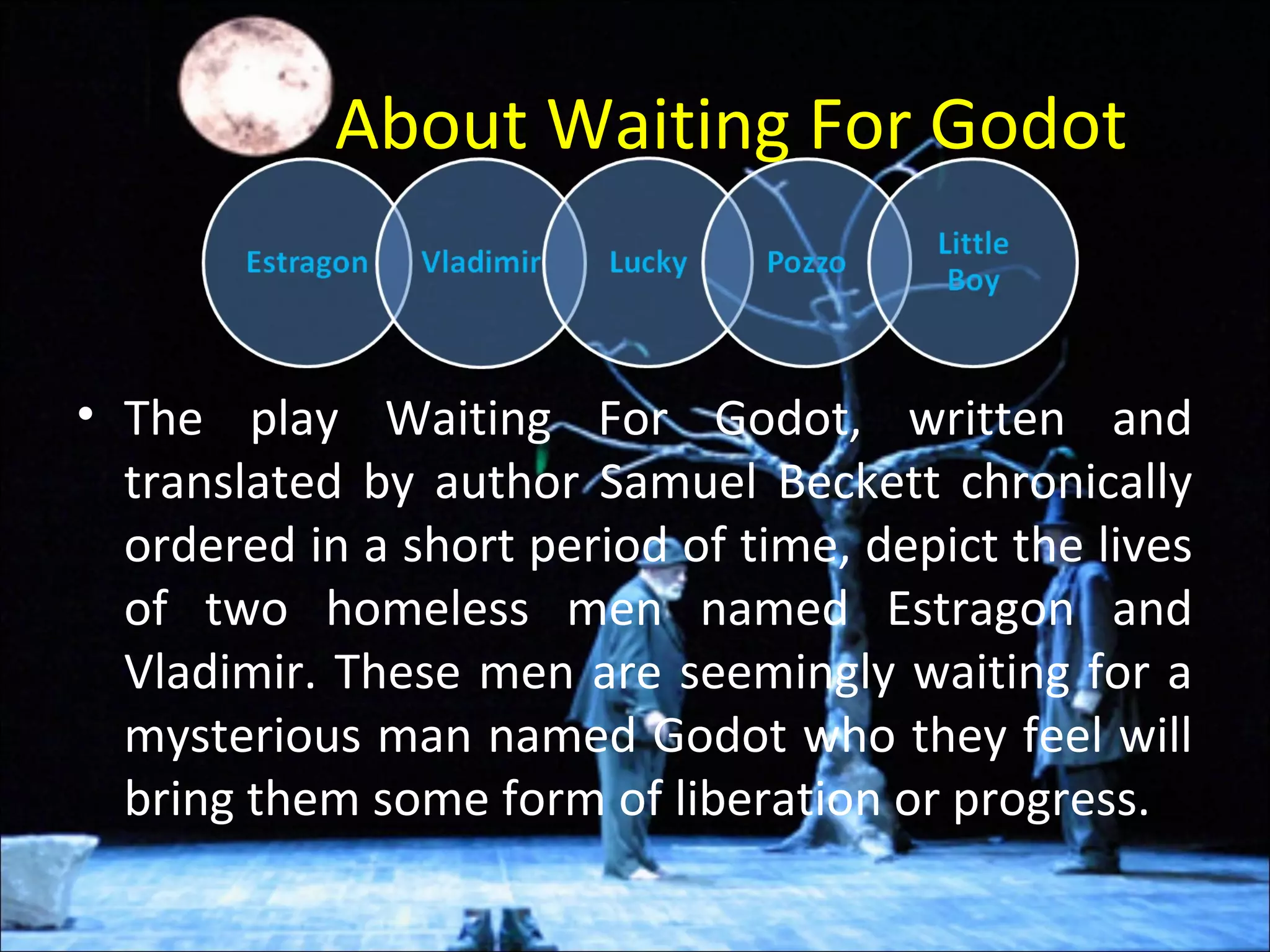
• The play Waiting For Godot, written and
translated by author Samuel Beckett chronically
ordered in a short period of time, depict the lives
of two homeless men named Estragon and
Vladimir. These men are seemingly waiting for a
mysterious man named Godot who they feel will
bring them some form of liberation or progress.
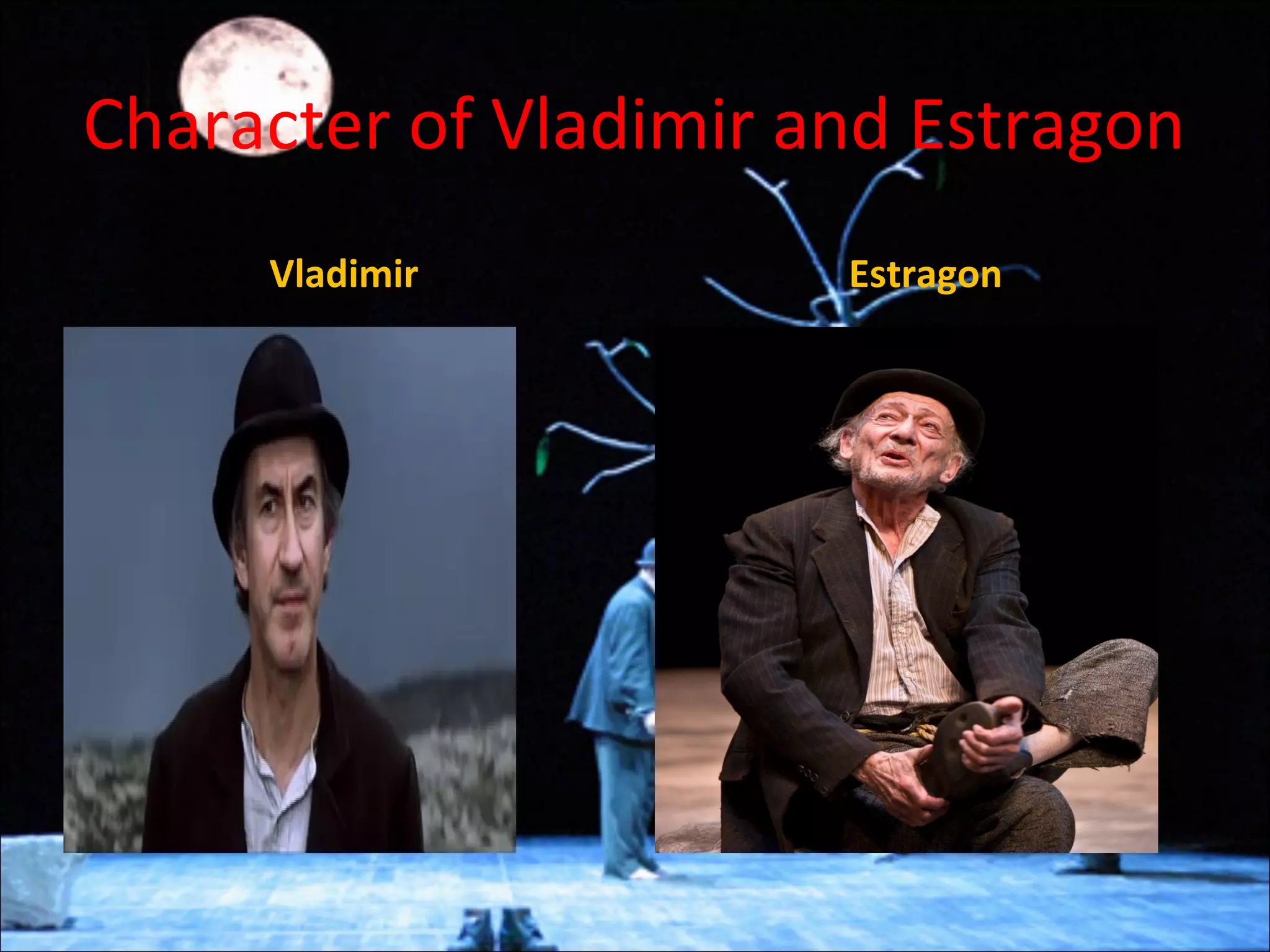
Character of Vladimir and Estragon
Vladimir Estragon
Estragon’s individual identity
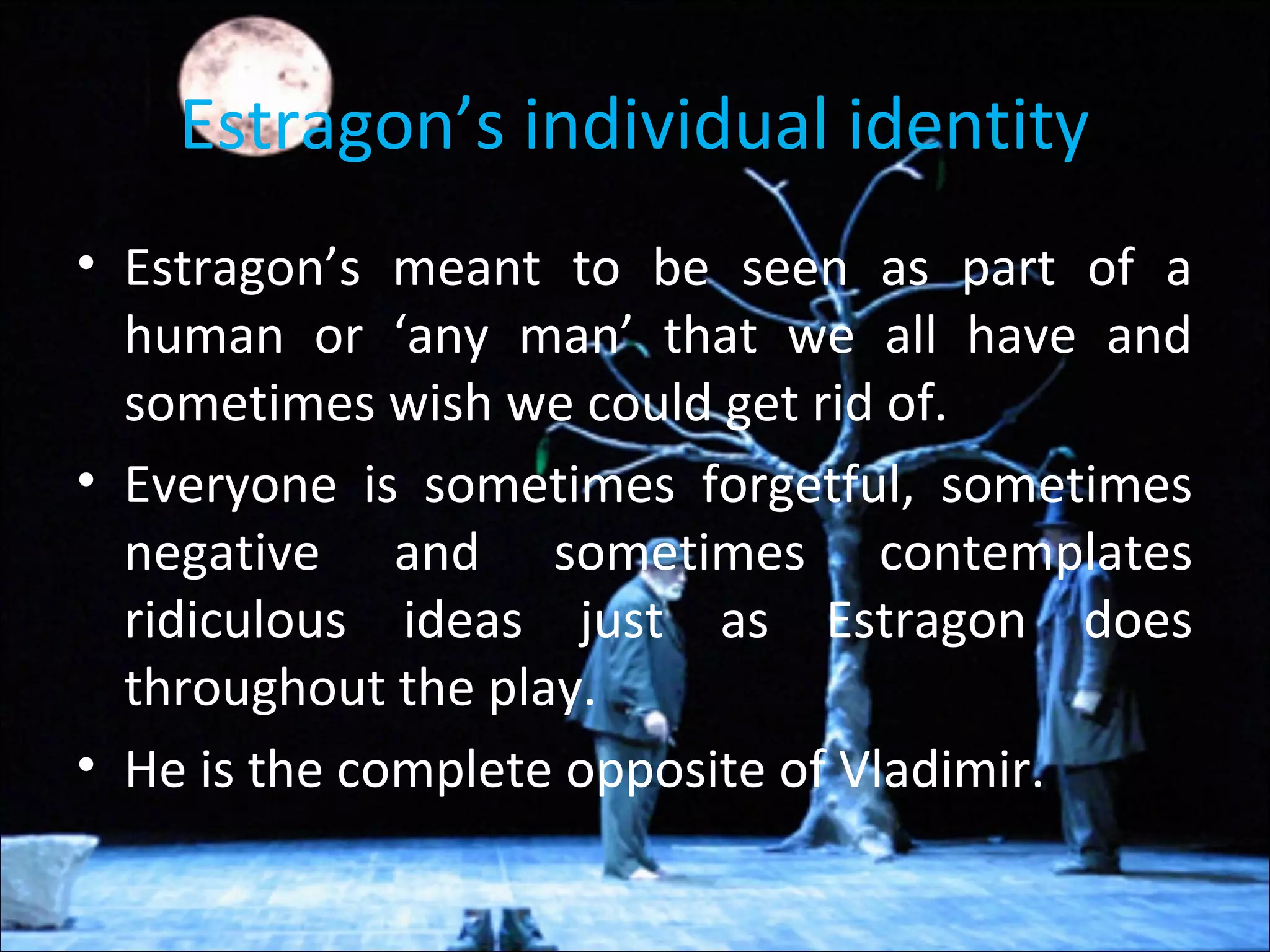
• Estragon’s meant to be seen as part of a
human or ‘any man’ that we all have and
sometimes wish we could get rid of.
• Everyone is sometimes forgetful, sometimes
negative and sometimes contemplates
ridiculous ideas just as Estragon does
throughout the play.
• He is the complete opposite of Vladimir.
Quote
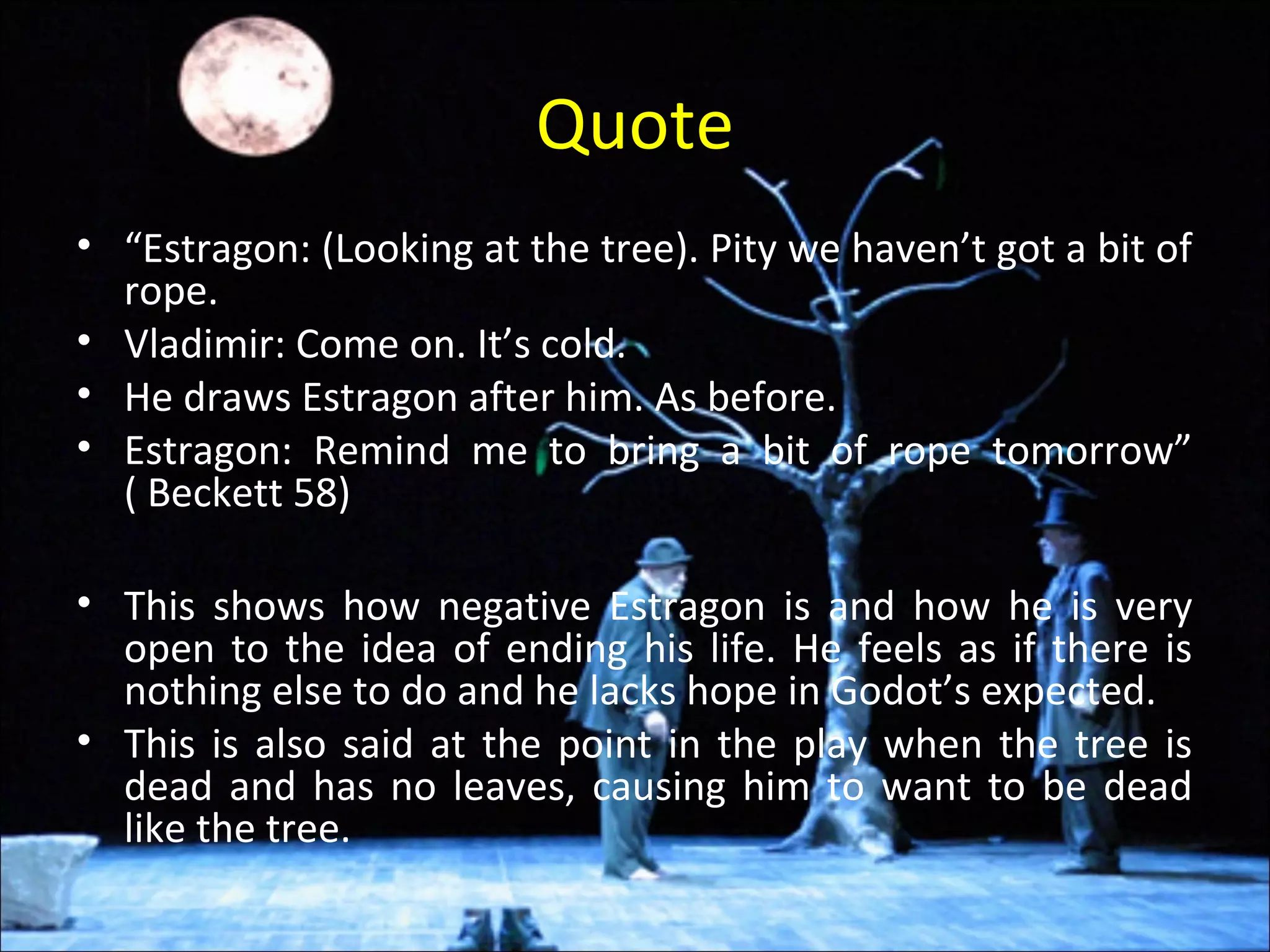
• “Estragon: (Looking at the tree). Pity we haven’t got a bit of
rope.
• Vladimir: Come on. It’s cold.
• He draws Estragon after him. As before.
• Estragon: Remind me to bring a bit of rope tomorrow”
( Beckett 58)
• This shows how negative Estragon is and how he is very
open to the idea of ending his life. He feels as if there is
nothing else to do and he lacks hope in Godot’s expected.
• This is also said at the point in the play when the tree is
dead and has no leaves, causing him to want to be dead
like the tree.
Vladimir’s individual identity
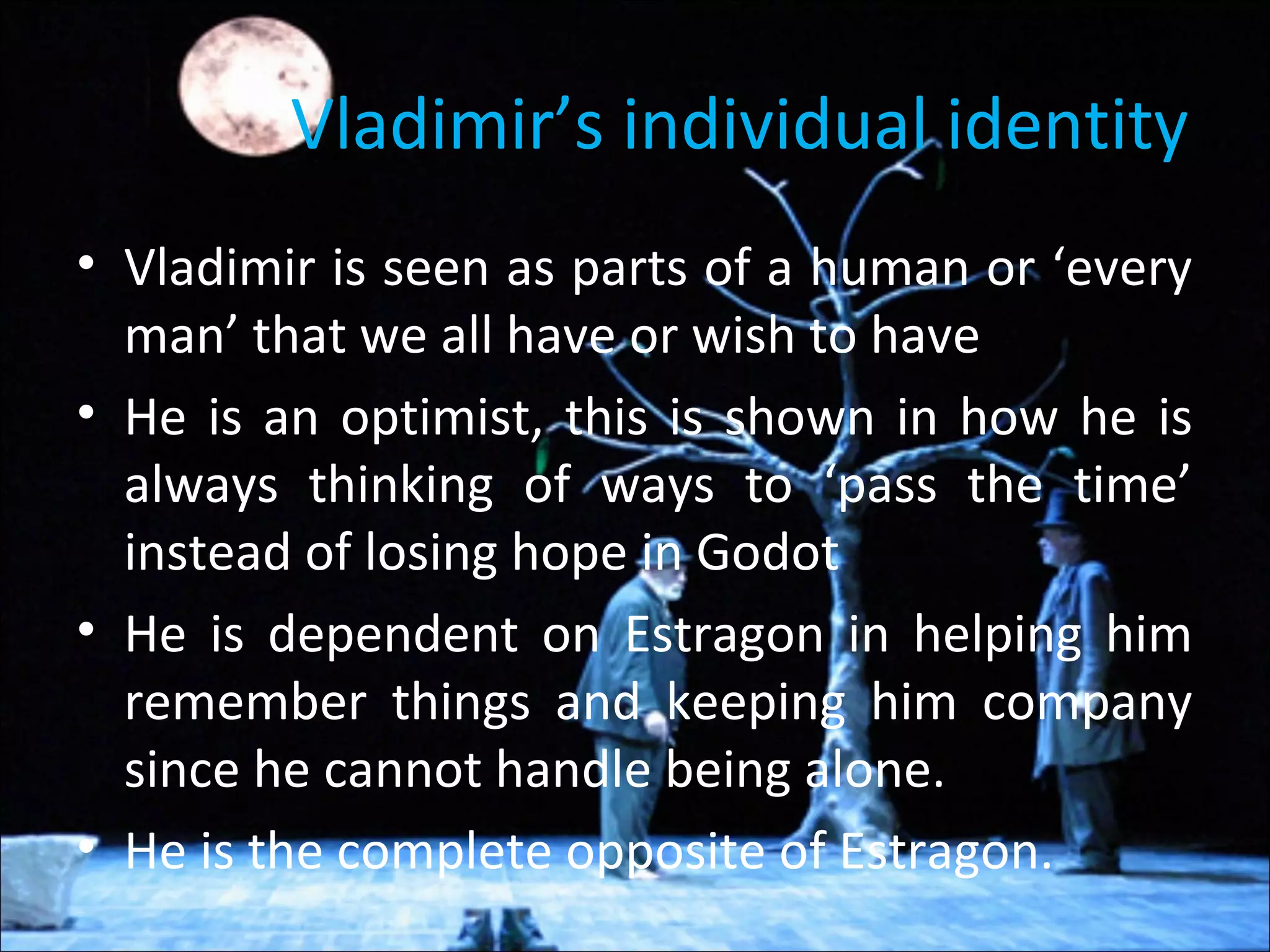
• Vladimir is seen as parts of a human or ‘every
man’ that we all have or wish to have
• He is an optimist, this is shown in how he is
always thinking of ways to ‘pass the time’
instead of losing hope in Godot
• He is dependent on Estragon in helping him
remember things and keeping him company
since he cannot handle being alone.
• He is the complete opposite of Estragon.
Quote
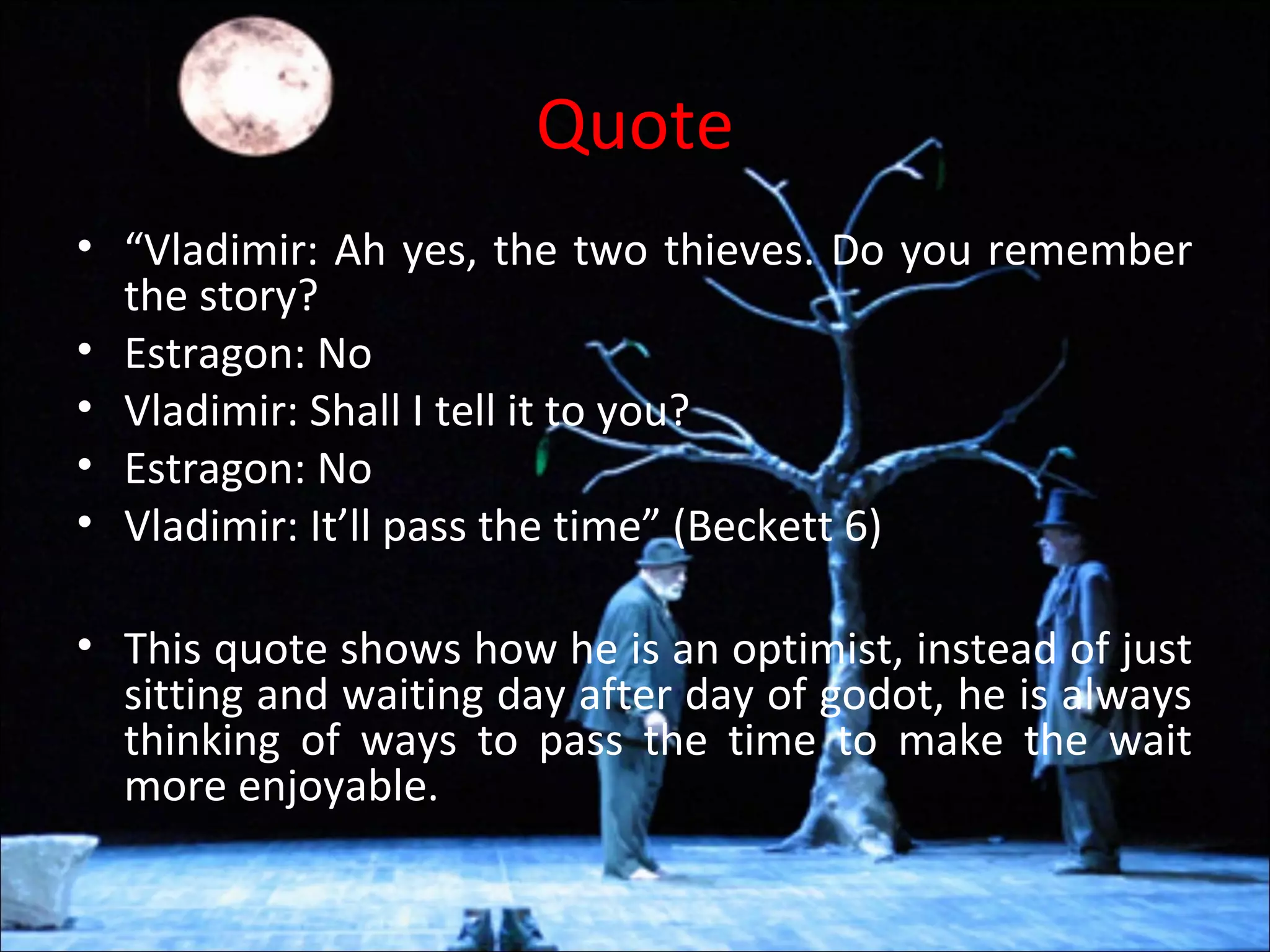
• “Vladimir: Ah yes, the two thieves. Do you remember
the story?
• Estragon: No
• Vladimir: Shall I tell it to you?
• Estragon: No
• Vladimir: It’ll pass the time” (Beckett 6)
• This quote shows how he is an optimist, instead of just
sitting and waiting day after day of godot, he is always
thinking of ways to pass the time to make the wait
more enjoyable.
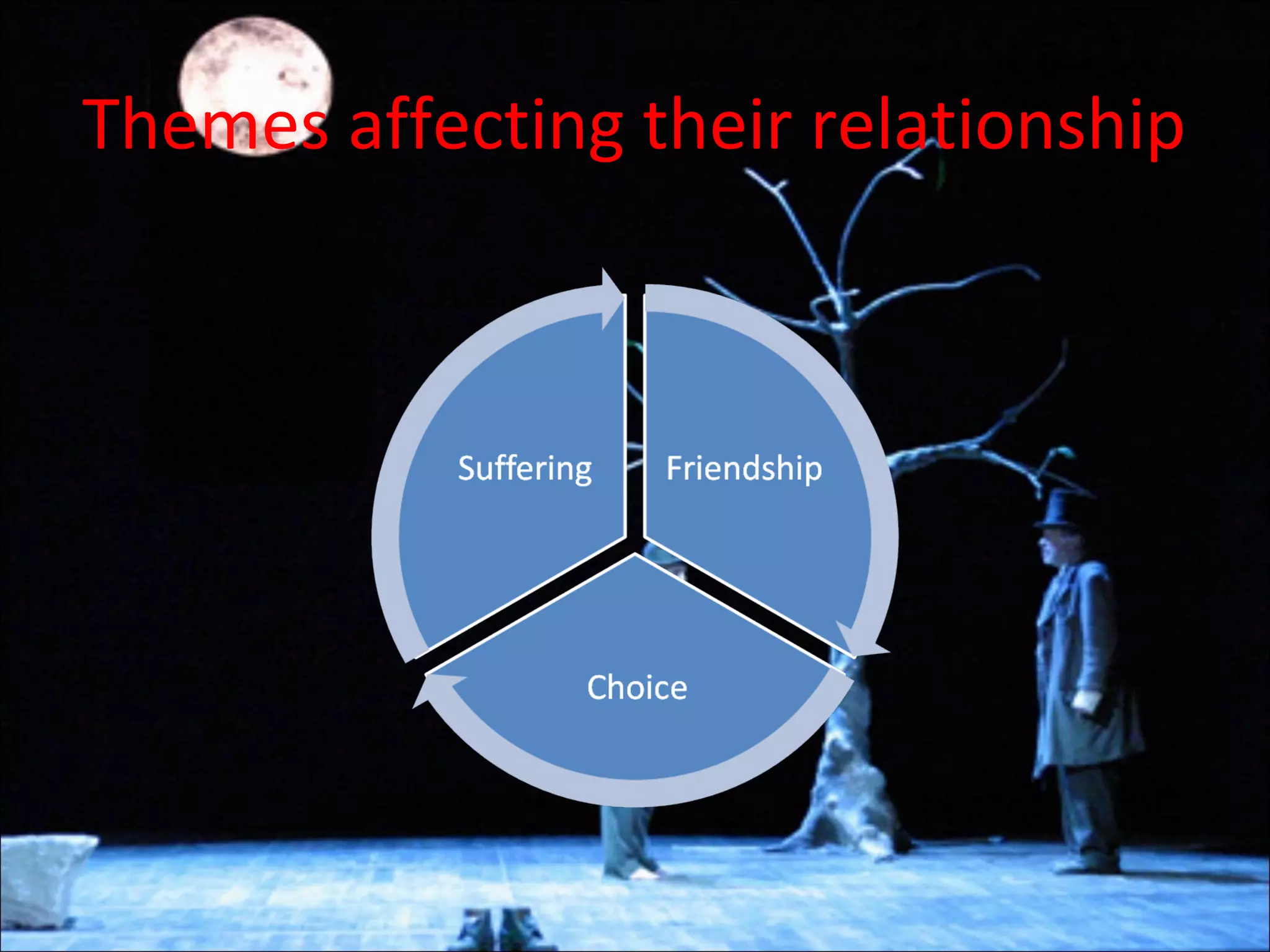
Themes affecting their relationship
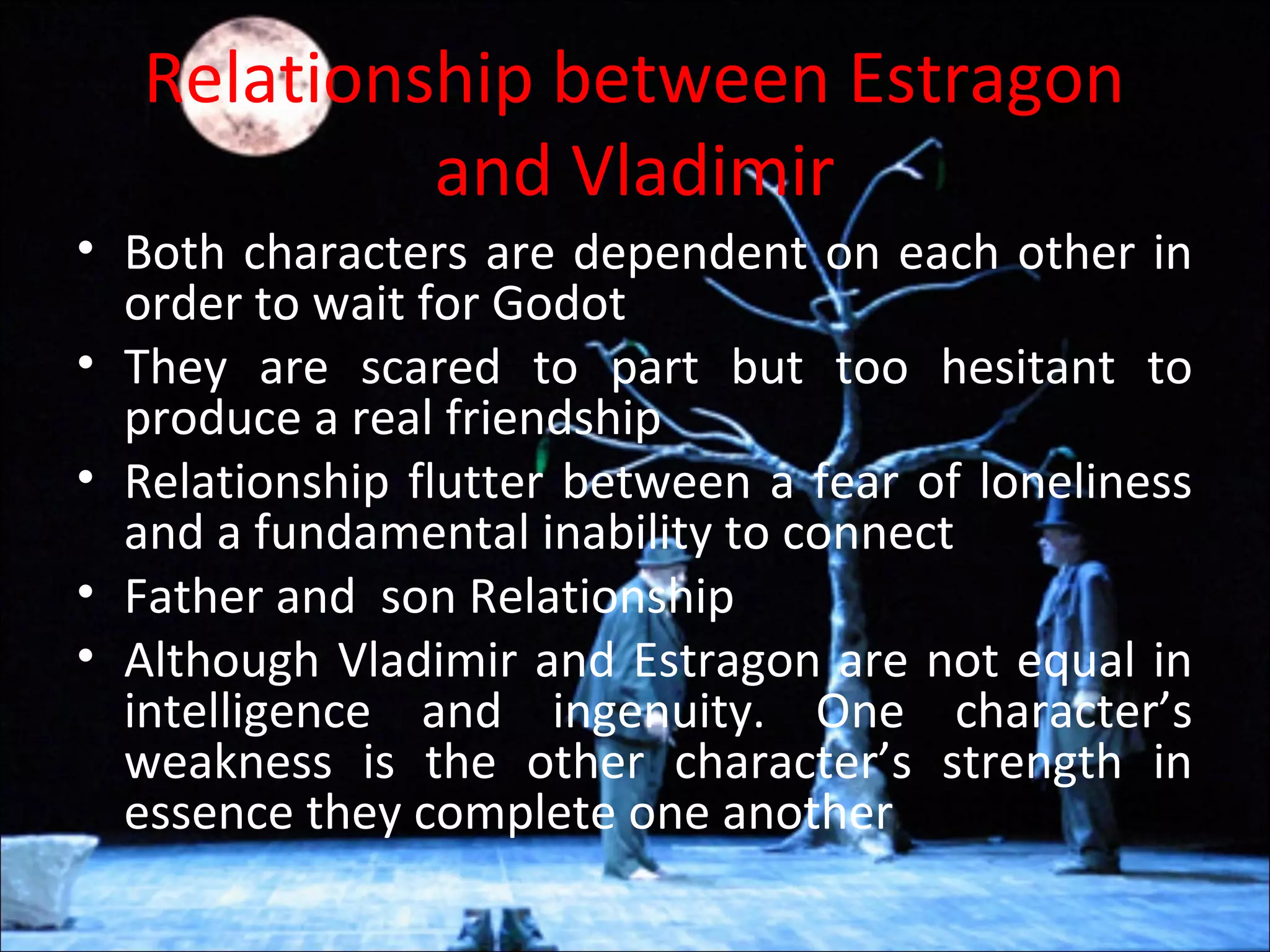
Relationship between Estragon
and Vladimir
• Both characters are dependent on each other in
order to wait for Godot
• They are scared to part but too hesitant to
produce a real friendship
• Relationship flutter between a fear of loneliness
and a fundamental inability to connect
• Father and son Relationship
• Although Vladimir and Estragon are not equal in
intelligence and ingenuity. One character’s
weakness is the other character’s strength in
essence they complete one another
Cont.
• Their excessive emotional and psychological
reliance brings them in an effort to cooperate
together in hopes of exceeding their low class
status
• Another main purpose of them not leaving
each other is because of the memory loss
each of them have to deal with
Conclusion
• It is evident after completing the novel that
Samuel Beckett’s representation of the two
protagonist gave a clear and deliberate
message of questioning the idea of individual
identity. The play illustrates the human
complexity of the relationship each of us
experiences with our loved ones.
Relationship between Estragon and Vladimir in "Waiting For Godot"

Relationship between Estragon and Vladimir in "Waiting For Godot"

  • 1.
    Paper No. 9: The Modernist Literature Unit-3 : Waiting for Godot Name: Trivedi Hezal K. PG Reg. No. PG15101040 Roll No:32 M.A. – English Regular, Semester-1 Year: 2015 Submitted to: S.B. Gardi Department of English Maharaja Krishnakumarsinhji Bhavnagar University (Gujarat – India) Relationship between Estragon and Vladimir in “Waiting For Godot”
  • 2.
    About the Author SamuelBeckett was born in Dublin, Ireland 1906. Samuel Beckett was the father of the Theatre of the Absurd and Author of Waiting For Godot. He influenced many of the dramatist of the decade. His work: Waiting For Godot (1952) Endgame (1957) All That Fall (1957) The Unnamable (1953) Happy Days (1960)
  • 3.
    About Waiting ForGodot • The play Waiting For Godot, written and translated by author Samuel Beckett chronically ordered in a short period of time, depict the lives of two homeless men named Estragon and Vladimir. These men are seemingly waiting for a mysterious man named Godot who they feel will bring them some form of liberation or progress.
  • 4.
    Character of Vladimirand Estragon Vladimir Estragon
  • 5.
    Estragon’s individual identity •Estragon’s meant to be seen as part of a human or ‘any man’ that we all have and sometimes wish we could get rid of. • Everyone is sometimes forgetful, sometimes negative and sometimes contemplates ridiculous ideas just as Estragon does throughout the play. • He is the complete opposite of Vladimir.
  • 6.
    Quote • “Estragon: (Lookingat the tree). Pity we haven’t got a bit of rope. • Vladimir: Come on. It’s cold. • He draws Estragon after him. As before. • Estragon: Remind me to bring a bit of rope tomorrow” ( Beckett 58) • This shows how negative Estragon is and how he is very open to the idea of ending his life. He feels as if there is nothing else to do and he lacks hope in Godot’s expected. • This is also said at the point in the play when the tree is dead and has no leaves, causing him to want to be dead like the tree.
  • 7.
    Vladimir’s individual identity •Vladimir is seen as parts of a human or ‘every man’ that we all have or wish to have • He is an optimist, this is shown in how he is always thinking of ways to ‘pass the time’ instead of losing hope in Godot • He is dependent on Estragon in helping him remember things and keeping him company since he cannot handle being alone. • He is the complete opposite of Estragon.
  • 8.
    Quote • “Vladimir: Ahyes, the two thieves. Do you remember the story? • Estragon: No • Vladimir: Shall I tell it to you? • Estragon: No • Vladimir: It’ll pass the time” (Beckett 6) • This quote shows how he is an optimist, instead of just sitting and waiting day after day of godot, he is always thinking of ways to pass the time to make the wait more enjoyable.
  • 9.
  • 10.
    Relationship between Estragon andVladimir • Both characters are dependent on each other in order to wait for Godot • They are scared to part but too hesitant to produce a real friendship • Relationship flutter between a fear of loneliness and a fundamental inability to connect • Father and son Relationship • Although Vladimir and Estragon are not equal in intelligence and ingenuity. One character’s weakness is the other character’s strength in essence they complete one another
  • 11.
    Cont. • Their excessiveemotional and psychological reliance brings them in an effort to cooperate together in hopes of exceeding their low class status • Another main purpose of them not leaving each other is because of the memory loss each of them have to deal with
  • 12.
    Conclusion • It isevident after completing the novel that Samuel Beckett’s representation of the two protagonist gave a clear and deliberate message of questioning the idea of individual identity. The play illustrates the human complexity of the relationship each of us experiences with our loved ones.